The New England Journal of Medicine Review of the Effects of Intermittent Fasting on Health, Aging and Disease

The New England Journal of Medicine allows anyone who signs up to read three free articles a month. Make Rafael de Cabo and Mark Mattson’s review article “Effects of Intermittent Fasting on Health, Aging, and Disease” one of your three articles this month. It could add years to your life. “Intermittent fasting” means having periods of, say 18 hours or more without food, or with very little food. As Rafael and Mark write:

… the three most widely studied intermittent-fasting regimens are alternate-day fasting, 5:2 intermittent fasting (fasting 2 days each week), and daily time-restricted feeding.

Let me give a few other quotations to convince you to read Rafael and Mark’s article, with my labels in bold:

  • Humans, like other animals, have evolved to function well with intermittent fasting: Studies in animals and humans have shown that many of the health benefits of intermittent fasting are not simply the result of reduced free-radical production or weight loss. Instead, intermittent fasting elicits evolutionarily conserved, adaptive cellular responses that are integrated between and within organs in a manner that improves glucose regulation, increases stress resistance, and suppresses inflammation. 

  • Fasting between 12 and 24 hours has big effects on ketosis: During periods of fasting, triglycerides are broken down to fatty acids and glycerol, which are used for energy. The liver converts fatty acids to ketone bodies, which provide a major source of energy for many tissues, especially the brain, during fasting (Figure 2). In the fed state, blood levels of ketone bodies are low, and in humans, they rise within 8 to 12 hours after the onset of fasting, reaching levels as high as 2 to 5 mM by 24 hours. … The timing of this response gives some indication of the appropriate periods for fasting in intermittent-fasting regimens.

  • Ketones are powerful signaling molecules: Ketone bodies are not just fuel used during periods of fasting; they are potent signaling molecules with major effects on cell and organ functions.

  • We are not evolved for a sedentary life with 3 meals a day: In contrast to people today, our human ancestors did not consume three regularly spaced, large meals, plus snacks, every day, nor did they live a sedentary life. 

  • Fasting is a time for repair and refurbishing of cells: Cells respond to intermittent fasting by engaging in a coordinated adaptive stress response that leads to increased expression of antioxidant defenses, DNA repair, protein quality control, mitochondrial biogenesis and autophagy, and down-regulation of inflammation (Figure 3). These adaptive responses to fasting and feeding are conserved across taxa.

  • Fasting not only leads to weight loss, it augments the benefits from weight loss: In humans, intermittent-fasting interventions ameliorate obesity, insulin resistance, dyslipidemia, hypertension, and inflammation. Intermittent fasting seems to confer health benefits to a greater extent than can be attributed just to a reduction in caloric intake. In one trial, 16 healthy participants assigned to a regimen of alternate-day fasting for 22 days lost 2.5% of their initial weight and 4% of fat mass, with a 57% decrease in fasting insulin levels. In two other trials, overweight women (approximately 100 women in each trial) were assigned to either a 5:2 intermittent-fasting regimen or a 25% reduction in daily caloric intake. The women in the two groups lost the same amount of weight during the 6-month period, but those in the group assigned to 5:2 intermittent fasting had a greater increase in insulin sensitivity and a larger reduction in waist circumference.

  • Fasting improves athletic performance in mice and doesn’t lead to any loss of muscle mass if you work out: In animals and humans, physical function is improved with intermittent fasting. For example, despite having similar body weight, mice maintained on alternate-day fasting have better running endurance than mice that have unlimited access to food. Balance and coordination are also improved in animals on daily time-restricted feeding or alternate-day fasting regimens. Young men who fast daily for 16 hours lose fat while maintaining muscle mass during 2 months of resistance training.

  • Fasting is anti-cancer: … numerous studies in animals have shown that daily caloric restriction or alternate-day fasting reduces the occurrence of spontaneous tumors during normal aging in rodents and suppresses the growth of many types of induced tumors while increasing their sensitivity to chemotherapy and irradiation. Similarly, intermittent fasting is thought to impair energy metabolism in cancer cells, inhibiting their growth and rendering them susceptible to clinical treatments.

  • Fasting looks like it is anti-Alzheimer’s and anti-Parkinson’s: There is strong preclinical evidence that alternate-day fasting can delay the onset and progression of the disease processes in animal models of Alzheimer’s disease and Parkinson’s disease. Intermittent fasting increases neuronal stress resistance through multiple mechanisms, including bolstering mitochondrial function and stimulating autophagy, neurotrophic-factor production, antioxidant defenses, and DNA repair.

  • Fasting reduces autoimmune problems: Two recent pilot studies showed that patients with multiple sclerosis who adhere to intermittent-fasting regimens have reduced symptoms in as short a period as 2 months. Because it reduces inflammation, intermittent fasting would also be expected to be beneficial in rheumatoid arthritis, and indeed, there is evidence supporting its use in patients with arthritis.

  • Fasting looks like it might reduce the harm from concussion: Intermittent fasting after injury was also effective in ameliorating cognitive deficits in a mouse model of traumatic brain injury.

These quotations speak for themselves. But I do want to comment on these two paragraphs:

Despite the evidence for the health benefits of intermittent fasting and its applicability to many diseases, there are impediments to the widespread adoption of these eating patterns in the community and by patients. First, a diet of three meals with snacks every day is so ingrained in our culture that a change in this eating pattern will rarely be contemplated by patients or doctors. The abundance of food and extensive marketing in developed nations are also major hurdles to be overcome.

Second, on switching to an intermittent-fasting regimen, many people will experience hunger, irritability, and a reduced ability to concentrate during periods of food restriction. However, these initial side effects usually disappear within 1 month, and patients should be advised of this fact.

To me, the great secret is that switching to a low insulin-index diet first (see “Forget Calorie Counting; It's the Insulin Index, Stupid”) makes fasting much easier, even at the beginning. On the sequencing I recommend, see:


The Federalist Papers #5: Unless United, the States Will Be at Each Others' Throats

In the Federalist Papers #5, John Jay has one point: if the 13 states were divided up into several different nations (“confederacies”), those nations would soon be at odds with one another and tearing one another down. Later events backed up his claim on two occasions. First, the Civil war followed swiftly upon the secession of the Confederacy from the Union. Those same states, despite their different views, conducted their rivalry in elections and in legislative votes while they were all still part of the union. (Of course, there were some wars within states over slavery—and over religion in the case of Missouri’s Mormon War—prior to the Civil War between states.) Second, the division between the US and Canada was conducive to the War of 1812. Even if Canada had been independent from the United Kingdom, rivalries between Canada and the United States in the early 19th century could easily have led to war.

This paragraph succinctly states John Jay’s views of the likely relationship between different American nations of the states were divided:

Should the people of America divide themselves into three or four nations, would not the same thing happen? Would not similar jealousies arise, and be in like manner cherished? Instead of their being "joined in affection" and free from all apprehension of different "interests," envy and jealousy would soon extinguish confidence and affection, and the partial interests of each confederacy, instead of the general interests of all America, would be the only objects of their policy and pursuits. Hence, like most other BORDERING nations, they would always be either involved in disputes and war, or live in the constant apprehension of them.

Here are some of John Jay’s key arguments for that view in his own words:

  • Historically there was a lot of bad feeling between different parts of Great Britain until they were united.

  • Historically there has been a lot of bad feeling between a large share of all bordering nations.

  • It is unlikely that neighboring nations would remain equal in strength; inequality in strength leads to jealousy and distrust that in turn lead to intrigue and counter-intrigue.

  • Different American nations would be likely to fall into different foreign alliances. This could cause trouble between the American nations when their respective allies were at war.

  • Rivalrous American nations might make the mistake of fearing each other so much that they don’t fear their foreign “allies” enough.

Below is the full text of the Federalist #5, with the point above relevant to a give passage above that passage added in bold italics within square brackets. The very beginning of the Federalist #5 simply argues that unity brings strength, giving extra emotional oomph to that claim by saying other nations don’t want the states to be united.

|| Federalist No. 5 || 

The Same Subject Continued: Concerning Dangers from Foreign Force and Influence
For the Independent Journal.

Author: John Jay

To the People of the State of New York:

QUEEN ANNE, in her letter of the 1st July, 1706, to the Scotch Parliament, makes some observations on the importance of the UNION then forming between England and Scotland, which merit our attention. I shall present the public with one or two extracts from it: "An entire and perfect union will be the solid foundation of lasting peace: It will secure your religion, liberty, and property; remove the animosities amongst yourselves, and the jealousies and differences betwixt our two kingdoms. It must increase your strength, riches, and trade; and by this union the whole island, being joined in affection and free from all apprehensions of different interest, will be ENABLED TO RESIST ALL ITS ENEMIES." "We most earnestly recommend to you calmness and unanimity in this great and weighty affair, that the union may be brought to a happy conclusion, being the only EFFECTUAL way to secure our present and future happiness, and disappoint the designs of our and your enemies, who will doubtless, on this occasion, USE THEIR UTMOST ENDEAVORS TO PREVENT OR DELAY THIS UNION."

It was remarked in the preceding paper, that weakness and divisions at home would invite dangers from abroad; and that nothing would tend more to secure us from them than union, strength, and good government within ourselves. This subject is copious and cannot easily be exhausted.

[Historically there was a lot of bad feeling between different parts of Great Britain until they were united.] The history of Great Britain is the one with which we are in general the best acquainted, and it gives us many useful lessons. We may profit by their experience without paying the price which it cost them. Although it seems obvious to common sense that the people of such an island should be but one nation, yet we find that they were for ages divided into three, and that those three were almost constantly embroiled in quarrels and wars with one another. Notwithstanding their true interest with respect to the continental nations was really the same, yet by the arts and policy and practices of those nations, their mutual jealousies were perpetually kept inflamed, and for a long series of years they were far more inconvenient and troublesome than they were useful and assisting to each other.

[Historically there has been a lot of bad feeling between a large share of all bordering nations.] Should the people of America divide themselves into three or four nations, would not the same thing happen? Would not similar jealousies arise, and be in like manner cherished? Instead of their being "joined in affection" and free from all apprehension of different "interests," envy and jealousy would soon extinguish confidence and affection, and the partial interests of each confederacy, instead of the general interests of all America, would be the only objects of their policy and pursuits. Hence, like most other BORDERING nations, they would always be either involved in disputes and war, or live in the constant apprehension of them.

[It is unlikely that neighboring nations would remain equal in strength; inequality in strength leads to jealousy and distrust that in turn lead to intrigue and counter-intrigue.] The most sanguine advocates for three or four confederacies cannot reasonably suppose that they would long remain exactly on an equal footing in point of strength, even if it was possible to form them so at first; but, admitting that to be practicable, yet what human contrivance can secure the continuance of such equality? Independent of those local circumstances which tend to beget and increase power in one part and to impede its progress in another, we must advert to the effects of that superior policy and good management which would probably distinguish the government of one above the rest, and by which their relative equality in strength and consideration would be destroyed. For it cannot be presumed that the same degree of sound policy, prudence, and foresight would uniformly be observed by each of these confederacies for a long succession of years.

Whenever, and from whatever causes, it might happen, and happen it would, that any one of these nations or confederacies should rise on the scale of political importance much above the degree of her neighbors, that moment would those neighbors behold her with envy and with fear. Both those passions would lead them to countenance, if not to promote, whatever might promise to diminish her importance; and would also restrain them from measures calculated to advance or even to secure her prosperity. Much time would not be necessary to enable her to discern these unfriendly dispositions. She would soon begin, not only to lose confidence in her neighbors, but also to feel a disposition equally unfavorable to them. Distrust naturally creates distrust, and by nothing is good-will and kind conduct more speedily changed than by invidious jealousies and uncandid imputations, whether expressed or implied.

The North is generally the region of strength, and many local circumstances render it probable that the most Northern of the proposed confederacies would, at a period not very distant, be unquestionably more formidable than any of the others. No sooner would this become evident than the NORTHERN HIVE would excite the same ideas and sensations in the more southern parts of America which it formerly did in the southern parts of Europe. Nor does it appear to be a rash conjecture that its young swarms might often be tempted to gather honey in the more blooming fields and milder air of their luxurious and more delicate neighbors.

[Historically there has been a lot of bad feeling between a large share of all bordering nations.] They who well consider the history of similar divisions and confederacies will find abundant reason to apprehend that those in contemplation would in no other sense be neighbors than as they would be borderers; that they would neither love nor trust one another, but on the contrary would be a prey to discord, jealousy, and mutual injuries; in short, that they would place us exactly in the situations in which some nations doubtless wish to see us, viz., FORMIDABLE ONLY TO EACH OTHER.

From these considerations it appears that those gentlemen are greatly mistaken who suppose that alliances offensive and defensive might be formed between these confederacies, and would produce that combination and union of wills of arms and of resources, which would be necessary to put and keep them in a formidable state of defense against foreign enemies.

[Different American nations would be likely to fall into different foreign alliances. This could cause trouble between the American nations when their respective allies were at war.] When did the independent states, into which Britain and Spain were formerly divided, combine in such alliance, or unite their forces against a foreign enemy? The proposed confederacies will be DISTINCT NATIONS. Each of them would have its commerce with foreigners to regulate by distinct treaties; and as their productions and commodities are different and proper for different markets, so would those treaties be essentially different. Different commercial concerns must create different interests, and of course different degrees of political attachment to and connection with different foreign nations. Hence it might and probably would happen that the foreign nation with whom the SOUTHERN confederacy might be at war would be the one with whom the NORTHERN confederacy would be the most desirous of preserving peace and friendship. An alliance so contrary to their immediate interest would not therefore be easy to form, nor, if formed, would it be observed and fulfilled with perfect good faith.

[Rivalrous American nations might make the mistake of fearing each other so much that they don’t fear their foreign “allies” enough.] Nay, it is far more probable that in America, as in Europe, neighboring nations, acting under the impulse of opposite interests and unfriendly passions, would frequently be found taking different sides. Considering our distance from Europe, it would be more natural for these confederacies to apprehend danger from one another than from distant nations, and therefore that each of them should be more desirous to guard against the others by the aid of foreign alliances, than to guard against foreign dangers by alliances between themselves. And here let us not forget how much more easy it is to receive foreign fleets into our ports, and foreign armies into our country, than it is to persuade or compel them to depart. How many conquests did the Romans and others make in the characters of allies, and what innovations did they under the same character introduce into the governments of those whom they pretended to protect.

Let candid men judge, then, whether the division of America into any given number of independent sovereignties would tend to secure us against the hostilities and improper interference of foreign nations.

Here are links to my other posts on The Federalist Papers so far:

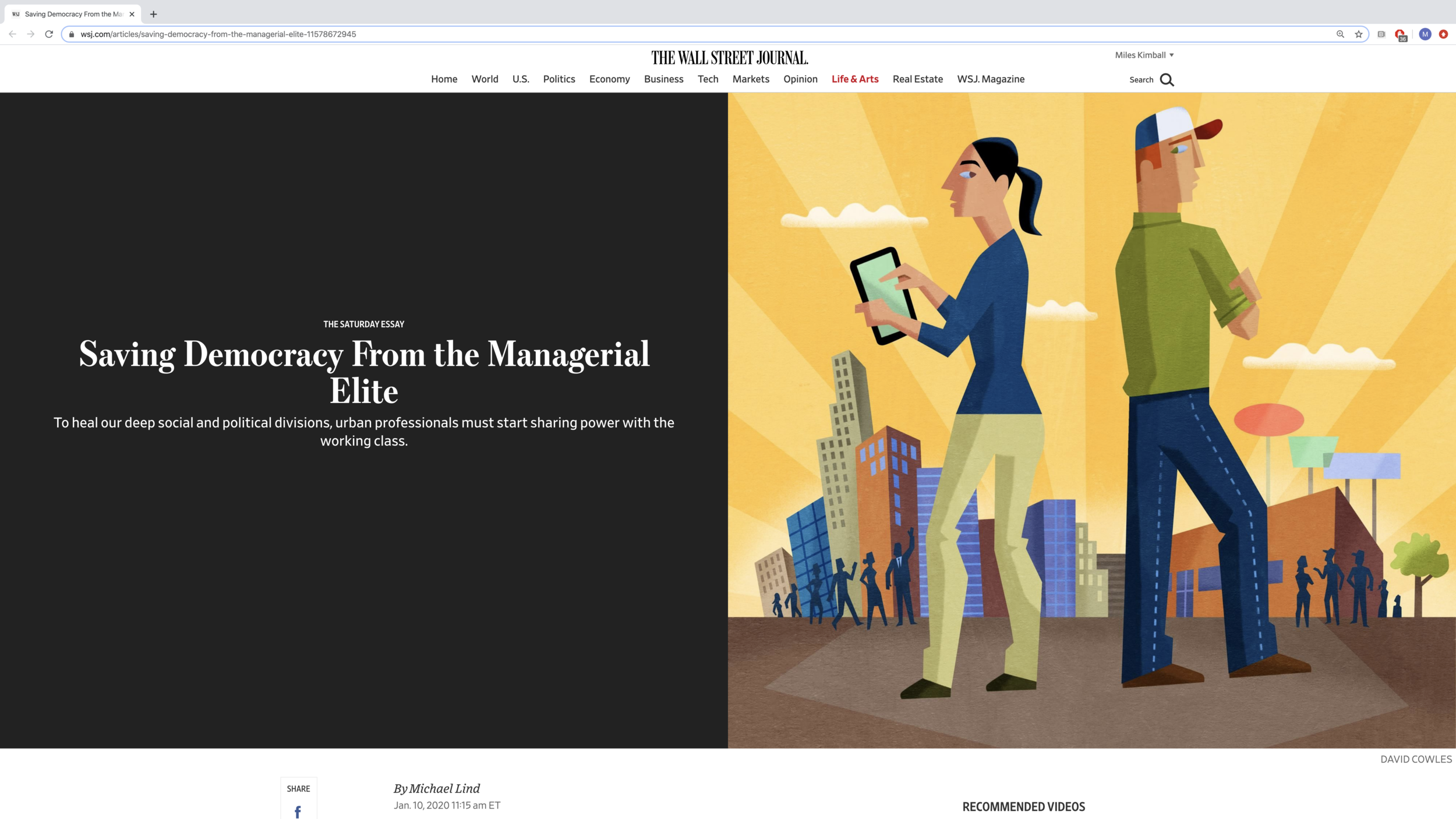
Michael Lind: College-Educated vs. Not is the New Class War

Michael Lind’s teaser for his new book The New Class War: Saving Democracy from the Managerial Elite makes a basic point about our current political and cultural situation: the big political and cultural divide in the United States and other advanced countries is now between those who have gone to college and those who haven’t. As Michael writes:

The deepest cleavage in Western democracies yawns between college-educated managers and professionals—a third of the population, at most—and the majority who lack college educations.

More precisely, he writes that recent populist insurgencies in the US, UK and France are:

… the revolt of alienated, mostly but not exclusively native and white working-class voters against post-national metropolitan elites.

That is, the college-educated have allied with minorities and immigrants.

There is also a geographical dimension to the divide. In addition to pointing to the kinds of forces discussed in “Janet Adamy and Paul Overberg on Immobility in America,” Michael points out:

… it is a snobbish mistake to assume that people in “left behind” regions should simply “move to opportunity.” Why should members of the working class move? The jobs that are being created in the greatest numbers in the U.S., including home health aide, retail clerk and restaurant worker, do not require college degrees and can be done almost everywhere.

That is, the wage premium from moving to a city that used to be there for those with low levels of education is no longer there.

Rather than mindless bigotry, Michael argues that those without a college education have a genuine fear (whether well-founded or not) of the economic consequences to them of immigration:

Unwilling to admit that the center-left has been largely captured by the managerial elite, many pundits and academics on the left insist that mindless bigotry, rather than class interests, explains the attraction of many working-class voters to populist parties that promise to restrict trade and immigration. But it is just as rational for workers to prefer a seller’s market in labor as it is for employers to prefer a buyer’s market in labor. Blue-collar workers who have abandoned center-left parties for populist movements bring with them the historic suspicion of large-scale immigration that was typical of organized labor for generations.

Cultural and political conflicts come together over key issues. As Michael puts it:

From its citadels in a few big cities, this oligarchy periodically notifies the working-class majority what values and opinions about sex, immigration and other topics it must immediately adopt without debate, on pain of being blacklisted by the private sector, prosecuted by the government or censored or erased by the media.

Michael points out the flip-side of meritocracy: the implication that those who don’t succeed are failures.

… today’s managerial elite is different. The pretense that it springs solely from “merit”—from individual talent and hard work—creates a false sense of superiority for its members, stoking resentment among their fellow citizens, who are defined as failures in fair competition.

The struggle between the educated+allies and the non-college-educated whites extends to a fight over the rules of the game in which the educated are highly skilled. The educated and allies look to the courts and international institutions staffed by well-educated people to weigh in on their side. Non-college-educated whites sometimes win at the polls, but with the decline of local political machines, private-sector unions and greater separation of church and state have few standing institutions to advocate for their interests. (Michael uses the interesting metaphor of a “tribune” for a standing institution to advocate for non-college-educated whites; the Roman Republic evolved the powerful office of tribune to make sure those below the upper classes had a continuing political say.)

Michael argues the need for new “mass membership organizations accountable to working-class people” and new substitutes for unions that are organized by the government: “bargaining among representatives of all firms and employees in particular industries, occupation-specific wage boards or labor representation on corporate boards.”

Less plausibly, Michael argues for tolerance of cultural differences. I think this unlikely because the key cultural differences are about treatment of women and minorities and about sexuality. The educated and their allies will not compromise on these. And the young have come to accept gay rights so much that they are becoming detached from churches that preach that homosexuality is a sin and look down on gay marriage. (See “That Baby Born in Bethlehem Should Inspire Society to Keep Redeeming Itself.”)

The educated and their allies can come to an economic accommodation with non-college-educated whites, but they aim to win the cultural war. In my view, they have a good chance at doing so.

Related posts:

Hope in Returning to the Road Not Taken in Psychiatry

Screen Shot 2020-01-20 at 10.27.47 AM.png

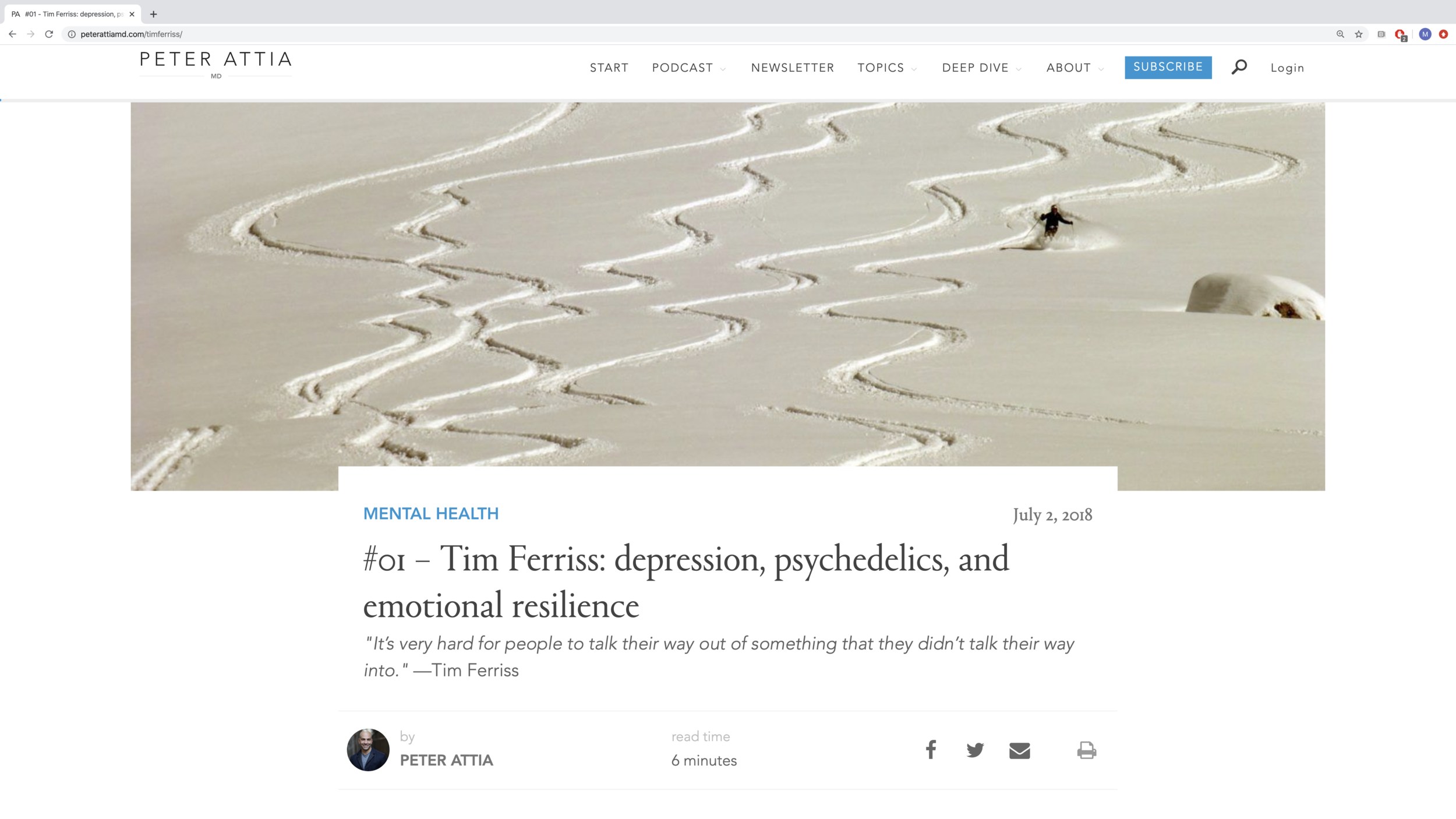
I have just begun listening to Peter Attia’s podcasts in his podcast series “The Drive.” So far, they seem very much in the same spirit as what I have been writing in my diet and health posts.

I first listened to Peter’s interview of Matthew Walker. That makes me look forward to reading Matthew Walker’s book Why We Sleep. The basic message is: “Respect sleep. If you don’t, you will pay.”

Peter’s very first podcast interviewing Tim Ferris is also powerful. Therapy using psychedelics such as LSDpsilocybin, MDMA (a pure form of “ecstasy”) and mescaline shows great promise. Two reasons psychedelics can help is (1) they can loosen the hold of longstanding top-level brain patterns, allowing a psychological “reboot” and (2) they can induce a temporary suspension of our normal intense awareness of the self-other distinction, allowing new, less self-centered perspectives to get in. I have zero personal experience with psychedelics, but I suspect that meditation and spiritual practices such as extended free-form personal prayer of the sort I used to do when I was a Mormon can induce similarly profound changes in brain activity.

A thumbnail history is that psychedelic therapy got derailed by government restrictions and cultural opprobrium in oppositional overreaction to the counterculture’s embrace of psychedelics in the 1960s. As a result, we may have lost the use of powerful therapies for many psychiatric ills for more than half a century.

I wonder, in particular, if my son Spencer’s suicide could have been averted with the help of psychelic therapy. (On that sad event, see my wife Gail’s guest post “The Shards of My Heart.”)

There is hope. Approval of MDMA to treat PTSD has been fast-tracked and it is possible it will be available for routine use by psychiatrists as early as 2021.

The way things work, as soon as a drug has been approved for one use, the system trusts medical doctors (including psychiatrists) to use it off-label. So demonstrating conclusively the value of one use case opens up the possibility of other legal therapeutic uses by medical doctors without going through the full (and expensive) drug approval process.

One example of an off-label use of a drug is the use of ketamine—which is approved for use as a anesthetic—to treat depression. I had a friend who was treated with a small dose of ketamine for serious depression that didn’t response to other treatments. It worked remarkably well. Ketamine is not a psychedelic but seems to have similar underutilized psychiatric potential.

Let me insert here a warning that (a) street drugs are often impure and (b) proper psychedelic therapy involves a lot of expert supervision. You could be in for a very bad trip or worse if you try to wing it. But in the hands of psychiatrists trained in their use, psychedelics have the advantage of being “anti-addictive” in the words of the podcast. Unlike opiates, where the benefit is upfront and the harm comes later, psychedelic experiences are often unpleasant while under the influence of the drug, but then leave lasting benefits.

I honor those who have been and are now pursuing research into the psychiatric potential of psychedelics. There is real hope that some of our most intractable psychiatric problems can be blunted.

I can’t fail to mention two relevant books. Reading my friend Randolph Nesse’s book Good Reasons for Bad Feelings: Insights from the Frontier of Evolutionary Psychiatry gave me an acute sense of how bad the current state of psychiatry and psychiatric treatment is. Breakthroughs are desperately needed. From reviews, Michael Pollan’s book How to Change Your Mind: What the New Science of Psychedelics Teaches Us About Consciousness, Dying, Addiction, Depression, and Transcendence (which I haven’t read yet, but want to), has a message similar to the message of Peter Attia’s interview of Tim Ferris.

For annotated links to other posts on diet and health, see:

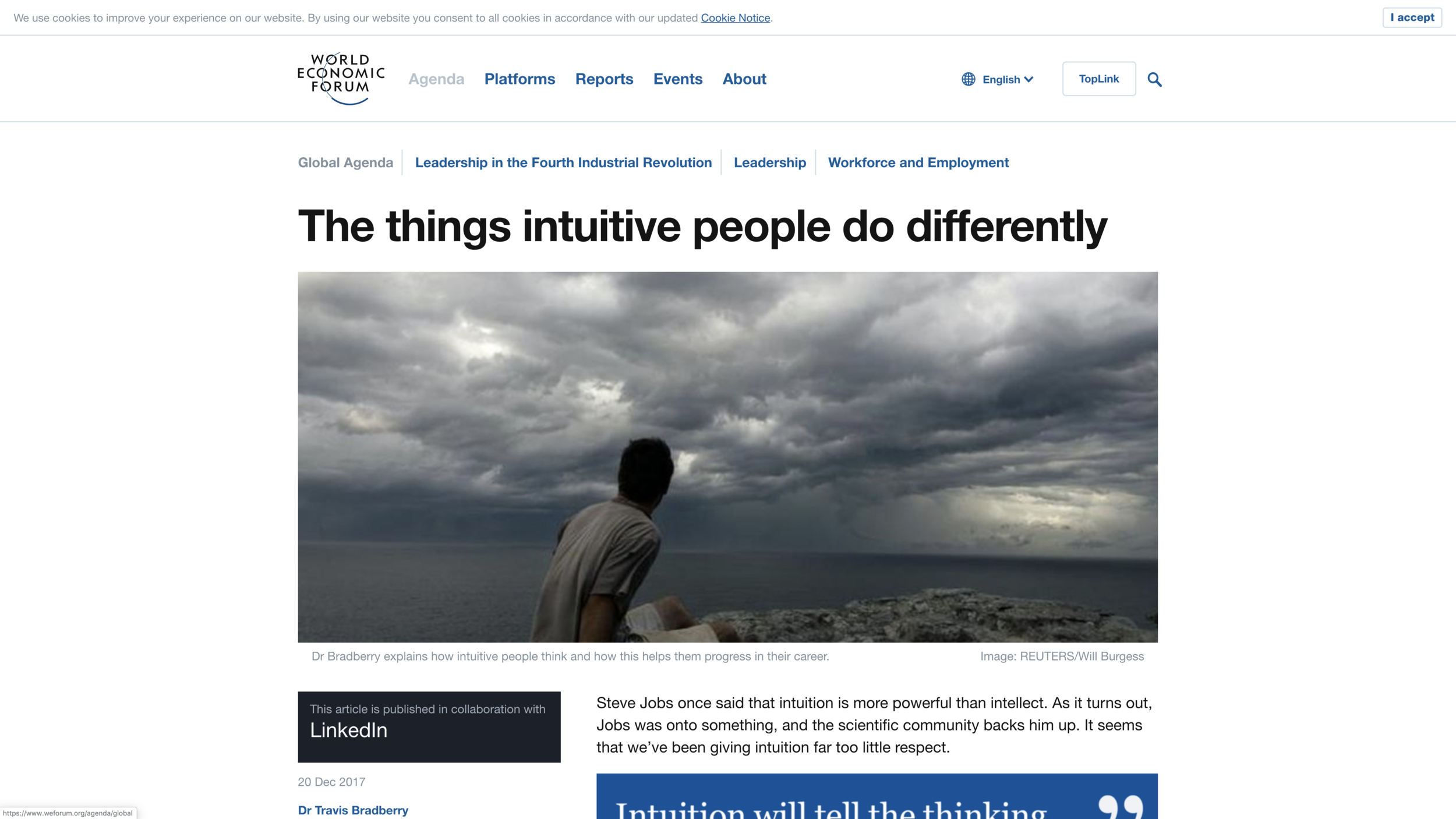
Respect Intuition

Most of you, my loyal readers, are very articulate. Having things articulated clearly is a huge help to intellectual work. It not only allows us to communicate with others, but also to understand things better ourselves.

But I have learned an important lesson in my career and in my life: there is great value in respecting intuitions and feelings that have not yet been clearly articulated. There can be genuine insight that arrives in an inarticulate form.

I have learned to respect intuition that cannot yet be fully articulated both when it is my own intuition and when it the intuition of another. In both cases, the one with the intuition needs to be given the time and the space needed to figure out how to articulate it better. Dissing the intuition saying something like “If you can’t back up your feeling with a good argument, you don’t have a leg to stand on” shuts off a channel of insight and can easily block the path to greater understanding or lead to a decision-making mistake.

Intuitions are far from foolproof. Sometimes they are off track. Sometimes they are wrong but lead to something that is right. And sometimes they represent with remarkable accuracy the understanding one has after working hard to articulate the intuition.

Respecting intuition also allows those who are less articulate but have important insights to help. Putting too much of a premium on things that are already articulated not only underrates certain ideas, it underrates certain people.

The problems, challenges and tasks we face are great enough that we need to take advantage of every tool we have to best them. Intuition is one of those tools.

How to Create Successful Fake News—And How Not To Be One of the People Snookered by It

The underlying scientific results should be taken with a grain of salt because of the reproducibility crisis in psychology, Gary Marcus’s and Annie Duke’s Wall Street Journal article “The Problem with Believing What We’re Told” are otherwise a fascinating rundown of indications that people are often quite sloppy about deciding whether something is true or false.

On that grain of salt, as I discuss in “Let's Set Half a Percent as the Standard for Statistical Significance," the article "Redefine Statistical Significance" on Psyarchive notes that—of results in psychology that according to the author’s statements, supposedly had only between 1/2 % and 5% of being due to chance, only 24% could be replicated in a follow-up study designed to verify those results.

But with that grain of salt, following are the suggestive results of psychological research on discernment of true/false as summarized by Gary Marcus and Annie Duke. I have added bullets to their words to separate different passages:

  • The simple act of repeating a lie can make it seem like truth … Test subjects became more likely to believe things as they were repeated, regardless of whether they were true or false. The third time they heard a false statement, they were just as likely to believe it as a true statement that they heard once.

  • When pictures were attached, people were more likely to believe the statements, including the fake ones.

  • … the presence of moral and emotional words like “hate,” “destroy” or “blame” acted like an accelerant, increasing the chance that a message would spread by about 20% for each additional emotional word. The study also found that most of the sharing was done within political parties rather than across political divides, creating an echo-chamber effect.

  • Savvy propagandists have long exploited the tendency of the human brain to take shortcuts. But social networks make it far easier, because they feed on a further human vulnerability: our need for approval, affection and positive feedback.

  • When first asked to assess the believability of true and false headlines posted on social media, the 68 participants—a mix of Democrats, Republicans and independents—were more likely to believe stories that confirmed their own prior views. But a simple intervention had an effect: asking participants to rate the truthfulness of the headlines. That tiny bit of critical reflection mattered, and it even extended to other articles that the participants hadn’t been asked to rate. The results suggest that just asking yourself, “Is what I just learned true?” could be a valuable habit.

  • … prompting people to consider why their beliefs might not be true leads them to think more accurately.

If borne out, this set of results provides a road map for creating successful fake news—and a road map for not being one of the people who is snookered.

BJ Fogg's Tips for New Year's Resolutions

Last January, I posted “3 Achievable Resolutions for Weight Loss.” So I was interested to read the Wall Street Journal op-ed BJ Fogg wrote to promote his new book Tiny Habits: The Small Changes That Change Everything. (I haven’t read the book itself.) I have some hope that his approach may help you in implementing some of the things I have recommended in my diet and health posts—such as going off sugar. (On that, also see “Letting Go of Sugar.”)

Here is the claim BJ Fogg makes for his approach:

It isn’t primarily repetition over a long period that creates habits; it’s the emotion that you attach to them from the start. Data from the most recent 5,200 people to complete a five-day course of our program showed that more than half were able to instill habits in five days or less.

He lays out the basics of his approach as follows. All of the following that is indented are BJ Fogg’s words; I have rearranged and added indentation, bullets and bolding:

It turns out that there is a formula for any successful shift in behavior. … To instill a habit,

1. the first thing you need is motivation: Pick a behavior that you want to do rather than one you merely feel obligated to do.

  • … don’t think you have to create motivation. Choose habits that you already are eager to adopt.

2. Second, you need to be able to do it: Make the change simple and small at first.

  • a busy mom named Amy, who needed to manage distractions and stay focused on essential tasks. The habit she initially designed with our help was just to write one must-do task on a Post-it Note and stick it on her car dashboard, prompted by each day’s kindergarten drop-off. She didn’t even have to do the task itself at first; the initial habit was all about setting priorities. 

  • One of my favorite projects was at a research hospital where the challenge was to tackle the problem of nurse burnout, a large and growing issue in health care. …

    I heard firsthand just how difficult it was for them to do basic things like drink enough water, eat regularly, and even get a full night’s sleep. So we worked together on creating healthy habits like “After I open my computer, I will take a sip of water,” or “After I answer the call light, I will take a deep breath.”

3. Third, you need a personal prompt: Identify a way to reliably trigger the behavior.

  • The best way to prompt a new habit is to anchor it to an existing routine in your life, whether it’s flushing the toilet, turning on the coffee pot in the morning or buckling your seat belt.

  • … every time he brushed his teeth, he would do two push-ups, then hold a “plank’’ position for just five seconds.

4. Finally, you need to celebrate your new habit, so that your brain associates it with positive feelings.

  • As you try each new habit, celebrate immediately. Cause yourself to feel good in that exact moment, whether it’s an inward “Good job!” or an outward fist pump.

If your goal is going off of sugar, an example of starting small would be to stop drinking sugary drinks such as soft drinks or juice; you could replace them with coffee or tea or flavored sparkling water. (See “In Praise of Flavored Sparkling Water.” On the trouble with juice, see “Forget Calorie Counting; It's the Insulin Index, Stupid.” On why not to substitute soft drinks with nonsugar sweeteners, see “Which Nonsugar Sweeteners are OK? An Insulin-Index Perspective.”)

An even easier goal to get you started toward better health would be to eat an avocado a day, one way or another, except on days when you are fasting. (See “In Praise of Avocados.”)

For annotated links to other posts on diet and health, see:

Bill Dudley on the Fed's New Floor System for Establishing Its Target Nominal Interest Rate

This should be taken seriously; Bill Dudley was the President of the Federal Reserve Bank of New York (a position in the Federal Reserve System second in importance only to the Chair of the Federal Reserve Board) from 2009–2018).

Note: To explain the new and old approaches to establishing an interest rate, I wrote this post for my students:

The Federalist Papers #4 B: National Defense Will Be Stronger if the States are United

In the first half of The Federalist Papers #4 John Jay argues that the states must be prepared to defend themselves from other nations. (See “The Federalist Papers #4 A: The States Must Be Prepared to Defend against Aggression by Other Nations.”) In the second half he argues that they will be better able to defend themselves if they are united. His main arguments are these:

  1. A larger nation has more military leaders to choose from, and so can typically get better leaders.

  2. Coordinated preparations are valuable.

  3. A united front allows for the internalization of externalities between the states in thinking through war aims (as reflected ultimately in the treaties the resolve wars).

  4. A larger nation can have a larger military that it can concentrate at the most important place at any point in a conflict.

  5. Unity of command is valuable.

  6. In a war, states might well betray one another if they are not under one government.

  7. If not united under one government squabbling among the states could make both the prosecution of war and the establishment of peace much more difficult.

  8. The strength that comes from being united matters not only for victory, but also for deterring war.

I consider the second half of The Federalist Papers #4 to being with these two paragraphs pointing to the value of a strong national defense:

The people of America are aware that inducements to war may arise out of these circumstances, as well as from others not so obvious at present, and that whenever such inducements may find fit time and opportunity for operation, pretenses to color and justify them will not be wanting. Wisely, therefore, do they consider union and a good national government as necessary to put and keep them in SUCH A SITUATION as, instead of INVITING war, will tend to repress and discourage it. That situation consists in the best possible state of defense, and necessarily depends on the government, the arms, and the resources of the country.

As the safety of the whole is the interest of the whole, and cannot be provided for without government, either one or more or many, let us inquire whether one good government is not, relative to the object in question, more competent than any other given number whatever.

Then, John Jay lays out in detail the arguments I list above. Here they are, with my summary of the argument in bold before John Jay’s argument in full on that point:

1. A larger nation has more military leaders to choose from, and so can typically get better leaders.

One government can collect and avail itself of the talents and experience of the ablest men, in whatever part of the Union they may be found.

2. Coordinated preparations are valuable.

It can move on uniform principles of policy. It can harmonize, assimilate, and protect the several parts and members, and extend the benefit of its foresight and precautions to each.

3. A united front allows for the internalization of externalities between the states in thinking through war aims (as reflected ultimately in the treaties the resolve wars).

In the formation of treaties, it will regard the interest of the whole, and the particular interests of the parts as connected with that of the whole.

4. A larger nation can have a larger military that it can concentrate at the most important place at any point in a conflict.

It can apply the resources and power of the whole to the defense of any particular part, and that more easily and expeditiously than State governments or separate confederacies can possibly do, for want of concert and unity of system.

5. Unity of command is valuable.

It can place the militia under one plan of discipline, and, by putting their officers in a proper line of subordination to the Chief Magistrate, will, as it were, consolidate them into one corps, and thereby render them more efficient than if divided into thirteen or into three or four distinct independent companies.

What would the militia of Britain be if the English militia obeyed the government of England, if the Scotch militia obeyed the government of Scotland, and if the Welsh militia obeyed the government of Wales? Suppose an invasion; would those three governments (if they agreed at all) be able, with all their respective forces, to operate against the enemy so effectually as the single government of Great Britain would?

We have heard much of the fleets of Britain, and the time may come, if we are wise, when the fleets of America may engage attention. But if one national government, had not so regulated the navigation of Britain as to make it a nursery for seamen--if one national government had not called forth all the national means and materials for forming fleets, their prowess and their thunder would never have been celebrated. Let England have its navigation and fleet--let Scotland have its navigation and fleet--let Wales have its navigation and fleet--let Ireland have its navigation and fleet--let those four of the constituent parts of the British empire be under four independent governments, and it is easy to perceive how soon they would each dwindle into comparative insignificance.

6. In a war, states might well betray one another if they are not under one government.

Apply these facts to our own case. Leave America divided into thirteen or, if you please, into three or four independent governments--what armies could they raise and pay--what fleets could they ever hope to have? If one was attacked, would the others fly to its succor, and spend their blood and money in its defense? Would there be no danger of their being flattered into neutrality by its specious promises, or seduced by a too great fondness for peace to decline hazarding their tranquillity and present safety for the sake of neighbors, of whom perhaps they have been jealous, and whose importance they are content to see diminished? Although such conduct would not be wise, it would, nevertheless, be natural. The history of the states of Greece, and of other countries, abounds with such instances, and it is not improbable that what has so often happened would, under similar circumstances, happen again.

7. If not united under one government squabbling among the states could make both the prosecution of war and the establishment of peace much more difficult.

But admit that they might be willing to help the invaded State or confederacy. How, and when, and in what proportion shall aids of men and money be afforded? Who shall command the allied armies, and from which of them shall he receive his orders? Who shall settle the terms of peace, and in case of disputes what umpire shall decide between them and compel acquiescence? Various difficulties and inconveniences would be inseparable from such a situation; whereas one government, watching over the general and common interests, and combining and directing the powers and resources of the whole, would be free from all these embarrassments, and conduce far more to the safety of the people.

8. The strength that comes from being united matters not only for victory, but also for deterring war.

But whatever may be our situation, whether firmly united under one national government, or split into a number of confederacies, certain it is, that foreign nations will know and view it exactly as it is; and they will act toward us accordingly. If they see that our national government is efficient and well administered, our trade prudently regulated, our militia properly organized and disciplined, our resources and finances discreetly managed, our credit re-established, our people free, contented, and united, they will be much more disposed to cultivate our friendship than provoke our resentment. If, on the other hand, they find us either destitute of an effectual government (each State doing right or wrong, as to its rulers may seem convenient), or split into three or four independent and probably discordant republics or confederacies, one inclining to Britain, another to France, and a third to Spain, and perhaps played off against each other by the three, what a poor, pitiful figure will America make in their eyes! How liable would she become not only to their contempt but to their outrage, and how soon would dear-bought experience proclaim that when a people or family so divide, it never fails to be against themselves.

PUBLIUS.

There is a direct relevance of John Jay’s arguments to our situation today. China is rising in power. It is important for the world to have an adequate counterweight to that power. Allies are valuable, but John Jay’s arguments point out why it is more valuable to have the United States itself be larger and more powerful so it can act as a better counterweight. Here, “larger” doesn’t mean more territory, it means having a larger population that can support a larger total economy and therefore support a larger military if necessary.

Fortunately, the United States can easily become larger in population because many, many people—including many highly skilled people as well as many out of “your tired, your poor, your huddled masses yearning to breathe freewho would gladly serve in the US military in order to be able to become citizens of our fair republic. Unfortunately, in in some quarter, there are low levels of tolerance for the cultural differences of many of those who were born outside the US. I hope that Americans soon wake up to the importance for our national security and world stability of allowing more immigration to the US in order to bolster American power. Of course, assimilation to an important degree is crucial in order to make sure that immigrants do, in fact, bolster American power. But the US has a stellar record of assimilating newcomers and gaining their loyalty. On the value of allowing more immigration in order to keep up with China’s power, see

(There is also a moral dimension to allowing more immigration. On that, see "‘The Hunger Games’ Is Hardly Our Future--It's Already Here” and “The Message of ‘Sal Tlay Ka Siti’.”)

Here are links to my other posts on The Federalist Papers so far:

2019's Most Popular Posts

The "Key Posts" link in navigation at the top of my blog lists all important posts through the end of 2016. Along with "2017's Most Popular Posts" and “2018's Most Popular Posts,” this is intended as a complement to that list. (Also, my most popular storified Twitter discussions are here, and you can see other recent posts by clicking on the Archive link at the top of my blog.) Continuing this tradition, I give links to the most popular posts from 2019 below into six groups: popular new posts in 2019 on diet and health, popular new posts in 2019 on political philosophy, popular new posts in 2019 on other topics, and popular older posts in those three categories. I will put in the 2019 pageviews for each post when someone went specifically to that post.

I am pleased to be able to report 529,822 Google Analytics pageviews in the first half of 2019—over 10,000 pageviews per week. Of these, 38,858 were pageviews for my blog homepage. 

New Posts in 2019 on Diet and Health

  1. Miles Kimball on Diet and Health: A Reader's Guide 2,577

  2. 3 Achievable Resolutions for Weight Loss 2,026

  3. Kevin D. Hall and Juen Guo: Why it is so Hard to Lose Weight and so Hard to Keep it Off 1,930

  4. David Ludwig: It Takes Time to Adapt to a Lowcarb, Highfat Diet 1,410

  5. Lisa Drayer: Is Fasting the Fountain of Youth? 1,340

  6. Reexamining Steve Gundry's `The Plant Paradox’ 1,143

  7. Layne Norton Discusses the Stephan Guyenet vs. Gary Taubes Debate (a Debate on Joe Rogan’s Podcast) 1,087

  8. On Exercise and Weight Loss 1,050

  9. Andreas Michalsen on Fasting 779

  10. Don't Tar Fasting by those of Normal or High Weight with the Brush of Anorexia 700

  11. Data on Asian Genes that Discourage Alcohol Consumption Explode the Myth that a Little Alcohol is Good for your Health 538

  12. After Gastric Bypass Surgery, Insulin Goes Down Before Weight Loss has Time to Happen 426

  13. How Low Insulin Opens a Way to Escape Dieting Hell 379

  14. Hints About What Can Be Done to Reduce Alzheimer's Risk 341

  15. The Four Food Groups Revisited 339

  16. Eggs May Be a Type of Food You Should Eat Sparingly, But Don't Blame Cholesterol Yet 335

  17. Increasing Returns to Duration in Fasting 333

  18. On 'Flipping the Metabolic Switch: Understanding and Applying Health Benefits of Fasting' by Stephen D. Anton et al. 330

  19. How Not Getting Enough Sleep Messes You Up, Part 1 320

  20. David Ludwig, Walter Willett, Jeff Volek and Marian Neuhouser: Controversies and Consensus on Fat vs. Carbs 310

  21. Live Your Life So You Don't Need Much Self-Control 299

  22. Freakonomics: The Story of Bananas 292

  23. Jonathan Shaw: Could Inflammation Be the Cause of Myriad Chronic Diseases? 291

  24. A Low-Glycemic-Index Vegan Diet as a Moderately-Low-Insulin-Index Diet 281

  25. Mental Retirement: Use It or Lose It—Susann Rohwedder and Robert Willis 270

  26. The Carbohydrate-Insulin Model Wars 257

  27. Maintaining Weight Loss 255

  28. Christmas Dinner 2018 with the Kimballs in Colorado 237

  29. Eating Highly Processed Food is Correlated with Death 234

  30. The Benefits of Fasting are Looking So Clear People Try to Mimic Fasting without Fasting 225

  31. Framingham State Food Study: Lowcarb Diets Make Us Burn More Calories 221

  32. How Weight Loss Happens: Mass In/Mass Out Revisited 210

  33. In Praise of Flavored Sparkling Water 201

  34. Biohacking: Nutrition as Technology 199

  35. On the Epistemology of Diet and Health: Miles Refuses to `Stay in His Lane’ 196

  36. Crafting Simple, Accurate Messages about Complex Problems 173

  37. Sutton, Beyl, Early, Cefalu, Ravussin and Peterson: Early Time-Restricted Feeding Improves Insulin Sensitivity, Blood Pressure, and Oxidative Stress Even without Weight Loss in Men with Prediabetes 173

  38. Nutritionally, Not All Apple Varieties Are Alike 171

  39. Cost Benefit Analysis Applied to Neti Pot Use 157

  40. Less Than 6 or More than 9 Hours of Sleep Signals a Higher Risk of Heart Attacks 153

  41. Fighting the Common Cold 148

  42. Critiquing `All-Cause and Cause-Specific Mortality with Low-Carbohydrate Diets' by Mohsen Mazidi, Niki Katsiki, Dimitri P. Mikhailidis, Naveed Sattar and Maciej Banach 145

  43. What is the Evidence on Dietary Fat? 134

  44. How Unhealthy are Red and Processed Meat? 129

  45. Should the Typical Person be Restricting Salt Intake? 123

  46. Is 10,000 Steps a Day More Than is Necessary for Health? 121

  47. Should Those Whose Main Symptom is Chest Pains Get Stent or Bypass Surgery? 116

  48. Does Reducing Saturated Fat Reduce Cardiovascular Disease? 115

  49. Cancer Cells Love Sugar; That’s How PET Scans for Cancer Work 108

  50. Another Problem with Processed Food: Propionate 96

New Posts in 2019 on Political Philosophy

  1. John Locke's Argument for Limited Government 1,647

  2. John Locke on Why the Executive and Legislative Power Should Be Separated, but the Executive and Foreign Policy Power Should Be Combined 1,233

  3. John Locke: How to Recognize a Tyrant 1,133

  4. Governments Long Established Should Not—and to a Good Approximation Will Not—Be Changed for Light and Transient Causes 603

  5. John Locke: How to Resist Tyrants without Causing Anarchy 584

  6. John Locke on the Supremacy of the People, the Supremacy of the Legislature over the Executive, and the Power of the Executive to Deal with Rotten Boroughs 344

  7. On Despotism 328

  8. The Federalist Papers #1: Alexander Hamilton's Plea for Reasoned Debate 200

  9. Getting Away with Doing Good 165

  10. The People Have the Right to Erect a New Government When the Previous Government Betrays the Trust It Has Been Given 161

  11. John Locke on Monarchs (Or Presidents) Who Destroy a Constitution 159

  12. Miles Kimball on John Locke's Second Treatise 155

  13. John Locke: The Obligation to Obey the Law Does Not Apply to Laws Promulgated by Invaders and Usurpers Who Do Not Have the Consent of the Governed 132

  14. John Locke Against Tyranny 120

  15. The Federalist Papers #2 A: John Jay on the Idea of America 111

  16. John Locke: Usurpation is a Kind of Domestic Conquest, with this Difference, that an Usurper Can Never Have Right on His Side 107

  17. John Locke: The People are the Judge of the Rulers 107

  18. John Locke: If Rebellion is a Sin, It is a Sin Committed Most Often by Those in Power 97

  19. John Locke: Bad Rulers May Be Removed 90

New Posts in 2019 on Other Topics

  1. In Honor of Alan Krueger 8,801

  2. Adding a Variable Measured with Error to a Regression Only Partially Controls for that Variable 3,559

  3. The Costs of Inflation 2,476

  4. 2019 First Half's Most Popular Posts 2,636

  5. Who Leaves Mormonism? 1,160

  6. Supply and Demand for the Monetary Base: How the Fed Currently Determines Interest Rates 1,016

  7. A Liberal Turn in the Mormon Church 818

  8. Ruchir Agarwal and Miles Kimball—Enabling Deep Negative Rates to Fight Recessions: A Guide 813

  9. Christian Kimball on Middle-Way Mormonism 427

  10. New Evidence on the Genetics of Homosexuality 410

  11. Deeper Learning in Macroeconomics 405

  12. An Optical Illusion: Nativity Scene or Two T-Rex's Fighting over a Table Saw? 383

  13. How Negative Interest Rates Affect the Economy 348

  14. Hessler, Pöpping, Hollstein, Ohlenburg, Arnemann, Massoth, Seidel, Zarbock and Wenk: Availability of Cookies During an Academic Course Session Affects Evaluation of Teaching 324

  15. Co-Active Coaching as a Tool for Maximizing Utility—Getting Where You Want in Life 312

  16. On Being a Copy of Someone's Mind 303

  17. In Honor of Martin Weitzman 303

  18. Chris Kimball: Grief in the Journey 301

  19. Against Narcissism 295

  20. What Monetary Policy Can and Can't Do 291

  21. Measuring Learning Outcomes from Getting an Economics Degree 256

  22. Chris Kimball on `A Liberal Turn in the Mormon Church' 235

  23. Against the Gold Standard 234

  24. Claudia Sahm's Anti-Recession Rule 226

  25. Reza Moghadam Flags 'Enabling Deep Negative Rates to Fight Recessions' in the Financial Times 225

  26. On Habit Formation 224

  27. The Economist: Why is Chicken So Cheap? 221

  28. Deeper Negative Rates Can Ward Off Secular Stagnation 216

  29. Joshua Goldstein and Staffan Qvist: The Argument for Expanding Nuclear Power 215

  30. Marriage 103 212

  31. Will Your Uploaded Mind Still Be You? —Michael Graziano 212

  32. Q&A on the Idea of a US Sovereign Wealth Fund 206

  33. Chris Kimball: The Language of Doubt 199

  34. Andy Matuschak: Why Books Don't Work (linkpost) 197

  35. Give Central Banks Independence and New Political Pressures to Balance the Old Ones 189

  36. National Well-Being Indexes and Goodhart’s Law 174

  37. Teens are Too Suspicious for Anything But the Truth about Drugs to Work 167

  38. Job Posting for a Full-Time Research Assistant with a Bachelor's Degree to Help with the Research Needed to Build a National Well-Being Index, Starting Late Summer 2020 162

  39. Kenneth W. Phifer: Is Death Meaningful? 157

  40. Why a Positive Aggregate Demand Shock Should Make the Stock Market Go Down If the Fed is Doing Its Job Right 157

  41. Statistically Controlling for Confounding Constructs is Harder than You Think—Jacob Westfall and Tal Yarkoni 146

  42. Andrew Biggs and Miles Kimball Debate Retirement Savings Policy 142

  43. Larry Summers Says the Fed Should Move Fast to Cut Rates 140

  44. Dan Ariely: The Power of Morning, Time Together and Positive Feedback 133

  45. Peter Conti-Brown: Can Trump Fire Jerome Powell? 132

  46. Donald Trump May Finally Get People to Realize the Fed is Responsible for What Happens with the Business Cycle, Not the President or Congress 131

  47. Christof Koch: Will Machines Ever Become Conscious? 130

  48. Noah Smith on Blocking Twitter Trolls 123

  49. FocusEconomics: Predictions for the Global Economy in 2019 from 13 Experts 117

  50. Miles Kimball's Presentation on Negative Interest Rate Policy to the National Association of Business Economists 117

  51. Prospect Magazine: The World's Top 50 Thinkers in 2019 117

  52. Can Religion Reduce Suicide? 113

  53. Ken Rogoff Defends a Robust Negative Rate Policy at Hoover 112

  54. Alexander Trentin Interviews Miles Kimball about Macroeconomic Stabilization: Negative Rates and Sovereign Wealth Funds 111

  55. Brian Flaxman—A Tale of Bipartisanship and Financial Interests: The Taxpayer First Act of 2019 109

  56. Silvio Gesell's Plan for Negative Nominal Interest Rates Meets the Mormons 103

  57. Where is Social Science Genetics Headed? 99

  58. FocusEconomics: How and When will the Next Financial Crisis Happen?—26 Experts Weigh In 96

  59. One Nation 96

  60. In Honor of Marvin Goodfriend 93

  61. JP Koning on Ill-Considered Government Policies Standing in the Way of the Emergence of the Digital Cash that Can Eliminate Any Lower Bound on Interest Rates 93

  62. On the Effability of the Ineffable 93

Older Posts with Continuing Popularity on Diet and Health

  1. Forget Calorie Counting; It's the Insulin Index, Stupid  51,454

  2. How Fasting Can Starve Cancer Cells, While Leaving Normal Cells Unharmed  32,302

  3. Which Nonsugar Sweeteners are OK? An Insulin-Index Perspective 15,533

  4. Why a Low-Insulin-Index Diet Isn't Exactly a 'Lowcarb' Diet  12,731

  5. Whole Milk Is Healthy; Skim Milk Less So  10,853

  6. Using the Glycemic Index as a Supplement to the Insulin Index  7,507

  7. Obesity Is Always and Everywhere an Insulin Phenomenon  5,356

  8. The Case Against Sugar: Stephan Guyenet vs. Gary Taubes  5,306

  9. Evidence that High Insulin Levels Lead to Weight Gain 4,610

  10. Stop Counting Calories; It's the Clock that Counts  4,566

  11. What Steven Gundry's Book 'The Plant Paradox' Adds to the Principles of a Low-Insulin-Index Diet 4015

  12. Intense Dark Chocolate: A Review  2,920

  13. Jason Fung's Single Best Weight Loss Tip: Don't Eat All the Time 2,318

  14. Five Books That Have Changed My Life  2,144

  15. The Keto Food Pyramid 1,951

  16. Meat Is Amazingly Nutritious—But Is It Amazingly Nutritious for Cancer Cells, Too?  1,663

  17. Why You Should Worry about Cancer Promotion by Diet as Much as You Worry about Cancer Initiation by Carcinogens 1,505

  18. Our Delusions about 'Healthy' Snacks—Nuts to That! 1,441

  19. My Annual Anti-Cancer Fast 1,349

  20. Jason Fung: Dietary Fat is Innocent of the Charges Leveled Against It 1,311

  21. 4 Propositions on Weight Loss 1,186

  22. Letting Go of Sugar 1,139

  23. Vindicating Gary Taubes: A Smackdown of Seth Yoder 1,132

  24. My Giant Salad 1,088

  25. Good News! Cancer Cells are Metabolically Handicapped 1,021

  26. Best Health Guide: 10 Surprising Changes When You Quit Sugar 960

  27. The Problem with Processed Food 933

  28. Exorcising the Devil in the Milk 832

  29. Yes, Sugar is Really Bad for You 809

  30. Which Is Worse for You: Sugar or Fat? 689

  31. Sugar as a Slow Poison 654

  32. Salt Is Not the Nutritional Evil It Is Made Out to Be 613

  33. How Sugar, Too Much Protein, Inflammation and Injury Could Drive Epigenetic Cellular Evolution Toward Cancer 537

  34. Diseases of Civilization 526

  35. 'Is Milk Ok?' Revisited 513

  36. The Case Against the Case Against Sugar: Seth Yoder vs. Gary Taubes 508

  37. A Barycentric Autobiography 400

  38. Is Milk OK? 385

  39. Carola Binder—Why You Should Get More Vitamin D: The Recommended Daily Allowance for Vitamin D Was Underestimated Due to Statistical Illiteracy 381

  40. Mass In/Mass Out: A Satire of Calories In/Calories Out 373

  41. In Praise of Avocados 337

  42. Nina Teicholz on the Bankruptcy of Counting Calories 328

  43. Anthony Komaroff: The Microbiome and Risk for Obesity and Diabetes 316

  44. How Sugar Makes People Hangry 264

  45. Eating on the Road 257

  46. Hints for Healthy Eating from the Nurses’ Health Study 251

  47. Black Bean Brownies 226

  48. Evidence that Gut Bacteria Affect the Brain 199

  49. The Trouble with Most Psychological Approaches to Weight Loss: They Assume the Biology is Obvious, When It Isn't 176

  50. A Conversation with David Brazel on Obesity Research 158

  51. Heidi Turner, Michael Schwartz and Kristen Domonell on How Bad Sugar Is 134

  52. Carola Binder: The Obesity Code and Economists as General Practitioners 124

  53. Gary Taubes Makes His Case to Nick Gillespie: How Big Sugar and a Misguided Government Wrecked the American Diet 124

  54. Magic Bullets vs. Multifaceted Interventions for Economic Stimulus, Economic Development and Weight Loss 114

  55. The Heavy Non-Health Consequences of Heaviness 106

  56. Does Sugar Make Dietary Fat Less OK? 93

Older Posts with Continuing Popularity on Political Philosophy

  1. The Social Contract According to John Locke  47,916

  2. John Locke: Freedom is Life; Slavery Can Be Justified Only as a Reprieve from Deserved Death  4,398

  3. John Stuart Mill's Brief for Freedom of Speech  4,257

  4. John Locke on Punishment 2,793

  5. On John Locke's Labor Theory of Property 2,747

  6. John Locke's Argument for Majority Rule 2,241

  7. John Locke: The Purpose of Law Is Freedom 2,168

  8. John Locke's State of Nature and State of War 1,783

  9. Liberty and the Golden Rule 1,712

  10. John Stuart Mill on Freedom from Religion 1,490

  11. On the Achilles Heel of John Locke's Second Treatise: Slavery and Land Ownership 1,451

  12. John Stuart Mill’s Vigorous Advocacy of Education Vouchers 1,168

  13. Freedom Under Law Means All Are Subject to the Same Laws 1,122

  14. John Locke: The Only Legitimate Power of Governments is to Articulate the Law of Nature 1,121

  15. John Locke: When the Police and Courts Can't or Won't Take Care of Things, People Have the Right to Take the Law Into Their Own Hands 1,086

  16. John Locke on Legitimate Political Power 1,046

  17. Human Beings as Social—and Trading—Animals 1,026

  18. John Stuart Mill’s Defense of Freedom 796

  19. John Locke on the Equality of Humans 780

  20. John Locke Against Natural Hierarchy 744

  21. John Locke: The Public Good 720

  22. Democracy is Not Freedom 706

  23. John Locke: Government by the Consent of the Governed Often Began Out of Respect for Someone Trusted to Govern 699

  24. John Locke: Democracy, Oligarchy, Hereditary Monarchy, Elective Monarchy and Mixed Forms of Government 690

  25. John Locke's Smackdown of Robert Filmer: Being a Father Doesn't Make Any Man a King 623

  26. Cass Sunstein on the Rule of Law 584

  27. John Locke: People Must Not Be Judges in Their Own Cases 584

  28. John Locke: Legitimate Taxation and other Appropriation of Property by the Government is Limited as to Quantity, Procedure and Purpose 521

  29. John Stuart Mill on Balancing Christian Morality with the Wisdom of the Greeks and Romans 500

  30. The Metaphor of a Nation as a Family 466

  31. John Stuart Mill: In Praise of Eccentricity 459

  32. John Stuart Mill: In the Parent-Child Relationship, It is the Children that Have Rights, Not the Parents 457

  33. John Stuart Mill: Two Maxims for Liberty 454

  34. John Stuart Mill on Freedom of Thought 434

  35. An Experiment with Equality of Outcome: The Case of Jamestown 431

  36. John Locke Explains 'Lord of the Flies' 416

  37. John Locke: The Right to Enforce the Law of Nature Does Not Depend on Any Social Contract 403

  38. John Stuart Mill's Brief for Individuality 381

  39. John Locke Treats the Bible as an Authority on Slavery 349

  40. John Stuart Mill on the Protection of "Noble Lies" from Criticism 332

  41. John Stuart Mill on the Role of Custom in Human Life 324

  42. Social Liberty 317

  43. John Stuart Mill Applies the Principles of Liberty 316

  44. John Locke: We Are All Born Free 291

  45. John Stuart Mill’s Brief for the Limits of the Authority of Society over the Individual 282

  46. John Stuart Mill on Public and Private Actions 282

  47. John Locke: The Law of Nature Requires Maturity to Discern 274

  48. John Stuart Mill on Freedom of Contract 273

  49. John Stuart Mill on the Chief Interest of the History of Mankind: The Love of Liberty and Improvement vs. Custom 271

  50. John Locke and the Share of Land 267

  51. John Stuart Mill on the Gravity of Divorce 261

  52. John Stuart Mill on Rising Above Mediocrity 259

  53. John Locke: Defense against the Black Hats is the Origin of the State 247

  54. John Stuart Mill: The Central Government Should Be Slow to Overrule, but Quick to Denounce Bad Actions of Local Governments 246

  55. John Locke: By Natural Law, Husbands Have No Power Over Their Wives 235

  56. John Stuart Mill: How Laws Against Self-Harm Backfire 232

  57. John Locke: Lions and Wolves and Enemies, Oh My 229

  58. John Stuart Mill on Sins of Omission 228

  59. John Locke: The Law Must Apply to Rulers, Too 215

  60. John Stuart Mill’s Roadmap for Freedom 214

  61. John Stuart Mill on the Rich and the Elite 209

  62. John Stuart Mill on the Historical Origins of Liberty 206

  63. John Locke: No One is Above the Law, which Must Be Established and Promulgated and Designed for the Good of the People; Taxes and Governmental Succession Require Approval of Elected Representatives 204

  64. John Stuart Mill on Benevolent Dictators 194

  65. John Stuart Mill on the Sources of Prejudice About What Other People Should Do 192

  66. John Stuart Mill on Having a Day of Rest and Recreation 187

  67. John Locke on the Mandate of Heaven 180

  68. The Rise and Fall of Venice 180

  69. John Stuart Mill on Being Offended at Other People's Opinions or Private Conduct 169

  70. John Locke Off Base with His Assumption That There Was Plenty of Land at the Time of Acquisition 167

  71. John Stuart Mill on Puritanism 167

  72. John Locke: Property in the State of Nature 166

  73. John Locke: Theft as the Little Murder 164

  74. John Stuart Mill on China's Technological Lost Centuries 161

  75. Vigilantes in the State of Nature 155

  76. Paul Finkelman: The Monster of Monticello 152

  77. John Stuart Mill's Argument Against Political Correctness 148

  78. John Stuart Mill’s Defense of Freedom of Religion for Mormons as an Argument for Chartering Libertarian Enclaves 145

  79. Democratic Injustice 144

  80. John Locke: Law Is Only Legitimate When It Is Founded on the Law of Nature 142

  81. John Locke: Rivalry in Consumption Makes Private Property Unavoidable 132

  82. John Locke Looks for a Better Way than Believing in the Divine Right of Kings or Power to the Strong 131

  83. In Praise of Trolls 124

  84. John Stuart Mill: People Should Be Allowed to Govern Their Own Lives Because They Care More and Know More about Themselves Than Anyone Else Does 120

  85. Edmund Burke's Wisdom 119

  86. John Stuart Mill on Humans vs. the Lesser Robots 119

  87. If the Justice System Does Not Try to Deliver Justice, We Are in a State of War 113

  88. John Stuart Mill: We Are Ethically Responsible for the Harm We Do to Others, Even When That Harm Stems from First Doing Harm to Ourselves 111

  89. John Stuart Mill on the Need to Make the Argument for Freedom of Speech 107

  90. Genius Can Only Breathe Freely in an Atmosphere of Freedom 107

  91. John Locke on Diminishing Marginal Utility as a Limit to Legitimately Claiming Works of Nature as Property 100

  92. John Stuart Mill: Making the Government More Powerful than Necessary is Inimical to Freedom 99

  93. John Stuart Mill and C. S. Lewis on Originality 97

  94. John Locke: Thinking of Mothers and Fathers On a Par Undercuts a Misleading Autocratic Metaphor 96

  95. John Stuart Mill on Raising the Next Generation 94

  96. On Consent Beginning from a Free and Equal Condition 90

Older Posts with Continuing Popularity on Other Topics

  1. The 7 Principles of Unitarian Universalism 14,356

  2. William Strauss and Neil Howe's American Prophecy in 'The Fourth Turning: What the Cycles of History Tell Us About America's Next Rendezvous with Destiny' 3,075

  3. William Graham Sumner, Social Darwinist  2,394

  4. Five Books That Have Changed My Life  2,144

  5. Monetary vs. Fiscal Policy: Expansionary Monetary Policy Does Not Raise the Budget Deficit 2,067

  6. How and Why to Eliminate the Zero Lower Bound: A Reader’s Guide  1,945

  7. The Medium-Run Natural Interest Rate and the Short-Run Natural Interest Rate 1,806

  8. There's One Key Difference Between Kids Who Excel at Math and Those Who Don't  (with Noah Smith) 1,610

  9. The Message of Mormonism for Atheists Who Want to Stay Atheists 1,565

  10. The Logarithmic Harmony of Percent Changes and Growth Rates  1,655

  11. On Teaching and Learning Macroeconomics  1,425

  12. The Shards of My Heart 1,287

  13. Why I Write 1,181

  14. Joshua Foer on Deliberate Practice 1,152

  15. There Is No Such Thing as Decreasing Returns to Scale  1,094

  16. Government Purchases vs. Government Spending 1,064

  17. Economics Needs to Tackle All of the Big Questions in the Social Sciences 1,052

  18. The Complete Guide to Getting into an Economics PhD Program 1043

  19. Why Taxes are Bad 1,016

  20. An Agnostic Prayer for Strength 952

  21. Returns to Scale and Imperfect Competition in Market Equilibrium 862

  22. What is the Effective Lower Bound on Interest Rates Made Of? 845

  23. How to Turn Every Child into a 'Math Person' 783

  24. The Descent—and the Divine Calling—of the Modernists 760

  25. Noah Smith: You Are Already in the Afterlife 748

  26. Two Types of Knowledge: Human Capital and Information 716

  27. Shane Parrish on Deliberate Practice 705

  28. Netflix as an Example of Clay Christensen's 'Disruptive Innovation' 682

  29. The Volcker Shock 637

  30. Expansionist India 619

  31. On Having a Thesis 611

  32. The Most Effective Memory Methods are Difficult—and That's Why They Work 596

  33. Even Central Bankers Need Lessons on the Transmission Mechanism for Negative Interest Rates 565

  34. Student Guest Posts on supplysideliberal.com 561

  35. Godless Religion 539

  36. On Master's Programs in Economics 528

  37. David Pagnucco: The Eurozone and the Impossible Trinity 512

  38. What is a Supply-Side Liberal? 509

  39. David Byrne: De Gustibus Non Est Disputandum 500

  40. Fight the Backlash Against Retirement Saving Nudges: Everyone Benefits When People Save More for Old Age 475

  41. Michael Weisbach: Posters on Finance Job Rumors Need to Clean Up Their Act, Too 460

  42. Robert Shiller: Against the Efficient Markets Theory 439

  43. Noah Smith: Buddha Was Wrong About Desire 425

  44. Cognitive Economics 415

  45. The Message of “Sal Tlay Ka Siti” 404

  46. The Mormon View of Jesus 401

  47. Greg Shill: Does the Fed Have the Legal Authority to Buy Equities? 400

  48. Why GDP Can Grow Forever 378

  49. Will Women Ever Get the Mormon Priesthood? 350

  50. Critical Reading: Apprentice Level 348

  51. Brio in Blog Posts 343

  52. Next Generation Monetary Policy 339

  53. Sticky Prices vs. Sticky Wages: A Debate Between Miles Kimball and Matthew Rognlie 341

  54. How Subordinating Paper Currency to Electronic Money Can End Recessions and End Inflation 324

  55. 18 Misconceptions about Eliminating the Zero Lower Bound 323

  56. Franklin Roosevelt on the Second Industrial Revolution 318

  57. Negative Interest Rate Policy as Conventional Monetary Policy: Full Text 316

  58. The Unavoidability of Faith 307

  59. The Shape of Production: Charles Cobb's and Paul Douglas's Boon to Economics 304

  60. Teleotheism and the Purpose of Life 301

  61. Rodney Stark on the Status of Women in Early Christianity 299

  62. The Deep Magic of Money and the Deeper Magic of the Supply Side 286

  63. Why I Am Not a Neoliberal 284

  64. Why I am a Macroeconomist: Increasing Returns and Unemployment 283

  65. False Advertising for College is Pretty Much the Norm 278

  66. Chris Kimball: Having a Prophet in the Family 256

  67. Miles Moves to the University of Colorado Boulder 246

  68. Hannah Katz: The Pros and Cons of Tipping Culture 244

  69. The Mormon Church Decides to Treat Gay Marriage as Rebellion on a Par with Polygamy 244

  70. Less is More in Mormon Church Meetings 240

  71. Nicholas Kristof: "Where Sweatshops are a Dream" 237

  72. Peter Conti-Brown's Takedown of Danielle DiMartino Booth's Book "Fed Up: An Insider's Take on Why the Federal Reserve is Bad for America" 233

  73. The Mystery of Consciousness 222

  74. Heroes of Science Action Figures 220

  75. Legitimate Power and Authority 213

  76. Marriage—Not for the Faint of Heart 212

  77. Noah Smith: Why Do Americans Like Jews and Dislike Mormons? 211

  78. Matthew Shapiro, Martha Bailey and Tilman Borgers on the Economics Job Market Rumors Website 208

  79. Silvio Gesell's Plan for Negative Nominal Interest Rates 208

  80. An Agnostic Grace 202

  81. Markus Brunnermeier and Yann Koby's "Reversal Interest Rate" 198

  82. International Finance: A Primer 193

  83. The Egocentric Illusion 192

  84. John L. Davidson on Resolving the House Mystery: The Institutional Realities of House Construction 192

  85. Barack Obama: Football as the Best Sports Analogy for Politics 188

  86. Miles Kimball - Google Scholar Citations 187

  87. Restoring American Growth: The Video 187

  88. One of the Biggest Threats to America's Future Has the Easiest Fix 186

  89. The Message of Jesus for Non-Supernaturalists 184

  90. How Albert Einstein Became a Celebrity 184

  91. How the Original Sin of Borrowing in a Foreign Currency Can Reduce the Effectiveness of Monetary Policy for Both the Borrowing and Lending Country 183

  92. Must All Economics Papers Be Doorstoppers? 180

  93. Gather ’round, Children, Here’s How to Heal a Wounded Economy 174

  94. Christian Kimball: Revelation and Satan 171

  95. How and Why to Expand the Nonprofit Sector as a Partial Alternative to Government: A Reader’s Guide 169

  96. Higher Inflation Is Not the Answer 165

  97. Marriage 101 165

  98. Charles Murray on Taking Religion Seriously 163

  99. Marriage 102 162

  100. Odious Wealth: The Outrage is Not So Much Over Inequality but All the Dubious Ways the Rich Got Richer 161

  101. Optimal Monetary Policy: Could the Next Big Idea Come from the Blogosphere? 159

  102. Clay Christensen, Jerome Grossman and Jason Hwang on the Three Basic Types of Business Models 159

  103. Let's Set Half a Percent as the Standard for Statistical Significance 156

  104. Miles's April 9, 2006 Unitarian Universalist Sermon: ‘UU Visions’ 156

  105. Noah Smith—The Fight of the Ages: Pain and Death 152

  106. My Dad 150

  107. How I Became Optimistic 150

  108. An Agnostic Invocation 149

  109. Owen Nie: Monetary Policy in Colonial New York, New Jersey and Delaware 148

  110. Dynamic Map of Europe from 1000 A.D. to 1900 148

  111. Should the U.S. Dollar Be Weak or Strong? 147

  112. The Coming Transformation of Education: Degrees Won’t Matter Anymore, Skills Will 146

  113. Leveling Up: Making the Transition from Poor Country to Rich Country 145

  114. Electronic Money: The Powerpoint File 143

  115. How Conservative Mormon America Avoided the Fate of Conservative White America 143

  116. Michael Huemer's Immigration Parable 139

  117. My Objective Function 138

  118. America's Big Monetary Policy Mistake: How Negative Interest Rates Could Have Stopped the Great Recession in Its Tracks 138

  119. The Swiss National Bank May Need to Cut Its Target Rate Further Now That It Could Get In Trouble with the US If It Keeps Buying So Many Foreign Assets 136

  120. Live: Teleotheism and the Purpose of Life 133

  121. Discounting Government Projects 131

  122. Alexander Trentin Interviews Miles Kimball about Establishing an International Capital Flow Framework 131

  123. How to Handle Worries about the Effect of Negative Interest Rates on Bank Profits with Two-Tiered Interest-on-Reserves Policies 130

  124. Jacob Bastian and Maggie Jones: Do EITC Expansions Pay for Themselves? Effects on Tax Revenue and Public Assistance Spending

  125. The Racist Origins of the Idea of the "Dumb Jock" 130

  126. Andrew Carnegie on Cost-Cutting 129

  127. On the Great Recession 127

  128. Going Negative: The Virtual Fed Funds Rate Target 125

  129. Safe, Legal, Rare and Early 125

  130. Noah Smith: Mom in Hell 122

  131. So What If We Don't Change at All…and Something Magical Just Happens? 121

  132. Noah Smith: Sunni Islam is Failing 119

  133. The Extensive Margin: How to Simultaneously Raise Quality and Lower Tuition at Elite Public Universities 119

  134. Is Nuclear Energy Safe? Well, Which One? 119

  135. Can Taxes Raise GDP? 118

  136. So You Want to Save the World 118

  137. Responding to Joseph Stiglitz on Negative Interest Rates 116

  138. The Litany Against Fear 115

  139. Books on Economics 114

  140. Economist Twitter Stars 113

  141. Q&A: Is Electronic Money the Mark of the Beast? 112

  142. Enabling Deeper Negative Rates by Managing the Side Effects of a Zero Paper Currency Interest Rate: The Video 112

  143. Division of Labor in Track-and-Hook Songwriting 112

  144. When the Output Gap is Zero, But Inflation is Below Target 112

  145. A Conversation with Clint Folsom, Mayor of Superior, Colorado 112

  146. Diana Kimball: Listening Creates Possibilities 111

  147. Inside Mormonism: The Home Teachers Come Over 110

  148. Eric Weinstein: Genius Is Not the Same Thing as Excellence 110

  149. Gabriela D'Souza on Failure in Learning Math 110

  150. Roger Farmer and Miles Kimball on the Value of Sovereign Wealth Funds for Economic Stabilization 110

  151. Eric Schlosser on the Underground Economy 109

  152. The Costs and Benefits of Repealing the Zero Lower Bound...and Then Lowering the Long-Run Inflation Target 109

  153. Facebook Convo on Women in Economics 108

  154. How Increasing Retirement Saving Could Give America More Balanced Trade 108

  155. David Holland on the Mormon Church During the February 3, 2008–January 2, 2018 Monson Administration 108

  156. Rodney Stark’s Contrarian Assessment of the Crusades 107

  157. Negative Rates and the Fiscal Theory of the Price Level 107

  158. Wallace Neutrality and Ricardian Neutrality 107

  159. ‘The Hunger Games’ Is Hardly Our Future--It's Already Here 105

  160. Robert Eisler—Stable Money: The Remedy for the Economic World Crisis 104

  161. An Agnostic Prayer for Awareness 103

  162. Manifesto #1: I Am Enough 102

  163. New Mormon Prophet Russell Nelson Shakes Things Up 102

  164. Why Scott Fullwiler Misses the Point in ‘Why Negative Nominal Interest Rates Miss the Point’ 100

  165. How Did Evolution Give Us Religion? 100

  166. Signalling When Everyone Knows about Last-Place Aversion: An Application to Economics Job Market Rumors 100

  167. Fields Medal Winner Maryam Mirzakhani's Slow-Cooked Math 100

  168. Barbara Oakley: How We Should Be Teaching Math 100

  169. Matt Stoller: How Democrats Killed Their Populist Soul 99

  170. Noah Smith: Islam Needs To Separate Church and State 98

  171. Christian Kimball on the Fallibility of Mormon Leaders and on Gay Marriage 97

  172. Robert L. Woodson Sr. on Helping the Poor 96

  173. Oren Cass on the Value of Work 95

  174. What is a Partisan Nonpartisan Blog? 95

  175. Paul Krugman on John Taylor and Admitting Error 94

  176. Annie Atherton: I Tried 7 Different Morning Routines — Here’s What Made Me Happiest (direct link) 94

  177. Christian Kimball: Anger [1], Marriage [2], and the Mormon Church [3] 93

  178. Rodney Stark: Historians Ought to Count—But Often Don’t 91

  179. Selfishness and the Fall of Rome 91

  180. Big Brother Speaks: Christian Kimball on Mitt Romney 91

  181. Why We Want More Jobs 90