Spencer Levan Kimball on How the Federal Government Can Support and Direct Rather than Undermine State Regulation

The Republicans have promised to repeal and replace Obamacare. I continue to think the proposal I made in "Evan Soltas on Medical Reform Federalism—in Canada" is a good way to go:
Let’s abolish the tax exemption for employer-provided health insurance, with all of the money that would have been spent on this tax exemption going instead to block grants for each state to use for its own plan to provide universal access to medical care for its residents.
On another set of policy issues that I discussed in "Against Anticompetitive Regulation," I am very concerned at the way state and local governments are harming economic growth by overregulating land use and licensing more and more occupations. To me, it is a legitimate and appropriate use of the interstate commerce clause in the US Constitution to require states to respect the benefits greater economic freedom in certain key areas can have for enhancing economic growth.
In both cases, the approach is for the Federal government to lay down general rules of the road while the states do the driving.
I was delighted to discover from reading my uncle Spencer Levan Kimball's autobiography that he recommended a similar approach in his area of expertise: insurance law. His approach to Federalism in auto insurance law is described well in this passage from A Tale That is Told: The Autobiography of Spencer L. Kimball, pp. 314-317. In this passage he also expresses a clear-eyed view of the nature of government.
In 1967 a proposal was made in Congress for a study of automobile accident compensation by The Department of Transportation ("DOT"); in May 1968 Congress "authorized and directed" it by Joint Resolution and I spent a day in Washington consulting about planning the study. ...
The principal non-quantitative study was of mass marketing in liability insurance. It was the only one in which the authors' conclusions on policy questions were forthrightly stated as part of the study. Herb Denenberg and I stated them; we were the contracting parties. We drew on our combined knowledge of the property and liability lines of the insurance business to write Mass Marketing in Property and Liability Insurance, a small book making the case for freedom to try marketing methods that had the potential to reduce the cost of putting business on the books of the company. ...
In September 1968 the Secretary of Transportation invited me to serve on the Economic Regulation Advisory Committee for the project. I accepted promptly, despite being in the middle of the Wisconsin Insurance Laws Revision project and also working on the mass marketing study for the same [DOT] project. This committee assignment was a major undertaking, involving at least a dozen full day meetings, most in Washington. I had two reasons for agreeing, despite heavy commitments: (1) the participation was recognition I felt was important to my further work in the insurance field, and (2) I was becoming suspicious about the political motivations lying behind many actions emanating from Washington, both from Congress, which had ordered the study and from the administrative agency planning and executing it. My ready acceptance and advocacy of big government as a young man was fading fast. ...
On January 16, 1969 we were sworn in. I was named Chairman of our committee. At that meeting an agenda was supplied for our next meeting on February 7. As Chairman I had a role in preparing agendas, but the basic planning was done by full-time staff, which apparently had the duty of keeping a tight rein on us, for while Department rules required at least one staff member to be present at each meeting, in fact several did attend each of our meetings. Perhaps they found our discussions particularly informative and useful. They did not find us malleable. As a group, we were well-informed and most of us were opinionated; our opinions ran approximately in parallel, so that we presented a united front to the bureaucrats.
Comments on staff plans for studies tended to fill the agendas. Whether our discussions were used is doubtful ...
I wrote on February 19 to one of the responsible members of the staff, saying in part:
... I should like to reemphasize a point made by Dick Roddis at the meeting which has seemed of even more importance since the meeting than then. At the very heart of the whole study, it seems to me as to him, is the economic profitability of the automobile insurance enterprise. ...
[I]t is not appropriate to omit cost-efficiency or a good cost-benefit ratio as a criterion for judging regimes of compensation. If you need to regard this as a mere fact finding study, then no criteria should be stated and those already stated should be expunged ...
If I understand the statement that you made in Chicago, the omission of the criterion was essentially a political omissions. ... I would appreciate it if you would give me your reflections upon these points at as early a date as possible, after having consulted on the matter with the necessary people up the line of command.
On June 2, 1969, Richard F. Walsh, Director of Operations of the overall study, asked the Advisory Committee for its comments on an administration bill, S. 2236, which would create a national insolvency fund supported by levies on all policy-holders. All Committee members except Governor Ellington met with five members of the staff on July 8 and prepared a statement of position under severe time pressure. The excellent minutes say that:
The Committee also agreed that S. 2236 is an undesirable bill—badly drafted and difficult to administer (e.g., the primary emphasis is on examination, the receivership process is lengthy and cumbersome and not in accordance with modern practices, etc.). The members felt that the bill would simply be a `back door' approach to achieving Federal regulation, eventually replacing regulation by the States. In fact, it was suggested that this may be a major purpose of the bill's framers.
Our statement of position said that we agreed with the objective of the bill, but that we all thought the bill was unsound:
S. 2236 creates a basic dilemma, then seeks to resolve it by an impossible compromise. It would create a Federal Guaranty Fund by levying a tax on all policyholders throughout the country. It then provides for Federal administration of the insolvency fund and Federal participation with state insurance supervisors in the financial supervision of insurers and in the administration of insolvent insurers. It evidences a purpose to preserve the pattern of existing state regulation, yet at the same time recognizes that the administrators of the Federal fund cannot rely entirely upon state regulation.
Actually, the bill would create a dramatic counter-incentive to the fulfillment of the objective of sound financial supervision of insurers. States which have not in the past shown great motivation to establish legal standards and administrative controls adequate to minimize insurer insolvencies would further lose incentive to do so. This is true because insolvency losses in those states would be paid for from the Federal fund derived largely from the people of other states. The only control offsetting this economic counter-incentive would be the aggressive utilization by the Federal agency of the direct powers conferred upon it by the bill. This, however, automatically results in the superimposition of a system of Federal supervision on the existing pattern of state regulation. ... Comprehensive Federal control will, indeed must, follow Federal financial responsibility. ... What is needed is a Federal law requiring all states to adopt insolvency guaranty laws, establishing minimum standards for such laws, and creating forceful incentives for the states to comply, but which avoids Federal administrative involvement.
We suggest that these objectives can be met by the enactment by the Congress of a law which would provide for the imposition of a substantial Federal general revenue tax on insurance premiums ... [with] the tax [to] be forgiven in full for all states which have in effect an insolvency guaranty law meeting certain criteria specified in the Federal law. ...
The two methods most likely to be adopted would be either an insolvency fund law such as has long existed in New York, or a post-insolvency assessment law such as that proposed by the Wisconsin Insurance Laws Revision Committee. ...
[T]he proposed approach ... would result in maximum pressure on state legislatures and regulators to have adequate administrative supervision of insurers. It would permit a minimum of administration at the Federal level and would avoid the need for accumulation of substantial funds under the control of a Federal agency. ... The proposed law has the virtue of largely being self-executing. ...
In June, 1970, the research studies were presented by their authors (or a staff member) to the combined Committees. Authors of the quantitative fact-finding studies placed their views on the policy implications of the research on the record separately. Herb's and my views were in the study itself, which was a brief for mass marketing. ...
Despite our general opposition to federal regulation, in Mass Marketing we advocated a narrow federal statute to remove the barriers to the freedom of insurers to use mass marketing. We wrote to all insurance commissioners, urging state action to eliminate the barriers and remove the need for federal legislation with its inevitable threat of greater federal intervention. We said the report
... describes the many unreasonable barriers to the free development of mass marketing now on the statute books or in regulations. ... The [National Association of Insurance Commissioners] will have to provide more vigorous leadership in protecting the consumer interest if it is to prevent the regulatory center of gravity from continuing to shift to Washington.
A Beautiful Example of Evolution Right Before Our Eyes

Sometimes people claim that there is little evidence of evolution that we can actually see, or that the examples are of only trivial importance. I thought the article above on the research of Regina Baucom and coauthors was a wonderful example of evolution before our eyes.
When Roundup (containing the active herbicide glyphosate) is used to kill the pretty weed morning glory, some morning glory plants have genes that help protect them and therefore survive better.
But there is more. Morning glory plants have both male and female parts: pollen-producing anthers and the pollen-receiving stigma. Some of the Roundup-resistant morning glories have anther and stigma close together so they frequently self-fertilize, while other Roundup-resistant morning glories have anther and stigma far apart, so they are less likely to self-fertilize and more likely to be fertilized by another morning glory that might not be Roundup-resistant. Because the descendants of the Roundup-resistant morning glories with anther and stigma close together are more likely to inherit the Roundup-resistant genes, they will be more common in the next generation. Because these increasingly common descendants from self-fertilization of Roundup-resistant morning glories are also likely to have genes for anther and stigma close together, the population of morning glories shifts to a higher frequency of anther and stigma close together. Thus, Roundup causes the population of morning glories to evolve toward having anther and stigma close together—a different reproductive strategy—as well as causing the population of morning glories to evolve toward Roundup-resistance.
Not Perfect: Spencer Levan Kimball on Spencer Woolley Kimball's Transgression Against Freedom of Thought

"[As a Mormon missionary in 1937] One of the activities I mentioned in a letter to Kathryn was 'library work,' by which I meant 'putting Books of Mormon in libraries and trying to remove anti-Mormon literature.' It is apparent that I had not acquired from my early training the belief that the best test of truth is in the marketplace of ideas (an idea forcefully expressed in those terms by one of my later heroes, Oliver Wendell Holmes, Jr., and by John Stuart Mill before him). Indeed, my father had inadvertently given me a lesson in the contrary position that I would later reject. In Montreal we visited a branch library together. While I prepared a sermon, he thumbed through current magazines and came across an article uncomplimentary to Mormonism. He tore it out. HIs conduct startled me, at the time mainly because he was destroying someone else's property. Not long after my mission was over, I would regard such an attempt at 'censorship,' coupled with damage to another's property, as seriously wrong. I do not know whether with my father's unquestioning faith in his Church's doctrine's he ever overcame that inclination to suppress contrary views when he could. It was a flaw--one I would later regard as serious--in the otherwise sterling character of a great and good man."
--Spencer LeVan Kimball (son of Spencer Woolley Kimball, oldest brother of Edward Lawrence Kimball and uncle of Miles Spencer Kimball) in his autobiography A Tale That is Told, pp. 77-78.
David K. Evans and Anna Popova: Cash Transfers and Temptation Goods →
Abstract: Cash transfers have been demonstrated to improve education and health outcomes and alleviate poverty in various contexts. However, policy makers and others often express concern that poor households will use transfers to buy alcohol, tobacco, or other “temptation goods.” The income effect of transfers will increase expenditures if alcohol and tobacco are normal goods, but this may be offset by other effects, including the substitution effect and the effect of social messaging about the appropriate use of transfers. The net effect is ambiguous. This article reviews 19 studies with quantitative evidence on the impact of cash transfers on temptation good expenditure, as well as 11 studies that surveyed whether respondents reported they used transfers to purchase temptation goods. We conduct a meta-analysis to gauge the average impact of transfers on temptation goods. Results show that on average cash transfers have a significant negative effect on total expenditures on temptation goods, equal to −0.18 standard deviations. This negative result is supported by data from Latin America, Africa, and Asia, for both conditional and unconditional cash transfer programs. A growing number of studies therefore indicate that concerns about the use of cash transfers for alcohol and tobacco are unfounded.
Spencer Levan Kimball Fighting the TIAA/CREF Monopoly at the University of Chicago in 1980
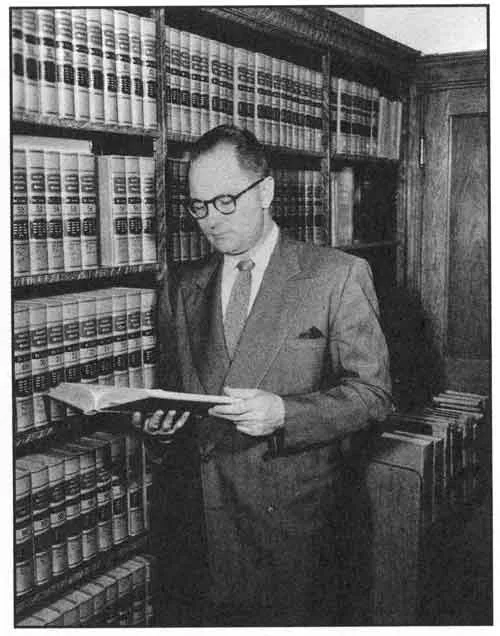
In his time, my Uncle Spencer Levan Kimball was arguably the world's leading expert on insurance law. After serving as Japanese interpreter in World War II and a Rhodes scholarship, he was a young Law School Dean at the University of Utah, an older Law School Dean at the University of Wisconsin (where my father was also on the faculty), and between those two deanships a professor at the University of Michigan Law school for a long time. He lead a revision of the insurance code for the state of Wisconsin and had a hand in a revision of the insurance code for the State of Utah. Spencer finished his academic career in Chicago, as Executive Director of the American Bar Foundation and Seymour Logan Professor of Law at the University of Chicago. He had no formal economic training, but learned some economics from his work on insurance law. And he wrote in his autobiography that rubbing shoulders with others on the Chicago law faculty provided him with some additional education in economics. Below, is Uncle Spence's account of how the University of Chicago decided to allow faculty to invest their required retirement contributions in Vanguard (from A Tale That is Told: The Autobiography of Spencer L. Kimball, pp. 369-370).
The most important Committee on which l served at Chicago was a University ad hoc faculty-administrative committee on faculty retirement annuities. The University was systematically considering all fringe benefits. In that context, Provost Ken Dam, who was also my law school colleague, asked me to chair the committee on December 2, 1980, "to determine whether contributors should be able to invest their contributions, and those made on their behalf by the University, with organizations other than TIAA and CREF." Such a broadening had taken place with regard to supplemental contributions, as a result of a report of a similar committee chaired by Eugene Fama of the Economics Department, one of the developers of the "efficient market" theory justifying index funds. I had taken advantage of the options allowed and had put my own supplemental retirement funds in Vanguard.
The personnel of the committee was excellent, motivated and regular in attending our frequent meetings. On February 24, I wrote a memorandum outlining the questions I thought we needed to discuss, including how far the University should continue its "paternalistic" posture. We heard presentation from TIAA/CREF, which would like us to make no changes, from Vanguard which would like to be cut in on the act, and from Variable Annuity Life Insurance Company. VALIC made such a poor presentation that we dropped it at once. That left us with the addition of Vanguard or the status quo as our two realistic options, for the University administration balked at having a wide range of choices because of administrative costs. Vanguard made an impressive presentation. TIAA/CREF's attitude was the natural one of a monopolist: any change would be for the worse and, in fact, would violate their rights. TIAA tried to use the principles of the American Association of University Professors and American Association of Colleges about retirement benefits to strengthen their position, but that made little impression on us. A few other schools were beginning to break loose from the hegemony of TIAA, Stanford among them. On March 26 I sent the members an initial draft of a report, done "off the top of my head" in order to get something to discuss. On April 21 I sent the committee members a draft into which I had been able to work the numerous suggestions of the others. A week later I sent a draft to the Provost. After minor corrections our final report went to him May 6, 1981, only three months after our appointment, almost a record for University committees dealing with complex and important questions. The report was compressed into 19 double-spaced pages plus appendices. It recommended enlarging the options of the faculty to include some but not all of Vanguard's funds; it retained the restrictions that compelled annuitization or its equivalent. I made appearances to support the proposal, which finally got approval on October 13 and was quickly implemented. TIAA fought a rear guard action against additional alternatives for retirement funds in various universities and colleges but liberalization of retirement fund accumulation methods was spreading in the academic world, with Chicago leading.
Top 150 Posts and All Columns on supplysideliberal.com, Ranked by Popularity, as of December, 2016

This page is intended to provide ready access to all of my most important posts. To begin with, I list all of my columns and the top 150 other posts based on May 28, 2012 through July 31, 2016 data, when this blog was on Tumblr. Then I give links to other posts in categories. For more recents posts, don't miss:
Even more recent posts can be seen at the Archive link above, and my most popular storified Twitter discussions are here.
Recent Bloomberg and Quartz Columns: (no pageview data available to enable ranking):
Quartz Columns Through 2017, in Order of Popularity:
There’s One Key Difference Between Kids Who Excel at Math and Those Who Don’t
The Coming Transformation of Education: Degrees Won’t Matter Anymore, Skills Will
The Case for Gay Marriage is Made in the Freedom of Religion
After Crunching Reinhart and Rogoff’s Data, We Find No Evidence That High Debt Slows Growth
The Swiss National Bank Means Business with Its Negative Rates
The National Security Case for Raising the Gasoline Tax Right Now
Will Narendra Modi’s Economic Reforms Put India on the Road to Being a Superpower?
The Shakeup at the Minneapolis Fed and the Battle for the Soul of Macroeconomics
How Increasing Retirement Saving Could Give America More Balanced Trade
Human Grace: Gratitude is Not Simple Sentiment; It is the Motivation that Can Save the World
Larry Summers Just Confirmed That He is Still a Heavyweight on Economic Policy
How to Avoid Another NASDAQ Meltdown: Slow Down Trading (to Only 20 Times Per Second)
Benjamin Franklin’s Strategy to Make the US a Superpower Worked Once, Why Not Try It Again?
Gather ‘round, Children, and Hear How to Heal a Wounded Economy
QE or Not QE: Even Economists Needs Lessons In Quantitative Easing, Bernanke Style
Don’t Believe Anyone Who Claims to Understand the Economics of Obamacare
Swiss Pioneers! The Swiss as the Vanguard for Negative Interest Rates
Radical Banking: The World Needs New Tools to Fight the Next Recession
How Italy and the UK Can Stimulate Their Economies Without Further Damaging Their Credit Ratings
Janet Yellen is Hardly a Dove: She Knows the US Economy Needs Some Unemployment
Four More Years! The US Economy Needs a Third Term of Ben Bernanke
Japan Should Be Trying Out a Next Generation Monetary Policy
One of the Biggest Threats to America’s Future Has the Easiest Fix
Could the UK be the First Country to Adopt Electronic Money?
Optimal Monetary Policy: Could the Next Big Idea Come from the Blogosphere?
Why You Should Care about Other People’s Children as Much as Your Own
Get Real: Bob Shiller’s Nobel Should Help the World Improve Imperfect Financial Markets
Read His Lips: Why Ben Bernanke Had to Set Firm Targets for the Economy
How Subordinating Paper Money to Electronic Money Can End Recessions and End Inflation
That Baby Born in Bethlehem Should Inspire Society to Keep Redeeming Itself
Three Big Questions for Larry Summers, Janet Yellen, and Anyone Else Who Wants to Head the Fed
The Man in the Tank: It’s Time to Honor the Unsung Hero of Tiananmen Square
Yes, There is an Alternative to Austerity Versus Spending: Reinvigorate America’s Nonprofits
John Taylor is Wrong: The Fed is Not Causing Another Recession
However Low Interest Rates Might Go, the IRS Will Never Act Like a Bank
Make No Mistake about the Taper—the Fed Wishes It Could Stimulate the Economy More
Nationalists vs. Cosmopolitans: Social Scientists Need to Learn from Their Brexit Blunder
Off the Rails: What the Heck is Happening to the US Economy? How to Get the Recovery Back on Track
VAT: Help the Poor and Strengthen the Economy by Changing the Way the US Collects Tax
Talk Ain’t Cheap: You Should Expect Overreaction When the Fed Makes a Mess of Explaining Its Plans
Economics Is Unemotional—And That's Why It Could Help Bridge America's Partisan Divide
Obama Could Really Help the US Economy by Pushing for More Legal Immigration
Does Ben Bernanke Want to Replace GDP with a Happiness Index?
How to Stabilize the Financial System and Make Money for US Taxpayers
Al Roth’s Nobel Prize is in Economics, but Doctors Can Thank Him, Too
Italy Should Look to Ancient Rome to Reform Its Ineffective Senate
Symbol Wanted: Maybe Europe’s Unity Doesn’t Rest on Its Currency. Joint Mission to Mars, Anyone?
Bloomberg Columns (in Chronological Order)
Major Pieces First Appearing in Other Outlets (in Arbitrary Order)
Slate: Governments Can and Should Beat Bitcoin at Its Own Game
The Independent: Why George Osborne Should Give Everyone in Britain a New Credit Card
Columns Rejected by Quartz Because of Their Topics
Top 150 Posts on supplysideliberal.com:
How and Why to Eliminate the Zero Lower Bound: A Reader’s Guide 11,386
The Medium-Run Natural Interest Rate and the Long-Run Natural Interest Rate 10,375
The Logarithmic Harmony of Percent Changes and Growth Rates 8,894
Sticky Prices vs. Sticky Wages: A Debate Between Miles Kimball and Matthew Rognlie 7,126
Monetary vs. Fiscal Policy: Expansionary Monetary Policy Does Not Raise the Budget Deficit 6,256
Isaac Sorkin: Don’t Be Too Reassured by Small Short-Run Effects of the Minimum Wage 4,669
The Message of Mormonism for Atheists Who Want to Stay Atheists 4,485
Noah Smith Joins My Debate with Paul Krugman: Debt, National Lines of Credit, and Politics 3,819
The Deep Magic of Money and the Deeper Magic of the Supply Side 3,717
Silvio Gesell’s Plan for Negative Nominal Interest Rates 2,985
Trillions and Trillions: Getting Used to Balance Sheet Monetary Policy 2,788
How Conservative Mormon America Avoided the Fate of Conservative White America 2,574
The Shape of Production: Charles Cobb’s and Paul Douglas’s Boon to Economics 2,519
Getting the Biggest Bang for the Buck in Fiscal Policy 2,285
A Note for Graduate Students in Economics Looking for Ph.D. Dissertation Topics 2,108
Why I am a Macroeconomist: Increasing Returns and Unemployment 2,093
Ben Bernanke on Why the Fed Has an Inflation Target of 2% 1,978
Milton Friedman: Celebrating His 100th Birthday with Videos of Milton 1,901
Let the Wrong Come to Me, For They Will Make Me More Right 1,821
Is Monetary Policy Thinking in Thrall to Wallace Neutrality? 1,702
Leveling Up: Making the Transition from Poor Country to Rich Country 1,614
Henrik Jensen: Willem and the Negative Nominal Interest Rate 1,557
Jonathan Meer and Jeremy West: Effects of the Minimum Wage on Employment Dynamics 1,552
Bruce Greenwald: The Death of Manufacturing & the Global Deflation 1,198
18 Misconceptions about Eliminating the Zero Lower Bound 1,176
The Flat Tax, The Head Tax and the Size of Government: A Tax Parable 1,146
Anat Admati, Martin Hellwig and John Cochrane on Bank Capital Requirements 1,118
John Stuart Mill on Being Offended at Other People’s Opinions or Private Conduct 1,074
The Wrong Side of Cobb-Douglas: Matt Rognlie’s Smackdown of Thomas Piketty Gains Traction 1,071
Larry Summers: The Fed Looks Set to Make a Dangerous Mistake by Raising Rates this Year 1,051
Why My Retirement Savings Accounts are Currently 100% in the Stock Market 1,029
Noah Smith: Why Do Americans Like Jews and Dislike Mormons? 1,029
Robert Graboyes on Enabling Supply-Side Innovation in Health Care 999
Greg Shill: Does the Fed Have the Legal Authority to Buy Equities? 957
Preventing Recession-Fighting from Becoming a Political Football 947
What to Do When the World Desperately Wants to Lend Us Money 934
Miles’s April 9, 2006 Unitarian Universalist Sermon: “UU Visions” 929
Friends and Sparring Partners: The Skyline from My Corner of the Blogosphere 889
Jeff Smith: More on Getting into an Economics PhD Program 862
John Stuart Mill’s Argument Against Political Correctness 812
Bruce Bartlett on Careers in Economics and Related Fields 810
John Stuart Mill: A Remedy for the One-Sidedness of the Human Mind 795
John Stuart Mill’s Vigorous Advocacy of Education Vouchers 780
Principles of Macroeconomics Posts through September 3, 2012 728
Miles’s Best 7 “Save-the-World” Posts, as of July 7, 2012 708
Responding to Joseph Stiglitz on Negative Interest Rates 685
Glenn Ellison’s New Book: Hard Math for Elementary School 685
Most Important Aggregator Posts
How and Why to Eliminate the Zero Lower Bound: A Reader’s Guide
How and Why to Expand the Nonprofit Sector as a Partial Alternative to Government: A Reader’s Guide
Gabriela D'Souza on Failure in Learning Math (with links to posts on math learning)
Helicopter Drops of Money Are Not the Answer (with links at the bottom to posts on federal lines of credit, national rainy day accounts and related ideas)
Live: The Egocentric Illusion (with links to other UU sermons)
Live: Teleotheism and the Purpose of Life (with links to other key religion posts)
Noah Smith: Sunni Islam is Failing (with links to other religion posts by Noah Smith)
Happiness and Satisfaction Are Not Everything: Toward Well Being Indices Based on Stated Preferences
Math Learning for Kids Who Have a Tough Time (with links on math education and math learning)
Other Aggregator Posts
Making a Difference: Save-the-World Posts as of December 3, 2013
Principles of Macroeconomics Posts through September 3, 2012
A Guided Tour through Meta-posts at the End of the Second Cycle
Posts on Politics and Political Economy through September 1, 2012
Posts on Religion, Philosophy, Science, Literature and Culture through August 27, 2012
Monetary Policy Other Than Negative Interest Rates (most recent first)
Peter Conti-Brown on Marriner Eccles and the Refounding of the Fed
Gauti Eggertsson and Miles Kimball: Quantitative Easing vs. Forward Guidance
Luke Kawa: How Central Banks Gained More Control Over the World’s Major Currencies
Why a Weaker Effect of Exchange Rates on Net Exports Doesn’t Weaken the Power of Monetary Policy
Alex Rosenberg Interviews Miles Kimball on the Responsiveness of Monetary Policy to New Information
Owen Nie: Monetary Policy in Colonial New York, New Jersey and Delaware
Paul Krugman Deconstructs Martin Feldstein's Critique of Quantitative Easing
Jo Craven McGinty: Easy to Lose and Expensive to Produce: Is the Penny Worth It?
Allan H. Meltzer: Don't Be Distracted by the Last 5+ Years--Massive Inflation is Coming
João Marcus Marinho Nunes on Japan’s Monetary Policy Experiment
Wallace Neutrality Roundup: QE May Work in Practice, But Can It Work in Theory?
Reaching for Yield: The Effects of Interest Rates on Risk-Taking
Ryan Avent on the Fed's Plans to Keep Rates Low Even After Recovery is Underway
Michael Woodford Endorses Monetary Policy that Targets the Level of Nominal GDP
Should the Fed Promise to Do the Wrong Thing in the Future to Have the Right Effect Now?
Mike Konczal: What Constrains the Federal Reserve? An Interview with Joseph Gagnon
The supplysideliberal Review of the FOMC Monetary Policy Statement: June 20th, 2012
Is Monetary Policy Thinking in Thrall to Wallace Neutrality?
Miscellaneous Religion Posts (most recent first)
Christian Kimball: Anger [1], Marriage [2], and the Mormon Church [3]
The Mormon Church Decides to Treat Gay Marriage as Rebellion on a Par with Polygamy
Slavoj Zizek on the Psychological Insecurities of Terrorists
What If Jesus Was Really Resurrected? Musings of a Non-Supernaturalist
John Erdevig and Kenji Yano: A Personal East/West Convergence and “The Nature God”
Christian Kimball on the Fallibility of Mormon Leaders and on Gay Marriage
Marcelo Gleiser: "Astrotheology: Do Gods Need to Be Supernatural?"
Rodney Stark, the Rig Veda Hymn of Creation and the Cult of Bacchus
Inspirational Posts (most recent first)
The Importance of the Next Generation: Thomas Jefferson Grokked It
May the Best in the Human Spirit Vanquish the Worst in the Human Spirit
So What If We Don’t Change at All … and Something Magical Just Happens?
Jessica Tozer: Boldly Going into a Future Where All Men and Women are Created Equal
As I Faced the Fiscal Cliff, I Failed to Find Comfort in the Words of Winston Churchill
Milan Kundera on the Contribution of Novels to the Liberal Imagination
The True Story of How Economics Got Its Nickname "The Dismal Science"
John Locke Posts (in chronological order)
John Locke: Revolutions are Always Motivated by Misrule as Well as Procedural Violations
John Locke Looks for a Better Way than Believing in the Divine Right of Kings or Power to the Strong
John Locke: The Right to Enforce the Law of Nature Does Not Depend on Any Social Contract
John Locke: Law Is Only Legitimate When It Is Founded on the Law of Nature
John Locke: Foreign Affairs Are Still in the State of Nature
Law, Regulation and Policy (most recent first)
Gwynn Guilford: The Epic Battle Between Clinton and Trump is a Modern Day Morality Play
Next Year’s Momentous Supreme Court Decision: Reining in Public Sector Unions?
The Wonderful, Now Suppressed, Republican Study Committee Brief on Copyright Law (direct link)
Uwe Reinhardt: Does Occupational Licensing Deserve Our Approval? A Review of Work by Morris Kleiner (direct link)
Tyler Cowen: Regulations Hinder Development of Driverless Cars
Tyler Cowen on How Much Easier It Is to Create Regulations Than to Get Rid of Them (direct link)
Amanda Foreman: When Justice Drowns in Law (direct link)
Drew Hinshaw: Nigeria Produces Half the Electricity of North Dakota-for 249 Times More People
Jeff Smith: Why I Won’t Sign a Petition to Raise the Minimum Wage
Josh Barro: We Need a New Supply Side Economics–Here Are 8 Things We Can Do
John Cochrane: What Free-Market Medical Care Would Look Like
An Experiment with Equality of Outcome: The Case of Jamestown
Neil Irwin: American Manufacturing is Coming Back. Manufacturing Jobs Aren’t
Holman Jenkins on the Role of Organized Labor in Blocking Policy Initiatives in the Democratic Party
Clay Christensen Posts (in chronological Order)
Clay Christensen, Jerome Grossman and Jason Hwang on Intuitive Medicine vs. Precision Medicine
Clay Christensen, Jerome Grossman and Jason Hwang on the Personal Computer Revolution
Clay Christensen, Jerome Grossman and Jason Hwang on the Three Basic Types of Business Models
Math, Statistics, Writing and Teaching (most recent first)
Effort vs. Innate Ability: What I Learned from Being in the Spelling Bee
Jethra Spector: Using Miles and Noah’s Math Column in the Classroom
My Advice to Qatar: Make Math Education a Research Grand Challenge
Jessica Lahey: Teaching Math to People Who Think They Hate It
Marjorie Drysdale: Even When You Can Do Math, You May Not Love It
Michael Bloomberg: A University Cannot Be Great If Its Faculty Is Politically Homogenous
Elizabeth Cleland: How I Get All My Students to be Good at Math (direct link)
Matt Waite: How I Faced My Fears and Learned to Be Good at Math
Jing Liu: Show Kids that Solving Math Problems is Like Being a Detective
Eric Hanushek on the Importance of Improving Teacher Quality
Humanities, Science, History and Culture (most recent first)
Bret Stephens and Paul Krugman: What Should a Correction Look Like in the Digital Era?
Tom Bowen’s Gift to Humanity: A Powerful Australian Technology
Recasting “The Hunger Games” as a Parable about Immigration Policy
David Byrne: The Power of Democratizing Making Music and Art
The “Wait But Why” Blog on Why Generation Y Yuppies are Unhappy
Population Distribution of the United States in Units of Canadas (direct link)
Steven Pinker on How Taboos on What We Let Ourselves Think and Say Can Steer Us Wrong
Tunku Varadarajan on the Backlash Against Winner-Take-All in Online Journalism
Other Posts I Want to Highlight Not Listed Above Nor in Aggregator Posts (most recent first)
John T. Harvey: Five Reasons You Should Blame The Economics Discipline For Today's Problems
Q&A: Why is Fiscal Policy So Close to Being Neutral in Many Modern Macro Models?
Sarah Sloat: What is Cognitive Economics? Understanding the World Through New Types of Data
Q&A: Evidence that Financial Flows Determine the Overall Balance of Trade, Not Tariffs
Answering Adam Ozimek’s Skepticism about a US Sovereign Wealth Fund
Stephanie Shimko Interviews Miles Kimball about His Earliest and Latest Research
Robin Green: Don’t Recognize Racist Externalities with a Pigou Tax
Richard V. Reeves, Isabel Sawhill and Kimberly Howard: The Parenting Gap
Edward Glaeser, Joshua Gottlieb and Oren Ziv: Maximizing Happiness Does Not Maximize Welfare
The Wall Street Journal Editorial Board Comes Out for a Straight 15% Equity Requirement
Jonathan Clements on Integrating Human Capital into Your Portfolio
Another Quality Control Failure on the Wall Street Journal Editorial Page?
Brad Delong: Mr. Piketty and the “Neoclassicists”: A Suggested Interpretation (direct link)
Robert Flood and Miles Kimball on the Status of the Efficient Markets Theory
Justin Wolfers, Matthew Adler and Ori Heffetz: Round Table on Happiness
John L. Davidson on the Decline of the Quality of Information Processing in Lending
What Would Economic Growth Look Like If We Properly Valued the Web?
John L. Davidson on Resolving the House Mystery: The Institutional Realities of House Construction
Allison Schrager: The Economic Case for the US to Legalize All Drugs
Niklas Blanchard Defends Me Against the Wrath of Paul Krugman, Despite My Lack of Nuance
Miles on HuffPost Live: The Wrong Debate and How to Change It
How a US Sovereign Wealth Fund Can Alleviate a Scarcity of Safe Assets
The Marginalization of Economists at the Consumer Financial Protection Bureau
Bonnie Kavoussi's List on Huffington Post of "26 Economists You Should Be Following on Twitter" (direct link)
Duncan Green: Lant Pritchett v. the Randomistas on the Nature of Evidence--Is a Wonkwar Brewing?
Steven Johnson: We're Living the Dream, We Just Don't Realize It
Noah Smith: The Well-Behaved Japanese Poor Call Into Question the Idea that Poverty Stems from Bad Behavior (direct link)
Joshua Hausman: More Historical Evidence for What Federal Lines of Credit Would Do
The supplysideliberal Style Guide for Referring to Public Figures
About Paul Krugman: Having the Right Diagnosis Does Not Mean He Has the Right Cure
Another Dimension of Health Care Reform: Discouraging Soft Drink Consumption
Isomorphismes: A Skew Economy & the Tacking Theory of Growth
Milton Friedman's Thermostat: An Econometric Cautionary Tale
Joshua Hausman on Historical Evidence for What Federal Lines of Credit Would Do
“It Isn’t Easy to Figure Out How the World Works” (Larry Summers, 1984)
Adam Ozimek: What “You Didn’t Build That” Tells Us About Immigration
Will the Health Insurance Mandate Lead People to Take Worse Care of Their Health?
Bill Greider on Federal Lines of Credit: “A New Way to Recharge the Economy”
Dissertation Topic 3: Public Savings Systems that Lift the No-Margin-Buying Constraint
Miles’s Presentation at the Federal Reserve Board on May 14, 2012 (pptx)
Henry George and the Carbon Tax: A Quick Response to Noah Smith
Clive Crook: "Supply-Side Liberals"
Note: Although the primary location of supplysideliberal.com is now on Squarespace, posts from 2016 and before still exist on Tumblr. The archive for these posts on Tumblr is here at http://supplysideliberal.tumblr.com/archive.
The Scope and Readership of supplysideliberal.com
I need a post like this first and foremost for myself--to see what I have done in general, and on particular topics. But I also hope it helps both those who want to look at a few top posts and those who want to do a deep dive into supplysideliberal.com.
This post is especially valuable in showing the range of topics covered on supplysideliberal.com beyond negative interest rate policy, since here those posts are mostly covered indirectly by the one aggregator post “How and Why to Eliminate the Zero Lower Bound: A Reader’s Guide.”
I care a lot about current and future super-readers of this blog, who individually want to read many posts! Despite all of its flaws, Google Analytics is adequate for showing that there are indeed many super-readers. For example, taking the data in the graph below at face value, one can deduce using division and bounding that there are at least 73 readers with between 101 and 200 reading sessions each, and at least 193 readers with between 51 and 100 reading sessions each. At the other end of the spectrum, Google Analytics shows 364,219 distinct readers have been exposed to the website supplysideliberal.com itself exactly once.

It is interesting to see some of the demographic and geographical breakdown of readers. I wish I had more female readers, but I am happy with having readers of many different ages, though of course the young are more into blogs than the old:

I am especially pleased to have readers from around the world. Here are the top 50 cities shown by Google Analytics with the admittedly imperfect measure of sessions as follows giving some indication of relative weight:
City Sessions
New York 29,052
Ann Arbor 29,006
Washington 18,304
London 16,944
Chicago 10,034
Los Angeles 6,082
Sydney 5,663
Toronto 5,535
San Francisco 5,004
Boston 4,706
Seattle 4,424
Melbourne 4,231
Singapore 4,140
Cambridge, MA 4,077
Arlington 3,962
Philadelphia 3,871
Houston 3,460
Austin 3,176
Paris 3,118
Minneapolis 3,072
San Diego 2,747
Ottawa 2,494
Hong Kong 2,408
Madison 2,219
Dublin 2,199
Columbus 2,104
Canberra 2,069
Rome 2,063
Denver 2,044
Portland 2,026
Montreal 1,874
Atlanta 1,855
Berlin 1,848
New Delhi 1,793
Calgary 1,790
Brisbane 1,771
Bethesda 1,769
Cambridge, UK 1,738
Copenhagen 1,732
Berkeley 1,712
Durham 1,700
Bengaluru 1,696
Wellington 1,585
St. Louis 1,567
San Jose 1,557
Seoul 1,542
Evanston 1,480
Salt Lake City 1,451
Dallas 1,450
Mumbai 1,448
Explanation of the rankings:
The top 150 posts on supplysideliberal.com listed above are based on Google Analytics pageviews from June 3, 2012 through December 24, 2016. The number of pageviews is shown by each post. However, Google Analytics has been getting worse and worse in the job it is doing, both mechanically, and because more and more of the traffic has migrated to forms such as mobile access that Google Analytics is very bad at counting. Google Analytics counts 887,732 pageviews during this period but that is a big underestimate of the impact because of
that failure to count most readers on mobile devices
the failure to count those reading on Tumblr itself
not counting people reading the columns on Quartz
the mysterious dropoff to no more than a trickle of Google Analytics pageviews counted after the end of July, 2016 with no corresponding dropoff in any other measure of activity at that time.
Furthermore, of those 887,732 pageviews that are counted by Google Analytics, 221,260 are to the homepage, and so cannot be categorized by post.
(As I mentioned yesterday, in addition to greater confidence in the future of Squarespace than the future of Tumblr and increasingly greater functionality of Squarespace in creating and displaying posts compared to Tumblr, an important motivation for moving supplysideliberal.com to Squarespace is better analytics. For a long time now, I have felt I was flying blind with my blog given how little I could see through Google Analytics applied to a Tumblr blog.)
Nevertheless, the relative popularity of different posts for that limited subset of pageviews is informative. Indeed, with the passage of more time, the pageview ratings have come closer to my own judgment of the relative importance of posts as it becomes possible to see which posts have stood the test of time. And to be clear, if I think a post is more important, over time that adds to its pageviews because I link to it more often in subsequent posts and in tweets.
I have to handle my Quartz columns separately because that pageview data is proprietary. My very most popular pieces have been Quartz columns, so I list them first. I have listed them all plus a few columns in other outlets, with the ones with no data (yet) listed at the bottom. (To avoid duplication, I have disqualified companion posts to Quartz columns from the top 40 blog post list, since they eventually get recombined with the Quartz columns when I repatriate the columns. For these columns, the ranking is by pageviews at a point where things have settled down. For later posts, that is standardized to pageviews during the first 30 days when Quartz has an exclusive.)
Musings about the Top 10 Quartz columns:
The page view data I have for the Quartz columns is proprietary. But I can say that the top Quartz columns have dramatically more pageviews than are shown by Google Analytics for the top posts on my blog. So it is worth musing about the popularity of the top ten Quartz columns.
Five of the top ten Quartz columns–1, 2, 4, 7, 8–are about education. Somewhat to my surprise, this has emerged as an important theme on my blog, as Noah Smith identified when writing about this blog.
Four of the top ten columns are coauthored: 1 and 4 with Noah Smith, 8 with Anonymous and 9 with Yichuan Wang. It helps to have a top-notch coauthor.
Two of the top ten–3 and 6–are relatively recent columns with a strong religious or moral tone to them. I am glad to see that my efforts to articulate religious and moral themes find an audience as well as what I have to say about economics. I actually consider 5 to be in this category as well.
One of the top ten–9–is about Reinhart and Rogoff. Levels of interest for understanding Reinhart and Rogoff’s mistake was extraordinary.
One thing I pay attention to is how great a reach my most popular column on negative interest rates is. I am pleased to have one at 10.
Two of the top ten–3 and 5–touch on national security.
John Locke: The Right to Enforce the Law of Nature Does Not Depend on Any Social Contract

It is often said that democratic governments rule by the consent of the governed. But this is wrong in two ways. First, many individuals do not consent to what the government is doing. Secondly, when it comes to basic things such as punishing murderers, there is no need for consent on the part of the offender. On this second point, in section 9 of his 2d Treatise on Government: “On Civil Government,” John Locke writes:
I doubt not but this will seem a very strange doctrine to some men: but before they condemn it, I desire them to resolve me, by what right any prince or state can put to death, or punish an alien, for any crime he commits in their country. It is certain their laws, by virtue of any sanction they receive from the promulgated will of the legislative, reach not a stranger: they speak not to him, nor, if they did, is he bound to hearken to them. The legislative authority, by which they are in force over the subjects of that commonwealth, hath no power over him. Those who have the supreme power of making laws in England, France or Holland, are to an Indian, but like the rest of the world, men without authority: and therefore, if by the law of nature every man hath not a power to punish offences against it, as he soberly judges the case to require, I see not how the magistrates of any community can punish an alien of another country; since, in reference to him, they can have no more power than what every man naturally may have over another.
In the prosecution of moral laws so basic (such as the prohibition of murder) that they can be legitimately enforced on those who have not consented to be subject to those laws, it may be reasonable to use a majority vote to determine the particulars of how that law will be enforced. But if a government has no legitimate right to enforce a law in the first place, no vote short of unanimity can make it legitimate to enforce that law.
Libertarianism and the quite prevalent statism in the world both take relatively extreme positions on what a government can legitimately do. It is logically possible to take an intermediate position: that there are many actions a government has no right to take no matter what supermajority (short of unanimity) is in favor—in particular, for the US, things the government has no right to do even if a constitutional amendment says it can—but that the set of actions permitted to a democratic government are broader than those sanctioned by Libertarian ideas. To me, the principle that there are at least some things no government has the right to do no matter what supermajority (short of unanimity) says it does is the most important principle. The boundary between legitimate and illegitimate actions of government can then be a matter of debate. But it is horrifying to say that a government can legitimately do anything that a large supermajority (short of unanimity) votes for. As Edmund Burke said:
All human laws are, properly speaking, only declaratory; they have no power over the substance of original justice.
Josef Adalian: What TV Did Americans Watch in 2016?
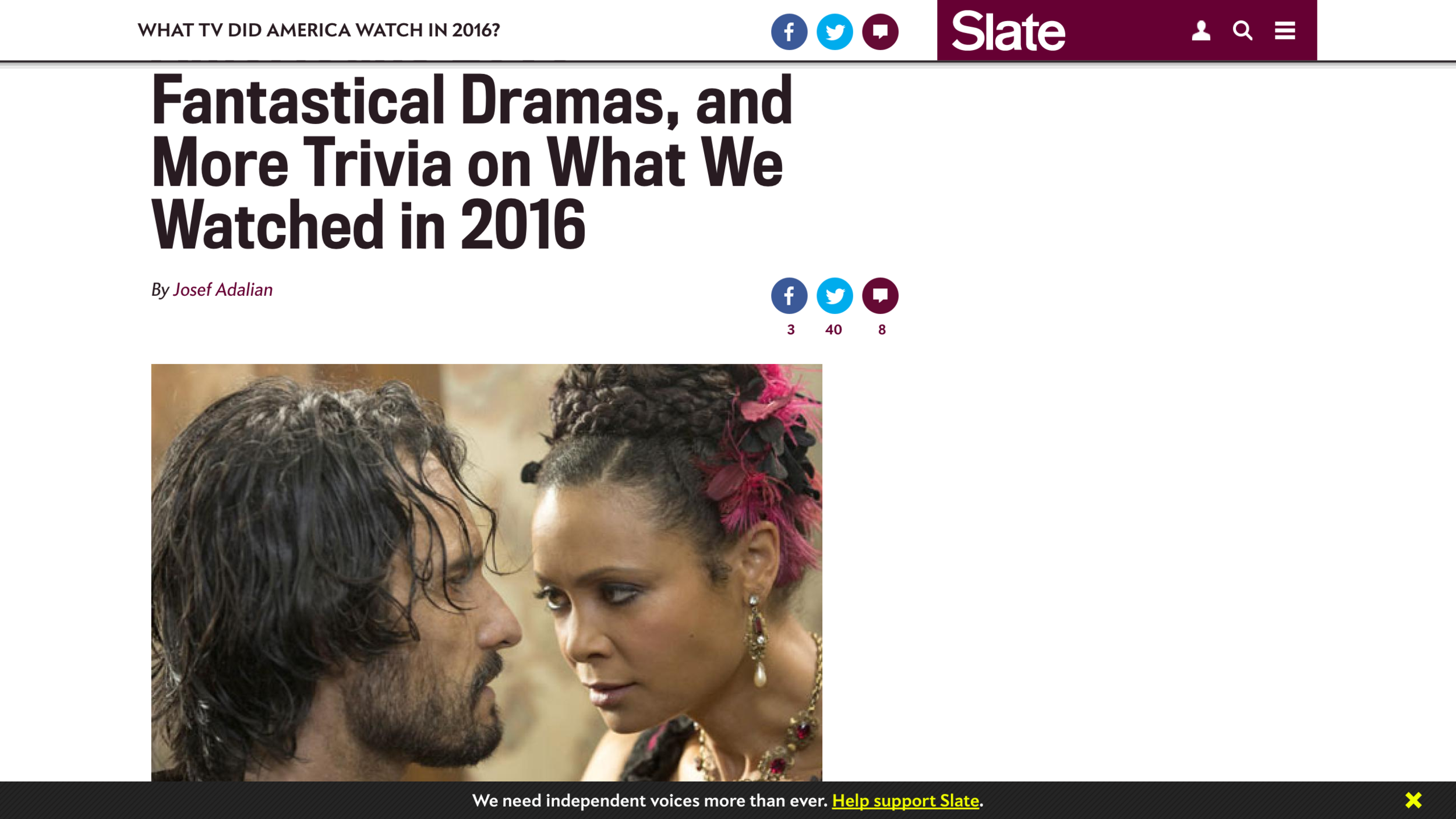
Link to Slate article Americans Love Fantastical Dramas, and More Trivia on What We Watched in 2016
This is a deep dive into Nielsen data on TV watching for 2016:
Keep reading to see what Dolly Parton and Toni Braxton have in common, which city’s residents really love John Oliver, and what show does surprisingly well with rich people.
Calculus is Hard. Women Are More Likely to Think That Means They’re Not Smart Enough for Science, Technology, Engineering and Math
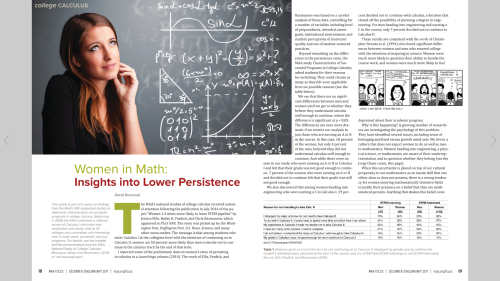
Believing that you can make it is an important ingredient in success. For women, that confidence is harder to come by when they are pursuing science, technology, engineering or math. A study by the Mathematical Association of America found that of those in Calculus I who initially intended to go on in science, technology, engineering or math,
... if we restrict our analysis to just those who are earning an A or B in the course ... 18 percent of the women, but only 4 percent of the men, believed they did not understand calculus well enough to continue.
I’ll bet the phenomenon of women who are objectively doing equally well as men having much less confidence than men extends to many other moments in education in technical subjects--including training in economics. Professors and other instructors can do a lot of good by bolstering the confidence of female students who are in fact doing well in a class or in independent research.
In my own experience, I have sometimes been quite surprised at how much my expressions of confidence in a female student in economics have meant to that student--as if that student were in a parched desert for such expressions of confidence, despite what seemed to me excellent skills.
In addition to discouragement, low confidence in oneself also causes other people to underestimate one’s skills. It is quite difficulty to know how skilled someone is, but typically quite easy to tell how skilled they think themselves to be. So people use a job candidate’s opinion of herself or himself as a shortcut for judging her or his skills.
For those who need to come across as more confident I highly recommend the weekend personal growth workshops conducted by Landmark Education Corporation, beginning with the Landmark Forum. In my view, almost everyone entering the dissertation writing and then job-hunting phases of getting a PhD in economics should do the Landmark Forum because of how much it will help the psychology of being able to focus on dissertation research and then the psychology of self-presentation for getting a job. I am sure that the same advice would apply to students in many other fields, at many stages of education.
Switching to Squarespace
Today I am switching supplysideliberal.com from Tumblr to Squarespace. The change should be mostly invisible to readers except for cosmetic differences. In particular, links to older posts should mostly still work.
My main reasons for the shift are:
- Squarespace should work better on mobile devices.
- Squarespace seems a more solid company for the future than Tumblr.
- I will be able to get better analytics on Squarespace.
- Squarespace has better functionality.
- Moving to Squarespace will restore the ability of readers to post comments—a capability that was broken using Disqus with Tumblr about 8 months ago.
Thanks to my daughter Diana for helping enormously with the migration.
Vincent Del Giudice and Wei Lu: America’s Best and Brightest Are Headed to Boulder
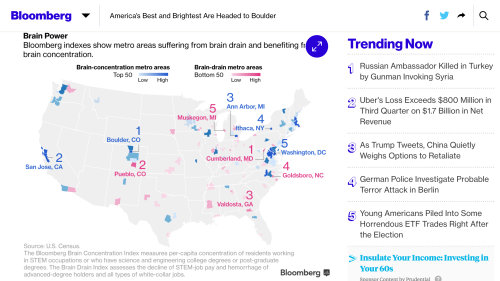
This chart says it: the cities marked in red are the “metropolitan areas with the greatest loss of advanced-degree holders, white-collar jobs and earnings generated by employment in computer, engineering and science occupations” while the cities marked in blue are those with the greatest gain. The Boulder Colorado metropolitan area, where I live (see “Miles Moves to the University of Colorado Boulder”) is number one in brain-gain in this chart. Maybe you, too, should join this migration to the Boulder area :)
Erin Lee Carr—My Dad, My Mentor: How Do You Say Goodbye to Your Father? →
I can’t remember who sent me this after I wrote about my own Dad and his death a few weeks ago, but I love it.