Economist Twitter Stars
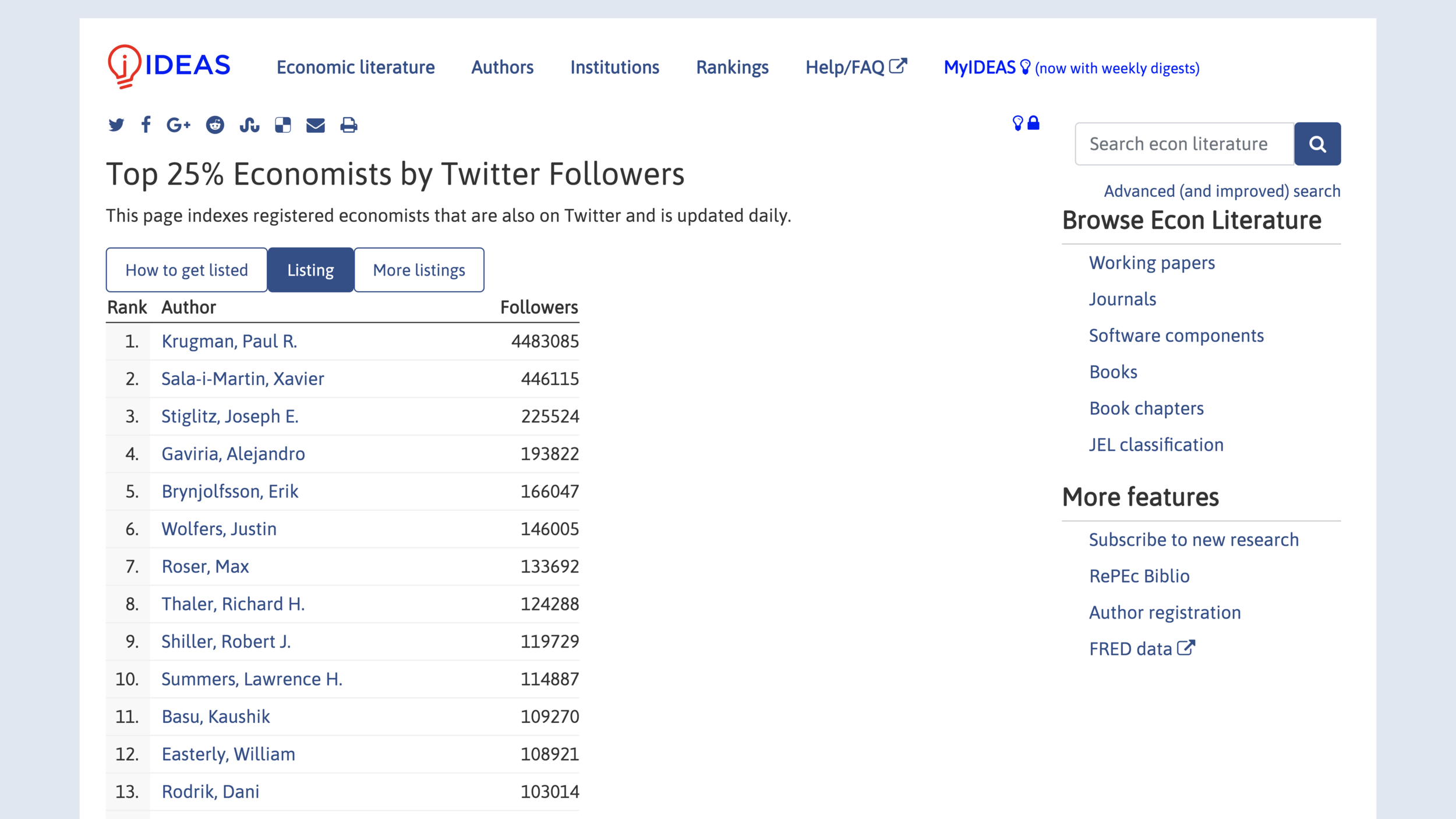
Link to the REPEC rankings of Top 25% Economists by Twitter Followers. Note that economists have to register their Twitter feeds with REPEC to be included on the list. Thus, there are some notable omissions, such as Noah Smith and Greg Ransom.



Link to the REPEC rankings of Top 25% Economists by Twitter Followers. Note that economists have to register their Twitter feeds with REPEC to be included on the list. Thus, there are some notable omissions, such as Noah Smith and Greg Ransom.
Paul Krugman has enough Twitter followers to equal the population of a megacity. And quite quite a few economists have, on their own, have a medium-sized city worth of Twitter followers. A long way down the list, my own followers constitute a delightful small town. Economists on Twitter is a thing.
In the University of Michigan's March 5, 2018 University Record, Justin Wolfers, number 6 on REPEC's list above, shares some of his own experience on Twitter and for others trying to establish themselves on Twitter. Safiya Merchant interviewed Justin along with other University of Michigan faculty on Twitter for her article "#SocialScholars: Professors show power of public engagement." Here is Justin's story:
Wolfers, professor of economics in LSA, and public policy in the Gerald R. Ford School of Public Policy, tends to center his tweets on these respective topics, often retweeting news articles or providing commentary.
Despite his social media success, Wolfers originally thought the idea of Twitter sounded like "nonsense" and wouldn't work.
Back in 2011, Wolfers flipped a coin every day to test how Twitter affected his productivity, influence and learning. If it landed on heads, he would open Twitter to consume the Twitter stream and tweet if he felt the need.
He soon realized that every day he hoped it would come up heads.
"Twitter is a particularly important medium for journalists, and so what was important to me was, even among my first couple hundred followers, a large number of them were journalists," Wolfers said. "I could talk to 100 journalists at once through Twitter. So it would be not unusual that a week later, I'd learn what I'd written had been featured in The New York Times or The Washington Post."
Wolfers said his social media presence also allows him to directly reach and provide insight and analysis to policymakers.
"Sometimes the most productive thing I will do in a single day might be a tweet," he said. "That tweet might cause every journalist to write a deep dive on a particular topic or it might cause a policymaker to rethink an issue. And that's a tremendous privilege."
Safiya also quotes Justin as follows:
Although social media usage might not yet be as pervasive as academic journal publications among faculty, Wolfers said it's a "very natural idea" for public intellectuals to speak in the public square to the general populace.
"What we're doing is interesting; don't lose sight of that excitement."
Finally, in a sidebar, "Tips for clicks," Justin gives this advice for someone trying to establish themselves on Twitter:
I say be yourself but be 120 percent of yourself. You have to be a little bit bigger than life because otherwise it'll get lost in 140 characters."

Stephen Williamson on an Inverted Yield Curve as a Harbinger of Recession →
I don't understand and can't endorse the final paragraph, but otherwise I like this post a lot. Stephen pointed me to it when I tweeted "Whenever a rate increase leads to an inverted yield curve, the Fed should emphasize its readiness to change directions quickly and cut rates if troubling data emerges."
Against Sugar: The Messenger and the Message
Update: In “Vindicating Gary Taubes: A Smackdown of Seth Yoder,” I retract my serious criticisms of Gary Taubes below. And the article linked above had so many errors, Wired had to significantly revise it. However, the post below is still important in defending Gary’s substantive views.
Many Americans have begun to turn against sugar. Gary Taubes has been leading the charge with his book The Case Against Sugar, which sharpens the attacks he made in his previous two books, Good Calories, Bad Calories and Why We Get Fat.
Gary Taubes has risen high enough that he is set up for a fall. And there is plenty of dirt. He has played fast and loose with some of his history, putting words in the mouth of long-dead scholars they said or meant, and pointing out that people he disagrees with were compromised by sugar-industry ties, but neglecting to point out that people he agrees with were compromised by other food-industry ties.
I sense some “how the might have fallen” glee in Megan Molteni’s June 18, 2018 Wired article “The Collapse of a $40 Million Nutrition Science Crusade.” It turns out that Gary Taubes has lost some of the money-raising magic he had back in 2011.
In telling a story of the messenger’s fall from grace, Megan goes too far in disparaging the anti-sugar message. The devil is in the details of two experiments that had benefitted from Gary Taubes’s fund raising. Here is Megan’s description of the first experiment:
The EBC’s pilot project would lock 17 overweight men inside metabolic wards for two months, feeding them precisely formulated meals and pricking and prodding to see what happened to their bodies on a low-carb diet. If it made them burn calories faster, a follow-up study would do the same tests on a bigger group of people. If the effect was minimal, researchers would then test the effect of low-carb diets on hunger.
In my view, of these two possible effects of a lowcarb diet, the effect on hunger, which they never got to, is by far the most interesting. If a lowcarb diet makes you less hungry, that could help a lot with weight loss in the real world. But in a metabolic ward study, the amount people are fed is the same whether they are hungry or not.
Another limitation of a metabolic ward study is that changes in physical activity that might result at home from a lowcarb diet making someone feel more energetic might not happen while cooped up in a metabolic ward.
Results for two other experiments that benefitted from Gary Taubes’s fund raising won’t come in until later on this year. But here is Megan’s description of the other experiment whose results are in:
The fourth and largest one, conducted at Stanford, randomized 600 overweight-to-obese subjects into low-fat versus low-carb diets for a year and looked at whether or not their weight loss could be explained by their metabolism or their DNA. Published this February in JAMA, the study found no differences between the two diets and no meaningful relationship between weight loss and insulin secretion.
Megan badly misreads what the study actually shows. Both diets told people to go off sugar, refined carbs, and processed food, and both looked like a big success in helping people lose weight. Hardly a failure for an anti-sugar message! (For more discussion, see “Why a Low-Insulin-Index Diet Isn’t Exactly a ‘Lowcarb’ Diet” on my blog.) What is more, the fact that a high-fat/lowcarb diet avoiding sugar, refined carbs and processed food was just as good as a lowfat diet avoiding sugar, refined carbs and processed food is a victory for the idea that dietary isn’t the evil it has long been made out to be.
To the disappointment of the researchers in the Stanford study, the two diets each seemed to work well with no hint of whom they would work best for. Trying to predict with DNA, they used an outdated “candidate gene” approach, focusing on only 3 gene indicators (SNPs). (Fortunately, they have the data to try again using a combination of many more genes.) They also couldn’t predict weight-loss success from an initial test of how strongly someone’s insulin levels spiked after taking in sugar. The inability to predict for whom a given diet would work best was a failure to replicate previous studies. (On replication failures, see my post "Let's Set Half a Percent as the Standard for Statistical Significance.")
A difficulty in predicting weight-loss success from a test of how strongly someone’s insulin levels spiked after taking in sugar tells less than it might sound. On the one hand, a strong insulin response might mean that cutting out sugar or other carbs could bring down insulin levels more. On the other hand, a strong insulin response might mean that the bad stuff people were still eating because they weren’t doing everything right might be likely to keep their insulin levels high enough that they had more trouble getting to an insulin level low enough for weight loss. Here, what complicates matters is that the relationship between insulin levels and weight loss may not be a straight line. There may be a big middle range where weight stays about even, with weight loss at quite low levels and weight gain at quite high levels. Right now, that is only a logical possibility. The research hasn’t been done to know.
In any case, the inability to predict how much weight someone would lose from how strongly their insulin levels reacted to taking in sugar is all there is in this study to back up Megan’s statement that there was “no meaningful relationship between weight loss and insulin secretion.” There is nothing beyond that in the study to question the idea that insulin is an important part of the mechanism for weight gain or weight loss.
The bottom line is that despite the clay feet of the messenger—the decline in Gary Taubes’s fund-raising prowess and his other flaws—the anti-sugar message is still looking strong.
Don't miss these other posts on diet and health and on fighting obesity:
Using the Glycemic Index as a Supplement to the Insulin Index
How Fasting Can Starve Cancer Cells, While Leaving Normal Cells Unharmed
Meat Is Amazingly Nutritious—But Is It Amazingly Nutritious for Cancer Cells, Too?
The Case Against the Case Against Sugar: Seth Yoder vs. Gary Taubes
Carola Binder: The Obesity Code and Economists as General Practitioners
Jason Fung: Dietary Fat is Innocent of the Charges Leveled Against It
Faye Flam: The Taboo on Dietary Fat is Grounded More in Puritanism than Science
Confirmation Bias in the Interpretation of New Evidence on Salt
Putting the Perspective from Jason Fung's "The Obesity Code" into Practice
'Forget Calorie Counting. It's the Insulin Index, Stupid' in a Few Tweets
Julia Belluz and Javier Zarracina: Why You'll Be Disappointed If You Are Exercising to Lose Weight, Explained with 60+ Studies (my retitling of the article this links to)
Analogies Between Economic Models and the Biology of Obesity
Debating 'Forget Calorie Counting; It's the Insulin Index, Stupid'
Also see the last section of "Five Books That Have Changed My Life" and the podcast "Miles Kimball Explains to Tracy Alloway and Joe Weisenthal Why Losing Weight Is Like Defeating Inflation." If you want to know how I got interested in diet and health and fighting obesity and a little more about my own experience with weight gain and weight loss, see my post "A Barycentric Autobiography."
John Locke Against Natural Hierarchy
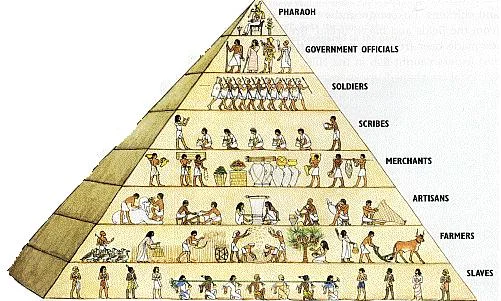
In chapters VI and VII of his 2d Treatise on Government: “Of Civil Government” makes a remarkable argument against natural hierarchy, whether patriarchy, the supposed "divine right of kings" or any other natural hierarchy—other than the voluntary deference people are often inspired to make to someone imbued with justice and wisdom. Here are the links to the blog posts I wrote on these chapters:
Chapter VI: Of Paternal Power
Thinking of Mothers and Fathers On a Par Undercuts a Misleading Autocratic Metaphor
Equality Before Natural Law in the Face of Manifest Differences in Station
John Locke's Smackdown of Robert Filmer: Being a Father Doesn't Make Any Man a King
Chapter VII: Of Political or Civil Society
Let me distill what I learned from these two chapters into the following thought. In "The Social Contract According to John Locke" I praise Michael Huemer's work, saying "I love the idea that what is wrong for an individual in the state of nature cannot suddenly become OK just because the government is doing it." Here, I want to point to the converse implication of this kind of reasoning: anything that is legitimate for a government to do is also legitimate for those not in the government to do, if (and it is a big if) they can do a better and more just job than the conventionally accepted government. The American Revolutionaries are exactly such a group of individuals who set out to do a better job than the government headed by King George III in the administration of the American colonies. One of the reasons they could hope to to a careful job of governing that would be better than the government headed by King George III is that they used the machinery of colonial government wherever that could be tweaked to make it consistent with independence. They weren't trying to start from scratch in inventing the machinery of government.
Update: Links to posts on earlier and later chapters can be found in these aggregator posts:
Posts on Chapters I-III: John Locke's State of Nature and State of War
Posts on Chapters IV-V: On the Achilles Heel of John Locke's Second Treatise: Slavery and Land Ownership
Posts on Chapters VI-VII : John Locke Against Natural Hierarchy
Posts on Chapters VIII-XI: John Locke's Argument for Limited Government
Shoshana Weissmann's Reading List →
Update: Charles Steindel makes some good book suggestions on the Facebook page for this link post.
Eating on the Road

Casper, Wyoming. Image source.
Healthy eating on a car trip can be difficult. I thought it might be useful to share how I dealt with that on our recent car trip to a Cozzens family reunion in Northwest Wyoming (my wife Gail's side of the family).
One of the important considerations in how I approach eating on the road is my belief that loosening the constraints on special occasions is important to sustainability of an eating program. But the main way in which I loosened constraints was in having a much more spread-out eating window than I normally would. (See "Stop Counting Calories; It's the Clock that Counts.") I was just as careful as usual about what I ate. (Gail's choices were similar to mine except that she skipped breakfast in the hotel, didn't go for the pistachios, and doesn't like green bananas.)
Day 1: Monday, July 2
I didn't eat any breakfast before getting on the road. Having fasting as a regular part of our routine made it easier to get out the door. We wanted to see Fort Collins and had lunch at a Mexican restaurant there. We shared our dishes:
- tortilla soup (skipping the tortillas)
- carne asada (steak)
- fajita salad (skipping the crisp tortilla bowl)
I tried to hold off eating until lunch time, but then as we continued our journey I did eat some of the things we's packed:
- tea (Yogi and Tazo have some great herbal tea flavors)
- a mix of baked cashews and almonds
- macadamia nuts
- pistachios nuts
- manchego cheese
Other than the tea, I tried to be conscious of portion sizes on these. Portion sizes are not a big issue when eating low on the insulin index at home within a very short eating window, but it is easy to eat a lot out of boredom on the road, and the eating window wasn't as short.
We stopped in Casper for the evening. At an Asian fusion restaurant I had coconut curry over chicken and many vegetables. At the Hampton Inn, I had some decaf and half & half.
Day 2: Tuesday, July 3
Hampton Inn has a free breakfast. I had:
- scrambled eggs with ham and cheese
- decaf with half & half
- oatmeal with half & half
- cream cheese (with no bagel on my cream cheese)

We had a late lunch at the Irma Hotel in Cody. We shared our dishes:
- burger with fixings, no bun
- salad bar
- vegetable beef stew (small cup—skipped the potatoes)
- taco salad (skipping the shell)
We stayed at the Ralston Clubhouse & Inn owned by my sister-in-law and brother-in-law Deirdre and Dirk Cozzens. They have done a great job with it:

Knowing we would have a refrigerator and freezer, we stocked up at the Albertson's in Cody:
- 3 nectarines
- half gallon half & half
- 2 green bananas
- 2 containers of mint chip Halo Top
- 2 bags full-fat cheese curd ("squeaky cheese") for our contribution to the reunion pot-luck
The actual eating of those things was spread out over two days: July 3 and July 4. Based on glycemic index data, I think of green bananas as having less of an insulin kick that would lead to overeating than ripe bananas would. (See "Using the Glycemic Index as a Supplement to the Insulin Index.") In addition, at the Ralston Clubhouse I ate nuts and three squares of 88% chocolate. (See "Our Delusions about 'Healthy' Snacks—Nuts to That!" and "Intense Dark Chocolate: A Review.")
Our relatives are supportive of our eating program. At dinner that evening with relatives, I had:
- salad with olive oil (the mayo had too much sugar)
- roast beef (au jus without the bread)
- fresh bing cherries
Day 3: July 4
I skipped breakfast and had two nectarines cut up in half & half at lunch. At the reunion that evening in Burlington, Wyoming, I had:
- sloppy joe meat
- elk meat
- salad
- refried beans
I went back for many servings. That evening we ended the day of celebration by sharing a container of Halo Top ice-cream.
Day 4: July 5
On our trip back home to Superior, Colorado, we did it all in one day—about an 8.5-hour drive. Other than water, I only had tea on the trip. When we were back home, I had cherries and half & half.
Conclusion
I found what I ate on this trip quite satisfying. I can't recommend the particular restaurants we ate at, but the food there was OK and infused our diet with some variety. All of the other things I ate were quite tasty.
I hope this account is helpful in illustrating how to eat reasonably well even in circumstances that are more difficult than when eating at home.
Don't miss these other posts on diet and health and on fighting obesity:
- Stop Counting Calories; It's the Clock that Counts
- Forget Calorie Counting; It's the Insulin Index, Stupid
- Obesity Is Always and Everywhere an Insulin Phenomenon
- The Problem with Processed Food
- Which Is Worse for You: Sugar or Fat?
- Our Delusions about 'Healthy' Snacks—Nuts to That!
- My Giant Salad
- Using the Glycemic Index as a Supplement to the Insulin Index
- How Fasting Can Starve Cancer Cells, While Leaving Normal Cells Unharmed
- Why You Should Worry about Cancer Promotion by Diet as Much as You Worry about Cancer Initiation by Carcinogens
- Good News! Cancer Cells are Metabolically Handicapped
- How Sugar, Too Much Protein, Inflammation and Injury Could Drive Epigenetic Cellular Evolution Toward Cancer
- Meat Is Amazingly Nutritious—But Is It Amazingly Nutritious for Cancer Cells, Too?
- The Keto Food Pyramid
- Sugar as a Slow Poison
- How Sugar Makes People Hangry
- Why a Low-Insulin-Index Diet Isn't Exactly a 'Lowcarb' Diet
- Hints for Healthy Eating from the Nurse's Health Study
- The Case Against Sugar: Stephan Guyenet vs. Gary Taubes
- The Case Against the Case Against Sugar: Seth Yoder vs. Gary Taubes
- Gary Taubes Makes His Case to Nick Gillespie: How Big Sugar and a Misguided Government Wrecked the American Diet
- A Conversation with David Brazel on Obesity Research
- Magic Bullets vs. Multifaceted Interventions for Economic Stimulus, Economic Development and Weight Loss
- Mass In/Mass Out: A Satire of Calories In/Calories Out
- Carola Binder: The Obesity Code and Economists as General Practitioners
- Carola Binder—Why You Should Get More Vitamin D: The Recommended Daily Allowance for Vitamin D Was Underestimated Due to Statistical Illiteracy
- Jason Fung: Dietary Fat is Innocent of the Charges Leveled Against It
- Faye Flam: The Taboo on Dietary Fat is Grounded More in Puritanism than Science
- Diseases of Civilization
- Katherine Ellen Foley—Candy Bar Lows: Scientists Just Found Another Worrying Link Between Sugar and Depression
- Ken Rogoff Against Sugar and Processed Food
- Kearns, Schmidt and Glantz—Sugar Industry and Coronary Heart Disease Research: A Historical Analysis of Internal Industry Documents
- Intense Dark Chocolate: A Review
- In Praise of Avocados
- Salt Is Not the Nutritional Evil It Is Made Out to Be
- Confirmation Bias in the Interpretation of New Evidence on Salt
- Whole Milk Is Healthy; Skim Milk Less So
- Is Milk OK?
- How the Calories In/Calories Out Theory Obscures the Endogeneity of Calories In and Out to Subjective Hunger and Energy
- Putting the Perspective from Jason Fung's "The Obesity Code" into Practice
- 'Forget Calorie Counting. It's the Insulin Index, Stupid' in a Few Tweets
- Julia Belluz and Javier Zarracina: Why You'll Be Disappointed If You Are Exercising to Lose Weight, Explained with 60+ Studies (my retitling of the article this links to)
- Diana Kimball: Listening Creates Possibilities
- On Fighting Obesity
- The Heavy Non-Health Consequences of Heaviness
- Analogies Between Economic Models and the Biology of Obesity
- Debating 'Forget Calorie Counting; It's the Insulin Index, Stupid'
- Podcast: Miles Kimball Explains to Tracy Alloway and Joe Weisenthal Why Losing Weight Is Like Defeating Inflation
Also see the last section of "Five Books That Have Changed My Life" and the podcast "Miles Kimball Explains to Tracy Alloway and Joe Weisenthal Why Losing Weight Is Like Defeating Inflation." If you want to know how I got interested in diet and health and fighting obesity and a little more about my own experience with weight gain and weight loss, see my post "A Barycentric Autobiography."
Noah Smith: If Elite Schools Care About What They Claim To, and Believe in the Value of What They Do, They Should Take On More Students →
The title of this post is a link to a Bloomberg piece I agree with wholeheartedly. My retitling summarizes what I think is the logical structure of Noah's argument. I have a related post:
2018 First Half's Most Popular Posts

Note: this post has now been superseded by “2018's Most Popular Posts” at this link here.
The "Key Posts" link at the top of my blog lists all important posts through the end of 2016. Along with "2017's Most Popular Posts," this is intended as a complement to that list. (Also, my most popular storified Twitter discussions are here, and you can see other recent posts by clicking on the Archive link at the top of my blog.) I put links to the most popular posts from the first half of 2018 below into four groups: popular new posts in 2018 on diet and health, popular new posts in 2018 on other topics, and popular older posts in those two categories.
I am no stranger to bragging; however, I give statistics not to brag, but because I am a data hound. I would love to see corresponding statistics from other blogs that I follow! The numbers shown are pageviews in the first six months of 2018 according to Google Analytics. In that period, I had 129,326 pageviews total, with 21,651 pageviews on my blog homepage.
New Posts in 2018 on Diet and Health
The Case Against Sugar: Stephan Guyenet vs. Gary Taubes 1844
Why a Low-Insulin-Index Diet Isn't Exactly a 'Lowcarb' Diet 892
The Case Against the Case Against Sugar: Seth Yoder vs. Gary Taubes 806
How Fasting Can Starve Cancer Cells, While Leaving Normal Cells Unharmed 798
Is Milk OK? 645
Carola Binder: The Obesity Code and Economists as General Practitioners 307
My Giant Salad 300
Using the Glycemic Index as a Supplement to the Insulin Index 269
New Posts in 2018 on Other Topics
John Locke: Freedom is Life; Slavery Can Be Justified Only as a Reprieve from Deserved Death 429
On the Achilles Heel of John Locke's Second Treatise: Slavery and Land Ownership 410
Cousin Causality 346
Martin Feldstein Shows Too Little Imagination about How to Tame the US National Debt 316
On Rob Porter 310
On Perfectionism 305
Greg Ip: A Decade After Bear’s Collapse, the Seeds of Instability Are Germinating Again 264
The Economist: Improvements in Productivity Need to Be Accommodated by Monetary Policy 257
The Real Test of the December 2017 Tax Reform Will Be Its Long-Run Effect 200
Why America Needs Marvin Goodfriend on the Federal Reserve Board 176
Tropozoics 141
John Locke: Thinking of Mothers and Fathers On a Par Undercuts a Misleading Autocratic Metaphor 140
Alexander Trentin Interviews Miles Kimball on Next Generation Monetary Policy 138
Martin A. Schwartz: The Willingness to Feel Stupid Is the Key to Scientific Progress 132
John Locke: The Law of Nature Requires Maturity to Discern 125
The Argument that We Are Likely to Be Living Inside of a Computer Simulation 115
David Holland on the Mormon Church During the February 3, 2008–January 2, 2018 Monson Administration 105
Shane Phillips: Housing and Transportation Costs Have Become a Growing American Burden 92
Economists' Open Letter Open Letter to President Trump and Congress Against Protectionism 91
Older Posts with Continuing Popularity on Diet and Health
Forget Calorie Counting; It's the Insulin Index, Stupid 4300
Jason Fung: Dietary Fat is Innocent of the Charges Leveled Against It 374
Meat Is Amazingly Nutritious—But Is It Amazingly Nutritious for Cancer Cells, Too? 249
Older Posts with Continuing Popularity on Other Topics
The Logarithmic Harmony of Percent Changes and Growth Rates 1542
The Medium-Run Natural Interest Rate and the Short-Run Natural Interest Rate 985
The Complete Guide to Getting into an Economics PhD Program (with Noah Smith) 917
Monetary vs. Fiscal Policy: Expansionary Monetary Policy Does Not Raise the Budget Deficit 873
Why I Write 807
John Stuart Mill’s Vigorous Advocacy of Education Vouchers 652
How and Why to Eliminate the Zero Lower Bound: A Reader’s Guide 577
There's One Key Difference Between Kids Who Excel at Math and Those Who Don't (with Noah Smith) 577
The Message of Mormonism for Atheists Who Want to Stay Atheists 538
What is the Effective Lower Bound on Interest Rates Made Of? 383
John Stuart Mill on Balancing Christian Morality with the Wisdom of the Greeks and Romans 283
The Shape of Production: Charles Cobb's and Paul Douglas's Boon to Economics 266
Matthew Shapiro, Martha Bailey and Tilman Borgers on the Economics Job Market Rumors Website 225
Roger Farmer and Miles Kimball on the Value of Sovereign Wealth Funds for Economic Stabilization 209
Jeff Smith: More on Getting into an Economics PhD Program 199
Silvio Gesell's Plan for Negative Nominal Interest Rates 197
The Deep Magic of Money and the Deeper Magic of the Supply Side 189
John Locke: People Must Not Be Judges in Their Own Cases 178
How Subordinating Paper Currency to Electronic Money Can End Recessions and End Inflation 173
John Stuart Mill’s Brief for the Limits of the Authority of Society over the Individual 167
Let's Set Half a Percent as the Standard for Statistical Significance 165
Greg Shill: Does the Fed Have the Legal Authority to Buy Equities? 163
Marriage 101 159
Freedom Under Law Means All Are Subject to the Same Laws 151
Marriage 102 149
18 Misconceptions about Eliminating the Zero Lower Bound 148
Sticky Prices vs. Sticky Wages: A Debate Between Miles Kimball and Matthew Rognlie 148
The Coming Transformation of Education: Degrees Won’t Matter Anymore, Skills Will 137
Economics Needs to Tackle All of the Big Questions in the Social Sciences 133
How Increasing Retirement Saving Could Give America More Balanced Trade 126
Michael Weisbach: Posters on Finance Job Rumors Need to Clean Up Their Act, Too 126
Even Central Bankers Need Lessons on the Transmission Mechanism for Negative Interest Rates 115
John Locke Pretends Land Ownership Goes Back to the Original Peopling of the Planet 112
Noah Smith: Why Do Americans Like Jews and Dislike Mormons? 112
My Dad 107
Rodney Stark on the Status of Women in Early Christianity 101
One of the Biggest Threats to America's Future Has the Easiest Fix 99
Why I am a Macroeconomist: Increasing Returns and Unemployment 96
Matt Waite: How I Faced My Fears and Learned to Be Good at Math 95
Jordan B. Peterson on the True Purpose of a University Education 93
Robert Eisler—Stable Money: The Remedy for the Economic World Crisis 93
The Supply and Demand for Paper Currency When Interest Rates Are Negative 88
Joseph Adalian on Netflix: Inside the Binge Factory →
This was a fascinating long-read. It paints a vivid portrait of how new technological possibilities made possible a very different business model in entertainment.
Questioning Authority

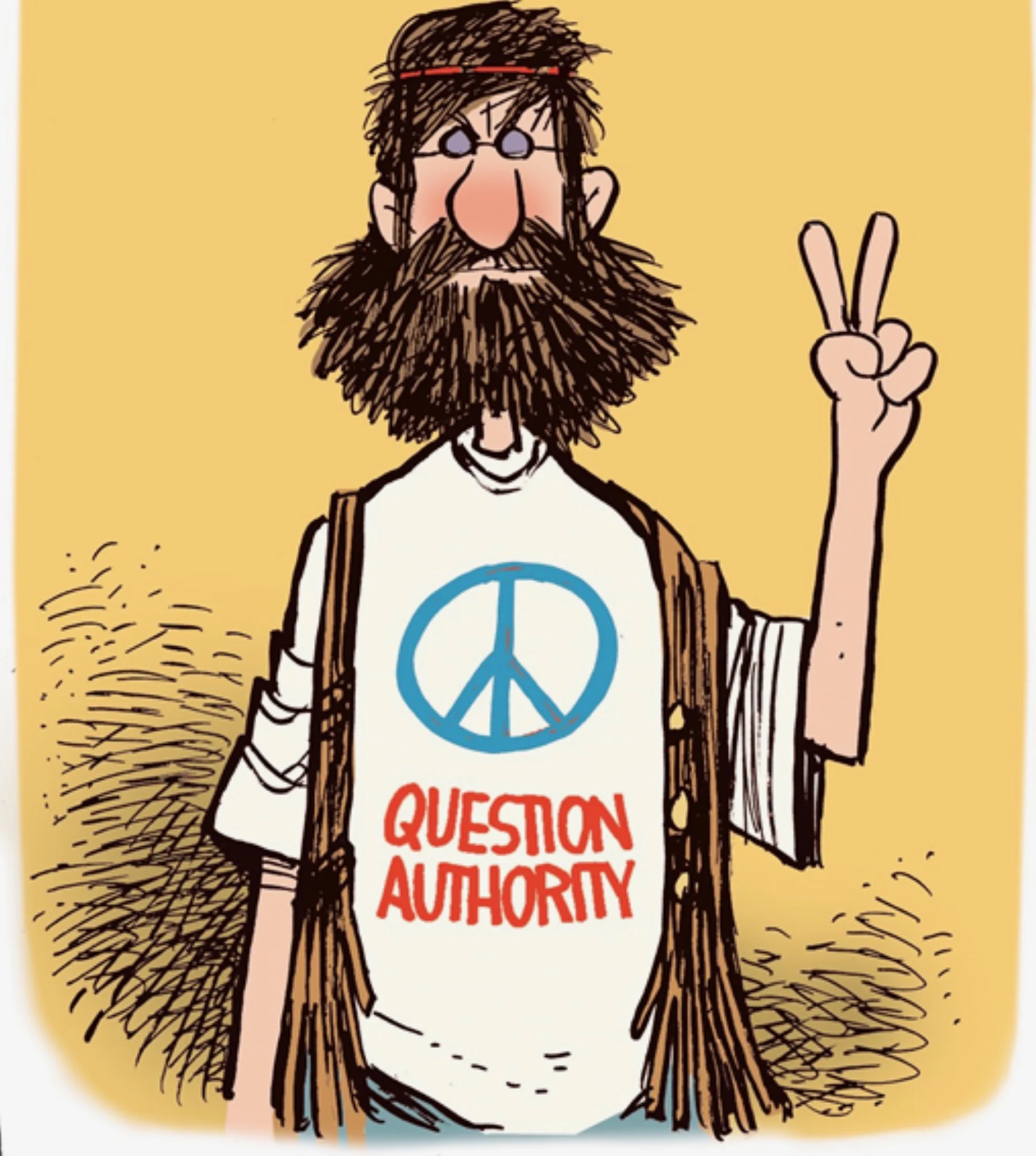
Independence Day is a day for celebrating the freedom we have in our republic. One of our most precious freedoms is the freedom to question authority. Let me share with you a lightly edited version of an email I sent one of my coauthors a while back on how deeply I feel about the right to question authority:
I was pleased that I did a little better today about handling gracefully the issue of scientific authority. I have been embarrassed about getting so heated about that on some occasions. I think I am getting closer to figuring it out.
As a practical matter, the main thing I want you to know is that I respect you, way more than a random paper in the literature, even if it is by someone called an "expert" on some topic. So your saying you think X carries a lot more weight to me than saying "the experts on this think X."
Here are some of my relevant values and experiences:
- I am a child of the 60s. "Question Authority" was one of our watchphrases and is burned into me.
- My path out of Mormonism (a very big deal in my life) involved questioning authority. There in particular, the primacy of truth versus hierarchy was something I felt deeply.
- My relative success as an economist has involved questioning authority all along the way.
- I have a very strong value of giving everyone a fair hearing. So I don't need someone to claim authority for me to be willing to listen to their idea. (On Twitter, people find my willingness to treat the questions and ideas of people with no particular status seriously quite unusual.)
The ultimate nonnegotiable principle for me in our work is that we make the final judgment—not any other purported experts—or even scholars accepted as experts by general (but uncareful) social consensus. There may sometimes be tactical reasons to act as if we were deferring to the experts, but in the first instance we should make our own judgments (except in cases where we don't care enough—then we might as well defer to whomever our audience might be induced to think is an expert).
Anyway, sorry for the excess heat along the way on this.
In Praise of Avocados

Avocados are both healthy and delicious. When I am not fasting, I typically eat an avocado a day in my giant salad. I am glad I am not the only fan of avocados. Bee Wilson, in her delightful February 16, 2018 pocket history of avocados, "What Explains Our Mania for Avocados," writes:
In the U.S., demand for avocados is now so frenzied that it threatens to outstrip supply. The average American consumes 7 pounds of avocado a year, up from 1 pound in 1974. By 2016, annual retail sales of avocados in the U.S. had reached $1.6 billion, according to the Hass Avocado Board.
Bee agrees with my assessment of avocados:
Few other ingredients taste at once so dreamily rich and so healthy. ...
Avocado is one of the few modern foods that manages to straddle our ideas of both comfort and health.
Among the many cultural, technological and economic factors that have driven the increasing popularity of avocados, a key factor has been Americans beginning to turn away from the lowfat orthodoxy has gripped us for so long. As Bee writes:
Our avocado-love has also been driven by cultural changes, large and small: the popularity of tacos, the rise of the hipster cafe, the rehabilitation of fat as a health food. ...
In the 1980s, at the height of low-fat orthodoxy, avocado was regarded as dangerously fattening, and the wholesale price plummeted to 10 cents a pound.
Even better, in many circles nowadays, people realize both
- avocados are healthy
- sugar is unhealthy.
Don't miss these other posts on diet and health and on fighting obesity:
- Stop Counting Calories; It's the Clock that Counts
- Forget Calorie Counting; It's the Insulin Index, Stupid
- Obesity Is Always and Everywhere an Insulin Phenomenon
- The Problem with Processed Food
- Which Is Worse for You: Sugar or Fat?
- Our Delusions about 'Healthy' Snacks—Nuts to That!
- My Giant Salad
- Using the Glycemic Index as a Supplement to the Insulin Index
- How Fasting Can Starve Cancer Cells, While Leaving Normal Cells Unharmed
- Why You Should Worry about Cancer Promotion by Diet as Much as You Worry about Cancer Initiation by Carcinogens
- Good News! Cancer Cells are Metabolically Handicapped
- How Sugar, Too Much Protein, Inflammation and Injury Could Drive Epigenetic Cellular Evolution Toward Cancer
- Meat Is Amazingly Nutritious—But Is It Amazingly Nutritious for Cancer Cells, Too?
- The Keto Food Pyramid
- Sugar as a Slow Poison
- How Sugar Makes People Hangry
- Why a Low-Insulin-Index Diet Isn't Exactly a 'Lowcarb' Diet
- Hints for Healthy Eating from the Nurse's Health Study
- The Case Against Sugar: Stephan Guyenet vs. Gary Taubes
- The Case Against the Case Against Sugar: Seth Yoder vs. Gary Taubes
- Gary Taubes Makes His Case to Nick Gillespie: How Big Sugar and a Misguided Government Wrecked the American Diet
- A Conversation with David Brazel on Obesity Research
- Magic Bullets vs. Multifaceted Interventions for Economic Stimulus, Economic Development and Weight Loss
- Mass In/Mass Out: A Satire of Calories In/Calories Out
- Carola Binder: The Obesity Code and Economists as General Practitioners
- Carola Binder—Why You Should Get More Vitamin D: The Recommended Daily Allowance for Vitamin D Was Underestimated Due to Statistical Illiteracy
- Jason Fung: Dietary Fat is Innocent of the Charges Leveled Against It
- Faye Flam: The Taboo on Dietary Fat is Grounded More in Puritanism than Science
- Diseases of Civilization
- Katherine Ellen Foley—Candy Bar Lows: Scientists Just Found Another Worrying Link Between Sugar and Depression
- Ken Rogoff Against Sugar and Processed Food
- Kearns, Schmidt and Glantz—Sugar Industry and Coronary Heart Disease Research: A Historical Analysis of Internal Industry Documents
- Intense Dark Chocolate: A Review
- Salt Is Not the Nutritional Evil It Is Made Out to Be
- Confirmation Bias in the Interpretation of New Evidence on Salt
- Whole Milk Is Healthy; Skim Milk Less So
- Is Milk OK?
- How the Calories In/Calories Out Theory Obscures the Endogeneity of Calories In and Out to Subjective Hunger and Energy
- Putting the Perspective from Jason Fung's "The Obesity Code" into Practice
- 'Forget Calorie Counting. It's the Insulin Index, Stupid' in a Few Tweets
- Julia Belluz and Javier Zarracina: Why You'll Be Disappointed If You Are Exercising to Lose Weight, Explained with 60+ Studies (my retitling of the article this links to)
- Diana Kimball: Listening Creates Possibilities
- On Fighting Obesity
- The Heavy Non-Health Consequences of Heaviness
- Analogies Between Economic Models and the Biology of Obesity
- Debating 'Forget Calorie Counting; It's the Insulin Index, Stupid'
- Podcast: Miles Kimball Explains to Tracy Alloway and Joe Weisenthal Why Losing Weight Is Like Defeating Inflation
Also see the last section of "Five Books That Have Changed My Life" and the podcast "Miles Kimball Explains to Tracy Alloway and Joe Weisenthal Why Losing Weight Is Like Defeating Inflation." If you want to know how I got interested in diet and health and fighting obesity and a little more about my own experience with weight gain and weight loss, see my post "A Barycentric Autobiography."
John Locke: The Law Must Apply to Rulers, Too

The principle that law must apply to the head of a nation as well as to everyone else is an important one. We feel this principle strongly with our own leaders, but still may not appreciate the full importance of this rule, since it deters many possible evils that are less salient because they don't actually happen.
Thus, it is good to have a reminder from John Locke in Sections 90-94 of John Locke's 2d Treatise on Government: “Of Civil Government” (in Chapter VII, "Of Political or Civil Society") of what happens when rulers are not subject to law: it is like being in the state of nature, unilaterally disarmed in the face of someone who at best is a judge in his or her own case, at worst an out-and-out predator. The full text of the passage is below. But let me first draw out what strike me as the most telling passages:
- He that would have been insolent and injurious in the woods of America, would not probably be much better in a throne; where perhaps learning and religion shall be found out to justify all that he shall do to his subjects, and the sword presently silence all those that dare question it ...
- ... every man, who loves his own power, profit, or greatness, may, and naturally must do, keep those animals from hurting, or destroying one another, who labour and drudge only for his pleasure and advantage; and so are taken care of, not out of any love the master has for them, but love of himself, and the profit they bring him ...
- ... if it be asked, what security, what fence is there, in such a state, against the violence and oppression of this absolute ruler? the very question can scarce be borne ...
- Betwixt subject and subject, they will grant, there must be measures, laws and judges, for their mutual peace and security: but as for the ruler, he ought to be absolute, and is above all such circumstances; because he has power to do more hurt and wrong, it is right when he does it.
- To ask how you may be guarded from harm, or injury, on that side where the strongest hand is to do it, is presently the voice of faction and rebellion: as if when men quitting the state of nature entered into society, they agreed that all of them but one should be under the restraint of laws, but that he should still retain all the liberty of the state of nature, increased with power, and made licentious by impunity. This is to think, that men are so foolish, that they take care to avoid what mischiefs may be done them by pole-cats, or foxes; but are content, nay, think it safety, to be devoured by lions.
- ... when time, giving authority, and (as some men would persuade us) sacredness of customs, which the negligent, and unforeseeing innocence of the first ages began, had brought in successors of another stamp, the people finding their properties not secure under the government ... could never be safe nor at rest ... till the legislature was placed in collective bodies of men, call them senate, parliament, or what you please. By which means every single person became subject, equally with other the meanest men, to those laws, which he himself, as part of the legislative, had established; nor could any one, by his own authority, avoid the force of the law, when once made; nor by any pretence of superiority plead exemption, thereby to license his own, or the miscarriages of any of his dependents.
- No man in civil society can be exempted from the laws of it: for if any man may do what he thinks fit, and there be no appeal on earth, for redress or security against any harm he shall do; I ask, whether he be not perfectly still in the state of nature, and so can be no part or member of that civil society ...
One implication of John Locke's argument is that when a ruler is not subject to the law, then everyone else in the nation is in a state of nature vis a vis that ruler, and so can legitimately combine together with others to act as vigilantes to punish that ruler if justice demands that the ruler be punished. But the costs of vigilante action to punish a ruler are extraordinarily high—not only bloodshed, but the danger that conspirators against the ruler might be judging their own case and so might judge wrongly. It is much better to have a legal system that can punish the ruler when appropriate.
For rebels and conspirators against a ruler who is not subject to the law, in addition to the danger of judging wrongly that the ruler has committed an injustice that deserves to be punished, there is also the danger that an offense by the ruler that ought to be punished by a penalty less than death will be punished by death because only death seems effective in preventing the ruler from retaliating. However, it might be reasonable to stipulate that any ruler is deserving of death who does not agree either (a) to become subject to the law or (b) to remain outside civil society but to resign. In that case, tyrannicide would always be justified, as long as the ruler was first loudly called upon to either become subject to the law or to resign, with due time given to the ruler to contemplate the merits of that demand.
For links to other John Locke posts, see these John Locke aggregator posts:
- John Locke's State of Nature and State of War
- On the Achilles Heel of John Locke's Second Treatise: Slavery and Land Ownership
Here is the full passage, including John Locke's footnotes to it:
§. 90. Hence it is evident, that absolute monarchy, which by some men is counted the only government in the world, is indeed inconsistent with civil society, and so can be no form of civil government at all: for the end of civil society, being to avoid, and remedy those inconveniences of the state of nature, which necessarily follow from every man’s being judge in his own case, by setting up a known authority, to which every one of that society may appeal upon any injury received, or controversy that may arise, and which every one of the 1 society ought to obey; wherever any persons are, who have not such an authority to appeal to, for the decision of any difference between them, there those persons are still in the state of nature; and so is every absolute prince, in respect of those who are under his dominion.
§. 91. For he being supposed to have all, both legislative and executive power in himself alone, there is no judge to be found, no appeal lies open to any one, who may fairly, and indifferently, and with authority decide, and from whose decision relief and redress may be expected of any injury or inconveniency, that may be suffered from the prince, or by his order: so that such a man, however intitled, Czar, Grand Seignor, or how you please, is as much in the state of nature, with all under his dominion, as he is with the rest of mankind: for wherever any two men are, who have no standing rule, and common judge to appeal to on earth, for the determination of controversies of right betwixt them, there they are still in the state of nature, 2 and under all the inconveniences of it, with only this woeful difference to the subject, or rather slave of an absolute prince: that whereas, in the ordinary state of nature, he has a liberty to judge of his right, and according to the best of his power, to maintain it; now, whenever his property is invaded by the will and order of his monarch, he has not only to appeal, as those in society ought to have, but as if he were degraded from the common state of rational creatures, is denied a liberty to judge of, or to defend his right; and so is exposed to all the misery and inconveniences, that a man can fear from one, who being in the unrestrained state of nature, is yet corrupted with flattery, and armed with power.
§. 92. For he that thinks absolute power purifies men’s blood, and corrects the baseness of human nature, need read but the history of this, or any other age, to be convinced of the contrary. He that would have been insolent and injurious in the woods of America, would not probably be much better in a throne; where perhaps learning and religion shall be found out to justify all that he shall do to his subjects, and the sword presently silence all those that dare question it: for what the protection of absolute monarchy is, what kind of fathers of their countries it makes princes to be, and to what a degree of happiness and security it carries civil society, where this sort of government is grown to perfection, he that will look into the late relation of Ceylon, may easily see.
§. 93. In absolute monarchies indeed, as well as other governments of the world, the subjects have an appeal to the law, and judges to decide any controversies, and restrain any violence that may happen betwixt the subjects themselves, one amongst another. This every one thinks necessary, and believes he deserves to be thought a declared enemy to society and mankind, who should go about to take it away. But whether this be from a true love of mankind and society, and such a charity as we owe all one to another, there is reason to doubt: for this is no more than what every man, who loves his own power, profit, or greatness, may, and naturally must do, keep those animals from hurting, or destroying one another, who labour and drudge only for his pleasure and advantage; and so are taken care of, not out of any love the master has for them, but love of himself, and the profit they bring him: for if it be asked, what security, what fence is there, in such a state, against the violence and oppression of this absolute ruler? the very question can scarce be borne. They are ready to tell you, that it deserves death only to ask after safety. Betwixt subject and subject, they will grant, there must be measures, laws and judges, for their mutual peace and security: but as for the ruler, he ought to be absolute, and is above all such circumstances; because he has power to do more hurt and wrong, it is right when he does it. To ask how you may be guarded from harm, or injury, on that side where the strongest hand is to do it, is presently the voice of faction and rebellion: as if when men quitting the state of nature entered into society, they agreed that all of them but one should be under the restraint of laws, but that he should still retain all the liberty of the state of nature, increased with power, and made licentious by impunity. This is to think, that men are so foolish, that they take care to avoid what mischiefs may be done them by pole-cats, or foxes; but are content, nay, think it safety, to be devoured by lions.
§. 94. But whatever flatterers may talk to amuse people’s understandings, it hinders not men from feeling; and when they perceive, that any man, in what station soever, is out of the bounds of the civil society which they are of, and that they have no appeal on earth against any harm, they may receive from him, they are apt to think themselves in the state of nature, in respect of him whom they find to be so; and to take care, as soon as they can, to have that safety and security in civil society, for which it was first instituted, and for which only they entered into it. And therefore, though perhaps at first, (as shall be shewed more at large hereafter in the following part of this discourse,) some one good and excellent man having got a pre-eminency amongst the rest, had this deference paid to his goodness and virtue, as to a kind of natural authority, that the chief rule, with arbitration of their differences, by a tacit consent devolved into his, without any other caution, but the assurance they had of his uprightness and wisdom; yet when time, giving authority, and (as some men would persuade us) sacredness of customs, which the negligent, and unforeseeing innocence of the first ages began, had brought in successors of another stamp, the people finding their properties not secure under the government, as then it was, (whereas government has no other end but the preservation of property 3) could never be safe nor at rest, nor think themselves in civil society, till the legislature was placed in collective bodies of men, call them senate, parliament, or what you please. By which means every single person became subject, equally with other the meanest men, to those laws, which he himself, as part of the legislative, had established; nor could any one, by his own authority, avoid the force of the law, when once made; nor by any pretence of superiority plead exemption, thereby to license his own, or the miscarriages of any of his dependents. No man in civil society can be exempted from the laws of it: 4 for if any man may do what he thinks fit, and there be no appeal on earth, for redress or security against any harm he shall do; I ask, whether he be not perfectly still in the state of nature, and so can be no part or member of that civil society; unless any one will say, the state of nature and civil society are one and the same thing, which I have never yet found any one so great a patron of anarchy as to affirm.
Note 1. The public power of all society is above every soul contained in the same society; and the principal use of that power is, to give laws unto all that are under it, which laws in such cases we must obey, unless there be reason shewed which may necessarily inforce, that the law of reason, or of God, doth enjoin the contrary, Hooker’s Eccl. Pol. l. i. sect.16. [back]
Note 2. To take away all such mutual grievances, injuries and wrongs, i. e. such as attend men in the state of nature, there was no way but only by growing into composition and agreement amongst themselves, by ordaining some kind of government public, and by yielding themselves subject thereunto, that unto whom they granted authority to rule and govern, by them the peace, tranquillity, and happy estate of the rest might be procured. Men always knew that where force and injury was offered, they might be defenders of themselves; they knew that however men may seek their own commodity, yet if this were done with injury unto others, it was not to be suffered, but by all men, and all good means to be withstood. Finally, they knew that no man might in reason take upon him to determine his own right, and according to his own determination proceed in maintenance thereof, in as much as every man is towards himself, and them whom he greatly affects partial; and therefore that strifes and troubles would be endless, except they gave their common consent, all to be ordered by some, whom they should agree upon, without which consent there would be no reason that one man should take upon him to be lord or judge over an other. Hooker’s Eccl. Pol. l. i. sect. 10. [back]
Note 3. At the first, when some certain kind of regiment was once appointed, it may be that nothing was then farther thought upon for the manner of governing, but all permitted unto their wisdom and discretion, which were to rule, till by experience they found this for all parts very inconvenient, so as the thing which they had devised for a remedy did indeed but increase the sore, which it should have cured. They saw, that to live by one man’s will, became the cause of all men’s misery. This constrained them to come unto laws, wherein all men might see their duty beforehand, and know the penalties of transgressing them. Hooker’s Eccl. Pol. l. i. sect. 10. [back]
Note 4. Civil law being the act of the whole body politic, doth therefore over-rule each several part of the same body. Hooker’s Eccl. Pol. l. i. sect. 10.