Confessions of a Supply-Side Liberal an Intelligent Economist Top 100 Economics Blog

Here is a quotation from Prateek Agarwal’s email to me about this honor:
… your blog, Confessions of a Supply Side Liberal has been featured in the Top 100 Economics Blogs of 2019. Congratulations!
One of the significant changes this year has been the removal of newspaper blogs such as Bloomberg View and Real Time Exchange to focus on more niche blogs. The lack of female economist (and bloggers) has been a common criticism of this list. I've made an effort to include more female bloggers, but if you have any suggestions, I can consider them for the 2020 list.
I’d be glad for suggestions from readers of good blogs by female economists that didn’t make it onto this list that I can pass on to Prateek.
Hints About What Can Be Done to Reduce Alzheimer's Risk

I have a simple rule of thumb: if we have known of a disease for a long time, but understand it even less well then we understand cancer, it is probably an autoimmune disease or the side effect of an immune system reaction to diet, infection, toxins or physical trauma. I am thinking in particular of two black beasts (bêtes noires) of old age: Alzheimer’s disease and Parkinson’s disease. In both of these two cases, suspecting that they may be autoimmune diseases is well within the scope of the current scholarly debate (Alzheimer’s, Parkinson’s). And the immune system process of inflammation is seen as a risk factor for Alzheimers. (On inflammation more generally, see my post “Jonathan Shaw: Could Inflammation Be the Cause of Myriad Chronic Diseases?”
For those who either have or think they might have an autoimmune disease or are worried about diseases such as Alzheimer’s and Parkinson’s that might be autoimmune diseases or diseases with an important part of the causal mechanism involving the immune system, it is worth knowing about Steven Gundry’s hypothesis that leaky gut and certain foods often generate or aggravate autoimmune disorders. See “What Steven Gundry's Book 'The Plant Paradox' Adds to the Principles of a Low-Insulin-Index Diet.”
In this post, let me focus in on Alzheimer’s disease and leave Parkinson’s disease for another day. Researchers haven’t been able to provide gold standard evidence for anything as a preventative against Alzheimer’s disease. In her Wall Street Journal article “Should You Find Out if You’re at Risk of Alzheimer’s?”, Sumathi Reddy reports:
There is no advice derived from randomized-controlled trials—the gold standard in medicine—on preventing Alzheimer’s disease.
The title of Sumathi’s article alludes to these three facts:
Genetic tests are getting a lot better at predicting Alzheimer’s disease
They’ll get better still by adding in the effects of more genes and pinning down the effect of each gene more and more precisely.
In the absence of good evidence about how to try to prevent Alzheimer’s disease, you may or may not want to know about your genetic level of Alzheimer’s risk.
But even in the absence of solid evidence, many researchers and doctors have the intuition that what is good for avoiding heart disease may also be good for fighting Alzheimer’s disease. (Cynically, I wonder a little if they say that because even if they are wrong about the effects on Alzheimer’s they won’t get in trouble for recommending those things.) Let’s look at some specific statements by researchers and doctors. In each case, let me add bold italics to emphasize the key message in each of the quotations from Sumathi’s article.
Rudy Tanzi’s Advice for Trying to Prevent Alzheimer’s Disease
But most doctors agree that regular exercise, adequate sleep and a heart-healthy diet can lower the risk. “The Healing Self,” which Dr. Tanzi wrote with Deepak Chopra, advocates for protecting the brain by focusing on sleep, exercising, learning things, controlling stress and hypertension, as well as maintaining social interaction and a healthy diet.
David Holtzman’s Advice for Trying to Prevent Alzheimer’s
David Holtzman, professor and chair of neurology at Washington University School of Medicine in St. Louis, says there is no objective data that specific strategies work aside from a 2015 study conducted in Finland that showed that elderly people who were cognitively normal or had a mild impairment maintained or increased their cognitive ability over two years with exercise, cognitive training and vascular-risk monitoring.
“Right now,” Dr. Holtzman said, “if you lead an active, heart-healthy, pro-brain lifestyle, there’s not much that we can tell somebody that they should do differently.”
Dale Bredesen’t Advice for Trying to Prevent and Fight Alzheimer’s Disease
Dale Bredesen, a professor in the department of molecular and medical pharmacology at UCLA and founding president of the Buck Institute for Research on Aging, advocates for specific changes. His protocol—which costs $75 a month—entails getting regular blood tests to track markers such as insulin resistance and inflammation, as well as following a low-carb, high-fat diet, fasting intermittently and taking supplements. Dr. Bredesen says he has published two small studies and one 100-person study showing that his protocol can reverse cognitive decline in patients with mild cognitive impairment or Alzheimer’s disease.
Dale has gotten some pushback on this. He answers that he is working toward getting more solid evidence:
But experts pointed out that his studies aren’t randomized controlled ones. Dr. Bredesen said he needs to build up anecdotal evidence to be able to do one. Many members of the ApoeE4.Info group, including Ms. Braymer, said they follow the principles of Dr. Bredesen’s protocol.
It is interesting to look at the Journal of Alzheimer’s Disease & Parkinsonism article “Reversal of Cognitive Decline: 100 Patients” that Dale Bredesen is the first author for.
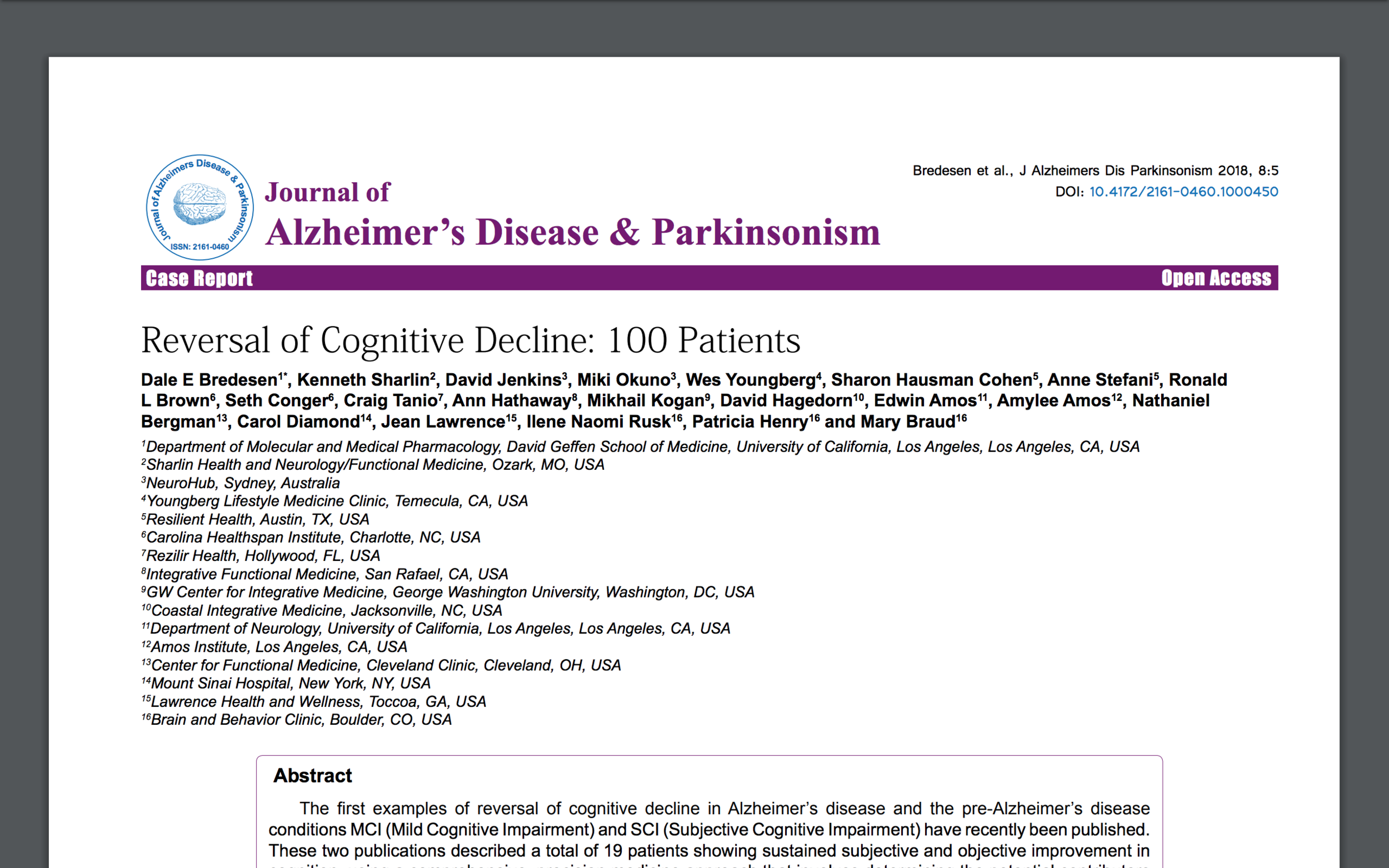
Here are some informative quotations from that article, again with my emphasis added both by bold italics on the words of the article and by adding explanations in square brackets:
… what is referred to as Alzheimer’s disease is a protective, network-downsizing response to several classes of insults: pathogens/inflammation, toxins, and withdrawal of nutrients, hormones, or trophic [diet-related] factors.
This notion has led to a treatment regimen in which … a personalized program is generated … Some examples include: (1) identifying and treating pathogens such as Borrelia, Babesia, or Herpes family viruses; (2) identifying gastrointestinal hyperpermeability, repairing the gut, and enhancing the microbiome [leaky gut and a messed-up gut microbiome—the causal nexus Steven Gundry emphasizes]; (3) identifying insulin resistance and protein glycation [sugar molecules messing up proteins], and returning insulin sensitivity and reduced protein glycation; (4) identifying and correcting suboptimal nutrient, hormone, or trophic [diet-related] support (including vascular support); (5) identifying toxins (metallotoxins and other inorganics, organic toxins, or biotoxins), reducing toxin exposure, and detoxifying.
Here we have taken a very different approach, evaluating and addressing the many potential contributors to cognitive decline for each patient. This has led to unprecedented improvements in cognition. Most importantly, the improvement is typically sustained unless the protocol is discontinued, and even the initial patients treated in 2012 have demonstrated sustained improvement. This effect implies that the root cause(s) of the degenerative process are being targeted, and thus the process itself is impacted, rather than circumventing the process with a monotherapeutic that does not affect the pathophysiology.
Let’s hope that some of this advice for trying to prevent Alzheimer’s is right, or that better advice is coming soon.
For annotated links to other posts on diet and health, see “Miles Kimball on Diet and Health: A Reader's Guide.”
In relation to Cancer, which I mentioned at the beginning of this post, you might be interested in these:
How Fasting Can Starve Cancer Cells, While Leaving Normal Cells Unharmed
Can Religion Reduce Suicide?
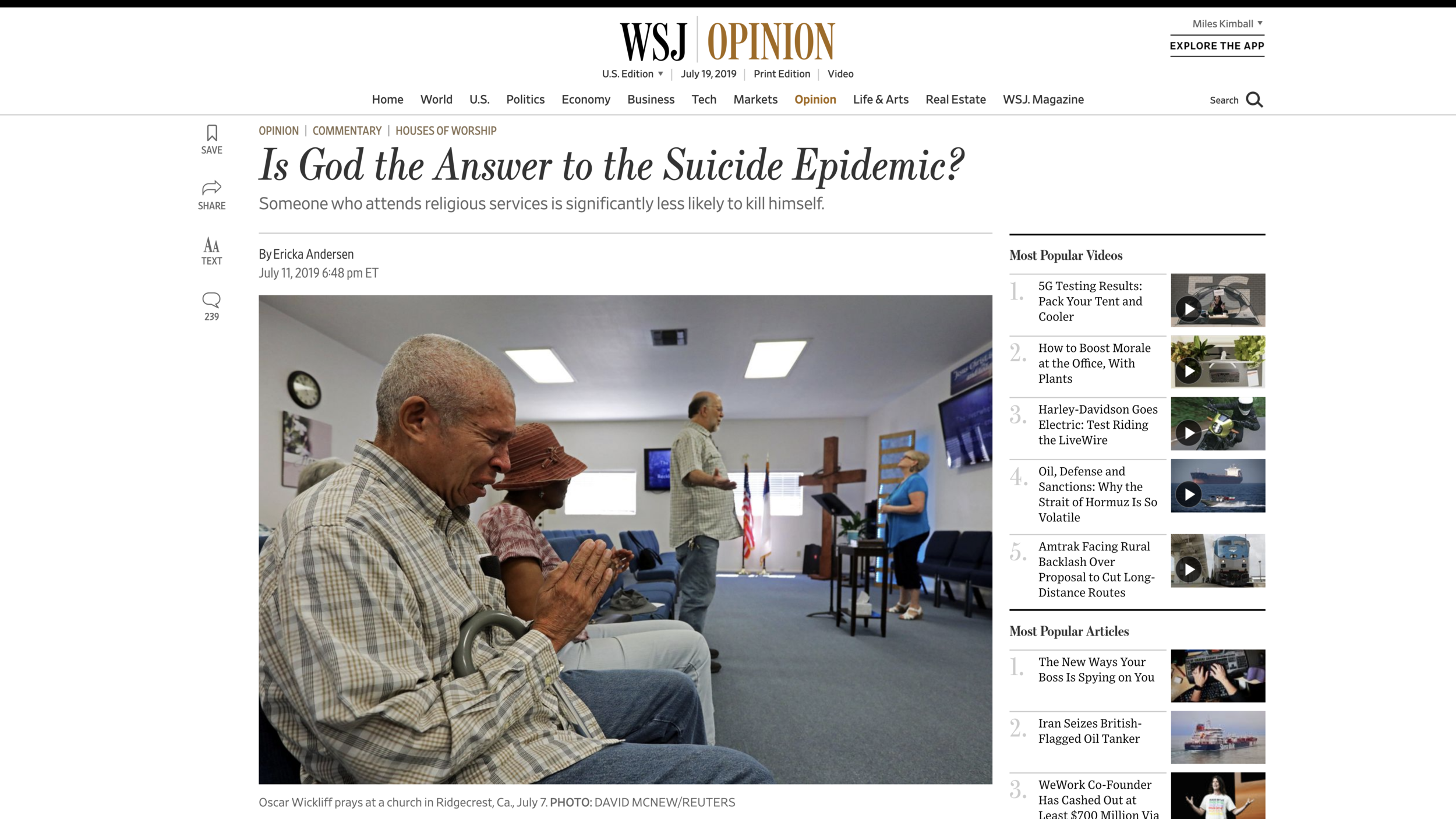
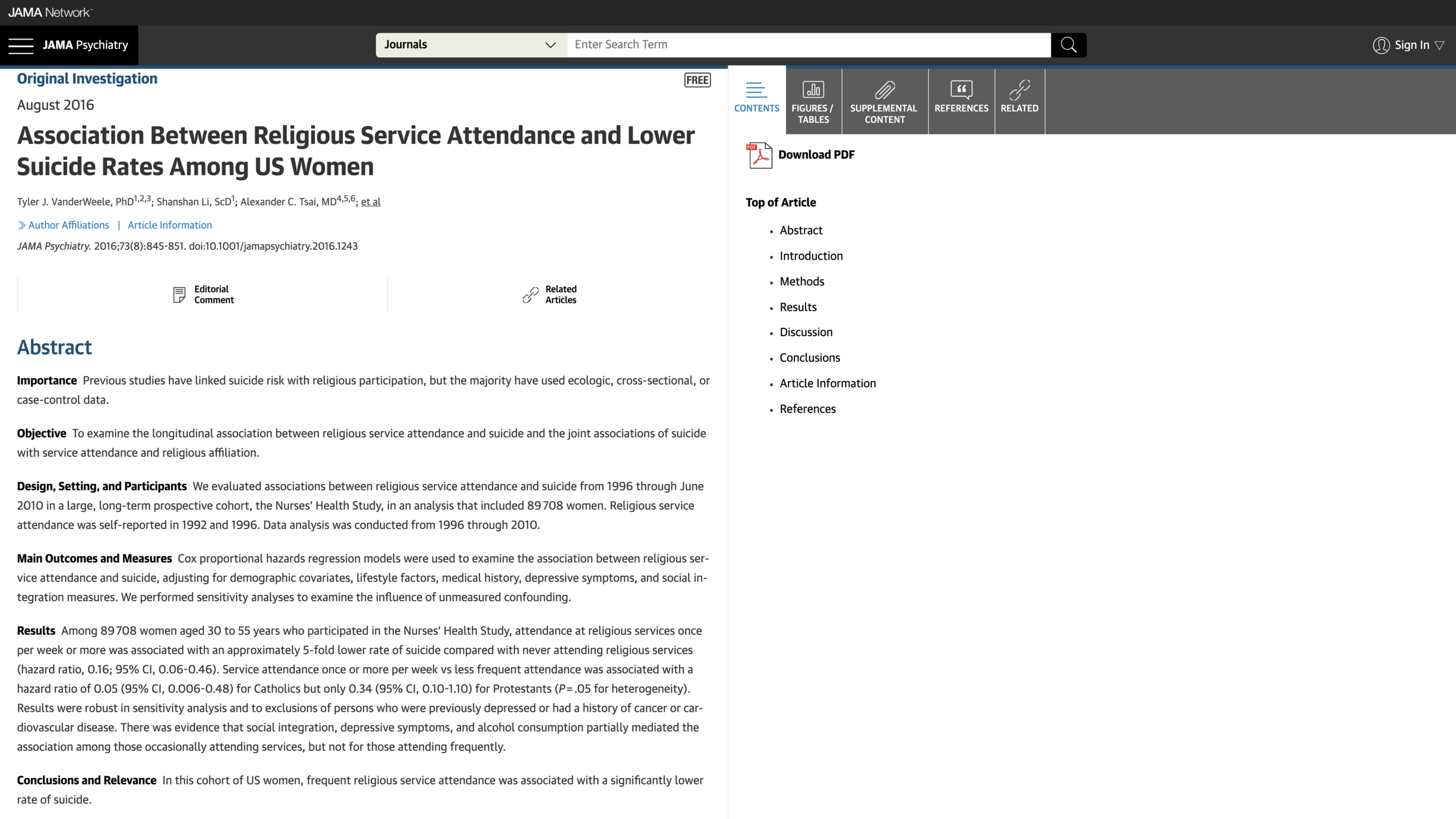
I was quite interested to read the scientific article “Association Between Religious Service Attendance and Lower Suicide Rates Among US Women,” by Tyler J. VanderWeele, Shanshan Li, Alexander C. Tsai and Ichiro Kawachi. I was wondering by what magic they were hoping to get the causal effect of religious attendance on suicide from the non-experimental data in the Nurse’s Health Study. (I wrote about dietary evidence in the Nurse’s Health Study and the statistical issues in interpreting that evidence in “Hints for Healthy Eating from the Nurse's Health Study.”)
It would have been interesting to see the regression coefficient for a change in religious attendance. Unfortunately, it seems they didn’t look at that, but rather “controlled” for past religious attendance. “Controlling” for a variable by including it in a regression isn’t really controlling for what that variable is intended to measure or is proxying for when that variable is measured with error relative to what it is proxying for. It is only partially controlling. Whether or not one is “controlling” for variables can only be verified when one explicitly thinks through measurement error issues. And “controlling” for variables is seldom achieved without thinking through measurement error issues. (The advantage of using the first difference of religious attendance as a right-hand-side variable is that the first difference of religious attendance should measure the true change in whatever religious attendance is intended as a proxy, plus error. The error should bias the coefficient toward zero, but is less likely to change the sign and statistical significance of the sign of the coefficient.)
But the biggest issue with the paper lies in a different direction. They recognize the issue and try to parry it in these passages:
For an unmeasured confounder to explain the HR estimate of 0.16 (95% CI, 0.06-0.46), the unmeasured confounder would have to both increase the likelihood of religious service attendance and decrease the likelihood of suicide by 12-fold above and beyond the measured confounders; weaker confounding would not suffice. To bring the estimate’s upper confidence limit of 0.46 above 1.0, the unmeasured confounder would still have to both increase the likelihood of religious service attendance and decrease the likelihood of suicide by 3.7-fold above and beyond the measured confounders.
…
Our study made use of observational data. Although we adjusted for major confounders regarding the association between religious service attendance and suicide, the results may still be subject to unmeasured confounding by personality, impulsivity, feelings of hopelessness, or other cognitive factors. However, in sensitivity analysis, for an unmeasured confounder to explain the effect of religious service attendance on suicide, it would have to both increase the likelihood of religious service attendance and decrease the likelihood of suicide by greater than 10-fold above and beyond the measured covariates. Such substantial confounding by unmeasured factors seems unlikely, given adjustment for an extensive set of covariates and the known risk factor associations for suicide.
Unlike the authors, it is not hard for me to think of a very powerful potential confounder. Having one’s life be a mess could easily both reduce religious attendance powerfully and powerfully increase the probability of suicide. That is a story in which there wouldn’t have to be any causal effect of religious attendance on suicide at all.
Note that one’s life being a mess could both lead to more suicide and reduce any kind of social engagement and community support. So this is a problem not just for showing that religiosity can reduce suicide—which it might through social support and community—but for showing that any other kind of social support and community reduces suicide.
Even if something religious is causally reducing suicide, it definitely doesn’t have to be religious attendance. Anything correlated with religious attendance could also yield the evidence they point to. To see this point, suppose someone very much wanted to attend church, but was geographically too far away to make it feasible. One could easily imagine that if there are religious forces that reduce suicide, many of them might still be operative. Indeed, the authors recognize that it might be a matter of religious belief that both helps lead to religious attendance and reduces suicide:
Although religious service attendance has commonly been used in previous published studies and tends to be the strongest religious predictor of health, religiosity is multidimensional, and different aspects of religion and spirituality may therefore be differently associated with suicide. Data on religious service attendance were collected through a self-reported questionnaire and, moreover, may be subject to measurement error and possible overreporting, although the relative ordering of frequency might still be preserved. Further research could examine other religious practices, mindfulness practices, other aspects of spirituality and religiosity, other race/ethnic and demographic groups, and other forms of social participation.
In the whole paper, the most persuasive evidence about the effect of religiosity on suicide is that religious attendance seemed to have a bigger proportional effect on Catholics than on Protestants. The best I can come up with as confounders for this results are
Relative to Protestant teaching, Catholic teaching doesn’t stop people from committing suicide, but makes people underreport suicide more if they are a believing and attending Catholic. And those who provide or withhold crucial evidence on cause of death often have similar religious beliefs and attendance to the one who died. This could in principle be addressed by looking at differences between the attendance of the one who died versus the attendance of the ones who provided or withheld crucial evidence about the cause of death.
Relative to Protestant teaching, Catholic teaching makes people especially unwilling to attend when their lives are in a mess.
Despite these possible stories (which may or may not be true and may or may not have any oomph to them), the fact that the differential content of Catholicism vs. Protestantism seems to matter is the strongest evidence they have that there is causality running from religiosity to reduced suicide.
I would love to see a paper that tried to get identification to test the effect of church attendance on suicide in the typical way economists try to get identification. For example, do people who live further from the nearest church commit suicide more often? That might be a doable research project. And one could do some good placebo tests by running regressions with closeness to community centers, or stores or bars as well as the regressions on closeness to a church.
For another post at the intersection of religion and statistics, don’t miss “Who Leaves Mormonism?”
Why a Positive Aggregate Demand Shock Should Make the Stock Market Go Down If the Fed is Doing Its Job Right
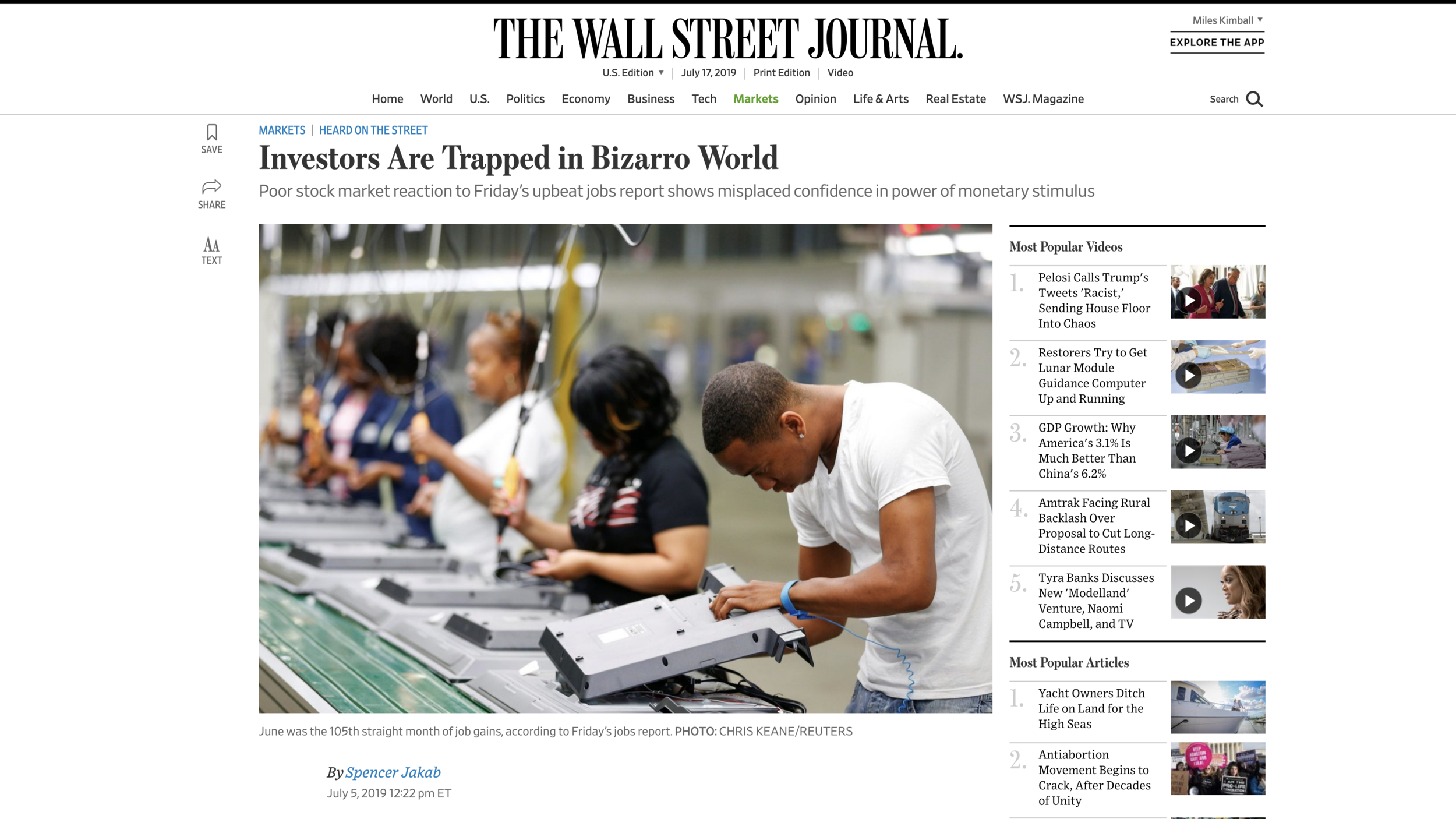
Spencer Jakab’s July 5, 2019 Wall Street Journal shown above, “Investors Are Trapped in Bizarro World,” puzzles over why the stock market went down after a better-than-expected job report. Let me propose a simple explanation: a Fed that is beginning to do a part of its job better.
Here is the argument:
The Effect of a Positive Demand Shock on the Stock Market If the Fed is Doing Its Job Right
To a reasonable approximation, optimal monetary policy is pretty close to keeping output (GDP) at its natural level. This is what I mean by “the Fed doing its job right”—not perfectly according to every nuance in the optimal monetary policy literature, but simply keeping the output gap between actual output and natural output zero to the limit of its ability. Note that if the Fed is doing this, it is not itself a big source of demand shocks because it is being appropriately reactive to events.
Define a positive demand shock as anything that leaves the natural level of output the same, but raises the level of the real interest rate necessary to keep the actual level of output at that natural level. Fiscal policy shocks are one possible candidate. But “animal spirits” may be another. In context, I am assuming that a surprisingly good jobs report is often a sign of one of these positive aggregate demand shocks.
Assume that higher output (GDP) has a positive effect on the stream of real future dividends a firm will pay out, while a higher real interest rate has a negative effect on the present value of any given stream of real dividends.
If the Fed is doing its job well, a positive demand shock shouldn’t change actual output much because the job is to match actual output to natural output and by the definition of a demand shock, natural output hasn’t changed. But then by the other part of the definition of a positive demand shock, the real interest rate should go up. In the usual notation, Y same, r up. Note that “r up” may mean that the Fed won’t cut rates as quickly as people had thought. “r up” is all relative to prior expectations.
Y same, so there is no affect on stock prices from that source. But r up tends to make stock prices go down. That’s the end of the argument.
The Effect of a Positive Technology Shock on the Stock Market If the Fed is Doing Its Job Right
Let’s contrast the effect of a demand shock if the Fed is doing its job right to the effect of a positive technology shock if the Fed is doing its job right. My argument for a technology shock takes a different angle, and is somewhat simpler.
Keeping the output gap zero as the Fed should be doing, means that the economy is close to doing what a real business cycle model would do.
In what is called the “Divine Coincidence,” keeping the output gap zero also (at least approximately) keeps the rate of inflation steady.
Typically, real business cycle models predict that investment should go up in response to a positive technology shock. (I have been interested in my research in showing that this is quite general.) If investment is going up, then the value of a firm’s preexisting capital should also go up. Even in fairly general models, the value of firms should on average go up if investment in the economy has increased.
Typically, the real interest rate goes up in real business cycle models in response to a positive technology shock. (I have been interested in my research in showing that this is quite general.) This increase in the real interest rate, coupled with inflation unchanged, means the value of a firm’s debt will go down.
The value of the firm going up and the value of its debt going down together imply that stock prices should go up.
Conclusion
I don’t want to be mistaken for saying that the Fed is doing its job right. Indeed, I have a long wishlist for how the Fed should improve its conduct of monetary policy. See my post “Next Generation Monetary Policy.” But it is a sign of progress if the stock market has begun to react in both of the ways described above.
The Better Side of Conventional Wisdom about Diet and Health

My interest in diet and health makes me curious enough to perservere through overly lengthy informercials giving various diet and health claims. A few days ago, I watched this infomercial for the Trim Down Club. Let me give you a report of what I heard, to save you the time. Although there are a lot of important things about diet and health that the informercial didn’t say, I agreed with everything it did say, with one exception. The exception is that the infomercial gave the usual flawed advice to spread one’s eating out over time. It is possible this is good advice when someone is eating foods that have a big insulin kick (see “Forget Calorie Counting; It's the Insulin Index, Stupid”) so that an especially big meal of those kinds of foods would have a very large insulin kick, but even then the accumulating evidence on the virtues of periodic fasting (often called “intermittent fasting” or IF) calls that advice into question. (A Plea: I would love to know what research article or articles people cite to claim that eating lots of small meals throughout the day is better than a few big meals. I would be eager to write a post on such an article.)
Here are the areas of agreement:
Sugar is bad. Orange juice is a good example of a high-sugar food people falsely think is innocent
Transfats are bad. Old-style margarine is a good example of a food high in transfats. However, they neglected to mention that there is a partial ban on transfats in many countries. (See the Wikipedia article “Trans Fat.”)
Many highly processed foods that pretend to be good are actually bad. Typical types of “whole-wheat bread” are a good example. (See “The Problem with Processed Food.”)
Nonsugar sweeteners are problematic. (See “Which Nonsugar Sweeteners are OK? An Insulin-Index Perspective.”)
Processed soy products are bad.
Processed meat is suspect.
Stress can make one feel hungrier.
Drinking green tea can make you feel less hungry and may have other benefits.
Combining high-insulin-index foods with high-insulin-index foods can reduce the size of the insulin kick and therefore the hunger rebound effect you are likely to face. (In here is an assumption that the total quantity of the high-insulin-index food you eat is likely to go down somewhat when you are also eating a low-insulin-index food. But that may be true for extremely high-insulin-index foods: see “Does Sugar Make Dietary Fat Less OK?”)
Surprisingly, despite the discussion of a lectin-free diet further down on the Trim Down Club webpage flagged above in its current incarnation, the informercial made no direct mentions of lectins (unless I missed it as the infomercial droned on and on). If you are interested in lectin-free diets, see my post “What Steven Gundry's Book 'The Plant Paradox' Adds to the Principles of a Low-Insulin-Index Diet.”
The reason I titled this post “The Better Side of Conventional Wisdom on Diet and Health” is that the infomercial emphasized that the Trim Down Club employed many licensed or certified dietitians. The advice given seems close enough to conventional wisdom, that I can easily believe that a substantial fraction of licensed and certified dietitians would be willing to sign on to this advice. The advice I give in my diet and health posts goes further beyond conventional wisdom. I strive to give reasons for the advice I give that I hope at least give you a way to evaluate my advice.
For annotated links to other posts on diet and health, see “Miles Kimball on Diet and Health: A Reader's Guide.”
Michael Cembalest: The Democratic Socialism Being Talked About by Democratic Party Candidates isn't like the Nordic Countries, It's Like Argentina →
Let me be clear that I don’t necessarily think we need to be worried; I am not at all sure that a Democratic president would follow through on these promises.
John Locke: Bad Rulers May Be Removed

One of the longest sections in John Locke’s 2d Treatise on Government: Of Civil Government, is section 222, in the final chapter: XIX, “Of the Dissolution of Government.” In reading this, I sense his righteous anger at bad rulers. In the title of this post, it was hard to be as emphatic as he is. “Bad Rulers May Be Removed. Period.” might say it better.
I consider this sentiment to be something deeply ingrained into the human heart by evolution. Our cousins the chimpanzees feel it too, as you can see by following the link to the video shown above. I am in full agreement with John Locke in what he says in Section 222—not only with the substance of what he says, but also with the passion with which he says it:
§. 222. The reason why men enter into society, is the preservation of their property; and the end why they chuse and authorize a legislative, is, that there may be laws made, and rules set, as guards and fences to the properties of all the members of the society, to limit the power, and moderate the dominion of every part and member of the society: for since it can never be supposed to be the will of the society, that the legislative should have a power to destroy that which every one designs to secure, by entering into society, and for which the people submitted themselves to legislators of their own making; whenever the legislators endeavour to take away, and destroy the property of the people, or to reduce them to slavery under arbitrary power, they put themselves into a state of war with the people, who are thereupon absolved from any farther obedience, and are left to the common refuge, which God hath provided for all men, against force and violence. Whensoever therefore the legislative shall transgress this fundamental rule of society; and either by ambition, fear, folly or corruption, endeavour to grasp themselves, or put into the hands of any other, an absolute power over the lives, liberties, and estates of the people; by this breach of trust they forfeit the power the people had put into their hands for quite contrary ends, and it devolves to the people, who have a right to resume their original liberty, and, by the establishment of a new legislative, (such as they shall think fit) provide for their own safety and security, which is the end for which they are in society. What I have said here, concerning the legislative in general, holds true also concerning the supreme executor, who having a double trust put in him, both to have a part in the legislative, and the supreme execution of the law, acts against both, when he goes about to set up his own arbitrary will as the law of the society. He acts also contrary to his trust, when he either employs the force, treasure, and offices of the society, to corrupt the representatives, and gain them to his purposes; or openly pre-engages the electors, and prescribes to their choice, such, whom he has by solicitations, threats, promises, or otherwise, won to his designs; and employs them to bring in such, who have promised beforehand what to vote, and what to enact. Thus to regulate candidates and electors, and new-model the ways of election, what is it but to cut up the government by the roots, and poison the very fountain of public security? for the people having reserved to themselves the choice of their representatives, as the fence to their properties, could do it for no other end, but that they might always be freely chosen, and so chosen, freely act, and advise, as the necessity of the commonwealth, and the public good should upon examination, and mature debate, be judged to require. This, those who give their votes before they hear the debate, and have weighed the reasons on all sides, are not capable of doing. To prepare such an assembly as this, and endeavour to set up the declared abettors of his own will, for the true representatives of the people, and the law-makers of the society, is certainly as great a breach of trust, and as perfect a declaration of a design to subvert the government, as is possible to be met with. To which, if one shall add rewards and punishments visibly employed to the same end, and all the arts of perverted law made use of to take off and destroy all that stand in the way of such a design, and will not comply and consent to betray the liberties of their country, it will be past doubt what is doing. What power they ought to have in the society, who thus employ it contrary to the trust went along with it in its first institution, is easy to determine; and one cannot but see, that he, who has once attempted any such thing as this, cannot any longer be trusted.
I should say that the principle that bad rulers can be removed is, I believe, satisfied relatively well by our periodic elections in the US: our elections have the power to sweep out the bulk of our rulers within a period of six years.
For links to other John Locke posts, see these John Locke aggregator posts:
Michael Seibel on the Importance of Having the Right Objective Function when You Want to Save the World →
Hat tip to John L. Davidson.
2019 First Half's Most Popular Posts

The "Key Posts" link at the top of my blog lists all important posts through the end of 2016. Along with "2017's Most Popular Posts" and “2018's Most Popular Posts,” this is intended as a complement to that list. (Also, my most popular storified Twitter discussions are here, and you can see other recent posts by clicking on the Archive link at the top of my blog.) Continuing this tradition, I give links to the most popular posts in the first half of 2019 below into four groups: popular new posts in in the first half of 2019 on diet and health, popular new posts in the first half of 2019, on other topics, and popular older posts in those two categories. I will put in the half-year pageviews for each post when someone went specifically to that post.
I am pleased to be able to report over a quarter million Google Analytics pageviews in the first half of 2019. Of the 252,048 pageviews reported, 19,684 were pageviews for my blog homepage.
New Posts in 2019 on Diet and Health
Kevin D. Hall and Juen Guo: Why it is so Hard to Lose Weight and so Hard to Keep it Off 1,562
David Ludwig: It Takes Time to Adapt to a Lowcarb, Highfat Diet 690
Layne Norton Discusses the Stephan Guyenet vs. Gary Taubes Debate (a Debate on Joe Rogan’s Podcast) 513
New Posts in 2019 on Other Topics
In Honor of Alan Krueger 8,308
The Costs of Inflation 2,182
Supply and Demand for the Monetary Base: How the Fed Currently Determines Interest Rates 677
Ruchir Agarwal and Miles Kimball—Enabling Deep Negative Rates to Fight Recessions: A Guide 578
Older Posts with Continuing Popularity on Diet and Health
Forget Calorie Counting; It's the Insulin Index, Stupid 25,698
How Fasting Can Starve Cancer Cells, While Leaving Normal Cells Unharmed 16,614
Why a Low-Insulin-Index Diet Isn't Exactly a 'Lowcarb' Diet 5,846
The Case Against Sugar: Stephan Guyenet vs. Gary Taubes 4,400
Using the Glycemic Index as a Supplement to the Insulin Index 3,567
Obesity Is Always and Everywhere an Insulin Phenomenon 2,433
Which Nonsugar Sweeteners are OK? An Insulin-Index Perspective 2,293
What Steven Gundry's Book 'The Plant Paradox' Adds to the Principles of a Low-Insulin-Index Diet 1,285
Jason Fung's Single Best Weight Loss Tip: Don't Eat All the Time 926
Meat Is Amazingly Nutritious—But Is It Amazingly Nutritious for Cancer Cells, Too? 820
My Giant Salad 560
Jason Fung: Dietary Fat is Innocent of the Charges Leveled Against It 523
Best Health Guide: 10 Surprising Changes When You Quit Sugar 433
The Case Against the Case Against Sugar: Seth Yoder vs. Gary Taubes 337
Older Posts with Continuing Popularity on Other Topics (This post is under construction: the numbers below are not accurate yet, but these are predicted to be among the more popular posts)
John Locke: Freedom is Life; Slavery Can Be Justified Only as a Reprieve from Deserved Death 2263
There's One Key Difference Between Kids Who Excel at Math and Those Who Don't (with Noah Smith) 1,317
Monetary vs. Fiscal Policy: Expansionary Monetary Policy Does Not Raise the Budget Deficit 1,264
John Locke on Punishment 1,256
The Shards of My Heart 1,209
Key Posts 1,120
The Medium-Run Natural Interest Rate and the Short-Run Natural Interest Rate 1,058
The Logarithmic Harmony of Percent Changes and Growth Rates 986
How and Why to Eliminate the Zero Lower Bound: A Reader’s Guide 974
On the Achilles Heel of John Locke's Second Treatise: Slavery and Land Ownership 864
The Message of Mormonism for Atheists Who Want to Stay Atheists 855
Why I Write 668
John Stuart Mill’s Vigorous Advocacy of Education Vouchers 648
Returns to Scale and Imperfect Competition in Market Equilibrium 583
Economics Needs to Tackle All of the Big Questions in the Social Sciences 581
What is the Effective Lower Bound on Interest Rates Made Of? 537
Freedom Under Law Means All Are Subject to the Same Laws 494
Netflix as an Example of Clay Christensen's 'Disruptive Innovation' 401
Key Posts 384
The Complete Guide to Getting into an Economics PhD Program 382
John Locke: The Only Legitimate Power of Governments is to Articulate the Law of Nature 346
John Locke's Smackdown of Robert Filmer: Being a Father Doesn't Make Any Man a King 335
Godless Religion 325
What is a Supply-Side Liberal? 324
Chris Masterjohn on the Peter Attia Interview of Jason Fung →
This is a very interesting Twitter thread on diet and health. Hat tip to CJS. I have to think more about my own reaction.
For annotated links to other posts on diet and health, see “Miles Kimball on Diet and Health: A Reader's Guide.”
How Mormon Scripture Declares the US Constitution to be the Work of God
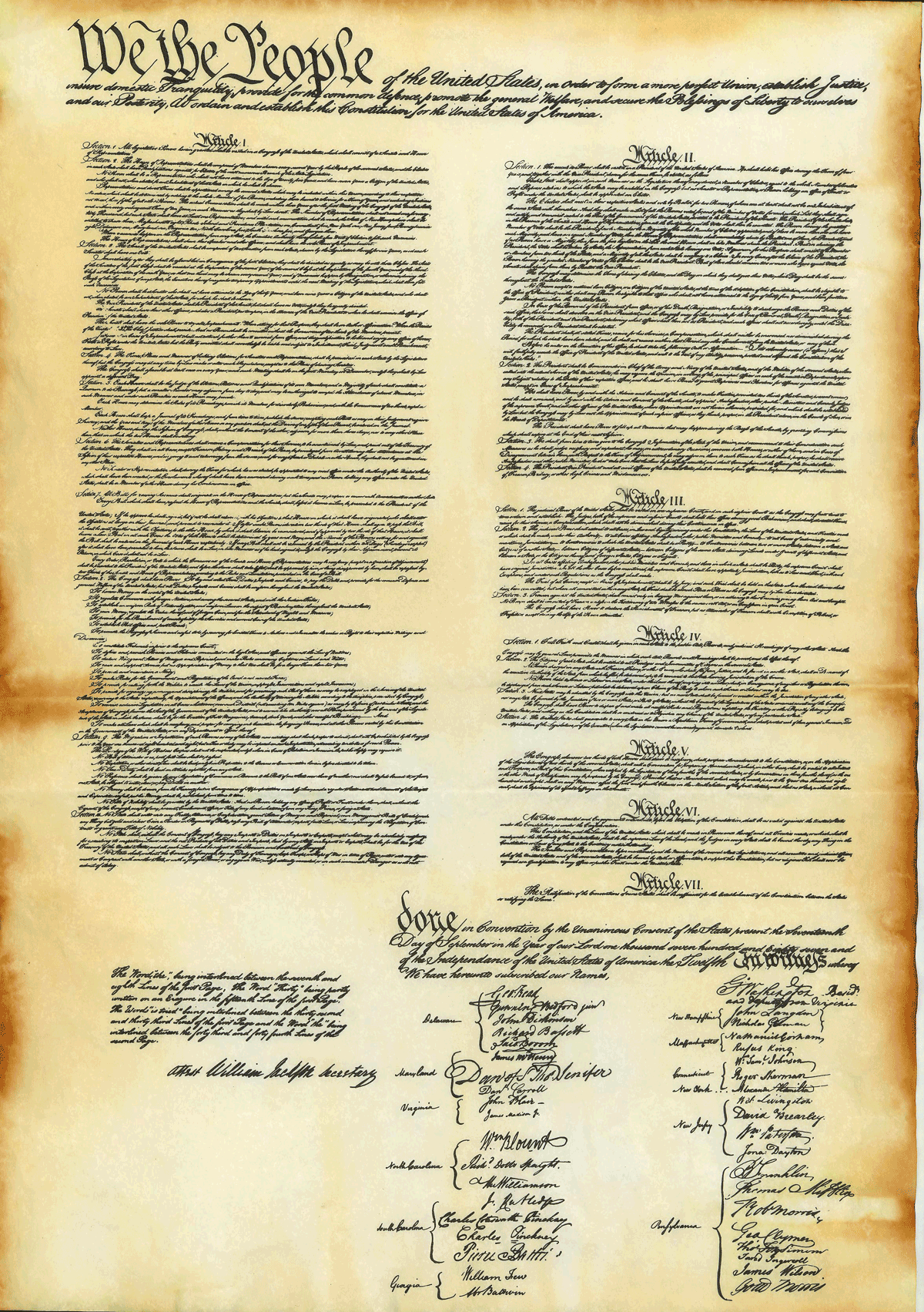
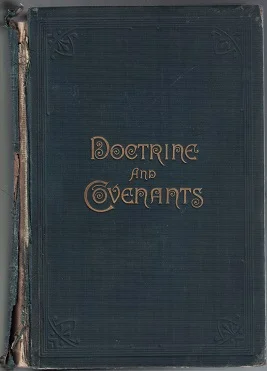
There are many interesting features of Mormonism as a result of its having writings or “scripture” considered the “word of God” produced by Joseph Smith (the preeminent founder of Mormonism) in the first half of the 19th century in America. One is that Mormon beliefs are 100% consistent with all of the scientific principles generally known by 1844 when Joseph Smith was murdered by a mob. (And indeed, it is my belief that if Joseph Smith had not been murdered, and had lived to see the publication of Charles Darwin’s On the Origin of Species in 1859, Joseph would have incorporated evolution much more fully into Mormonism.)
Another interesting feature of Mormonism due to its origin in the first half of the 19th century in America is that the word of God according to Mormonism declares that the Constitution of the United States had a divine origin. The key passage is Doctrine and Covenants 101:77-80, in which Joseph Smith reports God saying this:
77 According to the laws and constitution of the people, which I have suffered to be established, and should be maintained for the rights and protection of all flesh, according to just and holy principles;
78 That every man may act in doctrine and principle pertaining to futurity, according to the moral agency which I have given unto him, that every man may be accountable for his own sins in the day of judgment.
79 Therefore, it is not right that any man should be in bondage one to another.
80 And for this purpose have I established the Constitution of this land, by the hands of wise men whom I raised up unto this very purpose, and redeemed the land by the shedding of blood.
In addition to this that Joseph Smith reported as being directly the word of God, Joseph Smith said, according to the journal of James Burgess (and similar things according to others):
… the time would come when the constitution and government would hang by a brittle thread and would be ready to fall into other hands but this people the latter-day saints will step forth and save it.
This is an idea that could easily be an important inspiration and motivation for many Mormon politicians; ideas that get into one’s head at an early age can be very powerful emotionally. I know this idea had an effect on me when I was a young Mormon.
Although not all the effects of this Mormon belief that the Constitution is divinely ordained and that the Constitution needs to be tended and defended are benign, on the whole I think it is quite helpful that a subgroup of the American population take the US Constitution so seriously.
Don't miss these posts on Mormonism:
The Message of Mormonism for Atheists Who Want to Stay Atheists
How Conservative Mormon America Avoided the Fate of Conservative White America
The Mormon Church Decides to Treat Gay Marriage as Rebellion on a Par with Polygamy
David Holland on the Mormon Church During the February 3, 2008–January 2, 2018 Monson Administration
Also see the links in "Hal Boyd: The Ignorance of Mocking Mormonism."
Don’t miss these Unitarian-Universalist sermons by Miles:
By self-identification, I left Mormonism for Unitarian Universalism in 2000, at the age of 40. I have had the good fortune to be a lay preacher in Unitarian Universalism. I have posted many of my Unitarian-Universalist sermons on this blog.
Don’t miss these guest posts on Mormonism by my brother Chris Kimball:
Christian Kimball: Anger [1], Marriage [2], and the Mormon Church [3]
Christian Kimball on the Fallibility of Mormon Leaders and on Gay Marriage
In addition, Chris is my coauthor for