The Federalist Papers #35 B: Alexander Hamilton on Who Can Represent Whom

In recent years, it has become common for authors to be criticized for having central characters in their fiction who come from racial or ethnic groups they don’t belong to. Such authors often argue in response that it is the job of authors to try to empathize and understand other human beings—even those from quite different backgrounds.

The question of who can represent whom comes up not only in literature, but also in politics. Can a politician from a different racial or ethnic group effectively represent the interests of that group? This is a controversial question, but when given the choice, voters of one racial or ethnic group often vote for someone of a different racial or ethnic group. (This happens in both group-power-gradient directions.)

Though he is thinking about differences in occupation rather than differences in racial or ethnic group, in the second half of the Federalist Papers #35, Alexander Hamilton takes the position that one can be a good representative for someone from a different occupation—and likely would agree that one can be a good representative for someone who is different in other dimensions.

Alexander Hamilton also points out the sheer impracticality of trying to insist that an individual always be represented by someone else who is very similar. When asked, many people point to their membership in their own family as their primary identity—much more important to them than the racial or ethnic group they belong to. Should we then say that because that identity as a family member is so near and dear to their hearts that each can only be represented by someone else from their own family? That would be a lot of representatives in Congress!

Somewhat contrary to the general drift of what Alexander Hamilton is saying, I really would like to be represented by an economist in Congress (especially if I could have some choice among economists). But agreeing with Alexander Hamilton, I can see that it is impossible to satisfy my desire along those lines and everyone else’s corresponding desires.

The smaller the group, the more likely it is that—without especially good fortune in the vagaries of talent—they will need to hope for representation from someone outside the group—whether literary representation or political representation.

Across occupations, Alexander Hamilton makes some claims about who can reasonably represent someone who is in a different occupation. He says:

  • merchants can do a good job representing mechanics and manufacturers

  • “the learned professions” (professor, doctors and lawyers??) might well be able to represent almost any other group

  • landholders can represent other landholders in relation to their interests as landholders

”Cultural appropriation” is an issue because some people perform quite badly at understanding those who are unlike them. But the right remedy is not to ban people from writing about or politically representing those who are unlike them, but to encourage and support those whose empathetic understanding is strong (regardless of their background) and correct those whose whose empathetic understanding is weak. This includes letting people know that their empathetic understanding is weak on one area even though it is strong in another.

One reason rules against cultural appropriation or against political representation by someone from a different racial or ethnic group are a bad idea is that reducing conflict in our society depends so heavily on encouraging the development of empathetic understanding of those who are different. Declaring empathetic understanding of those who are different to be impossible—or to be somehow automatically second-rate—is not a good way to encourage such understanding. Pointing to actual failures of understanding in detail is a much, much better way to help people course-correct and further their understanding. In this context, it is especially harmful to treat people too much as if they “should have known” already that they were misunderstanding. The “should have known” attitude might be appropriate to the extent that embarrassment is the penalty for not having known. But at the cost of serious embarassment, people should be allowed learning opportunities as they make their mistakes.

Below is the full text of Alexander Hamilton’s argument in the second half of the Federalist Paper #35 that it is possible to effectively represent someone who is quite different.


Let us now return to the examination of objections.

One which, if we may judge from the frequency of its repetition, seems most to be relied on, is, that the House of Representatives is not sufficiently numerous for the reception of all the different classes of citizens, in order to combine the interests and feelings of every part of the community, and to produce a due sympathy between the representative body and its constituents. This argument presents itself under a very specious and seducing form; and is well calculated to lay hold of the prejudices of those to whom it is addressed. But when we come to dissect it with attention, it will appear to be made up of nothing but fair-sounding words. The object it seems to aim at is, in the first place, impracticable, and in the sense in which it is contended for, is unnecessary. I reserve for another place the discussion of the question which relates to the sufficiency of the representative body in respect to numbers, and shall content myself with examining here the particular use which has been made of a contrary supposition, in reference to the immediate subject of our inquiries.

The idea of an actual representation of all classes of the people, by persons of each class, is altogether visionary. Unless it were expressly provided in the Constitution, that each different occupation should send one or more members, the thing would never take place in practice. Mechanics and manufacturers will always be inclined, with few exceptions, to give their votes to merchants, in preference to persons of their own professions or trades. Those discerning citizens are well aware that the mechanic and manufacturing arts furnish the materials of mercantile enterprise and industry. Many of them, indeed, are immediately connected with the operations of commerce. They know that the merchant is their natural patron and friend; and they are aware, that however great the confidence they may justly feel in their own good sense, their interests can be more effectually promoted by the merchant than by themselves. They are sensible that their habits in life have not been such as to give them those acquired endowments, without which, in a deliberative assembly, the greatest natural abilities are for the most part useless; and that the influence and weight, and superior acquirements of the merchants render them more equal to a contest with any spirit which might happen to infuse itself into the public councils, unfriendly to the manufacturing and trading interests. These considerations, and many others that might be mentioned prove, and experience confirms it, that artisans and manufacturers will commonly be disposed to bestow their votes upon merchants and those whom they recommend. We must therefore consider merchants as the natural representatives of all these classes of the community.

With regard to the learned professions, little need be observed; they truly form no distinct interest in society, and according to their situation and talents, will be indiscriminately the objects of the confidence and choice of each other, and of other parts of the community.

Nothing remains but the landed interest; and this, in a political view, and particularly in relation to taxes, I take to be perfectly united, from the wealthiest landlord down to the poorest tenant. No tax can be laid on land which will not affect the proprietor of millions of acres as well as the proprietor of a single acre. Every landholder will therefore have a common interest to keep the taxes on land as low as possible; and common interest may always be reckoned upon as the surest bond of sympathy. But if we even could suppose a distinction of interest between the opulent landholder and the middling farmer, what reason is there to conclude, that the first would stand a better chance of being deputed to the national legislature than the last? If we take fact as our guide, and look into our own senate and assembly, we shall find that moderate proprietors of land prevail in both; nor is this less the case in the senate, which consists of a smaller number, than in the assembly, which is composed of a greater number. Where the qualifications of the electors are the same, whether they have to choose a small or a large number, their votes will fall upon those in whom they have most confidence; whether these happen to be men of large fortunes, or of moderate property, or of no property at all.

It is said to be necessary, that all classes of citizens should have some of their own number in the representative body, in order that their feelings and interests may be the better understood and attended to. But we have seen that this will never happen under any arrangement that leaves the votes of the people free. Where this is the case, the representative body, with too few exceptions to have any influence on the spirit of the government, will be composed of landholders, merchants, and men of the learned professions. But where is the danger that the interests and feelings of the different classes of citizens will not be understood or attended to by these three descriptions of men? Will not the landholder know and feel whatever will promote or insure the interest of landed property? And will he not, from his own interest in that species of property, be sufficiently prone to resist every attempt to prejudice or encumber it? Will not the merchant understand and be disposed to cultivate, as far as may be proper, the interests of the mechanic and manufacturing arts, to which his commerce is so nearly allied? Will not the man of the learned profession, who will feel a neutrality to the rivalships between the different branches of industry, be likely to prove an impartial arbiter between them, ready to promote either, so far as it shall appear to him conducive to the general interests of the society?

If we take into the account the momentary humors or dispositions which may happen to prevail in particular parts of the society, and to which a wise administration will never be inattentive, is the man whose situation leads to extensive inquiry and information less likely to be a competent judge of their nature, extent, and foundation than one whose observation does not travel beyond the circle of his neighbors and acquaintances? Is it not natural that a man who is a candidate for the favor of the people, and who is dependent on the suffrages of his fellow-citizens for the continuance of his public honors, should take care to inform himself of their dispositions and inclinations, and should be willing to allow them their proper degree of influence upon his conduct? This dependence, and the necessity of being bound himself, and his posterity, by the laws to which he gives his assent, are the true, and they are the strong chords of sympathy between the representative and the constituent.

There is no part of the administration of government that requires extensive information and a thorough knowledge of the principles of political economy, so much as the business of taxation. The man who understands those principles best will be least likely to resort to oppressive expedients, or sacrifice any particular class of citizens to the procurement of revenue. It might be demonstrated that the most productive system of finance will always be the least burdensome. There can be no doubt that in order to a judicious exercise of the power of taxation, it is necessary that the person in whose hands it should be acquainted with the general genius, habits, and modes of thinking of the people at large, and with the resources of the country. And this is all that can be reasonably meant by a knowledge of the interests and feelings of the people. In any other sense the proposition has either no meaning, or an absurd one. And in that sense let every considerate citizen judge for himself where the requisite qualification is most likely to be found.

PUBLIUS.


Links to my other posts on The Federalist Papers so far:

Forget the Money Supply, It's the Interest Rate, Stupid

The only sensible view on monetary policy is to be a hawk when the situation calls for it and a dove when the situation calls for that. Anyone who is always a hawk or always a dove is off-base. However, there might well be political benefits to being always a hawk or always a dove. And there can be a pecuniary benefit to being always a hawk: it can be a good way to gin up gold sales by scaring everyone about inflation.

Lately inflation has jumped way up. There is a debate about whether that rise is mostly temporary or has a big permanent component. And this is in a context where the Fed has decided it wants somewhat higher inflation than it had before the pandemic. The Fed’s current monetary policy framework is meant to be ill-defined enough to not tie the Fed’s hands—contrary to the desire of some economists, including me, for more of a monetary policy rule. (See “Next Generation Monetary Policy.”) But I interpret the Fed as shifting from an implicit target of about 1.5% per year up to an implicit target of 2.5% per year: going from not being fully willing to do what it would take to get inflation back up to their nominal 2% per year target to being willing to exceed their 2% per year target somewhat for quite some time.

Whatever one’s take on how tight or how stimulative monetary policy should be, the money supply is no longer very relevant to monetary policy on the margin. The Fed now has what is sometimes called a “floor system.” The Fed tries to keep the monetary base—paper currency plus reserves held in electronic accounts at the Fed—large enough that banks have nothing better to do with the last dollar of reserves than leave it earning interest as excess reserves in a reserve account—or earning interest in the Fed’s overnight facility based on Treasury bill repurchase agreements. Those reserves held as excess reserves or funds earning interest from repurchase agreements are economically idle and don’t stimulate the economy. They are part of the money supply, but one can say they aren’t part of the active money supply. Being inactive matters: for example, idle reserves only add 1-for-1 to other money supply measures. I explain all of this in greater detail, with graphs, in “Supply and Demand for the Monetary Base: How the Fed Currently Determines Interest Rates.”

In their July 20, 2021 op-ed “Too Much Money Portends High Inflation,” John Greenwood and Steve Hanke claim the size of the money supply matters, contrary to what Jerome Powell says:

In his Feb. 23 testimony to Congress, Fed Chairman Jerome Powell said that the growth in the money supply, specifically M2, “doesn’t really have important implications.” The experts, the press and the bond vigilantes were as quick to unlearn monetarism, if they ever had learned it, as Mr. Powell. Reporting about U.S. inflation rarely contains the words “money supply.” …

Wrong. The inflation upticks aren’t temporary and were predictable, driven by an extraordinary explosion in the money supply. Since March 2020, the M2 has been growing at an average annualized rate of 23.9%—the fastest since World War II. There is so much money out there that banks don’t know what to do with it. Via reverse repurchase agreements, banks and money-market funds are lending money to the Fed to the tune of $860 billion. That’s unprecedented.

Notice how they say there is so much money sloshing around that a lot of it sits idle in the overnight facility based on repos that I mentioned above. But they don’t seem to understand that money idled like that doesn’t add to economic stimulus. It doesn’t lower the interest rate because the interest rate on reserves has put a floor under interest rates. (For technical reasons, the floor on interest rates is a tad lower than the interest rate on reserves itself, but not much.)

To see that the money supply is no longer crucial in a floor system where the interest rate has been disconnected from marginal changes in the monetary base, consider the following policy shift:

  • The Fed raises its target rate and the interest rate on reserves by 500 basis points (= 5 percentage points, where a percentage point is a per annum rate).

  • The Fed doubles the monetary base.

I assure you, this would be quite contractionary. The high interest rate on reserves would reduce the active part of the monetary base even though the entire monetary base doubled.

Money doesn’t matter any more on the margin. But that isn’t to say money doesn’t matter. A floor system only works when the total size of the monetary base is kept quite large. So a large monetary base is a precondition for the kind of logic I laid out above. Friedman’s dictum “Inflation is always and everywhere a monetary phenomenon” is not lost, as John Greenwood and Steve Hanke claim; rather, money—and in particular, “Supply and Demand for the Monetary Base,” is what is enabling the Fed to set interest rates.

It is certainly reasonable for John Greenwood and Steve Hanke to be arguing that the Fed should be tightening sooner than it is saying it will (that is well within the range of reasonable disagreement), but they should leave their money supply rhetoric behind and argue forthrightly for the Fed to raise its target rate and to reduce long-term asset purchases in order to put other rates on a higher track.

Hormone Replacement Therapy is Much Better and Much Safer Than You Think

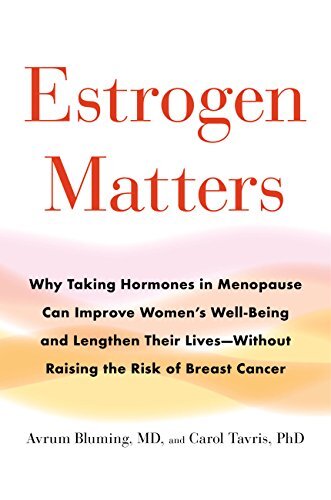
Link to the Amazon page for Estrogen Matters, by Carol Tavris and Avrum Bluming

Link to the Amazon page for Estrogen Matters, by Carol Tavris and Avrum Bluming

Health care for women has been affected in many ways by our societies lack of full respect for women. This is true for Hormone Replacement Therapy. (Outside of the quotations from Estrogen Matters below, I will use that phrase to cover both estrogen only and estrogen plus progesterone treatments.) The conventional wisdom about Hormone Replacement Therapy beginning around the time of menopause has been affected by at least 4 forces: commercial incentives and suspicion of those commercial incentives, scientists who twist scientific evidence to further their preexisting views, ideological dogmas about “natural” being good, and underweighting of the importance of women’s quality of life.

The conventional wisdom is that Hormone Replacement Therapy (HRT) causes breast cancer. The big study on which the HRT-causes-breast-cancer conventional wisdom is based actually said something quite different. It said that even when a woman has been in menopause for many years without HRT, so that starting HRT up is a wrenching adjustment for the body, the effect on breast cancer can be precisely bounded as small. And there is no evidence that HRT begun smoothly at perimenopause causes breast cancer. Indeed, there is a lot of evidence that HRT begun smoothly at perimenopause has many positive health effects.

Avrum Bluming and Carol Tavris lay all of this out in their hard-hitting book, Estrogen Matters: Why Taking Hormones in Menopause Can Improve Women's Well-Being and Lengthen Their Lives -- Without Raising the Risk of Breast Cancer. One powerful analogy is that avoiding HRT in order to avoid breast cancer is like getting an unnececessary radical mastectomy in order to avoid a recurrence of breast cancer. Both are based on fear rather than on sound evidence of efficacy. They write:

Randomized trials and observational studies continue to show that breast-conserving surgery is almost always at least as effective as mastectomy. Yet rates of radical mastectomies, especially bilateral mastectomies, for treatment of localized breast cancer have been rising since 2006—another manifestation of the fear associated with breast cancer.

The idea that estrogen causes breast cancer is doubtful for many reasons. Here are some of them, as discussed in Estrogen Matters:

  • Estrogen goes down at menopause, but breast cancer doesn’t go down. (Note that menopause is statistically distinguishable from age.)

  • Estrogen is actually an important treatment for women with breast cancer.

  • Early menarche and late menopause do not predict breast cancer.

  • The endometrium is much more sensitive to estrogen than breast tissue. But no one is successfully claiming that HRT is related to endometrial cancer.

  • “in most breast cancers, estrogen-receptor-positive cells are not the ones proliferating.” If a breast cancer cell is estrogen-receptor-positive, that is an indication that it is more like a normal breast cell than cancer cells that are estrogen-receptor-negative.

  • Pregnancy, which dramatically raises estrogen levels, is not a risk factor for breast cancer.

The false belief that Hormone Replacement Therapy begun as usual around the onset of menopause causes breast cancer is extremely damaging because HRT has many powerful benefits. Here is Avrum Bluming and Carol Tavris’s summary of those benefits near the beginning of Estrogen Matters, with my emphasis added in bold:

Estrogen not only successfully controlled menopausal symptoms in most women but also significantly reduced the risks of heart disease, hip fractures, colon cancer, and Alzheimer’s. A 1991 New England Journal of Medicine editorial, “Uncertainty About Postmenopausal Estrogen: Time for Action, Not Debate,” reported a 40 to 50 percent reduction in atherosclerotic heart disease, which was responsible for the deaths of more than eight times as many American women as breast cancer. The long-running Framingham study reported a 50 percent drop in osteoporosis-associated hip fractures, which were linked to as many deaths every year as breast cancer. Two studies, one from the University of Wisconsin and one from the American Cancer Society, reported a 50 percent decrease in the risk of developing or dying of colon cancer. And a USC study reported a 35 percent decrease in the risk of Alzheimer’s. Among women with no history of breast cancer, studies found that estrogen did not increase the risk of developing it, even among women who had been taking estrogen for ten to fifteen years. Most remarkable, women taking estrogen were living longer than women who were not taking hormones. A 1997 report in the Journal of the American Medical Association stated that “HRT should increase life expectancy for nearly all postmenopausal women by up to 3 years.” Their analysis concluded that up to 99 percent of current postmenopausal women would benefit from taking HRT as measured by decreased rates of disease and improved longevity.

Even if, contrary to the evidence, Hormone Replacement Therapy begun as usual around the onset of menopause did have any substantial effect on breast cancer, that should not overrule all the other benefits. It is difficult to do, but breast cancer should be kept in perspective. As Avrum and Carol write:

The often repeated statistic that one woman in eight (12 percent) will develop breast cancer at some point in her life should be understood in a broader context: That’s a woman’s risk of getting it, all right, but only if she lives to be eighty-five. As Patricia T. Kelly explained in Assess Your True Risk of Breast Cancer: • A thirty-year-old woman has a risk of developing breast cancer in the next decade of 1 in 227 (0.4 percent). • A forty-year-old woman has a decade risk of 1 in 68 (1.5 percent). • A fifty-year-old woman has a decade risk of 1 in 42 (2.4 percent). • A sixty-year-old woman has a decade risk of 1 in 28 (3.6 percent). • A woman over seventy has the highest risk, 1 in 26 (4 percent).1 So where did that one-in-eight risk come from? It’s obtained by adding together the risks in each age category: 0.4 plus 1.5 plus 2.4 and so forth. But if you are a woman who has reached age sixty without a diagnosis of breast cancer, your risk in the coming decades is only 7.6 percent (12 percent less each decade’s risk that you have passed); the risk of breast cancer in any given decade of life never exceeds one in twenty-six. Yet by far the most important statistic is this one: over 90 percent of women currently diagnosed with early breast cancer will be cured, and most will not need disfiguring mastectomies or chemotherapy.

Dangers surround us, and death is coming for us all. We need to choose our battles out of a much larger set of concerns than breast cancer alone.

Every woman and every man who cares about a woman should read Estrogen Matters. (I listened to it on Audible.) Even if you are already convinced that HRT is the way to go, you are going to need to be armed with a fairly detailed knowledge of the science in order to stand up to your doctor, who is likely to adhere to the conventional wisdom on HRT. Note that Avrum Bluming is just as much an MD as your doctor, and for most of us, much smarter than our own doctor. And he and Carol Tavris lay out the evidence and logic in a much more detailed way than your own doctor is likely to be able or willing to do.

Note: HRT is an important enough issue, I expect to return to this topic and discuss more of what is in the book Estrogen Matters in future posts.


For organized links to other posts on diet and health, see:

Virtues for Economists

Introduction

There is much debate these days about “meritocracy.” One problem with the 21st Century American version of meritocracy is that by “merit” it means only intelligence and other dimensions of talent and skill. It gives short shrift to whether someone is good or not. As one consequence of this version of meritocracy that pays little attention to virtue, our public policy does a lot more to make people like those chosen by the meritocracy feel good about themselves and have the opportunities they value than it does to help those whom the meritocrats don’t care much about—such as poor people they might actually have to deal with personally, or poor people who don’t otherwise belong to a category of concern for the meritocrat. (On “don’t otherwise belong to a category of concern,” I am thinking here particularly of the folks Anne Case and Angus Deaton focus on in their book Deaths of Despair and the Future of Capitalism.) Another example is my complaints in “False Advertising for College is Pretty Much the Norm” against college and university administrators chosen according to such narrow meritocratic criteria. But there are many, many other bad consequences of non-virtuous meritocrats.

In this post, let me spell out what I consider key virtues for economists. I’ll focus on virtues for economists as economists, and even more specifically on virtues for their role as researchers. (Virtues for economists for their role as teachers deserve their own future post.) I am only addressing here those who feel some calling to research. Some economists feel other callings as primary.

There are key virtues in each of the three stages of research: (A) preparing the ground; (B) planting; then (C) irrigating, weeding and harvesting.

Preparing the Ground

  1. Hone Your Skills and Knowledge: Although having good genes for being smart is not itself a virtue, working hard to gain skills and knowledge in order to be able to do a good job is a virtue. If you are an Economics PhD, unless you have suffered a terrible health shock, buckling down to decades of additional reading, study, deep thought and attempts at application will be enough to give you formidable powers to do good in the world.

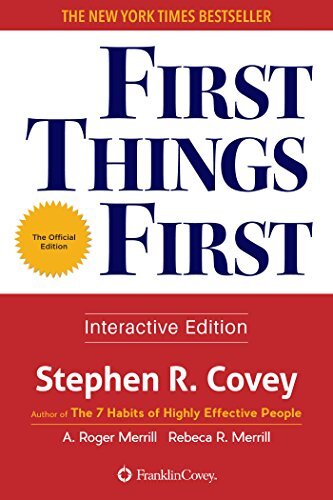
  2. Master Time Management: Some of you have many heavy responsibilities. But it is unlikely that you can’t find 5 hours a week to do research. I am far from being an expert on time management, but many excellent books exist. One well-known book on this topic that I recommend is Stephen Covey’s book First Things First (with A. Roger Merrill and Rebeca Merrill).

3. Avoid Getting Discouraged: Research can be difficult. It might make you feel stupid. Some parts of it are boring—such as doing the 15th revision. Other parts are frustrating, as when a statistical estimation fails to converge or when a beautiful mathematical conjecture turns out to be false (as you may see from a simple counterexample that you missed early on). You may feel a version of imposter syndrome, thinking “Who am I to try to say something on this topic, when some economists much smarter than I am have addressed it?”

Discouragement and other forms of disillusionment of economists with economic research are so common that I started a program to help. Take a look at these posts:

Of course, a program like this can also help economists who are doing great with their research. Take a look!

Planting

4. Care: To choose important topics, tap into your values. What do you care deeply about? Two key guides to the importance of topics are contribution to social welfare and scientific beauty. Don’t think you need to be limited to topics that have traditionally been the purview of economics. Economists have great skills for addressing most topics in the social sciences and even great skills for addressing some topics in the natural sciences, such as topics in nutrition. On the breadth of what I think economists should be doing, and my toddling forays into nutrition (which may some day lead to formal research on my part) see:

5. Cultivate Good Judgement: In addition to judging the contribution to social welfare or scientific beauty of a project, good judgement about research projects requires making good estimates of the cost of doing a research project. Is it easy, hard or pretty much impossible? You won’t always know just how hard a project is, and you don’t want to give up too easily, but you also don’t want to underestimate the cost in a foreseeable way.

Of course, social welfare impact depends not only on the potential social welfare contribution of a project, but also on how much it is likely to affect the work of other economists (and of other scientists and policy-makers). It is good to think about what other researchers need in order to do their work better. There is nothing wrong with choosing to do something ahead of its time that may not have much impact until half a century from now, but you should be aware that you are making that choice.

It is easy to get help with good judgement. Most of you will know someone you respect who will be happy to tell you their judgement about the potential impact of a research project and how difficult and costly it is likely to be. But you don’t have to rely on one person. It is easy to poll 10 economists you know about how important a project seems and how hard it is likely to be.

Note that judging cost requires introspecting about your own preferences as well as counting the hours (and dollars). If doing the research would be as fun as playing a videogame, the cost could be low even if it will take a huge number of hours!

6. Don’t Be Too Careerist: There are strong social pressures in Economics to do research that will advance your career. As an advisor, I tell my students to go along with those social pressures in choosing their job market paper and in what they do while putting together a tenurable record if they have a tenure-track job. But you need to keep your soul so that you can return to choosing projects based on deeper considerations after you get tenure—or are otherwise unlikely to be fired. Some people may need to worry about being able to move. But do you really want to do trendy, but unimportant research just to get a bit higher salary?

Remember also that many of the most renowned economists did research that was very much unappreciated when they first did it. Being “careerist” is often a version of putting the short run over the long run—even if you were only out for money and fame. And you aren’t just out for money and fame!

(Economists don’t get all that famous anyway. Just try asking your non-economist friends and family to name five economists they don’t know personally. They will almost all have a really tough time. But within the level of fame that economists get, economists who have taken risks often have some degree of triumph even in their own lifetimes.)

Irrigating, Weeding and Harvesting

7. Seek the Truth: In empirical or mathematical investigations, first try to figure out what you really believe based on the data and theoretical results. That means being responsive to the data and theoretical results and thinking through what they mean—at first without any regard to your audience.

8. Tell the Truth. Do your best to communicate what you learned from doing the research. You probably spent a lot of time thinking about it. Try to get across that understanding. That will require distinguishing your most important results from less important results that you have fallen in love with. This is where you should think a lot about your audience.

After I got tenured, I was given a document with excerpts from some of the letters evaluating me. I remember most the excerpt saying “Miles often overestimates his audience.” In other words, my papers and presentations were sometime impenetrable and hard to understand. One of my problems in my career is that I have a (faulty) gut feeling that it is bad form to act as if I know a lot more than other economists. But each of you, like me, in your particular area of research do, in fact know a lot more than the vast majority of other economists. They don’t expect themselves to know everything about your area of research, so they don’t feel bad about knowing less than you do on that topic. Why shouldn’t you face the truth that you know a lot more than others on your specific topic and will need to hold their hand and lead them along for them to understand what you learned?

9. tell the truth. You have an overall perspective on your research and want to get across that vision. But you don’t have the right to lie or deceive about the small-t truths—specific facts or statistical analyses or detailed interpretation of results—even when those very specific truths run contrary to the capital-T Truth you want to get across. You are not infallible. You need to give readers the raw material to construct their own arguments based on your data or results, even if their arguments run counter to the Truth as you see it.

There are a set of common statistical practices that to me constitute the moral equivalent of a lie—unless they are made in genuine, abject ignorance. (p-hacking/not reporting all the tries you made to get something with a nominal 5% level of significance is first and foremost among these practices.) Don’t commit these crimes, wittingly or unwittingly. To better avoid them, see:

You have a duty to know what ways of using statistics could mislead a reader, and avoid them.

In public advocacy based on yours and other economists’/scientists’ research results, the burden shifts somewhat. In your own research, your truthful and full reporting is the only way anyone can know key facts, short of getting your data and analyzing it themselves. At the other extreme, if there is a fact everyone knows that you don’t acknowledge in your op-ed, you may look stupid, but you aren’t deceiving anyone. Or if there is a fact your opponents in a public debate are loudly trumpeting, your not mentioning it won’t be depriving everyone of that information. But you aren’t a lawyer. If you make an argument that is vitiated by a counterargument you are well aware of that your opponents in the debate have never mentioned before, you should probably mention that counterargument yourself. To do otherwise is to pay too little respect to the truth. And to the extent that your readers are in informational bubbles and are only likely to see your side of the argument, your responsibility for informing them of counterarguments goes up.

Conclusion

The word “virtue” makes me think of Stoicism. Ideas from the philosophical school of Stoicism are, in fact, an aid to cultivating virtue. Although the daily bits get somewhat repetitive over time, I highly recommend subscribing to the Daily Stoic. It’s free. Ryan Holiday is behind the Daily Stoic. I like his books, too. Beyond that, the ways I know to help economists strive to be better as well as smarter are in the Positive Intelligence training I give, as detailed in the blog posts I linked to above and will again here:


Don’t Miss These Posts Related to Positive Mental Health and Maintaining One’s Moral Compass:

Fighting Statistical Illiteracy

Link to the article shown above

Link to the article shown above

Our culture looks on inability to read as a grave disability, but treats inability to do arithmetic as a minor weakness—something people admit without embarrassment and even laugh at. This doesn’t show causality, but as Jo Craven McGinty writes in her June 11, 2021 Wall Street Journal article “What Are the Odds? Even Experts Get Tripped Up by Probabilities,

According to the research of Ellen Peters, an expert in decision making at the University of Oregon and author of “Innumeracy in the Wild,” the lack of skill can have consequences for your wallet and your health. People who are less numerate adopt fewer healthy behaviors; they are 40% more likely to have a chronic disease; they end up in the hospital or emergency room more often; and they take 20% more prescription drugs, but are less able to follow complex health regimens.

Our culture pays even less attention to statistical illiteracy than it does to general innumeracy. Part of the problem is that the traditional math curriculum hasn’t changed in a long time, and has its roots before the rise of modern statistics. We should be integrating a little bit about probabilities into the math curriculum even in grade school. And at the advanced high school level, my view is that AP Statistics is more important than AP Calculus. My son took that advice, and never regretted it as he went on to graduate Phi Beta Kappa in Economics at Ohio State University.

A lot needs to be done to help people understand probabilities better—especially small probabilities. Here is an example of the sort of thing that might help, from Jo Craven McGinty’s article:

Dr. Anagnostopoulos, who has helped develop a probability-based dice game called Borel, offered this example.

“Let’s assume that the risk for a certain group of people was that 1 in 50,000 would get a clot after having the vaccine,” he said. “If instead you were told you need to roll six dice and get all of them to be a one, would it be easier for you to make a decision?”

The odds of simultaneously rolling six ones, he said, are also 1 in 50,000. 

People’s lack of understanding of probabilities is an important issue for “Cognitive Economics.” Let me mention three things of interest for economics research:

  1. In Behavioral Economics, it is always important to know whether what people say that violates the standard axioms is due to nonstandard quirks of their genuine preferences or to difficulties in understanding things cognitively—which might be accompanied by standard preferences. (It matters for Normative Behavioral Economics, for example.) I have noticed that a large fraction of the evidence against expected utility theory involves choices with small probabilities that people may not understand. I consider it an important agenda to reexamine the evidence and isolate what evidence against expected utility theory remains when looking only at choices that had a 50/50 probability. I don’t trust the typical person to intuitively understand any probability more complex than a 50/50 probability. (Talking about rolling six dice and getting six ones could help, but I still worry about people’s level of understanding.)

  2. My University of Michigan colleague Bob Willis found that, in the Health and Retirement Study, a simple index based on how often someone rounds a probability they are asked for to 0, 50% or 100% can predict many things, including their portfolio choices. Someone’s level of probabilistic sophistication predicts a lot!

  3. For someone (or some team) with the right qualifications who is willing to do a very ambitious survey experiment, I could see myself collaborating on this:

    • There is a way to make correctly reporting probabilities incentive-compatible.

    • Using true/false quiz questions for which an experimental subject reports probabilities that they got it right, it should be possible to train them to report probabilities more accurately.

    • Randomizing this intervention, one could then look at what the effects of this probability training were:

      • effects on survey responses (say being more informative about important probabilities in their life)

      • effects on how they play experimental games

      • effects on their real life (as judged by a follow-up survey)

    • I think it would be possible to do all of this on MTurk

    • It would require some nontrivial programming.

Math education in general needs a lot more attention. And within math education, early statistical education especially needs a lot more attention. If you are aware of good things for statistical education on free websites, please let us know in the comment section!


Other Posts about Learning Math and Doing Math

I wrote a follow-up column "How to Turn Every Child into a "Math Person" that gives links to some of the reactions to "There's One Key Difference Between Kids Who Excel at Math and Those Who Don't" and many resources for math learning. Here are some links to posts on math learning that didn't make it into that column:

Also, here are some Twitter discussions on math learning:

Finally, on learning more generally, don’t miss:


My Modified Fast

In “How Low Insulin Opens a Way to Escape Dieting Hell” I write about how you need to be eating low on the insulin index in order to have the calories in/calories out logic to be much help, since if your insulin levels are high, your body will try to get you to eat more and will try to burn fewer calories. Insulin tells your fat cells to take sugar from your bloodstream and store it as fat in order to get blood sugar levels down. (See “Obesity Is Always and Everywhere an Insulin Phenomenon” and “Evidence that High Insulin Levels Lead to Weight Gain.”)

On how to eat in a way that keeps insulin levels from spiking, I have “Forget Calorie Counting; It's the Insulin Index, Stupid” and “Using the Glycemic Index as a Supplement to the Insulin Index.” But the “Forget Calorie Counting” in the title of the first is a little too strong. You should forget about calorie counting until you have made sure that you are keeping you insulin from spiking, and have begun using fasting in the way I talk about in the posts I link to at the bottom of this one.

The great secret is that even eating nothing at all becomes easy when you are eating low on the insulin index before you start a period of eating nothing. The reason is that by eating low on the insulin index, you avoid the inhibition of body-fat-burning that comes from high insulin levels. And the cells of your body will be much better adapted to getting their energy from the ketones your body makes from fatty acids. (When there are a lot of ketones in your bloodstream, it is called “ketosis.”)

But partial or “modified” fasts can also be quite beneficial. This year, I have begun doing many multiday modified fasts. My motivation for not doing a total fast has been partly the desire to feed the good microbes in my gut something. When I do a total fast, I notice that it takes some time after I end the fast for my bowel movements to become regular again; part of that may be mechanical, but part may be that it takes time for my good gut microbes to recover from a period with nothing for them to eat. In addition, although even a total fast is not that hard for me physically, the sense of psychological deprivation is less if I am eating something.

I have been beginning these multi-day modified fasts with 48 hours or so of total fasting. I figure my good gut microbes will be fine within that time. Each day after that, I eat a set of things designed to be (a) extremely low on the insulin index, (b) high in bulk, but (c) very low in calories. I don’t bend the rules on being very low on the insulin index, but I bend (b) and (c) a bit to have (d) some relatively fun things in the mix to lower the psychological sense of deprivation.

You can see a picture of what I eat on this modified fast at the top of this post. It is quite possible to have a lot of bulk with very few calories! For bulk, I have spinach, cabbage (hidden in the bowl), chopped celery, chopped anise and chopped mushrooms (on the cutting board) and radishes. I eat the radishes separately, but the rest of these bulky items I mix in a bowl and add a tablespoon and a half of olive oil, which is sparing, but enough to make the resulting salad taste reasonably good.

I add several things for variety. I have a couple pieces of hearts of palm. These appear at Costco around Easter time; I stock up for the rest of the year. I also have a couple of pieces of 100% chocolate. By far the best-tasting is the kind shown below, which I didn’t know about when I wrote “Intense Dark Chocolate: A Review”:

Finally I drink a kind of almond-milk smoothy. (Most of the ingredients are up front in the picture; the completed smoothy is visible in back.) Almond milk is both very low on the insulin index and quite low-calorie. I use a whisk to stir three different Gundry powders into the almond milk. Somewhat loosely, I think of Vital Reds as a wide variety of ground-up fruit without the sugar from the fruit. Primal Plants includes probiotics. Prebio Thrive is a prebiotic—that is, food for good gut bacteria. I have grown more skeptical of Steven Gundry over time, especially of his newest, most blatantly commercial products (“commercial” in the sense of “bend-the-rules to make a buck”), but I find these three powders useful. (See “What Steven Gundry's Book 'The Plant Paradox' Adds to the Principles of a Low-Insulin-Index Diet” and “Reexamining Steve Gundry's `The Plant Paradox’.”) I also add a tablespoon or so of cream to make it taste good.

I think this adds up to only a few hundred calories, but feels like a surprisingly full meal because of the bulk and the other satisfactions. Even when I am eating up a storm, I normally do it in one big meal a day, so having just one meal during the modified fast doesn’t seem hard to me.

The key takeaway message is that fasting doesn’t have to be an all-or-nothing thing, if you are eating low on the insulin index. You can design a modified fast that includes a finite list of things for which you have carefully counted the calories, and all of which are extremely low on the insulin index. It’s OK that it is a limited list of things, because after the modified fast you’ll go back to eating your usual broader set of things (hopefully all reasonably low on the insulin index). I don’t count calories when I am back to eating normally, and the modified fast has the same things every day, so there isn’t big burden of counting calories.

Many food plans have a lot of bossiness to them. Here you can design your own based on a few general principles. (You do need to read “Forget Calorie Counting; It's the Insulin Index, Stupid” to get a sense of which foods are low on the insulin index and which foods are likely to give you an insulin spike.)

Here are the links to posts on fasting I promised. (You especially need to read “Fasting Tips.”)

Also see the other posts laid out in Miles Kimball on Diet and Health: A Reader's Guide.”


The Federalist Papers #35 A: Alexander Hamilton as an Economist
The first half of the Federalist Papers #35 is an excellent representation of Alexander Hamilton as an economist. He doesn’t analyze things exactly as a trained economist in 2021 would, but he does a great job for 1787. To illustrate this, let me put as bullet points some of my favorite passages for illustrating Alexander Hamilton as an economist from the first half of the Federalist Papers #35. In bold italics within parenthesis, I’ll put my comments.

  • if the jurisdiction of the national government, in the article of revenue, should be restricted to particular objects, it would naturally occasion an undue proportion of the public burdens to fall upon those objects. Public finance economists emphasize the importance of having a broad tax base for exactly this reason. (Deadweight losses are roughly proportional to the square of tax rates, while revenue is roughly proportional to the level of tax rates when those tax rates are small.)

  • all extremes are pernicious in various ways.

    • Exorbitant duties on imported articles would beget a general spirit of smuggling; which is always prejudicial to the fair trader, and eventually to the revenue itself: (Public Finance econonomists worry a lot about tax evasion)

    • they tend to render other classes of the community tributary, in an improper degree, to the manufacturing classes, to whom they give a premature monopoly of the markets; (Many taxes worsen inequality.)

    • they sometimes force industry out of its more natural channels into others in which it flows with less advantage; (Taxes can shift production inefficiently, raising societal costs.)

  • I am apt to think that a division of the duty, between the seller and the buyer, more often happens than is commonly imagined. It is not always possible to raise the price of a commodity in exact proportion to every additional imposition laid upon it. (Division of incidence between the consumer and producer is now routinely taught in Principles of Microeconomics using supply and demand diagrams with a tax wedge.)

  • The confinement of the national revenues to this species of imposts would be attended with inequality, from a different cause, between the manufacturing and the non-manufacturing States. The States which can go farthest towards the supply of their own wants, by their own manufactures, will not, according to their numbers or wealth, consume so great a proportion of imported articles as those States which are not in the same favorable situation. (Manufacturers benefit and consumers lose from tariffs. States with more manufacturers get more of the benefit. As Alexander Hamilton notes, excise taxes on all purchases of a manufactured good make have very different distributional effects than tariffs.)

  • if the avenues to them were closed, HOPE, stimulated by necessity, would beget experiments, fortified by rigorous precautions and additional penalties, which, for a time, would have the intended effect, till there had been leisure to contrive expedients to elude these new precautions. The first success would be apt to inspire false opinions, which it might require a long course of subsequent experience to correct. Necessity, especially in politics, often occasions false hopes, false reasonings, and a system of measures correspondingly erroneous. (Here Alexander Hamilton is a Behavioral economist. People do stupid things when they feel they are being backed into a corner. “Reaching for yield” is a good example of this in a non-political-economy context, to the extent it isn’t just a response to a large risk premium.)

I’d love to have a resurrected Alexander Hamilton commenting on modern economics and modern economic policy issues.

Below is the full text of the first half of the Federalist Papers #35:


FEDERALIST NO. 35

The Same Subject Continued: Concerning the General Power of Taxation

For the Independent Journal.

Author: Alexander Hamilton

To the People of the State of New York:

BEFORE we proceed to examine any other objections to an indefinite power of taxation in the Union, I shall make one general remark; which is, that if the jurisdiction of the national government, in the article of revenue, should be restricted to particular objects, it would naturally occasion an undue proportion of the public burdens to fall upon those objects. Two evils would spring from this source: the oppression of particular branches of industry; and an unequal distribution of the taxes, as well among the several States as among the citizens of the same State.

Suppose, as has been contended for, the federal power of taxation were to be confined to duties on imports, it is evident that the government, for want of being able to command other resources, would frequently be tempted to extend these duties to an injurious excess. There are persons who imagine that they can never be carried to too great a length; since the higher they are, the more it is alleged they will tend to discourage an extravagant consumption, to produce a favorable balance of trade, and to promote domestic manufactures. But all extremes are pernicious in various ways. Exorbitant duties on imported articles would beget a general spirit of smuggling; which is always prejudicial to the fair trader, and eventually to the revenue itself: they tend to render other classes of the community tributary, in an improper degree, to the manufacturing classes, to whom they give a premature monopoly of the markets; they sometimes force industry out of its more natural channels into others in which it flows with less advantage; and in the last place, they oppress the merchant, who is often obliged to pay them himself without any retribution from the consumer. When the demand is equal to the quantity of goods at market, the consumer generally pays the duty; but when the markets happen to be overstocked, a great proportion falls upon the merchant, and sometimes not only exhausts his profits, but breaks in upon his capital. I am apt to think that a division of the duty, between the seller and the buyer, more often happens than is commonly imagined. It is not always possible to raise the price of a commodity in exact proportion to every additional imposition laid upon it. The merchant, especially in a country of small commercial capital, is often under a necessity of keeping prices down in order to a more expeditious sale.

The maxim that the consumer is the payer, is so much oftener true than the reverse of the proposition, that it is far more equitable that the duties on imports should go into a common stock, than that they should redound to the exclusive benefit of the importing States. But it is not so generally true as to render it equitable, that those duties should form the only national fund. When they are paid by the merchant they operate as an additional tax upon the importing State, whose citizens pay their proportion of them in the character of consumers. In this view they are productive of inequality among the States; which inequality would be increased with the increased extent of the duties. The confinement of the national revenues to this species of imposts would be attended with inequality, from a different cause, between the manufacturing and the non-manufacturing States. The States which can go farthest towards the supply of their own wants, by their own manufactures, will not, according to their numbers or wealth, consume so great a proportion of imported articles as those States which are not in the same favorable situation. They would not, therefore, in this mode alone contribute to the public treasury in a ratio to their abilities. To make them do this it is necessary that recourse be had to excises, the proper objects of which are particular kinds of manufactures. New York is more deeply interested in these considerations than such of her citizens as contend for limiting the power of the Union to external taxation may be aware of. New York is an importing State, and is not likely speedily to be, to any great extent, a manufacturing State. She would, of course, suffer in a double light from restraining the jurisdiction of the Union to commercial imposts.

So far as these observations tend to inculcate a danger of the import duties being extended to an injurious extreme it may be observed, conformably to a remark made in another part of these papers, that the interest of the revenue itself would be a sufficient guard against such an extreme. I readily admit that this would be the case, as long as other resources were open; but if the avenues to them were closed, HOPE, stimulated by necessity, would beget experiments, fortified by rigorous precautions and additional penalties, which, for a time, would have the intended effect, till there had been leisure to contrive expedients to elude these new precautions. The first success would be apt to inspire false opinions, which it might require a long course of subsequent experience to correct. Necessity, especially in politics, often occasions false hopes, false reasonings, and a system of measures correspondingly erroneous. But even if this supposed excess should not be a consequence of the limitation of the federal power of taxation, the inequalities spoken of would still ensue, though not in the same degree, from the other causes that have been noticed.


Links to my other posts on The Federalist Papers so far:

'Never Trust an Important Question to Just One Scientific Discipline'—Alexander Trentin Interviews Miles Kimball about the Pandemic, the Role of Economists, MMT and Central Bank Digital Currency

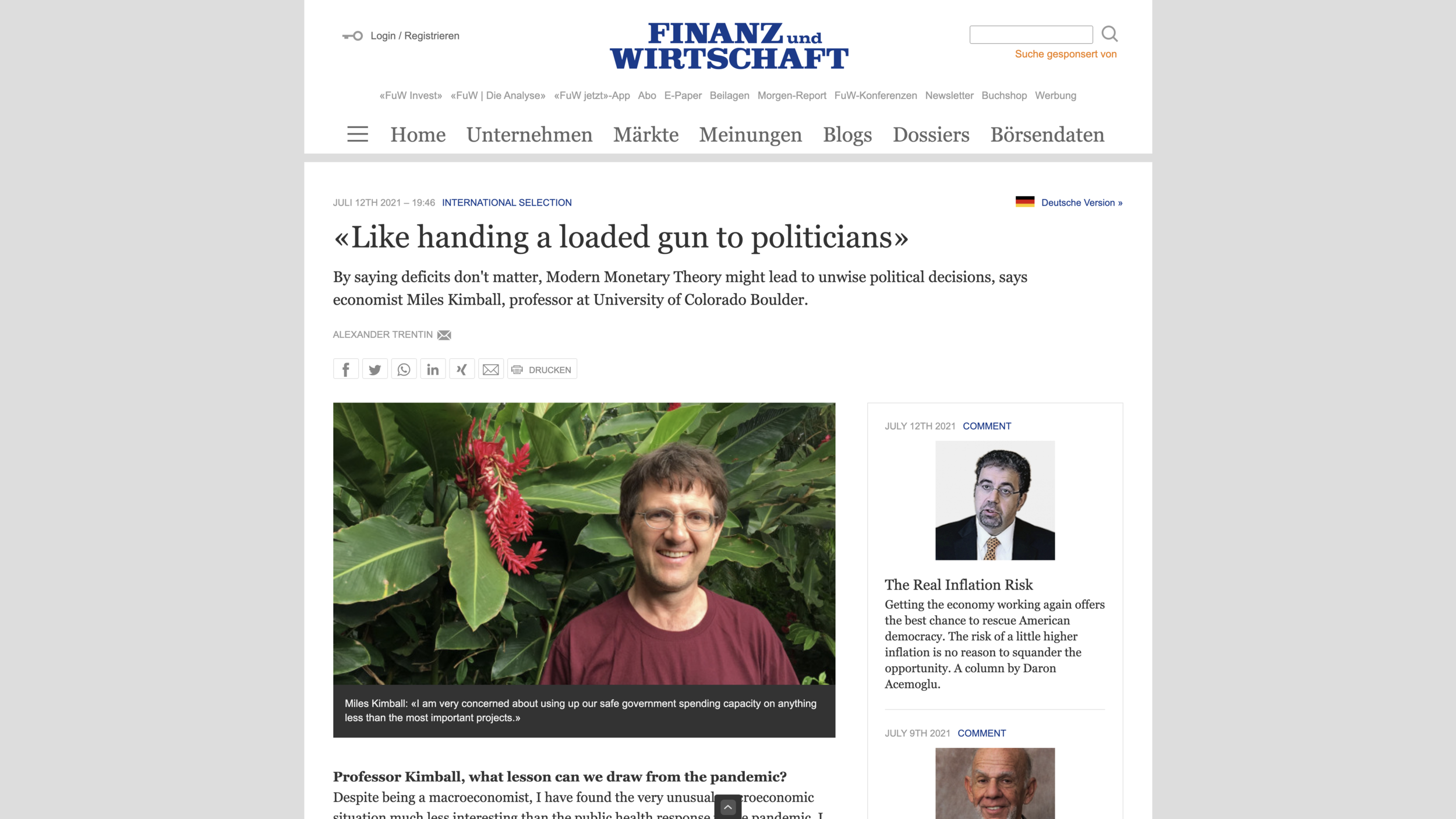
Link to the interview shown aboveUnder a picture of me is the quotation “I am very concerned about using up our safe government spending capacity on anything less than the most important projects.”

Link to the interview shown above

Under a picture of me is the quotation “I am very concerned about using up our safe government spending capacity on anything less than the most important projects.”

Alexander Trentin is my favorite journalist to talk to. "Like handing a loaded gun to politicians” is the 8th piece Alexander has done based on an interview with me. I like this one best of all. Links to the others are at the bottom of this post. By permission, I reprint the full text of the English version of "Like handing a loaded gun to politicians” between the horizontal lines. The title of this post gives a good sense of the content of the interview.


Professor Kimball, what lesson can we draw from the pandemic?
Despite being a macroeconomist, I have found the very unusual macroeconomic situation much less interesting than the public health response to the pandemic. I think it would have been beneficial if economists were given a greater role on the public health side. Economists are quite well equipped to understand issues in public health, including epidemiology models. In addition to bringing economists into the policy-making on the public health side of the next pandemic, I’d love to see economists get involved in research on diet and health. As an economist, I have gotten some flak for blogging about diet and health every week. But economists actually have the key skills needed to understand issues in diet and health: economists are extremely well-trained in statistics, and well-trained to think about complicated systems. I haven’t found it hard to read papers about nutrition, whether they are based on experiments or on what different people do in their regular lives.

Are economists so much better than other disciplines?
No, I welcome scientists from other disciplines to do research on economic topics and have a debate with economists. Let me say it this way: Any important scientific or policy question needs to have at least two scientific disciplines looking at it. Never trust an important question to just one scientific discipline. It is a lot safer to get multiple perspectives from different disciplines with different scientific incentives, methods, assumptions, biases, and blind spots. Giving each discipline a monopoly over a set of issues that it owns is asking for trouble.

What would economists have done differently regarding the public health response?
It was clear for economists from the beginning that speed was of the essence. Every month you are in the pandemic costs a fortune. I think a lot of countries regret now that they did not spend billions of dollars on speed—for example, by paying to be in front of the queue for getting the vaccines. A simple cost-benefit analysis would also suggest that in a pandemic we should worry less about side effects. We were underspending on public health, while now governments must spend enormous sums on the economic fallout. You could argue that we almost arrived at the worst of all worlds.

What do you mean?
There were two polar opposite options at the beginning of the pandemic: do a very strict lockdown for three weeks to ensure that there are no infections—the eventual China strategy—or just continue to live as before—by which I mean more or less what was done during the 1918 flu pandemic. The first option would have resulted in limited economic damage and few deaths. Following the second option, we would have saved fewer lives, but we would have had relatively little economic damage. We chose a middle way which probably saved lives relative to the second option, but resulted in a huge economic fallout.

Are there other examples of ideas by economists?
Yes, the Nobel Prize laureate Paul Romer argued early for mass testing to catch Covid-19 before any symptoms arise and isolate those who are infected. Suppose for example that everyone in the country had been tested twice a week. That would have done a lot to take away Covid-19’s invisibility cloak early in an infection. And economists understood quite well, maybe better than representatives of other disciplines, that a cheap, fast, unreliable test is much more useful than an expensive, slow, accurate test.

Economists are often attacked for trying to quantify the value of everything, including lives, which many see as immoral.
If you give something a monetary value, in most cases you make it more important, not less. There is a research paper using cost-benefit principles to assess the value of the damage done worldwide by domestic violence in the tens of trillions of dollars. Numbers like that make people sit up and take notice. Putting a dollar value on a problem makes it seem like a problem practical leaders should worry about, not just bleeding hearts. Also, economists will tend to give people more choice, arguing for gentler approaches. For example, to deal with climate change, most economists favor a carbon tax rather than prohibitions.

This sounds like you do not see any faults in economics.
We could do much better. I see too much pressure on economists to publish in top journals instead of following their intrinsic motivation. The external motivations should be dialed down, the intrinsic motivations such as intellectual curiosity or the desire to have a positive impact on the world dialed up. The result of having external motivations dialed up too high is that economists follow fads and there is too little diversity of approaches.

Such as assuming that everybody acts as a homo economicus, i.e., completely rational?
Part of what I mean by “too little diversity of approaches” is that when simplifications are necessary, economists follow the same list of allowed simplifications rather than exploring what can be learned from different simplifications. Assuming that people are infinitely intelligent is a very useful simplification in economics, because there are a hundred ways for people to mess up, but only one way to do things right. But why do so many economists act as if we always have to use that simplification of infinite intelligence handed down by tradition? I don’t mean to say that makes things easy. An alternative to assuming people are infinitely intelligent is to use agent-based models, which pretend the people are much stupider than they really are instead of the usual assumption in economics that people are much smarter than they really are. Knowing the implications both of assuming people are stupider than reality or assuming they are smarter than reality is better than knowing only what happens if they are smarter, but what we really need are models that better match the reality that human intelligence is somewhere between those extremes. I have written about how hard that is in my paper “Cognitive Economics.”

Are there other instances where this is true?
One example is Quantitative Easing, the purchase of long-term or risky assets by central banks. In the simplest traditional model, QE is neutral: there is no important effect because it is only a swap of two assets that investors frictionlessly accommodate, responding to the new situation. Macroeconomists are definitely interested in writing down models in which QE has an effect. But there are many ways to write down a model in which QE has an effect. There is too little curiosity about which of all the possible mechanisms are really in play. The focus on coming up with some possible mechanism. This matters because we know that QE at the dosages we actually used was not enough—we experienced a prolonged recession after the financial crisis. So what we really need to know is what would happen if we did three or four times as much QE as we did last time. To make a reasonable guess about the side effects that would be caused by such a large dose of QE, we need to know which of all the possible mechanisms that could make QE do something rather than nothing is in play.

One heterodox way of looking on macroeconomics is Modern Monetary Theory, MMT. Their proponents argue that we should not worry about the fiscal deficit. Do you agree?
I think they are right that we should be more agnostic about the effects of deficits—and more fundamentally, the effects of the debt-to-GDP ratio. But overall, I think the true parts of MMT are standard economic theory. What they do is to jump from the scientifically correct statement that we should be more agnostic about just how dangerous more debt is to saying we shouldn’t worry about it until the harm is obvious. There are a lot of things we don’t know for sure, simply because—from a statistical point of view—there isn’t that much data in the macroeconomic time series. But my own guess based on what little evidence we have and from the theory that I share with the MMT folks is very different from their guess that we can spend with abandon and it will all be OK. Even if we don’t know exactly what the limits are, I think there are limits to the safe level of spending, and I am very concerned about using up our safe government spending capacity on anything less than the most important projects.

What MMT proponents often say is that inflation should be regarded as the critical factor.
Yes, if we see inflation going up strongly, we should worry. The problem is that inflation could build up over a long time. Think back to the 1960s when inflation was slowly rising. It took a long time for inflation to gain momentum, but it did. It is like a supertanker that is slow to turn. Inflation rising slowly now doesn’t mean it couldn’t rise faster later if we acted as if there were no limits to spending. Also, expectations matter. Currently, US inflation expectations are still anchored around the Fed’s target of 2 per cent. But they could become unanchored.

So, you would argue for caution?
MMT says it is speculative to say there is a problem before bad consequences are on our door step. That is scientifically true, and it is right to point to our ignorance. But it isn’t a good idea to fill in our ignorance with wishful thinking. Saying to politicians “Don’t worry about debt or deficits” is like handing them a loaded gun. Loaded guns can be used wisely, but often aren’t. I’d rather steer clear of danger.

There is now a lot of discussion regarding Central Bank Digital Currencies, CBDCs. Would you welcome such digital currencies?
In discussions of central bank digital currencies, there is a lot of focus on private households. I also fear that digital currencies will be modeled as a replacement for cash rather than as an account with the central bank. Central banks could take a gradual approach: they could begin by allowing companies to do transactions using a central bank account. In the US, to make sure those accounts aren’t too cash-like, I’d like to see them built as extensions to the Fed’s reverse-repo overnight facility.

What is wrong with having central bank digital currencies by cash-like?
Digital currencies should allow for negative interest rates. Any central bank that looks ahead should not commit the mistake of modeling CBDCs after paper money that does not allow for negative rates. If there is a zero-lower bound, i.e., the interest rate cannot fall far below zero, you might end up in a situation where you could lend easily and safely to the government with zero interest rates – which might in certain economic situations be too high. People would lend to the government instead of investing, doing research and development, or hiring. It could crash the economy.

Do you see negative rates as an option for the Fed?
Fed officials still resist it. Negative rates are not even part of the monetary framework yet. And there might be legal limitations to implementing negative rates on reserve accounts. (I am currently coauthoring a paper on negative interest rate law.) Fortunately, those legal limitations don’t apply to the overnight facility (which is based on Treasury-bill repurchase agreements). As it is optional to use that facility, the Fed is free to implement negative rates there. You could allow regular companies to use the facility for ordinary transactions. Limiting the amount of reserves a bank is allowed to hold at the Fed would then be enough to make the overnight facility the central lynchpin of the whole financial system.


Improving Your Blood Vessel Health by Strengthening Your Breathing Muscles

Link to the article shown above

Link to the article shown above

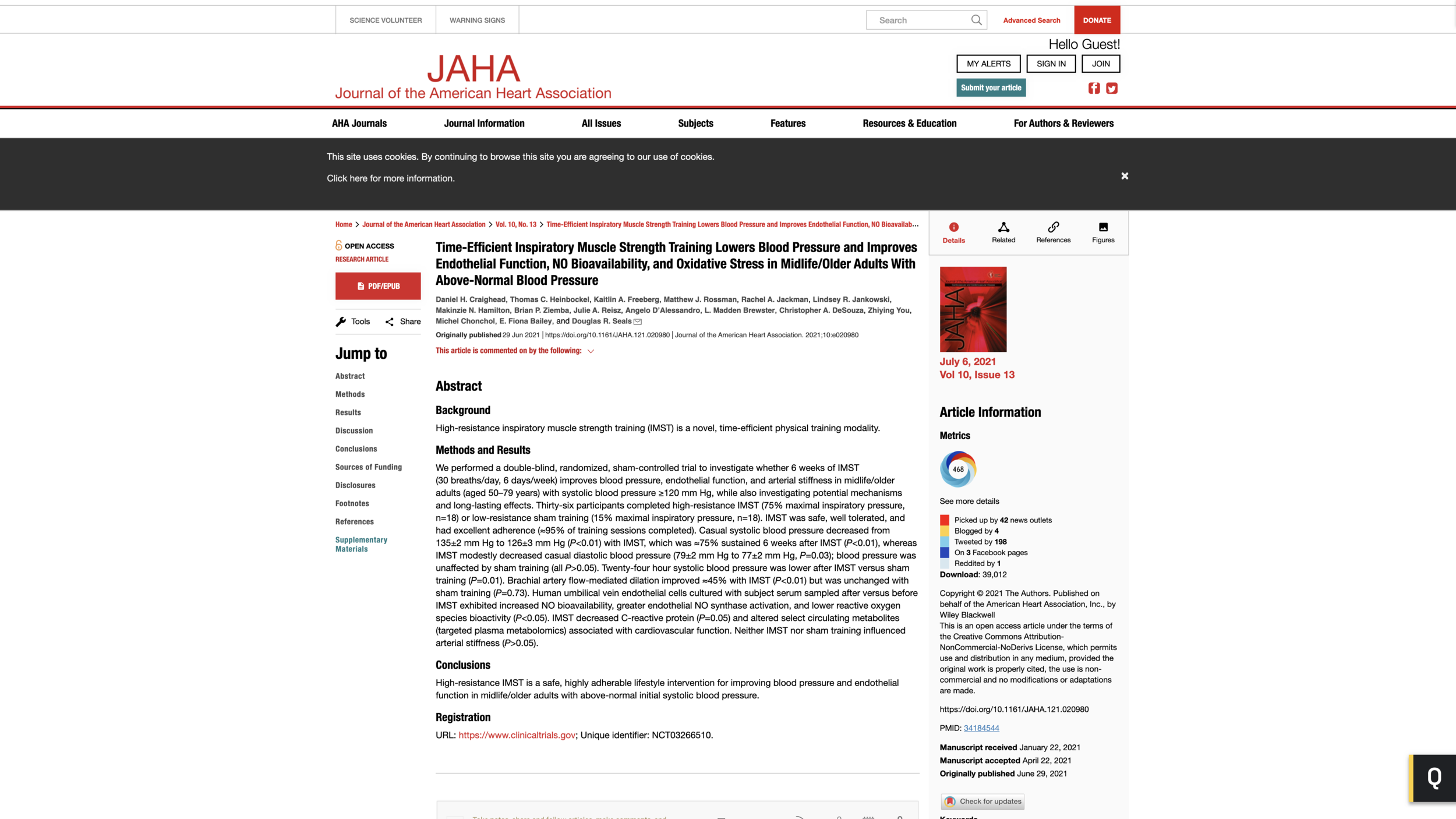
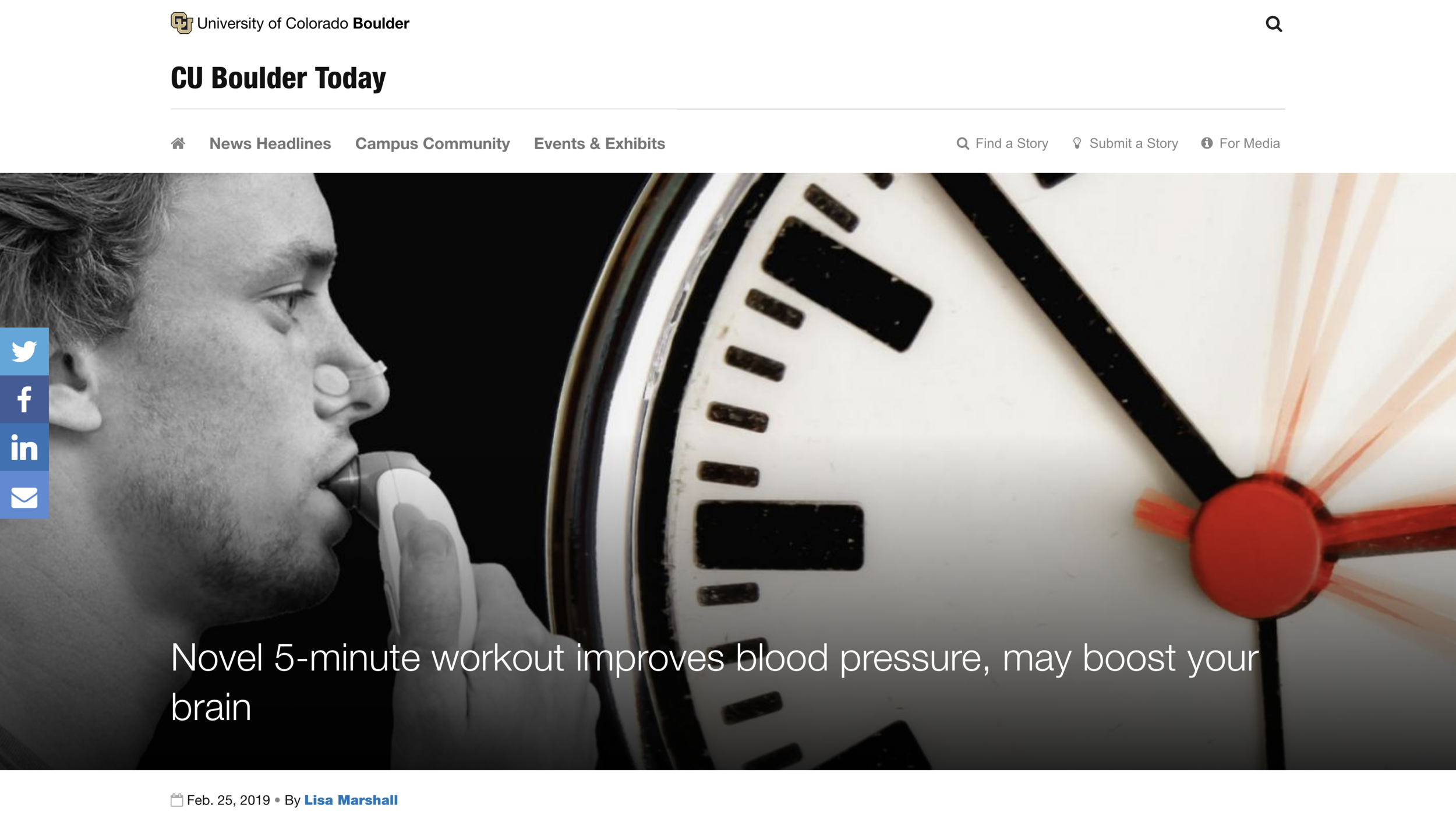
Where do the benefits of exercise come from? Some of the benefits probably come from exercise making people breathe harder, as a study based at the University of Colorado Boulder suggests. I have the links above, but let me give a few of the key quotations from Lisa Marshall’s article “5-minute breathing workout lowers blood pressure as much as exercise, drugs.” What they did was to have all the people in the study inhale for 5 minutes through a handheld device, half at high resistance and half at low resistance. At high resistance, this is called High-Resistance Inspiratory Muscle Strength Training (IMST). Here is what they found:

When assessed after six weeks, the [high resistance] IMST group saw their systolic blood pressure (the top number) dip nine points on average, a reduction which generally exceeds that achieved by walking 30 minutes a day five days a week. That decline is also equal to the effects of some blood pressure-lowering drug regimens.

Doing the 5 minutes of high-resistance inspiratory muscle strength training each day seemed easy:

… remarkably, those in the IMST group completed 95% of the sessions.

Assuming the results hold up, this treatment should be coming to you reasonably soon:

The National Institutes of Health recently awarded Seals $4 million to launch a larger follow-up study of about 100 people, comparing a 12-week IMST protocol head-to-head with an aerobic exercise program.

Meanwhile, the research group is developing a smartphone app to enable people to do the protocol at home using already commercially available devices.

These results are especially intriguing in relation to what the book Breath talks about. I found that book so interesting, that I have 4 blog posts on it:

  1. James Nestor on How Bad Mouth Breathing Is

  2. Carbon Dioxide as a Stimulant for Respiratory Function

  3. A Modern World of Endemic Jaw Dysfunction

  4. Human Skulls, Ancient and Modern


For annotated links to other posts on diet and health, see: