Introduction
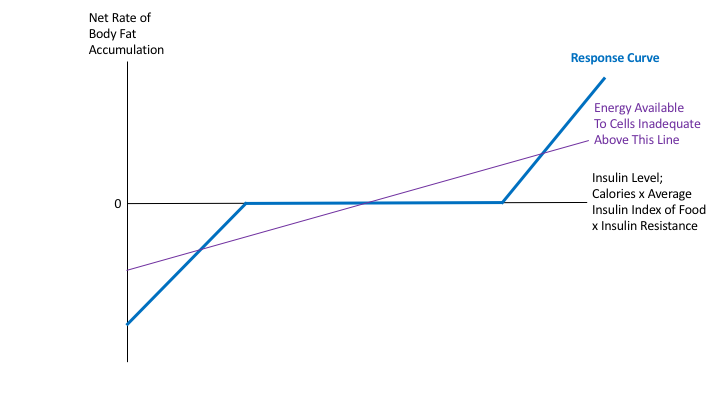
When I am at a restaurant, I often tell the waiter that I am eating lowcarb as a convenient way of explaining what I am going for. But that is not really true. What I am doing is following a low-insulin-index diet as a complement to the weight-loss power of time-restricted eating. I introduce these two key ideas in my posts
I discuss the theory behind these ideas in
Of these two ideas, time-restricted eating is by far the most important idea. But eating foods low on the insulin index when you do eat makes it much, much easier to go for periods of time without eating at all—whether those periods without eating are the last few hours before bed and then skipping breakfast the next day, or going without eating for more extended periods of time. So it is worth understanding what low-insulin-index eating is.
([2025-03-01 EDIT:] I have done many long fasts, which were much easier than you would think and were very successful at weight loss. However, since I first wrote this post—influenced by Peter Attia’s book Outlive: The Science and Art of Longevity, I have become more concerned about loss of muscle mass from long fasts, and so only intend to do one long fast a year.[END EDIT])
I found it fascinating to study the available information on which foods generate a large insulin response to write "Forget Calorie Counting; It's the Insulin Index, Stupid." There are many surprises. I distilled six general principles:
Avoid foods labeled "lowfat"
Avoid cold cereal
Avoid sweet beverages, including fruit juice
Avoid things with added sugar
Avoid starchy foods
If you drink alcohol, lean towards white wine instead of beer
But there are many other things to learn from the evidence on which foods have a big insulin kick. For example, in addition to avoiding pancakes, bread and potatoes, and yogurt marketed as healthy that has a lot of sugar added, certain fruits, such as honeydew melon, seem to have a powerful insulin kick, with a reported 95% confidence interval of 63 to 123. (I think the insulin index of other types of melon is simply unknown because no one has done the experiment yet.)
Not All Types of Meat Are Freebies
One of the most important things to know is that meat is moderately high in its insulin kick because certain proteins can cause a substantial insulin response. Consider these numbers from among those I retail in "Forget Calorie Counting; It's the Insulin Index, Stupid," selected here to make a point:
vanilla ice cream: 65
chocolate cake brownie with chocolate frosting: 60
white rice: 58
croissants: 58
chocolate chip cookies: 57
McDonald's french fries: 57
doughnuts with cinnamon sugar: 54
battered fish fillets: 54
white fish: 43
cinnamon swirl pastry: 42
honey-raisin bran muffin: 37
snickers bar: 37
beef steak: 37
white corn tortillas: 36
chocolate milk: 34
Australian brown pasta (I assume with no sugar added): 29
Australian white pasta (I assume with no sugar added): 29
The point is that white fish and steak are in the 30-50 insulin index category I label "Portion Sizes Should Be Kept Small Except on Special Occasions." They are not foods to make a regular part of your diet if you want to eat low on the insulin index, any more than chocolate milk, snickers bars or cinnamon swirl pastry.
Because the insulin index has not been measured for everything, particularly in all the shrouded variations that occur in processed food, an important test is to think of how hungry you feel an hour or two or three after eating something. I do eat meat in restaurants, but I feel just a bit hungry afterwards. I deal with that by eating a mix of almonds and cashews afterwards. So white fish and steak (and presumably a range of other types of meat that we don't have a measured insulin index for) are not freebies; they are medium-high on the insulin index—not so high that you shouldn't ever eat them, but high enough that you should eat them sparingly.
Some Types of Meat Are Low on the Insulin Index. There are types of meat that are much lower on the insulin index. Here are some for which we have data, along with some comparison items:
In the "Go-To Staples for a Low-Insulin Approach" Category:
In the "Especially Good Foods" Category:
chicken fried in olive oil with skin: 19 (95% confidence interval from 11 to 27)
roast chicken without skin: 17 (95% confidence interval from 9 to 25)
tuna canned in oil: 16
Australian hot dog (I assume with no sugar added): 16
Australian bologna (I assume with no sugar added): 11
In the "Suitable for Eating and Drinking Even on an Extended "Modified Fast" Category:
[2025-03-01 EDIT] I am a big fan of Peter Attia. His book Outlive: The Science and Art of Longevity convinced me that protein is crucial for maintaining muscle mass, especially as I age. And I have been reading that protein is very satiating. Finally, I have read that while protein raises insulin quite a bit, it also raises glucagon—a hormone that functions as a kind of anti-insulin. Glucagon has become more famous lately because “glucagon-like peptides” reduce people’s appetites and are the active ingredient in the revolutionary new weight-loss injections and pills. In my view, these new weight-loss pills work in important measure precisely because they tickle the glucagon receptors and so act as anti-insulins.
Given this reasoning, I have increased my protein intake markedly. I want to stay strong as I age! Nevertheless, I still worry about protein being good nutrition for cancer cells. See “Meat Is Amazingly Nutritious—But Is It Amazingly Nutritious for Cancer Cells, Too?” [END EDIT PASSAGE]
Bad Carbs and Good Carbs
The bottom line is that a low-insulin-index diet is not exactly a "lowcarb diet" in the usual sense of a "lowcarb diet" in our culture. Even less is a low-insulin-index diet a "lowcarb diet" in the sense that researchers often use. As far as the insulin index is concerned, the problem is not really carbohydrates, but easily-digestible carbohydrates such as all the many types of sugar and the most obviously starchy-seeming kinds of vegetables. Technically, even non-starchy vegetables and nuts have a lot of "carbohydrates," but these are carbohydrates that are digested slowly, so they don't cause much of an insulin spike. To repeat, it isn't "carbohydrates" that are the problem, but easily-digestible carbohydrates.
Here, straight from the list of nonstarchy vegetables on Wikipedia, are a list of vegetables I highly recommend as part of your diet (given what I know), even though they are full of carbohydrates as a matter of chemistry:
Alfalfa sprouts
Arugula
Artichoke
Asparagus
Bamboo shoots
Beans (green, Italian, yellow or wax)
Bean sprouts
Beets
Bok choy
Broccoli
Brussels sprouts
Cabbage
Cauliflower
Celery
Chayote
Chicory
Chinese cabbage
Chinese spinach
Cucumber
Eggplant
Fennel
Garlic
Green onions
Greens (beet or collard greens, dandelion, kale, mustard, turnip)
Hearts of palm
Herbs (parsley, cilantro, basil, rosemary, thyme, etc.)
Jicama
Kohlrabi
Leeks
Lettuce (endive, escarole, romaine or iceberg)
Mushrooms
Okra
Onions
Parsley
Peppers (green, red, yellow, orange, jalapeño)
Purslane
Radishes
Rapini
Rhubarb
Rutabaga
Sauerkraut
Scallions
Shallots
Snow peas or pea pods
Spinach
Summer squash
Swiss chard
Tomatillos
Turnips
Water chestnuts
Watercress
Zucchini
Raw vs. Cooked; Intact vs. Pulverized. One of the intriguing facts pointing to the importance of whether a type of cabohydrate is easily-digestible or not is one I discussed in "The Keto Food Pyramid": cooked carrots have a higher glycemic index than raw carrots. The glycemic index isn't the same thing as the insulin index, but within the same food group it is highly enough correlated with the insulin index that I use the glycemic index to guess the insulin index when direct data on the insulin index is not available. What this means is that you have to think not only about the processing of food by big food companies, but the processing of food that you do at home! In addition to what food you eat, you need to think about what you do to it before you eat it. Cooking carrots makes them easier to digest, so they cause a bigger spike in blood sugar.
I don't know of anyone having done this experiment, but I'd love to see someone measure the insulin index of intact veggies as compared to veggies that have been run through a blender to make a veggie smoothie. I am betting that the veggie smoothie will have a higher insulin index than the very same ingredients if they are eaten intact.
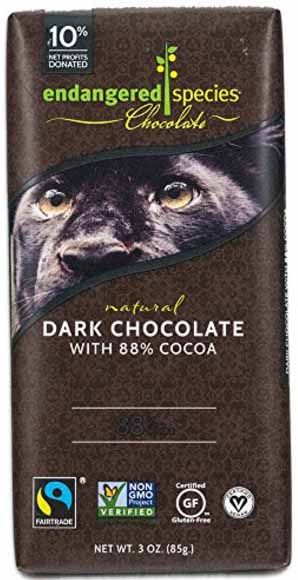
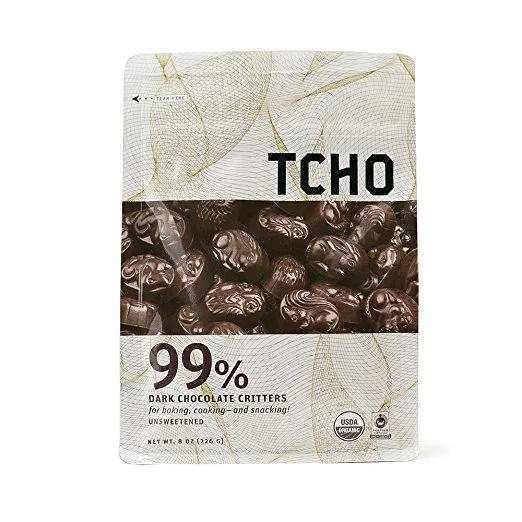
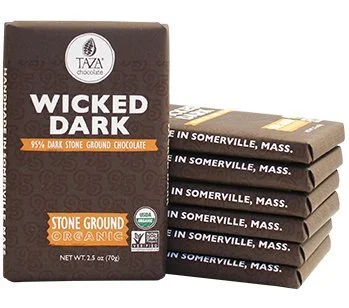
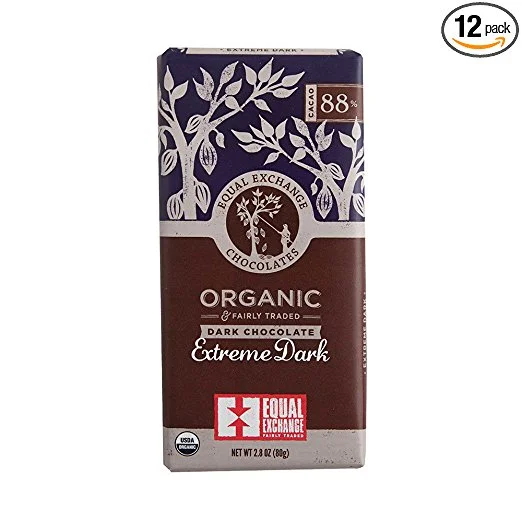
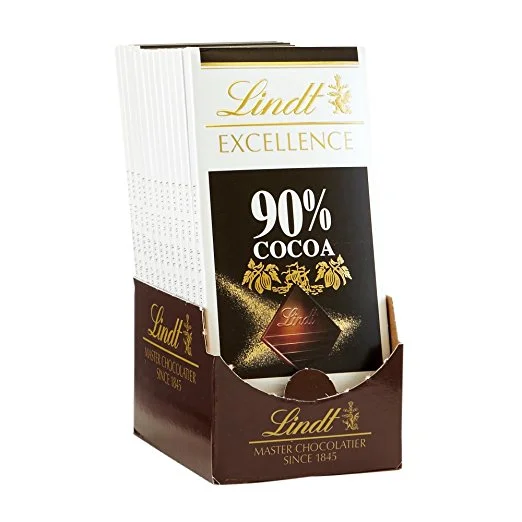
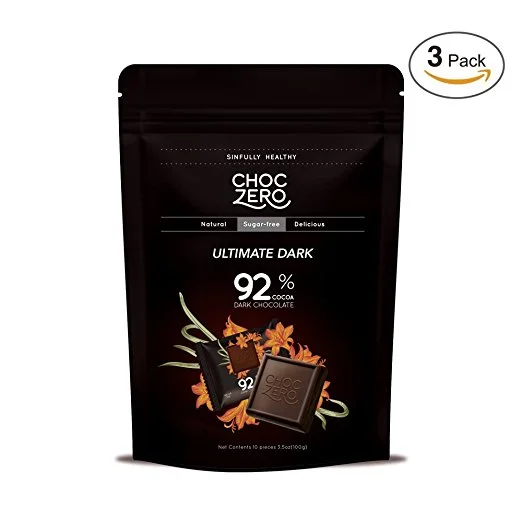
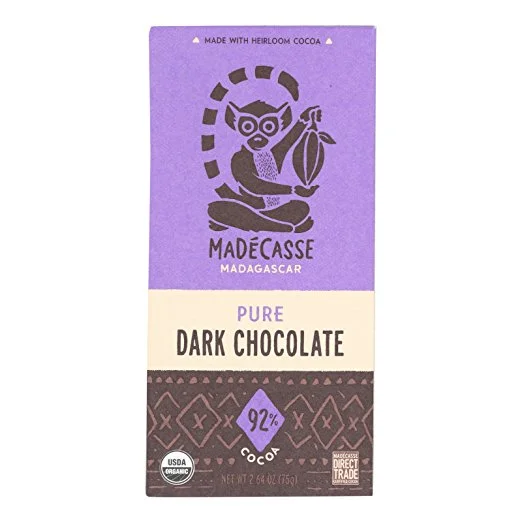
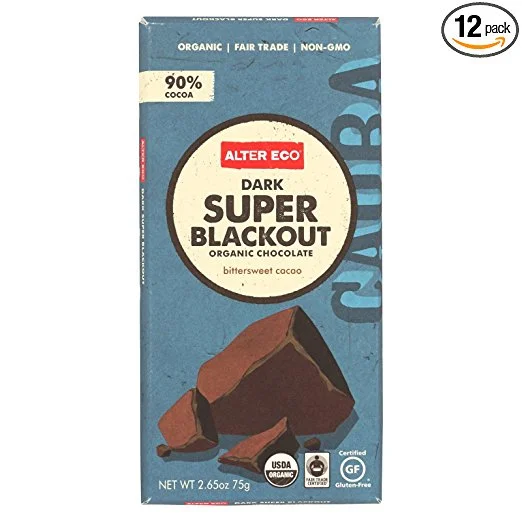
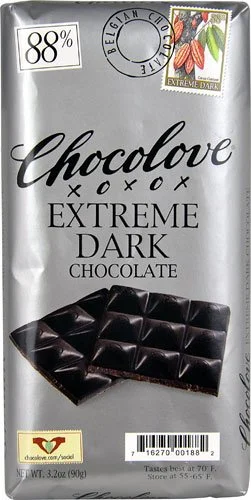
This doesn't mean that you shouldn't cook your food. Making food delicious matters as well as weight loss. Fortunately, it is easy to make delicious food that is low on the insulin index. For gustatory delight, the fact that dietary fat is OK from the standpoint of the insulin index makes it easy to compensate for sugar being banned, for the most part. (On banning sugar, I personally make an exception by eating a few squares of chocolate with 88% or more cocoa, even if it has some sugar, as I talk about in "Intense Dark Chocolate: A Review." Also, I bend the no-sugar rule by using commercial full-fat ranch dressing despite its having a bit of sugar listed in the ingredients, and not always making it to Whole Foods to get sugar-free "Paleo" bacon when we want to have bacon.)
The DIETFITS Randomized Intervention Trial
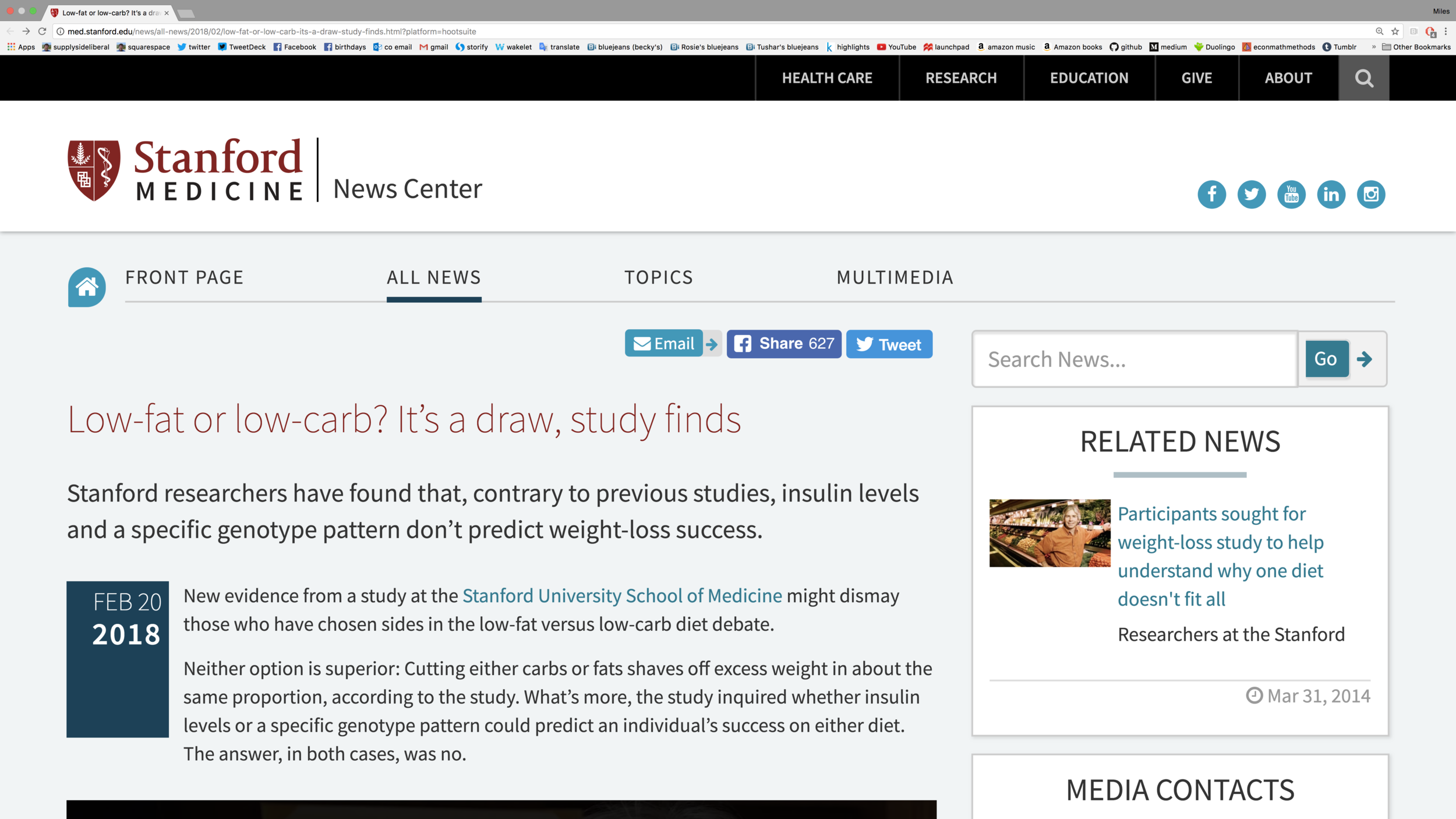
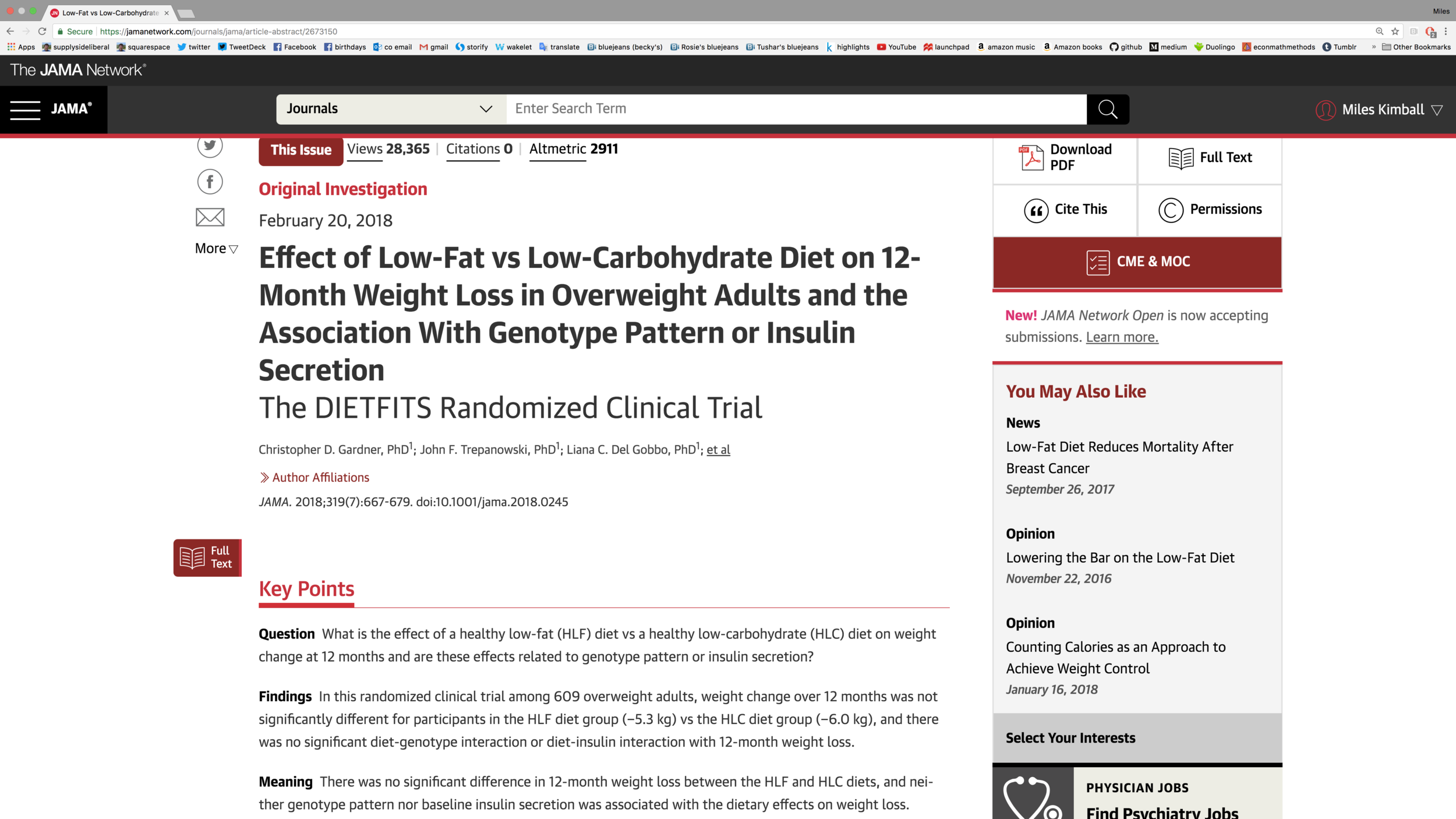
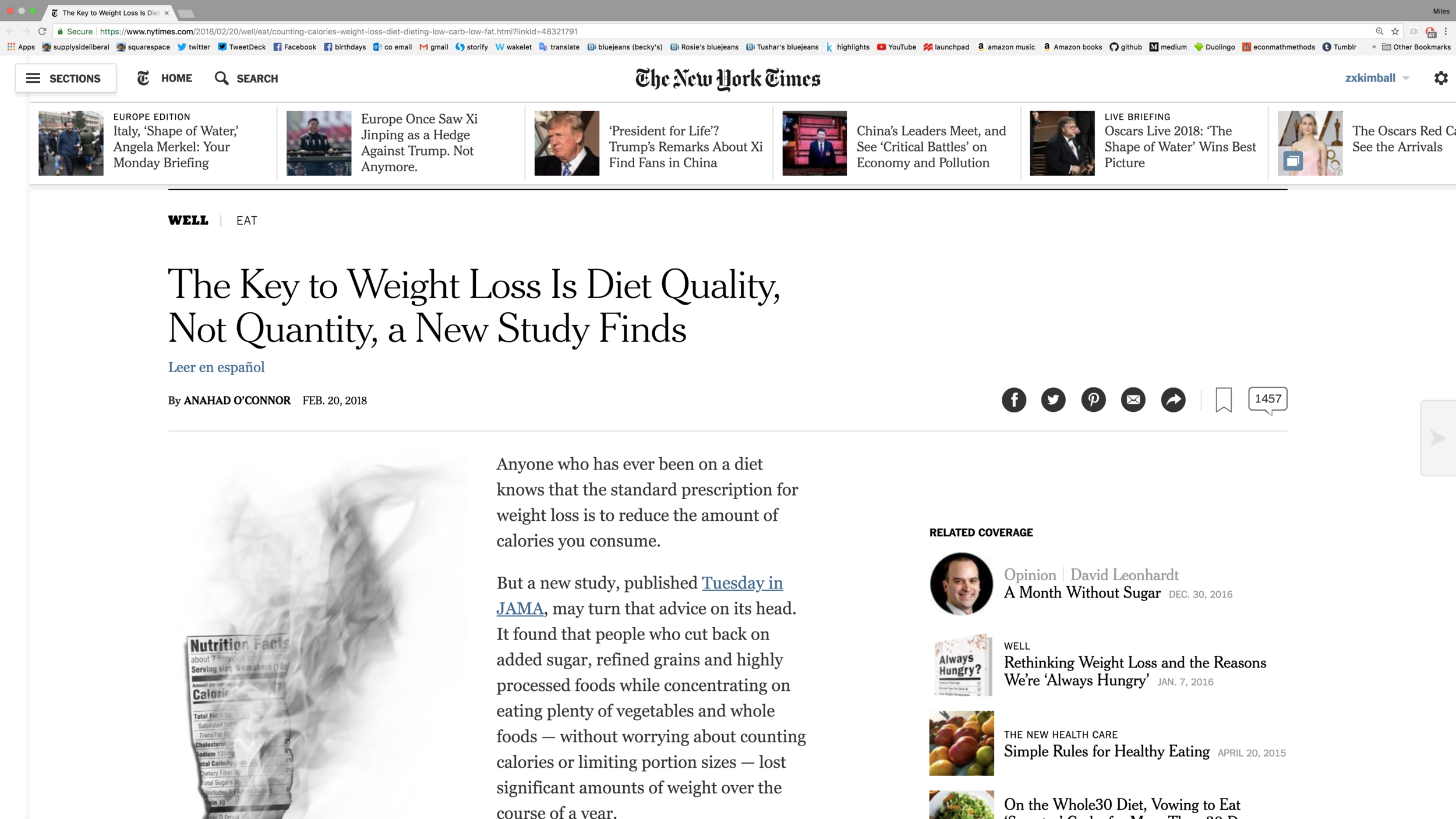
Let me use this distinction between a low-insulin-index diet and a lowcarb diet to discuss the recently reported results of the DIETFITS Randomized Trial flagged at the top of this post. The video of Christopher Gardner, in particular, is good at explaining what they did.
First, both diets tried to get people to avoid sugar, refined grains and processed foods. These are all great for a low-insulin-index approach. This similarity between the two diets tested was much, much more important than the modest differences between the two diets that got into the headline. Although the two approaches were not directed in any big way toward time-restricted eating, and so couldn't test the most important idea very well, I see the results of this study as a vindication for the idea of a low-insulin-index diet. These two diets, which did the key things to lower the insulin index of food eaten, resulted in 11.6 pounds and 13.2 pounds of weight lost on average, once I convert from kilograms to pounds. Let me excerpt the key passages from the abstract of the study:
The Diet Intervention Examining The Factors Interacting with Treatment Success (DIETFITS) randomized clinical trial included 609 adults aged 18 to 50 years without diabetes with a body mass index between 28 and 40. ...
Results Among 609 participants randomized (mean age, 40 [SD, 7] years; 57% women; mean body mass index, 33 [SD, 3]; 244 [40%] had a low-fat genotype; 180 [30%] had a low-carbohydrate genotype; mean baseline INS-30, 93 μIU/mL), 481 (79%) completed the trial. In the HLF [Healthy Low Fat] vs HLC [Healthy Low Carb] diets, respectively, the mean 12-month macronutrient distributions were 48% vs 30% for carbohydrates, 29% vs 45% for fat, and 21% vs 23% for protein. Weight change at 12 months was −5.3 kg for the HLF diet vs −6.0 kg for the HLC diet (mean between-group difference, 0.7 kg [95% CI, −0.2 to 1.6 kg]). There was no significant diet-genotype pattern interaction (P = .20) or diet-insulin secretion (INS-30) interaction (P = .47) with 12-month weight loss. There were 18 adverse events or serious adverse events that were evenly distributed across the 2 diet groups.
The key points are
(a) This was a relatively large intervention study, with 609 participants
(b) The difference between the two diets is stated in terms of differences in proportions of calories from the three macronutrient categories of fat, protein and carbohydrates, which lumps both the unhealthy easily-digestible carbs and the healthy carbs in things such as nuts and nonstarchy vegetables together under the heading of carbohydrates .
(c) Viewed from the perspective of the insulin index, the difference between the two diets was relatively modest, which makes it less surprising that there was little difference in the results. If you are already avoiding sugar, refined grains, and processed foods, then cutting back further on what are technically carbohydrates in a scattershot way that doesn't pay attention to the insulin index is not that valuable. On the other side, trying to cut back on fat is not particularly valuable.
(d) The study did not have a formal control group that continued to eat as they would have normally. But if one is willing to think of people in the population at large as if they were a control group (technically "adults aged 18 to 50 years without diabetes with a body mass index between 28 and 40") then the weight-loss relative to that "control group" is impressive. So the elements the two diets had in common seemed helpful: avoid sugar, avoid refined grains and avoid processed foods. These are all things that can dramatically lower the insulin index of the food one eats, even if one is not thinking explicitly about the insulin index.
(e) The researchers looked for interactions between individual differences in insulin-secretion across people and which diet worked better for that individual and didn't find anything. Here I think there was a big missed opportunity. If you are looking for interactions between differences between two diets and the insulin-secretion patterns of different individuals, to find anything you need to make the two diets quite different in their food insulin indexes. Despite being interested in differences in insulin secretion patterns across people, these researchers did not do the logical thing of focusing on a high food-insulin-index diet and a low food-insulin-index diet. I hope they focus on this in their next big study!