Saturday Morning Breakfast Cereal

Smartest cartoons I have ever seen. I think many of my loyal readers will like them, and end up smarter while rolling on the floor laughing.  Here is one (illustrated above) that touches on a theme I am working on: how to harness the motives people have other than pure self-interest to reduce the size of tax distortions. Of course, anything we do to make a wonderful world could all be destroyed by a supernova’s gamma ray burst, or by Winnie the Pooh.

The Euro and the Mark

Ken Griffin and Anil Kashyap are calling for Germany to reintroduce the Mark and leave the common currency of the Eurozone.  Although it may not at first be obvious, having Germany leave the Eurozone is in important respects equivalent to the proposal I talked about in my post “The Euro and the Mediterano.”  There I tentatively proposed splitting the Eurozone into two currencies, a “North Euro”–which I imagined the press calling just “the Euro”–and a “South Euro,” which I imagined the press calling “the Mediterano.” Now change the names. Suppose that the North Euro is called “the Mark” and the South Euro is called just “the Euro.” In most economic respects, things are the same: only the names have been changed. Here is a table with the three sets of names:

  1. South Euro      North Euro
  2. Euro                Mediterano
  3. Mark               Euro

The German economy is big enough, and different enough from most of the other economies in the Eurozone, that it is a big shift in policy to split Germany off into what is effectively a North Euro zone.    

Shakespeare has Juliet say “A rose by any other name would smell as sweet.” But the full context suggests some of the same complexities that arise for the different possible names of two currencies in the current Eurozone. Here is what Juliet says on the balcony, with Romeo looking on, unbeknownst to Juliet:

Juliet: 

O Romeo, Romeo! wherefore art thou Romeo?
Deny thy father and refuse they name; 
Or, if thou wilt not, be but sworn my love,
And I’ll no longer be a Capulet.

Romeo:

[Aside] Shall I hear more, or shall I speak at this?

Juliet: 

‘Tis but thy name that is my enemy;
Thou art thyself, though not a Montague.
Nor arm, nor face, nor any other part
Belonging to a man. O, be some other name!
What’s in a name? that which we call a rose
By any other name would smell as sweet; 

Romeo:

I take thee at they word.
Call me but love, and I’ll be new baptiz’d;
Henceforth I will never be Romeo

Although Romeo is fully willing to change his name, what Romeo and Juliet really need to change is the bloody conflict between the Montagues and Capulets that keeps them apart: a conflict the names have come to signify.

In the case of the Eurozone splitting into two different currencies, the politics are quite different between the two cases of splitting into the Euro and the Mark as opposed to splitting into the Euro and the Mediterano. For one thing, German national pride could help propel the reintroduction of the Mark, without the implied economic failure on the part of the rest of the Eurozone holding back the process of splitting the currencies (since the other Eurozone countries are not themselves directly taking an action). So it may be that the reintroduction of the Mark is more politically plausible. This is true even if some other country, say Finland, went with the Mark.

In my post “The Euro and the Mediterano,” for the sake of European unity, I propose that the European Central Bank (ECB) continue to be in charge of both currencies, with an informal arrangement that the represenatives of countries in the North Euro and the South Euro zones have more say in what happens with the currencies in their own zone. There is no reason the same strategy can’t be pursued as at least a figleaf if Germany reintroduces the Mark. Germany could soften the diplomatic and symbolic blow of reintroducing the Mark by remaining within the Eurozone governed by the ECB under a “one central bank, two currencies” system.  

Although from an economic point of view splitting off Germany from the Eurozone (reintroducing the Mark) should be equivalent to splitting off all the countries but Germany from the Eurozone (introducing the Mediterano for all the other countries), thinking of the split into two different currencies in these two different ways hints at two different ways to handle the transition. 

I have been thinking how to handle the transition to two currencies as a result of the comments I received to “The Euro and the Mediterano.” As indicated in some of my replies to comments there, I started thinking along the following lines: since stimulating the economies of the South Euro zone requires some depreciation of the South Euro relative to the North Euro. To avoid having everyone pull all of their money out of the South Euro zone, that depreciation needs to be accompanied by an equal difference in the interest rates between the North Euro and South Euro zones (on top of the difference in risk premium between the two zones that already exists).  But then I thought “Why not do the transition very fast–in fact, overnight?” What would that look like? One one particular night, the night of the transition, every Euro in bank accounts (or their equivalent) in the North Euro zone would become a North Euro, while every Euro in bank accounts (or their equivalent) in the South Euro zone would become 1.5 South Euros. Euro currency anywhere from before the split could simply be equivalent to North Euros. Since each Euro in the South Euro zone would turn overnight into 1.5 South Euros, there shouldn’t be any reason for investors to pull their money out of the South Euro zone.  

But there were other details to worry about. The point of devaluing the South Euro would be to effectively cut the price of goods and services in the South Euro zone, so I thought it might be justifiable to have temporary wage and price controls for, say, a month before and a month after the transition saying that something that used to cost 10 Euros should now cost 10 South Euros, to avoid having everyone multiply their prices by 1.5 on the day of the transition and canceling out all of the effects of the depreciation.  The other detail was what to do with debt contracts. I didn’t want to sneak in a repudiation of some fraction of the existing debt of the countries in the South Euro zone. Since the night of transition could be announced in advance, enough time could be allowed for existing short term debt to mature and subsequent short-term debt contracts to be explicitly written to deal with the transition. That would take care of most of the debt. Long-term debt would be messier, but could be handled in a variety of ways–interpreting “Euro” as “South Euro” in preexisting long-term debt would be an implicit bailout, while interpreting “Euro” as “North Euro” in preexisting long-term debt would avoid an implicit bailout. Whatever was done with debt contracts, it would be crucial that labor contracts saying “Euro” in them are interpreted as pay rates in South Euros.  

Now, suppose we think about the equivalent transition handled as a reintroduction of the Mark. On the night of the transition, every Euro in bank accounts (or their equivalent) in Germany (and, maybe Finland) turns into .667 Marks. Euros in the rest of the Eurozone stay Euros. There shouldn’t be a huge rush of funds into Germany, because each Euro there only turns into 2/3 of a Mark on the night of the transition.

As in the other case of splitting off the South Euro or Mediterano, there are details. Since the point of splitting off the Mark is largely to raise the effective relative price of German goods and services relative to goods in the rest of the Eurozone, we certainly don’t want everyone in Germany to cut their prices by 33% or so on the night of the transition. But saying that labor contracts saying pay rates in Euros had to be interpreted as guaranteeing  the stated rates in Marks would probably be enough to keep this from happening. Because this rule favors workers, it is probably politically easier than the rule with the other mode of transition saying that pay rates in Euros had to be interpreted as pay rates in South Euros.

But it is not all political roses. The savings of Germans would suddenly look smaller in relation to their now higher cost of living, and it might be necessary for the German government to make transfers to account holders based on their account values as of the day before serious discussion of splitting off the Mark began. This would be messy, and it is not clear that the German government can really afford such a transfer, but it could probably be done. What is happening here is very interesting, with or without German government transfers to soften the blow of their reduced value in relation to the cost of living in Germany. The least interesting part is the redistribution among German creditors and debtors, which works in favor of debtors. The most interesting part is that there is a bailout of the rest of the Eurozone hiding in this reduced value of German bank accounts. Why? If the Mark is splitting off, it is natural to interpret debt contracts in the rest of Europe stated in Euros as continuing to apply to Euros, which are equivalent to South Euros in the other naming convention. To avoid an effective bailout, preexisting debt contracts in the South Euro zone stated in Euros had to be interpreted as applying to the North Euro. With this other naming convention, that means that preexisting debt contracts in countries other than Germany would have to be interpreted as giving quantities in Marks to avoid an implicit bailout. If what is effectively the North Euro is called “the Mark," I don’t see how the politics of the South Euro zone could ever allow that.  

So, in addition to changing the effective relative prices between Germany and the rest of the Eurozone, splitting off the Mark from the rest of the Eurozone might actually a way to make a bailout of the rest of the Eurozone politically palatable. Germany gets something symbolic back–the Mark that France insisted it give up as its price for not opposing reunification (see what Martin Feldstein says on this)–while the rest of the Eurozone effectively gets a huge transfer.

A WARNING: Let me end by cautioning against splitting off the Mark with anything slower than the overnight transition I recommend. Trying to introduce the Mark at par with the Euro (1 Euro = 1 Mark) would make financial markets expect a large appreciation of the Mark after its introduction. This would make investors want to put their funds into Marks. Since the nominal interest rate in Germany cannot go significantly below zero (the zero lower bound again), there is no way to stop this rush into Marks by lowering the interest rate in Germany. Such a rush into Marks would be very disruptive. And notice that suffering the disruption from a more gradual transition to the Mark does not in any way avoid the effective bailout. As long as the money currently in German bank accounts is in Euros, its value will fall when the Euro falls relative to the Mark, and any preexisting long-term debt contracts (including debt contracts with the European Stabilization Mechanism) will be worth less in terms of Marks.

Indeed, if the Mark is introduced at par in the near future, it would probably appreciate so fast that even some relatively short-term debt contracts would lose much of their value in terms of Marks, so the implicit bailout might be even bigger. On the other hand, if it were announced that the Mark would be introduced at par after some time, all the other problems would remain, but it would not lead to an implicit bailout, since the bond markets would insist on either debt that is denominated in the not-yet-existing Mark–or in some other "hard” currency–or would insist on high interest rates in Euros.

Will Mitt's Mormonism Make Him a Supply-Side Liberal?

In my post “Rich, Poor and Middle-Class” I made this statement on my own behalf, as a statement of what I believe Supply-Side Liberalism suggests as the right attitude in response to class warfare in the U.S. context:

I am deeply concerned about the poor, because they are truly suffering, even with what safety net exists. Helping them is one of our highest ethical obligations. I am deeply concerned about the honest rich—not so much for themselves, though their welfare counts too—but because they provide goods and services that make our lives better, because they provide jobs, because they help ensure that we can get good returns for our retirement saving, and because we already depend on them so much for tax revenue. But for the middle-class, who count heavily because they make up the bulk of our society, I have a stern message. We are paying too high a price when we tax the middle class in order to give benefits to the middle-class—and taxing the rich to give benefits to the middle-class would only make things worse. The primary job of the government in relation to the middle-class has to be to help them help themselves, through education, through loans, through libertarian paternalism, and by stopping the dishonest rich from preying on the middle-class through deceit and chicanery. (Miles Kimball, “Rich, Poor and Middle-Class.”

The question for this post is whether Mitt Romney (the son of my grandmother Camilla Eyring Kimball’s first cousin George Romney) would agree with my statement in his heart of hearts. For now, I am going to give Mitt a pass on the parts of this Supply-Side Liberal statement on “Rich, Poor, and Middle-Class” that have to do with the rich and the middle-class to focus on what we can guess about his feelings about the poor. Here, I am going to make use of what is literally inside information. I know that until I was at least 37 years old, I believed in Mormonism with all of my heart. And I remember my thoughts and feelings then. (See my posts “UU Visions” and “Teleotheism and the Purpose of Life” for a little more of my spiritual autobiography since then.) This is a key to understanding Mitt, since everything I know about Mitt from any source suggests that he believes in Mormonism with all of his heart. (I would be interested in any evidence anyone has on this subject, as well as the related historical question of what John F. Kennedy believed in his heart of hearts in relation to Catholicism.) Inevitably, what follows will represent my own reading of Mormon scripture and Mormon belief and so will at least serve as a way of telling you about an important influence on my own views about our duty to take care of the poor.  

Because Mitt has shown a willingness to pander to the electorate in the Republican primaries, saying things in this and his previous presidential campaign that seem at variance with what he has said in earlier campaigns for senator and governor, it is often hard to know what he really believes based on his statements. Therefore, I think it is extremely important to draw on a wide range of resources to try to reveal what might be in his heart. My belief that he believes in Mormonism with all of his heart (as I once did, but no longer do) is my interpretive key.    

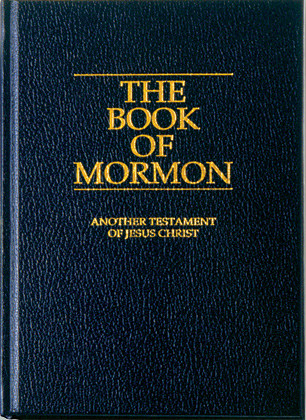
Mormons believe in the Bible (preferring to use the King James Version) and in three additional books of scripture that they consider the Word of God on a par with the Bible: The Book of Mormon, The Doctrine and Covenants, and The Pearl of Great Price. Searchable text of all of these can be found online here. Although at anything short of the level of high theology, Mormon doctrine on the atonement and saving power of Jesus Christ is totally standard Christian doctrine, Mormonism’s doctrines about the nature of God are so heretical according to the decisions of Christian councils such as the Nicene Creed that many Christians refuse to recognize Mormonism as Christian. The Mormon Church has countered the claim that it is not Christian by emphasizing the official name of the Church: The Church of Jesus Christ of Latter-day Saints and by adding the subtitle “Another Testament of Jesus Christ” to the Book of Mormon.  

Of the three books of scripture that Mormonism has in addition to the Bible, The Book of Mormon is the most important, so I will begin with what it says. Speaking as a Unitarian-Universalist and an atheist (or more precisely teleotheist: see my post “Teleotheism and the Purpose of Life”), let me say that the Book of Mormon is a genuinely moving book, fully deserving of an honored place among the holy books of the world’s religions. In saying this I disagree strongly with Mark Twain, who called the Book of Mormon “chloroform in print.” As a Mormon missionary in the Tokyo North Mission from the Fall of 1979 through the Summer of 1981, after striking up conversations near subway stations and convincing some fraction of those I politely accosted to talk at greater length about religion, the main approach my missionary companion and I took (Mormon missionaries always work in pairs–or sometimes in triples, if the total number of them is odd) was to persuade those we were teaching to read The Book of Mormon and then pray about it, with the promise that God would tell them in their hearts that the book is true if they did. (Many people, including me, have had powerful subjective spiritual experiences when they do this.)  

The Book of Mormon tells the story of an Israelite offshoot being shown by God how to build a seaworthy ocean-going ship and led by God around 600 B.C. to somewhere on the American continents (thought by most Mormon scholars to be in Central America and Mexico, so that they consider Olmec and Maya texts relevant for understandingThe Book of Mormon). In the narrative, because of their relative isolation, this Israelite offshoot was given very clear prophecies of the coming of Jesus Christ centuries later–not only to Palestine, but also, after Jesus’ resurrection, to their descendants in the American continents. 

The Book of Mormon not only emphasizes a duty to take care of the poor in the strongest possible terms, it takes apart some common excuses for not taking care of the poor. I don’t need to comment much on the next two quotations because they are so clear: 

But wo unto the rich, who are rich as to the things of the world. For because they are rich they despite the poor, and they persecute the meek, and their hearts are upon their treasures; wherefore, their treasure is their god. And behold, their treasure shall perish with them also.  (2 Nephi 9:30)

And also, ye yourselves will succor those that stand in need of your succor; ye will administer of your substance unto him that standeth in need; and ye will not suffer that the beggar putteth up his petition to you in vain, and turn him out to perish.

Perhaps thou shalt say: The man has brought upon himself his misery; therefore I will stay my hand, and will not give unto him of my food, nor impart unto him of my substance that he may not suffer, for his punishments are just–But I say unto you, O man, whosoever doeth this the same hath great cause to repent; and except he repenteth of that which he hath done he perisheth forever, and hath no interest in the kingdom of God.

For behold, are we not all beggars? Do we not all depend upon the same Being, even God, for all the substance which we have, for both food and raiment, and for gold, and for silver, and for all the riches which we have of every kind?  (Mosiah 4:16-19.)

The Book of Mormon not only lays out the duty to take care of the poor, it also stresses the the ideal of social and economic equality, the role of equality in helping to make society prosper, and the evil of inequality. Here is a time when things were good:   

And when the priests left their labor to impart the word of God unto the people, the people also left their labors to hear the word of God. And when the priest had imparted unto them the word of God they all returned again diligently unto their labors; and the priest, not esteeming himself above his hearers, for the preacher was no better than the hearer, neither was the teacher any better than the learner; and thus they were all equal, and they did all labor, every man according to his strength. 

And they did impart of their substance, every man according to that which he had, to the poor, and the needy, and the sick, and the afflicted; and they did not wear costly apparel, yet they were neat and comely. 

And thus they did establish the affairs of the church; and thus they began to have continual peace again, notwithstanding all their persecutions. And now, because of the steadiness of the church they began to be exceedingly rich, having abundance of all things whatsoever they stood in need–an abundance of flocks and herds, and fatlings of every kind, and also abundance of grain, and of gold, and of silver, and of precious things, and abundance of silk and fine-twined linen, and all manner of good homely cloth. And thus in their prosperous circumstances, they did not send away any who were naked, or that were hungry, or that were athirst, or that were sick, or that had not been nourished; and they did not set their hearts upon riches; therefore they were liberal to all, both old and young, both bond and free, both male and female, whether out of the church or in the church, having no respect to persons as to those who stood in need.

And thus they did prosper and become far more wealthy than those who did not belong to their church. For those who did not belong to their church did indulge themselves in sorceries, and in idolatry or idleness, and in babblings, and in envyings and strife; wearing costly apparel; being lifted up in the pride of their own eyes; persecuting, lying, thieving, robbing, committing whoredoms, and murdering, and all manner of wickedness; nevertheless, the law was put in force upon all those who did transgress it, inasmuch as it was possible.  (Alma 1:26-32)

And here is a time when things were bad:

And it came to pass in the commencement of the ninth year, Alma saw the wickedness of the church, and he saw also that the example of the church began to lead those who were unbelievers on from one piece of iniquity to another, thus bringing on the destruction of the people. Yea, he saw great inequality among the people, some lifting themselves up with their pride, despising others, turning their backs upon the needy and the naked and those who were hungry, and those who were athirst, and those who were sick and afflicted.  

Now this was a cause for lamentations among the people, while others were abasing themselves, succoring those who stood in need of their succor, such as imparting their substance to the poor and the needy, feeding the hungry, and suffering all manner of afflictions, for Christ’s sake, who should come according to the spirit of prophecy; (Alma 4:11-13)

The Book of Mormon recounts how, after his resurrection, Jesus came in full miraculous power to teach people in the Americas. At that time, he chose 12 “disciples” who were the equivalent in the Americas of the 12 apostles in Eurasia and Africa. These 12 disciples set up an ideal society, in which all property was communally owned:   

And it came to pass that the disciples whom Jesus had chosen began from that time forth to baptize and to teach as many as did come unto them; and as many as were baptized in the name of Jesus were filled with the Holy Ghost…. And they taught, and did minister one to another; and they had all things common among them, every man dealing justly, one with another. (3 Nephi 26:17,19)

In case the phrase “had all things common among them” (compare Acts 2:44 “And all that believed were together and had all things common;”), a few chapters later, it explains: 

And they had all things common among them; therefore there were not rich and poor, bond and free, but they were all made free, and partakers of the heavenly gift. (4 Nephi 1:3)

In the 19th Century, the Mormons made an attempt at replicating this communal ownership of property. Here is an excerpt from a much longer section of The Doctrine and Covenants laying out details for this communal ownership of propertyincluding an allusion to the sophisticated and subtle principle of a “stewardship” (temporarily assigned quasi-private property): 

It is wisdom in me; therefore a commandment I give unto you, that ye shall organize yourselves and appoint every man his stewardship; That every man may give an account unto me of the stewardship which is appointed unto him. For it is expedient that I, the Lord, should make every man accountable, as a steward over earthly blessing, which I have made and prepared for my creatures. I, the Lord, stretched out the heavens, and built the earth, my very handiwork; and all things therein are mine. And it is my purpose to provide for my saints, for all things are mine.  But it must needs be done in mine own way; and behold this is the way that I, the Lord, have decreed to provide for my saints, that the poor shall be exalted, in that the rich are made low. For the earth is full, and there is enough and to spare; yea I prepared all things, and have given unto the children of men to be agents unto themselves. Therefore, if any man shall take of the abundance which I have made, and impart not his portion, according to the law of my gospel, unto the poor and the needy, he shall, with the wicked, lift up his eyes in hell, being in torment. (Doctrine and Covenants 104:11-18)

19th Century Mormons ultimately were not able to make communal ownership work, although they did better than many other groups who tried. The Mormon Church retreated to the principle of tithing and a “Welfare Plan” to take care of the poor. Tithing, which is taken very seriously in the Mormon Church, means that Mormons pay 10% of their income to the Church. But the ideal of a society with full equality lives on. Mormons (and I) use the word “Zion” to signify an ideal society. This meaning of “Zion” is clear in this lovely passage from the last book of Mormon scripture I listed, The Pearl of Great Price:    

And the Lord called his people Zion, because they were of one heart and one mind, and dwelt in righteousness; and there was no poor among them. (Moses 7:18)

What should be clear from all of these passages and this discussion is that for Mormon Republicans (and yes, there are Mormon Democrats)–even for very conservative Mormon Republicans–it is OK for the Mormon Church to do what it is not OK for the government to do: require that the rich give money that is then transferred to the poor, in cash and in kind. (I don’t think I am going too far in using the word “require” to talk about tithing, since unless someone declares to their Mormon bishop that they have paid 10% of their income to the Mormon Church, Mormons are not allowed to enter Mormon temples, even to see  one of their children get married. Many marginal Mormons have paid tithing in a particular year simply to be able to attend the wedding of one of their children.) This is not a logical inconsistency. After all, in the Mormon view, a Church led by a modern Prophet who receives direct revelation from God can be expected to spend money collected from tithing better than an uninspired government can spend money collected from taxes.

The point I am making is that the duty to take care of the poor is laid out in an unequivocal way in Mormon scripture–the question is only about the means. (1) Voluntary donations and volunteer work to help the poor are preferred, followed by (2) efforts organized by the Mormon Church (using all of the power it has to require things of committed Mormons), with (3) government action to help the poor as by far the least preferred means. But as a believing Mormon, Mitt knows God requires that the poor be taken care of somehow. This is very different from the attitude directly condemned by The Book of Mormon in the passage above: “The man has brought upon himself his misery; therefore I will stay my hand, and will not give unto him of my food, nor impart unto him of my substance that he may not suffer…” This Mormon ordering of the means of helping the poor from best to worst also seems to me an ordering from least distortionary to most distortionary: 

  1. voluntary, 
  2. induced by social pressure (perhaps quite heavy social pressure),
  3. enforced by the threat of jail time.

So there is nothing wrong in principle with this ordering. The one concern I have is with the tendency to convince oneself that voluntary actions and actions induced by social pressure are in fact enough in situations where they are not.  

Other Posts about Mitt:

“Rich, Poor and Middle-Class”

“Corporations are People, My Friend”

Post about Barack:

“You Didn’t Build That: America Edition”

Other Posts about Religion

“UU Visions”

“Teleotheism and the Meaning of Life”(This one has philosophy, cosmology, evolutionary theory, and science fiction, as well as theology.)

Note: On Mitt’s genealogy, see this from Familypedia. I am named after our common ancestor: Miles Park Romney.

Teleotheism and the Purpose of Life

I am a lay Unitarian-Universalist preacher. Since 2005 I have given a sermon every year at the Community Unitarian-Universalists of Brighton congregation. This is a sermon I gave on March 30, 2008. Please give this sermon a try. I think it has much in it that will be of interest to a wide range of readers: philosophy, cosmology, evolutionary theory, and science fiction, as well as theology. And nothing in it depends on believing in God at all.

You will learn a lot about Unitarian-Universalism from the fact that this sermon was very warmly received. To explain the emphasis on Christianity in this sermon, let me say that both Unitarianism and Universalism (which later merged to form Unitarian-Universalism) were historically Christian, though the decision to put freedom of thought first broadened them beyond those historical Christian roots.

Update: You can see a video of this sermon here

Abstract:  In a recent book, Dinesh D'Souza takes on the arguments of recent bestselling atheists, including Richard Dawkins, Daniel Dennett, Sam Harris, Christopher Hitchens and Victory Stenger.  I agree in important measure with both sides of this debate: I accept the standard scientific picture of the universe laid out by Dawkins, Dennett, Harris, Hitchens and Stenger, but agree with D’Souza–and Rodney Stark–that many of our most cherished ethical, political and even scientific ideals stem from our religious heritage.  This motivates the question of how far apart an enlightened atheism is from the relatively enlightened version of Christianity that D’Souza presents. 

As an enlightened form of atheism, I turn to teleotheism.  Teleotheism is the view that God comes at the end, not at the beginning, where I am defining “God” as “the greatest of all things that can come true.”   In this view, the quest to discover what are the greatest things that are possible is of the utmost importance.  The best of our religious heritage is just such an effort to discover the greatest things that are possible. 

Many recent books advocating atheism have made the bestseller lists.    I have enjoyed reading many of these books, including The God Delusion by Richard Dawkins, Breaking the Spell: Religion as a Natural Phenomenon by Dennett, Daniel, The End of Faith by Sam Harris, God is Not Great by Christopher Hitchens and God: The Failed Hypothesis by Victor Stenger.  So I was intrigued when I saw that Dinesh D’Souza had written a book attempting to defend Christianity against my favorite authors.  Instead of talking past each other, a believer in the Biblical God and nonbelievers were in a real dialogue!  I was not disappointed.  Though, as you will see, I disagree with much of what D’Souza writes in What is So Great About Christianity, D’Souza has understood and digested the recent spate of atheist books well enough that his summary of the arguments of the atheists persuaded me all over again to doubt the existence of God.   So he is fair in representing the arguments of his opposition. 

As an aside, let me say that real dialogue, and real attempts to understand those who think differently are especially important in a political season like this one.  In my own view, we are lucky this time to have three potential presidents [Hilary Clinton, Barack Obama and John McCain], each of whom would be a credit to our republic as its leader.  But in the heat of political competition, many of us will be tempted to recoil in disgust from the sincerely held political views of some of our acquaintances.  I hope that instead we can try to understand and appreciate the things these people care about that lead them to support one candidate or another.  Although we may disagree on political choices, I think it is usually possible to understand and even learn from the concerns that lead people to a particular choice. 

In the debate over God, there are many voices that are less temperate than D’Souza.   Every time I see Ann Coulter’s book “Godless” on a bookstore display I have to laugh because she uses the word “Godless” as if it is a bad thing.  She attacks liberalism by calling it a “godless religion,” but I stood up here a year ago saying that “godless religion” is exactly what we need so that those who don’t believe in God can also get the benefits of religion.  But I feel we need to constantly improve godless religion and agnostic religion beyond the current level.   If godless religion and agnostic religion are to be fully competitive in the religious market place, they must have deep theology and a profound power to propel people to goodness, build strong religious communities, and provide experiences of transcendence. 

Because Unitarian-Universalism combines a respect for its religious heritage with a firm commitment to freedom of thought, I believe there is a better chance of creating an agnostic religion that lives up to this standard with Unitarian-Universalism than anywhere else.  But I do not think we are yet up to the standard the world needs us to reach for the sake of future history. 

Today, I am going to talk first about theology and science, then about precious things.  Propelling people to goodness, building strong religious communities and providing experiences of transcendence fall under the heading of “precious things” at the end.

Since “theology” is Greek for words about god, it might seem strange to talk about the need for a deeper theology for godless religion.  But I think it is important for those in a godless religion to talk about God.  Let me explain why.  

Let me start with Pascal’s wager, which Dinesh D’Souza thinks is a good reason to believe in God.  Blaise Pascal was a 17th century French mathematician and philosopher who did some of the early work on probability theory that is the foundation of statistics.   He argued that one should bet on the existence of God because if there is a God, believing in God makes the difference between heaven and hell, while if there is no God, it is not so bad to be wrong.  One may have wasted some time and money on a false belief in God, but nothing approaching the danger of hell and the prospect of heaven on the other side.   When I was a Mormon, before I went too far toward unbelief, I considered carefully whether God would punish me for not believing in him.  I decided that despite my imperfections, I would not punish one of my children harshly for not believing in me.  Therefore, a perfect, loving Father in Heaven would not punish me if—doing my very best to figure things out—I came to doubt that he existed.  Deciding that God—if he existed—would not punish me for my honest beliefs was and is a key ingredient to my being an atheist. 

In general, even aside from Pascal’s wager, deciding whether or not to believe in God depends heavily on what one thinks God would be like if he did exist.  This is one reason I can see that thoughtful atheists still need to think about God.  Later I will talk about other reasons thoughtful atheists need to think about God, even if God doesn’t exist.

The definition of God is often squishy.  I remember vividly attending a Reform Judaism Yom Kippur service as a college student, just to see what it would be like.  The rabbi said “Many people think they don’t believe in God, but God is just the idea of goodness.  So they believe in God without realizing it.”  By that standard, I am certainly a believer in God.  At the other extreme, there are enough details in the Bible about the Biblical god for me to feel quite confident that the god described in the Bible, taken literally, does not exist.

One of the biggest gaps in the arguments for the existence of God given by people like D’Souza is the leap from the existence of some superbeing, which the arguments have some force for, to the existence of the specific god described in the Bible.  For example, invoking Kant and Hume on the limits of knowledge, D’Souza argues that we can’t really know there isn’t a god, so why not believe?  Let me run with this argument, and even lean in the direction of the existence of a superbeing, and I can easily get to a totally reasonable place that D’Souza would not be happy with because the superbeing is not the god of the Bible.  

There are at least two ways in which the standard scientific worldview is consistent with the possibility of a superbeing.   These possibilities are both common themes in hard science fiction.  Hard science fiction is science fiction that focuses on things that are genuinely possible given what science we know.  One of these hard science fiction themes is reminiscent of traditional Christian theology, while the other is reminiscent of Mormon theology.  

Traditional Christian theology, put into a hard science fiction straightjacket, is like the idea that we are all software programs inside a superbeing’s computer.  There is no way to know this is not true.  If it is true, miracles would just be a special case in the programming.  The normal laws of nature could be as simple and regular as they are simply because that was easier than programming more complex laws for the default case. 

Mormon theology, put into a hard science fiction straightjacket, is reminiscent of the idea that we are watched over by benevolent aliens from an advanced civilization.  Not only is this plausible, it is even possible to argue that it is likely.  There are a lot of stars in the Galaxy, but even at a fraction of the speed of light, it would take only a small fraction of the time since the Big Bang to get from one end of the Galaxy to another.   If evolution often favors intelligence, why couldn’t intelligent life arise several times in our galaxy?  If any intelligent life has arisen before us, chances are it arose many, many millions of years before us, simply because it has been billions of years since the Big Bang.  So it is not a big stretch to have aliens from an advanced civilization reach Earth.  The big issue would be Fermi’s paradox:  “Where are they?”  “If they are here, why they are hiding themselves from us?”  and whether they are benevolent or not.   If they are here, they don’t seem to have destroyed us, which is something.

To me these are important religious questions, but science fiction is not always recognized for the serious theological speculation that it often is.   A truly open-minded search for God would consider as many possibilities like this as possible, but instead, the focus is usually the much narrower one of whether certain ancient religious texts are true or not.  Looked at without preconceptions, and without regard to which will get you laughed at in polite company, which is harder to believe?  The possibilities laid out in hard science fiction, or the god of the Bible?  By all means, let’s be open-minded about whether God exists or not, but not just about the God of the Bible. 

Let me leave aside for now the possibility that there are superbeings that are relevant to our choices of what to do.  Indeed, even if there are powerful superbeings in existence who are aware of us, one of the simplest reasons for them to be hidden is that they want us to act as if they don’t exist.  If so, it would be the will of the gods that we be atheists or at least agnostic in relation to them.

In the absence of God, our creator would be the laws of physics and the principle of evolution.  Dinesh D’Souza argues that the Big Bang is evidence for God.  I thought his science was outdated.  In order to explain why distant galaxies are so uniformly distributed across the sky, cosmologists rely on the theory of cosmic inflation, in which a small patch of false vacuum can grow to a region trillions of light-years across in a tiny fraction of a second.  This patch of false vacuum keeps growing, but islands within decay into matter and energy in what we locally call the Big Bang.  Once the Big Bang is embedded in this larger picture of cosmic inflation, the universe is big enough that almost anything that can happen will happen somewhere.  But one must be careful to remember that the universe is vastly bigger than the tiny piece that we can see with our telescopes.  Almost everywhere in the universe is so far away that light has not had a chance to reach us from there yet.  Given the vastness of the universe, it is almost a certainty that life would arise somewhere, even if the beginning of life is a very improbable event on any given planet. 

To his credit, D’Souza accepts evolution, but he underestimates it.  Contrary to what he argues, it is straightforward to explain the evolution of morality.  For at least a million years, our ancestors have been choosing who they want to hang out with, ally with and have children with.  Those who are trustworthy, loyal, helpful, friendly, curteous, kind, obedient, cheerful, thrifty, brave, clean and reverent are often chosen as allies and mates, helping these traits to survive and prosper in the population.   My friend Randy Nesse has worked out some of the details of this story of the origin of morality.  Darwin began his argument for evolution by pointing out the power of the selective breeding that farmers use to domesticate animals.  Randy pointed out that in many ways human beings seem more like domesticated animals than like wild animals—and with good reason: we have been domesticated by the choices other proto-human beings made about whether to hang out with our ancestors.  

The key difference between evolution as our creator and the god of the Bible is that with evolution the best comes at the end, not at the beginning.  There was no Garden of Eden—only primordial soup in a warm pond.   But heaven is still possible; we and our descendants just need to build it.  

The first task is to decide what we want.  The medieval theologian Anselm defined God as “that than which no greater can be thought” and proceeded to argue that God must exist since something that exists is greater than something that doesn’t exist.  Therefore, the greatest of all things must exist.   It is my understanding that modern philosophers reject Anselm’s argument on the basis that “existence” is not an ordinary attribute like being massive or being photosynthetic.  Existence has a special status in logic.  So let me do a riff on Anselm by defining God as “the greatest of all things that can come true.”  God is the heaven—or in Mormon terms, the Zion, the ideal society—that we and our descendants can build, and god is a reasonable description of the kind of people who make up that society.   But what does a heavenly society look like? 

Let’s start with the easier question of what an ideal human being looks like.   Here I look to Jesus.  Not the historical Jesus, but the imagined Jesus who is the projection of every good human trait, as valued by our culture.  It makes all the sense in the world to ask “what would Jesus do” even if one believes that the historical Jesus was only a man, since “what would Jesus do” is a good shorthand for what our culture thinks a good person would do.  This is an example of the way in which many of the highest ideas of goodness in Western Culture are embedded in religious language. 

Just as our culture’s ideas of the ideal human being have been embedded in the image of Jesus, many of our culture’s ideas of the ideal society have been embedded in the image of heaven or of the holy city.  D’Souza’s book is at its best when it is listing the good things that may have come from Christianity: separation of church and state, limited government, the rule of law, the free market, the affirmation of ordinary life, valuing the relief of suffering, the idea of limiting war, a higher level of respect for women than among the Romans, the idea that all humans are of equal value and equal before the law, emphasis on individual freedom, and even the idea that nature can be understood because of the divine spark within us.  D’Souza writes: “The life of the West, Nietzsche said, is based on Christianity.  The values of the West are based on Christianity.  Some of these values seem to have taken on a life of their own, and this gives us the illusion that we can get rid of Christianity and keep the values.  This, Nietsche says, is an illusion.  Our Western values are what Nietzsche terms ‘shadows of gods.’  Remove the Christian foundation, and the values must go too.”   I agree that many of our values come from Christianity, but I believe that we can honor the best of those values without thinking that God exists. 

The key to understanding our religious heritage and the clues it provides for the greatest things that might be possible is to realize that wonderful things are truly wonderful, whatever they are made of.  There is something wonderful about a tight-knit religious community, whether it is based on a belief in God or not.  A rose can be just as beautiful when one knows it is made of evolved molecular machinery.  Consciousness is just as amazing even after one realizes that is made of the interactions of quarks, electrons, and photons.  So much the better for the quarks, electrons and photons.  Spiritual experiences that break down the barriers between self and nature can still be transcendent, even when we realize they involve the suppression of the part of the brain that deals withthe self-other distinction.  In general, information, whatever substrate it is embedded in, and however well science can explain its transmission and processing, seems to have something of the divine to it.  

Teleotheism is the idea that God comes at the end rather than at the beginning.  If God is the greatest of all things that can come true, then we and our descendants can build God and Heaven.  The first step is to envision the greatest good that we can imagine.  Next, we need to assemble relevant knowledge, so we can build on a solid foundation of the truths about human nature and the Universe.  Finally, we have to step out into the unknown, exerting the faith to act when we know something might be possible but don’t know for sure that it is.  I agree with the Existentialists that having been thrown into existence by physics and evolution, we have to choose our own purpose to life.  Can there be any greater purpose to life than working toward that day, that fine day, when God and Heaven do exist? 

Books:

Dawkins, Richard.  The God Delusion

Dennett, Daniel.  Breaking the Spell: Religion as a Natural Phenomenon

D'Souza, Dinesh.  What’s So Great About Christianity?

Harris, Sam. The End of Faith

Hitchens Christopher. God is Not Great

Stark, Rodney.  The Victory of Reason: How Christianity Led to Freedom, Capitalism, and Western Success

Stenger, Victor. God: The Failed Hypothesis


Don’t miss my other Unitarian-Universalist sermons on my blog

Also, don’t miss Noah Smith’s religion posts:

  1. God and SuperGod

  2. You Are Already in the Afterlife

  3. Go Ahead and Believe in God

  4. Mom in Hell

  5. Buddha Was Wrong About Desire

  6. Noah Smith: Judaism Needs to Get Off the Shtetl

  7. Why Do Americans Like Jews and Dislike Mormons?

  8. Render Unto Ceasar

  9. Original Sin

  10. Islam Needs To Separate Church and State

  11. Noah Smith—Jews: The Parting of the Ways

  12. Noah Smith: You With the Fro

  13. The Fight of the Ages: Pain and Death

  14. Noah Smith: Sunni Islam is Failing

Other Posts on Religion:

Posts on Positive Mental Health and Maintaining One’s Moral Compass:

Milan Kundera on the Contribution of Novels to the Liberal Imagination

Reblogged from Mills Baker’s blog “meta is murder”:

“Suspending moral judgment is not the immorality of the novel; it is its morality. The morality that stands against the ineradicable human habit of judging instantly, ceaselessly, and everyone; of judging before, and in the absence of, understanding. From the viewpoint of the novel’s wisdom, that fervid readiness to judge is the most detestable stupidity, the most pernicious evil. Not that the novelist utterly denies that moral judgment is legitimate, but that he refuses it a place in the novel. If you like, you can accuse Panurge of cowardice; accuse Emma Bovary, accuse Rastignac—that’s your business; the novelist has nothing to do with it. Creating the imaginary terrain where moral judgment is suspended was a move of enormous significance: only there could novelistic characters develop—that is, individuals conceived not as a function of some preexistent truth, as examples of good or evil, or as representations of objective laws in conflict, but as autonomous beings grounded in their own morality, in their own laws. Western society habitually presents itself as the society of the rights of man, but before a man could have rights, he had to constitute himself as an individual, to consider himself such and to be considered such; that could not happen without the long experience of the European arts and particularly of the art of the novel, which teaches the reader to be curious about others and to try to comprehend truths that differ from his own. In this sense E. M. Cioran is right to call European society “the society of the novel” and to speak of Europeans as “the children of the novel.””

Milan Kundera, Testaments Betrayed

Miles's First Radio Interview on Federal Lines of Credit

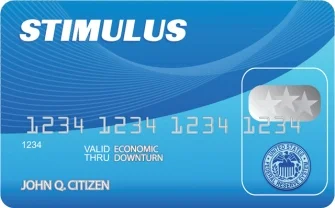
Bill Greider’s piece in The Nation’s blog on Federal Lines of Credit (see “Bill Greider on Federal Lines of Credit: ‘A New Way to Recharge the Economy”) was syndicated to the Detroit Metro Times (the link under the credit card), which in turn sparked a radio interview with Detroit Public Radio.

I listened back to the podcast myself and thought it turned out well. So I recommend it. It is short and sweet.

By way of clarification on Bill Greider’s piece, The Detroit Metro Times posted this note from me. The reply to Mike Konczal that note describes as forthcoming is already out as my post “Preventing Recession-Fighting from Becoming a Political Football.”

You Didn't Build That: America Edition

Before Barack said

Somebody invested in roads and bridges. If you’ve got a business–you didn’t build that. Somebody else made that happen.

with an intonation pattern that was a little confusing given his likely intent, he said this:

Somebody helped to create this unbelievable American system that we have that allowed you to thrive.

It is good to see that discussion of what Barack said has gone beyond “gotcha” to a discussion of deeper philosophical issues. Even Rush Limbaugh has turned philosopher, discussing the underlying issues that Barack raises. (Here is my review.

I am moved by the statement 

Somebody helped to create this unbelievable American system that we have.

Leaving aside the rest of Barack’s speech, there is an important message in this. Those of us alive now didn’t build this unbelievable American system from scratch. Those who have gone before us have handed down to us something precious. I think the right response to that gift is gratitude, a determination to do our part to preserve the wondrous aspects of that system, and a desire to share the benefits of this unbelievable American system with others.

When I say “share the benefits of this unbelievable American system with others,” I mean what I say. And it is something that far transcends the importance of our current debates about taxing and spending policy. It is churlish of us to shut others out from the benefits of this unbelievable American system. The framers of our Constitution and the others who did the most to put together this unbelievable American system had an open attitude toward immigration. And we know that as late as 1883, these words were engraved on a bronze plaque on the Statue of Liberty, where they can still be seen to this day:

The New Colossus

Not like the brazen giant of Greek fame,
With conquering limbs astride from land to land;
Here at our sea-washed, sunset gates shall stand
A mighty woman with a torch, whose flame
Is the imprisoned lightning, and her name
Mother of Exiles. From her beacon-hand
Glows world-wide welcome; her mild eyes command
The air-bridged harbor that twin cities frame.
“Keep, ancient lands, your storied pomp!” cries she
With silent lips. “Give me your tired, your poor,
Your huddled masses yearning to breathe free,
The wretched refuse of your teeming shore.
Send these, the homeless, tempest-tost to me,
I lift my lamp beside the golden door!”

Emma Lazarus, 1883

This is my policy on immigration, as I think it should be the policy of the United States Government and the policy of the People of the United States. We didn’t build this unbelievable American system, and it is not our private property. We don’t have a moral right to exclude other human beings–human beings like us–from the benefits of this unbelievable American system. As stewards of this unbelievable American system, we need to regulate the pace of arrival so that the system itself is not overwhelmed and destroyed, but unless this unbelievable American system itself is threatened, let us open our doors wide to others who have not had the good fortune to be born Americans.

Magic Ingredient 1: More K-12 School

In my book, the two truly wonderful things Barack has done on the domestic front are advancing gay rights (through ending “Don’t Ask, Don’t Tell” and more recently by rhetorical support for gay marriage rights) and advancing education reform through the brilliant work of Arne Duncan as his Secretary of Education.  By dangling a few gigadollars worth of grant money in front of states, Arne has gotten states to fall all over themselves passing education reforms that I would have thought impossible in such a short time–often with buy-in from the teachers unions.  I cheer on this effort and other efforts at education reform.

Although I am in favor of more school choice, including both charter schools and Milton Friedman’s still excellent idea of education vouchers, let me focus in on two aspects of education reform that can be fully implemented within regular public schools: increasing the total amount of schooling kids get in their K-12 years and making sure they are legally qualified to pursue a wide range of careers when they earn a high school diploma.

Sometimes the most important fact in a given area is one so obvious it might not even seem worth saying. I heard one such fact from a top researcher in education at an academic seminar at the University of Michigan’s Survey Research Center: the single most important variable in predicting whether a student will get a test question right is whether that topic was covered in class or not. Students don’t always remember what they were taught. But they never remember something they weren’t taught. More time in school means more things can be taught at least once, and the more important things can even be repeated a few times.

The secret recipe behind the “Knowledge is Power Program” or KIPP schools (which have been very successful even with highly disadvantaged kids) is this:

  1. They motivate students by convincing them they can succeed and have a better life through working hard in school.
  2. They keep order, so the students are not distracted from learning.
  3. They have the students study hard for many long hours, with a long school day, a long school week (some school on Saturdays), and a long school year (school during the Summer).

The KIPP schools also have highly motivated teachers, but that is a topic for another day.

So my first proposal for this post is to go to a 12-month school year, and to extend the school day until at least 5 PM (but with many extracurricular activities and sports being eligible to count as part of the school day, as they do in Japan). Research has shown poor kids and rich kids learn at a somewhat similar rate during the school year, but that poor kids forget a lot during the Summer, while rich kids retain more. So lengthening the school year is especially helpful for poor kids. Lengthening the school year and the school day also effectively provides year-round day care for poor parents who desperately need it. For rich families who are used to being able to go on a summer vacation, I would allow families to make proposals for family or individual activities with educational value that could substitute for some part of school in the summer, and grant permission for these substitutions for summer school relatively liberally for anything that research shows keeps kids academically sharp. The poor kids will think this is unfair, but they simply need the formal schooling more because their parents can’t afford other high-quality educational activities. So keeping them in school during the summer really is doing them a favor.

I won’t try to work out all the details of how the longer school day and school year would work, but I need to address one objection that will spring to many readers minds: extra costs. I don’t want to assume massive new infusions of money into schooling that might never be available. But I think it can be done without major additional costs. The school buildings are there anyway, year round, so the major expense to worry about is teacher salaries. Here I think we could start by having each teacher teach the same number of annual hours as they now do, but staggered throughout the year. (Over time, on a merit basis, some teachers could be allowed to work year round at a commensurately higher salary, to make up for normal attrition.) The margin that would give is that class sizes would go up. Except in Kindergarten, and maybe in 1st grade, higher class sizes have been shown by research to have only a small effect on learning–probably less than a tenth the effect on learning on the minus side that more total school hours for the kids would have on the plus side. We might need to knock out a few walls between classrooms to accommodate these larger class sizes, but it could be done. (Note that the total number of kids in school at any one time would be basically the same as now, so the kids would fit.) Even with these expedients, costs would go up some. For example, the lights would have to be kept on longer. But I think it should be manageable. And the fact that some of the rich kids wouldn’t be there in the summer would either help bring down class sizes for the poor kids then, or allow school districts to save on staffing during the summer.  

Much of the extra schooling time from the longer school day and longer school year would go toward learning the basics better–reading, writing, math–and maybe getting a little extra cultural background that will help students enjoy a wider range of things in their lives. But I want to claim some of the extra time to make sure that the kids are legally qualified to do a wide range of jobs when they finish school. One of the most important drifts of political economy at the state level in the United States has been toward requiring licenses for more and more jobs. Here is what Morris Kleiner and Alan Krueger say in their 2008 National Bureau of Economic Research Working Paper “The Prevalence and Effect of Occupational Licensing”:

We find that in 2006, 29 percent of the workforce was required to hold an occupational license from a government agency … Our multivariate estimates suggest that licensing has about the same quantitative impact on wages as do unions–that is about 15 percent …

Many economists and other observers feel that occupational licensing has gone too far. Here is an interesting Wall Street Journal article:

Dick Carpenter and Lisa Knepper WSJ “Do Barbers Really Need a License?”

And here is an article from what I think is a Libertarian website (“The Library of Economics and Liberty”):

S David Young, “Occupational Licensing”

Others argue that health and safety and basic competence really do require training even for many jobs that sound easy, such as cutting hair or cutting nails. 

What I want to do is to restrain the tendency to go overboard on occupational licensing while allowing genuinely necessary competencies to be transmitted by requiring states to ensure that their schools high school tracks that would make it reasonably possible to be meet the legal qualifications for any of at least 60% of all licensed occupations, with each student able to be qualified with his or her high school diploma for at least 10% of all licensed occupations. Then the graduates might actually be able to get a job. This requirement for getting the Federal education grant could be met by any combination of reducing licensing requirements and increasing effective training that each state chose. I am sure that states would game the rule, so that the overall effect would be less than what this sounds on the surface, but it would be better than the way things are now, where students graduating from high school are kept out of many of the more desirable occupations by occupational licensing restrictions.  

Many schools these days have a program that allows more ambitious students to earn an Associate’s degree (equivalent to two years of college) before their time in publicly-funded high school education runs out. For them, I would add the requirement that states make it possible for ambitious students doing the equivalent of an Associate’s degree to be licensed for any of 50% of medical care jobs. (Being a doctor would still require much, much more training. Note: “any” is not the same as “all.” They would have to do some choosing.) This would not only help these students get jobs, it would help us as a nation to be able to afford the medical care that we want.  

Note that any reduction in occupational licensing restrictions increases the value of having  readily available and accurate quality ratings for services as well as goods. To be honest, in my personal experience, which I think will match that of most of my readers, I have seldom been satisfied with services from the bottom half of those in any occupation. But the stratification into different quality levels should be handled by the market as much as possible (and by government fiat as little as possible), with continually improved web-based ratings mechanisms. High school graduates need entry-level jobs, even though it is hard to be really good at anything at first before accumulating experience, especially for those who would not have been able to get jobs at all without the changes I am advocating.

Let me end by explaining my title. In his recent post “What it to be done now, Jeff Sachs appears to miss the point by a substantial margin,” Brad DeLong lays out his short-run Keynesian program for the economy, and says this about Jeff Sachs’s column:

When I started Jeff’s column, I thought it was going to be an exercise in hippie-punching, along the lines of: “Simplistic Keynesian remedies will not solve our problems. See, I am a Very Serious Person. What will solve our problems is X.” And X would turn out to be simplistic Keynesian remedies plus some magic ingredient Y. That might have been useful. It would have been a call for simplistic Keynesian policies plus magic ingredient Y.

As I discussed in my immediately previous post “Preventing Recession-Fighting from Becoming a Political Football” I am all for more aggregate demand right now, as long as it is achieved in ways that don’t ultimately add too much to the national debt, but what Brad DeLong’s words sparked in me was a desire to come up with “magic ingredient Y” for long run growth and improvement in the economy. Thinking that there might be many magic ingredients that can help in the long run–hopefully more than there are letters in the alphabet, I am going to start off with numbers. Hence, “Magic Ingredient 1: More K-12 School.”

Preventing Recession-Fighting from Becoming a Political Football

Mike Konczal has a recent post “Four Issues with Miles Kimball’s ‘Federal Lines of Credit’ Proposal," announced by this tweet:

New post, where I go feral on@mileskimball, discussing four issues with his “Federal Lines of Credit” policy idea.

Mike’s tweet is the only way I can get a working link to his post. This link may work at some point in the future. Here is Mike’s description of my proposal:

What’s the idea? Under normal fiscal stimulus policy in a recession, we often send people checks so that they’ll spend money and boost aggregate demand. Let’s say we are going to, as a result of this current recession, send everyone $200. Kimball writes, "What if instead of giving each taxpayer a $200 tax rebate, each taxpayer is mailed a government-issued credit card with a $2,000 line of credit?” What’s the advantage here, especially over, say, giving people $2,000? “[B]ecause taxpayers have to pay back whatever they borrow in their monthly withholding taxes, the cost to the government in the end—and therefore the ultimate addition to the national debt—should be smaller. Since the main thing holding back the size of fiscal stimulus in our current situation has been concerns about adding to the national debt, getting more stimulus per dollar added to the national debt is getting more bang for the buck.”

Mike has some praise and four Roman numerals worth of objections. I promised a detailed answer. Other than the comment threads after each post, this is only the second time I have had a serious online criticism of one of my posts, and I will try to accomplish the same sort of thing I tried to accomplish in my answer to the first serious criticism I received from Stephen Williamson: to answer the criticism point by point while at the same time making some important points worth making even aside from this dustup with Mike. The main point I want to make uses the phrases “fiscal policy” and  "stabilization policy,“ which can be given the following rough-and-ready definition:

Fiscal policy: government policy on taxing and spending

Stabilization policy: loosely, recession-fighting (in times of recession) and inflation-fighting (in times of boom).  

More precise definitions of stabilization policy inevitably involve the details of exactly what should be done and when, which are sometimes under dispute; this definition will serve for now. Here is the main point I want to make in this post:

Long-run fiscal policy is unavoidably political, since it involves the tradeoff between the benefits of redistribution and the benefits of low tax rates, but stabilization policy can and should be kept relatively apolitical. The politicization of stabilization policy in the last few years is an unfortunate, and fundamentally unnecessary, turn of events.  

By avoiding big changes in taxes or spending, I hope my Federal Lines of Credit proposal can help to depoliticize stabilization policy. 

The reason a discussion of the politicization of stabilization policy belongs in a reply to Mike Konczal is that my simple summary of his objections to my Federal Lines of Credit proposal of government-issued credit cards to stimulate the economy is that my proposal does not do enough to redistribute toward the poor. Now my views on redistribution are no secret. As I said in my first post, "What is a Supply-Side Liberal,” redistribution is good. In my post “Rich, Poor and Middle-Class,” I made a stronger statement, focusing on helping the poor, which is the important part of redistribution:

I am deeply concerned about the poor, because they are truly suffering, even with what safety net exists. Helping them is one of our highest ethical obligations.

The other type of redistribution, which is more controversial (because the redistributive benefit is smaller and the economic efficiency cost is higher) is taxing the rich in order to help the middle class. Given the fact that redistribution needs to be financed by taxes or by deficit spending, Republicans and Democrats differ substantially on how much redistribution they think should be done of either type. As a result, the political fights over long-run taxing and spending policy are often bitter. My fervent hope is to find ways to avoid having the the blood that is spilled over long-run taxing and spending policy from infecting short-run stabilization policy, which by rights should be less controversial especially in a recession, since recessions are bad for almost everyone. It is a little harder to say that inflation is bad for almost everyone, since inflation benefits debtors at the expense of creditors, but few people on either side of the political divide advocate high inflation as a way to wipe out debts, and most of the other effects of inflation higher than a few percent per year are bad for everyone.

What has made stabilization policy a political football in the last few years is the fact that the Federal Reserve is maxed out on its favorite recession-fighting tool of lowering short-term interest rates. Because currency effectively earns an interest rate of zero, no one is willing to lend money at an interest rate much below zero, so zero is about as low as the Fed can go. In my answer to the first serious criticism I received from Stephen Williamson, I argue that the Fed can still do a lot more to stimulate the economy even when the nominal interest rate is already down to zero, but the Fed has been reluctant to use unfamiliar tools to the full extent possible. And the size of the necessary changes to the Fed’s balance sheet are enough to scare many people (in a way that I argue is unwarranted in my third, and to this date, most-viewed post “Balance Sheet Monetary Policy.”) Indeed, the Fed has become a political target not only because of its sadly necessary role in saving the economy by bailing out big banks, but also because even the Fed’s half-measures have involved big enough changes in the Fed’s balance sheet to scare many people.  

Besides monetary policy, the traditional remedies in stabilization policy have to do with taxing and spending. In particular, the traditional remedies for a recession other than monetary stimulus are tax cuts and spending increases. It is easy to see the problem. Since taxes and spending are also the center of the political debate about long-run policy, any use of taxes or spending to fight recessions arouses justifiable suspicion that the other side will use recession-fighting as an excuse to advance its long-run agenda: for Republicans, lowering taxes in the long run, for Democrats, increasing the amount of redistribution in the long run. 

By contrast, since monetary policy does not touch on what in recent history are the core political debates about taxing and spending, for at least the 30 years from mid 1988 to mid 2008 (when the financial crisis and the Great Recession threw things for a loop) political controversies over monetary policy have been relatively esoteric–not the sorts of things that move the average voter in either party.  

In crafting my Federal Lines of Credit proposal, one of my key objectives was to find a new way of fighting recessions that, like monetary policy in normal times, would be fully acceptable to both political parties. The U.S. economy and the world economy are in trouble, and it is important that politics not get in the way of what needs to be done. So I am pleased to have Mike Konczal say of my proposal “This has gotten interest across the political spectrum.”  The proposal itself is described in my second post “Getting the Biggest Bang for the Buck in Fiscal Policy,” and my recent post “Bill Greider on Federal Lines of Credit: 'A New Way to Recharge the Economy’” is a good way to catch up on the discussion about Federal Lines of Credit since then.   

Now let me turn to Mike’s four issues:

I. Isn’t deleveraging the issue? Is this a solution looking for a problem? From the policy description, you’d think that a big is credit access holding the economy in check.

But taking a look at the latest Federal Reserve credit market growth by sector, you can see that credit demand has collapsed in this recession.

I actually think that credit access has gone down. For example it is a lot harder getting home-equity lines of credit these days than it used to be, even for those whose houses are worth a lot more than their mortgages. But Mike is right that many people are scared enough about the economy that they are trying to pay down their credit card debt. The key point here is that what makes sense from an individual point of view in time of recession–reducing household spending–makes things worse for all of us by reducing the amount of business that firms get and therefore how many workers feel they can hire. So to help out the macroeconomic situation, we want people to lean toward spending more than they otherwise would. Giving every taxpayer access to a federal line of credit at a reasonable interest rate and reasonable terms (say 6%, paid off over 10 years) would cause at least some people to spend more, which is what we want in order to stimulate the economy.

II. This policy is like giving a Rorschach test to a vigilante. No, not that vigilante. I mean the bond vigilantes.

Mike’s point here is that, although in the long-run, people will have to pay back the money they borrowed from the government on their Federal Lines of Credit, the government is out the money in the meantime, and this might add to the official deficit and national debt numbers. So if the folks in the bond market are not smart enough to look past the surface of the deficit and national debt numbers, they might cause long-term interest rates to go up. Here, my answer is simple: the folks in the bond markets are very, very smart. They know the difference between the government being out money forever (as it would be if it used a tax rebate) and the government making loans that will be repaid, say, 90% of the time. As evidence that the “bond vigilantes” look at more than the official debt to GDP ratios, take a look at this list of debt to GDP ratios. (I am using the International Monetary Fund’s numbers from this table, rounded off to the nearest percent. If there are more recent numbers, I am confident they will show the same thing.) Here are the examples that make my point:

Spain: 69%

Germany: 82%

United States: 103%

Japan: 230%

It is right to worry about the future, but currently, Spain is in trouble with the bond vigilantes, while the world is eager to lend money to Germany, the United States and Japan. (See my post “What to Do When the World Desperately Wants to Lend Us Money” about what this eagerness of the world to lend to the U.S. means for U.S. policy from a wonkish point of view that ignores political difficulties.) The reason Spain is in trouble with the bond vigilantes is that the Spanish government is seen to be on the hook for the much of the debts of Spanish banks; this bank debt that may become Spanish government debt sometime in the future does not show up in the official debt to GDP figures, but the bond vigilantes know all about it.  On the other end, one reason that the bond vigilantes are still willing to lend money to Japan at low interest rates is that they know Japanese households do a lot of saving and don’t like to put their money abroad, so a lot of that saving makes its ways into Japanese government bonds, either directly or indirectly.

III. This policy will involve trying to get blood from a turnip. I very much distrust it when economists waive away bankruptcy protection. Especially for experimental, controversial debts that have never been tried in known human history.

As the paper admits, this is a machine for generating adverse selection, as the people most likely to use it are people whose credit access is cut due to the recession. High-risk users will likely transfer their balances from higher rate credit cards to their FOLC (either explicitly or implicitly over time if barred) - transferring a nice chunk of credit risk from the financial industry to taxpayers.

It’s also not clear what happens a few years later when consumers start to pay off the FOLC. Could that trigger another recession, especially if the creditor (the United States) doesn’t increase spending to compensate?

The issue isn’t whether or not the government will be able to collect these debts at some point. It has a long time-horizon, the ability to jail debtors and use bail to pay debts, the ability to seize income, old-age pensions and a wide variety of income, and the more general ability to deploy its monopoly on violence. The question is whether this will be smoother, easier, and more predictable than just collecting the money in taxes. We have a really smooth system for collecting taxes, one at least as good as whatever debt collection agencies are out there. If that is the case, there’s no reason to believe that this will satisfy the bond vigilantes or bring down our debt-to-GDP ratio in a more satisfactory way.

Mike actually raises several issues here. Let me be clear that I am not proposing jailing debtors! I am imagining something like the current system we have for student loans directly from the Federal government. These loans cannot be wiped away by bankruptcy, but no one is jailing former students who can’t pay what they owe on their student loans. When I supposed above that (including interest–I am thinking in present values) only 90% of the money would be repaid, the other 10% is money that the government ultimately gives up on trying to collect because some people can’t pay. To avoid any possible abuses, I think it would be a good idea to specify in the law authorizing Federal Lines of Credit that people’s debts under the program could never be sold to an outside collection agency: only official government employees would be allowed to make collection efforts. Worry about a political firestorm would prevent the government from doing the kinds of things the private collection agencies sometimes do. Almost all repayment would be through payroll deduction from people who are drawing a paycheck, with perhaps some repayment through small deductions from government transfers people receive when those government transfers are above a minimum level. 

Is an expected loan-loss rate of 10% too much? Then it is easy to modify the program to reduce the loan-loss rate without reducing its effectiveness in recession-fighting by allowing those with higher incomes to borrow more and restricting the size of the lines of credit for those with lower incomes.  For those worried about issues with Federal Lines of Credit like those Mike is raising, I strongly recommend reading my relatively accessible academic paper on the proposal: “Getting the Biggest Bang for the Buck in Fiscal Policy.” But now I am going to give you fair warning about what “relatively accessible” means by quoting the somewhat recondite way that I make this point in the paper:

One of the main factors in the level of de facto loan losses would be the extent to which the size of the lines of credit goes up with income. Despite the reduction in additional aggregate demand per headline size of the program that might be occasioned by conditioning on income, de facto loan losses would probably decline by a greater proportion, meaning that conditioning on income might improve the ratio of extra consumption to budgetary cost. Certainly, having the line of credit go up with income might reduce the level of implicit redistribution, which is a consideration I will not try to address here. 

To translate, if we give rich taxpayers bigger lines of credit than poor taxpayers, we will probably get even more bang-for-the-buck from the program–in the sense that there will be more stimulus for each dollar ultimately added to the national debt after most repayment has happened.

I will confess that the only reason I didn’t make this kind of dependence of the size of the line of credit on income the benchmark version of the proposal is that I wanted to sneak in a little income redistribution into the program. But if next year we have a Republican Congress and a Republican President (now trading at a 30% probability on Intrade), stimulating the economy is important enough that it is still a very good thing to do the Federal Line of Credit program with less redistribution than I had in the benchmark version of the proposal, which gives the same-size line of credit to each taxpayer. On the other hand, if next year we have a Democratic Congress and a Democratic President (now trading at a 7.5% probability on Intrade), stimulating the economy is important enough that it is still a very good thing to do the Federal Line of Credit program with lines of credit of the same size not only for every taxpayer but also for non taxpaying adults and to let the debts be extinguished in bankruptcy. Federal Lines of Credit would still give us more bang-for-the-buck than other types of fiscal stimulus that a Democratic Congress and Democratic President might turn to, and regardless of what happens politically, the United States government does have to worry about the bond vigilantes down the road whenever it adds to the national debt in a long-run way. In what I consider the most likely case of divided government, where out of the presidency, the Senate and the House of Representatives, each party holds at least one (now trading at a 62.5% probability on Intrade if one includes the 4.5% probability of “other,” which presumably covers the case when the control of one house of congress depends on how the few independents vote), something in between–perhaps not too far from my benchmark proposal–seems to me what would be politically feasible. 

In the passage I quoted from Mike labeled as his issue III, he also worries about whether the repayment of the loans would cause a recession later on. I have thought that stretching out repayment over 10 years would be enough to avoid this problem, but I view this an issue for the experts. If, as I prefer (see my post “Bill Greider on Federal Lines of Credit: 'A New Way to Recharge the Economy’”), the Federal Reserve determines many of the details of the Federal Lines of Credit Program, I trust the staff of the Federal Reserve Board and the Federal Reserve Banks to come up with a better answer on the appropriate length of time for loan repayment than either Mike or I could.

Finally, we come to Mike’s fourth and last issue, which motivated my discussion above about the value of separating long-run fiscal issues from short-run stabilization policy, so that recession-fighting doesn’t become a political football. What Mike writes to explain his fourth issue is long enough that I will intersperse some comments along the way. From here on, everything in block quotes reproduces Mike’s words. 

IV.Since we’ve very quickly gotten to the idea that we’ll need to jettison legal protections under bankruptcy for this plan to work, it is important to emphasize that this policy is the opposite of social insurance.

As I said above, I am not advocating jailing debtors. I don’t see the fact that student loans are not expunged in bankruptcy as a massive social injustice that causes huge problems; if it is, it would meant that it is a travesty that the Obama administration is only proposing having private student loans wiped away by bankruptcy while leaving public student loans from the government untouched by bankruptcy. I am sure some people think that, and would not be surprised if that is Mike’s view, but I don’t think the average voter would take that view, nor do I criticize the Obama administration for not being willing to go far enough and have all student loans expunged in bankruptcy. 

I don’t see a macroeconomic difference between the government borrowing 3 percent of GDP and giving it away and collecting it through taxes later versus the government borrowing 3 percent of GDP, loaning it to individuals, and collecting it later through debt collectors except in the efficiency and the distribution.

This passage is well-designed to underemphasize the fact that the way in which, say, “3 percent of GDP” is given away is redistributive. Indeed, to the extent that asking everyone to pay the same amount is regressive, giving everyone the same amount as in my benchmark proposal has to count as anti-regressive. There is no question that giving away 3 percent of GDP and collecting it later through progressive taxes would bemore redistributive. Overall, my program is fairly neutral as far as redistribution goes, though as I confessed, I snuck a little redistribution into my benchmark proposal because those with higher incomes would likely repay a bigger fraction of the borrowed money than those with higher incomes.  

The distributional consequences of this proposal aren’t addressed, but they are quite radical. Normally taxes in this country are progressive. Some people call for a flat tax. This proposal would be the equivalent of the most regressive taxation, a head tax. And it also undermines the whole idea of social insurance.

Mike seems to be claiming that the Federal Lines of Credit program overall is regressive. I just don’t see this. Is the government’s student loan program regressive? Just because a program could be made more redistributive than it is, does not mean that on the whole it is regressive.  

Let’s assume the poorest would be the people most likely to use this to boost or maintain their spending. I think that’s largely fair - certainly the top 10 percent are less likely to use this (they’ll prefer to use high-end credit cards that give them money back). This means that as the bottom 50 percent of Americans borrow and pay it off themselves, they would bear all the burden for macroeconomic stability through fiscal policy. Given that the top 1 percent captured 93 percent of the income growth in the first year of this recovery, that’s a pretty major transfer of wealth. One nice thing about tax policy, especially progressive tax policy, is that those who benefit the most from the economy provide more of the resources. This would be the opposite of that, especially in the context of a “"relatively-quickly-phased-in austerity program.”

Let me say quickly that my mention of “austerity” was in the European context, where paying what the bond market demands without a full-scale bailout from a reluctant Germany requires austerity. I made no mention of “austerity” for the U.S., nor do I think “austerity” will be necessary for the U.S., if we follow the kinds of proposals I recommend.

Going back up to the top of this block quote from Mike, again, saying that the bottom 50 percent of Americans “would bear all the burden for macroeconomic stability” ignores the fact that they were able to borrow and use the money when they really needed it during hard economic times. The only way in which this could be a burden is if loaning money on relatively favorable terms (again, say at 6% for 10 years) is an unkind temptation to people who have trouble stopping themselves from spending more now than they should.  I worried about this, which is why I proposed that, by the time the next recession rolls around, we have National Rainy Day Accounts set up that allow people to spend in recessions or during documentable personal financial emergencies money that they have saved up previously. Now requiring someone to save money for later emergencies they might face, and encouraging them to spend some of that money in a national emergency such as a future recession may indeed be a burden. But it is hard for me to see how both proposals–letting people borrow on favorable terms from Federal Lines of Credit and requiring people to save in National Rainy Day Accounts–can be a burden. The only way that allowing people to borrow on favorable terms can be a burden is if they have trouble saving as much as they should, in which case setting up a structure to help them save will help them out. And Mike agrees that “There’s a lot to like about the proposal [Federal Lines of Credit], particularly how it could be used after a recession is over to provide high-quality government services to the under-banked or those who find financial services yet another way in which it is expensive to be poor …" On a more negative note, Mike continues as follows in the text of his fourth issue:

Efficiency is also relevant - as the economy grows, the debt-to-GDP ratio declines, making the debt easier to bear. The most likely borrowers under FOLC [sic], the bottom 50 percent, have seen stagnant or declining wages overall, especially in recessions. A growing economy would keep their wages from falling in the medium term, but this is still a problematic issue - their income is not more likely to grow to balance out the payment burdens than if we did this at a national level, like normal tax policy.

The policy also ignores social insurance’s role in macroeconomic stability, and that’s insurance against low incomes. Making sure incomes don’t fall below a certain threshold when times are tough makes good macroeconomic sense and also happens to be quite humane. This is not that. As friend-of-the-blog JW Mason said, when discussing this proposal, the FOLC [sic] is like "if your fire insurance simply consisted of a right to borrow money to rebuild your house if it burned down.”

Here again, I take Mike’s point that it would be easy to do more redistribution than the modest amount of redistribution in the Federal Lines of Credit proposal as I lay it out. But I view redistribution as the province of long-run fiscal policy (in the broadest sense). Trying to use recession-fighting as a way to also do more redistribution is a recipe for making recession-fighting a political football. If recession-fighting becomes a political football, as it has to an unfortunate extent in the last few years, the recession (or the long tail of unemployment that follows what are officially called “recessions”) wins. And bad economic times are especially hard on those at the bottom of the income distribution. So they can least afford to have recession-fighting become a political football. My hope is that Federal Lines of Credit will make it possible to stimulate the economy when necessary in a way that avoids major changes in taxing and spending that would set off alarms for one or another of the two warring parties in the political debate.

What to Do About a House Price Boom

Matthew Yglesias asks in his post today what a country is supposed to do about a housing boom:

Ever since American house prices started declining, people who predicted that this would happen have been crowing and slagging policy elites who failed to see it coming. I think in some ways the better question is what are you supposed to do about these situations?

He goes on to point out that this is a relevant question for Norway and Canada now:

Right now everyone seems to agree that Norway is experiencing an unsustainable house price boom. You may have recently heard the factoid that Canadian household wealth is now higher than U.S. household wealth, but this too certainly looks like an unsustainable house price boom.

I don’t know enough about Norwegian and Canadian institutions to have a well-informed answer for them (though I hope what I say will be useful), but with the benefit of a time machine, there are three good answers for the United States.

First, the mortgage interest deduction is unfortunate in any case, since it tilts people toward borrowing over saving. What may be worse, it tilts our economy towards building more houses and fewer factories, when we should be tilting things the other way. Almost all of the benefit of a house goes to the owner. By contrast, a factory not only benefits its owner with a stream of rentals on that factory (often called profits), but also employs people which benefits those workers in a way not captured by the owner of the factory. So if there were equal tax treatment of factories and houses, there would still be too few factories. The mortgage interest deduction skews the balance further in the direction of houses, soaking up some of the construction resources that could otherwise have gone to building factories that employ people not only in the process of being built but even after they are built.   

So the mortgage interest deduction is unfortunate. But a time like now when falling house prices continue to drag our economy down is not a good time to lower house prices further by phasing out the mortgage interest deduction. On the other hand, a boom in house prices provides a golden opportunity to reduce the mortgage interest deduction, especially if you catch the boom early, so that stopping it doesn’t result in a big crash.  

Second,if we could go back in time and do things right, surely we would restrict low-downpayment mortgage loans as a way of reining in booming house prices and minimizing the likely damage in any subsequent period of declining house prices.

Third, if we could go back in time and do things right, I hope we would adopt regulations to encourage risk sharing in home prices, as recommended by Andrew Caplin here and by Robert Shiller in his new book Finance and the Good Society.  A big reason for our current troubles is that homeowners bore the full brunt of the declines in house prices, up to the point of foreclosure. With risk sharing, other investors would take some of these losses, and of course to make that worth their while, they have to know they will share in some of the gains when house prices go up, or be paid some sort of insurance premium. The government can help. Currently, IRS regulations effectively discourage home price risk sharing contracts of the sort that Andrew Caplin recommends. And the kind of adjustment of the principal of mortgages according to what happens to home price indexes that Robert Shiller recommends (and indeed, helped start the Case-Shiller home price index in order to someday make possible), would be a big change in the customs of the real estate markets that could be speeded along greatly by regulations that encouraged such provisions. 

In short, there are many things worth doing if one sees a house price bubble starting up. And the encouragement of risk-sharing in house prices is not just something we should have done, it is something that the U.S. should be working on now, to prevent problems in the future. There is no law of nature that says that homeowners need to suffer from regional or even national house price declines any more than people whose houses burn down should be left without a house or a family whose breadwinner dies should be left financially bereft. This is avoidable suffering. We should have insurance for house prices just as we have fire insurance and life insurance. And though private industry can handle house price insurance just fine once house price insurance gets going (with the same kind of government oversight we have for other types of insurance), we’ll get house price insurance a lot sooner if the government lends an extra hand at the beginning.

Dr. Smith and the Asset Bubble

I sometimes hear professors (including myself) bemoan our lack of power. Then I remind them that we have the amazing power to mint A’s–a power many undergraduates would love to have. It is just that in an institution well-constructed to minimize self-interested decisions, one doesn’t get to have the power one really wants, say the power to set one’s own salary –but some other power, such as the burdensome power and duty to assign grades.

Another–but this time totally welcome–power that professors often have is to grant Ph.D.’s.  20 hours ago, after Noah’s dissertation defense, Bob Barsky (sadly for me, now of the Chicago Federal Reserve Bank), Yusufcan Masatlioglu, Uday Rajan and I drew up the documents that will grant Noah Smith his Ph.D.  

As has been the tradition in economics at least since I was in graduate school a quarter century ago, Noah’s dissertation has three chapters, each of which it is hoped will, within a few years (after the usual many rounds of revisions demanded by editors and the referees they enlist) become an article in an economics journal. Noah’s first two chapters are on asset bubbles–rapid, and somewhat mysterious, rises and then falls of the price of some asset, such as the rise and fall of internet stock prices around the turn of the millennium and the more recent rapid rise and fall of home prices. Noah describes the research in his first chapter and job market paper “Individual Trader Behavior in Experimental Asset Markets” in his post “What are asset bubbles and why do they happen?” The remarkable thing in “the literature” (the array of academic papers) on asset price bubbles that Noah adds to is that asset price bubbles happen even in the laboratory of a stock trading game with real people in which everyone is told exactly how the payouts of a “stock” are determined, say by flipping a coin to determine whether the “dividend” is 10 cents or zero each turn. So it is almost inevitable that asset bubbles will happen in the real world, which is a lot harder to figure out. To some, this may seem an obvious point, but a large share of opinions that economists give about the financial markets are based on intuition from theoretical models in which asset bubbles never, ever occur, because the “agents” in the models–who are intended as stand-ins for real people–are too smart.

Let me be clear. Studying models of financial markets in which agents are too smart for asset bubbles to ever occur is a worthy, and even at times noble, endeavor. But when it comes to real-world policy decisions, economists need to bring to bear everything we know about the world, even things that we have had a tough time analyzing in formal economic models. And we need to keep in mind especially those facts about the world that remind us of our own ignorance.  When I took a first-year macro class in graduate school from Larry Summers, Larry had a practice of presenting a model and then promptly proceeding to tear it down. I went up after class to complain that this was very discouraging. Larry Summers said something I have never forgotten: “It isn’t easy to figure out how the world works."  Larry Summer’s maxim

It isn’t easy to figure out how the world works

is an excellent mantra for an economist to repeat to himself or herself several times before giving policy advice.

The reason it is nevertheless OK to study models that leave out important facts about the world is that as economists, we need to walk before we can run, and models in which the agents are very smart are a lot easier to analyze than more realistic models in which some agents are very smart and others do strange, not-so-smart things. (I was tempted to put in the word "suboptimal” in place of “not-so smart.” “Suboptimal” is a word economists use for an action that is not the best action one could be taking from the standpoint of one’s own objectives.) Brad Delong, Andrei Shleifer, Larry Summers and Robert Waldmann published a more realistic model like this in 1991 that was a huge advance. But it is a baby model of this type compared to the complexity of the real world. 

One reason that (although often forgivable in an academic paper), assuming people are smart enough to avoid bubbles is at violence with reality is that, as Noah’s research shows, it is not enough for each trader to understand asset payouts herself or himself. The suspicion that other traders don't understand can lead to speculative trading. Also, Noah argues that people can understand what is going on one minute, but then doubt themselves the next minute when they see asset prices that suggest other people don’t agree. All the changes to experimental setups that are known to do the most to extinguish asset bubbles have one common property: they not only help each trader to act in a smarter way, they also help make each trader believe that other traders will act in a smarter way. Here are some examples:

  1. Running the asset market over and over from the beginning with the same set of traders. (See Vernon Smith, Gerry Suchanek and Arlington Williams.)
  2. Calling the “stock” a “stock in a depletable gold mine,” which helps people understand that the total amount of payouts left will go down as the game draws to a close. (This comes from an unpublished working paper “Thar she bursts–a critical investigation of bubble experiments” by Michael Kirchler, Jurgen Huber and Thomas Stockl.) 

A similar point can be made in relation to Noah’s second paper on asset bubbles in the lab: “Private Information and Overconfidence in Experimental Asset Markets.” This paper documents that investors not only trade on their own inside information, but also make trades with other investors who have insideinformation. (Noah’s research also shows that the amount of such trading is not closely related to existing measures of overconfidence. It isn’t easy to figure out how the world works.) In theoretical models, the super-intelligent agents realize that anyone who wants to trade with you should be looked at with suspicion: “What does he or she know that I don’t?” And in fact, the insight that you should wonder what the other guy knows that you don’t is important. Let me quote Noah’s comments on the intriguing paper “Are investors really willing to disagree: an experimental investigation of how disagreement and attention to disagreement affect trading behavior” by Jeffrey Hales:

Finally, a very interesting experiment by Hales (2009) investigates the closely related question of whether traders “agree to disagree” about the value of an asset. In his experiment, subjects trade in pairs and receive private signals about asset value. Hales finds that whether traders are prompted to consider the adverse selection problem has a strong effect on whether trade occurs. When traders are asked to guess the difference between their own signal and the signal of the other trader, trade tends not to occur; however, without such prompting, trade does tend to occur. This result suggests that over-reliance on private information is not due to traders “agreeing to disagree,” but simply to their failure to consider the fact that others have information that may disagree with their own. [Emphasis added.]

This intervention (asking people to focus on the difference between their signal and the signal of the other trader), like interventions 1 (repeating the game) and 2 (calling the stock a stock in a depletable gold mine) above, gains a lot of its power from changing what each trader visualizes is going on in the heads of the other traders.

Noah’s third chapter is joint work with Bob Barsky and me: “Affect and Expectations.” (It is common for dissertations in economics to include one out of three chapters that is joint work with advisors.) This paper shows that it is misnomer to call consumer confidence indexes measures of “consumer sentiment,” if by “sentiment” one means something emotional. (To back up the idea that people really do call it “consumer sentiment” see for example the title of the wikipedia article on the University of Michigan Consumer Sentiment Index.) For a variety of purposes, I had arranged to have the University of Michigan Surveys of Consumers collect data on happiness from the people surveyed. Noah and Bob and I analyzed how movements in happiness compared to movements in expectations about the economy. We could measure a relationship, but it was very small. So movements in consumer confidence are not primarily about fluctuations in happiness. And it is hard to think of many emotions that don’t show up as having some effect on happiness, so it would not be easy to defend the idea that some other emotion is the primary mover of consumer confidence. People’s confidence in the economy does go up and down in a big way. But something that doesn’t show up in happiness movements–and so something that is probably not emotional in the usual sense–is the primary cause of fluctuations in consumer confidence.

It isn’t easy to figure out how the world works.  (Larry Summers, 1984.)


Update: Ever since I wrote this post I have been wracking my brain trying to remember whether Larry Summers told me “It isn’t easy to understand how the world works” as in an earlier version of this post, or “It isn’t easy to figure out how the world works.” At first, I dismissed “figure out” because that is a favorite phrase of mine and I feared I had substituted that into my memory. But I keep coming back to “figure out.” And it occurred to me that maybe one of the reasons I like “figure out” may be precisely Larry Summers using it in this context. In any case I have decided to edit the repeated quotation to the “figure out” form. If anyone knows from Larry’s speech patterns which he would have been more likely to say, let me know.  

By the way, this is a good place to let readers know that I have enough of a random, patchwork, perfectionistic impulse that I routinely allow myself silent edits in my blog posts without an update notification. I am not running for office, I am not on trial, and I already have tenure, so I don’t have to play the game of “gotcha.” In my case, it is my words that matter, not me, and the words that matter are the ones I am willing to stand behind in the end.

But in this case, the “It isn’t easy to understand how the world works” version of the quotation has already gone out into the world and even become the title of a blog post by Kevin Grier–“Angus” at Kids Prefer Cheese, so I feel I need to clearly signal this particular update.  On other occasions, clearly signaling an update helps to drive home the overall point of a post. And if I ever write on some other website, I will follow the norms there.

Adam Ozimek on Worker Voice

I love Adam Ozimek’s post “How to Improve Working Conditions” It encapsulates very well what I think Adam and I both learned from the work of Harvard Professor Richard Freeman–especially his influential book What Do Unions Do? Richard Freeman says that unions have two effects:

  1. Unions raise wages and benefits above what the workers in the union would otherwise get, which is much like a tax on a firm hiring workers and causes similar distortions. (The main difference from a tax is that the workers get the money from the “employment tax” instead of the government.)
  2. Unions communicate to firms the details of what workers want (and gather information from the workers in the union to be able to do this), often identifying ways to make workers better off that are worth more to the workers than they cost the firm, so that they increase the total size of the pie to be divided between workers and the firm.

Number 2 is the “worker voice” that Adam praises.

The simple bottom line on unions is this:

Raising wages or benefits and so making it harder for people to get jobs, bad. Making life better for workers in common-sense ways, good.

We can have the good, worker voice, without the bad, a worker-imposed employment tax that reduces employment and output, by adopting Adam’s proposal of encouraging worker associations as opposed to traditional unions. Workers need an organization that can speak for them. But they don’t need traditional unions that hurt the economy by grabbing for a bigger share in the short run.

Paul Romer's Reply and a Save-the-World Tweet

I sent an email to Paul Romer to let him know about my post giving kudos to his idea of Charter Cities. Here is his reply, which I share with you with his permission. (Note: Paul’s links, unlike mine, stay in the same window, so use the backarrow to return instead of closing the window.) 

Miles, good to hear from you. Thanks for the kind words. 

Surprisingly to me, soon after I gave this talk, I was approached by people from the government in Honduras, which has taken many steps toward implementing a version of this idea. 

See for example, 

“Hong Kong in Honduras” in The Economist

“Who Wants to Buy Honduras?” in the New York Times

Readers who want more information could check out 

chartercities.org

Cheers, Paul

I believe in Charter Cities.

I think many of you will feel the way I feel about Paul Romer’s Charter City idea, too, if you take 19 minutes to watch 

this video of Paul Romer’s TED talk.

 If I am right and you do agree with me on this, let me ask you to engage in a bit of activism with me:

Here is a link to my first save-the-world tweet in what I want to propose as the supplysideliberal community’s first save-the-world tweet campaign: Charter Cities.

If you retweet this save-the-world tweet, together we might be able to get a snowball of tweets in favor of Charter Cities going that will let a lot many more people know about this idea that could change the world. 

To help get things started, I have temporarily put a link labeled “Learn about our save-the-world campaign for Charter Cities” at the top of my sidebar links. It redirects to this post.

Miles Kimball and Brad DeLong Discuss Wallace Neutrality and Principles of Macroeconomics Textbooks

Brad and I had a very interesting Twitter discussion last night that I have storified here at this link.

Let me provide a glossary for this discussion, in order of appearance terms that might be less familiar to some readers. But having written what is below, it is clear to me that it is more than a glossary. It has my most careful explanation yet in this blog of many key concepts. So it is worth reading even if you know what all of the terms mean.

  1. IS-LM: The standard model of macroeconomics as taught in most undergraduate macroeconomics textbooks that many economists believe is a reasonable description of what causes business cycles despite the fact that it is hard work to get IS-LM-like results from economic models at the research frontier. IS stands for “combinations of output and interest rates where investment equals saving.” LM stands for “combinations of output and interest rates where liquidity demand for money L equals supply of money M." 

  2. grok: to understand. Here is the wikipedia definition of grok. Brad’s use of grok from Robert Heinlein’s book Stranger in a Strange Land references our shared interest in science fiction.  Brad’s posting of this on his blog gives some evidence of his interest in science fiction. 

  3. ZLB: The "zero lower bound” on the nominal interest rate. That is, the fact that interest rates can’t go significantly below zero.  (“Nominal” just means interest rates the way non-economists talk about them, as contrasted with the “real” or “inflation-adjusted” interest rates beloved of economists.) Why can’t the interest rate go much below zero? Because anyone can earn an interest rate of zero by burying cash in the back yard or hiding it in their mattress, so no one is willing to buy a bond that pays much below zero. People might buy a bond that pays a little below zero simply because it is more convenient than burying currency in the backyard, but they won’t accept an interest rate much below zero. The zero lower bound on the nominal interest rate is a problem for monetary policy since the Fed usually stimulates the economy by lowering short-term interest rates, which have recently been very close to the lower bound of zero.

  4. AD: Aggregate demand, or the amount of spending people will do at a given price level. In models where prices adjust instantly to any change in the macroeconomic situation, aggregate demand is not very important; it only affects the price level and not much else. But in models that have sticky prices (any form of slow adjustment of the price level to new situations) aggregate demand governs the size of GDP in the period of time before prices adjust. Background: both Brad and I believe that in the real world, prices adjust only slowly to changes in the macroeconomic situation.

  5. Keynesian model: In this context a component of IS-LM: what happens when not only the price level, but also interest rates are held constant. The reason that the zero lower bound (ZLB) is relevant here is that being pressed down against the floor of zero by the Fed is a reason why the interest rate might in fact stay constant in the face of a wide range of changes in the macroeconomic situation. In other contexts “the Keynesian model” might be a synonym for “IS-LM.

  6. 20-yr T < 0: Brad is saying that the inflation-adjusted (real) interest rate on 20-year Treasury bonds is now less than zero. In other words, if you buy 20-year Treasury bonds right now, what you earn will probably fall behind inflation. There is an ongoing discussion in the blogosphere about what the low interest rates on long-term Treasury bonds means for economic policy. See my post "What to Do When the World Desperately Wants to Lend Us Money.” In his tweet, Brad is simply pointing out how close to zero a wide range of interest rates paid by the U.S. government are right now. The implication is that the zero lower bound is starting to look relevant for long-term interest rates paid by the U.S. government as well as short-term interest rates paid by the U.S. government.  

  7. Wallace neutrality: In reference to either an economic model or to reality, Wallace neutrality is the statement that monetary policy can affect the economy in an important way if it the monetary policy action changes the path of current and future short-term interest rates paid by the government. Although Ben Bernanke does not believe that Wallace neutrality applies to the real world, the influence of Wallace neutrality thinking on the Fed is clear from the emphasis the Fed has put on telling the world what it is going to do with interest rates in the future.  When the economy is at the zero lower bound, Wallace neutrality in the real world would mean that the only way the Fed could stimulate the economy now would be by promising to overheat the economy in the future, as I discuss in my post “Should the Fed Promise to Do the Wrong Thing in the Future to Have the Right Effect Now?” I have a series of other posts also discussing Wallace neutrality. In fact, essentially all of my posts listed under Monetary Policy in the June+ 2012 Table of Contents are about Wallace neutrality. 

  8. Noise traders: People who not only fail to make the best possible investment decisions for themselves but alsomake their mistakes in big enough herds that they move markets, changing the prices of stocks, bonds and other assets. (Note: Investors can make mistakes in herds for many reasons, not just what is called “herding behavior” in the economics literature.) The name “noise traders” suggest herds of investors who move markets by their actions, but herds of investors can also move markets by inaction in the fact of government actions. In models, Wallace neutrality arises from investors responding in highly intelligent ways to actions of the government that cancel out the effects of the government’s actions.

  9. OLG: Having to do with “overlapping-generations” models, in which investors regularly die or otherwise leave the market and are replaced by other investors. Since I think investors stick around in asset markets for many years, and it requires fast turnover of investors to get much short-run action from overlapping generations models, this is not where I would turn to for a plausible model of departures from Wallace neutrality. Some sort of failure to optimize on the part of investors in herds as in the definition of “Noise traders” above is much more promising. The one other promising  micro-foundation (story about what individual households and firms are doing) for departures from Wallace neutrality that I can think of is institutional structures that make firms behave differently than an optimizing investors would–for example, if assets rated AAA are required to meet certain regulatory or legal requirements. 

  10. Ricardian neutrality: See my post “Wallace Neutrality and Ricardian Neutrality” and the wikipedia article on “Ricardian Equivalence.” "Ricardian equivalence" is a synonym for “Ricardian neutrality." Economists use these phrases interchangeably and about equally often. The substance of Ricardian neutrality is actually not crucial to our discussion. We are looking at the status of Ricardian neutrality from a philosophy of science perspective and comparing it to the status of Wallace neutrality from a philosophy of science perspective.

  11. Baseline modeling status: Both Ricardian neutrality and Wallace neutrality reflect how the simplest economics models behave within the category of "optimizing models.” Optimizing models are models that have in them very intelligent agents in them who do what is best for themselves. Both Brad and I agree that simple optimizing models should be the starting point for thinking about how the world works. Saying a model has baseline modeling status is saying that it should be the starting point for thinking about how the world works. The discussion is then about what might plausibly make things behave differently in the real world from that theoretical starting point. In other words, sometimes the starting point is a good place to stop, given the value of simplicity to human understanding; but sometimes the starting point is a bad place to stop because it misses an aspect of reality that is too important. In the case of balance sheet monetary policy, it is not enough to say that given what central banks have done in the past, Wallace neutrality is a good approximation, it is important to know whether Wallace neutrality is a good approximation over the full range of things that central banks could do. See my post “Future Heroes of Humanity and Heroes of Japan” for the kind of dramatic monetary policy move I have in mind when I say this.  

  12. Home bias: The well-documented tendency of investors to have a larger fraction of their assets in the stocks, bonds and other assets of their home country than would be warranted if they were trying to minimize the risk they face in order to get a certain level of expected returns. In other words, there is evidence that individual investors act as if they have a prejudice against foreign assets.

  13. Effect of foreign assets purchases counts: I am saying that if the Fed bought Japanese or German bonds, for example, it would have an effect on exchange rates and the net exports of the U.S. and other countries, even when U.S. short-term interest rates are essentially at zero (the ZLB). Simple optimizing models imply that real (inflation-adjusted) exchange rates and net exports would be unaffected by the Fed buying Japanese or German bonds when short-term interest rates in the U.S. are already essentially zero (an example of Wallace neutrality), but I think many economists would predict that large purchases of Japanese or German bonds by the Fed would have an important effect. I have promised a future post on “International Finance: A Primer” explaining all of this better. (Based on sad experience, I have stopped promising specific dates for future posts, unless they actually exist in finished form in my queue.)  

  14. Long term T-bonds not powerful: Departures from Wallace neutrality should be especially small for long-term Treasury bonds for two reasons: (a) their interest rates are already fairly close to zero, so it is not that easy to bring them down further, and (b) there are many very smart traders in government bond markets with a lot of money behind them. What departures from Wallace neutrality there are for purchases of long-term government bonds probably arise more from institutional structures than from failures to optimize. In addition to likely having only a small departure from Wallace neutrality, buying long-term Treasury bonds is not ideal for balance sheet monetary policy for reasons forcefully argued by Larry Summers and discussed in my post “What to Do When the World Desperately Wants to Lend Us Money” There, within the Fed’s comfort zone, I recommend that the Fed buy mortgage backed securities. (I will discuss the issues with having the Fed buy foreign assets in a  future post. Also see what Joseph Gagnon has to say about this.) Alternatively, the Fed could look for authority to buy a wider range of assets, either in interpretation of existing law or by asking Congress for authority to buy a wider range of assets, as it successfully asked for the authority to pay interest on reserves.  

  15. Everything the BOJ can do: My post “What to Do When the World Desperately Wants to Lend Us Money” discusses this.  

  16. Empower the Fed: Give the Fed legal authority to buy as wide a range of assets as the Bank of Japan is allowed to.

Paul Romer on Charter Cities

As I mentioned on Twitter, I have often thought that if instead of going to graduate school in economics from 1983-1987, I had gone to graduate school just a few years later, I would have been a growth theorist, like my only slightly younger fellow Mankiw research assistant and coauthor David Weil, who was a graduate student in economics 1985-1990. The key event that made growth theory big in Economics were a few key papers (building on earlier work by Ken Arrow) by Robert Lucas and his brilliant student Paul Romer.

I copied these links from the wikipedia entries on Robert Lucas and Paul Romer.

  • Lucas, Robert (1988). “On the Mechanics of Economic Development”. Journal of Monetary Economics22 (1): 3–42. DOI:10.1016/0304-3932(88)90168-7.
  • Lucas, Robert (1990). “Why Doesn’t Capital Flow from Rich to Poor Countries”. American Economic Review80: 92–96. JSTOR2006549.
  • “Endogenous Technological Change” (Journal of Political Economy, October 1990). Jstor link
  • “Increasing Returns and Long Run Growth” (Journal of Political Economy, October 1986). Jstor link
  • “Cake Eating, Chattering and Jumps: Existence Results for Variational Problems” (Econometrica 54, July 1986, pp. 897–908). Jstor link

So the timing of these breakthroughs was too late in my graduate school career for me to work on the new growth theory for my dissertation, but the new growth theory was the hot area by the time David Weil was choosing his dissertation topic.

Robert Lucas won the Nobel prize in Economics  in 1995 

for having developed and applied the hypothesis of rational expectations, and thereby having transformed macroeconomic analysis and deepened our understanding of economic policy

which would be enough accomplishment for any one career, so his work on growth theory is enough to make Robert Lucas a Saint of Economics with supererogatory merit that could be tapped into, if only there were a Pope for Economics.

But Paul Romer is well on his way to earning an even higher order of merit by effective thinking and advocacy, showing the way to go in practice toward a brighter future in which more countries are “Leveling Up, Making the Transition from Poor Country to Rich Country” (the title of my earlier post on economic growth). If you click the link under the picture at the top, you can see Paul Romer’s TED (Technology Entertainment Design) talk on Charter Cities.Please do. You will enjoy watching it as well as be enlightened. This is a great idea that can change the world. I guarantee that I will put this post on my next list of best “save-the world” posts, which will have a category for the best save-the-world ideas of other people that I have written a post about, as well as a lesser category for my own ideas. 

Here is the link for the video again. And here is the link for the picture itself on the TED blog.

Click here to see Paul Romer’s reply and learn about supplysideliberal’s save-the-world tweet campaign for Charter Cities.