How Sugar, Too Much Protein, Inflammation and Injury Could Drive Epigenetic Cellular Evolution Toward Cancer
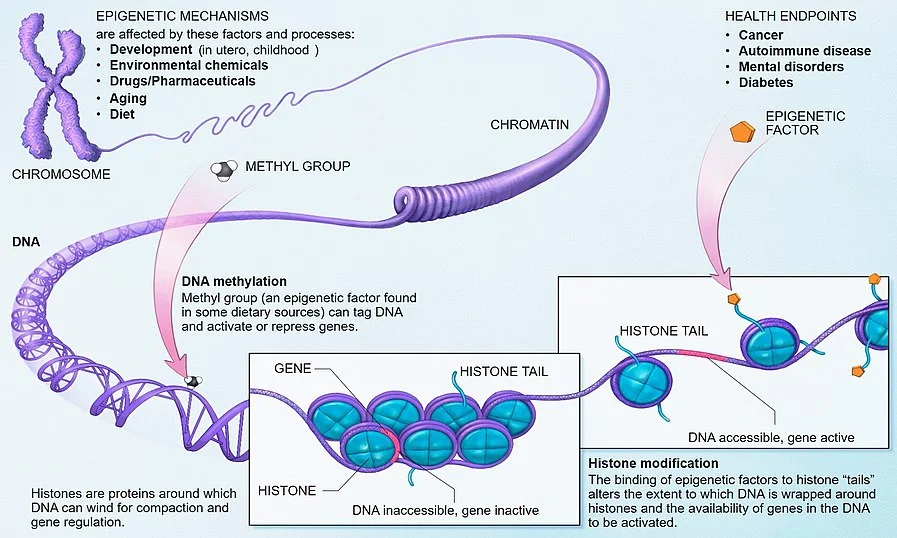
It is a commonplace in cancer science to think that cancer cells arise from some kind of cellular evolution, in which cancer cells outcompete normal cells. The standard view is that cancer cells evolve from genetic cellular evolution, but there is a problem with this view: almost all genetic mutations make a cell less fit—that is, less able to compete—in almost every way.
My view—consistent with that of a minority of cancer researchers—is that cancer cells evolve through epigenetic cellular evolution. Epigenetics is the set of switches that tells a cell which to express of all the capabilities already there in its genetic code. Epigenetics is what drives cellular differentiation for normal cells. Other than eggs and sperm, which have only random halves of your genes, all of the normal cells in your body have essentially the same genetic code, but act very differently from each other because of their epigenetic settings. Genetically, every normal cell has the programming for all the capabilities expressed by any cell in your body. Cancer cells typically have some damage that leaves them short of some capabilities (see Good News! Cancer Cells are Metabolically Handicapped), but using the capabilities that remain, they can often get an advantage by having a different set of capabilities switched on than the surrounding normal cells. Under this epigenetic cellular evolution theory of cancer, cellular evolution doesn't have to do the work of hundreds of millions of years of regular evolution, it only has to flip a few switches to turn on capabilities already there from the hundreds of millions of years of genetic evolution behind the normal cells the cancer cells descend from, perhaps a few dozen or a few hundred cell divisions back.
Let me pursue a stark analogy between cancer and ethnic cleansing in Yugoslavia. Through epigenetic evolution, cancer cells turn on a preexisting capability for unbridled cell division and brutality against surrounding cells. This is like the evolution of ideas rationalizing ethnic cleansing turning on a preexisting capability for rape, murder and other forms of brutality in many men who were normal citizens of Yugoslavia a few years earlier.
Many facts about cancer point to some form of evolution. But evolution need not be genetic. Evolution can act on many substrates. The 4th book I feature in "Five Books That Have Changed My Life" is Daniel Dennet's book Darwin's Dangerous Idea:
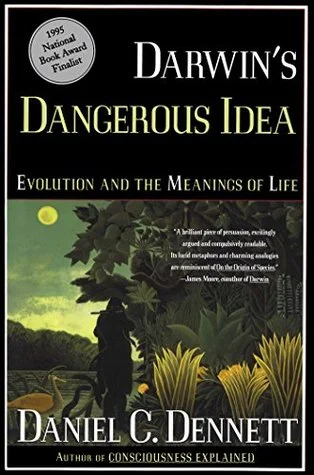
On page 343, Daniel Dennett emphasizes how general the principles of evolution are:
The outlines of the theory of evolution by natural selection make clear that evolution occurs whenever the following conditions exist:
- variation: there is a continuing abundance of different elements
- heredity or replication: the elements have the capacity to create copies or replicas of themselves
- differential "fitness": the number of copies of an element that are created in a given time varies, depending on interactions between the features of that element and features of the environment in which it persists
All of these conditions are fulfilled for epigenetic switches.
- In addition to regular cellular differentiation, the vicissitudes a cell is subject to and fusion of separate cells into one cell creates epigenetic variation.
- With some imperfection, the epigenetics of a cell tends to be inherited by its daughter cells.
- The effect of epigenetics on growth and cell division, on whether a cell is treated as friend or foe by immune cells, on the susceptibility to signals for self-destruction, the ability to grab key resources, and the ability to travel to new and promising places in the body to set up shop create differential fitness for cells.
Let's do a rundown of the distinguishing characteristics of cancer cells to see why the genetic potential for each of these capabilities would be there already in normal cells, though often not turned on on. For this list, let me quote from Chapter 2 ("Confusion Surrounds the Origin of Cancer") of Thomas Seyfried's book Cancer as a Metabolic Disease: On the Origin, Management, and Prevention of Cancer. Thomas Seyfried:
In a landmark review on cancer, Drs. Hanahan and Weinberg suggested that six essential alterations in cell physiology were largely responsible for malignant cell growth [5]. This review was later expanded into a book on the Biology of Cancer [31]. These six alterations were described as the hallmarks of nearly all cancers and have guided research in the field for the last decade [32]. The six hallmarks (Fig. 2.2) include the following (italics and punctuation added to the headings):
1. Self-Sufficiency in Growth Signals. This process involves the uncontrolled proliferation of cells owing to self-induced expression of molecular growth factors. Inother words, dysregulated growth would arise through abnormal expression of genes that encode growth factors. The released growth factors would then bind to receptors on the surface of the same cell (autocrine stimulation) or bind to receptors on other nearby tumor cells (paracrine stimulation), thereby locking-in signaling circuits that perpetuate continuous replication. Complicated cybernetic-type diagrams are often presented to illustrate these phenomena (Fig. 2.3). Cybernetics is generally viewed as the study of goal-directed control and communication systems [33]. The abnormal circuitry in tumor cells is assumed to result in large part from the dominant expression of cancer-causing oncogenes.
2. Insensitivity to Growth-Inhibitory (Antigrowth) Signals. In order to carry out specific functions in mature differentiated tissues, most cells must remain quiescent or nonproliferative. A complex signaling circuitry involving the action of tumor-suppressor genes is necessary to maintain the quiescent state. In addition to these internal signals, interactions with other cells (cell–cell) and the external environment (cell–matrix) also act to maintain quiescence. Damage to suppressor genes or the microenvironment is assumed to dampen growth inhibition and provoke proliferation, as the cell no longer responds appropriately to the growth-inhibitory actions of these genes or molecules. Tumor cells are known to express multiple defects in tumor-suppressor genes and in cell–cell or cell–matrix interactions.
3. Evasion of Programmed Cell Death (Apoptosis). Programmed cell death is an effective means of eliminating damaged or dysfunctional cells. Elimination of damaged cells is necessary in order to maintain tissue homeostasis and health. Cell damage can initiate the release of mitochondrial cytochrome c, a protein of the mitochondrial electron transport chain, which is a potent inducer of apoptosis in normal cells. In contrast to normal cells, however, tumor cells lose their sensitivity to apoptotic death signals. Consequently, tumor cells continue to live and proliferate despite damage to their nuclear DNA and respiration. Loss of tumor-suppressor genes, which sense cell damage and initiate cell death, is responsible in part for resistance of tumor cells to programmed cell death. The acquired resistance to apoptosis is a recognized hallmark of most cancers [5, 32].
4. Limitless Replicative Potential. All cells of a given species possess a finite number of divisions before they reach mortality. This is a cell-autonomous program that induces senescence and prevents immortality [5]. Tumor cells, however, lose responsiveness to this program and continue to divide. The phenomenon of limitless replicative potential is closely connected to the first three acquired capabilities.
5. Sustained Vascularity (Angiogenesis). Angiogenesis involves neovascularization or the formation of new blood capillaries from existing blood vessels and is associated with the processes of of tissue inflammation and wound healing. Many solid tumors have difficulty growing unless enervated with blood vessels, which can deliver nutrients while removing metabolic waste products (Fig. 1.3). The dissemination of tumor cells throughout the body is assumed to depend in part on the degree of tumor vascularization. The more blood vessels in tumors, the greater will be the potential to invade and metastasize. Tumor cells release growth factors that stimulate nearby host stromal cells (vascular endothelial cells and macrophages) to proliferate, thus providing the tumor with a vasculature and the means for more rapid growth. The endothelial cells form the vessel walls, while the local macrophages and other stromal cells degrade the microenvironment facilitating neovascularization. A switch from low vascularization to high vascularization is considered to be an essential acquired capability for tumor progression [5, 32, 34].
6. Tissue Invasion and Metastasis. Invasion of tumor cells into local tissue and their spread to distant organs underlies the phenomenon of metastasis. Metastasis or complications of metastasis is associated with about 90% of all cancer deaths [32, 35]. The prevention of metastasis remains the single most important challenge for cancer management.
Growth and Division: The capability for growth and division relevant for characteristics 1, 2 and 4 of cancer cells is definitely something normal cells have to have already in their genes. This means that all it takes to get these characteristics of cancer is to disable the control mechanisms that keep cell growth and division in check. Disabling something—making it not work—is relatively easy. Indeed, disabling is easy enough that it is logically possible that a genetic change rather than an epigenetic change could do it. But direct evidence suggests that, in fact, the control mechanisms that keep cell growth and division in check are disabled epigenetically. In Thomas Seyfried's Chapter 11, "Mitochondria: The Ultimate Tumor Supressor," he gives these remarkable facts:
It is also well documented that nuclei from cancer cells can be reprogrammed to form normal tissues when transplanted into normal cytoplasm despite the continued presence of the tumor-associated genomic defects in the cells of the derived tissues. Dramatic evidence for this fact was obtained from studies in neoplastic tissue from frogs and mice. McKinnell et al. [16] provided some of the first evidence showing that tumor cell nuclei could direct normal vertebrate development following transplantation of the tumor cell nucleus into an enucleated normal egg cell. [From section 11.4]
... nuclear/cytoplasmic hybrids derived by fusion of cytoplasts from malignant cells (nucleus absent) with karyoplasts from normal cells (nucleus present) produced tumors in 97% of the animals injected. These findings showed that normal cell nuclei could not suppress tumorigenesis when placed in tumor cell cytoplasm. In other words, normal nuclear gene expression was unable to suppress malignancy. These findings showed that it was the cytoplasm, rather than the nucleus, that dictated the malignant state of the cells. Although these investigators did not define the molecular basis for the cytoplasmic mediation of tumorigenesis, they suggested that epigenetic alterations of nuclear gene expression might be responsible. [From section 11.2]
Not Committing Cell Suicide: Every normal cell in the body clearly has to have the genetic potential to not kill itself. Again, to get this characteristic 3 of cancer cells requires disabling a self-destruct mechanism, not building anything new.
Being Able to Get New Blood Vessels to Form: Both when a fetus is developing in the womb and in repairing an injury, new tissue needs to be formed. Most types of tissue require nourishment from blood. So most types of normal cells have to have in their fairly immediate cell ancestry cells that had the capability to signal blood vessels—at the least small capillaries—to form within that tissue. Because this capability needs to be switched on again when repairing an injury, injuries are likely to put cells one step closer to being in the cancerous state.
Tissue Invasion and Metastasis. Metastasis is when cancer travels to a distant part of the body rather than just growing to impinge on neighboring parts of the body. There is a subset of normal cells that have to be able to travel all over the body: cells of the immune system. Thomas Seyfried argues at length in Chapter 13, "Metastasis," that a cancerous but not metastatic cell can gain metastatic capabilities for a descendant of sorts by fusing with myeloid cells—immune cells with their origin in the bone marrow—particularly macrophages, a type of white blood cell.
Fusion of a cancerous but not metastatic cell with a macrophage is like a criminal corrupting and teaming up with a trusted police officer. All sorts of things become possible when police credentials can be used to further criminal activity in the one case or white blood cell credentials can be used to further the spread of cancer in the other.
Implications for Cancer Prevention
Avoid Inflammation. A lot is known about risk factors for cancer. Many of these risk factors make more intuitive sense when one realizes that flipping a few epigenetic switches can put a cell on the road to cancer even without any damage to the genes in the cell's nucleus. Many cancer risk factors can be seen as working through causing inflammation. In the first paragraph of Chapter 19, "Cancer Prevention," Thomas Seyfried lays explains the importance of inflammation:
... It is well documented that the incidence of cancer can be significantly reduced by avoiding exposure to those agents or conditions that provoke tissue inflammation, such as smoking, excessive alcohol consumption, carcinogenic chemicals, ionizing radiation, and obesity [2–5].
Elevated levels of inflammation biomarkers (IL-6, IL-8, C-reactive protein, etc.) predict increased risk of cancer [6]. Chronic inflammation, regardless of its origin, damages tissue morphogenetic fields and the epithelial and mesenchymal cells within the field [7–15]. Most importantly, inflammation damages cellular mitochondria, thus reducing the efficiency of OxPhos. Reduced OxPhos efficiency initiates a mitochondrial stress response (RTG signaling) within cells (Chapter 10). RTG signaling is needed to upregulate either glycolysis in the cytoplasm or amino acid fermentation in the mitochondria. Only those cells that can enhance their fermentation in response to respiratory damage will survive. Cells incapable of enhancing fermentation will die from energy failure. As mitochondrial function maintains the differentiated state, cells that upregulate fermentation for survival are at increased risk of becoming less differentiated and ultimately transformed. Prolonged reliance on fermentation destabilizes the nuclear genome, thus initiating the path to carcinogenesis and frank neoplasia. Inflammation damages cellular respiration; damaged respiration is the origin of cancer.
This passage needs some unpacking. A "morphogenetic field" is a pattern of epigenetics in neighboring cells that helps each cell do what it should within a larger tissue or organ. OxPhos is the main generator of ATP energy packets in normal cells. OxPhos depends on delicate structures within mitochondria. Damage to OxPhos puts the affected cells at a metabolic disadvantage to normal cells, as I discussed in "Good News! Cancer Cells are Metabolically Handicapped. But cells with damaged OxPhos are often able to turn on the backup energy generation system of "fermentation." If they can't turn on the backup energy generation system of fermentation, they die. On backup power, cells are not good at keeping their nuclear genes intact when they divide. So even if the key pathway to cancer is epigenetic rather than genetic, the nuclear genes will indeed be messed up in cancer cells.
Note also that nuclear genes can be part of the cause for cancer even if the key pathway involves either inflammation or more direct damage to mitochondria: nuclear genes can make the body more prone to inflammation or nuclear genes can create extra dangers for mitochondria. And of course mitochondrial genes (in the mitochondria outside the nucleus) can make mitochondria extra vulnerable. (Mitochondrial genes are inherited from one's mother.)
Avoid Injury. Above, I discussed how injury is likely to switch on genes for vascularization. Injury also often calls on immune cells that could be in danger of corruption by fusion with cancerous or precancerous cells. Finally, injury causes inflammation.
Starve Cancer Cells. I pursued the logic of starving cancer cells in "How Fasting Can Starve Cancer Cells, While Leaving Normal Cells Unharmed." Fermentation allows cancer cells to metabolize sugar and protein—most directly the amino acid glutamine—but according to Thomas Seyfried, cancer cells are not good at metabolizing fat. From Section 15.2, "Tumor Cell Fitness in Light of the Evolutionary Theory of Rick Potts," Thomas Seyfried writes:
Ketone bodies and fats are nonfermentable fuels in mammalian cells. Tumor cells have difficulty in using ketone bodies and fats for fuel when glucose is reduced. Because tumor cells lack genomic stability, they are less able than normal cells to adapt to changes in the metabolic environment.
Increasing or decreasing the availability of glucose and glutamine, or the availability of ketone bodies and fats to cells of all types should affect the fitness of cancerous or precancerous cells relative to normal cells. If glucose and glutamine are the most nutritious food for cancer cells, that matters for epigenetic evolution. Here are some key practical points:
- Easily digestible carbs make glucose more available to cells.
- Fasting makes glucose and glutamine less available and fats and ketone bodies more available to cells.
- Less is known about which foods make glutamine especially easily available to cells once the body has begun processing those foods. But let me put out there the testable hypothesis that meat and milk cause a bigger spike in glutamine availability to cells than an equal amount of protein in vegetables—not because there is less glutamine in vegetables, but simply because it would take longer for the body to extract the protein from the vegetables than from meat or milk.
The reason we know relatively little in this area is that the potential danger of cancer promotion from glutamine availability has not been a focus of research. (On "promotion," see "Why You Should Worry about Cancer Promotion by Diet as Much as You Worry about Cancer Initiation by Carcinogens.") In particular, I don't know of any research yet on a counterpart to the glycemic index or the insulin index for the effect of a particular type of food on glutamine availability to cells. I would love to hear about any such research.
Why would cancer cells be metabolically handicapped? Thomas Seyfried's argument is that relying on fermentation is typically a key part of the path through which cells become cancerous. Or to put it another way, damaged OxPhos is the easiest way to disable the "limits to growth" that are switched on in normal cells. Here is how Thomas describes this disabling of the limits to growth at the end of section 15.1 "Revisiting Growth Advantage of Tumor Cells, Mutations and Evolution":
Davies and Lineweaver provided insightful views on the evolutionary origin of cancer [10]. They consider cancer as an atavistic state of multicellular life where long-suppressed ancestral cellular functions become reactivated or switched on. According to their view, cancer genetic or epigenetic mutations unlock an ancient “toolkit” of preexisting adaptations that allow cancer cells to survive in hypoxic environments. The Davies and Lineweaver evolutionary view of cancer is consistent in some ways with my hypothesis and with the views of Sonnenschein and Soto [33] and Szent-Gyorgyi [20]. Unbridled proliferation is the default state of metazoan cells. Unbridled proliferation existed during the oxygen-sparse α period of species evolution. This was also a highly reduced state where the ancient pathways of fermentation predominated in driving cell physiology. The appearance of oxygen gave rise to the oxidized state and the emergence of respiration. The emergence of respiration facilitated greater complexity in biological systems.
Respiration largely maintains the differentiated state of metazoan cells. Irreversible damage to respiration, coincident with a rise in fermentation, would unlock the toolkit of preexisting adaptations needed to survive in low oxygen environments. According to my view, protracted respiratory injury gives rise to compensatory fermentation or the atavistic condition in order to maintain cell viability.
"Atavistic" describes reversion to an ancient pattern. The ancient pattern for cells was fermentation, coupled with unbridled growth and cell division as long as the necessary nutrients were available.
Update, June 19, 2018. I noticed this article about a team doing research on the epigenetics of cancer at the University of Colorado Boulder:
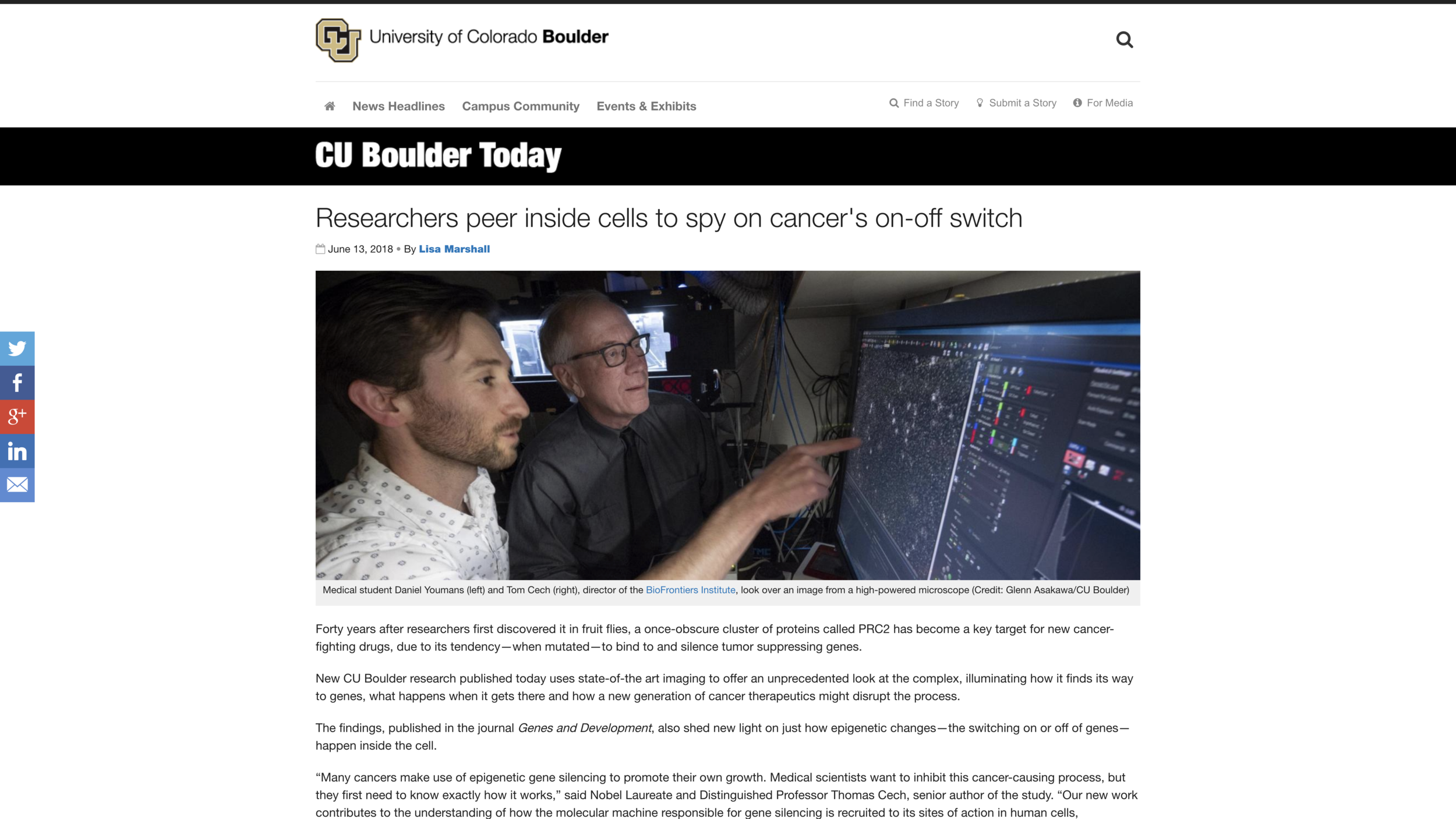
Here is the most interesting paragraph:
“Many cancers make use of epigenetic gene silencing to promote their own growth. Medical scientists want to inhibit this cancer-causing process, but they first need to know exactly how it works,” said Nobel Laureate and Distinguished Professor Thomas Cech, senior author of the study. “Our new work contributes to the understanding of how the molecular machine responsible for gene silencing is recruited to its sites of action in human cells, determining which genes are turned off."
Don't miss these other posts on diet and health and on fighting obesity:
- Stop Counting Calories; It's the Clock that Counts
- Forget Calorie Counting; It's the Insulin Index, Stupid
- Obesity Is Always and Everywhere an Insulin Phenomenon
- The Problem with Processed Food
- Which Is Worse for You: Sugar or Fat?
- Using the Glycemic Index as a Supplement to the Insulin Index
- How Fasting Can Starve Cancer Cells, While Leaving Normal Cells Unharmed
- Why You Should Worry about Cancer Promotion by Diet as Much as You Worry about Cancer Initiation by Carcinogens
- Good News! Cancer Cells are Metabolically Handicapped
- Meat Is Amazingly Nutritious—But Is It Amazingly Nutritious for Cancer Cells, Too?
- The Keto Food Pyramid
- Sugar as a Slow Poison
- How Sugar Makes People Hangry
- Why a Low-Insulin-Index Diet Isn't Exactly a 'Lowcarb' Diet
- Hints for Healthy Eating from the Nurse's Health Study
- The Case Against Sugar: Stephan Guyenet vs. Gary Taubes
- The Case Against the Case Against Sugar: Seth Yoder vs. Gary Taubes
- Gary Taubes Makes His Case to Nick Gillespie: How Big Sugar and a Misguided Government Wrecked the American Diet
- A Conversation with David Brazel on Obesity Research
- Magic Bullets vs. Multifaceted Interventions for Economic Stimulus, Economic Development and Weight Loss
- Mass In/Mass Out: A Satire of Calories In/Calories Out
- Carola Binder: The Obesity Code and Economists as General Practitioners
- Carola Binder—Why You Should Get More Vitamin D: The Recommended Daily Allowance for Vitamin D Was Underestimated Due to Statistical Illiteracy
- Jason Fung: Dietary Fat is Innocent of the Charges Leveled Against It
- Faye Flam: The Taboo on Dietary Fat is Grounded More in Puritanism than Science
- Diseases of Civilization
- Katherine Ellen Foley—Candy Bar Lows: Scientists Just Found Another Worrying Link Between Sugar and Depression
- Ken Rogoff Against Sugar and Processed Food
- Kearns, Schmidt and Glantz—Sugar Industry and Coronary Heart Disease Research: A Historical Analysis of Internal Industry Documents
- Intense Dark Chocolate: A Review
- Salt Is Not the Nutritional Evil It Is Made Out to Be
- Confirmation Bias in the Interpretation of New Evidence on Salt
- Whole Milk Is Healthy; Skim Milk Less So
- Is Milk OK?
- How the Calories In/Calories Out Theory Obscures the Endogeneity of Calories In and Out to Subjective Hunger and Energy
- Putting the Perspective from Jason Fung's "The Obesity Code" into Practice
- 'Forget Calorie Counting. It's the Insulin Index, Stupid' in a Few Tweets
- Julia Belluz and Javier Zarracina: Why You'll Be Disappointed If You Are Exercising to Lose Weight, Explained with 60+ Studies (my retitling of the article this links to)
- Diana Kimball: Listening Creates Possibilities
- On Fighting Obesity
- The Heavy Non-Health Consequences of Heaviness
- Analogies Between Economic Models and the Biology of Obesity
- Debating 'Forget Calorie Counting; It's the Insulin Index, Stupid'
- Podcast: Miles Kimball Explains to Tracy Alloway and Joe Weisenthal Why Losing Weight Is Like Defeating Inflation
Also see the last section of "Five Books That Have Changed My Life" and the podcast "Miles Kimball Explains to Tracy Alloway and Joe Weisenthal Why Losing Weight Is Like Defeating Inflation." If you want to know how I got interested in diet and health and fighting obesity and a little more about my own experience with weight gain and weight loss, see my post "A Barycentric Autobiography."
Other Central Banks Should Emulate the Bank of Canada's Inflation Target Review Process. Here is How It Works. →
The title above is my opinion. It links to "Why the Bank of Canada sticks with 2 percent inflation target" by former Bank of Canada Deputy Governor John David Murray.
Dan Wotherspoon's Mormon Matters Interview of Ian Thomson and Chris Kimball on Mental and Spiritual Gymnastics

My brother Chris is a thoughtful Mormon intellectual. If you have any interest in Mormonism, you should find this podcast illuminating.
Chris has appeared in supplysideliberal.com many times. Here are other posts Chris authored or coauthored:
- Christian Edward Kimball on Edward Lawrence Kimball
- Chris Kimball: Having a Prophet in the Family
- Christian Kimball: Anger [1], Marriage [2], and the Mormon Church [3]
- Christian Kimball on the Fallibility of Mormon Leaders and on Gay Marriage
- Big Brother Speaks: Christian Kimball on Mitt Romney
- However Low Interest Rates Might Go, the IRS Will Never Act Like a Bank
Jo Boaler and Lang Chen: Why Kids Should Use Their Fingers in Math Class →
Hat tip to Rishi Joe Sanu for pointing me to this article.
Let me say that for me personally, visual and kinesthetic imagery are crucial for doing math.
On Perfectionism
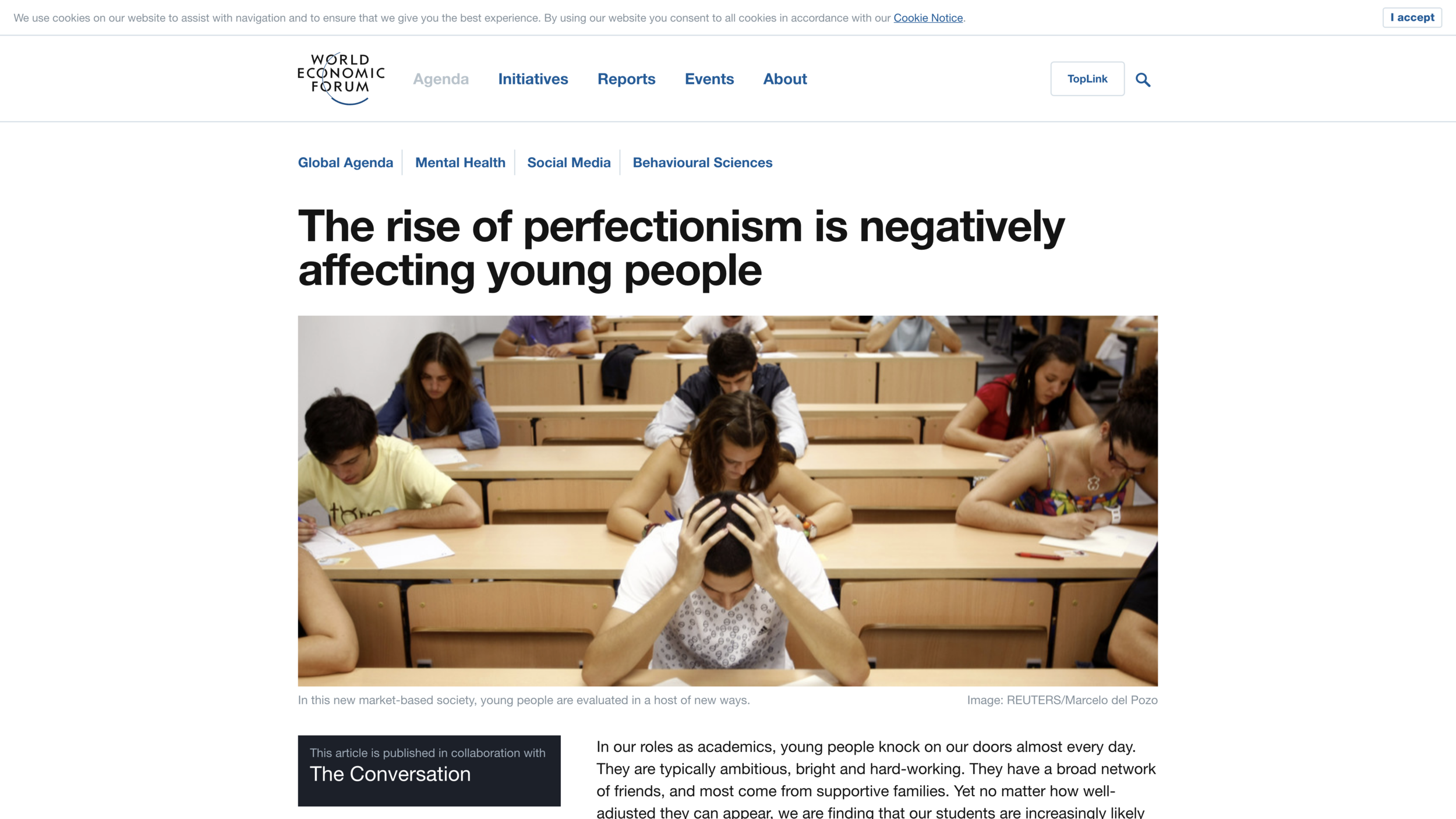
As an academic, I am surrounded by perfectionists. Relative to the US average, I may be a perfectionist myself; but relative to other academics I don't look like much of a perfectionist at all.
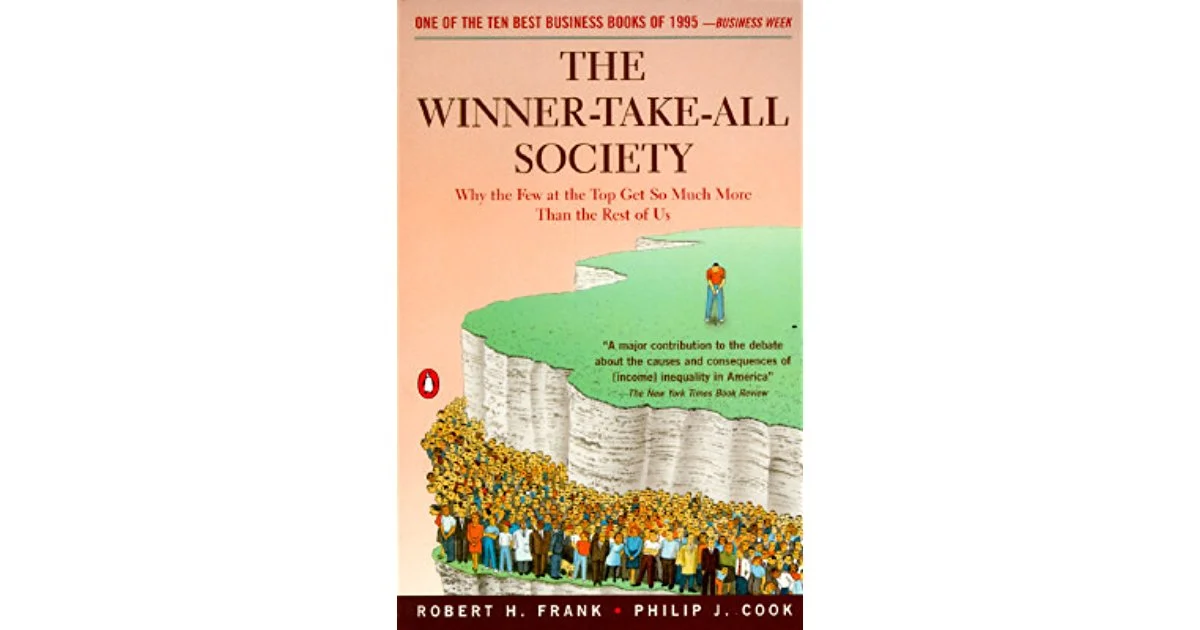
Emending the article above by Thomas Curran and Andrew Hill to be a little more cogent than it is, the article above blames a rise in perfectionism on the huge financial rewards for being #1 as compared to being #2, or as compared to being #10, #100 or #1000. This is an issue that Robert Frank and Philip Cook discuss in their book The Winner-Take-All Society.
Whatever the market realities that encourage perfectionism, the psychological toll of going too far in the direction of perfectionism makes it important to put your own level of perfectionism under the microscope to see if it is making your life better or worse.
The description of perfectionism given by Thomas Curran and Andrew Hill points to two key elements of perfectionism. They write:
Broadly speaking, perfectionism is an irrational desire for flawlessness, combined with harsh self-criticism.
To make your life better in the fact of a tendency toward perfectionism, the place to start is in toning down the harsh self-criticism. You can worry about the irrational desire for flawlessness later.
A story true of my life up to a certain point, and perhaps even now of you, gentle reader, is this: Sometime in your teens you figured out how to motivate yourself to get stuff done, like studying for a test, that takes self-discipline. The method was simple: you harshly criticized yourself if you weren't working hard. This worked so well, that still to this day you use harsh self-criticism as a key method of motivating yourself. You are deathly afraid that if you slack up on harsh self-criticism you might become very lazy. So you are afraid to let up on the harsh self-criticism long enough to experiment with any other method of self-motivation. So years of suffering from harsh self-criticism pile up, and your life seems hard. You haven't considered that you have many years of life experience behind you beyond that teen who long ago came up with harsh self-criticism as a method of motivating yourself.
I want to encourage you to put faith in your own ability to come up with another method of motivating yourself that doesn't cost you so much. (On faith, see my post "The Unavoidability of Faith.") If you do, I think you will be greatly rewarded with the happiness that comes from not figuratively whipping yourself all the time.

Let's turn now to the irrational desire for flawlessness. In relation to any real-world problem, I honestly don't see how it is possible to be flawless. I can't count how many times I have reminded my co-researchers that "Nothing is perfect." I often amplify that by saying we'll be dead in the water in our research if we insist on perfection, because perfection is impossible.
Where is perfection possible? In a game. If an endeavor is artificially constructed, it may be possible to follow every last rule and do everything as well as it can possibly be done. Even stepping away from the extreme of perfection, I think people feel they approach nearer to perfection in artificial pursuits than they do in trying to solve or mitigate what I am calling "real-world problems": problems like poverty, injustice and disease, or smaller but ever-so-real-world problems such as traffic, software glitches or petty interpersonal annoyances. The more you address problems that are us against the universe rather than you versus other competitors in a game, the less temptation you will have toward perfectionism.
The trouble with competitive games, in particular, is that they get lots of people trying to do the same thing and win one of the very limited number of prizes. The more you can instead, find a unique or at least a less-traveled way of contributing to society, the easier it will be for you to feel successful even if other people are successful, too. This road has its own difficulties (see "Believe in Yourself"), but it can ultimately be very satisfying.
Ultimately, I don't know all that well how to treat the malady of perfectionism, since I only had to deal with a mild case of it myself. But I see many around me suffering from it. So I know that finding good approaches to reducing the pain and suffering that come from perfectionism is important. I'd be glad for any insights you can provide that I can share.
In other posts, I have two categories of advice for economists in relation to their work.
1. More personal advice:
- How to Find Your Comparative Advantage
- Believe in Yourself
- Breaking the Chains
- Leaving a Legacy
- My Objective Function
- The Unmaking
- Tom Gauld's Sympathy Cards for Scientists
- Miles's Recipe for Success
2. Advice for doing good for the world:
- John Locke on the Mandate of Heaven
- Economics Needs to Tackle All of the Big Questions in the Social Sciences
- Defining Economics
- Does the Journal System Distort Scientific Research?
- Let's Set Half a Percent as the Standard for Statistical Significance
- On the Virtue of Scientific Disrespect
- On Being a Good Guy
Which Is Worse for You: Sugar or Fat?
Hat tip to Joseph Kimball for pointing me to this video.
I recommend Olivia Gordon's Complexly SciShow video above. In the first 8.5 minutes of this 13.5 minute video, Olivia Gordon demolishes the idea that dietary fat is a big problem by going through the history of nutritional thought on this issue. In the last 5 minutes, she goes too easy on sugar, saying basically "It's complicated." I think she and her team did this in order to seem balanced, but she shouldn't have. Let me try to cut through some of her attempts to go easy on sugar.
Even If the Only Harm of Sugar Is Causing You To Gain Weight, That Is Pretty Bad. After admitting that there isn't much to be said in favor of sugar other than the direct pleasure it brings, Olivia says that while sugar is likely to make you gain weight, it is gaining weight that is most likely to cause diseases, not the direct effects of sugar. Of course, if sugar makes you fat and getting fat leads to disease, it doesn't matter that much whether sugar causes diseases directly—or indirectly through causing you to gain weight.
How Much Sugar is Too Much? Olivia makes the statement: "While most of us are likely eating too much added sugar, no one really knows how much is too much." This is a question that sounds clearer than it is. Let's look at some logical possibilities:
If the harm of added sugar is approximately linear, then the harm is simply proportional to how much one eats. A little bit of added sugar would be a little too much and a lot of added sugar would be a great deal too much. It is possible there is a linear harm that has a small slope, but Olivia is not claiming that added sugar is a trivial matter, so she is not going there.
Added sugar could be beneficial up to a certain point, then begins to be harmful. I don't see Olivia claiming this. If she intended this, it is strange she didn't say something like "Some people think a little added sugar is beneficial for health."
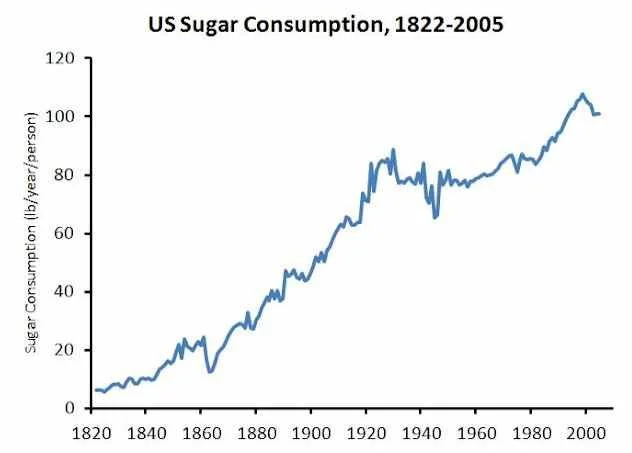
Added sugar could have a harm that accelerates with the amount of added sugar consumed. This is most in the spirit of what Olivia might mean by "... no one really knows how much is too much." (The extreme version of this is that there is a level up to which added sugar is totally harmless, after which it becomes harmful. That extreme version seems unlikely.) If sugar does indeed have a harm that accelerates with the amount of added sugar consumed, one should be very worried given how high average consumption of added sugar is relative to historical levels of added sugar—say, average levels prior to 1960. For example, if the harm of added sugar depends on the square of the amount of added sugar, then the harm of 100 pounds a year compared to 80 pounds a year would be 100/80 squared, or 1.5625 times as bad.
The Big Reasons to Avoid Sugar. After talking about the rise in popularity of lowcarb diets, Olivia points out that they are only good for about 11 pounds (5 kilograms) of weight loss on average. There are two key things to say about that. First, it is important to remember how much easier it is to avoid gaining weight in the first place than it is to lose weight once you have gained it. Insulin resistance, which is not so easy to reverse, is an important part of the story for why weight gain is hard to reverse. In economics and physics, when things are hard to reverse it is sometimes called hysteresis. Given how much easier it is to avoid gaining weight than it is to lose weight, a crucial question is how much a lowcarb diet or simply avoiding all added sugar from childhood on would contribute to avoiding weight gain.
Second, what is crucial about a lowcarb diet—or even better, a low insulin index diet (see Forget Calorie Counting; It's the Insulin Index, Stupid)—is not so much that it, by itself will lead to weight loss, but that it makes it relatively painless to go for substantial stretches of time without eating anything. Going without food for a period of time is called fasting; in the kind of fasting I am talking about, you are encouraged to drink a lot of water while fasting. Fasting is the powerful technique for weight loss, not what you eat. But if you eat a lot of sugar, fasting is going to seem excruciatingly difficult. If you go off sugar, bread, rice and potatoes, and give yourself a month or so to adjust to that before trying to fast, I predict that fasting will seem much easier to you than going without food ever seemed to you before. If you are interested in weight lost, and start fasting after this period of adjustment to being off sugar, bread, rice and potatoes, you can start slow, along the lines discussed in "Stop Counting Calories; It's the Clock that Counts." But I predict you will find fasting so easy and so effective for weight loss that you will soon want to do somewhat more extended fasts.
Tested Benefits of Going Off Sugar. Overall, Olivia makes it sound as if going off sugar might only benefit you a little bit. But a study she cites approvingly says otherwise: the Stanford DIETFITS Randomized Clinical Trial I discuss in "Why a Low-Insulin-Index Diet Isn't Exactly a 'Lowcarb' Diet." Currently, almost all highly processed food has added sugar. So going off sugar other than whole fruit implies also going off almost all processed food. Thus, going off sugar puts you squarely in the territory of the two diets that the DIETFITS Randomized Clinical Trial tested. They called one of the diets "healthy lowcarb" and the other "healthy lowfat," but don't be fooled. Given the fact that going off sugar currently means going off highly processed food, these two diets—and the possible diets in between—cover reasonably well the possible ways to eat if one goes off sugar (except for whole fruit). So the fact that both of these diets did a lot of good for people provides good evidence for the benefits of going off sugar. If you want to think of it as the benefits of going off highly processed food, that is also reasonable given the evidence we have. And you can get moral support on that from my post "The Problem with Processed Food."
(Note: Olivia cites the DIETFITS Randomized Controlled Trial, without naming it, on the point that there isn't much evidence yet for being able to predict from lab tests which approach will work best for each person. Currently, it is reasonable for everyone to begin with the same approach, then modify it based on their own experience.)
How to Go Off Sugar. I highly recommend a rigorous approach to going off sugar. If you go off sugar, after a month or so, your body will adjust so that everything you eat tastes sweeter to you. I have been off sugar for about a year and a half; whole fruit tastes very sweet to me now, and even nuts with nothing added to them taste reasonably sweet to me. (To put the level of rigor I am talking about in perspective, I eat commercial salad dressing that lists 1 gram of carbs; it probably has some sugar in it. I eat chocolate with 88% cocoa in it, that definitely has some sugar. See "Intense Dark Chocolate: A Review." And I occasionally have some Halo Top ice cream, which is not entirely sugar-free.)
If you aren't rigorous about going off sugar, and just try to reduce your sugar consumption, you won't get full recalibration of your sense of sweetness. And your craving for sugar won't go away very fast, if at all. Nevertheless, you should get some benefit. For those who, contrary to my advice, are trying to reduce sugar consumption instead of almost entirely cutting it out, it is good for you to also think about reducing the amount of processed food you eat. By contrast, if you almost entirely cut out sugar, and look on the packages of processed food to see the almost ubiquitous added sugar, reducing processed foods would be automatic. ("How Sugar Makes People Hangry" has a list of names for different forms of sugar.)
Go for New Treats! Giving up added sugar doesn't have to mean giving up treats. The DIETFITS study indicates that you can replace sugar/highly processed food with dietary fat and be fine. For me, the Manchego cheese I buy from Costco and the frozen cherries from Costco or other whole fruit with half and half are great treats, as are cashews and almonds (also from Costco) that we bake ourselves. (Other than maybe in my mutual funds, I have no commercial interest in Costco! It is just a good place to get certain types of relatively healthy food at bulk prices.) The baked cashews and almonds are a perfectly good treat on the go; for me they have totally replaced power bars as a portable food when I am not fasting.
I'll bet many of you can come up with tastier healthy treats than I can. I'd love to hear about your creations in a comment to this post or on Twitter: @mileskimball. Here are the rules of the game if you want to try:
Make the treat from scratch from unprocessed food. Note that flour counts as a processed food.
As long as it is unprocessed, it is OK if something is high-fat.
Don't do too much processing yourself in making it from scratch. For example, grinding something up or overcooking it probably makes it less healthy.
Don't add sugar or honey or agave. If you really need a sweetener, oligosaccharides, erythritol and maybe stevia could be OK.
Extra points for something being easy to make.
Simplicity is fine. It just needs to taste delicious and be healthy, not impress a professional chef.
Don’t miss my other posts on diet and health.
I. The Basics
Jason Fung's Single Best Weight Loss Tip: Don't Eat All the Time
What Steven Gundry's Book 'The Plant Paradox' Adds to the Principles of a Low-Insulin-Index Diet
II. Sugar as a Slow Poison
Best Health Guide: 10 Surprising Changes When You Quit Sugar
Heidi Turner, Michael Schwartz and Kristen Domonell on How Bad Sugar Is
Michael Lowe and Heidi Mitchell: Is Getting ‘Hangry’ Actually a Thing?
III. Anti-Cancer Eating
How Fasting Can Starve Cancer Cells, While Leaving Normal Cells Unharmed
Meat Is Amazingly Nutritious—But Is It Amazingly Nutritious for Cancer Cells, Too?
IV. Eating Tips
Using the Glycemic Index as a Supplement to the Insulin Index
Putting the Perspective from Jason Fung's "The Obesity Code" into Practice
Which Nonsugar Sweeteners are OK? An Insulin-Index Perspective
V. Calories In/Calories Out
VI. Wonkish
Anthony Komaroff: The Microbiome and Risk for Obesity and Diabetes
Carola Binder: The Obesity Code and Economists as General Practitioners
Analogies Between Economic Models and the Biology of Obesity
VIII. Debates about Particular Foods and about Exercise
Jason Fung: Dietary Fat is Innocent of the Charges Leveled Against It
Faye Flam: The Taboo on Dietary Fat is Grounded More in Puritanism than Science
Confirmation Bias in the Interpretation of New Evidence on Salt
Julia Belluz and Javier Zarracina: Why You'll Be Disappointed If You Are Exercising to Lose Weight, Explained with 60+ Studies (my retitling of the article this links to)
IX. Gary Taubes
X. Twitter Discussions
Putting the Perspective from Jason Fung's "The Obesity Code" into Practice
'Forget Calorie Counting. It's the Insulin Index, Stupid' in a Few Tweets
Debating 'Forget Calorie Counting; It's the Insulin Index, Stupid'
Analogies Between Economic Models and the Biology of Obesity
XI. On My Interest in Diet and Health
See the last section of "Five Books That Have Changed My Life" and the podcast "Miles Kimball Explains to Tracy Alloway and Joe Weisenthal Why Losing Weight Is Like Defeating Inflation." If you want to know how I got interested in diet and health and fighting obesity and a little more about my own experience with weight gain and weight loss, see “Diana Kimball: Listening Creates Possibilities” and my post "A Barycentric Autobiography.
From Each Individual as Judge, Jury and Executioner to Each Nation as Judge, Jury and Executioner

Section 87 of John Locke's 2d Treatise on Government: “Of Civil Government” (in Chapter VII, "Of Political or Civil Society") summarizes John Locke's contract theory much better than many summaries I have seen by others:
Man being born, as has been proved, with a title to perfect freedom, and an uncontrouled enjoyment of all the rights and privileges of the law of nature, equally with any other man, or number of men in the world, hath by nature a power, not only to preserve his property, that is, his life, liberty and estate against the injuries and attempts of other men: but to judge of, and punish the breaches of that law in others, as he is persuaded the offence deserves, even with death itself, in crimes where the heinousness of the fact, in his opinion, requires it. But because no political society can be, nor subsist, without having in itself the power to preserve the property, and in order thereunto, punish the offences of all those of that society: there, and there only is political society, where every one of the members hath quitted this natural power, resigned it up into the hand of the community in all cases that exclude him not from appealing for protection to the law established by it. And thus all private judgment of every particular member being excluded, the community comes to be umpire, by settled standing rules, indifferent, and the same to all parties; and by men having authority from the community, for the execution of those rules, decides all the differences that may happen between any members of that society concerning any matter of right; and punishes those offences which any member hath committed against the society, with such penalties as the law has established: whereby it is easy to discern, who are, and who are not, in political society together. Those who are united into one body, and have a common established law and judicature to appeal to, with authority to decide controversies between them, and punish offenders, are in civil society one with another: but those who have no such common people, I mean on earth, are still in the state of nature, each being, where there is no other, judge for himself, and executioner; which is, as I have before shewed it, the perfect state of nature.
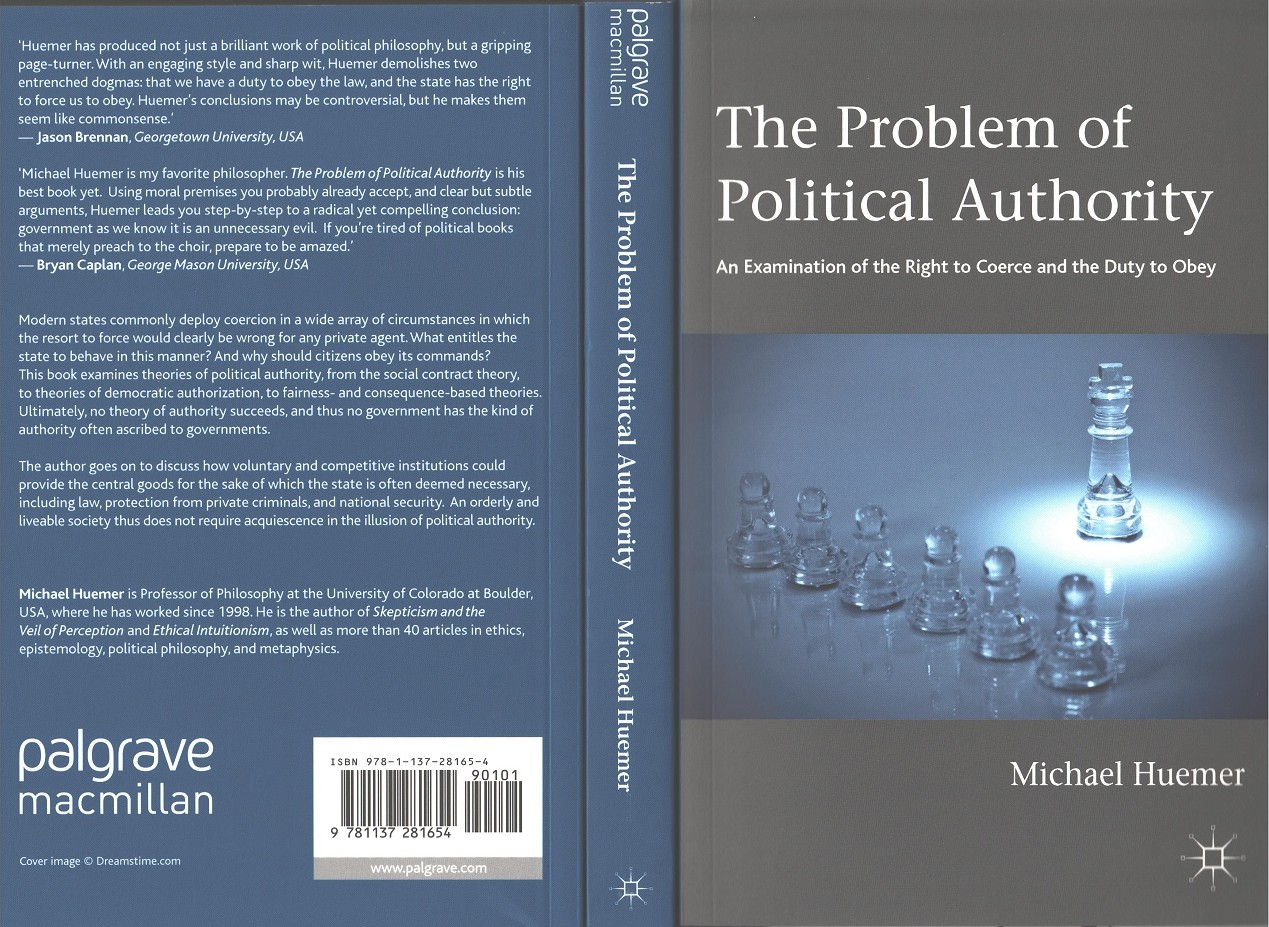
One of the remarkable assumptions that John Locke makes here, and in the 2d Treatise more generally, is that a government cannot have any power that individuals didn't have to begin with. This is a line of thinking that my fellow University of Colorado Boulder professor Michael Huemer pursues in a fascinating way in his book The Problem of Political Authority:
To the extent I think that governments can legitimately do more than Michael Huemer thinks, it is in part because I think individuals in the state of nature also have the right to do more. For example, I consider individuals in the state of nature to have some rights to compel others to contribute to public goods, especially in exigent circumstances.
What John Locke clearly states is that governments can put people on trial and punish them if found guilty because individuals had the right to put people on trial and punish them if found guilty in the state of nature. The great virtue of having governments put people on trial is that it is very difficult for individuals to see clearly when someone has done them wrong. I talked about this in "John Locke: People Must Not Be Judges in Their Own Cases." In application to present day circumstances I emphasized in that post the problem of cases with an administrative agency on one side and an individual of company on the other that are judged by judges hired by the administrative agency. A similar problem arises when a company is able to get away with mandatory arbitration in which cases are judged by judges hired by the company. This violates the sound practical principle of justice that people must not be judges in their own cases just as much as administrative agency cases being judged by judges hired by the administrative agency. Thus, in my view, the Consumer Financial Protection Bureau was upholding a Lockean principle when it ruled against mandatory arbitration, while Congress and President Donald Trump were anti-Lockean to overturn the rule against mandatory arbitration. (I use principles from John Stuart Mill's On Liberty, John Locke's 2d Treatise and Robert Nozick’s Anarchy, State and Utopia to analyze the legitimacy of other aspects of the Consumer Financial Protection Bureau's role in "On the Consumer Financial Protection Bureau.")
The social design problem of organizing things so that our biases don't cause us to do things that are unfair comes up in many other contexts as well, that are less political. For example, economists who are members of the American Economics Association who care about justice have an interest in refereeing systems for the American Economic Review that minimize bias. One thing I worry about in that context, for example, is that the fear that an editor of a major journal might take revenge on someone may inhibit referees from being as tough on the paper of such an editor as on the paper of someone who is less powerful. This is not exactly being a judge in one's own case, but it presents a similar problem of bias. Here of course, I am taking as given the fact that it is very hard to hide the identity of a referee. Even if one avoids citing one's own work in a referee report, the society of economists is in many ways a small world, so that one's views and writing idiosyncrasies are often well known.
To come full circle, note that one right people have in the state of nature that we don't give up in our polity is the right to criticize others. Here we often organize socially to do collective criticism, as in an election or a poll (where private enterprise is doing some of the social organizing), not because we are giving up the right to criticize as an individual, but because we are afraid of reprisals if we criticize powerful people as an individual, without some protection of anonymity.
For links to other John Locke posts, see these John Locke aggregator posts:
- John Locke's State of Nature and State of War
- On the Achilles Heel of John Locke's Second Treatise: Slavery and Land Ownership
Also, see these other posts referencing Michael Huemer:
- Michael Huemer's Libertarianism
- Michael Huemer on Moral Progress
- Michael Huemer's Immigration Parable
- "The Hunger Games" Is Hardly Our Future--It's Already Here
- Does the Fabric of Our Society Depend on a Lie?
- An Experiment with Equality of Outcome: The Case of Jamestown
Critical Reading: Apprentice Level
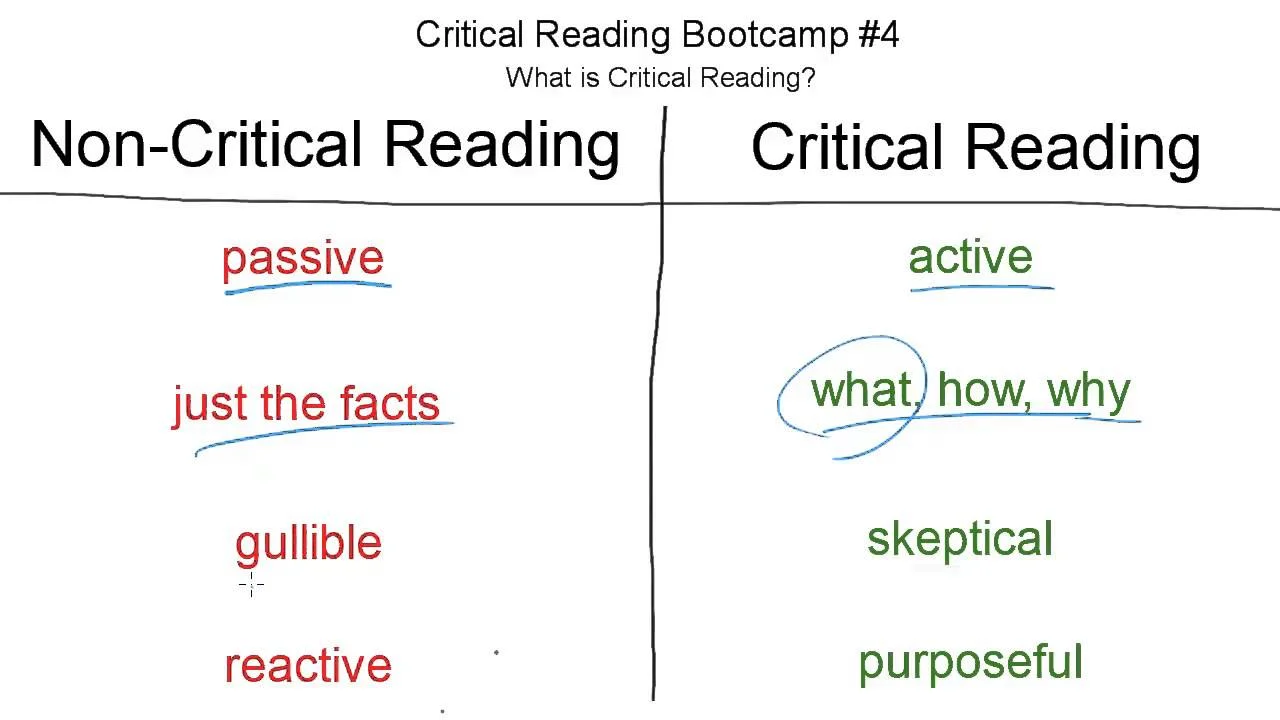
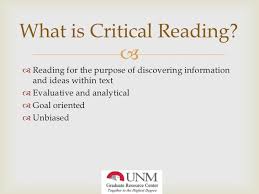
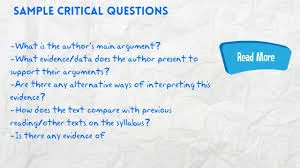

Many people speak in favor of critical reading. The trouble is that they often either
(a) talk about critical reading either as if it were a mysterious, though praiseworthy skill, or
(b) give a roadmap for critical reading that makes it sound very hard.
When I look at the descriptions of critical reading in the images above, I feel tired. I feel the same way when I read the first paragraph of the current version of the Wikipedia article on "Critical reading":
Critical reading is a form of language analysis that does not take the given text at face value, but involves a deeper examination of the claims put forth as well as the supporting points and possible counterarguments. The ability to reinterpret and reconstruct for improved clarity and readability is also a component of critical reading. The identification of possible ambiguities and flaws in the author's reasoning, in addition to the ability to address them comprehensively, are essential to this process. Critical reading, much like academic writing, requires the linkage of evidential points to corresponding arguments.
In this post, I want to stick with an easier level of critical reading I think it is reasonable to ask of my students: what I will call the apprentice level of critical reading. The main intent of the apprentice level of critical reading is simply to make what an author said easier to remember, while getting at least some hints of deeper insight.
Here is how to reach the apprentice level of critical reading:
Every few sentences—or maybe every sentence if the writing is complex— ask yourself: "Do I agree with what the author is saying?" (You can do this with the image of thumbs up/thumbs down sign language.)
If you disagree, ask yourself
Why do I disagree?
Does the author have any good points on her or his side?
Why might the author believe what they said sincerely, even if it isn't true—or say it insincerely?
If you agree, ask yourself
Why do I agree?
Do they have any good arguments I could use someday to argue for the point I agree with?
What are the broader implications of the thing I agree with?
That's it. That is the apprentice level of critical reading. If you do it, you will nail down what the author thinks, where you agree and where you disagree, and you are likely to learn a few other things along the way.
From things you disagree with, you are likely to get ideas you can write about. From things you agree with, you are likely to get things you can think about. And if you are ever asked what the writer thought, you can just consider what you think and then check your memory for whether you were disagreeing or agreeing with the author on that.
This is a follow-up post to "On Teaching and Learning Macroeconomics."
A Barycentric Autobiography
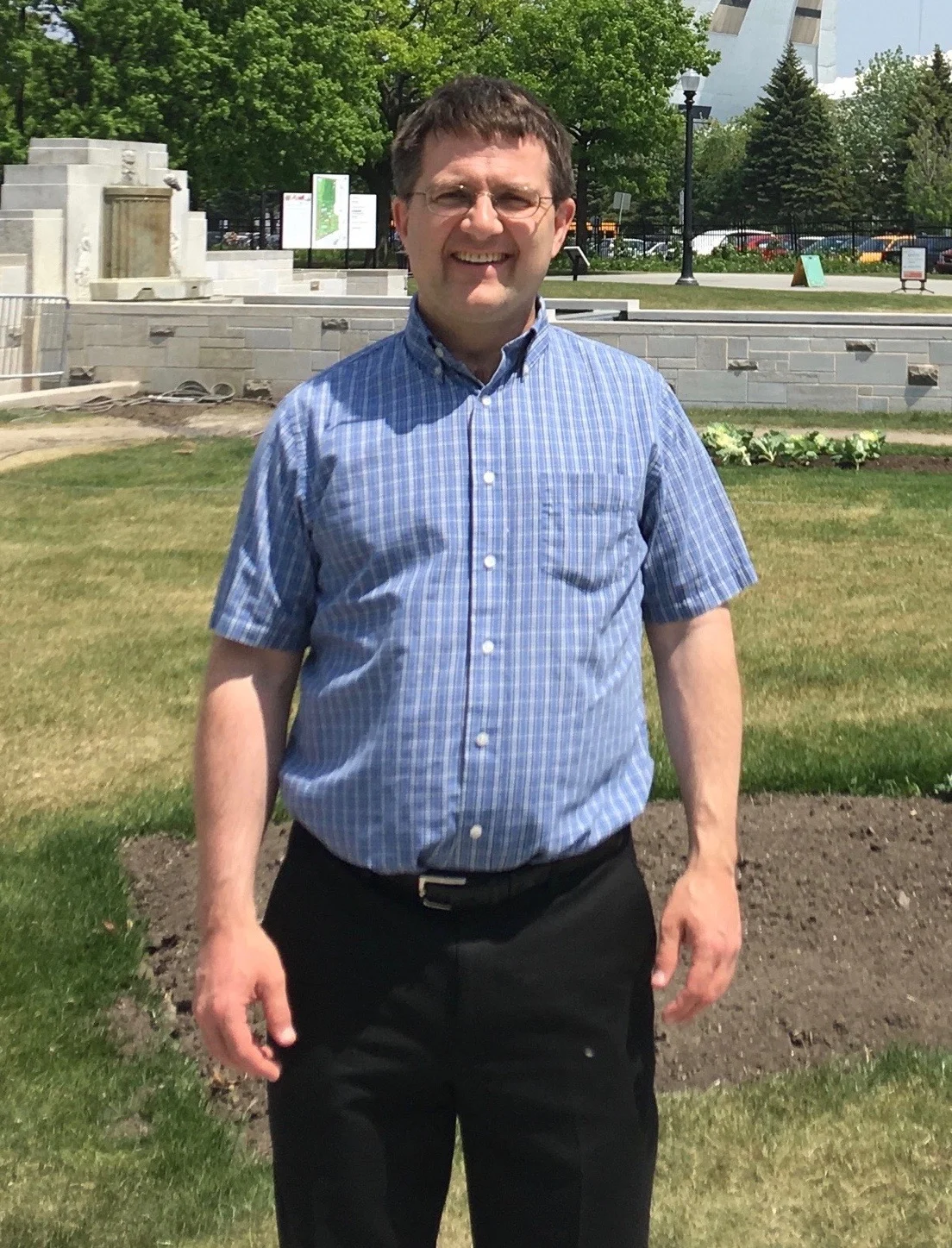
Before: Miles, May 27, 2016. In Montreal. Photo by Gail Cozzens Kimball. You may use this image as long as your use includes a link to this post.
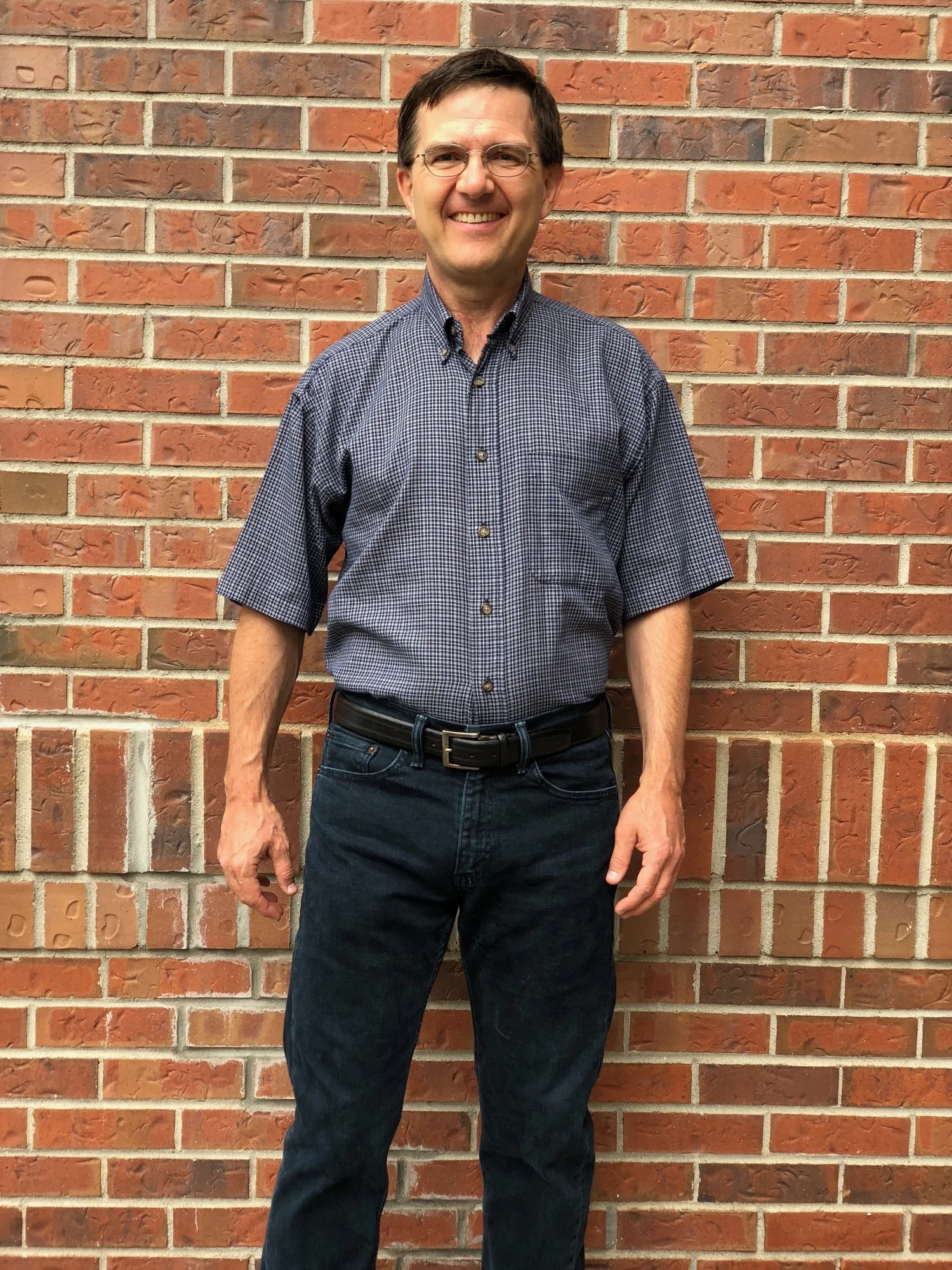
After: Miles Spencer Kimball, June 19, 2018. Photo by Gail Cozzens Kimball. You may use this image as long as your use includes a link to this post or the home page of this blog: supplysideliberal.com
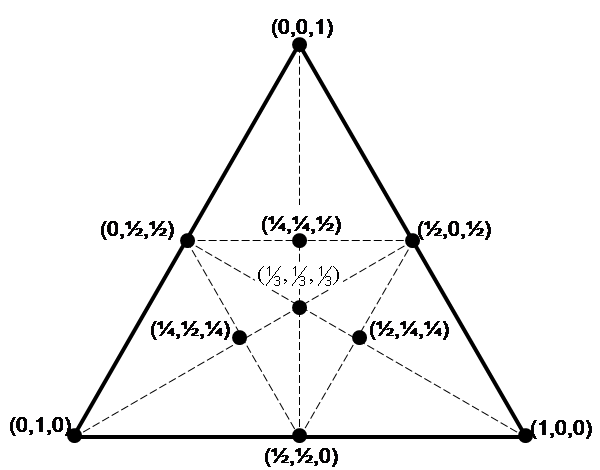
Barycentric coordinates in an equilateral triangle—not what this post is about! Link to the Wikimedia image source. Link to the Wikipedia article "Barycentric coordinate system."
Today is the 6th anniversary of this blog, "Confessions of a Supply-Side Liberal." My first post, "What is a Supply-Side Liberal?" appeared on May 28, 2012. I have written an anniversary post every year since then:
I asked my self the question "What distinguished my blogging this past year from previous years?" The answer was obvious: for the first time, in the past 12 months, I have written a lot about diet and health. You can see links to those posts at the bottom of this post. My first major post on diet and health was "Obesity Is Always and Everywhere an Insulin Phenomenon," on September 21, 2017. That was preceded by
- Sugar as a Slow Poison June 1, 2017,
- Jason Fung: Dietary Fat is Innocent of the Charges Leveled Against It July 13, 2017,
- Salt Is Not the Nutritional Evil It Is Made Out to Be August 3, 2017
- Whole Milk Is Healthy; Skim Milk Less So" . August 31, 2017
My posts on diet and health have attracted a lot of readers. For all of 2017, three of the top four posts talk about diet and health. Here is the top of the list from "2017's Most Popular Posts":
- Five Books That Have Changed My Life 6936
- Obesity Is Always and Everywhere an Insulin Phenomenon 5979
- There Is No Such Thing as Decreasing Returns to Scale 4441
- Forget Calorie Counting; It's the Insulin Index, Stupid 3927
(I discussed Jason Fung's book The Obesity Coden as one of the "Five Books That Have Changed My Life.")
In early July, I'll do a data post on the most popular posts in the first half of 2018. I can tell you already that diet and health posts will be at the top—both in the category of new posts in 2018 and posts from earlier years with continuing popularity. (Let me hasten to add that diet and health posts only account for about one blog post per week. I am still writing all the time about everything else!)
Because blogging about diet and health has become a thing for me, I thought I should give a little more history about why I am interested in this area. Part of the answer is that, as I intimated in "On Teaching and Learning Macroeconomics," as a macroeconomist I am always on the lookout for things that are a big deal for overall social welfare. You can see that angle on the rise of obesity in "Restoring American Growth: The Video."
Joe Weisenthal asked me how I got interested in this area in the podcast "Miles Kimball Explains to Tracy Alloway and Joe Weisenthal Why Losing Weight Is Like Defeating Inflation." I said two things. First, I have very broad interests. In my recruiting conversations here at the University of Colorado Boulder, I legitimately claim to have a toe in almost as many fields of economics as I have toes. I am also proud to say that according to REPEC I am currently in the top 100 economists in the world in "breadth of citations across fields." The second reason I gave Joe for how I got into diet and health is that it is personal for me.
Today, let me explain why my life experiences have made me think about diet and health. I am calling this a barycentric autobiography. "Bary" means heavy in Greek, and shows up in the the weight-loss context in the word "bariatric surgery." The word "barycentric" normally refers to the center of mass or weight, as in barycentric coordinate systems which specify a location by the weights it would take to make that location a center of mass. But here I am using the word "barycentric" in "barycentric autobiography" half in jest to mean "centered on weight."
My story begins with the fact that my mother was quite overweight. As I hinted at in my eulogy "My Mother," my mother had strong views about many things. She told us, her children, that from her we probably had gotten the "fat gene" and so needed to be especially careful about what we ate. She gave us strict rules that we couldn't eat at home outside of meal times without special permission. I remember being amazed when I visited my friend David Benforado's house how confident he was that his parents would be OK with his getting us ice cream for a snack when they weren't around. When I was turning 8 years old, the age when Mormons get baptized "for the remission of sins," I remember thinking I would have to stop stealing raisins from the refrigerator once I was baptized.
My Dad was always relatively thin. My mother would have said he just didn't have the fat gene. (Recently, human genetics research has shown convincingly that there isn't one gene that has a big effect on body mass index; rather there are many, many genes that each have a small effect on body mass index, adding up to a big effect of genes overall, but one that leaves plenty of room for other factors besides genes to have an effect.) But there was another unusual fact about my Dad's eating habits that I now think helped keep him thin: my Dad routinely skipped breakfast and lunch. Typically, he only ate in the evening. Then he ate whatever he wanted. (See "Stop Counting Calories; It's the Clock that Counts.")
The upshot is that I was very aware of the dangers of weight gain from an early age. But my knowledge of what might contribute to weight gain was only what was conventional wisdom at the time. I was born in 1960. One idea common in the 70's, during my teens, was the idea that foods helpful for diabetics were also likely to be helpful for losing weight or avoiding weight gain, and avoiding sugar was thought to be crucial for diabetics.
Another bit of conventional wisdom both then and now is that exercise is helpful in avoiding weight gain. My take on the scientific evidence circa 2018 is that the idea exercise is helpful in avoiding weight gain is true, but that regular exercise is much more helpful in avoiding weight gain that it is in inducing weight loss. (See the article I renamed "Julia Belluz and Javier Zarracina: Why You'll Be Disappointed If You Are Exercising to Lose Weight, Explained with 60+ Studies.") Importantly, other evidence suggests that exercise helps make people happy, smart and healthy even when it does not lead to weight loss. In my late teens and early twenties, I would jog regularly. Later on, I made it a practice, still to this day to do a walk almost every day. I also have been on the lookout for situations where a willingness to do some serious walking and count it as part of my exercise time could save me parking fees or other inconveniences. And I have taken to heart the idea that one should lean toward taking the stairs instead of the elevator whenever it's reasonable.
The guidance of the conventional wisdom was not enough to keep me from gradually gaining weight over the decades. I am 5' 7.5" (171.5 centimeters) tall. In high school, I wrestled at the weight of 132 pounds. When I married Gail in 1984, I weighed 148 pounds. By the time I moved from the University of Michigan to the University of Colorado Boulder in 2016, I weighed around 188 pounds. Along the way, I regularly read popular press articles about diet and health. In the late 1980's I followed the prevailing lowfat advice at the time. I ate a lot of Bran Flakes and skim milk and gained quite a few pounds from that experiment. Every once in a while I would go off ice cream and would lose several pounds. But I was mostly grateful I didn't have worse problems with weight, since I saw many friends who had weight problems, several of whom had to be treated for sleep apnea (trouble in breathing at night), for which the key risk factors are getting older and being overweight.
In the Summer of 2016, we sold our house in Ann Arbor before we could move into our new house in Colorado, so we stayed in an Airbnb in Ann Arbor for a couple of weeks at the tail end of living in Michigan. During that time, I ran into one of my friends in at the University of Michigan Survey Research Center who said he had had a lot of success losing weight on a program where he would alternate between days when he would eat freely and days when he would eat only 500 calories. He was convincing enough that I decided to try it. I followed that approach for about 6 months—roughly the second half of 2016—though I think I targeted 600-650 calories on the low-food days instead of 500. Trying to figure out how to get full on only 600 or so calories on the low-food days drove me to invent for myself the big salads that are still a mainstay of what I eat.
I did lose some weight and found the program of eating only 600 or so calories every other day tolerable. But my wife Gail characterized me as grumpy on the days I was eating only 600 or so calories. I certainly felt a bit deprived. Once we were in Colorado, the days of unrestricted eating often featured a trip to one of the Boulder area's Sweet Cow ice-cream shops.
Toward the end of 2016, I read reviews of Gary Taubes's book The Case Against Sugar. My wife Gail and I read it soon after it came out in December 2016. Online, Gail ran into someone who said that if you liked The Case Against Sugar, you should read Jason Fung's book The Obesity Code. We read that as well. Of the two books, The Obesity Code is much more impressive in how careful its arguments are. But both books had an effect on us. Gail and I went off sugar, bread, potatoes and rice in early 2016, and a few months later began experimenting with the periods of no food—"fasting"—that Jason Fung recommends. I'll leave the rest of Gail's story for her to tell. But my experience was that the pounds came off relatively quickly. Now, in May 2018, I weigh about 155 pounds. My goal for the next six months is to stay about even.
One thing that gave me the confidence that I could fast is that as a Mormon (up until the age of 40) I fasted for close to 24 hours once a month. But relative to that experience fasting as a Mormon, I found fasting remarkably easy when I began fasting after having been off sugar, bread, potatoes and rice for a couple of months. The other remarkable comparison was that not eating at all for a whole day was a lot easier and more pleasant than eating 600 calories had been when I had been on the program alternating between days of 600 calories for the day and days of totally unrestricted eating. I attribute the difference to what was happening to my insulin levels; you can see how I think about this theoretically in "Obesity Is Always and Everywhere an Insulin Phenomenon" and "A Conversation with David Brazel on Obesity Research."
In brief, the idea is fasting can get one's insulin level low enough that body fat begins to be metabolized. Once body fat begins to be metabolized, there are enough nutrients in the bloodstream that hunger is quite mild. In other words, effective weight loss keeps you from being very hungry because your cells are getting fed well from your own stores of body fat. If you are really hungry, that is a sign not much fat burning is taking place. (According to my current views, the key to getting your body to metabolize body fat is to get your insulin levels low. The two keys to doing that are fasting and eating low on the insulin index when you do eat, as I discuss in "Forget Calorie Counting; It's the Insulin Index, Stupid.")
In Spring 2017, I gave my inaugural lecture for the Eugene D. Eaton Jr. Chair I hold here at the University of Colorado Boulder. You can see it in "Restoring American Growth: The Video." I realized that some of the feeling that the pace of improvement had slowed down in the United States had to do with something not measured in GDP: the rise of obesity. In that talk, I shared some graphs showing how widespread and relentless the rise in obesity is. This, along with all the interesting things I was learning from my own experience with a roughly lowcarb diet and fasting made me think I should start blogging about diet and health.
The rest of the story is all there in my posts on diet and health. I plan to keep reading about diet and health and giving my views on what I read. And I plan to keep sharing practical approaches that worked well for me. I appreciate all the interest people have shown in what I have written about diet and health, and people who have shared the results from their own experience in trying out some of the ideas I have been talking about.
Stepping back for a second from diet and health in particular, in my six years of blogging, I have been very grateful to have readers who have been willing to accept the wide range of topics I write about. Early on, I made the decision that I was going to write about politics and religion in addition to economics. And I have touched on many other topics along the way. To me, all of it is about trying to make the world a better place.
Turning back the rise of obesity would definitely make the world a better place. Getting the science right is crucial for that. Let me say in the strongest terms: I don't think the current conventional wisdom on obesity has the science right. What those who are now called experts say cannot be fully trusted. In my view, we as a society dare not trust an important scientific question to a single discipline. Each discipline gets blind spots. So we need to have at least two disciplines studying each important scientific question. For obesity research, I think economists have the right training to be immensely helpful in cross-checking the views of those who are now treated as experts in nutrition and weight loss.
For me personally, diet and health is only going to be a modest fraction of what I am working on in my career, but I hope some economists make it a major part of their careers. And let me say with all righteous indignation, in advance: Anyone who discourages an economist inclined to pursue research questions about diet and health deserves a black mark in history. Economists working on questions of diet and health have the power to literally save thousands and thousands of lives. I hope to live to see the day when many economists pursue such research.
Don't miss these other posts on diet and health and on fighting obesity:
- Stop Counting Calories; It's the Clock that Counts
- Forget Calorie Counting; It's the Insulin Index, Stupid
- Obesity Is Always and Everywhere an Insulin Phenomenon
- The Problem with Processed Food
- Using the Glycemic Index as a Supplement to the Insulin Index
- How Fasting Can Starve Cancer Cells, While Leaving Normal Cells Unharmed
- Why You Should Worry about Cancer Promotion by Diet as Much as You Worry about Cancer Initiation by Carcinogens
- Good News! Cancer Cells are Metabolically Handicapped
- Meat Is Amazingly Nutritious—But Is It Amazingly Nutritious for Cancer Cells, Too?
- The Keto Food Pyramid
- Sugar as a Slow Poison
- How Sugar Makes People Hangry
- Why a Low-Insulin-Index Diet Isn't Exactly a 'Lowcarb' Diet
- Hints for Healthy Eating from the Nurse's Health Study
- The Case Against Sugar: Stephan Guyenet vs. Gary Taubes
- The Case Against the Case Against Sugar: Seth Yoder vs. Gary Taubes
- Gary Taubes Makes His Case to Nick Gillespie: How Big Sugar and a Misguided Government Wrecked the American Diet
- A Conversation with David Brazel on Obesity Research
- Magic Bullets vs. Multifaceted Interventions for Economic Stimulus, Economic Development and Weight Loss
- Mass In/Mass Out: A Satire of Calories In/Calories Out
- Carola Binder: The Obesity Code and Economists as General Practitioners
- Carola Binder—Why You Should Get More Vitamin D: The Recommended Daily Allowance for Vitamin D Was Underestimated Due to Statistical Illiteracy
- Jason Fung: Dietary Fat is Innocent of the Charges Leveled Against It
- Faye Flam: The Taboo on Dietary Fat is Grounded More in Puritanism than Science
- Diseases of Civilization
- Katherine Ellen Foley—Candy Bar Lows: Scientists Just Found Another Worrying Link Between Sugar and Depression
- Ken Rogoff Against Sugar and Processed Food
- Kearns, Schmidt and Glantz—Sugar Industry and Coronary Heart Disease Research: A Historical Analysis of Internal Industry Documents
- Intense Dark Chocolate: A Review
- Salt Is Not the Nutritional Evil It Is Made Out to Be
- Confirmation Bias in the Interpretation of New Evidence on Salt
- Whole Milk Is Healthy; Skim Milk Less So
- Is Milk OK?
- How the Calories In/Calories Out Theory Obscures the Endogeneity of Calories In and Out to Subjective Hunger and Energy
- Putting the Perspective from Jason Fung's "The Obesity Code" into Practice
- 'Forget Calorie Counting. It's the Insulin Index, Stupid' in a Few Tweets
- Julia Belluz and Javier Zarracina: Why You'll Be Disappointed If You Are Exercising to Lose Weight, Explained with 60+ Studies (my retitling of the article this links to)
- Diana Kimball: Listening Creates Possibilities
- On Fighting Obesity
- The Heavy Non-Health Consequences of Heaviness
- Analogies Between Economic Models and the Biology of Obesity
- Debating 'Forget Calorie Counting; It's the Insulin Index, Stupid'
- Podcast: Miles Kimball Explains to Tracy Alloway and Joe Weisenthal Why Losing Weight Is Like Defeating Inflation
Also see the last section of "Five Books That Have Changed My Life" and the podcast "Miles Kimball Explains to Tracy Alloway and Joe Weisenthal Why Losing Weight Is Like Defeating Inflation."
Chris Kimball: Having a Prophet in the Family
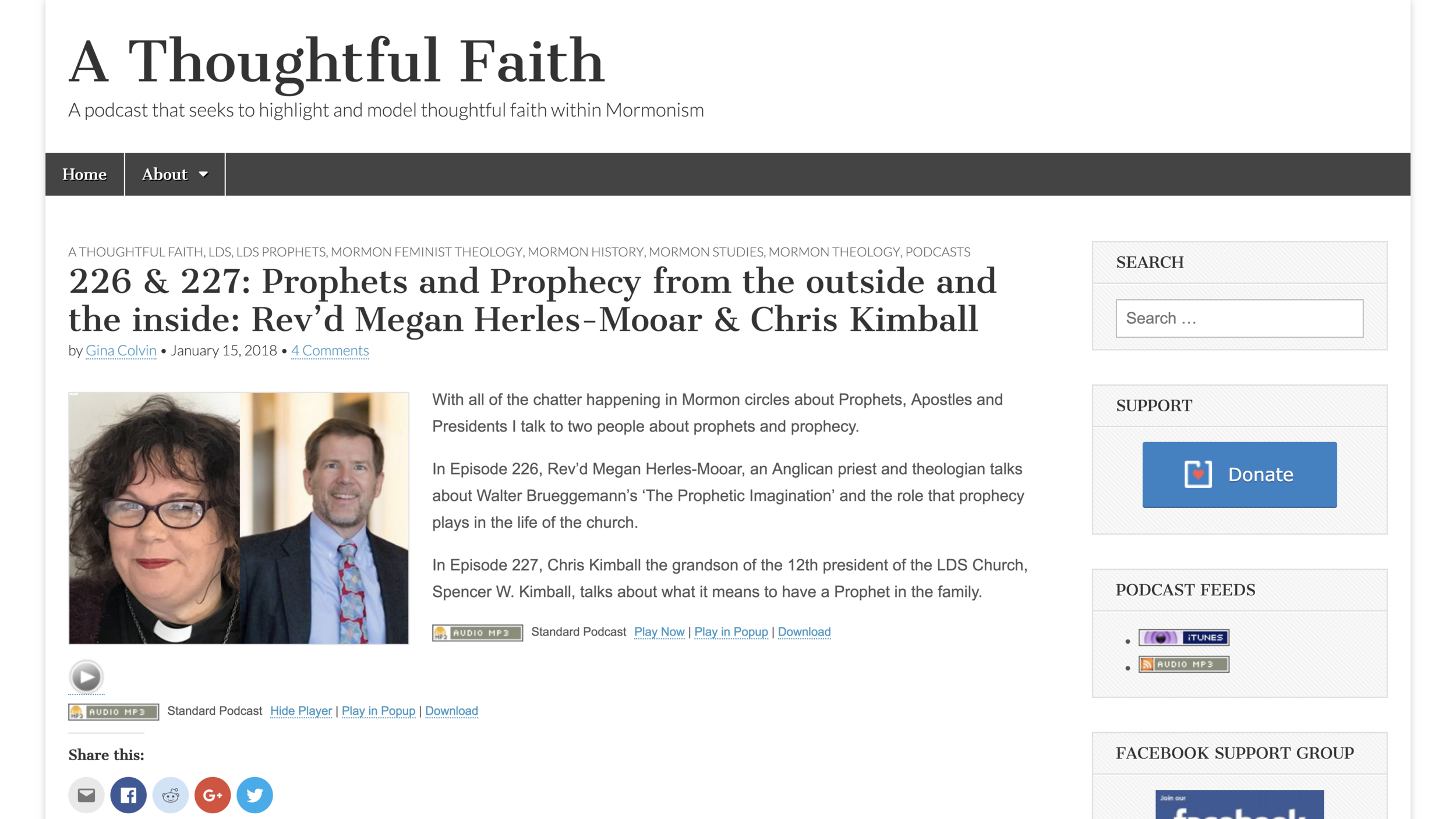
It tickles me to have many members of my family as public figures to some degree. In the podcast above, my brother Chris is being interviewed what it was like to have my grandfather Spencer W. Kimball, the 12th President of the Mormon Church, in the family.
Chris has appeared in supplysideliberal.com many times. Here are other posts Chris authored or coauthored:
- Christian Edward Kimball on Edward Lawrence Kimball
- Christian Kimball: Anger [1], Marriage [2], and the Mormon Church [3]
- Christian Kimball on the Fallibility of Mormon Leaders and on Gay Marriage
- Big Brother Speaks: Christian Kimball on Mitt Romney
- However Low Interest Rates Might Go, the IRS Will Never Act Like a Bank
Postscript. Other reasonably famous relatives include my great-great grandfather Heber C. Kimball, who was Brigham Young's First Counselor (2d in command of the Mormon Church back then); my father's first cousin Hal Eyring, who has been First Counselor to one Mormon Prophet and Second Counselor to two others; his father Henry Eyring, who, to quote Wikipedia's article on Henry Eyring,
...received the Wolf Prize in Chemistry in 1980 and the National Medal of Science in 1966 for developing the Absolute Rate Theory or Transition state theory of chemical reactions, one of the most important developments of 20th-century chemistry.
Trying to live up to the standard of my great uncle Henry Eyring has been an important motivation to me in my scientific efforts as an economist. Trying to do something in the religious dimension that my grandfather, Spencer W. Kimball, excelled at, has been an important motivation to me in my efforts at blogging about religion.
More distantly, Mitt Romney, whom I hope will soon be a senator from Utah, is my father's 2d cousin. Of my living relatives who are public figures to some degree, Mitt Romney and Henry B. Eyring are the two I would disagree with most.
I have written about my Dad, Edward Lawrence Kimball here; he has a Wikipedia article, as does my uncle, Spencer Levan Kimball. My daughter, Diana has a popular blog at dianaberlin.com and a popular Twitter feed: @dianakimball.
Someone who is not a relative by the usual standards, but whom I would like to claim, is Eugene England. Eugene, who died in 2001, is my brother Jordan's father-in-law, a prominent Mormon intellectual, and a very good man.