Janet Adamy and Paul Overberg on Immobility in America

Americans are moving less than they used to. This is preventing rural wages from recovering as more and more of the good jobs move to the cities. Janet Adamy and Paul Overberg wrote a great article about why. All of the quotations are from that article, "Struggling Americans Once Sought Greener Pastures—Now They're Stuck," which was published in the August 2, 2017 Wall Street Journal. 

First, they lay out the magnitude of the issues:

In rural America, which is coping with the onset of socioeconomic problems that were once reserved for inner cities, the rate of people who moved across a county line in 2015 was just 4.1%, according to a Wall Street Journal analysis. That’s down from 7.7% in the late 1970s. 

Most of the rest of the article is about the reasons why. To preview, they are

  1. High Home Prices in the City Because of Restrictive Land-Use Regulations
  2. Occupational Licensing
  3. Aid for the Down-and-Out that Is Tied to a Locality
  4. Cultural Divides

1. High Home Prices in the City Because of Restrictive Land-Use Regulations

I have been struck more and more by the importance of land-use regulations in maintaining the class divide in America. I have written about that issue in these posts:

(Also see Emily Badger: There Is No Such Thing as a City that Has Run Out of Room.)

Here is what Janet and Paul have to report on this issue:

Economists say there are several practical reasons for the declining rural mobility—the first being the cost of housing. While small-town home prices have only modestly recovered from the housing market meltdown, years of restrictive land-use regulations have driven up prices in metropolitan areas to the point where it is difficult for all but the most highly educated professionals to move.

Even more pointedly, they quote Peter Ganong as follows: 

“We’re locking people out from the most productive cities. ... This is a force that widens the urban-rural divide.”

2. Occupational Licensing

I have repeatedly attacked occupational licensing as both an unwarranted infringement on liberty and as a way for the haves to keep down the have-nots. See for example:

In addition to those harms, occupational licensing requirements that differ by state can make it harder for people to move. Janet and Paul write:

Another obstacle to mobility is the growth of state-level job-licensing requirements, which now cover a range of professions from bartenders and florists to turtle farmers and scrap-metal recyclers. A 2015 White House report found that more than one-quarter of U.S. workers now require a license to do their jobs, with the share licensed at the state level rising fivefold since the 1950s.

Janna E. Johnson and Morris M. Kleiner of the University of Minnesota found in a nationwide study that barbers and cosmetologists—occupations that tend to require people to obtain new state licenses when they relocate—are 22% less likely to move between states than workers whose blue-collar occupations don’t require them.

3. Aid for the Down-and-Out that Is Tied to a Locality

In general, it is probably a good thing that America has a wealth of non-governmental forms of aid for people (see "How and Why to Expand the Nonprofit Sector as a Partial Alternative to Government: A Reader’s Guide"). But when the non-governmental aid is tied to a locality, it can inhibit mobility. Governmental aid tied to a locality can do the same thing. Janet and Paul write:

For many rural residents across the country with low incomes, government aid programs such as Medicaid, which has benefits that vary by state, can provide a disincentive to leave. ... Civic leaders here say extended networks of friends and family and a tradition of church groups that will cover heating bills, car repairs and septic services—often with no questions asked—also dissuade the jobless and underemployed from leaving. ...

Cody Zimmer, 29, of Ogemaw County toyed with moving to work for an uncle in New Jersey or closer to Detroit after a decadelong career in skilled manufacturing periodically left him unemployed. But student debt and a divorce damaged his finances, and he says his best option ended up being renting his mom’s house outside West Branch. “If anything happened there, I’d be right back out on my own,” Mr. Zimmer says of these other places. ...

Many West Branch residents say that the town’s economic woes aren’t enough to make them leave. They point to the safety net the community provides—a helping hand to pay bills, or the way people come together when a neighbor is diagnosed with cancer.

It is not impossible to have non-governmental aid that is not tied to a locality. Mormons can move anywhere and immediately have the kind of social support and practical aid from their new congregation that others feel they can only get in their hometown. Every Mormon is effectively assigned several social workers from the congregation, called "home teachers" and "visiting teachers," who come into the home and try to identify if they need help as well as giving a religious lesson. You can read about this system and other aspects of Mormon social support in Megan McArdle's Bloomberg essay "How Utah Keeps the American Dream Alive" (discussed in the storify "Taking Care of the Poor and Troubled Without Getting Tied Up in Knots About Race") and these posts:


Besides practical aid, Mormon congregations buffer culture shock when people move from one place to another. More than one observer has described a Mormon congregation as an ersatz small town. Mormons themselves are not ashamed to glory in the relatively high degree of standardization of Mormonism from place to place, even sometimes comparing it to McDonald's in that regard. 

4. Cultural Divides

For those who do not belong to a religion that provides an ersatz small-town and a degree of cultural homogeneity wherever they go, awareness of the cultural differences between rural areas and the big city can be a powerful force reducing the willingness to move. Janet and Paul write:

Beyond the practical difficulties, rural residents and experts say there is another impediment to mobility that is often more difficult to overcome—the growing cultural divide.

Tom W. Smith, who runs the University of Chicago’s General Social Survey, says that cities’ welcoming attitudes toward immigrants from abroad, same-sex marriage and secularism heighten distrust among small-town residents with different values. ...

“One of the big cultural divides when people move from small towns to cities is this feeling that you can’t be involved in your community,” says David J. Peters, associate professor of sociology at Iowa State University. “You feel powerless to change large cities.”

Europe has understandably low mobility between different countries that have different languages and cultures. America is becoming more like Europe in that regard. 

Politics itself has become a bigger and bigger cultural divide. I was surprised and disheartened by the pushback I got online when I decried political prejudice. Here is my opening salvo criticizing "politicism" and then the tweeted defenses of political prejudice that I received:

I wish people would make a bigger effort to understand the political views of their fellow Americans instead of demonizing those who think differently. Even views that deserve to be fought vigorously need to be understood first in order to fight them effectively. My single most popular post, "John Stuart Mill's Brief for Freedom of Speech," has a useful set of resources for thinking about that. 

Conclusion

Each of these four factors that reduces mobility is a problem in its own right. Trying to remove these obstacles to mobility would also reduce obstacles to opportunity and comity more generally. If you want to see me wrestling with these kinds of issues, try "Restoring American Growth: The Video." 


The Unmaking

Link to the video above on Youtube

Link to the full lyrics

Although I am a Nonsupernaturalist, I like listening to Contemporary Christian Music because it covers a wide range of themes in human life that go beyond the important and moving, but not-wide-ranging-enough themes of the ups and downs of romantic relationships that animate the bulk of popular music. Growing up, I liked the political songs of the 60s for a similar reason: they added political themes to the romantic themes of most popular music. (You can tell that I pay a lot of attention to lyrics; I know many people focus almost entirely on the music itself in what they listen to, apart from lyrics.)  

A common human experience is to have something one has worked hard for fall apart. Nichole Nordeman's song "The Unmaking," (see the videos and links above) points to the deep truth that rebuilding after everything seems to have fallen down sometimes leads to something better than what fell. This has certainly been the case in many instances in my own life. For example, the professional disappointment I wrote about in "Believe in Yourself" led me through a long road to even better research projects. And the crumbling of my belief in Mormonism led me to a better place, religiously. 

To explain why "Demolition Day" can lead to something even better than what came crashing down, Nichole Nordeman suggests that the new creation was God's doing, while what came crashing down was one's own doing, even if done while invoking God's name. Even if no God currently exists, there is a lot of truth to this view. 

Most of us, in our first attempts to build follow the lead of society's current notions of how to proceed. Often that means engaging in "tournaments" in the broad sense in which economists use the word: competitions in which, by design, only a few can reach the top. It is only after failing in a tournament or several tournaments that one begins to question whether the things all the many other people also engaged in tournaments are after are really the most important things. 

In my own belief, asking the question of what is most important and what is really worth doing is the first step toward God—even if God does not yet exist. This is the message of my sermon "Teleotheism and the Purpose of Life." This past year, I have tried to dig into how to begin answering that question in a series of posts that are often framed as advice to young economists, but I hope are helpful to others as well. These three are about not getting caught in the rat race, aiming to do good, and thinking big: 

And these three are about questioning the narrow views other people might have about how one should proceed (here the translation from my attacks on narrow views in economics and academia to attacks on narrow views in other fields may take some extra work): 

Finally,


talks about the importance of love in getting to where we want to go. 

Despite all that I have written so far, I feel there are other deep insights in Nichole Nordeman's lyrics about the experience of seeing things one has built fall down and then rebuilding that I can't fully articulate. There is much that we Nonsupernaturalists can learn from Supernaturalists, even without giving up our disbelief.


When the Output Gap is Zero, But Inflation is Below Target

More and more central banks are facing a situation in which the output gap they are looking at looks close to zero, but inflation is below their target. This is arguably the case for Japan, Sweden and the US, for example. Even the eurozone is getting close to this situation. Sometimes journalists discuss a zero output gap combined with too-low inflation as if such a situation were strange, but a range of different macroeconomic theories all have the property that a zero output gap is consistent with any constant inflation rate. (This is an aspect of "monetary superneutrality.")

Older "sacrifice ratio" models predict that a positive output gap will tend to make inflation gradually rise, while a negative output gap will tend to make inflation gradually fall. Newer models that have a simple Calvo pricing mechanism predict that that an increase in expected future output gaps will make inflation jump up, while a current positive output gap is associated with inflation gradually falling, with the direction reversed for negative output gaps.

I think recent history is easiest to understand by thinking in terms of one of the older "sacrifice ratio" models combined with the idea that the output gap has some immediate effect on inflation has some immediate effect on inflation. I don't have a good microfoundation, but suppose that

gap = log(GDP) - log(natural GDP)

d inflation/dt = a d(gap)/dt + b gap

where both a and b are positive. With this equation, if the output gap is constant at zero, inflation remains unchanged. So the economy can be completely recovered in terms of the output gap without any tendency at all for inflation to go back to target. The term "b gap" that relates the level of the gap to the rate of change of inflation would have dragged down inflation during persistent negative output gaps during the Great Recession and the slow recovery from the great recession. To bring inflation back up to target would require a period of time with a positive output gap. 

Since positive output gaps are pleasant given all the distortions that make the natural level of output lower than the level at which (other than the effects on inflation) the marginal benefit of output equals the marginal cost, why don't central banks shoot for a positive output gap until inflation returns to the target of 2% per year? I think the answer is:

  1. Central bankers are not used to trying to have positive output gaps. The low unemployment rates associated with positive output gaps seem dangerous.
  2. Central bankers don't really like having an inflation target above zero. They feel in their bones that their job is to keep inflation down, close to zero, not to push it up. 

When there is a clear need to raise inflation (say in a situation where inflation is negative), I don't have much sympathy for an aversion to temporarily positive output gaps. But I have a lot of sympathy for the idea that a 2% inflation target is too high. As I argued in "The Costs and Benefits of Repealing the Zero Lower Bound...and Then Lowering the Long-Run Inflation Target," in the absence of any lower bound on interest rates, the inflation target can be lower than if there is a lower bound on interest rates. 

Any central bank that is genuinely committed to eliminating lower bounds on interest rates should reevaluate its inflation target accordingly. Even a willingness to use mildly negative rates should bring down the appropriate inflation target. Both the Bank of Canada and Ben Bernanke have taken the position that planning to use negative interest rates when necessary is better than raising the inflation target above 2%. (See "Bank of Canada would consider setting interest rate below zero: Poloz," "Renewing Canada’s Inflation-Control Agreement," and "Ben Bernanke: Negative Interest Rates are Better than a Higher Inflation Target.") To the extent that position envisions only mildly negative rates, a commitment to use deep negative rates when called for might well reduce the optimal inflation target below 2%. If the optimal inflation target fell, say, as far as 1.5%, the current concern for raising the inflation rate—a goal central bankers feel half-hearted about—would go away. 

If monetary policy were being designed from scratch, I doubt that central bankers would design in a lower bound on interest rates. The tradition of a lower bound on interest rates is simply a bad historical carryover, much like the gold standard was. (Good riddance!) At the moment, that tradition of a lower bound on interest rates is pushing inflation higher than it would otherwise have to be. Or maybe the tradition of a lower bound on interest rates is simply making central bankers who can't bear to have a higher inflation rate feel guilty about not being willing to raise inflation, without actually getting them to raise inflation. 

Further Reading: "How and Why to Eliminate the Zero Lower Bound: A Reader’s Guide." 

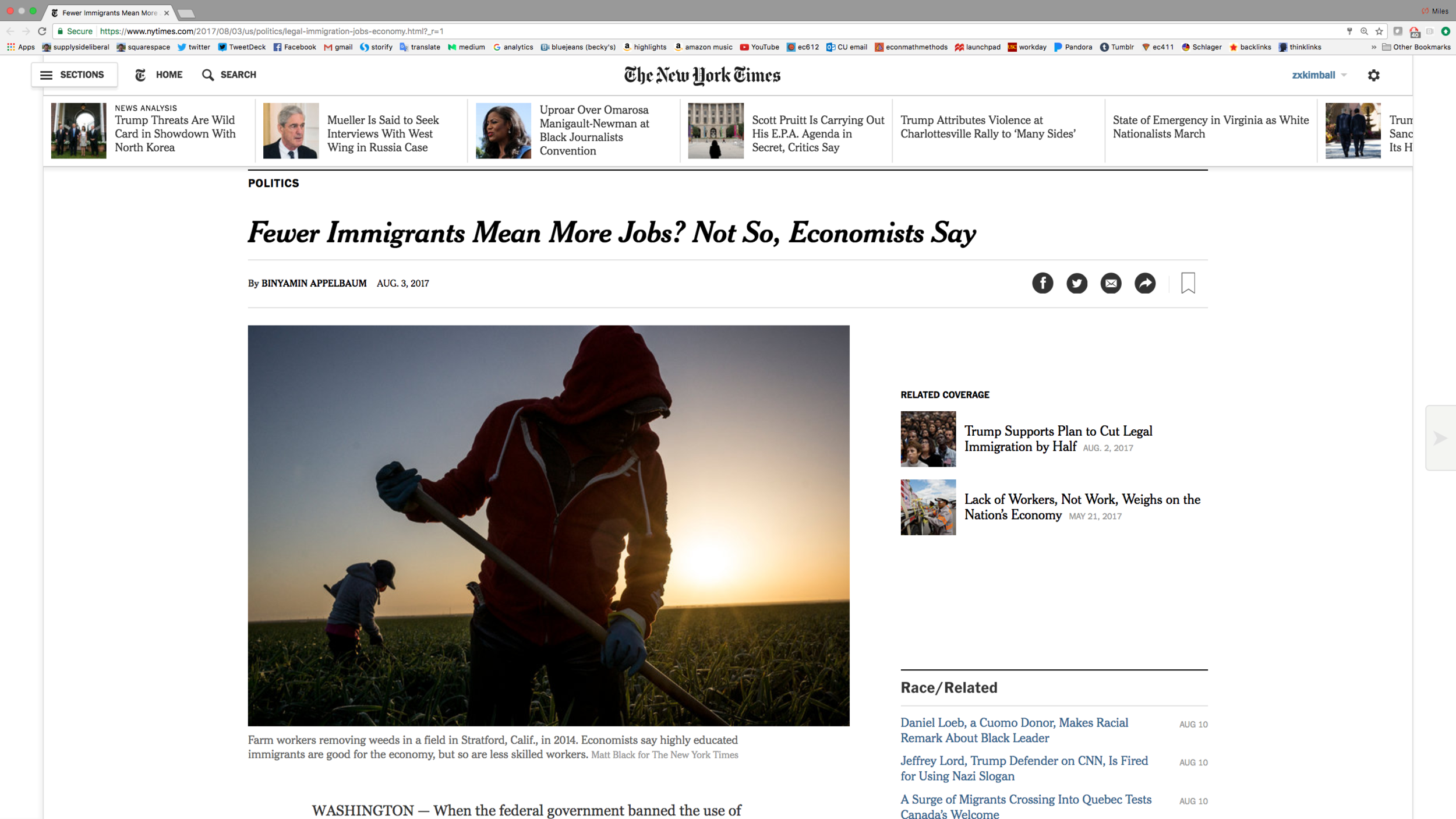
Binyamin Applebaum: Fewer Immigrants Mean More Jobs? Not So, Economists Say

The consequences of immigration and the morality of restricting it are contested. You can see my views in these posts, among others:

Below are the views of the President of the United States, three economists and journalist Binyamin Applebaum, summarizing other views of the economists he interviewed about immigration, all taken from Binyamin Applebaum's article shown above. 

Donald Trump: 

  • This legislation demonstrates our compassion for struggling American families who deserve an immigration system that puts their needs first.

Giovanni Peri: 

  • The average American worker is more likely to lose than to gain from immigration restrictions.
  • People have an outdated image [of legal immigration] ... It’s mostly Asian, Indian, Chinese people who are coming to do mid- and high-level professional jobs.

George J. Borjas

  • [On reducing skilled immigration:] That is a political decision. That is not an economic decision.
  • [On reducing low-skilled immigration:] If all you care about is economics, then it’s really clear. But do you want to live in a country that only cares about money, or do you want to live in a country that has a legacy of being generous to immigrants? Maybe you want a compromise.

Michael A. Clemens

  • The story that ‘when labor supplies go down, wages go up’ is a cartoon.
  • It’s a political myth that the principal need is for high-skilled workers.

Binyamin Applebaum

  • One key reason is that immigrants often work in jobs that exist only because of the availability of cheap labor. Picking tomatoes is a good example. California farmers in the 1950s and early ’60s relied on Mexican workers even though machines were already available. In 1964, 97 percent of California tomatoes were picked by hand. ... By 1966 [after immigrant worker restrictions], 90 percent of California tomatoes were being picked by machines.
  • A 2011 study found that high-skilled women were more likely to work in cities with high levels of immigrants, because families could pay for child care or elder care.

  • The National Academy of Sciences made an ambitious effort to assess the bottom line in 2016. It concluded that the average immigrant cost state and local governments about $1,600 a year from 2011 to 2013 — but the children and grandchildren of immigrants paid far more in taxes than they consumed in public services.

In addition to annoyance at newcomers being different than what people are used to, immigrants are blamed for the fundamental truth that many people in the United States do not see their lives and their children's lives improving. The reasons behind the stagnation of life chances are complex. I wrestle with trying to understand them in "Restoring American Growth: The Video."
If I were to blame a group for this stagnation of life chances of many Americans, it would be the upper middle class, not the rich (who are a sideshow) and certainly not immigrants. In other words, I wish my own social class would engage in more self-criticism. A few modest sacrifices by us, the upper middle class, could make things much better for other Americans. For the short version of this argument, see "Steve Durlauf on Legally Encouraged Residential Segregation as a Perpetuator of Inequality" and "Keep the Riffraff Out!" We, the upper middle class, are good at articulately pointing the finger at others, but unfortunately find it hard not to see ourselves as innocent. 

John Locke Treats the Bible as an Authority on Slavery

John Locke insists in section 24 of his 2d Treatise on Government: “On Civil Government” (in Chapter IV "Of Slavery") that true slavery is a state of war against the slave. But in doing so, he insists that much of historical slavery was not true slavery, because there were limits on what a master could do to a slave:

This is the perfect condition of slavery, which is nothing else, but the state of war continued, between a lawful conqueror and a captive: for, if once compact enter between them, and make an agreement for a limited power on the one side, and obedience on the other, the state of war and slavery ceases, as long as the compact endures: for, as has been said, no man can, by agreement, pass over to another that which he hath not in himself, a power over his own life.

I confess we find among the Jews, as well as other nations, that men did sell themselves; but it is plain, this was only to drudgery, not to slavery: for, it is evident, the person sold was not under an absolute, arbitrary, despotical power: for the master could not have power to kill him, at any time, whom, at a certain time, he was obliged to let go free out of his service; and the master of such a servant was so far from having an arbitrary power over his life, that he could not, at pleasure, so much as maim him, but the loss of an eye, or tooth, set him free, Exod. xxi.

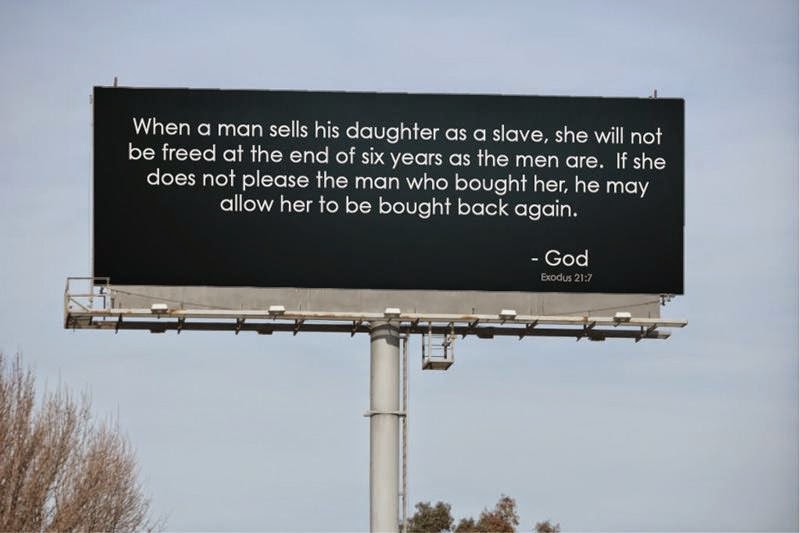
To modern sensibilities, the limitations set out in the passage Exodus 21: 26,27 that John Locke alludes to leave it a horribly reprehensible form of bondage:

“An owner who hits a male or female slave in the eye and destroys it must let the slave go free to compensate for the eye. And an owner who knocks out the tooth of a male or female slave must let the slave go free to compensate for the tooth.

In the images at the top, you can see other passages in which the Bible gives some relatively unrestrictive regulations on slave-holding and slave-buying and selling into slavery, and tells those in bondage to accept their status. There are many other images about slavery in the Bible that I could have chosen from:

Some of the results from googling "slavery in the Bible," images

Some of the results from googling "slavery in the Bible," images

There are several remarkable things about 21st century Western culture's relationship to slavery in the Bible:

  1. Even most of those who consider themselves Biblical literalists have managed to reject or interpret their way out of the Bible's seeming endorsement of slavery. This is a wonderful thing.
  2. In the aggregate, every day a large number of people read or listen to Bible stories involving slavery without recoiling at the slavery, and often even unconsciously seeing the slavery with a rosy glow given the narratively declared goodness and righteousness of the slave-holder in the story.
  3. The putative author of the Bible has by and large escaped the majority cultural opprobrium that has fallen on other cultural heroes—such as many of the framers of the US Constitution—for insufficient opposition to slavery. Instead, much greater opposition to slavery has been read back into the views of the God of the Bible than He clearly expressed. To the extent this is a prerequisite in many cases for rejecting the Bible's seeming endorsement of slavery, this is a very good thing. But it is unclear that it is historically accurate. To make the case that the God of the Bible was against slavery all along, one needs to argue that He chose to speak subtly against slavery, while speaking with a voice of thunder against other sins. This seems an odd prioritization for speaking against sins. 

Let me compare the lack of condemnation of slavery in the Bible to something within my own lifetime of much smaller consequence. From the time of Brigham Young until 1978, the Mormon Church did not allow those of black African descent to be priests or to receive important rites in Mormon temples. I wrote about this in "Flexible Dogmatism: The Mormon Position on Infallibility" and about a related issue in "Will Women Ever Get the Mormon Priesthood? Speaking as a nonsupernaturalist, I have wondered why the Mormon Church did not change this policy sooner. There is a complex and detailed history, but I think it has something to do with the Mormon Church being governed in modern times by relatively old leaders.

Being governed by old leaders is likely to be a plus when the general culture moves in a bad direction; old leaders with a long life of experiences are better able to resist bad innovations. I view the greater cultural acceptance of casual sex as such a bad innovation. And Mormonism has had a salutary influence on its adherents in resisting the casual acceptance of casual sex. But when the general culture moves in a good direction, as it did in embracing the full equality of people of all races, old leaders may be more apt to fear change and resist a genuine cultural advance. 

How is it possible to get the good effects of the accumulated wisdom of age without the bad effects of the rigidity and risk aversion that sometimes come with age? A good answer could help avoid many tragedies. Perhaps the best we can do is to try to have a very long, honest, argument among those of all ages and beliefs that gives those who are in the right the chance to convince those who are in the wrong. I am honored to have friends with whom I can have such long, honest arguments, at least on lesser topics, and occasionally on topics of great moment. I hope we all nurture the capacity for such extended, heartfelt arguments with those who have dramatically different views than our own.  

Don't miss other John Locke posts. Links at "John Locke's State of Nature and State of War."


On When the Private Sector Being Smarter than the Government Is a Problem

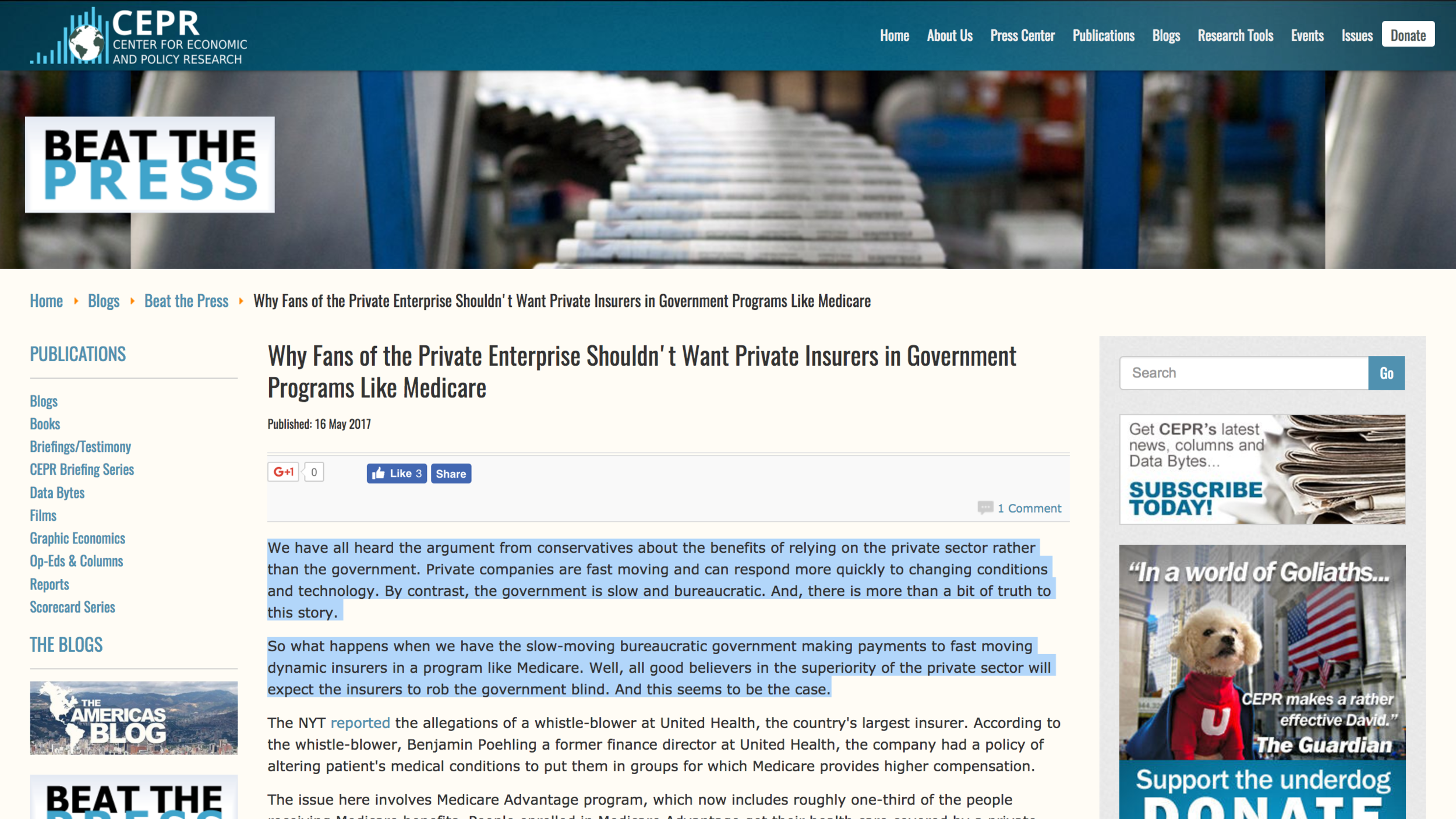
Link to Sarah Rawlins's CEPR blog post above from which the quotation below is taken:

We have all heard the argument from conservatives about the benefits of relying on the private sector rather than the government. Private companies are fast moving and can respond more quickly to changing conditions and technology. By contrast, the government is slow and bureaucratic. There is more than a bit of truth to this story.

So what happens when we have the slow-moving bureaucratic government making payments to fast moving dynamic insurers in a program like Medicare. Well, all good believers in the superiority of the private sector will expect the insurers to rob the government blind. And this seems to be the case.

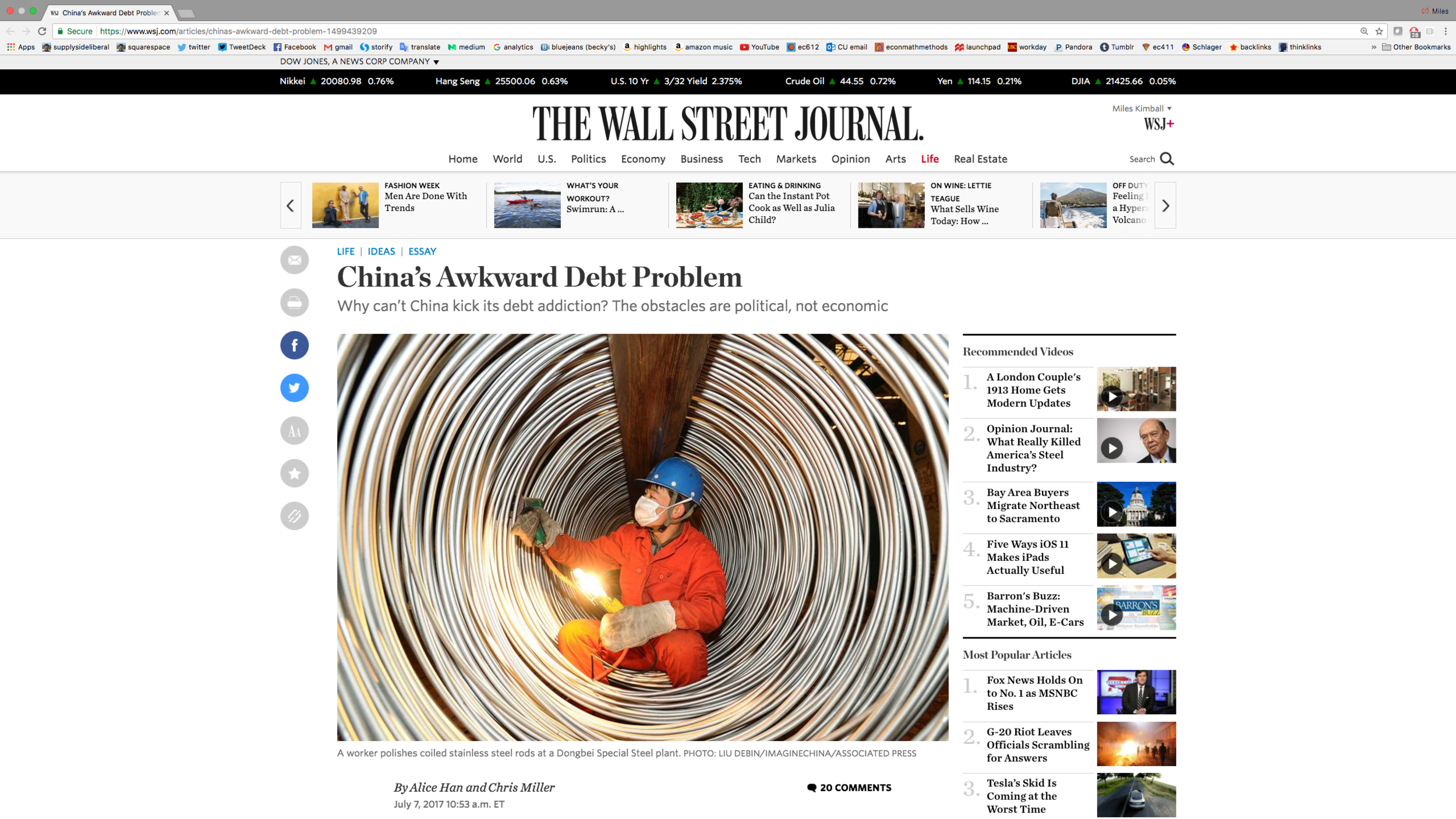
Alice Han and Chris Miller: Political Economy Roots of China's Debt Problem

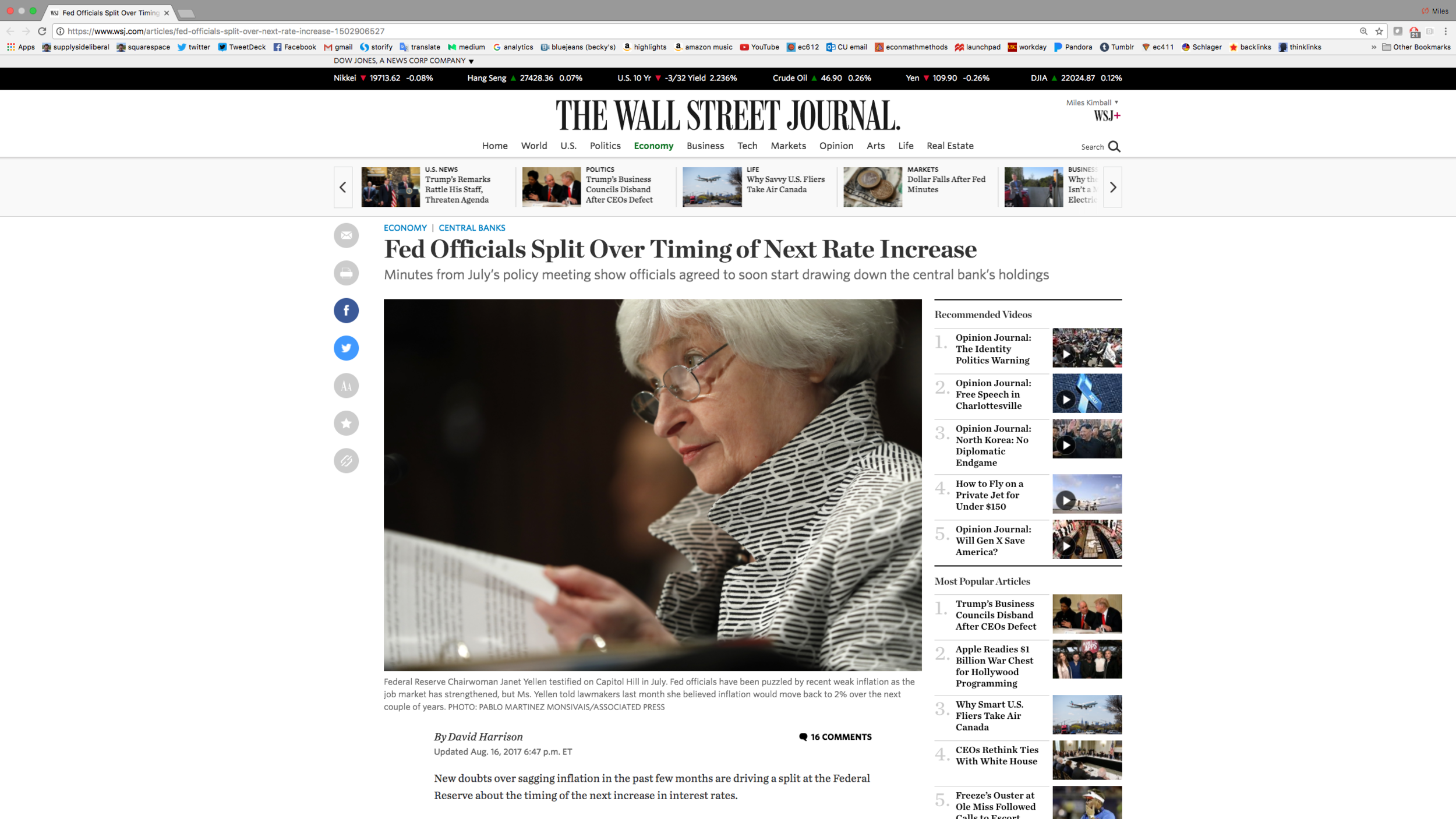
Alice Han and Chris Miller's July 7, 2017 Wall Street Journal article "China's Awkward Debt Problem" is the best article I have ever seen about China's political economy in recent years. I highly recommend you read the entire article, but let me give a few teasers:

China has long relied on debt to fuel growth. The country’s debt burden expanded over 2.5 times faster than its economy in 2016, and its ratio of corporate debt to GDP is one of the highest ever seen in a big economy. ...

Why can’t China kick its debt addiction? The obstacles are political, not economic. Local governments and bosses of state-owned enterprises benefit immensely from government-subsidized loans, and these groups form the backbone of the Chinese Communist Party. ...

The most powerful business interests within the party are those that benefit most from cheap, state-funded lending, fueling China’s debt bubble. The bosses of state-owned firms are in theory subordinate to the party hierarchy. In reality, they constitute a powerful lobby, demanding cheap loans from state banks and the ability to use public assets for the private interests of the monopolies they run. ...

Provincial and local government officials are even more powerful than the bosses of state-owned firms. Real-estate development—which is no less reliant on cheap credit—has driven growth in many regions. It is also a lucrative source of corruption, as local officials sell off property to developers on the cheap in exchange for kickbacks. ...

Believe in Yourself

Link to the Youtube audio above

Link to the full lyrics of "A Rose is a Rose"

Very few of us, no matter how self-assured we may seem, escape periods of self-doubt. Mine came in the late 1990's. After much good fortune early in my career, around that time I had several National Science Foundation grant proposals rejected, one after another. One line of my thinking took me to resentment and anger at an economics profession that didn't appreciate the merit of my work. But another, insistent line of thinking took me to self doubt. In particular, I wondered if maybe I wasn't as good as I had thought I was. Maybe the anonymous reviewers who had rejected my proposals had it right in something they hadn't actually said outright, but seemed to be saying between the lines: maybe I was a mediocre economist. My brain looped over and over again between these two alternatives. Neither alternative was a pleasant one, but wondering if I was mediocre after all was the worst. 

It might make a better story if I could say that I got out of this loop by myself, but I didn't. I had done some psychotherapy before, focusing in classic fashion on understanding my relationship with my Mother, and to a lesser extent, my Dad. Having felt some closure there, I had ended that round of therapy. Now I returned to therapy to figure out how to deal with these distressing career thoughts.  

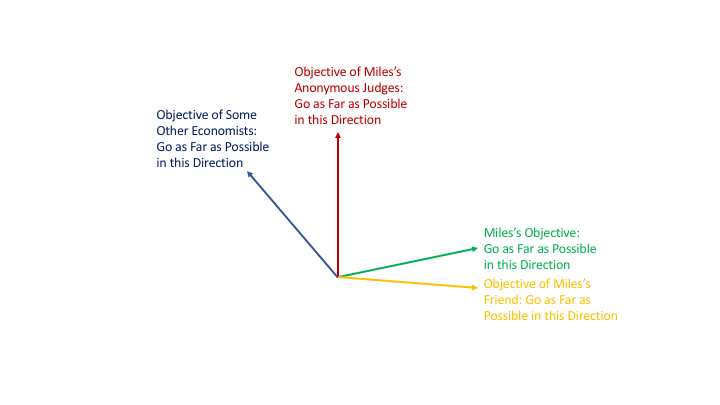
Very laboriously, and with much help, I did reach some degree of resolution. What brought me a degree of inner peace was an insight I have always pictured in terms of arrows representing the directions different economists want to go scientifically. Technically, these arrows are the gradient vectors of various people's objective functions for their scientific work.

I realized that I had been treating the anonymous judges of my National Science Foundation grant proposals as if they were God. And I had been assuming the standards by which they judged good work were the same as my own standards for good work. But in fact, their ideas of what constituted good work were very different from mine. What they thought an economist should be trying to do, was different than what I thought I should be trying to do. I really was trying hard to live up to my own scientific ideals, but my ideals were not the same as theirs. In a way beyond my fathoming, other economists had different values than I did. Some had scientific objectives close enough to mine that they felt I was largely going in the right direction. Others had scientific objectives far enough from mine they thought I was going in the wrong direction. The anonymous judges of my National Science Foundation grant thought I was going partly in the right direction, far enough to say a few positive words, but that I was also going off track in serious ways. No one thought I was doing nothing, though some thought a large share of my scientific activities were a waste.

I still think about these issues often. But instead of going back and forth between feeling unappreciated and doubting myself, now I go back and forth between thinking others should come more in my direction and thinking there are a wide variety of legitimate viewpoints, even if I find some of those viewpoints quite alien. That brain loop is not so bad even when I do get into it. And I find it easier to get out of that loop. 

One thing that helps me now when I see others getting honors or rewards I wish I were getting is to remember what I have set as my own goals and think of how those goals are likely to be different than the goals of those who got those honors and rewards. (I think there are many other academics more subject to envy than I am, but I am very far from immune to envy!) It helps that I have some of those goals written down, most recently in the post I wrote for the 5th anniversary of this blog: "My Objective Function." 

For me, one other thing that has helped me in times of envy and self doubt has been listening to the song in the Youtube audio at the top of this post: "A Rose is a Rose" from Susan Ashton's self-titled 1993 album "Susan Ashton." Let me give a commentary on the lyrics to point out how this song illustrates the principles above. These lyrics are by Wayne Kirkpatrick.

The song begins

You're at a stand still, you're at an impasse
Your mountains of dreams, seems harder to climb
By those who have made you feel like an outcast
Cause you dare to be different, so they're drawing a line

The words "you dare to be different, so they're drawing a line" are perfect for describing the difference in gradient vectors I have drawn above!

Next, 

They say you're a fool, they feed you resistance
They tell you you'll never go very far

Notice that when the naysayers say "you'll never go very far," they are only counting your progress in their preferred direction. They aren't counting all the progress you are making toward what you think is important, but they don't.

The following two lines are some of my favorites. They operate on an emotional, fantasy level:


But they'll be the same ones that stand in the distance
Alone in the shadow of your shining star

It is not at all clear that such a moment of vindication will ever come, but just imagining it makes me feel better. People seldom admit they are wrong, and it is unwise to count on one's tormentors ever doing so. But what we can do is provide these moments of vindication for our friends and loved ones. One of the things my wife Gail and I do to keep our marriage strong is to say often to one another "You were right and I was wrong." You would be surprised at what a strong bond this creates, because you can't get that from just anyone!

Next, the refrain gives the key practical advice—don't overreact to criticism by changing your direction too much:  

Just keep on the same road and keep on your toes
And just keep your heart steady as she goes
And let them call you what they will
It don't matter, a rose by any name is still a rose

It is worth thinking about criticism. It is worth making course corrections if you are genuinely convinced by something someone says. But unless you think there is some chance that what you have been doing is genuinely destructive, keeping on keeping on in mostly the same direction may be the course of action that is truest to your own values. (Of course, if you have been going contrary to your own values, you should rethink what you are doing and change course immediately.) 

Next, the lyrics move to encouragement:

The kindness of strangers, it seems like a fable
But they've yet to see what I see in you

Friends are valuable advisors, both because they are more likely to share some of your sense of what is most important and because they know things about you and your life that others don't. It is important to distinguish between criticism or praise from enemies, criticism or praise from strangers, and criticism or praise from friends.

What I think is the heart of the lyrics are these two lines:


But you can make it if you are able
To believe in yourself the way I do

Notice that "believe in yourself the way I do" means "believe in yourself the way I, your friend, believe in you." It is hard to overstate the importance of believing in yourself. This is the theme of my post "The Unavoidability of Faith." Believing that by your efforts, you can make things better is the first step toward living a life that you love and saving the world.  

After the second time through the refrain comes a reinforcement of the point that criticism does not change the facts of who you are. It may occasionally reveal something you hadn't realized before. But if you can view criticism with dispassion, it never makes you worse than you were before you heard the criticism:

'Cause a deal is a deal in the heart of the dream
And a spade is a spade, if you know what I mean
And a rose is a rose is a rose

Roland Benabou has a fascinating line of research (some of it with coauthors) in which people are modeled as trying to manipulate what information they have in order to feel better about themselves. I discussed these ideas in depth with Roland when the two of us went to dinner after a seminar I gave at the Economics Department at Princeton. I remember being both (a) being persuaded that this was a plausible account of how people actually behave and (b) thinking that such behavior is deeply irrational. More pointedly, I realized that (a) I do this and (b) even if there is any way that it could be a good idea for anyone to do this, it makes no sense at all for me to do it.

Born in 1960, I have already had many decades worth of evidence about my own characteristics. As long as I can avoid the kinds of extreme situation seen in movies, a single day's or a single week's worth of additional evidence about myself should not change that picture much. The biggest likely piece of information about myself would be to learn something that had been true for a long time that I had somehow managed not to see. That might sting, but at least I could console myself that others around me had probably seen that all along and some of them had stayed my friends anyway!

Even when it comes to criticism that I should really listen to in order to make a significant course correction in my life, I have learned the importance of what my therapist (a later one) called "titrating" the criticism: letting it in a little at a time, so I don't go down a psychological rabbit hole. 

As for less helpful criticism, Wayne Kirkpatrick's lyrics say this: 

To deal with the scoffers it's part of the bargain
They heckle from back rows and they bark at the moon

The goals and objectives that each person cultivates can be seen as a garden. Wayne's next line may or may not be true of your enemies' efforts: 

Their flowers are fading in time's bitter garden
But ....

But if you believe in yourself and work hard, the next line—the last line before the final refrain—is true of your own garden: 


... yours is only beginning to bloom

Salt Is Not the Nutritional Evil It Is Made Out to Be

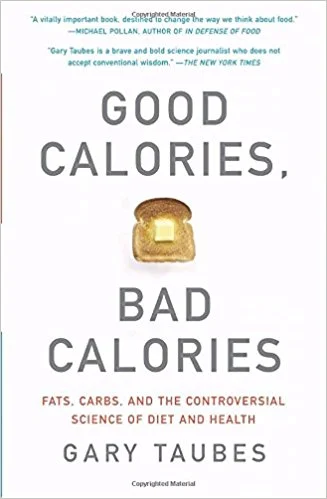
This post could just as well have been titled "Sugar, Not Salt, Should Be the Primary Suspect for Causing High Blood Pressure." The basic argument is that the effects of salt on blood pressure are quite small, while blood pressure has a strong association with insulin and insulin resistance, which in turn are strongly associated with eating refined carbohydrates such as sugar that spike insulin. To make this case, I will turn primarily to excerpting some of what Gary Taubes says in his excellent history of thought about nutrition Good Calories, Bad Calories, which chronicles a great deal of dogmatic arrogance by influential nutrition scientists who outshouted the ideas of other nutrition scientists who had just as much evidence on their side. This claim about dogmatic arrogance can be easily (if laboriously) documented from the historical record, as Gary Taubes does.

The quotations below are from Chapter 8: "The Science of the Carbohydrate Hypothesis."

First, Gary Taubes makes the case that high blood pressure is associated with the pre-diabetes condition of insulin resistance, which is also called metabolic syndrome:

Hypertension is defined technically as a systolic blood pressure higher than 140 and a diastolic blood pressure higher than 90. It has been known since the 1920s, when physicians first started measuring blood pressure regularly in their patients, that hypertension is a major risk factor for both heart disease and stroke. It’s also a risk factor for obesity and diabetes, and the other way around—if we’re diabetic and/or obese, we’re more likely to have hypertension. If we’re hypertensive, we’re more likely to become diabetic and/or obese. For those who become diabetic, hypertension is said to account for up to 85 percent of the considerably increased risk of heart disease. Studies have also demonstrated that insulin levels are abnormally elevated in hypertensives, and so hypertension, with or without obesity and/or diabetes, is now commonly referred to as an “insulin-resistant state.” (This is the implication of including hypertension among the cluster of abnormalities that constitute metabolic syndrome.) Hypertension is so common in the obese, and obesity so common among hypertensives, that textbooks will often speculate that it’s overweight that causes hypertension to begin with. So, the higher the blood pressure, the higher the cholesterol and triglyceride levels, the greater the body weight, and the greater the risk of diabetes and heart disease.

Next, Gary discusses the weakness of the evidence for any serious harm from salt. In particular, even cutting salt in half would reduce blood pressure by only 4 or 5 points ("millimeters of mercury"), while even mildly high blood pressure is 20 points higher than normal, and serious high blood pressure is 40 points higher than normal. 

Despite the intimate association of these diseases, public-health authorities for the past thirty years have insisted that salt is the dietary cause of hypertension and the increase in blood pressure that accompanies aging. Textbooks recommend salt reduction as the best way for diabetics to reduce or prevent hypertension, along with losing weight and exercising. This salt-hypertension hypothesis is nearly a century old. It is based on what medical investigators call biological plausibility—it makes sense and so seems obvious. When we consume salt—i.e., sodium chloride—our bodies maintain the concentration of sodium in our blood by retaining more water along with it. The kidneys should then respond to the excess by excreting salt into the urine, thus relieving both excess salt and water simultaneously. Still, in most individuals, a salt binge will result in a slight increase in blood pressure from the swelling of this water retention, and so it has always been easy to imagine that this rise could become chronic over time with continued consumption of a salt-rich diet.

That’s the hypothesis. But in fact it has always been remarkably difficult to generate any reasonably unambiguous evidence that it’s correct. In 1967, Jeremiah Stamler described the evidence in support of the salt-hypertension connection as “inconclusive and contradictory.” He still called it “inconsistent and contradictory” sixteen years later, when he described his failure in an NIH-funded trial to confirm the hypothesis that salt consumption raises blood pressure in school-age children. The NIH has funded subsequent studies, but little progress has been made. The message conveyed to the public, nonetheless, is that salt is a nutritional evil—“the deadly white powder,” as Michael Jacobson of the Center for Science in the Public Interest called it in 1978. Systematic reviews of the evidence, whether published by those who believe that salt is responsible for hypertension or by those who don’t, have inevitably concluded that significant reductions in salt consumption—cutting our average salt intake in half, for instance, which is difficult to accomplish in the real world—will drop blood pressure by perhaps 4 to 5 mm Hg in hypertensives and 2 mm Hg in the rest of us. If we have hypertension, however, even if just stage 1, which is the less severe form of the condition, it means our systolic blood pressure is already elevated at least 20 mm Hg over what’s considered healthy. If we have stage 2 hypertension, our blood pressure is elevated by at least 40 mm Hg over healthy levels. So cutting our salt intake in half and decreasing our systolic blood pressure by 4 to 5 mm Hg makes little difference.

Salt may cause some water retention, but perhaps surprisingly, so do sugar and other carbohydrates: 

The laboratory evidence that carbohydrate-rich diets can cause the body to retain water and so raise blood pressure, just as salt consumption is supposed to do, dates back well over a century. It has been attributed first to the German chemist Carl von Voit in 1860. In 1919, Francis Benedict, director of the Nutrition Laboratory of the Carnegie Institute of Washington, described it this way: “With diets predominantly carbohydrate there is a strong tendency for the body to retain water, while with diets predominantly fat there is a distinct tendency for the body to lose water.” ...

The “remarkable sodium and water retaining effect of concentrated carbohydrate food,” as the University of Wisconsin endocrinologist Edward Gordon called it, was then explained physiologically in the mid-1960s by Walter Bloom, who was studying fasting as an obesity treatment at Atlanta’s Piedmont Hospital, where he was director of research. As Bloom reported in the Archives of Internal Medicine and The American Journal of Clinical Nutrition, the water lost on carbohydrate-restricted diets is caused by a reversal of the sodium retention that takes place routinely when we eat carbohydrates. Eating carbohydrates prompts the kidneys to hold on to salt, rather than excrete it. The body then retains extra water to keep the sodium concentration of the blood constant. So, rather than having water retention caused by taking in more sodium, which is what theoretically happens when we eat more salt, carbohydrates cause us to retain water by inhibiting the excretion of the sodium that is already there. Removing carbohydrates from the diet works, in effect, just like the antihypertensive drugs known as diuretics, which cause the kidneys to excrete sodium, and water along with it.

The reduction of bloating when someone goes on a low-carb diet is so substantial that weight loss in the first week or two can be quite dramatic, because this water loss is added to whatever fat loss there is. 

In the progression above, I skipped over Gary's discussion of how high blood pressure is one of the "Diseases of Civilization," later renamed more politically correctly as "Western Diseases." That is, people from non-European cultures who eat traditional diets have very little high blood pressure, just as they have very little obesity, very little heart disease and very little cancer. This is true for a wide range of different traditional diets, including the fatty-red-meat-laden traditional Inuit diet, the traditional Masai diet of milk, meat and blood, and diet of coconuts and fish (later coconuts, fish and breadfruit) on the Pacific island of Tokelau. Thus, high blood pressure seems most likely to be due to non-traditional foods, such as sugar, white flour and other highly refined carbohydrates. More generally, it seems likely to be something to which advanced European food-processing technology contributed that was the culprit. When any group began eating distinctively Western foods—of which processed foods are the most distinctive—something in that menu seems to have led to a wide range of chronic diseases. 

Gary does not say this, but salt in particular does not seem to be a good candidate as a cause for one of the "Western Diseases" since it would be quite surprising if there were not some traditional diets that were heavy on salt—perhaps because of a location near the sea—that would have revealed clearly any strong association of salt with high blood pressure. 

Finally, given the importance of sugar and other refined carbohydrates in causing insulin spikes, the following passages about insulin are damning for sugar and refined carbohydrates more generally:

Finally, by the mid-1990s, diabetes textbooks, such as Joslin’s Diabetes Mellitus, contemplated the likelihood that chronically elevated levels of insulin were “the major pathogenetic defect initiating the hypertensive process” in patients with Type 2 diabetes. But such speculations rarely extended to the potential implications for the nondiabetic public. ...

Since the late 1970s, investigators have demonstrated the existence of other hormonal mechanisms by which insulin raises blood pressure—in particular, by stimulating the nervous system and the same flight-or-fight response incited by adrenaline.


Update: Mark Fontana points me to Gina Kolata's May 8, 2017 New York Times article "Why Everything We Know About Salt May Be Wrong," which complicates the story further. What is clear is that the traditional story about salt is wrong and there is no adequate reason to worry about salt intake in the normal range because there simply isn't enough science to justify worry (unless you like worrying). Gina Kolata's article is also interesting one of her interviewees illustrates the way in which many in the nutritional establishment continue to assert the same thing they didn't have enough evidence for in the first place in the face of further contradictory evidence:

“The work suggests that we really do not understand the effect of sodium chloride on the body,” said Dr. Hoenig.

“These effects may be far more complex and far-reaching than the relatively simple laws that dictate movement of fluid, based on pressures and particles.”

She and others have not abandoned their conviction that high-salt diets can raise blood pressure in some people.

But now, Dr. Hoenig said, “I suspect that when it comes to the adverse effects of high sodium intake, we are right for all the wrong reasons.”

 On what basis does Dr. Hoenig say “I suspect that when it comes to the adverse effects of high sodium intake, we are right for all the wrong reasons,” other than out of sheer stubbornness?

Don’t miss my other posts on diet and health. I should note that my views of Gary Taubes have evolved. I have an entire section below of links to posts about Gary Taubes and his work.

I. The Basics

II. Sugar as a Slow Poison

III. Anti-Cancer Eating

IV. Eating Tips

V. Calories In/Calories Out

VI. Wonkish

VIII. Debates about Particular Foods and about Exercise

IX. Gary Taubes

X. Twitter Discussions

XI. On My Interest in Diet and Health

See the last section of "Five Books That Have Changed My Life" and the podcast "Miles Kimball Explains to Tracy Alloway and Joe Weisenthal Why Losing Weight Is Like Defeating Inflation." If you want to know how I got interested in diet and health and fighting obesity and a little more about my own experience with weight gain and weight loss, see “Diana Kimball: Listening Creates Possibilities and my post "A Barycentric Autobiography.