21 Experts Tell Us What the Future Looks Like for Cryptocurrencies and Blockchain
I was one of the "21 experts" in the FocusEconomics article "21 experts tell us what the future looks like for cryptocurrencies and blockchain." My bit reads as follows:
Governments will retain control of currencies. But the blockchain technology is very exciting. What is most exciting is the possibility that the credit-card/debit card oligopoly might be disrupted so that fees come way, way down.
Many central banks are working toward issuing their own digital currencies. The simplest way is to give fintech entrepreneurs low-cost access to a central bank clearing mechanism with streamlined regulations for fintech accounts that are 100% backed by central bank reserves. Some central banks are thinking of giving individuals the equivalent of a central bank reserve account.
There are two big effects on the world economy and financial markets. The first is that a 1 percentage point reduction in credit card/debit card fees from disruptive digital competition is like a 1 percentage point reduction in distortionary taxes. The second big effect on the world economy and financial markets is that when a bigger and bigger fraction of transactions are electronic, central banks will see a smaller political cost to modifications in paper currency policy that allow deep negative interest rates. See "How and Why to Eliminate the Zero Lower Bound: A Reader’s Guide" for a discussion of possible changes in paper currency policy that keep paper currency in the picture but allow deep negative interest rates.
Visit Miles' blog Confessions of a Supply-Side Liberal and follow him on Twitter here.
We can see what the other experts say in the article.
How Sugar Makes People Hangry
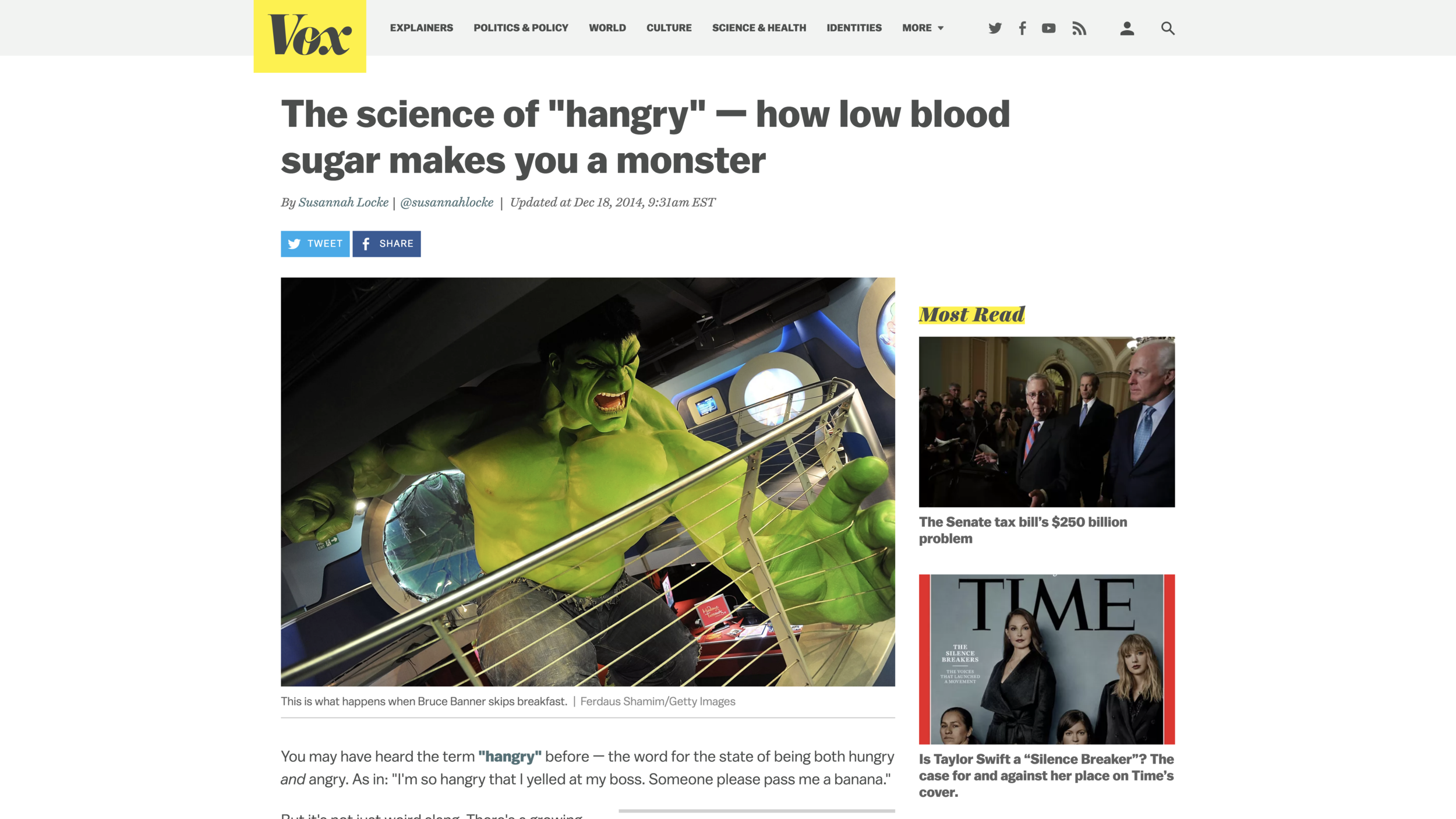
Low blood sugar can put people into a bad mood and make them aggressive. But let me argue that the implications of this fact are a little different than some might naively think.
A big cause of low blood sugar is when you have eaten sugar, refined carbs or some other food with a high insulin index a couple of hours earlier. When sugar, refined carbs or something else high on the insulin index causes insulin to spike, that insulin causes blood sugar to be removed from the bloodstream (some to the muscles and some to be stored as fat in the fat cells). It is like waking up from being asleep at the wheel, seeing you are drifting off to the right, and then overcorrecting to the left.
So, a good way to reduce the chances of blood sugar low enough to make you "hangry" is to avoid sugar, refined carbs and other foods high on the insulin index. If you do avoid sugar, refined carbs and other foods high on the insulin index, you will find that you don't need food handy in order to avoid being hangry. Indeed, if, when you do eat, you eat foods low on the insulin index, you can skip meals entirely and still have a reasonable level of blood sugar because keeping insulin low leads your body to make blood sugar from the fat in your fat cells.
Many, many people in the US think of skipping a few meals as if it were torture. And that is the way skipping meals will seem to you if when you do eat, you eat sugar, refined carbs and other foods high on the insulin index.
People often blame bad nutrition on eating "processed foods." There is a lot of truth to this, if only because most processed foods contain a lot of sugar or some kind of flour or starch that your body quickly converts into sugar. It is easy to verify the high sugar content of most processed foods by looking at the ingredients on the side of the package if you know all the different names for various kinds of sugar. Googling "top types of sugar in processed foods" I came immediately to an post by "Dr. Axe" with this useful list of different types of sugar you might find on an ingredient list:
- Corn syrup or high-fructose corn syrup
- Dextrose or crystal dextrose
- Fructose
- Maltose
- Lactose
- Sucrose
- Glucose
- Evaporated cane juice or fruit juice
- Caramel
- Carob syrup
- Brown sugar
- Raw sugar
- Dextrin and maltodextrin
- Rice syrup
- Molasses
- Evaporated corn sweetener
- Confectioner’s powdered sugar
- Agave nectar
- Other fruit nectars (for example, pear nectar)
For most processed foods, the sugar content is high enough to cause enough harm that it is not so easy to tell whether there is also something else in a particular processed food that also causes substantial harm.
Of course, it isn't sugar per se, but anything that spikes insulin that is the problem. To learn more about which foods are high on the insulin index, see "Forget Calorie Counting; It's the Insulin Index, Stupid." To learn more about the insulin theory of obesity, see my post "Obesity Is Always and Everywhere an Insulin Phenomenon."
You might also be interested in these other related posts:
- The Keto Food Pyramid
- Mass In/Mass Out: A Satire of Calories In/Calories Out
- Jason Fung: Dietary Fat is Innocent of the Charges Leveled Against It
- Faye Flam: The Taboo on Dietary Fat is Grounded More in Puritanism than Science
- Sugar as a Slow Poison
- Katherine Ellen Foley—Candy Bar Lows: Scientists Just Found Another Worrying Link Between Sugar and Depression
- Ken Rogoff Against Sugar and Processed Food
- Kearns, Schmidt and Glantz—Sugar Industry and Coronary Heart Disease Research: A Historical Analysis of Internal Industry Documents
- Salt Is Not the Nutritional Evil It Is Made Out to Be
- Whole Milk Is Healthy; Skim Milk Less So
- How the Calories In/Calories Out Theory Obscures the Endogeneity of Calories In and Out to Subjective Hunger and Energy
- Putting the Perspective from Jason Fung's "The Obesity Code" into Practice
- Julia Belluz and Javier Zarracina: Why You'll Be Disappointed If You Are Exercising to Lose Weight, Explained with 60+ Studies (my retitling of the article this links to)
- Meat Is Amazingly Nutritious—But Is It Amazingly Nutritious for Cancer Cells, Too?
- Diana Kimball: Listening Creates Possibilities
- On Fighting Obesity
- Analogies Between Economic Models and the Biology of Obesity
- Debating 'Forget Calorie Counting; It's the Insulin Index, Stupid'
Also see the last section of "Five Books That Have Changed My Life."
Katherine Ellen Foley—Candy Bar Lows: Scientists Just Found Another Worrying Link Between Sugar and Depression →
In addition to the link above, for more contrarian discussion of nutrition, obesity and chronic diseases, don't miss:
- Forget Calorie Counting; It's the Insulin Index, Stupid
- Obesity Is Always and Everywhere an Insulin Phenomenon
- The Keto Food Pyramid
- Mass In/Mass Out: A Satire of Calories In/Calories Out
- Jason Fung: Dietary Fat is Innocent of the Charges Leveled Against It
- Faye Flam: The Taboo on Dietary Fat is Grounded More in Puritanism than Science
- Sugar as a Slow Poison
- Katherine Ellen Foley—Candy Bar Lows: Scientists Just Found Another Worrying Link Between Sugar and Depression
- Ken Rogoff Against Sugar and Processed Food
- Kearns, Schmidt and Glantz—Sugar Industry and Coronary Heart Disease Research: A Historical Analysis of Internal Industry Documents
- Salt Is Not the Nutritional Evil It Is Made Out to Be
- Whole Milk Is Healthy; Skim Milk Less So
- How the Calories In/Calories Out Theory Obscures the Endogeneity of Calories In and Out to Subjective Hunger and Energy
- Putting the Perspective from Jason Fung's "The Obesity Code" into Practice
- Julia Belluz and Javier Zarracina: Why You'll Be Disappointed If You Are Exercising to Lose Weight, Explained with 60+ Studies (my retitling of the article this links to)
- Meat Is Amazingly Nutritious—But Is It Amazingly Nutritious for Cancer Cells, Too?
- Diana Kimball: Listening Creates Possibilities
- On Fighting Obesity
- Analogies Between Economic Models and the Biology of Obesity
- Debating 'Forget Calorie Counting; It's the Insulin Index, Stupid'
John Locke: Land Title is Needed to Protect Buildings and Improvements from Expropriation

The importance of land is often not the land by itself, but the fact that something valuable can be done to the land or something valuable can be built on the land. It is important that people be able to get title to land in order to make such improvements or to build such buildings without fear that those improvements or those buildings will be taken away. John Locke makes that argument in section 34 of 2d Treatise on Government: “Of Civil Government” (in Chapter V "Of Property"):
God gave the world to men in common; but since he gave it them for their benefit, and the greatest conveniences of life they were capable to draw from it, it cannot be supposed he meant it should always remain common and uncultivated. He gave it to the use of the industrious and rational, (and labour was to be his title to it;) not to the fancy or covetousness of the quarrelsome and contentious. He that had as good left for his improvement, as was already taken up, needed not complain, ought not to meddle with what was already improved by another’s labour: if he did, it is plain he desired the benefit of another’s pains, which he had no right to, and not the ground which God had given him in common with others to labour on, and whereof there was as good left, as that already possessed, and more than he knew what to do with, or his industry could reach to.
I have several miscellaneous thoughts about this:
1. Hernando de Soto became famous for talking about how important giving slum-dwellers title to the land they live on can be for economic development. When this advice is followed, it is an interesting example of "squatters" usurping land title when the land was mostly unimproved, and then being given land title after building a shack on a (small) piece of land.
2. Often what stands in the way of building is not the difficulty of getting standard legal title to a piece of land, but the political monopoly over how a piece of land may be used that local governments have. If a local government holds sway over too large an area, the urge to stifle competition and fear of congestion can often lead to a political failure—and political obstruction in the way—of delivering on the social justice imperative I enunciate in "Building Up With Grace" that every substantial city have a district with essentially no height limits and excellent bus service to the rest of the city, so that people of modest means can afford to move to attractive cities—cities that work, cities that have jobs and amenities.
3. In the modern world, very often, a great part of the value of a piece of land has to do with the other buildings and streets that it is near. One of the themes of "Density is Destiny" is about cities as the key element of a socially increasing-returns-to-scale technology. If it were possible to create more cities that work, cities that have jobs and amenities, on land that is now far enough away from other things that it is inexpensive, that would be great. Overall, great cities are underprovided. Part of the answer is letting existing attractive cities grow more; but ideally (and this is not excuse for those existing cities not to grow), it would be good to also have new, attractive cities arise. Here, I think there is an externality. If someone made a wonderful city come into being, shehe would capture only a small share of the value generated.
4. One case in which it is easier to get a city to arise is when that city has a significantly better legal structure than the surrounding cities. Think Shenzhen. This is Paul Romer's idea of a charter city. In addition to the value of a charter city in helping make the transition toward a better legal structure in a particular country, a charter city is also valuable simply because it is an additional city.
5. There is a severe shortage of land in the world available for conducting high-level political experiments. That is, you can buy land, but you can't easily buy the right to set up your own nation on a patch of land. To me, this seems unfortunate. The ability to create space colonies—either on space stations or asteroids—may change this in the next century or two. Expect a flowering of new political experiments. Now is the time to develop the ideas for those political experiments.
Don't miss other John Locke posts. Links at "John Locke's State of Nature and State of War."
Shane Parrish—Understanding Your Circle of Competence: How Warren Buffett Avoids Problems →
Via John L. Davidson.
For one of my thoughts on this topic, see "How to Find Your Comparative Advantage."
On the Virtue of Scientific Disrespect

A toy model. Image source.
Looking at Narayana Kocherlakota's brief on "Toy Models" that Noah Smith flags, my reaction is that in macroeconomics these days, there is much too much respect for the older generation of macroeconomists. Scientific progress requires a certain level of disrespect for one's elders. I feel the needed level of disrespect for one's elders is currently lacking. Many rules were set down at the dawn of the Rational Expectations Revolution. It is time for more of those rules to be broken. You can see some of my opinions on how the old rules should be broken in my post "Defining Economics."
I understand that many young economists feel the need to get tenure before they start breaking the rules. But then it is imperative to have a plan for how to keep your determination to someday break the rules alive during the long road to tenure, so that you haven't been totally coopted by the system by the time you get tenure. My post "Breaking the Chains" also talks about this struggle to nurture the authentic scientist within during that long journey.
In the many interactions with young macroeconomists that have been generated by my sojourn in the blogosphere, I have run into the following phenomenon more than once: a yearning for a different way to do macroeconomics, coupled with a resignation because there is only one allowed way to do things. Balderdash! There are many ways to do macroeconomics. Collectively, we make up our own rules. I think macroeconomics would be better off if the rules established by a now aging group of macroeconomists were set aside for new rules made up by the younger generation of macroeconomists. Any rule that is 40 years old deserves to be isolated and examined closely to see if it still serves scientific progress in macroeconomics.
Unfortunately, many of most prestigious macroeconomists in the world have an authoritarian streak or are possessed by intolerant ideological zeal. (I mean "ideological" in a scientific sense, not a political one.) It is important to notice authoritarian streaks and intolerant ideological zeal and to be prepared to disobey when you see fit in order to further the progress of science.
Don’t miss these other posts on posts on being human, on being a scientist and on being an economist.
The Keto Food Pyramid
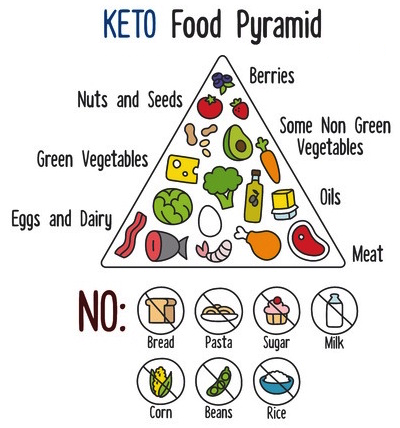
Link to the source for this graphic
I consider the amount of insulin a food or beverage causes the body to produce a key benchmark for nutrition research. For any nutrition claim, I want to know how much of the causality is working through insulin and what effect is left over when insulin production is held constant either experimentally or statistically. You can see why I take this view in "Obesity Is Always and Everywhere an Insulin Phenomenon" and "Forget Calorie Counting; It's the Insulin Index, Stupid."
Bonnie Kavoussi pointed me to the graphic above, which does a good job at showing how to avoid the types of food that are the very highest on the insulin index. However, taking the insulin index that I discuss in detail in "Forget Calorie Counting; It's the Insulin Index, Stupid" as the gold standard, let me point to a few problems with this graphic:
The Keto Food Pyramid doesn't do a good job at distinguishing between types of food that are medium on the insulin index and those that are low on the insulin index. Avoiding high is most important, but leaning toward low in the choice between low and medium also matters. In particular, any fruit (including berries), as well as most types of meat, poultry and fish need to be eaten in moderation.
While skim milk is high on the insulin index, whole milk is not.
While some types of beans are high on the insulin index, other types of beans are reasonably low on the insulin index.
While I suspect typical American spaghetti is indeed quite bad, existing evidence on the insulin index suggests (surprisingly) that there may be some types of pasta that are not so bad. More research is needed on this.
It is only raw carrots that are OK. Cooked carrots have a higher glycemic index, suggesting a high insulin index.
Potatoes should be on the banned list.
Most important of all, soft drinks, punch and juice need to be on the banned list!
In addition to the key posts mentioned above,
don’t miss my other posts on diet and health:
I. The Basics
Jason Fung's Single Best Weight Loss Tip: Don't Eat All the Time
What Steven Gundry's Book 'The Plant Paradox' Adds to the Principles of a Low-Insulin-Index Diet
David Ludwig: It Takes Time to Adapt to a Lowcarb, Highfat Diet
II. Sugar as a Slow Poison
Best Health Guide: 10 Surprising Changes When You Quit Sugar
Heidi Turner, Michael Schwartz and Kristen Domonell on How Bad Sugar Is
Michael Lowe and Heidi Mitchell: Is Getting ‘Hangry’ Actually a Thing?
III. Anti-Cancer Eating
How Fasting Can Starve Cancer Cells, While Leaving Normal Cells Unharmed
Meat Is Amazingly Nutritious—But Is It Amazingly Nutritious for Cancer Cells, Too?
IV. Eating Tips
Using the Glycemic Index as a Supplement to the Insulin Index
Putting the Perspective from Jason Fung's "The Obesity Code" into Practice
Which Nonsugar Sweeteners are OK? An Insulin-Index Perspective
V. Calories In/Calories Out
VI. Other Health Issues
VII. Wonkish
Framingham State Food Study: Lowcarb Diets Make Us Burn More Calories
Anthony Komaroff: The Microbiome and Risk for Obesity and Diabetes
Don't Tar Fasting by those of Normal or High Weight with the Brush of Anorexia
Carola Binder: The Obesity Code and Economists as General Practitioners
After Gastric Bypass Surgery, Insulin Goes Down Before Weight Loss has Time to Happen
A Low-Glycemic-Index Vegan Diet as a Moderately-Low-Insulin-Index Diet
Analogies Between Economic Models and the Biology of Obesity
Layne Norton Discusses the Stephan Guyenet vs. Gary Taubes Debate (a Debate on Joe Rogan’s Podcast)
VIII. Debates about Particular Foods and about Exercise
Jason Fung: Dietary Fat is Innocent of the Charges Leveled Against It
Faye Flam: The Taboo on Dietary Fat is Grounded More in Puritanism than Science
Confirmation Bias in the Interpretation of New Evidence on Salt
Eggs May Be a Type of Food You Should Eat Sparingly, But Don't Blame Cholesterol Yet
Julia Belluz and Javier Zarracina: Why You'll Be Disappointed If You Are Exercising to Lose Weight, Explained with 60+ Studies (my retitling of the article this links to)
IX. Gary Taubes
X. Twitter Discussions
Putting the Perspective from Jason Fung's "The Obesity Code" into Practice
'Forget Calorie Counting. It's the Insulin Index, Stupid' in a Few Tweets
Debating 'Forget Calorie Counting; It's the Insulin Index, Stupid'
Analogies Between Economic Models and the Biology of Obesity
XI. On My Interest in Diet and Health
See the last section of "Five Books That Have Changed My Life" and the podcast "Miles Kimball Explains to Tracy Alloway and Joe Weisenthal Why Losing Weight Is Like Defeating Inflation." If you want to know how I got interested in diet and health and fighting obesity and a little more about my own experience with weight gain and weight loss, see “Diana Kimball: Listening Creates Possibilities” and my post "A Barycentric Autobiography. I defend the ability of economists like me to make a contribution to understanding diet and health in “On the Epistemology of Diet and Health: Miles Refuses to `Stay in His Lane’.”
Debating 'Forget Calorie Counting; It's the Insulin Index, Stupid' →
In addition to the storify story at the link above, for more contrarian discussion of nutrition, obesity and chronic diseases, don't miss:
- Forget Calorie Counting; It's the Insulin Index, Stupid
- Obesity Is Always and Everywhere an Insulin Phenomenon
- Mass In/Mass Out: A Satire of Calories In/Calories Out
- Jason Fung: Dietary Fat is Innocent of the Charges Leveled Against It
- Faye Flam: The Taboo on Dietary Fat is Grounded More in Puritanism than Science
- Sugar as a Slow Poison
- Kearns, Schmidt and Glantz—Sugar Industry and Coronary Heart Disease Research: A Historical Analysis of Internal Industry Documents
- Salt Is Not the Nutritional Evil It Is Made Out to Be
- Confirmation Bias in the Interpretation of New Evidence on Salt
- Whole Milk Is Healthy; Skim Milk Less So
- How the Calories In/Calories Out Theory Obscures the Endogeneity of Calories In and Out to Subjective Hunger and Energy
- Putting the Perspective from Jason Fung's "The Obesity Code" into Practice
- Julia Belluz and Javier Zarracina: Why You'll Be Disappointed If You Are Exercising to Lose Weight, Explained with 60+ Studies (my retitling of the article this links to)
- Meat Is Amazingly Nutritious—But Is It Amazingly Nutritious for Cancer Cells, Too?
- On Fighting Obesity
- Analogies Between Economic Models and the Biology of Obesity
- Diana Kimball: Listening Creates Possibilities
Also see the last section of "Five Books That Have Changed My Life."
How Did Evolution Give Us Religion?
Hat tip to Joseph Kimball for flagging the video above
Above is a very interesting video that discusses the problems with explanations of religion based on genetic evolution.
This suggests that religion is more likely to be a product of memetic evolution. Internet "memes" may be an example of memes, but in many respects a bad example. The current incarnation of the Wikipedia article "Meme" defines a meme this way:
A meme (/ˈmiːm/ MEEM) is an idea, behavior, or style that spreads from person to person within a culture — often with the aim of conveying a particular phenomenon, theme, or meaning represented by the meme. A meme acts as a unit for carrying cultural ideas, symbols, or practices, that can be transmitted from one mind to another through writing, speech, gestures, rituals, or other imitable phenomena with a mimicked theme. Supporters of the concept regard memes as cultural analogues to genes in that they self-replicate, mutate, and respond to selective pressures.
Richard Dawkins is the coiner of the word "meme," giving it this meaning in his book The Selfish Gene:

The key point Dawkins made was that evolution only requires something that can be (a) propagated with reasonable fidelity, but (b) not with perfect fidelity, leading to variation, which (c) provides the raw material for some variants to be propagated more effectively than others.
Richard Dawkins made another, less well known point in his book River out of Eden:
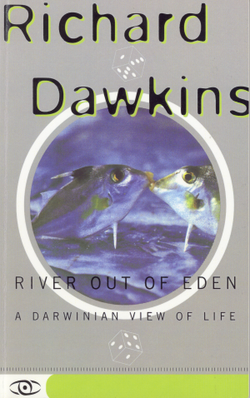
In the chapter "God's Utility Function," as I interpret it, Richard Dawkins argues that it is things that are subject to evolutionary selection that have utility functions. Viewing things that way, genes have utility functions, and so do memes. The utility functions of religious memes are especially obvious.
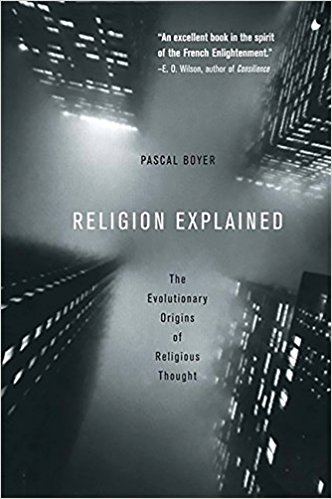
For a brilliant book on the memetics of religion, read Pascal Boyer's Religion Explained. Among memes that already exist, fidelity in transmission is a big evolutionary advantage. Among other things, Pascal Boyer shows how to do simple experiments akin to Chinese whispers ("the telephone game" in the US) to gauge the transmission fidelity of different concepts of God or the supernatural. He finds, for example, that violating one normal law of nature is much more memorable than violating two at once—at least until a meme gets off the ground.
Pascal Boyer's technique of Chinese whispers experiments to measure transmission fidelity can be applied to other types of memes as well. For example, I have long thought that the memetics of ideas in the heads of people who trade in financial markets should be studied in this way. If ideas circulating on Wall Street and among traders on other exchanges were identified early on and tested for how memorable they are and how much people want to repeat them, it might be possible to predict which way markets would move in the future. (An idea identifiably good at propagating is likely to gets into more heads.) This would be a way of making more testable Robert Shiller's view of the stock market that I write of in "Robert Shiller: Against the Efficient Markets Theory."
There is a key difference between financial market memes and memes in established religions. Many financial market memes—including financial market memes that move markets—are quite falsifiable. When they are falsified, they often die. By contrast, religious memes that have survived for a long time tend to be very hard to falsify. For example, beliefs about the afterlife are not that easy to falsify. Young religions sometimes have easily falsifiable beliefs, old religions much less.
One of the things that made it easier for me to stop believing in Mormonism is that Mormonism, as a young religion (officially founded in 1830), it still has many reasonably falsifiable beliefs, such as the belief that one can get personal revelations from God that I write about in the middle section of "Five Books That Have Changed My Life." Believing Mormons who read my account are likely to immediately being pushing the belief in personal revelation in a less falsifiable direction, and even I did some of that, but not enough to keep me a believer.
I have long had a fascination with Memetics. (Twice, I taught a Spring semester course on genetic and memetic evolution at the University of Michigan.) I have heard that many people in Silicon Valley and the rest of the tech community have this fascination as well—which is part of how the word "meme" became attached to certain internet objects. I think much more should be done to strengthen Memetics as a scientific discipline. Within anthropology, Memetics is typically called "cultural evolution." That is an important field within anthropology. But Memetics is important for other social sciences as well.
I hope to write more about Memetics here on this blog in the future.
Emma Munbodh: Cashless Shops in the UK →
One question is whether this would be legal in the US. The answer is yes. Below is Q&A text copied from a Federal Reserve Board webpage that Daniel Reck pointed me to on the Facebook page for this post:
Is it legal for a business in the United States to refuse cash as a form of payment?
Section 31 U.S.C. 5103, entitled "Legal tender," states: "United States coins and currency [including Federal reserve notes and circulating notes of Federal reserve banks and national banks] are legal tender for all debts, public charges, taxes, and dues."
This statute means that all United States money as identified above is a valid and legal offer of payment for debts when tendered to a creditor. There is, however, no Federal statute mandating that a private business, a person, or an organization must accept currency or coins as payment for goods or services. Private businesses are free to develop their own policies on whether to accept cash unless there is a state law which says otherwise.
What this means is that there is no Federal law that businesses must accept cash. My question then is this: Which states require businesses to accept cash?
Also on the Facebook page for this post, my nephew Peter Kimball points out that the salad restaurant Sweetgreens in Washington D.C. does not accept cash.
Mass In/Mass Out: A Satire of Calories In/Calories Out
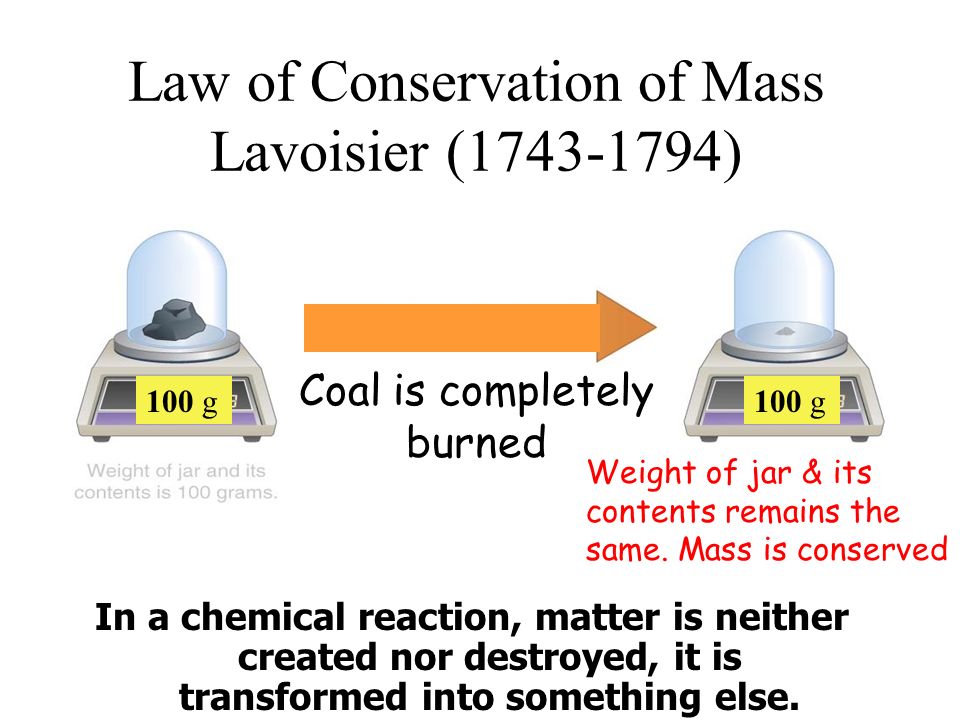
My satirical talents fall far short of Jonathan Swift (see his "Modest Proposal"), so a more accurate title of this post would be "Mass In/Mass Out: Toward a Satire of Calories In/Calories Out." My aim is to provide conceptual raw material for such a satire by someone else with superior satirical and parodying talent.
Many people believe the meaning of calories in/calories out to weight loss is obvious. But in believing that, they are sneaking in an assumption that calories in an calories out are primarily governed by conscious decisions, so that the importance of physiological variation in metabolic rate and the half-conscious impact of the primal motivational forces of hunger and how energetic one feels are obscured.
One reason the rhetorical move of talking as if the meaning of calories in/calories out is so attractive is that
weight gain in calories = calories in - calories out
is an identity. So that if one can sneak in one's interpretation of what calories in/calories out means, then that interpretation can be made to seem like an incontestable principle. Indeed, people have been know to claim that their interpretation of what calories in/calories out means for weight loss is as incontrovertible as the law of conservation of energy itself (also known as the first law of thermodynamics).
In "Forget Calorie Counting; It's the Insulin Index, Stupid," "Obesity Is Always and Everywhere an Insulin Phenomenon," "How the Calories In/Calories Out Theory Obscures the Endogeneity of Calories In and Out to Subjective Hunger and Energy" and below, I write directly about the common misinterpretation of the meaning of the calories in/calories out identity. But here let me begin by showing the wrongheadedness of the typical misinterpretation of calories in/calories out by applying the same interpretive angle to another identity: mass in/mass out.
Mass in/mass out is an identity under exactly the same circumstances as calories in/calories out: when there is only a trivial amount of mass-energy conversion going on, as will be true for human beings who are not part of a nuclear explosion. Given that assumption of non-explosivity, the identity for mass in/mass out is even simpler than for calories in/calories out:
weight gain (pounds) = mass in (pounds) - mass out (pounds)
It is simpler because mass in and mass out are in the same units as weight gain: pounds. (Or all three of weight gain, mass in and mass out are in kilograms for those outside the metric-benighted US.) The calories in/calories out identity is complicated by the fact that a pound of body fat corresponds to about 3500 calories, while muscle, glycogen and water in the body all contain a different number of calories per pound. No such complications for the mass in/mass out identity!
Taking the same interpretive angle as is typically used for calories in/calories out, the implications of mass in/mass out for weight loss are as follows. (Warning for those who find it difficult to understand satire: Most of this is bad advice. Please do not take this seriously! If you do, you could harm yourself.) If you think any of these are bad or even dangerous bits of advice, think of how bad the advice might also be from this interpretive angle for calories in/calories out.
To lose weight using the principles of mass in/mass out:
- eat less
- drink less (including drinking less water)
- poop more
- urinate more
- sweat more
- spit
There are a few other things that one could do to reduce mass in or increase mass out (bulimics abuse one), but that is a pretty good list.
To me, it is also a familiar list. I was a wrestler in junior high and high school. Like boxers, wrestlers are divided into different weight classes, and it gives a wrestler an advantage to go down to a lower weight. In order to "make weight," wrestlers often do all of the above in the last 24 hours or so before a match or a tournament. Personally, all I did was to not eat or drink for 24 hours before the weigh-in. I didn't need to sweat or spit, and urination and pooping came naturally. The fact that wrestlers use mass in/mass out so successfully shows the truth of its principles.
Warning: If mass in/mass out is a big way you think about weight loss, it could be a warning sign that you have anorexia and bulimia. If you have any suspicious that you might be anorexic or bulimic, you need to get help!
Analogies between Mass In/Mass Out and Calories In/Calories Out
It is not easy for people to understand how the usual interpretation of calories in/calories out can be so wrong. Deep contemplation of mass in/mass out is a potential remedy for this misunderstanding.
Both mass in/mass out and calories in/calories out (interpreted from the usual calories in/calories out angle) are brute force approaches to weight loss. The analogy between mass in/mass out and calories in/calories out is quite good. In both cases, what might seem like the logical advice has some truth to it, but ignores the longer-run regulatory mechanisms at work. For example, with a bit of a lag, drinking water simply causes one to urinate more (and perhaps salivate and sweat a bit more), so over a horizon a few days or a week, drinking water has no effect on weight. Similarly, as I discuss in "Forget Calorie Counting; It's the Insulin Index, Stupid" and "Obesity Is Always and Everywhere an Insulin Phenomenon," more calories in from something that does not cause the body to generate much insulin—say olive oil or nuts—increases metabolic rate and makes you less hungry (so you are likely to eat less of other things). So unless you actively interfere with the regulatory mechanisms, drinking water won't lead to long-run weight gain—and neither will consuming more olive oil or nuts.
Let me give another pair of examples. On the mass in/mass out side, if you eat less, you will poop less, so mass in/mass out doesn't give as powerful an effect from eating less over long horizons as it does over short horizons. There is a limit to how empty one's gastrointestinal tract can be. Over longer horizons, the slower weight-loss process of liquidating glycogen and then the even slower weight-loss process of burning body fat are all one can manage.
On the calories in/calories out side, if you exercise more, you will tend to work up an appetite, and you are also likely to fidget and move around less the rest of the day. That is how the experts explain why you are likely to be disappointed if you are exercising to lose weight. (On the other hand, if you are exercising in order to be healthier, happier and smarter, you are on the right track. For that matter, if you are exercising so you can settle in to your desk chair and get a lot of work done the rest of the day, you might also be on the right track.) Exercising can have some effect on the insulin-sensitivity of muscles, so it can have some long-run weight-loss effect, but naive application of calories in/calories out gives a very bad idea of how much weight loss exercise is likely to lead to in the absence of active interference with the regulatory mechanisms for calories in/calories out.
Both mass in/mass out and calories in/calories out are true identities. But deriving good weight-loss advice from these identities is not so easy. Understanding the regulatory mechanisms is the key. For calories in/calories out, insulin is at the heart of the single most important regulatory mechanism. For mass in/mass out, I leave it as an exercise for the reader to identify the relevant regulatory mechanisms.
Postscript: In addition to being useful for wrestlers and boxers trying to make weight, thinking about mass in/mass out can be very helpful in understanding the short-run fluctuations in weight that can often discourage those on a weight-loss program. By weighing more than once a day, it is easy to convince yourself that over periods of time too short for any significant fat burning or accumulation to take place that your weight can easily vary over a 5 pound range.
For more contrarian discussion of nutrition, obesity and chronic diseases, don't miss:
- Forget Calorie Counting; It's the Insulin Index, Stupid
- Obesity Is Always and Everywhere an Insulin Phenomenon
- Mass In/Mass Out: A Satire of Calories In/Calories Out
- Jason Fung: Dietary Fat is Innocent of the Charges Leveled Against It
- Faye Flam: The Taboo on Dietary Fat is Grounded More in Puritanism than Science
- Sugar as a Slow Poison
- Kearns, Schmidt and Glantz—Sugar Industry and Coronary Heart Disease Research: A Historical Analysis of Internal Industry Documents
- Salt Is Not the Nutritional Evil It Is Made Out to Be
- Confirmation Bias in the Interpretation of New Evidence on Salt
- Whole Milk Is Healthy; Skim Milk Less So
- How the Calories In/Calories Out Theory Obscures the Endogeneity of Calories In and Out to Subjective Hunger and Energy
- Putting the Perspective from Jason Fung's "The Obesity Code" into Practice
- Julia Belluz and Javier Zarracina: Why You'll Be Disappointed If You Are Exercising to Lose Weight, Explained with 60+ Studies (my retitling of the article this links to)
- Meat Is Amazingly Nutritious—But Is It Amazingly Nutritious for Cancer Cells, Too?
- On Fighting Obesity
- Analogies Between Economic Models and the Biology of Obesity
- Diana Kimball: Listening Creates Possibilities
Also see the last section of "Five Books That Have Changed My Life."
Bloomberg's Series on Reviving Productivity →
Don't miss my take on this topic of reviving productivity: "Restoring American Growth: The Video." Bonnie Kavoussi gives the highlights of that talk in "Bonnie Kavoussi's Tweetstorm on "Restoring American Growth."
Against Occupational Licensing
Amid many questionable opinions, the Wall Street Journal editorial page has an excellent take on occupational licensing, as can be seen from the November 24, 2017 editorial linked above. The editorial draws from the report "License to Work: A National Study of Burdens from Occupational Licensing" by the Institute of Justice.
I have been a vocal opponent of occupational licensing for longer than I have been a proponent of negative interest rates as a monetary policy tool (November 5, 2012). In my August 12, 2012 post "When the Government Says "You May Not Have a Job" I write
... sometimes, the rich and the middle class both gang up on the poor. This is nowhere more in evidence than in the area of occupational licensing. ...
Once an occupational licensing regime is set up, one factor making the system hard to change is that those who “paid their dues” to get the license resent the idea that others could do what they do without a license. But even before an occupational licensing regime is set up, an important impetus is often those within a field who resent the idea that others who do lower quality work should be allowed to tarnish the reputation of a field. There is a problem here. It is often a low level of skills that puts someone in the position of being poor. Therefore, to say that no one should be allowed to put up a shingle to do cheap, low-quality work is often to say that a poor person should not be allowed to work. But somehow, the poor who look so sympathetic in other contexts start looking like “riffraff” when they are the competition. ...
... if political forces are insistent that something must be done by government, there is all the difference in the world between government regulation of labels and government regulation of substance. ...
To the extent that even the urge toward substantive occupational licensing cannot be resisted because of at least superficially plausible arguments about health and safety, it might be possible to get a better balance by imposing some kind of global budget constraint on licensing requirements that forces regulation to focus on those requirements that have the least specious justifications.
The kind of global budget constraint I have in mind in that last sentence is the one I proposed in my July 22, 2012 post "Magic Ingredient 1: More K-12 School":
What I want to do is to restrain the tendency to go overboard on occupational licensing while allowing genuinely necessary competencies to be transmitted by requiring states to ensure that their schools high school tracks that would make it reasonably possible to be meet the legal qualifications for any of at least 60% of all licensed occupations, with each student able to be qualified with his or her high school diploma for at least 10% of all licensed occupations. Then the graduates might actually be able to get a job. This requirement for getting the Federal education grant could be met by any combination of reducing licensing requirements and increasing effective training that each state chose. I am sure that states would game the rule, so that the overall effect would be less than what this sounds on the surface, but it would be better than the way things are now, where students graduating from high school are kept out of many of the more desirable occupations by occupational licensing restrictions.
For those who want to fight occupational licensing as I do, the editorial linked above, "Licenses to Kill Opportunity" is itself a rich resource, hinting at the richness of the Institute of Justice report "License to Work: A National Study of Burdens from Occupational Licensing." Below let me first give some quotations from the Wall Street Journal about the facts, then about the interpretation of the motivation for licensing and the costs of licensing:
Facts:
- California’s door repairmen, carpenters and landscapers must first rack up 1,460 days of supervised on-the-job experience, then pay more than $500 for the license, before they can work as a contractor.
- Until recently, the New Hampshire Board of Barbering, Cosmetology & Esthetics could levy fines on salons that have a barber’s pole—or even a pole painted red, white and blue that resembles one—but no licensed barber.
- Only three states and the District of Columbia require a license for interior designers. But in all four, aspirants must clock six years of education or experience, pass an exam, and pay between $1,120 and $1,485 for the license. That’s far more training than is required for a dental assistant (Washington, D.C.), optician (Florida), midwife (Louisiana) or pharmacy technician (Nevada).
- In February an Arizona board targeted a cosmetology student who dared to give free haircuts to the homeless. He risked being barred from the profession until Gov. Doug Ducey interceded.
The Motivation for Licensing:
- The cost and time to obtain a license is no accident, as professional guild members sit on state licensing boards and reinforce the racket. They want to limit competition to keep prices high.
- Licensing proponents claim they’re merely protecting public health. But the Institute for Justice found that on average tree trimmers undergo 16 times more training than an emergency medical technician, and cosmetologists more than 11 times.
- ... heavy-handed licensing doesn’t follow party lines, which means the rules are rooted in political muscle more than ideology.
The Costs of Licensing:
- Stiff licensing requirements are often prohibitive for America’s working poor, keeping them trapped in low-wage, low-skill jobs.
- Many states also bar people with a criminal record from working in a licensed profession. Society pays the price. Researchers at Arizona State University’s Center for the Study of Economic Liberty found that in states with burdensome licensing requirements, recidivism rates increased by more than 9% over a 10-year span. In states where it was easier to get a license, the rates went down.
- Nationwide, licensing drives up prices by as much as $203 billion annually. The requirements also hurt consumers by restricting access to goods and services.
Because it is a genuinely bipartisan good government initiative, the fight against the overgrowth of occupational licensing is a fight that can be won. (It isn't just the Wall Street Journal and Institute of Justice trying to restrain occupational licensing. The Obama administrations Treasury Department also weighed in against excessive occupational licensing.) Because it is a fight at the state level, it is a good effort for politically inclined high school and college students as well as their elders to get involved in.
Confirmation Bias in the Interpretation of New Evidence on Salt →
In addition to the link above, for more contrarian discussion of nutrition, obesity and chronic diseases, don't miss:
- Forget Calorie Counting; It's the Insulin Index, Stupid
- Obesity Is Always and Everywhere an Insulin Phenomenon
- Jason Fung: Dietary Fat is Innocent of the Charges Leveled Against It
- Faye Flam: The Taboo on Dietary Fat is Grounded More in Puritanism than Science
- Sugar as a Slow Poison
- Kearns, Schmidt and Glantz—Sugar Industry and Coronary Heart Disease Research: A Historical Analysis of Internal Industry Documents
- Salt Is Not the Nutritional Evil It Is Made Out to Be
- Confirmation Bias in the Interpretation of New Evidence on Salt
- Whole Milk Is Healthy; Skim Milk Less So
- How the Calories In/Calories Out Theory Obscures the Endogeneity of Calories In and Out to Subjective Hunger and Energy
- Putting the Perspective from Jason Fung's "The Obesity Code" into Practice
- Julia Belluz and Javier Zarracina: Why You'll Be Disappointed If You Are Exercising to Lose Weight, Explained with 60+ Studies (my retitling of the article this links to)
- Meat Is Amazingly Nutritious—But Is It Amazingly Nutritious for Cancer Cells, Too?
- On Fighting Obesity
- Analogies Between Economic Models and the Biology of Obesity
- Diana Kimball: Listening Creates Possibilities
Also see the last section of "Five Books That Have Changed My Life."
John Locke Off Base with His Assumption That There Was Plenty of Land at the Time of Acquisition

"Range's End" by Edward Hopper (or is it "Ranges End"?)
In "John Locke's Song of Praise for Work," treating section 32 of John Locke's 2d Treatise on Government, I discuss John Quiggin's post "John Locke Against Freedom." John Quiggin argues that John Locke wrote his 2d Treatise in order to justify English freedom on the one hand, enslavement of Africans and expropriation of Native American lands on the other. I am not willing to follow John Locke in disregarding the claims of Native Americans. (See "John Locke on Diminishing Marginal Utility as a Limit to Legitimately Claiming Works of Nature as Property" where I argue against the expropriation of native lands as follows:
To justify, theoretically, taking that land from the Native Americans, one would have to add the principle that when technology changes so that people need less land to support themselves, then previous land claims need to be reevaluated. In general, such a principle is a recipe for a big mess. Better to, at a minimum, require rich outsiders to purchase land as European Americans did from Native Americans in a few cases, and as the European New Zealanders did to a much greater degree from the Maori. If technology has really improved dramatically, they should be able to do so.
But even if one blithely and callously disregards the claims of Native Americans to the lands they occupied before the Europeans arrived, John Lockes' argument in section 33 that there is so much land that no one should object to someone claiming the amount that individual can cultivate runs afoul of actual history after the time John Locke wrote. When farmers claimed land in the American West, and put up barbed wire to mark their claim, the cowboys who had been used to driving cattle through were mightily aggrieved. Keep that vivid bit of history in mind when reading the text of section 33:
Nor was this appropriation of any parcel of land, by improving it, any prejudice to any other man, since there was still enough, and as good left; and more than the yet unprovided could use. So that, in effect, there was never the less left for others because of his inclosure for himself: for he that leaves as much as another can make use of, does as good as take nothing at all. No body could think himself injured by the drinking of another man, though he took a good draught, who had a whole river of the same water left him to quench his thirst: and the case of land and water, where there is enough of both, is perfectly the same.
Of course, tortured logic is exactly what one should expect when someone is twisting his arguments to get a complex set of politically desired argumentative results that don't really hang together.
If John Locke's theory of land ownership is marred, where then can one turn for a theory of land ownership? Here is my view so far:
- As John Quiggin quotes David Hume, but limited to land only: “there is no property in ... lands ... when carefully examined in passing from hand to hand, but must, in some period, have been founded on fraud and injustice.” (The original of the quotation from David Hume mentions houses as well, but I don't agree with David Hume about houses, since someone might have built their own house or built a house and voluntarily conveyed it to someone else.)
- As with national borders, to avoid endless conflict, there must be a statute of limitations on land claims.
- There should be a heavy Henry George tax on land, to reduce the injustice from the current distribution of land based on the first two points. (I won't call it a single tax, because unfortunately, it would be hard to raise enough revenue from this alone to do all of the things the government is currently doing.) Zera has a nice post on the "Economic Theories" blog about John Stuart Mill's approach to such a land tax.
What seems to me even more precious than land is sovereignty: the right to construct one's own government, which in our world—both now and historically—often goes along with certain pieces of land. John Locke, although he deserves to be reprobated for his support of slavery and the expropriation of Native American lands, does deserve credit for helping to at least some degree separate the justification of sovereignty from the possession of particular pieces of land.
Don't miss other John Locke posts. Links at "John Locke's State of Nature and State of War."