Adam Ozimek: The Free Market Plan To Save Detroit →
Stop telling people they can’t come to Detroit!
A Partisan Nonpartisan Blog: Cutting Through Confusion Since 2012
Stop telling people they can’t come to Detroit!
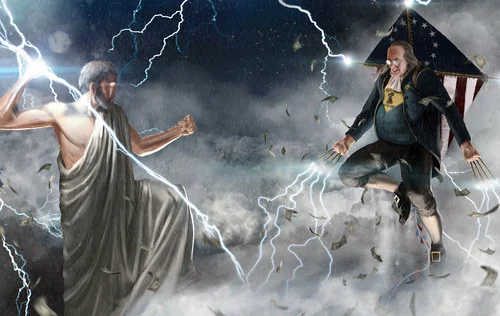
s Ben Franklin the Father of Electronic Money?
The illustration, above, that I know from Noah Smith’s @noahpinion Twitter homepage, appears to be the work of Aaron Jasinski. See this link. This is one of the few illustrations I love so much I have used twice. The other time was in my post “Niklas Blanchard Defends Me from the Wrath of Paul Krugman, Despite My Lack of Nuance.” It is fully appropriate here, since Ben Franklin’s plan for negative interest rates anticipated modern electronic money proposals for generating seignorage without inflation, as detailed in “Paul Romer on the Cashless Society.”
The 1765 Stamp Act the British parliament levied on the American colonists (to help pay the debt incurred by Britain to fight the French and Indian War) was one of the key steps leading to the American Revolution. Conrad Black’s book The Flight of the Eagle: The Grand Strategies That Brought America from Colonial Dependence to World Leadershiptold me a story about the Stamp Act that I had never heard before: Ben Franklin had an alternative to the Stamp Act that just might have averted the American Revolution. Intriguingly, Ben Franklin’s plan can be seen as a cross between Silvio Gesell’s proposal for stamped currency and the proposal for generating seignorage without inflation detailed in “Paul Romer on the Cashless Society.” But Ben Franklin’s proposal preceded Silvio Gesell’s 1891 book Die Reformation des Münzwesens als Brücke zum sozialen Staat (The reformation of the monetary system as a bridge to a social state)–his first book on reforming the monetary system–by 126 years!
To understand the following passage, the Wikipedia definition of bill of credit is helpful: “a document similar to a banknote that is issued by a government and designed to circulate as money.” From pp. 39-40;
Shortly after Franklin’s return to London in 1764, debate began on the Stamp Act, which imposed a tax on printed and paper goods in the colonies, including even newspapers and decks of cards, and was so called because payment of the tax was certified by a stamp on the article taxed. Britain already had such a tax domestically. Pitt’s brother-in-law, George Grenville (not to be confused with Lord Granville), was leader of the government in the House of Commons. In presenting the measure, Grenville claimed the right of Parliament to levy taxes anywhere in the Empire, which was not contested by his fellow legislators, but he gave the colonies a year to propose alternatives. None did so, although Franklin himself did. Franklin achieved prodigies of diplomatic access and advocacy, but he had no legitimate status at all, and was merely an information service from Pennsylvania and other colonies that engaged him, to the British government establishment, and public. Franklin’s proposal was to have Parliament establish a colonial credit office that would issue bills of credit in the colonies, and collect 6 percent for renewal of the bills each year, and these could be used as currency. Gold and silver currency were scarce in the colonies, as all transactions with Britain had to be paid in cash, and Parliament had forbidden the issuance of paper money in America. Franklin’s theory was that this would be an adequately disguised tax, and would not be unpopular in American because of the desire there for paper money to replace an inordinate mass of informal IOUs. It isn’t clear how the interest would have been collected, or how inflation would have been avoided, but at least it was creative thinking, and a start.
John Stuart Mill recommends the adversary system for the court of opinion as well as for courts of law. In On Liberty Chapter 2 “Of the Liberty of Thought and Discussion,” paragraph 39, he writes:
I do not pretend that the most unlimited use of the freedom of enunciating all possible opinions would put an end to the evils of religious or philosophical sectarianism. Every truth which men of narrow capacity are in earnest about, is sure to be asserted, inculcated, and in many ways even acted on, as if no other truth existed in the world, or at all events none that could limit or qualify the first. I acknowledge that the tendency of all opinions to become sectarian is not cured by the freest discussion, but is often heightened and exacerbated thereby; the truth which ought to have been, but was not, seen, being rejected all the more violently because proclaimed by persons regarded as opponents. But it is not on the impassioned partisan, it is on the calmer and more disinterested bystander, that this collision of opinions works its salutary effect. Not the violent conflict between parts of the truth, but the quiet suppression of half of it, is the formidable evil; there is always hope when people are forced to listen to both sides; it is when they attend only to one that errors harden into prejudices, and truth itself ceases to have the effect of truth, by being exaggerated into falsehood. And since there are few mental attributes more rare than that judicial faculty which can sit in intelligent judgment between two sides of a question, of which only one is represented by an advocate before it, truth has no chance but in proportion as every side of it, every opinion which embodies any fraction of the truth, not only finds advocates, but is so advocated as to be listened to.
The problem I have with this in practice is that it doesn’t work well if too large a fraction of those in a discussion take the role of intensely partisan advocates and too small a fraction take the role of relatively nonpartisan judges. That is, if there are too few “calmer and more disinterested bystanders,” the adversarial system in public affairs cannot achieve the effect that John Stuart Mill hoped for.
I love what Virginia Postrel has to say about the future of bookstores. The world would be missing something if it had no bookstores. But they need a new business model.

Thanks to JP Koning for giving permission to mirror this excellent Moneyness post (link above) as a guest post on supplysideliberal.com. Although the 5% upper bound in the bad old days was a disequilibrium interference with the market that created a gap between supply and demand, while the current zero lower bound is a promise of unlimited government supply of an asset earning 0%, what they have in common is a bound induced by policy, that can be repealed.
The zero-lower bound is the well-known 0% floor that a note-issuing bank hits whenever it attempts to reduce the interest rate it offers on deposits into negative territory. Should the bank drop rates below zero, every single negative yielding deposit issued by the bank will be converted into 0% yielding notes. When this happens, the bank will have lost any ability it once had to vary its lending rate.
The ZLB is an artificial construct. It arises from the way the banking system structures the liabilities that it issues, namely cash and deposits. We can modify this structure to either remove the ZLB or find alternative ways to get around it. Much of the discussion over the econblogosphere over the last few years has been oriented around various ways to get below zero.
There is another artificial bound, this one to the upside—let’s call it the 5% upper bound, or FUB. The FUB is an archaic bound. Up until 1854, the Usury Laws prevented the Bank of England from increasing rates above 5%. This constraint meant that for almost two centuries, the Bank of England’s discount rate was bounded within a narrow channel that had as its upper limit the 5% mark as stipulated by the Usury Laws and a lower limit of 0% due to the existence of 0% yielding banknotes (see chart above).
Imagine that we had a time machine and transported the econblogosphere, still hot over the ZLB debate, back to 1809. What sorts of discussions would we be having if we had risen up against the FUB? Given that the conventional route of increasing rates was constrained by the usury prohibitions, what sort of unconventional monetary policies would bloggers be providing to the Directors of the Bank of England to deal with inflationary booms? Would this advice be symmetrical to the policies they have been advocating for escaping the ZLB?
1809 is a significant date because the convertibility of the pound into gold had been suspended for over a decade. Although convertibility would be resumed in 1821, England would be on a ‘fiat’ standard very similar to our own for another decade. In the years since suspension, the pound had gradually depreciated against gold and other European currencies. A healthy debate began to flourish over whether the Bank of England was responsible for the pound’s depreciation (ie. inflation) or if external events such as crop failures were to blame. It was in that context that banker/economist Henry Thornton published his famous Enquiry into the Nature and Effects of the Paper Credit of Great Britain. Although Thornton was circumspect on the precise causes of the deprecation of the pound, he drew attention to the difficulties that the Usury Laws caused in controlling the volume of credit. Here is Thornton:
In order to ascertain how far the desire of obtaining loans at the bank may be expected at any time to be carried, we must enquire into the subject of the quantum of profit likely to be derived from borrowing there under the existing circumstances. This is to be judged of by considering two points: the amount, first, of interest to be paid on the sum borrowed and, secondly, of the mercantile or other gain to be obtained by the employment of the borrowed capital…
The borrowers, in consequence of that artificial state of things which is produced by the law against usury, obtain their loans too cheap. That which they obtain too cheap they demand in too great quantity.
Thornton pointed out that if there was a large deficit between the price at which a businessman could borrow from the Bank of England and the mercantile rate of profit—the rate at which the same businessman could invest the borrowed money—then the demand for and granting of credit would become excessive. While nudging the discount rate higher would normally be sufficient to reduce this excess, the laws against usury might prevent these increases from taking place.
If we were to drop Nick Rowe into the 1809 economic debate, he would complement Thornton quite well by making good use of the same pole-on-a-palm analogy he has so aptly used to explain the ZLB. Running an inflation targeting central bank is sort of like balancing a long pole upright in the palm of one’s hand, says Nick. The bottom of the pole is the interest rate and the top is the inflation rate. As the pole starts to lean (ie. the price level begins to change), the holder needs to quickly move their palm far enough in the same direction (ie. interest rates must be changed) so as to stop the pole from falling over. A wall to the either the north or south impedes the holder’s palm from moving sufficiently far and will cause the pole to tumble over.
Applying this analogy to monetary policy, the Directors of the Bank of England might be required to stop excess inflation by moving rates north of 5%. With the Usury Laws in place, the Director’s efforts would be impeded. Nick’s illustration is Thornton all over again.
Scott Sumner, Lars Christensen, David Beckworth, and other monetarist-types have been strong advocates of quantitative easing as a way to get below the ZLB. Whisk them back to 1809 and would they advocate getting above the FUB by quantity dis-easing, or QD — mass repurchases of Bank of England notes through the liquidation of the Bank of England portfolio of assets?
Assuming that the threat of QD is able to increase the expected purchasing power of the pound (just as the threat of QE is supposed to reduce the same), then the Directors could initiate a QD program to improve the real return on pound notes and deposits. As soon as the real return on notes and deposits exceeds real returns on capital, the inflationary boom will come to a halt. Conveniently for the Directors, the nominal 5% rate will have remained in place — only real rates will have increased — thereby allowing the Directors to abide by the Usury Laws.
What about New Keynesians like Paul Krugman? Promising to hold off on future interest rate increases after a recovery has begun is the sort of advice New Keynesians have given to the Fed as a way to bridge the ZLB. This is called providing forward guidance. As Krugman says, a central bank needs to “credibly promise to be irresponsible”.
Parachute Krugman into 1809 and he would be counseling the Directors to do the opposite: hold off on reducing rates from 5% after a contraction had already set in. In other words, the Directors need to “credibly promise to be hard-asses.” As long as this promise is taken seriously by the market, the promise of future monetary tightening translates into lower inflation in the present, and the real interest rate rises. This should reign in the inflationary boom. Much like Sumner and Christensen, Krugman’s advice would allow the Director’s to hold steady at the 5% nominal rate dictated by the Usury Laws, letting real rates do the job of reeling in prices and slowing down the economy.
What about Miles Kimball? Transport Miles back to 1809 and he’ll probably be the most aggressive in the outright removal of the Usury Laws. Just as he is currently campaigning for the ability of central banks to set negative rates on deposits, I’m sure he’d by picketing outside of Parliament for the right of the Director’s to bypass the Usury Laws and set 6-7% nominal rates.
Incidentally, what did the Directors of the Bank of England actually do? According to Jacob Viner, there is evidence that
bankers found means of evading the restrictions of the usury laws. In 1818, the Committee on the usury laws stated in its Report that there had been “of late years … [a] constant excess of the market rate of interest above the rate limited by law.” Thornton notes that borrowers from private banks had to maintain running cash with them, and borrowers in the money market had to pay a commission in addition to formal interest, and that by these means the effective market rate was often raised above the 5 per cent level. Another writer relates that long credits were customary in London and a greater discount was granted for prompt payment than the legal interest for the time would amount to.
More convincing evidence that the 5 per cent rate was not of itself always an effective barrier to indefinite expansion of loans by the banks is to be found in the fact that the directors of the Bank of England, although they professed that they discounted freely at the rate of 5 per cent all bills falling within the admissible categories for discount, in reply to questioning admitted that they had customary maxima of accommodation for each individual customer and occasionally applied other limitations to the amount discounted.
In Paper Credit we find Henry Thornton verifying Viner’s claim, noting the “determination, adopted some time since by the bank directors, to limit the total weekly amount of loans furnished by them to the merchants.”
So the Director’s preferred route for getting out from under the thumb of the Usury Laws was to maintain the 5% discount rate, but ration the quantity of loans issued at these rates, thereby limiting the quantity of credit in circulation. While this policy might not have been sufficient to prevent an inflationary boom, it may have prevented a hyperinflation from breaking out.
Before I sign off, I want to reverse something I said at the outset. I wrote that the 5% upper bound was archaic, but that’s not entirely true. Sure, high interest rates are no longer illegal. But high nominal interest rates have never been politically palatable. Central bankers are not independent of politics, and therefore probably still operate with something akin to a 5% upper bound. Let’s call it an “upper-ish” bound, or the point at which a central banker starts to get dirty looks from those who have the power to reappoint him. Central bankers may need to resort to unconventional techniques to free themselves of the upperish-bound. The Fed’s motivations for adopting quantity targets in 1979, for instance, may have been such a technique. An overt jacking-up of interest rates to 15-20% would have been political suicide, goes the theory, so the FOMC chose to engage in a bunch of hand-waving about hitting money supply targets, thereby distracting would-be critics with a new set of monetary verbiage. This left Paul Volcker free to implement what would be at its peak a tremendously onerous 22%+ fed funds rate.
We’re of course not anywhere near the upper bound these days, at least not in the developed world, but it’s still an interesting puzzle to work through in order to help understand the current situation.
Labels: Bank of England, Henry Thornton, history of thought, inflation, Miles Kimball, Nick Rowe, nominal interest rates, open market operations, Paul Krugman, real interest rate, Scott Sumner, usury, zero lower bound
Update: I am delighted that Gerald Seib and David Wessel flagged this column in their August 2, 2013 Wall Street Journal “What We’re Reading” feature. They write
University of Michigan economist Miles Kimball says the best candidate to take over as leader of the Fed will back negative short-term interest rates, nominal GDP targeting, and high equity requirements for banks and financial firms. If a candidate is chosen who opposes any of these three, Mr. Kimball predicts another serious financial crisis in the next two decades. [Emphasis added.]
In their last sentence, they go beyond what I intend when I write
But any candidate for the Fed who gives negative answers to these three questions will be indicating a monetary policy and financial stability philosophy that would leave the economy in continued danger of slow growth (with little room for error) and high unemployment in the short run, and the virtual certainty of another serious financial crisis a decade or two down the road.
Let me clarify. First, it is not these beliefs by the Fed Chief alone that would lead to a financial crisis, but the philosophy that would answer my three questions in the negative, held more generally–by the Fed Chief and other important players around the world. But of course, the Fed Chief is a hugely important player on the world stage. Second, I write “who gives negative answers to these three questions” meaning negative answers to all three. To separate out the causality more carefully, what I have in mind with the parallel structure of my final sentence in the column (quoted just above) is
Outtakes: Here are two passages that I had to cut to tighten things up, but that you may find of some interest:
In brief, the Fed put itself in the position of getting bad results using unpopular methods. By July 2009, the Fed’s job approval rating in a Gallup poll was down to 30%, below the job approval rating for the IRS . By the time of the 2012 presidential election campaign, Republican crowds enthusiastically chanted the title of Republican candidate Ron Paul’s book End the Fed.
…in a 32-second exchange with Charlie Rose that is well worth watching for the nuances, President Obama said “He’s already stayed a lot longer than he wanted, or he was supposed to.” The praise for Bernanke in the Charlie Rose interview is so tepid and ungenerous that my interpretation is the same as US News and World Report editor-in-chief Mortimer Zuckerman’s in his July 25, 2013 Wall Street Journal op-ed “Mistreating Ben Bernanke, the Man Who Saved the Economy”: “This comment made it clear that Mr. Bernanke’s days were numbered.”
Economists use the Latin adage “De gustibus, non est disputandum”–“There is no disputing of tastes”–to express the idea that in assessing an individual’s welfare, economists should use that individual’s preferences, not their own. This doctrine of deference to the desires, likes and dislikes of those who are affected by a policy is also evident in the praise economists usually intend when they use the word “non-paternalistic." What this doctrine means in practice is that when economists are acting in their capacity as policy advisors, their self-appointed task is to arrange things so that people get more of what they want, whatever it is that they want. (Of course, economists also often act in the capacity of scientists, with the strict task of finding out the truth and figuring out how the world works. Greg Mankiw highlights the two tasks of economists both in his Principles of Economics textbook in the title of his Journal of Economic Perspectives article "The Macroeconomist as Scientist and Engineer,”)
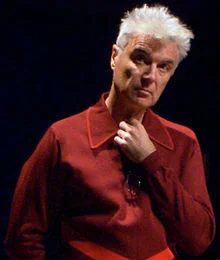
One of the areas where tastes are disputed is in the arts. David Byrne argues that even there, people’s tastes should be respected. in Chapter 9 of his book How Music Works he takes apart the view that the consumption of some types of art and music is superior to the consumption of other types:
Is some music really better than other music? Who decides? What effect does music have on us that might make it good or not-so-good? …
… it is presumed that certain kinds of music have more beneficial effects than others. Some music can make you a “better” person, and by extension other kinds of music might even be detrimental (and they don’t mean it will damage your eardrums)–certainly it won’t be as morally uplifting. The assumption is that upon hearing “good” music, you will somehow become a more morally grounded person. How does that work?
The background of those defining what is good or bad goes a long way toward explaining this attitude. The use of music to make a connection between a love of high art and economic success and status isn’t always subtle. Canadian writer Colin Eatock points out that classical music has been piped into 7-Elevens, the London Underground, and the Toronto subways, and the result has been a decrease in robberies, assaults, and vandalism. Wow–powerful stuff. Music can alter behavior after all! This statistic is held up as proof that some music does indeed have magical, morally uplifting properties. What a marketing opportunity! But another view holds that this tactic is a way of making certain people feel unwelcome. They know it’s not “their” music, and they sense that the message is, as Eatock says, “Move along, this is not your cultural space.” Others have referred to this as “musical bug spray.” It’s a way of using music to create and manage social space.
The economist John Maynard Keynes even claimed that many kinds of amateur and popular music do in fact reduce one’s moral standing. In general, we are indoctrinated to believe that classical music, and maybe some kinds of jazz, possess a kind of moral medicine–whereas hip-hop, club music, and certainly heavy metal lack anything like a positive moral essence. It all sounds slightly ridiculous when i spell it out like this, but such presumptions continue to inform many decisions regarding the arts and the way they’re supported.
John Carey, an English literary critic who writes for The Sunday Times, wrote a wonderful book called What Good are the Arts that illustrates how officiallly sanctioned art and music gets privileged. Carey cites the philosopher Immanuel Kant: “Now I say the beautiful is the symbol of the morally good, and that it is only in this respect that it gives pleasure…The mind is made conscious of a certain ennoblement and elevation above the mere sensibility to pleasure.” So, according to Kant, the reason we find a given work of art beautiful is because we sense–but how do we sense this, I wonder? that some innate, benevolent, moral essence is tucked in there, elevating us, and we like that. In this view, pleasure and more uplift are linked. Pleasure alone, without this beautiful entanglement, is not a good thing–but packaged with moral uplift, pleasure is, well, excusable. That might sound pretty mystical and a bit silly, especially if you concede that standards of beauty just might be relative. In Kant’s Protestant world, all forms of sensuality inevitably lead to loose morals and eternal damnation. Pleasures needs a moral note to be acceptable.
When Goethe visited the Dresden Gallery, he noted the “emotion experienced up entering a House of God.” He was referring to the positive and uplifting emotions, not fear and trembling at the prospect of encountering the Old Testament God. William Hazlitt, the brilliant nineteenth-centuray essayist, said that going to the National Gallery on Pall Mall was like making a pilgrimage to the “holy of holies… [an] act of devotion performed at the shrine of art.” Once again it would appear that this God of Art is a benevolent one who will not strike young William down with a bolt of lightning for an occasional aesthetic sin. If such a punishment sounds like an exaggeration, keep in mind that not too long before Hazlitt’s time, one could indeed be burned at the stake for small blasphemies. And if the appreciation of the finer realms of art and music is akin to praying at a shrine, then one must accept that artistic blasphemy also has its consequences.
A corollary to the idea that high art is good for you is that it can be prescribed like medicine. Like a kind of inoculation, it can arrest, and possibly even begin to reverse, our baser tendencies. The Romantic poet Samuel Taylor Coleridge wrote that the poor needed art “to purify their tastes and wean them from [their] polluting and debasing habits.” Charles Kingsley, a nineteenth-century English novelist, was even more explicit: “Pictures raise blessed thoughts in me–why not in you, my brother? Believe it, toil-worn worker, in spite of thy foul alley, they crowded lodging, thy thin, pale wife, believe it, thou too, and thine will some day have your share of beauty.” Galleries like Whitechapel in London were opened in working-class neighborhoods so that the downtrodden might have a taste of the finer things in life. Having done a little bit of manual labor myself, I can attest that sometimes beer, music, or TV might be all one is ready for after a long day of physically demanding work.
Across the ocean, the titans of American industry continued this trend. They founded the Metropolitan Museum of Art in New York in 1872, filling it with works drawn from their massive European art collections in the hope that the place would act as a unifying force for an increasingly diverse citizenry–a matter of some urgency, given the massive number of immigrants who were joining the nation. One of the Met’s founders, Joseph Hodges Chosate, wrote, “Knowledge of art in its higher forms of beauty would tend directly to humanize, to educate and to refine a practical and laborious people.
The late Thomas Hoving, who ran the Met in the sixties and seventies, and his rival J. Carter Brown, who headed the National Gallery in Washington DC, both felt that democratizing art meant getting everyone to like the things that they liked. It meant letting everyone know that here, in their museums, was the good stuff, the important stuff, the stuff with that mystical aura. [The book illustrates] a promotion the Met did in the sixties in LIFE magazine. The idea was that even reduced to the size of a postcard, reproductions of verified masterpieces could still enlighten the American masses. And so cheap!
One of best known proposals for avoiding massive paper currency storage when nominal interest rates are negative is Silvio Gesell’s proposal for stamped currency. Although I think a crawling peg exchange rate between paper currency and electronic money (or what Robert Eisler, who initially proposed this plan, called bank money) is a much more convenient way to avoid massive paper currency storage, Silvio’s plan would get the job done of eliminating the zero lower bound. (See my own proposal in “How Subordinating Paper Money to Electronic Money Can End Recessions and End Inflation” and see “More on the History of Thought for Negative Nominal Interest Rates” and “Marvin Goodfriend on Electronic Money” together with its links.) In Chapter 23, Section VI of The General Theory of Employment, Interest and Money, John Maynard Keynes gives this account of Silvio Gesell’s proposal, which means that no one who has read The General Theory carefully has any excuse for talking about the zero lower bound as if it were a law of nature, rather than a policy choice:
Gesell was a successful German merchant in Buenos Aires who was led to the study of monetary problems by the crisis of the late ’eighties, which was especially violent in the Argentine, his first work, Die Reformation im Münzwesen als Brücke zum socialen Staat, being published in Buenos Aires in 1891. His fundamental ideas on money were published in Buenos Aires in the same year under the title Nervus rerum, and many books and pamphlets followed until he retired to Switzerland in 1906 as a man of some means, able to devote the last decades of his life to the two most delightful occupations open to those who do not have to earn their living, authorship and experimental farming.
The first section of his standard work was published in 1906 at Les Hauts Geneveys, Switzerland, under the title Die Verwirklichung des Rechtes auf dem vollen Arbeitsertrag, and the second section in 1911 at Berlin under the title Die neue Lehre vom Zins. The two together were published in Berlin and in Switzerland during the war (1916) and reached a sixth edition during his lifetime under the title Die natürliche Wirtschaftsordnung durch Freiland und Freigeld, the English version (translated by Mr. Philip Pye) being called The Natural Economic Order….
The incompleteness of [Silvio Gesell’s] theory is doubtless the explanation of his work having suffered neglect at the hands of the academic world. Nevertheless he had carried his theory far enough to lead him to a practical recommendation, which may carry with it the essence of what is needed, though it is not feasible in the form in which he proposed it. He argues that the growth of real capital is held back by the money-rate of interest, and that if this brake were removed the growth of real capital would be, in the modern world, so rapid that a zero money-rate of interest would probably be justified, not indeed forthwith, but within a comparatively short period of time. Thus the prime necessity is to reduce the money-rate of interest, and this, he pointed out, can be effected by causing money to incur carrying-costs just like other stocks of barren goods. This led him to the famous prescription of “stamped” money, with which his name is chiefly associated and which has received the blessing of Professor Irving Fisher. According to this proposal currency notes (though it would clearly need to apply as well to some forms at least of bank-money) would only retaintheir value by being stamped each month, like an insurance card, with stamps purchased at a post office. The cost of the stamps could, of course, be fixed at any appropriate figure. According to my theory it should be roughly equal to the excess of the money-rate of interest (apart from the stamps) over the marginal efficiency of capital corresponding to a rate of new investment compatible with full employment. The actual charge suggested by Gesell was 1 per mil. per month, equivalent to 5.4 per cent. per annum. This would be too high in existing conditions, but the correct figure, which would have to be changed from time to time, could only be reached by trial and error.
The idea behind stamped money is sound. It is, indeed, possible that means might be found to apply it in practice on a modest scale. But there are many difficulties which Gesell did not face. In particular, he was unaware that money was not unique in having a liquidity-premium attached to it, but differed only in degree from many other articles, deriving its importance from having a greater liquidity-premium than any other article. Thus if currency notes were to be deprived of their liquidity-premium by the stamping system, a long series of substitutes would step into their shoes — bank-money, debts at call, foreign money, jewellery and the precious metals generally, and so forth. As I have mentioned above, there have been times when it was probably the craving for the ownership of land, independently of its yield, which served to keep up the rate of interest; — though under Gesell’s system this possibility would have been eliminated by land nationalisation.
A version of stamped money was briefly tried in the town of Woergl, in 1932. See the Wikipedia article on Woergl and the reinventingmoney.com article “The Woergl Experiment with Depreciating Money.” (The title “The Woergl Experiment with Depreciating Money” refers to the fact that unstamped paper money would gradually be valued less and less over time, relative to all other forms of money.)
I recommend the Wikipedia Article on Silvio Gesell. I love its selection of quotations about Silvio, which I will take the liberty to reproduce here:
Free money may turn out to be the best regulator of the velocity of circulation of money, which is the most confusing element in the stabilization of the price level. Applied correctly it could in fact haul us out of the crisis in a few weeks … I am a humble servant of the merchant Gesell.
—Prof. Dr. Irving Fisher, economist at Yale University New Haven/USA[3]
Gesell’s chiefwork is written in cool and scientific terms, although it is run through by a more passionate and charged devotion to social justice than many think fit for a scholar. I believe that the future will learn more from Gesell’s than from Marx’s spirit.
—John Maynard Keynes, Economist, Fellow of King’s College, University of Cambridge/England[4]
Gesell’s standpoint is both anticlassical and antimarxist… The uniqueness of Gesell’s theory lies in his attitude to social reform. His theory can only be understood considering his general point of view as a reformer … His analysis is not completely developed in several important points, but all in all his model shows no fault.
—Prof. Dr. Dudley Dillard, economist at the University of Maryland /USA [5]
We would especially like to certify our great esteem for pioneers such as Proudhon, Walras, and Silvio Gesell, who accomplished the great reconciliation of individualism and collectivism that the economic order we are striving for must rest upon.
—Prof. Dr. Maurice Allais, economist at the University of Paris/France[6]
Academic economists are ready to ignore the ‘crackpots’, especially the monetary reformers. Johannsen, Foster and Catchings, Hobson and Gesell all had brilliant contributions to make in our day, but could receive no audience. It is hoped, that in the future economists will give a sympathetic ear to those who possess great economic intuition.
—Prof. Dr. Lawrence Klein, economist at the University of Pennsylvania/USA[7]
Economic science owes Silvio Gesell profound insights into the nature of money and interest, but Silvio Gesell has always been considered a queer fellow by economic circles. To be sure, he was no professor, which already raises suspicion… The decisive fact is that Silvio Gesell’s fundamental ideas with regard to an economic order are correct and exemplary. Exemplary is furthermore, that in the creation of a functional monetary order he should see the ‘nervus rerum’ of a functional economic and social order.
—Prof. Dr. Joachim Starbatty, economist at the University of Tübingen/Germany[8]
Silvio Gesell managed to write clearly and make himself understood, a gift that most pure theorists and reformers as well as many practical experts of today lack. The Natural Economic Order makes worthwhile reading even in our days… Gesell developed brilliant concepts and was forgotten, while his less brilliant contemporaries … dazzled several generations before the realization of their falseness could break through.
—Prof. Dr. Oswald Hahn, economist at the University of Erlangen-Nuremberg/Germany[9]
Gesell is a smart outsider, who … treated the subjects of money and interest, the right to full proceeds from labor and suggestions for remedies, in a very original way… The ideas he conceived regarding his problems and what he deemed appropriate for the crises of his times are worth considering with respect to a fundamental improvement of monetary conditions in general.
—Prof. Dr. Dieter Suhr, jurist at the University of Augsburg/Germany[10]
Gesell is the founder of the free economy, an economic outsider who nevertheless was recognized by Keynes, in a certain sense, as his forerunner. He is therefore still considered to be above all a Keynesian economist, even a kind of hyper-Keynesian, that is to say, an advocate of a school that propagates the lowest (nominal) interest rate possible as a means of avoiding crises. Gesell, however, also recognized that the problem of a crisis cannot be solved solely by reducing the rates of interest… Gesell suggests, therefore, as the necessary correlative to the introduction of ‘free money’ … the introduction of ‘free land’… Gesell’s chief work thus carries the title ‘A Natural Economic Order Through Free Land (!) and Free Money’. It proves that the real aspects of an economy – that is to say, the claim on land or resources – must never be lost from view, even if primary importance is attached to monetary factors. This was recognized more clearly by Gesell than by Keynes.
—Prof. Dr. Hans C. Binswanger, economist at the College of Economic and Social Sciences Academy at St. Gallen/Switzerland[11]
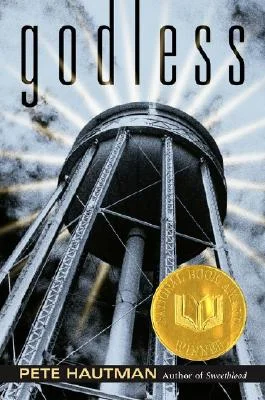
Pete Hautman’s Young Adult Novel Godless
This is an updated version of my June 10, 2007 sermon to the Community Unitarian Universalists in Brighton. I wanted to post this sermon sooner rather than later because of the importance I feel for the project it lays out of securing all the benefits of religion to unbelievers in the supernatural–even those benefits that seem most intimately tied to supernatural beliefs. (See my post “What Do You Mean by ‘Supernatural’?” for my best attempt at defining what I mean by “supernatural.”)
Although this sermon was originally addressed to Unitarian Universalists, I think it has a worthy message for anyone who is largely secular in beliefs, but aware of the evidence that religion seems to help people in many ways.
Note—Here are links to other sermons posted on supplysideliberal.com:
Abstract: Religion serves many critical functions for individuals and for societies. Many religions see a belief in God as essential for serving those functions. Unitarian-Universalism aims to serve the critical functions of religion without insisting on a belief in God. This sermon argues that figuring out how to make “godless” or “agnostic” religion work in the fullest sense is a world-historic task for which Unitarian-Universalism plays an important role.
To explain what I mean by my title “Godless Religion,” let me quote the Episcopal Bishop John Shelby Spong’s book, Why Christianity Must Change or Die:
In this postmodern world, those who still claim allegiance to the Christian religion find themselves, I believe, living in a similar kind of exile. Our God has also been taken away from us. For us, however, that removal of God did not occur in a single moment of violent defeat. It rather happened over a period of centuries as the steady and relentless advances in knowledge altered forever our ability to believe in the God content that stood at the heart of our sacred tradition.
To see his point:
These scientific advances, let alone all the scientific advances now being discovered and yet to come, have shaken old religious interpretations to the core wherever people have taken the implications of that science seriously. In his book Darwin’s Dangerous Idea, the philosopher Daniel Dennett has compared the idea of evolution to a universal acid that changes everything it touches. Among scientific ideas, it is not the only universal acid.
Think of what will become of religion in the next fifty years as these scientific ideas take even greater hold on the imaginations of the people of the world. Traditional religion will face a crisis–forcing it either to turn away from science or from a literal interpretation of its traditions. Liberal religions like Unitarian-Universalism hold the key to giving people the benefits of religion while honestly facing up to the implications of modern science. Today I want to argue that in order to give people the benefits of religion while honestly facing up to the implications of modern science, we need to explicitly sift through to identify the truly valuable things that godly religions do, and figure out how to accomplish these tasks without requiring a belief in God or the supernatural.
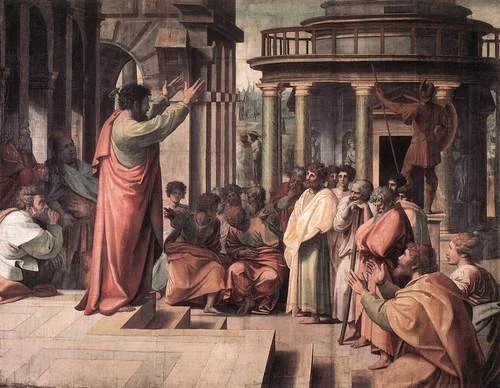
One piece of jujutsu that may help is the paradoxical concept of worshiping a nonexistent God. When the apostle Paul visited Athens, he stood in the middle of the marketplace and said,
You men of Athens, I perceive that you are very religious in all things. For as I passed along, and observed the objects of your worship, I found also an altar with this inscription: ‘TO AN UNKNOWN GOD.’ What therefore you worship in ignorance, this I announce to you.
When my son Jordan was younger, I drove him to his Taekwondo class several times a week, and while he was in class, got some exercise by walking as fast as I could in one direction for 20 minutes and then turned around to get back by the time Jordan’s karate class was over. One day, I passed a street preacher on the corner of State Street and North University in Ann Arbor. Annoyed at some of the things he was saying, I thought about how I could answer him in a way that would begin to express my own beliefs without getting into a long discussion. So as I passed him on the way back, without slowing down, I raised my arms and called out “All hail the nonexistent God.” To his credit, the street preacher continued on without losing a beat: “Yes, God is nonexistent in people’s lives and people’s hearts….” Of course, what I meant was the exact opposite: there is a god of sorts alive in people’s lives and hearts that–according to my belief–does not correspond to any supernatural being out there in the Universe or beyond the Universe. This is the nonexistent god that I preach to you.
In thinking of a nonexistent God, I am motivated by a rejection of the so-called ontological argument for the existence of God. The ontological argument for the existence of God goes something like this summary of Millard Erickson’s:
God is the greatest of all conceivable beings. Now a being which does not exist cannot be the greatest of all conceivable beings (for the nonexistent being of our conceptions would be greater if it had the attribute of existence). Therefore, by definition, God must exist.
The trouble with this argument is that actual existence is not an ordinary attribute like “blueness” or “bigness” or “goodness.” And existence in the imagination is not the same thing as existence in the real world. Nevertheless, for some purposes, existence in the imagination is quite powerful.
Think of the question “What Would Jesus Do?” There are many cases where there is no textual evidence about what the historical Jesus would have done. Still, most people have no problem telling you what they think Jesus would do. For many Christians of a generous spirit, the conception of Jesus’ personality is a synthesis of all the best human traits: love, justice, mercy, wisdom, strength, compassion, commitment to truth, and so on. This is a Jesus I can worship even if it happens that it is a Jesus who never existed. If the Western Tradition has distilled a vision of an ideal human, I should sit up and take notice, even if that vision of an ideal human has been falsely attributed to a particular historical individual.
This is an example of a larger point: so much of humanity’s best efforts have been expressed in religious terms, that to throw out religion lock, stock and barrel is to throw out the gold along with the dross. This is obvious to those who love classical music. But religious texts and religious institutions also have valuable lessons. Because they are less likely to duplicate examples you know already, I would like to give some examples from Mormonism, in which I clocked 40 years worth of participant observation.
- The reason Mormonism grows fast is very simple: it has a massive proselyting effort. The trick is how a majority of Mormon young men can be convinced to spend two years of their lives persuading other people to become Mormons. Subjective spiritual experiences work as motivation for some, and parental pressure works for others. But for many others, the key motivating factor is that most believing Mormon women will not marry a man who has not served a two-year Mormon mission. Of course, in the terms economists use, this is a perfectly good equilibrium that makes sense for the Mormon women as well. If not completing a mission is a sign of failure for a Mormon man, then a man who does not serve a mission will not look like attractive marriage material. (It is still unclear what the October 2012 reduction in the age at which Mormon women can go on missions to 19 from 21 and the reduction of the minimum age for Mormon men from 19 to 18 will do to this equilibrium.)
- During their time on a mission, Mormon young men are motivated partly by altruistic motives, but also in many cases by desire to gain the honor of moving up in the ranks from junior companion to senior companion to district leader to zone leader to assistant to the mission president. The (usually middle-aged) mission president can seem like a godlike figure who regularly interviews all of the missionaries and every month decides which missionaries will move from one station and rank to another station and rank. (I am speaking from my own experience as a missionary in the Tokyo North Mission from 1979 to 1981 under a very good mission president.)
- The same kind of desire to become (sociologically speaking) a minor local godling by gaining church rank helps to motivate people to take on the job of bishop, which, while totally unpaid, involves most of the counseling and leadership responsibilities that a minister in another church would have. That is not so say that these considerations of honor and rank are the main motivation for the onerous unpaid service one takes on as a Mormon bishop, but that the motivations of honor and rank sometimes fill in where more idealistic motivations fall short.
The lesson I draw from all of this is that, for better or worse, it really is possible to motivate people to do a lot by the assignment of honor and rank instead of the payment of money. None of this is terribly inspiring (to me at least) when the end is simply to make more Mormons, but imagine a world in which the same kinds of motivational tools were used to achieve a more worthy goal, such as the utopian Book of Mormon goal of an end to poverty. (See my post “Will Mitt’s Mormonism Make Him a Supply-Side Liberal,” which is about the strong Book of Mormon message of social justice in the sense of making sure the poor are taken care of.)
I suspect that the ideal among feasible societies would involve such an inequality of honor and rank. People have to be motivated somehow, but it is better for those at the bottom to be dealing with low rank than too little money to buy the necessities of life. Low rank is particularly easy to deal with if there are customs of treating everyone with basic respect and dignity as a human being. (I remember my Dad telling me based on the book Kabloonathat among many of the Inuit, those who don’t bring in food still get fed, but enjoy much less honor in the community.)
Besides Mormonism and Unitarian-Universalism, my religious quest led me through many other religions and quasi-religions. I have been in psychotherapy, with all the values of gentle respect for individual differences and calmly solving problems that fosters. I try to do Transcendental Meditation every morning as my main replacement for prayer. And I take my views on the meaning of life from the existentialist teachings of the Landmark Forum: life is inherently empty and meaningless, but that is OK, it just means that we need to choose our own meaning. Each person needs to choose what he or she wants to stand for. The simple fill-in-the-blank procedure of completing the sentence “I am the possibility of all people ….” enforces the Kantian categorical imperative of transcending self-centeredness. Mine is “I am the possibility of all people being joined together in discovery and wonder.” (On Landmark, see also my post “So You Want to Save the World.”) Even my profession of economics contains some religious wisdom: gains from trade arising from diversity, letting bygones be bygones, and a nonjudgmental approach to our flawed humanity.
Finally, to the bemusement of my wife, Gail, I often listen to Contemporary Christian Music. Besides the general treatment of the ups and downs of life, even the Christian beliefs that I reject as a literal reality, often have a psychological charge for me.
I don’t believe in Jesus as a savior, but Susan Ashton’s song “In Amazing Grace Land” provides some salve for my irrational fear that I am fundamentally bad. The chorus goes like this:
Without your love, there’d be no healing. There’d be no blood, raining down to cover me. I once was lost, but you found me and brought me here. Now there’s a halo over me, in amazing grace land. (Lyrics; Youtube audio.)
And in her song “Hold the Intangible,” in words whose literal meaning I think is disgraceful, is an expression of the desire that leads me to embrace the paradox of worshiping the nonexistent God:
There is a chamber, in the soul of the believer, it holds reason in defiance, the demanding hand of science may not enter. (Lyrics; MySpace audio.)
I will resolutely hold to reason and to the demanding hand of science. Nevertheless, there is wisdom and food for the soul in the fictions of traditional religions, that we can safely enjoy if we retain our critical faculties along with the same capacity for the temporary suspension of disbelief that we use to appreciate a novel, a movie or an opera.
Back when I was a Mormon, I made a list of three criteria by which a religion could be judged: the degree to which a religion
Spiritual discovery, in particular, involves aspects of our psyches that we do not understand very well. And unfortunately, much of what has been discovered about the spiritual side of life has been framed in terms of a God who I believe does not exist. Thus, until our understanding is much deeper than it is now, godless religion that feeds the soul will require some fancy footwork. I hope that over time we can gain a greater understanding of how religion works, so that we can design an ever better godless religion that matches all of the benefits of traditional religion while allowing us to fully appreciate the scientific wonders of the actual Universe all around us.
Asset class — Market Size
- Bonds — $93T
- Loans — $64T
- Equities — $54T
- OTC Derivatives — $27T
via supervenes
How big is OTC? Using gross market value rather than notional for OTCs. blog.rivast.com/?p=7032
— Simon Hinrichsen (@simonhinrichsen) March 23, 2013
Link to HuffPost Live segment “Back to the Economy”: Mark Gongloff, Edward G. Luce and Miles Kimball, hosted by Mike Sacks
It was a little odd having two fairly disparate topics in this HuffPost Live segment: long-run issues and who the new Fed Chief should be. Here is what I talked about:

On his Pieria website, Tomas Hirst has put together a series in which each Pieria experts answers the question “Why Do You Write?” Here is Tomas’s introduction:
In this series we aim to shed light on the motivations, inspirations and writing processes of some of the leading financial bloggers. Here, Miles Kimball, Professor of Economics and Survey Research at the University of Michigan and author of Confessions of a Supply-Side Liberal, explains why he writes.
Tomas did a masterful job of posing questions and editing the email responses I sent him into this essay, which first appeared on Pieria on July 17, 2013.
“A year ago, I started a blog, “Confessions of a Supply-Side Liberal” out of a mixture of raw ambition, desire for self-expression, duty, and hope. Sometimes duty keeps me up late at night, but it is raw ambition that makes me wake up too early in the morning so that I slip further and further behind in my sleep.”
The quote above come from my post “So You Want to Save the World”, which is about ethics for bloggers, as are my series of John Stuart Mill quotations (easy to find in my Religion, Humanities and Science sub-blog) focusing on taking alternative views seriously (even if they are very wrong – for reasons JS Mill lays out carefully – and even more if they just might be right). Some of the more recent John Stuart Mill quotations also express why I think blogs are so important in the media landscape.
Blogs (and Twitter) allow real discussion and debate about alternative views for the following reasons:
Finally, in the HuffPost Live segment that I did with Umair Haque and others I give a view of blogs as the place people can really get the real deal that is not dumbed down. One thing I mention is that breaking things down into the blog format of relatively short posts can give much more impact to an argument and make it much more understandable than if one expected someone to have the patience to sit down and read something very long and understand it. Even if I do some posts that are long, they alternate with shorter ones on the same topics.
One thing that may be a serious mistake is that I find myself wanting to resist anything like Krugman’s labeling the level of wonkishness on his posts. It is unrealistic, perhaps, but I hope people try the harder posts without expecting too much of themselves, and then get something from those posts even if they don’t fully understand them. Some of what is behind my attitude on this can be seen in today’s post on Deliberate Practice. Without trying to understand things that are a bit hard, how can people get smarter? If I have a range of different difficulties for posts, hopefully people can read both the ones that are easy for them and the ones that are a bit difficult, and let themselves off the hook for the ones that are over-the-top difficult. I am glad for the discipline of writing some of my pieces for a more general audience in Quartz. Although those columns are toned down relative to some of the posts on my blog, I am proud that they push the boundaries on difficulty level in pieces intended for a popular audience. I hope that even people who did not understand everything in the two columns I wrote with Yichuan Wang on what we found in the Reinhart and Rogoff dataset got a sense for what it means to be careful in analyzing data.
“I think I have a niche of daring to do relatively difficult posts. In addition to hoping that people will stretch, that accords with this strategy” - (from A Year in the Life of a Supply-Side Liberal)
My primary strategy for making the world a better place is not to influence politics in the short run, but to make my case on the merits for each issue to the cohort of young economists who will collectively have such a big influence on policy in decades to come, and to the economists who now staff government agencies (including the Federal Reserve System).
Collectively, I believe that economists are a group that can move the world. It it is not altogether Quixotic to hope to affect the ideas that will animate thinking of the rising generation of economists. And, as a bonus, many others will enjoy hearing, and may be affected by, arguments directed at that group.
The economics blogosphere is already vibrant, brimming with intellectual energy. The obvious next phase of its development is for more and more of the most academically respected economists to engage in blogging as the respectability of blogging grows in a virtuous cycle. Historically, the interesting thing is that this will constitute a full-scale revival of the literary economics that prevailed before the mathematization of economics in the early 20th century–this time, alongside mathematized economics. That emerging two-barrel, balanced approach to economics through both math and accessible writing in counterpoint is an important development that will make economics both more powerful at getting to the truth and more powerful as a social force.
Note: In the comments below, Isomorphisms mentions my idiosyncratic “Links I am Thinking About” aggregator blog. I have a link to it on my sidebar. I think many of my readers might find it of some interest.

Michael Huemer (from a University of Colorado Boulder website)
Michael Huemer is one of my favorite philosophers. His arguments are powerful, cogent, and well-written. In his book The Problem of Political Authority (pp. 331-332), he makes this case that there is a "general tendency for correct ideas to win out in the long run":
At any moment in history, it will be tempting to look around at all the people with bad ideas and conclude that humanity is too irrational and ignorant ever to grasp the important truths. But this is historical myopia. The most salient and important trend that stands out in any study of the intellectual history of the past 2000 years must surely be the gradual accretion of knowledge and the corresponding move from worse ideas to better ideas. The process is of course not monotonic–there are cases of stagnation and regression–but the undeniable difference between humanity’s knowledge today and its knowledge 2000 years ago is staggering. In the short run, the forces of prejudice may outweigh those of rationality. But prejudices can be worn down over time, while the basic truth of a given idea remains intact over the centuries, exerting whatever force it has on the human mind.
Sometimes it is said that, unlike the sciences, fields such as philosophy, ethics, and politics have made little or no progress in the last 2000 years. While the natural sciences have made the most impressive intellectual progress, the dramatic progress that has occurred in philosophical, moral, and political matters can be missed only through a modern lens that filters out all those issues that we no longer consider worth discussing because we have already resolved them. Throughout most of human history, slavery was widely accepted as just. The mass slaughter of foreigners for purposes of capturing land and resources, forcing conformity to one’s own religion, or exacting vengeance for perceived wrongs against one’s ancestors was often viewed with approval, if not glorified. Alexander ‘the Great’ was so called because of his prowess at waging what nearly anyone today would unhesitatingly judge to be unjust and vicious wars. Judicial torture and execution for minor offences was widely accepted. 'Witches’ were burned at stake or drowned. Despotism was the standard form of government, under which people were granted no right to participate in the political process. Even when democracy was at last accepted in some countries, half the adult population was denied any rights of political participation because they were deemed inferior.
When people today say that there is little agreement in ethics and politics, they are ignoring all the issues in the preceding paragraph. For us, none of those issues is worth discussing, since the correct evaluation is intellectually trivial. 'Should we torture someone to extract a confession of witchcraft and then execute her for being a witch?’ This question merits no more than a laugh. But practically speaking, these questions are far from trivial. Slow though it may have been in coming, the current consensus on all these questions represents and enormous advancement from terrible ideas to not-so-terrible ideas.
Being a bond-rater may not seem like the kind of job that could save the world, but it was. In particular, the financial crisis that has cost us so dearly since 2008 could have been avoided if the bond-raters had refused to stamp undeserving mortgage-backed securities as AAA. But bond-raters are not the only ones who could have averted the crisis. It turns out that a large group of home appraisers not only tried to do the jobs we trust them to do, but blew the whistle on other home appraisers who weren’t worthy of that trust. Here is how Bill Black describes the events in his post “Two Sentences that Explain the Crisis and How Easy It Was to Avoid”
Here are the two sentences of Bill Black’s title, which appeared in the 2011 report of the Financial Crisis Inquiry Commission (FCIC):
“From 2000 to 2007, [appraisers] ultimately delivered to Washington officials a petition; signed by 11,000 appraisers…it charged that lenders were pressuring appraisers to place artificially high prices on properties. According to the petition, lenders were ‘blacklisting honest appraisers’ and instead assigning business only to appraisers who would hit the desired price targets” (FCIC 2011: 18).
Bill argues that “This had to be done with the knowledge of the bank CEOs”:
One of the wonderful things about being a CEO is the ability to communicate to employees and agents without leaving an incriminating paper trail. Sophisticated CEOs running large accounting control frauds can use compensation and business and personnel decisions to send three key messages: (a) you will make a lot of money if you report exceptional results, (b) I don’t care whether the reports are true or the results of fraud, and © if you do not report exceptional results or if you block loans from being approved by insisting on effective underwriting and honest appraisals you will suffer and your efforts will be overruled. The appraisers’ petition was done over the course of seven years. Even if we assumed, contrary to fact, that the CEO did not originate the plan to inflate the appraisals the CEOs knew that they were making enormous numbers of fraudulent “liar’s” loans with fraudulent appraisals. It is easy for a CEO to stop pervasive fraudulent lending and appraisals. Where appraisal fraud was common it was done with the CEO’s support.
Here is how he sees this kind of fraud as contributing to, and in turn being propelled by the bubble in mortgage-backed securities:
the fraud “recipe” cause an enormous expansion in bad loans. This can hyper-inflate a financial bubble. As a bubble grows the fraud recipe becomes even more wealth-maximizing for unethical senior officers. The trade has a saying that explains why bubbles are so criminogenic – “a rolling loan gathers no loss.” The fraudulent lenders refinance their bad loans and report (fictional) profits.
Here is the dilemma the honest appraisers faced:
The Gresham’s dynamic that causes us the most wrenching pain as regulators is the one that the officers controlling the fraudulent lenders deliberately created among appraisers. They created the blacklist to extort the most honest appraisers. The fraudulent lenders, of course, do not have to successfully suborn every appraiser or even most appraisers in order to optimize their frauds. A fairly small minority of suborned appraisers can provide all the inflated appraisals required. The honest appraisers will lose a great deal of income and many will be driven out of the profession by the lost income or because the degradation of their profession disgusts them. These non-wealthy professionals, the ethical appraisers, were injured by the fraudulent CEOs because the appraisers knowingly chose honesty over maximizing their incomes. The CEOs of the lenders and the officers and agents they induced (by a combination of de facto bribery and extortion) to assist their frauds chose to maximize their incomes through fraud.
The government then failed in its duty to prevent fraud:
The U.S. government did nothing in response to the appraisers’ petition warning about the black list of honest appraisers. The federal banking agencies’ anti-regulatory leaders’ hatred of effective regulators caused them to do nothing in response to the appraisers’ petition. The anti-regulators did nothing for years, as the number of appraisers signing the petition grew by the thousands and surveys and investigations confirmed their warnings about lenders extorting appraisers to inflate appraisals. The appraisers put the anti-regulators on notice about the fraud epidemic for seven years beginning in 2000.
Bill’s explanation of why the government failed in its duty to prevent fraud: a confusion between regulations to prevent fraud–without which there can be no expectation of a good market outcome–from regulations limiting what a fully honest company can do. As I wrote in my Quartz column “US Government Spying is Straight Out of the Mob’s Playbook,"
The idea that the free market requires tolerance of corporate deception is itself a big lie.
Preventing fraud, like enforcing property rights and preventing blackmail and extortion, is a fundamental requirement for getting the good results that free markets can yield. Therefore, preventing fraud should never be lumped into the same category as other regulations that limit what a fully honest individual or company can do. If a regulation limits what a fully honest individual or company can do, that regulation requires very careful justification. But there should always be a strong presumption in favor of regulations insisting that individuals and companies tell the truth in commercial contexts–except perhaps in cases where tort law in fact induces truth-telling even without the help of regulations.
As part of his discussion in On Liberty of how freedom of speech helps avoid the dangers of one-sided thought, John Stuart Mill makes the case for Greek and Roman thought as an important part of our moral and ethical heritage. In Chapter 2 “Of the Liberty of Thought and Discussion,” paragraphs 37 and 38, he writes:
It may be objected, “But some received principles, especially on the highest and most vital subjects, are more than half-truths. The Christian morality, for instance, is the whole truth on that subject, and if any one teaches a morality which varies from it, he is wholly in error.” … But before pronouncing what Christian morality is or is not, it would be desirable to decide what is meant by Christian morality. If it means the morality of the New Testament, I wonder that any one who derives his knowledge of this from the book itself, can suppose that it was announced, or intended, as a complete doctrine of morals. The Gospel always refers to a pre-existing morality, and confines its precepts to the particulars in which that morality was to be corrected, or superseded by a wider and higher… St. Paul, a declared enemy to this Judaical mode of interpreting the doctrine and filling up the scheme of his Master, equally assumes a pre-existing morality, namely, that of the Greeks and Romans; and his advice to Christians is in a great measure a system of accommodation to that; even to the extent of giving an apparent sanction to slavery. What is called Christian, but should rather be termed theological, morality, was not the work of Christ or the Apostles, but is of much later origin… That mankind owe a great debt to this morality, and to its early teachers, I should be the last person to deny; but I do not scruple to say of it, that it is, in many important points, incomplete and one-sided, and that unless ideas and feelings, not sanctioned by it, had contributed to the formation of European life and character, human affairs would have been in a worse condition than they now are. Christian morality (so called) has all the characters of a reaction; it is, in great part, a protest against Paganism. Its ideal is negative rather than positive; passive rather than active; Innocence rather than Nobleness; Abstinence from Evil, rather than energetic Pursuit of Good: in its precepts (as has been well said) “thou shalt not” predominates unduly over “thou shalt.” In its horror of sensuality, it made an idol of asceticism, which has been gradually compromised away into one of legality. It holds out the hope of heaven and the threat of hell, as the appointed and appropriate motives to a virtuous life: in this falling far below the best of the ancients, and doing what lies in it to give to human morality an essentially selfish character, by disconnecting each man’s feelings of duty from the interests of his fellow-creatures, except so far as a self-interested inducement is offered to him for consulting them. It is essentially a doctrine of passive obedience; it inculcates submission to all authorities found established; who indeed are not to be actively obeyed when they command what religion forbids, but who are not to be resisted, far less rebelled against, for any amount of wrong to ourselves. And while, in the morality of the best Pagan nations, duty to the State holds even a disproportionate place, infringing on the just liberty of the individual; in purely Christian ethics, that grand department of duty is scarcely noticed or acknowledged. It is in the Koran, not the New Testament, that we read the maxim—"A ruler who appoints any man to an office, when there is in his dominions another man better qualified for it, sins against God and against the State.“ What little recognition the idea of obligation to the public obtains in modern morality, is derived from Greek and Roman sources, not from Christian; as, even in the morality of private life, whatever exists of magnanimity, highmindedness, personal dignity, even the sense of honour, is derived from the purely human, not the religious part of our education, and never could have grown out of a standard of ethics in which the only worth, professedly recognised, is that of obedience.
I am as far as any one from pretending that these defects are necessarily inherent in the Christian ethics… Far less would I insinuate this of the doctrines and precepts of Christ himself. I believe that the sayings of Christ are all, that I can see any evidence of their having been intended to be; that they are irreconcilable with nothing which a comprehensive morality requires; that everything which is excellent in ethics may be brought within them… But it is quite consistent with this, to believe that they contain, and were meant to contain, only a part of the truth; that many essential elements of the highest morality are among the things which are not provided for, nor intended to be provided for, in the recorded deliverances of the Founder of Christianity, and which have been entirely thrown aside in the system of ethics erected on the basis of those deliverances by the Christian Church. And this being so, I think it a great error to persist in attempting to find in the Christian doctrine that complete rule for our guidance, which its author intended it to sanction and enforce, but only partially to provide. I believe, too, that this narrow theory is becoming a grave practical evil, detracting greatly from the value of the moral training and instruction, which so many well-meaning persons are now at length exerting themselves to promote. I much fear that by attempting to form the mind and feelings on an exclusively religious type, and discarding those secular standards (as for want of a better name they may be called) which heretofore co-existed with and supplemented the Christian ethics, receiving some of its spirit, and infusing into it some of theirs, there will result, and is even now resulting, a low, abject, servile type of character, which, submit itself as it may to what it deems the Supreme Will, is incapable of rising to or sympathizing in the conception of Supreme Goodness. I believe that other ethics than any one which can be evolved from exclusively Christian sources, must exist side by side with Christian ethics to produce the moral regeneration of mankind; and that the Christian system is no exception to the rule, that in an imperfect state of the human mind, the interests of truth require a diversity of opinions. It is not necessary that in ceasing to ignore the moral truths not contained in Christianity, men should ignore any of those which it does contain…. The exclusive pretension made by a part of the truth to be the whole, must and ought to be protested against; and if a reactionary impulse should make the protestors unjust in their turn, this one-sidedness, like the other, may be lamented, but must be tolerated. If Christians would teach infidels to be just to Christianity, they should themselves be just to infidelity. It can do truth no service to blink the fact, known to all who have the most ordinary acquaintance with literary history, that a large portion of the noblest and most valuable moral teaching has been the work, not only of men who did not know, but of men who knew and rejected, the Christian faith.
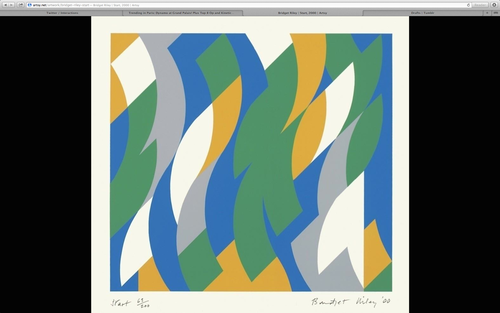
Artsy is an art website that I follow. My daugher Diana Kimball recommended it as being to art what Pandora is to music. Here is a painting I like by Bridget Riley that I saw on Artsy.
As illustrated by arguments I make in my posts “Scott Adams’s Finest Hour: How to Tax the Rich” and “Copyright,” understanding the strength of non-monetary motivations for work is important for public policy. David Byrne gives a vivid description of non-monetary motivations in his line of work in this passage from his book How Music Works, pp. 203-204.
How important is getting one’s work out to the public? Should that even matter to a creative artist? Would I make music if no one were listening? If I were a hermit and lived on a mountaintop like a bearded guy in a cartoon, would I take the time to write a song? Many visual artists whose work I love–like Henry Darger, Gordon Carter, and James Castle–never shared their art. They worked ceaselessly and hoarded their creations, which were discovered only after they died or moved out of their apartments. Could I do that? Why would I? Don’t we want some validation, respect, feedback? Come to think of it, I might do it–in fact, I did, when I was in high school puttering around with those tape loops and splicing. I think those experiments were witnessed by exactly one friend. However, even an audience of one is not zero.
Still, making music is its own reward. It feels good and can be a therapeutic outlet; maybe that’s why so many people work hard in music for no money or public recognition at all. In Ireland and elsewhere, amateurs play well-known songs in pubs, and their ambition doesn’t stretch beyond the door. They are getting recognition (or humiliation) within their village, though.
In North America, families used to gather around the piano in the parlor. Any monetary remuneration that might have accrued from these “concerts” was secondary. To be honest, even tooling around with tapes in high school, I think I imagined that someone, somehow, might hear my music one day. Maybe not those particular experiments, but I imagined that they might be the baby steps that would allow my more mature expressions to come into being and eventually reach others. Could I have unconsciously had such a long-range plan? I have continued to make plenty of music, often with no clear goal in sight, but I guess somewhere in the back of my mind I believe that the aimless wandering down a meandering path will surely lead to some (well-deserved, in my mind) reward down the road. There’s a kind of unjustified faith involved here.
Is the satisfaction that comes from public recognition–however small, however fleeting–a driving force for the creative act? I am going to assume that most of us who make music (or pursue other create endeavors) do indeed dream that someday someone else will hear, see, or read what we’ve made.
For balance, I should point out that in the paragraph after this passage, David writes of monetary motivations as well:
Many of us who do seek validation dream that we will not only have that dialogue with our peers and the public, but that we might even be compensated for our creative efforts, which is another kind of validation. We’re not talking rich and famous; making a life with one’s work is enough.
But notice that in David’s description, even the monetary motivation has two dimensions: enabling consumption and validation.
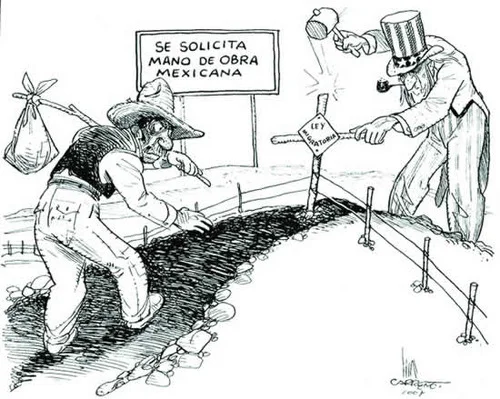
At Bryan Caplan’s recommendation, I have been reading Michael Huemer’s book The Problem of Political Authority. Michael tells this parable on pages 142-143:
Marvin is in need of food, without which he will suffer from malnutrition or starvation. He plans to travel to a nearby marketplace, where he will be able to trade for food. But before he can reach the marketplace, he is accosted by Sam, who does not want Marvin to trade in the marketplace, for two reasons. First, Sam’s daughter is going to be shopping in the marketplace, and Sam fears that Marvin might bid up the price of food. Some vendors might even run out of bread if too many people come to the marketplace. Second, Marvin comes from a different culture from most people presently at the marketplace, and Sam fears that Marvin might influence other people and thus alter the culture of the marketplace. Sam decides to solve the problem by force. He points his gun at Marvin and orders Marvin to turn around. The starving Marvin is thus forced to return home empty-handed.
Sam’s reasons for coercing Marvin in this story are clearly inadequate. Furthermore, Sam will be culpable for whatever harms Marvin suffers as a result of being unable to reach the marketplace; they will be harms that Sam inflicted upon Marvin. If Marvin starves to death, then Sam will have killed him. This is true even though Sam was not responsible for Marvin’s initial situation of being hungry and out of food; it is true because Sam actively prevented Marvin from obtaining more food. If a person is starving, and you refuse to give him food, then you allow him to starve. But if you take the extra step of coercively interfering with his obtaining food from someone else, then you do no merely allow him to starve; you starve him. The same point applies to lesser harms: If, for example, Marvin merely suffers malnutrition as a result of being unable to reach the marketplace, Sam will have inflicted this harm upon him.
The behavior of Sam in the story is analogous to that of the government of any modern country that excludes poor immigrants. Potential immigrants from developing nations come to participate in the marketplaces of wealthier countries. The governments of the wealthier countries routinely forcibly exclude these potential immigrants. As a result, many suffer greatly diminished life prospects. The government does not merely allow harms to befall these would-be immigrants. If the government merely stood by passively and refused to give aid to potential immigrants, then it would be allowing harms to occur. But it does not stand by passively; the government of every wealthy country in the world deliberately hires armed guards to forcibly exclude or expel unwanted persons. This coercive intervention constitutes an active infliction of harm upon them, just as Sam inflicts harm on Marvin in the story above.
The most common reasons given for immigration restrictions are twofold. First, that new immigrants compete with existing Americans in the labor market, thus driving down wages for unskilled labor and making it more difficult for American workers to find jobs. Second, that if too many immigrants enter the country, they will alter the country’s culture. The first concern is analogous to Sam’s concern about Marvin’s competing with Sam’s daughter in the marketplace. It is not permissible to use force against another person simply to prevent a third party from suffering economic disadvantage through normal marketplace competition. The second concern is analogous to Sam’s concern about the culture of the marketplace. It is not permissible to use force against another person simply to prevent that person from influencing the culture of one’s society in undesired ways.