Lumpers vs. Splitters: Economists as Lumpers; Psychologists as Splitters
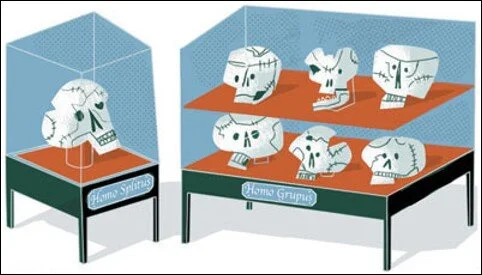
In thinking about the nature of economics as a discipline (as of the year 2020), I find the distinction of lumpers vs. splitters illuminating. The terminology of lumpers and splitters is especially easy to understand in zoology and botany. In that context, “lumpers” are zoologists and botanists who make a career out of showing that types that were thought to be distinct species are really one species; “splitters” in that context are zoologists and botanists who make a career out of showing that what was thought to be one species is really many species.
In a broader sense, a “lumper” is someone who tries to explain many phenomena as being in some deep sense similar and arising from similar forces. A “splitter” who someone who emphasize how each different phenomenon is its own type of thing, different from other phenomena.
As a Research Professor (and now Emeritus Research Professor) at the University of Michigan’s Survey Research Center, I had the privilege of rubbing shoulders with many psychologists (mostly social psychologists who do experiments). I learned that it takes a long time to learn how to translate between disciplines as different in their cultures as economics and psychology when talking face to face as opposed to simply reading a journal article. But the effort was worth it. I would not be on the track for studying happiness and subjective well-being more generally that I am on if it weren’t for most of a year’s worth of weekly get-togethers between the famous psychologist Norbert Schwarz and the economists Bob Willis and me. (It was either in 2004-2005 or in 2005-2006.)
Having rubbed shoulders with psychologists as well as, of course, many economists, I think it is true that, psychologists tend to be splitters, while economists tend to be lumpers. Economists usually try their best to explain new phenomena with small modifications of old theories. Psychologists like to try to show that a new phenomenon they have identified is a new type of thing and are happy to develop a new theory for that new thing.
One reason I have been thinking about lumping and splitting lately is how much I have been enjoying learning Shirzad Chamine’s Positive Intelligence tools. You can read about Positive Intelligence in my post “On Human Potential.” Shirzad is definitely a lumper. He talks about his Positive Intelligence framework as an “operating system” that can be used as a basis to deal with many issues. As an economist, Shirzad’s tendency toward lumping, even in this psychological area, is quite congenial to me, and I suspect would be congenial to other economists.
The Surprising Genetic Correlation Between Protein-Heavy Diets and Obesity
Regressions of outcomes on genes, when controlling for parental genes, yield causality as much as could be desired: which of the parental genes an individual gets is randomized at the molecular level. And controlling for what genes the parents have (which form the pool from which all but mutations come from in the child) controls for the effect of the parental genes on how the parents do their child-rearing.
Often, though, we are not satisfied with knowing causality from genes because, when it comes to interventions, the only thing causality from genes says directly is what one might be able to get from genetic engineering interventions.
It is often the case that a set of genes G cause both outcome X and outcome Y. This is called a genetic correlation. Correlation does not imply causation and genetic correlation between X and Y does not necessarily imply either that X causes Y or that Y causes X. And a genetic correlation between X and Y does not necessarily imply (X causes Y OR Y causes X). G could cause X entirely without going through Y and separately cause Y entirely without going through X. As a crucial example, G could cause Z, then Z cause X entirely without going through Y, and separately Z cause Y entirely without going through X.
Even though genetic correlation between X and Y does not imply causation, it should make us wonder whether X causes Y or Y causes X. Correlations of any substantial magnitude always raise the question of causation even though they don’t prove causation.

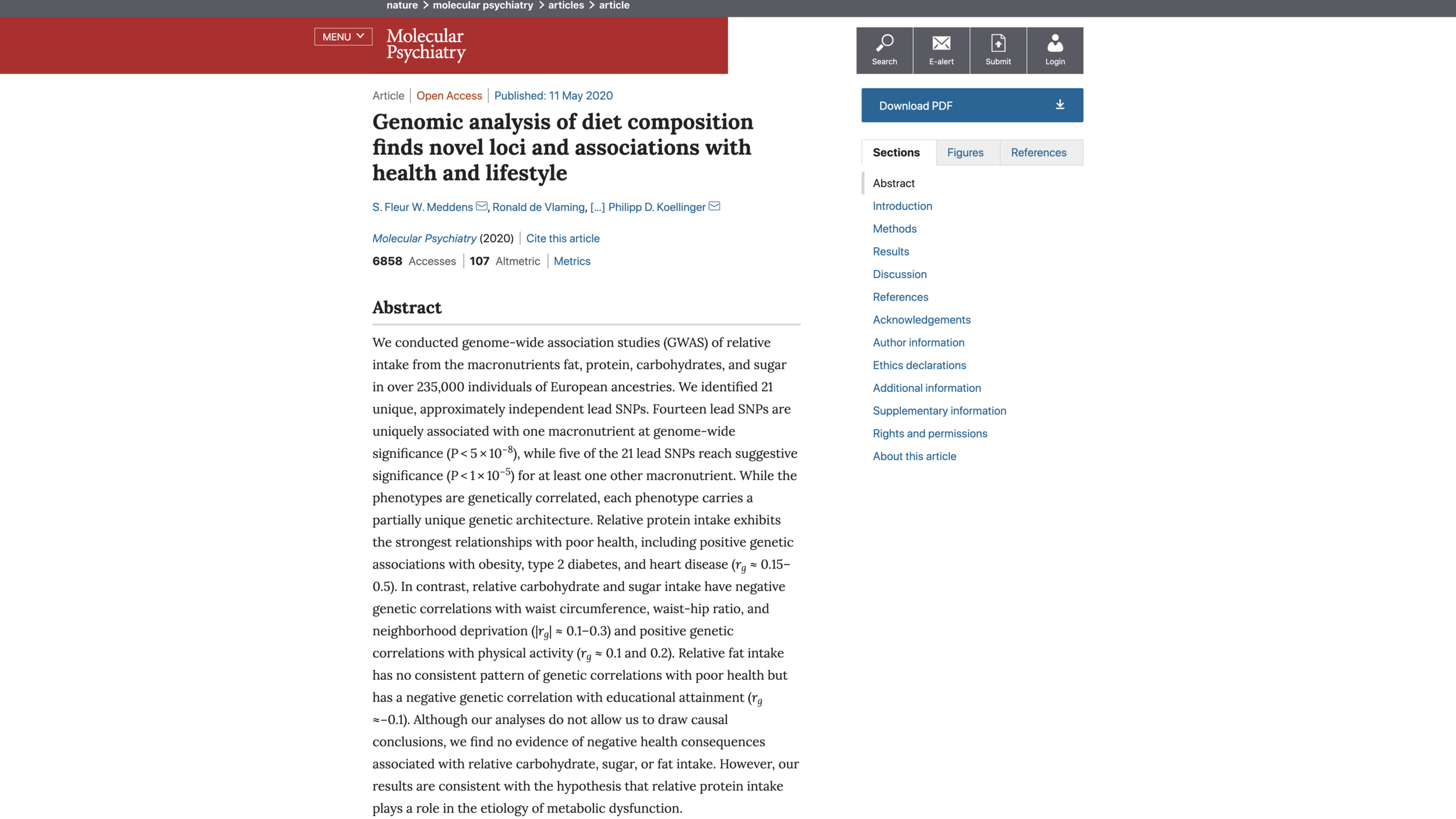
The most surprising finding is a clear positive genetic correlation between fraction of calories derived from protein (controlling for overall calories) and obesity. The next most surprising finding is a negative genetic correlation of fraction of calories from sugar and waist circumference and the closely related waist-to-hip ratio. The authors give a careful discussion of the possible causal explanations. Here is their discussion, with headings added for the two different passages:
Protein
The genetic correlations we find between protein and obesity, waist-hip ratio, fasting insulin, type 2 diabetes, HDL cholesterol, and heart disease, together with the association we find between the BMI-increasing FTO allele and increased protein intake, point to an intriguing hypothesis: relative protein intake may play a role in the etiology of metabolic dysfunction. This hypothesis coincides with a growing (but often overlooked [71]) body of evidence that links protein intake to obesity and insulin resistance [72,73,74,75,76,77,78,79,80]. There is some related evidence from randomized trials with infants, which found a causal relationship between high-protein baby formula and infant body fat [81]. While the underlying biological mechanisms are unclear, high consumption of protein or certain types of amino acids (i.e., building blocks of protein) is known to induce insulin resistance [82,83,84], rapamycin signaling [77], and growth factor signaling [85], which might increase metabolic dysfunction and early mortality risk. Indeed, a recent phenotypic meta-analysis of prospective observational studies (pooled N = 154,344) found that low carbohydrate diets, which restrict carbohydrate in favor of increased animal protein or fat intake, were robustly associated with increased mortality [86].
We caution, however, that the strong and consistent links between protein and poor health outcomes might also be consistent with alternative explanations. Causation could run in the reverse direction: overweight individuals may have higher protein needs or use high-protein diets as a weight-loss strategy. The associations might also be caused by other, unmeasured variables such as unhealthy lifestyle factors or co-consumed ingredients.
Sugar
These correlations may suggest that dietary sugar, beyond its energy content, does not have negative health effects [87,88,89,90], contrary to some popular beliefs (e.g., [91]). Another possibility is that exercise offsets negative metabolic effects of high sugar intake [92, 93]. Those with a higher predisposition to be physically active may tend to consume more sugar, as sugar is a metabolically convenient source of energy during exercise [94] and may enhance endurance [95]. If so, the positive genetic correlation between sugar and physical activity might partially explain the lack of genetic correlations between sugar and poor health.
I continue to think that sugar is causally bad and the animal protein is causally bad, in line with many previous posts here. But these genetic correlation results add nuance to that view. In particular:
Based on the authors’ discussions, their may be more mechanisms for protein to be a problem than the high insulin index for many protein-rich foods and cancer-feeding aspects of protein (and especially of animal protein) that I have emphasized.
Other healthy behaviors—especially physical activity—leading to more sugar consumption may obscure negative effects of sugar.
But all of these ideas are only possibilities. Genetic correlations are only one clue in figuring out diet and health relationships.
For annotated links to other posts on diet and health, see:
Michael Coe on Joseph Smith the Shaman

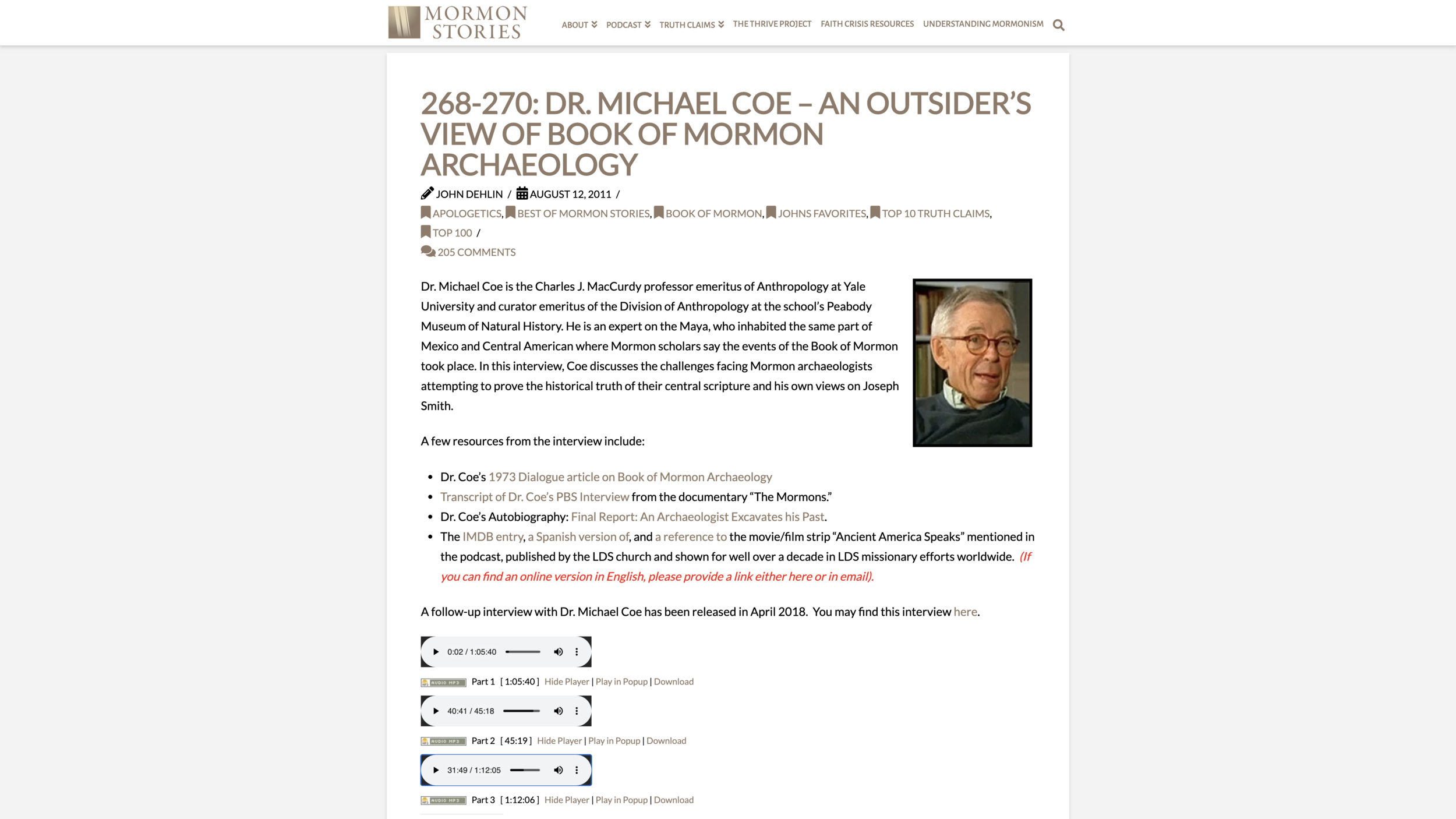
As a nonsupernaturalist, I can’t believe the official Mormon account of its founder, Joseph Smith. (See “What Do You Mean by 'Supernatural'? and “The Message of Jesus for Non-Supernaturalists.”) But on the whole, I think he has had a benign and interesting effect on the world—at a minimum opening up additional possible perspectives on many things that are clearly nonsupernatural. And for the most part, I think Joseph Smith has had a benign and interesting effect on my own life, through my 40 years as a Mormon. So I am inclined toward a view of Joseph Smith as positive as my nonsupernaturalism and the documentary evidence of his life can support. That attracts me to the renowned (and now sadly deceased) archaeologist Michael Coe’s view of Joseph Smith as a very talented shaman. (Michael Coe seems to be just as much of a nonsupernaturalist as I am, so when he says shaman it doesn’t mean what it might to, say, a supernaturalist New Age believer.)
In addition to his interest in Angkor Wat, Michael Coe is an expert on the Maya and ancient Mesoamerica. This makes him an expert on what is by far the most plausible historical milieu for the events recounted by The Book of Mormon—the book taken down from Joseph Smith’s dictation that launched his career as a religious leader. The triple “Mormon Stories” podcast flagged at the top of this post and its sequel flagged on that “Mormon Stories” webpage will give you all the detail you are likely to want about evidence on whether The Book of Mormon could possibly be an accurate historical record. The basic answer is no. Indeed, the evidence against The Book of Mormon being an accurate historical record is persuasive enough that some Mormon Church leaders have begun playing down The Book of Mormon as history, saying it wasn’t intended as history but as a religious record. I’ll give you just one tidbit that is interesting to me: coinage as recounted in The Book of Mormon. the BYU Studies website gives this rundown of coinage at a particular period in The Book of Mormon:

Link to the BYU Studies webpage shown above. The Book of Mormon passage cited, Alma 11:1-19 includes these words: “Now these are the names of the different pieces of their gold, and of their silver, according to their value.”
This Book of Mormon account of the coinage system, together with the difficulty admitted by Mormon apologists of situating the bulk of the events in The Book of Mormon anywhere other than Mesoamerica amounts to a claim that metal coins were in use in Mesoamerica in ancient times. But according to Michael Coe, archaeologists have not found ancient Mesoamerican metal coins. (Michael Coe says that what they actually used as small change was dried cocoa beans.) Metal coinage, by its nature, tends to be widely used, and therefore tends to show up in archeological digs of sites where it was used in olden times. So not finding ancient Mesoamerican metal coins is important evidence against The Book of Mormon. Indeed, with all the Mesoamerican archeological digs, archeologists should have found many, many of ancient Mesoamerican coins if even a few cities for half a century made wide use of coinage.
At least for the sake of argument, suppose that Joseph Smith did not produce an accurate history of the ancient Americas by supernatural means. If he had no supernatural help whatsoever in producing The Book of Mormon, then he deserves an honored place in the history of the fictional genre of Fantasy. In particular, his works of fantasy with a religious method are up their with, say, C. S. Lewis’s religious-tinged fantasies. (Of course, C. S. Lewis, to his great credit, clearly labeled his fantasies as fiction. Joseph Smith, to his discredit, failed to do this.) Even among believers in Joseph Smith’s supernatural calling, Joseph Smith’s eminence as a fantasy author is, I believe, an important part of the reason for Utah being a hotbed for the flourishing of fantasy and science-fiction authors.
In a PBS interview, Michael Coe gives this take on Joseph Smith as a shaman:
I'm a totally irreligious person, even though I was born and raised a perfectly good Episcopalian Christian. Yet figures like Joseph Smith fascinate me as an anthropologist, and I suppose as an American, too. When I read Fawn Brodie's wonderful book, No Man Knows My History, I couldn't put it down. I mean, it's the most exciting biography I've ever read.
When I did read it for the first time, I realized what kind of a person this Joseph Smith was. In my opinion, he was not just a great religious leader; he was a really great American, and I think he was one of the greatest people who ever lived. This extraordinary man, who put together a religion -- probably with many falsities in it, falsehoods, so forth, to begin with -- eventually came to believe in it so much that he really bought his own story and made it believable to other people. In this respect, he's a lot like a shaman in anthropology: these extraordinary religious practitioners in places like Siberia, North America among the Eskimo, the Inuit, who start out probably in their profession as almost like magicians doing magic. ...
I really think that Joseph Smith, like shamans everywhere, started out faking it. I have to believe this -- that he didn't believe this at all, that he was out to impress, but he got caught up in the mythology that he created. This is what happens to shamans: They begin to believe they can do these things. It becomes a revelation: They're speaking to God. And I don't think they start out that way; I really do not. ...
… Joseph Smith had a sense of destiny -- and most fakers don't have this -- and this is how he transformed something that, I think, was clearly made up into something that was absolutely convincing, convincing to him and to a lot of people, and he never could have convinced a lot of people if he hadn't been convinced himself.
In the Mormon Stories interview I flag at the top of this post, Michael Coe expands on this view. I don’t have a transcript to work from with the Mormon Stories interview, but at close to the 30-minute mark of the third installment, he says something close to this:
Michael Coe: … Joseph Smith knew the Old Testament very, very well. …
John Dehlin (interviewer): How Dr. Coe, in the world, can you explain, what many people think is a miraculous book [The Book of Mormon]? …
Michael Coe: [Joseph Smith] was one of the greatest people who ever lived. … He was an incredible leader. …
Very bright kid—interested in old things, Tom-Sawyer-like guy. … This guy had an incredible brain. I really do think so.
Michael Coe goes on to talk in some detail about his view that Joseph Smith fully assimilated the Old Testament and creatively transformed what he had assimilated into an amazing book: The Book of Mormon. (Someone once called The Book of Mormon “a book-length midrash on the Old Testament.”)
Not everything in The Book of Mormon is admirable. It is tinged with the racism against Native Americans common in upstate New York in the 1820s. And in its first few pages, it has a story that seems to recommend unquestioning obedience. (See “A Book of Mormon Story Every Mormon Boy and Girl Knows.”) But it also includes beautiful ethical principles that, to me at least, came home in a way that the closest counterpart passage in the Bible did not manage. (I hope to return to that theme in a future post.)
Even now, as a nonsupernaturalist, I still look back with amazement at the exquisite warm feeling I felt in my heart when I prayed as a teenager to know if The Book of Mormon was true. Evidently, that exquisite warm feeling in my heart did not mean The Book of Mormon is an accurate historical record. But that exquisite warm feeling in my heart meant something.
Don't miss these posts on Mormonism:
The Message of Mormonism for Atheists Who Want to Stay Atheists
How Conservative Mormon America Avoided the Fate of Conservative White America
The Mormon Church Decides to Treat Gay Marriage as Rebellion on a Par with Polygamy
David Holland on the Mormon Church During the February 3, 2008–January 2, 2018 Monson Administration
Also see the links in "Hal Boyd: The Ignorance of Mocking Mormonism."
Don’t miss these Unitarian-Universalist sermons by Miles:
By self-identification, I left Mormonism for Unitarian Universalism in 2000, at the age of 40. I have had the good fortune to be a lay preacher in Unitarian Universalism. I have posted many of my Unitarian-Universalist sermons on this blog.
The Fed Needs to be Ready to Go to Negative Rates and the Bank of Japan Needs to be Ready to Go Deeper Negative
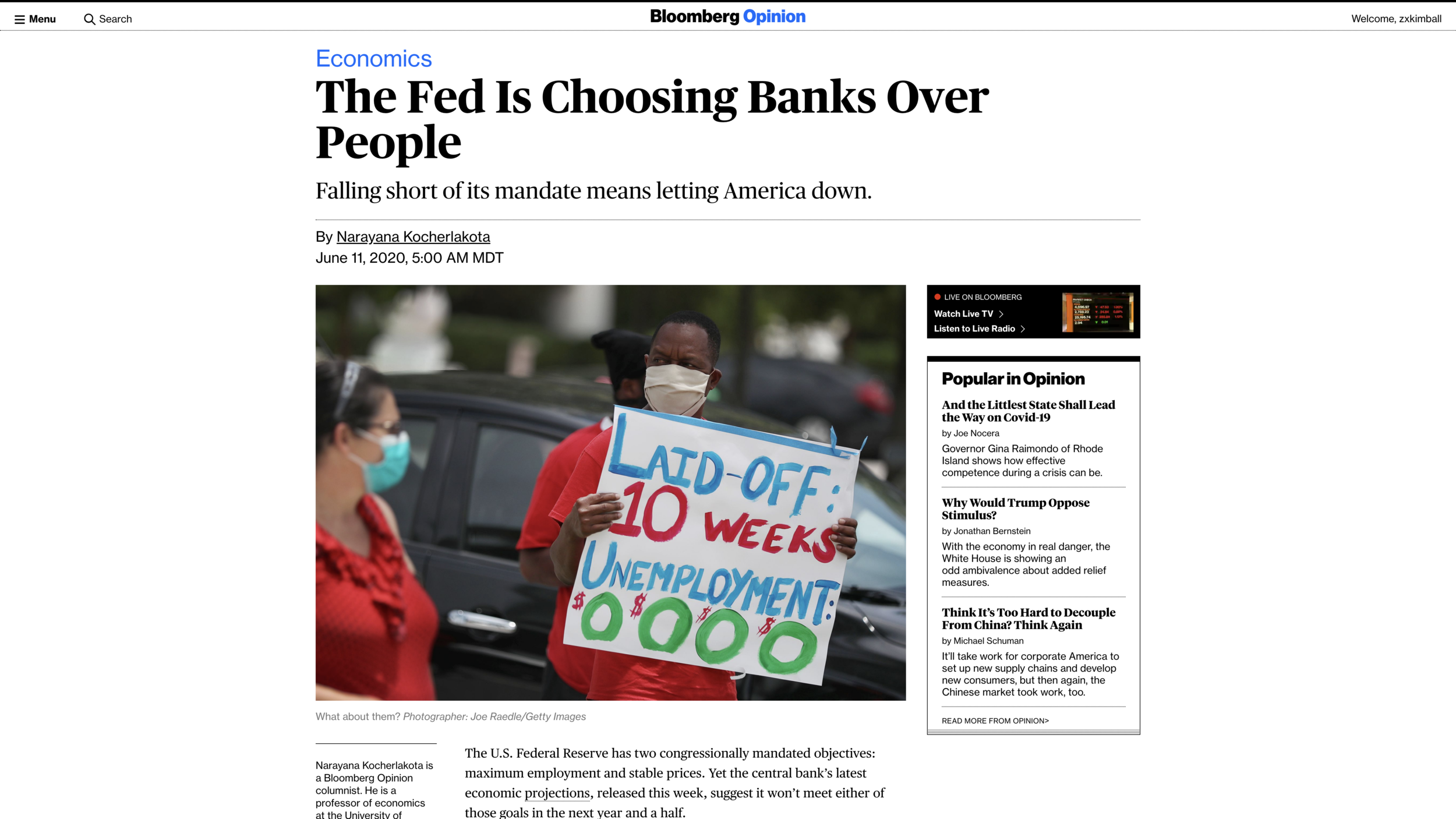

No one knows what will happen once the pandemic is over. But there is a substantial chance that powerful aggregate demand stimulus will be necessary in many countries. The articles shown above talk about the US and Japan. Japan has already gone to negative rates. There is no reason it can’t go deeper into negative rates. If they are worried about the paper currency problem, they know what to do: I have given two presentations at the Bank of Japan about negative rate policy, including how to fully neutralize the paper currency problem.
Because a smaller fraction of transactions use paper currency in the United States, any worry about the paper currency problem should be more at the level of this worry in the European countries that have used negative rates. The European Central Bank is at -.5%, while the Swiss National Bank has been at -.75%. The Fed should not be worried at all about going that low.
In his op-ed shown at the top of this post, Narayana Kocherlakota suggests that the Fed is worried about the financial health of banks and that it shouldn’t be so concerned about the banks. Narayana’s argument can be strengthened greatly by pointing out that the Fed can take away almost all of the financial pain of negative rates from banks without any help from the US Treasury simply by having the interest on reserves stay zero, but capping reserves so that funds beyond that in an overnight repo-based facility go at negative rates. The higher the cap, the less financial pain banks suffer from negative rates. Of course, the cap has to be below the total amount that banks want to lend to the Fed in order for negative rates to prevail in the market. If that led to more financial pain than the Fed thought banks should face, the Fed could even raise the interest on reserves subject to the cap a bit. So the Fed doesn’t have to choose between banks and the health of the economy. At some cost to its own net worth, it can both hold banks’ bottom lines harmless and stimulate the economy with negative rates. And in practice, if the Fed goes to negative rates, I would bet that like other central banks using negative rates it would in fact take some measure to protect the bottom line of banks. So the idea that negative rates are harmful to banks is a red herring. It would only happen if either (a) a central bank knows the banks can handle it or (b) a central bank is stupider than the central banks in the real world that have used negative rates.
The ease with which central banks can neutralize any bad effects on bank balance sheets from negative rates seems not to be widely understood. I discuss this extensively in “Responding to Negative Coverage of Negative Rates in the Financial Times.”
Note that I am focusing on the potential need for negative rates once the pandemic is over. For example, in “The Wisdom of Jerome Powell” I write:
History may judge Jerome Powell in important measure on whether he is willing to use negative interest rates to get us out of the hole our economy is in some months from now. The “how” of negative interest rates is now well-worked out, the President of the United States is supportive of negative rates, and there is a clear legal path to negative rates in the United States. So there is no excuse not to use them if they are needed, as they are likely to be.
But in my debate with Narayana Kocherlakota, he gives cogent reasons for going to negative rates even during the current phase of the pandemic where it has huge economic effects. See “Narayana Kocherlakota Advocates Negative Interest Rates Now.”
For more on negative rate policy, see my bibliographic post “How and Why to Eliminate the Zero Lower Bound: A Reader’s Guide.”
James Nestor on How Bad Mouth Breathing Is
Mouth breathing is proverbial as a sign of being “uncool.” But in his very valuable book Breath, James Nestor argues that mouth breathing is also profoundly unhealthy. As one part of his argument, James writes convincingly of what a horrible experience it was for him when he subjected himself to the experiment of having his nose plugged for ten days. His account of an experiment on monkeys is also convincing:
Egil P. Harvold’s hideous experiments in the 1970s and 80s would not go over well with PETA or with anyone who has ever really cared for animals. Working from a lab in San Francisco, he gathered a troop of rhesus monkeys and stuffed silicone deep into the nasal cavities of half of them, leaving the other half as they were. The obstructed animals couldn’t remove the plugs, and they couldn’t breathe at all through their noses. They were forced to adapt to constant mouthbreathing.
Over the next six months, Harvold measured the animals’ dental arches, the angles of their chins, the length of their faces, and more. The plugged-up monkeys developed the same downward growth pattern, the same narrowing of the dental arch, crooked teeth, and gaping mouth. Harvold repeated these experiments, keeping animals obstructed for two years. They fared even worse. Along the way, he took a lot of pictures.
…
Mouthbreathing, it turns out, changes the physical body and transforms airways, all for the worse. Inhaling air through the mouth decreases pressure, which causes the soft tissues in the back of the mouth to become loose and flex inward, creating less overall space and making breathing more difficult. Mouthbreathing begets more mouthbreathing. Inhaling from the nose has the opposite effect. It forces air against all those flabby tissues at the back of the throat, making the airways wider and breathing easier. After a while, these tissues and muscles get “toned” to stay in this opened and wide position. Nasal breathing begets more nasal breathing.
…
Sleeping with an open mouth exacerbates these problems. Whenever we put our heads on a pillow, gravity pulls the soft tissues in the throat and tongue down, closing off the airway even more. After a while, our airways get conditioned to this position; snoring and sleep apnea become the new normal.
James also points to many ancient and traditional cultures that talk of the virtues of nose-breathing and the troubles with mouth-breathing. The most entertaining was his second-hand account of many Native American tribes:
Catlin would spend the next six years traveling thousands of miles throughout the Great Plains, covering more distance than Lewis and Clark to document the lives of 50 Native American tribes.
…
The Native Americans explained to Catlin that breath inhaled through the mouth sapped the body of strength, deformed the face, and caused stress and disease. On the other hand, breath inhaled through the nose kept the body strong, made the face beautiful, and prevented disease. “The air which enters the lungs is as different from that which enters the nostrils as distilled water is different from the water in an ordinary cistern or a frog-pond,” he wrote.
Healthy nasal breathing started at birth. Mothers in all these tribes followed the same practices, carefully closing the baby’s lips with their fingers after each feeding. At night, they’d stand over sleeping infants and gently pinch mouths shut if they opened. Some Plains tribes strapped infants to a straight board and placed a pillow beneath their heads, creating a posture that made it much harder to breathe through the mouth. During winter, infants would be wrapped in light clothing and then held at arm’s length on warmer days so they’d be less prone to get too hot and begin panting.
All these methods trained children to breathe through their noses, all day, every day. It was a habit they would carry with them the rest of their lives. Catlin described how adult tribal members would even resist smiling with an open mouth, fearing some noxious air might get in. This practice was as “old and unchangeable as their hills,” he wrote, and it was shared universally throughout the tribes for millennia.
Some change in our behavior in the last few hundred years has made a big difference to the average shape of the human skull:
Every one of the ancient skulls was identical to the Parsee sample. They all had enormous forward-facing jaws. They had expansive sinus cavities and broad mouths. And, bizarrely, even though none of the ancient people ever flossed, or brushed, or saw a dentist, they all had straight teeth.
The forward facial growth and large mouths also created wider airways. These people very likely never snored or had sleep apnea or sinusitis or many other chronic respiratory problems that affect modern populations. They did not because they could not. Their skulls were far too large, and their airways too wide for anything to block them. They breathed easy. Nearly all ancient humans shared this forward structure—not just in the Morton Collection, but everywhere around the world. This remained true from the time when Homo sapiens first appeared, some 300,000 years ago, to just a few hundred years ago.
Evans and Boyd then compared the ancient skulls to the modern skulls of their own patients and others. Every modern skull had the opposite growth pattern, meaning the angles of the Frankfort plane and N-perpendicular were reversed: chins had recessed behind foreheads, jaws were slumped back, sinuses shrunken. All the modern skulls showed some degree of crooked teeth.
Later on in Breath, James points to a shift toward eating soft food that leads to facial underdevelopment as well as the (probably related) shift toward mouth-breathing as possible causes. I find the effects of soft food evolutionarily plausible: just as evolution could assume in the environment of evolutionary adaptation that we would go through frequent periods of very little food, and design some repair processes to happen then, evolution could design facial development based on the assumption—reasonable for the environment of evolutionary adaptation of humans—that we would be eating a lot of tough-to-chew food.
I find myself convinced by James Nestor’s arguments that nose-breathing is better for me than mouth-breathing. So much so that I want to encourage myself to do nose-breathing in the way that requires as little conscious attention as possible: making sure I breathe through my nose at night. This is a straightforward matter of an intervention James discusses: taping my mouth shut at night. I know it seems weird, but I have gotten used to it quite quickly. It is important to have the right kind of tape, or pulling it off in the morning will hurt. This is what I use:

Link to the Amazon page for this microfoam tape: “3m microfoam tape 2" x5 1/2 yd, stretched box: 6”
I use the Hitler-mustache taping: a narrow (2” wide) vertical strip in the middle of my lips. That way, if I get thirsty at night, I can drink through a straw through the corner of my mouth without having to remove the tape.
I can report that, subjectively, I feel better with the additional nose breathing. I feel better especially right when I wake up in the morning. I know this intervention needs more in the way of randomized controlled trials to document whether it has genuine benefits, but I would be optimistic about the results of such randomized controlled trials. (James reports some amount of relevant evidence that has been collected, though I don’t remember exactly a randomized controlled trial of mouth-taping at night.)
I confess, before I read it, I thought the theme of Breath—that we are breathing all wrong—sounded weird. And having read it, I am now doing an additional weird thing. But I found myself convinced of most (though not all) of what the book claimed. I recommend it. I plan to follow up with posts on some other ideas from Breath.
The Federalist Papers #12: Union Makes it Much Easier to Get Tariff Revenue—Alexander Hamilton
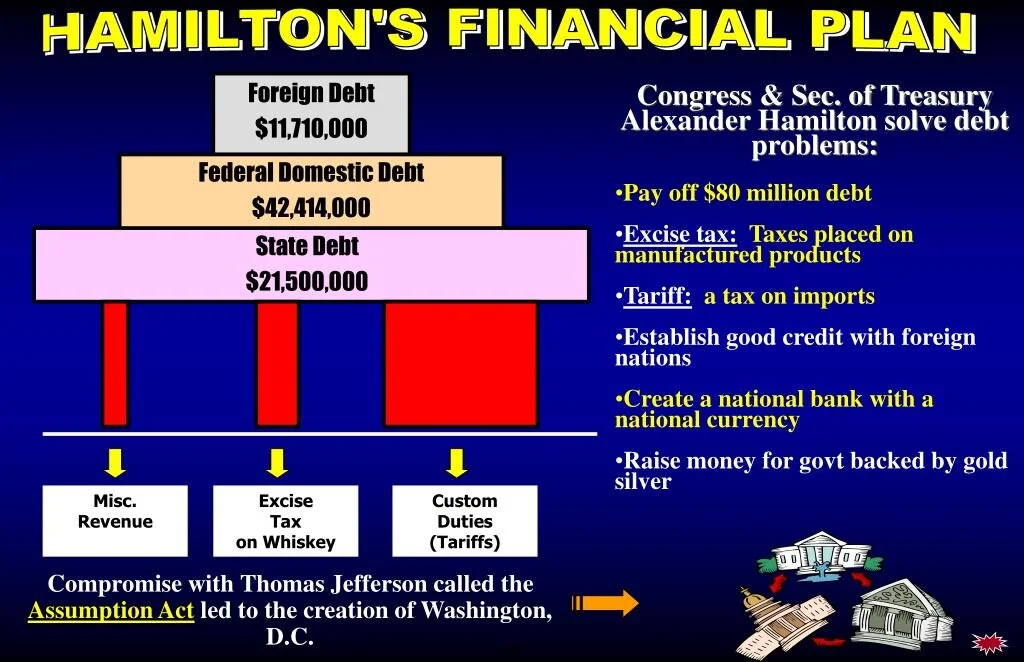
For a nation whose formation was propelled by a tax rebellion, the question of which taxes were most acceptable and manageable was a crucial one. In the Federalist Papers #12, Alexander Hamilton argued that tariffs were likely to be more politically acceptable and manageable than taxes on land or personal property.
One reason taxes on land or personal property could be difficult is that some farmers whose farms produced quite a bit might still not have much currency because they consumed much of what they produced and used barter for much of the rest. Trade would have been monetized to a much greater extent.
Alexander Hamilton goes on to argue that the states united could enforce a tariff relatively easily because most trade had to come in through the Atlantic coast. By contrast, divided states would have a hard time enforcing a tariff because smuggling from other states—including smuggling of transshipped goods from abroad—would be quite easy. He points to France as an example of how much effort it requires to enforce tariffs when many different land and river routes are available for smuggling.
As another advantage of tariffs over other taxes, Alexander Hamilton points to the importance in imports of one particular luxury: liquor. He views any reduction in the consumption of imported liquor as a good thing.
It is easy to read between the lines Alexander Hamilton’s keen awareness of the political power of American farmers in the 18th century. In addition to speaking ill of taxes on land, he makes a point at the beginning of the Federalist Papers #12 to argue, apart from his main theme of tax revenue, that union will yield a great deal of commerce—not only foreign trade, but also trade between the states—and that that commerce will raise land prices.
One of Alexander Hamilton’s great strengths was his ability to combine considerations of political philosophy, political expediency, public economics and monetary economics. The Federalist Papers #12 is a good example of that strength.
Below is the full text of the Federalist Papers #12:
FEDERALIST NO. 12
The Utility of the Union In Respect to Revenue
From the New York Packet
Tuesday, November 27, 1787.
Author: Alexander Hamilton
To the People of the State of New York:
THE effects of Union upon the commercial prosperity of the States have been sufficiently delineated. Its tendency to promote the interests of revenue will be the subject of our present inquiry.
The prosperity of commerce is now perceived and acknowledged by all enlightened statesmen to be the most useful as well as the most productive source of national wealth, and has accordingly become a primary object of their political cares. By multipying the means of gratification, by promoting the introduction and circulation of the precious metals, those darling objects of human avarice and enterprise, it serves to vivify and invigorate the channels of industry, and to make them flow with greater activity and copiousness. The assiduous merchant, the laborious husbandman, the active mechanic, and the industrious manufacturer,--all orders of men, look forward with eager expectation and growing alacrity to this pleasing reward of their toils. The often-agitated question between agriculture and commerce has, from indubitable experience, received a decision which has silenced the rivalship that once subsisted between them, and has proved, to the satisfaction of their friends, that their interests are intimately blended and interwoven. It has been found in various countries that, in proportion as commerce has flourished, land has risen in value. And how could it have happened otherwise? Could that which procures a freer vent for the products of the earth, which furnishes new incitements to the cultivation of land, which is the most powerful instrument in increasing the quantity of money in a state--could that, in fine, which is the faithful handmaid of labor and industry, in every shape, fail to augment that article, which is the prolific parent of far the greatest part of the objects upon which they are exerted? It is astonishing that so simple a truth should ever have had an adversary; and it is one, among a multitude of proofs, how apt a spirit of ill-informed jealousy, or of too great abstraction and refinement, is to lead men astray from the plainest truths of reason and conviction.
The ability of a country to pay taxes must always be proportioned, in a great degree, to the quantity of money in circulation, and to the celerity with which it circulates. Commerce, contributing to both these objects, must of necessity render the payment of taxes easier, and facilitate the requisite supplies to the treasury. The hereditary dominions of the Emperor of Germany contain a great extent of fertile, cultivated, and populous territory, a large proportion of which is situated in mild and luxuriant climates. In some parts of this territory are to be found the best gold and silver mines in Europe. And yet, from the want of the fostering influence of commerce, that monarch can boast but slender revenues. He has several times been compelled to owe obligations to the pecuniary succors of other nations for the preservation of his essential interests, and is unable, upon the strength of his own resources, to sustain a long or continued war.
But it is not in this aspect of the subject alone that Union will be seen to conduce to the purpose of revenue. There are other points of view, in which its influence will appear more immediate and decisive. It is evident from the state of the country, from the habits of the people, from the experience we have had on the point itself, that it is impracticable to raise any very considerable sums by direct taxation. Tax laws have in vain been multiplied; new methods to enforce the collection have in vain been tried; the public expectation has been uniformly disappointed, and the treasuries of the States have remained empty. The popular system of administration inherent in the nature of popular government, coinciding with the real scarcity of money incident to a languid and mutilated state of trade, has hitherto defeated every experiment for extensive collections, and has at length taught the different legislatures the folly of attempting them.
No person acquainted with what happens in other countries will be surprised at this circumstance. In so opulent a nation as that of Britain, where direct taxes from superior wealth must be much more tolerable, and, from the vigor of the government, much more practicable, than in America, far the greatest part of the national revenue is derived from taxes of the indirect kind, from imposts, and from excises. Duties on imported articles form a large branch of this latter description.
In America, it is evident that we must a long time depend for the means of revenue chiefly on such duties. In most parts of it, excises must be confined within a narrow compass. The genius of the people will ill brook the inquisitive and peremptory spirit of excise laws. The pockets of the farmers, on the other hand, will reluctantly yield but scanty supplies, in the unwelcome shape of impositions on their houses and lands; and personal property is too precarious and invisible a fund to be laid hold of in any other way than by the inperceptible agency of taxes on consumption.
If these remarks have any foundation, that state of things which will best enable us to improve and extend so valuable a resource must be best adapted to our political welfare. And it cannot admit of a serious doubt, that this state of things must rest on the basis of a general Union. As far as this would be conducive to the interests of commerce, so far it must tend to the extension of the revenue to be drawn from that source. As far as it would contribute to rendering regulations for the collection of the duties more simple and efficacious, so far it must serve to answer the purposes of making the same rate of duties more productive, and of putting it into the power of the government to increase the rate without prejudice to trade.
The relative situation of these States; the number of rivers with which they are intersected, and of bays that wash there shores; the facility of communication in every direction; the affinity of language and manners; the familiar habits of intercourse; --all these are circumstances that would conspire to render an illicit trade between them a matter of little difficulty, and would insure frequent evasions of the commercial regulations of each other. The separate States or confederacies would be necessitated by mutual jealousy to avoid the temptations to that kind of trade by the lowness of their duties. The temper of our governments, for a long time to come, would not permit those rigorous precautions by which the European nations guard the avenues into their respective countries, as well by land as by water; and which, even there, are found insufficient obstacles to the adventurous stratagems of avarice.
In France, there is an army of patrols (as they are called) constantly employed to secure their fiscal regulations against the inroads of the dealers in contraband trade. Mr. Neckar computes the number of these patrols at upwards of twenty thousand. This shows the immense difficulty in preventing that species of traffic, where there is an inland communication, and places in a strong light the disadvantages with which the collection of duties in this country would be encumbered, if by disunion the States should be placed in a situation, with respect to each other, resembling that of France with respect to her neighbors. The arbitrary and vexatious powers with which the patrols are necessarily armed, would be intolerable in a free country.
If, on the contrary, there be but one government pervading all the States, there will be, as to the principal part of our commerce, but ONE SIDE to guard--the ATLANTIC COAST. Vessels arriving directly from foreign countries, laden with valuable cargoes, would rarely choose to hazard themselves to the complicated and critical perils which would attend attempts to unlade prior to their coming into port. They would have to dread both the dangers of the coast, and of detection, as well after as before their arrival at the places of their final destination. An ordinary degree of vigilance would be competent to the prevention of any material infractions upon the rights of the revenue. A few armed vessels, judiciously stationed at the entrances of our ports, might at a small expense be made useful sentinels of the laws. And the government having the same interest to provide against violations everywhere, the co-operation of its measures in each State would have a powerful tendency to render them effectual. Here also we should preserve by Union, an advantage which nature holds out to us, and which would be relinquished by separation. The United States lie at a great distance from Europe, and at a considerable distance from all other places with which they would have extensive connections of foreign trade. The passage from them to us, in a few hours, or in a single night, as between the coasts of France and Britain, and of other neighboring nations, would be impracticable. This is a prodigious security against a direct contraband with foreign countries; but a circuitous contraband to one State, through the medium of another, would be both easy and safe. The difference between a direct importation from abroad, and an indirect importation through the channel of a neighboring State, in small parcels, according to time and opportunity, with the additional facilities of inland communication, must be palpable to every man of discernment.
It is therefore evident, that one national government would be able, at much less expense, to extend the duties on imports, beyond comparison, further than would be practicable to the States separately, or to any partial confederacies. Hitherto, I believe, it may safely be asserted, that these duties have not upon an average exceeded in any State three per cent. In France they are estimated to be about fifteen per cent., and in Britain they exceed this proportion.[If my memory be right they amount to twenty per cent.] There seems to be nothing to hinder their being increased in this country to at least treble their present amount. The single article of ardent spirits, under federal regulation, might be made to furnish a considerable revenue. Upon a ratio to the importation into this State, the whole quantity imported into the United States may be estimated at four millions of gallons; which, at a shilling per gallon, would produce two hundred thousand pounds. That article would well bear this rate of duty; and if it should tend to diminish the consumption of it, such an effect would be equally favorable to the agriculture, to the economy, to the morals, and to the health of the society. There is, perhaps, nothing so much a subject of national extravagance as these spirits.
What will be the consequence, if we are not able to avail ourselves of the resource in question in its full extent? A nation cannot long exist without revenues. Destitute of this essential support, it must resign its independence, and sink into the degraded condition of a province. This is an extremity to which no government will of choice accede. Revenue, therefore, must be had at all events. In this country, if the principal part be not drawn from commerce, it must fall with oppressive weight upon land. It has been already intimated that excises, in their true signification, are too little in unison with the feelings of the people, to admit of great use being made of that mode of taxation; nor, indeed, in the States where almost the sole employment is agriculture, are the objects proper for excise sufficiently numerous to permit very ample collections in that way. Personal estate (as has been before remarked), from the difficulty in tracing it, cannot be subjected to large contributions, by any other means than by taxes on consumption. In populous cities, it may be enough the subject of conjecture, to occasion the oppression of individuals, without much aggregate benefit to the State; but beyond these circles, it must, in a great measure, escape the eye and the hand of the tax-gatherer. As the necessities of the State, nevertheless, must be satisfied in some mode or other, the defect of other resources must throw the principal weight of public burdens on the possessors of land. And as, on the other hand, the wants of the government can never obtain an adequate supply, unless all the sources of revenue are open to its demands, the finances of the community, under such embarrassments, cannot be put into a situation consistent with its respectability or its security. Thus we shall not even have the consolations of a full treasury, to atone for the oppression of that valuable class of the citizens who are employed in the cultivation of the soil. But public and private distress will keep pace with each other in gloomy concert; and unite in deploring the infatuation of those counsels which led to disunion.
PUBLIUS.
Here are links to my other posts on The Federalist Papers so far:
The Federalist Papers #1: Alexander Hamilton's Plea for Reasoned Debate
The Federalist Papers #3: United, the 13 States are Less Likely to Stumble into War
The Federalist Papers #4 B: National Defense Will Be Stronger if the States are United
The Federalist Papers #5: Unless United, the States Will Be at Each Others' Throats
The Federalist Papers #6 A: Alexander Hamilton on the Many Human Motives for War
The Federalist Papers #11 A: United, the States Can Get a Better Trade Deal—Alexander Hamilton
Matt Adler's Critique of Methods Based on the Value of a Statistical Life
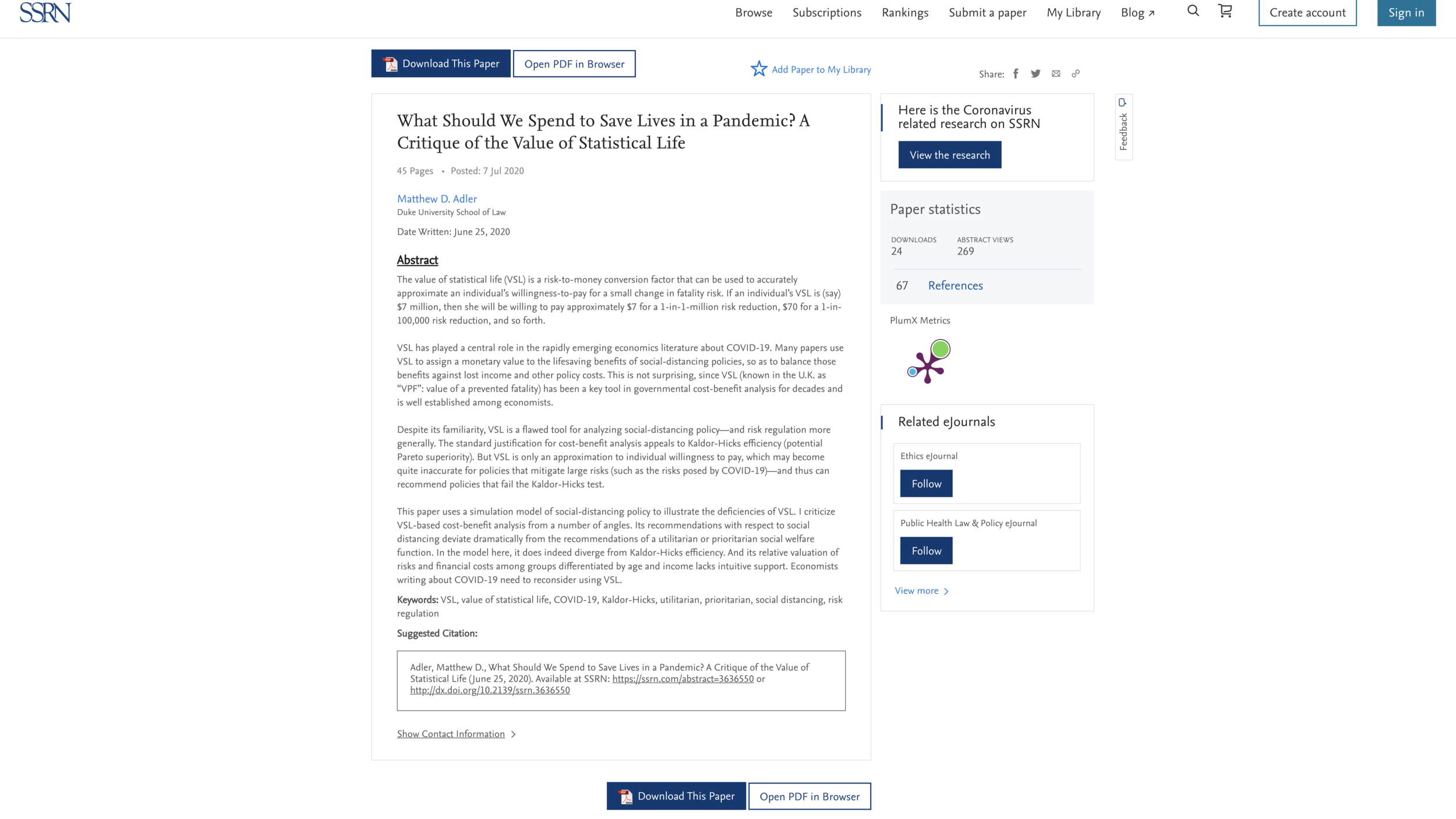
Matt Adler is a law professor economists should be aware of. He is doing serious work related to constructing social welfare functions. And he explains the current state-of-the-art for constructing social welfare functions in a very understandable way.
A Critique of Typical Value-of-a-Statistical-Life Methods
“What Should We Spend to Save Lives in a Pandemic? A Critique of the Value of Statistical Life” is a nice introduction to Matt Adler. Reading it, I realize, for example, the naivete in how I used the value of a statistical life in “Logarithms and Cost-Benefit Analysis Applied to the Coronavirus Pandemic.” The value of a statistical life is the marginal rate at which an individual would trade off a small extra probability of death with small dollar cost. There are at least three problems with common ways of using the value of a statistical life:
Some interventions are non-marginal. In particular, lockdowns can cause large reductions in income and consumption that are more-than-proportionately costly to an individual than smaller reductions in income and consumption would be. Hence, a naive application of the VSL formula will understate the utility cost of the lockdowns.
The value of a statistical life can easily differ by age—both because of the number of years that would be lost from death at that age and because of the different financial situations individuals have at different ages.
A good social welfare function should treat a dollar’s worth of value to someone living on $500 a month as being a bigger deal than a dollar’s worth of value to a billionaire.
Two notes: (a) The first two issues are problems even if one is treating a dollar as a dollar, regardless of whose dollar it is. (b) The different financial situations of older individuals mentioned in (2) are the kind of issue raised in (3).
On these three issues, it is worth quoting this passage from “What Should We Spend to Save Lives in a Pandemic? A Critique of the Value of Statistical Life”:
As for intuition: textbook VSL is quite counterintuitive, because it places a dramatically higher value on risk reductions for richer individuals; population-average VSL fails to differentiate with respect to age; and all three versions on the cost side are completely insensitive to the incidence of the costs of social distancing policy.
Prioritarianism
How should things be done if not through naive value-of-a-statistical-life methods? The current state-of-the-art for constructing social welfare functions can be described as “Prioritarianism.” Here is Matt Adler’s definition of Prioritarianism:
Prioritarianism is a variation on utilitarianism that has emerged in ethics over the last several decades, and (as suggested by the name) gives extra weight to the well-being of the worse off. It is appealing to those who are impressed by utilitarianism’s consequentialist structure and attention to individual well-being, but believe that utilitarianism’s exclusive focus on the sum total of well-being is too narrow. Instead, prioritarianism considers both the sum total and the distribution of well-being.
…
Prioritarianism sums expected transformed utilities, using a concave transformation function (so as to give greater weight to the worse off).
I am in agreement with Matt Adler on substance here, but I have a terminological disagreement, as follows:
To an economist, what Matt calls "transformed utility" is also "utility," since any monotonic transformation of utility is also a utility function that represents the same preferences. I think this needs to be explained, at least in a footnote.
Because transformed utility is also utility, Prioritarianism is not a variation on utilitarianism, but a type or species of utilitarianism in which the particular representation of utility is chosen not based on convenience of functional form or some empirical or metaphysical principle, but based on ethical reasoning to make sure that that particular transformation of utility used as the utility function adequately deals with distributional issues.
For example, logarithmic utility is primarily based on convenience and therefore typically has little behind it that should be taken seriously in forming a social welfare function. Convenience leads to wide use; then some people mistake prevalence as a hallowing by tradition that must have some basis back in the mists of time. But often the basis back in the mists of time was only convenience.
As a technical note, it is assumptions of anonymity plus a separability condition that make it so ethical considerations about inequality can be dealt with by using a particular transformation of utility as the intermediate object for aggregation. (Fleurbaey and Maniquet say this on separability: "separability conditions state that indifferent agents should not matter in the social evaluation of two alternatives.")
Conclusion
One of the most important things to be aware of is that welfare economics and the idea of constructing social welfare functions have risen again from the ashes like a phoenix after its reverses from the Arrow Impossibility Theorem and other impossibilities results. In particular, interpersonal comparison of a monotonic reference path of consumption bundles—together with a mapping for each individual of which indifference curve they are on to a point on that monotonic reference path—can substitute for interpersonal comparison of utility; thus interpersonal comparison of utility is not necessary for the construction of social welfare functions. Many economists and a few law professors and others are working hard on making theoretically sound social welfare analysis a reality. Our Well-Being Measurement Initiative (for which Dan Benjamin, Kristen Cooper, Ori Heffetz and I are the senior investigators) is marrying these principles to other principles specific to well-being measurement.
Don’t miss these other posts on the coronavirus pandemic:
Logarithms and Cost-Benefit Analysis Applied to the Coronavirus Pandemic
Seconding Paul Romer's Proposal of Universal, Frequent Testing as a Way Out
Also, click on this link to see other posts tagged “happiness.”
State-by-State Graphs of the Effective Reproduction Ratio for COVID-19 over Time →
Hat tip to Joshua Hausman
Savannah Taylor: Lessons of the Labyrinth and Tapping Into Your Inner Wisdom

I am pleased to be able to share a guest post from my friend Savannah Taylor from my Co-Active Leadership Program Tribe. One of Savannah’s themes is about labyrinths, which I also love: I was surprised by how the labyrinth I walked sparked ideas about what matters in my life. Another theme is what I say in “Co-Active Coaching as a Tool for Maximizing Utility—Getting Where You Want in Life”: “ideally, everyone would have a coach, or more than one for different areas of their lives.” Here is Savannah:
Most of my life, (up until last summer when I got divorced and started my entire life over), I've made a habit of looking outside of myself for answers. I constantly gave my power away and sought permission from others to live my life the way I wanted. After making the life changing decision to get divorced and start a new chapter on my own, I began the process of unlearning all of the habits where I was giving my power away, staying small and quiet, and being "acceptable." The path has been unpredictable, with so many twists and turns, but ultimately I knew deep down inside that there was a version of my life with so much more joy, ease, and alignment than what I had been living. I was ready to discover who I really was and I wasn't going to give up until I found her.
Each day, each week, has been a beautiful unfolding of discovering more of myself. The more I lean into loving and accepting who I am and what I bring to the world, the more trust I've built in my inner knowing. This knowing is a still and quiet voice that is dependable and true. It will guide you to your authentic life of fulfillment and purpose if you get quiet enough to listen.
Almost 1 year later, I have cultivated a level of self-acceptance I couldn't have dreamed of. I have discovered the woman I was made to be and consciously created a life by my design. My relationship with my inner wisdom is growing stronger every day and it has led me to the most incredible friendships and opportunities I could have ever imagined.
Most days after working, I take time to walk down to the lake by my house to soak in the goodness of the peaceful water, the fresh air, and get present with myself and nature as the sun gets lower and more golden in the sky. After spending some intentional time there on the old wooden dock, I continue on my normal walking path for more exercise before heading back home.
There are two routes to get back home. I can choose to walk the route back along the water, which is my usual favorite, or I can go through downtown Kirkland and a residential area. I almost always walk back along the water, because it just gives me so much life at the end of the day, but something told me to go the residential route this one day. I decided to listen to my quiet inner nudge. As I headed back home, I stumbled upon this labyrinth. I've been on this particular route several times before and never noticed it. It is in PLAIN SIGHT right next to the sidewalk, with no obstructions. This made me stop and think, "What else is in plain sight that I haven't noticed?"
Not sure what a labyrinth is? Here's a snippet from the internet to give you an idea:
A labyrinth is a complex and circuitous path that leads from a beginning point to a center (and back out again). One of the two types is a Meander, with a single, undivided path and no choices to make other than traveling onward through the winding pattern to an assured goal. The meandering pattern may tease the traveler by leading inward, then suddenly outward, but eventually it arrives surely at the goal. A labyrinth may have served to help one find their spiritual path by purposefully removing one from the common understanding of linear time and direction between two points. As one traveled through the labyrinth, one would become increasingly lost in reference to the world outside and, possibly, would unexpectedly discover one’s true path in life.
Before I stepped into the labyrinth, I stopped at the entrance and considered what intention or question I wanted to meditate on as I walked the path. I ended up asking, "What is my next step?" As I walked the meandering path of the labyrinth, considering my question, these are the lessons that revealed themselves to me through the experience:
Stay on the path and keep putting one foot in front of the other and you will reach your goal (even when the path seems to be taking you further away from it)
Even though you can't tell how you get "there" you WILL GET THERE
The journey requires TRUST that you will indeed find your way and get "there"
When you start to enjoy the process and the journey, you get "there" before you know it
Your path and your pace is yours, comparison and judgement aren't helpful or necessary
These lessons were exactly what I needed to hear in the moment as I was contemplating how to move forward with next steps in my business and life. And though this didn't give me any specific action steps, it reminded me of how I needed to BE as I moved forward. I walked this labyrinth a couple weeks ago and as I've stepped into more TRUST that I just need to keep putting one foot in front of the other and enjoying the process, I have realized so many creative solutions, next steps, and A-HA moments. It was exactly what I needed. Sometimes it's so easy to feel stuck or lost, but you ALWAYS have the answers inside you. If you have a hard time hearing your inner wisdom, hire a coach that can help you tune in and facilitate it's uncovering.
Savannah Taylor is a sweet and sassy powerhouse of courage and vulnerability, kindness and compassion. In her presence, you will feel like you are ENOUGH, supported, and championed to the highest version of yourself. She is the Founder of the ME FIRST: Self-Care for Leaders community and a Co-Active Adventure Coach. She utilizes exploration and shared experiences in nature to empower Leaders to expand their limits of what's possible. From 1:1 local nature walks (near Seattle) to multi-day retreats of sailing, hiking, scuba diving, and obstacle courses, she guides you to expand through discovery and wonder as you connect to yourself and others outdoors.
Savannah grew up in Seattle with a family that was not “outdoorsy.” After spending 3 years in Hawaii in her late 20's, she began hiking, sailing, and challenging her fear of water by snorkeling and getting scuba certified. Through her journey of exploration and pushing her physical and mental limits, she discovered the power of expansion through nature and adventure coaching. Savannah is on a mission to empower you to trust your inner knowing and cultivate self-acceptance while challenging the self-imposed limits you’ve set for your life. Our greatest work is to uncover our own alignment, joy, and values and build our life around them. Making the world a better place starts inside you.
Book a sample coaching session with Savannah here:
https://savannahtaylorcoachingcalendar.as.me/?appointmentType=5241465
Visit her website:
www.savannahtaylorcoaching.com
Join the Community, ME FIRST: Self-Care for Leaders:
Don’t Miss These Other Posts Related to Positive Mental Health:
Interstellar Travel and Uploaded Humans
Many difficulties of space travel go away when human consciousnesses have already been translated into software. For example,
“Suspended animation” is a simple matter of not running the software program and sticking with a copy
Even if the stored human consciousnesses are physically traveling on a spaceship, the danger from radiation can be taken care of by having many backup copies and doing periodic error correct. Other dangers such as muscle wasting from zero gravity are absent.
Even if the stored human consciousness are physically traveling on a spaceship, the total weight needed is likely to be much, much smaller than the weight of humans.
There is no need to worry about food and oxygen for the journey. And power needs should be relatively low if for most of the human consciousnesses on the journey error correction is the only operation being performed.
This should make even interstellar travel realistically possible without any space travel technology beyond what we can already foresee. Michio Kaku raises the additional possibility of transmitting a human consciousness on a laser beam. Here is a summary of that idea plus a little background from Adam Kirsch’s June 20, 2020 Wall Street Journal article “Looking Forward to the End of Humanity”:
Ultimately, however, the hope is that we won’t just use computers—we’ll become them. Today, cognitive scientists often compare the brain to hardware and the mind to the software that runs on it. But a software program is just information, and in principle there’s no reason why the information of consciousness has to be encoded in neurons.
The Human Connectome Project, launched in 2009 by the National Institutes of Health, describes itself as “an ambitious effort to map the neural pathways that underlie human brain function.” If those pathways could be completely mapped and translated into digital 0s and 1s, the data could be uploaded to a computer, where it could survive indefinitely. The physicist Michio Kaku has theorized that this is how humanity will overcome the logistical challenges of deep-space travel: “We’re going to put the connectome on a laser beam and shoot it to the moon. In one second, our consciousness is on the moon. In 20 minutes we’re on Mars, in eight hours we’re on Pluto, in four years our consciousness has reached the nearest star.”
However, Robin Hanson’s book The Age of Em, which I feature in “On Being a Copy of Someone's Mind,” gives economic arguments for why interstellar travel of software humans, while it is likely to happen, wouldn’t be central to early historical developments after technology to upload human consciousness’s becomes available. Basically, there are a lot of economic reasons why human beings, whether flesh and blood or software humans, want things done fast. And by the time we have the technology to upload human consciousness at all, it is likely that software humans can operate at a much faster pace than flesh-and-blood humans: a thousand or a million times faster.
What would a trip to Pluto look like if the typical software human is operating at 1000 times flesh-and-blood speed? Traveling at the speed of light on a laser beam, it then takes 16000 subjective hours of the software humans back home to go to Pluto and return, which is 22 months. That would seem like a long time to be gone. On the other hand, one copy of you could go while the other stays behind to keep working. So that could be quite attractive.
But even if a receiver station was in orbit around Alpha Centauri at the beginning of the age of software humans, a roundtrip of 8.6 years of flesh-and-blood human time would be 8,600 years of software human time. That would make it seem like a one-way trip. The one-way trip could be quite attractive if copies of all one’s family and friends and many other potential friends took the trip too, but anyone who went to the Alpha Centauri system wouldn’t have any influence on software human civilization for a period of 8,600 subjective years (of the average working software human).
Thus, interstellar travel, while a lot easier when there human consciousness can be uploaded, and likely quite consequential for the galaxy, would have very little effect on human history on earth for what will seem like a long, long time for many software humans.
In closing, let me several background points about the predicted scenario.
First, flesh-and-blood humans would not be central to this future simply because the ease of copying software humans would mean that there could easily—and profitably would be—trillions and trillions of software humans, while the number of flesh-and-blood humans would be measured in billions. Flesh-and-blood humans willing to be uploaded would be important as the source of real variety among software humans. Also, from the perspective of flesh-and-blood humans, the subsistence cost for a software human would be tiny compared to the subsistence cost for a flesh-and-blood human. That means that from the perspective of a software human, a flesh-and-blood human would seem incredibly rich. (The only alternative to a flesh-and-blood human seeming incredibly rich to a software human would be for the flesh-and-blood human to be at below a subsistence level for a flesh-and-blood human and therefore to die. Big, hulking things such as flesh-and-blood humans are expensive.)
Second, one should not think of software humans as being incorporeal. It would be very easy for a software human to move back and forth between being embedded in some kind of physical android form (though that physical form need not be human-shaped) and being embedded in a virtual world—that is, being purely electronic in form. A software human might specialize in one role or another, but fundamentally doesn’t need to choose. It is an easy transition back and forth. Generally speaking, a physical form not needed for work purposes is likely to seem relatively expensive to a software human, so most wouldn’t have a physical form outside of work hours. And as Robin Hanson writes, a large share of software humans, like most flesh-and-blood humans in advanced countries now, are likely to do office work, which leaves them without much reason to incur the expense of a physical form.

A scene from “Upload”
I have started in on the fun TV series “Upload.” It is interesting to compare what happens in the series with Robin Hanson’s predictions (conditional on plausible future technology):
The idea in “Upload” that there might be a period of time when the only connectome scanning technology available destroys the brain that is scanned is plausible enough. Probably at some later period, non-destructive scanning of the connectome will become possible.
“Upload” raises the issue of software humans working, but assumes a law prohibiting it. The commercial advantages of letting software humans work are likely to make such a law difficult to maintain politically in all jurisdictions. And the jurisdictions that allow software humans to work will get much richer than jurisdictions that don’t. As Robin Hanson points out, giving flesh-and-blood humans a small share of the gains from software humans working—even through something as simple as an income tax on software humans—is likely to make the flesh-and-blood humans to not only acquiesce in allowing software humans to work but to actively encourage it.
One of the plot-driving challenges in “Upload” is low-quality virtual reality for software humans. This is quite unlikely for one simple reason: human-brain-emulating software will be vastly more complex— and therefore vastly more expensive to run—than quite high-quality virtual reality software. Some kinds of virtual reality will have an expense that is a substantial fraction of the cost of running a software human—for example, running a scanned cat or dog as opposed to a simplified virtual-reality cat or dog—but many, many high-quality virtual reality features will cost a tiny fraction of running software needed to create human experience for that software.
Finally, “Upload” shows zero recognition in the first few episodes that software humans can operate at a different speed than flesh-and-blood humans—either faster or slower. This possibility would change so many decision points in the first few episodes that it will be hard for the writers to introduce this possibility later on without creating many retrospective plot holes in the first few episodes. As it is, they can hope viewers simply don’t think of this possibility. But technologically, once you have software, it is easy to rig it to run at different speeds. For example, I am now running Peter Attia’s podcasts at 1.2 speed. No problem. One important consequence of the different speeds of software humans and flesh-and-blood humans is that while interactions between these two groups will be easy, ordinary relationships might well be difficult: running at a speed that allows a software human to have a deep relationship with a flesh-and-blood human would mean sacrificing ease of having relationships with the bulk of other software humans. (And even among software humans, there would be divisions based on different operating speeds—perhaps driven by occupational differences in economically optimal speed. But with trillions of software humans likely in existence, there would be many software humans in each speed category to form relationships with.)
I find thinking about the future that Robin Hanson has conditionally predicted fascinating. It is a good topic to return to again and again. And as should already be clear, I highly recommend The Age of Em.
Related Posts:
America's Struggle

Our Home Owner’s Association puts little flags out in front of all of our houses. This year, that flag symbolizes for me how proud I am of the United State of America that in quick succession, it has confronted some of the worst abuses of sexism through the #metoo movement, and now is confronting the continuing abuses of racism in a way that seems to me especially powerful compared to most of the antiracism efforts I have seen since, say, 1980.
Our republic was born unfinished, with a huge fraction of its people (notably African Americans and women, but others too) disenfranchised and treated as lesser beings. But the ideals articulated at the founding of our republic—even when articulated by men who acted in abhorrent ways, such as holding slaves—were universal in their application and appeal, and the charmed circle of those treated as full human beings is expanding, though still far short of where it needs to be.
One frontier of social justice that is near and dear to my heart is the struggle to get people to view and treat individuals who were born outside the United States as full human beings. I know that some are angered by people immigrating in ways that flout our laws. But if that is the concern, then dramatically increase legal immigration! If people have a fair chance to immigrate legally, then there is less temptation for them to immigrate in an unregulated way.
I know it is a matter of dispute, but I think our immigration laws are driven in important measure by racism. If we had large numbers of immigrants—even illegal immigrants—from Northern Europe, I don’t think the push for immigration restrictions would be nearly the same. And I think that would run into less opposition than immigration that brought in people who had excellent English of all ethnic backgrounds from all around the world.
May we quickly extend the charmed circle of those we care about as full human beings to all the people on this planet! Only when we care deeply about all human beings will we have a chance at social justice.