The Mormon Church's Counterpart to a Sovereign Wealth Fund
The State of Missouri declared war against the Mormon Church in 1838. The US Federal Government declared war against the Mormon Church in 1857. The US Federal Government legally disincorporated the Mormon Church in 1890, and began confiscating Mormon Church assets. Many top Mormon leaders today were born in the early 20th century; the current head of the Mormon Church was born in 1924, when many were still alive who had experienced those events first hand. As a result, it comes much more easily to leaders of the Mormon Church to view the Mormon Church as under threat than those who don’t feel this history so keenly would suspect.
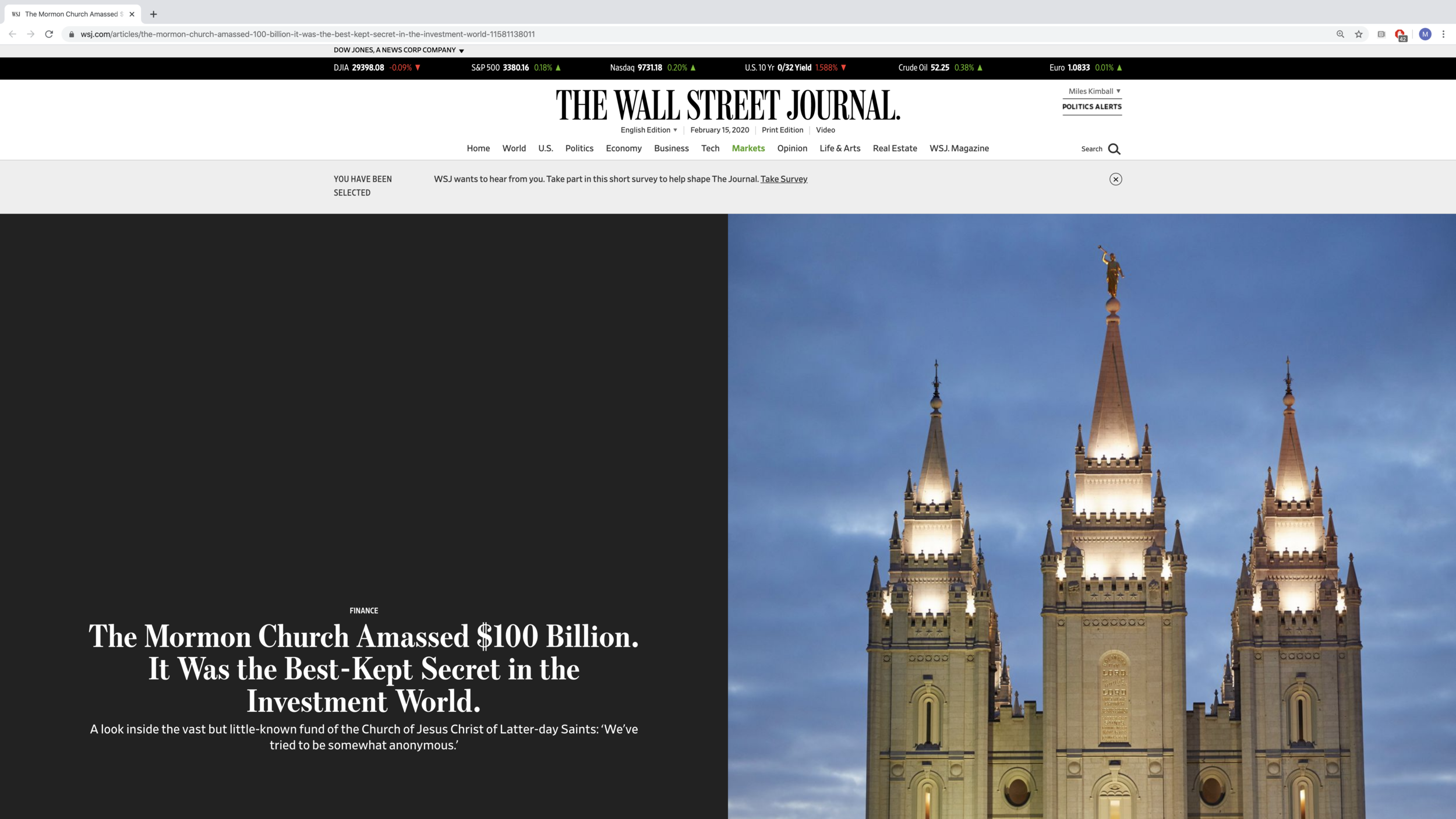
Money can’t take care of all kinds of threats, but it can help with some threats. Through a combination of strenuous saving and luck, the Mormon Church has $100 billion in its answer to a sovereign wealth fund. Ian Lovett and Rachael Levy did an excellent job reporting on this for a February 8, 2020 Wall Street Journal article, “The Mormon Church Amassed $100 Billion. It Was the Best-Kept Secret in the Investment World.” All of the quotations below are from that article.
Nathan Eldon Tanner was my grandfather Spencer W. Kimball’s First Counselor in the Presidency of the Mormon Church from 1973 to 1982. I met him during that time and liked him a lot. He had a key role in the history of the Mormon Church’s $100 billion warchest:
The church established the investment division, which would later become Ensign Peak, in the 1960s, during a period of economic hardship for the faith. In 1969, construction on the church’s office building was halted when the money for construction ran out.
Church leaders had long told members to put away provisions for hard times. Nathan Eldon Tanner, a counselor of the first presidency, the highest level of church leadership, said the church itself should do the same.
Given how much money it asks its members to contribute—10% of their income for “tithing” plus other smaller required donations—the Mormon Church has been eager to keep the extent of its financial assets for the sake of optics. It is not at all clear the Mormon Church has done anything illegal, but a whistleblower to the IRS has brought the Mormon Church’s “Ensign Peak” investment fund into public view.
Ian Lovett and Rachael Levy make these comparisons to help readers appreciate the magnitude of the Ensign Peak fund:
Its assets did total roughly $80 billion to $100 billion as of last year, some of the former employees said. That is at least double the size of Harvard University’s endowment and as large as the size of SoftBank’s Vision Fund, the world’s largest tech-investment fund. Its holdings include $40 billion of U.S. stock, timberland in the Florida panhandle and investments in prominent hedge funds such as Bridgewater Associates LP, according to some current and former fund employees.
The Ensign Peak fund is not a hedge fund—in part for a religious reason:
The firm doesn’t borrow money—the church warns members against going into debt. It also doesn’t invest in industries that Mormons consider objectionable—including alcohol, caffeinated beverages, tobacco and gambling.
What is the “rainy day” the Ensign Peak fund is meant for? Ian and Rachael’s reporting identified a range of answers given. I add bullets and some emphasis in bold italics to the relevant quotations from their article:
“We don’t know when the next 2008 is going to take place,” said Christopher Waddell, a member of the ecclesiastical arm that oversees Ensign Peak known as the presiding bishopric. Referring to the economic crash 12 years ago, he added, “If something like that were to happen again, we won’t have to stop missionary work.” [However, the Great Recession and its aftermath were not in fact bad enough for the Mormon Church to have ever drawn on the Ensign Peak fund.]
A former employee and the whistleblower in his report said they heard Mr. Clarke refer to the second coming of Jesus Christ as part of the reason for Ensign Peak’s existence. Mormons believe before Jesus returns, there will be a period of war and hardship.
Mr. Clarke said … “We believe at some point the savior will return. Nobody knows when" …
When the second coming happens, “we don’t have any idea whether financial assets will have any value at all,” he added. “The issue is what happens before that, not at the second coming.”
From time to time, church leaders in the ecclesiastical arm that oversees Ensign Peak arranged lunch meetings with Ensign Peak employees. During Q&A sessions at the end, employees sometimes asked what the money might be used for, according to one of the former employees, who attended.
Church leaders responded by saying they wanted to know that, too, according to this person.
… ‘When we have direction from the prophet.’ Everyone was waiting, as it were, for direction from God.” The prophet is the president of the church.
I need to explain the last bullet point. The idea is that God will reveal to the President of the church what the Ensign Peak fund is for at some point in the future; for now, what is important to know is that God wants the Mormon Church to have that money saved up; God doesn’t always tell his servants why when He asks them to do something.
One can certainly question the mix of activities the Mormon Church chooses to support financially. But leave that aside for a moment to look instead at the question of when the Mormon Church should spend its financial resources. Although many people think that needs to be met in the world in 2020 are more acute than the needs to be met in the world of 2030, 2040 or 2050, I find that to be a question that reasonable people can differ on. And people are entitled to space for religious beliefs about what the future will be like.
Don't miss these posts on Mormonism:
The Message of Mormonism for Atheists Who Want to Stay Atheists
How Conservative Mormon America Avoided the Fate of Conservative White America
The Mormon Church Decides to Treat Gay Marriage as Rebellion on a Par with Polygamy
David Holland on the Mormon Church During the February 3, 2008–January 2, 2018 Monson Administration
Also see the links in "Hal Boyd: The Ignorance of Mocking Mormonism."
Don’t miss these Unitarian-Universalist sermons by Miles:
By self-identification, I left Mormonism for Unitarian Universalism in 2000, at the age of 40. I have had the good fortune to be a lay preacher in Unitarian Universalism. I have posted many of my Unitarian-Universalist sermons on this blog.
Greg Whitely, the Documentary Filmmaker Who Made "Mitt" Judges Mitt's Speech at the Trial of Donald Trump to be the Authentic Mitt →
I am not impartial here. Mitt is a distant cousin; our common ancestor is my namesake Miles Park Romney. However, this jibes with my view of Mitt.
How Dating Apps Are Making Marriages Stronger
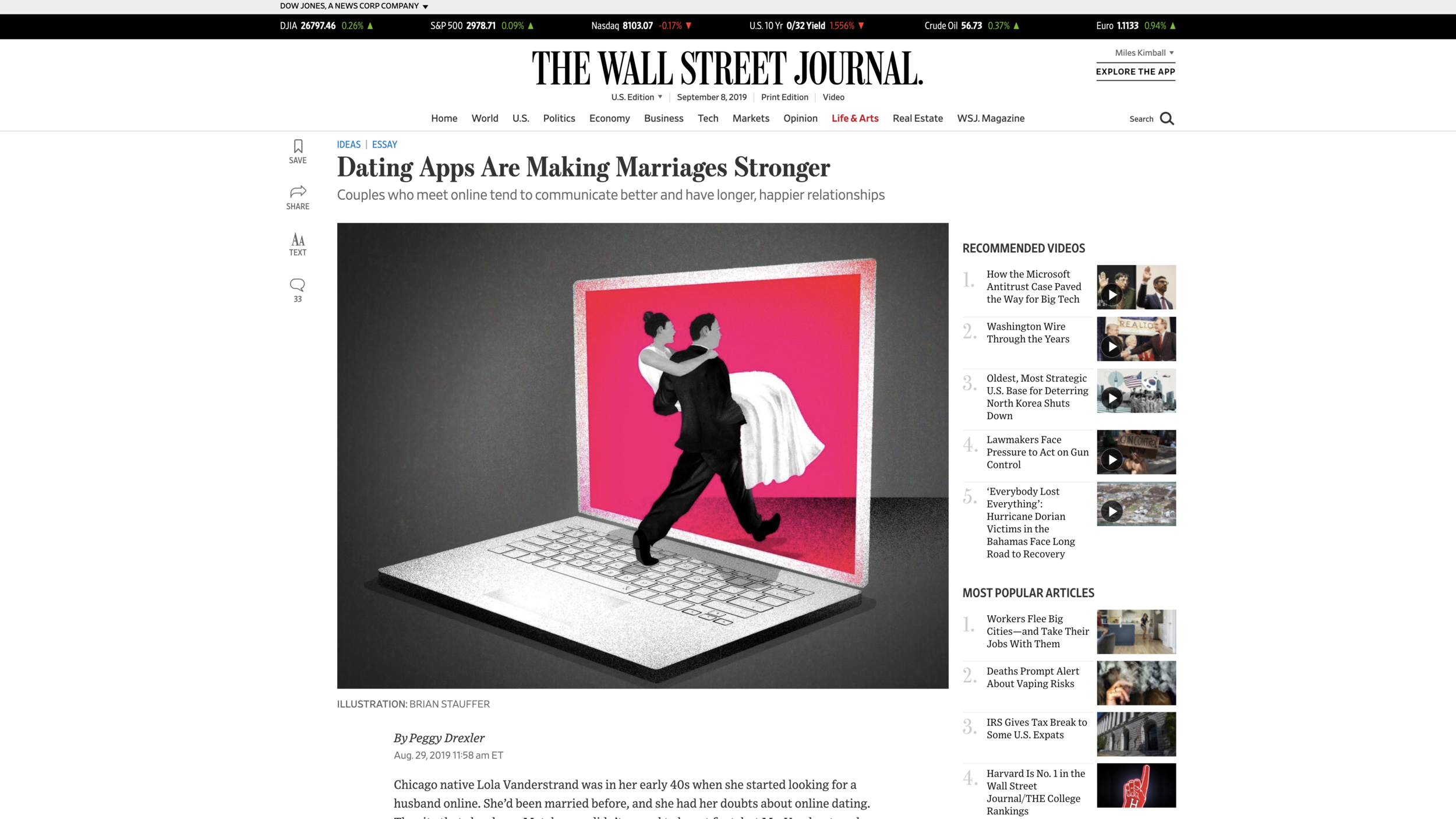
This Valentine’s day, let me give a cheery note about the positive effect of technological progress on relationship quality. Quoting Peggy Drexler’s August 29, 2019 Wall Street Journal article “Dating Apps Are Making Marriages Stronger”:
… there is now evidence that online dating could, in fact, be improving the likelihood of romantic compatibility—and making marriages stronger. …
According to the study, the rate of marital breakups for respondents who met their spouse online was 25% lower than for those who met offline.
…
They also found that more anonymous online communications produced greater self-disclosure—and stronger feelings of affection—than face-to face communications, laying the foundation for more enduring relationships. A 2011 paper published in the journal Communication Research reached a similar conclusion. In a study of 85 participants conducted by researchers at Cornell University, opposite-sex participants were assigned to a face-to-face exchange, an online exchange with the addition of a webcam, or a text-only exchange. Researchers found that the text-only couples made more statements of affection than either of the other groups and were more comfortable sharing intimate information.
The causal theories about why dating apps can lead to better relationships boil down to two main forces:
For some reason, online communications fosters more self-disclosure.
More choices of potential partners allows people to get to a higher optimum.
Note that the second argument could be a nice counterexample to the claims about the downsides of too much choice made by Barry Schwartz in his book The Paradox of Choice. (That is a fairly popular book I would like to bring down a peg. It confuses claims a benefit of having only a few choices when the benefit is really an informational benefit of having choices one is presented with curated so one knows which choices to look at first and then go on if one wants to look at more. It also has a psyche battery for identifying what Barry calls a “maximizer” that seems to me more like a battery for identifying neurotic people who aren’t savvy enough to realize that information processing can be costly. See my post “Cognitive Economics.”)
I should point out that in research looking for a causal effect of dating apps on relationship quality, one should worry about the potential confound that more tech-savvy people might also on average be more savvy about making relationships work well, even after controlling for other indicators of intelligence in the data set. (And don’t forget: “Adding a Variable Measured with Error to a Regression Only Partially Controls for that Variable.”)
Don’t miss these other Valentine’s day posts:
Marriage 101 from 2014
Marriage 102 from 2017
Marriage—Not for the Faint of Heart by my wife Gail from 2018.
Cash Isn't Dead Yet
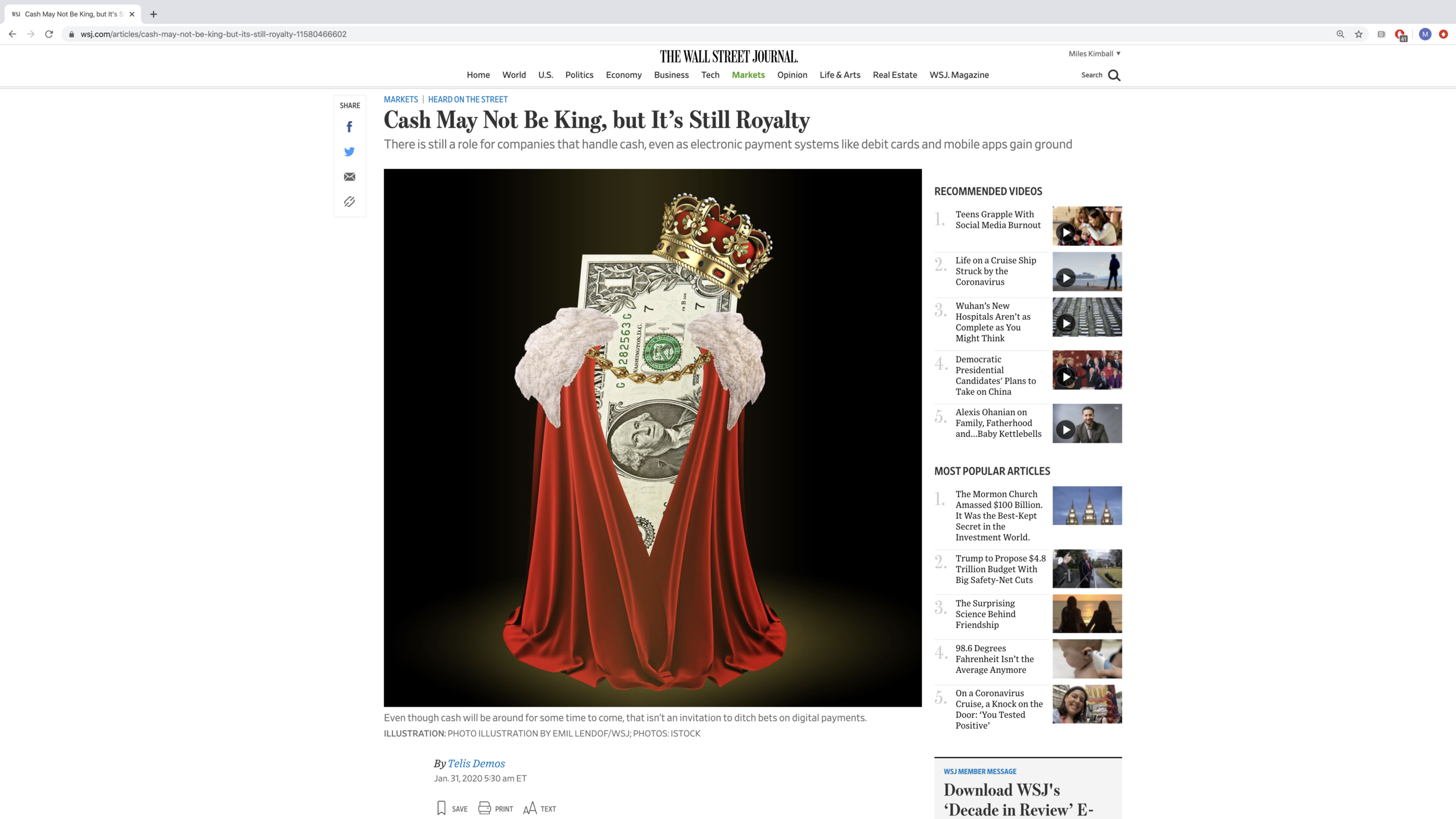
On of the important features of my proposal for eliminating the zero lower bound is that it does not require eliminating paper currency. (See “How and Why to Eliminate the Zero Lower Bound: A Reader’s Guide.”) But it does require a change in paper currency policy that will go down more easily with the public if the share of transactions done in cash is relatively small. So it is worth paying attention to what is happening to the cash vs. card or phone breakdown of transactions. Telis Demos’s January 31, 2020 Wall Street Journal article “Cash May Not Be King, but It’s Still Royalty” gives a useful update on that. All the quotations below are from that article.
The first key point is that paying by app or directly with one’s smartphone is getting more convenient:
The digital revolution in banking is one of the major investment themes of the young century, pushing big share-price and valuation gains for financial-technology upstarts like PayPal Holdings and Square, as well as network giants like Mastercard and Visa. Younger consumers have embraced cash-transfer apps like Venmo and, to an extent, cryptocurrencies. Some retailers have tried to ditch cash and take all payments in digital or card form.
Personally, I have found Venmo to be very easy to use. And as far as I can tell, there weren’t any fees for common transactions unless you are in a hurry to get funds from Venmo into your regular bank account immediately.
Since new methods of payment are mostly built on top of the existing system of banks and cards, one thing inhibiting the full adoption of new payments methods are people who are unbanked, who are often poor folks we should be especially concerned about:
A number of voices have arisen to oppose an all-digital future. They range from people advocating on behalf of lower-income consumers, who tend to use cash more, to companies in the cash business.
There have been some political efforts to make cash use easier that the current trend would otherwise leave it:
In January, New York’s City Council voted to ban cashless stores and restaurants. Philadelphia and San Francisco have made similar moves. In the U.K., banks increased subsidies for some cash machines after a spike in concern about “ATM deserts.” Amazon’s first New York Amazon Go store, designed to use seamless mobile payments, started accepting cash last year.
Despite these efforts to make cash use easier, the cash share of transactions is declining:
For all that, there is little question electronic payments in the U.S., ranging from debit cards to mobile apps, are gaining ground.
In the most recent Federal Reserve survey of U.S. consumer payments, covering 2018, for the first time cash wasn’t the most common form of payment. It was surpassed by debit cards. Even a slim majority of payments in the survey under $10, long cash’s stronghold, were made by other methods.
Of course, total transactions is going up:
Yet digital’s gain isn’t necessarily coming at the expense of cash. The overall pie still appears to be growing.
Despite total transactions increasing, Russia and Sweden have the total amount of cash going down:
Only two countries, Russia and Sweden, had a net substitution of cards for cash from 2007 to 2016, with cash in circulation shrinking as card payments grew
Given its innovative tech companies and people used to fast technological change, one possible leader in the transition away from cash might be China:
… the fact that cash will be around for some time to come isn’t an invitation to ditch digital-payment bets. That’s especially true for companies with exposure to China, where digital payments have leapfrogged cards and checks.
Overall, the picture is mixed. The share of cash transactions is declining, but at a deliberate pace.
Too Much of Any Amino Acid is Probably Bad for You, But Monosodium Glutamate Isn't Any Worse Than That
Update February 17, 2020: In response to following the trail from the first comment below by Adrienne Samuels, I have turned around 180 degrees in my views on monosodium glutamate. See my post “The Case Against Monosodium Glutamate—Why MSG is Dangerous (as are Other Sources of Free Glutamate) and How the Dangers Have Been Covered Up.” Other than this Update, I have kept the text of what I wrote for the sake of the historical record and as a foil for what I say in post “The Case Against Monosodium Glutamate—Why MSG is Dangerous (as are Other Sources of Free Glutamate) and How the Dangers Have Been Covered Up.”
When I was in elementary school back in the 1960’s we were taught that, leaving aside the contribution of smell to taste, there were four basic tastes: salty, sweet, sour and bitter. It was late in the 20th century before I learned of the fifth basic taste: umami, which can be translated roughly as “savory.”
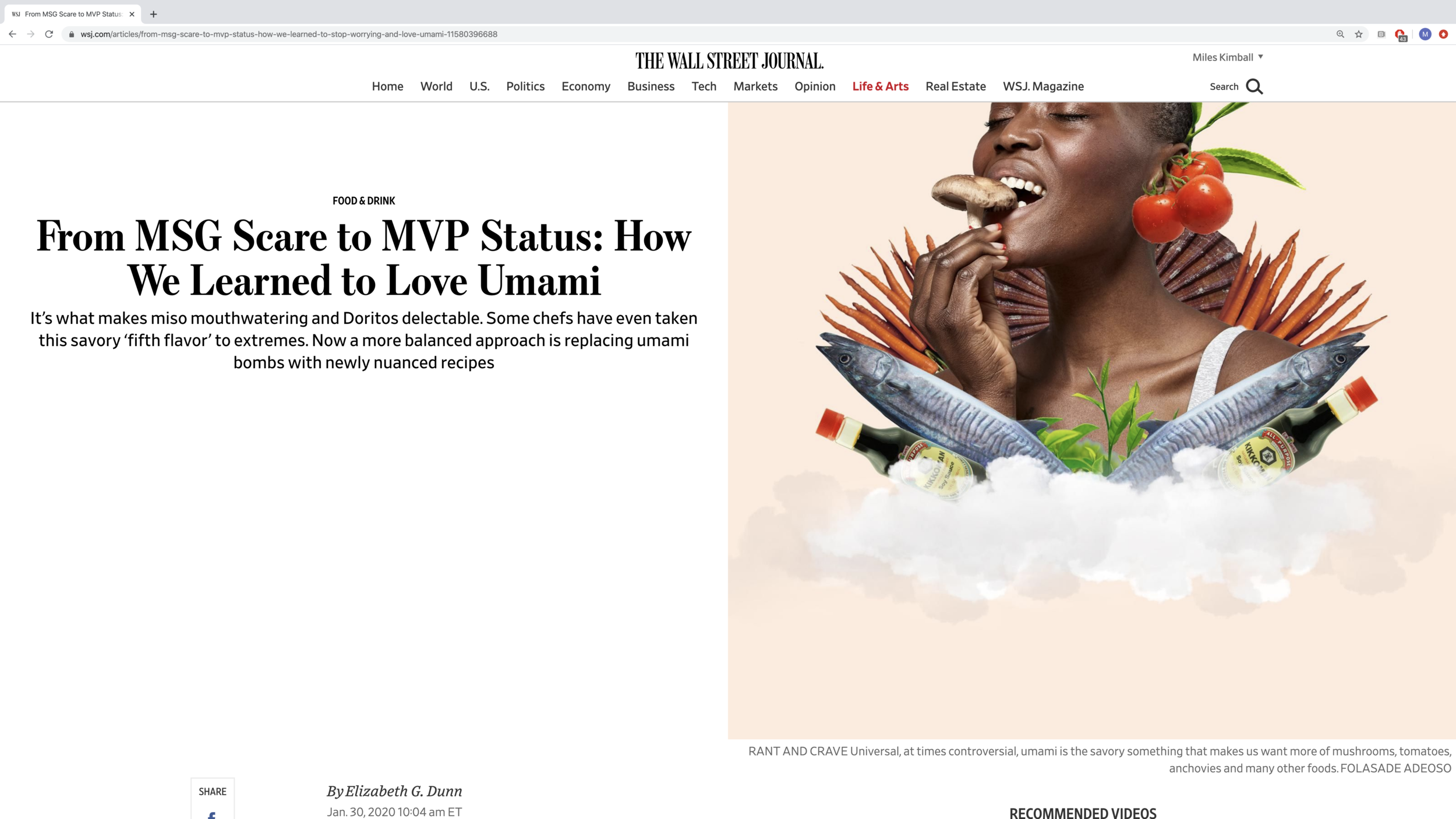
The Wall Street Journal article “From MSG Scare to MVP Status: How We Learned to Love Umami” by Elizabeth Dunn not only celebrates umami, but also works to rehabilitate monosodium glutamate, which heightens umami when the right amount is added. I had coded monosodium glutamate as unhealthy, but googling around shows the evidence is a lot weaker than one might think. Placebo-controlled trials at relevant dosages do not show an increase in headaches or allergy-like reactions. Moreover I found the Ken Lee’s argument in his interview with Chau Tu for the 2014 article “Is MSG Bad For Your Health?” persuasive:
Lee breaks down his reasoning: “MSG stands for monosodium glutamate. So sodium—everybody knows what that is—[is] the first ingredient in common table salt.” (Natural salt found in foods accounts for about 10 percent of a person’s total daily intake, according to the Food and Drug Administration.) Meanwhile, glutamate, the basic component of MSG, “is a synonym for glutamic acid [and] is a naturally occurring amino acid. It’s one of the building blocks of protein,” says Lee. In aqueous solutions, MSG breaks down to sodium and glutamate.
Although I have argued that concerns about ordinary table salt and the sodium it contains are overblown (“Salt Is Not the Nutritional Evil It Is Made Out to Be,” “Should the Typical Person be Restricting Salt Intake?” and “Confirmation Bias in the Interpretation of New Evidence on Salt”), I have little doubt that there exists a large enough quantity of salt consumption that it would be bad for health. Similarly, I have little doubt that that there exists a large enough quantity of glutamic acid consumption that it would be bad for health. Nevertheless, both sodium and glutamic acid are common in many ordinary foods that have been tested by time. So it would have to be hooking sodium and glutamic acid together chemically that was harmful for monosodium glutamate to be terrible. But it is hard to see why that would be so when the combination breaks apart into sodium and glutamic acid in any watery solution—such as saliva.
Even compounds that safe in food aren’t necessarily safe when injected into muscles (as monosodium glutamate often is in rat experiments) or into the brain. But Chris Mohr’s 2019 Men’s Health article “But Is MSG Bad for You? No—and Here's Why” has this reassuring passage:
In December 2018, John Fernstrom, Ph.D., professor of psychiatry and pharmacology at the University of Pittsburgh, published a study review on the supposed ill effects of MSG.
His team’s conclusion: “Findings from our data and other human studies provide important evidence that MSG in the food supply presents no hazard to the human brain. Oral ingestion of glutamate does not cross the blood brain barrier."
What is the level of harm one might worry about from glutamic acid? First, too much protein is not good, and protein is made of amino acids like glutamic acid. (See “Meat Is Amazingly Nutritious—But Is It Amazingly Nutritious for Cancer Cells, Too?”) But note that glutamic acid is not the same thing as (and is not easily converted into) the amino acid glutamine that is especially easy for cancer cells to metabolize for energy, as I discuss in “How Fasting Can Starve Cancer Cells, While Leaving Normal Cells Unharmed.”
Second, each particular amino acid probably has a variety of hormonal effects. Make these hormonal effects too strong in any one direction and it probably isn’t good.
Third, there is a genuine worry that by making unhealthy, cheap food tastier, the sodium and glutamate in MSG will lead people to eat more unhealthy, cheap food. There the principle to remember is that if food is unhealthy to begin with, sprinkling MSG on top certainly can’t transform it into healthy food! I take this point from “But Is MSG Bad for You? No—and Here's Why” where Chris Mohr reports:
“Umami is a really important factor in terms of making foods taste delish—and MSG is a concentrated form of umami,” says Ellie Krieger, R.D.N., and host of Ellie’s Real Good Food. “I think one of the biggest issues with MSG is the company it keeps—meaning the foods it’s often found in. It’s not MSG itself that’s of concern, but it can make poor-quality food taste great too so they may be more appealing than they would otherwise be.”
Umami is not all from glutamate. As Elizabeth Dunn writes in “From MSG Scare to MVP Status: How We Learned to Love Umami”:
Though the term is Japanese, umami is a global phenomenon. The same savory magic in pork and oysters runs through anchovies, seaweed and mushrooms, not to mention breast milk and amniotic fluid. In addition to glutamate, two other molecules, inosinate and guanylate, emit umami. Aging, caramelizing, drying and fermenting intensify it. Garum, the fermented fish sauce ancient Romans adored, teemed with umami, as do oyster sauce in China, miso in Japan, Worcestershire sauce in England and Maggi seasoning the world over.
(You can learn a lot more about creating umami in the well-done Anime series “Food Wars,” which many of my family marathoned when we were together around Christmas. I recommend you do the version with subtitles. Few Anime shows have good English dubbing.)
Overall, I am willing to bet that it is safer to get the umami taste from some a reasonably balanced combination of glutamic acid, inosinate and guanylate than from an unusually large amount of glutamic acid. But glutamic acid in normal amounts seems to be part of the story of naturally occurring umami.
For annotated links to other posts on diet and health, see:
The Federalist Papers #6 A: Alexander Hamilton on the Many Human Motives for War
Steven Pinker’s contention in The Better Angels of Our Nature that violence has declined over the centuries has the corollary that violence was worse in the past. Accordingly, writing more than two and a quarter centuries ago, Alexander Hamilton argues that neighboring nations will almost inevitably be drawn into war with one another. At a minimum, this should make one appreciate the singularity in human history of the degree of 21st-century peace that exists between the US and Canada, between the US and Mexico and between many other pairs of neighboring nations around the world.
Viewing the 18th-century world, Alexander Hamilton points to many human motives leading to war in the first half of The Federalist #6, “Concerning Dangers from Dissensions Between the States.” In particular, he writes:
“… men are ambitious, vindictive, and rapacious.”
Some love power, while others hate or fear the power of others.
Some love riches even if those riches are to be had at the expense of the lives of fellow human beings.
There are a vast number of idiosyncratic motives that can lead to war.
For the first three of these points, I put the relevant passages in the quoted text below in bold italics. For the fourth, I add bold subheadings for different individuals who displayed idiosyncratic motives for fomenting war. I also spell out in square brackets the notes Alexander Hamilton provides.
|| Federalist No. 6 ||
Concerning Dangers from Dissensions Between the States
For the Independent Journal.
Author: Alexander Hamilton
To the People of the State of New York:
THE three last numbers of this paper have been dedicated to an enumeration of the dangers to which we should be exposed, in a state of disunion, from the arms and arts of foreign nations. I shall now proceed to delineate dangers of a different and, perhaps, still more alarming kind--those which will in all probability flow from dissensions between the States themselves, and from domestic factions and convulsions. These have been already in some instances slightly anticipated; but they deserve a more particular and more full investigation.
A man must be far gone in Utopian speculations who can seriously doubt that, if these States should either be wholly disunited, or only united in partial confederacies, the subdivisions into which they might be thrown would have frequent and violent contests with each other. To presume a want of motives for such contests as an argument against their existence, would be to forget that men are ambitious, vindictive, and rapacious. To look for a continuation of harmony between a number of independent, unconnected sovereignties in the same neighborhood, would be to disregard the uniform course of human events, and to set at defiance the accumulated experience of ages.
The causes of hostility among nations are innumerable. There are some which have a general and almost constant operation upon the collective bodies of society. Of this description are the love of power or the desire of pre-eminence and dominion--the jealousy of power, or the desire of equality and safety. There are others which have a more circumscribed though an equally operative influence within their spheres. Such are the rivalships and competitions of commerce between commercial nations. And there are others, not less numerous than either of the former, which take their origin entirely in private passions; in the attachments, enmities, interests, hopes, and fears of leading individuals in the communities of which they are members. Men of this class, whether the favorites of a king or of a people, have in too many instances abused the confidence they possessed; and assuming the pretext of some public motive, have not scrupled to sacrifice the national tranquillity to personal advantage or personal gratification.
Pericles. The celebrated Pericles, in compliance with the resentment of a prostitute, [Aspasia, vide Plutarch's Life of Pericles] at the expense of much of the blood and treasure of his countrymen, attacked, vanquished, and destroyed the city of the SAMNIANS. The same man, stimulated by private pique against the MEGARENSIANS, [Plutarch’s Life of Pericles] another nation of Greece, o] another nation of Greece, or to avoid a prosecution with which he was threatened as an accomplice of a supposed theft of the statuary Phidias, [Plutarch’s Life of Pericles] or to get rid of the accusations prepared to be brought against him for dissipating the funds of the state in the purchase of popularity, [Plutarch’s Life of Pericles: Phidias was supposed to have stolen some public gold, with the connivance of Pericles, for the embellishment of the statue of Minerva.] or from a combination of all these causes, was the primitive author of that famous and fatal war, distinguished in the Grecian annals by the name of the PELOPONNESIAN war; which, after various vicissitudes, intermissions, and renewals, terminated in the ruin of the Athenian commonwealth.
Cardinal Wolsey. The ambitious cardinal, who was prime minister to Henry VIII., permitting his vanity to aspire to the triple crown, [worn by the popes] entertained hopes of succeeding in the acquisition of that splendid prize by the influence of the Emperor Charles V. To secure the favor and interest of this enterprising and powerful monarch, he precipitated England into a war with France, contrary to the plainest dictates of policy, and at the hazard of the safety and independence, as well of the kingdom over which he presided by his counsels, as of Europe in general. For if there ever was a sovereign who bid fair to realize the project of universal monarchy, it was the Emperor Charles V., of whose intrigues Wolsey was at once the instrument and the dupe.
The influence which the bigotry of one female, [Madame de Maintenon] the petulance of another, [Duchess of Marlborough] and the cabals of a third, [Madame de Pompadour] had in the contemporary policy, ferments, and pacifications, of a considerable part of Europe, are topics that have been too often descanted upon not to be generally known.
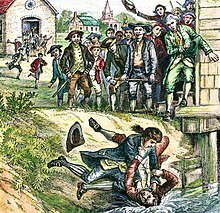
To multiply examples of the agency of personal considerations in the production of great national events, either foreign or domestic, according to their direction, would be an unnecessary waste of time. Those who have but a superficial acquaintance with the sources from which they are to be drawn, will themselves recollect a variety of instances; and those who have a tolerable knowledge of human nature will not stand in need of such lights to form their opinion either of the reality or extent of that agency. Perhaps, however, a reference, tending to illustrate the general principle, may with propriety be made to a case which has lately happened among ourselves. If Shays had not been a DESPERATE DEBTOR, it is much to be doubted whether Massachusetts would have been plunged into a civil war.
Given the flaws of human nature, it is a wonder that wars are as infrequent as they are now. In any case, as Alexander Hamiltonian contends, trying to bring neighboring states into a supranational organization is one way to try to reduce the frequency of war. For example, despite the tensions and resentments between countries within the European Union, we do not worry that much about full-scale armed conflict between neighboring nations within the European Union.
Here are links to my other posts on The Federalist Papers so far:
The Federalist Papers #1: Alexander Hamilton's Plea for Reasoned Debate
The Federalist Papers #3: United, the 13 States are Less Likely to Stumble into War
The Federalist Papers #4 B: National Defense Will Be Stronger if the States are United
The Federalist Papers #5: Unless United, the States Will Be at Each Others' Throats
Map: The Most Common Language in Each State Other Than English and Spanish →
Hat tip to Valerie Ramey for posting this interesting map on Facebook.
Michael Ostrovsky and Michael Schwarz: Self-Driving Cars, Tolls, and Carpooling are Much More Powerful as a Combination than Separately
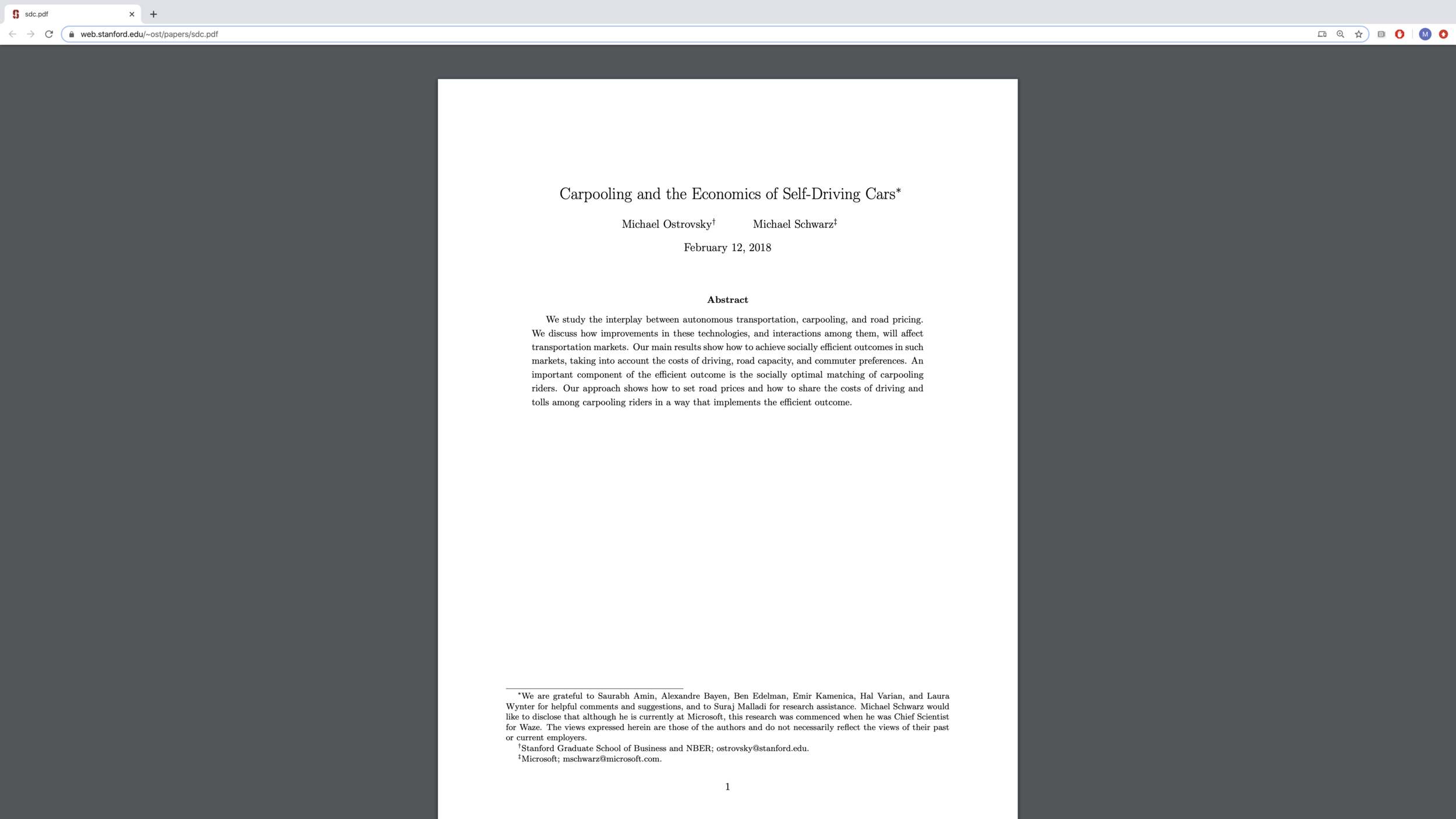
Michael Ostrovsky came to present his paper with Michael Schwarz, “Carpooling and the Economics of Self-Driving Cars,” here at the University of Colorado Boulder. I was impressed. The paper provides hope for progress in transportation.
The basic claim of the paper is that self-driving cars, dynamic tolls, and carpooling are highly complementary in improving transportation. Here is why:
Self-driving cars have powerful computers that can easily plot a route that is sensitive to tolls for each possible segment of a journey that change all the time.
Tolls for road segments that are per vehicle incentivize carpooling because then the toll is effectively divided among all of the passengers. In other words, tolls per vehicle will tend to reduce the number of vehicles on the road as several passengers use the same vehicle in order to save on those tolls.
Carpooling is a lot easier with a ride-sharing service like Uber Pool, and self-driving cars make ride-sharing services much cheaper.
More total passengers can fit in any given size car if no driver is needed. (Also, note that having no driver opens up possibilities for reconfiguring the inside of a vehicle to make it more comfortable and easier to do work in; for example, they could have seats surrounding a small table—all with seatbelts.)
Improvements in transportation matter a lot because transportation is a large share—9.2 %—of household spending. That share has not been shrinking in recent decades. If dynamic tolls, carpooling and self-driving cars can come together to make transportation cheaper, that could help out households a lot.
Note that carpooling in self-driving cars or vans subject to dynamic tolls need not crowd out other forms of transportation. Instead, advances in these areas open up the possibility of “door-to-door public transportation” if self-driving cars and vans are effectively integrated into trunklines of light rail and heavily travelled, high frequency bus routes.
There is hope for better commuting.
Frightening New England Journal of Medicine Projections for the Rise of Obesity
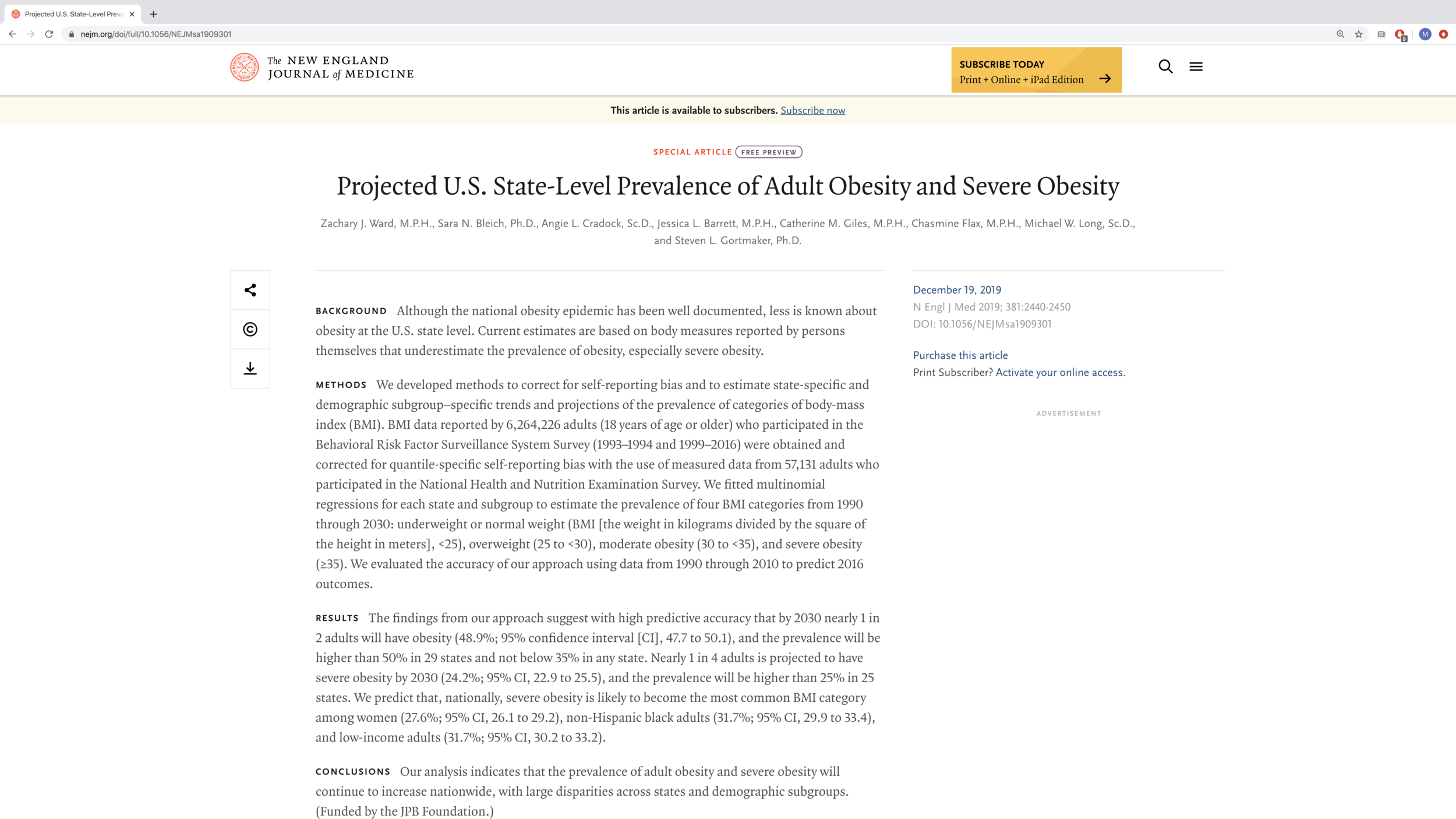
I have often described my blogging on diet and health as “fighting the rise of obesity.” The December 2019 New England Journal of Medicine article shown above details what the rise of obesity is likely to be in the near future. The abstract of “Projected U.S. State-Level Prevalence of Adult Obesity and Severe Obesity,” by Zachary J. Ward, Sara Bleich, Angie Cradock, Jessica Barrett, Catherine Giles, Chasmine Flax, Michael Long and Steven Gortmaker shown above says:
… by 2030 nearly 1 in 2 adults will have obesity (48.9%; 95% confidence interval [CI], 47.7 to 50.1), and the prevalence will be higher than 50% in 29 states and not below 35% in any state. Nearly 1 in 4 adults is projected to have severe obesity by 2030 (24.2%; 95% CI, 22.9 to 25.5), and the prevalence will be higher than 25% in 25 states.
“Obesity” is defined as a body mass index of 30 or above. “Severe obesity” is defined as a body mass index of 35 or above. (To get a sense of the body mass index, you can compute your own BMI here.)
Color-coded maps obesity and severe obesity prevalence for each state in 1990, 2000, 2010, 2020 and projected for 2030 are frightening. You can see them yourself with one of your three free New England Journal of Medicine articles. The map for severe obesity in 2030 struck me as looking like the map for obesity in 1990. This is one area where things are getting worse.
Women have more extremes: a higher frequency of both severe obesity and normal weight than men. Non-Hispanic blacks have quite a bit more obesity than Non-Hispanic Whites; Hispanics have a modest amount more obesity than Non-Hispanic Whites. The “Non-Hispanic Other” category, which I assume is mostly Asian Americans, has by far the least obesity. Higher income is associated with less obesity. (The categories are < $20,000 per year, between $20,000 and $50,000, and $50,000 and above.)
There are many health problems strongly correlated with obesity. Is obesity causal for those health problems? I don’t know. Bad eating could easily cause both health problems and obesity, with obesity not caused by bad eating as not so dangerous. Lack of exercise could easily cause both health problems and obesity, though I think the evidence shows it has a more powerful effect on health, happiness and cognition than it does on obesity itself (as most people would intuitively view the magnitude of the effects indicated by the evidence). And I suspect obesity not caused by bad eating or lack of exercise is both reasonably rare and likely to be caused by something dangerous in its own way, even if not dangerous in exactly the same way as bad eating.
Note that I say “bad eating,” not eating too much. My view is that bad eating is much more a matter of eating the wrong things and eating all the time, with eating too much being more a consequence of eating the wrong things and eating all the time than something to focus on in itself.
What do I mean by eating the wrong things? In the first instance I mean eating sugar, potatoes and bread. Beyond that, I mean eating things high on the insulin index. See “Forget Calorie Counting; It's the Insulin Index, Stupid.”
What to I mean by eating all the time? I mean eating right when you get up and right before you go to sleep, and times in between.
The other approach when to eat is to limit one’s eating to at most a 12-hour window, an 8-hour window or a 6-hour window. It’s not that hard if you strategize a little! And eating foods low on the insulin index will make it easier than you think.
Someday, maybe we may have safe and powerfully effective anti-obesity drugs. In the meantime, it takes avoiding eating the wrong things and not eating all the time to keep the chances of obesity down. If you do that, you can get to—or stay at—a normal weight.
For annotated links to other posts on diet and health, see:
Frank Wilczek: Are We Living in a Simulated World?
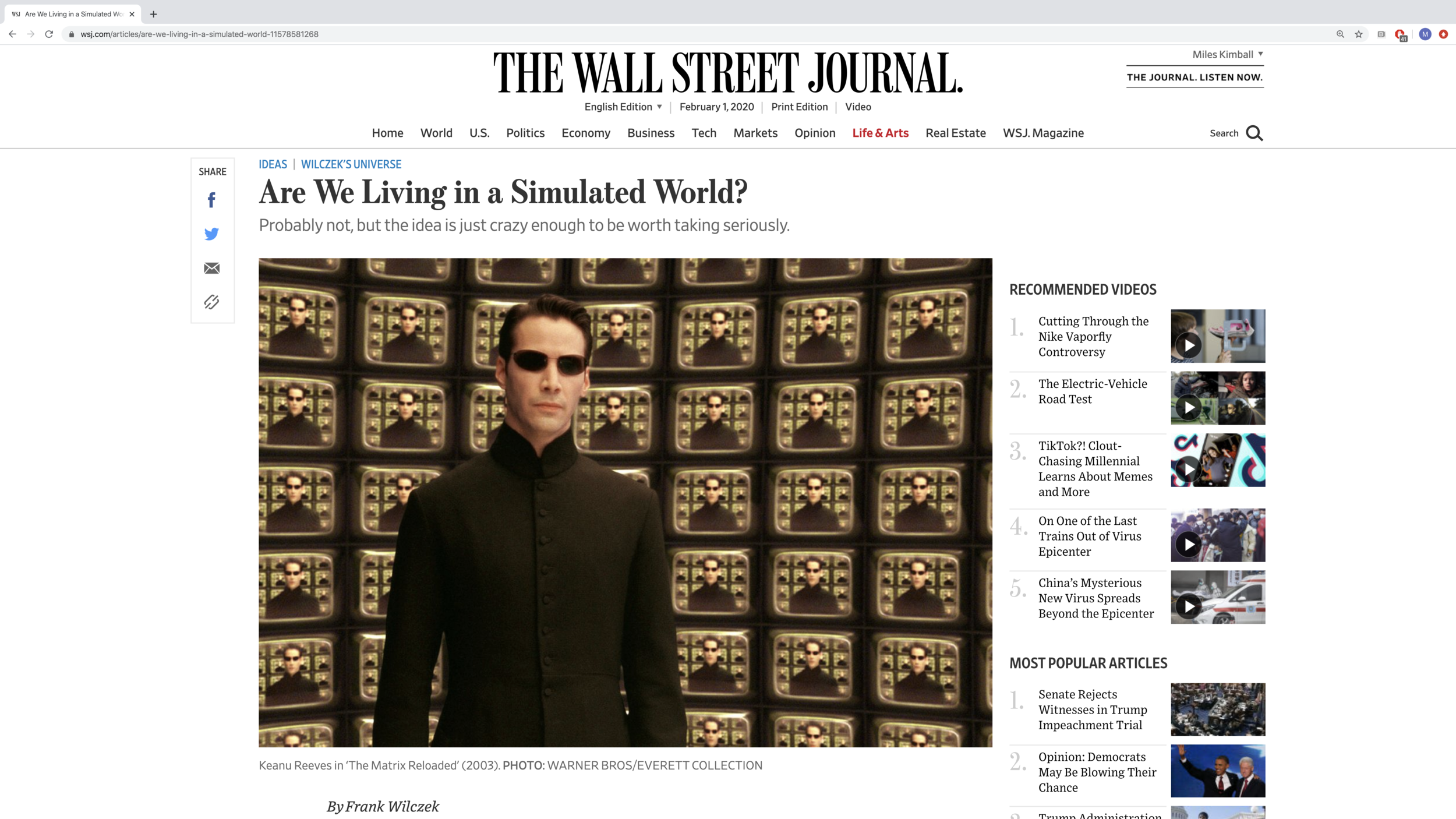
Frank Wilczek’s answer to the question “Are We Living in a Simulated World?” is brief: We could be, but we probably aren’t. In his January 9, 2020 Wall Street Journal column shown above, he poses two different questions that I have put in bold, and answers each:
Could there be a richly experienced mental world that is not made of matter, as it appears to be, but of abstract data?
… pretty surely yes. In fact, humans occupy self-generated mind-worlds for an hour or two each day, when we dream during REM sleep. The objects we see in dreams are just patterns of electrical excitation in our brains.
Is the world we actually experience—the universe as described by the laws of physics and the facts of cosmology—such a world? …is our own perceived world manufactured, in fact, from such abstract data[?]
… the best answer is pretty surely no. …
… there are many aspects of physics in our world that do not look like the product of an efficient world-simulator. For example, our most accurate formulation of the laws of physics depends on the idea that space and time are smooth and continuous. When you work with continuous numbers, instead of 0s and 1s, it becomes much more difficult, in a simulation, to maintain precision.
More generally, our world contains a lot of hidden complexity. We can calculate a proton’s properties based on fundamental laws, but those calculations are extremely complicated. It would be a poor strategy to build a simulated world out of such hard-to-compute ingredients.
For me, it is delightful that Frank Wilczek is essentially using an economic argument for our not already living in a simulated world: if we were, whatever the computer we might be in is made of, and whatever the unknown-to-us laws of physics in the “real world” outside that computer, it is likely that resources in the “real world” would be scarce, so that a simulation would be done in a way that used those scarce resources efficiently.
Related Posts:
My Experiences with Clay Christensen
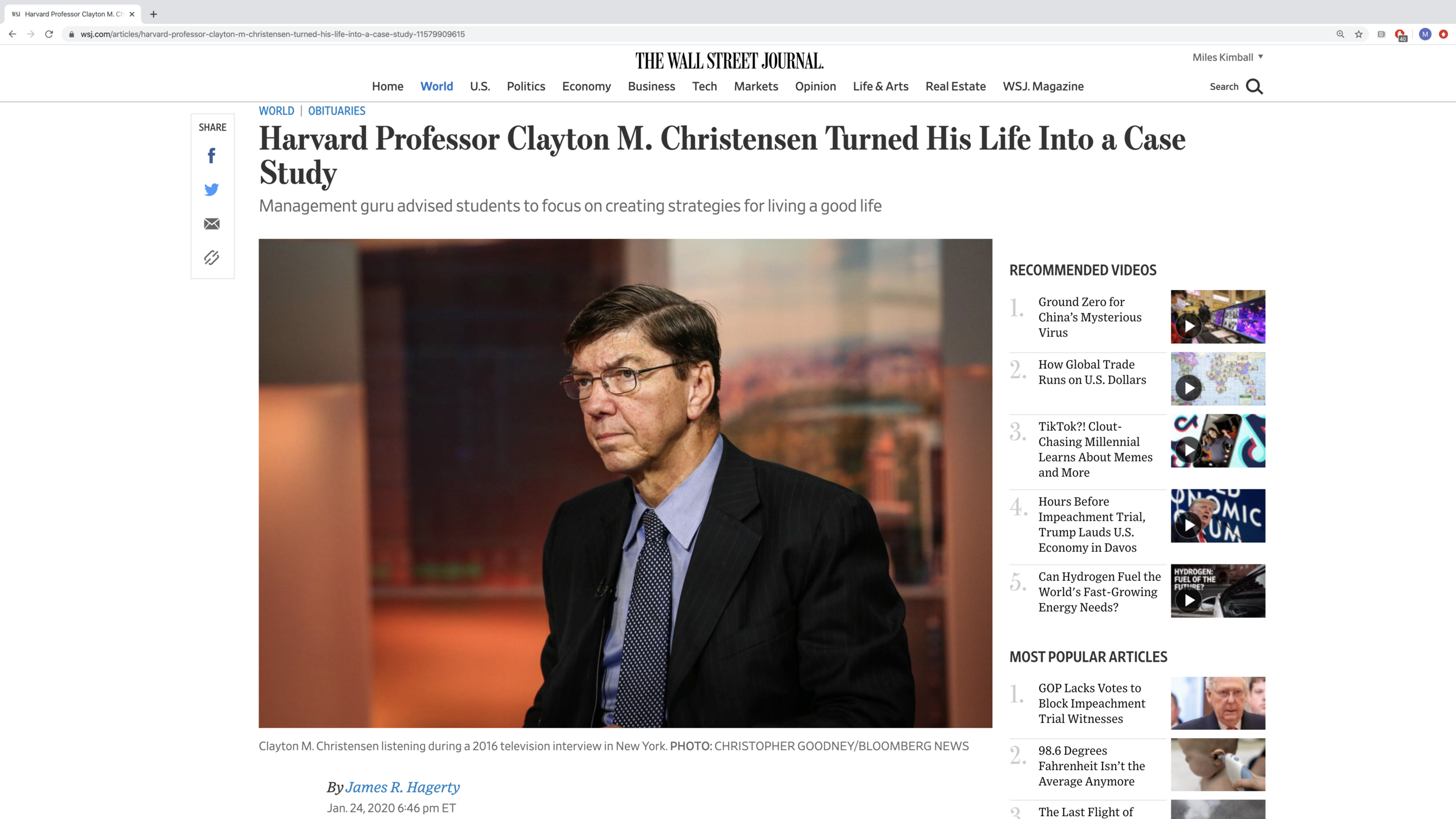
I am sad to hear of Clay Christensen’s passing. For those who don’t already know, Clay was one of the most famous business gurus in the world, and one whose work should be of special interest to economists. I have written many blog posts and one Quartz article related to Clay and his work:
The Coming Transformation of Education: Degrees Won’t Matter Anymore, Skills Will
Netflix as an Example of Clay Christensen's 'Disruptive Innovation'
Clay Christensen Explains the Donald Trump Phenomenon: The Job-to-Be-Done Was to Express Frustration
Clay Christensen, Jerome Grossman and Jason Hwang on the Three Basic Types of Business Models
Clay Christensen, Jerome Grossman and Jason Hwang on Intuitive Medicine vs. Precision Medicine
Will Narendra Modi’s Economic Reforms Put India on the Road to Being a Superpower?
Clay Christensen, Jerome Grossman and Jason Hwang on the Personal Computer Revolution
Tyler Cowen: Regulations Hinder Development of Driverless Cars
Robert Graboyes on Enabling Supply-Side Innovation in Health Care
Let me tell you how I became such a fan of Clay Christensen. Plane tickets used to be relatively more expensive than they are now. When I was headed to Harvard as a freshman in 1977, I wanted to save money by carpooling from Utah out to Cambridge, Massachusetts. My parents helped me connect with Clay Christensen, who was headed out his first year of the Harvard MBA program. Because the MBA program started a week or so before the Harvard College semester, and I couldn’t get into the dorm that early, I stayed at Clay’s apartment for that time after we got there. (That was when I first learned about decision trees and backwards programming: from the advance homework the MBA program had given Clay.)
Spending that time with Clay gave me a lasting impression. I filed Clay in my mind as one of the kindest human beings I have ever known.
After spending all that time with Clay, I had only passing interactions with him for many years, primarily saying “Hi” at multi-congregation Mormon Church events. Then, after I began blogging, I discovered Clay’s books (many of them coauthored) on disruptive innovation. As you can see above, that work has been a major influence on this blog.
I had an email exchange with Clay after I published “In Defense of Clay Christensen: Even the 'Nicest Man Ever to Lecture' at Harvard Can't Innovate Without Upsetting a Few People” in Quartz. He was a bit puzzled by the criticism I was addressing and disputed Jean-Louis Gassée’s factual claims.
My one other interaction with Clay was indirect: my daughter Diana took his class when she was a student at Harvard Business School. Her reports only reinforced what I had thought of Clay Christensen since 1977: one of the best people I have ever known.
I am not a fan of death. See my post “Edna St. Vincent Millay's "Dirge Without Music.” Deaths of those I have known have occasioned a number of blog posts: