John Stuart Mill on Sins of Omission
The world is hurting. A big reason that the world is in as much trouble as it is this: how many people have done less than they should to make things better. We rightly honor those who have helped make the world a better place. It is also right to criticize those who, though able to do so, have failed to help make the world a better place. And each of us should examine themselves closely to see if we should be doing more.

As a practical matter, the law must tilt toward attacking sins of commission–things that people do that stand out from everyday actions and are bad. This can lead people to miss the moral gravity of doing nothing when doing something is called for. John Stuart Mill points out the importance of individual conscience in judging when we have done too little. In the 11th paragraph of the “Introductory” to On Liberty, he writes:

It is proper to state that I forego any advantage which could be derived to my argument from the idea of abstract right, as a thing independent of utility. I regard utility as the ultimate appeal on all ethical questions; but it must be utility in the largest sense, grounded on the permanent interests of man as a progressive being. Those interests, I contend, authorize the subjection of individual spontaneity to external control, only in respect to those actions of each, which concern the interest of other people. If any one does an act hurtful to others, there is a primâ facie case for punishing him, by law, or, where legal penalties are not safely applicable, by general disapprobation. There are also many positive acts for the benefit of others, which he may rightfully be compelled to perform; such as, to give evidence in a court of justice; to bear his fair share in the common defence, or in any other joint work necessary to the interest of the society of which he enjoys the protection; and to perform certain acts of individual beneficence, such as saving a fellow-creature’s life, or interposing to protect the defenceless against ill-usage, things which whenever it is obviously a man’s duty to do, he may rightfully be made responsible to society for not doing. A person may cause evil to others not only by his actions but by his inaction, and in either case he is justly accountable to them for the injury. The latter case, it is true, requires a much more cautious exercise of compulsion than the former. To make any one answerable for doing evil to others, is the rule; to make him answerable for not preventing evil, is, comparatively speaking, the exception. Yet there are many cases clear enough and grave enough to justify that exception. In all things which regard the external relations of the individual, he is de jure amenable to those whose interests are concerned, and if need be, to society as their protector. There are often good reasons for not holding him to the responsibility; but these reasons must arise from the special expediencies of the case: either because it is a kind of case in which he is on the whole likely to act better, when left to his own discretion, than when controlled in any way in which society have it in their power to control him; or because the attempt to exercise control would produce other evils, greater than those which it would prevent. When such reasons as these preclude the enforcement of responsibility, the conscience of the agent himself should step into the vacant judgment seat, and protect those interests of others which have no external protection; judging himself all the more rigidly, because the case does not admit of his being made accountable to the judgment of his fellow-creatures.

Although the distinction between action and inaction is intuitive to many people, from a Utilitarian perspective, the difference is not morally meaningful. As I wrote in another context, “Anything one does has consequences. There is no true ‘inaction.’ There is only “Do A” or “Do B.” As John Stuart Mill points out, the difference between what we call “inaction” as opposed to what we call “action” is relevant to the balance between law, social opprobrium and individual conscience as checks against a socially bad choice. But the fact that something is called “inaction” does not make it any more innocent when one is examining oneself. 

One could argue that if one rejects the distinction between so-called “action” and “inaction” as morally meaningful, then when we think that something is genuinely permitted as “inaction,” it may be that it should be permitted as “action.” For example, think of the fact that it is generally accepted in our culture as OK for someone to say that even moderate medical measures–for example, taking a round of antibiotics–should not be taken to keep them alive since they feel that they are ready to die (say because someone else they cared about deeply has already died, rather than because of some other more intractable physical problem). For those who genuinely think that it is OK to reject such moderate medical measures because they want to die, it seems it is not a big step to say that they should then logically view it as OK for who someone in the same situation–except for not needing the antibiotics–to press a button for an overdose of morphine for themselves that would lead them to die. 

But that line of thinking is suspect for a simple reason. Our intuitions are better and more reliable for judging the morality of what we tend to call an “action” are better than our intuitions for judging the morality of what we tend to call an “inaction.” Therefore, I argue that the standards we tend to use for “actions” should be applied to “inactions” rather than applying the standards we tend to use for “inactions” to “actions.” Thus, rather than providing an argument for euthanasia (which might be justifiable on other grounds),I view the moral equivalence of “actions” and “inactions” with the same kind of effect as suggesting that people have a duty to try to stay alive if moderate medical measures would suffice to keep them alive and in reasonable health that does not include severe physical or intolerable mental pain (where “intolerable” mental pain means something beyond the normal, but intense, grief one typically feels when someone close has died first). 

But despite the interest many of us have in the ethics of euthanasia and the ethics of instructions to limit medical efforts to save one’s life, I think there is a more important application of the principle that our more reliable judgements of the ethics of what we call “actions” should be used to illuminate our duties in relation to what we call “inactions.” The moral equivalence of “actions” and “inactions” (that have the same effect) points to the duty each one of us has to do what we are individually capable of doing toward trying to save the world. 

See links to other John Stuart Mill posts collected here.

Peter Conti-Brown on the Complexity of the Idea of “Independence” of a Central Bank,

… Fed insiders and interested outsiders form relationships using law and other tools to implement a wide variety of specific policies. To understand more, we need to specify the insider, the outsider, the mechanism of influence, and the policy goal.
— Peter Conti-Brown on the complexity of the idea of “independence” of a central bank, writing in  The Power and Independence of the Fed, “Introduction.”

On Gradualism in Negative Interest Rate Policy

Noah Smith does a service by reviewing the debate on negative interest rate policy in his Bloomberg View column “Maybe We Shouldn’t Be So Positive About Negative Rates.” Despite the title, which I suspect (based on my own experience as a Quartz columnist) was chosen by Noah’s editor rather than by Noah himself, Noah sums it up in this rather positive way:

So while Miles is an important and visionary thinker on monetary policy, and his ideas will be very useful if another crisis comes, I’m personally a bit wary about deploying them in relatively normal times.

This is not an uncommon view. Indeed, you can see it evidenced by several luminaries at the Brookings conference on negative interest rates on Monday in reaction to my talk and the panel discussion afterwards.

Let me discuss Noah’s perspective in the context of the US, Japan, and the Eurozone, then conclude by talking more generally about the set of nations and regions that conduct independent monetary policy. 

Negative Rate Policy in the United States: To get the record straight, I do not currently advocate even mildly negative interest rates for the United States. So to the extent that “relatively normal times” refers to the current economic situation in the United States, I have no disagreement. I have said that deep negative rates would have been appropriate for the United States in 2009. But I hope no one classes 2009 as “relatively normal times.” Whatever the uncertainties about what side effects such a policy might have had, shouldn’t we wish now that we had tried the experiment of a deep negative interest rate policy (along the lines I have recommended) in 2009? The reason we didn’t was the intellectual framework had not been laid out for such a move at that time. My hope is that by the time the next severe recession hits the United States, that we can be ready. 

I think it is very important to fight the idea that the United States had an acceptable monetary policy performance during the Great Recession. As I have said many times, Ben Bernanke is a hero for doing what he did toward making US monetary policy as good as it was during the Great Recession. I don’t underestimate the difficulty of developing and getting consensus for new monetary policy tools in real time during a crisis. But in absolute terms, US monetary policy during the Great Recession is totally unacceptable as something to repeat. To speak ethically, anyone who encourages complacency about our monetary policy toolkit by suggesting that we should simple handle the next serious recession with the monetary policy tools the US used during the Great Recession alone will have to bear a portion of the guilt for the likely poor outcome if this course is, in fact, pursued.

Negative Rate Policy in Japan: After more than two decades of slow growth and deflation or near-deflation, Japan can be characterized as being in “normal times” only if one is willing to give up and accept “secular stagnation” as the new normal. Back in 2012, before I had realized the potential of negative rate policy, I remember an exchange with Noah in which we both agreed about the virtues of being willing to do big experiments. Inspired by that exchange, I wrote “Future Heroes of Humanity and Heroes of Japan” recommending that the Bank of Japan try massive asset purchases of roughly the magnitude they have in fact tried. They deserve a great deal of honor for trying that bold experiment. But it is not at all clear that it is enough. The Bank of Japan has begun gingerly experimenting with mild negative rates as well. 

Japan is a difficult case for negative interest rate policy because the fraction of transactions carried out in paper currency is currently very high. So though there is real tradeoff if one delays urgently needed stimulus, gradualism in negative interest rate policy may make sense for Japan. But it is becoming clear that the Bank of Japan will probably need to go to lower negative rates than its current -.1% to get the Japanese economy to the level of economic activity it ought to have. So if it chooses not to move more quickly, the Bank of Japan should gradually reduce the key interest rates it controls, 10 basis point (.1%) at a time, while keeping a close eye on data to watch for side effects and gradually introducing either a very small negative paper currency interest rate with the depreciation mechanism that Ruchir Agarwal and I recommend in our IMF working paper “Breaking Through the Zero Lower Bound,” or gradually introduce policies from the a la carte menu of alternative policies to defang paper currency as a barrier to low interest rates that Ruchir and I laid out in our Brookings presentation on Monday. There is a lot more to say about that kind of gradualist path for Japan that I will leave to another post. 

Negative Rate Policy in the Eurozone: Because the Eurozone has already experimented with deeper negative rates than Japan, and as a whole uses paper currency for a smaller fraction of transactions, it should be able to go to deeper negative rates more quickly than Japan. Still, although speed does have benefits, I have no objection to a considered judgement by those who actually bear the weight of monetary policy decision-making to go down step by step, 10 or 20 basis points (.1% or .2%) at a time. And indeed, given how much expectations matter, it would be very powerful for the European Central Bank to announce that it would continue to reduce rates by 10 basis points at each meeting–or even 5 basis points every other meeting–until either (a) it appeared there was a danger of overshooting the ECB’s inflation target of 2% or (b) other serious side effects emerged (that could not be managed by appropriate complementary policies). I think that this is, in fact, how negative interest rate policy will develop. 

Conclusion: A cogent argument can be made that the world does too little macroeconomic experimentation. I believe the economies of countries that are reasonably well-run to begin with (say the OECD countries plus some others) are robust enough that they will not fly to pieces from a bit of experimentation. If they were likely to fly to pieces from a bit of experimentation, they would fly to pieces with every other unavoidable shock of any size that hit them. 

Even seeing if the economy will fix itself if we do nothing, however “nothing” is defined, is worth trying. But in the realm of macroeconomic stabilization, I view “nothing” as something that–to a reasonable approximation–has been tried and has failed. Anything one does has consequences. There is no true “inaction.” There is only “Do A” or “Do B.” 

It is a good thing when nations try a variety of policies among the set of policies that can be easily reversed. Louis Brandeis famously called US states “laboratories of democracy.” The many nations and regions with independent monetary policy constitute “laboratories of monetary policy.” It is a good thing, deserving of honor, for central bankers in different nations to make their own judgments about what experiments are worth trying. And it is a good thing if central bankers make some effort to carefully test novel approaches when well-worn approaches do not seem to be working well.   

Enabling Deeper Negative Rates by Managing the Side Effects of a Zero Paper Currency Interest Rate: The Video

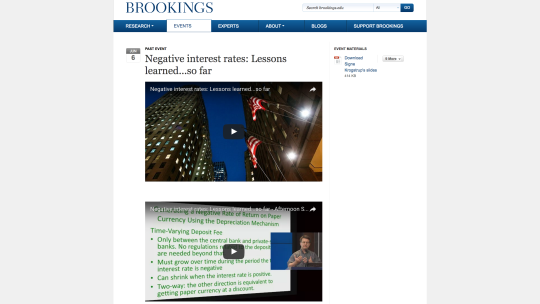
Yesterday, I participated in a Brookings Conference on negative interest rates. My talk is the first 20 minutes of the video above. My talk is followed by a panel discussion between Ben Bernanke, Narayana Kocherlakota, Beth Hammack and Jamie McAndrews, moderated by the redoubtable David Wessel, is above. And you can find the rest of the information for the conference and a video of the morning session at this link for the website pictured below.

image

In the morning session, I raised my hand to challenge the idea legal obstacles were likely to prevent central banks from instituting a robust negative interest rate policy. My coauthor, Ruchir Agarwal challenged Torsten Slok for claiming confidence had declined as a result of negative interest rates without having any measure of confidence other than the international capital flows that would result from an interest rate cut even in the absence of any fall in confidence. In discussions with Torsten between the morning and afternoon session, I was suggesting that minute-by-minute analysis around negative rate announcements of inflation expectations from market prices would tell if the markets had some confidence that the ECB’s moves to lower rates would raise inflation over the next few years as the ECB intends.

Ruchir and I had many other great interactions with participants. There were quite a few current and former central bankers from abroad who are as eminent for their own central banks as Ben Bernanke and Narayana Kocherlakota are for the Fed. The two of us hope to highlight some of their presentations in future posts. 

Here is a Powerpoint file of my slides for this 20-minute talk.

Last Friday, I gave an 80-minute talk at the IMF, European Division. Here is the most recent version of the 80-minute “Enabling Deeper Negative Rates by Managing the Side Effects of a Zero Paper Currency Interest Rate.”

Update: Here is the 106 page “uncorrected transcript” of the conference (pdf).

Legitimate Power and Authority

In Mormonism, four books are considered to be the “word of God”: the Bible, the Book of Mormon, the Doctrine and Covenants, and the Pearl of Great Price. Collectively, these four books are called “the scriptures.” 

To me, in all of Mormon scripture, one of the most beautiful–and subversive–passages is the one below, from the Doctrine and Covenants. See if you like it, too. It is closely related to my Unitarian-Universalist sermon “So You Want to Save the World.” To generalize its meaning, and make it relevant even to those who (like me) do not believe in the supernatural, I replaced “the priesthood” with “hierarchical position”: 

No power or influence can or ought to be maintained by virtue of [hierarchical position], only by persuasion, by long-suffering, by gentleness and meekness, and by love unfeigned; by kindness, and pure knowledge, which shall greatly enlarge the soul without hypocrisy, and without guile—

– Doctrine and Covenants 121:41,42

Enabling Deeper Negative Rates by Managing the Side Effects of a Zero Paper Currency Interest Rate: The Powerpoint File

Link to the Wikipedia article on the International Monetary Fund

The European Department of the IMF is understandably quite interested in negative interest rate policy. I was invited to give two presentations there today. In addition to my standard presentation 

18 Misconceptions about Eliminating the Zero Lower Bound

which I will give in the afternoon, I am giving a brand new presentation in the morning, that is the kernel of a new paper with Ruchir Agarwal and also the inspiration for my much shorter presentation at the Brookings Institution (Hutchins Center on Fiscal & Monetary Policy) conference on negative rates on Monday:

Enabling Deeper Negative Rates by Managing the Side Effects of a Zero Paper Currency Interest Rate

You might be interesting in taking a look at this Powerpoint file I am linking to immediately above. 

I gave a presentation on negative interest rate policy at the IMF once before, on May 4, 2015, but it was a different presentation to a different group. 

What is the Effective Lower Bound on Interest Rates Made Of?

Update, June 5, 2019: On this topic, be sure to check out this more recent blog post: “Ruchir Agarwal and Miles Kimball—Enabling Deep Negative Rates to Fight Recessions: A Guide.” The paper of that title expands on the idea that, except for the concern about disintermediation or “debanking,” it is quite speculative to think we are anywhere close to an effective lower bound on interest rates. An effective lower bound other than a concern about debanking would require essentially the conversion of the entire national debt into paper currency. For the US, that would require the storage of something on the order of $20 trillion as paper currency, which is a Herculean task. Long before that, the Fed would be worried about the consequences to the banking system. It is those worries about the consequences of deep negative rates for the banking system to form the effective lower bound.

Once the convenience of electronic money for a large fraction of transactions (especially large transactions and business to business transactions) is recognized, the key to enforcing the zero lower bound in many stark formal models that assume a traditional paper currency policy is the emergence of some equivalent to money market mutual funds backed by paper currency. That is, in the models, it is the “electrification” of paper currency by funds that have paper currency as their key asset and an electronic means of exchange as their key liability that creates the zero lower bound.   

But in the real world, the business model for money market mutual funds backed by paper currency is not that promising, given the danger that the government is likely to be annoyed at such funds thwarting a negative interest rate policy, and is likely to act against such funds. Some things are relatively easy to do in opposition to a government, but setting up a money market mutual fund with access to the electronic payments system is not one of them. Even Bitcoin is much more vulnerable to any government action against it than some of its enthusiasts think. And something trying to look as much as possible like a regular money market mutual fund, but backed by paper currency is much more vulnerable to the government than Bitcoin. 

Thus, when a central bank lowers its target rate and interest rate on reserves, it is not large scale paper currency storage by the equivalent of money market mutual funds backed by paper currency that is the first symptom of the effective lower bound kicking in, but expanded small-scale storage of paper currency by households and businesses keeping more of their liquid balances as paper currency instead of in bank accounts, or the fear by banks of such a shift into paper currency. That is, the first symptom of the effective lower bound kicking in is disintermediation or fear of disintermediation

One can debate just how important banks are to the functioning of the economy, but given how much economic activity currently runs through banks, it seems likely that trying to move all of that economic activity outside of banks within too short a time period is likely to be disruptive. So sudden disintermediation is probably something to be avoided. And banks’ fear of households and businesses shifting toward small-scale paper currency storage is likely to lead them to cut deposit rates less than the extent to which other interest rates fall when the paper currency interest rate is kept at zero in a traditional paper currency policy. This could lead to a reduction in the net interest margins that are a mainstay of bank profits. 

If banks are extremely well capitalized going into a period of negative interest rates (that is, with a lot of equity on the liability side of their balance sheets), a strain on bank profits and consequent effect on equity levels will have very little effect on the probability of insolvency. But if banks go into a period of negative interest rates with relatively low levels of equity, the strain on profits could lead to more serious undercapitalization, with a consequent heightened probability of insolvency. And low bank profits can be a political problem even in situations where they are not a serious economic problem at all. 

One solution to the strain on bank profits and consequent reduced capitalization is to subsidize banks. This is the approach I discuss in “How to Handle Worries about the Effect of Negative Interest Rates on Bank Profits with Two-Tiered Interest-on-Reserves Policies.” But the other approach is to lower the paper currency interest rate, to avoid most of the problem of a profit squeeze on banks in the first place. That is the approach I discuss in “If a Central Bank Cuts All of Its Interest Rates, Including the Paper Currency Interest Rate, Negative Interest Rates are a Much Fiercer Animal.” In other words, if a central bank begins to see the particular strains on bank profits that are symptoms of the effective lower bound in action, it should consider eliminating the effective lower bound itself by lowering the paper currency interest rate, as discussed in “How and Why to Eliminate the Zero Lower Bound: A Reader’s Guide.”

John Stuart Mill on Benevolent Dictators

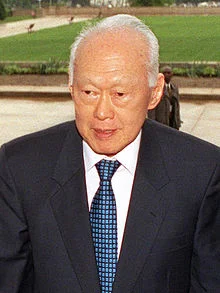
Link to Wikipedia article on Lee Kuan Yew, who was Prime Minister of Singapore for 30 years

John Stuart Mill was more favorable to paternalism than many might think. (Since for his time, he was a Feminist, it might also be called maternalism.) As the surprising 10th paragraph of the “Introductory” to On Liberty indicates, he is willing to extend principles for the treatment of minor children to whole nations: 

It is, perhaps, hardly necessary to say that this doctrine is meant to apply only to human beings in the maturity of their faculties. We are not speaking of children, or of young persons below the age which the law may fix as that of manhood or womanhood. Those who are still in a state to require being taken care of by others, must be protected against their own actions as well as against external injury. For the same reason, we may leave out of consideration those backward states of society in which the race itself may be considered as in its nonage. The early difficulties in the way of spontaneous progress are so great, that there is seldom any choice of means for overcoming them; and a ruler full of the spirit of improvement is warranted in the use of any expedients that will attain an end, perhaps otherwise unattainable. Despotism is a legitimate mode of government in dealing with barbarians, provided the end be their improvement, and the means justified by actually effecting that end. Liberty, as a principle, has no application to any state of things anterior to the time when mankind have become capable of being improved by free and equal discussion. Until then, there is nothing for them but implicit obedience to an Akbar or a Charlemagne, if they are so fortunate as to find one. But as soon as mankind have attained the capacity of being guided to their own improvement by conviction or persuasion (a period long since reached in all nations with whom we need here concern ourselves), compulsion, either in the direct form or in that of pains and penalties for non-compliance, is no longer admissible as a means to their own good, and justifiable only for the security of others.

Many have seen racism in this paragraph. But everyone who objected to George W. Bush’s optimism about nation-building and democracy-building in the Middle East is coming from a similar place. Only slightly more starkly, if the alternatives for a given nation are dictatorship or genocide, dictatorship is to be preferred. I don’t see those as the only two options very often, but I do think it might be common for the only realistic alternatives for a nation to be dictatorship, genocide, ethnic cleansing in the sense of forcible removal, or a long-lasting, expensive, controversial, foreign occupation.

Despite my leeriness about the end of the sentence this is in, I think John Stuart Mill is right in saying “The early difficulties in the way of spontaneous progress are so great, that there is seldom any choice of means for overcoming them.” 

I often think of the difficulties that the leaders of China face. I have not been shy of criticizing them (1, 2), but I also recognize that there is no easy answer to the dilemmas they face. What would I do if I were in their shoes? I would allow freedom of speech and expression, freedom of the press and religion, and institute free elections at the local level quickly, but I would be afraid of free elections at the regional level for fear that would lead to civil war, and afraid that trying to have free national elections would lead to greater nationalism along the lines of Vladimir Putin in Russia. In “Why Thinking about China is the Key to a Free World,” I point to the paradox that since people love freedom, a benevolent dictatorship, to be benevolent, would have to give people freedom. 

For improving the world we live in today, one of the most important tasks is figuring out what compromises are the right ones to make in getting from an unfree government to a free government without disaster along the way such as genocide or war. We must face the truth of what is possible and what is not–whatever that truth is–even when making decisions about freedom.  

See links to other John Stuart Mill posts collected here.

Why I Blog

Today marks four years since my first post, “What is a Supply-Side Liberal?” I have had a tradition of anniversary posts:

  1. A Year in the Life of a Supply-Side Liberal
  2. Three Revolutions
  3. Beacons

The past year has been an intensely busy year for me in research, teaching and in looking for ways to get more leeway in relation to my time budget constraint. There are many activities I would in principle be glad to cut back on, but they turn out–in part by an important bit of economic logic–to be a subset of the activities especially crucial for getting paid. What I want to do more of is blogging–something I do for free. (I have been paid a meaningful amount as a Quartz columnist, but it is a very small fraction of what I earn from my regular salary.) So why do I put such a high priority on blogging? I gave an answer after a little over one year of blogging in “Why I Write.” Let me answer it now in terms of the reasons that keep me going, with no end in sight, after four years of blogging. 

The main reason I blog is the hope of making a difference in the world. I have always expected that having any influence on economic policy would be very difficult. So I have been pleased at how well rewarded my efforts to forward negative interest rate policy as a monetary policy option have been. I realize that the stars may have specially aligned for negative interest rate policy. Other policy and individual choice areas may be harder to make a difference in. But I have faith that as long as one’s timeline is on the order of decades or generations, there is always great hope that the world can be diverted onto a significantly better path.   

The second reason I blog is to express myself. This is closely related to what I wrote in “A Year in the Life of a Supply-Side Liberal”:

In the public arena, not having a blog, Twitter account, Facebook page or similar platform felt to me a little like being one of those ghosts in the movies who try to talk to their still-living friends and family, but find that their words are inaudible. Now I can talk back when I disagree with what I read in the Wall Street Journal at the breakfast table. Or I can add my two cents to an idea that I agree with.

There is a nuance now. Some days I have something I am dying to say. Other days, I think “I need to stay in the game by blogging regularly so that when I do have something I am dying to say, there will be readers there to hear it.” That is, I try to be dependable for my readers so that they will be there when I have an idea I really want to get out there. (According to the rules I have made up for myself, being dependable for my readers includes (a) having something new every day, even if it is just a link, (b) having a Sunday post on either religion or a key text like John Stuart Mill’s On Liberty (c) at least two other posts with some meat to them each week and (d) having the blog be visually appealing with several pictures every week to break up the words. Living up to that has not always been easy.)

The third reason I blog is the pleasure of all the relationships I have made online. Blog posts, their associated Facebook posts, and all the tweets I do have helped me get to know many people I otherwise wouldn’t, and to interact with people I already knew more than I otherwise would. It is great to feel connected to people. And those online connections often spill over into the rest of my life, whether in the academic sphere, the sphere of journalism, or the personal sphere. I had a chance on Monday to write about some of those online relationships in “Friends and Sparring Partners: The Skyline from My Corner of the Blogosphere.”

Someday I hope I can reap all of these rewards from blogging and have blogging figure into my merit raises as well. I get indications that blogging is a definite plus for recruiting of graduate students and recruiting of new professors, since for the growing fraction of economists who read blogs, it is attractive to go to a department that hosts a familiar blogger. There is great hope that someday economics departments will realize the value of blogging for recruiting and for the reputation of a department more generally for a simple reason. How positive economists are about blogs and blogging is strongly correlated with age. Generational replacement alone will make the attitude of the average working economist of the future much more positive toward blogs in the future than it is now. And already, the positive attitudes of many of the young toward blogs is what makes blogging so valuable for recruiting. 

Sometimes blogging has been hard work. I have enmeshed myself in a motivational web that makes it easy to do that hard work despite the sacrifice that sometimes represents. 

But blogging is also a lot of fun, and definitely rewarding on many levels. I even feel blogging has made me smarter than I otherwise would have been, because of all of the extra thinking it has led me to do. If you have had a fraction as much fun reading my blog as I have had writing it, I have been successful.     

Against Anticompetitive Regulation

If several businesses got together and agreed to raise their prices, that would be an antitrust violation. But when people with something to sell get together and run to the government and successfully ask for a regulation that will raise their prices, people often see that as OK. That makes no sense. If a restraint of trade would be a bad thing done by private agreement, surely that restraint of trade is also a bad thing done by government at the point of a gun.  

Of course, for most people, the big difference between a good and a bad restraint of trade is this:

Competition for thee; collusion for me. 

That is, I hate competition that I have to face, but like competition for you that keeps prices down for me. 

The standard argument against competition–when it is competition for me–is that (a) competition will lower quality because low-price, low-quality alternatives will be offered, and (b) these low quality offerings will have a bad spillover effect on people’s guesses about the quality of what I am selling. Notice that this is an all-purpose argument that can be used to justify almost any type of collusion.  

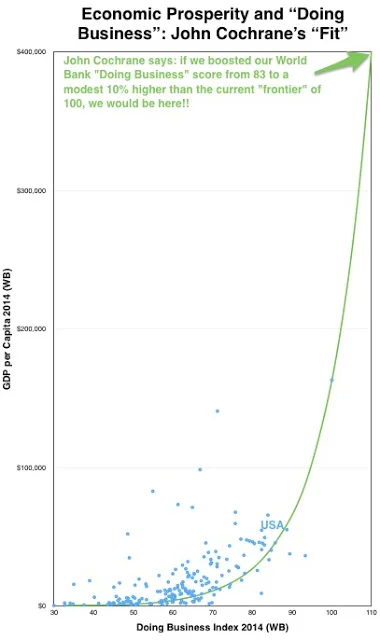
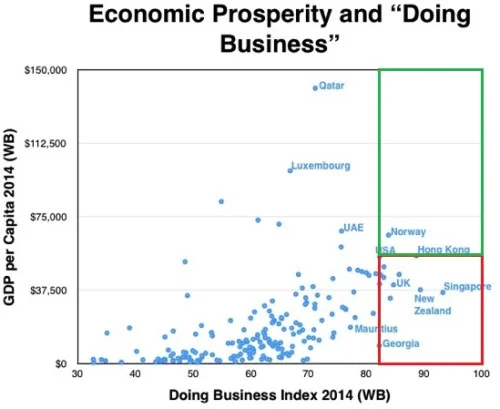
In his post “Dear John Cochrane, you are hurting the economists who care about you,” Matthew Martin distinguishes between reasonable and unreasonable arguments in favor of deregulation. Focusing narrowly on the “ease of doing business” rating for a cross-section of nations, Matthew contrasts John Cochrane’s rash extrapolation

with the fact that those nations with a greater ease of business than the US do not do any better than the US in GDP per capita: 

Evan Soltas, in “Is Pro-Business Reform Pro-Growth?” drives home the point by considering cases in which a country made a big leap up in ease of doing business, finding that there is very little growth dividend. My reaction to Evan’s post is to think that the “ease of doing business measure,” while correlated with things that make a difference, particularly among countries with lower scores than the US, but does not itself capture the key things. When countries raise their “ease of doing business scores” it might be like colleges gaming their rankings once they have figured out the US News and World Report formula for the college rankings. It is hard to genuinely make things better. It is much easier to raise a score by gaming it. And the “ease of doing business” rating is prestigious enough for many countries to see it as worth gaming it to raise it. 

What if some of the key types of deregulation that are especially important for economic growth don’t show up in the “ease of doing business” rating? To the extent doing them well is correlated with the “ease of doing business rating,” the “ease of doing business” rating could be a good indicator, but it would be a less good indicator when a country is only doing the things tallied in the “ease of doing business” rating without also doing the things often correlated with a greater “ease of doing business.”  

As an example of thinking about the benefits of deregulation more carefully than John Cochrane, Matthew Martin links to Salim Furth’s Heritage Foundation report “Costly Mistakes: How Bad Policies Raise the Cost of Living.” Let me list 11 areas Salim points to as areas of harmful regulation (I didn’t understand his least important example, “cement production regulation”) in the order of how big Salim thinks the annual cost to the average family is, without regard to what level of government is involved; many of the biggest are perpetrated by state and local governments. Indeed, I have often thought that instead the overly broad use of the “interstate commerce” clause of the US Constitution to meddle in things that are far removed from interstate commerce, the Federal government should use the interstate commerce clause to prevents states and localities from strangling their economies and thereby the US economy with harmful regulation. It is good to defer to states and localities when they lean in the direction of freedom, not always so good to defer to states and localities when they strangle freedom. 

All estimates of annual cost to the average family are from Salim Furth

  1. Land use regulationscost to average family: $1700. Property owners already within a locality colluding against everyone who might want to move to that locality. 
  2. Occupational licensurecost to average family: $1033. Those who already have a particular type of job colluding against everyone else who might want to do that job. 
  3. Corporate Average Fuel Economy Standardscost to average family: $448. Pretending to do something to help the environment and to reduce US dependence on oil from enemy nations instead of really helping the environment and reducing US dependence on oil from enemy nations by raising gasoline and other energy taxes. 
  4. Auto Dealership Monopoliescost to average family: $288. 
  5. Ethanol Mandate–cost to average family: $255. A tax on drivers to fund a handout to corn farmers and agribusiness, enforced by the key role the Iowa caucuses have in winnowing out presidential candidates. 
  6. Corporate Tax Complexity and Compliance Costscost to the average family: $230. Pretending that it is possible to avoid taxing people by taxing corporations, when at the end of the day, the only ultimate source for tax revenue is people. Or perhaps, pretending that taxing corporations only taxes rich people, when if one wishes to tax rich people, it is much better targeted to tax rich people by finding rich people directly. 
  7. Crude Oil Export Restrictionthankfully now gone, but used to cost the average family $227. 
  8. Renewable Energy Mandatescost to the average family: $108. Those producing greenhouse gases using symbolism to distract everyone from the carbon taxes that would direct research and implementation of CO2 reduction in the most efficient directions. 
  9. The Current Medical Tort Systemcost to the average family: $82. Lawyers taking a big cut of the money flowing through the incentive system/insurance system surrounding medical mistakes. 
  10. Sugar programcost to the average family: $29. Sugar farmers colluding against sugar users. (Note that with a Pigou tax on sugar, the money would go to government uses instead of sugar growers.)
  11. Milk Marketing Orderscost to the average family: $29. Dairy farmers and agribusiness colluding against milk users. 

When faced with the politics of such schemes, it is easy to get discouraged. But a journey of a thousand miles must begin with a single step. One of the first steps toward getting rid of bad regulations is to call them out for the reflections of self-interest that they are, and refuse to let them hide behind prettified excuses. What is achievable in the medium-term is that whenever journalists write about any of these regulations, someone close to hand is ready and willing to be quoted about how selfish these regulations are. 

Note: You might be interested in the related Storify story “Jonathan Portes, Brad DeLong and Noah Smith Set Me Straight When I Praise John Cochrane’s Shoddy OpEd.”

Peter Conti-Brown: The Standard Account of Fed Independence Doesn't Work

The problem is that the standard account of Fed independence—the story of Ulysses and the sirens, of the dance hall and the spiked punch bowl—often doesn’t work. Sometimes politicians whip up popular sentiment in favor of taking away the punch bowl—precisely the opposite of what we expect in a democracy. Sometimes the central bankers make headlines not for being boring chaperones but for bailing out the financial system. And in every case the creaky, hundred-year-old Federal Reserve Act leaves a governance structure that makes it so we barely know who the chaperone is even supposed to be.

… I argue that each of the five elements of that standard account—that it is law that creates Fed independence; that the Fed is a monolithic “it,” or more often an all-powerful “he” or “she”; that only politicians attempt to influence Fed policy; that the Fed’s only relevant mission is price stability; and that the Fed makes purely technocratic decisions, devoid of value judgments—is wrong.
— Peter Conti-Brown, The Power and Independence of the Fed, “Introduction.”