The Costs of Inflation


I have never felt that the traditional treatments of the cost of inflation have the right emphasis. Here is what I would highlight for the costs of inflation:
Messing with the Price System. Prices are the central working parts to a remarkable and crucial coordination system for production and distribution of goods and services. The price system lets purchasers be aware of the costs and sellers be aware of the benefits of goods and services. Firms don’t all adjust their prices at the same time, so inflation tends to make older prices that have been set a while ago too low relative to newer prices that have been set recently. How long ago a price has been set has very little relationship to the costs and benefits of a good. So inflation is introducing a type of noise into the price system.
To see the losses from introducing noise into the price system, imagine that when firms set prices was kept the same, and how they decided on prices was kept the same, with one exception: after they had decided on prices, an evil genie came along and flipped a coin and raised or lowered the price by 2% depending on how the coin toss came out. This would cause all kinds of things to happen that serve no purpose.
Higher Menu Costs and Information Processing Costs. There are also costs firms pay in order to keep inflation from messing with the price system even more than it does. Inflation makes firms feel the need to change prices more frequently. In addition to the literal costs of changing physical price labels (sometimes called “menu costs”) more frequently, firms face the information processing costs of having to think about the macroeconomic rate of inflation rather than being able to simply focus on what is going on in their own market.
These menu costs and extra information processing costs for firms are the direct costs of having to change prices more often. They are also a reason why inflation introduces noise into the price system, since if there were no menu costs and no information processing costs for firms changing prices, firms would instantly adjust prices to get prices right even when there is inflation.
Messing with Our Minds. Inflation is confusing in many ways. This has costs: both the costs of mistakes from imperfect information processing and the direct time and effort costs of even that imperfect information processing. Where Greg Mankiw, in his intermediate macro textbook Macroeconomics, 10th edition, writes of inconvenience, I would go further to say inconvenience and confusion:
A fifth cost of inflation is the inconvenience of living in a world with a changing price level. Money is the yardstick with which we measure economic transactions. When there is inflation, that yardstick is changing in length. To continue the analogy, suppose that Congress passed a law specifying that a yard would equal 36 inches in 2019, 35 inches in 2020, 34 inches in 2021, and so on. The law would result in no ambiguity but would be highly inconvenient. When someone measured a distance in yards, it would be necessary to specify whether the measurement was in 2020 yards or 2021 yards; to compare distances measured in different years, one would need to make an “inflation” correction. Similarly, the dollar is a less useful measure when its value is always changing. The changing value of the dollar requires that we correct for inflation when comparing dollar figures from different times.
For example, a changing price level complicates personal financial planning. An important decision that all households face is how much of their income to consume today and how much to save for retirement. A dollar saved today and invested at a fixed nominal interest rate will yield a fixed dollar amount in the future. Yet the real value of that dollar amount —which will determine the retiree’s living standard—depends on the future price level. Deciding how much to save would be simpler if people could count on the price level in 30 years being similar to its level today.
The basic point is that inflation makes it harder to compare prices that one has seen at different times. But Greg writes as if everyone will, in the end, make all of inconvenient calculations to mentally adjust for inflation. What if they don’t? Then they will be prone to make mistakes in their economic decisions. As Greg notes, one of the most important decisions that needs an inflation adjustment is the decision of how much to save for retirement. Anyone who doesn’t correct for inflation will think their retirement saving plan will provide for a better standard of living in retirement than it actually will. This could lead to a big mistake that could mar someone’s life. They might avoid this mistake by going to a financial planner, but financial planning seldom comes for free: typically either (1) the financial planner takes a certain percentage of your assets every year (1% per year is a very large fraction of the entire rate of return one can hope to get in a year), (2) the financial planner steers you toward investments that make the planner money but are not so great for you, or (3) a financial planner refuses to work with you because it isn’t worth their time. (Regulations are moving against (2), pushing things toward (1) or (3).)
You could take classes so you can understand the different between a nominal and a real interest rate (that is, an inflation-adjusted interest rate) yourself, but that doesn’t come free either. If you attend ten classes each school year, take the annual tuition and what you could have been earning if you weren’t going to school, divide it by ten, subtract the value of the other things you learn in a macroeconomics class, then think of that as the price of learning to understanding real interest rates at the level you will understand by the end of that class.
One of the biggest failings of standard economic theory in 2019 is that it assumes that information processing comes for free. As I discuss in “Cognitive Economics,” this isn’t because economists believe that is true (although some economists can be dogmatic about the virtue of pretending it is true). It is because our theoretical tools are not well-suited to dealing with information processing costs. It will take a big advance in economic theory before we are able to deal with information processing costs in a satisfying way. In relation to the costs of inflation, our difficulty in modeling information processing costs means that the effect of inflation in raising those information processing costs is underestimated as a cost of inflation.
Messing with the Minds of Legislators. One subspecies of inflation messing with minds is that it messes with the minds of legislators. Legislators often don’t think about how inflation affects—or changes in inflation will affect—the laws that they write. This is a particularly big problem in the tax system. For example, almost all the countries in the world that tax interest income at all tax nominal interest income, rather than basing taxation on real interest income. And almost all the countries in the world that give a tax reduction to those who owe money for interest expense give a tax break based on nominal interest expense rather than on real interest expense. Capital gains taxation is almost always based on nominal capital gains. The tax treatment of interest and of capital gains is particularly consequential for the economy, so messing it up is a big deal.
Over time, certain pieces of the social safety net have come to be adjusted for price inflation or for the growth in nominal wages, but some are not. Occasionally, inflation may push laws in a direction that you like, but seldom was that the intent of the law! (For example, opponents of minimum wages might think it is a good thing that inflation erodes the minimum real wage. But that wasn’t the intent of the law.)
There are many areas where the costs of information processing mess up legislation that are not the result of ordinary inflation (see for example “VAT: Help the Poor and Strengthen the Economy by Changing the Way the US Collects Tax”), but reducing inflation is a way of reducing information processing costs for legislators that is within the power of a central bank.
Messing with Debt Contracts. Some debt contracts—such as 30-year mortgages—last long enough that inflation is likely to change quite a bit over the life of the debt contract. When people write debt contracts in nominal terms, and inflation isn’t what they expected when they wrote those contracts, that change in inflation leads to a different outcome than intended when the debt contract was written.
Note that this is especially a cost of changes in inflation—and even more specifically of changes in inflation that were not anticipated. But there is a relationship between the level of inflation and changes in inflation. Because there is little temptation for deflation (having prices go down), when inflation is low there is not that much lower for it to go without the central bank making strenuous efforts to keep it from going too low. So when inflation is low it is easy to know in at least one direction what probably won’t happen. And when inflation is low, it is probably because a central bank thought low inflation was good, up to a point, which makes it even clearer what is likely to happen to inflation.
However, it is important to realize that not all of the correlation between low inflation and less variable inflation is low inflation causing less variable inflation. Much of this relationships between low inflation and less variable inflation is “Cousin Causality”: a good central bank will strive toward both low and more steady inflation, while a bad central bank will tend to have both higher and more variable inflation. It is good to have a good central bank.
Messing with the Opportunity Cost of Holding Money. Because it is easy to model, prominent in the traditional lists of the costs of inflation are “shoeleather costs”—the costs of going to the ATM more often to get cash when paper currency earns a rate of return much lower than the interest rate in a checking account. This cost of inflation only exists because of a tradition of having a zero rate of return for paper currency, something that may change in the future. (See “How and Why to Eliminate the Zero Lower Bound: A Reader’s Guide.”) Strictly speaking, it is not a cost of inflation at all, but a cost of the spread between checking account interest rates and the paper currency interest rate. In addition to a possible nonzero paper currency interest rate in the future, that spread includes the real interest rate on checking accounts as well as the inflation component of the nominal interest rate on checking accounts. Nevertheless, higher inflation does tend to increase the spread between checking account interest rates and the paper currency interest rate.
To summarize, if inflation raises the spread between checking account interest rates and the paper currency interest rates it can lead to too little use of paper currency relative to checking accounts. Here I am focusing on people who use paper currency for legitimate transactions. As Ken Rogoff emphasizes in The Curse of Cash, much of the demand for paper currency is for tax evasion and other even worse illegal activities. Having a higher opportunity cost of holding paper currency to use in illegal activities might be a good thing.
When the spread between checking account interest rates and the paper currency interest rate rises, the spread between checking account interest rates and other interest rates—such as the Treasury bill rate—also tends to rise. This is a reflection of both people’s reluctance to go to the trouble of switching their money from one bank to another (including the reluctance to do long-distance banking with a bank they can’t see in person) and everything else that makes banks compete less fiercely with one another for deposits even when the interest rates the bank earns are far above the interest rates they are paying to depositors. As long as banks can get away with interest rates on deposit far below Treasury bill rates whenever there is a big gap between Treasury bill rates and the paper currency interest rate (which is typically zero), it can lead people to have inconveniently small amounts of money in their checking accounts as well as to have inconveniently small amounts of cash.
Note that cash, checking accounts and saving accounts all count as forms of money. So both of the effects mentioned above: on cash balances and on checking account/savings account balances are examples of a higher opportunity cost of holding money reducing money holding. In Divisia measures of monetary aggregates, the lower the interest rate someone is willing to put up with (compared to the Treasury bill rate), the more “moneyness” (=liquidity) a dollar of an asset is treated as having. By that measure, cash has more moneyness than funds in a checking account, and from that perspective, even though checking accounts are money, one can think of funds shifting from cash into checking accounts as a reduction in the amount of money.
More on Inflation Messing with Our Minds: Inflation Getting the Blame for Things It Doesn’t Do
Because inflation is confusing, it gets blamed for things it didn’t do and doesn’t do. Long-run forces that have very little to do with inflation determine the real wage and real rates of return (including the safe real interest rate). But to many people, inflation is the name for “My real wage doesn’t go up as fast as I think it should.” And to others, inflation is the name for “The real rate of return isn’t as high as I think it should be.” I, too, wish that real wages were growing faster and that real rates of return were higher. But inflation didn’t do it.
How can it be that inflation doesn’t reduce the growth rate of real wages or real rates of return? The answer is that standard theory predicts that a long-run, purely monetary change in inflation will raise nominal rates of return one for one and will raise nominal wages by as much as it raises prices. Higher inflation can often be a symptom of supply-side ills in the economy that both lower the growth rate of real wages and raise inflation (or both lower real rates of return and raise inflation). But in these cases, neither inflation nor real wage growth cause each other; rather they are correlated through “Cousin Causality.”
More on Inflation Messing with Our Minds: Inflation Making Real Wage Cuts Go Down More Easily
One partial exception to the idea that inflation doesn’t affect real wages is that when the forces of supply and demand point to a reduction in real wages for a given individual, that reduction in real wages may happen with less conflict when a constant nominal wage or a small increase in the nominal wage is accompanied by inflation than when there is a direct cut to nominal wages. In other words, confusing workers whose real wage is being cut may reduce conflict. This is typically counted by economists as a benefit of inflation, not a cost. But this benefit of inflation stems from inflation being confusing.
To describe the nature of the confusion from inflation, think of this. If my nominal wage is cut, there is usually a particular day when that happens. And if it were spread out over many days, that would probably make me feel worse. But when inflation erodes my real wage, the effect is not only spread out but my notification happens at the stores and online where I see higher prices, rather than being a notification from my employer.
Hyperinflation Messes with All of the Above, a Lot
The costs of hyperinflation are the costs above, multiplied many times over. You don’t want to go there.
How Negative Interest Rate Policy Can Allow Us to Reduce Inflation—and the Costs of Inflation
Even at moderate levels of inflation, the effects involving messing with minds can be a big deal. Fortunately, the progress of negative interest rate policy holds out the hope that we can take away the need for inflation in order to be able to have low real interest rates to stimulate the economy. On that, see “The Costs and Benefits of Repealing the Zero Lower Bound...and Then Lowering the Long-Run Inflation Target” and the other links flagged in “How and Why to Eliminate the Zero Lower Bound: A Reader’s Guide” (many cited in the appendix below). Being able to have low real interest rates to stimulate the economy when necessary is the primary benefit of having some inflation (with making real wage cuts go down more easily as the second substantial benefit to inflation). If we can have low real interest rates by having low nominal interest rates, we don’t need to have as much inflation to enable low real rates, so we can reduce inflation, reducing all of the costs of inflation mentioned above.
Update April 4, 2020: I had a couple of questions from students on this post. Here is the Q&A:
Question: I am confused on how the costs of inflation the optimal level of inflation target. Do all the costs collectively influence it? or do just some? and how do they influence it? I understand how the costs of inflation influence society and people but do not understand how the influences the optimal cost of inflation. I was wondering if you could explain this to me and maybe clear it up!
Answer: That is a great question. I am clearer about that in this post: https://blog.supplysideliberal.com/post/67342414250/pieria-2-the-costs-and-benefits-of-repealing
Basically, all the costs of inflation militate toward having a zero inflation rate as the optimal target. But there are a few benefits of inflation, as I mention. The biggest benefit of inflation goes away when a central bank is comfortable with negative interest rates (even deep negative interest rates). So if a central bank gets comfortable with negative interest rates, the optimal rate of inflation would probably something close to zero. When a central bank for some reason is imposing a lower bound on rates on itself, 2% inflation has seemed like a favorite target rate.
The other benefits of inflation that might make the optimal level a bit above zero are downwardly sticky nominal wages (the benefit of letting firms cut wages when that better aligns wages with marginal products) and possibly reducing markups (and therefore the size of one of the three wedges) a bit.
Shoeleather costs (people having too little cash because of inflation) have been overemphasized, and given the use of cash in tax evasion and crime the direction we want to push cashholding isn't even clear, so let me mostly leave that aside. But if the rate of return on paper currency is stuck at zero, policy views about how much cash holding we want can influence the optimal inflation target.
Answer to a Similar Question: Costs of inflation push the optimal inflation target toward zero. Benefits of inflation can push the optimal inflation target above zero. As I alluded to in my email answer, shoeleather costs plus crime concerns that make us care about the amount of paper currency holding, combined with a desire to keep the paper currency interest rate at zero could either militate toward inflation higher than zero (if crime concerns dominate) or lower than zero if (if shoe-leather costs dominate--negative inflation being needed to get the nominal interest rate closer to zero).
Appendix: Quotations from Other Posts on How Negative Interest Rate Policy Can Allow Us to Reduce Inflation
(I have made some formatting changes in the quotations, so they can be read more easily below.)
CHAIRMAN BERNANKE. Yeah. Okay. So historically, the argument for having inflation greater than zero–we define price stability as 2 percent inflation as do most central banks around the world. And one might ask, “Well, price stability should be zero inflation. Why do you choose 2 percent instead of zero?” And the answer to the question you’re raising which is that if you have zero inflation, you’re very close to the deflation zone and nominal interest rates will be so low that it would be very difficult to respond fully to recessions.
What the opponents of primacy for electronic money fail to realize is that making electronic money the economic yardstick is the key to eliminating inflation and finally having honest money.The European Central Bank, the Fed, and even the Bank of Japan increasingly talk about an inflation rate like 2% as their long-run target. Why have a 2% long-run target for inflation rather than zero—no inflation at all? Most things are better with inflation at zero than at 2%. The most important benefit of zero inflation is that anything but zero inflation is inherently confusing and deceptive for anyone but the handful of true masters at mentally correcting for inflation. Eliminating inflation is first and foremost a victory for understanding, and a victory for truth.
There are only two important things that economists talk about that are worse at zero inflation than at 2% inflation. One that has attracted some interest is that a little inflation makes it easier to cut the real buying power of workers who are performing badly. But by far the biggest reason major central banks set their long-run inflation targets at 2% is so that they have room to push interest rates at least 2% below the level of inflation. With electronic dollars or euros or yen as the units of account, there is no limit to how low short-term interest rates can go regardless of how low inflation is. So inflation at zero would be no barrier at all to effective monetary policy. It might be that we would still choose inflation a bit above zero to help make it easier to cut the real (inflation-adjusted) wage of poor performers at work, but I doubt it. So I predict that making electronic dollars the unit of account would pave the way for true price stability with long-run inflation at zero instead of 2%. The main benefit of making electronic currency the centerpiece of the price system would be that central banks would never again seem powerless in the face of a long slump. But even setting that gargantuan benefit aside, the benefits of true price stability alone would easily make up for any inconvenience from the abdication of paper currency in favor of the new rulers of the monetary realm: electronic dollars, euros and yen.
Yesterday’s paper currency is not only a barrier to speedy recovery from deep recessions—it is also a barrier to ending inflation. Many people don’t realize inflation in advanced economies such as the United States, the eurozone, and the United Kingdom is the result of conscious decisions of the Fed, the European Central Bank, and the Bank of England (with the Bank of Japan now trying to follow suit) to tolerate 2 percent inflation, in order to give monetary policy more room to maneuver. Here is the reasoning: Both households and businesses focus on interest rates in comparison with inflation when making spending decisions, so that higher inflation makes interest rates effectively lower. As economists say it, for a fixed nominal interest rate, higher inflation lowers the real interest rate. For example, if someone is paying 3 percent interest on a loan but inflation is 2 percent, then 2 percent is just making up for inflation, and only the remaining 1 percent actually gives the lender extra real value in terms of what the principal plus interest is worth.
The key takeaway message for monetary policy is that because people look at how interest rates compare with inflation, an interest rate of zero that is 2 percent below inflation is much more stimulative than an interest rate of zero when inflation is also zero. (That is why the United States got more oomph from its zero interest rates than Japan, which had an inflation rate of zero or less.)
As long as paper currency has an interest rate of zero, it is hard for other interest rates to go below zero, so the only way to get interest rates below inflation is to push inflation above zero. Take paper currency off its pedestal, and inflation is no longer necessary to provide this space for monetary policy, since interest rates can go down, instead of inflation having to go up. Then there is nothing standing in the way of ending inflation forever.
The Bottom Line for the Long-Run Inflation Target
Whatever the optimal target for long-run inflation is when there is a zero lower bound, the optimal target for long-run inflation is likely to lower in the absence of a zero lower bound. The overall benefit of repealing the zero lower bound is
the benefit of repealing the zero lower bound would have if the long-run inflation target held fixed, PLUS
the benefit of lowering the long-run inflation target from its previous value to whatever value is optimal in the absence of the zero lower bound.
I remain unimpressed by the purported benefits of inflation other than steering away from the zero lower bound. I will be surprised if a nation that repeals its zero lower bound does not also gradually lower its long-run inflation target to zero.
So, in theory at least, this could eliminate recessions if central banks are able to use negative rates to spur enough investment and spending to get the economy back to normal quickly. But you argue it could eliminate inflation too. How would that work?
Why do we have a 2 percent inflation target? Well, Bernanke says it’s because of the zero lower bound. We may need to get interest rates to be 2 percent below inflation, and if inflation is 2 percent, then you can get interest rates below inflation, but if it’s 0, you can’t get interest rates below inflation. The Fed is very clear about the fact that it chooses to do 2 percent inflation because it’s worried about the zero lower bound.
In practice, we’d choose zero inflation. In my presentation to central banks, I go through the costs and benefits of inflation, and other than steering away from the zero lower bound, there aren’t many benefits to it. There are people who quite seriously argue that we need inflation so companies can cut real wages when necessary, but other than that, steering clear of the zero lower bound is the big reason we have inflation. And there are a lot of reasons to not like inflation.
There are some quite serious proposals to raise our level of inflation. 2 percent isn’t enough, because we still run into the ZLB. Larry Ball, Brad DeLong, Paul Krugman, Ken Rogoff — they’ve all proposed this. There are quite serious voices calling for four percent rather than two; that’s the number they hit on.
With electronic money, you get the benefit of inflation, of steering clear from the zero lower bound, without the destructive aspects. With inflation, you’re constantly changing your economic yardstick. Using Greg Mankiw’s example, suppose we said a yard is 36 inches today, but next year it’s 35 inches. That’s a big miss. The thing you’re measuring in is the electronic dollar, and if there’s zero inflation there, you have a constant yardstick.
Fighting the Common Cold


In today’s post, I want to juxtapose several ideas related to fighting the common cold. In the article at the top, it says vitamins and supplements are not effective at fight colds, nor is staying out of the cold outside or making sure one’s hair is dry when going out into the cold. What has been shown to be effective is staying away from people who are sick, washing hands frequently and keeping one’s hands away from one’s face.
I find myself sad if there are methods only for avoiding colds in the first place, and not effective methods for fighting colds once you have one. Fortunately, it turns out that while it is hard to do better than rest plus a placebo in fighting a cold once you have a cold, placebos are quite powerful in fighting colds. And there are many placebos commercially available :)
One reason it would be too bad if there are only methods for avoiding colds in the first place and not methods for better fighting them once you have one is the Hygiene Hypothesis that staying away from too many germs is giving our immune systems too little to do, so that our immune systems turn against our own bodies, causing autoimmune diseases. (Another possible cause of autoimmune diseases is diet. If you or someone you care about has an autoimmune disease, you might want to take a look at my post “What Steven Gundry's Book 'The Plant Paradox' Adds to the Principles of a Low-Insulin-Index Diet.” It is easy to try the diet Steven Gundry suggests and see if it helps.)
The second article shown at the top suggests that good bacteria in the nose and throat might help ward off flu. I wonder of the same is true for the common cold. This seems quite intriguing and promising to me. What kinds of bacteria you have in your gut certainly matters for obesity and other aspects of health (see “Anthony Komaroff: The Microbiome and Risk for Obesity and Diabetes,” “Evidence that Gut Bacteria Affect the Brain,”and Biohacking: Nutrition as Technology), so why couldn’t good bacteria in other parts of the body help with other areas of health?
I grew up in an era that thought that “germs are bad.” But scientists are moving toward a view that good germs can fight bad germs. Just as there are guard dogs, there are guard germs, too. But until the day when we design guard germs, it is only germs of types that have been around for hundreds or thousands of years that are likely to be good, since it is the slow selection pressure of human hosts dying that would evolve a germ that is good to humans. We are only beginning to understand or even recognize these old friends.
Don’t miss my other posts on diet and health:
I. The Basics
Jason Fung's Single Best Weight Loss Tip: Don't Eat All the Time
What Steven Gundry's Book 'The Plant Paradox' Adds to the Principles of a Low-Insulin-Index Diet
II. Sugar as a Slow Poison
Best Health Guide: 10 Surprising Changes When You Quit Sugar
Heidi Turner, Michael Schwartz and Kristen Domonell on How Bad Sugar Is
Michael Lowe and Heidi Mitchell: Is Getting ‘Hangry’ Actually a Thing?
III. Anti-Cancer Eating
How Fasting Can Starve Cancer Cells, While Leaving Normal Cells Unharmed
Meat Is Amazingly Nutritious—But Is It Amazingly Nutritious for Cancer Cells, Too?
IV. Eating Tips
Using the Glycemic Index as a Supplement to the Insulin Index
Putting the Perspective from Jason Fung's "The Obesity Code" into Practice
Which Nonsugar Sweeteners are OK? An Insulin-Index Perspective
V. Calories In/Calories Out
VI. Sleep
VII. Wonkish
Framingham State Food Study: Lowcarb Diets Make Us Burn More Calories
Anthony Komaroff: The Microbiome and Risk for Obesity and Diabetes
Don't Tar Fasting by those of Normal or High Weight with the Brush of Anorexia
Carola Binder: The Obesity Code and Economists as General Practitioners
After Gastric Bypass Surgery, Insulin Goes Down Before Weight Loss has Time to Happen
A Low-Glycemic-Index Vegan Diet as a Moderately-Low-Insulin-Index Diet
Analogies Between Economic Models and the Biology of Obesity
VIII. Debates about Particular Foods and about Exercise
Jason Fung: Dietary Fat is Innocent of the Charges Leveled Against It
Faye Flam: The Taboo on Dietary Fat is Grounded More in Puritanism than Science
Confirmation Bias in the Interpretation of New Evidence on Salt
Eggs May Be a Type of Food You Should Eat Sparingly, But Don't Blame Cholesterol Yet
Julia Belluz and Javier Zarracina: Why You'll Be Disappointed If You Are Exercising to Lose Weight, Explained with 60+ Studies (my retitling of the article this links to)
IX. Gary Taubes
X. Twitter Discussions
Putting the Perspective from Jason Fung's "The Obesity Code" into Practice
'Forget Calorie Counting. It's the Insulin Index, Stupid' in a Few Tweets
Debating 'Forget Calorie Counting; It's the Insulin Index, Stupid'
Analogies Between Economic Models and the Biology of Obesity
XI. On My Interest in Diet and Health
See the last section of "Five Books That Have Changed My Life" and the podcast "Miles Kimball Explains to Tracy Alloway and Joe Weisenthal Why Losing Weight Is Like Defeating Inflation." If you want to know how I got interested in diet and health and fighting obesity and a little more about my own experience with weight gain and weight loss, see “Diana Kimball: Listening Creates Possibilities” and my post "A Barycentric Autobiography.
John Locke: An Unjust War Cannot Win Any True Right to Rule

Link to the Wikipedia article “Gallic Wars”
Later on in Chapter XVI of John Locke’s 2d Treatise on Government: Of Civil Government, “Of Conquest,” John Locke makes the more complicated case that a just war cannot win any true right to rule. I’ll blog about that in a couple of weeks. The case that an unjust war cannot win any true right to rule is easier; John Locke accomplishes it in two eloquent paragraphs:
§. 175. THOUGH governments can originally have no other rise than that before mentioned, nor polities be founded on any thing but the consent of the people; yet such have been the disorders ambition has filled the world with, that in the noise of war, which makes so great a part of the history of mankind, this consent is little taken notice of: and therefore many have mistaken the force of arms for the consent of the people, and reckon conquest as one of the originals of government. But conquest is as far from setting up any government, as demolishing an house is from building a new one in the place. Indeed, it often makes way for a new frame of a commonwealth, by destroying the former; but, without the consent of the people, can never erect a new one.
§. 176. That the aggressor, who puts himself into the state of war with another, and unjustly invades another man’s right, can, by such an unjust war, never come to have a right over the conquered, will be easily agreed by all men, who will not think, that robbers and pirates have a right of empire over whomsoever they have force enough to master; or that men are bound by promises, which unlawful force extorts from them. Should a robber break into my house, and with a dagger at my throat make me seal deeds to convey my estate to him, would this give him any title? Just such a title, by his sword, has an unjust conqueror, who forces me into submission. The injury and the crime is equal, whether committed by the wearer of a crown, or some petty villain. The title of the offender, and the number of his followers, make no difference in the offence, unless it be to aggravate it. The only difference is, great robbers punish little ones, to keep them in their obedience; but the great ones are rewarded with laurels and triumphs, because they are too big for the weak hands of justice in this world, and have the power in their own possession, which should punish offenders. What is my remedy against a robber, that so broke into my house? Appeal to the law for justice. But perhaps justice is denied, or I am crippled and cannot stir, robbed and have not the means to do it. If God has taken away all means of seeking remedy, there is nothing left but patience. But my son, when able, may seek the relief of the law, which I am denied: he or his son may renew his appeal, till he recover his right. But the conquered, or their children, have no court, no arbitrator on earth to appeal to. Then they may appeal, as Jephtha did, to heaven, and repeat their appeal till they have recovered the native right of their ancestors, which was, to have such a legislative over them, as the majority should approve, and freely acquiesce in. If it be objected, This would cause endless trouble; I answer, no more than justice does, where she lies open to all that appeal to her. He that troubles his neighbour without a cause, is punished for it by the justice of the court he appeals to: and he that appeals to heaven must be sure he has right on his side; and a right too that is worth the trouble and cost of the appeal, as he will answer at a tribunal that cannot be deceived, and will be sure to retribute to every one according to the mischiefs he hath created to his fellow-subjects; that is, any part of mankind; from whence it is plain, that he that conquers in an unjust war, can thereby have no title to the subjection and obedience of the conquered.
At bottom, John Locke is arguing that might does not make right. Might may secure submission for a time. But it always leaves open the possibility of justified rebellion, whenever a good opportunity arises. And since that right of rebellion against unjust power is a perpetual right of rebellion, it is likely that after enough generations a good opportunity will arise, if originally unjust power does not legitimize itself by obtaining the consent of the governed.
John Locke shows his stripes as an early economist in saying that a good opportunity is needed to make a rebellion justified, because a rebellion even against unjust power must meet a cost-benefit test:
… he that appeals to heaven must be sure he has right on his side; and a right too that is worth the trouble and cost of the appeal, as he will answer at a tribunal that cannot be deceived, and will be sure to retribute to every one according to the mischiefs he hath created to his fellow-subjects;
A type of rebellion that easily meets the benefit-cost test is rebellion in one’s own heart. It may sometimes be appropriate to give tyrants outward obedience for pragmatic reasons. But no one needs to give a tyrant their heart.
For links to other John Locke posts, see these John Locke aggregator posts:
In Honor of Alan Krueger

I can’t do Alan Krueger justice in this post. But I can say something. Much has been written about Alan’s public career. I knew him best in graduate school, and only occasionally ran into him after that.
Alan and I were classmates; we were both in Harvard’s Ph.D. program in Economics from 1983 to 1987. Alan was one of my classmates that I talked to most because we had offices close to one another: we both served as academic advisors to Harvard undergraduates in Economics while we were Ph.D. students. (As one of the perks, we got a large office shared with one other Ph.D. student instead of only getting a carrel.)
My paper “Labor-Market Dynamics When Unemployment is a Worker Discipline Device” was a direct result of Alan persuading me that Efficiency Wage Theory was important. For some years now, I have thought that a revival of Efficiency Wage Theory—and in particular, a synthesis of Efficiency Wage Theory with modern labor market search theory—would be in order. I think such a revival would be one good way to honor Alan in the course of advancing economics.
Alan had an understated manner—he wasn’t soft-spoken, but he said what he had to say in a straightforward, matter-of-fact way. Despite his influence on me, I underestimated Alan. Watching his career from afar, he became a symbol to me of how it is possible to have an enormous impact by homing in on the most important questions and being entrepreneurial in tackling those questions, without being flashy.
Because Alan focused on important questions, others often contested his answers. But that is what good science is all about: getting many people to work on the most important questions and hashing things out. Someone like Alan, who gets others to focus on the most important questions, accomplishes great good both when others confirm a result and when others show that a seeming result is wrong. And it matters. Too much of economics is either addressing minor questions or addressing big questions with tools totally inappropriate to getting a real answer to those questions. Alan addressed big questions with methods that showed a viable way forward toward an answer.
Like many others, I was totally unaware that Alan was facing the kind of inner torment that could all too often make death look like an improvement. I have been touched by suicide in the suicide of my son Spencer. (See my wife Gail’s post “The Shards of My Heart” and my daughter Diana’s posts “Every Word” and “Last Words.”) The thing I know from Spencer’s suicide is that—although there is room to regret Alan’s decision not to continue to tough it out through whatever agony he faced in order to keep doing the wonderful things he was doing for the rest of us (as he did for so long)—we are in no position to fault him for his decision to commit suicide. We haven’t walked in his shoes and can’t know how hard it was for him to make it through each day.
What I am angry about is our underinvestment in figuring out how to better treat mental health problems. Even with all of the other suffering there is in the world, I believe that suffering from mental health problems is a large part of human suffering. Without referencing his own suffering, Alan did a lot to advance the recognition of the importance of mental health problems—and more broadly, the importance of everything that contributes to a good life—with his research on subjective well-being.
In addition to direct mental health research that helps us better diagnose and effectively treat mental health problems, I hope that we are at the dawn of a general recognition that each one of us is broken in some way in relation to mental health. We each have dimensions of fragility. The greater part of wisdom is to learn well about one’s own fragilities and weaknesses and to figure out how to buttress them. And the greater part of charity is to be kind to others in their fragilities and weaknesses, even when their fragilities and weaknesses are different from our own.
Alan was a good example of how one can care about people and demonstrate one’s caring through one’s professional work. It matters what we do in the many hours every week that we work. There are very few jobs where it isn’t possible to shift one’s approach in a way that makes other people’s lives better. And fortunately, most of us have altruistic bones that make it a rare thing to make other people’s lives better without also making our own lives better.
The best way to honor Alan is to do good in the world in all the many ways it is possible to do good in the world. Alan showed us what is possible.
Eggs May Be a Type of Food You Should Eat Sparingly, But Don't Blame Cholesterol Yet


If you look at who eats more butter and what happens to them without doing a randomized experiment you don’t learn about the effect of butter, you learn about the effect of butter, but about the effect of eating butter combined with everything else that is correlated with eating butter. Since most people eat butter with very unhealthy things such as bread or potatoes, looking at what happens to people who eat butter (and probably eat it on top of things such as bread or potatoes) is not at all the same as an experimental protocol of flipping a coin to decide which experimental subject will be asked to eat more butter straight, then following those experimental subjects for a long time to see the difference in outcomes between those who ate extra butter straight and those who didn’t. (I apply this insight in “Hints for Healthy Eating from the Nurse's Health Study.”)
Similarly, if you look at who eats more eggs and what happens to them, you don’t learn about the effect of eggs, you learn about the effect of eggs and everything else that is correlated with egg eating. In particular, I am concerned that those who eat a lot of eggs might eat a lot of animal products in general. Rather than eggs and their cholesterol being especially bad, maybe it is animal products in general (including eggs) being somewhat bad.
I have written about eating too much animal protein as a possible cancer risk before. (See the section of links on “Anti-Cancer Eating” below.) It seems possible that animal protein is a heart disease risk, too. The study flagged at the top of this post has been all over the news. It has been interpreted as saying that cholesterol is the problem. I think we should be cautious about going there so fast. Just as fat that you eat isn’t the same thing as body fat, cholesterol that you eat is not the same thing as cholesterol in your bloodstream. In both cases, the body makes its own. The amount you eat of either body fat or cholesterol may not have a simple relationship to how much your body ends up with once the food is digested and metabolized and then the body decides how much to make in-house of body fat and cholesterol.
Given that caution, let’s look at the newly analyzed evidence. I want to focus on the evidence about how much of a relationship is left between cholesterol (which is abundant in eggs) and heart disease on the one hand and all-cause mortality on the other after controlling for other obvious risk factors, and controlling for the total consumption of animal protein. Below, I have copy-pasted the key parts of the key Table 2. Focus on the lines that say “animal protein,” which means animal protein is controlled for. Looking at the 95% confidence intervals for the absolute risk difference over a median followup of 17.5 years, the lower end of the confidence interval shows only a .08% higher incidence of heart disease and .84% higher all-cause mortality predicted from eating an extra half egg a day. The lower end of the 95% confidence intervals for the hazard ratio show only a 1.01 times higher incidence of heart disease and a 1.04 times higher all-cause mortality after controlling for animal protein consumption.
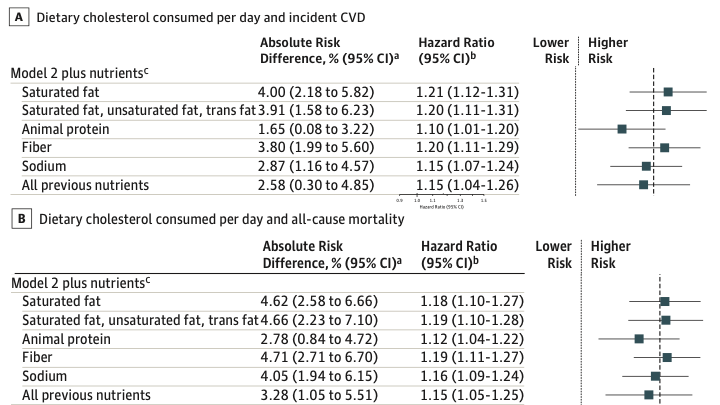
These numbers overstate the evidence for an effect of cholesterol. It is never OK to think you are “controlling” for the effect of a variable simply by putting it in a regression if the variable being controlled for is measured with error. I promise you, animal protein consumption will be measured with error. If measurement error in the data for animal protein consumption were the only problem, controlling for animal protein with an imperfect measure seems likely to undercontrol for animal protein consumption, and controlling for it using a measurement error correction would affect the coefficients of interest more (in this case, that would be in the direction of knocking the coefficients of interest down more). Things are more complicated here because cholesterol is also measured with error. But in any case, the authors need to go through the exercise of making measurement error corrections.
An omission is that the authors don’t look at a summary measure of either the insulin index or glycemic index (or insulin load or glycemic load) of the foods eaten. One reason this could matter is that egg consumption is likely to be associated with eating breakfast. Along with eggs people might be eating types of food that have quite a high insulin index, such as toast, cold cereal, pancakes or waffles. (The word “breakfast” does not appear in the article.)
Another omission (perhaps an unavoidable one), omission is that when the authors try to look at things within subgroups, they don’t look at people who fast for at least 16 hours a day as a subgroup. Maybe a rest from food would allow the body to defang otherwise troublesome foods; we simply don’t know. The evidence is primarily about variation around the average diet with the average eating pattern. (A search for “fast” turns up only mentions of “fasting glucose,” which is a test that only necessitates fasting once.)
None of this is to say that you should feel totally safe eating a lot of eggs. But at a minimum, in their analysis, the authors are clear that they have a tough time distinguishing whether eggs are the issue, or eggs and meat combined are the issue.
Don’t miss my other posts on diet and health:
I. The Basics
Jason Fung's Single Best Weight Loss Tip: Don't Eat All the Time
What Steven Gundry's Book 'The Plant Paradox' Adds to the Principles of a Low-Insulin-Index Diet
II. Sugar as a Slow Poison
Best Health Guide: 10 Surprising Changes When You Quit Sugar
Heidi Turner, Michael Schwartz and Kristen Domonell on How Bad Sugar Is
Michael Lowe and Heidi Mitchell: Is Getting ‘Hangry’ Actually a Thing?
III. Anti-Cancer Eating
How Fasting Can Starve Cancer Cells, While Leaving Normal Cells Unharmed
Meat Is Amazingly Nutritious—But Is It Amazingly Nutritious for Cancer Cells, Too?
IV. Eating Tips
Using the Glycemic Index as a Supplement to the Insulin Index
Putting the Perspective from Jason Fung's "The Obesity Code" into Practice
Which Nonsugar Sweeteners are OK? An Insulin-Index Perspective
V. Calories In/Calories Out
VI. Sleep
VII. Wonkish
Framingham State Food Study: Lowcarb Diets Make Us Burn More Calories
Anthony Komaroff: The Microbiome and Risk for Obesity and Diabetes
Don't Tar Fasting by those of Normal or High Weight with the Brush of Anorexia
Carola Binder: The Obesity Code and Economists as General Practitioners
After Gastric Bypass Surgery, Insulin Goes Down Before Weight Loss has Time to Happen
A Low-Glycemic-Index Vegan Diet as a Moderately-Low-Insulin-Index Diet
Analogies Between Economic Models and the Biology of Obesity
VIII. Debates about Particular Foods and about Exercise
Jason Fung: Dietary Fat is Innocent of the Charges Leveled Against It
Faye Flam: The Taboo on Dietary Fat is Grounded More in Puritanism than Science
Confirmation Bias in the Interpretation of New Evidence on Salt
Julia Belluz and Javier Zarracina: Why You'll Be Disappointed If You Are Exercising to Lose Weight, Explained with 60+ Studies (my retitling of the article this links to)
IX. Gary Taubes
X. Twitter Discussions
Putting the Perspective from Jason Fung's "The Obesity Code" into Practice
'Forget Calorie Counting. It's the Insulin Index, Stupid' in a Few Tweets
Debating 'Forget Calorie Counting; It's the Insulin Index, Stupid'
Analogies Between Economic Models and the Biology of Obesity
XI. On My Interest in Diet and Health
See the last section of "Five Books That Have Changed My Life" and the podcast "Miles Kimball Explains to Tracy Alloway and Joe Weisenthal Why Losing Weight Is Like Defeating Inflation." If you want to know how I got interested in diet and health and fighting obesity and a little more about my own experience with weight gain and weight loss, see “Diana Kimball: Listening Creates Possibilities” and my post "A Barycentric Autobiography.
Q&A on the Idea of a US Sovereign Wealth Fund
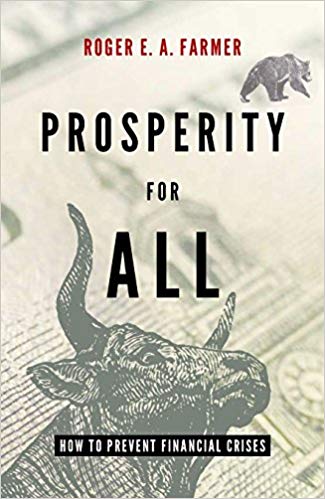
Link to the Amazon page for Roger Farmer’s book on sovereign wealth funds and related ideas, as a counterpoint to what I say below
Chris Campbell asked me some interesting questions about the idea of a US Sovereign Wealth Fund. Here they are, along with my answers. His questions are in bold. Afterward, I gives some related links and Chris gives an introduction to himself.
1. What makes sovereign wealth funds such an exciting concept for countries to adopt and/or implement?
The big benefits are (a) getting more risky physical and software investment to happen, with the positive consequences that has for economic growth in the long run (b) as a way around an irrationally high aversion to risk by individuals—an aversion to risk that goes beyond decreasing marginal utility and can be mitigated by having the government as an intermediary doing those risky portfolio investments, (c) serving as a “lump of QE for risky portfolio investments,” and thereby increasing the running room for monetary policy within the context of current paper currency policy, (d) moderating the financial cycle by contrarian investment. (Note that the financial cycle would still exist even if the business cycle were subdued in the sense of an output gap always close to zero.)
2. Sovereign wealth funds have been around since the early to mid-1900s and have shown positive results in being a sustainable and long-term wealth building initiative. Why haven’t more countries established sovereign wealth funds if it is evident that an initiative as such produces results?
Sovereign wealth funds are seen as a place to store funds if there are funds that need to be stored. There is no tradition of creating sovereign wealth funds financed by issuing Treasury bills. But once that idea is demonstrated, I expect it to soon become reasonably common.
3. We see countries like Norway, China, United Arab Emirates, and Kuwait create Sovereign Wealth Funds to build long-term wealth. In your opinion, what is stopping the United States from creating a Sovereign Wealth Fund?
As noted above, there is no tradition of “optional” sovereign wealth funds that are not required as a place to store funds. Another big reason not to have a sovereign wealth fund is that it might become corrupt or politicized so much that it becomes a bad thing on net. Whether a Treasury-bill-financed sovereign wealth fund is a good or bad thing depends on whether the design problems for avoiding politicization and corruption and incompetence can be solved.
4. Is capitalism a factor that is stopping the United States from establishing a sovereign wealth fund? If not, what is and why?
Capitalism itself is no barrier, but I would expect many people to oppose a sovereign wealth fund based on ideas out of right-wing ideology. Some of that opposition out of right-wing ideology would be effectively the concern expressed above about politicization and corruption and incompetence. But there would likely be opposition flowing from other elements of right-wing ideology as well.
5. People have argued the inefficiency of some federal programs like Social Security and have little confidence of the effectiveness of federal programs. In your opinion, is it more efficient to establish a sovereign wealth fund at the federal or state level? Why?
There is much better oversight at the federal level because many more people would be looking at every action. One example of this is that there is still excellent coverage of national news, but the business model for local and state news has suffered from online advertising. This can be expected to make state and local corruption easier.
6. What are some advantages and disadvantages to creating a sovereign wealth fund either at the federal or state level?
Another advantage of a sovereign wealth fund at the national level is that a national sovereign wealth fund can take on the important macroeconomic stabilization role I see as an important part of the benefit of a sovereign wealth fund. State-level sovereign wealth funds are unlikely to take on that macroeconomic stabilization role as well, as powerfully, or as knowledgeably.
7. A sovereign wealth fund could help the US invest for the long-term and be used for multiple reasons such as offsetting the cost of healthcare, fund economic development, assist during economic recessions, etc. In your opinion, what is the best use for a sovereign wealth fund if established at the federal level?
Many of these purposes would, to my mind, politicize the sovereign wealth fund unacceptably. They are better handled through regular appropriations, either the normal budgeting process or a concept of capital budgeting along the lines I discuss in these three posts:
· A Big Threat to America's Future Has an Easy Fix
· Capital Budgeting: The Powerpoint File
· Discounting Government Projects
The purpose of a sovereign wealth fund should be economic growth through encouraging private-sector risky investment, getting a good return, and macroeconomic stabilization. A sovereign wealth fund should not be used as an avenue for government spending that cannot get passed in the usual way in Congress. That said, if we can develop and implement technocratic concepts of capital budgeting for the Congressional Budget Office that are at least as difficult for politicians to distort as other Congressional Budget Office numbers, the additional public investment that many people see a sovereign wealth fund as a route to can happen through through Congress’s budgeting process.
8. Of the established sovereign wealth funds, royalties from oil and gas are the primary sources that supply the fund. As the demand for oil declines globally and US seeks to create more renewable energy, what other revenue producing assets could supplement the sovereign wealth fund if created?
A US sovereign wealth fund should be funded by issuing an amount of Treasury Bills equal to a large fraction of annual GDP.
9. Currently, sovereign wealth funds invest in fixed income, equities, and real estate on a global scale. Do you see any advantages or disadvantage to the global market if more sovereign wealth funds are created on a global scale?
The big advantage of a sovereign wealth fund on a global scale (as I am recommending for the US) is that it can serve the purpose of macroeconomic stabilization on a global scale. Even if its mandate is macroeconomic stabilization for the US, stabilizing the US economy would be likely to stabilize the world economy because of the importance of the US economy. Note my view that sovereign wealth funds should abide by the principles I enunciated in an interview with Alexander Trentin. See:
10. There are debates on the topic of sovereign wealth funds that the US government needs to create more laws to protect against foreign sovereign wealth fund investments into the US. What would be some of the repercussions and/or consequences if the US created laws that blocked foreign sovereign wealth fund investments in the US?
My interview with Alexander Trentin on establishing an international capital flow framework suggests a way to address many of these concerns. Beyond those concerns about overall international capital flows and genuine national security concerns, I think investors from abroad should be treated the same as domestic investors.
11. In your opinion, why should the US government look to establish a sovereign wealth fund?
Yes, but with great care in the design to avoid corruption and politicization of sovereign wealth fund decisions, to avoid meddling by the sovereign wealth fund in the decision of the firms it invests in (for example, by restricting the sovereign wealth fund to investing in exchange traded funds that have no voting rights in the underlying firms) and to attain high levels of competence in the sovereign wealth fund. In order to attain a high level of competence in the sovereign wealth fund, it must have a pay scale that is dramatically higher than any other government agency. Unless a dramatically higher pay scale than any other government agency is in the original legislation for the sovereign wealth fund, the sovereign wealth fund is probably a bad idea.
12. Any last comments or remarks on sovereign wealth funds?
It will be interesting to see what happens in the area of “optional” sovereign wealth funds not required as a place to store funds. The idea of a Treasury-bill financed sovereign wealth fund has quickly moved from the fringes of policy discussion to an active area of debate by many.
Here are some related posts:
How a US Sovereign Wealth Fund Can Alleviate a Scarcity of Safe Assets
How to Stabilize the Financial System and Make Money for US Taxpayers
Four More Years! The US Economy Needs a Third Term of Ben Bernanke
After Crunching Reinhart and Rogoff’s Data, We Found No Evidence High Debt Slows Growth
Roger Farmer and Miles Kimball on the Value of Sovereign Wealth Funds for Economic Stabilization
Answering Adam Ozimek’s Skepticism about a US Sovereign Wealth Fund
Tristan Hanson and Eric Lonergan: What Would a UK Sovereign Wealth Fund Look Like?
In addition, I have three storified Twitter discussions about sovereign wealth funds:
some posts on closely related issues (two of which are guest posts):
and many posts (of which I will only list three right now) on a key scientific issue relevant for sovereign wealth funds–the level of efficacy of quantitative easing:
Here is Chris’s introduction of himself:
My name is Chris Campbell and I am the author of the blog Wealth and Community.
Wealth and Community is about understanding the concepts to build personal wealth and how these concepts not only impact ourselves, but our communities. Think about it -- if a person does not know how to budget or even wisely invest at a personal level, what makes you think they can do it while working in a small business, big corporation, or even the local, state, federal government.
Wealth and Community gives me the opportunity to embrace my passion to help people realize the different ways to build wealth and how to serve and be impactful to their community. Additionally, learn from you all in other wealth building tips and how to give back to the community.
Learn how to build personal wealth and be impactful to your community so that one day we can change the world. Look forward to seeing you all soon at Wealth and Community.
How Low Insulin Opens a Way to Escape Dieting Hell
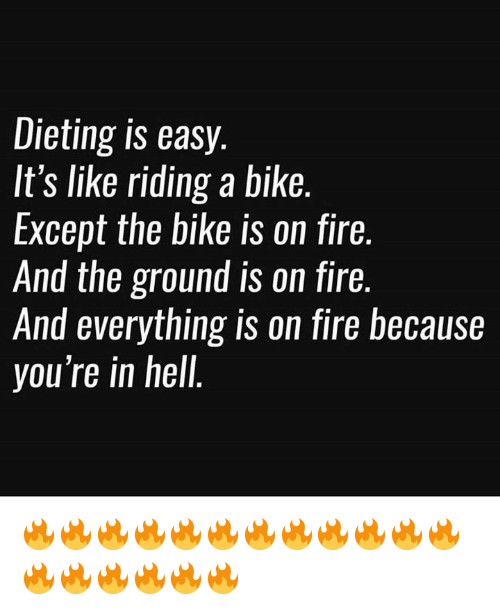
Salvation from diet hell is very different from salvation from a supernatural hell, but in this post I want to make the analogy. On the supernatural side of the analogy, let me stick with the Mormon theology that I know best from the first 40 years of my life when I was a Mormon. (I am 58 now.) The Mormon theory of being saved by Jesus centers on a great sacrifice by Jesus, which allows mercy power on a par with justice. There is a fancy word for a theory of salvation: “soteriology.” Here are some key passages of soteriology from the Book of Mormon. (Also see my post “The Mormon View of Jesus.”)
For it is expedient that an atonement should be made; for according to the great plan of the Eternal God there must be an atonement made, or else all mankind must unavoidably perish; yea, all are hardened; yea, all are fallen and are lost, and must perish except it be through the atonement which it is expedient should be made. …
And thus mercy can satisfy the demands of justice, and encircles them in the arms of safety, while he that exercises no faith unto repentance is exposed to the whole law of the demands of justice; therefore only unto him that has faith unto repentance is brought about the great and eternal plan of redemption. …
And thus we see that all mankind were fallen, and they were in the grasp of justice; yea, the justice of God, which consigned them forever to be cut off from his presence.
And now, the plan of mercy could not be brought about except an atonement should be made; therefore God himself atoneth for the sins of the world, to bring about the plan of mercy, to appease the demands of justice, that God might be a perfect, just God, and a merciful God also.
In other passages in these chapters, it emphasizes how unusual it is that someone else (Jesus) can pay a price for one of us. In the area of weight loss, without supernatural aid, you will have the pay the price for weight loss yourself. But salvation from being overweight has a two-part structure like this Mormon doctrine of salvation from hell: there is a key sacrifice (analogous to “an atonement”), and then there is some other effort as well (analogous to “repentance”).
From here on, I’ll give you my views about weight loss without further apology for the lack of certainty that all of us should have about an area where the evidence is not fully conclusive. But in this one post, I’ll tilt my views as much as I feel I reasonably can toward the calories-in/calories-out conventional wisdom. It can be reasonable to go further away from the calories-in/calories-out conventional wisdom, and I often do. But I don’t think it is reasonably to go any closer to the calories-in/calories-out conventional wisdom than in this post.
With that tilt toward the calories-in/calories-out conventional wisdom, the analogy to “an atonement” is keeping your insulin levels low, while the analogy to “repentance” is keeping calorie intake low. Without keeping your insulin levels low, keeping your calorie intake low will seldom do much good. There are a lot of dieting failures to back up that claim. (Throughout this post, let me assume that you do not have Type 1 diabetes. In Type 1 diabetes, your insulin levels will be too low without medication. If you have Type 1 diabetes and you don’t get insulin injections, you would be likely to lose so much weight that you would die.)
What usually trips people when they attempt to lose weight is that if their insulin levels are even moderately high, their body fat will be (for the most part) locked into their fat cells. If your body fat is locked into your fat cells, reducing the calories you eat will make you feel starved and miserable, and your body will also try to reduce the rate at which it burns calories, which will make you feel sluggish. With your body fat locked into your fat cells, you won’t lose much weight to begin with, and feeling starved, miserable and sluggish will make you want to quit going down that road as soon as possible.
One of the ways people keep their insulin levels up enough that their body fat is locked in their fat cells is by eating foods each day that have a high insulin index. (See “Forget Calorie Counting; It's the Insulin Index, Stupid.”) But another force keeping insulin levels high is having chronically eaten food that has a high insulin index in the past, which makes cells less sensitive to insulin (“insulin resistance”) which makes the insulin-producing cells produce more insulin to get the message through when blood sugar is too high. So the great sacrifice that can open the gates and let fat out of your fat cells is (a) to give up sugar and otherwise switch to foods that have a low insulin index and (b) to fast—that is, go for at least substantial chunks of the day, and possibly longer periods of time without eating anything, while continuing to drink water, unsweetened sparkling water, coffee and tea as desire.
Once you have your insulin levels low enough through switching to low-insulin-index foods and having big chunks of time with no food at all, your body will be open to the possibility of burning body fat. Then and only then will you get the results people naively think they will get based on the usual calories in/calories out logic. But what you will find is that with your body open to the possibility of burning body fat, you won’t suffer from having substantial chunks of time with no food and having your total calorie intake from the outside world low. The reason is that a calorie from burning your own fat is just as good as a calorie from food you are eating now in keeping you well nourished and feeling good.
People don’t realize how easy fasting can be, because they think reducing calories in will lead to burning their own fat. It doesn’t work that way. If you have only a few calories, but many of those few calories are from sugary food and other food that produces a strong insulin response, your fat will stay locked in your fat cells. Low-calorie intake of high-insulin-index food leads to misery, not fat burning. It is low insulin levels combined with low calorie intake that will give you the fat burning that keeps you feeling well-fed from your internal fat stores even when you are not taking in much from the outside world.
Of course, the one measure that both keeps insulin levels low and keeps calorie intake from the outside world low is fasting—periods of time without food. That is why fasting is the grand key to weight loss. However, if, in between your periods of fasting, you are eating a lot of sugar, easily-digested carbohydrates and other foods that generate a big insulin kick, it will both interfere with your weight loss and making fasting much, much harder.
Many people build substantial chunks of time with no food into their day by eating only within a limited “eating window.” Other people sprinkle sprinkle into a week or a month fasts that are longer than 24 hours. Before you do that, you should heed some cautions. In “Don't Tar Fasting by those of Normal or High Weight with the Brush of Anorexia” I gave these cautions:
If your body-mass-index is below 18.5, quit fasting! Here is a link to a BMI calculator.
Definitely people should not do fasting for more than 48 hours without first reading Jason Fung’s two books The Obesity Code (see “Obesity Is Always and Everywhere an Insulin Phenomenon” and “Five Books That Have Changed My Life”) and The Complete Guide to Fasting.
Those under 20, pregnant or seriously ill should indeed consult a doctor before trying to do any big amount of fasting.
Those on medication need to consult their doctor before doing much fasting. My personal nightmare as someone recommending fasting is that a reader who is already under the care of a doctor who is prescribing medicine might fail to consult their doctor about adjusting the dosage of that medicine in view of the fasting they are doing. Please, please, please, if you want to try fasting and are on medication, you must tell your doctor. That may involve the burden of educating your doctor about fasting. But it could save your life from a medication overdose.
Those who find fasting extremely difficult should not do lengthy fasts.
But, quoting again from “4 Propositions on Weight Loss”: “For healthy, nonpregnant, nonanorexic adults who find it relatively easy, fasting for up to 48 hours is not dangerous—as long as the dosage of any medication they are taking is adjusted for the fact that they are fasting.”
A key element of many soteriologies, or theories of salvation, is the fruitlessness of efforts that lack the key element. Similarly, weight-loss efforts that lack the key element of keeping your insulin levels low are likely to fail, and cause you a lot of misery on the road to failure as well as the disappointment of failure as the destination. If you do what it takes to keep your insulin levels low, people might well say “Of course that worked! You were avoiding sugar, refined carbohydrates and processed food, and going substantial chunks of time without eating!” But if they keep to the conventional wisdom that only focuses on calories-in/calories-out (and in the usual approach, inevitably ignoring many subtleties even about the calories out and about the detailed genesis of temptations for calories in), they won’t have as good an explanation for why what other people try doesn’t work in the long run.
Don’t miss my other posts on diet and health:
I. The Basics
Jason Fung's Single Best Weight Loss Tip: Don't Eat All the Time
What Steven Gundry's Book 'The Plant Paradox' Adds to the Principles of a Low-Insulin-Index Diet
II. Sugar as a Slow Poison
Best Health Guide: 10 Surprising Changes When You Quit Sugar
Heidi Turner, Michael Schwartz and Kristen Domonell on How Bad Sugar Is
Michael Lowe and Heidi Mitchell: Is Getting ‘Hangry’ Actually a Thing?
III. Anti-Cancer Eating
How Fasting Can Starve Cancer Cells, While Leaving Normal Cells Unharmed
Meat Is Amazingly Nutritious—But Is It Amazingly Nutritious for Cancer Cells, Too?
IV. Eating Tips
Using the Glycemic Index as a Supplement to the Insulin Index
Putting the Perspective from Jason Fung's "The Obesity Code" into Practice
Which Nonsugar Sweeteners are OK? An Insulin-Index Perspective
V. Calories In/Calories Out
VI. Sleep
VII. Wonkish
Framingham State Food Study: Lowcarb Diets Make Us Burn More Calories
Anthony Komaroff: The Microbiome and Risk for Obesity and Diabetes
Don't Tar Fasting by those of Normal or High Weight with the Brush of Anorexia
Carola Binder: The Obesity Code and Economists as General Practitioners
After Gastric Bypass Surgery, Insulin Goes Down Before Weight Loss has Time to Happen
A Low-Glycemic-Index Vegan Diet as a Moderately-Low-Insulin-Index Diet
Analogies Between Economic Models and the Biology of Obesity
VIII. Debates about Particular Foods and about Exercise
Jason Fung: Dietary Fat is Innocent of the Charges Leveled Against It
Faye Flam: The Taboo on Dietary Fat is Grounded More in Puritanism than Science
Confirmation Bias in the Interpretation of New Evidence on Salt
Julia Belluz and Javier Zarracina: Why You'll Be Disappointed If You Are Exercising to Lose Weight, Explained with 60+ Studies (my retitling of the article this links to)
IX. Gary Taubes
X. Twitter Discussions
Putting the Perspective from Jason Fung's "The Obesity Code" into Practice
'Forget Calorie Counting. It's the Insulin Index, Stupid' in a Few Tweets
Debating 'Forget Calorie Counting; It's the Insulin Index, Stupid'
Analogies Between Economic Models and the Biology of Obesity
XI. On My Interest in Diet and Health
See the last section of "Five Books That Have Changed My Life" and the podcast "Miles Kimball Explains to Tracy Alloway and Joe Weisenthal Why Losing Weight Is Like Defeating Inflation." If you want to know how I got interested in diet and health and fighting obesity and a little more about my own experience with weight gain and weight loss, see “Diana Kimball: Listening Creates Possibilities” and my post "A Barycentric Autobiography.
On Despotism

Being under someone else’s power is the result of some kind of lack on one’s own part. This is the gist of Chapter XV of John Locke’s 2d Treatise on Government: Of Civil Government: “Of Paternal, Political, and Despotical Power, considered together.”
Parental Power. Being under parental power results from the disabilities inherent in childhood. Looking to the other end of the age spectrum, parental power can be compared to the medical or financial power of attorney those people often give others in their old age. Knowing, or suspecting, that they will become unable to make good decisions for themselves, many people voluntary sign documents in advance saying that another can make decisions for them if they are not in a position to make a good decision for themselves.
The situation for children differs when children are young enough, there is no earlier time at which they were more competent to make good decisions. So it is not possible to get a fully informed, well-considered assent from children in advance to a document giving parents leave to make decisions for their children. Because of this practical difficulty, we treat children—or at least young children—as if they had signed such a power of attorney over to their parent. Nevertheless, just as in the case of an explicit power of attorney for someone older who can no longer make good decisions for themself, the power parents have vis a vis their child should be considered a power to be used for the benefit of the child. And it is a power to be used by the parent only to the extend that a child is, indeed, unable to make good decisions for herhimself.
Political Power. Being under the power of a ruler or magistrate or judge results first from the disability almost all human beings have in being an impartial judge in their own case. As a defendant, most of us are likely understate the magnitude of our transgression and the appropriate penalty. (A few might overstate it.) As a victim, most of us are likely to overstate the magnitude of the perpetrator’s transgression and the appropriate penalty. To get an impartial judgment, defendants and victims must submit to third-party judgment.
Our willingness to so submit has a lot to do with the overwhelming force that can come from joining in a compact to deal with another disability: the inability most of us have to enforce the law of nature on our own. We join in society so that law can be enforced, because for most of us, however much we fear the law being enforced against us, we have even more to fear from others violating our rights in the absence of enforceable law.
Despotical Power. Being under the power of a despot results from the fact that one sometimes lose wars—whether international wars or civil wars—or have a strong enough expectation of losing a war that we give in before engaging in a war.
John Locke emphasizes too much the case of losing a war in which the other side has justice and right on its side. Losing a war in which on has justice and right on one’s side can just as easily put one under despotic power.
A key element of being under despotic power is that, ethically, after losing a war in which one had right on one’s side, one remains in the state of nature and in a state of war with the despot. Contrary to some of what John Locke says, those under despotic rule can sometimes have a semblance of property, but that semblance of property is, in effect, a matter of foreign affairs—a treaty that can be broken. It is all a matter of what the despot can get away with without serious reprisal.
Conclusion. The bottom line is that the justice of power should not be taken for granted. Any kind of power over another person needs to be justified, and that justification will often involve strong limitations on that power. Power is needed in society because of human weakness. But power should not take advantage of human weakness. John Locke’s words in his chapter “Of Paternal, Political, and Despotical Power, considered together” reinforce this message:
§. 169. Though I have had occasion to speak of these separately before, yet the great mistakes of late about government having, as I suppose, arisen from confounding these distinct powers one with another, it may not, perhaps, be amiss to consider them here together.
§. 170. First, then, Paternal or parental power is nothing but that which parents have over their children, to govern them for the children’s good, till they come to the use of reason, or a state of knowledge, wherein they may be supposed capable to understand that rule, whether it be the law of nature, or the municipal law of their country, they are to govern themselves by: capable, I say, to know it, as well as several others, who live as freemen under that law. The affection and tenderness which God hath planted in the breast of parents towards their children, makes it evident, that this is not intended to be a severe arbitrary government, but only for the help, instruction, and preservation of their offspring. But happen it as it will, there is, as I have proved, no reason why it should be thought to extend to life and death, at any time, over their children, more than over any body else; neither can there be any pretence why this parental power should keep the child, when grown to a man, in subjection to the will of his parents, any farther than having received life and education from his parents, obliges him to respect, honour, gratitude, assistance and support, all his life, to both father and mother. And thus, ’tis true, the paternal is a natural government, but not at all extending itself to the ends and jurisdictions of that which is political. The power of the father doth not reach at all to the property of the child, which is only in his own disposing.
§. 171. Secondly, Political power is that power, which every man having in the state of nature, has given up into the hands of the society, and therein to the governors, whom the society hath set over itself, with this express or tacit trust, that it shall be employed for their good, and the preservation of their property: now this power, which every man has in the state of nature, and which he parts with to the society in all such cases where the society can secure him, is to use such means, for the preserving of his own property, as he thinks good, and nature allows him; and to punish the breach of the law of nature in others, so as (according to the best of his reason) may most conduce to the preservation of himself, and the rest of mankind. So that the end and measure of this power, when in every man’s hands in the state of nature, being the preservation of all of his society, that is, all mankind in general, it can have no other end or measure, when in the hands of the magistrate, but to preserve the members of that society in their lives, liberties, and possessions; and so cannot be an absolute, arbitrary power over their lives and fortunes, which are as much as possible to be preserved; but a power to make laws, and annex such penalties to them, as may tend to the preservation of the whole, by cutting off those parts, and those only, which are so corrupt, that they threaten the sound and healthy, without which no severity is lawful. And this power has its original only from compact and agreement, and the mutual consent of those who make up the community.
§. 172. Thirdly, Despotical power is an absolute, arbitrary power one man has over another, to take away his life whenever he pleases. This is a power, which neither nature gives, for it has made no such distinction between one man and another; nor compact can convey: for man not having such an arbitrary power over his own life, cannot give another man such a power over it; but it is the effect only of forfeiture, which the aggressor makes of his own life, when he puts himself into the state of war with another: for having quitted reason, which God hath given to be the rule betwixt man and man, and the common bond whereby human kind is united into one fellowship and society; and having renounced the way of peace which that teaches, and made use of the force of war, to compass his unjust ends upon another, where he has no right; and so revolting from his own kind to that of beasts, by making force, which is theirs, to be his rule of right, he renders himself liable to be destroyed by the injured person, and the rest of mankind that will join with him in the execution of justice, as any other wild beast, or noxious brute, with whom mankind can have neither society nor security. [Another copy corrected by Mr. Locke, has it thus, Noxious brute that is destructive to their being.] And thus captives, taken in a just and lawful war, and such only, are subject to a despotical power, which, as it arises not from compact, so neither is it capable of any, but is the state of war continued: for what compact can be made with a man that is not master of his own life? what condition can he perform? and if he be once allowed to be master of his own life, the despotical, arbitrary power of his master ceases. He that is master of himself, and his own life, has a right too to the means of preserving it; so that as soon as compact enters, slavery ceases, and he so far quits his absolute power, and puts an end to the state of war, who enters into conditions with his captive.
§. 173. Nature gives the first of these, viz. paternal power to parents for the benefit of their children during their minority, to supply their want of ability, and understanding how to manage their property. (By property I must be understood here, as in other places, to mean that property which men have in their persons as well as goods.) Voluntary agreement gives the second, viz. political power to governors for the benefit of their subjects, to secure them in the possession and use of their properties. And forfeiture gives the third, despotical power to lords for their own benefit, over those who are stripped of all property.
§. 174. He that shall consider the distinct rise and extent, and the different ends of these several powers, will plainly see, that paternal power comes as far short of that of the magistrate, as despotical exceeds it; and that absolute dominion, however placed, is so far from being one kind of civil society, that it is as inconsistent with it, as slavery is with property. Paternal power is only where minority makes the child incapable to manage his property; political, where men have property in their own disposal; and despotical, over such as have no property at all.
For links to other John Locke posts, see these John Locke aggregator posts: