2025 Quiz #1: Wednesday, March 12

I realized that for Quiz #1, there are a lot of shorter readings. So I am only going to test through the first third of the Layard-De Neve book on Quiz #1. That is, you are responsible at this point for everything through Chapter 7, so that Quiz #2 will begin with Chapter 8, “Exploring Well-Being”.

Key resources for this Quiz are:

2025

The graphing question was Comparative Statics Exercise #3. See Well-Being Possibility Frontier/Indifference Curves AND The Corresponding Supply and Demand Graphs.

This was a tough exam. I thought people did well. Here is the letter grade translation for the multiple-choice part of Quiz #1, as if it were the only thing I had to go on at the end of the semester. It really wouldn’t be enough to go on at the end of the semester, so some numbers translate into something between two letter grades. The high score was 28—almost perfect. The low score was 10.

26–28 A

24–25 A-

23 A-/B+

21–22 B+

20 B+/B

18–19 B

17 B-/C+

16 C+

14–15 C

10–13 C-

You’ll notice there there wasn’t a big point difference between C and B. If your score translates to a C, you are well within reach of a B if you do well on other things. The quizzes do matter quite a bit, simply because scores on other assignments have much lower variances among those who do them. The weights in the syllabus are weights in the linear combination I used for the final score. The variance of each subscore also matters for how important it is.

I am required to make close to half of the final grades C+ or below, but I feel no obligation to give anything below a C-. With rare exceptions, I use D’s and F’s only for people who aren’t doing all the assignments.

The graphing question will take longer to grade, since I have to grade it by hand. My goal is by next Wednesday, but it might slip to by next Friday.

2023

Blog Posts and Articles to Read to Prepare for the Quiz

Each of the following has one multiple-choice quiz question. Most of them are of the form “Which of the following is NOT a quotation from …”

Also, to help with the “Which of the following is NOT a quotation from …” style of question I often use, take a look at Critical Reading: Apprentice Level

The remainder of the exam will be

  • Multiple choice statistical algebra questions

  • multiple-choice questions (mostly of that form) on the first 1/3 of the Layard de Neve book (all of the first 7 chapters and everything before the first chapter)

  • one short answer question for which you need to be able to graph on another blank sheet the effect of a change on both the well-being possibility frontier/indifference curves diagram AND on the supply and demand diagram for an aspect of well-being. NOTE THAT YOU WILL NEED TO REMEMBER TO WRITE YOUR NAME ON THAT ANSWER ON THE SEPARATE BLANK SHEET!

You will be able to keep the exam itself. I only need the scantron sheets and your graphs. PLEASE WRITE THE ANSWERS YOU GAVE ON YOUR COPY OF THE EXAM. THAT WILL BE THE ONLY WAY FOR YOU TO FIGURE YOUR SCORE. I DON’T LIKE USING CANVAS TO REPORT SCORES BECAUSE CANVAS DOESN’T UNDERSTAND HOW I GRADE.
Meditation App Assignment

Get a meditation app for your phone and use it. Late in the semester, I’ll ask you to write half to one page about your experience doing that.

Some Meditation Apps (some free, some that charge for a subscription)

I personally use Waking Up and 10% Happier. One of my Economics colleagues likes Headspace. I don’t know anything about Calm and Balance, they just came up when I put “meditation” in the app search box on my phone. Also, take a look at this article:

12 Rules for Life Paper

Due 11 PM Mountain Time on Thursday, February 20th. Submit on Canvas. (The assignment is already set up on Canvas. I am asking you to submit it as a pdf; Word has a feature to “print” as a pdf that you can then turn in.)

3-5 pages.

Choose one of Jordan Peterson’s 12 rules that you especially like and what it means to you.

If you dislike all the rules, write your paper about that.

If you want to do something else in relation to the book, that can be negotiated with me.

Remember that any use of AI (beyond thesaurus, spell-check and grammar-check functions) you need to clearly signal. If you are getting more than a word or two from AI, the way to cite it is to say what prompt you used and then the words you got from AI.

Introduction to `Ethics, Happiness and Choice’

Congratulations! You made it to the course website. (I’ll use Canvas only for assignments, announcements and a bare minimum of other things.) I strongly recommend that you bookmark this website, which is software that is an offshoot of my blog:

https://blog.supplysideliberal.com/ethics-happiness-and-choice

Ethics, Happiness and Choice - Confessions of a Supply-Side Liberal

If you wind up on the home page of my blog, you can get back to the course websites by clicking “Resources” at the top and then clicking on the name of our course.

The three big goals I have for this course are:

  1. Help you get knowledge and tools to make you happier.

  2. Provide perspective that can help you better understand and be more tolerant toward those who have different beliefs, including those who have different political beliefs in part because they didn't go to college. 

  3. Give you tools to help use statistics to find out the truth, rather than let other people deceive you with "Lies, damn lies and statistics." Lies, damned lies, and statistics - Wikipedia

Along the way, you'll also get some practice in writing and critical reading, and get your hands on happiness data. 

That means this course emphasizes ethics and happiness, and has less of an emphasis on choice, except insofar as choices interfere with happiness. The title of Economics 460 covers so much ground, it would be hard to give a fully thorough treatment to everything in the title of the course! Yangwei Song focuses more on choice in her Economics 460. "Happiness" has many meanings; I take "happiness" in the title of the course to have the broadest possible meaning: everything you find personally fulfilling, everything you want or desire, and what you get from doing your ethical duty, helping others, and making the world a better place. 

The posts dated 2025 are for this semester. Those are the ones to focus on. The posts dated 2023 are from two years ago. You can browse in those to see more of what is coming. 

The first time I taught the course, the big mistake I made was leaving too many of the assignments until late in the semester, so students were overwhelmed at the end. I won't make that mistake again: readings and assignments will come thick and fast at the very beginning, so that things are easier at the end of the semester.

--Miles

Book Choices for Group Oral Presentation. First Assignment

Timing: The presentations will be during the 7 classes from Friday, January 24, through Friday, February 7.

7 Books for 7 Teams:

  1. Build the Life You Want: The Art and Science of Getting Happier

    by Arthur C. Brooks and Oprah Winfrey

  2. Supercommunicators: How to Unlock the Secret Language of Connection, by Charles Duhigg

  3. Smarter Faster Better: The Secrets of Being Productive in Life and Business, by Charles Duhigg

  4. Factfulness: Ten Reasons We’re Wrong about the World—and Why Things Are Better Than You Think by Hans Rosling

  5. The Anxious Generation by Jonathan Haidt

  6. Beyond Order: 12 More Rules for Life by Jordan Peterson

  7. The Fourth Turning Is Here: What the Seasons of History Tell Us About How and When This Crisis Will End, by Neil Howe

First Assignment, Due 11 PM, January 15

1. Write a few sentences about what drew you to this class and what you hope to learn and get out of it. 

2. List in order your 1st, 2d and 3d choices for the additional book you want to read and do a group presentation on. 

3. Write a few sentences on why you are particularly interested in reading your 1st choice. (Optional: you can write about your 2d and 3d choices, too if you want to.)

Extra Credit

Extra Book: One of the two extra credit opportunities for this class is, for half the credit you would get for the other book papers, to read and write about one of these five books as you wrote about the other books, focusing on what you learned:

You need to send in the paper on the extra book before the last class to get credit.

You can only get extra credit for one book above. But you can get additional extra credit beyond that subscribing to, reading and writing a bit about what you learned from the Daily Stoic emails.

The Daily Stoic: Subscribe to the daily email from The Daily Stoic at https://dailystoic.com/ and get extra credit for up to three 200-word reactions about a daily message that was especially meaningful to you, explaining why it is was meaningful to you.

Self-Care

Dating coach James Bauer writes:

Psychologists call it “self-care.” I have seven super-easy suggestions[3] for injecting some self-care into your daily routine.

1. Know your no’s.

Make a literal list of things you don’t like to do. It might include optional activities you don’t enjoy (like seeing horror movies), or limiting when you do some things (like not checking work email at night). Then don’t do those things.

2. Don’t skimp on sleep.

Sleep can help keep your appetite in check, boost cognitive ability, lift your mood, help your body heal, and even lower your blood pressure.[4]

3. Workouts help you work stuff out.

Besides burning calories and toning muscle, exercise improves your mood, super-charges your energy levels, and helps you get better sleep.[5]

4. Give meditation a try.

Mediation keeps your brain young, works as a natural antidepressant, helps you concentrate, and reduces anxiety.[6]

5. Do the family thing.

Time with family can be very rewarding. Who doesn’t like to feel loved? And if you’re not on the best of terms with your biological family, consider adjusting your definition of “family” to include what I call “chosen family” – your friends that are like family.

6. Be completely chill at least once a day.

Every day, spend at least a few minutes doing something completely relaxing. Take a bath, go for a short walk, or just veg on the couch without trying to accomplish anything.

7. Be completely selfish at least once a day.

Every day, do something purely for your own pleasure. Hang out with a friend, read fiction for fun, or treat yourself to a really good meal.

Quiz #2 (Wednesday, April 26, 2023)

Blog Posts and Articles to Read to Prepare for the Quiz

Statistical Interpretation Principles to be Tested on the Quiz

The Analysis Task

The Analysis Task is now posted on Canvas.

Understanding the data:

This link takes you to the public Dropbox folder with the data files. Start by looking at the README file. Our Well-Being Measurement Initiative Research Assistant Jeffrey Ohl can answer your questions: johl@umich.edu Make sure to include Jeffrey's email address on any question about the data. He'll do most of the answering about the data himself. You can do almost anything for the analysis task; it just needs to be interesting.

  1. This is a link to take the Baseline survey so you can understand what data is available and what questions the data are based on: https://wiagl.gitlab.io/survey-baseline/?workerId=[enter your name, or your number plus same random numbers]

  2. This is a link to the Life & Psyche survey so you can understand what data is available and what questions the data are based on: https://ucla.qualtrics.com/jfe/form/SV_8kK2HMh6YrGSEF8. This is the survey that has most of the psychological indexes. (Baseline only has a few.) It has some other miscellaneous questions, too. Only some of the people who did Baseline went on to do this survey.

  3. This is a link to take the Bottomless HIT survey so you can understand what data is available and what questions the data are based on: https://wiagl.gitlab.io/survey-bottomlessa/. Only some of the people who did Baseline went on to do this survey (an overlapping, but different subset than those who went on to do the Life & Psyche survey.) You don't have to do all of this—just keep going until you have an idea for what analysis you want to do. The very first Block is a repeat of what is on Baseline, but it gets different after that.

Relevant Powerpoint File:

The analysis task is due by 11 PM Saturday, March 18. It needs to report the analysis with tables or figures and also have text that clearly explains the analysis. The idea is that this is like one section of a paper.

If you have an idea of what to do for the analysis task, just send me and Jeffrey an email and I'll give a reaction of how interesting I think it is, and maybe a suggestion for a tweak.

Seeing the analysis and its explanation as one section of your term paper. (Your term paper is due later, at 11 PM on Wednesday, May 3—the evening after the last class.) The idea is to make this analysis part of a larger discussion.

Including figures and tables, the analysis task should be at least 5 pages. I'll take a risk and not put an upper limit on the length of the analysis task. (The term paper beyond the analysis task should be between 5 and 10 pages, with closer to 5 being preferred.)

How to structure your writeup of the Analysis Task:

You can design a different structure, but a typical writeup could look like this:

  1. Here is an interesting question or questions. The answers matter (people care or should care) because: …

  2. Here is a statistical analysis that seems to have some bearing on this question or questions:

  3. On the surface the statistical results seem to say: …

  4. However, the following confounding factors could be giving rise to an illusion, making it seem like something is there that isn’t or that something is bigger or different than it really is.

Don’t forget to talk about the confounding factors! (4.)

Here is a Q&A about the analysis task:

Q:

What is the level of analysis you are expecting for this assignment? I’ve taken some stats classes, so I’m familiar with hypothesis testing and regression, but since this class doesn’t have a stats prerequisite I’m not sure how in depth I should go for this assignment.

Since most aspects of wellbeing are correlated with each other, it seems to difficult to use regression to analyze relationships between these aspects without running into reverse causality, cousin causality, or both. My knowledge of stats isn’t sufficient to avoid these problems in cases where instrumental variable regression isn’t a viable alternative. I’m wondering what you would suggest that I do to avoid this issue.

A:

At the low end, it could be simply some scatter plots or bar charts or other interesting graphs.

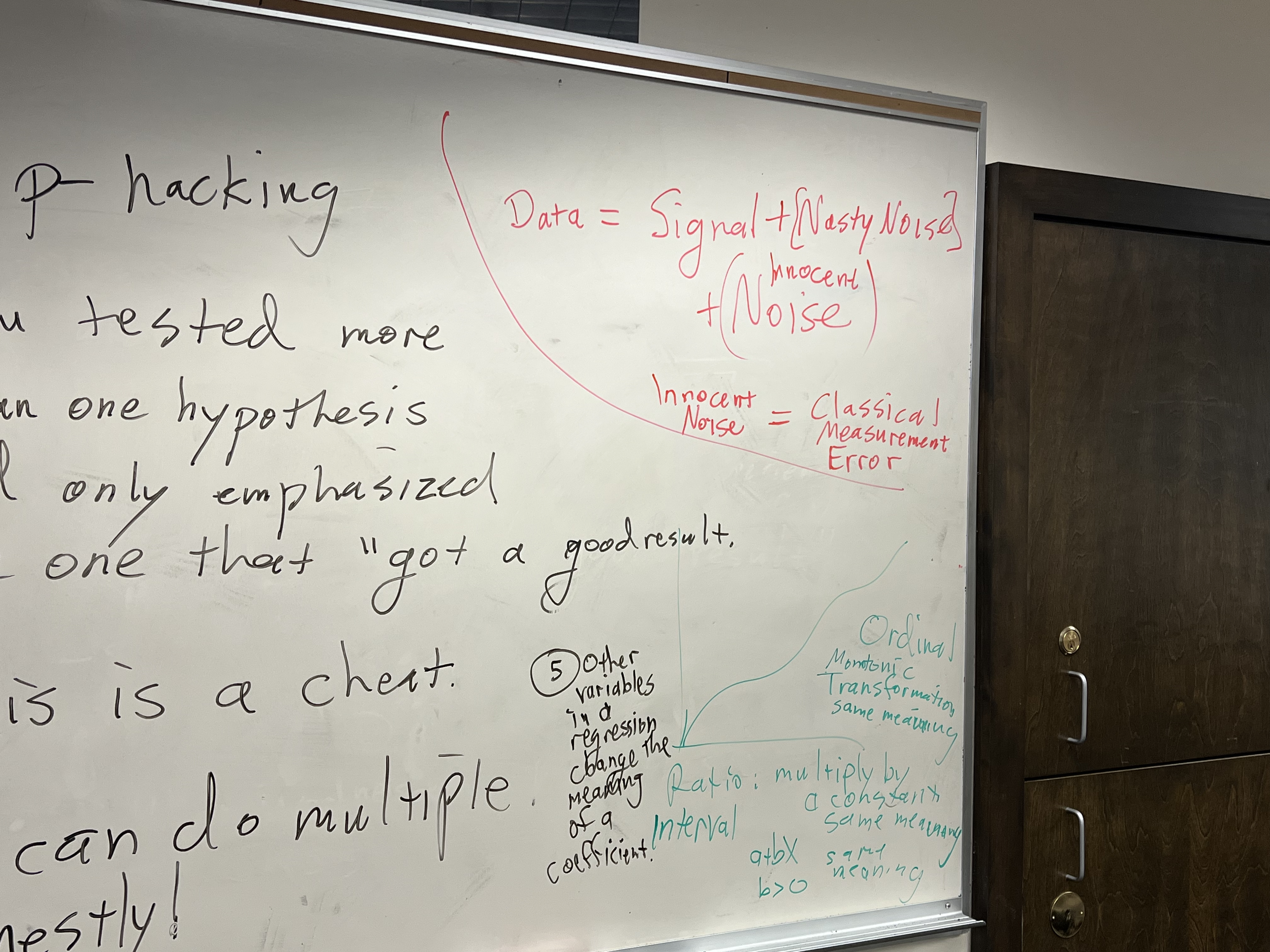
I don't expect you to have consistent estimates of anything, rather to be able to discuss any biases there might be in the estimates you do get, relative to something interesting. Please make the attempt to figure out the sign (+ or -) of any bias you discuss, and say what that would mean for the truth of the interesting thing one might care about. If there are multiple biases, try to figure out the sign of each one, even if all the biases put together can't be signed because some biases are likely to be + and others are likely to be -. Also, discuss whether you think a bias is likely to be large or small.

Advice for the Analysis Task:

  1. Use lots of graphs. I love scatterplots, but other types of graphs and figures can be good, too.

  2. It’s fine to do some statistics on individual variables, but make sure you do something that relates pairs of variables to each other.

  3. Do some formal statistical tests.

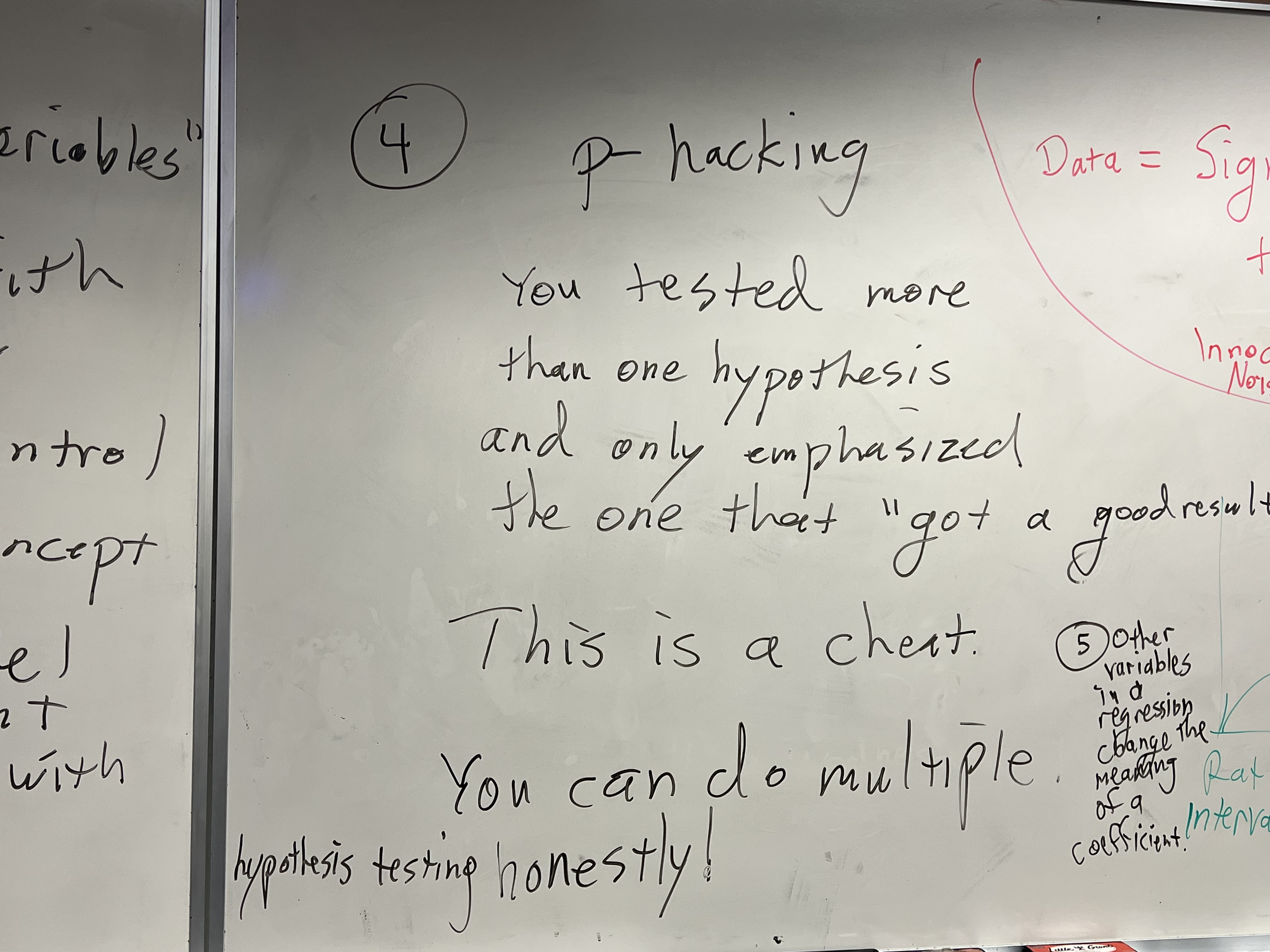
  4. When you test more than one hypothesis, set it up so you can do the multiple hypothesis test correction using the False Discovery Rate procedure!

  5. Make a distinction between being significant at the 5% level and being significant at the 1/2 % level.

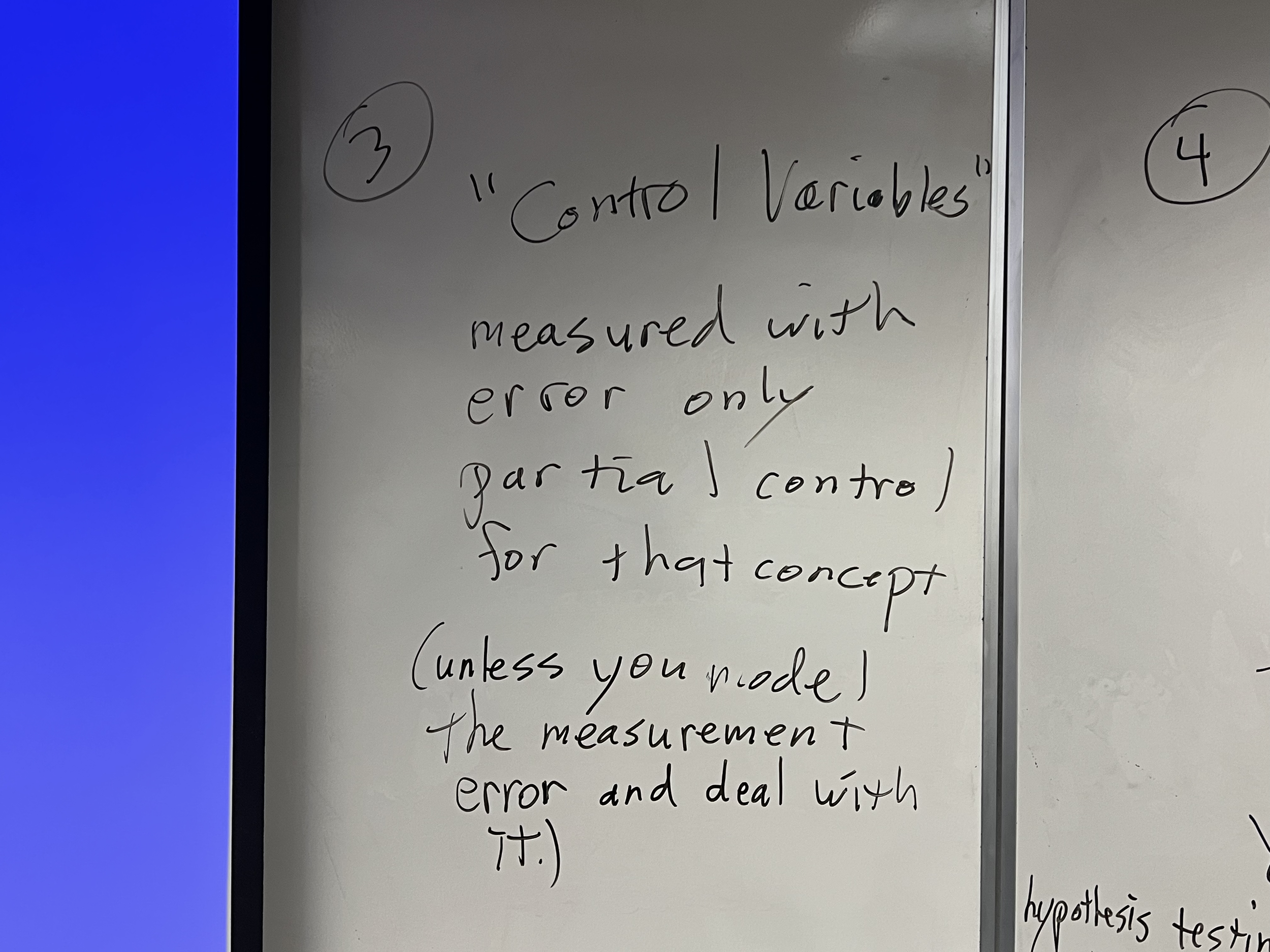
  6. If something isn’t statistically significant, you say “I can’t reject the null hypothesis that …” NOT “I reject the alternative hypothesis.” If you want to reject a hypothesis, you have to set it up as a null hypothesis.

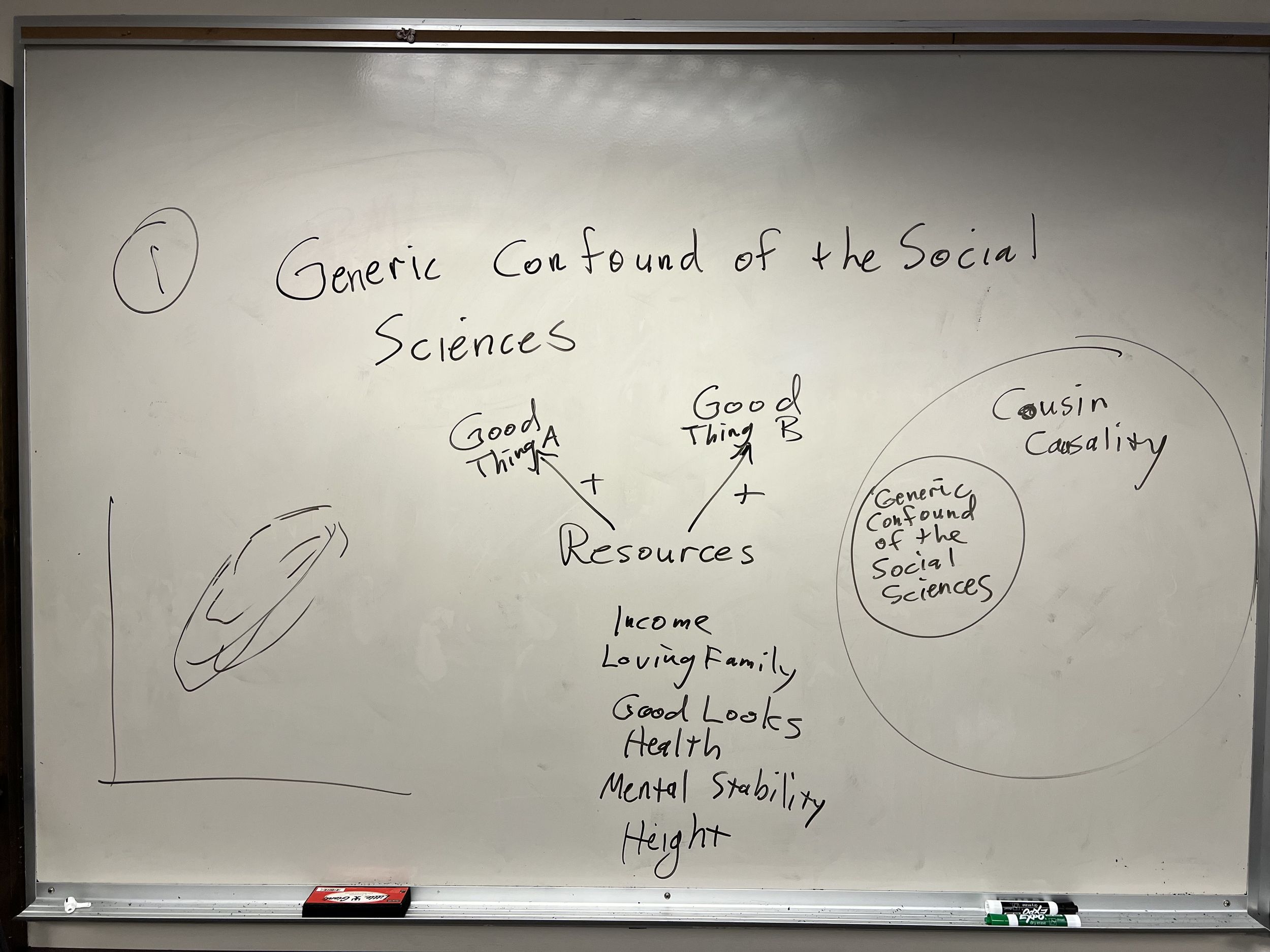
  7. Recognize reverse causality and cousin causality, including the consumer-theory-esque model I gave in class of how resources broadly construed help all good things, leading to the general principle (with only a few exceptions) that “All good things are positively correlated.” (This is a statement about the cross section.

  8. Define variables in full. You need to act like your reader doesn’t know what the abbreviations mean. So write out the full text of the aspects, and describe fully all other variables. (You will see that we do this in our papers.)

  9. Don’t order response categories alphabetically! They need to be ordered logically. For example, political leanings should be ordered from Left to Right and levels of education should be ordered from less to more.

  10. When you have interesting results for several variables that are along the same lines, think of creating a simple index to get more statistical power. That is, take simple averages of similar variables and treat that simple average as an index.

  11. Think about how nearly statistically exogenous your right-hand-side variables are. Other things equal, regressions with more nearly statistically exogenous right-hand-side variables are more interesting. That doesn’t mean you can’t do other things. Just think about this dimension.

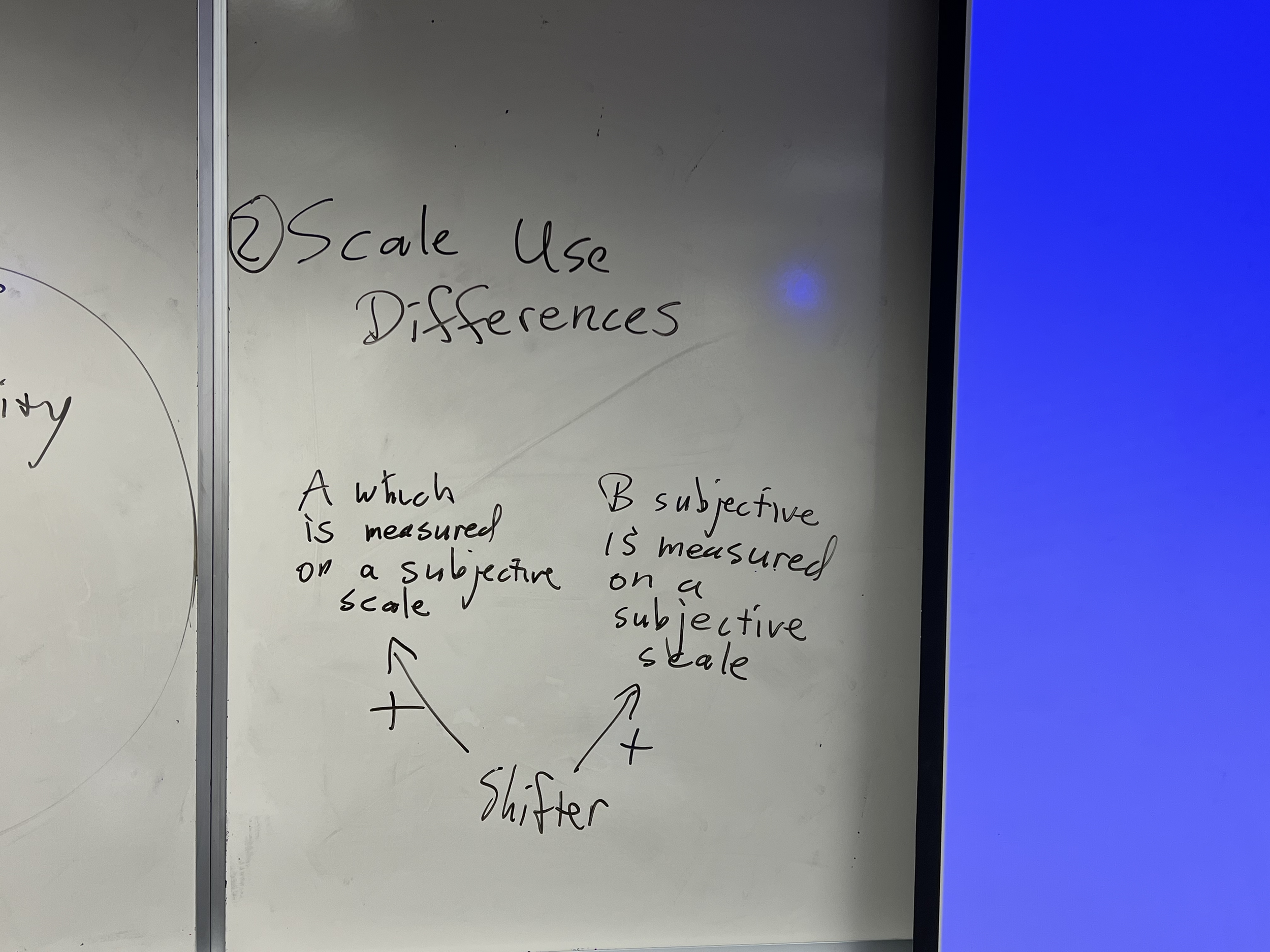
  12. Think seriously about scale use. Any statistical analysis you do with aspect-of-well-being data you can probably do both with the raw aspect ratings and with (aspect rating - average of calibration questions). Doing both of those analyses will be much more interesting than just the one analysis.