The Federalist Papers #33: The 'Necessary and Proper' and Supremacy Clauses Only Make Explicit What the Specified Powers Imply—Alexander Hamilton
For economic growth, the difficult political problem is to get a government powerful enough to keep private parties, subsidiary governments or foreign governments from the injustice of stealing, cheating and threatening violence, without empowering and licensing the government to unjustly steal, cheat and threaten violence from its own people. The same political problem arises for generating other blessing of society.

Americans on both sides of the debate about the Constitution had this problem on their minds. Those in favor of the proposed Constitution were more concerned about getting a federal government powerful enough to keep foreign governments, subsidiary governments and private parties from stealing, cheating or threatening violence, while those against the proposed Constitution were more concerned about keeping the federal government from overreaching and doing serious wrong.

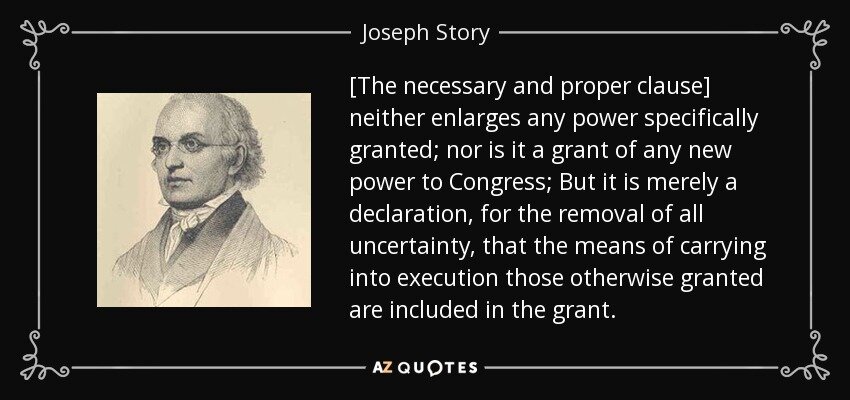
In the Federalist Papers #33, Alexander Hamilton addresses the design problem of how the federal government should be constrained and how it should be empowered. He argues that it should be constrained by being subject to elections and by having a limited set of enumerated powers and empowered by being given all authority logically necessary to have those enumerated powers.

On being subject to elections:

If the federal government should overpass the just bounds of its authority and make a tyrannical use of its powers, the people, whose creature it is, must appeal to the standard they have formed, and take such measures to redress the injury done to the Constitution as the exigency may suggest and prudence justify.

On having a limited set of enumerated powers:

The propriety of a law, in a constitutional light, must always be determined by the nature of the powers upon which it is founded. Suppose, by some forced constructions of its authority (which, indeed, cannot easily be imagined), the Federal legislature should attempt to vary the law of descent in any State, would it not be evident that, in making such an attempt, it had exceeded its jurisdiction, and infringed upon that of the State? Suppose, again, that upon the pretense of an interference with its revenues, it should undertake to abrogate a landtax imposed by the authority of a State; would it not be equally evident that this was an invasion of that concurrent jurisdiction.

On being given all authority logically necessary for those enumerated powers (different passages separated by added bullets):

  • … the constitutional operation of the intended government would be precisely the same, if these clauses were entirely obliterated, as if they were repeated in every article. They are only declaratory of a truth which would have resulted by necessary and unavoidable implication from the very act of constituting a federal government, and vesting it with certain specified powers.

  • What is a power, but the ability or faculty of doing a thing? What is the ability to do a thing, but the power of employing the MEANS necessary to its execution?

  • If there is any thing exceptionable, it must be sought for in the specific powers upon which this general declaration is predicated. The declaration itself, though it may be chargeable with tautology or redundancy, is at least perfectly harmless.

  • The Convention probably foresaw, what it has been a principal aim of these papers to inculcate, that the danger which most threatens our political welfare is that the State governments will finally sap the foundations of the Union; and might therefore think it necessary, in so cardinal a point, to leave nothing to construction. Whatever may have been the inducement to it, the wisdom of the precaution is evident from the cry which has been raised against it; …

  • But it is said that the laws of the Union are to be the SUPREME LAW of the land. But what inference can be drawn from this, or what would they amount to, if they were not to be supreme? It is evident they would amount to nothing. A LAW, by the very meaning of the term, includes supremacy. It is a rule which those to whom it is prescribed are bound to observe.

  • It would otherwise be a mere treaty, dependent on the good faith of the parties, and not a goverment, which is only another word for POLITICAL POWER AND SUPREMACY.

  • But it will not follow from this doctrine that acts of the large society which are NOT PURSUANT to its constitutional powers, but which are invasions of the residuary authorities of the smaller societies, will become the supreme law of the land. These will be merely acts of usurpation, and will deserve to be treated as such.

  • … it EXPRESSLY confines this supremacy to laws made PURSUANT TO THE CONSTITUTION; which I mention merely as an instance of caution in the convention; …

However well-designed a constitution, it will always be difficult to maintain in practice the middle course between a government too weak to rein in injustice and a government so unbridled itself that it commits great injustice. But enumerated powers along with whatever is logically necessary to those powers is a dimension of the design of the US Constitution that gives us a fighting chance, if we honor that principle.

As I write this, I am very conscious that the enumerated powers need to be interpreted in the light of changes in human affairs. The example I have in mind is monetary policy. Here, the Constitution clearly gives the US Federal Government authority over monetary policy as monetary policy was understood in 1787. But our understanding of monetary policy has advanced greatly since 1787. I am glad the US Constitution has been interpreted by the Supreme Court as allowing the US Federal Government to conduct monetary policy as it does today, even though that is not the only possible interpretation of the relevant parts of the Constitution.

As two other examples, I think the power of the federal government under the 14th amendment to protect citizens against infringement by state and local governments against those rights granted in the Bill of Rights has been underinterpreted, while the power of the federal government under the interstate commerce clause has been overinterpreted. (However, federal checks on zoning laws would clearly be within the power of the interstate commerce clause. Zoning laws have a huge effect on interstate migration and on the national economy. Also, the civil rights enforcement powers of the federal government under the 14th amendment also give the federal government power to put checks on zoning laws.) It is hard to avoid the need for interpretation, but interpretations can be of better or worse quality.

In any case, I think we will be better off if we don’t lapse into ignoring the principle of a finite set of enumerated powers of the federal government.

Below is the full text of the Federalist Papers #33, so you can see all of Alexander Hamilton’s arguments in context.


FEDERALIST NO. 33

The Same Subject Continued: Concerning the General Power of Taxation

From the Daily Advertiser
Thursday, January 3, 1788

Author: Alexander Hamilton

To the People of the State of New York:

THE residue of the argument against the provisions of the Constitution in respect to taxation is ingrafted upon the following clause. The last clause of the eighth section of the first article of the plan under consideration authorizes the national legislature "to make all laws which shall be NECESSARY and PROPER for carrying into execution THE POWERS by that Constitution vested in the government of the United States, or in any department or officer thereof"; and the second clause of the sixth article declares, "that the Constitution and the laws of the United States made IN PURSUANCE THEREOF, and the treaties made by their authority shall be the SUPREME LAW of the land, any thing in the constitution or laws of any State to the contrary notwithstanding."

These two clauses have been the source of much virulent invective and petulant declamation against the proposed Constitution. They have been held up to the people in all the exaggerated colors of misrepresentation as the pernicious engines by which their local governments were to be destroyed and their liberties exterminated; as the hideous monster whose devouring jaws would spare neither sex nor age, nor high nor low, nor sacred nor profane; and yet, strange as it may appear, after all this clamor, to those who may not have happened to contemplate them in the same light, it may be affirmed with perfect confidence that the constitutional operation of the intended government would be precisely the same, if these clauses were entirely obliterated, as if they were repeated in every article. They are only declaratory of a truth which would have resulted by necessary and unavoidable implication from the very act of constituting a federal government, and vesting it with certain specified powers. This is so clear a proposition, that moderation itself can scarcely listen to the railings which have been so copiously vented against this part of the plan, without emotions that disturb its equanimity.

What is a power, but the ability or faculty of doing a thing? What is the ability to do a thing, but the power of employing the MEANS necessary to its execution? What is a LEGISLATIVE power, but a power of making LAWS? What are the MEANS to execute a LEGISLATIVE power but LAWS? What is the power of laying and collecting taxes, but a LEGISLATIVE POWER, or a power of MAKING LAWS, to lay and collect taxes? What are the propermeans of executing such a power, but NECESSARY and PROPER laws?

This simple train of inquiry furnishes us at once with a test by which to judge of the true nature of the clause complained of. It conducts us to this palpable truth, that a power to lay and collect taxes must be a power to pass all laws NECESSARY and PROPER for the execution of that power; and what does the unfortunate and culumniated provision in question do more than declare the same truth, to wit, that the national legislature, to whom the power of laying and collecting taxes had been previously given, might, in the execution of that power, pass all laws NECESSARY and PROPER to carry it into effect? I have applied these observations thus particularly to the power of taxation, because it is the immediate subject under consideration, and because it is the most important of the authorities proposed to be conferred upon the Union. But the same process will lead to the same result, in relation to all other powers declared in the Constitution. And it is EXPRESSLY to execute these powers that the sweeping clause, as it has been affectedly called, authorizes the national legislature to pass all NECESSARY and PROPER laws. If there is any thing exceptionable, it must be sought for in the specific powers upon which this general declaration is predicated. The declaration itself, though it may be chargeable with tautology or redundancy, is at least perfectly harmless.

But SUSPICION may ask, Why then was it introduced? The answer is, that it could only have been done for greater caution, and to guard against all cavilling refinements in those who might hereafter feel a disposition to curtail and evade the legitimate authorities of the Union. The Convention probably foresaw, what it has been a principal aim of these papers to inculcate, that the danger which most threatens our political welfare is that the State governments will finally sap the foundations of the Union; and might therefore think it necessary, in so cardinal a point, to leave nothing to construction. Whatever may have been the inducement to it, the wisdom of the precaution is evident from the cry which has been raised against it; as that very cry betrays a disposition to question the great and essential truth which it is manifestly the object of that provision to declare.

But it may be again asked, Who is to judge of the NECESSITY and PROPRIETY of the laws to be passed for executing the powers of the Union? I answer, first, that this question arises as well and as fully upon the simple grant of those powers as upon the declaratory clause; and I answer, in the second place, that the national government, like every other, must judge, in the first instance, of the proper exercise of its powers, and its constituents in the last. If the federal government should overpass the just bounds of its authority and make a tyrannical use of its powers, the people, whose creature it is, must appeal to the standard they have formed, and take such measures to redress the injury done to the Constitution as the exigency may suggest and prudence justify. The propriety of a law, in a constitutional light, must always be determined by the nature of the powers upon which it is founded. Suppose, by some forced constructions of its authority (which, indeed, cannot easily be imagined), the Federal legislature should attempt to vary the law of descent in any State, would it not be evident that, in making such an attempt, it had exceeded its jurisdiction, and infringed upon that of the State? Suppose, again, that upon the pretense of an interference with its revenues, it should undertake to abrogate a landtax imposed by the authority of a State; would it not be equally evident that this was an invasion of that concurrent jurisdiction in respect to this species of tax, which its Constitution plainly supposes to exist in the State governments? If there ever should be a doubt on this head, the credit of it will be entirely due to those reasoners who, in the imprudent zeal of their animosity to the plan of the convention, have labored to envelop it in a cloud calculated to obscure the plainest and simplest truths.

But it is said that the laws of the Union are to be the SUPREME LAW of the land. But what inference can be drawn from this, or what would they amount to, if they were not to be supreme? It is evident they would amount to nothing. A LAW, by the very meaning of the term, includes supremacy. It is a rule which those to whom it is prescribed are bound to observe. This results from every political association. If individuals enter into a state of society, the laws of that society must be the supreme regulator of their conduct. If a number of political societies enter into a larger political society, the laws which the latter may enact, pursuant to the powers intrusted to it by its constitution, must necessarily be supreme over those societies, and the individuals of whom they are composed. It would otherwise be a mere treaty, dependent on the good faith of the parties, and not a goverment, which is only another word for POLITICAL POWER AND SUPREMACY. But it will not follow from this doctrine that acts of the large society which are NOT PURSUANT to its constitutional powers, but which are invasions of the residuary authorities of the smaller societies, will become the supreme law of the land. These will be merely acts of usurpation, and will deserve to be treated as such. Hence we perceive that the clause which declares the supremacy of the laws of the Union, like the one we have just before considered, only declares a truth, which flows immediately and necessarily from the institution of a federal government. It will not, I presume, have escaped observation, that it EXPRESSLY confines this supremacy to laws made PURSUANT TO THE CONSTITUTION; which I mention merely as an instance of caution in the convention; since that limitation would have been to be understood, though it had not been expressed.

Though a law, therefore, laying a tax for the use of the United States would be supreme in its nature, and could not legally be opposed or controlled, yet a law for abrogating or preventing the collection of a tax laid by the authority of the State, (unless upon imports and exports), would not be the supreme law of the land, but a usurpation of power not granted by the Constitution. As far as an improper accumulation of taxes on the same object might tend to render the collection difficult or precarious, this would be a mutual inconvenience, not arising from a superiority or defect of power on either side, but from an injudicious exercise of power by one or the other, in a manner equally disadvantageous to both. It is to be hoped and presumed, however, that mutual interest would dictate a concert in this respect which would avoid any material inconvenience. The inference from the whole is, that the individual States would, under the proposed Constitution, retain an independent and uncontrollable authority to raise revenue to any extent of which they may stand in need, by every kind of taxation, except duties on imports and exports. It will be shown in the next paper that this CONCURRENT JURISDICTION in the article of taxation was the only admissible substitute for an entire subordination, in respect to this branch of power, of the State authority to that of the Union.

PUBLIUS.


Links to my other posts on The Federalist Papers so far:

Making Cities Better: James Hagerty and Samantha Pearson on Jaime Lerner

Jaime Lerner, the former mayor of Curitiba, Brazil, died May 27, 2021. He was one of the most innovative mayors in the world, with practical “get the job done cheaply and practically” and “fail faster” philosophy (all quotations in this post are from the Wall Street Journal obituary “Brazilian Mayor Became a Global Guru of Urban Planning,” by James Hagerty and Samantha Pearson, with bullets added to separate passages):

  • “Imagine the ideal … but do what is possible today. Solutions for 20 or 30 years ahead are pointless because by then the problems will probably be different.”

  • Rather than spending years to formulate elaborate plans, he said, mayors should start making changes right away. “Citizens will teach you if you’re not on the right track,” he said.

In line with the “get the job done cheaply, practically, and quickly” Jaime went for buses, getting residents to do some of the work of garbage collection, and quirky rather than magnificent buildings:

  • Mr. Lerner, an architect, decided there was no reason a subway had to be underground. He built a network of dedicated bus lanes with plastic tubular stations, resembling subway platforms, where people paid in advance to speed boarding.

  • Sending garbage trucks into slums was difficult and expensive. Mr. Lerner found it was cheaper to persuade the poor to deliver their rubbish to collection points in exchange for vegetables.

  • … “urban acupuncture,” a quirky building or street feature that lures visitors and revitalizes a neighborhood. One example is Curitiba’s Wire Opera House, made of steel tubes.

Jaime was willing to force through a pedestrian mall in a winning bet that people would like them:

  • When he first became mayor in the early 1970s, downtown retailers had blocked proposals for a pedestrian mall. Mr. Lerner decided to plow ahead without awaiting a consensus. His director of public works estimated it would take four months to transform six blocks of a central street into a pedestrian zone. The mayor responded that he wanted the job done in 48 hours. “We did it in 72 hours,” he said later.

    Once retailers saw the results, Mr. Lerner said, they encouraged him to expand the pedestrian zone.

Finally Jaime respected the poor and existing good things:

  • Curitiba sought to preserve natural features and neighborhoods, while encouraging low-income people to build their own homes by giving them technical advice and discounts on land.

There were a lot of good ideas in this obituary. Stories of Jaime Lerner are good for anyone who cares about cities to hear.


For related posts, see “Why Housing is So Expensive” and the posts it flags at the bottom

Open Conspiracies, Exhibit A: Whitewashing Sugar

Apparently, a large number of Americans and other people around the world believe in what I consider to be implausible secret conspiracies. A key thing that makes a conspiracy implausible is the number of people who are supposedly in on the secret and faithfully keeping that secret. Once the numbers get large, someone usually breaks ranks.

I wish those outside of law enforcement would pay less attention to the possibility of secret conspiracies and more attention to the certainty of open conspiracies: conspiracies that are not secret at all, that anyone can pierce who is motivated and properly equipped with the ability to read, digest and interpret technical material, or simply have the patience to wade through large amounts of text. Open conspiracies are still conspiracies because they aim to deceive those who are ill-equipped to interpret technical material or who don’t have time to wade through reams of documents—and who make a bad guess or bad judgment about who to trust to do that for them.

Prominent among open conspiracies is the lie that sugar is OK in the quantities that the typical American consumes. Anahad O’Connor has done a good job exposing this open conspiracy in a trio of New York Times articles:

  1. Sugar Industry Long Downplayed Potential Harms

  2. How the Sugar Industry Shifted Blame to Fat

  3. Study Tied to Food Industry Tries to Discredit Sugar Guidelines

As teasers to encourage you to read these three article (which are all ungated), let me share some of my favorite passages, separated by bullets I have added (bullet = quotation from the article heading each section):

Sugar Industry Long Downplayed Potential Harms

  • The documents described in the new report are part of a cache of internal sugar industry communications that Cristin E. Kearns, an assistant professor at the U.C.S.F. School of Dentistry, discovered in recent years at library archives at several universities.

  • … the sugar industry launched a campaign in the 1960s to counter “negative attitudes toward sugar” in part by funding sugar research that could produce favorable results. The campaign was orchestrated by John Hickson, a top executive at the sugar association who later joined the tobacco industry. As part of the sugar industry campaign, Mr. Hickson secretly paid two influential Harvard scientists to publish a major review paper in 1967 that minimized the link between sugar and heart health and shifted blame to saturated fat.

  • Mr. Hickson was worried at the time about emerging studies indicating that calories from sugar were more detrimental to heart health than calories from starchy carbohydrates like grains, beans and potatoes. Mr. Hickson suspected this might be because microbes that reside in the gut, known collectively as the microbiota, metabolized sugar and starches differently.

  • The rats fed sucrose, the main component of cane sugar, had produced high levels of an enzyme called beta-glucuronidase, which three other studies published around that time had associated with hardened arteries and bladder cancer.

  • The initial phase of the research appeared to confirm that sugar’s adverse effects on cholesterol and triglycerides were a result of it being metabolized and fermented by gut bacteria.

This research was then quashed. But animal research of a similar type was later used to quash cyclamates, a particular type of nonsugar sweetener (and thus competitor to sugar).

How the Sugar Industry Shifted Blame to Fat

  • … a trade group called the Sugar Research Foundation, known today as the Sugar Association, paid three Harvard scientists the equivalent of about $50,000 in today’s dollars to publish a 1967 review of research on sugar, fat and heart disease. The studies used in the review were handpicked by the sugar group, and the article, which was published in the prestigious New England Journal of Medicine, minimized the link between sugar and heart health and cast aspersions on the role of saturated fat.

  • The revelations are important because the debate about the relative harms of sugar and saturated fat continues today, Dr. Glantz said. For many decades, health officials encouraged Americans to reduce their fat intake, which led many people to consume low-fat, high-sugar foods that some experts now blame for fueling the obesity crisis.

  • Dr. Walter Willett, chairman of the nutrition department at the Harvard T. H. Chan School of Public Health, said …

    Given the data that we have today, we have shown the refined carbohydrates and especially sugar-sweetened beverages are risk factors for cardiovascular disease …

  • As they worked on their review, the Harvard researchers shared and discussed early drafts with Mr. Hickson, who responded that he was pleased with what they were writing. The Harvard scientists had dismissed the data on sugar as weak and given far more credence to the data implicating saturated fat.

    “Let me assure you this is quite what we had in mind, and we look forward to its appearance in print,” Mr. Hickson wrote.

    After the review was published, the debate about sugar and heart disease died down, while low-fat diets gained the endorsement of many health authorities, Dr. Glantz said.

Study Tied to Food Industry Tries to Discredit Sugar Guidelines

Now, fast-forward to 2016:

  • A prominent medical journal on Monday published a scathing attack on global health advice to eat less sugar. Warnings to cut sugar, the study argued, are based on weak evidence and cannot be trusted.

  • The review was paid for by the International Life Sciences Institute, a scientific group that is based in Washington, D.C., and is funded by multinational food and agrochemical companies including Coca-Cola, General Mills, Hershey’s, Kellogg’s, Kraft Foods and Monsanto. One of the authors is a member of the scientific advisory board of Tate & Lyle, one of the world’s largest suppliers of high-fructose corn syrup.

  • Critics say the medical journal review is the latest in a series of efforts by the food industry to shape global nutrition advice by supporting prominent academics who question the role of junk food and sugary drinks in causing obesity, Type 2 diabetes and other health problems.

  • The New York Times found that Coca-Cola had been funding scientists who played down the connection between sugary drinks and obesity. And The Associated Press reported in June that food companies paid for studies that claimed candy-eating children weigh less.

  • The paper, they say, is reminiscent of tactics once used by the tobacco industry, which for decades enlisted scientists to become “merchants of doubt” about the health hazards of smoking.

One possible weak defense of sugar could use “whataboutism”:

  • “It’s unfair to single out sugar and not [refined] starch,” he said. “I would like to see recommendations to limit both sugar and starch. But that’s half the calories in the food supply.”

Yes! Both sugar and refined starch should go. The fact that they are half of the calories in the food supply only makes the current situation more horrifying. No wonder obesity is going up, up, up!

Getting into the weeds a bit, it is easy for those who want to minimize the appearance of the harms of sugar to point to inadequate evidence. Then if they were sincere about the truth, they would be advocating more and better research. (It is difficult to say that the combination of existing evidence and the importance of the issue doesn’t justify spending a lot to find out the truth.) But often those pointing to inadequate research also (sometimes quietly) discourage further research.

The bottom line is that with big sugar working hard to deceive you, you’ll have to either think for yourself or find someone worthy of trust in order to get decent dietary advice. The US government’s dietary advice has been corrupted by the same well-funded interests.

The good thing is that with open conspiracies, there is hope to get at the truth. It just takes work to ferret it out. We live in a world with truth for the minds of the tireless and lies for the ears of the lazy.


For annotated links to other posts on diet and health, see:

OED: A Brief History of Singular ‘They’

I posted these tweets giving some of my judgements about linguistic wokeness:

Dan Sloan then gave this useful reaction:

In addition to the specific point, I was delighted to realize that the Oxford English Dictionary seems to have a blog: https://public.oed.com/blog/

Note: I am actually a credentialed linguist. I have a master’s degree in Linguistics as well as a Bachelor’s degree and PhD in Economics. See “Miles's Linguistics Master's Thesis: The Later Wittgenstein, Roman Jakobson and Charles Saunders Peirce.”

Celebrate Failure

For learning, celebrating failure is a superpower. It opens the door to asking the stupid question that wasn’t stupid at all, paves the way to trying something out to get practice and course correct, and blazes a trail for deeper insight.

Show me someone who fails a lot because they take risks, and I’ll show you someone who is learning a lot.

Show me someone who cheers a friend on to take risks and gives them props for courage when that friend fails and I’ll show you someone who makes those around them succeed in the end.

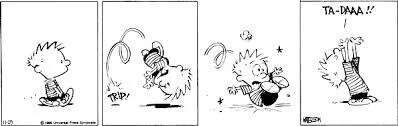
Calvin, of Calvin and Hobbes, knew the secret. If you fall on your face or on your rump, pick yourself up and shout “TA-DAAA!!”

In the realm of knowledge, a dunce cap is much better than a crown. Those willing to feel stupid will gain knowledge in a way far beyond the imagination of those who let the fear of feeling stupid make them into cowardly slugs.

Celebrate failure along the way, and you will have a brilliant life.


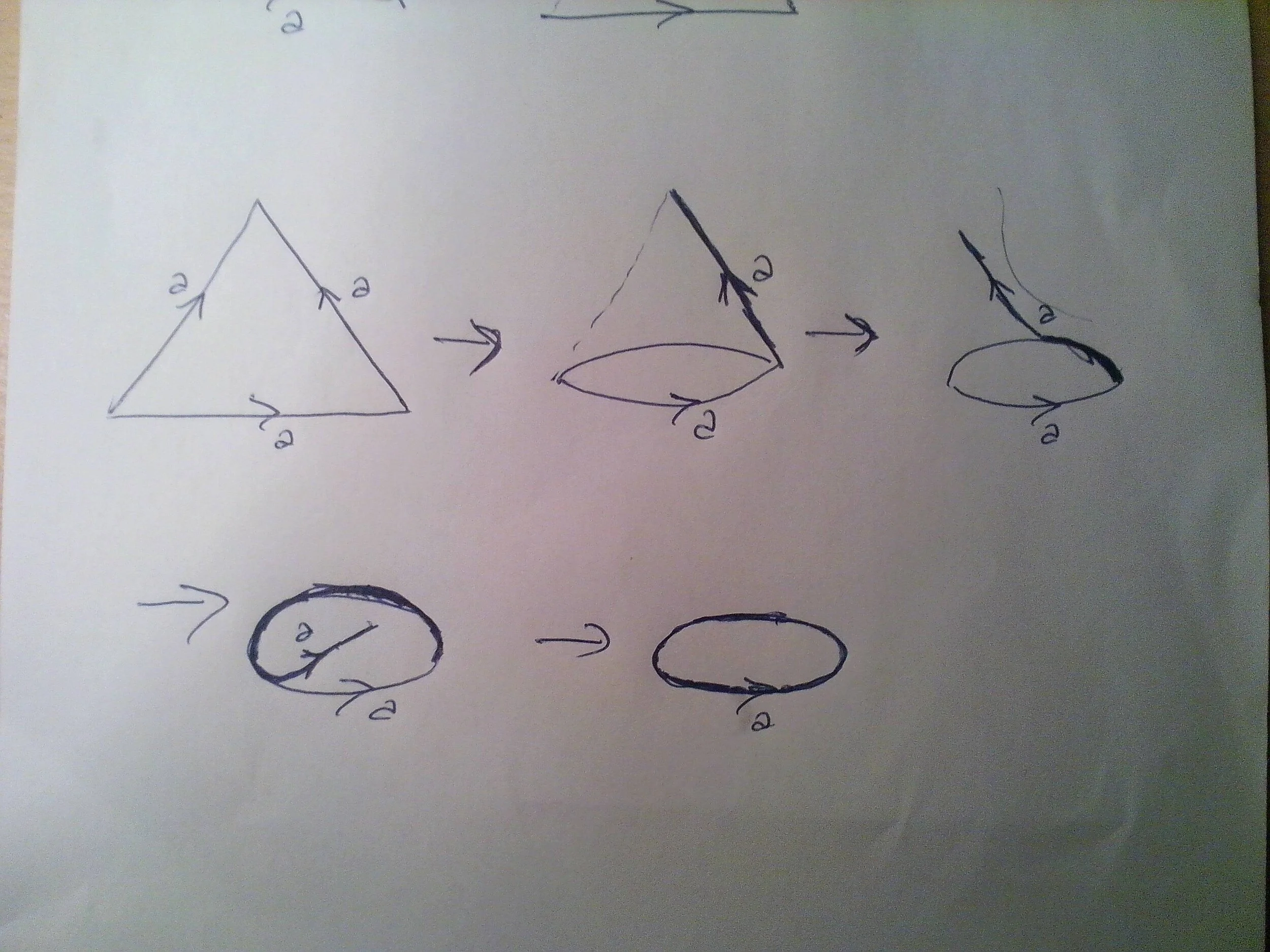
The Deep Mathematics of Dunce Caps:

Handling Immigration in a Way that Addresses Legitimate Concerns

Many people oppose immigration for either racist reasons or looking down on non-citizens in a way that is just as bad as racism. One way to suss out whether this is true in a given case is to call their bluff when they say (as they often do) that they are opposed to illegal immigration. OK, fine. Let’s be against illegal immigration, but let’s dramatically increase legal immigration. And, as I’ve often said on Twitter, if I get to choose the realized quantity of legal immigration that is a hardcore target, you can choose all the rules of who is favored for immigration and what hoops they have to jump through in order to reassure us that they are trying to assimilate and become American in whatever behaviors and attitudes we think are important in new Americans.

Other than if it helps in getting more immigration, I don’t want immigration to get caught up in the culture wars. The reasons I am for immigration are first, that we need a lot more Americans in order to maintain the geopolitical influence of the USA on a par or ahead of China and second, that allowing people from poverty-stricken countries to immigrate is one of the easiest ways to lift people out of desperate poverty. It may be OK to privilege the interests of citizens over non-citizens to some degree, but I hold to “The Aluminum Rule” that we should give a weight in the social welfare function to non-citizens at least .01 as large as we do to citizens.

But not all opposition to more legal immigration is due to racism or looking down on non-citizens. Some is based on a legitimate fear that to much change could upset good things that we have now. The talk by Roger Scruton at the top of this post points to the conservative advice of “hesitate” when thinking about something that will induce social change and to the value people put on “home,” whatever home means to them in practice. To me, these legitimate fears are why conservatives and Trumpian populists should get a big hand in the details of immigration rules, while the rest of us (progressives, liberals and centrists) insist on a much larger quantity of legal immigration.

The analogy I use in ‘Keep the Riffraff Out!’ is that we should be a proselyting nation as the Mormonism I was a part of until age 40 is a proselyting religion. We need more Americans in the world. And marvelously, due to the virtues of our nation, there are many, many people eager to become Americans. (Anything that has helped make us rich—and especially anything that has given us wages for folks at the bottom of the heap that look very, very attractive to those in other countries—counts as a virtue of our nation!) But to pursue the analogy further, to become a member of the Mormon Church (with some dysfunctional historical exceptions) one has to go through some very specific and detailed instruction and make some serious promises.

I don’t see an ethical objection to putting quite stringent requirements on immigrants. The key is that they be allowed to live and work and send their kids to public schools in the United States and that the requirements seem reasonable to enough potential immigrants that a much larger number of people per year immigrate legally to the US in the future than in the recent past. As an example of some of the restrictions I think should be seen as OK in the interests of getting a deal on immigration, it could be OK if they had a reduced access to the social safety net for some period of time, and it could be OK if they didn’t become fully naturalized to get voting rights for 18 years from the time they first legally immigrate. (The delay in becoming fully naturalized might be important in getting a deal with Republicans.)

What about tilting legal immigration more strongly toward high-skilled immigrants? I am OK with that, too. Although it doesn’t lift as many people out of desperate poverty, it does help the US in its competition with China and probably gives people a more positive attitude toward immigration, which could later make possible some increase in immigration that saves people from desperate poverty. Thus, a big increase in legal immigration, but only for high-skilled immigrants would be a step in the right direction.

What about those who are now here in the US illegally? My view is that if we increase legal immigration rates by enough, that those who came illegally can go far back in line and still be able to become legal immigrants within a reasonable amount of time. Of course, this points to one place we need to not go too far toward allowing only high-skilled immigrants. It is valuable to have a policy that allows illegal immigrants to become legal immigrants without that policy looking like “amnesty.” (Although I worry that any policy that gives illegal immigrants a path to becoming legal immigrants would be called “amnesty.” I’d like to know specifically what policy that gives some path to becoming legal is definitely not “amnesty.”)

Some readers might counter my policy urgings by saying we should help people improve the countries they are in so they want to stay there. There are two answers to that. First, helping other countries to improve their situations, beyond what is already happening, is very difficult. Second, if contrary to my view that improving things in other countries is hard, we could have a wild success in that regard, it would lead to limited immigration even if we had an open borders policy. So thinking it is possible to be wildly successful in making things better in other countries isn’t a good reason not to dramatically increase legal immigration.

In closing, let me say that I am not in favor of open borders. In one of my earliest posts on immigration, “You Didn't Build That: America Edition,” I write:

As stewards of this unbelievable American system, we need to regulate the pace of arrival so that the system itself is not overwhelmed and destroyed, but unless this unbelievable American system itself is threatened, let us open our doors wide to others who have not had the good fortune to be born Americans.

But I also wrote:

We didn’t build this unbelievable American system, and it is not our private property. We don’t have a moral right to exclude other human beings–human beings like us–from the benefits of this unbelievable American system.


On Franziska Spritzler’s 14 Ways to Lower Your Insulin Levels

Insulin levels that are too high lead to obesity and directly to many other health problems. Insulin levels that are too high are very common. So you should worry about keeping your insulin levels within bounds even if you don’t yet have any particular worrisome symptoms. (See “Obesity Is Always and Everywhere an Insulin Phenomenon.”)

Franziska’s article “14 Ways to Lower Your Insulin Levels” has a lot of good suggestions for lowering insulin levels—and in particular taming insulin spikes:

  1. Follow a Low-Carb Diet

  2. Take Apple Cider Vinegar

  3. Watch Portion Sizes

  4. Avoid All Forms of Sugar

  5. Exercise Regularly

  6. Add Cinnamon to Foods and Beverages

  7. Stay Away From Refined Carbs

  8. Avoid Sedentary Behavior

  9. Try Intermittent Fasting

  10. Increase Soluble Fiber Intake

  11. Lose Belly Fat

  12. Drink Green Tea

  13. Eat Fatty Fish

  14. Get the Right Amount and Type of Protein

Let me comment on these. First, on foods to avoid, the insulin index gives a direct reading. I distill the insulin index tables down into readable form in “Forget Calorie Counting; It's the Insulin Index, Stupid.” Indeed, insulin index tables say to avoid all forms of sugar (4) and stay away from refined carbs (7). (“Refined carbs” includes bread.) Add to that staying away from starchy vegetables and rice, and you have what is meant in practice by a “low-carb” diet (1). (Almost all nutritionists agree that eating nonstarchy vegetables such as spinach, celery and onions is healthy, so strictly speaking not all carbs are bad. When people talk about a “low-carb” diet, they don’t mean to exclude these healthy veggies.)

Franziska says to lose belly fat (11) as if it is obvious how to do so. Likely the most promising way to lose belly fat is to use intermittent fasting (9). I write a lot about fasting. See the section on fasting in “Miles Kimball on Diet and Health: A Reader's Guide.” Watching portion size (3) is especially valuable in the middle of a modified fast where you are eating a small amount of very-low-insulin-index food each dat. See “How Low Insulin Opens a Way to Escape Dieting Hell” and “Maintaining Weight Loss.”

Exercise regularly (5) is good advice. Exercise in order to be healthier, happier, smarter and to avoid gaining weight. Unfortunately, most people don’t lose much weight from exercising. After all exercising often makes you feel hungrier. To lose weight, fasting is your ticket.

In exercising to be healthier, happier, smarter and to avoid gaining weight, the first little bit of exercise has the biggest effect. Just getting up off the couch and walking around the house to do various things be a big improvement. Avoid sedentary behavior (8).

The recommendation to get the right amount and type of protein (14) is probably too positive about protein. As the article actually points out, protein can stimulate a lot of insulin production. And as it doesn’t mention, protein, especially animal protein, might cause cancer. See the section on anti-cancer eating in ““Miles Kimball on Diet and Health: A Reader's Guide.” In my view, protein has a better reputation than it deserves. Most people get plenty of protein already and shouldn’t be trying to increase that amount. Within the protein one eats, it is probably a good idea to shift one’s protein sources toward more plant protein and less animal protein. Also, dairy presents special issues. See:

(I still consume some dairy.)

On the recommendation to eat fatty fish (13), the fatty part is good, but many types of fish have protein that elevates insulin levels a lot. White fish is just above cinnamon swirl pastry in its insulin index, while tuna packed in oil has a lower insulin kick than eggs, while tuna packed in water is only a little above eggs in its effect on insulin. See “Forget Calorie Counting; It's the Insulin Index, Stupid.” To get the omega-3 fatty acids without getting too much fish protein, I personally take 6 fish oil pills each day, 1400 milligrams each, of which 647 milligrams are EPA and 253 are DHA.

On the advice to increase soluble fiber intake (10), I take several Psyllium capsules a day in any case in order to stay regular. That also provides soluble fiber. Psyllium is the key ingredient in Metamucil, but Metamucil itself uses nonsugar sweeteners that raise insulin. (See “Which Nonsugar Sweeteners are OK? An Insulin-Index Perspective.”) So I take the capsules instead. They have no sweetener.

The other bits of advice are very interesting recommendations:

  • Take Apple Cider Vinegar (2)

  • Add Cinnamon to Foods and Beverages (6)

  • Drink Green Tea (10)

On the apple cider vinegar, I have seen the more general idea that sour foods reduce insulin spikes. Coupling rice with vinegar-soaked vegetables is one of the theories for why those eating a traditional Japanese diet can get away with eating as much rice as they do, when rice by itself has a powerful insulin kick.

On cinnamon, let me simply mention that I felt that regular cinnamon was giving me nose bleeds, so I switched to Ceylon cinnamon, which is a different species, but tastes almost indistinguishable from regular cinnamon to me. (Some people may actively prefer Ceylon cinnamon, but I can’t tell the difference in taste.) I love the taste of cinnamon, so this is an easy recommendation for me to follow.

I don’t love green tea, so drinking green tea is not a recommendation I follow, but I don’t have any reason to doubt that this is a good idea. In addition to reducing insulin spikes, green tea is reputed to be an appetite suppressant that can make fasting easier. It is definitely worth a try in that use.

Overall, I think Franziska is giving great advice. Try it out!


For annotated links to other posts on diet and health, see:

The Federalist Papers #32: The States Retain All Powers Not Explicitly Taken Away by the Constitution—Alexander Hamilton

The 10th Amendment to the US Constitution says:

The powers not delegated to the United States by the Constitution, nor prohibited by it to the States, are reserved to the States respectively, or to the people.

The Wikipedia article on the 10th Amendment points out how similar this is to a provision in the US Articles of Confederation that preceded the Constitution:

Each state retains its sovereignty, freedom, and independence, and every power, jurisdiction, and right, which is not by this Confederation expressly delegated to the United States, in Congress assembled.

In the Federalist Papers #32, Alexander Hamilton argues that the main body of the US Constitution implied this principle even before the adoption of the 10th Amendment—that the 10th Amendment only clarifies something that was already there in the Constitution rather than introducing an entirely new provision.

However much proper legal reasoning is on Alexander Hamilton’s side here, the constitutional law developments in the centuries since have conspired to cause to wither away this principle that states retained their sovereignty except when expressly transferred to the federal government. So even though Alexander Hamilton is right, I think it is a good thing that the 10th amendment says it all over again.

That doesn’t mean I am a fan of “state’s rights.” The 14th amendment to apply the Bill of Rights to actions by states came none too soon:

All persons born or naturalized in the United States and subject to the jurisdiction thereof, are citizens of the United States and of the State wherein they reside. No State shall make or enforce any law which shall abridge the privileges or immunities of citizens of the United States; nor shall any State deprive any person of life, liberty, or property, without due process of law; nor deny to any person within its jurisdiction the equal protection of the laws.

And it was a travesty that the “privileges and immunities” clause of the 14th amendment was gutted by a Supreme Court interpretation so soon after it was written in order to smooth the way for racist impositions by states. In the 20th century, the “due process” and “equal protection” clauses were pressed into service to do much of the work that the “privileges and immunities” clause was not permitted to do.

An example, however, of where states should be able to make the decisions rather than the federal government is in deciding whether marijuana should be legal or not. I say this in some disagreement with the extremely broad interpretation the Supreme Court has made of the "interstate commerce” clause in the US Constitution.

Alexander Hamilton argues that the main body of the US Constitution allows states to retain almost all of the powers they had before the Constitution because it is so particular and explicit when a power is taken away from the states. As a key example, Alexander Hamilton writes:

The first clause of the same section empowers Congress "TO LAY AND COLLECT TAXES, DUTIES, IMPOSTS AND EXCISES"; and the second clause of the tenth section of the same article declares that, "NO STATE SHALL, without the consent of Congress, LAY ANY IMPOSTS OR DUTIES ON IMPORTS OR EXPORTS, except for the purpose of executing its inspection laws."

Then at the end of the Federalist Papers #32, Alexander Hamilton enunciates this general rule of interpretation:

… notwithstanding the affirmative grants of general authorities, there has been the most pointed care in those cases where it was deemed improper that the like authorities should reside in the States, to insert negative clauses prohibiting the exercise of them by the States. The tenth section of the first article consists altogether of such provisions. This circumstance is a clear indication of the sense of the convention, and furnishes a rule of interpretation out of the body of the act, which justifies the position I have advanced and refutes every hypothesis to the contrary.

Below is the full text of the Federalist Papers #32, which will allow you to see Alexander Hamilton’s argument in context.


FEDERALIST NO. 32

The Same Subject Continued: Concerning the General Power of Taxation

From the Daily Advertiser
Thursday, January 3, 1788.

Author: Alexander Hamilton

To the People of the State of New York:

ALTHOUGH I am of opinion that there would be no real danger of the consequences which seem to be apprehended to the State governments from a power in the Union to control them in the levies of money, because I am persuaded that the sense of the people, the extreme hazard of provoking the resentments of the State governments, and a conviction of the utility and necessity of local administrations for local purposes, would be a complete barrier against the oppressive use of such a power; yet I am willing here to allow, in its full extent, the justness of the reasoning which requires that the individual States should possess an independent and uncontrollable authority to raise their own revenues for the supply of their own wants. And making this concession, I affirm that (with the sole exception of duties on imports and exports) they would, under the plan of the convention, retain that authority in the most absolute and unqualified sense; and that an attempt on the part of the national government to abridge them in the exercise of it, would be a violent assumption of power, unwarranted by any article or clause of its Constitution.

An entire consolidation of the States into one complete national sovereignty would imply an entire subordination of the parts; and whatever powers might remain in them, would be altogether dependent on the general will. But as the plan of the convention aims only at a partial union or consolidation, the State governments would clearly retain all the rights of sovereignty which they before had, and which were not, by that act, EXCLUSIVELY delegated to the United States. This exclusive delegation, or rather this alienation, of State sovereignty, would only exist in three cases: where the Constitution in express terms granted an exclusive authority to the Union; where it granted in one instance an authority to the Union, and in another prohibited the States from exercising the like authority; and where it granted an authority to the Union, to which a similar authority in the States would be absolutely and totally CONTRADICTORY and REPUGNANT. I use these terms to distinguish this last case from another which might appear to resemble it, but which would, in fact, be essentially different; I mean where the exercise of a concurrent jurisdiction might be productive of occasional interferences in the POLICY of any branch of administration, but would not imply any direct contradiction or repugnancy in point of constitutional authority. These three cases of exclusive jurisdiction in the federal government may be exemplified by the following instances: The last clause but one in the eighth section of the first article provides expressly that Congress shall exercise "EXCLUSIVE LEGISLATION" over the district to be appropriated as the seat of government. This answers to the first case. The first clause of the same section empowers Congress "TO LAY AND COLLECT TAXES, DUTIES, IMPOSTS AND EXCISES"; and the second clause of the tenth section of the same article declares that, "NO STATE SHALL, without the consent of Congress, LAY ANY IMPOSTS OR DUTIES ON IMPORTS OR EXPORTS, except for the purpose of executing its inspection laws." Hence would result an exclusive power in the Union to lay duties on imports and exports, with the particular exception mentioned; but this power is abridged by another clause, which declares that no tax or duty shall be laid on articles exported from any State; in consequence of which qualification, it now only extends to the DUTIES ON IMPORTS. This answers to the second case. The third will be found in that clause which declares that Congress shall have power "to establish an UNIFORM RULE of naturalization throughout the United States." This must necessarily be exclusive; because if each State had power to prescribe a DISTINCT RULE, there could not be a UNIFORM RULE.

A case which may perhaps be thought to resemble the latter, but which is in fact widely different, affects the question immediately under consideration. I mean the power of imposing taxes on all articles other than exports and imports. This, I contend, is manifestly a concurrent and coequal authority in the United States and in the individual States. There is plainly no expression in the granting clause which makes that power EXCLUSIVE in the Union. There is no independent clause or sentence which prohibits the States from exercising it. So far is this from being the case, that a plain and conclusive argument to the contrary is to be deduced from the restraint laid upon the States in relation to duties on imports and exports. This restriction implies an admission that, if it were not inserted, the States would possess the power it excludes; and it implies a further admission, that as to all other taxes, the authority of the States remains undiminished. In any other view it would be both unnecessary and dangerous; it would be unnecessary, because if the grant to the Union of the power of laying such duties implied the exclusion of the States, or even their subordination in this particular, there could be no need of such a restriction; it would be dangerous, because the introduction of it leads directly to the conclusion which has been mentioned, and which, if the reasoning of the objectors be just, could not have been intended; I mean that the States, in all cases to which the restriction did not apply, would have a concurrent power of taxation with the Union. The restriction in question amounts to what lawyers call a NEGATIVE PREGNANT that is, a NEGATION of one thing, and an AFFIRMANCE of another; a negation of the authority of the States to impose taxes on imports and exports, and an affirmance of their authority to impose them on all other articles. It would be mere sophistry to argue that it was meant to exclude them ABSOLUTELY from the imposition of taxes of the former kind, and to leave them at liberty to lay others SUBJECT TO THE CONTROL of the national legislature. The restraining or prohibitory clause only says, that they shall not, WITHOUT THE CONSENT OF CONGRESS, lay such duties; and if we are to understand this in the sense last mentioned, the Constitution would then be made to introduce a formal provision for the sake of a very absurd conclusion; which is, that the States, WITH THE CONSENT of the national legislature, might tax imports and exports; and that they might tax every other article, UNLESS CONTROLLED by the same body. If this was the intention, why not leave it, in the first instance, to what is alleged to be the natural operation of the original clause, conferring a general power of taxation upon the Union? It is evident that this could not have been the intention, and that it will not bear a construction of the kind.

As to a supposition of repugnancy between the power of taxation in the States and in the Union, it cannot be supported in that sense which would be requisite to work an exclusion of the States. It is, indeed, possible that a tax might be laid on a particular article by a State which might render it INEXPEDIENT that thus a further tax should be laid on the same article by the Union; but it would not imply a constitutional inability to impose a further tax. The quantity of the imposition, the expediency or inexpediency of an increase on either side, would be mutually questions of prudence; but there would be involved no direct contradiction of power. The particular policy of the national and of the State systems of finance might now and then not exactly coincide, and might require reciprocal forbearances. It is not, however a mere possibility of inconvenience in the exercise of powers, but an immediate constitutional repugnancy that can by implication alienate and extinguish a pre-existing right of sovereignty.

The necessity of a concurrent jurisdiction in certain cases results from the division of the sovereign power; and the rule that all authorities, of which the States are not explicitly divested in favor of the Union, remain with them in full vigor, is not a theoretical consequence of that division, but is clearly admitted by the whole tenor of the instrument which contains the articles of the proposed Constitution. We there find that, notwithstanding the affirmative grants of general authorities, there has been the most pointed care in those cases where it was deemed improper that the like authorities should reside in the States, to insert negative clauses prohibiting the exercise of them by the States. The tenth section of the first article consists altogether of such provisions. This circumstance is a clear indication of the sense of the convention, and furnishes a rule of interpretation out of the body of the act, which justifies the position I have advanced and refutes every hypothesis to the contrary.

PUBLIUS.


Links to my other posts on The Federalist Papers so far:

Alternate Realities: Republicans vs. Democrats—Gary Sargent Porter

I have known Gary Porter for over a quarter of a century. Gary and I share an interest in Mormonism and in politics. I’m delighted to be able to share this guest post from him.


In America today Republicans and Democrats live in alternate realities.

Nearly everyone recognizes that this is so, and yet no one understands how this is even possible. This is testament to our own lack of understanding of humans, of ourselves.

What are the evolutionary traits that led to human survival? Which traits, conservative or liberal, through the 200,000 years of human survival, led to who we are today?

What is truth? Is it that which leads to our survival? Is it somehow different from the mathematical rules of the universe? Can 2+2 somehow equal 5 when human survival depends on it?

Did following the group, either rightly or wrongly, lead to human survival? And if so, did human evolution program our minds to be unable to recognize truth in certain circumstances?

President Trump famously asserted that President Obama didn’t have a US birth certificate and thus wasn’t a legitimate President. There was an objective truth that could be easily verified. But a larger question is whether President Trump really believed Obama didn’t have one. Was Trump purposely lying about something that could so easily be proven false? Why could so many people believe it when he said this? How does he have such a strong hold on the Republican party in the face of easily disprovable falsehoods?

To solve this puzzle let’s perform a thought experiment. Suppose we are hunter gatherers 150,000 years ago. Thirty of us have been living in a certain cave for 3 generations. It’s not the best cave, but it works. Some of us will die, perhaps earlier than necessary, but the group itself will survive by staying there.

Every now and then a child is born who is a wanderer. He’s not good at following rules. He may not contribute his share to the group’s work because he is impractical. He wanders off getting farther and farther from the safety of the group.

One day he finds a place entirely better for survival than the cave he has been living in. It has the resources to support 150 people instead 30.

However, when he comes back and starts telling people what he has discovered, will he be welcomed? Or is he a threat to the group’s existence? The group will survive more generations by staying in the cave. But it might not survive at all by moving to a new one.

During the 200,000 years of human evolution most people chose to follow the group, even when they heard about a better cave. Mathematically, over time, more people survived by doing so. The benefits of following the group are simply too strong.

In the mid 1800’s Mormons settled the Salt Lake Valley, a place with almost no natural resources. There was better land almost anywhere else than Utah, and gold had been discovered in California. However, their belief in a fantastical story, and their ferocious devotion to the group, led them to survive and eventually to prosper. Similar analysis can be made about the Japanese, the Jews, and many other groups who believe suspect ideas, but who have fanatical devotion to the group.

In the hunter-gather stage of human existence, getting this right was not just an academic experiment. It meant survival, life or death, both as an individual and as a group. We fear death more than anything else. It is infinite loss.

Most people, if offered a choice between losing their home, and gaining 10 times the value of their home, when the odds are 50-50, will choose keeping their home, even when the mathematics favor taking the risk. Losing one’s home can mean total destruction. It can mean infinite loss. Gaining ten times its value is nice, but not infinitely so.

Mormons, Jews, Japanese (during Japan’s war years), Germans (during the country’s war years), and many Christian groups today, depend on stories of persecution to unite the group. Even invented stories of persecution can unite groups by touching a part of the human genome. It is the threat, however remote, of total destruction. If a group is threatened, even preposterously, humans lose their capacity to think in rational terms.

Almost none of us is aware of the degree to which this happens.

Consider Fox News. All day long its messages are about ‘threats’ to the group. Each anecdotal story, repeatedly told, reinforces some threat to the group’s existence.

Trump’s messages also are about threats to the group. Rationality ceases. Preposterousness becomes truth as long as a threat is perceived.

This characteristic of humans is not confined only to conservatives. For example, today the actuality of the threat facing the US from other countries is mathematically preposterous. Yet liberals are taken in by United States national security propaganda, as much or even more so than conservatives. Fanatics and demagogues today have sway in the US in the same way as they did in Germany and Japan during World War 2.

In the hands of demagogues, our genetic fear of our own group’s destruction has many consequences. Yet few of us today even begin to understand it.

Will Knowland: The Patriarchy Paradox

When a teacher gets fired from Eton for an interesting YouTube video that seem unexceptionable (though it might be wrong on some points), it galls my free-speech values. So I thought I would highlight here what some found so offensive: the video above.

This kind of debate is absolutely within bounds and exactly the sort of debate our society should be having. However much you believe one side, it it not healthy to have that side shouting the other down. Saying men and women are naturally different might be wrong, but it is not a flat-earth idea. And it is not OK to push down an idea because you think it is dangerous. That way lies tyranny.

(We simply don’t have time to carefully consider every stupid idea. But we must make time to carefully consider every idea that seems dangerous to us. The sense that it is dangerous usually suggests that there is an important partial truth in the idea.)

The article and video below provide more background:


My own free speech sensibilities have been informed by a careful reading of John Stuart Mill’s On Liberty. To see the gist of John Stuart Mill’s arguments, see my post “John Stuart Mill's Brief for Freedom of Speech.”

Diversity is Important for Cows, Too

When a high fraction of an agricultural product depends on one variety of plant or animal, that product is in danger from diseases that affect that variety. And there is also the danger that the one variety is unhealthy in some way.

Jo Craven McGinty, in her May 28, 2021 Wall Street Journal article “Most Dairy Cows Are Kissing Cousins, and Scientists Are Worried,” writes:

Holsteins give more milk than any other dairy cow in the country … The entire population provides 94% of the nation’s milk.

But selective breeding—allowing farmers to mate only animals with the most desirable traits—has led to so much inbreeding that virtually all Holsteins in the U.S. and abroad descend from just two bulls.

So, while there are roughly nine million Holsteins in the U.S., the breed’s effective population—a measure of genetic diversity—is just 43, according to an estimate published last year in the peer-reviewed Journal of Dairy Science.

Unfortunately, Holsteins have not only the danger that diseases might arise that spread like wildfire through the breed, they tend to produce milk with the A1 milk protein, which Keith Woodford argues persuasively in Devil in the Milk has a 7-amino-acid peptide that often breaks off and can cause auto-immune problems if it gets past the gut lining and into the bloodstream. My blog post “Exorcising the Devil in the Milk” is a distillation of that book. Casting doubt on the healthfulness of the better part of the milk supply is politically charged enough that government agencies in various countries have made the lack of sufficient research for an open-and-shut case sound as if one should not doubt the safety of A1 milk. But corresponding government agencies in the United States still refuse to declare sugar the clear and present danger to our health that it is. You are better off reading Devil in the Milk or at least my blog post “Exorcising the Devil in the Milk” than trusting government agencies that are sensitive to the commercial consequences of casting aspersions on modal milk.

The concerns about the lack of diversity in dairy cows presents a significant opportunity to shift the herds toward production of safer A2 milk. All that is needed to shift herds over within a decade or so is to give bulls with the A2 genes extra points when choosing which bulls to use in breeding the next generation of cows. (The genetic test is commercially available.) But it does require some level of recognition of the problems with A1 milk.

I have often thought that, for those in the income category of most of my readers, drinking A2 milk instead of milk with substantial amounts of the A1 milk protein is one of the best deals available. a2 branded milk is high quality and good tasting. There is no dimension in which it is inferior to regular A1 milk except on price.

Link to the Amazon page for a2 milk (a2 milk is available at Whole Foods, along with other stores)

Link to the Amazon page for a2 milk (a2 milk is available at Whole Foods, along with other stores)

Many people argue that dairy is a problem. I wonder what fraction of the problems they suspect are due to A1 milk. I have written more about milk and dairy in a series of other blog posts:

The last blog post in this list points to another issue of which type of milk to choose: the idea that skim milk is healthier is a myth based on the usual naive version of calories in/calories out logic. (See “How Low Insulin Opens a Way to Escape Dieting Hell” for a more sophisticated version.)

The Standard American Diet leaves a lot to be desired. (See “How to Summarize a Big Chunk of Nutrition Research: Almost Anything You Are Likely to Think Of Is Better Than the Standard American Diet.”) Lack of diversity is one of the problems in the Standard American Diet. Michael Pollan points out how much the Standard American Diet relies on corn. (He recommends counting the number of different species one is drawing food from in a typical day.) The heavy reliance of American dairy on one breed of cows is another lack-of-diversity problem in the Standard American Diet.

We are fortunate to have some inkling of the dangers from A1 milk. That makes decisions easier. To avoid unknown dangers in food, it is good to diversify what one eats. Most food we eat is pretty safe from quick-acting poisons. But slow poisons abound in our food. (See for example “Sugar as a Slow Poison.” Diversifying what one eats can reduce the amount of slow poison one consumes.

For me personally, one unpleasant aspects of knowing what I know about diet and health is that when looking at farms along a highway I am going down I can’t enjoy the sights as well. I often see field upon field growing grains likely to cause people’s insulin levels to spike (See “Forget Calorie Counting; It's the Insulin Index, Stupid”) and then around the bend see large herds of Holsteins currently likely to produce milk with a lot of A1 milk protein. I wish I could look out at more farms producing food that will treat people’s health well.

Note: I have no commercial interests in the foods I write about. (I do hold index funds and other very broad mutual funds which include all kinds of stocks. I almost never read the documents listing the stocks in those funds.)


For annotated links to other posts on diet and health, see: