Jane Brody on Intermittent Fasting
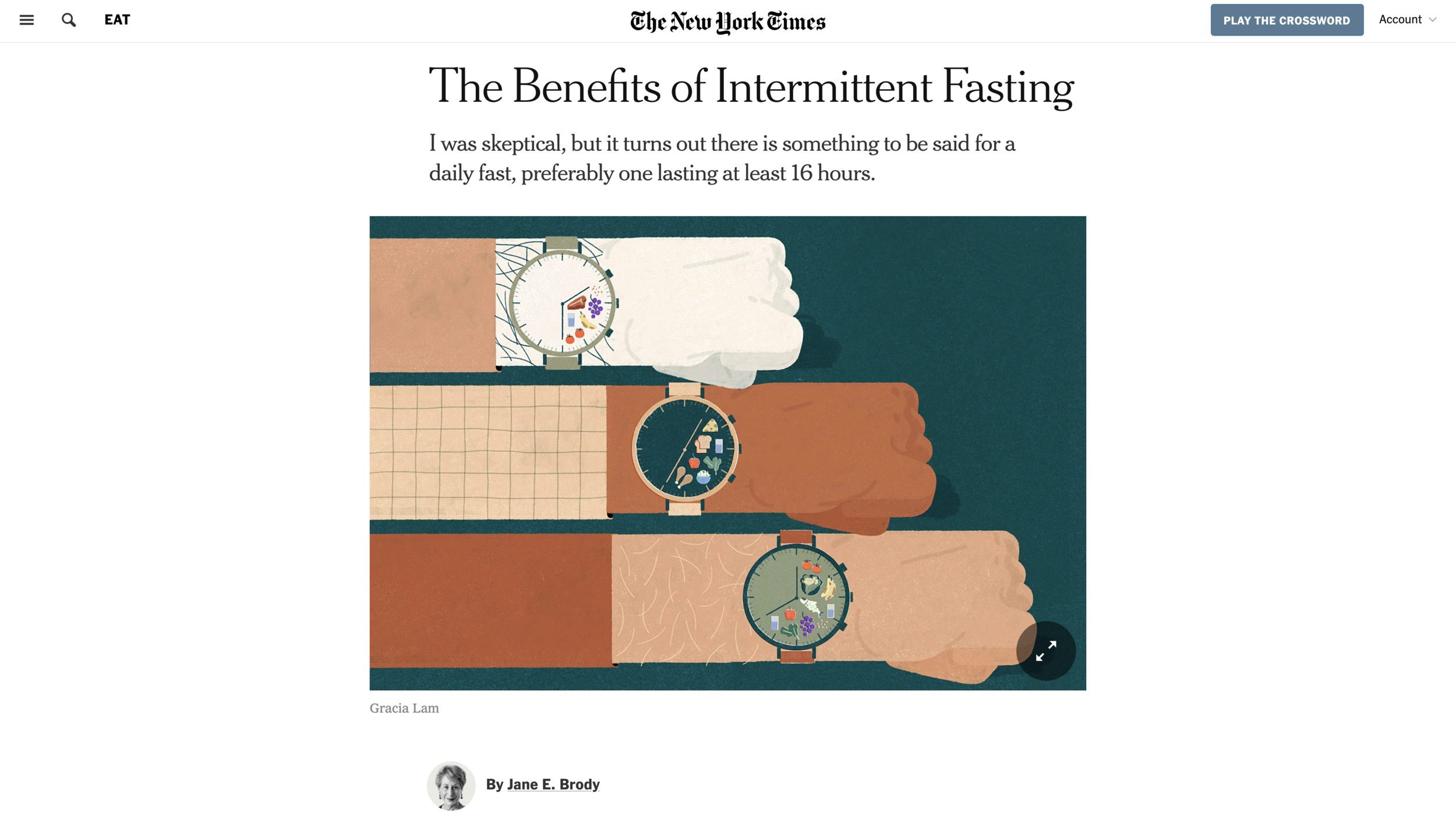
“Intermittent fasting” is a bit of a redundant phrase. Logically, non-intermittent fasting would mean constant fasting, which is something likely to lead to death after many months of it have burned through all of your fat reserves. Because almost any reasonable use of fasting is therefore “intermittent fasting,” it is not, in practice, anything more than a synonym for “fasting.”
Jane Brody, in “The Benefits of Intermittent Fasting,” uses “intermittent fasting” to refer to limiting one’s daily eating window to no more than 8 hours (say eating only between 11 AM and 7 PM or only between noon and 8 PM) so that one has on average a 16-hour stretch of fasting each day. Evidence suggests that this, like many other uses of fasting, has important health benefits. (All of the quotations below come from Jane Brody’s article “The Benefits of Intermittent Fasting.”
A lot of the evidence about fasting is animal evidence. For example:
… in an animal model of stroke, those fed only intermittently suffered less brain damage because they were better able to resist the stress of oxygen and energy deprivation.
Other animal studies have shown a “robust disease-modifying” benefit of intermittent fasting on “a wide range of chronic disorders, including obesity, diabetes, cardiovascular disease, cancers and neurodegenerative brain diseases,” the researchers reported. Their review of both animal and human studies found improvements in a variety of health indicators and a slowing or reversing of aging and disease processes.
As for human evidence:
… human studies of intermittent fasting found that it improved such disease indicators as insulin resistance, blood fat abnormalities, high blood pressure and inflammation, even independently of weight loss. In patients with multiple sclerosis, intermittent fasting reduced symptoms in just two months, a research team in Baltimore reported in 2018.
Why would fasting be helpful? Jane Brody’s article “The Benefits of Intermittent Fasting” points to a number of different theoretical reasons (bullets added to separate passages):
Mark P. Mattson, neuroscientist at the National Institute on Aging and Johns Hopkins University School of Medicine, explained that the liver stores glucose, which the body uses preferentially for energy before it turns to burning body fat.
“It takes 10 to 12 hours to use up the calories in the liver before a metabolic shift occurs to using stored fat,” Dr. Mattson told me. After meals, glucose is used for energy and fat is stored in fat tissue, but during fasts, once glucose is depleted, fat is broken down and used for energy.
If you think evolutionarily, Dr. Mattson said, predators in the wild fight for prey in the fasting state and are better at recovering from inevitable injuries. The human counterpart — people who evolved in feast-or-famine environments — would not have survived unless somehow protected by fasting.
“Our human ancestors did not consume three regularly spaced large meals, plus snacks, every day, nor did they live a sedentary life,” the researchers wrote. The studies they analyzed showed that “most if not all organ systems respond to intermittent fasting in ways that enable the organism to tolerate or overcome the challenge” and then return to normal.
Dr. Mattson explained that during a fast, the body produces few new proteins, prompting cells to take protein from nonessential sources, break them down and use the amino acids to make new proteins that are essential for survival. Then, after eating, a lot of new proteins are produced in the brain and elsewhere.
That last passage about protein production is somewhat opaque. It points to a bigger benefit of fasting than it sounds. After a high enough dose of fasting—with what is a “high enough dose of fasting” an area of debate—the body begins seriou: cannibalizing substandard cells for spare parts. Autophagy is an important part of the body’s quality control. This crucial type of cellular quality control takes place mainly during fasting. Cellular quality control should be especially helpful toward preventing cancer. (At lower doses of fasting—too low to engender much autophagy proper—cells increase the cannibalization for spare parts of molecules already within them. This is likely to yield at least some fraction of the benefits of autophagy proper.)
The most important place Jane Brody goes off track in her article is in talking about the difficulty of fasting without pointing out that those on a lowcarb, high fat diet find fasting a lot easier and more pleasant. If the body is already in a fat-burning mode burning fat from food, it is easier for it to make the transition to burning body fat if one begins fasting. To be specific about my point, I’ll bet the “hunger, irritability and a reduced ability to concentrate” from fasting that researchers talk about is highly concentrated in those who eat high-carb diets.
The second most important place Jane Brody goes off track is talking about difficulties of social coordination from a limited eating window. She is assuming you need to have an eating window at the same time each day. Au contraire. Evolutionarily, our ancestors faced an environment in which the timing of fasting was random, due to not finding food right away. We are adapted to that. So there is reason to think having one’s eating window move around in its position within the day is a good thing, not a bad thing. And that makes it easy to plan one’s mobile eating window to coincide with social engagements that involve eating. (The big problems will be from the expectations of those in your own household that you will be eating all day long, or whenever they are eating.)
I’m glad to see fasting getting good press. I hope more people take up fasting as a way to improve their health.
For annotated links to other posts on diet and health, see:
It Isn't OK to Be Anti-Immigrant

Short of murder, rape, torture, slavery or unjustified imprisonment, one of the worst things a government can perpetrate or condone is confining people to desperately poor parts of the world where they are doomed to poverty, when being allowed into rich parts of the world—even if totally denied any safety-net aid—they would be lifted to a dramatically better standard of living.
Treating people as malefactors because they desperately want to come to a reasonably-well-run country such as ours is cruel. There may be morally adequate policy reasons to limit the number of people who can come to our nation at any one time, but if so, we should feel quite apologetic about having to do that.
The easiest way to reduce illegal immigration is to dramatically increase the amount of legal immigration that we allow. It is important enough to do so, that almost any political concession that makes it possible to pass legislation to dramatically increase the amount of legal immigration is worth making.
There is a moral illusion highly relevant to many debates about how we treat desperately poor people in other countries. That illusion is that having nothing to do with a poor person, or effectively deterring them from showing up on our doorstep absolves us of moral responsibility, while we bear a large share of the responsibility of all the suffering in their lives as soon as we have dealings with them. As, at least in principle, a Utilitarian, this makes no sense to me. Within the scope of actions available to us, we bear moral responsibility for the consequences of the choices we make compared to the consequences of the choices we could have made. If someone is worse off because of our actions (such as not allowing more legal immigration), we bear moral responsibility for that, even if we never have and never will meet them.
There are many morally charged issues of public policy. To my mind, the moral weight of immigration policy exceeds the moral weight of all other issues that have been seriously debated in the United States in the last four years.
Middle-aged, non-college-educated white folks have been dying more deaths of despair, in Anne Case and Angus Deaton’s phrase. These folks should not be looked down on. They need to be helped. But keeping legal immigration low is not the way to help them. Even if it really did help them (which it doesn’t, other than reducing cultural discomfort and perhaps helping out job prospects for high-school dropouts), helping one human being a little bit by hurting other human beings a lot is not OK.
Just as we look back aghast at those a couple of centuries ago who spoke of liberty but owned slaves, those in future generations will look back aghast at those who spoke of compassion and human flourishing but shut their hearts to the plight of those exiled by the accident of their birth from the land of the free and the home of the brave.
Gary Cornell: We are Unlikely to Have a Vaccine that is Proven Effective for Seniors for a Long Time Unless Dramatic Action is Taken Now!

Gary Cornell (image source)
I’m glad to be able to feature Gary Cornell again here. Some of the earliest blog posts on supplysideliberal.com were guest posts by Gary Cornell. Here he is again with a post about how the work being done to develop vaccines for Covid-19 is not targeted at the subset of the population that most needs vaccines: older folks. Here is Gary:
The risk of both hospitalization and death from Covid 19 increase greatly with age. Approximately 80% of the deaths from Covid 19 are people over 65 (https://www.cdc.gov/coronavirus/2019-ncov/need-extra-precautions/older-adults.html). The unfortunate truth is that a vaccine that is proven highly effective for seniors is not likely for a very long time, unless we dramatically increase the number of seniors in current trials now.
Why? The gold standard to determine efficacy is a large, placebo-controlled, double-blind clinical trial. There are currently eight vaccines in large Phase 3 trials. But it is very unlikely, maybe even impossible, that any of these vaccine trials will give us definitive information about how effective these vaccines are for people over age 55 — well, unless they change how they are currently setup.
Why? To begin with, none of the four trials that have released their protocols are properly stratified. While they aren’t lumping seniors into the same group as the 18 to 55-year-olds, they should be using three groups i.e. one for each age decile: 55 to 64, 65 to 74, and 75 and older. To be sure, it’s possible to tease out information about how different strata of seniors react to the vaccine even if they are lumped together in one group. However, it likely would take more data because you have to tease out the information for each age decile from a larger group.
But the bigger problem is that even if these trials give us some information about efficacy for seniors, they are unlikely to tell us everything we need to know quickly enough unless we have a far larger number of participants over 55 than the current trials are enrolling. Why? Since Covid-19 can be so deadly in older people, they and the communities they live in have generally been taking better precautions than the general public against becoming infected with the virus SARS-CoV-2 that causes Covid-19. For example, the CDC reports (https://www.cdc.gov/mmwr/volumes/69/wr/mm6939e1.htm#T1_down) that, as of August, roughly speaking, the prevalence among people >75 years old is 1/15 that of people 18–55 years old. And, even if you lump all people over 55 into one group, it is roughly 1/3. And, of course, we are all hoping that prevalence among seniors has gone down significantly since August. But prevalence is what determines the time needed to have a statistically significant efficacy signal from a vaccine trial.
Here’s what information I have gotten from their published protocols for the percentages of seniors enrolled:
AstraZenica: “Randomization will be stratified by age (≥ 18 and < 65 years, and ≥ 65 years), with at least 25% of participants to be enrolled in the older age stratum.” They are also using a 2 to 1 active to placebo division
Johnson & Johnson: “The aim of having a minimum of approximately 25% of recruited participants ≥60 years of age has been adjusted to 30%”
Moderna: “At least 25% of enrolled participants, but not more than 40%, will be either ≥ 65 years of age or < 65 years of age and “at risk” at Screening”
Pfizer: “It is intended that a minimum of 40% of participants will be in the >55-year stratum”
I suppose we seniors should be thankful, originally it was much worse (https://www.nytimes.com/2020/06/19/health/vaccine-trials-elderly.html), and in at least one case, the published protocols made this clear, as people over 55 years old were only added via a late amendment.
Anyway, regardless of what they were planning on doing originally, none of these four trials are enrolling a far larger percentage of people over 55 than they are enrolling under 55. This means the time needed for getting enough cases for people over 55, and especially among people over 75, will be longer than the time needed to get an efficacy signal from 18- to 55-year-olds. And you need to get that signal for seniors as quickly as you get a safety and efficacy signal for younger people. Why? Because once we have a vaccine that has been shown to be safe and effective for people under 55, I believe it is unethical to continue any placebo-controlled Phase 3 trial in the elderly for a disease so deadly to them — all elderly participants would have to be offered the vaccine that worked among younger people. Since designers of these trials are hardly stupid, it seems to me that they are either betting that they will have enough cases in seniors to have an efficacy signal quickly or that enough seniors will agree to stay enrolled in the placebo arm.
A better solution is obvious, don’t bet: dramatically increase the number of participants over 55 in the current trials quickly, no matter what the expense and difficulty is in doing so. The more people we have over 55 in a trial, the more likely it is we will have an efficacy signal before ethical considerations force us to stop the arm of the trial being done on seniors.
What happens if we don’t do this? Then the only thing we will know quickly is what the vaccine candidate does to immune system markers on seniors,such as the antibody levels they induce. And, since the immune system of someone who is 75 tends to work differently than someone who is 55, let alone 25, even having immune system markers in seniors that match those of a 25 year old won’t mean enough to know anything definitive. But I want to make clear that of course, seniors can and should take an approved vaccine based on the results in 18–55 year olds even without their being an efficacy signal for them.
Then, interestingly enough, I expect the same things to happen whether or not we had an efficacy signal for seniors: it’s just that the consequences and information we gain from them is different. What I expect is that correctly stratified trials for people over 55 will quickly begin that compare the approved vaccine(s) to various tweaked formulations or dosing regimens. We did this in order to get a better flu vaccine for seniors for example. But not only will these trials take time, unless we have that efficacy signal for seniors from the original trials, these trials can give us only relative information, not absolute information. For example, a trial might show that half the dose doesn’t work very well while four times the dose is not only safe but it works twice as well. That sounds great, but we aren’t home free if we don’t know how well the original vaccine actually works on seniors of varying ages. Knowing that you have a vaccine tweak that works twice as well as the original vaccine actually doesn’t tell you anything about how well the improved vaccine will work without a baseline! For example, suppose the original vaccine was just 15% effective among people age 75 and older. Doubling the effectiveness with a tweaked formulation puts it at only 30%. Knowing that something is 2X, doesn’t tell you anything without information about X. And information on X is what we won’t have unless we spent the money and effort needed to get it from greatly enlarged trials of the original vaccine in seniors now. This puts us in a completely different position than the flu vaccine where we knew quite well how the original flu vaccine worked in seniors, so the “tweaked” version’s efficacy was easy to compute.
To summarize: given what I feel are the inescapable ethical issues in completing any placebo controlled study on seniors once you have a safe and effective vaccine based on trials in healthy 18–55 olds, we must enlarge the number of seniors in the trials quickly. Failing to do so means that we likely won’t know enough about how well the original vaccine worked in one or more age decile group of seniors. Your castle will be built on little if any foundation.
So, considering how deadly Covid 19 is among seniors, absent great therapeutics, would you, if you were over 55, really change the precautions you are taking such as not getting on a plane because you took a vaccine you have little absolute information about for your age group? I am and I wouldn’t! So, again, I am hoping (perhaps without hope) that we spend the money and take the effort to quickly expand the number of seniors in the current trials.
I want to end by explaining what will likely happen if we don’t change the current trials to include far more seniors. First off, you need to always keep in mind that absent that, we will likely be stuck in the twilight zone of having relative information but needing absolute information! Can biostatisticians do anything down the road to break the barrier between relative information and absolute information if we didn’t enroll enough seniors in the current trials? Of course. What they will do is what is called a paired retrospective study. This means they will look at seniors who chose to get the vaccine and compare them with a matched group of seniors that didn’t get the vaccine. Then, given enough cases and a good enough match between members of the two groups, we will finally have a way to get the absolute information we need. Only after that retrospective study is complete, would seniors know (roughly) how well the best of the vaccine tweaks works for them.
Still, a paired retrospective study would be both difficult and time consuming to perform. Why? The key to doing a paired retrospective study is to pair up the people so that there are no differences between them that can influence the incidence of the disease. And you need to know if seniors who declined to get an approved vaccine, or who didn’t have access to it, are different in some fundamental ways from those who did get the vaccine. I don’t know how to answer that, but I do know that the biostatisticians are going to have a difficult job designing a paired retrospective study.
So I personally would be shocked if we have any absolute information about the efficacy of a Covid-19 vaccine for seniors for a very long time to come unless we spend the money and effort to dramatically increase the number of seniors enrolled in the current trials now.
Human Skulls, Ancient and Modern

In last Thursday’s post, “A Modern World of Endemic Jaw Dysfunction” I claimed that human jaws (especially the upper jaw) are typically now malformed because of the softness of our modern diets. Today, let me back that up by what James Nestor says about this in his book Breath. (Every quotation below is from that book, with different passages separate by several blank lines.) Key points:
First, the skulls of those who ate traditional diets are well-formed
A few months before the Stanford experiment, I flew to Philadelphia to visit Dr. Marianna Evans, an orthodontist and dental researcher who’d spent the last several years looking into the mouths of human skulls, both ancient and modern. We were standing in the basement of the University of Pennsylvania Museum of Archaeology and Anthropology, surrounded by several hundred specimens. …
The skulls ranged from 200 to thousands of years old. They were part of the Morton Collection, named after a racist scientist named Samuel Morton, who, starting in the 1830s, collected skeletons in a failed attempt to prove the superiority of the Caucasian race. The only positive outcome of Morton’s work is the skulls he spent two decades gathering, which now provide a snapshot of how people used to look and breathe.
Where Morton claimed to see inferior races and genetic “degradation,” Evans discovered something close to perfection. To demonstrate what she meant, she walked over to a cabinet and retrieved a skull marked Parsee, for Persian, from behind the protective glass. She wiped bone dust on the sleeve of her cashmere sweater and ran a neatly trimmed fingernail along its jaw and face.
“These are twice as large as they are today,” she said in a staccato Ukrainian accent. She was pointing at the nasal apertures, the two holes in the back of the throat that connect to the nasal passages. She turned the skull around so it was staring at us. “So wide and pronounced,” she said approvingly.
Second, the airways are better and the teeth are straighter in ancient than in modern skulls:
Every one of the ancient skulls was identical to the Parsee sample. They all had enormous forward-facing jaws. They had expansive sinus cavities and broad mouths. And, bizarrely, even though none of the ancient people ever flossed, or brushed, or saw a dentist, they all had straight teeth.
The forward facial growth and large mouths also created wider airways. These people very likely never snored or had sleep apnea or sinusitis or many other chronic respiratory problems that affect modern populations. They did not because they could not. Their skulls were far too large, and their airways too wide for anything to block them. They breathed easy. Nearly all ancient humans shared this forward structure—not just in the Morton Collection, but everywhere around the world. This remained true from the time when Homo sapiens first appeared, some 300,000 years ago, to just a few hundred years ago.
Evans and Boyd then compared the ancient skulls to the modern skulls of their own patients and others. Every modern skull had the opposite growth pattern, meaning the angles of the Frankfort plane and N-perpendicular were reversed: chins had recessed behind foreheads, jaws were slumped back, sinuses shrunken. All the modern skulls showed some degree of crooked teeth.
Of the 5,400 different species of mammals on the planet, humans are now the only ones to routinely have misaligned jaws, overbites, underbites, and snaggled teeth, a condition formally called malocclusion.
Third, these changes can plausibly be attributed to changes in what people eat:
Twelve thousand years ago, humans in Southwest Asia and the Fertile Crescent in the Eastern Mediterranean stopped gathering wild roots and vegetables and hunting game, as they had for hundreds of thousands of years. They started growing their food. These were the first farming cultures, and in these primitive communities, humans suffered from the first widespread instances of crooked teeth and deformed mouths.
It wasn’t terrible at first. While one farming culture was plagued by facial and mouth deformities, another hundreds of miles away seemed not to suffer at all. Crooked teeth and all the breathing problems that come with them seemed totally random.
Then, about 300 years ago, these maladies went viral. Suddenly, all at once, much of the world’s population began to suffer. Their mouths shrank, faces grew flatter, and sinuses plugged.
…
… the changes triggered by the rapid industrialization of farmed foods were severely damaging. Within just a few generations of eating this stuff, modern humans became the worst breathers in Homo history, the worst breathers in the animal kingdom.
… for the first time in history, humans could spend their entire lives eating nothing but processed food—nothing fresh, nothing raw, nothing natural. Millions did. Over the next few centuries, food would become more and more refined. Advances in milling removed the germ and bran from rice, leaving only the starchy white seed. Roller mills (and, later, steam mills) ripped the germ and bran from wheat, leaving only a soft, white flour. Meats, fruits, and vegetables were canned and bottled. All these methods extended the shelf life of foods and made them more accessible to the public. But they also made foods mushy and soft. Sugar, which was once a prized commodity of the wealthy, became increasingly common and cheap.
…
The human face began rapidly deteriorating, too. Mouths shrank and facial bones grew stunted. Dental disease became rampant, and the incidence of crooked teeth and jaws increased tenfold in the Industrial Age. Our mouths got so bad, so overcrowded, that it became common to have teeth removed altogether.
Fourth, many aspects of people’s diets changed, but don’t neglect the simple change in the amount of chewing:
Our ancient ancestors chewed for hours a day, every day. And because they chewed so much, their mouths, teeth, throats, and faces grew to be wide and strong and pronounced. Food in industrialized societies was so processed that it hardly required any chewing at all.
This is why so many of those skulls I’d examined in the Paris ossuary had narrow faces and crooked teeth. It’s one of the reasons so many of us snore today, why our noses are stuffed, our airways clogged. Why we need sprays, pills, or surgical drilling just to get a breath of fresh air.
Conclusion: Orthodontists who aren’t aware of this change in the development of the human jaw (especially upper jaw) compared to a few hundred years ago are badly trained. It seems more likely than not that any explanation of this change in the development of the human jaw over the last few hundred years would have important implications for how orthodontics should be done; if jaws can become malformed compared to before, there ought to be some clue in that for how we can insure that our children’s jaws are formed better. For more on possible implications for what we do now, see “A Modern World of Endemic Jaw Dysfunction.”
The Federalist Papers #20: The Weakness of the United Netherlands up to the 18th Century is Evidence for the Weakness of Confederations—Alexander Hamilton and James Madison

In the Federalist Papers #19, Alexander Hamilton and James Madison point to the German Empire, Poland and Switzerland as examples of the weakness of confederations. (SeeThe Federalist Papers #19: The Weakness of the German Empire, Poland and Switzerland up to the 18th Century is Evidence for the Weakness of Confederations—Alexander Hamilton and James Madison.) In the Federalist Papers #20, they turn to the United Netherlands [often called by modern historians “The Dutch Republic”]. The United Netherlands had at least two features that put it in a more favorable situation for cohesion than many confederations. First, it had a hereditary ruler who had a standing army and navy as head of the confederation and many resources and powers to draw on that were not dependent on confederation itself. Second, it had a dominant member, Holland. Despite this, it faced a great deal of disunion and foreign interference, as well as difficulties in collecting the revenue due to the confederation.
The final words of the Federalist Papers #20 give an excellent precis of a key point—the difference between being a government over governments as opposed to a government that has direct authority over citizens:
… a sovereignty over sovereigns, a government over governments, a legislation for communities, as contradistinguished from individuals, as it is a solecism in theory, so in practice it is subversive of the order and ends of civil polity, by substituting VIOLENCE in place of LAW, or the destructive COERCION of the SWORD in place of the mild and salutary COERCION of the MAGISTRACY.
Subordinate governments are simply in too strong a position to resist the directives of a government over governments. And, too often, when their resistance is overcome, it is through military action against the subordinate government.
Below is the full text of the Federalist Papers #20:
FEDERALIST NO. 20
The Same Subject Continued: The Insufficiency of the Present Confederation to Preserve the Union
From the New York Packet
Tuesday, December 11, 1787.
Author: Alexander Hamilton and James Madison
To the People of the State of New York:
THE United Netherlands are a confederacy of republics, or rather of aristocracies of a very remarkable texture, yet confirming all the lessons derived from those which we have already reviewed.
The union is composed of seven coequal and sovereign states, and each state or province is a composition of equal and independent cities. In all important cases, not only the provinces but the cities must be unanimous.
The sovereignty of the Union is represented by the States-General, consisting usually of about fifty deputies appointed by the provinces. They hold their seats, some for life, some for six, three, and one years; from two provinces they continue in appointment during pleasure.
The States-General have authority to enter into treaties and alliances; to make war and peace; to raise armies and equip fleets; to ascertain quotas and demand contributions. In all these cases, however, unanimity and the sanction of their constituents are requisite. They have authority to appoint and receive ambassadors; to execute treaties and alliances already formed; to provide for the collection of duties on imports and exports; to regulate the mint, with a saving to the provincial rights; to govern as sovereigns the dependent territories. The provinces are restrained, unless with the general consent, from entering into foreign treaties; from establishing imposts injurious to others, or charging their neighbors with higher duties than their own subjects. A council of state, a chamber of accounts, with five colleges of admiralty, aid and fortify the federal administration.
The executive magistrate of the union is the stadtholder, who is now an hereditary prince. His principal weight and influence in the republic are derived from this independent title; from his great patrimonial estates; from his family connections with some of the chief potentates of Europe; and, more than all, perhaps, from his being stadtholder in the several provinces, as well as for the union; in which provincial quality he has the appointment of town magistrates under certain regulations, executes provincial decrees, presides when he pleases in the provincial tribunals, and has throughout the power of pardon.
As stadtholder of the union, he has, however, considerable prerogatives.
In his political capacity he has authority to settle disputes between the provinces, when other methods fail; to assist at the deliberations of the States-General, and at their particular conferences; to give audiences to foreign ambassadors, and to keep agents for his particular affairs at foreign courts.
In his military capacity he commands the federal troops, provides for garrisons, and in general regulates military affairs; disposes of all appointments, from colonels to ensigns, and of the governments and posts of fortified towns.
In his marine capacity he is admiral-general, and superintends and directs every thing relative to naval forces and other naval affairs; presides in the admiralties in person or by proxy; appoints lieutenant-admirals and other officers; and establishes councils of war, whose sentences are not executed till he approves them.
His revenue, exclusive of his private income, amounts to three hundred thousand florins. The standing army which he commands consists of about forty thousand men.
Such is the nature of the celebrated Belgic confederacy, as delineated on parchment. What are the characters which practice has stamped upon it? Imbecility in the government; discord among the provinces; foreign influence and indignities; a precarious existence in peace, and peculiar calamities from war.
It was long ago remarked by Grotius, that nothing but the hatred of his countrymen to the house of Austria kept them from being ruined by the vices of their constitution.
The union of Utrecht, says another respectable writer, reposes an authority in the States-General, seemingly sufficient to secure harmony, but the jealousy in each province renders the practice very different from the theory.
The same instrument, says another, obliges each province to levy certain contributions; but this article never could, and probably never will, be executed; because the inland provinces, who have little commerce, cannot pay an equal quota.
In matters of contribution, it is the practice to waive the articles of the constitution. The danger of delay obliges the consenting provinces to furnish their quotas, without waiting for the others; and then to obtain reimbursement from the others, by deputations, which are frequent, or otherwise, as they can. The great wealth and influence of the province of Holland enable her to effect both these purposes.
It has more than once happened, that the deficiencies had to be ultimately collected at the point of the bayonet; a thing practicable, though dreadful, in a confedracy where one of the members exceeds in force all the rest, and where several of them are too small to meditate resistance; but utterly impracticable in one composed of members, several of which are equal to each other in strength and resources, and equal singly to a vigorous and persevering defense.
Foreign ministers, says Sir William Temple, who was himself a foreign minister, elude matters taken ad referendum, by tampering with the provinces and cities. In 1726, the treaty of Hanover was delayed by these means a whole year. Instances of a like nature are numerous and notorious.
In critical emergencies, the States-General are often compelled to overleap their constitutional bounds. In 1688, they concluded a treaty of themselves at the risk of their heads. The treaty of Westphalia, in 1648, by which their independence was formerly and finally recognized, was concluded without the consent of Zealand. Even as recently as the last treaty of peace with Great Britain, the constitutional principle of unanimity was departed from. A weak constitution must necessarily terminate in dissolution, for want of proper powers, or the usurpation of powers requisite for the public safety. Whether the usurpation, when once begun, will stop at the salutary point, or go forward to the dangerous extreme, must depend on the contingencies of the moment. Tyranny has perhaps oftener grown out of the assumptions of power, called for, on pressing exigencies, by a defective constitution, than out of the full exercise of the largest constitutional authorities.
Notwithstanding the calamities produced by the stadtholdership, it has been supposed that without his influence in the individual provinces, the causes of anarchy manifest in the confederacy would long ago have dissolved it. "Under such a government," says the Abbe Mably, "the Union could never have subsisted, if the provinces had not a spring within themselves, capable of quickening their tardiness, and compelling them to the same way of thinking. This spring is the stadtholder." It is remarked by Sir William Temple, "that in the intermissions of the stadtholdership, Holland, by her riches and her authority, which drew the others into a sort of dependence, supplied the place."
These are not the only circumstances which have controlled the tendency to anarchy and dissolution. The surrounding powers impose an absolute necessity of union to a certain degree, at the same time that they nourish by their intrigues the constitutional vices which keep the republic in some degree always at their mercy.
The true patriots have long bewailed the fatal tendency of these vices, and have made no less than four regular experiments by EXTRAORDINARY ASSEMBLIES, convened for the special purpose, to apply a remedy. As many times has their laudable zeal found it impossible to UNITE THE PUBLIC COUNCILS in reforming the known, the acknowledged, the fatal evils of the existing constitution. Let us pause, my fellow-citizens, for one moment, over this melancholy and monitory lesson of history; and with the tear that drops for the calamities brought on mankind by their adverse opinions and selfish passions, let our gratitude mingle an ejaculation to Heaven, for the propitious concord which has distinguished the consultations for our political happiness.
A design was also conceived of establishing a general tax to be administered by the federal authority. This also had its adversaries and failed.
This unhappy people seem to be now suffering from popular convulsions, from dissensions among the states, and from the actual invasion of foreign arms, the crisis of their distiny. All nations have their eyes fixed on the awful spectacle. The first wish prompted by humanity is, that this severe trial may issue in such a revolution of their government as will establish their union, and render it the parent of tranquillity, freedom and happiness: The next, that the asylum under which, we trust, the enjoyment of these blessings will speedily be secured in this country, may receive and console them for the catastrophe of their own.
I make no apology for having dwelt so long on the contemplation of these federal precedents. Experience is the oracle of truth; and where its responses are unequivocal, they ought to be conclusive and sacred. The important truth, which it unequivocally pronounces in the present case, is that a sovereignty over sovereigns, a government over governments, a legislation for communities, as contradistinguished from individuals, as it is a solecism in theory, so in practice it is subversive of the order and ends of civil polity, by substituting VIOLENCE in place of LAW, or the destructive COERCION of the SWORD in place of the mild and salutary COERCION of the MAGISTRACY.
PUBLIUS.
Here are links to my other posts on The Federalist Papers so far:
The Federalist Papers #1: Alexander Hamilton's Plea for Reasoned Debate
The Federalist Papers #3: United, the 13 States are Less Likely to Stumble into War
The Federalist Papers #4 B: National Defense Will Be Stronger if the States are United
The Federalist Papers #5: Unless United, the States Will Be at Each Others' Throats
The Federalist Papers #6 A: Alexander Hamilton on the Many Human Motives for War
The Federalist Papers #11 A: United, the States Can Get a Better Trade Deal—Alexander Hamilton
The Federalist Papers #12: Union Makes it Much Easier to Get Tariff Revenue—Alexander Hamilton
The Federalist Papers #13: Alexander Hamilton on Increasing Returns to Scale in National Government
The Federalist Papers #14: A Republic Can Be Geographically Large—James Madison
Dan Benjamin, Mark Fontana and Miles Kimball: Reconsidering Risk Aversion

Some of my most important work has been directed toward measuring risk aversion. This is important for many reasons; giving good advice or setting good defaults for long-term asset allocation decisions is one of them. Dan Benjamin, Mark Fontana and I explain that in the first footnote in our new NBER Working Paper “Reconsidering Risk Aversion”:
When financial advisors make their portfolio-allocation advice contingent on an individual’s risk attitudes, they typically measure the individual’s relative ranking in the population, e.g., using a qualitative scale. According to economic theory, however, what is needed is the numerical value of the individual’s risk-preference parameters (or at least the distribution of these numerical values in the population, so that an individual’s relative ranking can be interpreted numerically). These numerical values would need to be elicited using real or hypothetical choices over risky lotteries, as discussed here.
One difficulty with measuring risk aversion is that the answers people give could depend on the particular framing of a question. In “Reconsidering Risk Aversion,” we looked at whether grouping two risks together would lead to a different estimate of risk aversion than if the two risks were represented as separate risks. The surprising answer was that, while grouping or separating the risks made an idiosyncratic difference to people’s choices, it made little systematic difference in risk aversion that we could detect (in a statistical model that assumed constant relative risk aversion, expected utility maximization, and response error driven by a random risk aversion parameter). And differences in people’s choices because of framing were reduced when we gave people a chance to reconsider their choices. By contrast, when people had made corresponding choices under different framings and were given a chance to reconsider, they very seldom changed their choices.
Giving people a chance to reconsider their choices had two particularly strong effects:
People became much more transitive in their choices
People adjusted their choices to treat compound lotteries in a way much more similar to how they treated the corresponding simple lotteries. That is, they came much closer in accord with the “Reduction of Compound Lotteries” Axiom. (Initially, they were quite far away from being in accord with this axiom.)
There is a lot more I want to do to better understand risk aversion and its implications for life-cycle saving and asset allocation. I don’t feel done with this research agenda.
A Modern World of Endemic Jaw Dysfunction
The book Breath by James Nestor is a revelation. It is well worth this third blog post on the book. (The other two are flagged at the bottom of this post.)
A fact James Nestor points to is the dramatic change in human skulls—and particularly upper and lower jaws—over the course of the last few centuries. There are plenty of human skulls around from a few hundred years ago as evidence; this fact is not in dispute. Since gene frequencies are unlikely to have changed substantially in such an evolutionarily short time, the leading theory is that softer food is the cause. The introduction of agriculture brought an earlier change in human skull form, but the last few centuries have made it common for people to eat even softer food than earlier on in the agricultural era.
I have argued that evolutionarily, human beings are designed as if on what used to be a safe assumption that human beings would face frequent periods with little to no food. In particular, critical repair and cleanup processes such as autophagy only happen during periods of little to no food. If true, this means that our bodies will malfunction in various ways if we eat all the time and don’t build in periods of time of little to no food (“fasting” from food, but not from water).
Similarly, the process for human jaw development is designed as if on what used to be the safe assumption that we would be eating tough food, then if we eat soft food all the time, our jaws are likely to malfunction. And of course they do. Orthodontists do a lot of business removing and straightening the teeth of people whose jaws are too small for their teeth.
Contrarian orthodontist Mike Mew, following in the footsteps of his father John Mew, argues that going radically toward breathing through the nose as much as possible rather than through the mouth and making a habit of keeping a tongue posture with the tongue at the top of the mouth and pressed toward the back of the mouth can help make up for the baleful effects of soft modern food. Of course, it is also helpful to eat tougher food—food like nonstarchy vegetables with a lot of insoluble fiber.
Radical nose breathing and pulling the tongue up and back go together. You can’t easily breath through your mouth with the tongue in this posture. Indeed, this tongue posture even prevents air from going in the nose and through the back of the mouth. It has to pursue a path through the nasal passages all the way along. In addition to tongue posture, having the traditionally lauded head posture is also important. That coupled with the high-and-back tongue posture requires even more radical nose breathing in order to get air. All of this takes some getting used to. The easiest part is actually doing nose breathing, not mount breathing while asleep: mouth taping will do the trick. (See “James Nestor on How Bad Mouth Breathing Is.”)
Mike Mew has had the most success with kids whose jaw is still growing—say 7 to 9 years old. Starting young like that, he claims kids can often avoid needing orthodontics they otherwise would have needed.
But many who are older are also trying to affect their jaw structure with tongue posture. The hope is that an up-and-back tongue posture will cause the upper jaw to lengthen, which then allows the lower jaw to take more natural somewhat more forward position.
There are now many, many videos on YouTube showing how to do proper tongue posture. John Mew called his approach “orthotropics”: trying to get the jaw to grow in the right way; but online this approach is typically called “mewing” after John and Mike Mew.
There is nothing inherent about orthotropics or “mewing” that limits its potential value to one subgroup of the population. According to the theory, almost all of us have messed-up jaws because of our soft diets. (I myself had substantial orthodontic work done because my jaw was too small for my teeth.) In particular, proper development of the jaw is very important for women as well as men (both for function and for looks). However, somewhat strangely, though I suppose understandably, young men who are vocal about trying (and so far often failing) to get women interested in them dominate the discussion of mewing online. That takes a little getting used to when you look at some of these videos! One way to avoid running into that too much at the beginning is to start with videos by Mike Mew himself. See for example this one:
Not surprisingly, orthotropics is a heresy within orthodontics. But I find it quite credible. To convince me to discount orthotropics, I would want to hear more orthodox orthodontists engage with the evidence of dramatically changing human jaw formation over the last few centuries and give an explanation that doesn’t really on the amount of mechanical action of the jaw influencing jaw growth. Alternatively, orthodox orthodontists could argue that eating tough food would lead to more jaw growth, but that up-and-back tongue posture and mouth-taping (to avoid mouth breathing) at night won’t have much effect on jaw growth.
Note that Mike Mew’s primary claim is about the power of early intervention—in the 7-9 year-old range, and Mike is quite cautious about claiming much for interventions that only begin in adulthood. So showing a relatively small effect from interventions in adulthood, though it would be quite important, is not a disproof of orthotropics.
In evolutionary psychology, there is a claim that we are drawn to youth. But when I combine all of the chronic diseases associated with modernity—including obesity, its associated diseases, and the jaw malformation this post is about—I am starting to think that perhaps even half of what we think of as “aging” is really the gradual progression of these chronic diseases. The visible signs of chronic diseases tend to look unattractive to us. If you can beat most of the chronic diseases modernity has put us in grave danger of, then you are either likely to look what we often think of as “younger”—or you will look more attractive in the manner of dignified age.
But it isn’t all about looks. There is a quickly rising incidence and even more quickly rising recognition of the toll of obstructive sleep apnea. Obesity is a contributing factor to obstructive sleep apnea. Age is a contributing factor to obstructive sleep apnea. But I’ll bet overly small jaws also contribute to obstructive sleep apnea. Personally, I would be glad if working on my tongue posture causes my upper jaw to grow just fast enough (even if it is only a few millimeters) to counterbalance the increasing risk of obstructive sleep apnea from other things that happen as I get older.
My Life Will Be Good When ...
As a simplification, in economic theory one often writes utility as a function of market consumption and leisure. Following Gary Becker, one also might add in other arguments such as the quality of one’s relationships. (See for example Gary Becker’s book A Treatise on the Family.) But it is very easy to have an excellent situation in one’s outward circumstances, yet to totally spoil your enjoyment of that situation by unfavorably contrasting your actual situation with some imagined better situation and then directing mental barbs at one’s actual situation. I’ll bet there is often an edge—or a dangerously sharp point—to the thought “My life will be good when ….”
Conversely, though it might be hard to understand, there are people whose outward circumstances look miserable who wring a surprising amount of enjoyment out of those circumstances. Often, their hearts of full of gratitude in a situation where it appears they have much to curse.
There is a lot of mileage to understanding the ways in which it is possible to spoil our enjoyment of outwardly good circumstances—or alternatively, gain surprisingly robust enjoyment out of outwardly bad circumstances. Lauren Alaina’s video “Getting Good” gives some hint of how to do that. (I recommend it; you can click on video at the top of this post to hear it.) My series of posts on “Positive Mental Health” gives additional hints. (All of this applies powerfully even to the subset of people who have no clinically defined mental ailments.)
I want to insist that this is a big deal; the production function for happiness has what initially looks like a mysterious X-factor beyond outward circumstances. If we don’t understand that X-factor, we don’t understand happiness.
Don’t Miss These Other Posts Related to Positive Mental Health:
Co-Active Coaching as a Tool for Maximizing Utility—Getting Where You Want in Life
How Economists Can Enhance Their Scientific Creativity, Engagement and Impact
Recognizing Opportunity: The Case of the Golden Raspberries—Taryn Laakso
Savannah Taylor: Lessons of the Labyrinth and Tapping Into Your Inner Wisdom
How to Reduce Date Rape
Malcolm Gladwell has two big themes in his book Talking to Strangers. The first theme is that we are very bad at telling whether someone is lying or not. Many of us think we are good at it, but we are not, not even professionals whose job it is to tell when someone is lying. Scarily, some people just naturally look like they are lying even when they aren’t, while others naturally look like they are telling the truth when they are really lying. Unfortunately, but also possibly flattering myself, I suspect that I personally am in the category of people who look like they are lying even when they are telling the truth. (For example, I am not great at eye contact.) Those who know me well probably realize this and correct for it. But in a police interrogation room or a court of law being judged by strangers, I might get in trouble.
Malcolm Gladwell’s second theme is one dear to social psychologists: the effect of situations on behavior relative to the effect of character on behavior is much bigger than people assume.
Let me turn to a particular example. In discussing date rape, most of the discussion focuses on men being bad. But there is a dramatically important situational element to most date rapes: alcohol intoxication—and sometimes intoxication with other drugs.
I want to make a simple proposal that I think could make a real dent in date rape. Just as we have laws making it statutory rape to have sex or sexual activities with anyone under a certain age, make it statutory rape to have sex or sexual activities with anyone who is too intoxicated to legally drive, at least as the default.
Here is what I mean by “at least as a default.” Have an opt-in procedure on a secure state government website to increase the blood alcohol level at which sex with you isn’t statutory rape either for sex or sexual activities with specific individuals (say, one’s boyfriend or girlfriend) or to increase that cutoff blood alcohol level in general for any partner. (There is no reason not to give you several options for the cutoff blood alcohol level.)
All the current laws about consent would continue to apply. It is simply what level of blood alcohol legally constitutes automatic, crystal-clear no-consent that would change if one opted in to a different level on the state government website.
There is no need to make it public what choice you have made on the state government website. As long as you are over 18, you shouldn’t have to worry about your parents knowing. Even with your choices password-protected, you will be able to demonstrate what choice you have made to a potential sexual partner if they want reassurance that you are “legal” to have sex or sexual activities with.
In addition to helping discourage date rape enabled by alcohol, I think this would have the beneficial side effect of making it easier in general for people who don’t want sex to say no even in the face of some degree of pressure to have sex, and so help a bit in avoiding cases of genuine, but reluctant consent.
I want to emphasize that the opt-in capability means that anyone who doesn’t want any level of alcohol intoxication short of the blackout level to get in the way of any sexual encounter has that choice. Defaults matter a lot, but if you don’t like the default, you have the choice of having things as they are now for yourself. Of course, if you enjoy taking sexual advantage of others because they are intoxicated, too bad. This policy change would prevent you from doing some of the harm you want to do.
Postscript: If state governments don’t take up this idea, a college or university could do something quite similar on its own, with the one change that the penalty for having sex with someone who was inebriated without them having opted in (if that was the only infraction) would only have a penalty of expulsion.
Note that it is probably necessary to have students and employees of the college or university to give consent for blood alcohol tests as a condition of studying or being employed by the college or university.
It is possible this policy might discourage some men from attending that college or university. But the college or university is probably better off without those particular men. And, as long as the opt-in policy is made clear, it should make women more eager to attend that college or university.
Postpostscript: You might worry that a sexual aggressor could threaten to countercharge the one assaulted with statutory rape. But if someone had sex reluctantly with an aggressor who was over the blood alcohol cutoff, that reluctance would be a defence against the charge of statutory rape. I think juries would normally believe that someone who was, in fact, reluctant was telling the truth about their reluctance. So I don’t think there is a big problem there, in practice.
Have We Gone Too Far with Sunscreen?
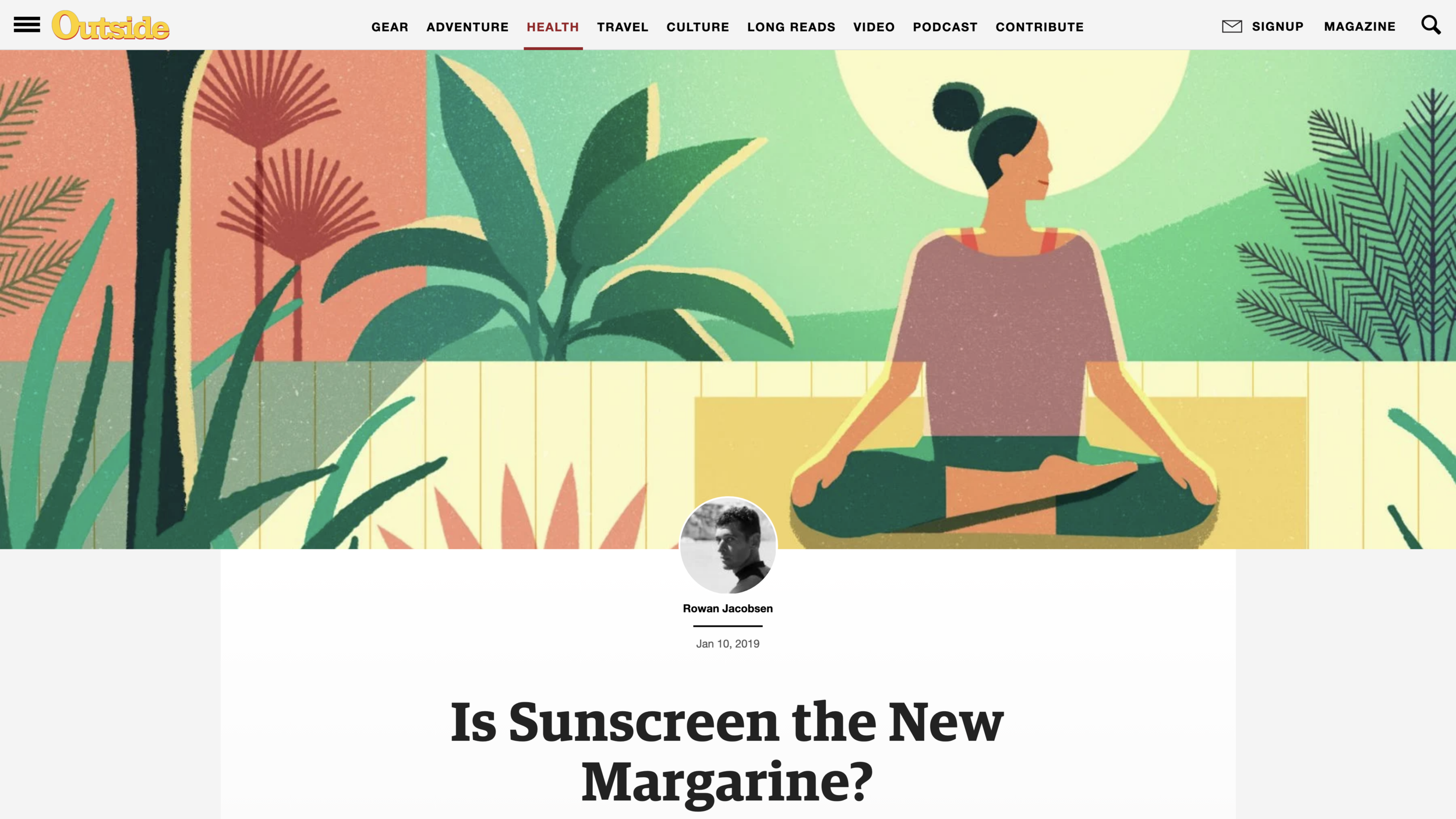
Link to the article shown above
Deaths from heart disease are orders of magnitude more common than deaths from skin cancer. So it makes sense to do things that reduce heart disease risk even at the cost of some increase in skin cancer risk. Sun exposure seems to have exactly this tradeoff: a modest but important reduction in heart disease risk accompanied by a modest increase in skin cancer risk. But the modest increase in skin cancer risk corresponds to a much, much smaller number of deaths. Some experts claim that the reduction in heart disease risk from sun exposure can be fully replicated by drugs that reduce heart disease. But that seems unlikely to me. We are evolutionarily adapted to a fair amount of sun exposure, and quite a few different bodily mechanisms may be predicated on sun exposure; anti-heart-disease drugs may only replicate or imitate a few of these mechanisms.
The importance of sun exposure is shown by the fact that people whose ancestors lived in northern climes are white. Enough people died from insufficient sun exposure that those of us with northern ancestry are preferentially descended from people whose skin let more sunlight in by being white. Note that this implies that those with ancestry from nearer the equator might need as much sun exposure as they can get, and would be ill-advised to use sunscreen that blocks out any physiologically useful component of sunlight. (That in turn would imply that sunscreen marketing to these folks would worsen racial inequality in health.)
I come to these views from reading the persuasive article “Is Sunscreen the New Margarine?” by Rowan Jacobsen. The bottom-line recommendation I take is that as long as you strenuously avoid getting a sunburn (even a mild one), and keep sunlight out of your eyes, sunshine on bare skin is good for you. (However, at the high end of this non-sunburn range, that much sun exposure may have long-run negative cosmetic effects—such as leathery skin—that you care about.)
I recommend that you read the whole article “Is Sunscreen the New Margarine?” but to convince you to take that recommendation, let quote some of the passages that most struck me as teasers. I’ll separate passages with my own added bullets.
If there was one supplement that seemed sure to survive the rigorous tests, it was vitamin D. People with low levels of vitamin D in their blood have significantly higher rates of virtually every disease and disorder you can think of: cancer, diabetes, obesity, osteoporosis, heart attack, stroke, depression, cognitive impairment, autoimmune conditions, and more. The vitamin is required for calcium absorption and is thus essential for bone health, but as evidence mounted that lower levels of vitamin D were associated with so many diseases, health experts began suspecting that it was involved in many other biological processes as well.
Yet vitamin D supplementation has failed spectacularly in clinical trials. Five years ago, researchers were already warning that it showed zero benefit, and the evidence has only grown stronger. In November, one of the largest and most rigorous trials of the vitamin ever conducted—in which 25,871 participants received high doses for five years—found no impact on cancer, heart disease, or stroke.
These rebels argue that what made the people with high vitamin D levels so healthy was not the vitamin itself. That was just a marker. Their vitamin D levels were high because they were getting plenty of exposure to the thing that was really responsible for their good health—that big orange ball shining down from above.
… today most of us have indoor jobs, and when we do go outside, we’ve been taught to protect ourselves from dangerous UV rays, which can cause skin cancer. Sunscreen also blocks our skin from making vitamin D, but that’s OK, says the American Academy of Dermatology, which takes a zero-tolerance stance on sun exposure: “You need to protect your skin from the sun every day, even when it’s cloudy,” it advises on its website. Better to slather on sunblock, we’ve all been told, and compensate with vitamin D pills.
Weller’s doubts began around 2010, when he was researching nitric oxide, a molecule produced in the body that dilates blood vessels and lowers blood pressure. He discovered a previously unknown biological pathway by which the skin uses sunlight to make nitric oxide.
It was already well established that rates of high blood pressure, heart disease, stroke, and overall mortality all rise the farther you get from the sunny equator, and they all rise in the darker months. Weller put two and two together and had what he calls his “eureka moment”: Could exposing skin to sunlight lower blood pressure?
Sure enough, when he exposed volunteers to the equivalent of 30 minutes of summer sunlight without sunscreen, their nitric oxide levels went up and their blood pressure went down. Because of its connection to heart disease and strokes, blood pressure is the leading cause of premature death and disease in the world, and the reduction was of a magnitude large enough to prevent millions of deaths on a global level.
Wouldn’t all those rays also raise rates of skin cancer? Yes, but skin cancer kills surprisingly few people: less than 3 per 100,000 in the U.S. each year. For every person who dies of skin cancer, more than 100 die from cardiovascular diseases.
People don’t realize this because several different diseases are lumped together under the term “skin cancer.” The most common by far are basal-cell carcinomas and squamous-cell carcinomas, which are almost never fatal.
Melanoma, the deadly type of skin cancer, is much rarer, accounting for only 1 to 3 percent of new skin cancers. And perplexingly, outdoor workers have half the melanoma rate of indoor workers. Tanned people have lower rates in general. “The risk factor for melanoma appears to be intermittent sunshine and sunburn, especially when you’re young,” says Weller. “But there’s evidence that long-term sun exposure associates with less melanoma.”
Lindqvist tracked the sunbathing habits of nearly 30,000 women in Sweden over 20 years. Originally, he was studying blood clots, which he found occurred less frequently in women who spent more time in the sun—and less frequently during the summer. Lindqvist looked at diabetes next. Sure enough, the sun worshippers had much lower rates. Melanoma? True, the sun worshippers had a higher incidence of it—but they were eight times less likely to die from it.
So Lindqvist decided to look at overall mortality rates, and the results were shocking. Over the 20 years of the study, sun avoiders were twice as likely to die as sun worshippers.
When I spoke with Weller, I made the mistake of characterizing this notion as counterintuitive. “It’s entirely intuitive,” he responded. “Homo sapiens have been around for 200,000 years. Until the industrial revolution, we lived outside. How did we get through the Neolithic Era without sunscreen? Actually, perfectly well. What’s counterintuitive is that dermatologists run around saying, ‘Don’t go outside, you might die.’”
Meanwhile, that big picture just keeps getting more interesting. Vitamin D now looks like the tip of the solar iceberg. Sunlight triggers the release of a number of other important compounds in the body, not only nitric oxide but also serotonin and endorphins. It reduces the risk of prostate, breast, colorectal, and pancreatic cancers. It improves circadian rhythms. It reduces inflammation and dampens autoimmune responses. It improves virtually every mental condition you can think of. And it’s free.
… the current U.S. sun-exposure guidelines were written for the whitest people on earth.
…
African Americans suffer high rates of diabetes, heart disease, stroke, internal cancers, and other diseases that seem to improve in the presence of sunlight, of which they may well not be getting enough.
… early sunscreen formulations were disastrous, shielding users from the UVB rays that cause sunburn but not the UVA rays that cause skin cancer. Even today, SPF ratings refer only to UVB rays, so many users may be absorbing far more UVA radiation than they realize. Meanwhile, many common sunscreen ingredients have been found to be hormone disruptors that can be detected in users’ blood and breast milk. The worst offender, oxybenzone, also mutates the DNA of corals and is believed to be killing coral reefs. Hawaii and the western Pacific nation of Palau have already banned it, to take effect in 2021 and 2020 respectively, and other governments are expected to follow.
… many experts in the rest of the world have already come around to the benefits of sunlight. Sunny Australia changed its tune back in 2005. Cancer Council Australia’s official-position paper (endorsed by the Australasian College of Dermatologists) states, “Ultraviolet radiation from the sun has both beneficial and harmful effects on human health.... A balance is required between excessive sun exposure which increases the risk of skin cancer and enough sun exposure to maintain adequate vitamin D levels.... It should be noted that the benefits of sun exposure may extend beyond the production of vitamin D. Other possible beneficial effects of sun exposure… include reduction in blood pressure, suppression of autoimmune disease, and improvements in mood.”
New Zealand signed on to similar recommendations, and the British Association of Dermatologists went even further in a statement, directly contradicting the position of its American counterpart: “Enjoying the sun safely, while taking care not to burn, can help to provide the benefits of vitamin D without unduly raising the risk of skin cancer.”
For annotated links to other posts on diet and health, see:
Stanley K. Ridgley Against Robin DeAngelo, Author of 'White Fragility' →
Because I mentioned Robin DeAngelo’s book White Fragility in a positive way in two blog posts, “Enablers of White Supremacy” and “How Even Liberal Whites Make Themselves Out as Victims in Discussions of Racism,” I consider it important to give the other side about Robin DeAngelo. Here is a link to Stanley K. Ridgley’s essay critical of Robin DeAngelo.
I don’t think my two blog posts are seriously vitiated by this; they were based on my imagined picture of how a racial sensitivity training along these lines might go, not on the reality of what Robin DeAngelo does. It may well be that my imagined picture is considerably more benign than the reality of what Robin DeAngelo does.
On this topic of racial sensitivity training, I also have a more recent post: “Thinking about the 'Executive Order on Combating Race and Sex Stereotyping'.”