David Ludwig's 6-Minute Summary of the Carbohydrate-Insulin Model of Obesity →
For annotated links to other posts on diet and health, see:
The Federalist Papers #7 A: Divided, the States Would Fall into Territorial Disputes Likely to Lead to War Between the States—Alexander Hamilton

Image Source: “Alternate History Weekly Update”
In the first half of the Federalist Papers #7, Alexander Hamilton makes one of the most persuasive arguments for a particular counterfactual history that I have seen. He argues that if the Union dissolved into separate groups of states, territorial disputes over western territories would be severe, and could easily lead to war. One reason this is so persuasive is that 73 years later, disputes over which states would be slave territories and which would be free territories did in fact lead to civil war. If disputes over whether territory was “slave” or “free” led to civil war, it is not hard to believe that disputes over full ownership of western territory by initially eastern states could have led to war. And those dispute probably would have come to a head much earlier than the actual American Civil War in 1860.
See if you aren’t persuaded by Alexander Hamilton’s argument. Here is the full text of the first half of the Federalist Papers #7:
|| Federalist No. 7 ||
The Same Subject Continued: Concerning Dangers from Dissensions Between the States
For the Independent Journal.
Author: Alexander Hamilton
To the People of the State of New York:
IT IS sometimes asked, with an air of seeming triumph, what inducements could the States have, if disunited, to make war upon each other? It would be a full answer to this question to say--precisely the same inducements which have, at different times, deluged in blood all the nations in the world. But, unfortunately for us, the question admits of a more particular answer. There are causes of differences within our immediate contemplation, of the tendency of which, even under the restraints of a federal constitution, we have had sufficient experience to enable us to form a judgment of what might be expected if those restraints were removed.
Territorial disputes have at all times been found one of the most fertile sources of hostility among nations. Perhaps the greatest proportion of wars that have desolated the earth have sprung from this origin. This cause would exist among us in full force. We have a vast tract of unsettled territory within the boundaries of the United States. There still are discordant and undecided claims between several of them, and the dissolution of the Union would lay a foundation for similar claims between them all. It is well known that they have heretofore had serious and animated discussion concerning the rights to the lands which were ungranted at the time of the Revolution, and which usually went under the name of crown lands. The States within the limits of whose colonial governments they were comprised have claimed them as their property, the others have contended that the rights of the crown in this article devolved upon the Union; especially as to all that part of the Western territory which, either by actual possession, or through the submission of the Indian proprietors, was subjected to the jurisdiction of the king of Great Britain, till it was relinquished in the treaty of peace. This, it has been said, was at all events an acquisition to the Confederacy by compact with a foreign power. It has been the prudent policy of Congress to appease this controversy, by prevailing upon the States to make cessions to the United States for the benefit of the whole. This has been so far accomplished as, under a continuation of the Union, to afford a decided prospect of an amicable termination of the dispute. A dismemberment of the Confederacy, however, would revive this dispute, and would create others on the same subject. At present, a large part of the vacant Western territory is, by cession at least, if not by any anterior right, the common property of the Union. If that were at an end, the States which made the cession, on a principle of federal compromise, would be apt when the motive of the grant had ceased, to reclaim the lands as a reversion. The other States would no doubt insist on a proportion, by right of representation. Their argument would be, that a grant, once made, could not be revoked; and that the justice of participating in territory acquired or secured by the joint efforts of the Confederacy, remained undiminished. If, contrary to probability, it should be admitted by all the States, that each had a right to a share of this common stock, there would still be a difficulty to be surmounted, as to a proper rule of apportionment. Different principles would be set up by different States for this purpose; and as they would affect the opposite interests of the parties, they might not easily be susceptible of a pacific adjustment.
In the wide field of Western territory, therefore, we perceive an ample theatre for hostile pretensions, without any umpire or common judge to interpose between the contending parties. To reason from the past to the future, we shall have good ground to apprehend, that the sword would sometimes be appealed to as the arbiter of their differences. The circumstances of the dispute between Connecticut and Pennsylvania, respecting the land at Wyoming, admonish us not to be sanguine in expecting an easy accommodation of such differences. The articles of confederation obliged the parties to submit the matter to the decision of a federal court. The submission was made, and the court decided in favor of Pennsylvania. But Connecticut gave strong indications of dissatisfaction with that determination; nor did she appear to be entirely resigned to it, till, by negotiation and management, something like an equivalent was found for the loss she supposed herself to have sustained. Nothing here said is intended to convey the slightest censure on the conduct of that State. She no doubt sincerely believed herself to have been injured by the decision; and States, like individuals, acquiesce with great reluctance in determinations to their disadvantage.
Those who had an opportunity of seeing the inside of the transactions which attended the progress of the controversy between this State and the district of Vermont, can vouch the opposition we experienced, as well from States not interested as from those which were interested in the claim; and can attest the danger to which the peace of the Confederacy might have been exposed, had this State attempted to assert its rights by force. Two motives preponderated in that opposition: one, a jealousy entertained of our future power; and the other, the interest of certain individuals of influence in the neighboring States, who had obtained grants of lands under the actual government of that district. Even the States which brought forward claims, in contradiction to ours, seemed more solicitous to dismember this State, than to establish their own pretensions. These were New Hampshire, Massachusetts, and Connecticut. New Jersey and Rhode Island, upon all occasions, discovered a warm zeal for the independence of Vermont; and Maryland, till alarmed by the appearance of a connection between Canada and that State, entered deeply into the same views. These being small States, saw with an unfriendly eye the perspective of our growing greatness. In a review of these transactions we may trace some of the causes which would be likely to embroil the States with each other, if it should be their unpropitious destiny to become disunited.
Here are links to my other posts on The Federalist Papers so far:
The Federalist Papers #1: Alexander Hamilton's Plea for Reasoned Debate
The Federalist Papers #3: United, the 13 States are Less Likely to Stumble into War
The Federalist Papers #4 B: National Defense Will Be Stronger if the States are United
The Federalist Papers #5: Unless United, the States Will Be at Each Others' Throats
The Federalist Papers #6 A: Alexander Hamilton on the Many Human Motives for War
Cities Cling to Laws That Shut Out Non-Traditional Family Groups and Roommates →
The article flagged by the link above is related to my post “‘Keep the Riffraff Out!’.”
How to Fight Global Warming
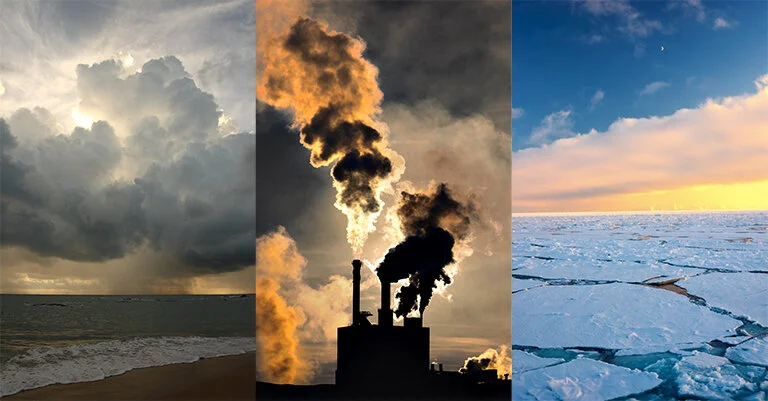
I have run into a surprising number of people who think global warming has a good chance of causing an apocalypse that will destroy the world as we know it within the next few decades. I think that unlikely. We should be very concerned about the small chance that Earth could become like Venus, but in the long history of the Earth it has been very warm before, and it is not that likely that things will go completely off the rails this time.
Some of the biggest harms of global warming and the rise in atmospheric carbon dioxide riving global warming are likely to be:
effects on the ocean, including acidification
a combination of rising oceans and local climate changes that drives mass migrations that lack of sympathy for desperately poor “economic migrants” is likely to turn into humanitarian catastrophes
extinctions of many species
(Let me know what I forgot.)
Economists tend to favor a “carbon tax” on carbon dioxide emissions as a highly efficient and effective way to slow global warming. This kind of tax can also be applied to methane leaked into the atmosphere. Atmospheric methane is a powerful greenhouse gas, but also much, much shorter-lived than atmospheric carbon dioxide.
In their working paper “Making Carbon Taxation a Generational Win Win,” Larry Kotlikoff, Felix Kubler, Andrey Polbin, Jeffrey Sachs, and Simon Scheidegger argue that because many of the benefits of slowing global warming accrue to future generations, it is appropriate to rack up additional national debt—that future generations would have to deal with—if those funds are used to slow global warming.
Here is my favorite version of compensating the current generations for their efforts to reduce carbon dioxide emissions. I think once enacted, it could solidify political support for fighting global warming. Give all adult citizens an equal amount of transferable “carbon tax equities,” with additional equities created to give to children who reach age 18. These carbon tax equities would distribute the proceeds of carbon taxes in proportion to carbon tax equity holding. They would become worthless if carbon taxes were ever reduced to zero. So those who had bought up a lot of carbon tax equities would lobby strenuously against carbon taxes being reduced to zero, and could rightly claim it was unfair to do so when they had purchased the carbon tax equities under the expectation that there would be carbon taxes. Being given assets of substantial value, backed by carbon taxes for many years to come also makes it easier for people to finance an education or the purchase of a home.
Creating assets that help solidify a political settlement has important precedents. Alexander Hamilton argued (successfully) for the assumption of state debts by the new federal government because it would give bondholders a stake in the success of the new federal government. The Meiji government gave samurais “samurai bonds” to compensate them for their samurai stipend being cut off and allowed those samurai bonds to be used to capitalize banks. (There is a working paper on this: “Swords into Bank Shares: Finance, Conflict, and Political Reform in Meiji Japan,” by Saumitra Jha, Kris Michener and Masanori Takashima.)
What if we can’t get carbon taxes enacted in enough countries? In the Q&A after presenting “Making Carbon Taxation a Generational Win Win” at the 2019 North American Summer Meetings of the Econometric Society, Larry Kotlikoff said something fascinating: stopping the burning of coal alone can get one most of the way toward the benefits of an ideal carbon tax. Why is coal so bad? When combined with oxygen in the air by burning, every atom of carbon has the potential to make a molecule of carbon dioxide, and coal is almost entirely carbon atoms. By contrast, natural gas is mostly methane, CH4, which has four atoms of hydrogen for every atom of carbon. Oil is also a hydrocarbon, though it has a higher carbon to hydrogen ratio. The hydrogen atoms generate a lot of energy when combined with oxygen to form H2O: water. So there is a lot of energy from natural gas that isn’t coming from the carbon in it. In any case, burning coal is very, very bad—worse than burning natural gas, oil or other hydrocarbons. An international agreement to quit building coal power plants and to begin to phase out the existing coal plants would be a huge step forward for slowing global warming—a much, much bigger step than any international agreement so far to try to deal with global warming.
The horror of coal has an important implication for environmental activists: demonizing coal would do more than almost anything else they could do to save the planet. In my view, demonizing coal is quite possible if environmental activists focus on this goal. Inevitably if one tries to get across a dozen messages, each of those messages loses some punch. They can get lost among all the other messages. But if the horror of coal became the main message, I think people would remember. Demonizing coal seems quite doable because coal looks dirty. That is, coal is not only bad, it looks bad.
(I am not a big hashtag user on Twitter, myself but there are many tweets that bear the hashtag #killcoal. Here are some of my tweets with the words “Kill coal.”)
For those who are worried about apocalypse during their lifetime, let me give one more word of reassurance. climate engineering such as aerosols to block some fraction of sunlight may have bad side effects, but in a pinch they are quite doable. (See the Wikipedia article “Climate engineering.”) The cost is relatively modest. Moreover, unlike restraining carbon dioxide emission, for which it is crucial to get most nations on board, since a few big nations can emit a lot of carbon dioxide, climate engineering can be done unilaterally by one nation without any need of getting other nations on board. Bad things will happen in the world in the future, and many of those bad things in the future may result from global warming, but I think nuclear holocaust is a much more likely route to true “end-of-the-world”ish apocalypse than global warming.
Update, April 4, 2020: One of my students had some important questions about this post. Let me put my answers down on paper here.
First, what is an example of what I talk about in this passage?
... because many of the benefits of slowing global warming accrue to future generations, it is appropriate to rack up additional national debt—that future generations would have to deal with—if those funds are used to slow global warming.
The simplest case would be if some type of government purchases—say research spending—is important for slowing global warming.
But what if a carbon tax is the main tool for stopping global warming? Then giving the current generation carbon tax rebates that are bigger than the current revenue from the carbon tax would be an example of racking up government debt to make it all a good deal for the current generation as well as for future generations. My proposal of carbon tax equities is in this spirit.
Let me explain the carbon tax equities. "Equity" simply means something that works like a stock. Stock gives you ownership of a slice of a company's profits. Carbon tax equities are pieces of paper that give you a slice of carbon tax revenue. Just like stock, if you want, you can sell your rights to your future slice of carbon tax revenue. My idea is that the current generation gets the carbon tax equities. The value of these carbon tax equities is greater than the value of all the carbon taxes the current generation will pay, since the carbon tax equities include the value of carbon taxes future generations will pay. So the current generation is getting more back than it pays. This is arguably fair to future generations because they get a non-destroyed planet—it is in the interest of future generations to compensate/bribe the current generation to slow global warming.
Fasting Before Feasting
Suppose you are concerned about your weight and have a time of feasting coming up: a holiday, friends or family coming to town, or as I do, a retreat that will have a lot of good food. Suppose also that you have had a good experience with fasting in general, heeding all of the cautions about fasting that I repeat at the beginning of my post “Increasing Returns to Duration in Fasting.” (By “fasting,” I mean not eating food, but continuing to drink water.) Is it better to fast before feasting or fast after feasting? The answer is “Fasting before feasting is better,” and follows from an interesting logic.
In “Increasing Returns to Duration in Fasting” I write:
I theorize that when you end your fast and resume eating, you will have an enhanced appetite in order to replenish your glycogen stores. By contrast, I think of the amount of body fat having a weaker effect on appetite.
Everything I say from here on is predicated on that theory. If the body’s desire to replenish glycogen stores enhances appetite after a sustained period of fasting, then it will feel natural to eat somewhat more than usual after a period of fasting. Thus:
If you fast right before a time when you were planning to feast anyway, that isn’t extra at all.
But if you fast after feasting, then you will have an additional period when you are like to eat extra after your fast. That would be over and above the feast before your fast.
So, if your appetite is enhanced by the body’s desire to replenish glycogen stores after a fast, you will probably end up at a lower weight if you time that extra appetite to coincide with the feasting that you were going to do anyway instead of having that extra appetite come later, when it is likely to lead to an additional time of heavy eating.
Another totally equivalent way of looking at things that will make more sense if you read “Increasing Returns to Duration in Fasting” is that if you time a fast so it comes before a time of feasting you were going to do anyway, you escape the “fixed cost” of a period of fasting coming from the extra appetite to rebuild glycogen stores after your fast is over. In saying this, I am using the calories in/calories out identity, but treating calories in as something highly endogenous that depends on your appetite. And I am assuming that you are eating low on the insulin index so that calories out don’t change much while you are fasting. (See “Forget Calorie Counting; It's the Insulin Index, Stupid.”)
Note that eating low on the insulin index leaving calories out at a normal level is closely related to eating low on the insulin index making fasting easy: if your body were trying to reduce calories out it would likely make you feel sluggish at best and truly crummy at worst, which is no fun. But if your body is expending just as many calories as normal, you have a good chance of feeling fine during fasting, at least once you have adapted to the new way of eating when you do eat. (See “David Ludwig: It Takes Time to Adapt to a Lowcarb, Highfat Diet.”)
For annotated links to other posts on diet and health, see:
A Thumbnail History of Mormonism from When It Became a Going Concern to Utah Statehood
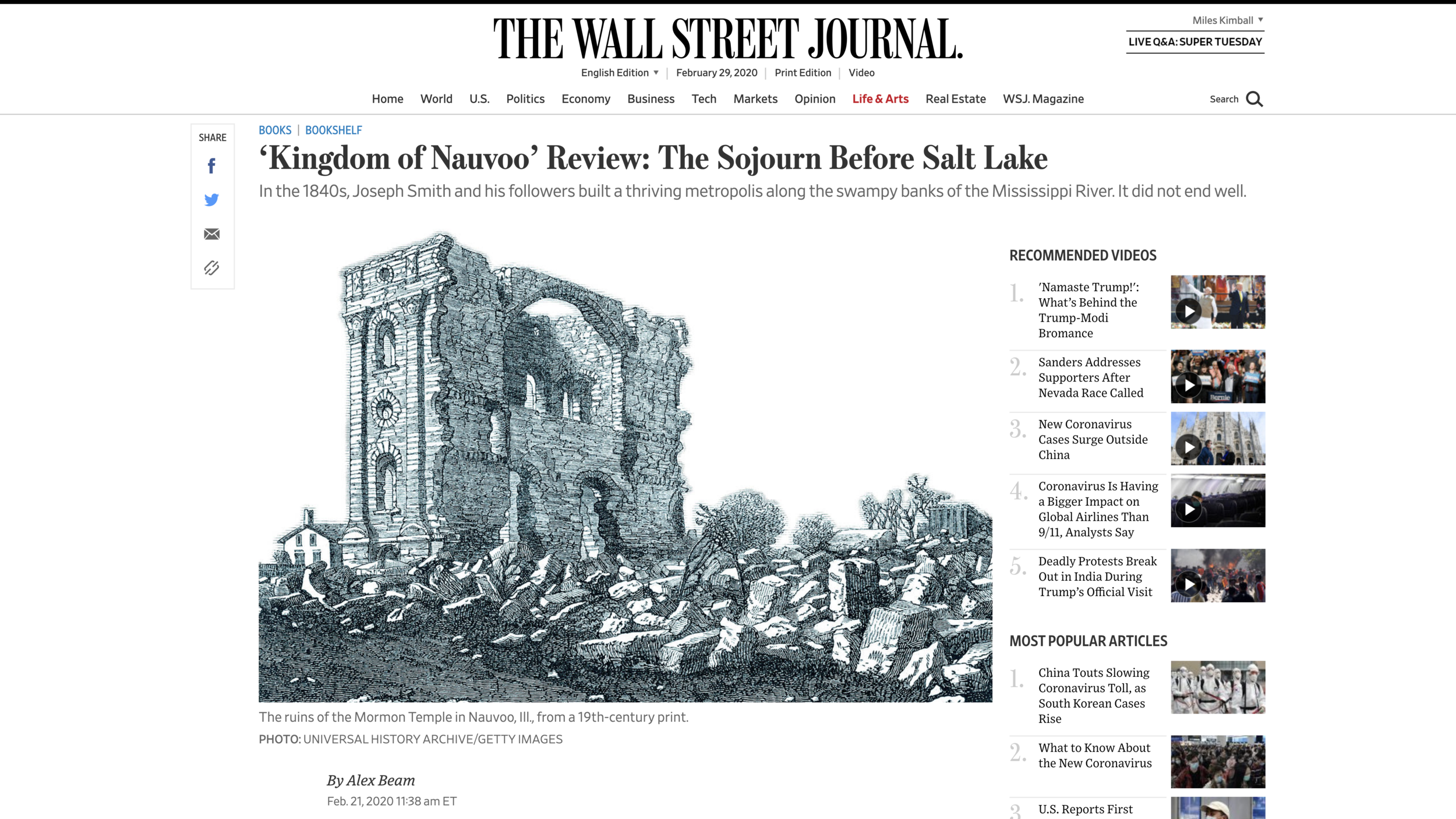
Other than the initial founding years of Mormonism, Alex Beam’s February 21 2020 Wall Street Journal book review of Benjamin Park’s Kingdom of Nauvoo does a great job of boiling down 19th-century Mormon history down. All to many people don’t know this fascinating story. Let me arrange key quotation from Alex into chronological order to give you the sketch:
Joseph Smith fled [Kirtland, Ohio] in the dead of night after his “anti-bank bank,” called the Kirtland Safety Society, collapsed, impoverishing both Mormon and gentile investors.
Nauvoo, where the Mormons sought shelter after fleeing Ohio and Missouri, was yet another place where the church came to grief.
The Mormons’ sojourn in Nauvoo, Ill., along the banks of the Mississippi River, is one of the grand, underappreciated sagas in American history. In just six years, the Latter-day Saints, as they called themselves—guided by their charismatic, bumptious leader, Joseph Smith—built a thriving metropolis in a mosquito-infested swamp that grew to be bigger than Chicago.
Not only did Smith confect a vibrant city from a swamp; he conjured up many of Mormonism’s best known, and most notorious, doctrines in just a few years. In Nauvoo, he introduced “vicarious baptisms” of the dead, a rite that Mormons practice to this day, even on deceased gentiles, their term for non-Mormons. He also devised the “endowment” ritual to initiate members—featuring a re-enactment of the Adam and Eve story from the Book of Genesis—and it is still performed in Mormon temples.
It was in Nauvoo that Smith introduced and practiced the most controversial teaching of all: polygamy. By 1846, just three years after his secret “revelation” calling for plural marriage, about 200 men and 700 women had multiple spouses.
Mr. Park exploits new material on Smith’s so-called Council of Fifty, a secret, all-male committee whose remit was to support his wackadoodle presidential campaign of 1844. Oh, yes, and “to rule the world,” as Mr. Park summarizes its grand ambition. The church kept the council’s minutes under lock and key for 172 years, until 2016. Why? Probably, in part, because they were seditious. The Council of Fifty was to be a theocratic “shadow government,” Mr. Park says, with a “new form of divine governance.” The council appointed a committee to draft a new constitution for the putative “Aristarchy,” a government by “the wisest & best,” in Smith’s phrase.
Another reason for concealing the council’s minutes for so long might have been its sheer ridiculousness, painful to a faith that wants its history to be taken seriously. The idea that Smith “plotted to take over American politics” and set himself up as “king of God’s empire,” as Mr. Park puts it, testifies to Smith’s manic digressions during the Nauvoo period. More than once, Mr. Park uses the adjective “reckless” to describe Smith’s actions.
Aggrieved by the Mormons’ political machinations and shocked by reports of widespread polygamy, the anti-Mormon “old settlers” of western Illinois murdered Smith in 1844 and drove his followers out of Illinois two years later.
When the mortally wounded Smith—injured by gunshots, pursued by a mob—plummeted from his second-story cell window at the Carthage, Ill., jail, … Smith “raised his arms in the Masonic sign of distress.” His last words were “O Lord my God . . . ”—the beginning of the Masonic call for help. (“O Lord my God is there no help for the widow’s son?”)
After Smith’s death, his successor, Brigham Young, led 15,000 Latter-day Saints westward to a manifest destiny in the Great Salt Lake Basin. As Mr. Park explains it, the embittered Mormons abandoned the American experiment and fled to the then-quite-wild West, “outside America’s control.”
… the Mormon hegira to Utah was a secession that worked, decades before the bloody, failed attempt by the Confederate States of America.
Mr. Park adeptly describes Smith’s cautious acceptance of female authority on the frontier and Brigham Young’s reactionary rejection of it. “I don’t want the advice or counsel of any woman—they would lead us down to hell,” Young proclaimed less than a year after Smith’s death. The Mormon Church has treated African-Americans even more equivocally, and Mr. Park is sharp and unsparing in his account of the church’s initial acceptance, and later humiliation, of its very few black members during the Nauvoo era and its aftermath. He credits Smith with an “inclusive racial vision,” undone by Young’s “policy of white supremacy.”
Fifty years later, after operating a de facto Mormon republic in and around the Utah Territory, church members rejoined the United States in 1896 as the state of Utah, and the rest is history.
The Church of Jesus Christ of Latter-day Saints now claims more than 16 million members world-wide and is a potent economic and political force in the country that once anathematized them.
Let me add a few notes of my own to this sketch of the history of Mormonism from when it had become a going concern to Utah statehood:
Kirtland, Ohio became an early Mecca for Mormonism because Sidney Rigdon had brought almost all of his preexisting Cambellite Restorationist congregation in Ohio into Mormonism. Also, things had gotten hot for Joseph Smith in upstate New York where he founded Mormonism.
Illinois initially welcomed the Mormons when Missouri expelled Mormons under an “Extermination Order.” Nauvoo received a charter from the Illinois state government giving Nauvoo a large degree of autonomy.
Because of the predominance of Mormons in Nauvoo, Joseph Smith was the ruler of Nauvoo while he lived.
Joseph Smith was put in the jail where he was murdered by a mob because he ordered the destruction of a printing press for the Nauvoo Expositor, which in its first issue had revealed polygamy among the Mormons and was planning in its second issue to reveal that Joseph Smith had had himself crowned king of the world. Thus, Joseph Smith was going on trial for violating freedom of the press as Mayor of Nauvoo.
It has been very difficult for the Mormon Church to fully renounce Brigham Young’s racial views. But in recent years, the Mormon Church has come a long way toward doing so. See:
Don't miss these posts on Mormonism:
The Message of Mormonism for Atheists Who Want to Stay Atheists
How Conservative Mormon America Avoided the Fate of Conservative White America
The Mormon Church Decides to Treat Gay Marriage as Rebellion on a Par with Polygamy
David Holland on the Mormon Church During the February 3, 2008–January 2, 2018 Monson Administration
Also see the links in "Hal Boyd: The Ignorance of Mocking Mormonism."
Don’t miss these Unitarian-Universalist sermons by Miles:
By self-identification, I left Mormonism for Unitarian Universalism in 2000, at the age of 40. I have had the good fortune to be a lay preacher in Unitarian Universalism. I have posted many of my Unitarian-Universalist sermons on this blog.
Junaid Mubeen—Mathematics without History is Soulless: π through the Ages →
Don’t miss the links at the bottom to other posts about math.
Why Housing is So Expensive
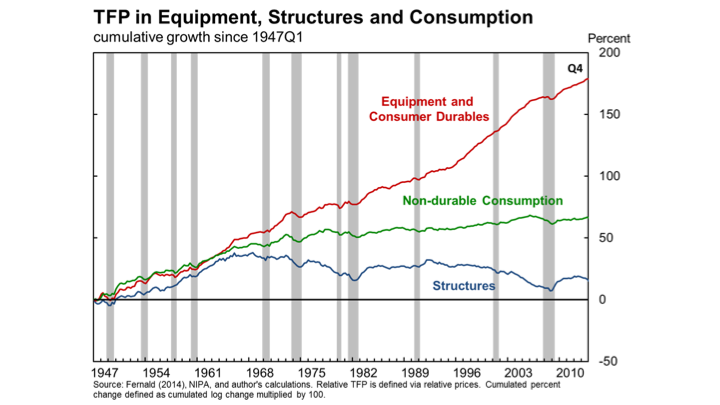
Figure 7 from “Productivity and Potential Output Before, During, and After the Great Recession” by John Fernald, ultimately published in the 2014 NBER Macroeconomics Annual
There are two big reasons why housing is so expensive. The first is the obstacles put in the way of building new housing in many of the most desirable cities to live in. My detailed knowledge of these obstacles comes mostly from two Facebook groups: Market Urbanism and Market Urbanism Report. I highly recommend those Facebook groups. The political battle over regulatory obstacles to housing construction has heated up lately. For a long time there have been many “NIMBYs”: people who say “Not In My Back Yard.” But now there are also “YIMBYs” as a political force: people who say “Yes, In My Back Yard.”
The YIMBYs have had some successes lately. For example, California state law now says that local governments must allow garages that are not being used for vehicles to be converted into living space. Oregon state law now bans single-family-housing-only zoning. Minneapolis also now bans single-family-housing-only zoning. And Salim Furth has an article on a variety of pro-housing policies being pursued in different states.
The argument for state and federal involvement in policies affecting the quantity of housing that is built is a strong one because local governments are unlikely to fully factor in the benefits to people not now living in a city (and therefore not voting in that city) of being able to afford to move to that city. State governments are more likely to factor in that benefit for people moving from elsewhere in the state, while the federal government is more likely to factor in that benefit for people moving in from other states. (Note that the federal government does not need to mandate anything: it can simply dangle federal money in front of states that have a pro-residential-construction policy.)
One nice policy that targets total amount of housing without dictating specifics to local governments a policy in which the state establishes a goal for housing construction for each locality. If the local government meets the goal, it retains full control over the detailed zoning and other regulations. But if the local government doesn’t meet the goal, then a state agency can approve construction without any veto from the city. Most local governments would work strenuously toward achieving the goal in order to retain local control.
Having local governments get out of the way of residential construction reduces the regulatory cost of building housing and reduces the land cost of housing when taller buildings are allowed. But it still costs something to build the structure itself. Sadly, as John Fernald’s graph at the top of this post shows, there has been no real improvement in productivity in construction in the last 50 years. (“TFP” stands for “Total Factor Productivity.”) This accords with casual observation: the way houses are built now doesn’t seem that much different than when I was 10 years old in 1970. When one thinks about the dramatic transformation of many other industries in the last 50 years, the lack of transformation in construction is truly remarkable.
In particular, I marvel at how much greater the increase in productivity has been in manufactured goods made in factories than in construction. Is construction inherently so different from manufacturing? The mystery of low productivity growth in construction is one that more economists should try to answer.
I have a hypothesis for where policy went wrong, getting in the way of productivity improvements in construction. We could probably have had dramatic improvements in productivity in construction if we had moved more and more toward building pieces of houses in factories and then hooking those pieces together onsite. (Think Legos.) This would have required nationally standardized construction codes that could vary by soil type, earthquake or flood risk, average precipitation, etc., but would otherwise be the same all across the US. It is not to late to begin such a transformation.
I have heard the argument that housing is different because people want a customized house, but one could make the same argument about cars, and it is false. We manage to make high-end cars in factories that are customized enough for people to be happy with them. Moreover, the lower people’s income, the more willing they are to accept standardization if it means a less expensive house. The tragedy is that there aren’t standardized houses produced in pieces in factories by big companies that are a step above or three steps above a double-wide trailer house.
Bringing down the high cost of housing is something that is within our power. But it will take big changes from current policy.
Other posts on housing:
Shane Phillips: Housing and Transportation Costs Have Become a Growing American Burden
The Wrong Side of Cobb-Douglas: Matt Rognlie’s Smackdown of Thomas Piketty Gains Traction
A Conversation with Clint Folsom, Mayor of Superior, Colorado
Josh Barro: We Need a New Supply Side Economics—Here Are 8 Things We Can Do
Links drawn from “Market Urbanism” and “Market Urbanism Report” and other authors:
Alan Durning—Yes, You Can Build Your Way to Affordable Housing: Lessons from Unexpected Places
Dave Merrill and Lauren Leatherby: Here’s How America Uses Its Land
Nolan Gray: The Most Important City Planning Concept You’ve Never Heard Of
Scott Sumner on Why It is OK If a Lot of Housing Construction is High-End
Sandy Ikeda: Housing: The Case for YIMBY (Yes, In My Back Yard!)
Noah Smith: America’s Battle Over Housing Is Just Getting Started
Roderick Hills: Why Do So Many Affordable-Housing Advocates Reject the Law of Supply and Demand?
Patrick Sisson: Why Affordable Housing is Scarce in Progressive Cities
Timothy Lee: Tokyo May Have Found the Solution to Soaring Housing Costs
Henry Grabar: Minneapolis Confronts Its History of Housing Segregation
Joe Cortright: If You Want Less Displacement, Build More Housing
Virginia Postrel on Advocating for Abundant Housing at the Grassroots Level
Patrick Sisson: YIMBY in action: How Pro-Housing Policies Became a Political Rallying Cry
Matthew Yglesias: ‘Miles Kimball on Potential Housing Bubble Remedies’
David Andolfatto, Miles Kimball and Mike Johnson: What Ails Housing Construction?
Nolan Gray on Affordable Housing: Learning to Love a Humble Neighborhood
Nolan Gray and Brandon Fuller: A Red-State Take on a YIMBY Housing Bill
Robin Green: Don’t Recognize Racist Externalities with a Pigou Tax
Sugar Is Not Very Satiating
One of the things I have emphasized in my diet and health posts is that eating sugar makes you hungry. See for example:
The same kind of spike up in insulin can make people hungry after eating sugar can make people hungry after consuming nonsugar sweeteners—some more so than others. See
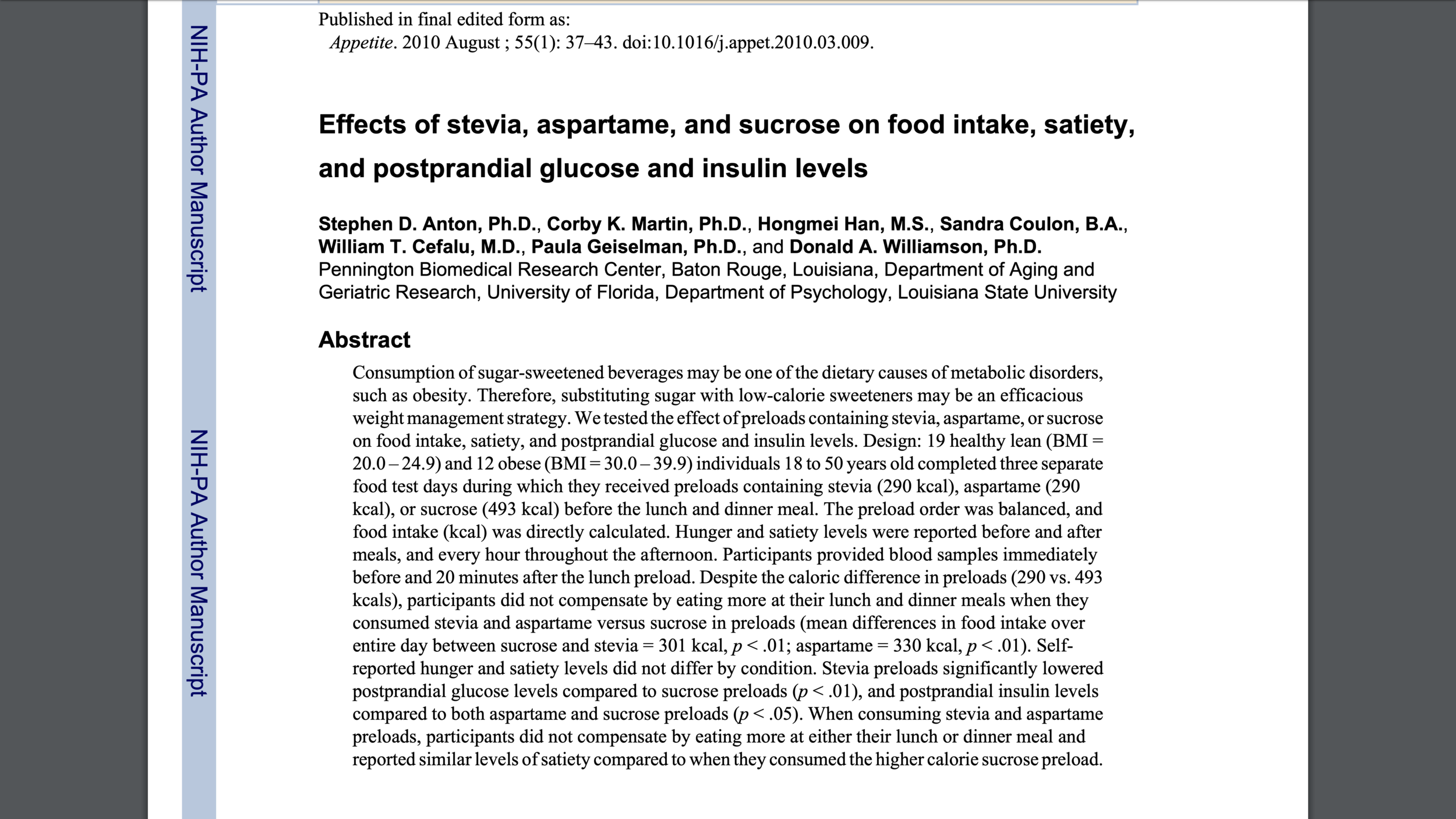
The paper “Effects of stevia, aspartame, and sucrose on food intake, satiety, and postprandial glucose and insulin levels” by Stephen Anton, Corby Martin, Hongmei Han, Sandra Coulon, William Cefalu, Paula Geiselman and Donald Williamson shows that sugar has enough stronger insulin spike (or something else that has the same effect on satiation) to cancel out the satiating effect of sugar’s extra calories when compared to aspartame and stevia. As a result, people ended up eating more calories over the day by the amount of extra calories that were in the sugar as compared to the stevia or aspartame.
The insulin spikes themselves can be seen in the authors’ Figure 3:

As you can see, whether with sugar, stevia or aspartame the “preload” snack caused a substantial increase in insulin. But the increase in insulin is worst with sugar, least with stevia and in between with aspartame.
Simply because stevia and aspartame are not as bad as sugar in causing an insulin spike doesn’t mean they are OK. Aspartame has MSG-like side-effects that make it a good thing to avoid. (See “The Case Against Monosodium Glutamate—Why MSG is Dangerous (as are Other Sources of Free Glutamate) and How the Dangers Have Been Covered Up.”) The debate about whether Stevia is OK or not rages in the comment section of “Which Nonsugar Sweeteners are OK? An Insulin-Index Perspective.”
To the extent the problem with Stevia is its effect in making you hungrier, you can judge for yourself by experimenting with how hungry you feel after, say a soft drink sweetened only with stevia and containing few calories. This is actually not so different in spirit from one of the measures Stephen Anton, Corby Martin, Hongmei Han, Sandra Coulon, William Cefalu, Paula Geiselman and Donald Williamson use. They write:
Computerized VAS were used to assess subjective ratings of hunger, satiety, fullness, as well as hedonic ratings of food (i.e., appearance, aroma, flavor, texture and palatability). When completing the VAS, participants rate the intensity of these subjective states on a 100-unit line from “not at all” to “extremely.” Studies support the reliability and validity of VAS for measuring subjective states related to food intake (Geiselman et al, 1998; Flint, Raben, Blundell, & Astrup, 2000).
The bottom line of “Which Nonsugar Sweeteners are OK? An Insulin-Index Perspective” is that oligosacchides (such as chicory root) or erythritol seem to be the safest nonsugar sweeteners. “Swerve” seems to have erythritol and oligosaccharides as its main sweeteners, though other things could be hiding under the label “natural flavors.” I have also been able to find on Amazon sweeteners that are mainly erythritol and others that are mainly oligosaccharides if you prefer to lean in one of those directions. Of course, as I emphasize in “Which Nonsugar Sweeteners are OK? An Insulin-Index Perspective,” anything sweet is likely to make you think about and anticipate food, which has some tendency to raise insulin and make you feel hungry.
For annotated links to other posts on diet and health, see:
The Federalist Papers #6 B: Commercial Republics Also Start Wars with Their Neighbors—Alexander Hamilton
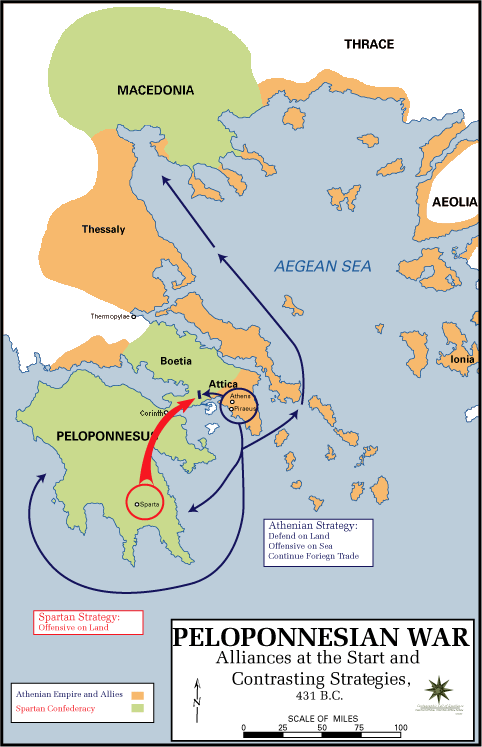

Democracy is good. Peace is good. Some have argued that democracy leads to more peace. Call Alexander Hamilton a skeptic. In the second half of the Federalist Papers, #6, he gives a substantial list of wars between democracies in order to argue that having multiple republics within the territory of the United States would likely lead to war.
In addition to rebutting the idea that democracies don’t start wars with one another, Alexander Hamilton also rebuts the idea that being focused on commerce does not stop republics from starting wars with one another. I do consider commerce a partial antidote to xenophobia, but as Alexander Hamilton points out, there are many other motivations for war.
In the second half of the Federalist Papers #6, Alexander Hamilton first discusses theory, then empirics, then concludes. In his theory section, let me add bullets. In his empirical section, let me add labels in bold. In addition to labeling his conclusion in bold, let me add bold italics to key points in his conclusion. I also put the contents of his footnotes in square brackets where the reference appears rather than at the bottom. With those additions, here is what he says:
But notwithstanding the concurring testimony of experience, in this particular, there are still to be found visionary or designing men, who stand ready to advocate the paradox of perpetual peace between the States, though dismembered and alienated from each other.
The genius of republics (say they) is pacific;
the spirit of commerce has a tendency to soften the manners of men, and to extinguish those inflammable humors which have so often kindled into wars.
Commercial republics, like ours, will never be disposed to waste themselves in ruinous contentions with each other. They will be governed by mutual interest, and will cultivate a spirit of mutual amity and concord.
Is it not (we may ask these projectors in politics) the true interest of all nations to cultivate the same benevolent and philosophic spirit?
If this be their true interest, have they in fact pursued it?
Has it not, on the contrary, invariably been found that momentary passions, and immediate interest, have a more active and imperious control over human conduct than general or remote considerations of policy, utility or justice?
Have republics in practice been less addicted to war than monarchies?
Are not the former administered by MEN as well as the latter?
Are there not aversions, predilections, rivalships, and desires of unjust acquisitions, that affect nations as well as kings?
Are not popular assemblies frequently subject to the impulses of rage, resentment, jealousy, avarice, and of other irregular and violent propensities?
Is it not well known that their determinations are often governed by a few individuals in whom they place confidence, and are, of course, liable to be tinctured by the passions and views of those individuals?
Has commerce hitherto done anything more than change the objects of war?
Is not the love of wealth as domineering and enterprising a passion as that of power or glory? \
Have there not been as many wars founded upon commercial motives since that has become the prevailing system of nations, as were before occasioned by the cupidity of territory or dominion?
Has not the spirit of commerce, in many instances, administered new incentives to the appetite, both for the one and for the other?
Let experience, the least fallible guide of human opinions, be appealed to for an answer to these inquiries.
Sparta, Athens, Rome and Carthage. Sparta, Athens, Rome, and Carthage were all republics; two of them, Athens and Carthage, of the commercial kind. Yet were they as often engaged in wars, offensive and defensive, as the neighboring monarchies of the same times. Sparta was little better than a wellregulated camp; and Rome was never sated of carnage and conquest.
Carthage, though a commercial republic, was the aggressor in the very war that ended in her destruction. Hannibal had carried her arms into the heart of Italy and to the gates of Rome, before Scipio, in turn, gave him an overthrow in the territories of Carthage, and made a conquest of the commonwealth.
Venice. Venice, in later times, figured more than once in wars of ambition, till, becoming an object to the other Italian states, Pope Julius II. found means to accomplish that formidable league, [The League of Cambray, comprehending the Emperor, the King of France, the King of Aragon, and most of the Italian princes and states. which gave a deadly blow to the power and pride of this haughty republic.
Holland. The provinces of Holland, till they were overwhelmed in debts and taxes, took a leading and conspicuous part in the wars of Europe. They had furious contests with England for the dominion of the sea, and were among the most persevering and most implacable of the opponents of Louis XIV.
Britain. In the government of Britain the representatives of the people compose one branch of the national legislature. Commerce has been for ages the predominant pursuit of that country. Few nations, nevertheless, have been more frequently engaged in war; and the wars in which that kingdom has been engaged have, in numerous instances, proceeded from the people.
There have been, if I may so express it, almost as many popular as royal wars. The cries of the nation and the importunities of their representatives have, upon various occasions, dragged their monarchs into war, or continued them in it, contrary to their inclinations, and sometimes contrary to the real interests of the State. In that memorable struggle for superiority between the rival houses of AUSTRIA and BOURBON, which so long kept Europe in a flame, it is well known that the antipathies of the English against the French, seconding the ambition, or rather the avarice, of a favorite leader, [The Duke of Marlborough] protracted the war beyond the limits marked out by sound policy, and for a considerable time in opposition to the views of the court.
The wars of these two last-mentioned nations have in a great measure grown out of commercial considerations,--the desire of supplanting and the fear of being supplanted, either in particular branches of traffic or in the general advantages of trade and navigation.
Conclusion. From this summary of what has taken place in other countries, whose situations have borne the nearest resemblance to our own, what reason can we have to confide in those reveries which would seduce us into an expectation of peace and cordiality between the members of the present confederacy, in a state of separation? Have we not already seen enough of the fallacy and extravagance of those idle theories which have amused us with promises of an exemption from the imperfections, weaknesses and evils incident to society in every shape? Is it not time to awake from the deceitful dream of a golden age, and to adopt as a practical maxim for the direction of our political conduct that we, as well as the other inhabitants of the globe, are yet remote from the happy empire of perfect wisdom and perfect virtue?
Let the point of extreme depression to which our national dignity and credit have sunk, let the inconveniences felt everywhere from a lax and ill administration of government, let the revolt of a part of the State of North Carolina, the late menacing disturbances in Pennsylvania, and the actual insurrections and rebellions in Massachusetts, declare--!
So far is the general sense of mankind from corresponding with the tenets of those who endeavor to lull asleep our apprehensions of discord and hostility between the States, in the event of disunion, that it has from long observation of the progress of society become a sort of axiom in politics, that vicinity or nearness of situation, constitutes nations natural enemies. An intelligent writer expresses himself on this subject to this effect: "NEIGHBORING NATIONS (says he) are naturally enemies of each other unless their common weakness forces them to league in a CONFEDERATE REPUBLIC, and their constitution prevents the differences that neighborhood occasions, extinguishing that secret jealousy which disposes all states to aggrandize themselves at the expense of their neighbors." [Vide "Principes des Negociations" par l'Abbe de Mably] This passage, at the same time, points out the EVIL and suggests the REMEDY.
PUBLIUS.
Here are links to my other posts on The Federalist Papers so far:
The Federalist Papers #1: Alexander Hamilton's Plea for Reasoned Debate
The Federalist Papers #3: United, the 13 States are Less Likely to Stumble into War
The Federalist Papers #4 B: National Defense Will Be Stronger if the States are United
The Federalist Papers #5: Unless United, the States Will Be at Each Others' Throats
The Federalist Papers #6 A: Alexander Hamilton on the Many Human Motives for War