Too Much of Any Amino Acid is Probably Bad for You, But Monosodium Glutamate Isn't Any Worse Than That

Update February 17, 2020: In response to following the trail from the first comment below by Adrienne Samuels, I have turned around 180 degrees in my views on monosodium glutamate. See my post “The Case Against Monosodium Glutamate—Why MSG is Dangerous (as are Other Sources of Free Glutamate) and How the Dangers Have Been Covered Up.” Other than this Update, I have kept the text of what I wrote for the sake of the historical record and as a foil for what I say in post “The Case Against Monosodium Glutamate—Why MSG is Dangerous (as are Other Sources of Free Glutamate) and How the Dangers Have Been Covered Up.”


When I was in elementary school back in the 1960’s we were taught that, leaving aside the contribution of smell to taste, there were four basic tastes: salty, sweet, sour and bitter. It was late in the 20th century before I learned of the fifth basic taste: umami, which can be translated roughly as “savory.”

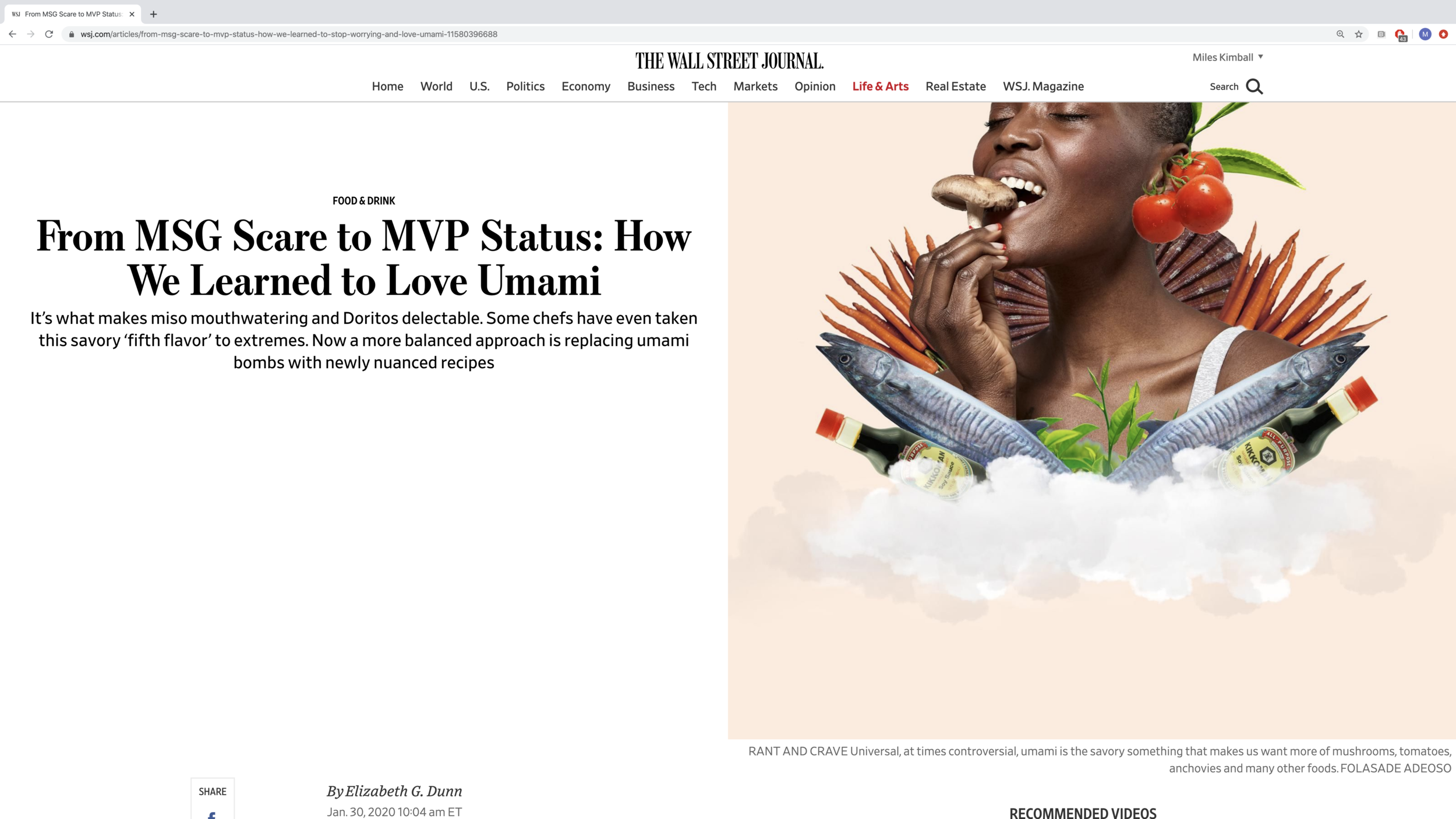
The Wall Street Journal article “From MSG Scare to MVP Status: How We Learned to Love Umami” by Elizabeth Dunn not only celebrates umami, but also works to rehabilitate monosodium glutamate, which heightens umami when the right amount is added. I had coded monosodium glutamate as unhealthy, but googling around shows the evidence is a lot weaker than one might think. Placebo-controlled trials at relevant dosages do not show an increase in headaches or allergy-like reactions. Moreover I found the Ken Lee’s argument in his interview with Chau Tu for the 2014 article “Is MSG Bad For Your Health?” persuasive:

Lee breaks down his reasoning: “MSG stands for monosodium glutamate. So sodium—everybody knows what that is—[is] the first ingredient in common table salt.” (Natural salt found in foods accounts for about 10 percent of a person’s total daily intake, according to the Food and Drug Administration.) Meanwhile, glutamate, the basic component of MSG, “is a synonym for glutamic acid [and] is a naturally occurring amino acid. It’s one of the building blocks of protein,” says Lee. In aqueous solutions, MSG breaks down to sodium and glutamate.

Although I have argued that concerns about ordinary table salt and the sodium it contains are overblown (“Salt Is Not the Nutritional Evil It Is Made Out to Be,” “Should the Typical Person be Restricting Salt Intake?” and “Confirmation Bias in the Interpretation of New Evidence on Salt”), I have little doubt that there exists a large enough quantity of salt consumption that it would be bad for health. Similarly, I have little doubt that that there exists a large enough quantity of glutamic acid consumption that it would be bad for health. Nevertheless, both sodium and glutamic acid are common in many ordinary foods that have been tested by time. So it would have to be hooking sodium and glutamic acid together chemically that was harmful for monosodium glutamate to be terrible. But it is hard to see why that would be so when the combination breaks apart into sodium and glutamic acid in any watery solution—such as saliva.

Even compounds that safe in food aren’t necessarily safe when injected into muscles (as monosodium glutamate often is in rat experiments) or into the brain. But Chris Mohr’s 2019 Men’s Health article “But Is MSG Bad for You? No—and Here's Why” has this reassuring passage:

In December 2018, John Fernstrom, Ph.D., professor of psychiatry and pharmacology at the University of Pittsburgh, published a study review on the supposed ill effects of MSG.

His team’s conclusion: “Findings from our data and other human studies provide important evidence that MSG in the food supply presents no hazard to the human brain. Oral ingestion of glutamate does not cross the blood brain barrier."

What is the level of harm one might worry about from glutamic acid? First, too much protein is not good, and protein is made of amino acids like glutamic acid. (See “Meat Is Amazingly Nutritious—But Is It Amazingly Nutritious for Cancer Cells, Too?”) But note that glutamic acid is not the same thing as (and is not easily converted into) the amino acid glutamine that is especially easy for cancer cells to metabolize for energy, as I discuss in “How Fasting Can Starve Cancer Cells, While Leaving Normal Cells Unharmed.”

Second, each particular amino acid probably has a variety of hormonal effects. Make these hormonal effects too strong in any one direction and it probably isn’t good.

Third, there is a genuine worry that by making unhealthy, cheap food tastier, the sodium and glutamate in MSG will lead people to eat more unhealthy, cheap food. There the principle to remember is that if food is unhealthy to begin with, sprinkling MSG on top certainly can’t transform it into healthy food! I take this point from “But Is MSG Bad for You? No—and Here's Why” where Chris Mohr reports:

“Umami is a really important factor in terms of making foods taste delish—and MSG is a concentrated form of umami,” says Ellie Krieger, R.D.N., and host of Ellie’s Real Good Food. “I think one of the biggest issues with MSG is the company it keeps—meaning the foods it’s often found in. It’s not MSG itself that’s of concern, but it can make poor-quality food taste great too so they may be more appealing than they would otherwise be.”

Umami is not all from glutamate. As Elizabeth Dunn writes in “From MSG Scare to MVP Status: How We Learned to Love Umami”:

Though the term is Japanese, umami is a global phenomenon. The same savory magic in pork and oysters runs through anchovies, seaweed and mushrooms, not to mention breast milk and amniotic fluid. In addition to glutamate, two other molecules, inosinate and guanylate, emit umami. Aging, caramelizing, drying and fermenting intensify it. Garum, the fermented fish sauce ancient Romans adored, teemed with umami, as do oyster sauce in China, miso in Japan, Worcestershire sauce in England and Maggi seasoning the world over. 

(You can learn a lot more about creating umami in the well-done Anime series “Food Wars,” which many of my family marathoned when we were together around Christmas. I recommend you do the version with subtitles. Few Anime shows have good English dubbing.)

Overall, I am willing to bet that it is safer to get the umami taste from some a reasonably balanced combination of glutamic acid, inosinate and guanylate than from an unusually large amount of glutamic acid. But glutamic acid in normal amounts seems to be part of the story of naturally occurring umami.


For annotated links to other posts on diet and health, see:

The Federalist Papers #6 A: Alexander Hamilton on the Many Human Motives for War

Steven Pinker’s contention in The Better Angels of Our Nature that violence has declined over the centuries has the corollary that violence was worse in the past. Accordingly, writing more than two and a quarter centuries ago, Alexander Hamilton argues that neighboring nations will almost inevitably be drawn into war with one another. At a minimum, this should make one appreciate the singularity in human history of the degree of 21st-century peace that exists between the US and Canada, between the US and Mexico and between many other pairs of neighboring nations around the world.

Viewing the 18th-century world, Alexander Hamilton points to many human motives leading to war in the first half of The Federalist #6, “Concerning Dangers from Dissensions Between the States.” In particular, he writes:

  1. “… men are ambitious, vindictive, and rapacious.”

  2. Some love power, while others hate or fear the power of others.

  3. Some love riches even if those riches are to be had at the expense of the lives of fellow human beings.

  4. There are a vast number of idiosyncratic motives that can lead to war.

For the first three of these points, I put the relevant passages in the quoted text below in bold italics. For the fourth, I add bold subheadings for different individuals who displayed idiosyncratic motives for fomenting war. I also spell out in square brackets the notes Alexander Hamilton provides.

|| Federalist No. 6 || 

Concerning Dangers from Dissensions Between the States
For the Independent Journal.

Author: Alexander Hamilton

To the People of the State of New York:

THE three last numbers of this paper have been dedicated to an enumeration of the dangers to which we should be exposed, in a state of disunion, from the arms and arts of foreign nations. I shall now proceed to delineate dangers of a different and, perhaps, still more alarming kind--those which will in all probability flow from dissensions between the States themselves, and from domestic factions and convulsions. These have been already in some instances slightly anticipated; but they deserve a more particular and more full investigation.

A man must be far gone in Utopian speculations who can seriously doubt that, if these States should either be wholly disunited, or only united in partial confederacies, the subdivisions into which they might be thrown would have frequent and violent contests with each other. To presume a want of motives for such contests as an argument against their existence, would be to forget that men are ambitious, vindictive, and rapacious. To look for a continuation of harmony between a number of independent, unconnected sovereignties in the same neighborhood, would be to disregard the uniform course of human events, and to set at defiance the accumulated experience of ages.

The causes of hostility among nations are innumerable. There are some which have a general and almost constant operation upon the collective bodies of society. Of this description are the love of power or the desire of pre-eminence and dominion--the jealousy of power, or the desire of equality and safety. There are others which have a more circumscribed though an equally operative influence within their spheres. Such are the rivalships and competitions of commerce between commercial nations. And there are others, not less numerous than either of the former, which take their origin entirely in private passions; in the attachments, enmities, interests, hopes, and fears of leading individuals in the communities of which they are members. Men of this class, whether the favorites of a king or of a people, have in too many instances abused the confidence they possessed; and assuming the pretext of some public motive, have not scrupled to sacrifice the national tranquillity to personal advantage or personal gratification.

Pericles. The celebrated Pericles, in compliance with the resentment of a prostitute, [Aspasia, vide Plutarch's Life of Pericles] at the expense of much of the blood and treasure of his countrymen, attacked, vanquished, and destroyed the city of the SAMNIANS. The same man, stimulated by private pique against the MEGARENSIANS, [Plutarch’s Life of Pericles] another nation of Greece, o] another nation of Greece, or to avoid a prosecution with which he was threatened as an accomplice of a supposed theft of the statuary Phidias, [Plutarch’s Life of Pericles] or to get rid of the accusations prepared to be brought against him for dissipating the funds of the state in the purchase of popularity, [Plutarch’s Life of Pericles: Phidias was supposed to have stolen some public gold, with the connivance of Pericles, for the embellishment of the statue of Minerva.] or from a combination of all these causes, was the primitive author of that famous and fatal war, distinguished in the Grecian annals by the name of the PELOPONNESIAN war; which, after various vicissitudes, intermissions, and renewals, terminated in the ruin of the Athenian commonwealth.

Cardinal Wolsey. The ambitious cardinal, who was prime minister to Henry VIII., permitting his vanity to aspire to the triple crown, [worn by the popes] entertained hopes of succeeding in the acquisition of that splendid prize by the influence of the Emperor Charles V. To secure the favor and interest of this enterprising and powerful monarch, he precipitated England into a war with France, contrary to the plainest dictates of policy, and at the hazard of the safety and independence, as well of the kingdom over which he presided by his counsels, as of Europe in general. For if there ever was a sovereign who bid fair to realize the project of universal monarchy, it was the Emperor Charles V., of whose intrigues Wolsey was at once the instrument and the dupe.

The influence which the bigotry of one female, [Madame de Maintenon] the petulance of another, [Duchess of Marlborough] and the cabals of a third, [Madame de Pompadour] had in the contemporary policy, ferments, and pacifications, of a considerable part of Europe, are topics that have been too often descanted upon not to be generally known.

To multiply examples of the agency of personal considerations in the production of great national events, either foreign or domestic, according to their direction, would be an unnecessary waste of time. Those who have but a superficial acquaintance with the sources from which they are to be drawn, will themselves recollect a variety of instances; and those who have a tolerable knowledge of human nature will not stand in need of such lights to form their opinion either of the reality or extent of that agency. Perhaps, however, a reference, tending to illustrate the general principle, may with propriety be made to a case which has lately happened among ourselves. If Shays had not been a DESPERATE DEBTOR, it is much to be doubted whether Massachusetts would have been plunged into a civil war.

Given the flaws of human nature, it is a wonder that wars are as infrequent as they are now. In any case, as Alexander Hamiltonian contends, trying to bring neighboring states into a supranational organization is one way to try to reduce the frequency of war. For example, despite the tensions and resentments between countries within the European Union, we do not worry that much about full-scale armed conflict between neighboring nations within the European Union.

Here are links to my other posts on The Federalist Papers so far:

Michael Ostrovsky and Michael Schwarz: Self-Driving Cars, Tolls, and Carpooling are Much More Powerful as a Combination than Separately

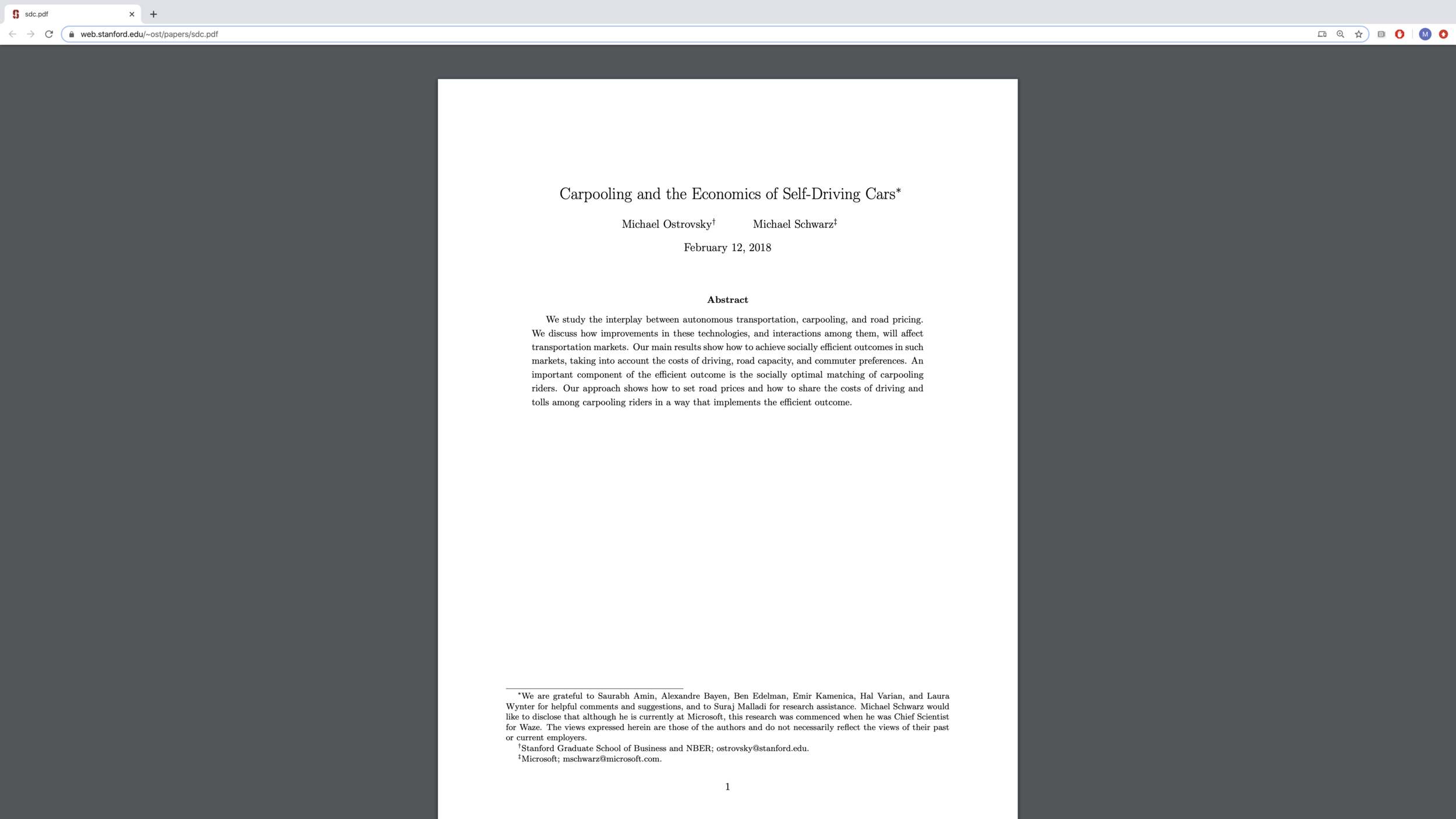
Michael Ostrovsky came to present his paper with Michael Schwarz, “Carpooling and the Economics of Self-Driving Cars,” here at the University of Colorado Boulder. I was impressed. The paper provides hope for progress in transportation.

The basic claim of the paper is that self-driving cars, dynamic tolls, and carpooling are highly complementary in improving transportation. Here is why:

  • Self-driving cars have powerful computers that can easily plot a route that is sensitive to tolls for each possible segment of a journey that change all the time.

  • Tolls for road segments that are per vehicle incentivize carpooling because then the toll is effectively divided among all of the passengers. In other words, tolls per vehicle will tend to reduce the number of vehicles on the road as several passengers use the same vehicle in order to save on those tolls.

  • Carpooling is a lot easier with a ride-sharing service like Uber Pool, and self-driving cars make ride-sharing services much cheaper.

  • More total passengers can fit in any given size car if no driver is needed. (Also, note that having no driver opens up possibilities for reconfiguring the inside of a vehicle to make it more comfortable and easier to do work in; for example, they could have seats surrounding a small table—all with seatbelts.)

Improvements in transportation matter a lot because transportation is a large share—9.2 %—of household spending. That share has not been shrinking in recent decades. If dynamic tolls, carpooling and self-driving cars can come together to make transportation cheaper, that could help out households a lot.

Note that carpooling in self-driving cars or vans subject to dynamic tolls need not crowd out other forms of transportation. Instead, advances in these areas open up the possibility of “door-to-door public transportation” if self-driving cars and vans are effectively integrated into trunklines of light rail and heavily travelled, high frequency bus routes.

There is hope for better commuting.

Frightening New England Journal of Medicine Projections for the Rise of Obesity

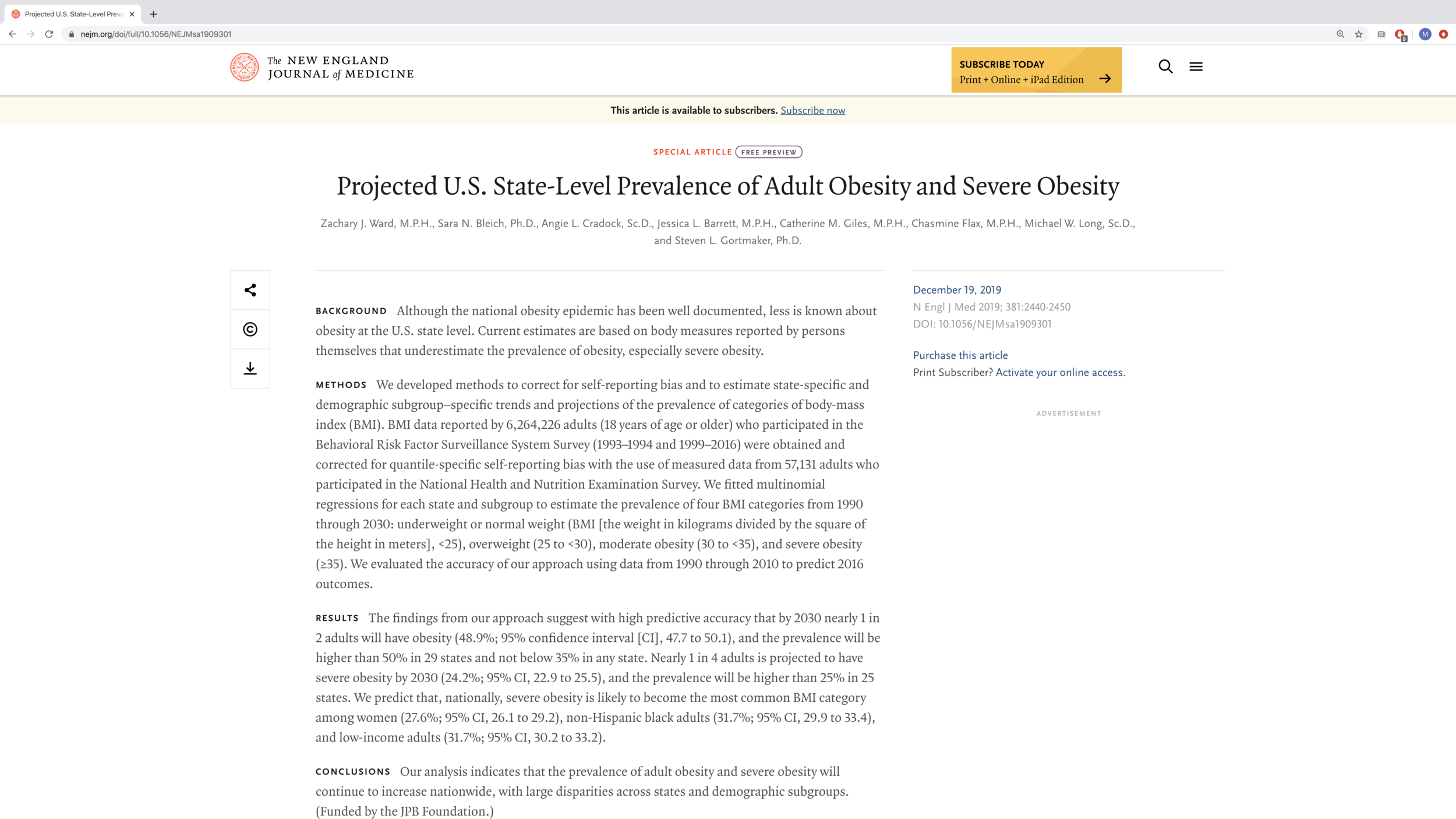
I have often described my blogging on diet and health as “fighting the rise of obesity.” The December 2019 New England Journal of Medicine article shown above details what the rise of obesity is likely to be in the near future. The abstract of “Projected U.S. State-Level Prevalence of Adult Obesity and Severe Obesity,” by Zachary J. Ward, Sara Bleich, Angie Cradock, Jessica Barrett, Catherine Giles, Chasmine Flax, Michael Long and Steven Gortmaker shown above says:

… by 2030 nearly 1 in 2 adults will have obesity (48.9%; 95% confidence interval [CI], 47.7 to 50.1), and the prevalence will be higher than 50% in 29 states and not below 35% in any state. Nearly 1 in 4 adults is projected to have severe obesity by 2030 (24.2%; 95% CI, 22.9 to 25.5), and the prevalence will be higher than 25% in 25 states.

“Obesity” is defined as a body mass index of 30 or above. “Severe obesity” is defined as a body mass index of 35 or above. (To get a sense of the body mass index, you can compute your own BMI here.)

Color-coded maps obesity and severe obesity prevalence for each state in 1990, 2000, 2010, 2020 and projected for 2030 are frightening. You can see them yourself with one of your three free New England Journal of Medicine articles. The map for severe obesity in 2030 struck me as looking like the map for obesity in 1990. This is one area where things are getting worse.

Women have more extremes: a higher frequency of both severe obesity and normal weight than men. Non-Hispanic blacks have quite a bit more obesity than Non-Hispanic Whites; Hispanics have a modest amount more obesity than Non-Hispanic Whites. The “Non-Hispanic Other” category, which I assume is mostly Asian Americans, has by far the least obesity. Higher income is associated with less obesity. (The categories are < $20,000 per year, between $20,000 and $50,000, and $50,000 and above.)

There are many health problems strongly correlated with obesity. Is obesity causal for those health problems? I don’t know. Bad eating could easily cause both health problems and obesity, with obesity not caused by bad eating as not so dangerous. Lack of exercise could easily cause both health problems and obesity, though I think the evidence shows it has a more powerful effect on health, happiness and cognition than it does on obesity itself (as most people would intuitively view the magnitude of the effects indicated by the evidence). And I suspect obesity not caused by bad eating or lack of exercise is both reasonably rare and likely to be caused by something dangerous in its own way, even if not dangerous in exactly the same way as bad eating.

Note that I say “bad eating,” not eating too much. My view is that bad eating is much more a matter of eating the wrong things and eating all the time, with eating too much being more a consequence of eating the wrong things and eating all the time than something to focus on in itself.

What do I mean by eating the wrong things? In the first instance I mean eating sugar, potatoes and bread. Beyond that, I mean eating things high on the insulin index. See “Forget Calorie Counting; It's the Insulin Index, Stupid.”

What to I mean by eating all the time? I mean eating right when you get up and right before you go to sleep, and times in between.

The other approach when to eat is to limit one’s eating to at most a 12-hour window, an 8-hour window or a 6-hour window. It’s not that hard if you strategize a little! And eating foods low on the insulin index will make it easier than you think.

Someday, maybe we may have safe and powerfully effective anti-obesity drugs. In the meantime, it takes avoiding eating the wrong things and not eating all the time to keep the chances of obesity down. If you do that, you can get to—or stay at—a normal weight.

For annotated links to other posts on diet and health, see:
Frank Wilczek: Are We Living in a Simulated World?

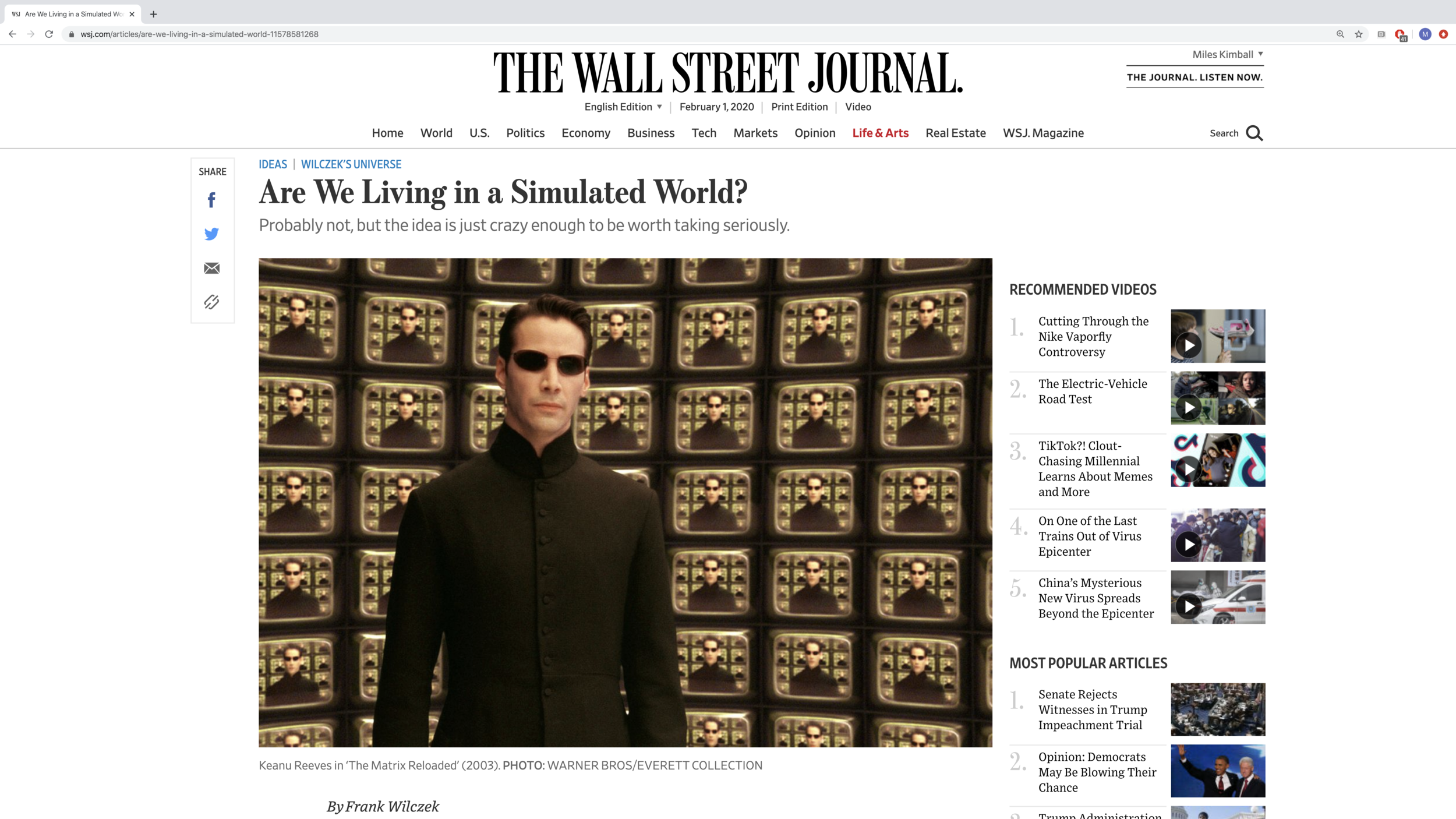
Frank Wilczek’s answer to the question “Are We Living in a Simulated World?” is brief: We could be, but we probably aren’t. In his January 9, 2020 Wall Street Journal column shown above, he poses two different questions that I have put in bold, and answers each:

Could there be a richly experienced mental world that is not made of matter, as it appears to be, but of abstract data?

… pretty surely yes. In fact, humans occupy self-generated mind-worlds for an hour or two each day, when we dream during REM sleep. The objects we see in dreams are just patterns of electrical excitation in our brains.

Is the world we actually experience—the universe as described by the laws of physics and the facts of cosmology—such a world? …is our own perceived world manufactured, in fact, from such abstract data[?]

… the best answer is pretty surely no. …

… there are many aspects of physics in our world that do not look like the product of an efficient world-simulator. For example, our most accurate formulation of the laws of physics depends on the idea that space and time are smooth and continuous. When you work with continuous numbers, instead of 0s and 1s, it becomes much more difficult, in a simulation, to maintain precision.

More generally, our world contains a lot of hidden complexity. We can calculate a proton’s properties based on fundamental laws, but those calculations are extremely complicated. It would be a poor strategy to build a simulated world out of such hard-to-compute ingredients.

For me, it is delightful that Frank Wilczek is essentially using an economic argument for our not already living in a simulated world: if we were, whatever the computer we might be in is made of, and whatever the unknown-to-us laws of physics in the “real world” outside that computer, it is likely that resources in the “real world” would be scarce, so that a simulation would be done in a way that used those scarce resources efficiently.

Related Posts:

My Experiences with Clay Christensen

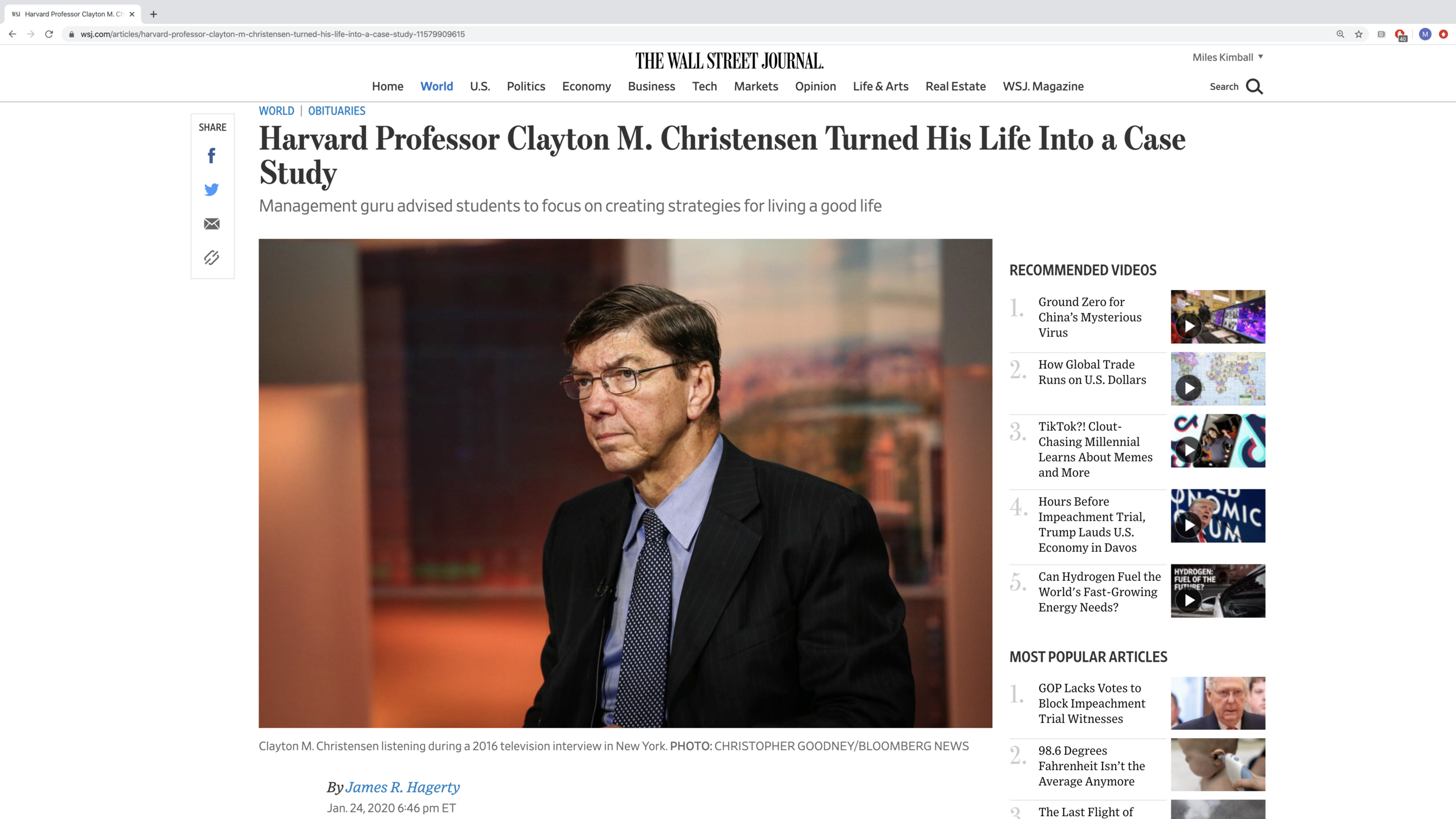
I am sad to hear of Clay Christensen’s passing. For those who don’t already know, Clay was one of the most famous business gurus in the world, and one whose work should be of special interest to economists. I have written many blog posts and one Quartz article related to Clay and his work:

Let me tell you how I became such a fan of Clay Christensen. Plane tickets used to be relatively more expensive than they are now. When I was headed to Harvard as a freshman in 1977, I wanted to save money by carpooling from Utah out to Cambridge, Massachusetts. My parents helped me connect with Clay Christensen, who was headed out his first year of the Harvard MBA program. Because the MBA program started a week or so before the Harvard College semester, and I couldn’t get into the dorm that early, I stayed at Clay’s apartment for that time after we got there. (That was when I first learned about decision trees and backwards programming: from the advance homework the MBA program had given Clay.)

Spending that time with Clay gave me a lasting impression. I filed Clay in my mind as one of the kindest human beings I have ever known.

After spending all that time with Clay, I had only passing interactions with him for many years, primarily saying “Hi” at multi-congregation Mormon Church events. Then, after I began blogging, I discovered Clay’s books (many of them coauthored) on disruptive innovation. As you can see above, that work has been a major influence on this blog.

I had an email exchange with Clay after I published “In Defense of Clay Christensen: Even the 'Nicest Man Ever to Lecture' at Harvard Can't Innovate Without Upsetting a Few People” in Quartz. He was a bit puzzled by the criticism I was addressing and disputed Jean-Louis Gassée’s factual claims.

My one other interaction with Clay was indirect: my daughter Diana took his class when she was a student at Harvard Business School. Her reports only reinforced what I had thought of Clay Christensen since 1977: one of the best people I have ever known.


The New England Journal of Medicine Review of the Effects of Intermittent Fasting on Health, Aging and Disease

The New England Journal of Medicine allows anyone who signs up to read three free articles a month. Make Rafael de Cabo and Mark Mattson’s review article “Effects of Intermittent Fasting on Health, Aging, and Disease” one of your three articles this month. It could add years to your life. “Intermittent fasting” means having periods of, say 18 hours or more without food, or with very little food. As Rafael and Mark write:

… the three most widely studied intermittent-fasting regimens are alternate-day fasting, 5:2 intermittent fasting (fasting 2 days each week), and daily time-restricted feeding.

Let me give a few other quotations to convince you to read Rafael and Mark’s article, with my labels in bold:

  • Humans, like other animals, have evolved to function well with intermittent fasting: Studies in animals and humans have shown that many of the health benefits of intermittent fasting are not simply the result of reduced free-radical production or weight loss. Instead, intermittent fasting elicits evolutionarily conserved, adaptive cellular responses that are integrated between and within organs in a manner that improves glucose regulation, increases stress resistance, and suppresses inflammation. 

  • Fasting between 12 and 24 hours has big effects on ketosis: During periods of fasting, triglycerides are broken down to fatty acids and glycerol, which are used for energy. The liver converts fatty acids to ketone bodies, which provide a major source of energy for many tissues, especially the brain, during fasting (Figure 2). In the fed state, blood levels of ketone bodies are low, and in humans, they rise within 8 to 12 hours after the onset of fasting, reaching levels as high as 2 to 5 mM by 24 hours. … The timing of this response gives some indication of the appropriate periods for fasting in intermittent-fasting regimens.

  • Ketones are powerful signaling molecules: Ketone bodies are not just fuel used during periods of fasting; they are potent signaling molecules with major effects on cell and organ functions.

  • We are not evolved for a sedentary life with 3 meals a day: In contrast to people today, our human ancestors did not consume three regularly spaced, large meals, plus snacks, every day, nor did they live a sedentary life. 

  • Fasting is a time for repair and refurbishing of cells: Cells respond to intermittent fasting by engaging in a coordinated adaptive stress response that leads to increased expression of antioxidant defenses, DNA repair, protein quality control, mitochondrial biogenesis and autophagy, and down-regulation of inflammation (Figure 3). These adaptive responses to fasting and feeding are conserved across taxa.

  • Fasting not only leads to weight loss, it augments the benefits from weight loss: In humans, intermittent-fasting interventions ameliorate obesity, insulin resistance, dyslipidemia, hypertension, and inflammation. Intermittent fasting seems to confer health benefits to a greater extent than can be attributed just to a reduction in caloric intake. In one trial, 16 healthy participants assigned to a regimen of alternate-day fasting for 22 days lost 2.5% of their initial weight and 4% of fat mass, with a 57% decrease in fasting insulin levels. In two other trials, overweight women (approximately 100 women in each trial) were assigned to either a 5:2 intermittent-fasting regimen or a 25% reduction in daily caloric intake. The women in the two groups lost the same amount of weight during the 6-month period, but those in the group assigned to 5:2 intermittent fasting had a greater increase in insulin sensitivity and a larger reduction in waist circumference.

  • Fasting improves athletic performance in mice and doesn’t lead to any loss of muscle mass if you work out: In animals and humans, physical function is improved with intermittent fasting. For example, despite having similar body weight, mice maintained on alternate-day fasting have better running endurance than mice that have unlimited access to food. Balance and coordination are also improved in animals on daily time-restricted feeding or alternate-day fasting regimens. Young men who fast daily for 16 hours lose fat while maintaining muscle mass during 2 months of resistance training.

  • Fasting is anti-cancer: … numerous studies in animals have shown that daily caloric restriction or alternate-day fasting reduces the occurrence of spontaneous tumors during normal aging in rodents and suppresses the growth of many types of induced tumors while increasing their sensitivity to chemotherapy and irradiation. Similarly, intermittent fasting is thought to impair energy metabolism in cancer cells, inhibiting their growth and rendering them susceptible to clinical treatments.

  • Fasting looks like it is anti-Alzheimer’s and anti-Parkinson’s: There is strong preclinical evidence that alternate-day fasting can delay the onset and progression of the disease processes in animal models of Alzheimer’s disease and Parkinson’s disease. Intermittent fasting increases neuronal stress resistance through multiple mechanisms, including bolstering mitochondrial function and stimulating autophagy, neurotrophic-factor production, antioxidant defenses, and DNA repair.

  • Fasting reduces autoimmune problems: Two recent pilot studies showed that patients with multiple sclerosis who adhere to intermittent-fasting regimens have reduced symptoms in as short a period as 2 months. Because it reduces inflammation, intermittent fasting would also be expected to be beneficial in rheumatoid arthritis, and indeed, there is evidence supporting its use in patients with arthritis.

  • Fasting looks like it might reduce the harm from concussion: Intermittent fasting after injury was also effective in ameliorating cognitive deficits in a mouse model of traumatic brain injury.

These quotations speak for themselves. But I do want to comment on these two paragraphs:

Despite the evidence for the health benefits of intermittent fasting and its applicability to many diseases, there are impediments to the widespread adoption of these eating patterns in the community and by patients. First, a diet of three meals with snacks every day is so ingrained in our culture that a change in this eating pattern will rarely be contemplated by patients or doctors. The abundance of food and extensive marketing in developed nations are also major hurdles to be overcome.

Second, on switching to an intermittent-fasting regimen, many people will experience hunger, irritability, and a reduced ability to concentrate during periods of food restriction. However, these initial side effects usually disappear within 1 month, and patients should be advised of this fact.

To me, the great secret is that switching to a low insulin-index diet first (see “Forget Calorie Counting; It's the Insulin Index, Stupid”) makes fasting much easier, even at the beginning. On the sequencing I recommend, see:


The Federalist Papers #5: Unless United, the States Will Be at Each Others' Throats

In the Federalist Papers #5, John Jay has one point: if the 13 states were divided up into several different nations (“confederacies”), those nations would soon be at odds with one another and tearing one another down. Later events backed up his claim on two occasions. First, the Civil war followed swiftly upon the secession of the Confederacy from the Union. Those same states, despite their different views, conducted their rivalry in elections and in legislative votes while they were all still part of the union. (Of course, there were some wars within states over slavery—and over religion in the case of Missouri’s Mormon War—prior to the Civil War between states.) Second, the division between the US and Canada was conducive to the War of 1812. Even if Canada had been independent from the United Kingdom, rivalries between Canada and the United States in the early 19th century could easily have led to war.

This paragraph succinctly states John Jay’s views of the likely relationship between different American nations of the states were divided:

Should the people of America divide themselves into three or four nations, would not the same thing happen? Would not similar jealousies arise, and be in like manner cherished? Instead of their being "joined in affection" and free from all apprehension of different "interests," envy and jealousy would soon extinguish confidence and affection, and the partial interests of each confederacy, instead of the general interests of all America, would be the only objects of their policy and pursuits. Hence, like most other BORDERING nations, they would always be either involved in disputes and war, or live in the constant apprehension of them.

Here are some of John Jay’s key arguments for that view in his own words:

  • Historically there was a lot of bad feeling between different parts of Great Britain until they were united.

  • Historically there has been a lot of bad feeling between a large share of all bordering nations.

  • It is unlikely that neighboring nations would remain equal in strength; inequality in strength leads to jealousy and distrust that in turn lead to intrigue and counter-intrigue.

  • Different American nations would be likely to fall into different foreign alliances. This could cause trouble between the American nations when their respective allies were at war.

  • Rivalrous American nations might make the mistake of fearing each other so much that they don’t fear their foreign “allies” enough.

Below is the full text of the Federalist #5, with the point above relevant to a give passage above that passage added in bold italics within square brackets. The very beginning of the Federalist #5 simply argues that unity brings strength, giving extra emotional oomph to that claim by saying other nations don’t want the states to be united.

|| Federalist No. 5 || 

The Same Subject Continued: Concerning Dangers from Foreign Force and Influence
For the Independent Journal.

Author: John Jay

To the People of the State of New York:

QUEEN ANNE, in her letter of the 1st July, 1706, to the Scotch Parliament, makes some observations on the importance of the UNION then forming between England and Scotland, which merit our attention. I shall present the public with one or two extracts from it: "An entire and perfect union will be the solid foundation of lasting peace: It will secure your religion, liberty, and property; remove the animosities amongst yourselves, and the jealousies and differences betwixt our two kingdoms. It must increase your strength, riches, and trade; and by this union the whole island, being joined in affection and free from all apprehensions of different interest, will be ENABLED TO RESIST ALL ITS ENEMIES." "We most earnestly recommend to you calmness and unanimity in this great and weighty affair, that the union may be brought to a happy conclusion, being the only EFFECTUAL way to secure our present and future happiness, and disappoint the designs of our and your enemies, who will doubtless, on this occasion, USE THEIR UTMOST ENDEAVORS TO PREVENT OR DELAY THIS UNION."

It was remarked in the preceding paper, that weakness and divisions at home would invite dangers from abroad; and that nothing would tend more to secure us from them than union, strength, and good government within ourselves. This subject is copious and cannot easily be exhausted.

[Historically there was a lot of bad feeling between different parts of Great Britain until they were united.] The history of Great Britain is the one with which we are in general the best acquainted, and it gives us many useful lessons. We may profit by their experience without paying the price which it cost them. Although it seems obvious to common sense that the people of such an island should be but one nation, yet we find that they were for ages divided into three, and that those three were almost constantly embroiled in quarrels and wars with one another. Notwithstanding their true interest with respect to the continental nations was really the same, yet by the arts and policy and practices of those nations, their mutual jealousies were perpetually kept inflamed, and for a long series of years they were far more inconvenient and troublesome than they were useful and assisting to each other.

[Historically there has been a lot of bad feeling between a large share of all bordering nations.] Should the people of America divide themselves into three or four nations, would not the same thing happen? Would not similar jealousies arise, and be in like manner cherished? Instead of their being "joined in affection" and free from all apprehension of different "interests," envy and jealousy would soon extinguish confidence and affection, and the partial interests of each confederacy, instead of the general interests of all America, would be the only objects of their policy and pursuits. Hence, like most other BORDERING nations, they would always be either involved in disputes and war, or live in the constant apprehension of them.

[It is unlikely that neighboring nations would remain equal in strength; inequality in strength leads to jealousy and distrust that in turn lead to intrigue and counter-intrigue.] The most sanguine advocates for three or four confederacies cannot reasonably suppose that they would long remain exactly on an equal footing in point of strength, even if it was possible to form them so at first; but, admitting that to be practicable, yet what human contrivance can secure the continuance of such equality? Independent of those local circumstances which tend to beget and increase power in one part and to impede its progress in another, we must advert to the effects of that superior policy and good management which would probably distinguish the government of one above the rest, and by which their relative equality in strength and consideration would be destroyed. For it cannot be presumed that the same degree of sound policy, prudence, and foresight would uniformly be observed by each of these confederacies for a long succession of years.

Whenever, and from whatever causes, it might happen, and happen it would, that any one of these nations or confederacies should rise on the scale of political importance much above the degree of her neighbors, that moment would those neighbors behold her with envy and with fear. Both those passions would lead them to countenance, if not to promote, whatever might promise to diminish her importance; and would also restrain them from measures calculated to advance or even to secure her prosperity. Much time would not be necessary to enable her to discern these unfriendly dispositions. She would soon begin, not only to lose confidence in her neighbors, but also to feel a disposition equally unfavorable to them. Distrust naturally creates distrust, and by nothing is good-will and kind conduct more speedily changed than by invidious jealousies and uncandid imputations, whether expressed or implied.

The North is generally the region of strength, and many local circumstances render it probable that the most Northern of the proposed confederacies would, at a period not very distant, be unquestionably more formidable than any of the others. No sooner would this become evident than the NORTHERN HIVE would excite the same ideas and sensations in the more southern parts of America which it formerly did in the southern parts of Europe. Nor does it appear to be a rash conjecture that its young swarms might often be tempted to gather honey in the more blooming fields and milder air of their luxurious and more delicate neighbors.

[Historically there has been a lot of bad feeling between a large share of all bordering nations.] They who well consider the history of similar divisions and confederacies will find abundant reason to apprehend that those in contemplation would in no other sense be neighbors than as they would be borderers; that they would neither love nor trust one another, but on the contrary would be a prey to discord, jealousy, and mutual injuries; in short, that they would place us exactly in the situations in which some nations doubtless wish to see us, viz., FORMIDABLE ONLY TO EACH OTHER.

From these considerations it appears that those gentlemen are greatly mistaken who suppose that alliances offensive and defensive might be formed between these confederacies, and would produce that combination and union of wills of arms and of resources, which would be necessary to put and keep them in a formidable state of defense against foreign enemies.

[Different American nations would be likely to fall into different foreign alliances. This could cause trouble between the American nations when their respective allies were at war.] When did the independent states, into which Britain and Spain were formerly divided, combine in such alliance, or unite their forces against a foreign enemy? The proposed confederacies will be DISTINCT NATIONS. Each of them would have its commerce with foreigners to regulate by distinct treaties; and as their productions and commodities are different and proper for different markets, so would those treaties be essentially different. Different commercial concerns must create different interests, and of course different degrees of political attachment to and connection with different foreign nations. Hence it might and probably would happen that the foreign nation with whom the SOUTHERN confederacy might be at war would be the one with whom the NORTHERN confederacy would be the most desirous of preserving peace and friendship. An alliance so contrary to their immediate interest would not therefore be easy to form, nor, if formed, would it be observed and fulfilled with perfect good faith.

[Rivalrous American nations might make the mistake of fearing each other so much that they don’t fear their foreign “allies” enough.] Nay, it is far more probable that in America, as in Europe, neighboring nations, acting under the impulse of opposite interests and unfriendly passions, would frequently be found taking different sides. Considering our distance from Europe, it would be more natural for these confederacies to apprehend danger from one another than from distant nations, and therefore that each of them should be more desirous to guard against the others by the aid of foreign alliances, than to guard against foreign dangers by alliances between themselves. And here let us not forget how much more easy it is to receive foreign fleets into our ports, and foreign armies into our country, than it is to persuade or compel them to depart. How many conquests did the Romans and others make in the characters of allies, and what innovations did they under the same character introduce into the governments of those whom they pretended to protect.

Let candid men judge, then, whether the division of America into any given number of independent sovereignties would tend to secure us against the hostilities and improper interference of foreign nations.

Here are links to my other posts on The Federalist Papers so far:

Michael Lind: College-Educated vs. Not is the New Class War

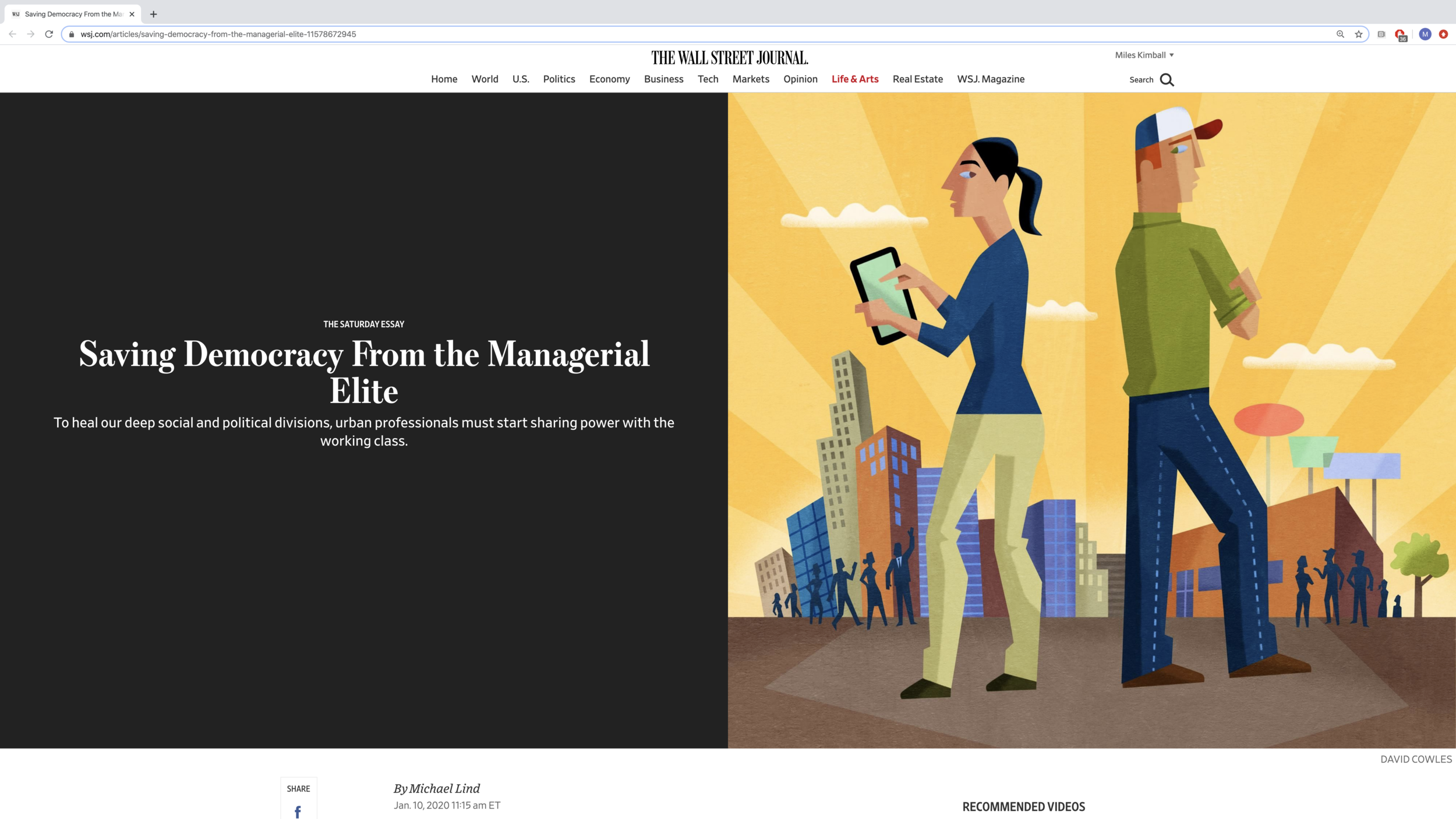
Michael Lind’s teaser for his new book The New Class War: Saving Democracy from the Managerial Elite makes a basic point about our current political and cultural situation: the big political and cultural divide in the United States and other advanced countries is now between those who have gone to college and those who haven’t. As Michael writes:

The deepest cleavage in Western democracies yawns between college-educated managers and professionals—a third of the population, at most—and the majority who lack college educations.

More precisely, he writes that recent populist insurgencies in the US, UK and France are:

… the revolt of alienated, mostly but not exclusively native and white working-class voters against post-national metropolitan elites.

That is, the college-educated have allied with minorities and immigrants.

There is also a geographical dimension to the divide. In addition to pointing to the kinds of forces discussed in “Janet Adamy and Paul Overberg on Immobility in America,” Michael points out:

… it is a snobbish mistake to assume that people in “left behind” regions should simply “move to opportunity.” Why should members of the working class move? The jobs that are being created in the greatest numbers in the U.S., including home health aide, retail clerk and restaurant worker, do not require college degrees and can be done almost everywhere.

That is, the wage premium from moving to a city that used to be there for those with low levels of education is no longer there.

Rather than mindless bigotry, Michael argues that those without a college education have a genuine fear (whether well-founded or not) of the economic consequences to them of immigration:

Unwilling to admit that the center-left has been largely captured by the managerial elite, many pundits and academics on the left insist that mindless bigotry, rather than class interests, explains the attraction of many working-class voters to populist parties that promise to restrict trade and immigration. But it is just as rational for workers to prefer a seller’s market in labor as it is for employers to prefer a buyer’s market in labor. Blue-collar workers who have abandoned center-left parties for populist movements bring with them the historic suspicion of large-scale immigration that was typical of organized labor for generations.

Cultural and political conflicts come together over key issues. As Michael puts it:

From its citadels in a few big cities, this oligarchy periodically notifies the working-class majority what values and opinions about sex, immigration and other topics it must immediately adopt without debate, on pain of being blacklisted by the private sector, prosecuted by the government or censored or erased by the media.

Michael points out the flip-side of meritocracy: the implication that those who don’t succeed are failures.

… today’s managerial elite is different. The pretense that it springs solely from “merit”—from individual talent and hard work—creates a false sense of superiority for its members, stoking resentment among their fellow citizens, who are defined as failures in fair competition.

The struggle between the educated+allies and the non-college-educated whites extends to a fight over the rules of the game in which the educated are highly skilled. The educated and allies look to the courts and international institutions staffed by well-educated people to weigh in on their side. Non-college-educated whites sometimes win at the polls, but with the decline of local political machines, private-sector unions and greater separation of church and state have few standing institutions to advocate for their interests. (Michael uses the interesting metaphor of a “tribune” for a standing institution to advocate for non-college-educated whites; the Roman Republic evolved the powerful office of tribune to make sure those below the upper classes had a continuing political say.)

Michael argues the need for new “mass membership organizations accountable to working-class people” and new substitutes for unions that are organized by the government: “bargaining among representatives of all firms and employees in particular industries, occupation-specific wage boards or labor representation on corporate boards.”

Less plausibly, Michael argues for tolerance of cultural differences. I think this unlikely because the key cultural differences are about treatment of women and minorities and about sexuality. The educated and their allies will not compromise on these. And the young have come to accept gay rights so much that they are becoming detached from churches that preach that homosexuality is a sin and look down on gay marriage. (See “That Baby Born in Bethlehem Should Inspire Society to Keep Redeeming Itself.”)

The educated and their allies can come to an economic accommodation with non-college-educated whites, but they aim to win the cultural war. In my view, they have a good chance at doing so.

Related posts: