How Low Insulin Opens a Way to Escape Dieting Hell
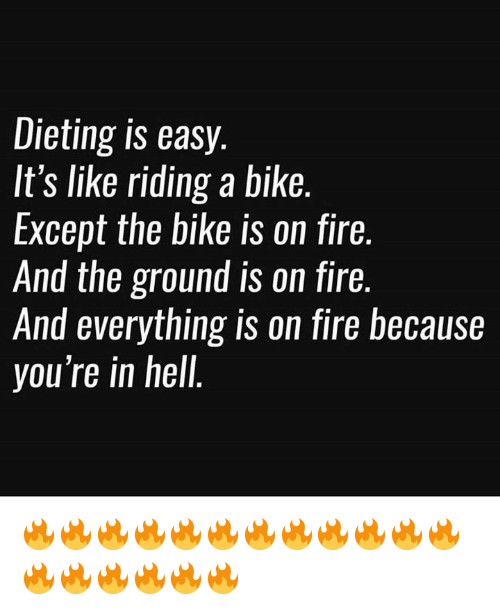
Salvation from diet hell is very different from salvation from a supernatural hell, but in this post I want to make the analogy. On the supernatural side of the analogy, let me stick with the Mormon theology that I know best from the first 40 years of my life when I was a Mormon. (I am 58 now.) The Mormon theory of being saved by Jesus centers on a great sacrifice by Jesus, which allows mercy power on a par with justice. There is a fancy word for a theory of salvation: “soteriology.” Here are some key passages of soteriology from the Book of Mormon. (Also see my post “The Mormon View of Jesus.”)

For it is expedient that an atonement should be made; for according to the great plan of the Eternal God there must be an atonement made, or else all mankind must unavoidably perish; yea, all are hardened; yea, all are fallen and are lost, and must perish except it be through the atonement which it is expedient should be made. …

And thus mercy can satisfy the demands of justice, and encircles them in the arms of safety, while he that exercises no faith unto repentance is exposed to the whole law of the demands of justice; therefore only unto him that has faith unto repentance is brought about the great and eternal plan of redemption. …

And thus we see that all mankind were fallen, and they were in the grasp of justice; yea, the justice of God, which consigned them forever to be cut off from his presence.

And now, the plan of mercy could not be brought about except an atonement should be made; therefore God himself atoneth for the sins of the world, to bring about the plan of mercy, to appease the demands of justice, that God might be a perfect, just God, and a merciful God also.

Alma 34:9, 16; 42:14,15

In other passages in these chapters, it emphasizes how unusual it is that someone else (Jesus) can pay a price for one of us. In the area of weight loss, without supernatural aid, you will have the pay the price for weight loss yourself. But salvation from being overweight has a two-part structure like this Mormon doctrine of salvation from hell: there is a key sacrifice (analogous to “an atonement”), and then there is some other effort as well (analogous to “repentance”).

From here on, I’ll give you my views about weight loss without further apology for the lack of certainty that all of us should have about an area where the evidence is not fully conclusive. But in this one post, I’ll tilt my views as much as I feel I reasonably can toward the calories-in/calories-out conventional wisdom. It can be reasonable to go further away from the calories-in/calories-out conventional wisdom, and I often do. But I don’t think it is reasonably to go any closer to the calories-in/calories-out conventional wisdom than in this post.

With that tilt toward the calories-in/calories-out conventional wisdom, the analogy to “an atonement” is keeping your insulin levels low, while the analogy to “repentance” is keeping calorie intake low. Without keeping your insulin levels low, keeping your calorie intake low will seldom do much good. There are a lot of dieting failures to back up that claim. (Throughout this post, let me assume that you do not have Type 1 diabetes. In Type 1 diabetes, your insulin levels will be too low without medication. If you have Type 1 diabetes and you don’t get insulin injections, you would be likely to lose so much weight that you would die.)

What usually trips people when they attempt to lose weight is that if their insulin levels are even moderately high, their body fat will be (for the most part) locked into their fat cells. If your body fat is locked into your fat cells, reducing the calories you eat will make you feel starved and miserable, and your body will also try to reduce the rate at which it burns calories, which will make you feel sluggish. With your body fat locked into your fat cells, you won’t lose much weight to begin with, and feeling starved, miserable and sluggish will make you want to quit going down that road as soon as possible.

One of the ways people keep their insulin levels up enough that their body fat is locked in their fat cells is by eating foods each day that have a high insulin index. (See “Forget Calorie Counting; It's the Insulin Index, Stupid.”) But another force keeping insulin levels high is having chronically eaten food that has a high insulin index in the past, which makes cells less sensitive to insulin (“insulin resistance”) which makes the insulin-producing cells produce more insulin to get the message through when blood sugar is too high. So the great sacrifice that can open the gates and let fat out of your fat cells is (a) to give up sugar and otherwise switch to foods that have a low insulin index and (b) to fast—that is, go for at least substantial chunks of the day, and possibly longer periods of time without eating anything, while continuing to drink water, unsweetened sparkling water, coffee and tea as desire.

Once you have your insulin levels low enough through switching to low-insulin-index foods and having big chunks of time with no food at all, your body will be open to the possibility of burning body fat. Then and only then will you get the results people naively think they will get based on the usual calories in/calories out logic. But what you will find is that with your body open to the possibility of burning body fat, you won’t suffer from having substantial chunks of time with no food and having your total calorie intake from the outside world low. The reason is that a calorie from burning your own fat is just as good as a calorie from food you are eating now in keeping you well nourished and feeling good.

People don’t realize how easy fasting can be, because they think reducing calories in will lead to burning their own fat. It doesn’t work that way. If you have only a few calories, but many of those few calories are from sugary food and other food that produces a strong insulin response, your fat will stay locked in your fat cells. Low-calorie intake of high-insulin-index food leads to misery, not fat burning. It is low insulin levels combined with low calorie intake that will give you the fat burning that keeps you feeling well-fed from your internal fat stores even when you are not taking in much from the outside world.

Of course, the one measure that both keeps insulin levels low and keeps calorie intake from the outside world low is fasting—periods of time without food. That is why fasting is the grand key to weight loss. However, if, in between your periods of fasting, you are eating a lot of sugar, easily-digested carbohydrates and other foods that generate a big insulin kick, it will both interfere with your weight loss and making fasting much, much harder.

Many people build substantial chunks of time with no food into their day by eating only within a limited “eating window.” Other people sprinkle sprinkle into a week or a month fasts that are longer than 24 hours. Before you do that, you should heed some cautions. In “Don't Tar Fasting by those of Normal or High Weight with the Brush of Anorexia” I gave these cautions:

  • If your body-mass-index is below 18.5, quit fasting! Here is a link to a BMI calculator.

  • Definitely people should not do fasting for more than 48 hours without first reading Jason Fung’s two books The Obesity Code (see “Obesity Is Always and Everywhere an Insulin Phenomenon” and “Five Books That Have Changed My Life”) and The Complete Guide to Fasting.

  • Those under 20, pregnant or seriously ill should indeed consult a doctor before trying to do any big amount of fasting.

  • Those on medication need to consult their doctor before doing much fasting. My personal nightmare as someone recommending fasting is that a reader who is already under the care of a doctor who is prescribing medicine might fail to consult their doctor about adjusting the dosage of that medicine in view of the fasting they are doing. Please, please, please, if you want to try fasting and are on medication, you must tell your doctor. That may involve the burden of educating your doctor about fasting. But it could save your life from a medication overdose.

  • Those who find fasting extremely difficult should not do lengthy fasts.

  • But, quoting again from “4 Propositions on Weight Loss”: “For healthy, nonpregnant, nonanorexic adults who find it relatively easy, fasting for up to 48 hours is not dangerous—as long as the dosage of any medication they are taking is adjusted for the fact that they are fasting.”

A key element of many soteriologies, or theories of salvation, is the fruitlessness of efforts that lack the key element. Similarly, weight-loss efforts that lack the key element of keeping your insulin levels low are likely to fail, and cause you a lot of misery on the road to failure as well as the disappointment of failure as the destination. If you do what it takes to keep your insulin levels low, people might well say “Of course that worked! You were avoiding sugar, refined carbohydrates and processed food, and going substantial chunks of time without eating!” But if they keep to the conventional wisdom that only focuses on calories-in/calories-out (and in the usual approach, inevitably ignoring many subtleties even about the calories out and about the detailed genesis of temptations for calories in), they won’t have as good an explanation for why what other people try doesn’t work in the long run.

Don’t miss my other posts on diet and health:

I. The Basics

II. Sugar as a Slow Poison

III. Anti-Cancer Eating

IV. Eating Tips

V. Calories In/Calories Out

VI. Sleep

VII. Wonkish

VIII. Debates about Particular Foods and about Exercise

IX. Gary Taubes

X. Twitter Discussions

XI. On My Interest in Diet and Health

See the last section of "Five Books That Have Changed My Life" and the podcast "Miles Kimball Explains to Tracy Alloway and Joe Weisenthal Why Losing Weight Is Like Defeating Inflation." If you want to know how I got interested in diet and health and fighting obesity and a little more about my own experience with weight gain and weight loss, see “Diana Kimball: Listening Creates Possibilities and my post "A Barycentric Autobiography.
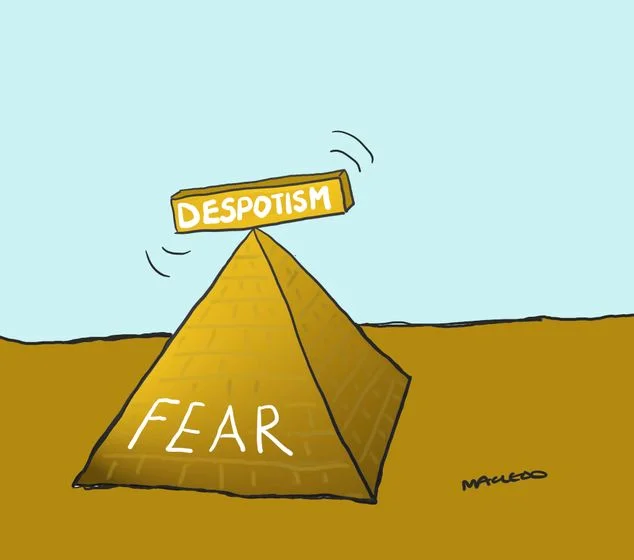
On Despotism

Being under someone else’s power is the result of some kind of lack on one’s own part. This is the gist of Chapter XV of John Locke’s 2d Treatise on Government: Of Civil Government: “Of Paternal, Political, and Despotical Power, considered together.”

Parental Power. Being under parental power results from the disabilities inherent in childhood. Looking to the other end of the age spectrum, parental power can be compared to the medical or financial power of attorney those people often give others in their old age. Knowing, or suspecting, that they will become unable to make good decisions for themselves, many people voluntary sign documents in advance saying that another can make decisions for them if they are not in a position to make a good decision for themselves.

The situation for children differs when children are young enough, there is no earlier time at which they were more competent to make good decisions. So it is not possible to get a fully informed, well-considered assent from children in advance to a document giving parents leave to make decisions for their children. Because of this practical difficulty, we treat children—or at least young children—as if they had signed such a power of attorney over to their parent. Nevertheless, just as in the case of an explicit power of attorney for someone older who can no longer make good decisions for themself, the power parents have vis a vis their child should be considered a power to be used for the benefit of the child. And it is a power to be used by the parent only to the extend that a child is, indeed, unable to make good decisions for herhimself.

Political Power. Being under the power of a ruler or magistrate or judge results first from the disability almost all human beings have in being an impartial judge in their own case. As a defendant, most of us are likely understate the magnitude of our transgression and the appropriate penalty. (A few might overstate it.) As a victim, most of us are likely to overstate the magnitude of the perpetrator’s transgression and the appropriate penalty. To get an impartial judgment, defendants and victims must submit to third-party judgment.

Our willingness to so submit has a lot to do with the overwhelming force that can come from joining in a compact to deal with another disability: the inability most of us have to enforce the law of nature on our own. We join in society so that law can be enforced, because for most of us, however much we fear the law being enforced against us, we have even more to fear from others violating our rights in the absence of enforceable law.

Despotical Power. Being under the power of a despot results from the fact that one sometimes lose wars—whether international wars or civil wars—or have a strong enough expectation of losing a war that we give in before engaging in a war.

John Locke emphasizes too much the case of losing a war in which the other side has justice and right on its side. Losing a war in which on has justice and right on one’s side can just as easily put one under despotic power.

A key element of being under despotic power is that, ethically, after losing a war in which one had right on one’s side, one remains in the state of nature and in a state of war with the despot. Contrary to some of what John Locke says, those under despotic rule can sometimes have a semblance of property, but that semblance of property is, in effect, a matter of foreign affairs—a treaty that can be broken. It is all a matter of what the despot can get away with without serious reprisal.

Conclusion. The bottom line is that the justice of power should not be taken for granted. Any kind of power over another person needs to be justified, and that justification will often involve strong limitations on that power. Power is needed in society because of human weakness. But power should not take advantage of human weakness. John Locke’s words in his chapter “Of Paternal, Political, and Despotical Power, considered together” reinforce this message:

§. 169. Though I have had occasion to speak of these separately before, yet the great mistakes of late about government having, as I suppose, arisen from confounding these distinct powers one with another, it may not, perhaps, be amiss to consider them here together.  

§. 170. First, then, Paternal or parental power is nothing but that which parents have over their children, to govern them for the children’s good, till they come to the use of reason, or a state of knowledge, wherein they may be supposed capable to understand that rule, whether it be the law of nature, or the municipal law of their country, they are to govern themselves by: capable, I say, to know it, as well as several others, who live as freemen under that law. The affection and tenderness which God hath planted in the breast of parents towards their children, makes it evident, that this is not intended to be a severe arbitrary government, but only for the help, instruction, and preservation of their offspring. But happen it as it will, there is, as I have proved, no reason why it should be thought to extend to life and death, at any time, over their children, more than over any body else; neither can there be any pretence why this parental power should keep the child, when grown to a man, in subjection to the will of his parents, any farther than having received life and education from his parents, obliges him to respect, honour, gratitude, assistance and support, all his life, to both father and mother. And thus, ’tis true, the paternal is a natural government, but not at all extending itself to the ends and jurisdictions of that which is political. The power of the father doth not reach at all to the property of the child, which is only in his own disposing.  

§. 171. Secondly, Political power is that power, which every man having in the state of nature, has given up into the hands of the society, and therein to the governors, whom the society hath set over itself, with this express or tacit trust, that it shall be employed for their good, and the preservation of their property: now this power, which every man has in the state of nature, and which he parts with to the society in all such cases where the society can secure him, is to use such means, for the preserving of his own property, as he thinks good, and nature allows him; and to punish the breach of the law of nature in others, so as (according to the best of his reason) may most conduce to the preservation of himself, and the rest of mankind. So that the end and measure of this power, when in every man’s hands in the state of nature, being the preservation of all of his society, that is, all mankind in general, it can have no other end or measure, when in the hands of the magistrate, but to preserve the members of that society in their lives, liberties, and possessions; and so cannot be an absolute, arbitrary power over their lives and fortunes, which are as much as possible to be preserved; but a power to make laws, and annex such penalties to them, as may tend to the preservation of the whole, by cutting off those parts, and those only, which are so corrupt, that they threaten the sound and healthy, without which no severity is lawful. And this power has its original only from compact and agreement, and the mutual consent of those who make up the community.  

§. 172. Thirdly, Despotical power is an absolute, arbitrary power one man has over another, to take away his life whenever he pleases. This is a power, which neither nature gives, for it has made no such distinction between one man and another; nor compact can convey: for man not having such an arbitrary power over his own life, cannot give another man such a power over it; but it is the effect only of forfeiture, which the aggressor makes of his own life, when he puts himself into the state of war with another: for having quitted reason, which God hath given to be the rule betwixt man and man, and the common bond whereby human kind is united into one fellowship and society; and having renounced the way of peace which that teaches, and made use of the force of war, to compass his unjust ends upon another, where he has no right; and so revolting from his own kind to that of beasts, by making force, which is theirs, to be his rule of right, he renders himself liable to be destroyed by the injured person, and the rest of mankind that will join with him in the execution of justice, as any other wild beast, or noxious brute, with whom mankind can have neither society nor security.  [Another copy corrected by Mr. Locke, has it thus, Noxious brute that is destructive to their being.] And thus captives, taken in a just and lawful war, and such only, are subject to a despotical power, which, as it arises not from compact, so neither is it capable of any, but is the state of war continued: for what compact can be made with a man that is not master of his own life? what condition can he perform? and if he be once allowed to be master of his own life, the despotical, arbitrary power of his master ceases. He that is master of himself, and his own life, has a right too to the means of preserving it; so that as soon as compact enters, slavery ceases, and he so far quits his absolute power, and puts an end to the state of war, who enters into conditions with his captive.  

§. 173. Nature gives the first of these, viz. paternal power to parents for the benefit of their children during their minority, to supply their want of ability, and understanding how to manage their property. (By property I must be understood here, as in other places, to mean that property which men have in their persons as well as goods.) Voluntary agreement gives the second, viz. political power to governors for the benefit of their subjects, to secure them in the possession and use of their properties. And forfeiture gives the third, despotical power to lords for their own benefit, over those who are stripped of all property.  

§. 174. He that shall consider the distinct rise and extent, and the different ends of these several powers, will plainly see, that paternal power comes as far short of that of the magistrate, as despotical exceeds it; and that absolute dominion, however placed, is so far from being one kind of civil society, that it is as inconsistent with it, as slavery is with property. Paternal power is only where minority makes the child incapable to manage his property; political, where men have property in their own disposal; and despotical, over such as have no property at all.

For links to other John Locke posts, see these John Locke aggregator posts: 

Co-Active Coaching as a Tool for Maximizing Utility—Getting Where You Want in Life

Coactive 15-Day Certificate.png

A safe bet is that coaching of all types will be a growing sector of the economy. The Wikipedia article “Coaching” lists these types of coaching: ADHD coaching, business and executive coaching, career coaching, Christian coaching, co-coaching, dating coaching, financial coaching, health and wellness coaching, homework coaching, coaching in education, life coaching, relationship coaching, and sports coaching. The types of coaching—as well as the number of coaches in each type—are likely to expand in the future.

I think the growth of coaching is a very good thing: ideally, everyone would have a coach, or more than one for different areas of their lives. And with manufacturing productivity improving so much that a smaller and smaller fraction of the population is needed to make all the things people need from factories, there is room for several percent of all workers to be coaches.

Coaching now runs in my family. My wife Gail and my daughter Diana are both career coaches, as am I. I have found the training in Co-Active coaching I have received from The Coaches Training Institute to be fascinating. Having a coach myself has been very helpful. And I have found working as a coach to be very fulfilling, even though I only have time to do a small amount of coaching.

I have decided to go on to get more advanced training as a coach, and am looking for clients to work with in that training. Anything you want to make happen in your life, I am game to work on with you.

How Co-Active Coaching Works. First, a fundamental tenet of Co-Active coaching is that the client is “naturally creative, resourceful and whole.” The idea is that if a coach asks the right open-ended questions, the client is likely to figure out for herself or himself what to do. And sometimes people need someone to hold them accountable for the things they choose to commit to do to get their lives to the next level.

There are three powerful modes to Co-Active coaching (I’ll use the names for these modes that speak best to me):

1. Optimization Coaching. Optimization coaching is the type of coaching that has the most obvious relationship to economic theory: optimizing subject to constraint is the central tool of economics. If you are getting Co-Active coaching, it’s important to identify your values and express those values powerfully. What do you want? What do you want not to happen? What would the world look like if it were a better place? What motivates you? What saddens you? What bothers you? What makes you overjoyed?

It is also important for you to connect with your inner strengths. People often don’t realize the inner resources they have that can help them tackle big things.

Finally, sometimes things you want conflict with one another. Different parts of you may want different things. Bringing to the surface and exploring all of those desires can help you clarify for yourself which way is good for you to go, according to the deepest values that you have.

2. Creativity Coaching. It’s easy to get stuck. Creativity coaching helps to get you unstuck. Using random, fun, spur-of-the-moment associations, it gets your mind and heart into a different place than where you were when you were stuck. People often talk about “getting a different perspective.” But often, it isn’t enough for your mind to get a different perspective; your heart needs a different perspective too. Once you get to a new, wild and wonderful perspective, it becomes so easy to brainstorm that you will have to narrow down all the possible things you can do about the situation where you were stuck. But the creative approaches are not just about what to do, they are also about what you want to feel like when you tackle the thing you were stuck with.

3. Presence Coaching. Our emotions and feelings have a lot to teach us if we avoid the polar opposite traps of either trying to suppress our emotions or obsessing about them and amplifying them. In presence coaching, the coach helps you to stay with your fear, your anger, your disappointment, your sense of accomplishment, or whatever you are feeling for the 90 seconds or so it takes for the emotion to transform into something just a little different. The wisdom you gain by going with this natural flow of feeling can enrich your life.

In presence coaching, there is no attempt to resurrect emotions from long ago. It is all about understanding what you are feeling right now. This is in line with the general orientation of coaching toward the present and the future, not the past.

Conclusion. I’m looking for eight clients to work with during my six-month advanced training program. Contact me if you are interested in the possibility of being one of those clients. (It’s easy to find my email address.) We’ll set up a time to do a quick demo of coaching (with no charge and no commitment) and you can see if you want to continue. People often get a lot out of even a quick coaching demo like this.

My hope is to coach people from very different backgrounds, who have very different approaches to life. From this blog, I hope you get some sense of the breadth of my outlook. I hope to broaden my outlook even more by working with people like you!

How Not Getting Enough Sleep Messes You Up, Part 1

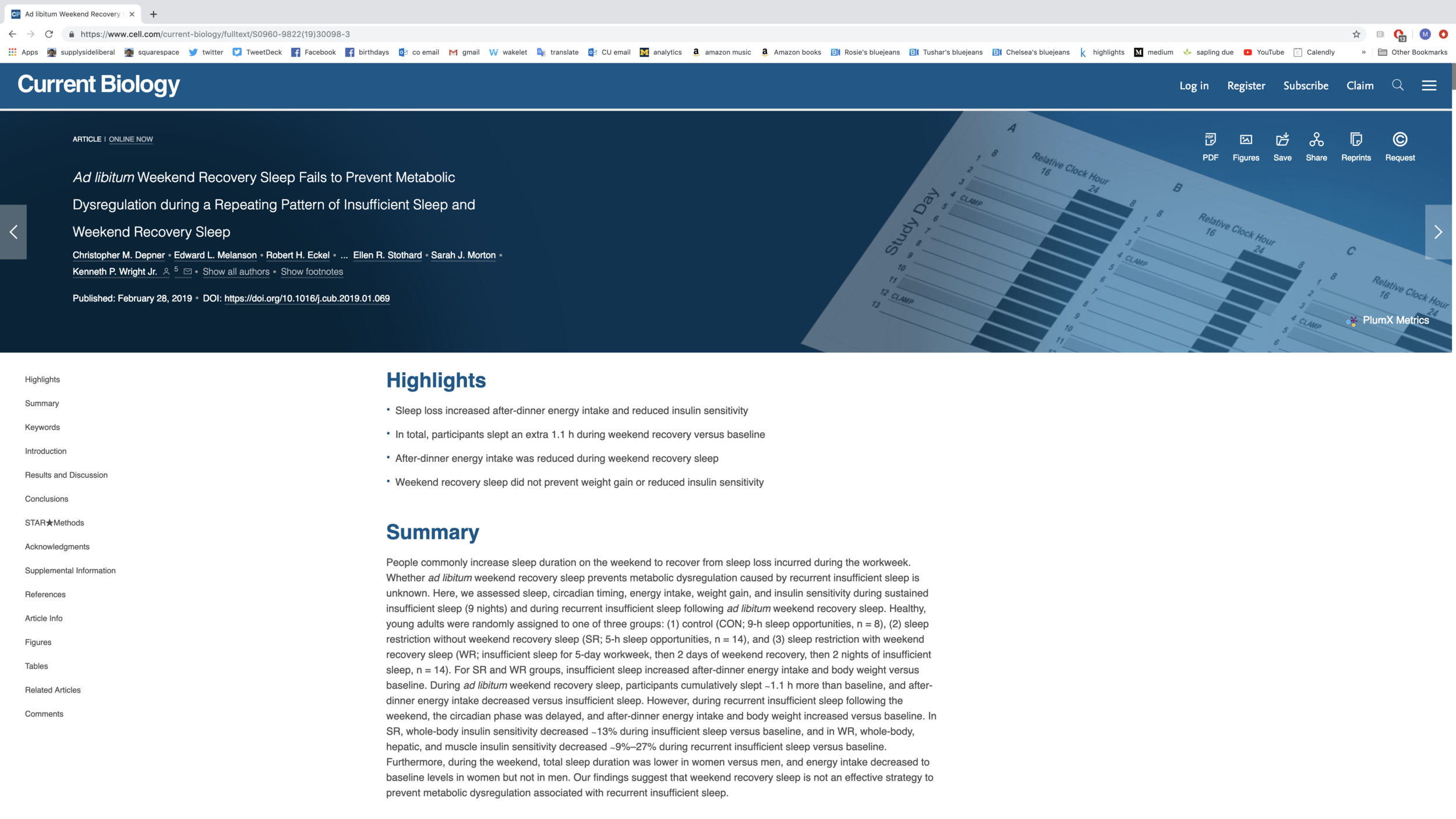
Not getting enough sleep will mess your body and your mind up in many ways. A study published in Current Biology a few days ago (shown just above) provides evidence that not getting enough sleep leads people to snack more late in the evening, and makes them more insulin resistant (=reduces their insulin sensitivity). Getting more insulin resistant is bad because the body has to produce more insulin to overcome the resistance and make sure blood sugar is on track, and that extra insulin has some unpleasant side effects. See “Obesity Is Always and Everywhere an Insulin Phenomenon” and “Forget Calorie Counting; It's the Insulin Index, Stupid.”

In addition to the possibility that the extra snacking helped lead to more insulin resistance, there is a suspicion that the sleep loss itself, even apart from the extra snacking, might have worsened insulin resistance. Demonstrating that would require a design that controlled the food intake of those in the experiment. What is known is that various hormones and other blood proteins get altered when people are put on a simulated night shift in an experiment—including glucagon, which, very roughly, is a kind of “anti-insulin” in its effects on the body.

Another crucial finding of the experiment was that after depriving people of sleep during the week, letting them sleep as much as they wanted on the weekend wasn’t enough to undo the bad effects. The mbg health article shown at the very top goes too far by saying this means “you actually can’t catch up on sleep.” What if you can catch up on sleep, but it takes a night of sleeping all that you want to make up for each night that you were only allowed to sleep five hours? Then two nights when you can sleep all you want wouldn’t be enough to make up for five nights of sleeping only five hours. People who think they can catch up on the weekend for way too little sleep five nights in a row not only want to be able to catch up on sleep, they want an unreasonably good deal in catching up on sleep! Or they may believe that the total amount of sleep they will end up doing on the weekend is more than happens even with serious sleeping in.

Many workaholics believe that sleeping less will allow them to get more done. This is far from obvious as a long-run proposition. If the combination of make-up sleep needed and reduced effectiveness from sleep deprivation reduces productivity by a little more than one hour for every hour of lost sleep, then there is no long-run productivity advantage from sleeping less in order to get things done. Staying up would then be a costly way of doing intertemporal substitution: shifting productivity from later to now. On the other hand, getting a lot of sleep in advance before a time when you know you need extra productivity could yield multiple benefits.

What if you can’t sleep despite having allowed plenty of time? Here is a set of suggestions in another mgb health article:

  1. Get the phone out of the bedroom.

  2. To avoid a dip in blood sugar in the middle of the night, cut down on sugar and refined carbohydrates, replacing them with things like almond butter or coconut oil.

  3. Think about your caffeine consumption.

  4. Try an earlier bedtime.

  5. Be strategic about light.

  6. Think about your alcohol consumption.

  7. Take magnesium glycinate for sleep issues at home. A chamomile tea ritual can help. Use melatonin to deal with jet lag.

  8. Try jujube. (But tell your doctor if you do, because it can interact with other medications.)

  9. Experiment with GABA.

  10. Wind down.

See the article (“Having Trouble Sleeping? Can't Stay Asleep? These 10 MD-Approved Tips Are Actually Proven To Work” by Ellen Vora) for more details.

I do sometimes have some mild insomnia, myself. I do a few things to help with that. First of all, many of the things mentioned by Ellen Vora are a given for me: I am already eating lowcarb and love nut butter and coconut milk (which has coconut oil in it), my early life Mormon background has led me to avoid caffeine and alcohol, my early life before cell phones were invented makes me less tied to a cell phone, and I decided to keep my bedtime at midnight Eastern time when I moved to Colorado, which is in Mountain Time. Also, having a short eating window means I am typically not eating close to bedtime, so I don’t have to worry about a heavy stomach keeping me from getting to sleep. Second, I try not to let work be the very last thing I do at night. I try to watch TV or do something else to wind down at the end of the night. Third, I try to keep things relatively dark later on in the evening. Avoiding screens would be too much of a hardship, but I am able to keep the rooms I am in quite dark except for the screens. Fourth, if I wake up too early in the morning, I have two types of “quasi-sleep” that I use to get additional rest even if I can’t fall back asleep: listening to an anti-anxiety audio file and doing Transcendental Meditation. (Transcendental Meditation is one of the very easiest forms of meditation. It is much more appropriate for quasi-sleep than other, more effortful forms of meditation.) Fifth, if thinking about things I need to do is keeping me awake, sometimes I let myself go ahead and do them. But otherwise, if I am awake in the middle of the night, I try to do something low key like watching TV. Finally, I try to take any problems I have sleeping in stride without getting too alarmed; getting alarmed usually makes it even harder to sleep!

I think our culture is in the middle of a transition toward valuing sleep more. That is a very good thing. Don’t wait to be pulled along by the zeitgeist, though. The sooner you start getting enough sleep, the better off you will be.

Don’t miss my other posts on diet and health:

I. The Basics

II. Sugar as a Slow Poison

III. Anti-Cancer Eating

IV. Eating Tips

V. Calories In/Calories Out

VI. Wonkish

VIII. Debates about Particular Foods and about Exercise

IX. Gary Taubes

X. Twitter Discussions

XI. On My Interest in Diet and Health

See the last section of "Five Books That Have Changed My Life" and the podcast "Miles Kimball Explains to Tracy Alloway and Joe Weisenthal Why Losing Weight Is Like Defeating Inflation." If you want to know how I got interested in diet and health and fighting obesity and a little more about my own experience with weight gain and weight loss, see “Diana Kimball: Listening Creates Possibilities and my post "A Barycentric Autobiography.
Against Narcissism

I have been consistent in speaking of the past as the “bad old days” rather than the “good old days.” Overall, things are much better now than they used to be. (In my first three months of blogging, I posted “Things are Getting Better: 3 Videos.”) But it would be quite surprising if there weren’t a few dimensions of our national life getting worse. One negative trend is the rise in obesity, that I talk about in my diet and health posts every Tuesday. Another negative trend is the rise in midlife “deaths of despair” by non-Hispanic Whites who never attended college that Anne Case and Angus Deaton have documented. A third negative trend is the decline in a sense of “noblesse oblige.”

Noblesse oblige can be summed up in the this line from Luke 12:48 in the New Testament: “For unto whomsoever much is given, of him shall be much required.” It is no use pretending that some people don’t have much more than others. Our natural tendency to think on a logarithmic scale makes it hard to comprehend just how much more it is to have $10 billion vs $1 billion, how much more it is to have $1 billion than $100 million, and how much more it is to have $100 million than $10 million. (The best way I know to get a greater comprehension of this is to read Richistan, by Robert Frank.) There are two basic approaches to such inequality at the top. One is to bring those at the top down; the other is to inculcate in those at the top a sense of responsibility to make the world better. Because it is hard to bring those at the top all the way down without bad consequences, these approaches are not mutually exclusive. We may need both. (You can see my approach to doing both at the same time without too big an expansion of the government in “How and Why to Expand the Nonprofit Sector as a Partial Alternative to Government: A Reader’s Guide.”)

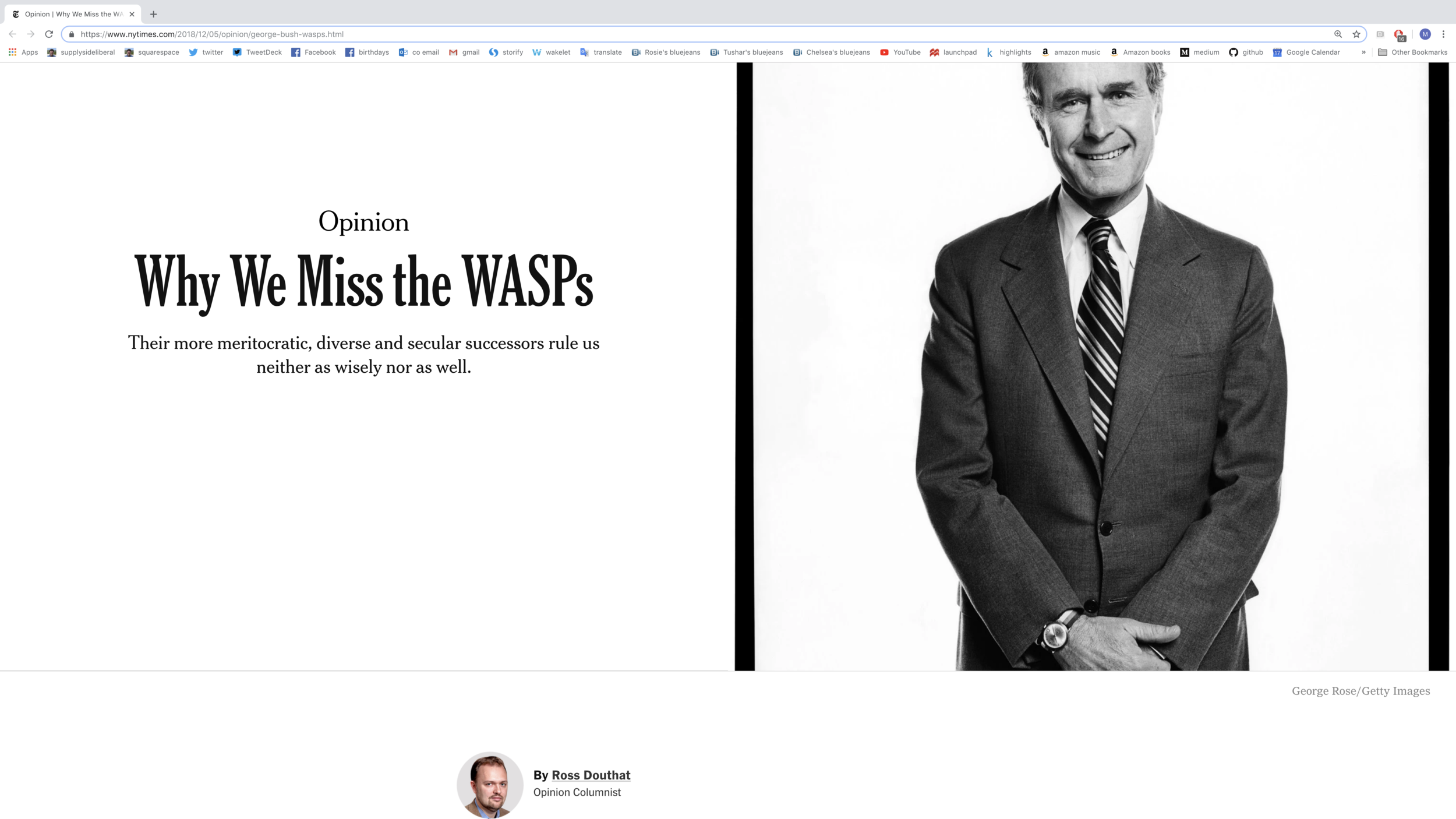
In the Democratic Party, Franklin Delano Roosevelt set a good example of noblesse oblige. In the Republican Party, George H. W. Bush set a good example of noblesse oblige. Here is Ross Douthat on George H. W. Bush, writing soon after George H. W. Bush’s death on November 30, 2018:

The nostalgia flowing since the passing of George H.W. Bush has many wellsprings: admiration for the World War II generation and its dying breed of warrior-politicians, the usual belated media affection for moderate Republicans, the contrast between the elder Bush’s foreign policy successes and the failures of his son, and the contrast between any honorable politician and the current occupant of the Oval Office.

But two of the more critical takes on Bush nostalgia got closer to the heart of what was being mourned, in distant hindsight, with his death. Writing in The Atlantic, Peter Beinart described the elder Bush as the last president deemed “legitimate” by both of our country’s warring tribes — before the age of presidential sex scandals, plurality-winning and popular-vote-losing chief executives, and white resentment of the first black president. Also in The Atlantic, Franklin Foer described “the subtext” of Bush nostalgia as a “fondness for a bygone institution known as the Establishment … sent off to the world with a sense of noblesse oblige.

There are many ways in which the younger generations now are better than the older generations in society. In particular, on the whole they have less of the intertwined racism and nativism that continue to bedevil our society. And the idea of social action for the sake of social betterment is still there. But the idea that it takes a lot of good people doing good things with skill to keep things from getting worse seems less visible in our culture. This is, in part, the idea that there is a role for an elite. Ross writes this about a strategic wrong turn of the elite in America:

So it’s possible to imagine adaptation rather than surrender as a different WASP strategy across the 1960s and 1970s. In such a world the establishment would have still admitted more blacks, Jews, Catholics and Hispanics (and more women) to its ranks … but it would have done so as a self-consciously elite-crafting strategy, rather than under the pseudo-democratic auspices of the SAT and the high school resume and the dubious ideal of “merit.” … The goal would have been to keep piety and discipline embedded in the culture of a place like Harvard, rather than the mix of performative self-righteousness and raw ambition that replaced them.

Most psychological traits and conditions have a continuous spectrum. And culture can shift the mean of the distribution of people on that spectrum. While our current era has shifted people away from other disfunctions, it encourages people to flirt with narcissism. What is narcissism? Here is what the current version of the Wikipedia article for “Narcissistic Personality Disorder” says:

The DSM-5 indicates that persons with NPD usually display some or all of the following symptoms, typically without the commensurate qualities or accomplishments:[6][9]

  1. Grandiosity with expectations of superior treatment from other people

  2. Fixated on fantasies of power, success, intelligence, attractiveness, etc.

  3. Self-perception of being unique, superior, and associated with high-status people and institutions

  4. Needing continual admiration from others

  5. Sense of entitlement to special treatment and to obedience from others

  6. Exploitative of others to achieve personal gain

  7. Unwilling to empathize with the feelings, wishes, and needs of other people

  8. Intensely envious of others, and the belief that others are equally envious of them

  9. Pompous and arrogant demeanor

Note that the standards for a formal diagnosis of narcissistic personality disorder shift over time: “The DSM-5 indicates that the traits manifested by the person must substantially differ from cultural norms, in order to qualify as symptoms of NPD.” That is, even if you are indeed narcissistic, you will only be diagnosed as having narcissistic personality disorder if you are more a lot more narcissistic than average. The worse the average is, the more people will be narcissistic without being tagged as having narcissistic personality disorder. It is worth being concerned about the undesirable narcissistic tendencies people at the median level of narcissism in our society have. And of course, at least half of everyone is above median in narcissism.

To me, some notion of noblesse oblige seems helpful in fighting the narcissism within us. The message of noblesse oblige is this:

If you think you are special, that means you have a duty to serve and take care of other people more. It doesn’t mean that other people should do more for you! If you do genuinely good things, you can legitimately expect that 10% of the time when you do good things, someone will make some expression of thanks. But that is the main entitlement you can expect—not more. In particular, nothing entitles you to step on other people to get ahead. The only thing that can justify breaking rules is either helping other people directly or setting an example that will help other people along the lines of Immanuel Kant’s categorical imperative: “Act only according to that maxim whereby you can at the same time will that it should become a universal law.”

If you do try to do something that will make a big difference to society, you should expect a rocky road. And, with rare exceptions, you will not succeed without a lot of patience and fortitude and courage. Leaving aside whatever he may have accomplished supernaturally, Jesus got his message across only by dying on the cross. Doing good isn’t easy! And if you aren’t doing good, you don’t deserve admiration from others.

Finally, some aspects of narcissism are simply bad strategy. A pompous and arrogant demeanor is unlikely to get you ahead in life. Being envious of others can easily get in the way of alliances that could make your career. If you are exploitative and get caught, it can destroy your career even if you have been successful by conventional standards up to that point.

Few of us are entirely free of aspects of narcissism that are damaging to us and to those around us. I hope that we can not only fight the narcissism within ourselves, but that we can be able to talk about our efforts to fight our own narcissism, so that we don’t have to fight this fight alone.

Don’t miss these other posts that have a similar message:

David Ludwig, Walter Willett, Jeff Volek and Marian Neuhouser: Controversies and Consensus on Fat vs. Carbs

Screen Shot 2019-02-25 at 7.30.18 PM.png

David Ludwig is not a fan of lowfat diets. He is the author of Always Hungry, which includes this in its Amazon summary:

Low-fat diets work against you, by triggering fat cells to hoard more calories for themselves, leaving too few for the rest of the body. This "hungry fat" sets off a dangerous chain reaction that leaves you feeling ravenous as your metabolism slows down. Cutting calories only makes the situation worse-creating a battle between mind and metabolism that we're destined to lose. 

But to write the November 16, 2018 Science article “Dietary fat: From foe to friend?” he teamed up nutrition researchers with different views. Together, they tried to identify areas of disagreement and areas of agreement. Let me briefly discuss the seven areas of agreement they found.

  1. Both lowcarb and lowfat diets can work well. As I write in “Why a Low-Insulin-Index Diet Isn't Exactly a 'Lowcarb' Diet,” different kinds of carbohydrates differ dramatically in whether or not they cause insulin spikes. Lettuce, spinach, kale, broccoli, cauliflower and brussel sprouts technically have a lot of carbohydrates in them, but they are free of the easily-digestible carbs that turn into blood sugar quickly, which in turn causes a spike in insulin. A highcarb diet with little or no sugar and little or no processed food is a very different thing from what many people think of as a highcarb diet.

  2. Saturated fats are bad. I think the jury is still out on this. Saturated fats are especially common in foods from animal sources, and foods from animal sources could have a lot of other problems. For example, I have been sympathetic to the idea that animal protein is a cancer risk. (See “Meat Is Amazingly Nutritious—But Is It Amazingly Nutritious for Cancer Cells, Too?”) And the most common type of milk in the supermarket has what appears to be a particularly dangerous protein in it. (See “Exorcising the Devil in the Milk.”) A good way to test how bad saturated fats are without results confounded by other problems in animal foods would be to have everyone in a clinical trial eat a vegan diet (as similar in other ways as possible), with half of them eating a diet with a lot of coconut milk in it, the other half avoiding all plant foods that have a lot of saturated fat.

  3. Avoid sugar, refined grains and potatoes. Yes!

  4. Lowcarb, high fat diets may be good for people with insulin resistance. Yes. And a large share of all Americans have insulin resistance to some degree.

  5. Ketogenic diets may be helpful for people with special problems. This is a pretty weak statement and hard to disagree with.

  6. A lowcarb, high fat diet doesn’t have to have a lot of animal products or a lot of protein in it. Yes. I am not a vegan, but I only eat a modest amount of animal products. (See “My Giant Salad,” “Our Delusions about 'Healthy' Snacks—Nuts to That!” “Intense Dark Chocolate: A Review,” “In Praise of Avocados” and “Eating on the Road.)

  7. We should invest more in nutritional research. Here I love this sentence from the article: “Currently, the United States invests a fraction of a cent on nutrition research for each dollar spent on treatment of diet-related chronic disease.” Two weeks ago, I gave my own version of this argument:

To distinguish between different hypotheses, we need a lot more dietary clinical trials. Given the trillions of dollars worth of harm from the typical American diet (a number I discuss in “The Heavy Non-Health Consequences of Heaviness”), our nation is being penny-wise and pound foolish by not spending more money on dietary clinical trials to figure out what is healthy and what isn’t. Email correspondence with the head of one major study (see “Why a Low-Insulin-Index Diet Isn't Exactly a 'Lowcarb' Diet”) suggested that a reasonably high-quality dietary clinical trial (by current standards), might cost about $8 million. Thus, even without any government assistance, any billionaire could likely do trillions and trillions of dollars worth of good for the world by funding over time the equivalent of 100 dietary clinical trials of that size to test hypotheses about diet and health like those I discuss on this blog (and still have $200 million left over to live on). Some of this is happening, but much, much more needs to be done.

What is missing from this article is any discussion of the timing of eating. Fasting—periods of time with no food—is looking very promising in many studies as a way to gain many health benefits. (See “Stop Counting Calories; It's the Clock that Counts” and “Lisa Drayer: Is Fasting the Fountain of Youth?”) Even among readers of this blog, I have the sense that many think my main recommendation is to eat low on the insulin index. There is some truth to this, as you can see from “Obesity Is Always and Everywhere an Insulin Phenomenon” and “Forget Calorie Counting; It's the Insulin Index, Stupid.” But I consider fasting as the most important measure I would recommend for improving health through diet. Indeed, fasting is so important that I consider the single greatest benefit of a low-insulin-index diet to be that—in my experience and that of others I know—it makes fasting much easier. That is a claim I would love to have subjected a clinical trial.

On fasting, let me try to pull you away from some weirdnesses out there. In “Biohacking: Nutrition as Technology” I write:

Fasting doesn’t need any particular pattern. The environment of evolutionary adaptation for humans likely had a lot of random involuntary fasting. So we are likely to be designed for patternless fasting. The main thing is to (a) do enough total fasting and (b) fast for some reasonably long chunks of time, and (c) work up slowly to anything more than 24 hours so that you know your tolerance for fasting. That’s it. No particular pattern needed. Do a water-only fast (or allow unsweetened coffee and tea) when it is most convenient, which might be either when you are especially busy or when you have many distractions to keep your mind off of food (which could happen at the same time).

One sign of this weird, overly structured approach to fasting is the common phrase “intermittent fasting.” To me, the word “intermittent” here is redundant. If you don’t intersperse periods of eating food into your fasting, you will die! It is as simple as that. So I don’t think much of anyone is recommending non-intermittent fasting. Given that, one can call “intermittent fasting” just “fasting.”

I am not saying not to have any pattern to your fasting, but choose a pattern yourself based on what is convenient and requires the least willpower. I tend to fast on busy days when I have too many other things on my mind to think much about food anyway.

One thing I have been pleased at is that many clinical trials seem to be getting done about fasting. I would love to be involved as one of the scientists for one of those clinical trials. But in any case, we will know a lot more about the health effects of fasting ten years from now than we do today—both about safety and efficacy in improving health. To me, the evidence as it stands today makes fasting look like a good bet for your health.

Don’t miss my other posts on diet and health:

I. The Basics

II. Sugar as a Slow Poison

III. Anti-Cancer Eating

IV. Eating Tips

V. Calories In/Calories Out

VI. Wonkish

VIII. Debates about Particular Foods and about Exercise

IX. Gary Taubes

X. Twitter Discussions

XI. On My Interest in Diet and Health

See the last section of "Five Books That Have Changed My Life" and the podcast "Miles Kimball Explains to Tracy Alloway and Joe Weisenthal Why Losing Weight Is Like Defeating Inflation." If you want to know how I got interested in diet and health and fighting obesity and a little more about my own experience with weight gain and weight loss, see “Diana Kimball: Listening Creates Possibilities and my post "A Barycentric Autobiography.

Getting Away with Doing Good

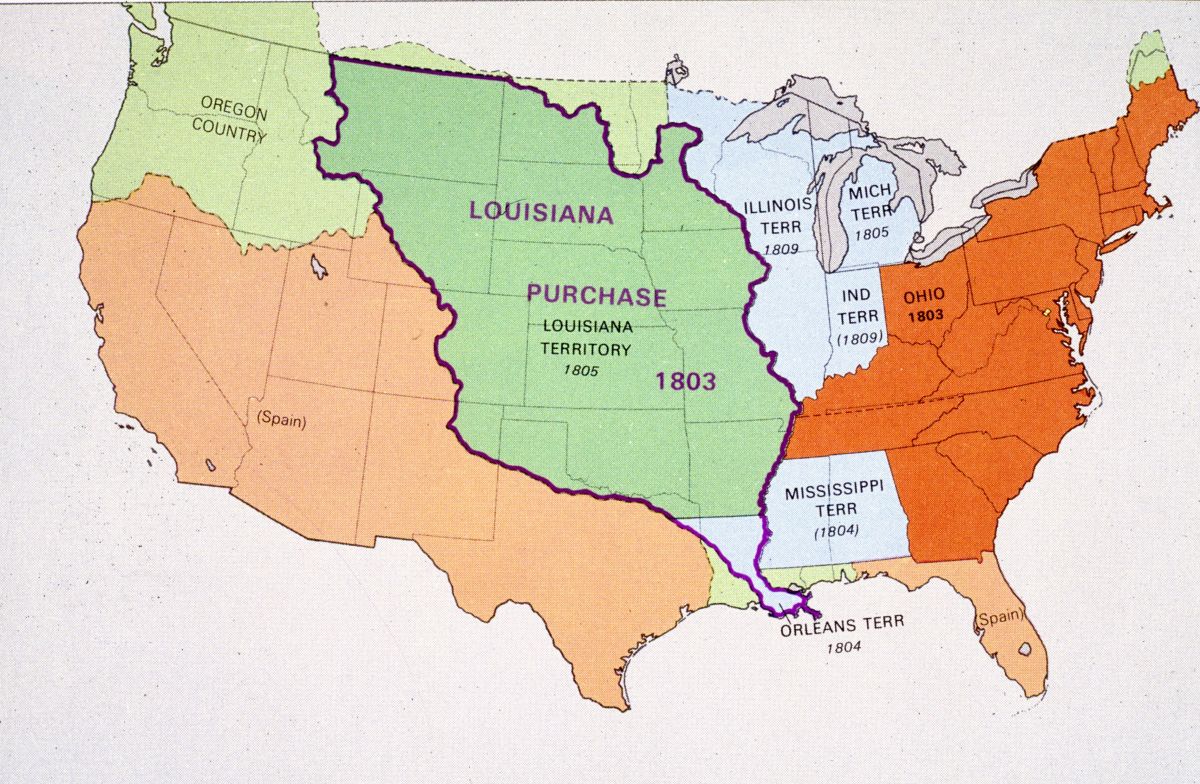
As I noted in “John Locke: Revolutions are Always Motivated by Misrule as Well as Procedural Violations,” in my experience, Department Chairs can get away with procedural violations as long as everyone agrees with what they are doing. On a larger stage, people didn’t get that upset with Thomas Jefferson for making the Lousiana purchase, even though that action arguably exceeded his constitutional powers.

John Locke, in Chapter XIV, “Of Prerogative,” of his 2d Treatise on Government: Of Civil Government explains that doing good for the people appropriately allows a ruler to bend the rules, while no constitutional provision can justify a ruler in doing harm to the people. Constitutional provisions come into their own only when the people are sorely divided about whether a measure is good for them or not. Here is how John Locke makes the case:

§. 159. WHERE the legislative and executive power are in distinct hands, (as they are in all moderated monarchies, and well-framed governments) there the good of the society requires, that several things should be left to the discretion of him that has the executive power: for the legislators not being able to foresee, and provide by laws, for all that may be useful to the community, the executor of the laws, having the power in his hands, has by the common law of nature a right to make use of it for the good of the society, in many cases, where the municipal law has given no direction, till the legislative can conveniently be assembled to provide for it. Many things there are, which the law can by no means provide for; and those must necessarily be left to the discretion of him that has the executive power in his hands, to be ordered by him as the public good and advantage shall require: nay, it is fit that the laws themselves should in some cases give way to the executive power, or rather to this fundamental law of nature and government, viz. That as much as may be all the members of the society are to be preserved: for since many accidents may happen, wherein a strict and rigid observation of the laws may do harm; (as not to pull down an innocent man’s house to stop the fire, when the next to it is burning) and a man may come sometimes within the reach of the law, which makes no distinction of persons, by an action that may deserve reward and pardon; ’tis fit the ruler should have a power, in many cases, to mitigate the severity of the law, and pardon some offenders: for the end of government being the preservation of all, as much as may be, even the guilty are to be spared, where it can prove no prejudice to the innocent.

§. 160. This power to act according to discretion, for the public good, without the prescription of the law, and sometimes even against it, is that which is called prerogative:for since in some governments the law-making power is not always in being, and is usually too numerous, and so too slow, for the dispatch requisite to execution; and because also it is impossible to foresee, and so by laws to provide for, all accidents and necessities that may concern the public, or to make such laws as will do no harm, if they are executed with an inflexible rigour, on all occasions, and upon all persons that may come in their way; therefore there is a latitude left to the executive power, to do many things of choice which the laws do not prescribe.  

§. 161. This power, whilst employed for the benefit of the community, and suitably to the trust and ends of the government, is undoubted prerogative, and never is questioned: for the people are very seldom or never scrupulous or nice in the point; they are far from examining prerogative, whilst it is in any tolerable degree employed for the use it was meant, that is, for the good of the people, and not manifestly against it; but if there comes to be a question between the executive power and the people, about a thing claimed as a prerogative; the tendency of the exercise of such prerogative to the good or hurt of the people, will easily decide that question.  

§. 162. It is easy to conceive, that in the infancy of governments, when commonwealths differed little from families in number of people, they differed from them too but little in number of laws: and the governors, being as the fathers of them, watching over them for their good, the government was almost all prerogative. A few established laws served the turn, and the discretion and care of the ruler supplied the rest. But when mistake or flattery prevailed with weak princes to make use of this power for private ends of their own, and not for the public good, the people were fain by express laws to get prerogative determined in those points wherein they found disadvantage from it: and thus declared limitations of prerogative were by the people found necessary in cases which they and their ancestors had left, in the utmost latitude, to the wisdom of those princes who made no other but a right use of it, that is, for the good of their people.  4

§. 163. And therefore they have a very wrong notion of government, who say, that the people have incroached upon the prerogative, when they have got any part of it to be defined by positive laws: for in so doing they have not pulled from the prince any thing that of right belonged to him, but only declared, that that power which they indefinitely left in his or his ancestors’ hands, to be exercised for their good, was not a thing which they intended him when he used it otherwise: for the end of government being the good of the community, whatsoever alterations are made in it, tending to that end, cannot be an incroachment upon any body, since no body in government can have a right tending to any other end: and those only are incroachments which prejudice or hinder the public good. Those who say otherwise, speak as if the prince had a distinct and separate interest from the good of the community, and was not made for it; the root and source from which spring almost all those evils and disorders which happen in kingly governments. And indeed, if that be so, the people under his government are not a society of rational creatures, entered into a community for their mutual good; they are not such as have set rulers over themselves, to guard, and promote that good; but are to be looked on as an herd of inferior creatures under the dominion of a master, who keeps them and works them for his own pleasure or profit. If men were so void of reason, and brutish, as to enter into society upon such terms, prerogative might indeed be, what some men would have it, an arbitrary power to do things hurtful to the people.  

§. 164. But since a rational creature cannot be supposed, when free, to put himself into subjection to another, for his own harm; (though, where he finds a good and wise ruler, he may not perhaps think it either necessary or useful to set precise bounds to his power in all things) prerogative can be nothing but the people’s permitting their rulers to do several things, of their own free choice, where the law was silent, and sometimes too against the direct letter of the law, for the public good; and their acquiescing in it when so done: for as a good prince, who is mindful of the trust put into his hands, and careful of the good of his people, cannot have too much prerogative, that is, power to do good; so a weak and ill prince, who would claim that power which his predecessors exercised without the direction of the law, as a prerogative belonging to him by right of his office, which he may exercise at his pleasure, to make or promote an interest distinct from that of the public, gives the people an occasion to claim their right, and limit that power, which, whilst it was exercised for their good, they were content should be tacitly allowed.  

§. 165. And therefore he that will look into the History of England, will find, that prerogative was always largest in the hands of our wisest and best princes; because the people, observing the whole tendency of their actions to be the public good, contested not what was done without law to that end: or, if any human frailty or mistake (for princes are but men, made as others) appeared in some small declinations from that end; yet it was visible, the main of their conduct tended to nothing but the care of the public. The people therefore, finding reason to be satisfied with these princes, whenever they acted without, or contrary to the letter of the law, acquiesced in what they did, and, without the least complaint, let them enlarge their prerogative as they pleased, judging rightly, that they did nothing herein to the prejudice of their laws, since they acted conformable to the foundation and end of all laws, the public good.  

§. 166. Such godlike princes indeed had some title to arbitrary power by that argument, that would prove absolute monarchy the best government, as that which God himself governs the universe by; because such kings partake of his wisdom and goodness. Upon this is founded that saying, That the reigns of good princes have been always most dangerous to the liberties of their people: for when their successors, managing the government with different thoughts, would draw the actions of those good rulers into precedent, and make them the standard of their prerogative: as if what had been done only for the good of the people was a right in them to do, for the harm of the people, if they so pleased; it has often occasioned contest, and sometimes public disorders, before the people could recover their original right, and get that to be declared not to be prerogative, which truly was never so; since it is impossible that any body in the society should ever have a right to do the people harm; though it be very possible, and reasonable, that the people should not go about to set any bounds to the prerogative of those kings, or rulers, who themselves transgressed not the bounds of the public good: for prerogative is nothing but the power of doing public good without a rule.  

§. 167. The power of calling parliaments in England, as to precise time, place, and duration, is certainly a prerogative of the king, but still with this trust, that it shall be made use of for the good of the nation, as the exigencies of the times, and variety of occasions, shall require; for it being impossible to foresee which should always be the fittest place for them to assemble in, and what the best season; the choice of these was left with the executive power, as might be most subservient to the public good, and best suit the ends of parliaments.  

§. 168. The old question will be asked in this matter of prerogative, But who shall be judge when this power is made a right use of? I answer: between an executive power in being, with such a prerogative, and a legislative that depends upon his will for their convening, there can be no judge on earth; as there can be none between the legislative and the people, should either the executive, or the legislative, when they have got the power in their hands, design, or go about to enslave or destroy them. The people have no other remedy in this, as in all other cases where they have no judge on earth, but to appeal to heaven: for the rulers, in such attempts, exercising a power the people never put into their hands, (who can never be supposed to consent that any body should rule over them for their harm) do that which they have not a right to do. And where the body of the people, or any single man, is deprived of their right, or is under the exercise of a power without right, and have no appeal on earth, then they have a liberty to appeal to heaven, whenever they judge the cause of sufficient moment. And therefore, though the people cannot be judge, so as to have, by the constitution of that society, any superior power, to determine and give effective sentence in the case; yet they have, by a law antecedent and paramount to all positive laws of men, reserved that ultimate determination to themselves which belongs to all mankind, where there lies no appeal on earth, viz. to judge, whether they have just cause to make their appeal to heaven. And this judgment they cannot part with, it being out of a man’s power so to submit himself to another, as to give him a liberty to destroy him; God and nature never allowing a man so to abandon himself, as to neglect his own preservation: and since he cannot take away his own life, neither can he give another power to take it. Nor let any one think, this lays a perpetual foundation for disorder: for this operates not, till the inconveniency is so great, that the majority feel it, and are weary of it, and find a necessity to have it amended. But this the executive power, or wise princes, never need come in the danger of: and it is the thing, of all others, they have most need to avoid, as of all others the most perilous.

I find John Locke’s emphasis on the principle that the government is meant to benefit its people refreshing. Constitutional provisions are in service to the end of benefitting people.

The great revolutions in government over time have been in expanding the set of people who count—roughly speaking, first the nobility, then rich men, then poor men of favored ethnic backgrounds, then women, then others of disfavored ethnic backgrounds, and finally those within all of those groups who had not counted because they had been considered deviant in some way. Now the great battle is whether other human beings who, because they were born elsewhere and so do not have citizenship count.

Here the fact that many of these people would gladly take on all the duties of citizenship is highly relevant. Indeed, many would gladly take on all the duties of citizenship plus a host of additional requirements, as long as those requirements were humanly possible for them to meet. To me, it seems much better to add stiff requirements that new entrants to our republic need to meet (but most have the ability to meet) than to consign them irredeemably to the relative nonpersonhood of noncitizenship. Saying everyone has their own nation already is not a great answer when nations differ so widely in quality. It is better for those of us who are already citizens of a rich and relatively well-run nation to drive a hard bargain than to simply exclude people without giving them any recourse.

Of course, showing care for those who are noncitizens is likely to incite jealousy from some of the worst off of those who already are citizens, and those who feel they have been on a downward trajectory. There is an enlightened answer to that: care about them and vigorously pursue policies that benefit them as well. The opposite—an elite that relegates all of those who do not have the lifestyle and views of the elite to the category of those who don’t count—is disgusting and repellent, but common.

For links to other John Locke posts, see these John Locke aggregator posts: