Spencer LeVan Kimball on Duty and Commitment

Andrew bequeathed to my father, unaltered, that sense of commitment to unqualified performance of religious duty at any personal sacrifice. The sense of duty and commitment descended in part to my generation and even to my children’s generation, but as the generations changed, the sense of duty was often transformed in its nature and in its object.
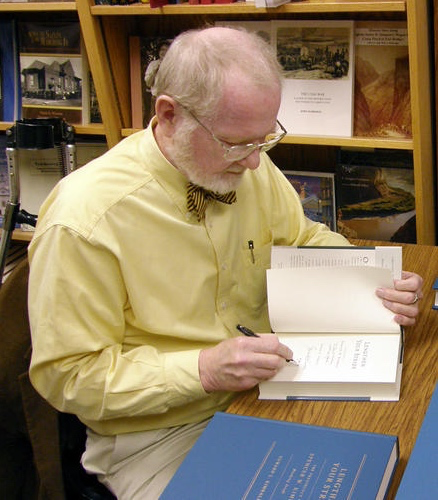
Spencer LeVan Kimball (son of Spencer Woolley Kimball, oldest brother of Edward Lawrence Kimball and uncle of Miles Spencer Kimball) in his autobiography A Tale That is Told 

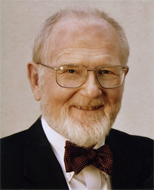
Harvard 35th Reunion Profile: Miles Kimball

Link to Wikipedia article “Miles Kimball”

It is hard to believe that this Spring it will be 35 years since I earned a Bachelor’s degree from Harvard. I did a profile for the 35th reunion report which you might find of some interest. (It had notes about my children Diana and Jordan at the top.) Here it is: 


My religious journey has been a big part of my life. In 2000, at the age of 40, I left Mormonism to become a Unitarian-Universalist. My Mormon background left me with a strong sense of mission, which has become a desire to make a difference in the world that is no longer connected to any belief in the supernatural.

In 2012, I began my blog “Confessions of a Supply-Side Liberal,” which has a personal dimension, in addition to talking about economics, politics and religion. I also began tweeting in earnest under my own name @mileskimball.

In 2016, after 29 years teaching at the University of Michigan in Ann Arbor, I moved to the University of Colorado Boulder as Eugene D. Eaton Jr. Professor of Economics. My wife Gail and I now live in Superior, Colorado, with stunning views of the Front Range.

Professionally, I continue to pursue broad interests in macroeconomics, the economics of risk and cognitive economics, but my most important efforts are working toward restoring the power of monetary policy by working out the details for effective negative interest rate policy and designing well-being indices that can improve policy-making not only for national and regional governments but also for non-governmental organizations. My research has become a very social activity as I work with a large circle of coauthors and research assistants. Technology has made long-distance collaboration easier and easier.

My Dad

Edward Lawrence Kimball, September 23, 1930–November 21, 2016

Edward Lawrence Kimball, September 23, 1930–November 21, 2016

Link to Wikipedia article on “Edward L. Kimball”

Link to the Deseret News article on Edward Lawrence Kimball’s death (source of the photo above)

Other than the fictional Clark Kent, my Dad is the only person who has ever made me think spontaneously of the adjective “mild-mannered.” My Mother explained why my Dad took almost no part in disciplining his children, by saying he was too much of a marshmallow. But in intellectual matters, my Dad had a spine of steel. He was not willing to say anything he did not believe, and he was not willing to believe anything he did not think through.

My Dad had an unwavering belief in a universe that makes sense. He rejected the idea that the universe is dead set against us. And while he recognized that people sometimes do terrible things, he always started with the assumption that people would act reasonably if not needlessly antagonized.

My Dad was an example of putting loyalty to the truth first and foremost, without neglecting other loyalties. He could do both because he knew the limits of his own knowledge, and gave people the benefit of the doubt. And because of both that intellectual humility and his tendency to give people the benefit of the doubt, he didn’t turn away by even a hair’s breadth from his friends and relatives whose views differed from his.   

My Dad knew well the complexity of Mormon history, but he believed in Mormonism until his last breath. In his last four years, after my Mother died, I had many conversations with my Dad about religion. He was genuinely curious about my beliefs and had me read to him many of my religion posts and Unitarian-Universalist sermons. In our discussions he homed in on the common threads in my beliefs and his.  

My Dad, like my Mother, was ambitious for his children. But neither of my parents ever pushed me in a particular career direction. And at moments when I had some success, my Dad made a point of reminding me it was more important to be good than to be successful.  

When my Dad was 56 years old, and his Mother followed his Dad in death, he spoke of himself as an orphan. In that same sense, at the age of 56, I am now an orphan. And the world, too, has lost a man it could ill afford to lose. 

Update, December 3, 2022: It has been a little over four years since my Dad died. Googling him today, I saw Peggy Fletcher Stack’s excellent obituary for him. See the image below. Here is the link.

We Are Who We Are Because of Our Ancestors

We are who we are in large measure because of our ancestors. In addition to shaping who we are within, by their collective strivings, they made the world a much better place than it otherwise would have been. May we do as well in improving the world for our descendants, and act in such a way that if they try to be like us, we would be proud.
— Miles Spencer Kimball

John T. Harvey: Five Reasons You Should Blame The Economics Discipline For Today's Problems

Like John Harvey, I do think that the economics profession bears an important part of the blame for the state the world is in. To a failure of most economists to recognize the fragility of the financial system, I would add slowness in developing monetary policy tools powerful enough to counteract the aggregate demand effects of any elevation of risk premia. Beyond that, what I would add to John Harvey’s discussion is: 

1. The word “model” itself has become a reflection of the problem. Logic and reasoning behind a given argument are partly dismissed by saying “You didn’t have a model.” This really means “You didn’t have a [very particular type of] model.” And the limitation to that very particular type of model is often exactly what is interfering with understanding of a problem.  

(In passing, let me say that I am not impressed with the realism of the models currently being used in polite circles with great frequency to model financial frictions.) 

2. John Harvey is too enamored of heterodox schools. By the nature of heterodoxy, many economists who “think outside of the box” will be sui generis, not belonging to any school at all. (If they are really good, they may eventually they gather disciples who then constitute a school. But they may not belong to any school when they first break out of the mold.)  

3. I see the blogosphere as a partial antidote to the dysfunctionality of the economics journals. If one includes the robust and wide-ranging discussion of the real world and real-world policy in the economic blogosphere, things look much better. From that angle, the dysfunction in economics overall can be reduced if more and more people take the blogosphere seriously.  

The Religious Dimension of the Lockean Law of Nature

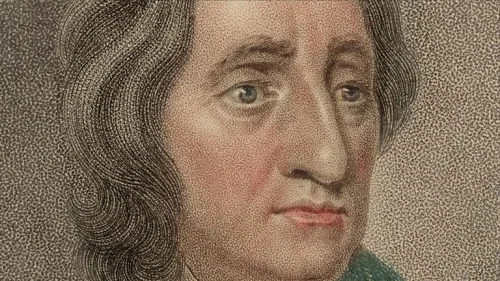
The desire for equality has been used to justify quite heavy-handed action by states. But John Locke, in his  2d Treatise on Government: “On Civil Government” section 6, reasons from the equality of all to natural rights. To John Locke, equality means a starting place in which no one is under the thumb of anyone else, and those who are not under the thumb of anyone else are free. In John Locke’s view, beyond a prohibition on suicide reflecting his view of our relationship to God, the key bound on that freedom is that one is not allowed to “take away, or impair … the life, the liberty, health, limb or goods of another”: 

But though this be a state of liberty, yet it is not a state of license: though man in that state have an uncontroulable liberty to dispose of his person or possessions, yet he has not liberty to destroy himself, or so much as any creature in his possession, but where some nobler use than its bare preservation calls for it. The state of nature has a law of nature to govern it, which obliges every one: and reason, which is that law, teaches all mankind, who will but consult it, that being all equal and independent, no one ought to harm another in his life, health, liberty, or possessions: for men being all the workmanship of one omnipotent, and infinitely wise maker; all the servants of one sovereign master, sent into the world by his order, and about his business; they are his property, whose workmanship they are, made to last during his, not one another’s pleasure: and being furnished with like faculties, sharing all in one community of nature, there cannot be supposed any such subordination among us, that may authorize us to destroy one another, as if we were made for one another’s uses, as the inferior ranks of creatures are for ours. Every one, as he is bound to preserve himself, and not to quit his station wilfully, so by the like reason, when his own preservation comes not in competition, ought he, as much as he can, to preserve the rest of mankind, and may not, unless it be to do justice on an offender, take away, or impair the life, or what tends to the preservation of the life, the liberty, health, limb, or goods of another.

Other “natural law” doctrines view people’s freedom as limited by more than just a ban on suicide and not harming others (who are not themselves offenders). Why is it that John Locke views our freedom as so extensive? There is a clue in saying that each of us is sent into the world by God and “about his business.” In effect, John Locke views us each as the one in the best position on Earth to make the ultimate judgement for what God wants each of us to do. Although, presumably, people sometimes fail to do what God sent them to Earth to do, many beautiful things that God did send someone to do might not happen if that person’s freedom of action is blocked.  

From a less theistic perspective, the point is that if someone is given freedom, they may do something wonderful that no one else would have thought to have them do. Giving each individual a chance to do that something wonderful that perhaps no one else would have thought of is figuratively giving that individual a chance to fulfill her or his mission in life. 

The view that John Locke scorns is the idea that “we were made for one another’s uses.” We were made for greater ends than that. And the final judgment on those greater ends cannot be made by another. 

Timothy Sandefeur: The Presumption of Freedom

If a judge put the burden of proof on the defendant to show that he did not commit the crime, the judge would be loading the dice against him. Even if the defendant proved he did not own the gun used to commit the murder, well, perhaps he borrowed it! To disprove that, he must now prove that he did not know the gun’s owner. But perhaps he paid that person to lie! – and so forth, infinitely. Every disproof only creates a new speculation, which must again be disproved. These speculations might seem silly, but they are not logically impossible, and requiring the defendant to prove his innocence – imposing the Devil’s proof on him – would require him to disprove even such bizarre conjectures. Every accused person would find himself in a hall of mirrors, forced to prove himself innocent of an endless series of baseless accusations, without regard for the rules of logic. As a procedural matter, presuming innocence is preferable, because an erroneous conviction is harder to fix than an erroneous finding of innocence. And as a substantive matter, the presumption of innocence is better because a wrongfully convicted person suffers a different, more personal harm than the public experiences if a guilty person goes free. Likewise, there are an indefinite number of speculative reasons that might defeat anyone trying to prove that he should not be deprived of freedom, just as there are an infinite number of ‘what ifs’ that the ‘Devil’ could use against a defendant who tries to prove he did not commit a crime, or a person who tries to disprove the existence of an invisible teapot: What if a person abuses his liberty? What if he doesn’t know how to use it wisely? What if he turns out to be a psychopath – or perhaps his children or grandchildren turn out to be psychopaths? What if there are top-secret reasons of state that warrant imprisoning him – reasons no judge may be allowed to see? Wary of the Devil’s proof, logicians place the burden on the person who asserts a claim, because that is the only logically coherent way to think. Likewise, the presumption of freedom requires those who would take away our liberty to justify doing so, because that is the only logically workable way to think about politics and law.
— Timothy Sandefeur, The Permission Society: How the Ruling Class Turns Our Freedoms into Privileges and What We Can Do About It

Next Generation Monetary Policy: The Video

Starting at the 20:30 mark in this Mercatus Center video is my presentation “Next Generation Monetary Policy.” Here is a link to the Powerpoint file for the slides I used.

This was at a September 7, 2016 Mercatus Center conference on “Monetary Rules in a Post-Crisis World.” You can see the other sessions here. (Note the 1/5 in the upper left corner of the video. Click on that to access session 1 of 5, 2 of 5, etc.) 

Timothy Sandefeur: The Terrain Is Easier to Judge in the Neighborhood of Liberty Than in the Neighborhood of Unfreedom

As a matter of procedure, starting with a presumption in favor of freedom is preferable because each step people take away from a state of liberty can be justified in theory by measuring whether they are better off. When two people sign a contract, they bind themselves, and in that sense are less free. But they consider themselves better off, and that is good enough, as long as they harm nobody else. It is not so easy to justify the reverse – a movement from a state of total unfreedom to one that is freer – because each step affects far more people. The totalitarian state is frozen solid, so that every action inflicts consequences on everyone else, and the slightest deviation from rigid order must therefore receive the approval of everyone affected. This means it is not always possible to determine whether people are better off at each step when they move in that direction. This, writes Epstein, ‘is why the restoration of even modest elements of a market system seem to pose such radical problems for Eastern European and Third World nations.’
— Timothy Sandefeur, The Permission Society: How the Ruling Class Turns Our Freedoms into Privileges and What We Can Do About It

18 Misconceptions about Eliminating the Zero Lower Bound (or Any Lower Bound on Interest Rates): The Video

My hosts at Chulalongkorn University in Bangkok were good enough to videotape my talk there and post the video on YouTube, as I encouraged them to do. In addition to being the only complete video so far of the presentation “18 Misconceptions about Eliminating the Zero Lower Bound,” (which is my main presentation at central banks on my Fall 2016 tour of European central banks as well), there is some excellent Q&A at the end of this video. 

Timothy Sandefeur: We Must Start by Presuming either in Favor of Freedom or against It

In discussing politics, there are two possible candidates for an initial presumption. We might presume in favor of totalitarianism – everything is controlled by the government, and citizens must justify any desire to be free – or we can presume in favor of liberty and require anyone who proposes to restrict freedom to justify that restriction. Either everything is allowed that is not forbidden, or everything is forbidden that is not allowed. As Professor Richard Epstein observes, there is no third, middle-ground option, because there is no obvious midpoint between the two extremes: people will bicker endlessly about what qualifies as exactly halfway. So we must start by presuming either in favor of freedom or against it.
— Timothy Sandefeur, The Permission Society: How the Ruling Class Turns Our Freedoms into Privileges and What We Can Do About It