Elizabeth Dwoskin: Putting a Computer in Your Brain is No Longer Science Fiction →
I am intrigued to see the kind of brain prosthetics I talked about in “Cyborgian Immortality” begin to become a reality.
A Partisan Nonpartisan Blog: Cutting Through Confusion Since 2012
I am intrigued to see the kind of brain prosthetics I talked about in “Cyborgian Immortality” begin to become a reality.

One of the ideas I consider the most important is the idea of a public contribution system that expands the nonprofit sector instead of expanding the government beyond the current substantial levels of government in rich countries. (See my bibliographic post “How and Why to Expand the Nonprofit Sector as a Partial Alternative to Government: A Reader’s Guide.”) My former student and University of Michigan PhD Ryo Ishida pursued this idea in his dissertation, and I am pleased to have a guest post from Ryo today on an aspect of the Japanese tax system that provides relevant empirical evidence for the design of a public contribution system–perhaps in part by illustrating what not to do.
Japan’s Hometown Tax Payment System is not about a large tax incentive for donations to private sector activities that can provide a partial substitute for government activities, but a large national tax incentive for donations to local governments. It enhances voluntary contribution to local governments.
Note that this post is his personal opinion and does not necessarily reflect the opinions of the organizations to which he belongs.
Hometown Tax Payment System in Japan — Individuals and Corporations
1. The Introduction of Hometown Tax Payment System for individuals.
The Hometown Tax Payment System (HTP System hereafter), or Furusato-Nozei System in Japan is a system introduced in 2008 that aims to encourage individuals to donate to local governments, i.e. municipalities and prefectures [1]. Before the implementation of HTP system, individuals who had donated could only enjoy taxable deductions. However, under the HTP system, individuals who donated more than 2,000 yen (approx. USD 20) can have their national and local income tax reduced drastically. The amount of tax credit a taxpayer can enjoy is the amount of donation minus 2,000 yen and is capped based on the individual’s income [2]. Roughly speaking, the upper bound of tax credit one can enjoy is approximately proportional to one’s taxable income. A detailed calculation is explained in [2]. If one’s donation is lower than the calculated upper bound, you may see that the taxpayer can enjoy almost a 100% tax credit. In such a case, one might see that this system is equivalent to a tax-transfer system, where one can shift a portion of her tax liability to local governments the taxpayer chooses. Roughly speaking, under the HTP System, a taxpayer can pay a portion of her tax liability to her hometown instead of paying it to the local government where she resides. Note that, although the HTP system is named “furusato (hometown)”, individuals are allowed to donate not only to their actual hometowns but also to any municipalities and prefectures. As a result, donations to devastated areassurged in 2011 after the Tohoku Earthquake.
This HTP system has attracted attention. The Economist [3] described the response as “overwhelming.” Although the amount of donations started at 8 billion yen (approx. USD 800 million) in 2008, it grew to 14 billion yen (approx. USD 1,400 million) in 2013, 39 billion yen (approx. USD 3,900 million) in 2014, and 165 billion yen (approx. USD 1.65 billion) in 2015 [4].
Brockmann et al. (2016) [5] stated that the HTP System is an immaterial tax rewards system that mitigates the nuisance of paying taxes. An immaterial tax rewards system includes a system that allows taxpayers to allocate a portion of their tax liability to a designated purpose, such as the Spanish system that allows taxpayers to allocate 0.7% of their tax liability to churches, charitable organizations or state organizations [5] or Hungarian Percentage Philanthropy that allows them to allocate 1% or 2% of their tax liability for a charitable purpose [6]. Although restricted to contributions to local governments, the HTP System might seem to be similar to Spanish or Hungarian system. However, there is a key difference between them, which makes the HTP System unique to Japan.
2. Rewards for Contributors. Although the Hungarian system was referred to when introducing the HTP System [7], a prominent feature in the HTP System is that many local governments reward the contributors by sending gifts, such as regional goodies. In a newspaper article posted on Jan 31, 2016 [8], it was noted that growing number of local governments reward contributors, with survey evidence showing that 84% of local governments rewarded contributors by sending gifts in autumn 2015 where 52% of them had done so in autumn 2013. Another newspaper article on Jun 18, 2016 [9] reported that, in 2015, the total value of these gifts was 63 billion yen (approx. USD 6,300 million) and postage costs were 4 billion yen (approx. USD 400 million) while total donations were 165 billion yen (approx. USD 1.65 billion). Therefore, it deduced that approximately 40% of donations were used for gift-related expenses. Hashimoto and Suzuki (2015) [10] explained that contributors may obtain financial gain under HTP System, by providing an example that a taxpayer may get 48 thousand yen as gain if she donated 100 thousand yen, enjoyed a 98 thousand yen tax credit, and obtained a gift whose value was 50 thousand yen. Then, a natural question could be whether such gifts attract individual contributions empirically. Nishimura et al. (2016) [11] reported that gift is certainly a positive determinant for individual contribution though there are several other positive determinants, such as availability of credit card transaction or local government’s explicit explanation about how to use contributions.
There are pros and cons for such rewards. For example, the Ministry of Internal Affairs and Communications surveyed local governments’ opinions about the HTP System [12]. In this report, although 668 local governments perceive that HTP System enables local governments to advertise themselves, 286 local governments have concern about competition in gift rewards. One media editorial on May 16, 2016 [13] claims that the HTP System fosters new industries in local area, while another media editorial on Jan 31, 2016 [14] argues that too much competition in gift rewards deviates from original purpose of HTP System. Taking into account this situation, the Ministry of Internal Affairs and Communications asked local governments in 2015 to refrain from sending expensive gifts and cashable gifts [15], and some local governments abolished rewards or reduced the value of gifts [9].
Gifts are not the only spur for contributions. A spate of revisions to the system sought to encourage individual donations.
3. The Hometown Tax Payment System, Past and Present. When the HTP System was introduced in 2008, the maximum tax credit one could enjoy was one’s total donation minus 5,000 yen. This system was revised in 2011 so that the maximum tax credit became the total donation minus 2,000 yen. Although the increase in donations in 2011 can mainly be attributed to the Tohoku Earthquake in Mar 11, 2011 [10], this systemic revision should theoretically have increased individual contributions.
In 2015, the HTP System was revised again. First, the upper bound of the tax credit, which is positively related to one’s income, was approximately doubled. Second, certain people became exempted from tax reporting even if they donated under HTP System. The first of these reforms increased the financial incentive for contributions, while the second encouraged contributions by simplifying procedures.
4. The Hometown Tax Payment System for Corporations. In 2016, the HTP System was expanded to corporations. Even under the previous system, donating corporations enjoyed a tax deduction and thus could reduce their tax payment by about 30% of the value of their donations. Under the HTP System for corporations, donating corporations enjoyed an additional 30% tax credit. Therefore, under the HTP System for corporations, donating corporations could reduce their tax liability about 60% of the value of their donations. A Corporation could contribute to local governments except for designated rich local governments and local governments where it had its headquarters. Before receiving this donation, local governments must clearly specify how they would use such donations and receive the national government’s approval. The HTP System for corporations is different from that for individuals since gifts or financial rewards from local governments receiving donations to the donor corporations are prohibited [16][17]. I am eagerly awaiting the evidence on how this change will affect corporate donations.
5. Conclusion. Although the HTP System has attracted attention, comprehensive treatments in English, especially for economists, are rare. An exception is an article in Japan Times [18], but it did not mention the HTP System for corporations nor did it mention the surge of donations in 2015, because the article was published on Oct 20, 2014. Annual statistics for the HTP System are currently available on the Ministry of Internal Affairs and Communications website [4]. I hope many economists take an interest in this Japanese experiment in tax policy.
Notice: This article is only for research purposes. The views expressed herein are those of the author and do not necessarily reflect the opinions of the organizations to which the author belongs. Any remaining errors are solely the responsibility of the author. Contact information: rrishida137035@gmail.com.
References
[1] Webpage of Ministry of Internal Affairs and Communications in Japan, http://www.soumu.go.jp/main_sosiki/jichi_zeisei/czaisei/czaisei_seido/furusato/about/ , in Japanese, retrieved on August 14, 2016
[2] Webpage of Ministry of Internal Affairs and Communications in Japan, http://www.soumu.go.jp/main_sosiki/jichi_zeisei/czaisei/czaisei_seido/furusato/mechanism/about.html , in Japanese, retrieved on August 14, 2016
[3] The Economist (April 18, 2015) “Japan’s rural regions Hometown dues”
[4] Webpage of Ministry of Internal Affairs and Communications in Japan, http://www.soumu.go.jp/main_sosiki/jichi_zeisei/czaisei/czaisei_seido/furusato/archive/ , in Japanese, retrieved on August 14, 2016
[5] Brockmann, Hilke, Philipp Genschel, and Laura Seelkopf (2016) “Happy taxation: increasing tax compliance through positive rewards?” Journal of Public Policy 36 (3), pp. 381-406
[6] Török, Marianna (2004). “Percentage philanthropy: an overview” In Percentage Philanthropy, edited by Marianna Török and Deborah Moss. Hungary. NIOK Foundation.
[7] The Tax Commission (2009), Webpage of Cabinet Office, http://www.cao.go.jp/zei-cho/history/2009-2012/gijiroku/zeicho/2009/__icsFiles/afieldfile/2010/11/22/21zen8kai16.pdf , in Japanese, retrieved on August 17, 2016
[8] Mainichi Shimbun newspaper (2016), http://mainichi.jp/articles/20160131/k00/00e/040/114000c , in Japanese, retrieved on August 17, 2016
[9] Nikkei Shimbun newspaper (2016), http://www.nikkei.com/article/DGXLASFS17H6H_Y6A610C1NN1000/ , in Japanese, retrieved on August 17, 2016
[10] Hashimoto, Kyoji, and Yoshimitsu Suzuki (2015) “Verification of Hometown Tax Payment System,” 72nd Annual Conference of the Japan Institute of Public Finance, in Japanese
[11] Nishimura, Yoshitomo, Tomoko Ishimura, and Nobuo Akai (2016) “Analysis about Incentive of Hometown Tax Payment System,” 24th Annual Conference of the Japan Association of Local Public Finance, in Japanese
[12] Webpage of Ministry of Internal Affairs and Communications in Japan, http://www.soumu.go.jp/main_sosiki/jichi_zeisei/czaisei/czaisei_seido/furusato/file/report20151023.pdf , in Japanese, retrieved on August 17, 2016
[13] Nikkei BP (2016), http://www.nikkeibp.co.jp/atcl/tk/PPP/030700027/042800003/?P=1 , in Japanese, retrieved on August 19, 2016
[14] Mainichi Shimbun newspaper (2016), http://mainichi.jp/articles/20160131/k00/00e/040/114000c , in Japanese, retrieved on August 19, 2016
[15] Webpage of Ministry of Internal Affairs and Communications in Japan, http://www.soumu.go.jp/main_content/000351771.pdf , in Japanese, retrieved on August 17, 2016
[16] Website of JTB, https://furu-po.com/business , in Japanese, retrieved on August 17, 2016
[17] Website of Cabinet Secretariat, http://www.kantei.go.jp/jp/singi/sousei/meeting/tihousousei_setumeikai/h28-01-14-siryou4-1.pdf , in Japanese, retrieved on August 17, 2016
[18] Japan Times (2014), “Hometown ‘tax’ donations system catching on,” http://www.japantimes.co.jp/news/2014/10/20/reference/hometown-tax-donations-system-catching/#.V7R_C5iLTIU , retrieved on August 17
I am sympathetic to those who see someone who calls themself an “agnostic” as an atheist without the courage of their conviction. And I consider myself a nonsupernaturalist. But technically, there is a decent measure of agnosticism we should each have about everything, not just about the existence of God, but also about almost everything else we take as facts.
Does God Exist?
In relation to the existence of God, I said this in “Teleotheism and the Purpose of Life”:
Traditional Christian theology, put into a hard science fiction straightjacket, is like the idea that we are all software programs inside a superbeing’s computer. There is no way to know this is not true. If it is true, miracles would just be a special case in the programming. The normal laws of nature could be as simple and regular as they are simply because that was easier than programming more complex laws for the default case.
Mormon theology, put into a hard science fiction straightjacket, is reminiscent of the idea that we are watched over by benevolent aliens from an advanced civilization. Not only is this plausible, it is even possible to argue that it is likely. There are a lot of stars in the Galaxy, but even at a fraction of the speed of light, it would take only a small fraction of the time since the Big Bang to get from one end of the Galaxy to another. If evolution often favors intelligence, why couldn’t intelligent life arise several times in our galaxy? If any intelligent life has arisen before us, chances are it arose many, many millions of years before us, simply because it has been billions of years since the Big Bang. So it is not a big stretch to have aliens from an advanced civilization reach Earth. The big issue would be Fermi’s paradox: “Where are they?” “If they are here, why they are hiding themselves from us?” and whether they are benevolent or not. If they are here, they don’t seem to have destroyed us, which is something.
And in “Teleotheism and the Purpose of Life”, the lack of a clear definition of “God” gave me this opening:
… let me do a riff on Anselm by defining God as “the greatest of all things that can come true.”
So it is either hard to rule out the existence of God, or God almost surely exists, depending on the definition of God.
Does the God of the Bible Exist?
In today’s post, I want to address a narrower question than the existence of God: the question of whether the God of the Bible can exist. The God of the Bible is better defined than any of the definitions of God I just addressed. My starting point on this question is to say that taken in a fully literal way, the Bible has internal contradictions in its description of God that make it impossible for the God of the Bible to exist on a fully literal reading.
But a fully literal reading of the Bible is far from the only reasonable reading. Consider this argument from Cities of God: The Real Story of How Christianity Became an Urban Movement and Conquered Rome, by one of my favorite authors, Rodney Stark. On pp. 105-107, he writes:
[In The Golden Bough (1890-1915), James] Frazier compiled an enormous set of examples in order to argue that tales of crucifixion and resurrection are standards of world mythology. He claimed to have established that there is nothing original whatever to the Christian tradition–or in any religious tradition, for that matter. All is generic, especially if one’s criteria are as elastic as Frazer’s. …
Of course, from the beginning Christian theologians have been fully aware of similarities between the Christ story and pagan mythology. And it did not disturb them to admit that elements of God’s final revelation had seeped into human awareness to help prepare the way. Moreover, the familiarity of the Christ story was entirely consistent with the long-standing Christian premise that God’s revelations are always limited to the current capacity of humans to comprehend. For example, in the fourth century St. John Chrysostom noted that even the seraphim do not see God as he is. Instead, they see “a condescension accommodated to their nature. What is this condescension? it is when God appears and makes himself known, not as he is, but in the way one incapable of beholding him is able to look upon him. In this way, God reveals himself proportionately to the weakness of those who behold him.”
In similar fashion, St. Gregory of Nyssa wrote in the fourth century that God is so “far above our nature and inaccessible to all approach” that he, in effect, speaks to us in baby talk, thereby giving “to our human nature, what it is capable of receiving.” St. Thomas Aquinas agreed: “The things of God should be revealed to mankind only in proportion to their capacity; otherwise, they might despite what was beyond their grasp. … It was, therefore, better for the divine mysteries to be conveyed to an uncultured people as it were veiled.” So too, John Calvin flatly asserted that God “reveals himself to us according to our rudeness and infirmity.” If scriptural comparisons–as between the two testaments, for example–seem to suggest that God is changeable or inconsistent, that is merely because “he accommodated diverse forms to different ages, as he knew would be expedient for each[;] … he has accommodated himself to men’s capacity, which is varied and changeable.” …
Hence, the similarities between Christianity and paganism can be explained in terms of human limitations–that is, as instances of divine condescension. At the very least, the claim that similarity necessitates secularity is far less convincing than has been supposed by ardent atheists or the theologically uninformed.
So, by this quite traditional view, God uses a divine version of baby talk in talking to humans. That divine baby talk is meant to get across God’s message for that particular audience as well as possible, given their difficulties in comprehension.
Professors in universities have been known to do something similar in introductory classes: to simplify things in a way that is not 100% accurate, but is likely to impart more total light and truth to the students in the class than the full, unvarnished technical truth would. Ethically, this approach requires giving the students some notice that one is simplifying–even if the exact nature of the simplification would itself be beyond the students’ comprehension.
In the Mormon canon, the Book of Mormon indicates that God takes quite a bit of license in ways of explaining things to people. Think of the implications of the following:
For behold, the Lord doth grant unto all nations, of their own nation and tongue, to teach his word, yea, in wisdom, all that he seeth fit that they should have; therefore we see that the Lord doth counsel in wisdom, according to that which is just and true. (Alma 29:8)
Given the variety of different religions needed to make it true that all nations are instructed by God through people from within that nation, the implication is that God uses a wide variety of ways to “teach introductory courses” at least. Now one might incautiously believe that one’s own religion had left the introductory stage far behind and was much, much more accurate. But if there is a God, I suspect God’s understanding is so far beyond ours that all existing religions still represent low-level courses in the divine, and so have many innacuracies in them–inaccuracies that God is willing to put up with in an effort to get us from one level of understanding to another a few millimeters higher.
“… it is true, as Macaulay said, that if large pecuniary interests were concerned in denying the attraction of gravitation, that most obvious of physical facts would have disputers.”
Beginning September 1, 2016, I will be a Professor of Economics at the University of Colorado Boulder. Eugene D. Eaton Jr. gave a large gift to the University of Colorado, of which a portion endows the Eugene D. Eaton Jr. Chair that I will hold.
I very much enjoyed my 29 years at the University of Michigan in Ann Arbor, where I started with a brand new PhD in 1987. Because of my many years of service there, I am able to retire from the University of MIchigan rather than resign, and expect soon to be an Emeritus Professor of Economics and Emeritus Research Professor of Survey Research of the University of Michigan.
I think both the University of Colorado Boulder and the University of Michigan Economics Departments have a bright future–the University of Michigan Economics Department for well-known reasons. The University of Colorado Boulder has a recruiting asset that I did not fully appreciate until I arrived here: Colorado is much more beautiful than I had realized when I decided to come here. My wife Gail and I live next to walking trails that give us a wonderful view of the sunsets on the mountains during our evening walks. And we enjoy balmy breezes eating breakfast out of doors on a deck with a view of the mountains almost every day. All it will take to successfully recruit many other economists is to combine that beauty with the kind of fully competitive salary and teaching package they put together in my case.
When I first started talking to the University of Colorado Boulder Economics Department I emphasized that I was looking for help in dealing with the time crunch I face from pursuing a writing career as a blogger, part-time journalist, and monetary policy activist as well as pursuing many lines of academic research and a full life outside of work. I am very pleased to have the support to try to do it all.
Unlike many successful recruitments, this one did not stem from any substantial prior connection with other economists at my new university. Based on the small amount of time I have known them, I am quite impressed.
In talking to my colleagues at the University of Michigan about my impending move, I was surprised that among the arguments to stay at the University of Michigan, there were several accounts from colleagues who had moved from being a professor at some other university to the University of Michigan of how moving to a new environment had given them a creative boost. I look forward to the new insights I gain from a new environment.

A picture I took of the moon over a hill not far from my new home

A picture I took of my new home from the nearby hill. Despite appearances, a full suite of gleaming retail stores and excellent restaurants is not far away.
I am grateful to Gerard MacDonell for permission to share this exchange. I answered some emails full of questions with my own email interleaving my answers about my presentation “Enabling Deeper Negative Rates by Managing the Side Effects of a Zero Paper Currency Interest Rate.” You can see a shorter (20 minute) version of that presentation here.
Gerard: We have never met, but Noah Smith speaks very highly of you and told me I should read your stuff. I loved the series of tweets where you got talked down from endorsing Cochrane’s work on the cost of regulation. I had the exact same experience.
I really enjoyed your deck on negative interest rates. I used to work at a hedge fund and was close with a guy who traded banks who was absolutely convinced that low interest rates crushed margins. My own priors were in line with your thoughts, but this guy made money and the correlation between daily stock prices moves and the forward pricing of the Fed seemed to confirm his view. I guess there is a “behavioral” issue there, as you put it. My guess is that the behavioral issue is at the banks and their clients rather than in how the markets react to the reality in place. In other words, the traders are processing the reality fine, but the reality itself has a behavioral component?
I wonder if it might disappear as the experience with very low rates lengthens. You might want to address that in your work on this. I bet there would be a lot of interest.
Miles: This Powerpoint file for the new paper Ruchir and I are working on has some relevant graphs–and I think you will be interested in it generally. We would be glad for comments on it. It is quite new and we are eager to improve it.
Gerard: I really liked it and it is why I contacted you in the first place. Before I offer thoughts on it, I should be clear that I am not an academic. I have an MA from Queen’s in Kingston Ontario and have spent 25 years as a business economist. I was most recently at SAC for 11 years and prior to that on JPM’s buy side for about 5 years. In those roles, I tried to arb the gap between what Wall Street knows and what academics know, but I am not an academic. Rather, I am inclined to the dreaded “literary” approach to economics, as Noah dismissively calls it! ;)
I don’t want to waste your time, so I will offer my thoughts in bullet form.
You might want to mention Neo Fisherianism if only to be clear that you dismiss it. Clearly, you assume it is wrong.
Miles: If you mean the idea that high interest rates raise inflation and low interest rates make inflation fall, yes, I think it is pretty silly. My main intended audience doesn’t believe that anyway, so I haven’t spent a lot of time addressing it.
Gerard: This may be idiosyncratic of me and less interesting to you, but I am very interested in what causes banks not to marginal cost price. I guess it is some combination of market power and behaviorism. It would be great to get to the bottom of that. Practitioners insist that the slippage between mortgage rates and policy rates that you show in one of your charts may UNDERSTATE the issue. Some claim banks have minimum profitability targets and will ream mortgagers to get back the damage to profits caused by negative policy rates. That is pretty slippery economics, but I know the idea is out there. If you could demolish it, then that would be a great contribution and I know Wall Street would be very interested in that. But again, that is idiosyncratic of me.
Miles: The basic problem is that banks always want more profits. So if they could raise profits by raising lending rates, why not do that before? Something has to change as a result of the negative rates. I think the relevant thing that might change given negative rates is that the regulatory authority might feel bad for the banks and be less strict in anti-trust enforcement. In the same direction, in Switzerland, the central bank wanted lower rates in relation to the foreign exchange markets, but actually wanted higher mortgage rates because they feared a house-price bubble. So they encouraged the banks to keep high mortgage rates.
Absent a shift in implicit or explicit government policy about banks raising lending rates, the story gets very difficult. It needs to be banks doing something to help with a short-term liquidity crunch at the expense of long-term profits.
Gerard: Willem Buiter has written on time stamping reserves to get around the lower bound. I found his piece dense, and you have probably already read it. But just in case.
Miles: I have credited Buiter in several ways. Most memorably, he appears as “Willem the Wise Warlock” in my children’s story about negative rates.
Gerard: In your first chart, you channel Summers in mentioning that curing recessions usually takes rate cuts of more than 5%. I think your chart highlights that AND that the zero bound is why rates stopped falling. Rates are high, not low! Or at least they have been. Maybe that is your main point and that the title might reflect that?
Miles: Yes. Large cuts in interest rates are standard in a recession if the zero lower bound doesn’t get in the way. At the Brookings conference on negative rates, they said that the usual model suggests that rates should have been cut to -6% in 2009, rather than the -4% I suggested in “America’s Big Monetary Policy Mistake: How Negative Interest Rates Could Have Stopped the Great Recession in Its Tracks”
Gerard: Some might argue with you that closing the Gold Window was a monetary policy regime shift. It allowed more inflation as a matter of fact, but it need not have. Minor point.
Miles: Actually, this is an excellent parallel. It is the cut in the target rate and the interest rate on reserves that is the main monetary policy instrument. Going off paper so that the paper currency interest rate can go negative can be viewed as enabling those cuts in the target rate and the interest rate on reserves.
Gerard: On slide 11, is being “subtle” really a feature? Maybe you want to hammer households over the head? Or are you worried about the income effect?
I don’t need any transmission from regular households seeing negative deposit rates. And the transmission from lower lending rates to households will mostly be from lower but still positive rates for cars, mortgages, appliances, etc. Credit card rates start so high, they would still be high even after cuts.
On slide 16, I know what you mean by “backed by”, but what you really mean is any sort of currency holdings. Don’t let funds fake it.
Yes, defining “backed by paper currency” would probably mean a strict limit on the fraction of assets that could be paper currency.
On slide 17, you see mortgage rates actually go up a bit there. Small, but riles up the practitioners.
Miles: Mortgage rates went down in Denmark and Sweden. The Swiss National Bank effectively encouraged banks to raise mortgage rates, and the banks obliged. Japan has only cut rates by a tenth of a percentage point, so whatever happened to mortgage rates there is unlikely to have anything to do with that small cut in rates, other than the mechanism of the authorities feeling sorry for the banks and lightening up on anti-trust attitudes.
Gerard: On slide 18, I may well be wrong here, but isn’t a tiered deposit rate system just an untiered system plus a subsidy to the banks? I think it would be better to deal with the behavioral/market power issues directly. If not, why hide what is really happening? Call it what it is: a subsidy to reflect that the standard banking model has not worked so well with negative rates. Or maybe I am wrong technically on that? Either way, honesty first!
I think calling it “an effective subsidy through the interest on reserves formula as I do is pretty honest.” It is appropriate to point to the formal mechanism through which the effective subsidy is provided is appropriate.
On slide 43, I love your point about helicopter money. So true. Related, eliminating currency would further weaken the case for heli money, unless you unwound the regime change when rates went back positive. Not related to your main thesis, but fun in my view.
Miles: Did you see my post “Helicopter Drops of Money Are Not the Answer”?
Gerard: On slide 44, you say higher inflation is easier said than done. I so agree. And I think this relates to the heli money issue. The “calibration” issue with H money is not really resolved. The efforts at resolving it (Turner, Bernanke) are just taxes on the banking system, disguised as ongoing “money” finance.
The beauty of negative rates is that we have an excellent idea of how much each basis point does, since it is essentially the same
Slides 47-49 remind me of a pet peeve, again because I agree. I think much of the clarion call for higher rates to fight bubbles is related to confidence that higher rates will NOT work. People who benefit from bubbles or would be hurt by a serious effort to improve financial stability can hide behind the pretense that they are against bubbles — as evidenced by their whining about the Fed!
Miles: I agree. A large amount of debate about various issues is really talking points by people who have a particular self-interest. The main solution to financial stability problems is very high equity requirements. That solution is against the self-interest of those who benefit from taking risks with an implicit taxpayer guarantee if things go south.
Gerard: The contrarian SWF is a very fun idea. I see that Blanchard believes that QE was so potent that Macro textbooks should now include it as the one (worth-mentioning) determinant of the term premium. That actually made me laugh or cry. But market segmentation would seem to be a bigger issue in risk assets, so I think that idea is cool. I think Delong has blogged on it too, no?
Miles: Yes.
Gerard: Speaking of QE, on 57 you say it was “seen as radical” but later “gained traction.” IMHO, how it was “seen” is irrelevant. Whether it gained traction is also a bit subjective. Does the evidence show it worked as indicated on the label? Personally, I would say not. But Noah has the hate mail to show many disagree.
Miles: One of the main pieces of evidence is the better recovery that the US and UK have had as compared to the eurozone. Also, asset markets move with QE announcements, so it is clear the markets believe QE has effects.
Tontines used to be a ridiculously popular form of annuities in America. Could they be again?
In the 15th paragraph of the “Introductory” chapter of On Liberty, John Stuart Mill writes:
Apart from the peculiar tenets of individual thinkers, there is also in the world at large an increasing inclination to stretch unduly the powers of society over the individual, both by the force of opinion and even by that of legislation: and as the tendency of all the changes taking place in the world is to strengthen society, and diminish the power of the individual, this encroachment is not one of the evils which tend spontaneously to disappear, but, on the contrary, to grow more and more formidable. The disposition of mankind, whether as rulers or as fellow-citizens, to impose their own opinions and inclinations as a rule of conduct on others, is so energetically supported by some of the best and by some of the worst feelings incident to human nature, that it is hardly ever kept under restraint by anything but want of power; and as the power is not declining, but growing, unless a strong barrier of moral conviction can be raised against the mischief, we must expect, in the present circumstances of the world, to see it increase.
Here is Robin Hanson on the same theme:
Humans clearly attend closely to status, an important part of status is dominance, and a key way we show dominance is to tell others what to do. Whoever gets to tell someone else what to do is dominating, and affirming their own status. But we are also clearly built to not notice most of our status moves, and so we attribute them to other motives. And as long as we are making up motives, we might as well make up the most admired of motives, altruism.
So we tend to think we tell others what to do in order to help them, and not to dominate them. In particular we tend to think we tell fat folks what to do, and control their behavior, because this will help those fat folks. For example, many support taxing soda or fast food in order to help fat folks.
You can see me wrestling with the desire to tax soda in my post “John Stuart Mill on Running Other People’s Lives.” The temptation to run other people’s lives throught public policy should not be underestimated. And without at least recognizing the temptation, there is little hope that we can fight it.
In these examples, the concern is with telling people what to do, ostensibly for their own good. But it is also pleasant to tell people what to do even without any pretense it is for their own good. One of the great pleasures of being a bureaucrat is getting to tell people what to do. And I suspect that getting to tell people what to do is part of the attraction of being one of the police. To keep bureaucracies and the police democratically legitimate, bureaucrats and police must treat everyone they deal with professionally with dignity. Maybe many people should be stopped by the police in order to keep crime down. But it is a disgrace if those interactions are not made absolutely as pleasant as possible for those being stopped.
Given my demographic category, my experience in being stopped by the police is limited, but I have noticed dramatic variations from place to place in how nice officials at airport screening are and dramatic variations from place to place in how nice officials at the Department of Motor Vehicles are. So I know it is not impossible to be nice. I am saying it is not just nice to be nice, but a moral requirement for the state–which makes people deal with these officials at the point of a gun (or on pain of the loss of great boons such as driving or flying)–not to train such folks to be nice. The necessity of such training follows from the great fun there is in bossing people around and telling them what to do, which is guaranteed to come out without very particular training to combat it.
Postscript: It is not lost on me that even in a blog post like this, I am telling people what to do. What fun! I hope in this particular case I am not doing any harm by giving in to the temptation.
“We may safely leave many branches of knowledge to such as can devote themselves to special pursuits. We may safely accept what chemists tell us of chemistry, or astronomers of astronomy, or philologists of the development of language, or anatomists of our internal structure, for not only are there in such investigations no pecuniary temptations to warp the judgment, but the ordinary duties of men and of citizens do not call for such special knowledge, and the great body of a people may entertain the crudest notions as to such things and yet lead happy and useful lives. Far different, however, is it with matters which relate to the production and distribution of wealth, and which thus directly affect the comfort and livelihood of men. The intelligence which can alone safely guide in these matters must be the intelligence of the masses, for as to such things it is the common opinion, and not the opinion of the learned few, that finds expression in legislation.”
A hat tip to Joseph Kimball for this link.
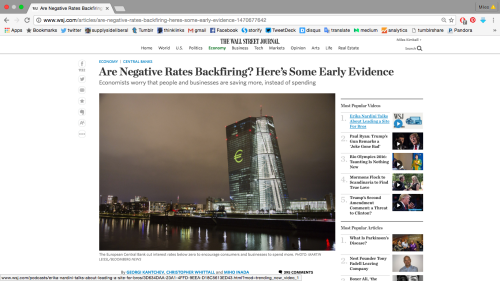
I had a very interesting interview with Georgi Kantchev a bit ago that is nicely reflected in an August 8 Wall Street Journal article he wrote with Christopher Whittall and Miho Inada. Despite the negative tone of the headline, and its collection of person-in-the-street quotations from people horrified by negative interest rates, in its analysis, it is actually quite a nuanced and balanced article.
A. Consider the following pairs of quotations:
1a. Some economists now believe negative rates can have an unintended psychological effect by communicating fear over the growth outlook and the central bank’s ability to manage it.
“The signal to the consumer is that something is wrong—it’s a crisis measure,” says Carl Hammer, chief currency strategist at Swedish bank SEB.
1b. University of Michigan economist Miles Kimball believes rates should be lowered even deeper into negative territory. If people are getting scared by negative rates, he says, it is the fault of central banks’ inability to communicate effectively, not the policy itself.
“They should say that this is a normal tool of policy,” he says, “and then people wouldn’t freak out.”
2a. In Germany, Europe’s largest economy and a nation known for thrift, savings as a percentage of disposable household income rose to 9.7% in 2015, according to preliminary data from the OECD. That is the highest rate since 2010, and the OECD expects the savings rate to rise further this year, to 10.4%.
2b. In the broader eurozone, where saving isn’t as ingrained in the psyche as in Germany, the household savings rate has edged lower since negative interest rates were introduced in 2014.
3a. Yves Mersch, a member of the ECB’s executive board, said in June that it is possible “households are hoarding even more” because they need to save more to build up the same amount of wealth over the same time span.
3b. Peter Praet, the ECB’s chief economist, says the focus should also be on borrowers, who are more inclined to spend than savers, and are seeing a boost to their disposable income because ultralow rates reduce the cost of servicing debt.
B. In the second and third pairs of quotations, the authors of the article show an understanding of the principle I enunciated in “Even Central Bankers Need Lessons on the Transmission Mechanism for Negative Interest Rates”:
The Principle of Countervailing Wealth Effects: It is easy to forget about some of the wealth effects. Applying the general principle that all the wealth effects cancel–other than overall expansion of the economy and differences in the marginal propensity to consume across economic actors can help in making sure one hasn’t missed a wealth effect, much as double-entry accounting helps in making sure one doesn’t miss something. An example of a particularly large wealth effect that is easy to miss is that a fall in interest rates raises the present discounted value of household labor income. The other principle that helps to avoid missing a wealth effect is to remember that there is always another side to every borrowing-lending relationship. If the economic actor on one side of the borrowing-lending relationship gets a negative hit to effective wealth, the economic actor on the other side will get a positive boost to effective wealth–again with the exception of the overall expansion of the economy. …
I discussed this principle again in “Responding to Joseph Stiglitz on Negative Interest Rates”:
… because there are two parties to every borrower-lender relationship, what is a negative wealth effect to one party is a positive wealth effect to the other. And on the whole, borrowers–who tend to get a wealth effect boost from lower rates–are better spenders than lenders. So if all the wealth effects are accounted for rather than cherry-picking a wealth effect here or there, they will be in the direction of greater stimulus from lower rates. Here is the overall story about transmission mechanisms for lower rates, in the negative region as well as the positive region: In any nook or cranny of the economy where interest rates fall, whether in the positive or negative region, those lower interest rates create more aggregate demand by a substitution effect on both the borrower and lender, while other than any expansion of the economy overall, wealth effects that can be large for individual economic actors largely cancel out in the aggregate.
Anyone who discusses the effects of negative interest rates by talking only about lenders without talking about borrowers is missing at least half of the story. Georgi Kantchev, Christopher Whittall and Miho Inada avoid that mistake.
I give a non-obvious example of this principle of considering borrowers as well as lenders in “Responding to Joseph Stiglitz on Negative Interest Rates”:
…think of senior citizens who lend instead to the federal government. Lower interest rates reduce the deficit and tend to lead to more government spending fairly directly by deficit reduction rules biting less. Even though senior citizens have a high marginal propensity to consume, I think the effects of deficit numbers on government behavior make the effective marginal propensity to consume of the federal government out of a change in interest expense even higher. Those who like the idea of fiscal stimulus should be happy about this stimulus from negative interest rates–especially since the negative wealth effect is only for the relatively well-off senior citizens who are not just living on social security, but have interest income to live on on top of that.
C. You might be interested in the email I sent to Georgi:
Dear Georgi,
It was great talking to you. Let me try to remember all the links I promised you:
1. I have links to everything I have written (including two academic policy papers) on negative interest rates in this bibliographic post that I update every few weeks:
2. You can see the video of the afternoon session of the Brookings conference I mentioned here:
My 20 minute talk comes first, giving more background on my recommendations. You can hear reactions to what I said as well. The panel discussion after is where you can hear several people say that the interest rate movement in at least the case of Japan is small compared to other things going on.
3. The actual Brookings website for that conference has both the afternoon session and the morning session:
This morning session has a lot of excellent talks, including the heavy-duty talk by Massimo Rostagno about his work with coauthors looking at what the markets believe is the lower bound on interest rates and the value Massimo sees in having negative rates in order to lower the market’s beliefs about what the lower bound on interest rates is, which allows long-term rates affected by QE to fall further. We talked about this in the context of central bank communication policy and the value of telling the markets that you can and will take interest rates as low as necessary. (The key point of my work is that there is no lower bound on interest rates if a central bank uses an appropriate mix of policies.)
4. Here is Naranaya Kocherlakota (who recently stepped down as President of the Minneapolis Fed) saying that negative rates should be treated as a normal part of monetary policy as we discussed:
and here is my reaction:
I had forgotten that this was a few weeks before he started writing for Bloomberg View. Narayana Kocherlakota has written a lot about central bank communication and negative interest rates in his Bloomberg View columns:
5. Here is my advice that central banks should use the interest-on-reserves formula to effectively subsidize the provision of zero rates (rather than negative rates) to small household accounts:
6. Here is a relatively heavy-duty post taking on Mark Carney to argue that there are many, many channels through which cutting interest rates–including cutting interest rates in the negative region–will stimulate the economy:
Not all of these channels involve banks. So a low enough rate can get all needed stimulus even if banks are malfunctioning. (Of course, it is bad directly if banks are malfunctioning; I am just saying that monetary policy can do its most basic job even if they are.)
I also addressed this issue here:
7. On the evidence that negative interest rates have the usual effects of interest rate cuts on financial markets despite some commentary to the contrary by bankers who are busy lobbying against negative rates, see this very nice post by Scott Sumner:
In case that link doesn’t work, I also got Scott’s permission to mirror it on my blog:
Let me know if there is anything else I forgot or if you have any other questions. I’d love to talk to you again sometime.
–Miles
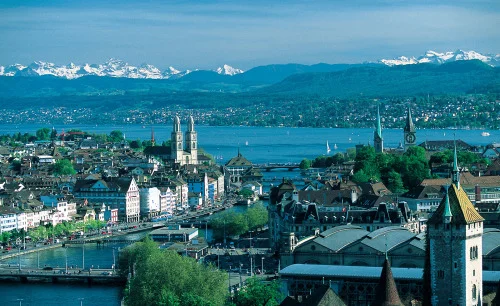
Zurich
Quite a few months back (about last Fall), I had an interview with a journalist in Zurich that did not result in an article. For that interview I had prepared some thoughts that I wanted to share with you. Keep in mind
1. Because of my visits to central banks, these proposals are getting wide discussion within central banks, and because of the two London conferences in May 2015, between central banks as well. Under the surface, there is a much bigger consensus than what you would assume.
2. The two countries I would bet on to introduce a negative paper currency interest rate first are the UK–as I predicted early on before even visiting (see “Could the UK Be the First Country to Adopt Electronic Money?” ) and his been borne out by subsequent events, and Switzerland, which currently has rates in the deepest negative territory (see “The Swiss National Bank Means Business with Its Negative Rates” and “Swiss “Pioneers! The Swiss as the Vanguard for Negative Interest Rates.”
3. The economics of my proposal is clear, and has withstood detailed questioning by central bankers all over the world. But with few exceptions, those who serve on monetary policy committees have sensitive political antennae and are worried about the politics of a negative paper currency interest rate.
4. Because of the political sensitivity of a negative paper currency interest rate, the only central bank officials to have alluded to it publicly are Bank of England Chief Economist Andrew Haldane (who refers directly to my work) and the Swiss National Bank officials involved in cosponsoring the conference on “Removing the Zero Lower Bound on Interest Rates” in London on May 18, 2015. So far, other central banks do not want to discuss my solution publicly, but there are many central bank staff economists around the world who are enthusiastic, believing as I do that from a technical point of view it would work well and solve an important problem.
Update Since Last Fall: Three former members of the FOMC have now discussed my proposal: Ben Bernanke, Narayana Kocherlakota and Donald Kohn. You can hear all of them talk about it in this video from the Brookings conference on negative interest rates at which I spoke. Ben Bernanke was also asked about my proposal in an interview by Ezra Klein; you can see his answer here. Narayana Kocherlakota also wrote about my proposal here.
5. One important virtue of my approach is its continuity with the current system: in small doses it is almost indistinguishable to ordinary households from the way we do things now.
6. If I were closely consulted on introducing a paper currency interest rate through a crawling-peg exchange rate between paper currency and electronic money, I would advise making it sound very bureaucratic and boring. I would start very subtly, with a dose small enough that there would be no chance of any significant negative side effects.
7. A cut of 50 basis points by the SNB would be well worth doing because it would have a substantial effect on foreign exchange rate for Swiss Francs.
8. Even if you do not want to cut interest rates now, you want to prepared for the next recession.
9. An exchange rate on paper money by the SNB would be a blessing for other countries. They could see in Switzerland that it works. Moreover, it could have an important stabilizing effect on world financial markets because it would help allay the fear that the world economy might be doomed to replicate the performance of the Japanese economy in the last two decades.
See links to everything I have written about negative interest rates in my bibliographic post “How and Why to Eliminate the Zero Lower Bound: A Reader’s Guide.”
“If every trace of any single religion were wiped out and nothing were passed on, it would never be created exactly that way again. There might be some other nonsense in its place, but not that exact nonsense. If all of science were wiped out, it would still be true, and someone would find a way to figure it all out again.”
Penn Jillette, as quoted here.
This is a very interesting argument, but it sounds more negative for religion than it really is. The very same could be said for any piece of great literature or any great painting; and people don’t usually go around calling the works of William Shakespeare or the paintings of Pablo Picasso “nonsense,” even if strictly speaking they are.
People who are aware of their good fortune make more attractive teammates.