Quartz #67—>Nationalists vs. Cosmopolitans: Social Scientists Need to Learn from Their Brexit Blunder

Here is the full text of my 67th Quartz column, “Social scientists need to learn from their Brexit blunder, so we can learn from them,” now brought home to supplysideliberal.com. It was first published on June 29, 2016. Links to all my other columns can be found here.

I give my reasoning behind the first sentence of this column in my July 10, 2016 sermon “Us and Them.”

If you want to mirror the content of this post on another site, that is possible for a limited time if you read the legal notice at this link and include both a link to the original Quartz column and the following copyright notice:

© June 29, 2016: Miles Kimball, as first published on Quartz. Used by permission according to a temporary nonexclusive license expiring June 30, 2020. All rights reserved.


The worst thing about Brexit is a key reason Brexit gained so much support: opposition to immigration. Advocates for the UK leaving the European Union were not shy about pointing to opposition to immigration as a key to their success. Nigel Farage captured some of that spirit by declaring “This is a victory for ordinary people, for good people, for decent people.”

The rise in inequality and serious monetary policy mistakes—including the eurozone’s requiring many disparate economies to share monetary policy with Germany—may have set the stage for rebellion against the status quo. But Donald Trump’s “I love to see people take their country back” expresses the nationalism behind the direction of rebellion implicit in Brexit.

One of the most revealing pieces of data on the Brexit vote is Eric Kaufmann’s analysis of Brexit support among the over 24,000 survey respondents in the British Election Study. Support for Brexit was much higher among those who supported capital punishment, and support for the EU was much lower among respondents who supported the public whipping of sex offenders. That is, “hardliners” were much more likely to support Brexit.

I have written the above as if we know what happened with Brexit. And although I think I have the general drift of things right, one of the big messages of Brexit in the UK and of the rise of Donald Trump in the US is that social scientists need to up their game dramatically in understanding what people want and how they think. For some time, social scientists have made a special effort to understand ethnic and sexual minorities. But given how different hardliners are from the people many academic social scientists usually hang out with, and how many hardliners there are, social scientists need to spend a lot more time studying this group. (Though marred by condescension toward “conservatives,” George Lakoff’s book Moral Politics is an excellent place for academics to start in an effort to understand the hardliner worldview.)

In order to give non-pejorative labels to both sides, let me call those who, like me, favor more open immigration “Cosmopolitans” and those who favor more restrictive immigration (and other policies in the same spirit) “Nationalists.” As a Cosmopolitan, what I most want to know from social science is what interventions can help make people more accepting of foreigners. Somewhat controversially, it is now common in the US for elementary school teachers to make efforts to instill pro-environmental attitudes in schoolchildren. Whether or not those efforts make a difference to children’s attitudes, are there interventions or lessons that can make schoolchildren and the adults they grow up to be likely to feel more positive about the foreign-born in their midst? For example, having had a very good experience learning foreign languages on my commute by listening to Pimsleur CDs in my car, I wonder whether dramatically more effective Spanish language instruction for school children following those principles of audio- and recall-based learning with repetition at carefully graded intervals might make a difference in attitudes toward Hispanic culture and toward Hispanics themselves in the US.

Although it is the province of social scientists to test interventions intended to improve attitudes toward the foreign-born, many of the best interventions will be created by writers, artists, script-writers, directors, and others in the humanities. There are also many other marginalized groups in society, but the strength of anti-foreigner attitudes suggests the need for imaginative entertainment and cultural events to help people identify with human beings who were born in other countries.

It is obvious to anyone except those with their heads in the sand that Brexit in the UK and the rise of Donald Trump in the US are a wake-up call to the relatively Cosmopolitan elites who have been running those countries. But that doesn’t mean the Cosmopolitan faction among the elites must surrender to the Nationalists. Cosmopolitan elites are powerful, and shouldn’t go down without a fight.

What is clear is that the strategy of shaming Nationalists and ethnocentrists who say negative things about other groups has its limitations. My grandmother used to quote Dale Carnegie’s now politically incorrect couplet:

A man convinced against his will,

Is of the same opinion still.

Shaming may work to a point, but what is needed now is genuine persuasion about the humanity that we all share, regardless of where on earth we are born.

In addition to such gentle efforts to help people become more accepting of the foreign-born, there is also, in the US, the possibility of an immigrant-voter “nuclear option” for cementing a Cosmopolitan victory—one that works only if Donald Trump goes down in flames and takes the Republican Senate and House majorities down with him. In that situation the Democrats (perhaps with the help of the filibuster-busting “nuclear option”)–could force through a true “amnesty” bill for illegal immigrants, including full naturalization. This would bring millions of additional immigrants onto the voting rolls—the latest in many historical expansions of the franchise.

Back in 1996, historians William Strauss and Neil Howe predicted in The Fourth Turning that the first two decades of the 21st century would bring a political crisis when the senescence of earlier generations finally deprived polarized Baby Boomers of effective adult guidance. Whatever one’s judgment about the overall merits of the Strauss-Howe generational theory, this particular prediction has come true. In such a crisis, it really matters how things get resolved. History is written, by and large, by the victors, so whichever side comes out on top—Nationalists or Cosmopolitans—will look good in the history books.


Q&A: Why is Fiscal Policy So Close to Being Neutral in Many Modern Macro Models?

Q: Hi Miles: Sorry to bother you, but I’ve gotten hornswoggled into teaching macro again and there is one topic in kind of the evolution of macro that is eluding me.

And that question is, how did we get to fiscal policy irrelevance/ineffectiveness in the new keynesian dynamic model?

Is it a presumed Fed response to offset? Is it Ricardian Equivalence? Is it just that VARs show little response?

Can you give me a pointer about where to look?

A: This is something I teach in my graduate macro class. Fiscal policy irrelevance has nothing to do with sticky prices or not. It is all about investment. Without investment frictions, investment tends to be crowded out 1 for 1 by government purchases in both sticky-price and non-sticky-price models. (Let me ignore the effects on labor supply because of the impoverishment caused by higher G and also the opposite-direction effects of higher marginal taxes to pay for the higher G.) And that logic should extend to sticky wage models as well. Sticky prices don’t matter because aggregate demand doesn’t even go up. G up, I down.

Q-theory affects this in a different way than many people probably think. Q-theory is not really investment adjustment costs, it is investment smoothing, analogous to consumption smoothing. So it is totally forward looking. If a shock is going to last 4 or 5 years, then there is still fairly complete crowding out of investment

I think you will like my (unpublished) paper with Susanto Basu on investment planning costs. Here are its slides. (These are totally public.) But planning adjustment costs only let G stimulate the economy for 9 months are so (the same as the lag in the effect of monetary policy that comes from planning adjustment costs). I call that period of time the ultra-short run.

To the extent it seems that government purchases do have an affect on output longer than the ultra-short run, to me the leading candidates are:

  1. Monetary policy response. For example, when more military spending is needed as in Ramey and Shapiro, the central bank may be accomodative. This is speculative, I don’t know it to be true.
  2. Imperfect mobility of labor between production of capital and production of G. This is more credible in some areas than others. For example, building a government office building and a private office building should be doable by the same factors, so those shifts of factors between G and I should be easy. But the government has many other purchases of products of types that would be unusual in the private sector. 

If fiscal policy is about tax cuts to increase C, there are the usual permanent income issues plus the issue of how easily C can crowd out I. But consumption smoothing is likely much stronger than investment smoothing a la Q-theory, so that probably does work, as implicitly assumed in my paper “Getting the Biggest Bang for the Buck in Fiscal Policy” in arguing for the greater effectiveness of credit policy.  

Our Michigan PhD Chris Boehm has a paper on all of these issues that you should look at. 

One reason I call myself a Monetarist rather than a New Keynesian is because of these issues with fiscal policy. 

John Stuart Mill on Running Other People’s Lives

In the 14th paragraph of the “Introductory” chapter of On Liberty, John Stuart Mill has this to say about the temptation to run other people’s lives: 

Though this doctrine [of suffering each other to live as seems good to themselves] is anything but new, and, to some persons, may have the air of a truism, there is no doctrine which stands more directly opposed to the general tendency of existing opinion and practice. Society has expended fully as much effort in the attempt (according to its lights) to compel people to conform to its notions of personal, as of social excellence. The ancient commonwealths thought themselves entitled to practise, and the ancient philosophers countenanced, the regulation of every part of private conduct by public authority, on the ground that the State had a deep interest in the whole bodily and mental discipline of every one of its citizens; a mode of thinking which may have been admissible in small republics surrounded by powerful enemies, in constant peril of being subverted by foreign attack or internal commotion, and to which even a short interval of relaxed energy and self-command might so easily be fatal, that they could not afford to wait for the salutary permanent effects of freedom. In the modern world, the greater size of political communities, and above all, the separation between spiritual and temporal authority (which placed the direction of men’s consciences in other hands than those which controlled their worldly affairs), prevented so great an interference by law in the details of private life; but the engines of moral repression have been wielded more strenuously against divergence from the reigning opinion in self-regarding, than even in social matters; religion, the most powerful of the elements which have entered into the formation of moral feeling, having almost always been governed either by the ambition of a hierarchy, seeking control over every department of human conduct, or by the spirit of Puritanism. And some of those modern reformers who have placed themselves in strongest opposition to the religions of the past, have been noway behind either churches or sects in their assertion of the right of spiritual domination: M. Comte, in particular, whose social system, as unfolded in his Systeme de Politique Positive, aims at establishing (though by moral more than by legal appliances) a despotism of society over the individual, surpassing anything contemplated in the political ideal of the most rigid disciplinarian among the ancient philosophers.

There are few of us who don’t feel the urge to run other people’s lives. Let me wrestle with a case where I feel this: the desire to intervene to reduce people’s consumption of sugary soft drinks in order to help restrain the rise of obesity–even to the extent of heavily taxing them. I actually think there are arguments on both sides for this. And since John Stuart Mill is a Utilitarian rather than a doctrinaire Libertarian, I think he would be willing to consider the arguments.  

One of the most troubling arguments for taxing sugary soft drinks is that obesity puts a burden on the government budget because the government pays for a big fraction of people’s medical care. This is saying that since the government is intervening in one area, and people’s choices interact badly with that intervention, that the government should intervene in another way. That leads to a chain of argument that could justify more and more government intervention, until the sum of it all would look like a bad deal.

An interesting argument would be pointing to the research showing that people eat better and exercise more when the people around them are doing so. That means that there is an externality from good behavior, assuming that some people want to eat well and exercise more but are having troubling doing so because not all of them wants to eat well and exercise well–a part that would be less costly to defeat if others were eating well and exercising well. In a way, that argument questions whether there is a sharp boundary between one person and the next. 

One of the best arguments for intervening to improve people’s health-related behaviors is to draw a boundary between different time slices of an individual, as I discussed in “Drug Legalization and Time Slices of People as Ethical Units.” If someone’s later self is treated as a separate individual, then harming that later self by eating badly and eschewing exercise could be akin to a crime. 

One way of trying to get at this issue is by listening to people talk about the regrets that have about things they didn’t do when they were younger. But it is tricky. Some of the young may not care much about the welfare of their older selves; but it is also true that some of the old may not care much about the welfare of their earlier, younger selves. They may be wishing their younger self had saved more or eaten better, even at the expense of having an unpleasantly ascetic life. So regrets must be taken with a grain of salt, but listening to both regrets and what the young want to do despite the cost to their older selves can help bring a more balanced perspective. 

I mentioned briefly above the possibility that people face an internal struggle to do the right thing. One way of modeling this is to imagine different selves battling it out within a person at the same time. From this point of view, taxing sugary soft drinks might be seen as taking sides in this civil war–with a certain amount of collateral damage on others who do not have an internal struggle. If this justification is not backed up by one of the others discussed in this post, it requires a non-obvious reason to favor one side of a person over the other side, as well as a full accounting of the collateral damage.

An important argument is to argue that people don’t understand, are confused and not thinking straight when they make the decision to drink sugary soft drinks. Educating people is actually quite expensive, while a tax on sugary soft drinks is mostly a transfer (admittedly a likely regressive tax taking money from the ignorant and some other groups and giving it to the government). This argument works best when (a) it has been demonstrated that an educational intervention based on the truth, undertaken on an experimental sample, causes people to shy away from sugary soft drinks and (b) the tax is tailored to affect primarily the subset in this category who would shy away from sugary soft drinks if only they knew the truth. That is, it is important to find signs of a genuine strong preference for sugary soft drinks that would make someone choose to drink them even knowing all of the consequences. 

John Stuart Mill is surprisingly sympathetic to the argument for being paternalistic toward the ignorant. On that, see “John Stuart Mill on Benevolent Dictators.” But a minimal condition for making a legitimate intervention based on the ignorance argument is that someone should be allowed to opt out–in this case choosing to replace the sugary soft drink tax with a lump-sum tax equal to the soft-drink tax at the average level of consumption, say–upon passing a rigorous quiz demonstrating full knowledge of the consequences of sugary soft drinks.  

One of the most powerful arguments against running other people’s lives is that it tends toward attempting to do things the one best way. But even if the one best way is identified correctly at a given point in time, standardizing everyone’s behavior will result in less experimentation. That is, the static benefit of getting everyone to conform to best practice has a dynamic cost of collectively learning less. (Of course, if everyone conforms to the same bad practice, relatively little would be learned from that as well–the problem arises when uniform best practice in a static sense replaces diversity.) This can be a very serious cost. 

For comparison, the restriction of useful experimentation in systemic health care policy is one of my greatest fears about what Obamacare might do at some future time. (See for example Evan Soltas on Medical Reform Federalism–in Canada.) Those who want to keep sugary soft drinks free from taxes should try to spell out possible ways in which the consumption of sugary soft drinks might lead to the discovery of important new welfare-enhancing products or practices that are not currently seen clearly.

I won’t try to resolve this internal debate about whether or not to have a substantial tax on sugary soft drinks here; the main point I want to make is that anyone thinking of a paternalistic intervention should go through both an internal and hopefully external debate at least at this level of thoroughness.

A.X.S. in the Economist—“Star Trek: Beyond” Strips Politics from the Universe

Here is my favorite quotation from this essay:

If “Star Trek” were still doing its job on television today, it would be asking questions about how a federation of planets can stick together when one powerful member becomes cautious of integration and votes to quit (with echoes of Brexit). Or how to tackle groups that, like Islamic State, use religion to justify an ultra-conservative social agenda—and abhorrent violence to impose it.

Pro Gauti Eggertsson

Because I do research in so many different areas, there is no way I can read all of the papers that I should. After posting “Gauti Eggertson and Miles Kimball: Quantitative Easing vs. Forward Guidance,” I read a selection of Gauti’s papers on topics that especially intrigued me. Here is my reaction. One of my most popular posts has been “Contra John Taylor.” It is a pleasure to be able to begin a title with the opposite of “contra.”  

There are currently two dominant paradigms for studying business cycles and stabilization policy: Real Business Cycle models and Dynamic New Keynesian models without investment (or with investment tamed so that it makes little difference). Gauti Eggertson is a master of the second. But he is more than that. Gauti is a brilliant investigator and expositor of what Dynamic New Keynesian models of this type have to say about the most urgent policy issues in macroeconomics. Let me illustrate using a few of his papers. (His oevre is much too extensive for me to have had time to read it all.)

With “Great Expectations and the End of the Great Depression,” Gauti changed my mind about how the wisdom of Franklin D. Roosevelt’s policies to try to bring the United States out of the Great Depression. Rather than the relatively unfocused experimentation to try to increase confidence that I had pictured, Gauti paints a picture of a systematic and highly-focused set of policies to raise the expectations of inflation in order to loosen the zero lower bound. It is indeed unfortunate that FDR did not pick up on Silvio Gesell’s or Robert Eisler’s timely suggestions of how to eliminate the zero lower bound and use negative interest rates to escape the Great Depression, but given that limitation on policy, a systematic set of policies to raise inflation expectations in order to lower real interest rates by bringing nominal interest rates further below expected inflation was an excellent approach. In many ways, FDR’s policies were just as radical as eliminating the zero lower bound. Gauti emphasizes how shocking it was for FDR to not only go off the gold standard, but also use the fact that dogma said budget deficits would cause inflation in order to raise inflation in a situation where higher inflation was much needed.

In “Was the New Deal Contractionary?” (to which his answer is “No”) Gauti argues that the much derided National Industrial Recovery Act was useful as a way to raise inflationary expectations. And he argues that its explicitly temporary nature was a recognition that ordinarily raising inflation expectations is a bad thing, but under the extraordinary circumstance of the Great Depression when the economy was hard up against the zero lower bound on nominal interest rates, higher inflation expectations could be helpful. Together with “Great Expectations and the End of the Great Depression,” this paper constitutes a major bit of revisionist economic history, countering the generally dim view that many economists have taken of the details of FDR’s policies as anything more than sleight-of-hand confidence-building measures. (Here there is some danger I am projecting onto others my own view before reading Gauti’s papers, but I do not think I was alone in those views.)

Gauti has also taken a lead in applying the same principles he applied to the Great Depression to the Great Recession. A hallmark of his papers is very careful discussion of how they relate to key controversies in the academic literature, and indeed, they go to the heart of some of the biggest issues in the study of business cycles and stabilization policy. Price flexibility and advance anticipation of inflation are often said to be the keys to monetary policy having no real effect on the economy. But along with Saroj Bhattarai and Raphael Schoenle, Gauti argues in “Is Increased Price Flexibility Stabilizing? Redux” that, short of perfect price flexibility, greater price flexibility is likely to be destabilizing. This idea has a long history, but had not been fully addressed within the context of Dynamic New Keynesian models without investment. Along with Marc Giannoni, Gauti argues in “The Inflation Output Trade-Off Revisited” that contrary to the idea that anticipated inflation does not matter, it can matter greatly when raising expected inflation loosens the zero lower bound. The argument is made in a very elegant and clear way.

Gauti explores the idea that something like the National Industrial Recovery Act that would be bad for the economy if kept in place in the long run can loosen the zero lower bound and so stimulate the economy in the short-run further in “The Paradox of Toil.” In general, most things that lower the natural level of output will also create some inflationary pressure that can loosen the zero lower bound. Although “The Paradox of Toil” focuses on workers deciding they want to work less stimulating the economy or deciding they want to work more having a contractionary effect, he points out how the logic applies to a wide variety of other shocks that would affect the natural level of output. This point is extremely relevant to many policy suggestions that were made during the Great Recession. For example, as compared to a tax rebate–or even better, a line of credit from the government–a cut in social security taxes could easily have a contractionary effect as people tried to work more, and the increased labor supply had a deflationary effect.

Gauti has written many articles on other topics beyond the tightly-linked set of issues I discussed above. I had the chance to look at one: “A Political Agency Theory of Central Bank Independence,” coauthored with Eric Le Borgne. Of the papers I read of Gauti’s this is my personal favorite. With great economy and elegance, Gauti and Eric show the fundamental, coherent logic behind the idea that the independence of a government agency can be valuable because it enables the agency to buck public opinion in the short run. It is hard for the public to know if an agency is doing a good job or not. Without some job security, the head of an agency will be afraid to do things that are good but look bad. Moreover, knowing that they will be afraid to do things that are good but look bad, they will have less reason to try to gain a higher level of expertise than the public–since the value of extra expertise is precisely in knowing when something would be good to do even when it looks bad to the public. This is an extremely important article that anyone interested in constitutional issues needs to study.

Update: See Scott Sumner's response to this post "Pro and Contra Gauti Eggertson." Scott argues that nominal GDP, not the real interest rate, is the right summary statistic for the effect of monetary policy on aggregate demand.

Henry George: Who Shall Drive Men into Freedom? Till They Use the Reason with Which They have been Gifted, Nothing Can Avail

In all lands, men whose toil creates abounding wealth are pinched with poverty, and, while advancing civilization opens wider vistas and awakens new desires, are held down to brutish levels by animal needs. Bitterly conscious of injustice, feeling in their inmost souls that they were made for more than so narrow a life, they, too, spasmodically struggle and cry out. But until they trace effect to cause, until they see how they are fettered and how they may be freed, their struggles and outcries are as vain as those of the bull. Nay, they are vainer. I shall go out and drive the bull in the way that will untwist his rope. But who shall drive men into freedom? Till they use the reason with which they have been gifted, nothing can avail. For them there is no special providence.
— Henry George, Protection or Free Trade

Peter Conti-Brown on Marriner Eccles and the Refounding of the Fed

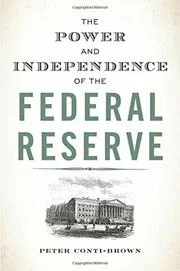
Link to The Power and Independence of the Federal Reserve on Amazon

Marriner Eccles may be the Mormon who had the most positive impact on the course of history for a reason unconnected to any church office held or explicitly religious role. Yet I suspect that most Mormons could not say what he did and why it was so important. 

Marriner Eccles transformed the Federal Reserve from the creaky structure that helped that US lurch into the Great Depression into an organization much closer to the Fed we know today, and because of the Fed’s prestige, ultimately influenced central banking in many other nations as well. Here is the story of Marriner Eccles and the refounding of the Fed as told by Peter Conti-Brown in his wonderful book The Power and Independence of the Federal Reserve:  

Nibbling around the edges of the Wilsonian federalist central bank might have remained the order of the day had it not been for Marriner S. Eccles, perhaps the most intriguing figure in Federal Reserve history. Eccles’s father was a Scottish immigrant, a Mormon convert, a bigamist (Marriner’s mother was his father’s second wife), and, in time, one of the wealthiest men in the state of Utah. Eccles thrived in his father’s business and expanded it into mining, timber, and especially banking. He was a millionaire in his own right by the age of twenty-two.

Eccles rose to national prominence in part because of his success as a banker during the height of the banking crises of the Great Depression. With bank failure rates reaching unprecedented heights, Eccles’s banks survived, largely owing to his own savvy ability to maintain credibility and confidence. While there were other successful bankers, what made Eccles noteworthy was that he was also something of a radical. For example, at the 1932 Utah State Bankers Convention, he laid out his theory of the Depression and its cure in plain language. “Our depression was not brought about as a result of extravagance,” he said. “It was not brought about as a result of high taxation.” It came, instead, because “[w]e did not consume as a nation more than we produced. We consumed far less than we produced. The difficulty is that we were not sufficiently extravagant as a nation.” There was a simple reason for this: The theory of hard work and thrift as a means of pulling us out of the depression is unsound economically. True hard work means more production, but thrift and economy mean less consumption. Now reconcile those two forces, will you? Eccles had a solution, too: “There is only one agency in my opinion that can turn the cycle upward and that is the government.”

In modern parlance, we’d call arguments like these Keynesian. But 1932 was four years before John Maynard Keynes had published his General Theory of Employment, Interest, and Money, the book that expounded the notion that government should be responsible for compensating for slack in consumer demand. Though they had never met, the millionaire Mormon from Utah had anticipated the dapper Cambridge don’s worldview. In an amusing historical aside, the two did eventually meet during the Bretton Woods negotiations about the future of the world’s postwar economic order. Despite their common diagnosis of depression and consumption, they didn’t take well to each other. Eccles thought the British needed to make better assurances of repayment to the United States for prewar loans, a source of great consternation to the British. “No wonder that man is a Mormon,” Keynes retorted to a colleague outside of Eccles’s hearing. “No single woman could stand him.”

Eccles didn’t make much more headway with the bankers and businessmen who heard him articulate these heretical views in Utah in 1932 than he did with Keynes in 1944. “Poor Eccles,” a president of a western railroad is said to have remarked. “He must have had so terrible a time with his banks that he is losing his mind.” No matter. Their opinions mattered much less than that of Rex Tugwell, already part of FDR’s original “Brains Trust.” In Eccles, Tugwell had discovered an indispensable resource: a western banker whose ideas were even more radical than the incoming administration’s. Eccles came to work with the new Roosevelt administration as a special assistant to the secretary of the treasury.

Eventually, Eccles was considered for the position of “Governor” of the Federal Reserve Board. To give a sense of how the board governor position was then perceived, the post became vacant when Eugene Black resigned—to take the position of governor of the Federal Reserve Bank of Atlanta.

Eccles refused the president’s offer. In response to inquiries of his availability, he responded that he “would not touch the position of governor [of the Federal Reserve Board] with a ten-foot pole unless fundamental changes were made in the Federal Reserve System.” Roosevelt invited him to propose his view of what those changes should be, and he and an assistant prepared a three-page blueprint of what amounted to a refounding of the Federal Reserve. That refounding would eliminate the federalist compromise. He narrowed his sights on the Reserve Banks: “Although the Board is nominally the supreme monetary authority in this country,” he wrote in a memo to Roosevelt, “it is generally conceded that in the past it has not played an effective role, and that the system has been generally dominated by the Governors of the Federal Reserve Banks.” As an “unfortunate result,” he continued, “banker interest, as represented by the individual Reserve Bank Governors, has prevailed over the public interest, as represented by the Board.” Eccles’s position was notable: Eccles was himself a banker whose views were represented by the Federal Reserve Bank of San Francisco, and yet he sought the banks’ exclusion from national policy. The problem wasn’t only one of inappropriate banker influence on the system; it was also one of governance. “With such an organization” as the Federal Reserve System, wrote Eccles’s assistant and partner in Fed reform, Lauchlin Currie, “it is almost impossible to place definite responsibility anywhere. The layman is completely bewildered by all the officers, banks and boards. Even the outside experts know only the legal forms.” Eccles proposed a radical legislative overhaul to resolve both the problems of governance and banker influence.

THE SECOND FOUNDING OF THE FEDERAL RESERVE: THE BANKING ACT OF 1935

Eccles sold Roosevelt on the proposal. He committed the presidency to the passage of Eccles’s bill, and Eccles accepted the governorship so that he could more effectively lead the legislation through Congress from inside the Fed. The New York Evening Post summarized the point perfectly: “Marriner S. Eccles is a unique figure in American Finance—a banker whose views on monetary policy are even more liberal than those already embraced by the New Deal.”

In transforming the Fed into something that was ultimately much more effective at keeping the economy on track than what the Fed was before, Marriner Eccles exhibited the “save the world” ethic I see as one of the best elements of Mormonism. 

Confessions of a Supply-Side Liberal in Thai

Link to supplysideliberalth.tumblr.com

I am delighted that my former student Suparit Suwanik has volunteered to translate some key posts from supplysideliberal.com into Thai. Suparit holds a Masters of Applied Economics degree from the University of Michigan, and has returned to work at the Bank of Thailand (Thailand’s central bank). He was a student in my “Monetary and Financial Theory” class, and is the author of two guest posts (in English) on supplysideliberal.com: “Putting Paper Currency In Its Proper Place” and “Hope for a Phase-out of the 500 Euro Note.”

Suparit has already translated the first column I wrote about negative interest rate policy: “How Subordinating Paper Currency to Electronic Money Can End Recessions and End Inflation.”

Democracy is Not Freedom

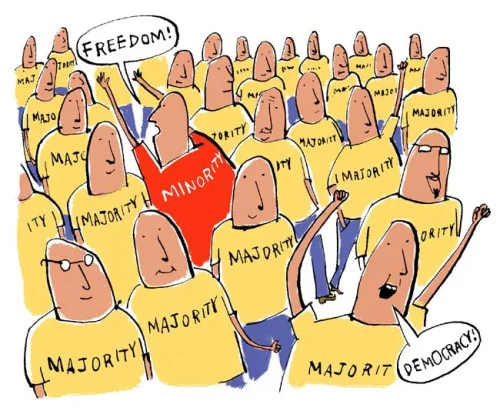
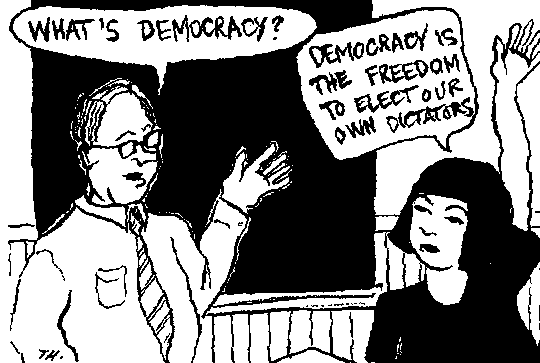
Often, people talk as if democratic elections bestowed a beneficent, mystical moral glow on decisions. Such an illusion may be useful, since the acquiescence of those who are outvoted is much preferable to a civil war. But what can actually be said for democracy is much more modest. The Book of Mormon gives a much more qualified recommendation for democracy: 

Now it is not common that the voice of the people desireth anything contrary to that which is right; but it is common for the lesser part of the people to desire that which is not right; therefore this shall ye observe and make it your law—to do your business by the voice of the people. And if the time comes that the voice of the people doth choose iniquity, then is the time that the judgments of God will come upon you; yea, then is the time he will visit you with great destruction even as he has hitherto visited this land. Mosiah 29:26,27

In other words, most of the time, what the majority of the people would choose is reasonable, some of the time it isn’t. When what the majority of the people would choose is bad, you are in trouble. 

John Stuart Mill rightly emphasizes the importance of personal freedom, even over political participation. In the 13th paragraph of the “Introductory” chapter, he writes:

No society in which these liberties are not, on the whole, respected, is free, whatever may be its form of government; and none is completely free in which they do not exist absolute and unqualified. The only freedom which deserves the name, is that of pursuing our own good in our own way, so long as we do not attempt to deprive others of theirs, or impede their efforts to obtain it. Each is the proper guardian of his own health, whether bodily, or mental and spiritual. Mankind are greater gainers by suffering each other to live as seems good to themselves, than by compelling each to live as seems good to the rest.

When thinking of the virtues of democratic decision-making, it makes a big difference what kinds of decisions one is talking about. When it is possible to divvy up personal spheres and let individuals make many decisions, the need for collective decision-making can be reduced. Some kinds of collective decisions can be made by voluntary associations rather than by the whole polity. 

When it comes to decisions that are made by the whole polity, spelling out the details of how what used to be called “natural law” will actually be enforced is certainly legitimate. As John Locke put it, people have a right to punish others for violence, theft, fraud and the like that it is better that they delegate to the state in order to avoid unending vendettas. But the right to do that enforcement preceded the state. 

The hard philosophical issue in relation to democratic decision-making arises when going beyond the enforcement of the principles formerly known as “natural law” to talking about schemes for making things better overall that help some people at the expense of others. It seems too bad to disallow such schemes entirely–especially when many people can be benefitted greatly while only a few are hurt a little. But the warrant for state compulsion for the sake of such schemes is a bit shaky. 

Where things become very clear is that state compulsion is never warranted for schemes that make some people better off and some worse off, but overall make things worse by a utilitarian test. I am arguing that such measures are not merely unwise, but immoral. Compelling someone to do something at the implicit threat of being thrown in jail or worse is a grave thing and is immoral and unethical to do for the sake of something that can’t even meet a utilitarian cost-benefit test that takes due account of the different meaning something has to a poor person as opposed to a rich person.  

As things stand, the courts adjudicating the US constitutional system show too much deference to democratic decisions that use state compulsion to reduce overall utilitarian welfare. It may be objected that there is often a disagreement about the effect of a decision on overall utilitarian welfare. But when a good case can be made that a democratic decision, enforced implicitly at the point of a gun, makes people much worse off–even if they don’t realize that is so–then I think the courts should not be shy of saying so and disallowing that democratic decision. To do otherwise would be to attribute a magic to democratic decisions that they simply don’t have. 

No way of making decisions is perfect. And of course judges, too, make mistakes. But since democracy has no magic that makes democratic decisions always correct, we should not be afraid of a constitutional system that sometimes has judges overrule democratic decisions if we find that it works well in practice. 

To dig deeper into the principles of liberty, see links to other John Stuart Mill posts collected here.