Reporting on Japan’s Move to Negative Interest Rates

Link to the article on wsj.com

Link to the article on wsj.com

Anjani Trivedi, Eleanor Warnock and Greg Ip’s Wall Street Journal article “Central Banks Go to New Lengths to Boost Economies: Bank of Japan’s move to negative rates is the latest attempt to spur growth,” is a good example of the still inadequate reporting about negative interest rates. The revision noted that it had input from Tommy Stubbington, whom I praised in “The Wall Street Journal Gets It Right On Negative Interest Rate Policy, Thanks to Tommy Stubbington,” and was noticeably better, though in a spotty way. Let me give my reactions to some important passages.

Basic Reporting

The reporting at the beginning of the article is well done. I particularly appreciated the discussion of international linkages:

Japan’s move washed through currency markets, driving the yen down by as much as 2.2% against the dollar, and showed how easing by one central bank puts pressure for similar moves by others.

By strengthening the dollar, the continued loosening of monetary policy in Japan and Europe could complicate the Fed’s aim of gradually notching up interest rates this year. Measured against a basket of 16 currencies, the dollar this week hit its highest level in more than 13 years.

and how massive paper currency storage has not yet appeared in Europe:

… the move in Europe into negative rates has so far created no evident disruptions for money-market funds or a flight to cash by depositors, giving a green light for banks to consider going further.

“Adverse effects on money market functioning have been limited,” Stanley Fischer, the Fed’s vice chairman, said in a speech this month. “Cash holdings have not risen significantly in these countries, in part because of nonnegligible costs of insuring, storing, and transporting physical cash.”

I was surprised by how low Sweden has gone:

No one knows how low negative rates can get before those costs become an inducement to hold cash, but probably beyond the minus .75% rate now charged in Denmark and the minus 1.1% in Sweden.

And the article pointed out an important fact, which I discussed on Wednesday in relation to two-tiered negative deposit rates in the euro zone:

Few banks have so far passed on those negative rates to small retail depositors.

Looking forward, this is an interesting prediction:

In a note to clients Friday, Citigroup economists predicted the ECB and the Swedish and Danish central banks would cut their policy rates even further into negative territory in coming months, and their counterparts in Canada, Australia, Norway and even China may do so “should macroeconomic conditions turn out even weaker than currently expected.”

Analysis

As the article moved from reporting to more analysis, the quality declined. For example, the authors needed a counterpoint to Raghuram Rajan’s declaration

… stimulus doesn’t cut it anymore and certainly monetary policy has largely run its course. 

Guess what–monetary policy hasn’t run its course at all. In my most recent visits to central banks, my advice has been to choose the policy rate as if there were no zero lower bound–because there isn’t a zero lower bound for any central bank that knows what it is doing. And increasingly, central banks do know how to defeat the zero lower bound. My bibliographic post “How and Why to Eliminate the Zero Lower Bound: A Reader’s Guide” gets a steady stream of pageviews, many of which I am confident are from central bank staff around the world. And I have been to a fair number of central banks in person. For journalists to understand everything central bankers are thinking, they need to read some of what I have written. Otherwise, they will get things wrong.

Even more misleading is this quotation with no counterpoint:

Central bankers “are running out of things to do,” said Sean Yokota, head of Asia strategy at Nordic bank SEB.

This is first, false, since a lot remains to be done in the direction of negative interest rates. Secondly, it seems to suggest that negative interest rates are a last resort. No! Negative interest rates were always likely to be much more effective than quantitative easing. Quantitative easing was tried first primarily because the intellectual preparation for quantitative easing was further along than the intellectual preparation for negative interest rates when central banks felt the need for another tool.

The Power of Negative Rates

The reporting was fully appropriate in giving this quotation,

Despite the day’s surge, some investors remained skeptical about the lasting impact of the central banks’ efforts. “People are starting to feel more and more that central bank action is having less and less fire for effect,” said Ian Winer, head of equities at Wedbush Securities.

but I want to take issue with Ian Winer himself. I want to insist that the power of negative interest rates be judged per basis point. Given the mild negative interest rates so far, the effects have been substantial per basis point reduction. The size of the effects is especially impressive when one realizes that only the weak version of negative interest rates has been used so far. As I wrote in “The Swiss National Bank Means Business with Its Negative Rates,”

There is a world of difference between a central bank that cuts some of its interest rates, but keeps its paper currency interest rate at zero and a central bank that cuts all of its interest rates, including the paper currency interest rate. If a central bank cuts all of its interest rates, including that paper rate, negative interest rates are a much fiercer animal.

The ability to reduce the paper currency interest rate using the tools you can see discussed here makes it so that interest rates can be reduced by as many basis points as needed.

How Much More Slack Is There There in Japan’s Economy?

It is very difficult to know exactly how much slack is left in Japan’s economy. I lean toward the view that there is still substantial slack left. Try this thought experiment on for size. Suppose that, instead of trying with all its might to talk inflation up, the Bank of Japan were doing everything it could to keep inflation expectations down while using negative interest rates to stimulate the economy as much as it is being stimulated under current policy. Would inflation now be rising? If your answer is no, then you think the Japanese economy has slack. 

Even if, contrary to my own guess, the Japanese economy is already at its natural level of output or a little beyond, given the objective of raising inflation, it doesn’t make sense to think that monetary policy has been too stimulative until there is more inflation than desired, or a path that looks as if it will lead to more inflation than desired. One of the reforms mentioned in the article is really about trying to raise inflation:

Labor reforms that give benefits to contract workers so wages can rise more broadly

This seems like a reform aimed at getting more inflation. But given that as much monetary stimulus as desired can be provided by negative interest rates, there is really no reason to desire more inflation. Japan can stimulate its economy as much as desired without any extra inflation. It certainly should be willing to risk more inflation than the current level of inflation in order to learn more about what its natural level of output is, but if negative interest rate policy is fully embraced in the way I have recommended, there is no longer a strong reason to desire more inflation. Other than the neutering of monetary policy by the zero lower bound, low inflation has not caused Japan serious problems (perhaps in part because its annual bonus system reduces downward nominal rigidity of wages in Japan). And the zero lower bound is a dragon that can easily be slain now that the soft underbelly of the zero lower bound has become fully apparent.
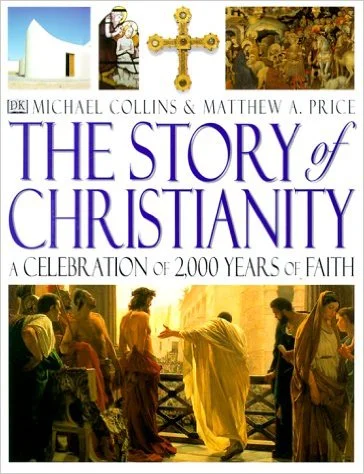
Jesus’ Upside-Down Kingdom

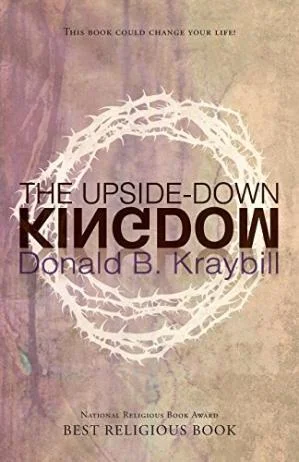
The Upside-Down Kingdom by Donald B. Kraybill

Another theme of Jesus’ teaching is the kingdom of God, or of heaven, a kingdom like no other where God is the ruler; here, the humble and meek are exalted and the mighty are brought down, and he who would be first must be the servant of all. One modern writer even referred to it as “The Upside-Down Kingdom,” because it reverses all the realities of human empires and kingdoms.

– Michael Collins and Matthew A Price, The Story of Christianity: A Celebration of 2,000 Years of Faithpp. 26-27.

Update: Dennis Wolfe offers the following reaction: 

Reviewing your brief post this morning reminded me of a sermon I heard about 5 years ago by the same name at this link.  Along with his many books, Tim Keller’s sermons have had a tremendous influence on my faith and view of organized religion.  My wife and I have visited his church in Manhattan a few times and feel drawn to his approach to Christ-centered ministry - something we want to help cultivate in our own Christian community.  I would really enjoy your thoughts.

Barack Obama: Football as the Best Sports Analogy for Politics

On Vox, Libby Nelson distilledJerry Seinfeld’s interview with Barack Obama. Here is the most interesting bit:

Seinfeld asks what sport politics is most like: “It’s probably most like football,” Obama said. “A lot of players. A lot of specialization. A lot of hitting. A lot of attrition. But then every once in awhile, you’ll see an opening, you hit the line, you get one yard, you try a play, you get sacked, now it’s like, third and 15… you have to punt a lot. But every once in awhile, you see a hole, and then there’s open field.”

I am reminded of the one time I used football as a political metaphor: 

The height of my actual football career was playing on a little league team back in 1974 with Kyle Wittingham, now head football coach for the University of Utah.

Thinking About New Financial Technologie—Izabella Kaminska and Gillian Tett on Excitement about Fintech Eclipses Basel III at Davos

Financial technology could take over an important part of the market fast. It is important that regulations not be used to stop progress. To make sure of that, there should be a regulatory safe harbor saying any financial technology that meets three conditions beyond the usual one of in fact doing what it seems to be telling users that it is doing should definitely be allowed: 

  1. The technology is based on accounts that are 100% backed by central bank reserves. Obviously, this means that central banks have to make reserve accounts readily available to new fintech companies. 
  2. All records of all transactions using the technology, and all complaints received by the company are immediately available in easy-to-read electronic form and can be freely inspected by the government without a warrant. That is, everyone using the technology signs a contract that makes everything they do with the technology totally transparent to the government.
  3. Funds held on behalf of customers have a nonzero interest rate tied to a market-based measure of prevailing short-term interest rates. (This is to make sure the technologies are robust to possible negative interest rate situations.) 

This is not at all to say that all new financial technologies must meet these three criteria. But there should be absolutely no prior restraint of anything that does meet these three conditions and the usual “doing what you seem to be saying you will do” condition. The “total transparency to the government” rule should make it easy to detect problems as they arise.

How to Handle Worries about the Effect of Negative Interest Rates on Bank Profits with Two-Tiered Interest-on-Reserves Policies

In a January 25, 2016 Goldman Sachs bulletin, analyst Dirk Schumacher writes:

We expect the ECB to ease monetary policy further at the March meeting via an extension of the APP programme until September 2017 and a cut in the deposit rate by 10bp to -0.4%.

I think it would be better policy for the ECB to go straight to the -.75% that has been pioneered by the Swiss National Bank, but every bit of interest rate cuts helps at least some in the current situation where the eurozone needs so much additional stimulus. 

The Goldman Sachs report also has a long discussion of the worries members of the European Central Bank’s monetary policy committee have about the effect of lower interest rates on bank profits. In the extreme, if bank profits go down too much, banks may exert their oligopoly power to raise lending rates to raise earnings in the short-run to compensate. The issue is that banks will want to shield some of their depositors from the negative rates, so they don’t want to fully pass through negative rates to their customers.

A “two-tiered system” in which a certain amount of deposits at the central bank get a zero interest rates and amounts above that get a lower interest rate seems hard to some of the ECB’s central bankers because that might hit banks harder in some countries than others. To me, the basic solution if a two-tiered system is desired is fairly straightforward: the two-tiered system should be designed to be equivalent to a subsidy to the deposit rates for household accounts below a certain size–say enough to provide a zero interest rate on an average balance over a month of 1000 euros worth of bank deposits per adult, for that adult’s main bank. (Those with more than one bank would have to designate one bank for this effective subsidy.) 

The value of tying the amount of deposits with the European Central Bank that a private bank can get zero interest rates on to the amount of household balances from accounts with 1000 euros or less is that this makes it natural for the private banks to pass on the negative interest rates to commercial and to the excess over 1000 euros in large accounts (which is helpful for transmission of the effects of the negative interest rates) while small household account are shielded from the negative interest rates (which is helpful politically). And it is easy enough to understand the rule and its intent that banks will be able to explain why they need to transmit negative interest rates to those with large accounts. (Of course, the cutoff could be set at some other level than 1000 euros, if desired.) And this policy is fully consistent with keeping bank profits unharmed by negative interest rates as long as they do pass on negative interest rates to large accounts and commercial accounts as they are supposed to.  

Experience in Switzerland, Denmark and Sweden suggests that the more sophisticated bank customers who have large accounts or have commercial accounts adjust quickly to negative interest rates after a few weeks of bitter complaining. The objective of a two-tiered system is to have negative interest rates prevail generally in the markets, but shield from negative interest rates those who are the least able to understand negative interest rates and perhaps to accomplish a bit of redistribution as well–though clearly not redistribution toward the poorest of the poor, who may not have bank accounts at all. 

Note that by buying enough bonds and crediting the sellers with reserves–or by lending reserves–the European Central Bank can guarantee that there are much more reserves in the system than would be subject to the zero interest rate. Thus, the other interest rate will be the marginal one. And it should go without saying that the rate on short-term bonds should be pushed close to the most negative deposit rate. Keeping the bond rate at zero would not be cutting rates enough.

Examining the Statistics in “Math at Home Adds Up to Achievement in School” by Talia Berkowitz, Marjorie Schaeffer, Erin Maloney, Lori Peterson, Courtney Gregor, Susan Levine and Sian Beilock

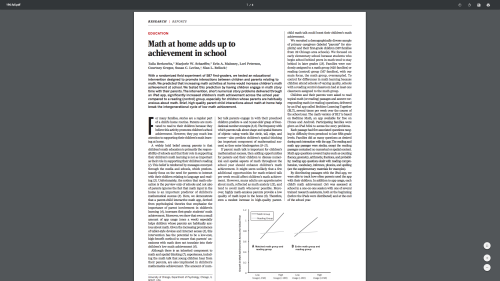
Patrick Warren’s questioning of the evidence for the value of Bedtime Math in helping kids with math (see last Thursday’s post) motivates me to state more clearly what the evidence is. The result the authors highlight most is certainly vulnerable to serious criticism: the result that among those students using the math app, math performance has a substantial correlation with how often the app is used. As Patrick points out, there is a serious problem here of omitted variable bias: how much a child likes math is likely to have a positive effect on how often the child uses the app and to have a positive effect on math performance regardless of whether the app does anything to augment performance or not. That is, kids who like math will tend to be good at math whether or not they have a math app because they will find some way to do math and thereby get better at it. (See my column “How to Turn Every Child into a ‘Math Person’”.) So that result offers very little proof of the efficacy of the app. 

However, the article has another piece of evidence that the authors should have led with. Parents were categorized into those who were anxious about math and those who weren’t. Among those parents categorized as anxious about math, the overall difference between kids’ math performance of those who received the Bedtime Math app and those who received a reading app was substantial: extra math achievement equivalent to what students get from 3 months of school. This was enough to be quite unlikely to be due to chance. The authors report a 4.8% probability of this result being due to chance, but that is for a two-tailed test that is only appropriate if one would have taken seriously a seeming finding that the kids did worse in math because of having a math app. With a more appropriate one-tailed test, there would be only a 2.4% probability of this result being due to chance. 

In other words, of the 4.8% chance of declaring a fluke a real result that the authors report, only 2.4% is the chance of declaring a fluke in the positive direction a real result. The other 2.4% is the chance of declaring a fluke in the negative direction a real result. If one is bound and determined from the beginning not to declare a seeming result in the negative direction a real result, then the overall probability of declaring a fluke a real result is only the 2.4% chance coming from a seeming result in the positive direction. (See the Wikipedia article on “One- and two-tailed tests.”)

Of course, this 2.4% p-value is truly correct only if this hypothesis of an effect on math anxious parents had been the one and only central hypothesis spelled out in advance–as could be true in a replication of the experiment

Why is this better evidence that the app does the job it was intended to do than the relationship between how much the app is used and math performance? The difference is that assignment to the math app group as opposed to the reading app group was random, and has no reasonable causal path to affect math performance than through the effects of the app itself. But amount of time spent with the app is nonrandom, and can easily reflect characteristics of a child or a child’s parents that could affect math performance in ways that don’t depend on the app at all.  

The authors genuinely don’t seem to realize the effects of the assignment to the math app or the reading app–in interaction with math anxiety on the part of the parents–represents their only piece of solid evidence for the efficacy of the app. Not only is this result not clearly described in the abstract, it is not featured in a figure. The figures are reserved for the result about usage that, as discussed above, provides very little proof of the efficacy of the app. Their language instead suggests that they are going the extra mile by doing this intent-to-treat analysis. It wasn’t the extra mile. It was the first mile! But it was a good mile. 

Here is the key passage:

We expected the math achievement of children with high-math-anxious parents to be more affected by use of the math (versus reading) app because these children would not generally be provided with high-quality math input at home (6). Therefore, we first separated parents on the basis of whether they were lower or higher in math anxiety (median split). We then performed an “intent-to-treat” analysis in which we looked at the effect of group (math versus reading app) on children’s end-of-year math achievement (controlling for beginning-of-year math achievement) independent of actual app usage. For children of high-math anxious parents, we found a significant effect of group, with children in the math group outperforming those in the reading group by almost 3 months in math achievement by school year’s end [beta-hat_21 = 5.25; t=1.99; P=0.048]. We did not find this same pattern for children of low-math anxious parents [beta-hat_31 = −0.61; t = −0.27; P = 0.79] (Model S3). An intent-to-treat analysis allows us to rule out factors possibly related to app usage—such as motivation or interest—as explaining our findings. 

This is the heart of the paper, unbeknownst to the authors. You don’t need to read anything else. 

The one thing that would make one be suspicious of this result is the possibility that the authors tinkered in various ways–including the split by math anxiety–to get the results they wanted. But that is easily remedied simply by having another group of researchers replicate the experiment. Although the substantive size of the effect is large, there is enough random variation that the statistical precision in the Berkowitz-Schaeffer-Maloney-Peterson-Gregor-Levine-Beilock experiment with 420 families is none too large. So it would be wise for someone undertaking a replication to involve at least 1000 families. The importance of the scientific question amply deserves that kind of care.

Note: Besides “How to Turn Every Child into a ‘Math Person’”, which I cited above, don’t miss the column I coauthored with Noah Smith: “There’s One Key Difference Between Kids Who Excel at Math and Those Who Don’t” and my column “The Coming Transformation of Education: Degrees Won’t Matter Anymore, Skills Will.” Also, on Bedtime Math specifically, don’t miss “Laura Overdeck: Math for Pleasure” and “Laura Overdeck: Street Math.”

John Stuart Mill Applies the Principles of Liberty

Despite being written in 1869, the last chapter of John Stuart Mill’s On Liberty, titled Chapter V: Applications,” speaks directly to many 21st century controversies. I learned a lot from blogging my way through. Take a look: 

Also, don’t miss the posts I wrote on the earlier parts of On Liberty. I have collected the links by chapter in these bibliographic posts:

Chapter I: John Stuart Mill’s Defense of Freedom

Chapter II: John Stuart Mill’s Brief for Freedom of Speech

Chapter III: John Stuart Mill’s Brief for Individuality

Chapter IV: John Stuart Mill’s Brief for the Limits of the Authority of Society over the Individual

I actually blogged through Chapter I last after the other four chapters, completing the circle.  

Ed Glaeser Argues Against Raising the Minimum Wage

Ed Glaeser may be the foremost urban economist in the world. Ed’s review in the Wall Street Journal of Robert Gordon’s book The Rise and Fall of American Growth is worth reading for many reasons. But I want to highlight what Ed says about the minimum wage:

The one point where I disagree with Mr. Gordon is his suggestion that “2015-16 is a particularly appropriate time to raise the minimum wage.” My fears about underemployment lead me to be far less enthusiastic than Mr. Gordon about the minimum wage, or any labor market regulation. If we want more employment of less skilled workers, then we should cherish, not punish, those companies that employ less skilled workers. A recent paper by Jeffrey Clemens (a former student of mine) finds that the minimum wage seems to have reduced employment for at-risk groups during the great recession. Morally, it seems reprehensible to expect the costs of social-welfare policies to be paid for disproportionately by the customers and employers of lower-wage workers.

Note: Jeffrey Clemens writes this in the abstract for his paper:

I analyze recent federal minimum wage increases using the Current Population Survey. The relevant minimum wage increases were differentially binding across states, generating natural comparison groups. I first estimate a standard difference-in-differences model on samples restricted to relatively low-skilled individuals, as described by their ages and education levels. I also employ a triple-difference framework that utilizes continuous variation in the minimum wage’s bite across skill groups. In both frameworks, estimates are robust to adopting a range of alternative strategies, including matching on the size of states’ housing declines, to account for variation in the Great Recession’s severity across states. My baseline estimate is that this period’s full set of minimum wage increases reduced employment among individuals ages 16 to 30 with less than a high school education by 5.6 percentage points. This estimate accounts for 43 percent of the sustained, 13 percentage point decline in this skill group’s employment rate and a 0.49 percentage point decline in employment across the full population ages 16 to 64.

I collected links for other posts on supplysideliberal.com about the minimum wage here.

Brad DeLong on Managing China’s Peaceful Rise

In his speech “The Grand Strategy of Rising Superpower Managementat the Munk School Trans-Pacific Partnership Conference Geopolitics Panel, Brad DeLong gives extremely important advice about managing China’s peaceful rise. In my own writing, I have focused on what the United States needs to do to keep itself strong in order to counterbalance China (1, 2) and the hope that India will rise as well to provide another counterbalance to China. Brad speaks directly to what must be done in the US relationship with China. He begins by reminding his listeners about the days when the US was a brash up-and-coming superpower, then makes the analogy to China. I can’t think of wiser words about managing the US relationship with China. Here is a taste: 

The mid-nineteenth century United States of America was a rising superpower, aggressively confident of its system. …

… successive British governments, investors, noblemen and noblewomen, merchants, and manufacturers strove mightily to bind the United States to Britain. Material common economic interests and mutual economic interdependence grew. Conflicting political ideal interests fell away. …

The binding of the rising superpower back in the nineteenth century had many policy and non-policy parts, not all of them conscious or deliberate. but whether it was Cecil Rhodes’s offering free acculturation at Oxford to young members of the American elite, British investors entrusting the House of Morgan with their money, the Dukes of Marlborough offering their sons to daughters of plutocrats Consuelo Vanderbilt and Jenny Jerome, it was effective—so effective that just when Nazi Germany attacked the Franco-British army in 1940 the Prime Minister of Britain was a man who, as a natural-born citizen of the United States, was also perfectly well-qualified to be the American president. …

Come 2047 and again in 2071 and in the years after 2075, the NATO powers are going to need China and China’s elite to believe and to have material and ideal interests broadly aligned with those of NATO. Thus there is nothing more dangerous for America’s future national security and nothing more destructive to America’s future prosperity than for Chinese schoolchildren to be taught in 2047 and 2071 and 2075 that America tried to keep the Chinese as poor as possible for as long as possible. There is little more dangerous to the NATO powers than a Chinese elite whose values and interests are not broadly consonant with those of America. And there is nothing more conducive to aligning the interests of China and its elite with those of the NATO powers than a China which is (a) growing richer, (b) increasingly entranced by the economic and cultural successes of North Atlantic civilization, © treated with respect, and (d) incentivized to strive for victory not in negative-sum military power but in positive-sum economic and technological games of international relations.

When Women Don’t Get Any Credit for Coauthoring with Men

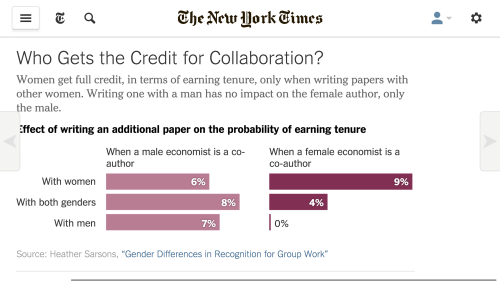
Link to Justin Wolfer’s New York Times column “When Teamwork Doesn’t Work for Women”

Unless it is quickly and decisively overturned, Heather Sarsons’s finding that women in economics get almost no credit for papers they have coauthored with men will irrevocably change the economics profession. And given the additional informal evidence provided by snatches of remembered conversations, the likelihood of the result being quickly and decisively overturned is not that high.

What will matter is not whether men in economics believe Heather’s finding, but whether women in economics believe it. And the news of this finding will spread like wildfire among women in economics–especially now that Justin Wolfers has broadcast this finding in the New York Times. It is going to become much harder for men in economics to find women willing to coauthor with them :(  So papers will become much more sex-segregated into papers with all female coauthors and papers with all male coauthors than they now are.

One possible change that I think won’t happen in any great measure is economists ditching the strong tradition of coauthors almost always listed in alphabetical order for the custom in other disciplines of carefully ordering the authors by relative contribution. Making order of authors matter requires very tricky negotiations that most economists are not used to and that many (including me) would find quite unpleasant.

If my prediction of greater sex-segregation in journal articles because of women’t unwilling to coauthor with men is borne out, another prediction follows: women will want to go to departments that have an above-average number of women (compared to other departments) so they will have people in their department with whom they can coauthor without losing all the credit.

In response to the Facebook discussion after “How Big is the Sexism Problem in Economics? This Article’s Coauthor is Anonymous Because of It,” I wrote that I believe there is enough discrimination against women in economics that (with some patience) a department can get ahead in the rankings by specializing in hiring and tenuring more women and being a good place for female economists to work. I think that is true even with respect to ranking judgments tilted toward the judgments of male economists, but is even more true with respect to donors who are less sexist than the body of economists whose judgments are largely behind the usual rankings.

Given the newly clear incentives for women in economics to go to departments that already have many women, the departments that are already rich in women economists are likely to become richer, while those departments that are poor in women become relatively poorer. So it will become more and more evident in the future whether I am right that hiring and tenuring more women and being a good place for female economists to work will help a department to pull ahead relative to the competition. I am betting that the women-friendly departments will move up relatively to the women-unfriendly departments.

"On Real and Fictional Economists" in Japanese: マイルズ・キンボール 「『リアルな世界の経済学者』と『フィクションの世界の経済学者』」(2014年10月22日)

I am pleased that the Japanese language website “Economics 101″ has done a translation of my post “On Real and Fictional Economists.” The link to the Japanese version is above. You can find the English version here. 

Thanks to Makoto Shimizu for pointing me to this.