“I have always followed the law, but from an early age, I said I would not follow the rules.”
– Mark Stevens, businessman and business writer, as quoted in Clutch, by Paul Sullivan
A Partisan Nonpartisan Blog: Cutting Through Confusion Since 2012
“I have always followed the law, but from an early age, I said I would not follow the rules.”
– Mark Stevens, businessman and business writer, as quoted in Clutch, by Paul Sullivan
The article linked above lays out the argument that Edward Snowden was simply a brilliant spy—including brilliance at public relations. Here is the key passage:
Mr. Snowden’s critics regard the whistleblowing narrative as at best incomplete, at worst fodder for the naïve. They do not believe that it explains the unprecedented size and complexity of the penetration of NSA files and records. For one thing, many of his critics have intelligence clearance. They have been privy to the results of an NSA investigation that established the chronology of the copying of 1.7 million documents that were stolen from the Signals Intelligence Center in Hawaii. The documents were taken from at least 24 supersecret compartments that stored them on computers, each of which required a password that a perpetrator had to steal or borrow, or forge an encryption key to bypass.
Once Mr. Snowden breached security at the Hawaii facility, in mid-April of 2013, he planted robotic programs called “spiders” to “scrape” specifically targeted documents. According to Gen. Dempsey, “The vast majority of those [stolen documents] were related to our military capabilities, operations, tactics, techniques and procedures.”
I must confess that my relevant expertise for judging such an argument is limited to what I have learned from TV series that attempt to portray semi-realistic spywork, such as Burn Notice, Sherlock and Elementary. (The adjective “semi-reliastic” is meant to contrast these shows with others like Alias or Chuck that intentionally portray fantastical spy work.) What Edward did would certainly have made a good plot line.
For my take on the policy issues raised by Edward Snowden’s revelations, see my column “The Government and the Mob.”
Update: I got some pushback on this post. See the discussion in the storified tweets “Edward J. Epstein, Miles Kimball, Brad Delong, Alex Bowles and Ramez Naam: Was Edward Snowden a Spy?” Ramez Naam in particular has good arguments against the idea that Edward Snowden was a spy employed by a foreign government.
One of the greatest of all questions in the study of economic growth is why China, which for a long time was the technological leader of humanity, fell behind Europe and its offshoots technologically.
In On Liberty, Chapter III: “Of Individuality, as One of the Elements of Well-Being,“ paragraph 17, John Stuart Mill points to the ascendance of "Custom” in the centuries immediately before he wrote as a key factor, and draws cautionary lessons about the dangers of letting Custom rule too thoroughly:
The greater part of the world has, properly speaking, no history, because the despotism of Custom is complete. This is the case over the whole East. Custom is there, in all things, the final appeal; justice and right mean conformity to custom; the argument of custom no one, unless some tyrant intoxicated with power, thinks of resisting. And we see the result. Those nations must once have had originality; they did not start out of the ground populous, lettered, and versed in many of the arts of life; they made themselves all this, and were then the greatest and most powerful nations of the world. What are they now? The subjects or dependents of tribes whose forefathers wandered in the forests when theirs had magnificent palaces and gorgeous temples, but over whom custom exercised only a divided rule with liberty and progress. A people, it appears, may be progressive for a certain length of time, and then stop: when does it stop? When it ceases to possess individuality.
We have a warning example in China—a nation of much talent, and, in some respects, even wisdom, owing to the rare good fortune of having been provided at an early period with a particularly good set of customs, the work, in some measure, of men to whom even the most enlightened European must accord, under certain limitations, the title of sages and philosophers. They are remarkable, too, in the excellence of their apparatus for impressing, as far as possible, the best wisdom they possess upon every mind in the community, and securing that those who have appropriated most of it shall occupy the posts of honour and power. Surely the people who did this have discovered the secret of human progressiveness, and must have kept themselves steadily at the head of the movement of the world. On the contrary, they have become stationary—have remained so for thousands of years; and if they are ever to be farther improved, it must be by foreigners. They have succeeded beyond all hope in what English philanthropists are so industriously working at—in making a people all alike, all governing their thoughts and conduct by the same maxims and rules; and these are the fruits. The modern régime of public opinion is, in an unorganized form, what the Chinese educational and political systems are in an organized; and unless individuality shall be able successfully to assert itself against this yoke, Europe, notwithstanding its noble antecedents and its professed Christianity, will tend to become another China.
I have often gotten in minor trouble from not following Custom. Maybe that isn’t all bad.
This is a guest post by my “Monetary and Financial Theory” student Fanglue Zhou:
China used to be considered a big market for many kinds of products. However, as China’s economy has slowed recently, its role as the biggest growth engine for the global car business depends on auto makers getting reluctant customers behind the wheel, as written in Wall Street Journal.
The automotive industry in China is quite unique as the joint ventures with foreign car makers play a very important role. Of the automobiles produced, 44.3% were local brands (including BYD, Dongfeng Motor, FAW Group, SAIC Motor, Lifan, Chang’an, Geely, Chery, Hafei, Jianghuai, Great Wall and Roewe), and the rest were produced by joint ventures with foreign car makers such as Volkswagen, General Motors, Hyundai, Nissan, Honda, Toyota, Mitsubishi etc. Most of the cars manufactured in China sold within China. Foreign automotive companies cannot sell the cars directly to China’s market, instead, they have to become joint ventures with Chinese local car makers in order to have the right to produce and sell within China.
Why is there a sales decline in China’s automotive industry given that China has just become the world’s biggest automobile market in 2013?
Nevertheless, we can still find ways out for the automotive companies:
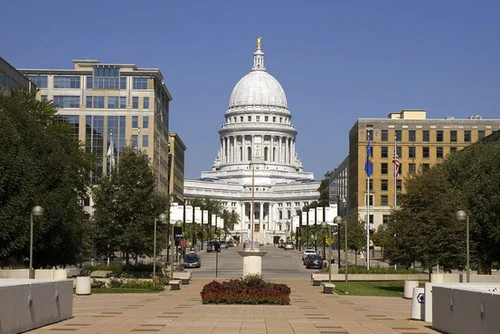
Link to Wall Street Journal article “Political Speech Wins in Wisconsin”
My experiences with the Mormon Church’s attempts to suppress freedom of speech within the Church, using ecclesiastical power, make me very leery of allowing the heavier power of the government to fine people or throw them in jail for speech. So it seems very short-sighted to me when many commentators put concerns about money in politics ahead of concerns about maintaining the freedom of speech that fosters desperately needed information processing at the social level.
As a result, I give props to federal judge Rudolph Randa who in issuing a preliminary injunction on Tuesday ending the John Doe investigation of allies of Wisconsin Governor Scott Walker, wrote:
… the larger danger is giving government an expanded role in uprooting all forms of perceived corruption which may result in corruption of the First Amendment itself.
He also wrote:
O'Keefe and the Club obviously agree with Governor Walker’s policies … but coordinated ads in favor of those policies carry no risk of corruption because the Club’s interests are already aligned with Walker and other conservative politicians.
Concerns about corruption must never be a stalking horse for criminalizing speech that is objectionable primarily because it deeply offends one’s political sensibilities.
Is freedom of speech really important enough that we should risk an excessive role of money in politics? This is a genuine tradeoff, but our answer should be yes. It is worth sacrificing a lot for freedom of speech. To me, freedom of speech is sacred because it is necessary for seeking truth. So for over a year, every other week, I have built my Sunday religion post around a passage from John Stuart Mill's On Liberty. I hope you will read On Liberty closely along with me to see if you don’t weigh the importance of freedom of speech more highly–even relative to other very important values–after pondering John’s argument.
1. You can see all the posts based on On Liberty in my Religion, Sciences and Humanities sub-blog:
http://blog.supplysideliberal.com/tagged/religionhumanitiesscience
2. On truth as a sacred value, see the discussion on this Facebook post:
https://www.facebook.com/miles.kimball.9/posts/10202070113535257
There is a good reason to focus on nominal GDP as the best rough-and-ready measure of monetary policy rather than measures of the money supply: velocity is not constant. I give my views on that in my column “Optimal Monetary Policy: Could the Next Big Idea Come from the Blogosphere?" I also have a children’s storybook to explain why velocity drops dramatically when interest rates are stuck at zero rather than being able to go into negative territory: “Gather ’round, Children, Here’s How to Heal a Wounded Economy.”
Allan Meltzer, by contrast, has these thoughts:
Never in history has a country that financed big budget deficits with large amounts of central-bank money avoided inflation. Yet the U.S. has been printing money—and in a reckless fashion—for years.
The Fed focuses far too much attention on distracting monthly and quarterly data, while ignoring the longer-term effects of money growth.
We are now left with the overhang. Inflation is in our future. Food prices are leading off, as they did in the mid-1960s before the "stagflation” of the 1970s. Other prices will follow.
Postscript: I begged Brad DeLong in a tweet to show Allan Meltzer the error of his ways, but Brad didn’t want to repeat himself. So I have tried to do my bit.
“Once you start caring what the world thinks of you, you become locked in.”
– Mark Stevens, businessman and business writer, as quoted in Clutch, by Paul Sullivan
If the Wall Street Journal Editorial Board wants to attack Wiccan, it should do so seriously, not in an offhand sneer like this one:
Even a Wiccan priestess was allowed to issue what we suppose was an anti-prayer.
There are religions worth criticizing, but it is not a light thing to criticize a religion. Humor can be an effective way to criticize a religion, but this is not substantive humor on the part of the Wall Street Journal, only prejudice.
The link above is to Paul’s post. Here is the link to David’s: “The most obvious source of cyclical asymmetry is not a nominal rigidity.”
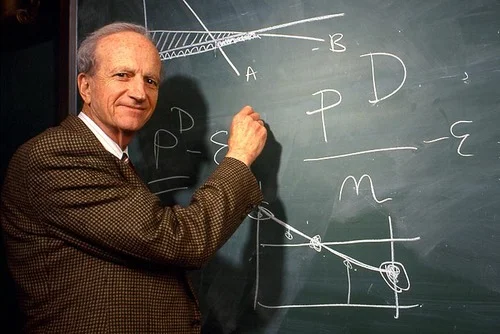
In my life, I crossed paths with Gary Becker in a significant way twice. Once was the Fall of 1986, when I was on the job market. Gary invited me to come to Chicago to present my paper “Making Sense of Two-Sided Altruism”–a paper Robert Barro arranged to have published in a Carnegie-Rochester volume not long after. At lunch with Gary and other Chicago economists, I was impressed with how seriously they took economics as the key to understanding everything. I am glad I got to see that.
The second time I crossed paths with Gary was as someone who does research on the economics of happiness. In two papers,
Gary and his coauthor Luis Rayo took a view of happiness very close to my own, in the paper “Utility and Happiness,” coauthored with Bob Willis, and so close in time to Bob Willis’s and my work that it took an uncomfortable, but ultimately gracious email exchange with Gary and Luis to come to agreement on Bob’s and my priority. The two key ideas for the economics of happiness that Gary and Luis and Bob and I agree on are
A large share of my research effort in the last few years has been working with coauthors–of whom Dan Benjamin and Ori Heffetz deserve special note–to back up the price theory of happiness and the elation theory of happiness. Below are our papers published so far (all of the ones below are in the American Economic Review). So far, they are all about the price theory of happiness.
We have been glad to have Gary Becker and Luis Rayo fighting with us for this new view of happiness.
Gary Becker had a long and full life. It is sad that he is gone, but I am glad to have a chance to read more about his life. Here are some of my favorite passages in the article linked above:
“His impacts were felt well beyond economics,” said Justin Wolfers, a professor at the University of Michigan and a senior fellow at the Brookings Institution. “My personal judgment is that he was the most important social scientist in the second half of the 20th century.” …
Mr. Becker was “much of the intellectual heart and soul of the Chicago tradition,” Mr. Wolfers said. “He was the next generation of the Chicago tradition after Friedman.”
Mr. Becker described the complexity of how humans make decisions: “Along with others, I have tried to pry economists away from narrow assumptions about self interest. Behavior is driven by a much richer set of values and preferences.” …
His early blending of economics and sociology was novel at the time. For years, he wrote in his short biography for the Nobel Prize, “my type of work was either ignored or strongly disliked by most of the leading economists. I was considered way out and perhaps not really an economist.”
I tweeted that
Gary Becker shifted the default assumption of economics from rational pursuit of self-interest to rationality, period.
Disputing over exactly how rational people are is a key battleground for economics going forward, as Noah Smith and I discuss in our column “The Shakeup at the Minneapolis Fed and the Battle for the Soul of Macroeconomics,” and as I touched on in relation to financial markets more recently in “Robert Shiller: Against the Efficient Markets Theory.”
Although I think Gary was right about the complexity of human motivation (see “Judging the Nations: Wealth and Happiness Are Not Enough”), I consider the study of irrationality much more important than Gary. Brenda’s Wall Street Journal article calls Gary “a critic of the field known as behavioral economics, which found human behavior irrational.” For all of the flaws of behavioral economics, I think the border between psychology and economics that has gotten the label “behavioral economics” is where much of the progress in economics in the next few decades will come from. That is the more true if one is focused on progress in understanding the real world within the next few decades.
“This can be the inflection point for the new Africa, a time and place where Africans bend the arc of history towards reform, and not retribution; towards peace and prosperity, not revenge and resentment.”
– John Kerry, May 3, 2014 as reported in “John Kerry Says Violence Threatens Africa’s Prosperity,” by Heidi Vogt in the Wall Street Journal
Above is a link to the Wall Street Journal's editorial in honor of Gary Becker, who died Saturday, consisting of quotations from Gary. Here are my favorites among those quotations:
Other countries, too, should liberalize their policies toward the immigration of skilled workers. I particularly think of Japan and Germany, both countries that have rapidly aging, and soon to be declining, populations that are not sympathetic (especially Japan) to absorbing many immigrants. These are decisions they have to make. But America still has a major advantage in attracting skilled workers, because this is the preferred destination of the vast majority of them. So why not take advantage of their preference to come here, rather than force them to look elsewhere?
“But when Milton [Friedman] was starting out,” [Becker] continues, “people really believed a state-run economy was the most efficient way of promoting growth. Today nobody believes that, except maybe in North Korea. You go to China, India, Brazil, Argentina, Mexico, even Western Europe. Most of the economists under 50 have a free-market orientation. Now, there are differences of emphasis and opinion among them. But they’re oriented toward the markets. That’s a very, very important intellectual victory. Will this victory have an effect on policy? Yes. It already has. And in years to come, I believe it will have an even greater impact.”
From September 1979 to August 1981, I preached Mormonism as a proselyting missionary in the Tokyo North Mission. Although I no longer believe in Mormonism, looking back I don’t think I did any serious harm by preaching Mormonism during that time. For the most part, those I helped influence to join the Mormon Church for whom Mormonism was a minus in their lives have probably left Mormonism long ago. And in one of the paradoxes of religion that I keep puzzling over, it is easy to assemble a group of people for whom it is (A) hard to deny that believing in a supernatural religion is a plus in each of their lives, even though (B) the group is diverse enough in supernatural beliefs that there is no logical way all of those supernatural beliefs can be true. At best, I provided more choices for people through my proselyting. The one plausible way I can think of that I might have harmed someone’s life is if they married a spouse who continues to believe when they themselves ceased to believe–always a tricky and often a difficult situation to be in, and one that I, thankfully, have not had to contend with personally.
Leaving aside any possible harm I did from preaching something that I do not now believe is not objectively true, for me, the missionary experience was well worth the two years. One of the most basic lessons I learned is that you are very big in the world, or you have to worry about violence, it doesn’t matter how many strangers say “no” when you make a pitch. It only matters how many say “yes.” The pain we almost all feel at rejection far exceeds the actual practical danger one faces from being rejected in a modern environment.
I also made some good friends on my mission. For most of my life, I have not been very good at keeping up with old friends living in other cities. But Facebook has allowed me to reconnect with old friends as well as new friends. I have good memories of those I taught about Mormonism, but the closest friendships on my mission were with my missionary companions. As most people know from direct observation, Mormon missionaries go around in twos. A pair of Mormon missionaries, called “companions” come remarkably close to spending 24 hours a day, seven days a week in each others company. Needless to say, it is easy to get to know someone well under those circumstances. Today’s moving guest post is from one of my missionary companions. He asked for a bit of anonymity given the personal nature of some of the things he will share, but was glad to share the substance of what he has to say here.
For those of you who want to better understand the institutional aspects of Mormonism and Mormon missions a little better, you might want to read my post “The Message of Mormonism for Atheists Who Want to Stay Atheists” as background, either before or after reading why my missionary companion has to say. (This was a sermon I gave at the Unitarian-Universalist congregation in Brighton, Michigan, on May 20, 2012, when they asked me to talk about Mormonism in relation to Mitt Romney.) I am also putting Wikipedia links on “Stake President” and “Bishop."
Here is my missionary companion’s guest post:
Thank you for linking me to your post ”The Unavoidability of Faith.“ From there, I ended up reading most of your blog posts in your Religion, Humanities and Science sub-blog, with particular interest in your UU sermons. Your thoughts, ideas and experiences inspire me to learn and grow and continue to improve and strengthen my own faith and understanding. I was impressed by how diligently you continue to seek for God, spirituality and faith; yet do not believe in the supernatural.
My son struggles with belief in the supernatural. Like you, he is thoughtful, direct and honest. We probably should have had a clue to how his mind worked when he expressed profound betrayal at the age of 7 when, after constant questioning, we finally told him Santa Claus was not a real person. His immediate response was “so, have you been lying about God, too?” During his teenage years, our relationship had a few ups and downs, but nothing we could not easily manage, or so we thought. He was and continues to be a good student and enthusiastically loves to learn. But, until the last few years, what we really didn’t understand (or refused to admit) was that he is not a natural believer in God, faith and religion. To borrow terminology from a book I recently finished by Adam Miller: Sometimes, it’s like the existence of God is so unlikely and runs so counter to his common sense that wishful thinking is all he can credibly muster.
Throughout his teenage years, we continued to devoutly follow the Mormon pattern with the expectation that things would change. Often, we would insist that he “just believe” as he advanced through Priesthood offices, earned his Eagle Scout, left for BYU and then a mission. Regarding his struggle to believe, he was remarkably honest and direct with his church leaders and us. In a discussion with the Stake President on the night before he left for a 2-year mission assignment, he again acknowledged his difficulty believing in God and the church but believed what he was doing was “good and right” because he trusted his parents and extended family members who had served missions. He expressed a sincere hope that his mission experience would be his “quest for faith”. At the time, we all felt that was good enough and all we could reasonably ask. For more than a year, he had many good experiences. He developed strong foreign language skills, many close relationships and a genuine affection for the people and culture. However, after moving into a position of leadership, he felt a crushing responsibility to help develop the faith of others and baptize them yet felt somewhat dishonest because of his own beliefs and the methods he was sometimes asked to use. Unable to adjust and teach with the conviction required, he faced a crisis of belief and many more doubts crept into his mind. Like many missionaries, he felt uncomfortable with the reward systems in place for missionaries with the best “numbers”. He sometimes wondered if he was really doing God’s work or just participating in another competitive event like sports or business. Most sadly, he felt disappointed with God who he believed would not personally respond to his pleas for an increase in faith and the kind of amazing spiritual experiences frequently described by other missionaries. When he had those feelings, it sometimes made it emotionally easier to believe God might not exist. Eventually, he went through an unexpected period of anxiety and depression. For a few months, we tried to help him work through it but his condition did not ultimately improve and was made worse by poor handling and support at the mission level. Fearing his situation would spiral further downward and despite his objections, I eventually made the decision to bring him home before he finished his full 24-month term. I continue believe it was the right decision, but it was not without consequence to our relationship.
After returning home, he was initially devastated by a personal sense of failure and struggled to “stay” in the church. We arranged private counseling to help him better understand what happened. We all struggled to understand to what degree his anxiety was caused by his attitude or beliefs about God, faith and religion or to what degree an anxiety condition itself was the root cause of his agitation. We encouraged him to consider schools other than BYU where he might feel more comfortable, but he had a scholarship and wanted to be with his friends so he returned the next year. The good news is he has made a degree of peace with his beliefs and is more aware of how common this experience is in the church – an experience that seems to be increasing in recent years. Like you, he sees the goodness and beauty of many church teachings and wants to believe. My continuing concern for him centers on the possibility that this experience might cause him to develop apathy, avoid the struggle to overcome and get caught in the “low-effort trap” you described in your blog. Until coming home for help, it’s like he was unable to find or even consider a space for developing faith between the extremes of orthodox Mormonism’s culture of certainty and a Nietzsche-like nihilism, which most likely contributes to more episodes of anxiety and depression. He is moving forward with his education. He married a wonderful girl he met at school and he continues to work on his education and life goals. Marriage has been an affirming boost to his faith by providing a deeper realization of the source and meaning of love and beauty.
During all this time, I started to see how my failure to not thoughtfully work out my own faith issues (especially related to the church) might have affected my ability to sensitively help him process difficult questions. No doubt, that created tension in our relationship. After returning from my own mission in the 1980s, I remember my first real “crisis” of faith early in college. For a history class, we read Fawn Brodie’s book Thomas Jefferson – An Intimate History and that led me to her book No Man Knows My History about Joseph Smith. Among other things, some of the documented facts in that book started a chain reaction of skeptical questions, minor feelings of betrayal and doubts more credible and substantive than anything I’d experienced or considered. I spoke to my father and my Bishop about my experience. Although sensitive to my concerns, both suggested I stop “chasing my tail” and move on with my life. Ultimately, my father presented me with a choice similar to Pascal’s wager and so I made my bet on belief. I put my doubts “on the shelf” and moved forward with a more practical approach to life by diligently pursuing a successful career, marriage and being dutiful to the pattern of certainty I saw in the church. With the benefit of hindsight, I now see that my efforts became more of a plan of self-improvement and competitive achievement more than development of a healthy and genuine faith.
After coming to this realization, I decided the best way to help my son would be to repent and reexamine and repair my own issues with faith. So I began a process of deconstructing my faith and then attempting to put it back together in a healthier, genuine way. While doing this, I painfully discovered many faults in my way of thinking, believing and parenting (e.g. believing more of a fear narrative than a grace narrative with regard to religion, relying more on conformity than developing and following my own spiritual convictions, believing that God favors the successful over the unsuccessful and those with a gift to believe over those that struggle to believe). After much effort over the past few years, I am now much more happy with the direction, quality and progress of my faith despite being less certain about many things related to it. My relationship with my son is also much improved. It’s as if my spirit, intellect, psychology and emotions are now awake, in focus and working together in greater harmony. I am now more of a Christian than a Mormon rather than the reverse. I became less certain about the “one true church” claim. At the same time, I began to feel a much stronger sense of faith and trust in God and his approval of my efforts to grow, which at first seemed like a paradox. Despite remaining doubts about church and religion, I am more settled and have decided it is right for me to stay. I consider my family, large extended family and Mormon friends as “my people” and feel that is where I am primarily called to seek truth and practice Christianity in a community – to develop more skillful faith, repentance, forgiveness, tolerance, love and ultimately become what God wants me to become and help others do the same.
Which leads me to what I really wanted to share with you. A few years ago, during my faith “reconstruction” process and while considering the real possibility that God might be leading me away from the Mormon faith, I came across a Mormon Stories podcast featuring your father. Among many things, I felt his sense of goodness and genuine wisdom and was impressed by his healthy views on education and a reasoned faith – especially his thoughts on how to reconcile reason, faith and the spiritual. It was an approach and attitude I had not been exposed to growing up. My home and church experience was one of certainty, obedience, conformity, absolute trust for authority, yet much of love, friendship, support and good intentions. What was really missing was an open discussion of difficult questions and quality education. I listened to the podcast several times and even watched it again with my wife on YouTube (1, 2). Most of all, your father helped me feel confident and see the value of staying in the church even with my doubts. His words encouraged me to better distinguish between what I know, what I really don’t know, what I believe and what I really don’t believe. He also shared his thoughts on how to develop a healthy and reasoned trust and obedience in scripture, church leaders and church doctrine as a humility check of sorts - in the absence of certainty. Finally, he helped me understand that, if we are honest, we are all somewhat agnostic, to some degree or another, on different points of faith, doctrine, church history, church leadership, etc. – and sometimes we just need to face it, own it and say “I don’t know”. His thoughts put me on a more confident track to read, study, pray and wrestle for a more genuine faith that is more realistic about doubt. Shortly after that, I friend-requested you on Facebook hoping to reconnect with you at some point.
Sorry to ramble on and on as I try to patch my thoughts together. Basically, I feel some people come into my life for a reason. I know we were just young kids when we worked a few months of our life together as missionaries. I remember and appreciate what you taught me then and I enjoy and appreciate what I’ve learned from your blog posts now. I hope we can be friends and continue to discuss faith and grow more together. Thank you for your friendship. I appreciate the amazing effort, hope and genuine optimism in your faith. I look forward to staying in touch and learning more.
In addition to your father’s podcast, the following is a brief list of a few books, essays, talks, etc. that have been a tremendous help and important support to me during my struggle:
This is a guest post from my student Chris Chegash. He also had an earlier guest post here: “College Athletes Deserve a Better Deal.” I agree 100 percent with Chris’s policy recommendation that Michigan should fix its potholes. Indeed, Noah Smith and I make a similar recommendation at the national level in “One of the Biggest Threats to America’s Future Has the Easiest Fix.” But Chris makes the issue much more vivid.
One of the sure ways to know that something is important is when politicians actually agree on something. With the current state of American politics, both conservatives and liberals rarely agree on anything. Yet, when it comes to the current state of the infrastructure in Michigan, everyone seems to agree: The roads in Michigan are awful.
I grew up thinking that the thump-thump you hear when driving down the highway was normal, but as I’ve grown older, I’ve realized this isn’t true. Sad as it is to say, I don’t mind when I cross the Ohio border and finally get some peace and quiet while driving. The data about Michigan’s roads backs this up. The American Society of Civil Engineers gave Michigan’s infrastructure a D in 2009, 2011 and 2013 (they gave the U.S. a D+ nationally). According to the ASCE, about 30% of the bridges in Michigan are either “structurally deficient” or “functionally obsolete” and 38% of Michigan’s roads are in either poor or medicare condition. More importantly, they believe that the poor conditions of the roads in Michigan costs the average motorist an additional $357 dollars per year in car repairs and traffic problems. Some people fear that poor road conditions could drive both new business investment and tourism away.
The fact is that all roads face some deterioration over time, and will need to be replaced eventually, but Michigan has two key factors that enlarge this problem. The most obvious factor is the weather. Driving around in the past few weeks has been an absolute nightmare in Michigan; potholes are everywhere as a result of an extremely cold and snowy winter. When water seeps into cracks and later freezes, it expands and enlarges the cracks. This is why the potholes have been especially prevalent and dangerous after this prolific winter season. The second major factor that causes increased wear and tear on Michigan’s roads is a poor public transportation system. The most often cited cause for a subpar public transit system in Michigan is the local interests of the major car manufacturers. Since better public transit means less cars, the major car companies like Ford, GM, and Chrysler all have an interest in opposing public transit. Over time, this has lead to woeful public options in Michigan (Ann Arbor is probably far better than most areas).
The real question lies in where the money to fund road improvements will come from. In 2013 Michigan governor Rick Snyder proposed a $1.2 billion increase in road funding, funded through either an increase in the gas tax and other fees, or an increase in the state income tax. The Michigan Infrastructure and Transportation Association thinks the true cost of fixing Michigan’s roads is around $2 billion per year in additional funding, far more than the number governor Snyder has proposed (there are some great graphics in the full report here). However, the proposals in the Michigan legislator fall well short of that funding level, there are new proposals in state Congress to increase road funding by $450 million per year. The additional funding would come from diverting 1% of our of Michigan’s current 6% sales tax to roadwork andthrough eliminating the flat gas tax and instead taxing it at 6%. Thus, if prices rise higher than $3.55 per gallon, the tax will be more expensive than the previous 18 cent per gallon tax. Proponents of this tax are eager to point out that a gas tax makes people who drive more pay more in taxes, which seems smart.
This proposal has two major issues:
Another option that people frequently talk about is the use of toll roads to generate revenue. Unfortunately, most of Michigan’s highways aren’t eligible to be used as toll roads. Since the federal government funded a significant portion of the costs of state highways, those roads cannot be used as toll roads without repaying the government for their original investment. Although there are some ways around these rules, trying to convert Michigan’s road into toll roads wouldn’t be financially viable.
The problem of poor roads isn’t going away any time soon, and so lawmakers must act to better fund the roads in Michigan; waiting will only make the roads worse. Although difficult, I believe that residents must accept a slight tax increase in order to improve Michigan’s dilapidated road network.
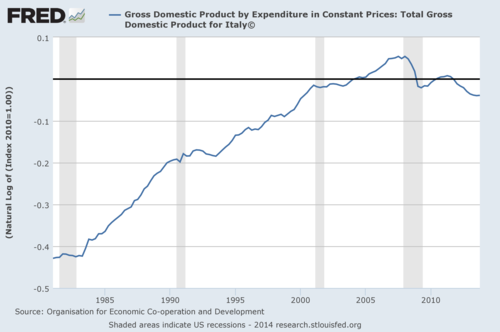
Italy’s immediate crisis is a demand-side crisis. The financial crisis in late 2008 and insufficiently stimulative monetary policy on the part of the European Central Bank since then have led to lower output and bigger budget deficits.
But Italy has longer run problems as well. The graph above shows the natural logarithm of real GDP in Italy relative to its value in mid-2004. When people talk about “bending the curve” of medical costs, they are talking about the kind of falling growth rate that this graph shows for Italy’s GDP, long before the Great Recession.
I am always on the lookout for articles that give a bit more vivid picture of what can go wrong on the supply side of an economy. “Can Italy Find Its Way? Resistance to Change Means Slow Recovery” by Marcus Walker and Deborah Ball in the April 29, 2014 Wall Street Journal is an excellent example of just such an article. All quotations below are from Marcus and Deborah.
Sometimes people think of the supply side as primarily a matter of taxes. In Italy, there are high taxes, but they are high partly because other taxes are not paid:
Taxes on labor are particularly high. One reason is that taxes that would normally help spread the burden—including on the incomes of small businesses and the self-employed—are widely dodged.
Italian entrepreneurs evade over 50% of the income taxes they owe, while people living off investment income skip over 80%, the country’s central bank estimates. The heavy taxes on payrolls deter companies from hiring and weaken consumers’ spending power, economists say.
A big factor in Italy’s supply-side malaise is the difficulty of establish any new shop. This issue is sprinkled throughout Marcus’s and Deborah’s article:
1. Bernardo Caprotti was a 45-year-old entrepreneur when he agreed to buy a suburban plot of land for a new supermarket.
Building permits recently came through. He’s now 88.
2. Red tape is one factor that deters businesses from growing. …
In 2012 British Gas PLC threw in the towel on a €500 million gas import terminal in southern Italy after struggling for over a decade to get the necessary permits.
It is a problem familiar to Mr. Caprotti. “If we start something today, it could take 15 years to finish,” he says. “Then you’re lost because you find that the size or the location doesn’t work anymore.”
Property rights are crucial for economic efficiency, but property rights are created by law. A slow legal system impairs property rights:
Italy’s court system also spooks businesses: Routine contract disputes take more than three years on average to resolve in court—and much longer if there are appeals. Italy’s lawyers, who outnumber their French brethren fourfold, have resisted efforts to streamline a judicial system that offers rich opportunities for lengthy proceedings. At the end of 2012, there was a backlog of 9.7 million cases, according to the International Monetary Fund.
Marcus and Deborah make the case that tolerance change is necessary for economic growth:
In societies whose populations aren’t growing, sustainable growth comes from improving productivity, or the efficiency of the economy’s supply side. And that requires constant change: Europe’s Achilles’ heel.
But the status quo is powerful in Europe, and in Italy particularly:
Entrenched interests and hardened habits have accumulated in Europe over decades, slowing once-dynamic economies to a crawl, and are now proving difficult to overcome. From bureaucrats to businesses, unions to pensioners, interest groups vigorously defend the status quo, even when it leaves no one satisfied. …
The roots of the problem, say many Italians, lie in how vested interests in the private and public sectors gum up the economy, preventing change that replaces old practices with new, more efficient ones, and repeatedly frustrating political attempts to shake up the country.
It adds up to “deep-seated cultural obstacles to growth,” says Tito Boeri, a professor at Milan’s Bocconi University who is one of Italy’s top economists. “In Italy you define your identity in terms of your membership of some specific interest group,” he says, making it hard to rally support for any notion of the common good.
Regulated professions such as lawyers and pharmacists consistently beat back efforts to break their cartels. Powerful bureaucrats bog down the implementation of new laws for years. And Rome’s political class is so quarrelsome that governments last little more than a year on average.
It used to matter less. Italy’s economy grew rapidly in the postwar era despite a stonewalling bureaucracy, legions of tiny companies and a fragmented, often corrupt political system. But growing was easier then: Relatively poor Southern European countries mainly had to copy technology from more-developed economies such as the U.S., and use it to churn out goods cheaply.
Making the wheels turn in an advanced economy requires the efficient rule of law, reliable public administration and more capital and expertise than many mom-and-pop businesses can muster, says Fabiano Schivardi, an economist at Rome’s Luiss University who has studied the stagnation of swaths of Italy’s business sector.
“Our institutions were good enough for an economy that was catching up, but they’re not good enough any more,” he says.
Not all resistance to change in Italy is at the collective decision-making level. Individual families running businesses also are often resistant to change at a level far beyond what is seen in the US:
Many family business owners prefer to stay small, sticking to the staff and customers they already know and trust, says Matteo Bugamelli, senior analyst at the Bank of Italy. “Often, all of the family wealth is in the firm, and there isn’t the risk appetite that you need to invest and grow,” he says. …
“The culture here is be the padrone in your own house,” he says, using the Italian for “boss.” Many family entrepreneurs “don’t trust outsiders and prefer to bring in their own son, even if he’s not well qualified,” he says.
Organized groups resist change in many ways.
Italian unions have also often dug in their heels to resist change. For years, union battles held up efforts to save the national airline, Alitalia, which struggled to get its labor costs down. Last fall, as the carrier faced imminent bankruptcy, unions agreed to pay cuts and more-flexible working terms.
Fear often lies behind unions’ defense of the status quo. Redundant blue-collar workers might never find jobs again in Italy’s sclerotic jobs market.
Some foreign entrepreneurs are discovering just how tough it remains to penetrate the Italian market.
Uber, the app-based car service that launched in Italy last year, says traditional taxi drivers have verbally abused its drivers, who respond to customers’ orders sent by smartphone. The taxi union denies any aggression, and says its members have paid a fortune for their taxi licenses, which now trade at about €170,000, and offer a public service that needs to be protected.
“During a period of change, there are some whose jobs are under threat and a sense of protectionism sets in,” says Benedetta Arese Lucini, general manager of Uber in Italy. “Unfortunately, Italy is afraid of changing.”
Finally, in Italy, the national government often seems powerless in relation to the ability of local vested interests to resist change:
Even when leaders pass reforms into law, change doesn’t necessarily follow. Bureaucrats who must implement laws by issuing administrative decrees often stall, dilute them or render them incomprehensible, say reform-minded officials. When the government of Enrico Letta fell in February, about 500 laws had been passed but not implemented. Among them: a measure to reduce the number of permits required for companies to do business and a law to digitize certain processes to simplify dealing with the government.
“There is a great deal of difficulty in moving the bureaucracy and the whole machinery of the state,” said Graziano Delrio, undersecretary to the prime minister, in an interview. “There has been this approach of making modest changes, but we need to make a leap in how it all works.”
Former Premier Mario Monti tried to inject more free-market competition in service sectors where regulation protects incumbents’ profits. Striking taxi and truck drivers, railway workers, pharmacists, lawyers and gas-station owners protested his overhaul attempts and lobbied parliament to water them down. Even the weakened measures that passed into law have often made little difference, because the public administration hasn’t acted on them, Mr. Monti says.
It is not that easy to think of good solutions for Italy’s supply-side problems. I think I would start with
To the extent we worry about the distribution of income, the primary focus should always be on helping the poor, as I argued in my posts
Toward thinking about that end, I wanted to follow up my posts
with a discussion of Jason Riley’s April 18, 2014 Wall Street Journal Weekend Interview with Robert L. Woodson Sr.: “A Black Conservative’s War on Poverty.” Jason introduces Robert this way:
Mr. Woodson, who remains fit and energetic at age 76, founded the Center for Neighborhood Enterprise in 1981 after stints at the liberal National Urban League and conservative American Enterprise Institute. He is academically trained but wears his pragmatism on his sleeve. “We go around the country like a Geiger counter, looking at high-crime neighborhoods and asking the questions the poverty industry doesn’t.
Here is how Robert describes his own approach:
If we see that 70% of households are raising children out of wedlock, that means 30% are not. We want to know what the 30% are doing right. How are they raising kids who aren’t dropping out of school or on drugs or in jail? We seek them out—we call them the antibodies of the community—and put a microphone on them, and say, 'tell us how you did this.'
Robert points out one particular way that occupational licensing keeps many poor people poor:
… a lot of people coming out of prison have a hard time obtaining occupational licenses,” he says. Aspiring barbers, cabdrivers, tree-trimmers, locksmiths and the like, he notes, can face burdensome licensing requirements. Proponents of these rules like to cite public-safety concerns, but the reality is that licensure requirements exist mainly to shut out competition. In many black communities, that translates into fewer jobs and less access to quality goods and services.
Helping the poor is important enough, there should be competing liberal and conservative approaches. Here is Jason’s rendering of how Robert contrasts the two:
To illustrate the difference between his approach to community activism and a liberal’s, Mr. Woodson tells me about a pastor in Detroit who wanted to build 50 new homes in a ghetto neighborhood but couldn’t find financial backing or insurance. “If he had gone to someone on the left for help, they would have gotten their lawyers to sue the insurance company and the bank for redlining or something. What I did by contrast is arrange a meeting between the insurance executives and the pastor. They saw what he was trying to do, the people in the neighborhood he was employing. They saw someone developing human capital.” The insurance company got on board and a bank followed. With financing in place, the homes were built, as was a new restaurant currently run by a man who did 13 years in prison.
Robert describes one of the difficulties he faces in furthering a conservative approach to fighting poverty this way:
My challenge is to get more conservatives to understand that there are many people who are in poverty but not of it.
In other words, to the extent that culture is part of the cause of poverty, we should be pushing hard to find and empower the agents of changing the “culture of poverty,” not treating the “culture of poverty” as a given.
Robert is especially powerful in highlighting the way in which programs intended to help the poor are highjacked to help those already in the middle class:
Around 70 cents of every dollar designated to relieve poverty goes not to poor people but to people who serve the poor—social workers, counselors, et cetera, … We’ve created a poverty industry, turned poor people into a commodity. And the race hustlers play a bait-and-switch game where they use the conditions of low-income blacks to justify remedies … that only help middle-income blacks.
One cynical ploy in this vein is to use the language of civil rights to protect school teachers against the interests of the poor children they are supposed to serve. In Jason’s words:
A recent study from UCLA’s Civil Rights Project criticized charter schools for being too racially segregated. Never mind that many of these charters outperform the surrounding neighborhood schools and that excellent all-black schools have long existed and predate Brown. Liberals remain convinced that black children must sit next to white children in order to learn. The Obama Justice Department currently is trying to shut down a Louisiana voucher program for low-income families on the grounds that it may upset the racial balance of public schools in the state.
One of the last notes in the writeup of the interview is about the effects of religious experiences on addiction and crime. Robert talks about that this way:
The most effective community leaders that I’ve seen and worked with all over the country agree that it’s transformation and redemption that changes the heart. They take you into communities and introduce you to hundreds of people who were former drug addicts and criminals, who tell you that prison couldn’t change them and a psychiatrist couldn’t change them but a religious or spiritual experience did. I don’t understand why it works. It’s irrational. But it works.
To me, a key research question should be how religious experiences do this trick. I believe that religious experiences help people out of addiction and criminality without the help of any supernatural forces. I want to know how they do work. This is the research agenda I discuss in my sermon “Godless Religion.”