The Federalist Papers #3: United, the 13 States are Less Likely to Stumble into War

Reading what John Jay (writing as Publius) writes in The Federalist Papers #3 the national security advantages of having the 13 states united rather than divided, I expected his first argument to be the greater military and economic power of a larger nation. But he actually leads with the reasons that united, the 13 states are less likely to cause a war. This paragraph is the heart of The Federalist Papers #3:

The number of wars which have happened or will happen in the world will always be found to be in proportion to the number and weight of the causes, whether REAL or PRETENDED, which PROVOKE or INVITE them. If this remark be just, it becomes useful to inquire whether so many JUST causes of war are likely to be given by UNITED AMERICA as by DISUNITED America; for if it should turn out that United America will probably give the fewest, then it will follow that in this respect the Union tends most to preserve the people in a state of peace with other nations.

John Jay argues that united, the 13 states are less likely to cause a war for these reasons:

  1. Leaders drawn from the whole nation are likely to be more competent than leaders drawn from only a part.

  2. United, the 13 states will have a more consistent foreign policy.

  3. Because commercial and other interests differ from state to state, politicians of one or a few states face greater temptations to offend foreign nations than national politicians.

  4. Because commercial and other interests differ from state to state, voters of one or a few states face greater temptations to vote for things that will offend foreign nations than voters of the nation as a whole.

  5. One or a few states on their own are more likely to start a war by direct military action than the national government.

    • Historically, most wars with Native Americans have been caused by one state or by people from one state.

    • Border states face extra temptation to military action across that border.

    • One state or a weak confederacy is likely to face stronger retaliation than the United States.

This last sub-bullet does refer to the greater military and economic power of a larger nation, but it is still in the context of the states being less likely to stumble into a war they caused if they are united.

Now, let me map all of this to the full text of The Federalist Papers #3. First, here is the title and the leadup to the paragraph I noted above was at the heart of this number:

United, the 13 States are Less Likely to Stumble into War

The Same Subject Continued: Concerning Dangers From Foreign Force and Influence

For the Independent Journal.

Author: John Jay

To the People of the State of New York:

IT IS not a new observation that the people of any country (if, like the Americans, intelligent and wellinformed) seldom adopt and steadily persevere for many years in an erroneous opinion respecting their interests. That consideration naturally tends to create great respect for the high opinion which the people of America have so long and uniformly entertained of the importance of their continuing firmly united under one federal government, vested with sufficient powers for all general and national purposes.

The more attentively I consider and investigate the reasons which appear to have given birth to this opinion, the more I become convinced that they are cogent and conclusive.

Among the many objects to which a wise and free people find it necessary to direct their attention, that of providing for their SAFETY seems to be the first. The SAFETY of the people doubtless has relation to a great variety of circumstances and considerations, and consequently affords great latitude to those who wish to define it precisely and comprehensively.

At present I mean only to consider it as it respects security for the preservation of peace and tranquillity, as well as against dangers from FOREIGN ARMS AND INFLUENCE, as from dangers of the LIKE KIND arising from domestic causes. As the former of these comes first in order, it is proper it should be the first discussed. Let us therefore proceed to examine whether the people are not right in their opinion that a cordial Union, under an efficient national government, affords them the best security that can be devised against HOSTILITIES from abroad.

The number of wars which have happened or will happen in the world will always be found to be in proportion to the number and weight of the causes, whether REAL or PRETENDED, which PROVOKE or INVITE them. If this remark be just, it becomes useful to inquire whether so many JUST causes of war are likely to be given by UNITED AMERICA as by DISUNITED America; for if it should turn out that United America will probably give the fewest, then it will follow that in this respect the Union tends most to preserve the people in a state of peace with other nations.

My first 4 points above all have to do with treaty violations, which is where John Jay goes first:

The JUST causes of war, for the most part, arise either from violation of treaties or from direct violence. America has already formed treaties with no less than six foreign nations, and all of them, except Prussia, are maritime, and therefore able to annoy and injure us. She has also extensive commerce with Portugal, Spain, and Britain, and, with respect to the two latter, has, in addition, the circumstance of neighborhood to attend to.

It is of high importance to the peace of America that she observe the laws of nations towards all these powers, and to me it appears evident that this will be more perfectly and punctually done by one national government than it could be either by thirteen separate States or by three or four distinct confederacies.

Now, here are the paragraphs giving the key arguments, headed by my statement of each argument:

1. Leaders drawn from the whole nation are likely to be more competent than leaders drawn from only a part.

Because when once an efficient national government is established, the best men in the country will not only consent to serve, but also will generally be appointed to manage it; for, although town or country, or other contracted influence, may place men in State assemblies, or senates, or courts of justice, or executive departments, yet more general and extensive reputation for talents and other qualifications will be necessary to recommend men to offices under the national government,--especially as it will have the widest field for choice, and never experience that want of proper persons which is not uncommon in some of the States. Hence, it will result that the administration, the political counsels, and the judicial decisions of the national government will be more wise, systematical, and judicious than those of individual States, and consequently more satisfactory with respect to other nations, as well as more SAFE with respect to us.

2. United, the 13 states will have a more consistent foreign policy.

Because, under the national government, treaties and articles of treaties, as well as the laws of nations, will always be expounded in one sense and executed in the same manner,--whereas, adjudications on the same points and questions, in thirteen States, or in three or four confederacies, will not always accord or be consistent; and that, as well from the variety of independent courts and judges appointed by different and independent governments, as from the different local laws and interests which may affect and influence them. The wisdom of the convention, in committing such questions to the jurisdiction and judgment of courts appointed by and responsible only to one national government, cannot be too much commended.

3. Because commercial and other interests differ from state to state, politicians of one or a few states face greater temptations to offend foreign nations than national politicians.

Because the prospect of present loss or advantage may often tempt the governing party in one or two States to swerve from good faith and justice; but those temptations, not reaching the other States, and consequently having little or no influence on the national government, the temptation will be fruitless, and good faith and justice be preserved. The case of the treaty of peace with Britain adds great weight to this reasoning.

4. Because commercial and other interests differ from state to state, voters of one or a few states face greater temptations to vote for things that will offend foreign nations than voters of the nation as a whole.

Because, even if the governing party in a State should be disposed to resist such temptations, yet as such temptations may, and commonly do, result from circumstances peculiar to the State, and may affect a great number of the inhabitants, the governing party may not always be able, if willing, to prevent the injustice meditated, or to punish the aggressors. But the national government, not being affected by those local circumstances, will neither be induced to commit the wrong themselves, nor want power or inclination to prevent or punish its commission by others.

So far, therefore, as either designed or accidental violations of treaties and the laws of nations afford JUST causes of war, they are less to be apprehended under one general government than under several lesser ones, and in that respect the former most favors the SAFETY of the people.

Next, John Jay turns to violence instigated by one of the states, using three arguments to say that divided states will get in more trouble.

5. One or a few states on their own are more likely to start a war by direct military action than the national government.

As to those just causes of war which proceed from direct and unlawful violence, it appears equally clear to me that one good national government affords vastly more security against dangers of that sort than can be derived from any other quarter.

  • Historically, most wars with Native Americans have been caused by one state or by people from one state.

Because such violences are more frequently caused by the passions and interests of a part than of the whole; of one or two States than of the Union. Not a single Indian war has yet been occasioned by aggressions of the present federal government, feeble as it is; but there are several instances of Indian hostilities having been provoked by the improper conduct of individual States, who, either unable or unwilling to restrain or punish offenses, have given occasion to the slaughter of many innocent inhabitants.

  • Border states face extra temptation to military action across that border.

The neighborhood of Spanish and British territories, bordering on some States and not on others, naturally confines the causes of quarrel more immediately to the borderers. The bordering States, if any, will be those who, under the impulse of sudden irritation, and a quick sense of apparent interest or injury, will be most likely, by direct violence, to excite war with these nations; and nothing can so effectually obviate that danger as a national government, whose wisdom and prudence will not be diminished by the passions which actuate the parties immediately interested.

  • One state or a weak confederacy is likely to face stronger retaliation than the United States.

But not only fewer just causes of war will be given by the national government, but it will also be more in their power to accommodate and settle them amicably. They will be more temperate and cool, and in that respect, as well as in others, will be more in capacity to act advisedly than the offending State. The pride of states, as well as of men, naturally disposes them to justify all their actions, and opposes their acknowledging, correcting, or repairing their errors and offenses. The national government, in such cases, will not be affected by this pride, but will proceed with moderation and candor to consider and decide on the means most proper to extricate them from the difficulties which threaten them.

Besides, it is well known that acknowledgments, explanations, and compensations are often accepted as satisfactory from a strong united nation, which would be rejected as unsatisfactory if offered by a State or confederacy of little consideration or power.

In the year 1685, the state of Genoa having offended Louis XIV., endeavored to appease him. He demanded that they should send their Doge, or chief magistrate, accompanied by four of their senators, to FRANCE, to ask his pardon and receive his terms. They were obliged to submit to it for the sake of peace. Would he on any occasion either have demanded or have received the like humiliation from Spain, or Britain, or any other POWERFUL nation?

In Honor of Marvin Goodfriend

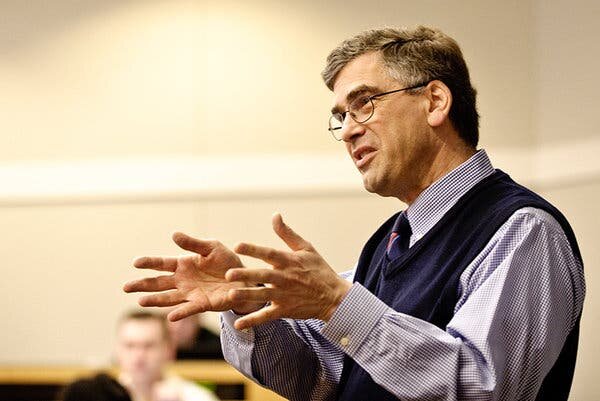
Two monetary policy experts died this past week. I can depend on others to properly honor Paul Volcker (September 5, 1927 – December 8, 2019), who used dramatically high interest rates to bring down inflation in the 70s. But Marvin Goodfriend (November 6, 1950 – December 5, 2019) is in danger of being underappreciated. Despite being in many ways a monetary policy hawk, Marvin helped lay out the path to dramatically low interest rates to avoid a repeat of the Great Recession or worse. (Worse might go by the name of “The Great Deflation” or “Secular Stagnation.”)

In a November 2000 Journal of Money, Credit and Banking article, Marvin suggested a modern way to impose a carry tax on paper currency. (See “Marvin Goodfriend on Electronic Money.”) Even more significantly, in a 2016 Jackson Hole paper, Marvin pointed out how a floating exchange rate between paper dollars and dollars in the bank could totally remove any lower bound on interest rates. He framed this in the context of all the interest rate taboos that have been left behind in the past. I was there that year at Jackson Hole. In the comment period, I contrasted this to my preferred approach of a tightly controlled crawling-peg exchange rate between paper dollars and dollars in the bank. (See “Some Selections Related to Negative Interest Rate Policy from the General Discussions at the 2016 Jackson Hole Symposium on ‘Designing Resilient Monetary Policy Frameworks for the Future.’”) Marvin simply said:

On Miles Kimball’s point, you know Miles and I are allies on this, and I’d like to talk to him about the crawling peg and the feasibility. Maybe I’m wrong, I don’t know. But basically we’re in the same camp as this is something that should happen and can happen.

I am proud to be called an ally of Marvin Goodfriend on this.

I arranged a call with Marvin a couple of weeks later to talk about the difference between our two approaches. He said that he thought deep negative rates would be resisted so long that by the time a central bank was ready, it would have already destroyed most of its credibility. If so, then a crawling peg exchange rate between paper currency and money in the bank might not be fully credible, but a floating rate between paper currency and money in the bank could be. I still don’t think Marvin is right about the best course of action, and I think he overestimates the difficulty of credibility for a crawling peg exchange rate, but his perspective is a very interesting one. Most importantly, his plan, like mine, would work. A floating exchange rate between paper currency and money in the bank would remove any lower bound on nominal interest rates and allow a robust monetary policy response to any decline in aggregate demand.

In the future, I predict that negative rates—even deep negative rates—will be seen as a normal and essential part of monetary policy. In that future, Marvin will be seen as an important part of the history of negative interest rate policy.

Other posts on Marvin Goodfriend and Paul Volcker:

For other posts on negative interest rate policy, see “How and Why to Eliminate the Zero Lower Bound: A Reader’s Guide.”

Cancer Cells Love Sugar; That’s How PET Scans for Cancer Work

Last week, a friend who is a cancer survivor noted that people are given radioactive sugar before a positron emission tomography (PET) scan. Why does this work? It is because cancer cells love sugar. Here is how “Oncology” section of the current version of the Wikipedia article on “Positron emission tomography” says it (glucose is blood sugar):

PET scanning with the tracer fluorine-18 (18F) fluorodeoxyglucose (FDG), called FDG-PET, is widely used in clinical oncology. This tracer is a glucose analog that is taken up by glucose-using cells and phosphorylated by hexokinase (whose mitochondrial form is greatly elevated in rapidly growing malignant tumors). … FDG is trapped in any cell that takes it up until it decays, since phosphorylated sugars, due to their ionic charge, cannot exit from the cell. This results in intense radiolabeling of tissues with high glucose uptake, such as the normal brain, liver, kidneys, and most cancers. As a result, FDG-PET can be used for diagnosis, staging, and monitoring treatment of cancers, particularly in Hodgkin's lymphoma, non-Hodgkin lymphoma, and lung cancer.

I have a simple piece of advice: Don’t give cancer cells too much of what they love. And anyone can have cancer cells without knowing it. Just because they aren’t making obvious trouble yet doesn’t mean they won’t. If you don’t feed them lavishly, they are less likely to grow and multiply.

For annotated links to other posts on diet and health, see:

Andrea Eisfeldt, Hanno Lustig and Lei Zhang: To Grab Expected Excess Return, the Hard Part is Designing Just the Right Tracking Portfolio →

For expected excess returns—called “alpha” by the cognoscenti—to continue to exist, they must be hard to harvest. This article points to why some types of alpha are hard to harvest by anyone other than sophisticated hedge funds. Here is a key passage:

The structure of hedge funds lends itself to the world of complex assets, where extracting value works best with a two-step strategy: a long position in the asset that is focused on grabbing the potential alpha, along with a tracking portfolio run to hedge. It’s the latter that keeps demand lower. “Because each investor has their own model and strategy implementation, tracking portfolios introduce investor-specific shocks,” said Eisfeldt. That is, you’re only as good as your execution on the hedging side.

Miles Kimball's Presentation on Negative Interest Rate Policy to the National Association of Business Economists

A couple of months ago, I spoke to a very large room full of business economists about negative interest rate policy at the 2019 annual conference of the National Association of Business Economists. The conference was in Denver. My plenary talk was between a panel discussion involving Jim Poterba right before and a talk by the Esther George, President of the Kansas City Fed right after.

The Powerpoint file I was pointing at is here. Download that, then go to the audio for my talk here.

The Benefits of Fasting are Looking So Clear People Try to Mimic Fasting without Fasting

In the environment of evolutionary adaptation on the African savannah or African coast, human beings reliably survived to become our ancestors only if they could survive periods without much of any food. Thus, human beings are designed by natural selection (in the extended sense of “designed” used by Daniel Dennett’s in his book Darwin’s Dangerous Idea) to go without food for extended periods of time—periods of time that occur somewhat systematically with the seasons and somewhat randomly. Thus, fasting—going without food for periods of time—though not without its own issues, is unlikely to be as dangerous as some people have suggested. (One of the biggest issues with fasting is that it changes the effective dosage of medication, so that anyone on prescription medication should talk to their doctor about fasting, and anyone using over-the-counter medications should think about using less when they fast.)

In addition, various other evolved mechanisms in the human body could be designed by natural selection on the assumption that there would be substantial periods without food. Thus, as more and more evidence is beginning to suggest, not fasting could be harmful to the normal functioning of the body.

The benefits of fasting are beginning to be recognized enough that people try to get the benefits of fasting without fasting. They want to get the benefits of fasting without fasting partly because fasting has a reputation as being harder than it is. Fasting is very hard when you are eating sugar, potatoes, rice, bread and other foods high on the insulin index when one is eating. (See “Forget Calorie Counting; It's the Insulin Index, Stupid.”) The main reason is that the transition from burning primarily blood sugar for energy to burning fat for energy is a wrenching transition. But if you cut out sugar, potatoes, rice, bread and other foods high on the insulin index, replacing those carbs with dietary fat, then when you fast your body only has to make the easy transition from burning dietary fat to burning body fat. If you try fasting given a current diet close to the American average, then cut out sugar, potatoes, rice and bread for six weeks, and then try fasting again, you can easily verify for yourself that it is much easier the second time around. (It is also worth experimenting with whether even a single lowcarb, highfat meal right before fasting makes it significantly easier.)

Although its devotees may not characterize it this way, I view a keto diet as a way of trying to get the benefits of fasting without fasting. Some keto products are useful for the low-insulin-index diet combined with frequent fasting that I recommend (especially products that are less processed than normal grocery store food and are without added sugar), but I have many qualms about a keto diet per se. In addition to my qualms that I detail in “The Keto Food Pyramid,” the keto diet seems unhealthily meat heavy to me. (See “Meat Is Amazingly Nutritious—But Is It Amazingly Nutritious for Cancer Cells, Too?)

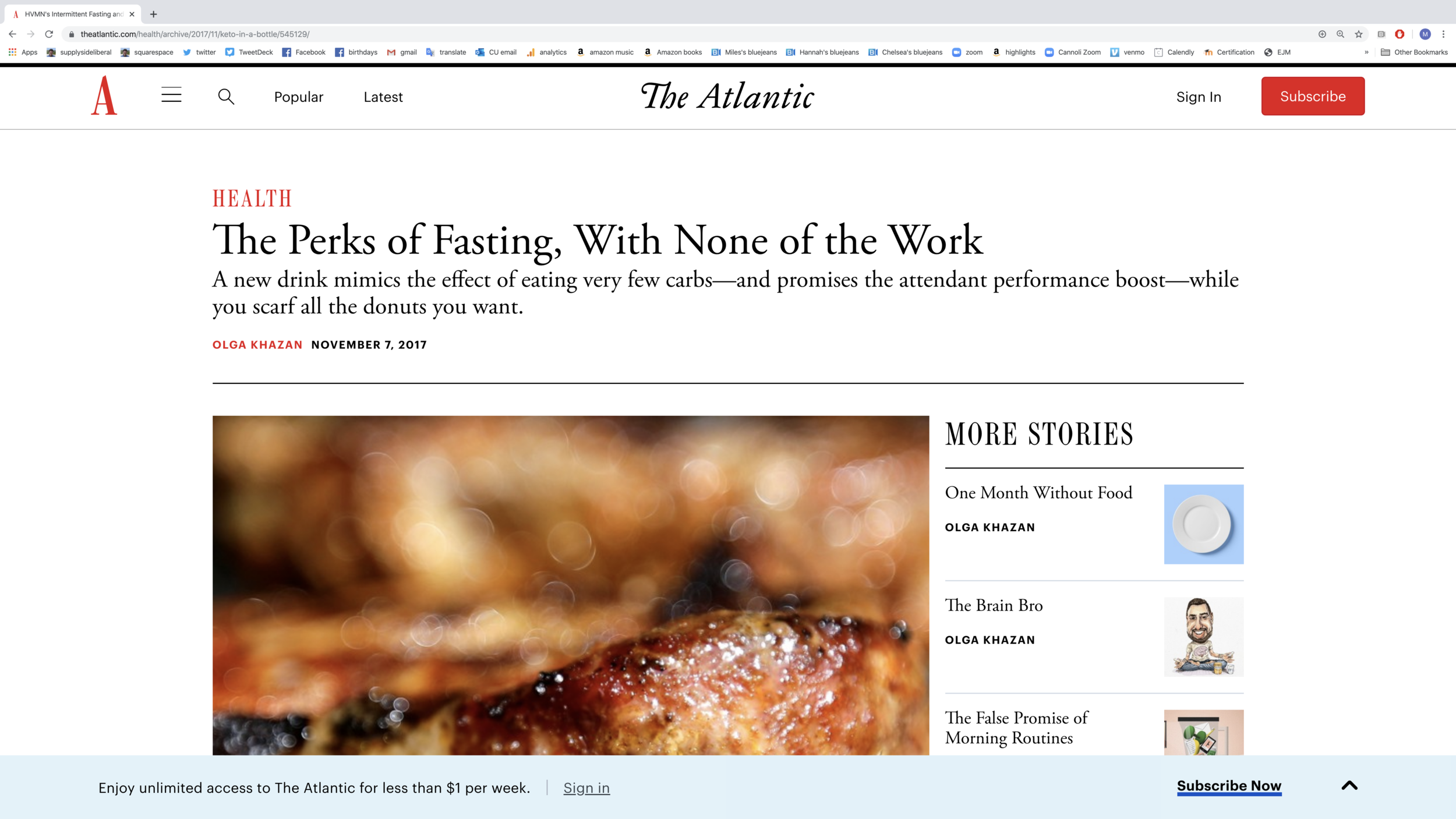
I am not sure this matches everyone’s version of a keto diet, but Olga Khazan’s article shown above, “The Perks of Fasting, With None of the Work,” describes keto diets this way:

Because the keto diet can be unappealing—low on fruit and vegetables and high on bun-less burgers—it can be hard for all but the most committed to stick with it.

On the diet I recommend, nonstarchy vegetables and a certain amount of vegetables with resistant starches are big, so what I recommend certainly isn’t low on vegetables.

Geoff Woo’s company HVMN, featured in Olga Khazan’s article, released a drink called “Ketone” in 2017 described this way:

Its nutrition label says it contains 120 calories, but no carbs, no fat, and no protein. Instead, it’s all ketones, the chemical that Woo and his company are calling a “fourth food group.” He hopes the drink will allow people to reap the benefits of occasional fasting—high ketone levels inside the body—without actually having to not eat.

But Geoff Woo himself simply fasts:

Woo says he fasts for at least 18 hours a day and runs an 8,000-person-strong intermittent fasting group. He subscribes to fledgling evidence showing that fasting might help boost neurogenesis, or the growth of new brain cells, as well as lead to longevity.

One benefit to fasting instead of drinking “Ketone” are these two reviews of the taste of “Ketone” from Olga and Geoff:

It tasted like cough syrup that had been poured into a garbage bag and left in the sun.

“Augh!” I cried.

“I compare it to a combination of a liquor shot with nail-polish remover,” Woo said.

But one of the biggest reasons to fast instead of using a chemical substitute for fasting is that we have a much longer track record of evidence on fasting than on any chemical substitute for fasting.

I lay out my overall perspective and give some cautions about fasting in “4 Propositions on Weight Loss.” Take a look.

For annotated links to other posts on diet and health, see:

The Federalist Papers #2 B: You Trusted the Continental Congress; Trust the Constitutional Convention

In The Federalist Papers, #2, John Jay (writing, as Alexander Hamilton did in #1, under the pen name “Publius”) begins by appealing to the idea of America to argue for the importance of the thirteen states staying united. He circles back at the end of #2 to that theme of union, flattering his audience that their belief most of them have that union is a good idea is well-founded:

It is worthy of remark that not only the first, but every succeeding Congress, as well as the late convention, have invariably joined with the people in thinking that the prosperity of America depended on its Union. To preserve and perpetuate it was the great object of the people in forming that convention, and it is also the great object of the plan which the convention has advised them to adopt. With what propriety, therefore, or for what good purposes, are attempts at this particular period made by some men to depreciate the importance of the Union? Or why is it suggested that three or four confederacies would be better than one? I am persuaded in my own mind that the people have always thought right on this subject, and that their universal and uniform attachment to the cause of the Union rests on great and weighty reasons, which I shall endeavor to develop and explain in some ensuing papers. They who promote the idea of substituting a number of distinct confederacies in the room of the plan of the convention, seem clearly to foresee that the rejection of it would put the continuance of the Union in the utmost jeopardy. That certainly would be the case, and I sincerely wish that it may be as clearly foreseen by every good citizen, that whenever the dissolution of the Union arrives, America will have reason to exclaim, in the words of the poet: "FAREWELL! A LONG FAREWELL TO ALL MY GREATNESS."

In between those two paeans to the thirteen states being united, John Jay first tries to diminish any reverence his audience might have for the Articles of Confederation that the proposed Constitution would replace:

A strong sense of the value and blessings of union induced the people, at a very early period, to institute a federal government to preserve and perpetuate it. They formed it almost as soon as they had a political existence; nay, at a time when their habitations were in flames, when many of their citizens were bleeding, and when the progress of hostility and desolation left little room for those calm and mature inquiries and reflections which must ever precede the formation of a wise and wellbalanced government for a free people. It is not to be wondered at, that a government instituted in times so inauspicious, should on experiment be found greatly deficient and inadequate to the purpose it was intended to answer.

Second, John Jay tries to increase reverence for the Constitutional Convention. Speaking of the Articles of Confederation, he writes:

This intelligent people perceived and regretted these defects. Still continuing no less attached to union than enamored of liberty, they observed the danger which immediately threatened the former and more remotely the latter; and being pursuaded that ample security for both could only be found in a national government more wisely framed, they as with one voice, convened the late convention at Philadelphia, to take that important subject under consideration.

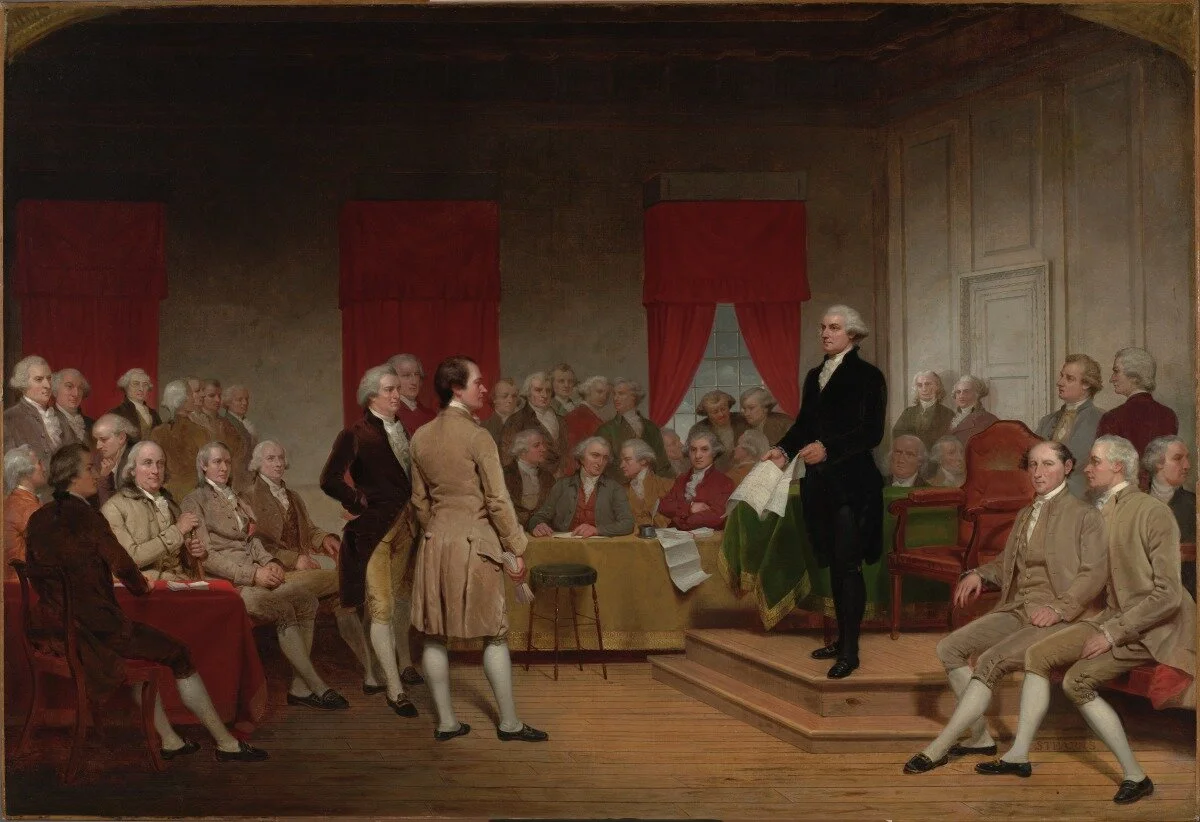
This convention composed of men who possessed the confidence of the people, and many of whom had become highly distinguished by their patriotism, virtue and wisdom, in times which tried the minds and hearts of men, undertook the arduous task. In the mild season of peace, with minds unoccupied by other subjects, they passed many months in cool, uninterrupted, and daily consultation; and finally, without having been awed by power, or influenced by any passions except love for their country, they presented and recommended to the people the plan produced by their joint and very unanimous councils.

Third, John Jay says that, ideally, the proposed Constitution would be considered on its merits, but that given the nature of politics, that is too much to hope for. He then proceeds with an argument from authority—in this case the authority and prestige of the members of the Constitutional Convention. But he makes that argument from authority using an interesting twist. Paraphrasing his argument, John Jay says, in effect,

  • You trusted the Continental Congress;

  • the Constitutional Convention is even more deserving of your trust,

    • because the members of the Constitutional Convention are the best of those who were in the Continental Congress or who otherwise helped America win its freedom from Britain, and

    • are more experienced than when the Continental Congress first started meeting.

Here is how he makes that case in detail:

Admit, for so is the fact, that this plan is only RECOMMENDED, not imposed, yet let it be remembered that it is neither recommended to BLIND approbation, nor to BLIND reprobation; but to that sedate and candid consideration which the magnitude and importance of the subject demand, and which it certainly ought to receive. But this (as was remarked in the foregoing number of this paper) is more to be wished than expected, that it may be so considered and examined. Experience on a former occasion teaches us not to be too sanguine in such hopes. It is not yet forgotten that well-grounded apprehensions of imminent danger induced the people of America to form the memorable Congress of 1774. That body recommended certain measures to their constituents, and the event proved their wisdom; yet it is fresh in our memories how soon the press began to teem with pamphlets and weekly papers against those very measures. Not only many of the officers of government, who obeyed the dictates of personal interest, but others, from a mistaken estimate of consequences, or the undue influence of former attachments, or whose ambition aimed at objects which did not correspond with the public good, were indefatigable in their efforts to pursuade the people to reject the advice of that patriotic Congress. Many, indeed, were deceived and deluded, but the great majority of the people reasoned and decided judiciously; and happy they are in reflecting that they did so.

They considered that the Congress was composed of many wise and experienced men. That, being convened from different parts of the country, they brought with them and communicated to each other a variety of useful information. That, in the course of the time they passed together in inquiring into and discussing the true interests of their country, they must have acquired very accurate knowledge on that head. That they were individually interested in the public liberty and prosperity, and therefore that it was not less their inclination than their duty to recommend only such measures as, after the most mature deliberation, they really thought prudent and advisable.

These and similar considerations then induced the people to rely greatly on the judgment and integrity of the Congress; and they took their advice, notwithstanding the various arts and endeavors used to deter them from it. But if the people at large had reason to confide in the men of that Congress, few of whom had been fully tried or generally known, still greater reason have they now to respect the judgment and advice of the convention, for it is well known that some of the most distinguished members of that Congress, who have been since tried and justly approved for patriotism and abilities, and who have grown old in acquiring political information, were also members of this convention, and carried into it their accumulated knowledge and experience.

It is worthy of remark that not only the first, but every succeeding Congress, as well as the late convention, have invariably joined with the people in thinking that the prosperity of America depended on its Union. To preserve and perpetuate it was the great object of the people in forming that convention, and it is also the great object of the plan which the convention has advised them to adopt. With what propriety, therefore, or for what good purposes, are attempts at this particular period made by some men to depreciate the importance of the Union? Or why is it suggested that three or four confederacies would be better than one? I am persuaded in my own mind that the people have always thought right on this subject, and that their universal and uniform attachment to the cause of the Union rests on great and weighty reasons, which I shall endeavor to develop and explain in some ensuing papers. They who promote the idea of substituting a number of distinct confederacies in the room of the plan of the convention, seem clearly to foresee that the rejection of it would put the continuance of the Union in the utmost jeopardy. That certainly would be the case, and I sincerely wish that it may be as clearly foreseen by every good citizen, that whenever the dissolution of the Union arrives, America will have reason to exclaim, in the words of the poet: "FAREWELL! A LONG FAREWELL TO ALL MY GREATNESS."

PUBLIUS.

Alfred North Whitehead, Epictetus, Melody Beattie and Amy Poehler on Gratitude

The following quotations about gratitude are my favorites from the 50 at this website:

“No one who achieves success does so without the help of others. The wise and confident acknowledge this help with gratitude.” – Alfred North Whitehead

“He is a wise man who does not grieve for the things which he has not, but rejoices for those which he has.” – Epictetus

“Gratitude unlocks the fullness of life. It turns what we have into enough, and more. It turns denial into acceptance, chaos to order, confusion to clarity. It can turn a meal into a feast, a house into a home, a stranger into a friend.” ― Melody Beattie

“I looked around and thought about my life. I felt grateful. I noticed every detail. That is the key to time travel. You can only move if you are actually in the moment. You have to be where you are to get where you need to go.” – Amy Poehler

How Unhealthy are Red and Processed Meat?

A large share of articles on diet and health read as if good health were people’s only objective. But almost all of us eat things we believe are bad for us because they are very tasty. I have done my best to convince you, my readers, that on any ordinary day, sugar just isn’t worth it, despite how delicious it is. What about red and processed meat? Are they bad enough that you should stay away from them?

Worrying about animal welfare or the effects of animal husbandry on climate change could easily tip the balance toward being a vegetarian or vegan. What follows is for those whose main concern about meat is its effects on their own health.

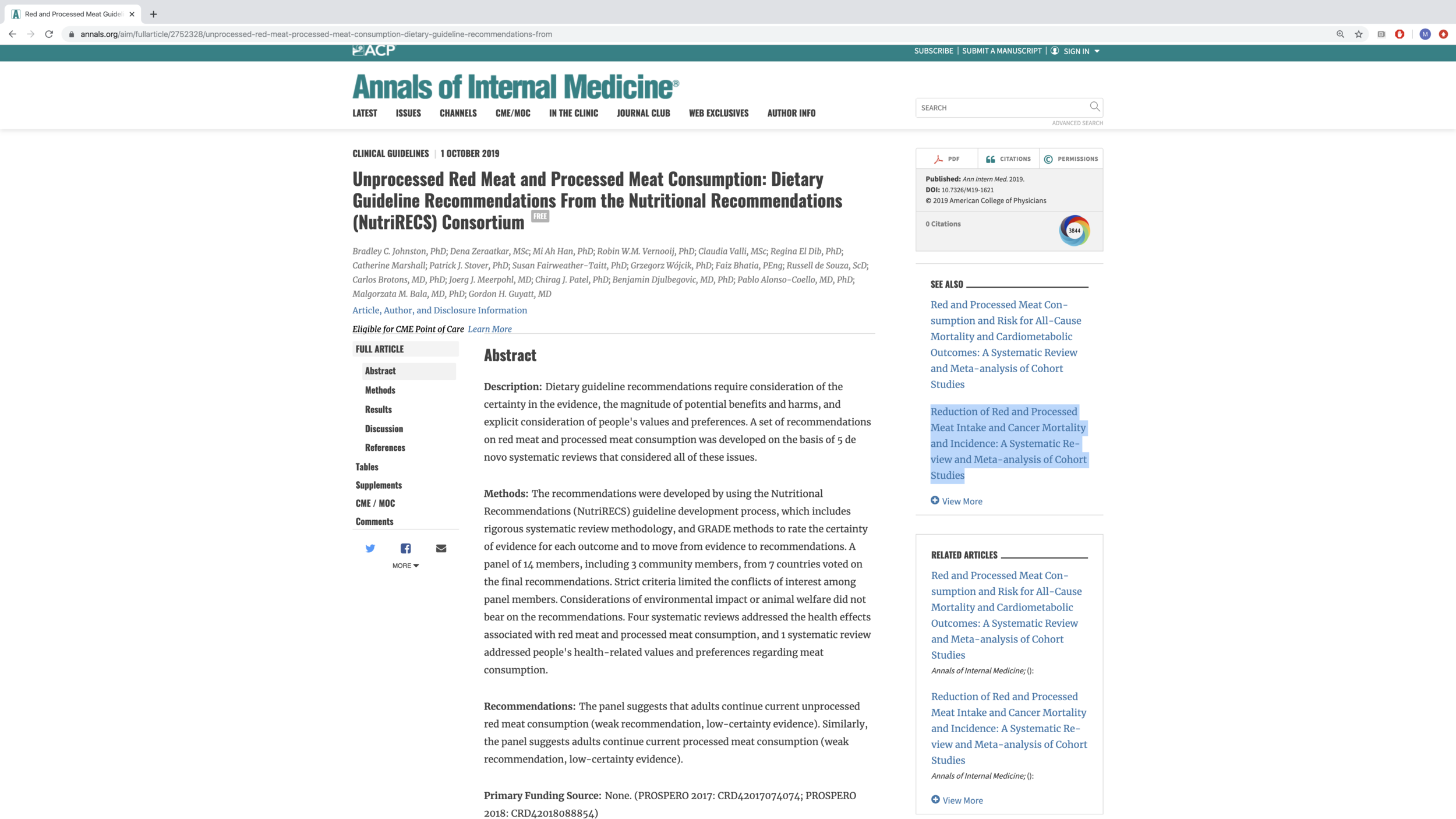
Using panels of lay-people as well as experts in order to judge any harm of meat-eating in comparison to the pleasure from meat-eating, the article shown above, “Unprocessed Red Meat and Processed Meat Consumption: Dietary Guideline Recommendations From the Nutritional Recommendations (NutriRECS) Consortium” by Bradley C. Johnston et al. says you don’t need to change your meat-eating habits. I come down more toward advice to eat meat quite sparingly. Let me lay out the views of Bradley C. Johnston et al. and my reaction.

A Summary of Evidence on the Health Effects of Meat Eating

The key to the recommendation of the panels organized by Bradley C. Johnston et al. is the summary of the scientific evidence, which boils down to saying the health benefits from a substantial reduction in meat consumption are likely to be quite modest. To make the summary of evidence easier to read, let me put their words verbatim into bullet points and omit the references they give—and their mention of results for dietary patterns correlated with, but not specific to meat. In the subsection “Evidence Summary for Harms and Benefits of Unprocessed Red Meat Consumption,” they say:

  • For our review of randomized trials on harms and benefits (12 unique trials enrolling 54 000 participants), we found low- to very low-certainty evidence that diets lower in unprocessed red meat may have little or no effect on the risk for major cardiometabolic outcomes and cancer mortality and incidence.

  • Dose–response meta-analysis results from 23 cohort studies with 1.4 million participants provided low- to very low-certainty evidence that decreasing unprocessed red meat intake may result in a very small reduction in the risk for major cardiovascular outcomes (cardiovascular disease, stroke, and myocardial infarction) and type 2 diabetes (range, 1 fewer to 6 fewer events per 1000 persons with a decrease of 3 servings/wk), with no statistically significant differences in 2 additional outcomes (all-cause mortality and cardiovascular mortality).

  • Dose–response meta-analysis results from 17 cohorts with 2.2 million participants provided low-certainty evidence that decreasing unprocessed red meat intake may result in a very small reduction of overall lifetime cancer mortality (7 fewer events per 1000 persons with a decrease of 3 servings/wk), with no statistically significant differences for 8 additional cancer outcomes (prostate cancer mortality and the incidence of overall, breast, colorectal, esophageal, gastric, pancreatic, and prostate cancer).

In the subsection “Evidence Summary for Harms and Benefits for Processed Meat,” they say:

  • No randomized trials differed by a gradient of 1 serving/wk for our target outcomes.

  • With respect to cohorts addressing adverse cardiometabolic outcomes (10 cohort studies with 778 000 participants providing dose–response meta-analysis), we found low- to very low-certainty evidence that decreased intake of processed meat was associated with a very small reduced risk for major morbid cardiometabolic outcomes, including all-cause mortality, cardiovascular mortality, stroke, myocardial infarction, and type 2 diabetes (range, 1 fewer to 12 fewer events per 1000 persons with a decrease of 3 servings/wk), with no statistically significant difference in 1 additional outcome (cardiovascular disease).

  • For cohort studies addressing adverse cancer outcomes (31 cohorts with 3.5 million participants providing data for our dose–response analysis), we also found low- to very low-certainty evidence that a decreased intake of processed meat was associated with a very small absolute risk reduction in overall lifetime cancer mortality; prostate cancer mortality; and the incidence of esophageal, colorectal, and breast cancer (range, 1 fewer to 8 fewer events per 1000 persons with a decrease of 3 servings/wk), with no statistically significant differences in incidence or mortality for 12 additional cancer outcomes (colorectal, gastric, and pancreatic cancer mortality; overall, endometrial, gastric, hepatic, small intestinal, oral, ovarian, pancreatic, and prostate cancer incidence).

Bradley C. Johnston et al. note that results look stronger for dietary patterns correlated with meat-eating than when looking specifically at meat-eating. This calls into question whether meat-eating itself is a problem as opposed to something else that meat-eaters on average tend to do more than others—beyond eating meat.

My Reaction to “Unprocessed Red Meat and Processed Meat Consumption: Dietary Guideline Recommendations From the Nutritional Recommendations (NutriRECS) Consortium”

As I say in

I worry that animal protein is especially nutritious for cancer cells. But the short version of that story is that sugar and certain amino acids, such as glycine, are especially easy for cancer cells to metabolize. If you keep your consumption of both animal protein and sugar very low, it will make it very hard on cancer cells and pre-cancerous cells. But cutting animal protein consumption in half while continuing sugar consumption full-speed may not put that much stress on cancer cells and pre-cancerous cells.

The bottom line of this logic is that cutting back on meat consumption may have a much bigger positive health effect for those who have gone off sugar than for those who haven’t. Unfortunately, few enough people have gone off sugar that the bulk of the evidence discussed by Bradley C. Johnston et al. doesn’t speak to this possibility.

Moreover, if you have gone off sugar, then when you eat meat might have just as big an effect as the total amount. Occasional meals with a lot of meat with a week or two going by with not meat might be much harder on cancer cells and pre-cancerous cells than eating the same amount of meat a little each day to keep the cancer cells and pre-cancerous cells going.

I know a lot less about how animal protein affects cardiovascular outcomes, if you do want to continue eating meat, it is worth knowing that fasting—a period of time with no food (but continuing to drink water)—gives your body a chance to repair itself, taking apart defective cells and using the parts for other cells that are in better shape. A lot isn’t known, but to me that makes it sound hopeful that damage that has already been done might be repaired if you make fasting part of your regimen. On fasting, see:

Conclusion

Bradley C. Johnston et al. effectively provide reasons why if you are only worried about the effects on your health you should consider going off sugar (and other easily digestible carbs such as potatoes, rice and bread) a higher priority than reducing red and processed meat consumption. But once you have managed to go off sugar, I recommend that you don’t eat meat every day. And it is likely to be a good idea to have days when you refrain completely from eating any animal products, or go beyond that and fast.

For annotated links to other posts on diet and health, see: