John Locke: Even Monarchists Admit there are Some Circumstances When It is Appropriate to Rise Up Against a King

In Sections 223-227 of John Locke’s 2d Treatise on Government: Of Civil Government, Chapter XIX, “Of the Dissolution of Government,” John Locke is insistent that rulers, like the ruled, can commit crimes that deserve punishment. And all too often, an uprising is the only way to deal with very serious crimes by a ruler. That view I discussed in “If Rebellion is a Sin, It is a Sin Committed Most Often by Those in Power.”

In Sections 230, 231 and the first half of 232, John Locke repeats this basic view that (a) rulers are subject to the law (including the law of nature) as much as the ruled are and (b) if a rule commits an infraction big enough to engender an uprising with any real chance of success, it is likely that the ruler has made truly grave invasions of the people’s liberty and truly grave harms to their welfare:

§. 230. Nor let any one say, that mischief can arise from hence, as often as it shall please a busy head, or turbulent spirit, to desire the alteration of the government. It is true, such men may stir, whenever they please; but it will be only to their own just ruin and perdition: for till the mischief be grown general, and the ill designs of the rulers become visible, or their attempts sensible to the greater part, the people, who are more disposed to suffer than right themselves by resistance, are not apt to stir. The examples of particular injustice, or oppression of here and there an unfortunate man, moves them not. But if they universally have a persuasion, grounded upon manifest evidence, that designs are carrying on against their liberties, and the general course and tendency of things cannot but give them strong suspicions of the evil intention of their governors, who is to be blamed for it? Who can help it, if they, who might avoid it, bring themselves into this suspicion? Are the people to be blamed, if they have the sense of rational creatures, and can think of things no otherwise than as they find and feel them? And is it not rather their fault, who put things into such a posture, that they would not have them thought to be as they are? I grant, that the pride, ambition, and turbulency of private men have sometimes caused great disorders in commonwealths, and factions have been fatal to states and kingdoms. But whether the mischief hath oftener begun in the people’s wantonness, and a desire to cast off the lawful authority of their rulers, or in the rulers’ insolence, and endeavours to get and exercise an arbitrary power over their people; whether oppression or disobedience, gave the first rise to the disorder, I leave it to impartial history to determine. This I am sure, whoever, either ruler or subject, by force goes about to invade the rights of either prince or people, and lays the foundation for overturning the constitution and frame of any just government, is highly guilty of the greatest crime, I think, a man is capable of, being to answer for all those mischiefs of blood, rapine, and desolation, which the breaking to pieces of governments bring on a country. And he who does it, is justly to be esteemed the common enemy and pest of mankind, and is to be treated accordingly.

§. 231. That subjects or foreigners, attempting by force on the properties of any people, may be resisted with force, is agreed on all hands. But that magistrates, doing the same thing, may be resisted, hath of late been denied: as if those who had the greatest privileges and advantages by the law, had thereby a power to break those laws, by which alone they were set in a better place than their brethren: whereas their offence is thereby the greater, both as being ungrateful for the greater share they have by the law, and breaking also that trust, which is put into their hands by their brethren.

§. 232. Whosoever uses force without right, as every one does in society, who does it without law, puts himself into a state of war with those against whom he so uses it; and in that state all former ties are cancelled, all other rights cease, and every one has a right to defend himself, and to resist the aggressor.

John Locke’s repetition of this point indicates how important he thought the point to be.

Beginning with the second half of Section 232 and continuing through Section 239, John Locke shows that even the Monarchists Barclay and Winzerus, plus, he claims, Bilson, Bracton, Fortescue, the author of The Mirrour and Hooker, admit of some circumstances in which it is appropriate to rise up against a king, or someone who had been thought of as a king. In the quotation that follows, I delayed two long Latin passages to the end of this post, leaving the English translations in their original locations:

This is so evident, that Barclay himself, that great assertor of the power and sacredness of kings, is forced to confess, That it is lawful for the people, in some cases, to resist their king; and that too in a chapter, wherein he pretends to shew, that the divine law shuts up the people from all manner of rebellion. Whereby it is evident, even by his own doctrine, that, since they may in some cases resist, all resisting of princes is not rebellion. His words are these: [First Latin passage from Barclay] In English thus:

§. 233. “But if any one should ask, Must the people then always lay themselves open to the cruelty and rage of tyranny? Must they see their cities pillaged, and laid in ashes, their wives and children exposed to the tyrant’s lust and fury, and themselves and families reduced by their king to ruin, and all the miseries of want and oppression, and yet sit still? Must men alone be debarred the common privilege of opposing force with force, which nature allows so freely to all other creatures for their preservation from injury? I answer: Self-defence is a part of the law of nature; nor can it be denied the community, even against the king himself: but to revenge themselves upon him, must by no means be allowed them: it being not agreeable to that law. Wherefore if the king shall shew an hatred, not only to some particular persons, but sets himself against the body of the commonwealth, whereof he is the head, and shall, with intolerable ill usage, cruelly tyrannize over the whole, or a considerable part of the people, in this case the people have a right to resist and defend themselves from injury: but it must be with this caution, that they only defend themselves, but do not attack their prince: they may repair the damages received, but must not for any provocation exceed the bounds of due reverence and respect. They may repulse the present attempt, but must not revenge past violences: for it is natural for us to defend life and limb, but that an inferior should punish a superior, is against nature. The mischief which is designed them, the people may prevent before it be done; but when it is done, they must not revenge it on the king, though author of the villany. This therefore is the privilege of the people in general, above what any private person hath; that particular men are allowed by our adversaries themselves (Buchanan only excepted) to have no other remedy but patience; but the body of the people may with respect resist intolerable tyranny; for when it is but moderate, they ought to endure it.”

§. 234. Thus far that great advocate of monarchical power allows of resistance.

§. 235. It is true, he has annexed two limitations to it, to no purpose: First, He says, it must be with reverence. Secondly, It must be without retribution, or punishment; and the reason he gives is, because an inferior cannot punish a superior. First, How to resist force without striking again, or how to strike with reverence, will need some skill to make intelligible. He that shall oppose an assault only with a shield to receive the blows, or in any more respectful posture, without a sword in his hand, to abate the confidence and force of the assailant, will quickly be at an end of his resistance,and will find such a defence serve only to draw on himself the worse usage. This is as ridiculous a way of resisting, as Juvenal thought it of fighting; ubi tu pulsas, ego vapulo tantum. And the success of the combat will be unavoidably the same he there describes it: —“Libertas pauperis hæc est: Pulsatus rogat, & pugnis concisus, adorat, Ut liceat paucis cum dentibus inde reverti.”This will always be the event of such an imaginary resistance, where men may not strike again. He therefore who may resist must be allowed to strike. And then let our author, or any body else, join a knock on the head, or a cut on the face, with as much reverence and respect as he thinks fit. He that can reconcile blows and reverence, may, for aught I know, desire for his pains, a civil, respectful cudgeling wherever he can meet with it. Secondly, As to his second, An inferior cannot punish a superior; that is true, generally speaking, whilst he is his superior. But to resist force with force, being the state of warthat levels the parties, cancels all former relation of reverence, respect, and superiority:and then the odds that remains, is, that he, who opposes the unjust aggressor, has this superiority over him, that he has a right, when he prevails, to punish the offender, both for the breach of the peace, and all the evils that followed upon it. Barclay therefore, in another place, more coherently to himself, denies it to be lawful to resist a king in any case. But he there assigns two cases, whereby a king may unking himself. His words are, [Second Latin passage from Barclay] Which in English runs thus:

§. 237. “What then, can there be no case happen wherein the people may of right, and by their own authority, help themselves, take arms, and set upon their king, imperiously domineering over them? None at all, whilst he remains a king. Honour the king, and he that resists the power, resists the ordinance of God; are divine oracles that will never permit it. The people therefore can never come by a power over him, unless he does something that makes him cease to be a king: for then he divests himself of his crown and dignity, and returns to the state of a private man, and the people become free and superior, the power which they had in the interregnum, before they crowned him king, devolving to them again. But there are but few miscarriages which bring the matter to this state. After considering it well on all sides, I can find but two. Two cases there are, I say, whereby a king, ipso facto, becomes no king, and loses all power and regal authority over his people; which are also taken notice of by Winzerus. “The first is, If he endeavour to overturn the government, that is, if he have a purpose and design to ruin the kingdom and commonwealth, as it is recorded of Nero, that he resolved to cut off the senate and people of Rome, lay the city waste with fire and sword, and then remove to some other place. And of Caligula, that he openly declared, that he would be no longer a head to the people or senate, and that he had it in his thoughts to cut off the worthiest men of both ranks, and then retire to Alexandria: and he wished that the people had but one neck, that he might dispatch them all at a blow. Such designs as these, when any king harbours in his thoughts, and seriously promotes, he immediately gives up all care and thought of the commonwealth; and consequently forfeits the power of governing his subjects, as a master does the dominion over his slaves whom he hath abandoned.

§. 238. “The other case is, When a king makes himself the dependent of another, and subjects his kingdom which his ancestors left him, and the people put free into his hands, to the dominion of another: for however perhaps it may not be his intention to prejudice the people; yet because he has hereby lost the principal part of regal dignity, viz. to be next and immediately under God, supreme in his kingdom; and also because he betrayed or forced his people, whose liberty he ought to have carefully preserved, into the power and dominion of a foreign nation. By this, as it were, alienation of his kingdom, he himself loses the power he had in it before, without transferring any the least right to those on whom he would have bestowed it; and so by this act sets the people free, and leaves them at their own disposal. One example of this is to be found in the Scotch Annals.”

§. 239. In these cases Barclay, the great champion of absolute monarchy, is forced to allow, that a king may be resisted, and ceases to be a king. That is, in short, not to multiply cases, in whatsoever he has no authority, there he is no king, and may be resisted: for wheresoever the authority ceases, the king ceases too, and becomes like other men who have no authority. And these two cases he instances in, differ little from those above mentioned, to be destructive to governments, only that he has omitted the principle from which his doctrine flows; and that is, the breach of trust, in not preserving the form of government agreed on, and in not intending the end of government itself, which is the public good and preservation of property. When a king has dethroned himself, and put himself in a state of war with his people, what shall hinder them from prosecuting him who is no king, as they would any other man, who has put himself into a state of war with them; Barclay, and those of his opinion, would do well to tell us. This farther I desire may be taken notice of out of Barclay, that he says, “The mischief that is designed them, the people may prevent before it be done:” whereby he allows resistance when tyranny is but in design. “Such designs as these,” says he, “when any king harbours in his thoughts and seriously promotes, he immediately gives up all care and thought of the commonwealth;” so that, according to him, the neglect of the public good is to be taken as an evidence of such design, or at least for a sufficient cause of resistance. And the reason of all, he gives in these words, “Because he betrayed or forced his people, whose liberty he ought carefully to have preserved.” What he adds, into the power and dominion of a foreign nation, signifies nothing, the fault and forfeiture lying in the loss of their liberty, which he ought to have preserved, and not in any distinction of the persons to whose dominion they were subjected. The people’s right is equally invaded, and their liberty lost, whether they are made slaves to any of their own, or a foreign nation; and in this lies the injury, and against this only they have the right of defence. And there are instances to be found in all countries, which shew, that it is not the change of nations in the persons of their governors, but the change of government, that gives the offence. Bilson, a bishop of our church, and a great stickler for the power and prerogative of princes, does, if I mistake not, in his treatise of Christian subjection, acknowledge, that princes may forfeit their power, and their title to the obedience of their subjects; and if there needed authority in a case where reason is so plain, I could send my reader to Bracton, Fortescue, and the author of The Mirrour, and others, writers that cannot be suspected to be ignorant of our government, or enemies to it. But I thought Hooker alone might be enough to satisfy those men, who relying on him for their ecclesiastical polity, are by a strange fate carried to deny those principles upon which he builds it. Whether they are herein made the tools of cunninger workmen, to pull down their own fabric, they were best look. This I am sure, their civil policy is so new, so dangerous, and so destructive to both rulers and people, that as former ages never could bear the broaching of it; so it may be hoped, those to come, redeemed from the impositions of these Egyptian under-task-masters, will abhor the memory of such servile flatterers, who, whilst it seemed to serve their turn, resolved all government into absolute tyranny, and would have all men born to, what their mean souls fitted them for, slavery.

The brute fact is that the history of kings and other rulers includes cases of rulers who so flagrantly violated their trust and so powerfully damaged the welfare of those they ruled, that it is hard for any serious scholar to deny that there are some cases where it is appropriate to rise up against a ruler, or individual who was a ruler at one time. Thus, John Locke’s doctrine that “Bad Rulers May Be Removed” is different from other views in degree and where the line is drawn, not different in kind.

Closely related to the question of where the line should be drawn that rulers step over at their peril is the question of who can rightfully judge that a ruler has stepped over that line. That is the subject of the following sections, that I will discuss in a couple of weeks.

For links to other John Locke posts, see these John Locke aggregator posts: 

First Latin passage from Barclay: “Quod siquis dicat, Ergone populus tyrannicæ crudelitati & furori jugulum semper præbebit? Ergone multitudo civitates suas fame, ferro, & flammâ vastari, seque, conjuges, & liberos fortunæ ludibrio & tyranni libidini exponi, inque omnia vitæ pericula omnesque miserias & molestias à rege deduci patientur? Num illis quod omni animantium generi est à naturâ tributum, denegari debet, ut sc. vim vi repellant, seseq; ab injuriâ tueantur? Huic breviter responsum sit, Populo universo negari defensionem, quæ juris naturalis est, neque ultionem quæ præter naturam est adversus regem concedi debere. Quapropter si rex non in singulares tantum personas aliquot privatum odium exerceat, sed corpus etiam reipublicæ, cujus ipse caput est, i. e. totum populum, vel insignem aliquam ejus partem immani & intolerandâ sævitiâ seu tyrannide divexet; populo, quidem hoc casu resistendi ac tuendi se ab injuriâ potestas competit, sed tuendi se tantum, non enim in principem invadendi: & restituendæ injuriæ illatæ, non recedendi à debitâ reverentiâ propter acceptam injuriam. Præsentem denique impetum propulsandi non vim præteritam ulciscenti jus habet. Horum enim alterum à naturâ est, ut vitam scilicet corpusque tueamur. Alterum verò contra naturam, ut inferior de superiori supplicium sumat. Quod itaque populus malum, antequam factum sit, impedire potest, ne fiat, id postquam factum est, in regem authorem sceleris vindicare non potest: populus igitur hoc ampliùs quàm privatus quispiam habet: quod huic, vel ipsis adversariis judicibus, excepto Buchanano, nullum nisi in patientia remedium superest. Cùm ille si intolerabilis tyrannus est (modicum enim ferre omnino debet) resistere cum reverentiâ possit,” Barclay contra Monarchom. l. iii. c. 8.

Second Latin passage from Barclay: “Quid ergo, nulline casus incidere possunt quibus populo sese erigere atque in regem impotentius dominantem arma capere & invadere jure suo suâque authoritate liceat? Nulli certe quamdiu rex manet. Semper enim ex divinis id obstat, Regem honorificato; & qui potestati resistit, Dei ordinationi resistit: non aliàs igitur in eum populo potestas est quam si id committat propter quod ipso jure rex esse desinat. Tunc enim se ipse principatu exuit atque in privatis constituit liber: hoc modo populus & superior efficitur, reverso ad eum sc. jure illo quod ante regem inauguratum in interregno habuit. At sunt paucorum generum commissa ejusmodi quæ hunc effectum pariunt. At ego cum plurima animo perlustrem, duo tantum invenio, duos, inquam, casus quibus rex ipso facto ex rege non regem se facit & omni honore & dignitate regali atque in subditos potestate destituit; quorum etiam meminit Winzerus. Horum unus est, Si regnum disperdat, quemadmodum de Nerone fertur, quod is nempe senatum populumque Romanum, atque adeo urbem ipsam ferro flammaque vastare, ac novas sibi sedes quærere decrevisset. Et de Caligula, quod palam denunciarit se neque civem neque principem senatui amplius fore, inque animo habuerit interempto utriusque ordinis electissimo quoque Alexandriam commigrare, ac ut populum uno ictu interimeret, unam ei cervicem optavit. Talia cum rex aliquis meditatur & molitur serio, omnem regnandi curam & animum ilico abjicit, ac proinde imperium in subditos amittit, ut dominus servi pro derelicto habiti dominium.

§. 236. “Alter casus est, Si rex in alicujus clientelam se contulit, ac regnum quod liberum à majoribus & populo traditum accepit, alienæ ditioni mancipavit. Nam tunc quamvis forte non eâ mente id agit populo plane ut incommodet: tamen quia quod præcipuum est regiæ dignitatis amisit, ut summus scilicet in regno secundum Deum sit, & solo Deo inferior, atque populum etiam totum ignorantem vel invitum, cujus libertatem sartam & tectam conservare debuit, in alterius gentis ditionem & potestatem dedidit; hâc velut quadam regni ab alienatione effecit, ut nec quod ipse in regno imperium habuit retineat, ne in eum cui collatum voluit, juris quicquam transferat; atque ita eo facto liberum jam & suæ potestatis populum relinquit, cujus rei exemplum unum annales Scotici suppeditant.” Barclay contra Monarchom. l. iii. c. 16.

Give Central Banks Independence and New Political Pressures to Balance the Old Ones

There is a debate about whether central banks should follow a formal rule for monetary policy. (See my view on rules versus discretion in monetary policy in “Next Generation Monetary Policy.”) But there is broad agreement that central banks should follow some kind of systematic monetary policy. As long as carrying out a systematic monetary policy requires any kind of judgment, and as long as politicians have short-run interests contrary to good monetary policy, central banks need tactical independence. But over a longer horizon central banks don’t need fewer political pressures, they need new political pressures to balance out the old ones.

I see political pressures on central banks through the lens of negative interest rate policy. I know from my travels to talk about negative interest rate policy at central banks around the world that central bankers worry about the political blowback from changing paper currency policy as I address in the links in “How and Why to Eliminate the Zero Lower Bound: A Reader’s Guide.” And I worry that many central bankers fail to code it correctly in their brains as implicit criticism of not using vigorous negative interest rate policy when they get criticized for a recovery that is agonizingly slow. In the scary new monetary landscape, there is no refuge from criticism. But central bankers can, if they choose, get criticized inappropriately for doing the right thing instead of getting criticized appropriately for doing the wrong thing.

There is a longstanding set of arguments that have been developed by monetary “hawks,” who in almost all situations argue that interest rates should be higher. There has been little innovation in this area in the last few years, so the set of arguments by John Taylor that I discuss in “Contra John Taylor” can serve as a handy guide to many of them. (Because of his rule, John Taylor does occasionally think that interest rates should be lower, on this occasion, he retails the standard hawkish arguments.) In addition to these standard hawkish arguments that negative interest rates themselves arouse, the idea of changing paper currency policy arouse another set of anxieties about overweening government power. By keeping paper currency in the picture in my proposals (laid out in most detail in work with Ruchir Agarwal 1, 2), I have avoided the vitriol that comes to any threat to the existence of paper currency, but people also get anxious about changing the rules for paper currency.

What is most needed right now is for those who are tempted to lobby for lower interest rates in general to shift gears to lobbying for the elimination of any lower bound on interest rates. In general, I think the Fed makes reasonable decisions in particular circumstances given their overall policy, but there are many dimensions in which their overall policy can be improved, beginning with eliminating any lower bound on rates. Here is the list or proposed upgrading of systematic monetary policy that I argue for in “Next Generation Monetary Policy”:

  1. eliminating the zero lower bound or any effective lower bound on interest rates

  2. tripling the coefficients in the Taylor rule

  3. reducing the penalty for changing directions

  4. reducing the presumption against moving more than 25 basis points at any given meeting

  5. a more equal balance between worrying about the output gap and worrying about fluctuations in inflation

  6. focusing on a price index that gives a greater weight to durables

  7. adjusting for risk premia

  8. pushing for strict enough leverage limits for financial firms that interest rate policy is freed up to focus on issues other than financial stability.

  9. having a nominal anchor.

The Fed knows that it will get political criticism for negative interest rates and changes in paper currency policy. It would help even the odds for good macroeconomic outcomes if the Fed knew it would get criticism for not implementing negative rates, including changes in paper currency policy. Unfortunately, the chances that deep negative rates will be unnecessary in the future are very slim. So it matters greatly for the economy in the future whether the Fed feels political pressure in only one direction or an equipoise of political forces.

Related reading: Don’t miss the links to negative interest rate papers and blog posts in “How and Why to Eliminate the Zero Lower Bound: A Reader’s Guide.”

Should the Typical Person be Restricting Salt Intake?

The idea that almost all of us should be cutting back on salt intake to avoid high blood pressure is well-entrenched, not only in the popular mind, but in the minds of physicians. But how strong is the evidence for this view? James J. DiNicolantonio, Varshil Mehta and James O'Keefe question how valuable salt restriction is for the typical person in their American Medical Journal article “Is Salt a Culprit or an Innocent Bystander in Hypertension? A Hypothesis Challenging the Ancient Paradigm?” All quotations in this blog post are from that article.

Let’s clear up a few things:

  1. There are enough different physical conditions that it seems likely that some people should cut back on salt intake. But are these rare conditions?

  2. For those with high blood pressure, medications that reduce blood pressure do seem to save lives. That doesn’t speak to whether reducing salt intake is important.

  3. People who eat a lot of salty food do seem to be less healthy. But maybe it is all the other bad things in typical types of salty food. After all, processed food tends to have a lot of salt and a lot of sugar.

One reason it seems unlikely that restricting salt intake is necessary for the typical person is that evolutionarily, it would have been necessary for the body to evolve mechanisms to get the right sodium level:

The human brain (hypothalamus) is wired to maintain salt (sodium) balance and hence controls our salt intake.12,42, 43 The biological reason behind this tight homeostatic regulation is that the maintenance of normal sodium levels in the extracellular fluid is required for life and for cellular processes to function properly. The transition process from marine milieu to land-based existence required the evolution of cells that were able to simulate the salty environment of their progenitor cells that existed in sea water.

If sodium levels get too high, the bodies of healthy individuals are good at getting rid of sodium:

Dietary salt has been considered as one of the most important etiologic causes of hypertension. However, according to a study conducted by Hall,82 increasing salt intake in individuals with normal kidney function “usually does not increase arterial pressure much because the kidneys rapidly eliminate the excess salt and blood volume is hardly altered.” Other studies also mention the same principal, saying that individuals with normal kidney functions eliminate excess dietary salt with ease.83, 84, 85, 86

If sodium levels get too low, people start (appropriately) craving salt:

In other words, bodily need drives salt intake. In fact, the low-salt advice may lead to salt cravings and an overconsumption of more processed foods to obtain the salt our physiology desires.12 However, nowadays, to get the salt our body needs we end up consuming salty processed foods (instead of naturally salty foods) and thus consume a greater amount of harmful dietary substances (eg, excess calories, added sugars, harmful fats, and artificial flavorings).12 Indeed, low-salt diets may inadvertently cause us to eat more added sugars. When we are deficient in salt there is an enhanced craving for it, but this does not mean we are addicted to salt.42, 43, 48, 49

If sodium levels get too low and you don’t eat salt, bad things can happen:

…exercise or physical work (particularly when done in a warm or hot environment) on a low-salt diet causes a 10-fold increased risk of heat exhaustion and prostration (characterized by nausea, vomiting, tachycardia, hypotension, vertigo, dehydration, and collapse).36 Moreover, following the advice to consume <2300 mg of sodium per day can lead to negative sodium balance, as well as negative calcium and magnesium balance.37 Thus, low-salt diets may predispose to calcium and magnesium deficiency and all the negative consequences that come with it (including osteoporosis, hypertension, cardiovascular events, arrhythmias, coronary vasospasm, sudden death, and more).

Overall, chronic salt restriction has minuses as well as pluses:

Most importantly, a meta-analysis of almost 170 studies noted that sodium restriction only lowers blood pressure by approximately 1%-3% in normotensives and 3.5%-7% in hypertensives98; however, restricting sodium increases aldosterone, renin, noradrenaline, and blood lipids. It is hard to justify dietary sodium restriction when the overall cardiovascular risk seems to worsen rather than improve when all risk factors are taken into account.

Unfortunately, salt restriction is now so much part of conventional wisdom, in a way that goes beyond the evidence, that it hard to know where to get reliable advice about it. But as long as you are avoiding sugar and processed food, it is not clear you need to worry about salt. Of course, you should worry about high blood pressure, but beyond taking blood pressure medication, avoiding sugar and processed food and may do a lot more to reduce your blood pressure than cutting back on salt. Also, I’d like to see a study on the effects of fasting on blood pressure. Blood pressure is easy to measure frequently, so it is possible to find out how your blood pressure responds to avoiding sugar and processed food and to fasting.

Don’t miss:

For annotated links to other posts on diet and health, see:

New Evidence on the Genetics of Homosexuality

Since I moved to the University of Colorado Boulder in the Summer of 2016, I have added social science genetics to my research portfolio. Recently I was made a Faculty Fellow at the Institute for Behavioral Genetics at the University of Colorado Boulder. In the last three years, I have been impressed with the quality of the research being done in this area. Social science genetics suffered its replication crisis early compared to other areas of social science—the era of the “candidate gene study” in which testing out many genes led to de facto p-hacking. Since then, sample sizes for human genetics data have become large enough that one can get significant results even after careful correction for multiple hypothesis testing across a huge number of genetic variants.

The basic finding for most traits of interest to social scientists is that a large number of genes each has a tiny effect. So there typically isn’t a gene for anything but a few diseases. In the absence of a single determinative gene, there are two key things that can be done: (a) look at what kinds of genes are related to a particular trait, how they compare to the genes for other traits, and how great an R-squared genes could in principle get to and (b) construct linear combinations of genes (called “polygenic scores”) that can predict the trait—always with a lower R-squared than is possible in principle because the weights in the linear combination have estimation error.

The August 30, 2019 issue of Science includes an article “Large-scale GWAS reveals insights into the genetic architecture of same-sex sexual behavior” looking at the genetics of homosexuality in this careful way. The authors were able to use data on almost half a million individuals. Here is their “Structured Abstract”:

INTRODUCTION

Across human societies and in both sexes, some 2 to 10% of individuals report engaging in sex with same-sex partners, either exclusively or in addition to sex with opposite-sex partners. Twin and family studies have shown that same-sex sexual behavior is partly genetically influenced, but previous searches for the specific genes involved have been underpowered to detect effect sizes realistic for complex traits.

RATIONALE

For the first time, new large-scale datasets afford sufficient statistical power to identify genetic variants associated with same-sex sexual behavior (ever versus never had a same-sex partner), estimate the proportion of variation in the trait accounted for by all variants in aggregate, estimate the genetic correlation of same-sex sexual behavior with other traits, and probe the biology and complexity of the trait. To these ends, we performed genome-wide association discovery analyses on 477,522 individuals from the United Kingdom and United States, replication analyses in 15,142 individuals from the United States and Sweden, and follow-up analyses using different aspects of sexual preference.

All quotations in this post are from “Large-scale GWAS reveals insights into the genetic architecture of same-sex sexual behavior.

Unsurprisingly, there is no “gay gene,” but instead many, many genes that each has a small effect on the likelihood of having had at least one same-sex sex partner:

The SNPs that reached genome-wide significance had very small effects (odds ratios ~1.1) (table S7). For example, in the UK Biobank, males with a GT genotype at the rs34730029 locus had 0.4% higher prevalence of same-sex sexual behavior than those with a TT genotype (4.0 versus 3.6%). Nevertheless, the contribution of all measured common SNPs in aggregate (SNP-based heritability) was estimated to be 8 to 25% (95% CIs [Confidence Intervals], 5 to 30%) of variation in female and male same-sex sexual behavior, in which the range reflects differing estimates by using different analysis methods or prevalence assumptions … same-sex sexual behavior, like most complex human traits, is influenced by the small, additive effects of very many genetic variants, most of which cannot be detected at the current sample size (22). Consistent with this interpretation, we show that the contribution of each chromosome to heritability is broadly proportional to its size (fig. S3) (14). In contrast to linkage studies that found substantial association of sexual orientation with variants on the X-chromosome (8, 23), we found no excess of signal (and no individual genome-wide significant loci) on the X-chromosome (fig. S4).

Homosexuality is still rare enough that a sample of half a million or so is still not enough to get precise estimates of just what fraction of the variation in homosexual behavior could in principle be predicted by genes. For linear combinations of common genes, the key quotation from above is:

… the contribution of all measured common SNPs [single nucleotide polymorphisms] in aggregate (SNP-based heritability) was estimated to be 8 to 25% (95% CIs, 5 to 30%) of variation.

Based on a wider ranges of genetic variation, the key quotation is as follows:

By modeling the correspondence of relatedness among individuals and the similarity of their sexual behavior, we estimated broad-sense heritability—the percentage of variation in a trait attributable to genetic variation—at 32.4% [95% confidence intervals (CIs), 10.6 to 54.3] (table S4). This estimate is consistent with previous estimates from smaller twin studies (7).

In any case, don’t fall into the fallacy that “genetic” means “unmodifiable” and “environmental” means “modifiable.” Many things that are environmental are hard to modify because it is hard to modify the environment, while many things that are genetic are easy to modify. For example, nearsightedness can easily be corrected by eyeglasses and contact lenses. In the case of homosexuality, there have been, in effect many messily conducted experiments in modifying homosexuality that directly show that in many, many cases it is essentially impossible to modify. Genetic evidence does not speak directly to “modifiability.” In other words, you can’t use genetic evidence to say whether something is a “choice” or not.

The notion that genetic effects are hardwired physical effects is not always on track. Genetics for complex traits often operate through an effect on people’s preferences. That doesn’t mean those preferences are a small thing. Except to protect other people, it is cruel to block the expression of people’s preferences. For example, whether to be an economist or not is clearly a choice, but it would both make some of us miserable and get in the way of important contributions to the world if it were made illegal or socially disfavored to be an economist. Inhibitions to freedom, whether legal or social, need strong justification in reducing harm to others.

Also, there can be physical effects that are not genetic that are at least as hardwired as physical effects. Men who have more older brothers are more likely to be gay. (See the Wikipedia article “Fraternal birth order and male sexual orientation.”) People theorize this might be due to maternal immune-system reactions to previous male fetuses.

Surprises in the Genetic Data

There are several important findings in the genetic data that will surprise some and confirm the prior beliefs of others. First, having had at least one same-sex sexual partner seems to be a different thing for men than for women:

To assess differences in effects between females and males, we also performed sex-specific analyses. These results suggested only a partially shared genetic architecture across the sexes; the across-sex genetic correlation was 0.63 (95% CIs, 0.48 to 0.78) (table S9). This is noteworthy given that most other studied traits show much higher across-sex genetic correlations, often close to 1 (1821).

A 63% correlation between the genetic predictor for men having had a same-sex sexual partner and for women having had a same-sex sexual partner is still a substantial correlation, but that means there are important differences.

Second, having had at least one as opposed to no same-sex sexual partners is not the same thing as having predominantly same-sex partners:

To maximize our sample size and increase the power to detect SNP associations, we defined our primary phenotype as ever or never having had a same sex partner. … the genetic effects that differentiate heterosexual from same-sex sexual behavior are not the same as those that differ among nonheterosexuals with lower versus higher proportions of same-sex partners. This finding suggests that on the genetic level, there is no single dimension from opposite-sex to same-sex preference. The existence of such a dimension, in which the more someone is attracted to the same-sex the less they are attracted to the opposite-sex, is the premise of the Kinsey scale (39), a research tool ubiquitously used to measure sexual orientation. Another measure, the Klein Grid (40), retains the same premise but separately measures sexual attraction, behavior, fantasies, and identification (as well as nonsexual preferences); however, we found that these sexual measures are influenced by similar genetic factors. Overall, our findings suggest that the most popular measures are based on a misconception of the underlying structure of sexual orientation and may need to be rethought. In particular, using separate measures of attraction to the opposite sex and attraction to the same sex, such as in the Sell Assessment of Sexual Orientation (41), would remove the assumption that these variables are perfectly inversely related and would enable more nuanced exploration of the full diversity of sexual orientation, including bisexuality and asexuality.’’

In other words, the authors suggest a model with two parameters: attraction to men and attraction to women, with some people attracted to both, some people only attracted to men or only to women, and some people attracted to neither.

Scientifically, one of the interesting questions is how genes that increase the probability of homosexual behavior have survived in the gene pool. The authors mention this issue and its importance, but do not suggest any resolution:

We observed in the UK Biobank that individuals who reported same-sex sexual behavior had on average fewer offspring than those of individuals who engaged exclusively in heterosexual behavior, even for individuals reporting only a minority of same-sex partners (Fig. 1B). This reduction in number of children is comparable with or greater than for other traits that have been linked to lower fertility rates (fig. S1) (14). This reproductive deficit raises questions about the evolutionary maintenance of the trait, but we do not address these here.

Conclusion

Before solid evidence about the genetics of homosexuality was available, many people talked as if the genetics of homosexuality could usefully inform how gays should be treated. But it doesn’t. What the genetics of homosexuality does do is help us to appreciate the complexity of sexual attraction.


Deeper Learning in Macroeconomics

Sarah Fine and Jal Mehta have a new book In Search of Deeper Learning. Their focus is on deeper learning in high schools. I want to explore the possibility of deeper learning in college macroeconomics.

What is Deep Learning?

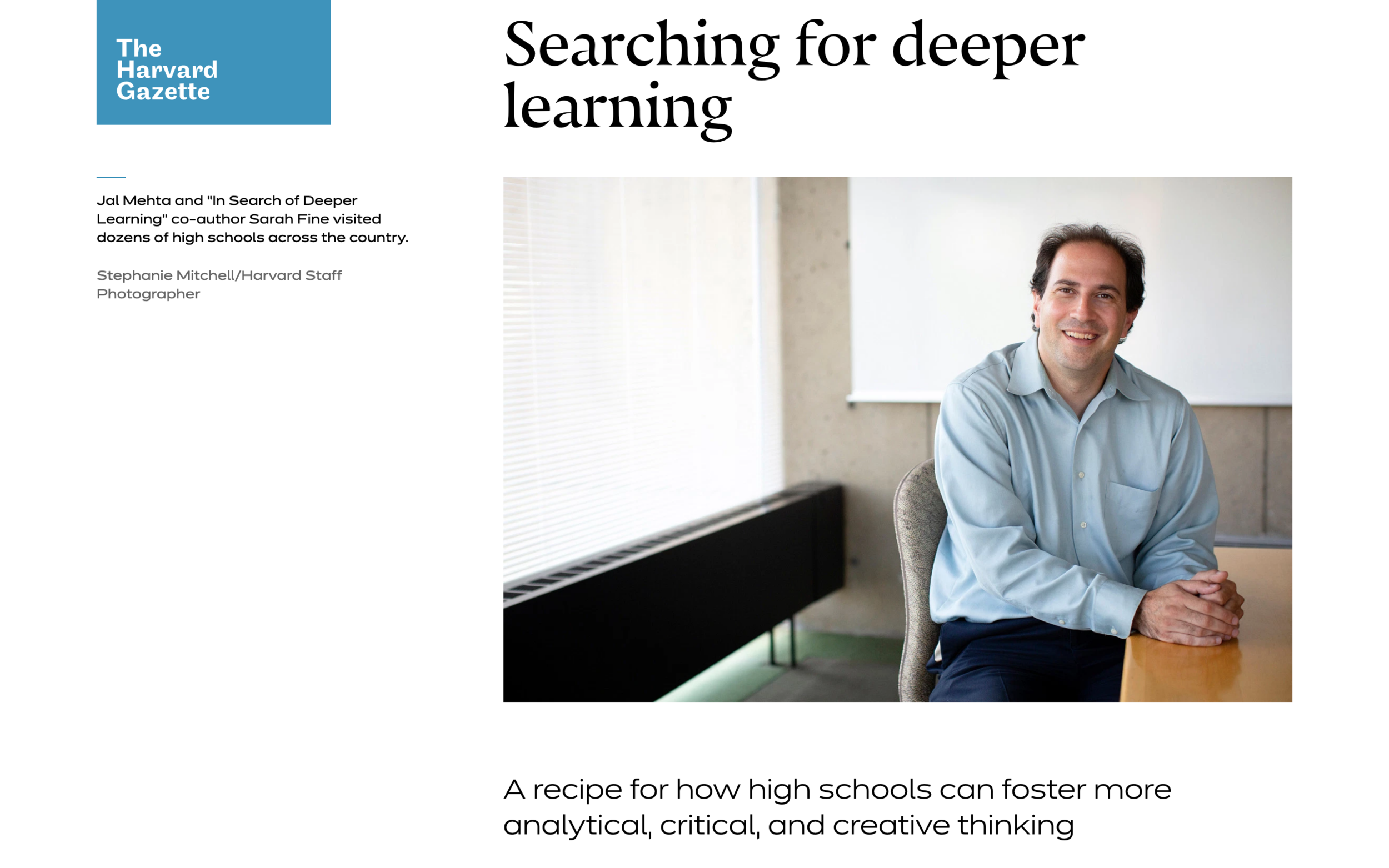
In an interview with Liz Mineo for the Harvard Gazette, Jal Mehta defined “deeper learning” this way:

Deeper learning is the understanding of not just the surface features of a subject or discipline, but the underlying structures or ideas. If we were talking about a biological cell, shallow learning would be able to name the parts of the cell; deeper learning would be able to understand the functions of the cell and how they interrelate. 

When you listen to the show “Car Talk,” you are listening in on a conversation between someone who has a shallow understanding of their car and someone who has a deeper understanding. A person will call in and say, “My car tends to slow down when it rains.” And then one of the guys will say, “Well, does it happen more in hot weather or cold weather?” The caller can only see the symptoms; the person at the other end of the phone can see the system and has some underlying theory or diagnosis of what might be happening.

In the same interview, Jal also explains where and when deeper learning is most likely to happen:

… deeper learning tends to emerge at the intersection of mastery, identity, and creativity. Mastery is developing significant knowledge and skill; identity is seeing yourself as connected to doing the work; and creativity is not just taking in knowledge but doing something in the field. When those three elements come together, it often yields deep learning. …

When we visited schools, we asked students, teachers, and administrators to point us to the most powerful learning spaces in their schools. They frequently pointed to elective classes and extracurricular spaces.  

… we did a deep dive on theater and debate, and those were really different domains, but they shared a number of elements. It started with purpose — students knew why they were there, what they were trying to produce, and why it mattered. There was also a much stronger sense of community in extracurriculars; students described these places as like “family.” And there was lots of opportunity for student leadership as opposed to passively receiving knowledge. There was lots of intrinsic motivation and passion — that’s the identity and creativity parts of deep learning. But there was also a lot of careful feedback, practice, and refinement — that’s the mastery part. 

… the best core classes shared the same characteristics as the extracurriculars; there was a purpose created either by a project, an essential question, or by an authentic thing that was trying to be produced. There was a real attention to trying to build the right kind of community; there was a lot of peer learning by watching how other students were doing work or making comments.

Engaging with the Big Questions in Macroeconomics (or in Economics More Broadly)

At the University of Colorado Boulder,  I teach a class of about 100 students in Intermediate Macroeconomics. That stage of learning about macroeconomics and the sheer size of the class makes it difficult to assign a large term project that would force students to dig deeply into an issue in macroeconomics, but I give students the opportunity to dig deeply if they are willing to seize it. I assign weekly blog posts (on an internal class blog) that can be used to examine different angles of a given topic or to explore different topics. And even when a student explores ostensibly different topics in each blog post, I am a big believer that there is almost always a theme that answers the questions “Why am I interested in this set of things? What is the connection between them?”

In my view, the degree of personal initiative needed to seize the opportunity to make the writing assignments a deep learning experience is an appropriate level of personal responsibility for college as contrasted with high school. Those students who take that initiative will find the class much more rewarding.

Macroeconomics, in particular, offers many deep questions to wrestle with. Every day I see people wrestling with big questions in Economics Twitter. Here are just some of the big questions:

  1. What caused the take-off into modern economic growth?

  2. What policies and what political equilibria can get countries that are still poor onto the track toward getting richer as Japan, Southeast Asian countries, China and India have?

  3. Should fiscal policy or monetary policy take the lead in taming business cycles?

  4. How should monetary policy adjust to the increasingly frequent situations in which the short-term interest rate needed in order to provide enough stimulus is lower than the traditional zero interest rate on paper currency?

  5. What will it take to avoid another financial crisis like the Financial Crisis of 2008?

  6. What should we do about rising inequality? What are the side-effects of different ways of trying to address inequality?

  7. What is the best way of aligning the interests of corporations with the common good? Was Milton Friedman right in saying that telling them to maximize shareholder value will yield the best outcomes for the economy?

  8. What causes trade deficits? How could we reduce the trade deficit? Should we?

  9. Is immigration good for the economy or bad for the economy? If it is good for some people and bad for others, who is it good for and who is it bad for? How is the answer different when immigration policy is designed to shift the balance of immigrants to high-skill immigrants?

  10. How do labor market policies affect the economy as a whole?

  11. Have colleges lost their way? How effective are colleges at helping their students build human capital?

  12. How should we be evaluating the performance of governments? For example, should GDP be supplemented or supplanted by a National Well-Being Index? If so, on what principles should it be designed?

  13. In helping get people what they want, what is the right balance between the four main domains of the economy: the government, non-profits, for-profit activity, household production that is not exchanged in the market?

  14. Which economic regulations are bad and which are good? What are the essential economic regulations needed to effectively establish property rights?

  15. How can we slow global warming in a way that has the lowest cost to other economic objectives that we have? How can we build a political coalition to do that?   

Math and Deep Learning

In his examples of deep learning, Jal Mehta tends to give examples that are about thinking with words or honing words. And he talks about algorithms as if they were the antithesis of deep learning:  

The bad news was that in these schools, which had been recommended as places that did 21st-century learning or particularly rigorous forms of traditional learning, students still experienced a lot of unchallenging instruction; they were doing a lot of worksheets and tasks that were pretty low level, where they were expected to memorize content and apply algorithms rather than analyze, synthesize, and create.

For me, designing an algorithm is one of the true challenges for deep learning. Using an algorithm may or may not be an occasion for deep learning. The deep learning in relation to using algorithms is often about learning which algorithm to use in different situations, how to identify the inputs into the algorithm and how to interpret the numbers an algorithm produces. The algorithm itself may seem simple, without much depth, but once all of these challenges in using an algorithm appropriately are thought of as part of learning the algorithm, an algorithm can be an occasion for deep learning.

I teach many algorithms in my “Intermediate Macro” class because I think the questions of “What happens?” and “How much?” are essential for macroeconomics. As just one example of where the question “How much?” matters, there are many, many people on Twitter and in politics think they can get enough resources to do vast government programs from printing money. Seignorage, the effective government revenue from printing money, just isn’t that big. People can get very excited about something like seignorage because it is an unusual type of thing, but then overestimate just how big a deal it is, if they don’t do the arithmetic. Sometimes deep learning can be figuring out the difference between an effect existing and an effect being substantial in size.

Less is More

There is a tradeoff between deep learning and “covering” a lot of material. “Covering” a lot of material often amounts to a lot of time spent in giving the instructor the delusion that the students have a large set of ideas firmly in hand. True engagement by students requires taking longer for each key idea. Jal Mehta says this in his interview by Liz Mineo:

We define them as compelling teachers when they give their students a challenging, higher-order thinking task, and where at least three-quarters of the students were highly engaged with that task. … These teachers created spaces where they brought together rigor and joy and which were intellectually demanding, but also open, playful, and warm. … They emphasized coverage less and seeing things from different angles more.

Students as Scientists

Any deep learning requires students exercising their own minds in many ways. Jal says this to Mineo: 

Our most compelling teachers viewed their students as essentially inquirers in the subjects they were pursuing; the students were the historians or the scientists. They were trying to help students to own the standards of their fields or disciplines and also inspire them to get interested in their subjects in the long run.

… It takes time to develop knowledge, skill, and mastery over a domain, and these teachers were trying to get students excited about this trajectory.

In economics, the answers to many questions are still disputed, so taking the role of a scientist is not only a good way to learn, it is necessary in order to make a decision for yourself among competing ideas. Even when I only lay out only one view in my lectures, that view often differs enough from the view in the textbook or the view in an earlier class that there are plenty of different views for students to wrestle with if they are willing. A key here is to realize that a state of being confused is a gateway to deep learning.

What is wrestling with different views? It is asking the question of how someone could believe each view and then asking yourself what you believe after you have the backup for each view kicking around in your head. Euclid, who formalized the geometry you learned in high school thousands of years ago, is reputed to have said “There is no royal road to geometry.” I am saying “There is no road to deep learning that does not pass through a period of feeling confused.” Feeling confused along the way is not a problem. Thinking that feeling confused means you should give up is a big problem. I can tell you that cutting-edge research almost always involves going through a period of feeling confused. There is great honor in feeling confused because you are trying to understand something deeply.

Motivating Students and Making Things Fun

To me, economics is fascinating. I tend to teach as if everyone found it as intrinsically fascinating as I do. But I realize that, in fact, students come into my class with a wide variety of different motivations, almost none of which I understand. I would love to have more students tell me what it is they hope to get out of their Intermediate Macro class. If I understood better what interests my students come into the class with, I could thicken the connection of what we are doing in class those interests. Sometimes the connection might be that those interests stem from what I see as a faulty view of macroeconomics, but there should always be some way to connect things.

I would also love to have more students tell me what kinds of spice they like to have added to lectures. My primary goal will always be learning that lasts. But if, within my abilities, I can see how to make lectures more fun without sacrificing learning that lasts, I’ll try to do it.

Finally, I’d love to get feedback from other professors about what they think motivates students and what keeps things fun for students in macroeconomics. They might be interested in turn in what I have to say about my approach in “On Teaching and Learning Macroeconomics.” One possible motivation for wanting to learn macroeconomics is to be able to understand the newspaper as it talks about the big important events of the day. That is the objective for learning macroeconomics that, so far, I have been most focused on in my teaching.


Live Your Life So You Don't Need Much Self-Control

It is common to romanticize having a lot of self-control. But the best way to beat temptations is to keep them from happening in the first place. And most of us have a lot of control over that.

Reducing the Need for Self-Control over Eating

In the area of diet, one of the best way to reduce temptations is to go off sugar so that your body adjusts to not having so much sugar and sugar isn’t so tempting any more. I give a variety of tips for going off sugar in “Letting Go of Sugar,” but one obvious tip is to arrange a period of time when you don’t have anything sugary in the house. Depriving other family members of sugar for that period may generate some complaints, but it isn’t the worst thing in the world!

Beyond going off sugar, eating a low-insulin-index diet avoids the insulin backlash that would make you extra hungry. See “Forget Calorie Counting; It's the Insulin Index, Stupid” and “Obesity Is Always and Everywhere an Insulin Phenomenon.” Eating things high on the insulin index is a sure road to temptation!

If you are bringing fasting (periods of time with no food) into your repertoire in accordance with posts like “Stop Counting Calories; It's the Clock that Counts,” “Lisa Drayer: Is Fasting the Fountain of Youth?” “Jason Fung's Single Best Weight Loss Tip: Don't Eat All the Time” and “Andreas Michalsen on Fasting,” it will help to simply stay out of the kitchen as much as possible until your eating window. If food preparation has to take place outside your eating window, try to get someone else in your family to do it. For example, you might want to try to get someone else to make breakfast—perhaps by promising that you will only make healthy things for breakfast, like eggs or unsweetened oatmeal.

While fasting, it also helps to make a big ritual out of making coffee or tea, which are fine to drink when you are fasting. (If caffeine is an issue, you can use caffeine-free varieties.) Of course, don’t put sugar in it. And if you need a nonsugar sweetener, you need to be careful. Check out “Which Nonsugar Sweeteners are OK? An Insulin-Index Perspective.”

Aside from staying far away from temptation, try to consciously notice the tug of temptation when you get even medium close. Often, on my way to work, I pass by many restaurants. It makes me feel a psychological kind of hunger to pass by those restaurants. The temptation isn’t all that great, but I do notice the moderate tug that is there. Being aware of the tug of temptation when it is at moderate intensity can serve as a warning to stay away from more intense temptations.

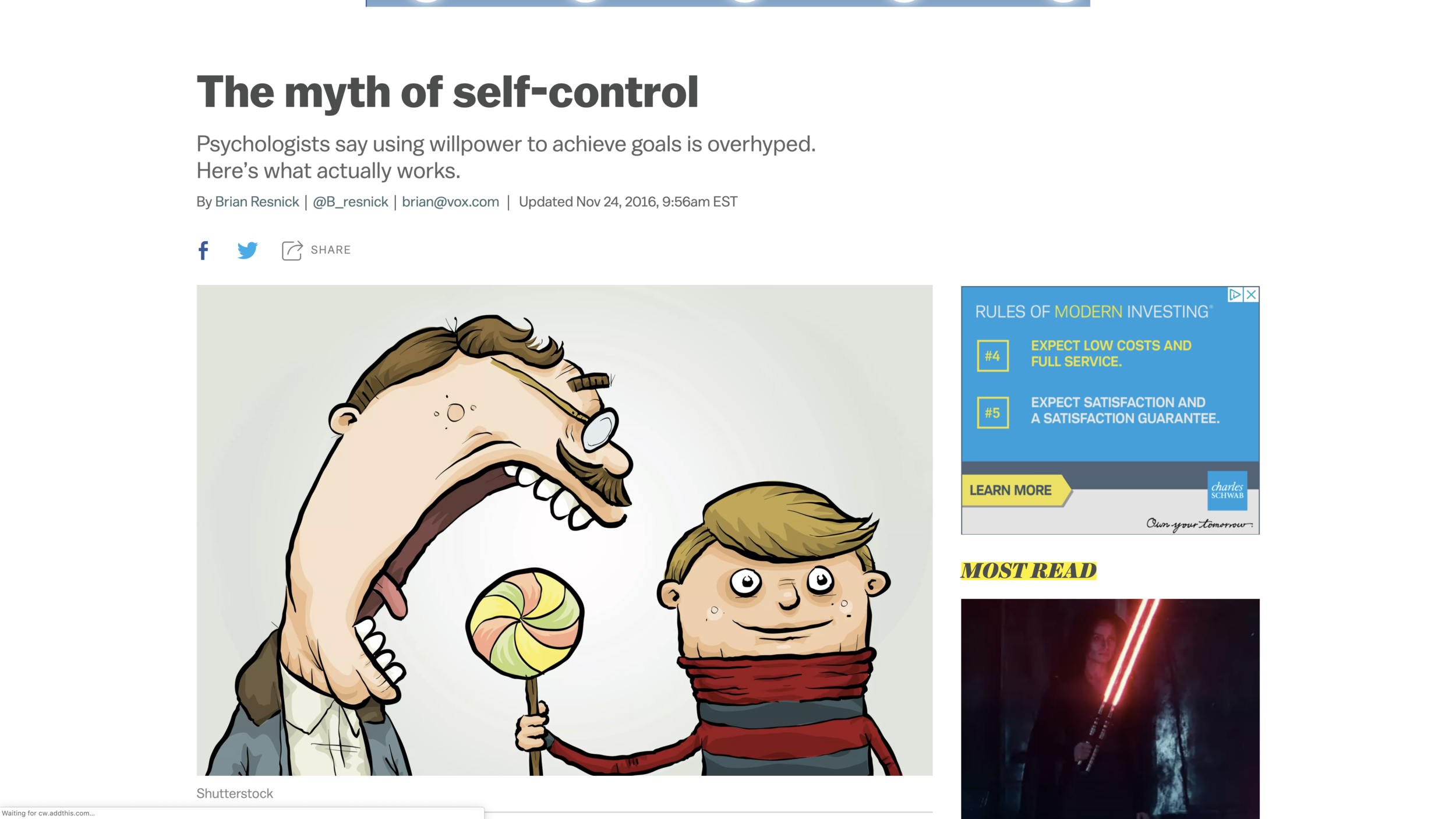
Brian Resnick’s Vox article “The Myth of Self-Control” has some useful perspectives on self-control from psychologists. Here is some of what they say, all quotations from “The Myth of Self-Control”:

Quotations from Psychologist Kentaro Fujita

  • Effortful restraint, where you are fighting yourself — the benefits of that are overhyped.

  • Our prototypical model of self-control is angel on one side and devil on the other, and they battle it out … We tend to think of people with strong willpower as people who are able to fight this battle effectively. Actually, the people who are really good at self-control never have these battles in the first place.

  • The really good dieter wouldn’t buy a cupcake … They wouldn’t have passed in front of a bakery; when they saw the cupcake, they would have figured out a way to say yuck instead of yum; they might have an automatic reaction of moving away instead of moving close.

  • [Effortful restraint is] a defense of last resort.

Quotations from Psychologist Brian Galla

  • We don’t seem to be all that good at [self-control].

  • People who are good at self-control … seem to be structuring their lives in a way to avoid having to make a self-control decision in the first place.

  • Self-control isn’t a special moral muscle … It’s like any decision. And to improve the decision, we need to improve the environment, and give people the skills needed to avoid cake in the first place.

Quotations from Psychologist Marina Milyavskaya

  • There’s a strong assumption still that exerting self-control is beneficial … And we’re showing in the long term, it’s not.

  • ‘Want-to’ goals are more likely to be obtained than ‘have-to’ goals … Want-to goals lead to experiences of fewer temptations. It’s easier to pursue those goals. It feels more effortless.

The Marshmallow Test

All of this is in accordance with a finding in the famous marshmallow test. Here is Brian Resnick’s summary of that, with my emphasis added. :

Walter Mischel’s “marshmallow test,” conducted in the 1960s and ’70s. In these tests, kids were told they could either eat one marshmallow sitting in front of them immediately or eat two later. The ability to resist was found to correlate with all sorts of positive life outcomes, like SAT scores and BMIs. But the kids who were best at the test weren’t necessarily intrinsically better at resisting temptation. They might have been employing a critical strategy.

“Mischel has consistently found that the crucial factor in delaying gratification is the ability to change your perception of the object or action you want to resist,” the New Yorker reported in 2014. That means kids who avoided eating the first marshmallow would find ways not to look at the [marshmallow], or imagine it as something else.

Conclusion

The bottom line is this: don’t rely on self-control unless you have no other option. Try to live your life so that you don’t need much self-control. For example, if you have set a goal to avoid alcohol, don’t get within 100 feet of a bar. If a particular type of food is very tempting for you, don’t have any in the house. Schedule some fun distractions when you have set a goal to fast. Being smart in arranging your life makes it so you may not have to be strong.

For annotated links to other posts on diet and health, see “Miles Kimball on Diet and Health: A Reader's Guide.”

John Locke on Peace through Surrender to Tyranny


Overthrowing tyrants is a public good with much greater social benefit than private benefit. Hence, when there is genuine tyranny, it is a serious problem that individuals, encouraged by their family and friends, will put the private benefit of being safe from reprisals by a tyrant over the public benefit of helping to overthrow the tyrant.

But what about the cost to everyone of a civil war to overthrow a tyrant? Typically, those who actively work to overthrow a tyrant bear a disproportionate share of the direct cost of a civil war relative to their share in the benefits from a better government. And in their altruistic concerns, emotionally mature opponents of tyranny will be likely to weight the costs on others of a civil war fairly against the benefits of a better government.

It may be that some individuals gain a huge private benefit of perceived glory or identity confirmation from opposing a tyrant, and so may not strike the right balance. But a more common criticism those opposing a tyrant may face is that their altruism toward strangers is unusually strong compared to their altruism towards friends and family members who may also suffer reprisals from the tyrant.

In any case, except for selfish reasons (when one is, oneself one of the family and friends of the opponent to tyranny), it seems like only rare situations would justify discouraging someone from fighting against tyranny, even though there is likely to be collateral damage. The reason is that most opponents to tyranny do care about collateral damage and try to weigh the costs of collateral damage against the benefits of a better government.

Where those who style themselves as opponents to tyranny don’t seem to care much about collateral damage—as when they send suicide bombers to kill civilians—then one should suspect they have other motives than simply opposing tyranny.

John Locke does not discuss these tradeoffs in quite so much depth, but in Sections 228 and 229 of Chapter XIX, “Of the Dissolution of Government” of his 2d Treatise on Government: Of Civil Government, he does speak to the basic justice of fighting against tyranny even if there will be some collateral damage—but speaks of collateral damage in ways that are not very vivid: “destructive to the peace of the world,” “If any mischief come in such cases,” “inconveniences.” In this way, I think John Locke tries to make the issue of collateral damage look smaller than it really is. By contrast, John Locke appropriately speaks very powerfully of the benefits of overthrowing a tyrant:

§. 228. But if they, who say it lays a foundation for rebellion, mean that it may occasion civil wars, or intestine broils, to tell the people they are absolved from obedience when illegal attempts are made upon their liberties or properties, and may oppose the unlawful violence of those who were their magistrates, when they invade their properties contrary to the trust put in them; and that therefore this doctrine is not to be allowed, being so destructive to the peace of the world: they may as well say, upon the same ground, that honest men may not oppose robbers or pirates, because this may occasion disorder or bloodshed. If any mischief come in such cases, it is not to be charged upon him who defends his own right, but on him that invades his neighbours. If the innocent honest man must quietly quit all he has, for peace sake, to him who will lay violent hands upon it, I desire it may be considered, what a kind of peace there will be in the world, which consists only in violence and rapine; and which is to be maintained only for the benefit of robbers and oppressors. Who would not think it an admirable peace betwixt the mighty and the mean, when the lamb, without resistance, yielded his throat to be torn by the imperious wolf? Polyphemus’s den gives us a perfect pattern of such a peace, and such a government, wherein Ulysses and his companions had nothing to do, but quietly to suffer themselves to be devoured. And no doubt Ulysses, who was a prudent man, preached up passive obedience, and exhorted them to a quiet submission, by representing to them of what concernment peace was to mankind; and by shewing the inconveniences might happen, if they should offer to resist Polyphemus, who had now the power over them.

§. 229. The end of government is the good of mankind; and which is best for mankind, that the people should be always exposed to the boundless will of tyranny, or that the rulers should be sometimes liable to be opposed, when they grow exorbitant in the use of their power, and employ it for the destruction, and not the preservation of the properties of their people?

One of the interesting things John Locke is doing is to try to enlist a sense of honor and anger as motivations to oppose tyranny:

  • … they may as well say, upon the same ground, that honest men may not oppose robbers or pirates, because this may occasion disorder or bloodshed.

  • If any mischief come in such cases, it is not to be charged upon him who defends his own right, but on him that invades his neighbours.

  • If the innocent honest man must quietly quit all he has, for peace sake, to him who will lay violent hands upon it, I desire it may be considered, what a kind of peace there will be in the world, which consists only in violence and rapine; and which is to be maintained only for the benefit of robbers and oppressors.

  • Who would not think it an admirable peace betwixt the mighty and the mean, when the lamb, without resistance, yielded his throat to be torn by the imperious wolf?

  • … which is best for mankind, that the people should be always exposed to the boundless will of tyranny, or that the rulers should be sometimes liable to be opposed …

The thing I worry about most is people who don’t really know what the situation is in a nation and think they are nobly opposing tyranny, when given the facts on the ground they are doing something else. This is a manageable problem, but gets worse when there are people actively trying to deceive others into imagining a tyranny that is not there. (Of course, tyrants try to do the opposite: to get people to think there is not tyranny when there is.)

For links to other John Locke posts, see these John Locke aggregator posts: 

Paige Harden Defends `Genetic Endowments and Wealth Inequality'

Here is the abstract for `Genetic Endowments and Wealth Inequality’ by Daniel Barth, Nicholas Papageorge, and Kevin Thom:

We show that genetic endowments linked to educational attainment strongly and robustly predict wealth at retirement. The estimated relationship is not fully explained by flexibly controlling for education and labor income. We therefore investigate a host of additional mechanisms that could account for the gene-wealth gradient, including inheritances, mortality, risk preferences, portfolio decisions, beliefs about the probabilities of macroeconomic events, and planning horizons. We provide evidence that genetic endowments related to human capital accumulation are associated with wealth not only through educational attainment and labor income, but also through a facility with complex financial decision-making.

Is the Bitcoin Algorithm a 'Robot Central Bank' or is Bitcoin Free-Market Money?


Kevin Thom Defends `Genetic Endowments and Wealth Inequality'

Here is the abstract for `Genetic Endowments and Wealth Inequality’ by Daniel Barth, Nicholas Papageorge, and Kevin Thom:

We show that genetic endowments linked to educational attainment strongly and robustly predict wealth at retirement. The estimated relationship is not fully explained by flexibly controlling for education and labor income. We therefore investigate a host of additional mechanisms that could account for the gene-wealth gradient, including inheritances, mortality, risk preferences, portfolio decisions, beliefs about the probabilities of macroeconomic events, and planning horizons. We provide evidence that genetic endowments related to human capital accumulation are associated with wealth not only through educational attainment and labor income, but also through a facility with complex financial decision-making.

On 'Flipping the Metabolic Switch: Understanding and Applying Health Benefits of Fasting' by Stephen D. Anton et al.

Introduction

In “Andreas Michalsen on Fasting” I wrote

I’ll bet that in the environment of evolutionary adaptation our ancestors lived in before the advent of agriculture, involuntary fasting—that is, periods of time with little or no food—were quite common. As a result, many of our bodies’ systems were designed in a way that took as given that there would be frequent periods of little or no food. When people eat all the time, these systems don’t work very well.

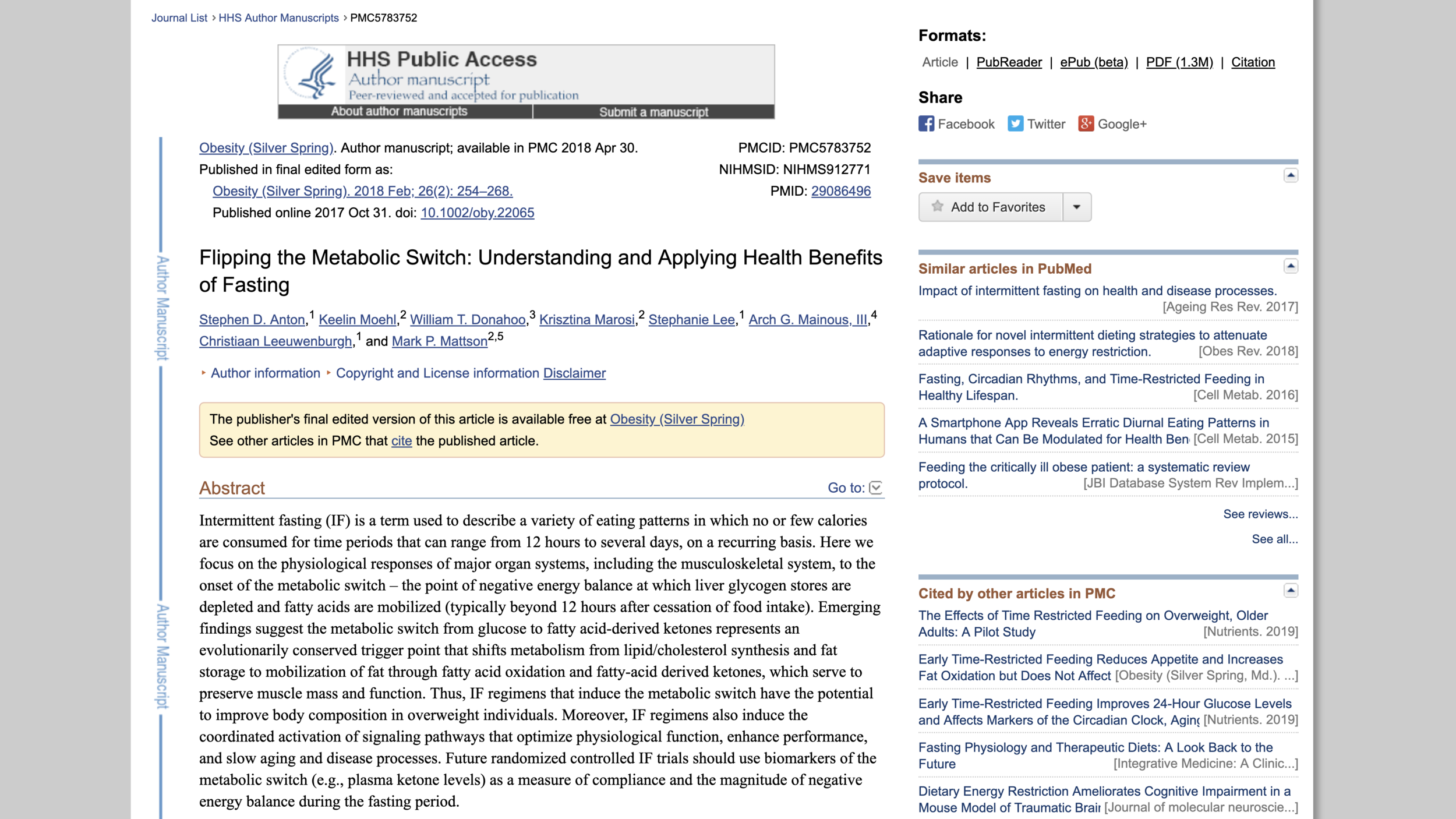
In their review article “Flipping the Metabolic Switch: Understanding and Applying Health Benefits of Fasting,” Stephen Anton, Keelin Moehl, William Donahoo, Krisztina Marosi, Stephanie Lee, Arch Mainous, Christiaan Leeuwenburgh and Mark P. Mattson also argue from this perspective. (The remainder of the quotations in this blog post come from their article.)

Many animals in the wild regularly experience extended time-periods with little or no food. For example, packs of wolves living in the Northern Rocky Mountains of the United States typically kill prey, such as deer, elk or bison only once every one or two weeks. Their success depends upon their brains and bodies functioning at a high level so they can work with their pack mates to ‘formulate’ and execute a strategy to capture and kill the prey animal.(28) … Accordingly, those individuals whose brains and bodies performed optimally in a food deprived/fasted state would have a survival advantage.

Knowledge of early human evolution and data from recent studies of hunter-gatherer societies suggest humans evolved in environments where they intermittently experienced extended time-periods with little or no food.(3031

Anton et al. also lay out some of the biological details to back up this idea. In particular, they argue that the body is designed to work well when it will have periods of relying on the burning of body fat for energy. Since the liver’s stores of glycogen have to be run down before body fat is metabolized, making sure there are periods when the body relies on fat-burning requires a minimum number of hours of fasting or something close to fasting. Without those fat-burning periods, many things go wrong. Things go better with periodic fat-burning periods. Here is the explanation given in “Flipping the Metabolic Switch”:

… what is this metabolic switch and how is it flipped? Here, we define the metabolic switch as the body’s preferential shift from utilization of glucose from glycogenolysis to fatty acids and fatty acid-derived ketones. … Of relevance to weight management, this switch represents a shift from lipid synthesis and fat storage to mobilization of fat in the form of free fatty acids (FFAs) and fatty-acid derived ketones. …

The metabolic switch typically occurs in the third phase of fasting when glycogen stores in hepatocytes are depleted and accelerated adipose tissue lipolysis produces increased fatty acids and glycerol.(21) The metabolic switch typically occurs between 12 to 36 hours after cessation of food consumption depending on the liver glycogen content at the beginning of the fast, and on the amount of the individual’s energy expenditure/exercise during the fast. …

There is a lot of evidence that our bodies run better on average when we have substantial periods of fasting. Some of the evidence is on “Time Restricted Feeding” (TRF), which involves an eating window of no more than 12 hours a day and hence daily periods of about 12 hours with no food. Some of the evidence is on alternate-day fasting (ADF), which probably involves fasting periods of 32 hours or more. Other evidence is about modified alternate day fasting (MADF), which restricts calories to something like 500 calories on the “modified fasting” day. Anton et al. argue that the benefits of fasting are greater than the benefits of continuous calorie restriction (CR) which means eating three meals a day on a typical schedule, just less in each meal. Here are some of the benefits as Anton et al. describe them (emphasis added):

Placing time restrictions on feeding has been shown to have broad systemic effects and trigger similar biological pathways as caloric restriction.(5) For example, IF [intermittent fasting] regimens have been shown to improve cardio-metabolic risk factors (such as insulin resistance, dyslipidemia and inflammation cytokines),(13) decrease visceral fat mass,(6) and produce similar levels of weight loss as CR [continuous caloric restriction] regimens.(8) In addition to the weight loss effects and metabolic improvements, several other beneficial effects of therapeutic fasting have been described including improvements in lipid profiles,(14) osteoarthritis,(15) healing of thrombophlebitis,(15) healing of refractory dermal ulcers, (16) and tolerance of elective surgery.(17)

Some people worry that fasting will reduce lean muscle mass. But the evidence suggests that it is continuous caloric restriction that reduces lean muscle mass, not fasting:

… retention of lean mass is increased following IF regimens for weight loss as compared to continuous CR regimens in humans.(8) Additionally, in mice, the decline in muscle mass that occurs during normal aging is prevented by time restricted feeding (TRF) involving 40% caloric restriction.(23)

With caloric restriction, approximately one-fourth to one-third of the weight loss is known to be of lean tissue. In a study of 34 healthy men randomly assigned to either a normal control diet or daily TRF (16 hours of daily fasting) and followed for two months during which they maintained a standard resistance training program, the men in the TRF group showed a reduction in fat mass with retention of lean mass and maximal strength.(125)

Rodent Evidence

References to the emerging human evidence on fasting are sprinkled throughout this post. But some of the important evidence on the benefits of fasting is rodent evidence. In “The Case Against Sugar: Stephan Guyenet vs. Gary Taubes,” I express my doubts about the relevance of rodent evidence when arguing about lowcarb vs. lowfat diets, because rodents are probably much better adapted to a highcarb lowfat diet than humans are. (If nothing else, those rodents than hung around humans had many times as many generations to adapt to the agricultural revolution than humans did because rodent generations are a lot shorter than human generations.) However, when it comes to fasting, it seems more likely that key mechanisms are the same between human beings and rodents. The particular diet rodents are adapted to is different from humans, but the historical need to endure periods of little or no food is similar between humans and rodents. Here is a description of some of the rodent evidence (emphasis added):

Interestingly, the decline in muscle mass that occurs during normal aging in mice is prevented by 40% CR/TRF … (23) …

The decline in cognitive function with age is forestalled in mice maintained on 40% CR/TRF.(97, 98) … (99) … (97)

Recent studies of laboratory animals provide further support that cognitive function and physical performance are enhanced by IF. … (106) … (107) … (108) Thus, findings from pre-clinical trials suggest IF can improve cognitive and locomotor performance even when initiated late in life.

Numerous studies have shown ADF can protect neurons in the brain against dysfunction and degeneration in animal models of a range of different neurological disorders including epilepsy,(109) Alzheimer’s disease,(110) and Parkinson’s disease (111) and stroke (112).

Is Fasting Dangerous?

The simple answer to the question “Is fasting dangerous?” is that complications can arise with fasts of several weeks or more. Anton et al. write “The adverse events described above have only occurred during or following extended fasts of several weeks or more” (emphasis added) about the following list:

… nausea and vomiting,(47) edema,(48) alopecia and motor neuropathy,(14) hyperuricemia and urate nephropathy,(49) irregular menses,(49) abnormal liver function tests and decreased bone density,(17) thiamine deficiency and Wernicke’s encephalopathy,(5051) and mild metabolic acidosis.(52) Additionally, several deaths have been reported during or immediately following therapeutic fasting with the etiologies including lactic acidosis, small bowel obstruction, renal failure, and cardiac arrhythmias.(53)

In human history, there is a lot of experience with fasting. It is not a new idea:

Historically, fasting has been used as both a religious and a medical practice for thousands of years. Fasting for medical purposes has been suggested since the time of ancient Chinese, Greek and Roman physicians.(33) Throughout the millennia, many have recommended fasting for medical reasons. For example, Benjamin Franklin has been quoted as saying “The best of all medicines is resting and fasting.”(34) Similarly, Mark Twain wrote “A little starvation can really do more for the average sick man than can the best medicines and the best doctors. I do not mean a restricted diet; I mean total abstention from food for one or two days.”(35)

Experimental evidence for the benefits of fasting are bolstered by observational evidence of religiously-motivated fasting:

An emerging literature indicates IF can also ameliorate many of the key features of the metabolic syndrome in humans by decreasing fasting glucose, fasting insulin, and insulin resistance.(8, 138) …

… IF regimens ranging in duration from 8 to 24 weeks have consistently been found to decrease insulin resistance.(12, 115, 118, 119, 122, 123, 131, 132, 134, 140) In line with this, many, but not all,(7) large-scale observational studies have also shown a reduced risk of diabetes in participants following an IF eating pattern. For example, in a study conducted by Horne and colleagues,(120) a series of patients in Utah undergoing coronary artery cauterization were surveyed for the practice of periodic fasting (a common religious practice in the Mormon Church) and for the presence of diabetes based on diagnosis and medication use. Participants who reported periodically fasting had a significantly lower odds ratio for having diabetes compared to those who did not report fasting regularly.

(I used to be a Mormon, so this is relevant to my personal experience. See “"A Barycentric Autobiography.”)

What Does This Mean for You?

First, you should think of fasting as being in the same angelic category as exercise. Anton et al. write:

Accumulating evidence suggests some organ systems exhibit similar cellular and molecular responses to aerobic exercise and IF (e.g., suppression of mTOR, stimulation of autophagy, and mitochondrial biogenesis).(83, 84)

The effects of ADF on heart rate, blood pressure and heart rate variability are very similar to the effects of endurance training, suggesting similar underlying mechanisms.(94)

Second, don’t fall into the pattern customary for our culture of three meals a day, every day:

Individuals with a typical Western eating pattern of three or more meals per day never flip the metabolic switch and thus their ketone levels remain continuously low. Additionally, as their insulin resistance increases with excess weight and diabetes, the time it takes to flip the switch is prolonged (Figure 2). … IF [intermitten fasting] eating patterns may result in a wide range of beneficial effects on health including improved glucose metabolism,(7, 10, 114116) reduced inflammation,(117, 118) reduced blood pressure,(12, 75, 115, 119) improved cardiovascular health,(120123) and increased resistance of cells to stress and disease in humans (Figure 3).(118, 124)

I have a lot of posts about fasting listed in my bibliographic post “Miles Kimball on Diet and Health: A Reader's Guide.”

What Further Research is Needed?

Anton et al. call for the following additional research:

Human trials of IF that include cognitive and physical performance outcomes are unfortunately limited. Studies of cognition and mood during extended fasts, however, suggest few or no adverse effects, and improvements in performance in some cognitive domains including executive function have been reported.(142144) In regards to physical performance, a recent randomized controlled trial of IF (20 hours of fasting 4 days/week) during one month of resistance training in men demonstrated superior improvements in upper and lower body endurance in the IF group compared to the control group.(130)

While our review suggests IF results in both weight and fat loss (even when caloric intake is not limited), as well as increased insulin sensitivity in overweight subjects, there remains an important need for randomized controlled trials (RCTs) of IF in normal weight subjects. Emerging findings indicate that IF when combined with resistance training can produce beneficial changes in body composition and strength in young, healthy males. Additional studies are needed to better understand the effects of combining IF with resistance training on body composition and strength outcomes in other populations.

There remains an important need for interventions that can improve unhealthy changes in body composition that occur during aging. Given the known loss of lean mass that occurs during both aging and continuous CR, IF regimens may be an effective approach to help older adults lose unhealthy weight while retaining larger amounts of lean mass.

I notice one other huge hole in the research that has been done so far. I am gradually learning more about research on diet and health. So far, it is my sense that research on what to eat (especially the lowcarb vs. lowfat debate) and research on when to eat have proceeded mostly in isolation from one another. This is too bad. If I have had one big them on this blog is that lowcarb (or really, low-insulin-index) eating (see “Forget Calorie Counting; It's the Insulin Index, Stupid”) is the key to making fasting easier.

I read the evidence so far as indicating that both lowcarb eating and frequent fasting are separately beneficial. But I’ll bet that together they are even better. We need evidence to test this idea. The concept of a metabolic switch helps explain why lowcarb eating and fasting might go together well. If you are eating highfat lowcarb, it is more similar metabolically to the body metabolizing its own fat, so there is less of a wrenching changeover during fasting. (I hasten to add that when I say highfat, lowcarb, that carbs like nonstarchy vegetables are totally exempted. By lowcarb, I only mean low in easily digestible carbs like processed food, starchy vegetables and excessive fruit.)

Conclusion

There are many areas where the lack of research angers me. Fortunately, research on fasting is coming thick and fast. The evidence is coming in so strongly, that pro-fasting attitudes are likely to begin to appear more and more in popular culture. But everyone who wants to try fasting should also try combining it with a low-insulin-index diet to see if my prediction that fasting will then be easier is borne out for them.

For annotated links to other posts on diet and health, see “Miles Kimball on Diet and Health: A Reader's Guide.”