Paul Krugman on Why Donald Trump's Trade Threats are Incoherent →
Because I have a blog on which I can express my opinions more precisely, I don't usually sign petitions or open letters. But I signed this economists' letter against protectionism.
A Partisan Nonpartisan Blog: Cutting Through Confusion Since 2012
Because I have a blog on which I can express my opinions more precisely, I don't usually sign petitions or open letters. But I signed this economists' letter against protectionism.

Update: New wakelet stories since the ordered list below:
For me, Twitter has been and remains a good way to see what other people think about ideas I care about. For me, a good argument is when I either prevail or learn something. By that standard, I have had many, many good arguments on Twitter. The art of having a civil argument, and the even more difficult art of replying civilly to someone who is being uncivil, is something in short enough supply these days, that it has often seemed worthwhile to preserve a Twitter discussion as a story of organized tweets. For almost six years, I did that using Storify. But Storify is being abandoned by its parent company.
Fortunately, Wakelet has taken up the torch of providing a free website where tweets and other material can be organized into stories. Staff at Wakelet were good enough to transfer all of my Storify stories over to Wakelet. I should make clear that they chose the pictures at the top of each story, and I have decided to leave those pictures be. The most misleading result is that almost every story with "electronic money" in the title has a picture cryptocurrency symbols. When I talk about electronic money, I am talking about the checks, credit cards and debit cards that are already in common use. The key idea, as explored in everything you can see in "How and Why to Eliminate the Zero Lower Bound: A Reader’s Guide," is to make dollars in the bank—and more directly those dollars in the bank that are backed by reserves at the central bank—the unit of account rather than paper currency dollars.
I am probably kidding myself, but one of these stories may even have had a good effect on the world. I like to think that my story "The Marginalization of Economists at the Consumer Financial Protection Bureau" had some small effect in the strong status that economists now have in the Consumer Financial Protection Bureau. I visited in 2016 and now think very highly of the Consumer Financial Protection Bureau and very much hope it survives the political siege it is under. My post "On the Consumer Financial Protection Bureau" is a philosophical defense of what the Consumer Financial Protection Bureau is trying to do. In general, I am far to the the right of Elizabeth Warren in my political views, but I honor her for two important contributions: pushing for the establishment of the Consumer Financial Protection Bureau and pushing for much tougher capital equity requirements and stricter leverage limits on financial firms in order to avoid another financial crisis.
To make sure all of my organized-tweet stories remain accessible, I list everything moving over from Storify to Wakelet below, in order of the number of pageviews it received, as listed after each title. Each title links to the Wakelet page for that story. Remember that you can search within this blog post using the normal text search command (Apple F on a Mac) for any particular title you are looking for.
Even if you never click on any of the links, I think you will learn a lot just by reading through the titles. First, the pageview data gives a window into what people are interested in. Second, scanning through the titles will give you picture of my views and concerns about a wide range of topics; including topics I have never written a regular blog post on.
Did the Gold Standard Help Bring Hitler to Power? (Twitter Round Table) 2009
Noah Smith, Miles Kimball and Claudia Sahm on Math in Economics 1245
Miles Kimball and Brad DeLong Discuss Wallace Neutrality and Principles of Macroeconomics Textbooks 819
Roger Farmer, Noah Smith, Miles Kimball, Tony Yates and Others on Math in Economics 736
The True Marginal Product of Studying Hard and the Perceived Marginal Product of Studying Hard 657
The Marginalization of Economists at the Consumer Financial Protection Bureau 618
Why the Nominal GDP Target Should Go Up about 1% after a 1% Improvement in Technology 560
Miles Kimball and Noah Smith on Balancing the Budget in the Long Run 552
Noah Smith's and Matthew Yglesias's Unpopular Opinions That I Mostly Agree With 552
Putting the Perspective from Jason Fung's "The Obesity Code" into Practice* 521
Daniel Altman and Miles Kimball: Should We Expand Government or Expand the Nonprofit Sector? 495
Narayana Kocherlakota and Miles Kimball Debate the Size of the US Output Gap in January, 2016 441
Should We Have Tight Monetary Policy in Order to Help Virtuous Savers? 425
Which is More Radical? Electronic Money or a Higher Inflation Target? 415
On the Freshwater Style of Using Dynamic Stochastic General Equilibrium Models 402
Unlearning Economics, Sanders Wagner and Miles Kimball: Nature, Nurture and Individual Agency 390
If You Had to Choose, Would You Want Your Employee to Know Some Statistics or Know Some Calculus? 382
Claudia Sahm on Reforming the Refereeing Process in Economics 378
Noah Smith and Company: What Economic Things are Better Now than They Used to Be? 360
Tomas Hirst Recoils at the Starkness of Efficiency Wage Theory 350
Do Nordic Countries Do Well Because of Democratic Socialism or Because of Nordic Culture? 330
Jason Smith and John Cochrane on the Refereeing Process in Economics 327
Miles Kimball Debates Danielle DiMartino Booth and Her Friends about Monetary Policy 322
Miles Kimball and David Andolfatto Defend John Cochrane Against the Wrath of John L. Davidson 318
Miles Kimball's Comments on the Scott Sumner/David Andolfatto Debate 306
Noah Smith: California Shows the Racial and Ethnic Future for the US 299
What is Consumption for the Purposes of a Consumption Tax? 282
Noah Smith, Brad DeLong and Miles Kimball on Wallace Neutrality 279
The Balance Between Persistence and Finding Your Own Comparative Advantage 279
Sticky Prices, Sticky Inflation and the Cost of Inflation as Reflections of Cognitive Costs 277
Stephen Williamson and Miles Kimball Debate Nominal GDP Level Targeting 272
Matthew C. Klein and Miles Kimball on the Effects of Negative Interest Rates on Savers 264
Noah Smith's Tweetstorm on Making Everyone a 'Math Person' 257
Edward J. Epstein, Miles Kimball, Brad Delong, Alex Bowles and Ramez Naam: Was Edward Snowden a Spy? 256
Showing How Charles Murray is Wrong Instead of Shouting Him Down 249
Preaching in the Temple: Presenting "Breaking Through the Zero Lower Bound" at the Fed 248
Are Central Banks Scared to Admit that the Zero Lower Bound is a Policy Choice, Not a Law of Nature? 241
Beatrice Cherrier on the Weaponization of the Lucas Critique 235
On Bringing the Questions and Concerns of Sociology into Economics 234
Tomas Hirst and Miles Kimball on Fiscal Stimulus vs. Negative Rates 234
Why Wasn't There Massive Inflation or Massive Deflation During the Great Recession? 229
Noah, Richard, Miles and Jake Talk about God and SuperGod 222
Electronic Money, Nominal GDP Targeting, and the Transmission Mechanisms for Monetary Policy 221
Daniel Altman and Miles Kimball on the Long-Run Target for Inflation 220
Twitter Round Table on Our Disastrous Policy of Pegging Paper Currency at Par 211
Adam Ozimek, Miles Kimball and Neal Hockley on Paternalism and Other-Regarding Preferences 206
Miles Kimball, Roger Farmer, Stephen Williamson and Joe Little on Recent Japanese Monetary Policy 204
John Dearie, Miles Kimball and Others Debate High Equity Requirements for Banks 200
JP Koning and David Beckworth on Negative Interest Rates in the Repo Market 195
The Vicious Self-Fulfilling Prophecy That You Can't Do Math 193
On Religion and Conservative Ideology in Collision with Colleges 192
Gold, Electronic Money, and the Determinants of the Prices of Storable Commodities from the Ground 183
Taking Care of the Poor and Troubled Without Getting Tied Up in Knots About Race 180
Why Equity Requirements for Financial Firms Should Be Dramatically Increased 176
David Beckworth on the Zero Lower Bound as a Price Floor 175
Miles Kimball, Marc Andreessen and Others on Head Transplants and Cyborgian Immortality 173
Against the Mortgage Interest Deduction, Zoning as a Tool of Exclusion, and Occupational Licensing 172
Noah Smith and Miles Kimball on Exploring the Mystery of Consciousness and Bokononism 170
Noah Smith on Why Economists Need to Take Racism Seriously* 169
David Aron Levine and Miles Kimball on the Effects of Low Interest Rates on Pension Funds 166
Neutral Monetary Policy as Part of the Foundation for a Free-Market Economy 165
Are Rape and Sexual Assault About Power and Lust or Only About Power? 165
A House Mystery: Why Does House Construction Go Up in Booms and Down in Recessions? 165
Diego Espinosa and Miles Kimball on Bitcoin and Electronic Money 165
'Forget Calorie Counting. It's the Insulin Index, Stupid' in a Few Tweets 159
Tom Nichols and Eric Weinstein on the Public's Attitude toward Experts 159
Do the Minimum Wage and Other Labor Market Rigidities Hamper the Assimilation of Immigrants? 157
Velocity 157
Debating 'Forget Calorie Counting; It's the Insulin Index, Stupid' 156
Twitter Round Table on Contrarian Sovereign Wealth Funds as a Way to Tame the Financial Cycle 156
Miles Kimball and 'Jimmy Madison' Debate the Minimum Wage 156
Twitter Debates Sparked by Miles's and Yichuan's Second Quartz Column on Reinhart and Rogoff 155
A Discussion on the Politics, Ethics and Psychology of Immigration Policy 154
Q&A about Negative Interest Rates--The Centre for Monetary Advancement and Miles Kimball 153
The New Abolitionists Discuss Tactics for Immigration Policy 153
Tweets about How to Turn Every Child into a "Math Person" 152
Don't Discriminate against Asian Americans in College Admissions; Emulate Them in Study Habits 150
Does Economic Stability Inevitably Lead to Financial Fragility? 148
Can Electronic Money Stimulate the Economy Even When Banks are Running Scared? 142
Will Negative Rates Cause Malinvestment? Will They Harm Banks? 141
Eric Lonergan and Miles Kimball Discuss the Transmission Mechanism for Negative Interest Rates 141
Miles Kimball and JW Mason on the International Role of the Dollar 141
Are Low Short-Term Interest Rates Bad for the Middle Class? 139
Noah Smith Teaches Miles the Difference Between Vouchers and Charter Schools 133
Narayana Kocherlakota on the Stimulative Effects of Cutting Interest Rates 133
Analogies Between Economic Models and the Biology of Obesity 126
Ensuring Safety from Rape and Sexual Assault is Beautiful 124
Miles Kimball, Steven Verner and James Feldman Debate School Choice 124
Debating Higher Capital Requirements in the Light of the End of the Zero Lower Bound 121
Miles's Queasiness about Current Ways of Modeling Financial Frictions 120
TakingHayekSeriously and Miles Kimball on Macroeconomic Experiments in History 118
Confirmation Bias in the Interpretation of New Evidence on Salt 114
Twitter Convo: Do Blogs Enhance Public Debate about Economic Research? 114
Twitter Roundtable on Federal Lines of Credit and Monetary Policy 111
Europe Needs Negative Rates, Higher Equity Requirements, Balanced Budgets and Supply-Side Reform 111
A Bit of Personal History of Thought: Zero Lower Bound-->Quantitative Easing-->Electronic Money 110
Up for Debate: There Is No Such Thing as Decreasing Returns to Scale 109
Miles Kimball, Jason Becker and Jordan Weissmann Discuss Affirmative Action 106
A Debate on Monetary Policy Primacy: Tomas Hirst, Miles Kimball and Christopher Cordeiro 104
The Twitter Campaign for Repealing the Zero Lower Bound: September 2013 102
Miles Kimball, Matt Yglesias, Brad DeLong and Ryan Decker Talk about Mitt Romney 102
The Argument that the Free Market Will Rectify Discrimination as a Guide to Business Opportunities 98
Amod Agarwala and Miles Kimball on Equity and Debt Finance 98
How The Talent Code Gave Colman Reilly a Myelin-Induced Toothache 96
Noah Smith: Material Deprivation is Declining Because of Redistribution and Decolonization 96
Heather Mac Donald is Wrong: Discrimination Is Not Just in People's Imaginations 93
Doubting Tomas: Electronic Money in an Open Economy with Wounded Banks 89
Charles Goodhart—Central Banking: Past, Present and Future 88
Narayana Kocherlakota: Negative Rates are the Cleaner Economic Solution 87
Bonnie Kavoussi's Tweetstorm on "Restoring American Growth" 86
Are Negative Interest Rates a Drug That Requires Ever-Increasing Doses? 86
Twitter Convo About Miles's Dustup With Paul Krugman About the Dangers of Debt 82
Twitter Roundtable on Jeffrey Friedman's 'Public Choice Theory and the Politics of Good and Evil' 82
Defending the Principles of Western Civilization While Excoriating Bad Behavior Then and Now 80
Twitter Roundtable on the Power of Negative Interest Rates Compared to Other Stimulative Policies 79
On the Future of the Economics Blogosphere: Running Tweets by Audience Members 77
A Perspective on the Mormon Church's Official Twitter Feed 75
Negative Rate Policy in Switzerland, December 2014-September 2016 73
Jag Bhalla and Miles Kimball on the Idea of Economic Distortions 72
Miles Kimball and Anat Admati Argue for Higher Capital Requirements 69
The Role of Nonprofits in Dealing with Inequality and Other Problems 68
Discussion of John L. Davidson's Guest Post "The Institutional Realities of House Construction" 67
On the Relationship Between Government and Financial Firms 66
Peter Conti-Brown on the Effect of Ideology on the Federal Reserve Board 65
Noah Smith on the Lack of a Forward-Looking Center-Left Agenda 63
Miles Kimball and John L. Davidson Debate Economic Freedom 63
Miles Kimball, Chris Oestereich, John Horton and Wayne Vernon on New York's War on Airbnb 56
Miles Kimball and Mike Johnson: Can We Make a Difference for Climate Change? 53
Dan Abrams on the Politics of Occupational Licensing Reform 47
The Interest Rate as an Intertemporal Transportation Cost 43
Christianity is Not Helpful for Those Who Want to Look Down on Foreigners and Other Races 33
Jason Smith and Miles Kimball: Technical Difficulties for Boost-Phase Interception of Missiles 29
Proclamation of Immigration Tweet Day: Monday, February 4, 2013 29
Christine Porath: A Lack of Basic Civility in the Workplace Takes a Big Toll on Productivity 21
Legal Counterfeiting as a Way to Enforce a Ban on Paper Currency 14
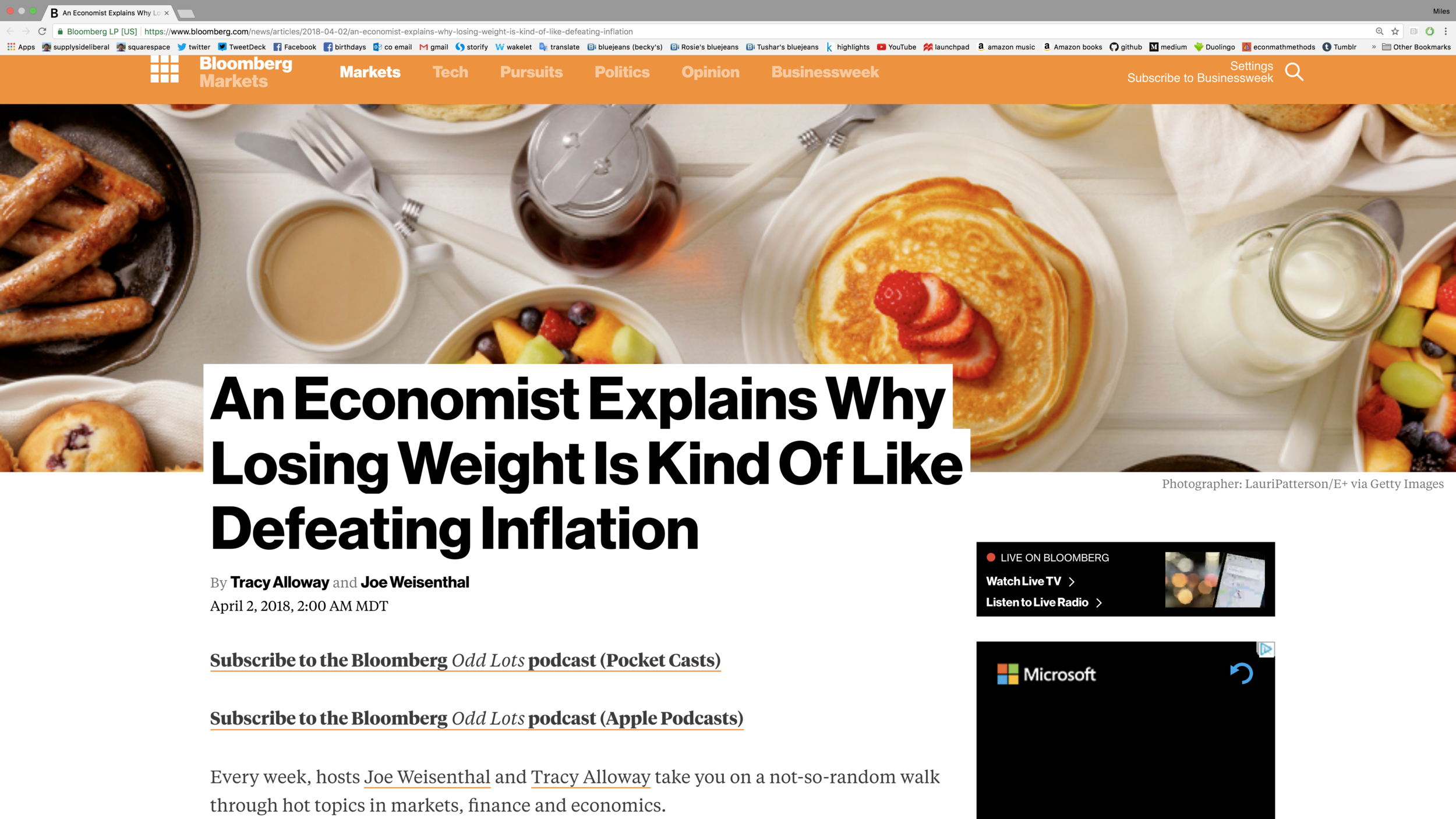
I was delighted to get a chance to talk to Tracy Alloway and Joe Weisenthal about diet and health and in particular about fasting as the key tool for defeating obesity. The result is the Odd Lots podcast "An Economist Explains Why Losing Weight Is Kind Of Like Defeating Inflation." One of the key things I say in this podcast is that using fasting to fight obesity is like a central bank engineering a recession to fight inflation, except that recessions are horrible, while fasting is not that bad an experience at all, if you do it right.
All around, I think this is a very high-quality podcast, thanks to the Odd Lots team. I hope you will try listening!
Don’t miss my other posts on diet and health.
I. The Basics
Jason Fung's Single Best Weight Loss Tip: Don't Eat All the Time
What Steven Gundry's Book 'The Plant Paradox' Adds to the Principles of a Low-Insulin-Index Diet
II. Sugar as a Slow Poison
Best Health Guide: 10 Surprising Changes When You Quit Sugar
Heidi Turner, Michael Schwartz and Kristen Domonell on How Bad Sugar Is
Michael Lowe and Heidi Mitchell: Is Getting ‘Hangry’ Actually a Thing?
III. Anti-Cancer Eating
How Fasting Can Starve Cancer Cells, While Leaving Normal Cells Unharmed
Meat Is Amazingly Nutritious—But Is It Amazingly Nutritious for Cancer Cells, Too?
IV. Eating Tips
Using the Glycemic Index as a Supplement to the Insulin Index
Putting the Perspective from Jason Fung's "The Obesity Code" into Practice
Which Nonsugar Sweeteners are OK? An Insulin-Index Perspective
V. Calories In/Calories Out
VI. Wonkish
Anthony Komaroff: The Microbiome and Risk for Obesity and Diabetes
Carola Binder: The Obesity Code and Economists as General Practitioners
Analogies Between Economic Models and the Biology of Obesity
VIII. Debates about Particular Foods and about Exercise
Jason Fung: Dietary Fat is Innocent of the Charges Leveled Against It
Faye Flam: The Taboo on Dietary Fat is Grounded More in Puritanism than Science
Confirmation Bias in the Interpretation of New Evidence on Salt
Julia Belluz and Javier Zarracina: Why You'll Be Disappointed If You Are Exercising to Lose Weight, Explained with 60+ Studies (my retitling of the article this links to)
IX. Gary Taubes
X. Twitter Discussions
Putting the Perspective from Jason Fung's "The Obesity Code" into Practice
'Forget Calorie Counting. It's the Insulin Index, Stupid' in a Few Tweets
Debating 'Forget Calorie Counting; It's the Insulin Index, Stupid'
Analogies Between Economic Models and the Biology of Obesity
XI. On My Interest in Diet and Health
See the last section of "Five Books That Have Changed My Life" and the podcast "Miles Kimball Explains to Tracy Alloway and Joe Weisenthal Why Losing Weight Is Like Defeating Inflation." If you want to know how I got interested in diet and health and fighting obesity and a little more about my own experience with weight gain and weight loss, see “Diana Kimball: Listening Creates Possibilities” and my post "A Barycentric Autobiography.
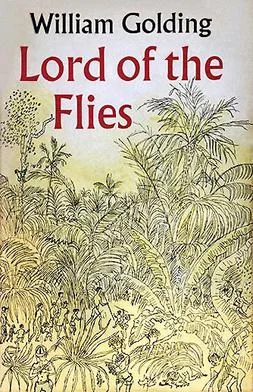
Many readers think of William Golding's novel Lord of the Flies as a pessimistic take on humanity in general. But John Locke, who is an optimist about the rational inclination toward justice of adults is a pessimist who doubts the inclination of youngsters toward justice. In section 63 of his 2d Treatise on Government: “Of Civil Government” (Chapter VI. Of Paternal Power), he writes:
The freedom then of man, and liberty of acting according to his own will, is grounded on his having reason, which is able to instruct him in that law he is to govern himself by, and make him know how far he is left to the freedom of his own will. To turn him loose to an unrestrained liberty, before he has reason to guide him, is not the allowing him the privilege of his nature to be free; but to thrust him out amongst brutes, and abandon him to a state as wretched, and as much beneath that of a man, as their’s. This is that which puts the authority into the parents’ hands to govern the minority of their children. God hath made it their business to employ this care on their offspring, and hath placed in them suitable inclinations of tenderness and concern to temper this power, to apply it, as his wisdom designed it, to the children’s good, as long as they should need to be under it.
This resonates with me. At least in my own, relatively fortunate life, I was much more frightened of the possibility of physical harm from other youngsters when I myself was young than I have been of physical harm from other adults now that I am an adult myself.
It is also true that a large share of crime is committed by those who, while they might have reached the age of majority in our culture are still relatively young adults. At least in relation to the danger that they might commit bodily harm, age tends to mellow most people.
Another important correlation is between criminality and having difficulty reasoning. Criminals are often caught because they make stupid mistakes. And the crimes they commit in the first place are often stupid mistakes. For example, some commit crimes because they are not good at thinking about the future, when penalties such as being thrown in jail might fall upon them. Not all crimes come from a lack of rationality, but many do. So there is something to what John Locke is saying.
For links to other John Locke posts, see these John Locke aggregator posts:
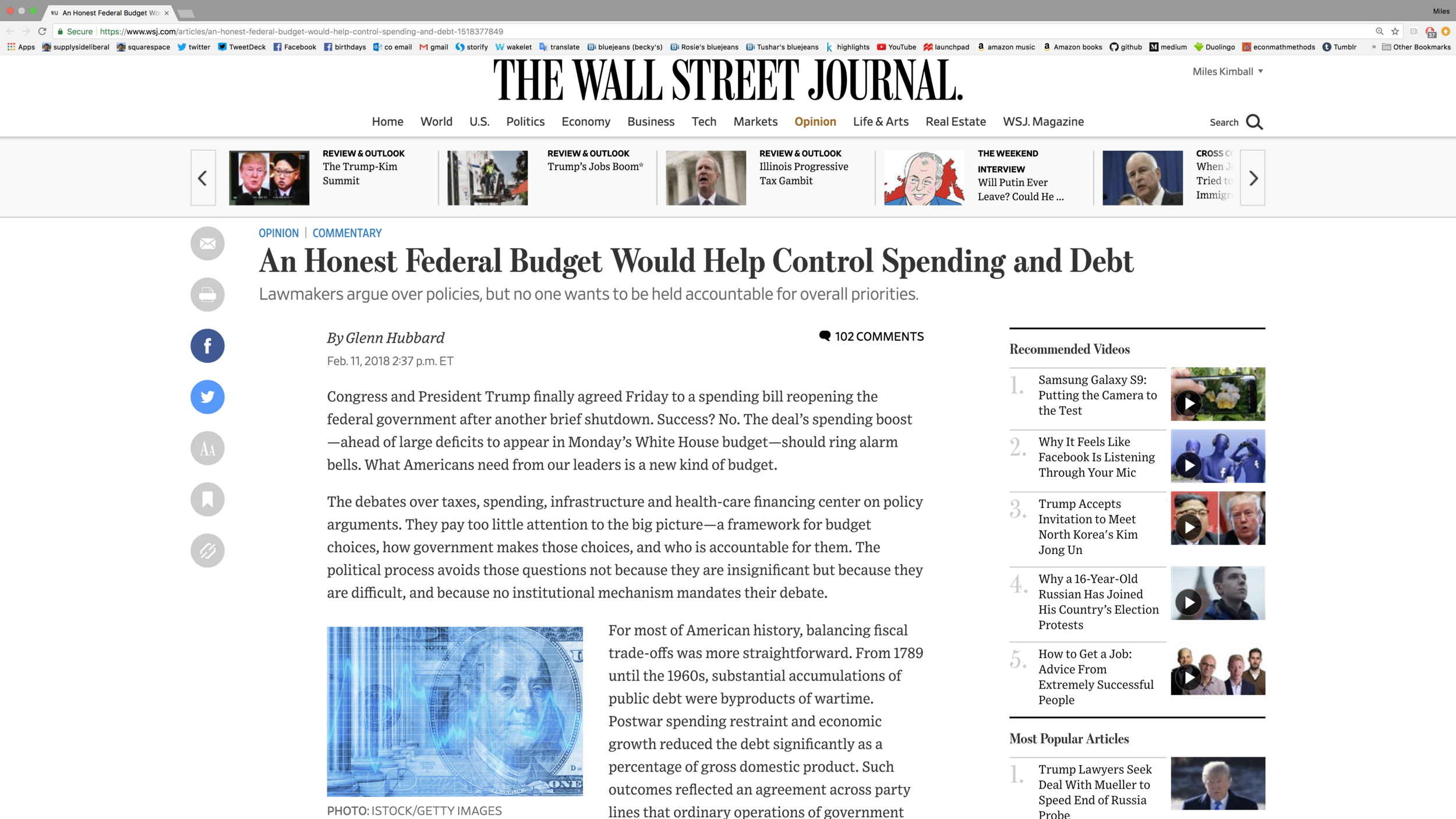
In Glenn Hubbard's February 11, 2018 Wall Street Journal op-ed "An Honest Federal Budget Would Help Control Spending and Debt," I like his principle that that there should be a presumption against having a future generation pay for benefits current generations get. Here is how he lays this idea out:
The ratio of federal debt held by the public to GDP has skyrocketed, from 26% in 1970 to 75% in 2017. Our present-day arguments over tax burdens notwithstanding, this shift reflects changes in spending. And spending has shifted away from traditional public goods toward private benefits in the form of transfer payments like Social Security and Medicare, while no mechanism forces tax changes to fund current and projected spending.
This observation is not meant to suggest simply that “spending is too high.” Rather, the issue is one of accountability for spending choices. Historically, spending on war or territorial expansion was conceptualized as “capital” spending—benefiting current and future generations, who shared the costs. Regular operations were borne by the people alive at the time. Such an approach does not necessarily mean lower spending, but it does require current taxpayers, not future ones, to pick up the bill.
While trying at many points in the op-ed to be even-handed between those who want more spending and those who want tax cuts, one of Glenn's specific proposals reflects his own desire to restrain spending:
The Hoover Institution’s Tim Kane and I have offered one idea—that each year’s total federal spending be limited to the average annual inflation-adjusted revenue of the previous seven years. This formulation attenuates problems posed by inflation and the business cycle. Temporary spending increases could be approved by legislative supermajority votes, with increasing supermajorities required for longer departures from the rule. Such departures would be up to the Congress at the time, as opposed to predefined categories.
Because the seven-year average inflation-adjusted revenue is predetermined and slowly changing, such a rule would make it very hard to increase spending. Compare Glenn Hubbard and Tim Kane's proposed rule to this one:
Estimated natural-level-of-employment tax revenue must equal at least the average inflation-adjusted spending of the previous seven years.
The second rule would push toward tax-hikes instead of spending restraint. Neither Glenn Hubbard and Tim Kane's proposed rule, or the rule just above (which as far as I know, noone is proposing) is neutral between spending restraint and tax hikes. A rule that would be more neutral is this one:
Absent an official declaration of war or a supermajority vote, what each year's total federal spending would be if the law was applied to a natural-level-of-employment situation must be no more than 3 % higher than the average inflation-adjusted—and previous-15-year-average-real-GDP-growth adjusted—revenue of the previous seven years; also estimated natural-level-of-employment tax revenue must be no more than 3% lower than the average inflation-adjusted—and previous-15-year real GDP-growth-adjusted—spending of the previous seven years.
In practice, this rule would require quite a bit of both spending restraint and tax hikes to reduce the government budget deficit, while allowing some adjustment in taxes and spending over time after the budget is roughly in balance.
One of my earliest blog posts makes another attempt at a balanced budget rule:
Let me caution that any balanced-budget rule would be safer when coupled with eliminating the zero lower bound, so that the Fed can stabilize the economy effectively, even in the absence of specifically legislated fiscal stimulus. See my aggregator post "How and Why to Eliminate the Zero Lower Bound: A Reader’s Guide." Among the posts flagged there, these discuss fiscal policy as well as monetary policy:
Finally, on the idea of capital budgeting that Glenn touches on, see my column with Noah Smith
and my post
Update: I noticed a related March 15, 2018 Brookings post: "Three reasons to be optimistic about budget process reform" by Stuart M Butler and Timothy Higashi.
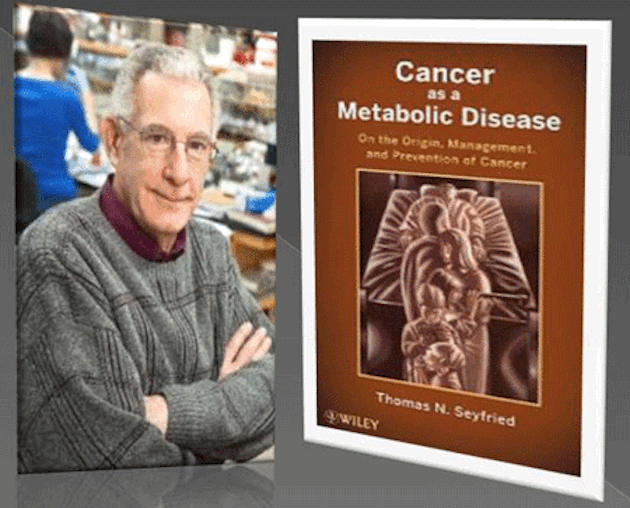
People use the "curing cancer" as a metaphor for a giant achievement. There is no question that literally curing cancer would indeed be a giant achievement. Cancer is not only the second biggest cause of death, it can often be agonizingly painful. Moreover, the common cancer treatments of radiation and chemotherapy are awful experiences that can themselves cause lasting damage even if the cancer itself is defeated. So I was fascinated to read Thomas Seyfried's argument for another way to attack cancer in his book Cancer as a Metabolic Disease: On the Origin, Management, and Prevention of Cancer.
Cancer as a Metabolic Disease is not a well-written book. But it has an important set of ideas that are more mainstream than Thomas Seyfried lets on:
A majority of cancer cells have damaged metabolisms, often because delicate structures in their mitochondria—the folds called cristae—are damaged.
Metabolically damaged cancer cells can't produce as many handy ATP energy packets from each molecule of glucose (blood sugar). They can still produce ATP from the initial splitting of of a glucose molecule into two molecules of called glycolysis, which does not use oxygen. But they are not good at producing ATP from combining oxygen with the products of glycolysis to produce additional ATP.
This means that metabolically damaged cancer cells need to take in more glucose than normal cells to produce a given amount of ATP energy packets. They are more glucose-hungry than normal cells. So it helps cancer cells if glucose is abundant.
As an alternative to splitting glucose, cancer cells with damaged metabolisms can make ATP by using the energy in glutamine--an amino acid human bodies can make from many other amino acids.
Two key messages are that anything that boosts glucose or glutamine availability leads to better-fed cancer cells:
Eating sugar or other easily-digested carbohydrates is a good way to boost glucose levels in the bloodstream. Indeed, this is exactly what the glycemic index for different foods is designed to measure.
Eating high-protein foods is a good way to make amino-acids that can be turned into glutamine highly abundant. (It would be great to have measurements of a "glutamine index" for the effect of different foods on glutamine availability, parallel to the glycemic index.)
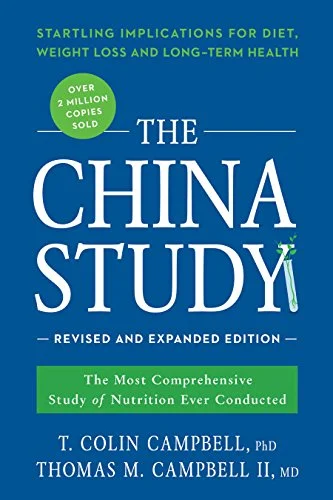
I am intrigued by cancer cells' ability to burn glutamine for energy in conjunction with the evidence for an association between protein intake and cancer that T. Colin Campbell and Thomas M. Campbell emphasize in "The China Study: Revised and Expanded Edition: The Most Comprehensive Study of Nutrition Ever Conducted and the Startling Implications for Diet, Weight Loss, and Long-Term Health." I wrote about that in "Meat Is Amazingly Nutritious—But Is It Amazingly Nutritious for Cancer Cells, Too?" At the time I wrote that post, I thought complete protein might be helpful as a raw material for the growth of cancer cells, which still might be true; but in addition, any kind of protein is likely to increase the availability of glutamine for cancer cells to burn.
The third key message is that fasting—a period of time without eating (while still drinking water)—will be harder on cancer cells than normal cells:
Fasting lowers glucose levels in the bloodstream. Normal cells can get a lot more ATP energy packets out of scarce glucose.
Fasting is likely to reduce glutamine availability.
Normal cells can burn fat during fasting. Cancer cells have a really tough time metabolizing fat. (During fasting, stored fat is often broken down to produce ketone bodies that circulate in the bloodstream to provide energy.)
If you actually get diagnosed with cancer, the current status of medical knowledge and the rules of medical ethics will mean your doctor will recommend that you try fasting only in conjunction with the usual treatments: surgery, radiation and chemotherapy according to standard protocols. But if you periodically fast as a preventative measure, you may starve cancerous or precancerous cells before you ever get diagnosable cancer. Fasting is relatively easy when you are eating foods low on the insulin index in any case. (See Forget Calorie Counting; It's the Insulin Index, Stupid.) And fasting is one of the best ways to lose weight, with all of the benefits from losing weight in reducing the risk of other diseases besides cancer. (See "Stop Counting Calories; It's the Clock that Counts" and "Obesity Is Always and Everywhere an Insulin Phenomenon.")
When I googled Thomas Seyfried, I found Orac's Respectful Insolence blog post "More hype than science: Ketogenic diets for cancer." Orac has two main points:
Thomas Seyfried is premature in recommending that people with diagnosed cancer depend on fasting and dietary changes to fight their cancer instead of surgery, radiation and chemotherapy. Much research should be done before that.
The idea of attacking cancer cells by their metabolic Achilles heel is now a mainstream idea, as I previewed above.
Consider these quotations from Orac's post, which is billed as critical of Thomas Seyfried:
Dr. Seyfried is a professor of biology at Boston College, who’s pretty well published. He’s also working in a field that has gained new respectability over the last five to ten years, namely cancer metabolism, mainly thanks to a rediscovery of what Otto Warburg discovered over 80 years ago. What Warburg discovered was that many tumors rely on glycolysis for their energy even in environments with adequate oxygen for oxidative phosphorylation, which generates the bulk of the chemical energy used by cells. ...
If you do a Pubmed search on “targeting cancer metabolism,” which is what Dr. Seyfried is talking about, you’ll find over 22,000 articles, with over 3,000 in 2013 alone, with a sharply increasing curve since 2000 that only now appears to be leveling off. A search on “cancer metabolism” brings up 369,000 references, with 28,000 in 2013 alone. Cancer metabolism is an incredibly important topic in cancer research and has been for several years now, and finding means of targeting the common metabolic abnormalities exhibited by cancer cells is currently a hot area of research. From my perspective, Dr. Seyfried is exaggerating how hostile the cancer research community is towards metabolism as an important, possibly critical, driver of cancer, although, to be fair, one prominent cancer researcher, Robert Weinberg, has been very skeptical.
After pointing out that, given current knowledge, human subjects review boards would insist on trying metabolic therapies on top of the standard approaches of surgery, radiation and chemotherapy, Orac writes:
... you might as well do a proper phase I/II clinical trial, which is what is happening. For instance:
Calorie-restricted, Ketogenic Diet and Transient Fasting During Reirradiation for Patients With Recurrent Glioblastoma (ERGO2), a randomized clinical trial designed to evaluate whether a calorie-restricted, ketogenic diet and transient fasting can enhance the efficacy of reirradiation in patients with recurrent glioblastoma.
Pilot Study of a Metabolic Nutritional Therapy for the Management of Primary Brain Tumors (Ketones), a phase I pilot study in my neck of the woods (at least in my state) looking at the same sort of diet.
Ketogenic Diet as Adjunctive Treatment in Refractory/End-stage Glioblastoma Multiforme: a Pilot Study, a small pilot study designed to examine the effect of a ketogenic diet in refractory GBM being treated with Avastin.
Ketogenic Diet With Radiation and Chemotherapy for Newly Diagnosed Glioblastoma, a phase I/II trial designed to test whether a ketogenic diet enhances the efficacy of radiation and chemotherapy.
In other words, clinical data should be rolling in fairly soon, and that’s a good thing.
Along the way, Orac points out that "only approximately 60-90% of cancers demonstrate the Warburg effect." To me, 60-90% sounds like a large fraction! What is more, in his book, Thomas Seyfried has what seem to me plausible criticisms of the experimental procedures used to conclude that some types of cancers can effectively oxidize the products of glycolysis. The basic problem, according to Thomas, is that to the unwary experimenter, metabolizing glutamine can generate indicators that create the illusion that a cancer cell is producing ATP by the oxidation of the products of glycolysis.
Orac's link above on the phrase "60-90% of cancers demonstrate the Warburg effect" is to the Science article "Energy Deregulation: Licensing Tumors to Grow" by Ken Garber. The claim 60-90% of cancers demonstrate the Warburg effect itself is attributed by Ken Garber to cancer biologist Craig Thompson.
In his article, Ken gives this useful background on metabolism in cancer cells:
[Eyal] Gottlieb, a biologist at the Beatson Institute for Cancer Research in Glasgow, U.K., notes that tumor cells need an unusual amount of energy to survive and grow. "The overall metabolic demand on these cells is significantly higher than [on] most other tissues," he says.
Tumors often cope by ramping up an alternative energy production strategy. For most of their energy needs, normal cells rely on a process called respiration, which consumes oxygen and glucose to make energy-storing molecules of adenosine triphosphate (ATP). But cancer cells typically depend more on glycolysis, the anaerobic breakdown of glucose into ATP. This increased glycolysis, even in the presence of oxygen, is known as the Warburg effect, after German biochemist Otto Warburg, who first described the phenomenon 80 years ago. Warburg thought this "aerobic glycolysis" was a universal property of cancer, and even its main cause.
Otto Warburg won a Nobel Prize for his work on respiration, but his claim that messed-up metabolism was a central cause of cancer fell out of favor. In Cancer as a Metabolic Disease, Thomas Seyfried provides strongly-argued modern rehabilitation of Warburg's theory of the origin of cancer. Thomas argues in detail that the oxidation of the products of glycolysis in "respiration" is crucial for maintaining the genetic stability and polite behavior of a cell: if cellular respiration fails, a cell usually dies, but sometimes manages to survive and go wild.
A key part of Thomas Seyfried's rehabilitation of Otto Warburg's claim about cancer origins is modifying Otto Warburg's idea that cancer cells derive their energy from splitting glucose to the idea that cancer cells derive their energy from splitting glucose and metabolizing glutamine. The mid-20th century criticisms of Otto Warburg's idea focused on his hypothesis that cancer derived their energy almost entirely from splitting glucose alone. These criticisms that, in Ken Garber's word, "discredited" Otto Warburg's ideas about the origins of cancer have much less bite against Thomas Seyfried's version in which cancer cells get energy from glutamine as well as glucose. Accounting fully for glutamine metabolism by cancer cells might raise the estimated percentage from Craig Thompson's "60-90% of cancers demonstrate the Warburg effect."
Regardless of whether damaged metabolism is important in the origins of cancer or not, the much less controversial proposition that cancer cells often have damaged metabolism means that fasting can stress out cancer cells a lot more than it stresses out normal cells.
I first learned about Thomas Seyfried in Jason Fung's book The Obesity Code. (See Five Books That Have Changed My Life.) Jason retails Thomas's advice to do a 7 to 10 day fast once a year in order to try to kill any cancerous or precancerous cells one may be hosting. I did that toward the end of 2017 and plan to do it again this year. I am a lot more scared of cancer than I am of fasting.
If I were ever diagnosed with cancer, the first thing I would do would be to begin fasting immediately; my hope would be to slow down the progress of the cancer during the time it took to develop a more conventional treatment strategy for my cancer. I would also do my best to try to convince my cancer doctor to read Thomas Seyfried's book in the hope my cancer doctor might get some good ideas for improving the treatment strategy.
I hope research on metabolic approaches to cancer treatment and cancer prevention continues at a brisk pace. Those outside the usual cancer research guild may well be able to think of ways to help the progress of this research.
For annotated links to other posts on diet and health, see:
For example, here is what the first section looks like:
I. The Basics
The link above takes you to a well-written and fascinating article by Tom Bartlett in the Chronicle of Higher Education on the now extremely controversial Jordan Peterson. Thanks to John Davidson for pointing me to this article.
Tom Bartlett found many he interviewed about Jordan Peterson unwilling to comment about on the record. This makes me worry greatly about the spread of guilt by association. Individuals should be held to account for things they say personally, but people should have a lot of leeway to hang out with--and even to say nice things about--individuals who have said arguably bad things.
Update: This post has sparked a vigorous and enlightening discussion on my Facebook page for it.
Image created by Miles Spencer Kimball. I hereby give permission to use this image for anything whatsoever, as long as that use includes a link to this blog. For example, t-shirts with this picture (among other things) and supplysideliberal.com on them would be great! :)
Update, October 30, 2018: Make sure to read “Exorcising the Devil in the Milk” and “'Is Milk Ok?' Revisited” as well. There I write: “A1 milk is definitely not OK; A2 milk may well be OK other than a general caution not to consume too much animal protein.” The arguments below are better evaluated after reading “Exorcising the Devil in the Milk.”
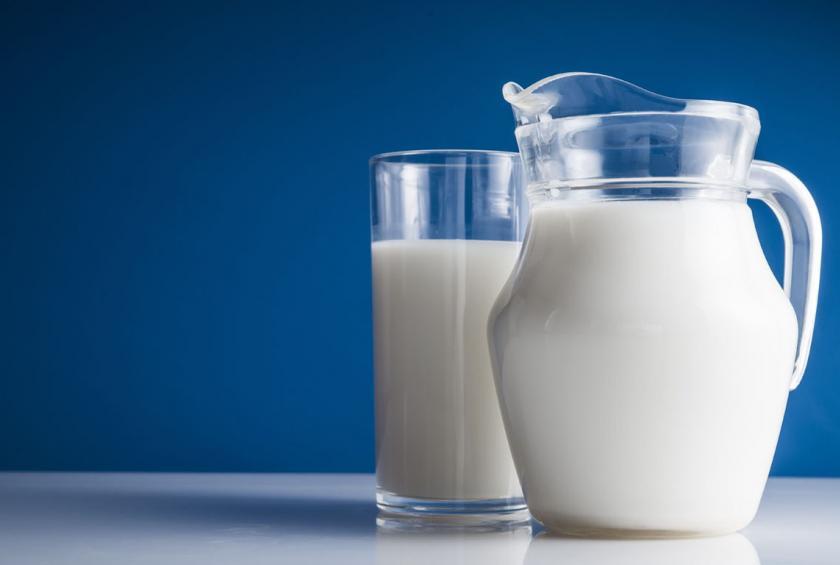
I love milk. I also love high-quality cheese. So I am very reluctant (and unlikely) to give up consuming dairy products. But it is important to listen to those who are negative about dairy products and consider their arguments. Above, I take my pretty picture of milk from an otherwise random anti-milk webpage entitled "Myths About Milk You Probably Thought Were True." It mostly tries to attack positive notions about milk.
T. Colin Campbell and Thomas M. Campbell attack milk and other dairy products more directly in their book The China Study:
Animal Protein: The Campbells (father and son) have three basic arguments against milk. The first is that milk, like meat, has a lot of animal protein. I discussed this concern about animal protein in "Meat Is Amazingly Nutritious—But Is It Amazingly Nutritious for Cancer Cells, Too?" There I suggest this rule of thumb for a limit on animal protein per day:
I am thinking of a target of around 7% of calories in animal protein on a typical day, without trying to count up the amount of plant protein. ... The footnote at the end of Colin's passage suggests that 2200 calories a day would be typical for someone weighing 70 kilograms. ... 7% of that is 1 calorie per pound per day. ... about 1/4 of a gram of animal protein per pound of body weight per day.
I found by trying it out that for generic animal foods, you can google "how many grams of protein does [animal food x] have" and get a ready answer (with the specification of a measure of weight nice but often optional). For less generic animal foods—for example mozzarella cheese of a particular brand—one can look on the package. To provide some idea of magnitudes, a large egg has about 6 grams of protein, a cup of milk has 7.7 grams of protein, while a quarter-pound hamburger patty has about 29 grams of protein.
Inhibition of the Body's Production of the Active Form of Vitamin D
The Campbells' second argument against milk and other dairy products are that they inhibit the production of the active form of Vitamin D by providing too much calcium as well as because of the acidic internal environment engendered by animal protein. There is some suggestive evidence that the active form of Vitamin D is helpful in combating autoimmune diseases:
There are experimental animal models of lupus, MS, rheumatoid arthritis, and inflammatory bowel disease (e.g., Crohn’s disease, ulcerative colitis), each of which is an autoimmune disease. Vitamin D, operating through a similar mechanism in each case, prevents the experimental development of each of these diseases. This becomes an even more intriguing story when we think about the effect of food on vitamin D.
The first step in the vitamin D process occurs when you go outside on a sunny day. When the sunshine hits your exposed skin, the skin produces vitamin D. The vitamin D then must be activated in the kidney in order to produce a form that helps repress the development of autoimmune diseases. ... Under experimental conditions, the activated vitamin D operates in two ways: it inhibits the development of certain T-cells and their production of active agents (called cytokines) that initiate the autoimmune response, and/or it encourages the production of other T-cells that oppose this effect. (An abbreviated schematic of this vitamin D network is shown in Appendix C.) This mechanism of action appears to be a strong commonality among all autoimmune diseases so far studied.
The active form of Vitamin D also has other important functions in the body, as a passage from page 171 claims:
... active or “supercharged” D produces many benefits throughout the body, including the prevention of cancer, autoimmune diseases, and diseases like osteoporosis. This all-important supercharged D is not something that you get from food or from a drug. A drug composed of isolated supercharged D would be far too powerful and far too dangerous for medical use. Your body uses a carefully composed series of controls and sensors to produce just the right amount of supercharged D for each task at exactly the right time. As it turns out, our diet can determine how much of this supercharged D is produced and how it works once it is produced. Animal protein that we consume has the tendency to block the production of supercharged D, leaving the body with low levels of this vitamin D in the blood. If these low levels persist, prostate cancer can result. Also, persistently high intakes of calcium create an environment where supercharged D declines, thus adding to the problem. So what food substance has both animal protein and large amounts of calcium? Milk and other dairy foods. This fits in perfectly with the evidence that links dairy consumption with prostate cancer. This information provides what we call biological plausibility and shows how the observational data fit together. To review the potential mechanisms:
Animal protein causes the body to produce more IGF-1, which in turn throws cell growth and removal out of whack, stimulating cancer development.
Animal protein suppresses the production of supercharged D.
Excessive calcium, as found in milk, also suppresses the production of supercharged D.
Supercharged D is responsible for creating a wide variety of health benefits in the body.
Persistently low levels of supercharged D create an inviting environment for different cancers, autoimmune diseases, osteoporosis, and other diseases.
Here, from page 385, is a discussion of how milk might inhibit the production of the active form of Vitamin D. The active or "supercharged" Vitamin D is called 1,25 D:
Several studies now show that if 1,25 D remains at consistently low levels, the risk of several diseases increases. So then the question is: What causes low levels of 1,25 D? Animal-protein-containing foods cause a significant decrease in 1,25 D. These proteins create an acidic environment in the blood that blocks the kidney enzyme from producing this very important metabolite. A second factor that influences this process is calcium. Calcium in our blood is crucial for optimum muscle and nerve functioning, and it must be maintained within a fairly narrow range. The 1,25 D keeps the blood levels of calcium operating within this narrow range by monitoring and regulating how much calcium is absorbed from food being digested in the intestine, how much calcium is excreted in the urine and feces, and how much is exchanged with bone, the big supply tank for the body’s calcium. For example, if there is too much calcium in the blood, 1,25 D becomes less active, less calcium is absorbed, and more calcium is excreted. It is a very sensitive balancing act in our bodies. As blood calcium goes up, 1,25 D goes down, and when blood calcium goes down, 1,25 D goes up. Here’s the kicker: if calcium consumption is unnecessarily high, it lowers the activity of the kidney enzyme and, as a consequence, the level of 1,25 D. In other words, routinely consuming high-calcium diets is not in our best interests. The blood levels of 1,25 D therefore are depressed both by consuming too much animal protein and too much calcium. Animal-based food, with its protein, depresses 1,25 D. Cow’s milk, however, is high both in protein and calcium.
They emphasize the high-frequency nature of this process on page 382:
When needed, some of the storage form of vitamin D in the liver is transported to the kidneys, where another enzyme converts it into a supercharged vitamin D metabolite, which is called 1,25 D. The rate at which the storage form of vitamin D is converted to the supercharged 1,25 D is a crucial reaction in this network. The 1,25 D metabolite does most of the important work of vitamin D in our bodies. This supercharged 1,25 D is about 1,000 times more active than the storage vitamin D. Supercharged 1,25 D only survives for six to eight hours once it is made. In contrast, our storage vitamin D survives for twenty days or more. This demonstrates an important principle typically found in networks like this: the far greater activity, the far shorter lifetime, and the far lower amounts of the 1,25 D end product provide a very responsive system wherein the 1,25 D can quickly adjust its activity minute by minute and microsecond by microsecond as long as there is sufficient storage vitamin D to draw from. Small changes, making a big difference, can occur quickly.
Although the availability of the storage form of Vitamin D may not be that powerful in increasing the production of the active form of Vitamin D, a large enough amount may help significantly. See "Carola Binder—Why You Should Get More Vitamin D: The Recommended Daily Allowance for Vitamin D Was Underestimated Due to Statistical Illiteracy."
Personally, the thing I find reassuring in relation to any suppression of the production of the active form of Vitamin D by milk, cheese or animal protein in general is that any substantial period of fasting is likely to provide a period of time in which "supercharged" Vitamin D production will be uninhibited. In other words, in relation to the production of the active form of Vitamin D, it is constant consumption of milk and dairy products, or other animal protein that would cause the biggest problem. If there are frequent breaks from milk, dairy and animal protein consumption--as fasting for, say, 18 hours naturally provides--then there should be substantial chunks of time when the active form of Vitamin D is produced freely.
The Danger of Diabetes Type 1 from when Infants Drink Cow's Milk, and Possible Autoimmune Problems for Adults:
On page 179, the Campbells claim that having infants drink cow's milk raises the probability of Type 1 diabetes:
In the case of Type 1 diabetes, the immune system attacks the pancreas cells responsible for producing insulin. This devastating, incurable disease mostly strikes children, creating a painful and difficult experience for young families. What most people don’t know, though, is that there is strong evidence that this disease is linked to diet and, more specifically, to dairy products. The ability of cow’s milk protein to initiate Type 1 diabetes is well documented. The possible initiation of this disease goes like this:
A baby is not nursed long enough and is fed cow’s milk protein, perhaps in an infant formula.
The milk reaches the small intestine, where it is digested down to its amino acid parts.
For some infants, cow’s milk is not fully digested, and small amino acid chains or fragments of the original protein remain in the intestine.
These incompletely digested protein fragments may be absorbed into the blood.
The immune system recognizes these fragments as foreign invaders and goes about destroying them.
Unfortunately, some of the fragments look exactly the same as the cells of the pancreas that are responsible for making insulin.
The immune system loses its ability to distinguish between the cow’s milk protein fragments and the pancreatic cells, and destroys them both, thereby eliminating the child’s ability to produce insulin.
The infant becomes a Type 1 diabetic, and remains so for the rest of his or her life. This process boils down to a truly remarkable statement: cow’s milk may cause one of the most devastating diseases that can befall a child. For obvious reasons, this is one of the most contentious issues in nutrition today.
They summarize this argument on page 182:
It seems to me that we now have impressive evidence showing that cow’s milk may be an important contributor to Type 1 diabetes. When the results of all these studies are combined (both genetically susceptible and not susceptible), we find that children weaned too early and fed cow’s milk have, on average, a 50–60% higher risk of Type 1 diabetes (1.5–1.6 times increased risk). The earlier information on diet and Type 1 diabetes was impressive enough to cause two significant developments. The American Academy of Pediatrics in 1994 “strongly encouraged” that infants in families where diabetes is more common not be fed cow’s milk supplements for their first two years of life. Second, many researchers have developed prospective studies—the kind that follow individuals into the future—to see if a careful monitoring of diet and lifestyle could explain the onset of Type 1 diabetes. Two of the better known of these studies have been under way in Finland, one starting in the late 1980s and the other in the mid-1990s. One has shown that cow’s milk consumption increases the risk of Type 1 diabetes five- to sixfold, while the second tells us that cow’s milk increases the development of at least another three to four antibodies in addition to those presented previously. In a separate study, antibodies to beta-casein, another cow’s milk protein, were significantly elevated in bottle-fed infants compared to breast-fed infants; children with Type 1 diabetes also had higher levels of these antibodies. In short, of the studies that have reported results, the findings strongly support the danger of cow’s milk, especially for genetically susceptible children.
I find this quite scary in relation to feeding infants cow's milk. It also makes me worry that milk and other dairy products could have autoimmune effects on some adults. I am intrigued by the idea that absorption through the walls of the intestine before complete digestion could heighten autoimmune dangers. It also occurs to me that along the lines of the Campbell's thinking, it would be the combination of the initial autoimmune reaction from milk proteins and insufficient "supercharged" Vitamin D production that creates the greatest danger of autoimmune problems for adults. Periods of fasting would take away one of the two contributions to the danger.
I find myself somewhat at sea trying to evaluate the seriousness of dangers from milk and other dairy products. I would be glad to hear readers' perspectives on milk.
Don't miss these other posts on diet and health and on fighting obesity:
Anthony Komaroff: The Microbiome and Risk for Obesity and Diabetes
Using the Glycemic Index as a Supplement to the Insulin Index
How Fasting Can Starve Cancer Cells, While Leaving Normal Cells Unharmed
Meat Is Amazingly Nutritious—But Is It Amazingly Nutritious for Cancer Cells, Too?
The Case Against the Case Against Sugar: Seth Yoder vs. Gary Taubes
Carola Binder: The Obesity Code and Economists as General Practitioners
Jason Fung: Dietary Fat is Innocent of the Charges Leveled Against It
Faye Flam: The Taboo on Dietary Fat is Grounded More in Puritanism than Science
Confirmation Bias in the Interpretation of New Evidence on Salt
Putting the Perspective from Jason Fung's "The Obesity Code" into Practice
'Forget Calorie Counting. It's the Insulin Index, Stupid' in a Few Tweets
Julia Belluz and Javier Zarracina: Why You'll Be Disappointed If You Are Exercising to Lose Weight, Explained with 60+ Studies (my retitling of the article this links to)
Analogies Between Economic Models and the Biology of Obesity
Debating 'Forget Calorie Counting; It's the Insulin Index, Stupid'
Also see the last section of "Five Books That Have Changed My Life" and the podcast "Miles Kimball Explains to Tracy Alloway and Joe Weisenthal Why Losing Weight Is Like Defeating Inflation." If you want to know how I got interested in diet and health and fighting obesity and a little more about my own experience with weight gain and weight loss, see my post "A Barycentric Autobiography."
In the course of arguing that parental power is only temporary, John Locke makes it clear how closely reason is connected to his idea of natural law. Human beings are subject to natural law precisely because they have reason. And not just some degree of reason, the level of reason people have at maturity, assuming they have normal intelligence. In addition to making these key point in section 58-62 of his 2d Treatise on Government: “Of Civil Government” (Chapter VI. Of Paternal Power), John Locke gives a nice example of how crucial reason is to taking on one's role in society: even a king, if too young to have mature rationality, is not allowed full freedom. John Locke also points out that below a certain age, we do not require children to jump through the same hoops for citizenship that we require of adults:
The power, then, that parents have over their children, arises from that duty which is incumbent on them, to take care of their offspring, during the imperfect state of childhood. To inform the mind, and govern the actions of their yet ignorant non-age, till reason shall take its place, and ease them of that trouble, is what the children want, and the parents are bound to; for God having given man an understanding to direct his actions, has allowed him a freedom of will, and liberty of acting, as properly belonging thereunto, within the bounds of that law he is under. But whilst he is in an estate, wherein he has not understanding of his own to direct his will, he is not to have any will of his own to follow: he that understands for him, must will for him too; he must prescribe to his will, and regulate his actions; but when he comes to the estate that made his father a free man, the son is a free man too.
This holds in all the laws a man is under, whether natural or civil. Is a man under the law of nature? What made him free of that law? what gave him a free disposing of his property, according to his own will, within the compass of that law? I answer, a state of maturity wherein he might be supposed capable to know that law, that so he might keep his actions within the bounds of it. When he has acquired that state, he is presumed to know how far that law is to be his guide, and how far he may make use of his freedom, and so comes to have it; till then, somebody else must guide him, who is presumed to know how far the law allows a liberty. If such a state of reason, such an age of discretion made him free, the same shall make his son free too. Is a man under the law of England? What made him free of that law? that is, to have the liberty to dispose of his actions and possessions according to his own will, within the permission of that law? A capacity of knowing that law; which is supposed by that law, at the age of one-and-twenty years, and in some cases sooner. If this made the father free, it shall make the son free too. Till then we see the law allows the son to have no will, but he is to be guided by the will of his father or guardian, who is to understand for him. And if the father die, and fail to substitute a deputy in his trust; if he hath not provided a tutor, to govern his son, during his minority, during his want of understanding, the law takes care to do it; some other must govern him, and be a will to him, till he hath attained to a state of freedom, and his understanding be fit to take the government of his will. But after that, the father and son are equally free as much as pupil and tutor after non-age; equally subjects of the same law together, without any dominion left in the father over the life, liberty, or estate of his son, whether they be only in the state and under the law of nature, or under the positive laws of an established government.
But if, through defects that may happen out of the ordinary course of nature, any one comes not to such a degree of reason, wherein he might be supposed capable of knowing the law, and so living within the rules of it, he is never capable of being a free man, he is never let loose to the disposure of his own will (because he knows no bounds to it, has not understanding, its proper guide) but is continued under the tuition and government of others, all the time his own understanding is incapable of that charge. And so lunatics and ideots are never set free from the government of their parents; “children, who are not as yet come unto those years whereat they may have; and innocents which are excluded by a natural defect from ever having; thirdly, madmen, which for the present cannot possibly have the use of right reason to guide themselves, have for their guide, the reason that guideth other men which are tutors over them, to seek and procure their good for them,” says Hooker, Eccl. Pol. lib. i. sect. 7. All which seems no more than that duty, which God and nature has laid on man, as well as other creatures, to preserve their offspring, till they can be able to shift for themselves, and will scarce amount to an instance or proof of parents’ regal authority.
Thus we are born free, as we are born rational; not that we have actually the exercise of either: age, that brings one, brings with it the other too. And thus we see how natural freedom and subjection to parents may consist together, and are both founded on the same principle. A child is free by his father’s title, by his father’s understanding, which is to govern him till he hath it of his own. The freedom of a man at years of discretion, and the subjection of a child to his parents whilst yet short of that age, are so consistent, and so distinguishable, that the most blinded contenders for monarchy, by right of fatherhood, cannot miss this difference; the most obstinate cannot but allow their consistency: for were their doctrine all true, were the right heir of Adam now known, and by that title settled a monarch in his throne, invested with all the absolute unlimited power Sir Robert Filmer talks of; if he should die as soon as his heir were born, must not the child, notwithstanding he were never so free, never so much sovereign, be in subjection to his mother and nurse, to tutors and governors, till age and education brought him reason and ability to govern himself and others? The necessities of his life, the health of his body, and the information of his mind, would require him to be directed by the will of others, and not his own; and yet will any one think, that this restraint and subjection were inconsistent with, or spoiled him of that liberty or sovereignty he had a right to, or gave away his empire to those who had the government of his non-age? This government over him only prepared him the better and sooner for it. If any body should ask me, when my son is of age to be free? I shall answer, just when his monarch is of age to govern. “But at what time,” says the judicious Hooker, Eccl. Pol. l. i. sect. 6. “a man may be said to have attained so far forth the use of reason, as sufficeth to make him capable of those laws whereby he is then bound to guide his actions: this is a great deal more easy for sense to discern, than for any one by skill and learning to determine.”
Commonwealths themselves take notice of, and allow, that there is a time when men are to begin to act like free men, and therefore till that time require not oaths of fealty, or allegiance, or other public owning of, or submission to the government of their countries.
Civil law applies to adults in a way it doesn't fully apply to children, or those with mental incapacity. The same is true of natural law. In many ways, John Locke expects a lot of people, in seeing what is OK to do and what is not OK to do. But it is a beguiling picture of people gradually becoming able to see and understand natural law as they get older.
For links to other John Locke posts, see these John Locke aggregator posts: