We Are Who We Are Because of Our Ancestors

We are who we are in large measure because of our ancestors. In addition to shaping who we are within, by their collective strivings, they made the world a much better place than it otherwise would have been. May we do as well in improving the world for our descendants, and act in such a way that if they try to be like us, we would be proud.
— Miles Spencer Kimball

John T. Harvey: Five Reasons You Should Blame The Economics Discipline For Today's Problems

Like John Harvey, I do think that the economics profession bears an important part of the blame for the state the world is in. To a failure of most economists to recognize the fragility of the financial system, I would add slowness in developing monetary policy tools powerful enough to counteract the aggregate demand effects of any elevation of risk premia. Beyond that, what I would add to John Harvey’s discussion is: 

1. The word “model” itself has become a reflection of the problem. Logic and reasoning behind a given argument are partly dismissed by saying “You didn’t have a model.” This really means “You didn’t have a [very particular type of] model.” And the limitation to that very particular type of model is often exactly what is interfering with understanding of a problem.  

(In passing, let me say that I am not impressed with the realism of the models currently being used in polite circles with great frequency to model financial frictions.) 

2. John Harvey is too enamored of heterodox schools. By the nature of heterodoxy, many economists who “think outside of the box” will be sui generis, not belonging to any school at all. (If they are really good, they may eventually they gather disciples who then constitute a school. But they may not belong to any school when they first break out of the mold.)  

3. I see the blogosphere as a partial antidote to the dysfunctionality of the economics journals. If one includes the robust and wide-ranging discussion of the real world and real-world policy in the economic blogosphere, things look much better. From that angle, the dysfunction in economics overall can be reduced if more and more people take the blogosphere seriously.  

The Religious Dimension of the Lockean Law of Nature

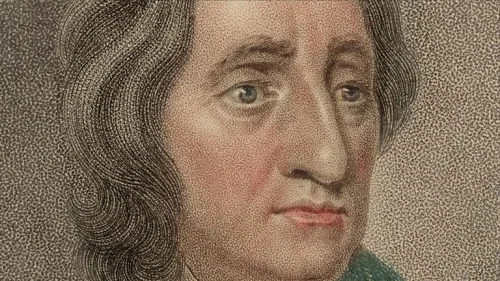
The desire for equality has been used to justify quite heavy-handed action by states. But John Locke, in his  2d Treatise on Government: “On Civil Government” section 6, reasons from the equality of all to natural rights. To John Locke, equality means a starting place in which no one is under the thumb of anyone else, and those who are not under the thumb of anyone else are free. In John Locke’s view, beyond a prohibition on suicide reflecting his view of our relationship to God, the key bound on that freedom is that one is not allowed to “take away, or impair … the life, the liberty, health, limb or goods of another”: 

But though this be a state of liberty, yet it is not a state of license: though man in that state have an uncontroulable liberty to dispose of his person or possessions, yet he has not liberty to destroy himself, or so much as any creature in his possession, but where some nobler use than its bare preservation calls for it. The state of nature has a law of nature to govern it, which obliges every one: and reason, which is that law, teaches all mankind, who will but consult it, that being all equal and independent, no one ought to harm another in his life, health, liberty, or possessions: for men being all the workmanship of one omnipotent, and infinitely wise maker; all the servants of one sovereign master, sent into the world by his order, and about his business; they are his property, whose workmanship they are, made to last during his, not one another’s pleasure: and being furnished with like faculties, sharing all in one community of nature, there cannot be supposed any such subordination among us, that may authorize us to destroy one another, as if we were made for one another’s uses, as the inferior ranks of creatures are for ours. Every one, as he is bound to preserve himself, and not to quit his station wilfully, so by the like reason, when his own preservation comes not in competition, ought he, as much as he can, to preserve the rest of mankind, and may not, unless it be to do justice on an offender, take away, or impair the life, or what tends to the preservation of the life, the liberty, health, limb, or goods of another.

Other “natural law” doctrines view people’s freedom as limited by more than just a ban on suicide and not harming others (who are not themselves offenders). Why is it that John Locke views our freedom as so extensive? There is a clue in saying that each of us is sent into the world by God and “about his business.” In effect, John Locke views us each as the one in the best position on Earth to make the ultimate judgement for what God wants each of us to do. Although, presumably, people sometimes fail to do what God sent them to Earth to do, many beautiful things that God did send someone to do might not happen if that person’s freedom of action is blocked.  

From a less theistic perspective, the point is that if someone is given freedom, they may do something wonderful that no one else would have thought to have them do. Giving each individual a chance to do that something wonderful that perhaps no one else would have thought of is figuratively giving that individual a chance to fulfill her or his mission in life. 

The view that John Locke scorns is the idea that “we were made for one another’s uses.” We were made for greater ends than that. And the final judgment on those greater ends cannot be made by another. 

Timothy Sandefeur: The Presumption of Freedom

If a judge put the burden of proof on the defendant to show that he did not commit the crime, the judge would be loading the dice against him. Even if the defendant proved he did not own the gun used to commit the murder, well, perhaps he borrowed it! To disprove that, he must now prove that he did not know the gun’s owner. But perhaps he paid that person to lie! – and so forth, infinitely. Every disproof only creates a new speculation, which must again be disproved. These speculations might seem silly, but they are not logically impossible, and requiring the defendant to prove his innocence – imposing the Devil’s proof on him – would require him to disprove even such bizarre conjectures. Every accused person would find himself in a hall of mirrors, forced to prove himself innocent of an endless series of baseless accusations, without regard for the rules of logic. As a procedural matter, presuming innocence is preferable, because an erroneous conviction is harder to fix than an erroneous finding of innocence. And as a substantive matter, the presumption of innocence is better because a wrongfully convicted person suffers a different, more personal harm than the public experiences if a guilty person goes free. Likewise, there are an indefinite number of speculative reasons that might defeat anyone trying to prove that he should not be deprived of freedom, just as there are an infinite number of ‘what ifs’ that the ‘Devil’ could use against a defendant who tries to prove he did not commit a crime, or a person who tries to disprove the existence of an invisible teapot: What if a person abuses his liberty? What if he doesn’t know how to use it wisely? What if he turns out to be a psychopath – or perhaps his children or grandchildren turn out to be psychopaths? What if there are top-secret reasons of state that warrant imprisoning him – reasons no judge may be allowed to see? Wary of the Devil’s proof, logicians place the burden on the person who asserts a claim, because that is the only logically coherent way to think. Likewise, the presumption of freedom requires those who would take away our liberty to justify doing so, because that is the only logically workable way to think about politics and law.
— Timothy Sandefeur, The Permission Society: How the Ruling Class Turns Our Freedoms into Privileges and What We Can Do About It

Next Generation Monetary Policy: The Video

Starting at the 20:30 mark in this Mercatus Center video is my presentation “Next Generation Monetary Policy.” Here is a link to the Powerpoint file for the slides I used.

This was at a September 7, 2016 Mercatus Center conference on “Monetary Rules in a Post-Crisis World.” You can see the other sessions here. (Note the 1/5 in the upper left corner of the video. Click on that to access session 1 of 5, 2 of 5, etc.) 

Timothy Sandefeur: The Terrain Is Easier to Judge in the Neighborhood of Liberty Than in the Neighborhood of Unfreedom

As a matter of procedure, starting with a presumption in favor of freedom is preferable because each step people take away from a state of liberty can be justified in theory by measuring whether they are better off. When two people sign a contract, they bind themselves, and in that sense are less free. But they consider themselves better off, and that is good enough, as long as they harm nobody else. It is not so easy to justify the reverse – a movement from a state of total unfreedom to one that is freer – because each step affects far more people. The totalitarian state is frozen solid, so that every action inflicts consequences on everyone else, and the slightest deviation from rigid order must therefore receive the approval of everyone affected. This means it is not always possible to determine whether people are better off at each step when they move in that direction. This, writes Epstein, ‘is why the restoration of even modest elements of a market system seem to pose such radical problems for Eastern European and Third World nations.’
— Timothy Sandefeur, The Permission Society: How the Ruling Class Turns Our Freedoms into Privileges and What We Can Do About It

18 Misconceptions about Eliminating the Zero Lower Bound (or Any Lower Bound on Interest Rates): The Video

My hosts at Chulalongkorn University in Bangkok were good enough to videotape my talk there and post the video on YouTube, as I encouraged them to do. In addition to being the only complete video so far of the presentation “18 Misconceptions about Eliminating the Zero Lower Bound,” (which is my main presentation at central banks on my Fall 2016 tour of European central banks as well), there is some excellent Q&A at the end of this video. 

Timothy Sandefeur: We Must Start by Presuming either in Favor of Freedom or against It

In discussing politics, there are two possible candidates for an initial presumption. We might presume in favor of totalitarianism – everything is controlled by the government, and citizens must justify any desire to be free – or we can presume in favor of liberty and require anyone who proposes to restrict freedom to justify that restriction. Either everything is allowed that is not forbidden, or everything is forbidden that is not allowed. As Professor Richard Epstein observes, there is no third, middle-ground option, because there is no obvious midpoint between the two extremes: people will bicker endlessly about what qualifies as exactly halfway. So we must start by presuming either in favor of freedom or against it.
— Timothy Sandefeur, The Permission Society: How the Ruling Class Turns Our Freedoms into Privileges and What We Can Do About It

Jon Birger: What 2 Religions Tell Us About the Modern Dating Crisis

This is a fascinating article about how the interaction of demographics, including gender differentials in rates of leaving a religion, and customs about relative marriage ages, can create severe difficulties in finding a mate for those within a religion on one side of the gender divide. The article discusses the dating and marriage situation in Mormonism and Orthodox Judaism, including a discussion of both Hasidic and Yeshivish Judaism.  

Timothy Sandefeur: Government Does Not Give People Rights; They Already Have Them

Even after the Revolution, the founders were so skeptical of paper pledges of rights that the Constitution’s authors initially demurred when Americans demanded that it be amended to include a Bill of Rights. In their view, such ‘parchment barriers’ typically proved useless in times of crisis, because those in power could so easily revoke them, ignore them, or argue them away. Better to focus instead on designing a government that would include checks and balances and other structural protections to prevent the government from acting tyrannically. Even when they agreed to add a Bill of Rights, they remained convinced that freedom could never be secured solely through written promises. To them, freedom was not a privilege the state provides but a birthright the state must protect. George Mason put this point succinctly in June 1776, when he wrote in the Virginia Declaration of Rights that ‘all men are by nature equally free and independent and have certain inherent rights,’ which include ‘the enjoyment of life and liberty, with the means of acquiring and possessing property, and pursuing and obtaining happiness and safety.’ Government does not give people these rights – people already have them, and the people ‘cannot, by any compact, deprive or divest their posterity’ of these rights. Thomas Jefferson would make the point even more concisely a month later, when he wrote in the Declaration of Independence that ‘all men are created equal’ and are ‘endowed’ with ‘inalienable rights,’ which include ‘life, liberty, and the pursuit of happiness.’ Government exists ‘to secure these rights,’ not to grant them, and if it turns instead to destroying those rights, ‘it is the right of the people to alter or to abolish’ that government.
— Timothy Sandefeur, The Permission Society: How the Ruling Class Turns Our Freedoms into Privileges and What We Can Do About It 

Mustafa Akyol—The Illogic of Globalization as a Scapegoat Everywhere: Who is Taking Advantage of Whom?

What is ironic in the world today is that conspiracy theorists in different societies are obsessed with the same scapegoat — globalization — but interpret it as a conspiracy only against their side. … In fact, there is a global conspiracy against neither Islam nor the West. Globalization has just forced different societies to interact more than ever — and many people are scared by what they see on the other side. Populists all over the world began taking advantage of those fears, telling us that we should be even more fearful still.
— Mustafa Akyol, “The Plot Against America or the Plot by America?” October 28, 2016 New York Times 

Election Day Special, 2016

On this US Election Day, 2016, I will be flying from Israel, where I gave two talks at the Bank of Israel, to Brussels, where I am a keynote speaker at the annual ECMI conference to be held at the National Bank of Belgium. But I voted by mail before I left on my Fall 2016 tour of European central banks. I hope all of my readers who are US citizens have plans to vote. David Leohnardt in the November 1, 2016 New York Times wrote this:

Voting plans increase voter turnout. In an experiment by David Nickerson and Todd Rogers, involving tens of thousands of phone calls, some people received a vague encouragement to vote. They were no more likely to vote than people who received no call. Other people received calls asking questions about their logistical plans — and became significantly more likely to vote. The questions nudged them.

Second, tell other people about your plan, and ask about theirs. The power of peer pressure increases voter turnout. One aggressive experiment mailed people a sheet of paper with their own turnout history and their neighbors’. A more gentle experiment presented Facebook users with head shots of their friends who had posted an update about having voted. Both increased turnout, as have many other experiments.

You don’t need an intricate effort to influence people, though. Post your own voting plan to Facebook, and ask your friends to reply with theirs. Text or call relatives in swing states and ask about their voting plans. Do the same when you see friends.

And here is Adam Grant in the October 1, 2016 New York Times

If we want people to vote, we need to make it a larger part of their self-image. In a pair of experiments, psychologists reframed voting decisions by appealing to people’s identities. Instead of asking them to vote, they asked people to be a voter. That subtle linguistic change increased turnout in California elections by 17 percent, and in New Jersey by 14 percent.

The American electorate overall has a great deal of wisdom, but is not able to fully express that wisdom with our current voting system. On that, take a look at last week’s post “Dan Benjamin, Ori Heffetz and Miles Kimball–Repairing Democracy: We Can’t All Get What We Want, But Can We Avoid Getting What Most of Us *Really* Don’t Want?

October and even November surprises keep coming in for both Donald Trump and Hillary Clinton. One I found interesting was the details David Barstow, Mike McIntire, Patricia Cohen, Susanne Craig and Russ Buettner reported on Donald Trumps tax avoidance approach in the October 31, 2016 New York Times. Essentially, evidence indicates Donald Trump was taking a large deduction on his taxes for his investor’s losses from investing in his project. The way he did that was by overvaluing partnership equity in the failed projects and purporting to reimburse his investors for their losses by giving them overvalued partnership equity. What I wasn’t totally clear about is whether these investors succeeded in deducting from their own taxes the very same losses, using a lower value of that partnership equity received that was inconsistent with the value that Donald Trump used. That is, did Donald Trump take his investor’s loss deductions away from them, or did he and his investors both successfully claim the same losses?

Finally, let me mention that a key issue in this election is the principle of the equality of all human beings, an issue I discussed in “Us and Them” and this past Sunday in “John Locke on the Equality of Humans.”

How Negative Rates are Making the Swiss Want to Pay Their Taxes Earlier

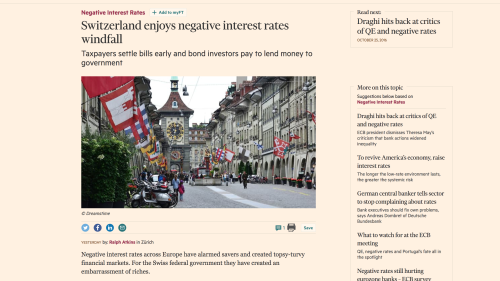
Link to Ralph Atkins’s October 26, 2016 Financial Times article “Switzerland enjoys negative interest rates windfall: Taxpayers settle bills early and bond investors pay to lend money to government”

In “Swiss Pioneers! The Swiss as the Vanguard for Negative Interest Rates” I wrote:

there is no question that negative interest rates will require many detailed adjustments in how banks and other financial firms conduct their business. Like it or not, Swiss banks and the rest of the Swiss financial industry may be forced to lead the way in figuring out these adjustments, just as the Swiss National Bank is leading the way in figuring out how to conduct negative interest rate policy. The Swiss are eminently qualified for that pioneering role. The rest of the world would be well-advised to watch closely.

Some of the adjustments that need to be made in a negative rate environment are to the tax system. Recently, Swiss cantonal governments and the Swiss federal government have realized they can lower incentives for early tax payments, since low interest rates on other accounts provide an incentive to pay taxes early. Here are the two passages I found most interesting for the details reported:

Although Swiss retail banks have largely shielded ordinary bank customers from negative interest rates, companies face penalties for holding large amounts of cash. That has increased the appeal of incentives traditionally offered by Swiss cantons as well as the federal government for early tax payments.

Companies entitled to tax rebates had also waited to reclaim funds from the state, the finance ministry in Bern said. …

The federal government is not only enjoying a boost to its finances [from negative interest rates on its bonds up to a 20-year maturity]. It does not have to worry about paying charges on cash accounts either: it is specifically excluded from the negative interest rates imposed by the SNB, which acts as its banker.

All of these issues were quite predictable, but it is fascinating to see them actually playing out. This example is important because it indicates that some of the steps necessary to eliminate the zero lower bound that are not within the authority of central banks might be handled in a reactive way by other arms of government. 

Thanks to Ruchir Agarwal for pointing me to this article.

John Locke on the Equality of Humans

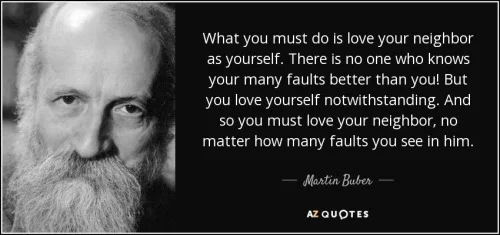
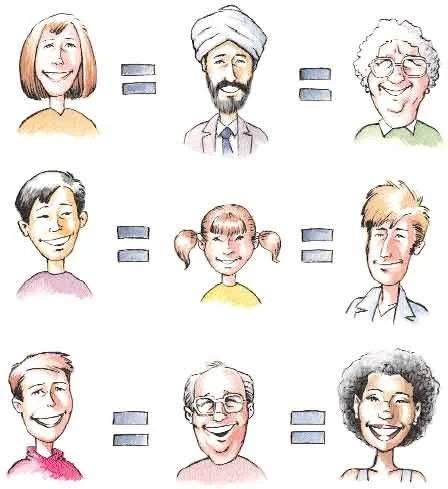
There are many dimensions of the principle of equality among humans. The most difficult is expressed by the  Biblical command “Love your neighbor as yourself” (Leviticus, 19:18; Matthew 22:39). The Martin Buber quotation above points to some of the bias toward self that would have to be overcome to actually obey this command. 

A much more modest demand is to treat the interests and concerns of two humans that come before you for judgment equally. This idea provides part of the context for the Levitical command “Love your neighbor as yourself.” Three verses earlier, Leviticus reads: 

You shall do no injustice in court. You shall not be partial to the poor or defer to the great, but in righteousness shall you judge your neighbor. (Leviticus 19:15)

Of course, a key question, as I put it in “Us and Them” is “whose well-being counts: who is in the charmed circle of people whose lives we are concerned about and who is not.” Jesus was asked almost exactly this question by a student of the Law of Moses who knew his Leviticus well: 

And, behold, a certain lawyer stood up, and tempted him, saying, Master, what shall I do to inherit eternal life? He said unto him, What is written in the law? how readest thou? And he answering said, Thou shalt love the Lord thy God with all thy heart, and with all thy soul, and with all thy strength, and with all thy mind; and thy neighbour as thyself. And he said unto him, Thou hast answered right: this do, and thou shalt live. But he, willing to justify himself, said unto Jesus, And who is my neighbour? (Luke 10:25-29)

Jesus answered by telling the story of the Good Samaritan–a despised outsider who was kinder to a man beaten by thieves than those of his own ethnicity. The rhetorical force of the Good Samaritan story, as I see it, is that someone who is kind to all human beings seems nobler than someone so ready to draw a line between the people who count and those who don’t that a few lines later the charmed circle of those who count has contracted perilously close to being a circle enclosing a single ego. 

Not just equal concern for the welfare of those in outgroups, but any significant concern for those in outgroups is very much still at issue in the modern world. The second figure above doesn’t plumb the full depth of unconcern for outgroups that we are still wrestling with. Take as given for the sake of argument that the welfare of citizens ought to count in political decision-making more than the welfare of non-citizens. It then makes a huge difference whether the welfare of non-citizens counts zero or counts at a fraction–say one-hundredth as much as the welfare of citizens. Why? Because as a practical matter there are many policies that raise the welfare of citizens a tiny bit, or seem to, but without doubt grievously hurt the welfare of non-citizens.

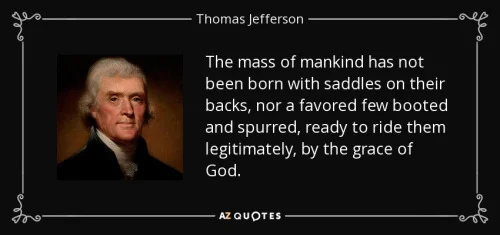
The dimension of equality most directly relevant for political philosophy is the one pointed to by Thomas Jefferson in the third figure above. There is not some person or group of people who have the inherent right to be rulers. Although this is the type of equality that John Locke needs most to make his argument in his 2d Treatise on Government:“On Civil Government,” he begins with the stronger “Love your neighbor as yourself” version of equality, pointing in section 5 to the theology of Richard Hooker:  

This equality of men by nature, the judicious Hooker looks upon as so evident in itself, and beyond all question, that he makes it the foundation of that obligation to mutual love amongst men, on which he builds the duties they owe one another, and from whence he derives the great maxims of justice and charity.

John Locke then quotes Richard Hooker as follows:       

The like natural inducement hath brought men to know that it is no less their duty, to love others than themselves; for seeing those things which are equal, must needs all have one measure; if I cannot but wish to receive good, even as much at every man’s hands, as any man can wish unto his own soul, how should I look to have any part of my desire herein satisfied, unless myself be careful to satisfy the like desire, which is undoubtedly in other men, being of one and the same nature? To have any thing offered them repugnant to this desire, must needs in all respects grieve them as much as me; so that if I do harm, I must look to suffer, there being no reason that others should shew greater measure of love to me, than they have by me shewed unto them: my desire therefore to be loved of my equals in nature, as much as possible may be, imposeth upon me a natural duty of bearing to them-ward fully the like affection; from which relation of equality between ourselves and them that are as ourselves, what several rules and canons natural reason hath drawn, for direction of life, no man is ignorant.  Eccl. Pol. Lib. i.

How is it that we human beings have the concept of human equality at all? I don’t know. But I have the sense that the way we see other human beings when we look at a crowd of strangers we know nothing about, who are all of a relatively homogeneous social group, has a lot to do with it. Because we have “theory of mind”–including a model in our own heads of how things appear to other people–we know that each of us, too, could seem like just a face in a crowd. That picture of just another face in a crowd is a starting point for conceiving of human equality.