Jeff Guo on Tontines →
Tontines used to be a ridiculously popular form of annuities in America. Could they be again?
A Partisan Nonpartisan Blog: Cutting Through Confusion Since 2012
Tontines used to be a ridiculously popular form of annuities in America. Could they be again?
In the 15th paragraph of the “Introductory” chapter of On Liberty, John Stuart Mill writes:
Apart from the peculiar tenets of individual thinkers, there is also in the world at large an increasing inclination to stretch unduly the powers of society over the individual, both by the force of opinion and even by that of legislation: and as the tendency of all the changes taking place in the world is to strengthen society, and diminish the power of the individual, this encroachment is not one of the evils which tend spontaneously to disappear, but, on the contrary, to grow more and more formidable. The disposition of mankind, whether as rulers or as fellow-citizens, to impose their own opinions and inclinations as a rule of conduct on others, is so energetically supported by some of the best and by some of the worst feelings incident to human nature, that it is hardly ever kept under restraint by anything but want of power; and as the power is not declining, but growing, unless a strong barrier of moral conviction can be raised against the mischief, we must expect, in the present circumstances of the world, to see it increase.
Here is Robin Hanson on the same theme:
Humans clearly attend closely to status, an important part of status is dominance, and a key way we show dominance is to tell others what to do. Whoever gets to tell someone else what to do is dominating, and affirming their own status. But we are also clearly built to not notice most of our status moves, and so we attribute them to other motives. And as long as we are making up motives, we might as well make up the most admired of motives, altruism.
So we tend to think we tell others what to do in order to help them, and not to dominate them. In particular we tend to think we tell fat folks what to do, and control their behavior, because this will help those fat folks. For example, many support taxing soda or fast food in order to help fat folks.
You can see me wrestling with the desire to tax soda in my post “John Stuart Mill on Running Other People’s Lives.” The temptation to run other people’s lives throught public policy should not be underestimated. And without at least recognizing the temptation, there is little hope that we can fight it.
In these examples, the concern is with telling people what to do, ostensibly for their own good. But it is also pleasant to tell people what to do even without any pretense it is for their own good. One of the great pleasures of being a bureaucrat is getting to tell people what to do. And I suspect that getting to tell people what to do is part of the attraction of being one of the police. To keep bureaucracies and the police democratically legitimate, bureaucrats and police must treat everyone they deal with professionally with dignity. Maybe many people should be stopped by the police in order to keep crime down. But it is a disgrace if those interactions are not made absolutely as pleasant as possible for those being stopped.
Given my demographic category, my experience in being stopped by the police is limited, but I have noticed dramatic variations from place to place in how nice officials at airport screening are and dramatic variations from place to place in how nice officials at the Department of Motor Vehicles are. So I know it is not impossible to be nice. I am saying it is not just nice to be nice, but a moral requirement for the state–which makes people deal with these officials at the point of a gun (or on pain of the loss of great boons such as driving or flying)–not to train such folks to be nice. The necessity of such training follows from the great fun there is in bossing people around and telling them what to do, which is guaranteed to come out without very particular training to combat it.
Postscript: It is not lost on me that even in a blog post like this, I am telling people what to do. What fun! I hope in this particular case I am not doing any harm by giving in to the temptation.
“We may safely leave many branches of knowledge to such as can devote themselves to special pursuits. We may safely accept what chemists tell us of chemistry, or astronomers of astronomy, or philologists of the development of language, or anatomists of our internal structure, for not only are there in such investigations no pecuniary temptations to warp the judgment, but the ordinary duties of men and of citizens do not call for such special knowledge, and the great body of a people may entertain the crudest notions as to such things and yet lead happy and useful lives. Far different, however, is it with matters which relate to the production and distribution of wealth, and which thus directly affect the comfort and livelihood of men. The intelligence which can alone safely guide in these matters must be the intelligence of the masses, for as to such things it is the common opinion, and not the opinion of the learned few, that finds expression in legislation.”
A hat tip to Joseph Kimball for this link.
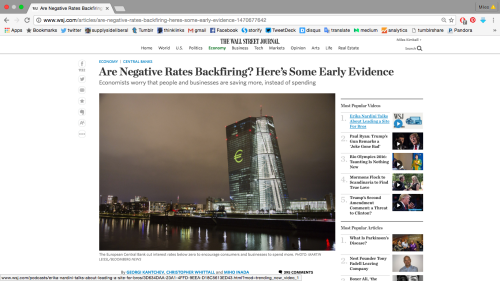
I had a very interesting interview with Georgi Kantchev a bit ago that is nicely reflected in an August 8 Wall Street Journal article he wrote with Christopher Whittall and Miho Inada. Despite the negative tone of the headline, and its collection of person-in-the-street quotations from people horrified by negative interest rates, in its analysis, it is actually quite a nuanced and balanced article.
A. Consider the following pairs of quotations:
1a. Some economists now believe negative rates can have an unintended psychological effect by communicating fear over the growth outlook and the central bank’s ability to manage it.
“The signal to the consumer is that something is wrong—it’s a crisis measure,” says Carl Hammer, chief currency strategist at Swedish bank SEB.
1b. University of Michigan economist Miles Kimball believes rates should be lowered even deeper into negative territory. If people are getting scared by negative rates, he says, it is the fault of central banks’ inability to communicate effectively, not the policy itself.
“They should say that this is a normal tool of policy,” he says, “and then people wouldn’t freak out.”
2a. In Germany, Europe’s largest economy and a nation known for thrift, savings as a percentage of disposable household income rose to 9.7% in 2015, according to preliminary data from the OECD. That is the highest rate since 2010, and the OECD expects the savings rate to rise further this year, to 10.4%.
2b. In the broader eurozone, where saving isn’t as ingrained in the psyche as in Germany, the household savings rate has edged lower since negative interest rates were introduced in 2014.
3a. Yves Mersch, a member of the ECB’s executive board, said in June that it is possible “households are hoarding even more” because they need to save more to build up the same amount of wealth over the same time span.
3b. Peter Praet, the ECB’s chief economist, says the focus should also be on borrowers, who are more inclined to spend than savers, and are seeing a boost to their disposable income because ultralow rates reduce the cost of servicing debt.
B. In the second and third pairs of quotations, the authors of the article show an understanding of the principle I enunciated in “Even Central Bankers Need Lessons on the Transmission Mechanism for Negative Interest Rates”:
The Principle of Countervailing Wealth Effects: It is easy to forget about some of the wealth effects. Applying the general principle that all the wealth effects cancel–other than overall expansion of the economy and differences in the marginal propensity to consume across economic actors can help in making sure one hasn’t missed a wealth effect, much as double-entry accounting helps in making sure one doesn’t miss something. An example of a particularly large wealth effect that is easy to miss is that a fall in interest rates raises the present discounted value of household labor income. The other principle that helps to avoid missing a wealth effect is to remember that there is always another side to every borrowing-lending relationship. If the economic actor on one side of the borrowing-lending relationship gets a negative hit to effective wealth, the economic actor on the other side will get a positive boost to effective wealth–again with the exception of the overall expansion of the economy. …
I discussed this principle again in “Responding to Joseph Stiglitz on Negative Interest Rates”:
… because there are two parties to every borrower-lender relationship, what is a negative wealth effect to one party is a positive wealth effect to the other. And on the whole, borrowers–who tend to get a wealth effect boost from lower rates–are better spenders than lenders. So if all the wealth effects are accounted for rather than cherry-picking a wealth effect here or there, they will be in the direction of greater stimulus from lower rates. Here is the overall story about transmission mechanisms for lower rates, in the negative region as well as the positive region: In any nook or cranny of the economy where interest rates fall, whether in the positive or negative region, those lower interest rates create more aggregate demand by a substitution effect on both the borrower and lender, while other than any expansion of the economy overall, wealth effects that can be large for individual economic actors largely cancel out in the aggregate.
Anyone who discusses the effects of negative interest rates by talking only about lenders without talking about borrowers is missing at least half of the story. Georgi Kantchev, Christopher Whittall and Miho Inada avoid that mistake.
I give a non-obvious example of this principle of considering borrowers as well as lenders in “Responding to Joseph Stiglitz on Negative Interest Rates”:
…think of senior citizens who lend instead to the federal government. Lower interest rates reduce the deficit and tend to lead to more government spending fairly directly by deficit reduction rules biting less. Even though senior citizens have a high marginal propensity to consume, I think the effects of deficit numbers on government behavior make the effective marginal propensity to consume of the federal government out of a change in interest expense even higher. Those who like the idea of fiscal stimulus should be happy about this stimulus from negative interest rates–especially since the negative wealth effect is only for the relatively well-off senior citizens who are not just living on social security, but have interest income to live on on top of that.
C. You might be interested in the email I sent to Georgi:
Dear Georgi,
It was great talking to you. Let me try to remember all the links I promised you:
1. I have links to everything I have written (including two academic policy papers) on negative interest rates in this bibliographic post that I update every few weeks:
2. You can see the video of the afternoon session of the Brookings conference I mentioned here:
My 20 minute talk comes first, giving more background on my recommendations. You can hear reactions to what I said as well. The panel discussion after is where you can hear several people say that the interest rate movement in at least the case of Japan is small compared to other things going on.
3. The actual Brookings website for that conference has both the afternoon session and the morning session:
This morning session has a lot of excellent talks, including the heavy-duty talk by Massimo Rostagno about his work with coauthors looking at what the markets believe is the lower bound on interest rates and the value Massimo sees in having negative rates in order to lower the market’s beliefs about what the lower bound on interest rates is, which allows long-term rates affected by QE to fall further. We talked about this in the context of central bank communication policy and the value of telling the markets that you can and will take interest rates as low as necessary. (The key point of my work is that there is no lower bound on interest rates if a central bank uses an appropriate mix of policies.)
4. Here is Naranaya Kocherlakota (who recently stepped down as President of the Minneapolis Fed) saying that negative rates should be treated as a normal part of monetary policy as we discussed:
and here is my reaction:
I had forgotten that this was a few weeks before he started writing for Bloomberg View. Narayana Kocherlakota has written a lot about central bank communication and negative interest rates in his Bloomberg View columns:
5. Here is my advice that central banks should use the interest-on-reserves formula to effectively subsidize the provision of zero rates (rather than negative rates) to small household accounts:
6. Here is a relatively heavy-duty post taking on Mark Carney to argue that there are many, many channels through which cutting interest rates–including cutting interest rates in the negative region–will stimulate the economy:
Not all of these channels involve banks. So a low enough rate can get all needed stimulus even if banks are malfunctioning. (Of course, it is bad directly if banks are malfunctioning; I am just saying that monetary policy can do its most basic job even if they are.)
I also addressed this issue here:
7. On the evidence that negative interest rates have the usual effects of interest rate cuts on financial markets despite some commentary to the contrary by bankers who are busy lobbying against negative rates, see this very nice post by Scott Sumner:
In case that link doesn’t work, I also got Scott’s permission to mirror it on my blog:
Let me know if there is anything else I forgot or if you have any other questions. I’d love to talk to you again sometime.
–Miles
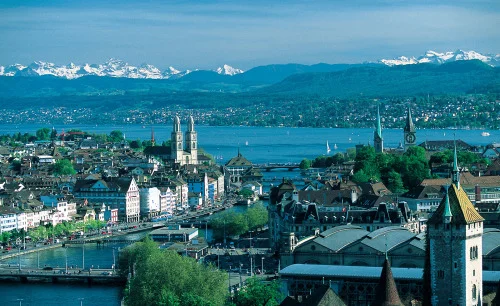
Zurich
Quite a few months back (about last Fall), I had an interview with a journalist in Zurich that did not result in an article. For that interview I had prepared some thoughts that I wanted to share with you. Keep in mind
1. Because of my visits to central banks, these proposals are getting wide discussion within central banks, and because of the two London conferences in May 2015, between central banks as well. Under the surface, there is a much bigger consensus than what you would assume.
2. The two countries I would bet on to introduce a negative paper currency interest rate first are the UK–as I predicted early on before even visiting (see “Could the UK Be the First Country to Adopt Electronic Money?” ) and his been borne out by subsequent events, and Switzerland, which currently has rates in the deepest negative territory (see “The Swiss National Bank Means Business with Its Negative Rates” and “Swiss “Pioneers! The Swiss as the Vanguard for Negative Interest Rates.”
3. The economics of my proposal is clear, and has withstood detailed questioning by central bankers all over the world. But with few exceptions, those who serve on monetary policy committees have sensitive political antennae and are worried about the politics of a negative paper currency interest rate.
4. Because of the political sensitivity of a negative paper currency interest rate, the only central bank officials to have alluded to it publicly are Bank of England Chief Economist Andrew Haldane (who refers directly to my work) and the Swiss National Bank officials involved in cosponsoring the conference on “Removing the Zero Lower Bound on Interest Rates” in London on May 18, 2015. So far, other central banks do not want to discuss my solution publicly, but there are many central bank staff economists around the world who are enthusiastic, believing as I do that from a technical point of view it would work well and solve an important problem.
Update Since Last Fall: Three former members of the FOMC have now discussed my proposal: Ben Bernanke, Narayana Kocherlakota and Donald Kohn. You can hear all of them talk about it in this video from the Brookings conference on negative interest rates at which I spoke. Ben Bernanke was also asked about my proposal in an interview by Ezra Klein; you can see his answer here. Narayana Kocherlakota also wrote about my proposal here.
5. One important virtue of my approach is its continuity with the current system: in small doses it is almost indistinguishable to ordinary households from the way we do things now.
6. If I were closely consulted on introducing a paper currency interest rate through a crawling-peg exchange rate between paper currency and electronic money, I would advise making it sound very bureaucratic and boring. I would start very subtly, with a dose small enough that there would be no chance of any significant negative side effects.
7. A cut of 50 basis points by the SNB would be well worth doing because it would have a substantial effect on foreign exchange rate for Swiss Francs.
8. Even if you do not want to cut interest rates now, you want to prepared for the next recession.
9. An exchange rate on paper money by the SNB would be a blessing for other countries. They could see in Switzerland that it works. Moreover, it could have an important stabilizing effect on world financial markets because it would help allay the fear that the world economy might be doomed to replicate the performance of the Japanese economy in the last two decades.
See links to everything I have written about negative interest rates in my bibliographic post “How and Why to Eliminate the Zero Lower Bound: A Reader’s Guide.”
“If every trace of any single religion were wiped out and nothing were passed on, it would never be created exactly that way again. There might be some other nonsense in its place, but not that exact nonsense. If all of science were wiped out, it would still be true, and someone would find a way to figure it all out again.”
Penn Jillette, as quoted here.
This is a very interesting argument, but it sounds more negative for religion than it really is. The very same could be said for any piece of great literature or any great painting; and people don’t usually go around calling the works of William Shakespeare or the paintings of Pablo Picasso “nonsense,” even if strictly speaking they are.
People who are aware of their good fortune make more attractive teammates.
Here is the full text of my 67th Quartz column, “Social scientists need to learn from their Brexit blunder, so we can learn from them,” now brought home to supplysideliberal.com. It was first published on June 29, 2016. Links to all my other columns can be found here.
I give my reasoning behind the first sentence of this column in my July 10, 2016 sermon “Us and Them.”
If you want to mirror the content of this post on another site, that is possible for a limited time if you read the legal notice at this link and include both a link to the original Quartz column and the following copyright notice:
© June 29, 2016: Miles Kimball, as first published on Quartz. Used by permission according to a temporary nonexclusive license expiring June 30, 2020. All rights reserved.
The worst thing about Brexit is a key reason Brexit gained so much support: opposition to immigration. Advocates for the UK leaving the European Union were not shy about pointing to opposition to immigration as a key to their success. Nigel Farage captured some of that spirit by declaring “This is a victory for ordinary people, for good people, for decent people.”
The rise in inequality and serious monetary policy mistakes—including the eurozone’s requiring many disparate economies to share monetary policy with Germany—may have set the stage for rebellion against the status quo. But Donald Trump’s “I love to see people take their country back” expresses the nationalism behind the direction of rebellion implicit in Brexit.
One of the most revealing pieces of data on the Brexit vote is Eric Kaufmann’s analysis of Brexit support among the over 24,000 survey respondents in the British Election Study. Support for Brexit was much higher among those who supported capital punishment, and support for the EU was much lower among respondents who supported the public whipping of sex offenders. That is, “hardliners” were much more likely to support Brexit.
I have written the above as if we know what happened with Brexit. And although I think I have the general drift of things right, one of the big messages of Brexit in the UK and of the rise of Donald Trump in the US is that social scientists need to up their game dramatically in understanding what people want and how they think. For some time, social scientists have made a special effort to understand ethnic and sexual minorities. But given how different hardliners are from the people many academic social scientists usually hang out with, and how many hardliners there are, social scientists need to spend a lot more time studying this group. (Though marred by condescension toward “conservatives,” George Lakoff’s book Moral Politics is an excellent place for academics to start in an effort to understand the hardliner worldview.)
In order to give non-pejorative labels to both sides, let me call those who, like me, favor more open immigration “Cosmopolitans” and those who favor more restrictive immigration (and other policies in the same spirit) “Nationalists.” As a Cosmopolitan, what I most want to know from social science is what interventions can help make people more accepting of foreigners. Somewhat controversially, it is now common in the US for elementary school teachers to make efforts to instill pro-environmental attitudes in schoolchildren. Whether or not those efforts make a difference to children’s attitudes, are there interventions or lessons that can make schoolchildren and the adults they grow up to be likely to feel more positive about the foreign-born in their midst? For example, having had a very good experience learning foreign languages on my commute by listening to Pimsleur CDs in my car, I wonder whether dramatically more effective Spanish language instruction for school children following those principles of audio- and recall-based learning with repetition at carefully graded intervals might make a difference in attitudes toward Hispanic culture and toward Hispanics themselves in the US.
Although it is the province of social scientists to test interventions intended to improve attitudes toward the foreign-born, many of the best interventions will be created by writers, artists, script-writers, directors, and others in the humanities. There are also many other marginalized groups in society, but the strength of anti-foreigner attitudes suggests the need for imaginative entertainment and cultural events to help people identify with human beings who were born in other countries.
It is obvious to anyone except those with their heads in the sand that Brexit in the UK and the rise of Donald Trump in the US are a wake-up call to the relatively Cosmopolitan elites who have been running those countries. But that doesn’t mean the Cosmopolitan faction among the elites must surrender to the Nationalists. Cosmopolitan elites are powerful, and shouldn’t go down without a fight.
What is clear is that the strategy of shaming Nationalists and ethnocentrists who say negative things about other groups has its limitations. My grandmother used to quote Dale Carnegie’s now politically incorrect couplet:
A man convinced against his will,
Is of the same opinion still.
Shaming may work to a point, but what is needed now is genuine persuasion about the humanity that we all share, regardless of where on earth we are born.
In addition to such gentle efforts to help people become more accepting of the foreign-born, there is also, in the US, the possibility of an immigrant-voter “nuclear option” for cementing a Cosmopolitan victory—one that works only if Donald Trump goes down in flames and takes the Republican Senate and House majorities down with him. In that situation the Democrats (perhaps with the help of the filibuster-busting “nuclear option”)–could force through a true “amnesty” bill for illegal immigrants, including full naturalization. This would bring millions of additional immigrants onto the voting rolls—the latest in many historical expansions of the franchise.
Back in 1996, historians William Strauss and Neil Howe predicted in The Fourth Turning that the first two decades of the 21st century would bring a political crisis when the senescence of earlier generations finally deprived polarized Baby Boomers of effective adult guidance. Whatever one’s judgment about the overall merits of the Strauss-Howe generational theory, this particular prediction has come true. In such a crisis, it really matters how things get resolved. History is written, by and large, by the victors, so whichever side comes out on top—Nationalists or Cosmopolitans—will look good in the history books.
Q: Hi Miles: Sorry to bother you, but I’ve gotten hornswoggled into teaching macro again and there is one topic in kind of the evolution of macro that is eluding me.
And that question is, how did we get to fiscal policy irrelevance/ineffectiveness in the new keynesian dynamic model?
Is it a presumed Fed response to offset? Is it Ricardian Equivalence? Is it just that VARs show little response?
Can you give me a pointer about where to look?
A: This is something I teach in my graduate macro class. Fiscal policy irrelevance has nothing to do with sticky prices or not. It is all about investment. Without investment frictions, investment tends to be crowded out 1 for 1 by government purchases in both sticky-price and non-sticky-price models. (Let me ignore the effects on labor supply because of the impoverishment caused by higher G and also the opposite-direction effects of higher marginal taxes to pay for the higher G.) And that logic should extend to sticky wage models as well. Sticky prices don’t matter because aggregate demand doesn’t even go up. G up, I down.
Q-theory affects this in a different way than many people probably think. Q-theory is not really investment adjustment costs, it is investment smoothing, analogous to consumption smoothing. So it is totally forward looking. If a shock is going to last 4 or 5 years, then there is still fairly complete crowding out of investment
I think you will like my (unpublished) paper with Susanto Basu on investment planning costs. Here are its slides. (These are totally public.) But planning adjustment costs only let G stimulate the economy for 9 months are so (the same as the lag in the effect of monetary policy that comes from planning adjustment costs). I call that period of time the ultra-short run.
To the extent it seems that government purchases do have an affect on output longer than the ultra-short run, to me the leading candidates are:
If fiscal policy is about tax cuts to increase C, there are the usual permanent income issues plus the issue of how easily C can crowd out I. But consumption smoothing is likely much stronger than investment smoothing a la Q-theory, so that probably does work, as implicitly assumed in my paper “Getting the Biggest Bang for the Buck in Fiscal Policy” in arguing for the greater effectiveness of credit policy.
Our Michigan PhD Chris Boehm has a paper on all of these issues that you should look at.
One reason I call myself a Monetarist rather than a New Keynesian is because of these issues with fiscal policy.

In the 14th paragraph of the “Introductory” chapter of On Liberty, John Stuart Mill has this to say about the temptation to run other people’s lives:
Though this doctrine [of suffering each other to live as seems good to themselves] is anything but new, and, to some persons, may have the air of a truism, there is no doctrine which stands more directly opposed to the general tendency of existing opinion and practice. Society has expended fully as much effort in the attempt (according to its lights) to compel people to conform to its notions of personal, as of social excellence. The ancient commonwealths thought themselves entitled to practise, and the ancient philosophers countenanced, the regulation of every part of private conduct by public authority, on the ground that the State had a deep interest in the whole bodily and mental discipline of every one of its citizens; a mode of thinking which may have been admissible in small republics surrounded by powerful enemies, in constant peril of being subverted by foreign attack or internal commotion, and to which even a short interval of relaxed energy and self-command might so easily be fatal, that they could not afford to wait for the salutary permanent effects of freedom. In the modern world, the greater size of political communities, and above all, the separation between spiritual and temporal authority (which placed the direction of men’s consciences in other hands than those which controlled their worldly affairs), prevented so great an interference by law in the details of private life; but the engines of moral repression have been wielded more strenuously against divergence from the reigning opinion in self-regarding, than even in social matters; religion, the most powerful of the elements which have entered into the formation of moral feeling, having almost always been governed either by the ambition of a hierarchy, seeking control over every department of human conduct, or by the spirit of Puritanism. And some of those modern reformers who have placed themselves in strongest opposition to the religions of the past, have been noway behind either churches or sects in their assertion of the right of spiritual domination: M. Comte, in particular, whose social system, as unfolded in his Systeme de Politique Positive, aims at establishing (though by moral more than by legal appliances) a despotism of society over the individual, surpassing anything contemplated in the political ideal of the most rigid disciplinarian among the ancient philosophers.
There are few of us who don’t feel the urge to run other people’s lives. Let me wrestle with a case where I feel this: the desire to intervene to reduce people’s consumption of sugary soft drinks in order to help restrain the rise of obesity–even to the extent of heavily taxing them. I actually think there are arguments on both sides for this. And since John Stuart Mill is a Utilitarian rather than a doctrinaire Libertarian, I think he would be willing to consider the arguments.
One of the most troubling arguments for taxing sugary soft drinks is that obesity puts a burden on the government budget because the government pays for a big fraction of people’s medical care. This is saying that since the government is intervening in one area, and people’s choices interact badly with that intervention, that the government should intervene in another way. That leads to a chain of argument that could justify more and more government intervention, until the sum of it all would look like a bad deal.
An interesting argument would be pointing to the research showing that people eat better and exercise more when the people around them are doing so. That means that there is an externality from good behavior, assuming that some people want to eat well and exercise more but are having troubling doing so because not all of them wants to eat well and exercise well–a part that would be less costly to defeat if others were eating well and exercising well. In a way, that argument questions whether there is a sharp boundary between one person and the next.
One of the best arguments for intervening to improve people’s health-related behaviors is to draw a boundary between different time slices of an individual, as I discussed in “Drug Legalization and Time Slices of People as Ethical Units.” If someone’s later self is treated as a separate individual, then harming that later self by eating badly and eschewing exercise could be akin to a crime.
One way of trying to get at this issue is by listening to people talk about the regrets that have about things they didn’t do when they were younger. But it is tricky. Some of the young may not care much about the welfare of their older selves; but it is also true that some of the old may not care much about the welfare of their earlier, younger selves. They may be wishing their younger self had saved more or eaten better, even at the expense of having an unpleasantly ascetic life. So regrets must be taken with a grain of salt, but listening to both regrets and what the young want to do despite the cost to their older selves can help bring a more balanced perspective.
I mentioned briefly above the possibility that people face an internal struggle to do the right thing. One way of modeling this is to imagine different selves battling it out within a person at the same time. From this point of view, taxing sugary soft drinks might be seen as taking sides in this civil war–with a certain amount of collateral damage on others who do not have an internal struggle. If this justification is not backed up by one of the others discussed in this post, it requires a non-obvious reason to favor one side of a person over the other side, as well as a full accounting of the collateral damage.
An important argument is to argue that people don’t understand, are confused and not thinking straight when they make the decision to drink sugary soft drinks. Educating people is actually quite expensive, while a tax on sugary soft drinks is mostly a transfer (admittedly a likely regressive tax taking money from the ignorant and some other groups and giving it to the government). This argument works best when (a) it has been demonstrated that an educational intervention based on the truth, undertaken on an experimental sample, causes people to shy away from sugary soft drinks and (b) the tax is tailored to affect primarily the subset in this category who would shy away from sugary soft drinks if only they knew the truth. That is, it is important to find signs of a genuine strong preference for sugary soft drinks that would make someone choose to drink them even knowing all of the consequences.
John Stuart Mill is surprisingly sympathetic to the argument for being paternalistic toward the ignorant. On that, see “John Stuart Mill on Benevolent Dictators.” But a minimal condition for making a legitimate intervention based on the ignorance argument is that someone should be allowed to opt out–in this case choosing to replace the sugary soft drink tax with a lump-sum tax equal to the soft-drink tax at the average level of consumption, say–upon passing a rigorous quiz demonstrating full knowledge of the consequences of sugary soft drinks.
One of the most powerful arguments against running other people’s lives is that it tends toward attempting to do things the one best way. But even if the one best way is identified correctly at a given point in time, standardizing everyone’s behavior will result in less experimentation. That is, the static benefit of getting everyone to conform to best practice has a dynamic cost of collectively learning less. (Of course, if everyone conforms to the same bad practice, relatively little would be learned from that as well–the problem arises when uniform best practice in a static sense replaces diversity.) This can be a very serious cost.
For comparison, the restriction of useful experimentation in systemic health care policy is one of my greatest fears about what Obamacare might do at some future time. (See for example Evan Soltas on Medical Reform Federalism–in Canada.) Those who want to keep sugary soft drinks free from taxes should try to spell out possible ways in which the consumption of sugary soft drinks might lead to the discovery of important new welfare-enhancing products or practices that are not currently seen clearly.
I won’t try to resolve this internal debate about whether or not to have a substantial tax on sugary soft drinks here; the main point I want to make is that anyone thinking of a paternalistic intervention should go through both an internal and hopefully external debate at least at this level of thoroughness.
Here is my favorite quotation from this essay:
If “Star Trek” were still doing its job on television today, it would be asking questions about how a federation of planets can stick together when one powerful member becomes cautious of integration and votes to quit (with echoes of Brexit). Or how to tackle groups that, like Islamic State, use religion to justify an ultra-conservative social agenda—and abhorrent violence to impose it.
Historically, the most basic answer to “Why do I need to learn math?” has been “Economics.”
Because I do research in so many different areas, there is no way I can read all of the papers that I should. After posting “Gauti Eggertson and Miles Kimball: Quantitative Easing vs. Forward Guidance,” I read a selection of Gauti’s papers on topics that especially intrigued me. Here is my reaction. One of my most popular posts has been “Contra John Taylor.” It is a pleasure to be able to begin a title with the opposite of “contra.”
There are currently two dominant paradigms for studying business cycles and stabilization policy: Real Business Cycle models and Dynamic New Keynesian models without investment (or with investment tamed so that it makes little difference). Gauti Eggertson is a master of the second. But he is more than that. Gauti is a brilliant investigator and expositor of what Dynamic New Keynesian models of this type have to say about the most urgent policy issues in macroeconomics. Let me illustrate using a few of his papers. (His oevre is much too extensive for me to have had time to read it all.)
With “Great Expectations and the End of the Great Depression,” Gauti changed my mind about how the wisdom of Franklin D. Roosevelt’s policies to try to bring the United States out of the Great Depression. Rather than the relatively unfocused experimentation to try to increase confidence that I had pictured, Gauti paints a picture of a systematic and highly-focused set of policies to raise the expectations of inflation in order to loosen the zero lower bound. It is indeed unfortunate that FDR did not pick up on Silvio Gesell’s or Robert Eisler’s timely suggestions of how to eliminate the zero lower bound and use negative interest rates to escape the Great Depression, but given that limitation on policy, a systematic set of policies to raise inflation expectations in order to lower real interest rates by bringing nominal interest rates further below expected inflation was an excellent approach. In many ways, FDR’s policies were just as radical as eliminating the zero lower bound. Gauti emphasizes how shocking it was for FDR to not only go off the gold standard, but also use the fact that dogma said budget deficits would cause inflation in order to raise inflation in a situation where higher inflation was much needed.
In “Was the New Deal Contractionary?” (to which his answer is “No”) Gauti argues that the much derided National Industrial Recovery Act was useful as a way to raise inflationary expectations. And he argues that its explicitly temporary nature was a recognition that ordinarily raising inflation expectations is a bad thing, but under the extraordinary circumstance of the Great Depression when the economy was hard up against the zero lower bound on nominal interest rates, higher inflation expectations could be helpful. Together with “Great Expectations and the End of the Great Depression,” this paper constitutes a major bit of revisionist economic history, countering the generally dim view that many economists have taken of the details of FDR’s policies as anything more than sleight-of-hand confidence-building measures. (Here there is some danger I am projecting onto others my own view before reading Gauti’s papers, but I do not think I was alone in those views.)
Gauti has also taken a lead in applying the same principles he applied to the Great Depression to the Great Recession. A hallmark of his papers is very careful discussion of how they relate to key controversies in the academic literature, and indeed, they go to the heart of some of the biggest issues in the study of business cycles and stabilization policy. Price flexibility and advance anticipation of inflation are often said to be the keys to monetary policy having no real effect on the economy. But along with Saroj Bhattarai and Raphael Schoenle, Gauti argues in “Is Increased Price Flexibility Stabilizing? Redux” that, short of perfect price flexibility, greater price flexibility is likely to be destabilizing. This idea has a long history, but had not been fully addressed within the context of Dynamic New Keynesian models without investment. Along with Marc Giannoni, Gauti argues in “The Inflation Output Trade-Off Revisited” that contrary to the idea that anticipated inflation does not matter, it can matter greatly when raising expected inflation loosens the zero lower bound. The argument is made in a very elegant and clear way.
Gauti explores the idea that something like the National Industrial Recovery Act that would be bad for the economy if kept in place in the long run can loosen the zero lower bound and so stimulate the economy in the short-run further in “The Paradox of Toil.” In general, most things that lower the natural level of output will also create some inflationary pressure that can loosen the zero lower bound. Although “The Paradox of Toil” focuses on workers deciding they want to work less stimulating the economy or deciding they want to work more having a contractionary effect, he points out how the logic applies to a wide variety of other shocks that would affect the natural level of output. This point is extremely relevant to many policy suggestions that were made during the Great Recession. For example, as compared to a tax rebate–or even better, a line of credit from the government–a cut in social security taxes could easily have a contractionary effect as people tried to work more, and the increased labor supply had a deflationary effect.
Gauti has written many articles on other topics beyond the tightly-linked set of issues I discussed above. I had the chance to look at one: “A Political Agency Theory of Central Bank Independence,” coauthored with Eric Le Borgne. Of the papers I read of Gauti’s this is my personal favorite. With great economy and elegance, Gauti and Eric show the fundamental, coherent logic behind the idea that the independence of a government agency can be valuable because it enables the agency to buck public opinion in the short run. It is hard for the public to know if an agency is doing a good job or not. Without some job security, the head of an agency will be afraid to do things that are good but look bad. Moreover, knowing that they will be afraid to do things that are good but look bad, they will have less reason to try to gain a higher level of expertise than the public–since the value of extra expertise is precisely in knowing when something would be good to do even when it looks bad to the public. This is an extremely important article that anyone interested in constitutional issues needs to study.
Update: See Scott Sumner's response to this post "Pro and Contra Gauti Eggertson." Scott argues that nominal GDP, not the real interest rate, is the right summary statistic for the effect of monetary policy on aggregate demand.