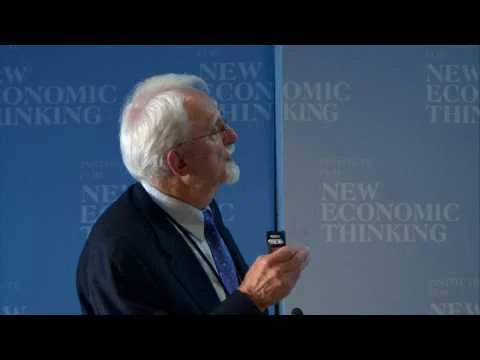
Evan Soltas on Medical Reform Federalism—in Canada

In my post “Health Economics” I propose (in effect, if not in so many words) that in place of the Affordable Care Act (“Obamacare”) states be allowed to experiment with different ways to provide universal access to medical care. On Twitter (as storified in “Miles Kimball and Noah Smith on Balancing the Budget in the Long Run”), I have sharpened that proposal to what can be translated out of Twitter shorthand to this:

Let’s abolish the tax exemption for employer-provided health insurance, with all of the money that would have been spent on this tax exemption going instead to block grants for each state to use for its own plan to provide universal access to medical care for its residents.

Evan Soltas argues here that a somewhat decentralized approach in this spirit has worked well in Canada, for at least a part of its medical spending.

Larry Summers on the Reality of Trying to Shrink Government

A Principles of Macroeconomics Post

This is a crystal clear description of how hard it is to avoid the need for substantial government revenue increases in the future–even as a percentage of GDP. The reality Larry Summers describes is why I am so focused on the dilemma I talk about in my first post, “What is a Supply-Side Liberal?”   

Persuasion

Jane Austen’s book Persuasion–unrelated to the post, but a good book

Jane Austen’s book Persuasionunrelated to the post, but a good book

I had a wide-ranging question and answer session with the Ann Arbor Science and Skeptics group yesterday about this blog. The one theme I emphasized throughout the Q&A was how good it feels to be unabashedly normative in the sense of making recommendations and making moral arguments as well as technical arguments. Even the concept of a moral argument is interesting. How can one get beyond solipsistic relativism such as the following? 

You have your opinions and I have mine, and all opinions are equally worthy, so we can’t really have a discussion.

Coming to that question as a math guy, I have always thought that persuasion needs to start with the axioms of the person I am trying to persuade. As a blogger, I have to guess the axioms–core beliefs that are fundamental in the sense that they cannot be deduced from other beliefs–of a large number of people all at once. And to the extent that people come from different places, I have to write posts that alternately work from the axioms of different parts of my audience. In order to do my job as a blogger better, I would love to hear about your axioms in the comments.  

Postscript: In the Q&A session at Ann Arbor Science and Skeptics, I realized that there are two areas of nonpartisan activism I would like to recommend:

  1. If you agree with what I said in my post “When the Government Says ‘You May Not Have a Job,’” resisting the creep of excessive licensing restrictions on jobs is an area where a little activist effort could go a long way. I suspect that at many of the state-house hearings behind decisions to impose additional licensing restrictions, only the politicians and paid lobbyists are in attendance. Having groups of public-spirited Supply-Side Liberals, Conservatives, Libertarians and Progressives who see what is at stake for the poor and for freedom send representatives to these hearings could make a big difference.
  2. Many people may not realize the extent to which political polarization in the House of Representatives arises from partisan and pro-incumbent redistricting. When electoral districts are designed to be either safe Republican or safe Democratic districts, then the main fear for a politician seeking reelection is losing in the primary. That typically pulls members of the House of Representatives toward the extremes. Nonpartisan redistricting is a way to have more districts be competitive in the general election and so make those running for Congress worry more about the general election relative to how much they worry about the primary. I believe this would pull politicians toward to center and toward a greater willingness to work with those in the other party. Getting change to happen in this area will be hard, but there are groups already working on this. I believe the long-run value to our Republic of nonpartisan redistricting would be substantial.

Postpostscript: I wanted to thank the large number of people who sent birthday congratulations for me. I tried not to tell anyone online my birthday, but Facebook did it for me. I turned 52 on August 17. It is amazing to think there are as many years behind me as there are weeks in a year. I really appreciate hearing so many kind wishes and kind words from you all.  

Update, 2013: On August 17, 2013, I turned 53. I was born in 1960. 1960 was a high birth-rate year, but it was one of the last high-birth-rate years in the baby boom. I have always felt younger than the baby boomers described in popular culture. 

Brad DeLong's Views on Monetary Policy and the Fed's Internal Politics

Not long ago, Brad and I had a Twitter discussion about monetary policy that I annotated in 

“Miles Kimball and Brad DeLong Discuss Wallace Neutrality and Principles of Macroeconomics Textbooks.”

I am glad to see that in his quest for more stimulus, Brad has turned his attention back to monetary policy as well as continuing to argue for fiscal stimulus.

This is a link to Brad’s Platonic dialogue about why the Fed is doing what it is doing and not doing what it is not doing. 

I found his categorization of the views of those who attend the Federal Open Market Committee (FOMC) meetings and vote on monetary policy (some only on a rotating basis) especially useful.  

In Brad’s discussion of what he thinks the Fed should do, I would like to see him more clearly address the question I posed to Scott Sumner: “Should the Fed Promise to Do the Wrong Thing in the Future to Have the Right Effect Now?” I give my summary of Scott’s answer in Wallace Neutrality and Ricardian Neutrality. If Wallace neutrality is an accurate description of the real world, then the only way the Fed can stimulate the economy now is by promising to overstimulate it in the future. Scott joins me in rejecting Wallace neutrality as an accurate description of the real world. Brad’s views are not clear.

One thing that may confuse the issue is that one would expect purchases of an asset to have less effect on the asset’s interest rate and therefore on the economy the closer the interest rate is to zero to begin with. Since the Fed does not view itself as having the legal authority to purchase assets with interest rates still far above zero such as index funds of corporate stocks and bonds, it is not currently allowed to get the maximum mileage from the departures from Wallace neutrality that I believe exist. (I need to more systematically discuss the pluses and minuses of different assets as a target for a print money and buy assets strategy sometime soon. Foreign assets–which the Fed is legally permitted to buy–present the most complex case.)  

In mentioning Wallace neutrality, it now gives me great pleasure to be able to give a link to the wikipedia article on Wallace neutrality initiated as a public service project of the community of supplysideliberal.com readers and brought into existence by Fudong Zhang and revised by Matt “DocStocks.”  

By the way, on fiscal policy, given that Brad is favorable in principle to my Federal Lines of Credit proposal, I wish that in his frequent posts on the need for fiscal stimulus, he frequently mentioned the possibility of Federal Lines of Credit as a reason why concerns about the national debt should not stop us from pursuing further fiscal stimulus.

Diana Kimball on Reading the Reader

I thought this was fascinating, and found myself wondering how close an analogy one can make between the economics blogosphere and the network of children’s book experts described in the Laura Miller article that Diana so aptly outlines.  

dianakimball:

Today on Twitter, Robin Sloan highlighted a recent article by Laura Miller on the tremendous rise of the Hunger Games series of books, calling the article “the best media writing of 2012.” After reading it myself, I’d have to agree.

In the grand tradition of Snarkmarket, I thought I’d…

When the Government Says ‘You May Not Have a Job’

In one of the videos I flag in my post “Milton Friedman: Celebrating His 100th Birthday with Videos of Milton,” Milton defines Aaron Director’s law: 

Director’s Law is, that almost invariably, government programs benefit the middle income class, at the expense of the very poor and the very rich.

But sometimes, the rich and the middle class both gang up on the poor. This is nowhere more in evidence than in the area of occupational licensing. In today’s Wall Street Journal, Chip Mellor writes:

More than 100 low-income and moderate-income occupations require licenses somewhere in the 50 states and Washington, D.C. They range from the understandable (school bus driver, emergency medical technician) to the ridiculous: interior designer, makeup artist, florist.

These licenses don’t come cheap. On average, they force aspiring workers to spend nine months in education or training, pass one exam and pay more than $200 in fees (as documented in the Institute of Justice study “License to Work”). One-third of the licenses take more than a year to earn. Rather than working, these individuals spend time and money jumping through hoops for the government’s permission to work.

Once an occupational licensing regime is set up, one factor making the system hard to change is that those who “paid their dues” to get the license resent the idea that others could do what they do without a license. But even before an occupational licensing regime is set up, an important impetus is often those within a field who resent the idea that others who do lower quality work should be allowed to tarnish the reputation of a field. There is a problem here. It is often a low level of skills that puts someone in the position of being poor. Therefore, to say that no one should be allowed to put up a shingle to do cheap, low-quality work is often to say that a poor person should not be allowed to work. But somehow, the poor who look so sympathetic in other contexts start looking like “riffraff” when they are the competition.

How can we square free entry into occupations with high quality for those who want high quality? In my post “Magic Ingredient 1: More K-12 School,” I suggest that 

… the stratification into different quality levels should be handled by the market as much as possible (and by government fiat as little as possible), with continually improved web-based ratings mechanisms.

Nevertheless, if political forces are insistent that something must be done by government, there is all the difference in the world between government regulation of labels and government regulation of substance. For example, under current Michigan law, you are not allowed to call yourself a “massage therapist” without a relatively high level of training. But you are allowed to do the same work as a massage therapist without special training as long as you call yourself a “body worker.” Although there is little doubt that this kind of regulation can be an aid to schemes to “keep the riffraff out,”  where the forces of competition are otherwise strong it can be argued that this kind of regulation provides extra information to consumers without actually blocking any freely-agreed-upon economic activity.    

To the extent that even the urge toward substantive occupational licensing cannot be resisted because of at least superficially plausible arguments about health and safety, it might be possible to get a better balance by imposing some kind of global budget constraint on licensing requirements that forces regulation to focus on those requirements that have the least specious justifications. Again from my post “Magic Ingredient 1: More K-12 School,” in the context of arguing for a longer school year, I write:

Others argue that health and safety and basic competence really do require training even for many jobs that sound easy, such as cutting hair or cutting nails. 

What I want to do is to restrain the tendency to go overboard on occupational licensing while allowing genuinely necessary competencies to be transmitted by requiring states to ensure that their schools high school tracks that would make it reasonably possible to be meet the legal qualifications for any of at least 60% of all licensed occupations, with each student able to be qualified with his or her high school diploma for at least 10% of all licensed occupations. Then the graduates might actually be able to get a job. This requirement for getting the Federal education grant could be met by any combination of reducing licensing requirements and increasing effective training that each state chose. I am sure that states would game the rule, so that the overall effect would be less than what this sounds on the surface, but it would be better than the way things are now, where students graduating from high school are kept out of many of the more desirable occupations by occupational licensing restrictions.  

Although occupational licensing is a major way in which the government says “You may not have a job” to the poor, sometimes the restrictions on economic activity by the poor are even more blatant. Here again from 

Chip Mellor in today’s Wall Street Journal:

Sometimes the hoops can’t be squeezed through, as Silvio Membreno of Miami has learned. Mr. Membreno seeks to do what countless immigrants have done before him: Come to America and provide for his young family as a street vendor, then grow that business into something bigger and better. Without much need for investment capital or formal education, street vendors can be their own bosses while climbing the economic ladder.

But the Nicaraguan immigrant’s dreams are being dashed by the city of Hialeah, the Miami suburb where he works. Hialeah city officials make it impossible to be an effective street vendor.

They bar vendors from selling within a football field of brick-and-mortar stores that sell the “same or similar merchandise.” They force vendors, unless in the middle of a transaction, to remain in constant motion when they would much rather stay put, sell and be safe. Vendors are even prohibited from displaying their merchandise anywhere on public or private property, even if they have the permission of the property owner. In a country with a long history of street vendors, local governments nationwide are increasingly quashing this traditional form of bootstraps entrepreneurship.

What I don’t want you to miss is the injustice of telling someone he or she may not work if the only job he or she can find is one that creates too much competition for groups who are politically more powerful.

The Economist on the Origin of Money

A Principles of Macroeconomics Post

This article in the Economist discusses the types of money that tend to arise with and without the assistance of governments. 

Here, David Glasner adds his two bits to what the Economist article said:

Again, my reading of the historical evidence – and I don’t claim more than a superficial knowledge of the historical evidence – is that there is evidence of early private minting operations. However, the early private mints were quickly displaced by mints operated by the state (or whatever you care to call the organizations headed by early monarchs). In my book Free Banking and Monetary Reform, I argued that having a monopoly over the mint was beneficial to the survival chances of any “state” competing for survival against other nearby states. To be able to survive, a state needed to be able to hire soldiers and pay for weapons. How could a monarch do that if he didn’t have an efficient system of collecting taxes? One very good way was to own a mint, and have at least a local monopoly over the minting of coins, which gave the monarch the ability to raise funds in an emergency by debasing the coinage. A prudent state would not debase the coinage except under dire circumstances, but in order to be able to engage in currency debasement, the state needed a monopoly over the coinage, and the ability to force its subjects to accept those coins at face value to discharge previously contracted obligations.  Monarchs that were also monopolists over mints had an important advantage in competition with monarchs without a mint.  So mints became part of the essential equipment of any self-respecting monarch.

Kevin Hassett, Glenn Hubbard, Greg Mankiw and John Taylor Need to Answer This Post of Brad DeLong's Point by Point

This is an important challenge by Brad DeLong to what Kevin, Glenn, Greg and John have said in defense of Mitt’s economic policy statements. They need to answer Brad. 

I have a cameo in Brad’s post. He writes:

Some economists–Miles Kimball comes to mind–think that the ultimate Romney plan will turn out to be something sensible, but that Romney cannot say what it is because doing so would disrupt the con Romney is currently running on the Republican base. Miles may be right. I fear he is overoptimistic.

I do think that Mitt is more sensible than he makes himself sound, but if I can manage to avoid a Bayesian arithmetic error, the current Intrade probabilities of 43.0% for Mitt becoming president together with the 27.7% Intrade probability of the Presidency, the Senate and the House all being controlled by Republicans imply that, conditional on Mitt being elected, there is something like a 27.7%/43.0% = .644 = 64.4% chance that Mitt will face two houses of Congress both controlled by Republicans. I think Mitt will make many serious mistakes if he is working with a Republican Senate and a Republican House of Representatives. 

Mitt’s performance as president will be much better if he faces either a Senate or a House of Representatives in Democratic control. Then the reality of working with a divided government will cause many unwise campaign promises to fall by the wayside. The more Mitt is forced by circumstances to improvise, the more his underlying good sense will come out. But unfortunately, Mitt, if he is elected, may well lack the strong Democratic checks and balances he needs to be as good a president as he could be.

More optimistically, it may well be that in the next two years between the presidential election and the midterm election we have reason to be grateful for how difficult it is to avoid filibusters in the Senate.  


Giving Credit: This post was inspired by ProGrowthLiberal’s post at Econospeak: “Team Romney Responds to Paul Krugman but not to Brad DeLong. ProGrowthLiberal say this:

Greg Mankiw lets us know that John Taylor has responded to a brief critique from Paul Krugman. John tells us that “Paul Krugman is Wrong”. Odd that neither Greg nor John addressed the savage review from Brad DeLong. It would have been impossible to miss Brad’s critique since Paul not only linked to it but based much of what he wrote on Brad’s review. So what are we to make of this omission from Team Romney? Do they agree with everything Brad said? Or are they just not willing to have an open and honest debate on the issues?

I noticed ProGrowthLiberal’s post because Mark Thoma flagged it on his Economist’s View site–which serves a crucial aggregator role for independent economics blogs in addition to carrying Mark Thoma’s own posts.  

Technical Note: Tumblr link posts such as this one are intended to emphasize what they are pointing to: in this case, Brad’s post. So the title of my post is a link to Brad’s. To find the address of one of my link posts, you can always use the "All posts by date” button on the sidebar.  In this case, the address is 

http://blog.supplysideliberal.com/post/29630504620/kevin-hassett-glenn-hubbard-greg-mankiw-and-john

Style Guide Note: In order to emphasize the equality of all human beings, in posts appearing on supplysideliberal.com, I lean toward referring to public figures as well as others by their first names. (Of course, I only follow that rule as long as it does not get in the way of clarity or conflict too much with other stylistic considerations. I am less consistent in using first names in tweets, since there, readers don’t have as much chance to get used to it.)  

Conflict of Interest Notice: Mitt is a relative, though not that close. His father George Romney (the former Governor of Michigan) was my grandmother Camilla Eyring Kimball’s first cousin. I am named after our common ancestor Miles Park Romney.

Other Posts Inspired by the Presidential Campaign

Mitt:


Paul (Ryan):

Barack:

The Flat Tax, The Head Tax and the Size of Government: A Tax Parable

As Axel Leijonhufvud wonderfully spoofed in “Life Among the Econ,” one of the bread-and-butter tasks of a working economist is to build and study economic models. Some of these models are meant to be a reasonable representation of some aspect of the economy, while others are meant to be only what one of my favorite philosophers, Daniel Dennett would call “intuition pumps”—parables that give us the pregnant analogies and intellectual workouts needed to raise our economic IQ for thinking about the real world. In this post, I’ll tell you a tax parable. It is not meant to have any immediate moral for the real world, but only to provide food for thought. 

Economic models are inhabited by creatures called “agents.” Agents are stand-ins for people. The key ingredients in economic models are

  1. what the agents want,
  2. what the agents know, and
  3. what is possible for the agents to do.

In this model, the agents are all identical (more identical than real-life identical twins), and want three things: consumption C, leisure time L and a public good (think of city parks or Mars landers) labeled G to stand for government purchases. They know everything going on in the model, and the key thing they can do is divide up their time between making consumption goods C, enjoying leisure L, and making the public good G. Let’s measure the amount of each good by how much time it takes to make it or enjoy it. All the different uses of time have to add up to all the time the agents have. Since all the time they have is 1 day per day, measuring everything in time equivalents enables us to say that   

          C+L+G=1.                  (Only So Much Time in a Day Equation)

You might want to think of this as waking time being divided up, with sleep time off limits to the model. You also might find it helpful to imagine that a stripped-down central bank has no other job than to keep the wage at $1 per (waking) day.

The details of how much the agents want each of C, L and G are governed by the preferences and utility function most beloved of economists: Cobb-Douglas preferences, represented by a Cobb-Douglas utility function. Because I, like many economists, love logarithms (in particular the natural kind), I will use logarithms to write down the utility function.  But since many readers will not have the same love for logarithms that I have, I am giving you fair warning to avert your eyes from the following utility function:

          (1/3) log( C ) + (1/3) log(L) + (1/3) log(G)             (Utility Function)

You can escape having to think any more about logarithms, if you know just one thing: Cobb-Douglas preferences make agents want to devote a fixed fraction of their spending to each individual good. (That is the way to maximize utility.) In this case, if C, L and G were ordinary goods, the agents would want to devote 1/3 of their spending to each. Update: If you want to learn more about logarithms and why this utility function tends to lead to equal amounts spent on each good, see my posts “The Logarithmic Harmony of Percent Changes and Growth Rates” and “The Shape of Production: Charles Cobb’s and Paul Douglas’s Boon to Economics.”

The closest we can come to treating consumption, leisure and the public good in this model as ordinary goods is if we imagine a social planner. In the real world, free-market economists are not at all fond of social planners, seeing them as chauffeurs on Friedrich Hayek’s Road to Serfdom. But as long as they are confined inside of economic models, free-market economists love social planners best of all. The reason is that–as long as there are no distortionary taxes or other more complex distortions–the free market delivers the same outcome as a wise and benevolent social planner. In other words, the social planner I am talking about is not a fallible human, but the Invisible Hand. The one limitation to the benevolence of the Invisible Hand is that the Invisible Hand sometimes favors some individuals over others, making some rich and some poor. But in this model, all are alike to the Invisible Hand, and there is equality.  But there is another complication for the Invisible Hand. The Invisible Hand knows just how hard the agents should work once the amount of the public good G has been decided, but needs a government to decide how much of the public good G to make. Fortunately, since everyone is identical in this model, as long as the principle of equality is maintained, there are no political disagreements in this model, and the Invisible Hand plus a democratic government would yield the same result as an all-wise, benevolent social planner committed to equality: each agent would spend a 1/3 of her time making consumption goods, 1/3 of her time enjoying leisure, and 1/3 of her time making public goods. (“Agents” are traditionally female ever since the dawn of political correctness, and I will hew to that tradition here.)

Recall now that to bring forth the Invisible Hand in all its power from Aladdin’s lamp, the taxes must be non-distortionary taxes.  Non-distortionary taxes are taxes that do not create perverse incentives, which means they need to be taxes where the amount does not depend on what the agents do.  Since all the agents are being treated equally, that means a head tax: each agent pays exactly the same amount, regardless of how much she earns.  To show that with a head tax the Invisible Hand does the same thing as a benevolent, all-knowing social planner, think of things this way. Once the political decision is made to have the amount of the public good that 1/3 ofeveryone’s time can produce (financed by the head tax), each individual then wants to divide up the remaining time equally between the two private goods: consumption and leisure.  Since 2/3 of the time remains after the public good G is produced, dividing it equally between consumption and leisure leads to 1/3 of everyone’s time being devoted to consumption and 1/3 to leisure, exactly as the social planner would have done.   

Whatever time the agents are not spending at leisure, they spend working. So spending 1/3 of their time at leisure means they spend 2/3 of their time working. With the amount work produces worth $1 per waking day of work, that means that output (GDP) is 2/3 of a dollar per person per day, or 66 and 2/3 cents per day:  

          Output = C+G = 1-L = 2/3.    (GDP Per Person Under a Head Tax)

So far so good. Now, suppose that in order to have a tax system more like other worlds, this economy switches over to financing the public good by a flat tax on labor income. (The government is only going to raise enough taxes to pay for the public good G.) Think of the agent’s decision of how much time to spend working under the flat tax. She is working when she isn’t at leisure, so she is working 1-L per day.  If the tax is at rate t, then she takes home (1-t)(1-L) dollars each day after taxes if the wage is $1 per day. Firms have to pay the whole before-tax wage of $1 per day, so with competition, prices end up at $1 for a day’s worth of consumption goods and $1 for a day’s worth of the public good.

We haven’t yet figured out the best size of government (amount of the public good G) is when there is a flat tax. But whatever G is, if the agent sees G as fixed, to maximize the rest of her utility she will want to “spend” an equal amount on the other two goods: leisure and consumption. But what is the “price” of leisure she sees that we should use in figuring out how she thinks of herself as spending on leisure? If she works a bit less, she only has to sacrifice the after-tax wage $(1-t) per day’s worth of extra leisure. So let’s think of her total spending on leisure as (1-t)L dollars per day. Spending the same amount on consumption as leisure (as the Cobb-Douglas preferences lead her to do) then means that

          C = (1-t)L.        (Equal Shares Equation: Flat Tax)

But she also has to be able to pay for the consumption. Since she takes home (1-t)(1-L) dollars per day, the amount she can afford is

           C=(1-t)(1-L).     (Budget Constraint: Flat Tax)

There has been a debate online about how much algebra students should be taught in high school. (One of the best pieces in that debate is this one.) One of the arguments in favor of learning algebra is that one never knows when the urge to analyze an economic model might strike. Combining the Equal Shares Equation and the Budget Constraint, 

          (1-t)L = C = (1-t) (1-L)       (Combination Equation: Flat Tax)

The tax rate is less than 1, that is, less than 100%, so (1-t)>0 and we can divide by it to find that 

          L = 1-L.          (Equation to Solve for Leisure L: Flat Tax)

This one is easy to solve: L=½. That is, under the flat tax, an agent always spends half of her waking time at leisure and the other half of her time working.  

Being at leisure half the time means the agents work the other half of the time. So

          Output = C+G = 1-L = ½.    (GDP Per Person Under a Flat Tax)

That is, GDP under the flat tax is 50 cents per person per day under the flat tax instead of the 66 and 2/3 cents per person per day it was under the head tax. Since ½ is equal to ¾ of 2/3, imposing a flat tax instead of a head tax has caused GDP to fall by ¼ or 25%.   

It is time to think about the size of the government–in this case, the amount of the public good G.  Let’s imagine that the government in this world experiments with various levels of G for a little while before they settle on the best amount.  The agents in this world will notice something interesting: the size of the government has no effect on GDP! As long as the budget is balanced, with the flat tax just paying for G, time worked, and therefore output, will stay constant at ½.  What is going on? As I wrote in two passages of my post

“Can Taxes Raise GDP”

… what about a consumption tax that is a certain percentage of everyone’s consumption?  On the one hand this makes people feel poorer so they want to work more, but on the other hand, what someone can buy with an extra hour of work is less, so they want to work less.  The standard view is that these two effects will roughly cancel each other out.  So the amount people want to work—and thus GDP in this simple model—will stay about the same. …The basic argument for the standard view is that to households, a consumption tax looks a lot like a wage cut.  And we have a lot of information about what higher or lower wages do to desired work hours.  Among people who have to live on their own wages, there is surprisingly little difference in how many hours people want to work based on whether they have high wages overall or low wages overall over the course of their lives.  

In the model at hand, it is easy to see how a tax increase looks like a wage cut: the after-tax wage is 1-t.

With G having no effect on the fraction of time worked and therefore no effect on GDP, the  amounts of consumption and the public good have to add up to the constant GDP of ½:

          C+G = ½.

Equivalently,

         C = ½ - G.

Thus, more of the public good G comes at the expense of consumption, one for one. So even though a larger government does not reduce GDP, it does cost something.  It has an

opportunity cost

in reduced consumption.

What is the right size of government if it is stuck with financing G with a flat tax? Again, the Cobb-Douglas preferences help. Holding leisure fixed at ½, Utility is maximized by equalizing the amount spent on consumption and the amount spent on the public good. Since the two amounts add up to ½, to equalize them, the quantity of consumption and the quantity of the public good must both be ¼. Here again, as under the head tax, this happens through the political process, but with everyone identical and treated equally, there is no reason for any disagreement. Since half of output was to be used for the public good, the flat tax rate had to be 50%.   

As in all standard economic models, all of the agents in this model understand the economics of the model perfectly. But let’s pretend that some of the children, too young to be agents making economic decisions in their own right–while eating their portions of their mothers’ consumption–ask questions about taxes: “Mom, in the olden days when our people experimented with different sizes of government, it seemed that the size of government and the level of taxes had no effect on output. Does that mean that taxes don’t matter?” And the mothers all carefully explain to their children that in the truly ancient days (before they had begun to follow the customs of other worlds), when there was a head tax instead of a flat tax, output had been higher: 66 and 2/3 cents per person per day, instead of 50 cents per person per day. And in those truly ancient days, agents had had both more consumption and more of the public good (with the same 50-50 shares of output in C and G as now). So, they told their children “Taxes do matter for output.”

But one bright and brave girl said “Mom, in those truly ancient days, people may have had more consumption and more of the public good, but they had less leisure. Are you sure they were better off?” That led to an algebra lesson. Her younger sister averted her eyes in fear of the equations. But this bright and brave girl learned (with her mother writing with big spaces in between equations to make things less fearsome) about utility functions. She learned that utility functions only had more and less but otherwise had no meaning, so that any increasing function of a utility was as good as the original utility function. And she learned that 

exp(3*[ (1/3) log( C ) + (1/3) log(L) + (1/3) log(G)]) = C L G,

so that one could compare how well-off people were in the truly ancient days to how well-off they were now by looking at C L G just as well as by looking at

(1/3)log( C )+(1/3)log(L)+(1/3)log(G).

In the truly ancient days, under the head tax, C L G was

(1/3)(1/3)(1/3) = 1/27.

Now, under the flat tax, C L G was 

(¼)(½)(¼) = 1/32.

In order to compensate for the effect of the flat tax, current consumption C would have to be increased by the factor 32/27, holding L and G constant, in order to make agents as well-off as in the truly ancient days under the head tax. Since 32/27 is about 1.185, it would take an 18.5% improvement in the technology for producing consumption in order to have the same effect on agents’ welfare as it would to switch back to the head tax, her mother told her.    

But the bright and brave girl was not finished with her questions. “Mom, what if when I grow up I am not as good at making things as the other agents and so have a lower income? Would I still be better off under the head tax than under the flat tax?” Her mother first reassured her “In all of our world, no one has ever been any different from anyone else in productivity once they were grown. But let’s look at your question as a math problem.” After setting up the problem as a cubic equation, the mother left her daughter to do the problem as math practice. Assuming she was less productive than others (A<1, where A was her relative productivity) the bright and brave girl could see that, under the flat tax she would pay only A/4 in taxes (and others would pay ¼), while under the head tax she would pay 1/3.  But under the flat tax, G would be only ¼, while it was 1/3  under the head tax. Also, under the flat tax, the annoying incentive to work less and the smaller income effect from taxes would mean she would have leisure of ½ and consumption of A/4, while under the head tax, both her consumption and leisure would be [A-(1/3)]/[1+A]. Though the bright and brave girl was not completely certain her answer was correct, the number she came up with was that as long as she was at least 86.4% as good at making things as all the other agents when she grew up, she would still be better off under the head tax.  

But even then, once she had solved the cubic equation, the bright and brave girl had one more question: “Mom, why do we have to follow the customs of other worlds and have a flat tax instead of a head tax?”
Jonathan Portes and Others on the Mystery of Why Americans are So Unhealthy

In my post “The OECD Compares Health Care Systems” earlier today, I posed this question:

To what extent is the bad performance of the U.S. in life expectancy really a failure of Medicaid—the government medical program for the poor? If we did Medicaid right, while keeping the rest of the system the same as it was before the Affordable Care Act (Obamacare), could we dramatically reduce mortality while at most modestly increasing Medicaid expenditures?

Jonathan Portes answered “probably no” by email, saying “this paper and predecessors is the best comparison of health outcomes (not just mortality, but quite a few more which may be more directly related to health system quality) between US and UK”:

James Banks, Alastair Muriel and Jim Smith: “Disease Prevalence, Disease Incidence and Mortality in the United States and in England." 

I know Jim Smith from a joint University of Michigan-RAND project on "Internet Interviewing” that we are both involved in (the origin of Arie Kapteyn’s amazing American Life Panel), and have the highest respect for him. Jonathan zeroes in on this description that James Banks, Alastair Muriel and Jim Smith give of their previous work:

In a recent widely cited paper, we compared disease prevalence among middle age adults 55-64 years old in England and in the United States (Banks et al. 2006). Based on self-reported prevalence of seven important illnesses (diabetes, heart attack, hypertension, heart disease, cancer, diseases of the lung, and stroke), Americans were much less healthy than their English counterparts, differences that were large along all points of the socioeconomic status distribution. Moreover, using biological markers of disease, we found similar health disparities between Americans and the English, suggesting that these large health differences are not simply a result of differential reporting of illness in the two countries. They also exist with equal force among both men and women (Banks et al.2009). Since we purposely excluded minorities (African-Americans and Latinos in American and immigrants in England), these differences were not solely due to American health issues in the African-American or Latino populations or the growing immigrant population in England. Finally, these disparities in prevalence of chronic illness were not the consequence of differences between the two countries in conventional risk factors such as smoking, obesity, and drinking. Health disparities were essentially unchanged when we controlled for different levels of these risk factors in America and in England.

Jonathan summarizes this by saying

The key point here is “Americans were much less healthy than their English counterparts, differences that were large along all points of the socioeconomic status distribution.” I.e., it’s not just about the poor. Equally, it’s certainly not just about the health system either–public health more generally, income distribution, the rest of the welfare state, etc, all probably play a role.

James Banks, Alastair Muriel and Jim Smith emphasize that the lower health in America applies across the board, for both the high and low of society. But the differences between different socieconomic groups in America are remarkable too. Jim House, my colleague in the Survey Research Center at the University of Michigan told me this fact: in the United States, the gap between the health of those who have college degrees and those who don’t has been growing dramatically. In particular, in recent years it has become apparent that those with college degrees tend to live a long time and then have only a short period of bad health in the period right before death–a pattern significantly less common for those without college degrees. Here is one of his academic papers backing up that claim.

The OECD Compares Health Care Systems

In response to his Twitter comments related to my post “Miles Kimball and Noah Smith on Balancing the Budget in the Long Run”–which inevitably focused on health care, since that will be the biggest ticket item in the government budget in the future–I begged Jonathan Portes to point me to something relatively brief that I could read to educate myself about the variety of different health care systems in Europe and other advanced countries. He sent me a link to this user-friendly article by the OECD:

Health Care Systems: Getting More Value of Money.

Pay particular attention to the diagram at the bottom of page 7, which lays out the basic varieties of health care systems. Also, though I have heard this fact before, the way in which the U.S. falls below the norm in ability to (on average) transform health care spending into life expectancy in the graph on page 4 is striking.

The question I would like to pose is this:

To what extent is the bad performance of the U.S. in life expectancy really a failure of Medicaid–the government medical program for the poor? If we did Medicaid right, while keeping the rest of the system the same as it was before the Affordable Care Act (Obamacare), could we dramatically reduce mortality while at most modestly increasing Medicaid expenditures?

Note: The OECD or “Organization for Economic Co-operation and Development" is highly respected among economists. It is more or less an organization of the richer countries in the world. 

Update: After I announced this post by tweet, I was tweeted this link to a Commonwealth Fund brief:

Explaining High Health Care Spending in the United States: An International Comparison of Supply, Utilization, Prices, and Quality.

Victor Fuchs and Zeke Emanuel on Health Care Reform

Alan Goldhammer’s (pen name Orange14) comment on my post “Miles Kimball and Noah Smith Discuss Balancing the Budget in the Long Run” is important enough that I am reprinting it here. Appropriately, Noah and I, and the many others who joined the Twitter discussion had focused on health care as the key issue for long-run budget balance. So Alan’s comment is about health care policy:

Interesting exchange but the two of you seem to not know that this has already been proposed for the most part by Victor Fuchs and Zeke Emanuel in the New England Journal of Medicine back in 2005.  Emanuel later extended the proposal to a book, “Healthcare Guaranteed: A Simple, Secure Solution for America.”  It basically does what you want, establishes a global budget for all health care that is paid for by a VAT set by Congress.  Everyone (including those on Medicare and Medicaid) get a voucher to buy an insurance policy to cover their health care.  After market insurance would be available for those who want more than the basic package (the same as is the case with Medigap policies today).

I was involved in this debate going back to 1990 and have tracked almost every proposal that has come along.  This one always made the most sense to me for a variety of reasons:  1) everyone is insured, 2) employers are off the hook and do not have to cover employees which means a better balance sheet, 3) the Medicare and Medicaid problems are solved, 4) we don’t automatically conclude that private sector delivery is bad, and 5) a global budget is established for all of health care which is responsive to the public (through Congress).

In addition, a portion of the VAT is set aside for technology assessment research to determine what works and what doesn’t so that paid for procedures/products are assessed.

Of course the only problem is getting this thing passed by Congress and signed by the President.  No small hurdle there.  The two of you should read the book.  Unfortunately, the NEJM article is still gated.

Alan also sent me the following link by email: 

“Solved!” the Washington Monthly Article by Ezekiel Emanuel and Victor Fuchs on Universal Health Care Vouchers.