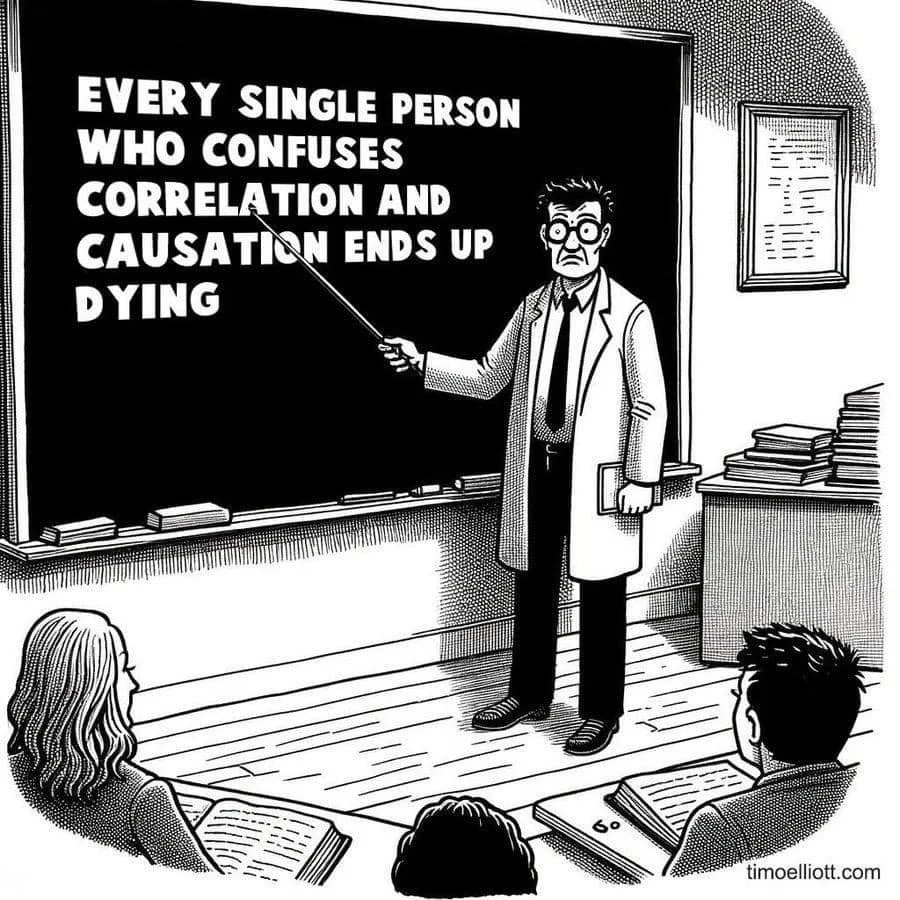
Zombie Firms, Risk-Taking and Interest Rates
Link to the YouTube video shown above. h/t Torsten Slok
The video above is a nice discussion of zombie firms, with a bit of discussion of “cash” vs. risky assets toward the end. I was reminded of two passages I wrote in my post “Contra John Taylor,” in 2013:
**********
Low rates and zombie loans.
The low rates also make it possible for banks to roll over rather than write off bad loans, locking up unproductive assets.
This is one of John’s best and most interesting points. It is a quirk of traditional loan contracts that the repayment rates expected by lenders are sometimes slower when nominal interest rates are low. This is a place where the free market should do its magic, with lenders making sure that the rates at which they are supposed to be repaid are adequate to help them identify badly-performing loans early on. The free market will get better at this the more experience businesses have with low nominal interest rate environments.
***********
Low interest rates as fuel for speculation. Here, he says
The Fed’s current zero interest-rate policy also creates incentives for otherwise risk-averse investors—retirees, pension funds—to take on questionable investments as they search for higher yields in an attempt to bolster their minuscule interest income.
I can’t make sense of this statement without interpreting it as a behavioral economics statement about some combination of investor ignorance and irrationality and fraudulent schemes that prey on that ignorance and irrationality. The often-repeated claim that low interest rates lead to speculation cries out for formal modeling. I don’t see how such a model can work without some combination of investor ignorance and irrationality and fraudulent schemes preying on that ignorance and irrationality. (That is, I don’t see how the claim could hold in a model with rational agents and no fraud.) Whatever combination of investor ignorance and irrationality and fraudulent schemes preying on that ignorance an irrationality a successful model uses are likely to have much more powerful implications for financial regulation than for monetary policy. It is cherry-picking to point to implications of a not-fully-specified model for monetary policy and ignore the implications of that not-fully-specified model for financial regulation.
Toward a National Index of Well-Being—Kristen Cooper →
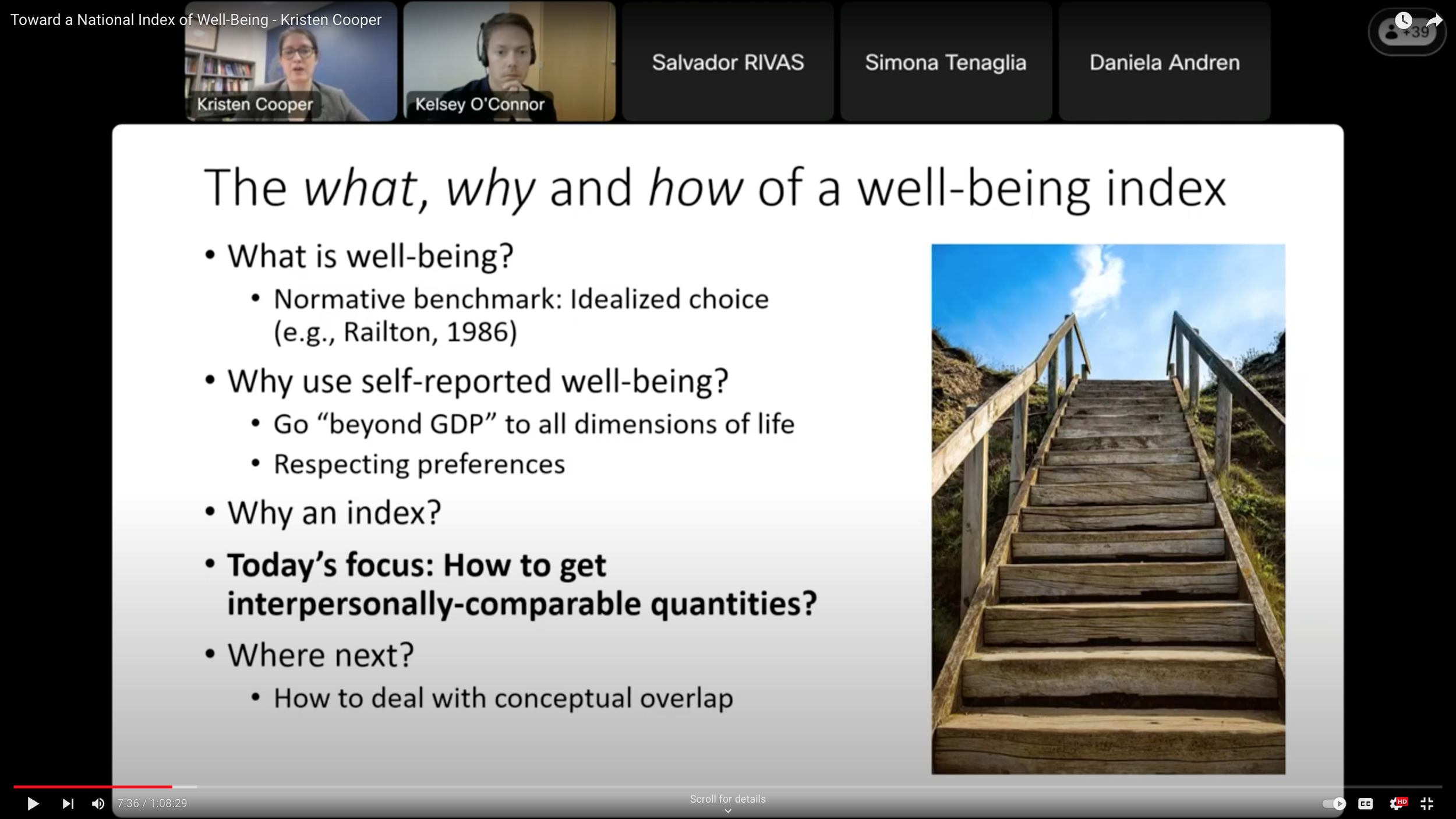
Link to the video shown above on YouTube
In this video, my coauthor Kristen Cooper gives a run down of most of the work I have been involved in using self-reported well-being data. Both Kristen and I answer questions at the end.
Human Population Through Time—American Museum of Natural History
h/t Joseph Kimball
Daily Sugar-Sweetened Soft Drink Consumption Correlates with Liver Disease →
For more on the dangers of sugar, see “Miles Kimball on Diet and Health: A Reader's Guide.”
The Candification of Fruit—Bee Wilson
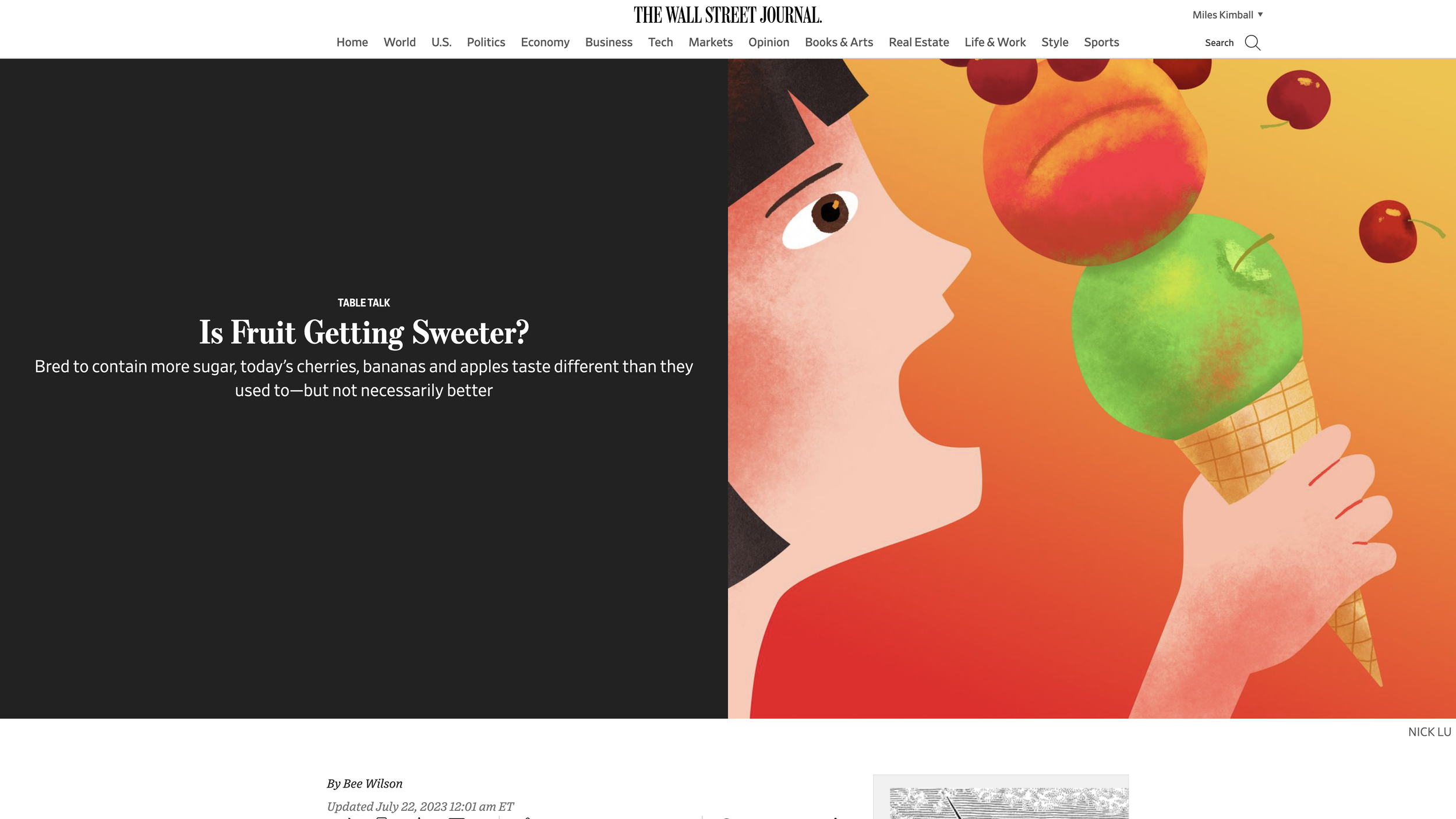
Fruit has a very positive reputation. But the story about fruit is actually more complicated. The other things in fruit are good, but the sugar in fruit is bad. Sugar doesn’t magically become innocent by being inside of fruit, though if there is enough fiber in a piece of fruit, that might slow down the absorption of the sugar somewhat.
In her Wall Street Journal article “Is Fruit Getting Sweeter?” Bee Wilson writes:
Is modern fruit bred to be sweeter than in the past? The short answer is yes …. Some of the most powerful evidence that fruit is sweeter than before comes from zoos. In 2018, it was reported that Melbourne Zoo in Australia had stopped giving fruit to most of its animals because cultivated fruit was now so sweet that it was causing tooth decay and weight gain. The monkeys at the zoo were weaned off bananas onto a lower-sugar vegetable-based diet.
Among fruit breeders, the word ‘quality’ is now routinely used as a synonym for ‘high in sugar’ (though firmness, color and size are also considerations)…. ‘in general, the sugar content’ of many fruits are now higher than before ‘owing to continuous selection and breeding.’ …
… the real problem with modern fruit is that it has become yet another sweet thing in a world awash with sugar. Even grapefruits, which used to be bracingly bitter, are sometimes now as sweet as oranges.
Thus, fruit is being bred to be less and less healthy. I hope this can be reversed. For those people who realize how unhealthy sugar is, it is possible to breed fruit that is tasty in other ways. This is something I predict people will become more and more interested in in the future.
Related Posts:
Best Health Guide: 10 Surprising Changes When You Quit Sugar
Heidi Turner, Michael Schwartz and Kristen Domonell on How Bad Sugar Is
Michael Lowe and Heidi Mitchell: Is Getting ‘Hangry’ Actually a Thing?
The Better Side of Conventional Wisdom about Diet and Health
How Many Thousands of Americans Will the Sugar Lobby's Latest Victory Kill?
Aseem Malhotra: Avoiding Sugar is Much More Powerful Than Taking Statins (link post)
Sam Apple on the Tragedy of Pro-Sugar Policies of the US Government