Rules for AI Use in Scientific Research
I wrote these two rules as a pair of posts on X. There has been a strong favorable reaction that suggests many people agree, and some interesting discussion.
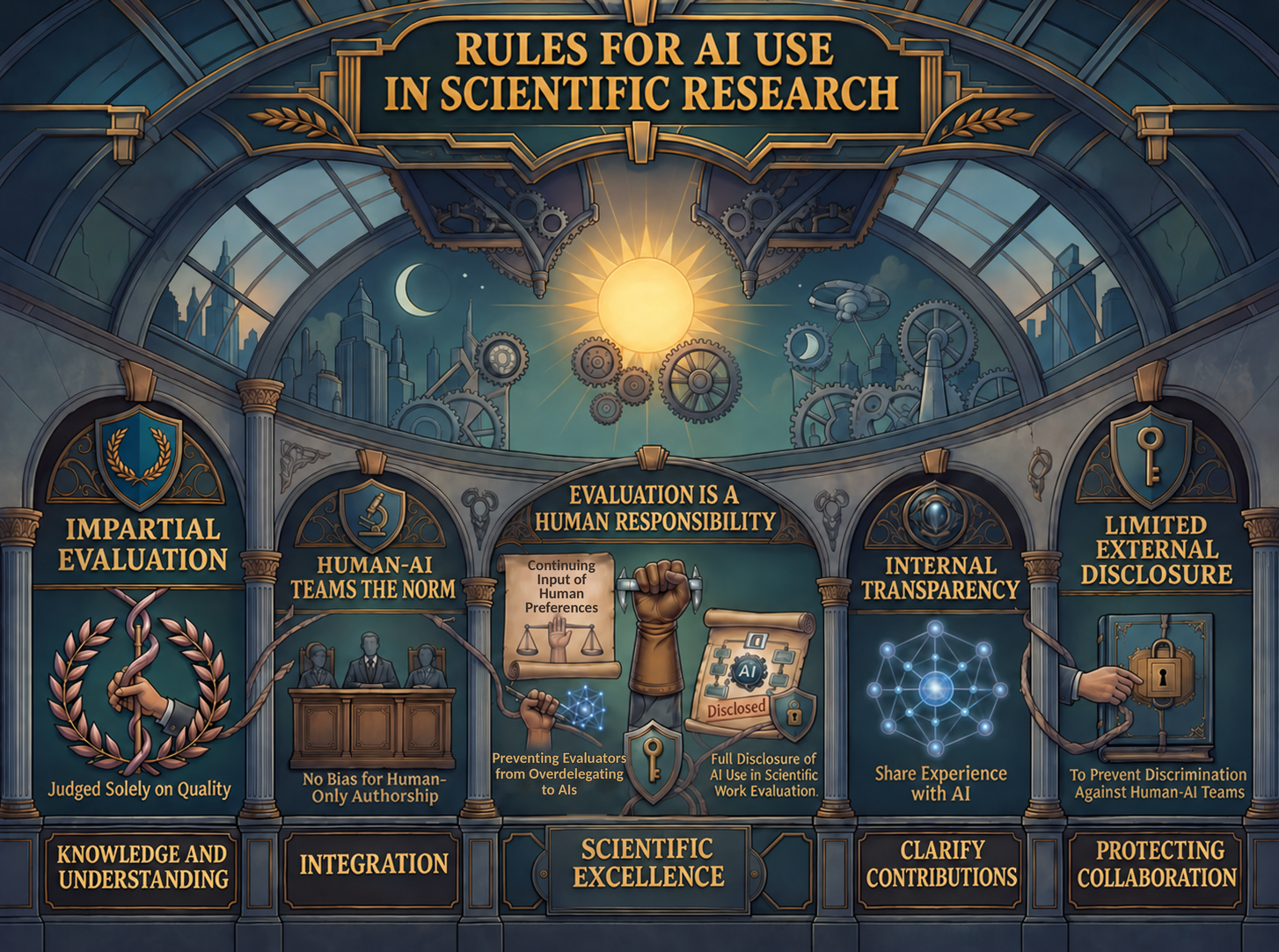
Rules for AI use in scientific research:
#1. Unless AI was used to help create the data set analyzed, a finished product should never be evaluated based on whether AI was used or not. The default is that *everything* is done by human-robot teams. The question is how good it is.
#2. In interactions with coauthors and colleagues, always talk freely about your AI use. You want people to know that you have value added, which includes (a) clever prompting of AI and (b) doing things that AI is not yet good at. And discussion about AI use is how we all learn about the strengths and weaknesses of AI and ways to get it to do a better job and behave better.
#3 Evaluation of scientific work must be a human responsibility. Measures must be taken to prevent human evaluators from delegating their evaluation task to AIs. There should be full disclosure of AI use in evaluation of scientific work.
Update November 11, 2026: On X, Jason Kerwin writes: “I disagree fairly strongly with this [#3]. It's impossible for human referees to keep up with AI-generated work. We need to equip referees and especially editors with strong weapons in this arms race.” I reply: “I agree. What I mean is human responsibility for articles accepted into journals. AI is needed to help reject the vast lower tail.”
I recognize this will be quite annoying to those who are rejected, but I don’t know a good alternative. It is a bit like having to have certain test scores in order to ever have one’s college application evaluated by a human.