Toward a National Index of Well-Being—Kristen Cooper →
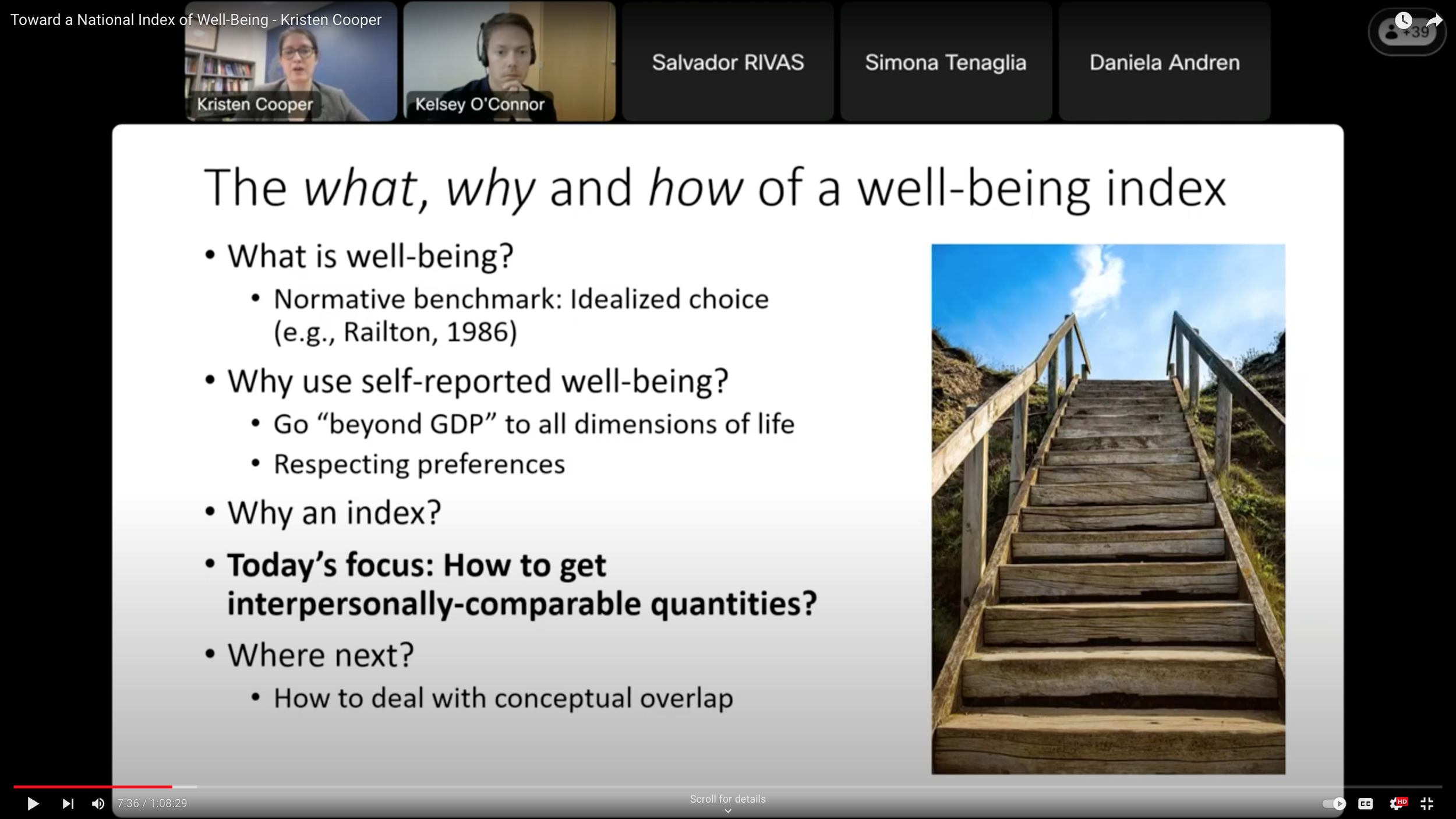
Link to the video shown above on YouTube
In this video, my coauthor Kristen Cooper gives a run down of most of the work I have been involved in using self-reported well-being data. Both Kristen and I answer questions at the end.
Human Population Through Time—American Museum of Natural History
h/t Joseph Kimball
Daily Sugar-Sweetened Soft Drink Consumption Correlates with Liver Disease →
For more on the dangers of sugar, see “Miles Kimball on Diet and Health: A Reader's Guide.”
The Candification of Fruit—Bee Wilson
Fruit has a very positive reputation. But the story about fruit is actually more complicated. The other things in fruit are good, but the sugar in fruit is bad. Sugar doesn’t magically become innocent by being inside of fruit, though if there is enough fiber in a piece of fruit, that might slow down the absorption of the sugar somewhat.
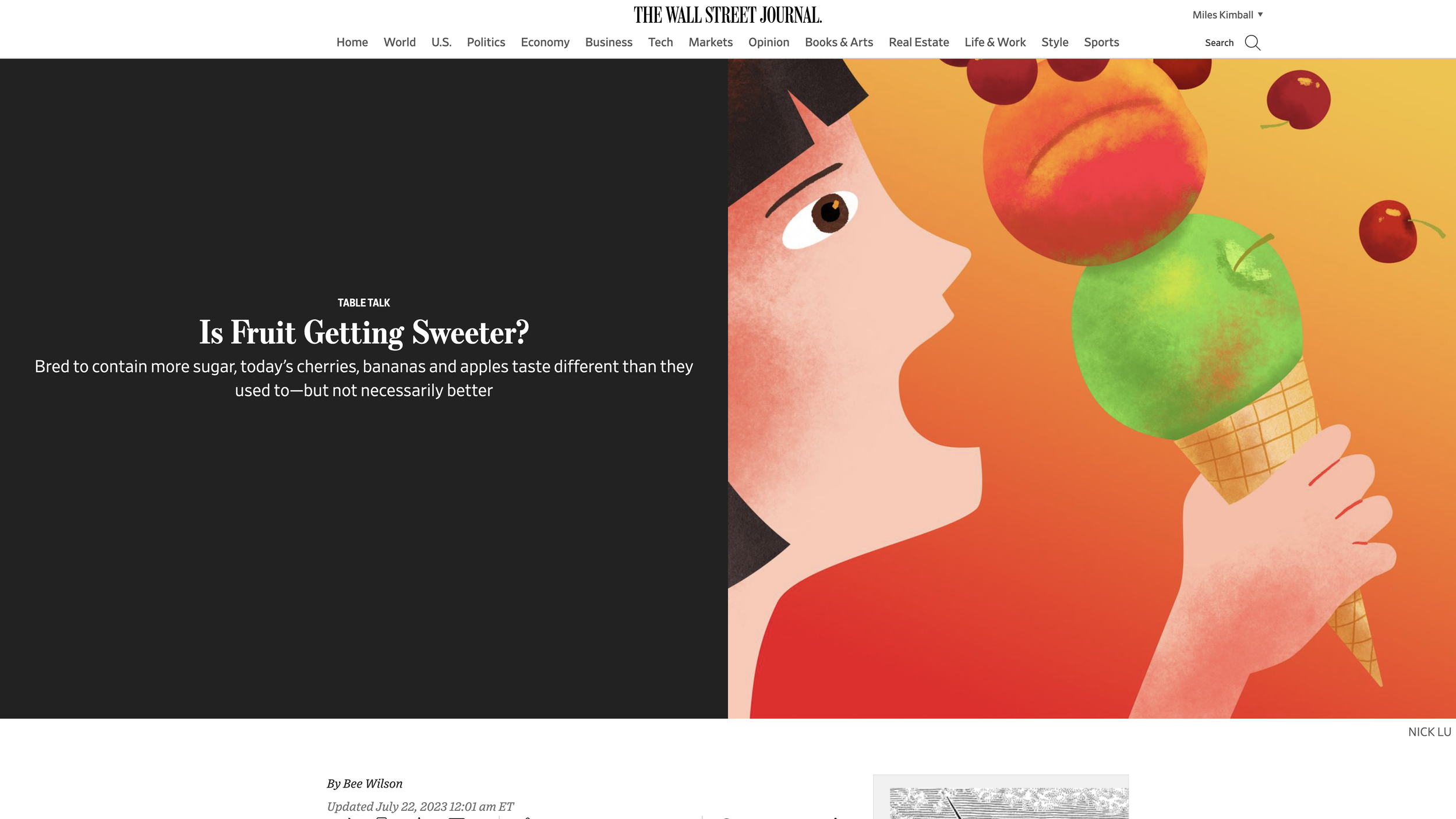
In her Wall Street Journal article “Is Fruit Getting Sweeter?” Bee Wilson writes:
Is modern fruit bred to be sweeter than in the past? The short answer is yes …. Some of the most powerful evidence that fruit is sweeter than before comes from zoos. In 2018, it was reported that Melbourne Zoo in Australia had stopped giving fruit to most of its animals because cultivated fruit was now so sweet that it was causing tooth decay and weight gain. The monkeys at the zoo were weaned off bananas onto a lower-sugar vegetable-based diet.
Among fruit breeders, the word ‘quality’ is now routinely used as a synonym for ‘high in sugar’ (though firmness, color and size are also considerations)…. ‘in general, the sugar content’ of many fruits are now higher than before ‘owing to continuous selection and breeding.’ …
… the real problem with modern fruit is that it has become yet another sweet thing in a world awash with sugar. Even grapefruits, which used to be bracingly bitter, are sometimes now as sweet as oranges.
Thus, fruit is being bred to be less and less healthy. I hope this can be reversed. For those people who realize how unhealthy sugar is, it is possible to breed fruit that is tasty in other ways. This is something I predict people will become more and more interested in in the future.
Related Posts:
Best Health Guide: 10 Surprising Changes When You Quit Sugar
Heidi Turner, Michael Schwartz and Kristen Domonell on How Bad Sugar Is
Michael Lowe and Heidi Mitchell: Is Getting ‘Hangry’ Actually a Thing?
The Better Side of Conventional Wisdom about Diet and Health
How Many Thousands of Americans Will the Sugar Lobby's Latest Victory Kill?
Aseem Malhotra: Avoiding Sugar is Much More Powerful Than Taking Statins (link post)
Sam Apple on the Tragedy of Pro-Sugar Policies of the US Government

National Intervention Evidence for the Benefits of Reducing Sodium Intake
Bee Wilson’s June 22, 2023 Wall Street Journal article “It’s Too Bad Salt Tastes So Good” provided the most persuasive evidence I have seen for reducing sodium being beneficial for most people.
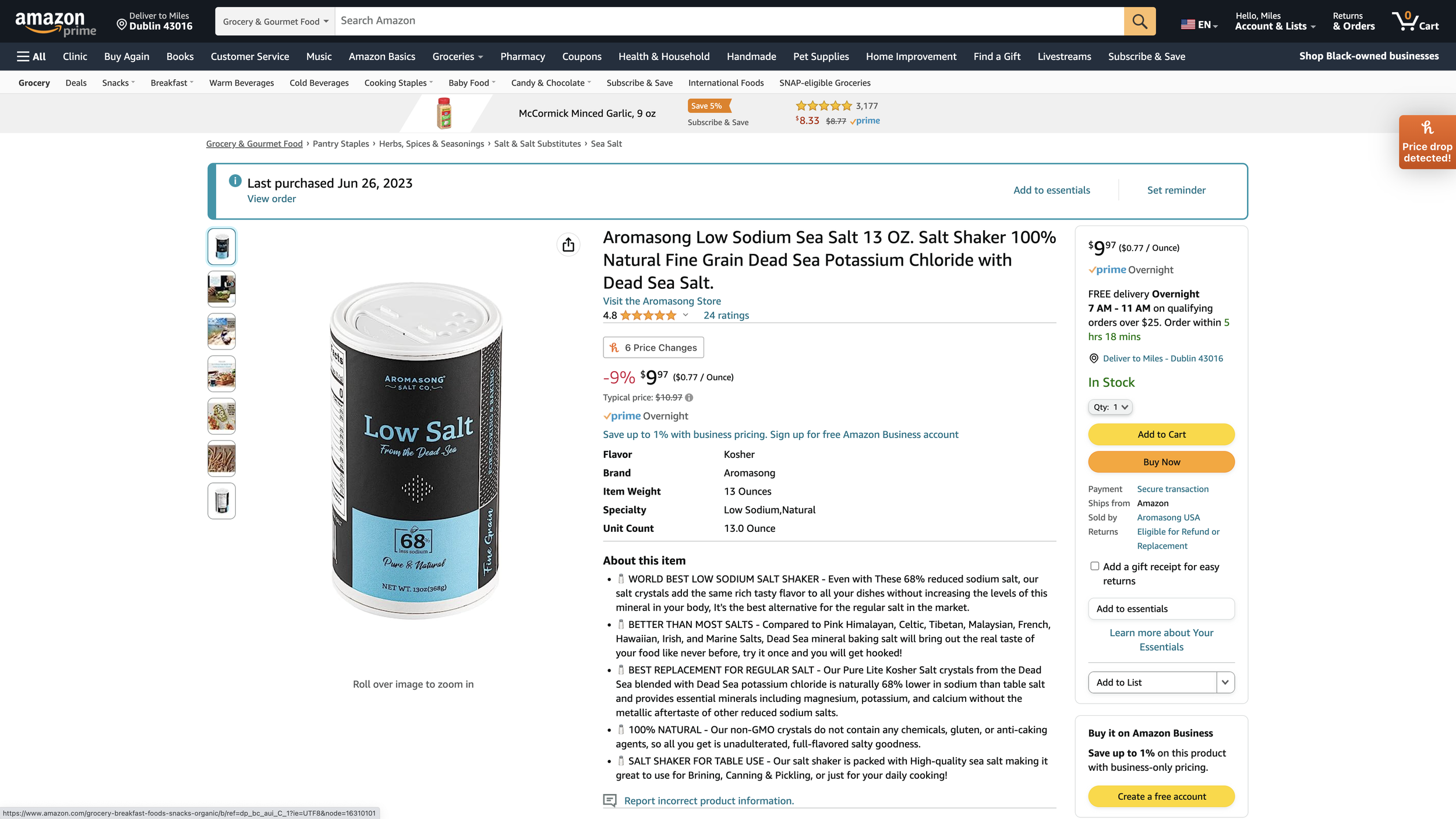
I find the national intervention evidence from the UK and Japan quite convincing about the benefits of reducing sodium intake for the average person. However, as the quotation in the third tweet notes, in the US and UK, most of our sodium intake is in highly processed food. (In Japan, traditional food has a lot of salt in it.) So those who avoid—as they should—highly processed food, may not need to reduce their sodium intake. I am in that category. I also test out as having low blood pressure. But if I ever start worrying about my sodium intake, I have bought some “Dead Sea Salt” that is 2/3 potassium chloride and only 1/3 Sodium Chloride, following Bee Wilson’s advice to try replacing some of one’s sodium chloride consumption with potassium chloride consumption.
Cyclic Sighing

I did a series of 4 blog posts on James Nestor’s book Breath a while back:
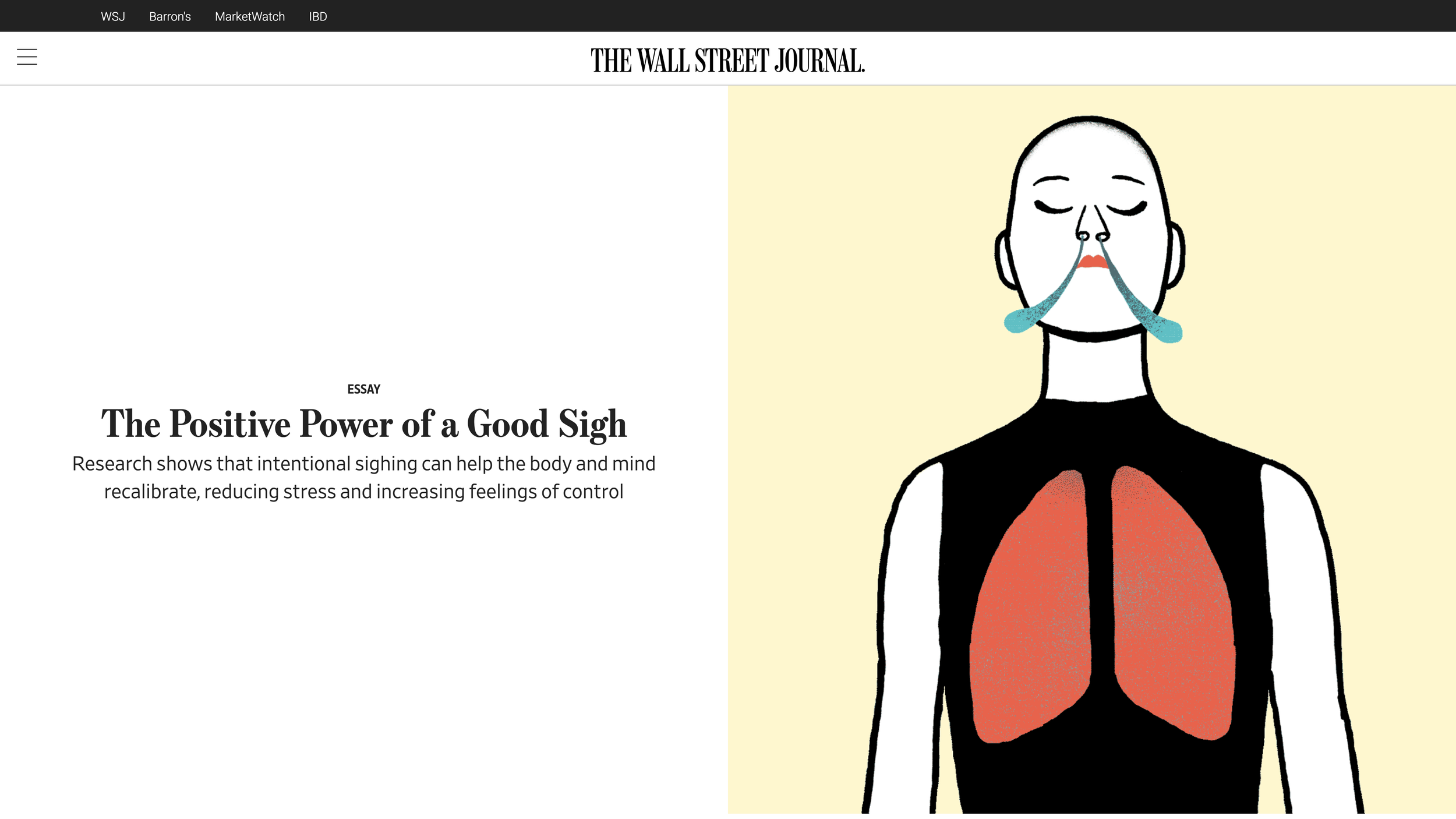
So, I was interested to see Jenny Taitz’s June 29, 2023 Wall Street Journal article “The Positive Power of a Good Sigh” on that topic. It describes “cyclic sighing”:
In a study published in January in the journal Cell Reports Medicine, Huberman and colleagues examined a technique known as “cyclic sighing.” To produce a sigh, people were instructed to close their lips and slowly inhale through the nose; then take a second inhale, completely filling the lungs; and then release an extended exhale from the mouth. Cyclic sighing involves gently repeating this sigh continuously for five minutes. The researchers found that people who practiced cyclic sighing every day for a month experienced reduced anxiety and increased positive emotions, with better results than other relaxation techniques such as mindful meditation.
Here, I think experimenting for yourself what effect it has is the best way to proceed. Here is a way Jenny Taitz suggests to think of cyclic sighing theoretically:
Intentionally heaving a physiological sigh in one way to recalibrate from breathing too much or holding our breath, as we do when we’re anxious.