A Linear Model for the Effects of Diet and Exercise on Health is a Big Advance over Popular Thinking

It is easy to take for granted what one is good at. (On this, see “How to Find Your Comparative Advantage.”) Economists often don’t appreciate the sophistication of the models they deal with in comparison to common ways of thinking. I point out to my undergraduate students that, relative to “P affects Q and Q affects P; it is the seamless web of history that can’t be untangled,” supply and demand is a big advance. And I point out to my graduate students how holding a co-state variable fixed as a step in the analysis of a phase diagram even when it won’t be fixed in the end is fully analogous to holding price fixed to develop supply and demand curves, that then make it possible to cleanly analyze equilibrium effects in which price is not fixed.

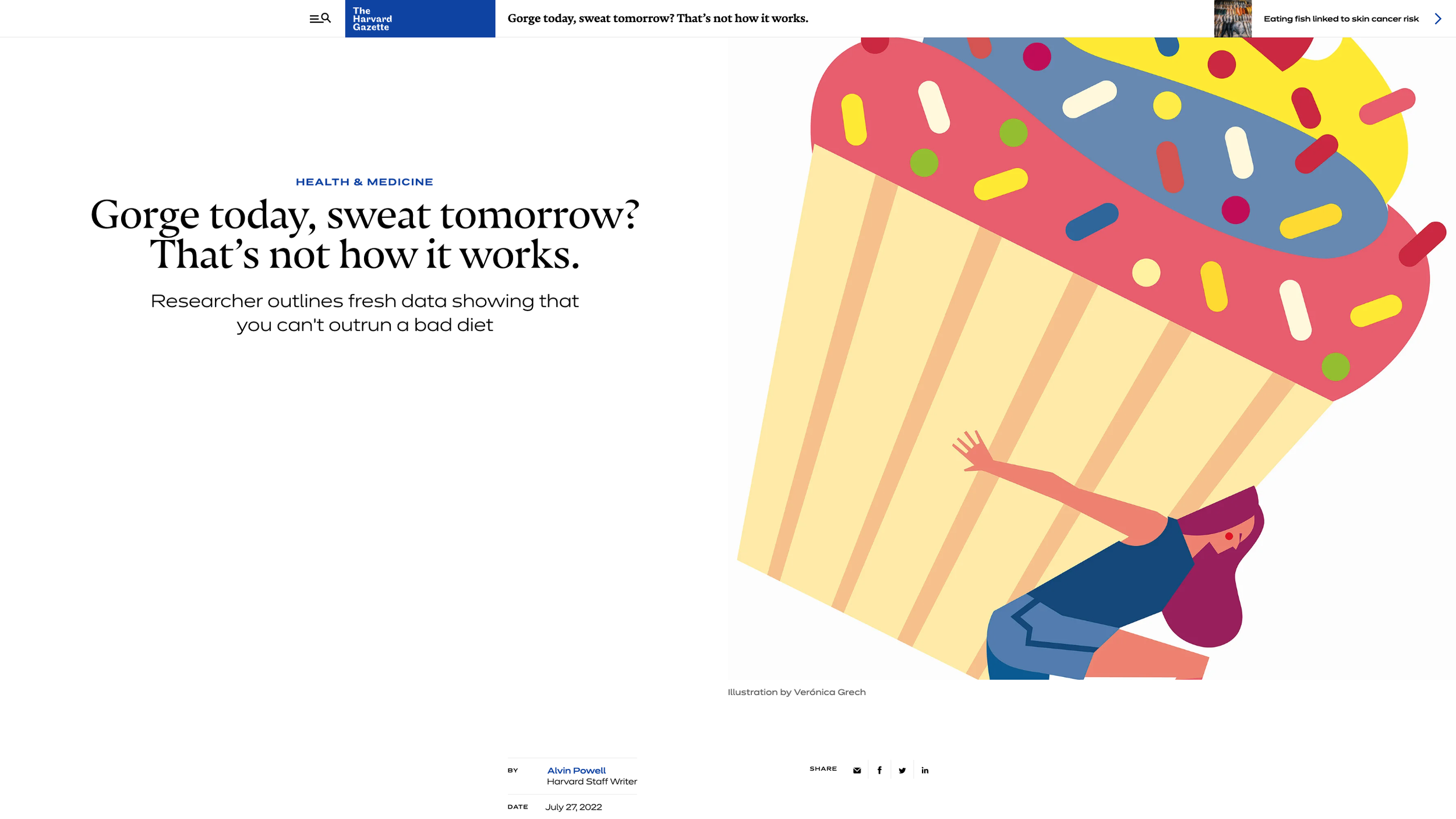
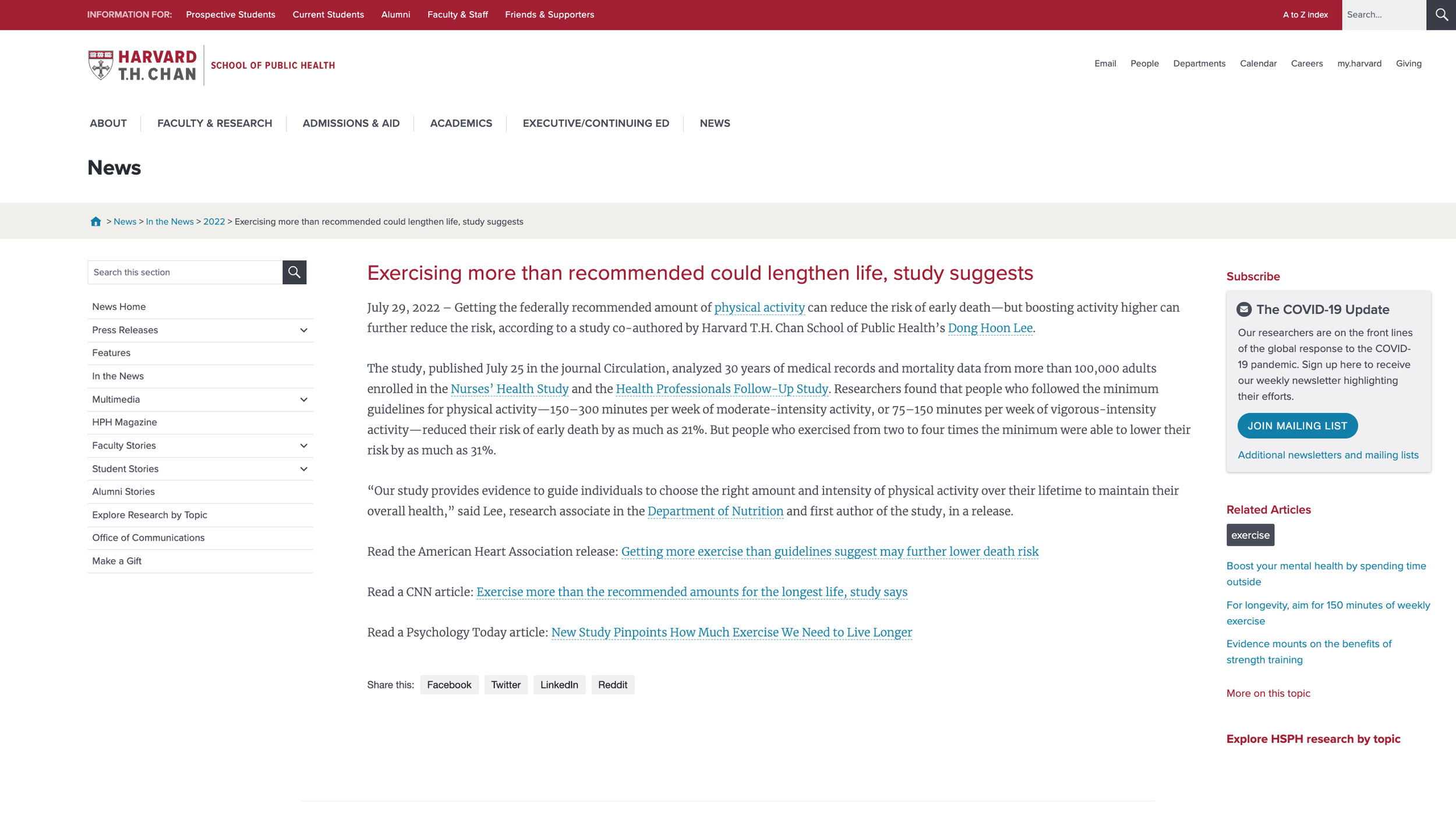
Another key example is this: relative to the idea that there are only two possibilities, A or B, that C is the one cause of D, or that either E or F are enough to get from one of two states to another, a model in which two different things have a linear effect on an outcome is a big advance. The two articles flagged above show the value of even a simple linear model for understanding, diet, health and exercise. Both eating right and exercising are valuable for health, and doing one doesn’t reduce the marginal product of the other that much. And the curvature in the effect of exercise on health isn’t big enough to keep more than the usually recommended amount of exercising from having a substantial positive effect.

Of course, the linear model, while almost always a good approximation locally, almost always breaks down eventually due to curvature. On that, see “The Golden Mean as Concavity of Objective Functions.” But note that a model with gradual curvature is strictly more complex than a linear model. A linear model is a key stepping-stone on the way to understanding a model with gradual curvature.

When I previewed the content of this post for one of my friends, the reaction was that this sounded like looking down on others. I don’t view it that way. We need to see what we are good at and what is hard for others in order to do the most good in the world. And conversely, we need to see what others are good at that is hard for us. And of course, we need to see what we and others are relatively good at. That is the essence of comparative advantage. It is a matter of mathematics that everyone has some comparative advantage! (At least weakly.)

Recognizing your own technical advantages makes it clearer what you have to offer, and the efforts you will need to make to explain an idea clearly given where your listeners are coming from. One of the best pieces of advice I ever got was one of the excerpts I was given from letters of evaluation when I came up for tenure. One writer said “Miles sometimes overestimates his audiences.” The translation is that what I was saying was obscure because I hadn’t given the appropriate background or had gone too fast.

People can be offended by being treated as if they have less background than they do, and on the other hand, they can be confused by being treated as if they have background that they don’t. There is no way around the need to get it right.

How Covid Worsened Antibiotic Resistance; What We Need to Avoid Getting Slaughtered by Superbugs

Here are two key passages from the article flagged above, separated by added bullets:

  • A superbug is a bacterium or fungi that is resistant to clinical antimicrobials. They are increasingly common. Right now, for instance, the percentage of clinical isolates of Enterobacteriales (which includes things like Salmonella and E. coli) that are known to be resistant is around 35%.

  • … we need to discover and develop novel classes of antibiotics. The last time a new class of antibiotics hit the market was in 1984. The fundamental problem is that they’re not profitable to develop, compared to say a cancer drug. You can go to the drugstore and get a course of amoxicillin for $8. We need programs that reward industry and academic labs like ours for doing the early research.

Mitra Kalita asks Miles Kimball, Cecilia Rouse and Daniel Zhou about the Coming Recession

Mitra Kalita is the best editor I ever had. See worked with me on most of the Quartz columns you can see in my “Key Posts” bibliography. (which is also a button at the top of this page). I am very proud of those columns, and Mitra is a big part of why they are worthy of that pride.

Mitra caught up with me recently and asked me about the coming recessions. You can see the article she wrote at the link on the title of this post and here.

25 Taboo Questions About History and Society—Rudyard Lynch

Screen shot from “Another 7 Taboo Questions About History and Society”

Rudyard Lynch has done a good job in these 3 videos of identifying 25 important questions that are, indeed, difficult to talk about in current polite society. I think it is important to talk about such questions. However you come down on these questions, it is better to mull them over and decide what you think than it is to shut your eyes to such questions.

What David Laibson and Andrei Shleifer are Teaching for Behavioral Economics—Jeffrey Ohl

The majority of my research time for many years has gone to the effort to develop the principals for a well-constructed National Well-Being Index. We (Dan Benjamin, Ori Heffetz, Kristen Cooper and I) call this the “Well-Being Measurement Initiative.” Every year, we choose a full-time RA, serving for two years in an overlapping generations structure that gives us two full-time RAs at a time. We have a very rigorous hiring process. Jeffrey Ohl survived that process and is doing an excellent job. This guest post is from him. Since our full-time RAs sit at the NBER, it was easy for him to audit a course at Harvard. Below are Jeffrey’s words.


This post summarizes what I learned auditing Economics 2030 at Harvard University from January - May of 2022. I am grateful to Professor David Laibson and Professor Andrei Shleifer for letting me take this course.

Behavioral economics aims to provide more realistic models of people’s actions than the Neoclassical paradigm epitomized by expected utility theory. Expected utility theory (and its compatriot, Bayesian inference), assumes people’s preferences are stable and that people can and do rationally incorporate all available information when making decisions. The implications often violate common-sense—people buy lottery tickets, have self-control problems, and fail to learn from their mistakes.  

For decades, the rational benchmark was defended. Milton Friedman’s “as-if” defense is that assumptions don’t need to be accurate: they only need to make correct predictions. For example, a model that assumes a billiards player calculates the equations to determine the path of the billiards balls may predict his choice of shots quite well, even though he makes his shots only off intuition. Similarly, Friedman argued, people might not think about maximizing utility moment-to-moment, but if people make choices as if they were, then the rationality assumption is justified when making predictions.  Another argument—also by Milton Friedman—is evolutionary. Even if most investors are not rational, the irrational ones make fewer profits over time, leaving only the rational investors to conduct transactions of meaningful size.

But over the last 30 years, behavioral economics has become more widely accepted in the economics profession. Richard Thaler served as president of the American Economic Association in 2015 and won a Nobel Prize in Economics in 2017, Daniel Kahneman (a psychologist) received the Nobel in 2002, and John Bates Clark medals went to Matthew Rabin (1999), Andrei Shleifer (2001, and Raj Chetty (2013).

This post will thus not discuss issues with assuming rationality in economic models, to which Richard Thaler’s Misbehaving and Kahneman’s Thinking Fast and Slowly are superb popular introductions. David Laibson also has an excellent paper on how behavioral economics has evolved (Behavioral Economics in the Classroom). Instead I will discuss some debates within behavioral economics

Prospect Theory and its flaws

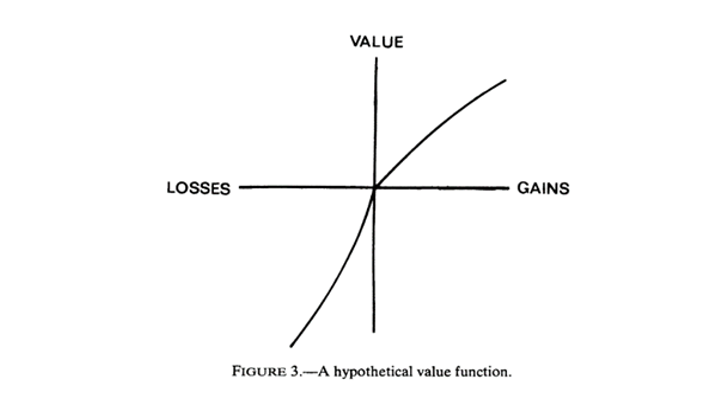
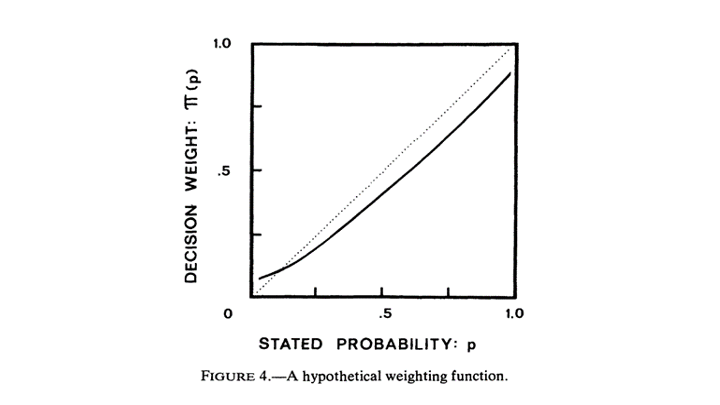
One of the most highly cited papers in the social sciences is the 1979 paper Prospect Theory by Daniel Kahneman and Amos Tversky (KT). In it, KT propose an alternative to expected utility, prospect theory, which is summarized in two famous graphs.

The first is the value function, which includes (a) diminishing sensitivity to both losses and gains, (b) loss aversion, and (c) the fact that gains and losses are assessed relative to a reference point, rather than in absolute terms.  Loss aversion has been fairly well validated, for example a 2010 paper by Justin Sydnor shows that people choose home insurance deductibles in a way that risk aversion alone cannot explain[1]. Other animals may even exhibit loss aversion.

The more contested figure of the two is the probability weighting function (PWF). The PWF posits that people “smear” probabilities towards 0.5 -- they overestimate small probabilities and underestimate large ones (sometimes called the certainty effect).

The PWF is attractive. If true, it can parsimoniously explain why people buy lottery tickets with negative expected value, as well as overpriced rental car insurance.

But there are several issues with the PWF.

First, it assumes that people make decisions based on numerical probabilities. But this is rarely how we assess risk. In practice, we are exposed to a process - for example, the stock market, and need to learn how risky it is with experience. It  turns out this difference matters. Hertwig and Erev showed that when told a numerical probability vs having to infer it from repeated exposure to gambles, people make different choices.

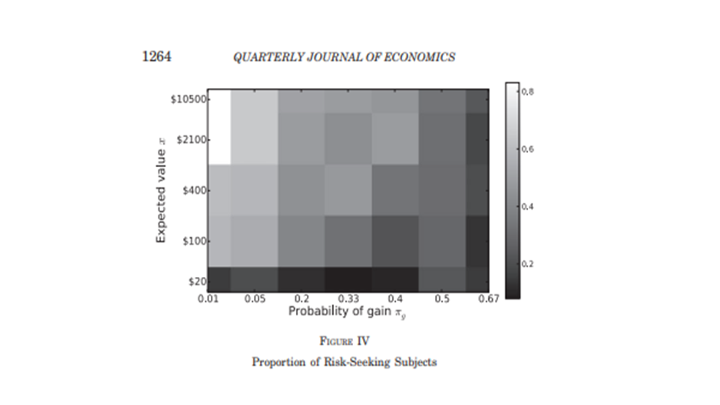
Another weakness of the PWF is that it doesn’t depend on the magnitudes of the losses and gains in a gamble, only their objective probability, p.  In a 2012 paper, Bordalo, Gennaioli, and Shleifer (BGS) propose an alternative theory, salience theory, which captures a key intuition: people pay more attention to large changes when assessing gambles, holding probabilities constant. BGS tested this claim experimentally and found that subjective probabilities did indeed depend on the stakes in the experiment, whereas the PWF would predict the below plot to show no variation in the y-axis—the stakes should not matter.

Salience theory can also neatly explain preference reversals that PT cannot. For example, Liechtenstein and Slovic found that subjects gave a higher willingness-to-pay for Lottery A than Lottery B, but chose Lottery B over Lottery A when asked to pick between the two. Under prospect theory, this should not occur. But under salience theory, the differing salience of the lottery payoffs between the two settings can explain this reversal. Many other applications of salience in economics are discussed in this literature review.

The limitations of nudges

Behavioral economics’ largest influence on public policy is probably via “nudges”. Nudges subtly modify people’s environments in ways that help satisfy their goals without reducing their choice set. Cass Sunstein and Richard Thaler discuss nudges in-depth in their eponymous best-selling book. I learned that nudges are often of limited effectiveness, despite the initial excitement.

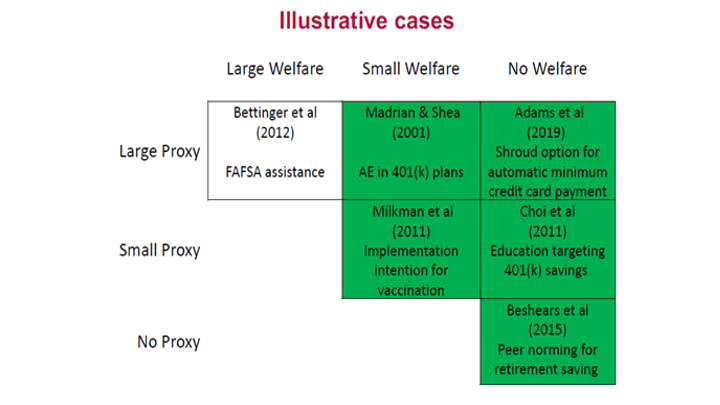
For example, one famous nudge is to make 401(k) plans “opt-out”, rather than “opt-in”, or automatic enrollment (AE). One of the first studies on the effects of AE was a 2001 Madrian and Shea paper. In 2004, Choi, Laibson, Madrian and Metrick did a follow-up study and found that when the study’s effects were extended from 12 to 27 months, auto-enrollment had approximately zero impact on wealth accumulation. The initial benefits of the nudge were offset because it anchored certain employees at a smaller savings rate than they otherwise might have chosen, and because the default fund had a conservative allocation.

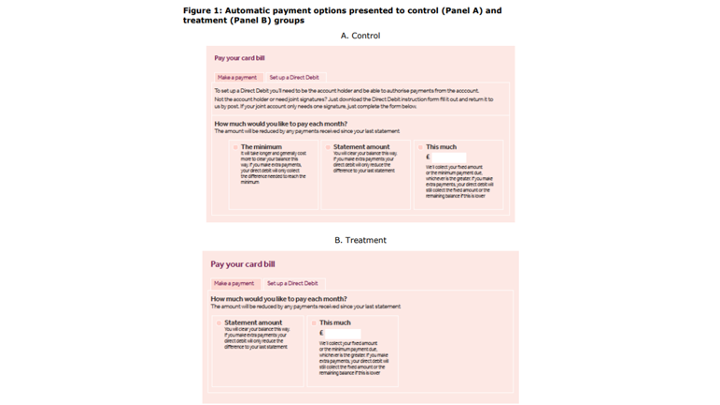
A similar flop occurred in the credit card domain. Adams, Guttman-Kenney,  Hayes, Hunt, Laibson and Stewart found that a fairly aggressive nudge, which completely removed the button allowing credit card customers to pay only the minimum amount, did not have a significant effect on total repayments, or credit card debt.  Borrowers mainly compensated for the nudge by making fewer small payments throughout the month.

Laibson summarizes the results of two decades of nudges in the table at the top of this post, which is excerpted from his 2020 AEA talk. Two features stand out: 1) the short-run impact of nudges is often larger than the long-run impact because habits, societal pressures, etc. pull people back to their pre-nudge behavior and 2) large welfare effects from nudges are rare. However, small effect sizes can still imply cost effectiveness, since the costs of nudges are small. Both extreme optimism and pessimism for nudges seem unwarranted.

A unifying theory for behavioral economics to replace EU theory?

One of the main critiques against behavioral economics is that is has no unifying theory.

Anyone familiar with KT’s heuristics-and-biases program will know the slew of biases and errors they found: the availability heuristic, the representativeness heuristic, the conjunction fallacy, etc. These biases often conflict and there is no underlying theory that makes predictions about when one dominates over another.

For example, suppose I’m asked to estimate the percentage of people in Florida who are over 55, after having just visited friends in Florida. The representativeness heuristic suggests I’d overestimate this percentage, since Florida has more older people than other states, and thus being over 55 is representative of being from Florida. But the availability heuristic implies I’d mainly recall the young people who I just saw in Florida, causing me to underestimate the share of older people in the state. What does behavioral economics predict?

Rational actor models sidestep these issues by having a small set of assumptions that—even if not exactly true - are reasonable enough that most economists view them as good approximations. This had led to rational choice serving as a common language among economists - when theories are written using this language, their assumptions can be transparently criticized. But when behavioral biases are introduced ad hoc, it makes comparing theories difficult.

The inertia of a unifying theory means that even if it’s not perfect, rational actor models will probably remain the primary way economists talk to each other unless a replacement comes along.

In a series of recent papers, BGS and co-authors have begun to outline such a replacement. In papers such as Memory and Representativeness, Memory, Attention and Choice, and Memory and Probability, they micro-found decision-making in the psychology of attention and of memory. This research program predicts the existence of many biases originally discovered piecemeal by psychologists, as well as new ones. Rather than making small tweaks to existing models, they start with a biological foundation for predicting how people judge probabilities and value goods, and see where it goes.

For example,  Memory and Probability assumes people (a) estimate probabilities by sampling from memory, and (b) are more likely to recall events that are similar to a cue, even if those events are irrelevant.  Granting these assumptions predicts the availability heuristic, the representativeness heuristic, and the conjunction fallacy.  The advantage of this unified approach is that researchers don’t need to weigh one bias against another, rather, many biases are nested in a theory that makes a single prediction.

The paper also predicts a new bias, which the authors validate experimentally. The bias is over-estimation of the probability of “homogenous” classes of events, i.e. classes where all the events are self-similar, for example, “death from a flood”. Similarly, they underestimate the likelihood of “heterogenous” classes, e.g. “death from causes other than a flood.”

In closing, one of the most important challenges in making economics models more accurate will be to develop a theory that incorporates the quirks of how our brains actually work while remaining mathematically tractable enough to be adopted by the economics profession.

[1]   Some studies, however, have shown that loss aversion is reduced with training and proper incentives. The original PT paper was also ambiguous about how the reference point from which gains/losses are assessed is formed.

Some Low-Hanging Fruit for Government Policy: Paying Benefits and Wages to Low-Income Folks Weekly

What I learned today at the NBER Summer Institute was that there is a monthly cycle in many key outcomes for folks being helped by the Supplemental Nutrition Assistance Program. The week they get their monthly payment, they seem to do something that makes them crash in week two. Then some outcomes are not so good in weeks three and four. All of this is needless. Given that most benefits are now distributed by debit card, it would be easy to pay out benefits weekly instead of monthly to help people smooth their spending—and I suspect, to spend on better, higher priority things, since the budget constraint would be clearer and easier to understand—in part because of the repetition every week of the same budget constraint. Of course, if everyone were a perfect maximizer, paying benefits out weekly instead of monthly would make very little difference. But people aren’t perfect maximizers.

I am struck by how easy a policy this would be to change. Think of other things activists are successfully working on. And it might not require any of the usual activism. A few economists working in the Department of Agriculture (which administers the Supplemental Nutrition Assistance Program) might be able to make this happen by talking to their bosses.

Running into a friend on the way to the swimming pool after the conference day was over, I also learned that there are some papers suggesting that low-wage workers do better getting paid weekly rather than monthly as well. That also seems like something the Department of Labor could make happen at a lot of firms by gentle encouragement. And a few economists in the Department of Labor could probably get the ball rolling on more frequent paychecks for low wage workers.

The idea of frequent disbursement of wages is an old idea, though in more extreme form. Deuteronomy 4:14-15 in the Law of Moses, says:

Do not take advantage of a hired worker who is poor and needy, whether that worker is a fellow Israelite or a foreigner residing in one of your towns. Pay them their wages each day before sunset, because they are poor and are counting on it. Otherwise they may cry to the LORD against you, and you will be guilty of sin.

Modern evidence backs up the wisdom of this principle that those with low incomes are typically better off getting money for basic needs frequently, rather than in large lump sums. There can be other provision for helping people get micro loans at reasonable rates for big things, but that might be more at the annual frequency. Perhaps weekly payments or wages and one substantial annual payment or bonus might be the optimum.

If you know of references on this, link to them in the comments!

Defending Jordan Peterson

Many people feel that the words they say are as much a part of their identity as their sexuality. We should go a long way to give people freedom of expression in both areas.

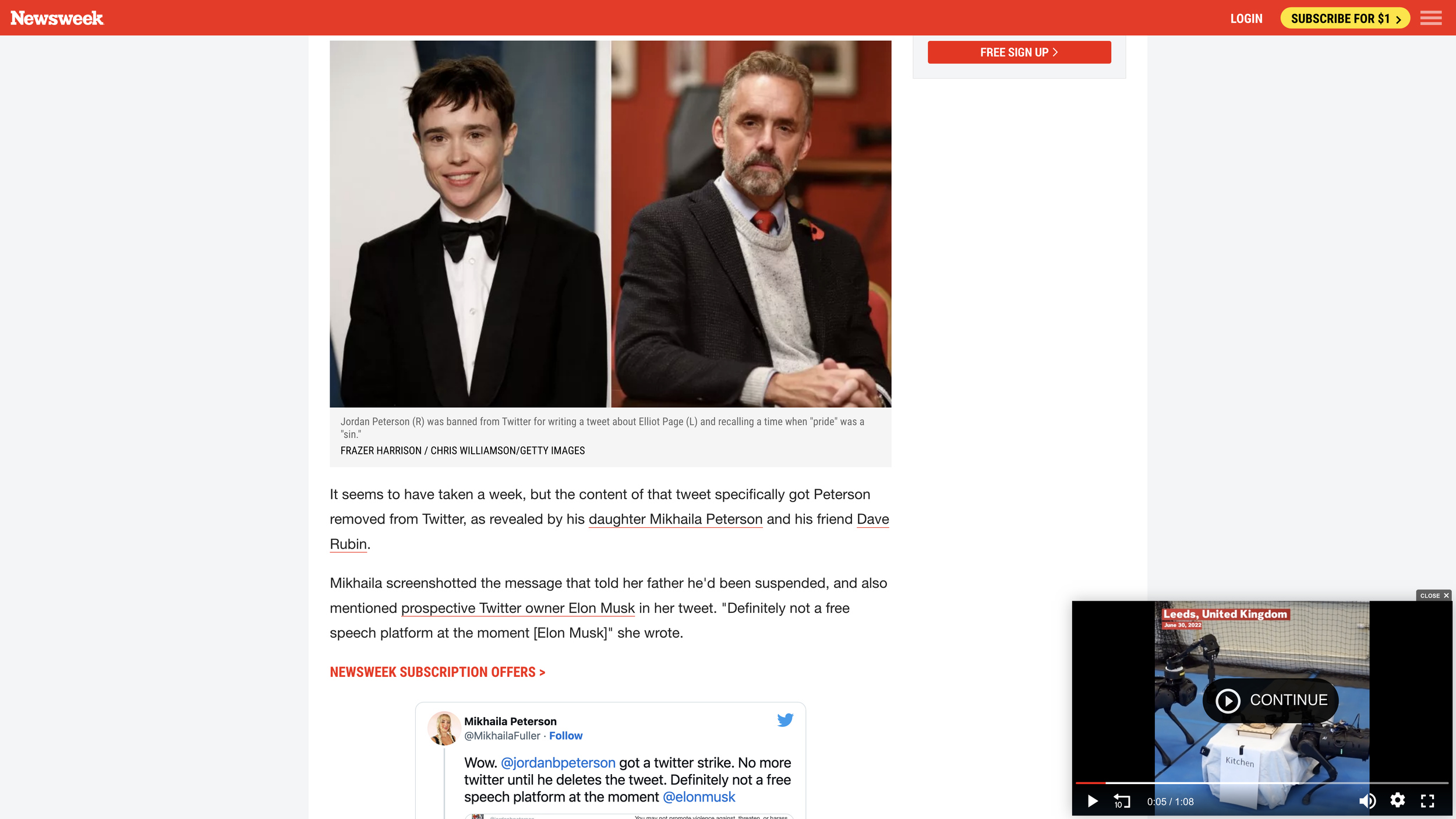
Jordan Peterson got in trouble with Twitter for a tweet saying:

Remember when pride was a sin? And Ellen Page just had her breasts removed by a criminal physician.

Jordan’s Twitter account is frozen unless he deletes the Tweet using a button that says “By clicking delete, you acknowledge that your Tweet violated the Twitter rules.” In a YouTube response, he said he “would rather die” than delete the tweet by his own action and doubled down with a critique of what is typically called “gender-affirming surgery,” performed on teenagers. His complaint with Elliot Page (formerly Ellen Page) is primarily that, as a role model (being a famous actor), Elliot might inspire more teenagers (mostly young women who would like to transition to being men) to deal with gender dysphoria by getting radical, dangerous, irreversible surgery. In his YouTube response to the Twitter ban, Jordan grudgingly allows that perhaps Elliot should have the right to undergo surgery to feel more like a man, but criticizes Elliot for encouraging others to do so.

My own experience with anyone who is transgender is limited to very positive experiences with Deirdre McCloskey. I don’t myself know what the right policies are in this area, though I tend to have Libertarian instincts, without being a full-fledged Libertarian. What I want to argue for, though, is that it is not only permissible, but essential, that our society have a vigorous debate about the appropriate age of consent for gender-affirming surgery. Parental input is another complicated issue, but I doubt anyone would say that a 6-year-old asking for gender-affirming surgery should be absolutely determinative, and let me write as if we agree that at age 30, anyone should be allowed to make that decision. Where should the line be drawn between 6 and 30? We default to age 18 on many things when faced with arbitrary determination of an age of consent. In this case, 18 is enough after puberty that it may cause technological problems to wait that long. But surely that makes figuring out good rules a societal decision that should be considered difficult rather than thinking it means we should short-circuit discussion by insisting peremptorily that technological concerns should trump concerns about the ability of teenagers to make wise irreversible decisions.

Let me make two analogies that suggest we should allow discussion about the age of consent for gender-confirming surgery—two analogies to suggest a range of views about this issue.

First, many feel plastic surgery for people who begin with a low normal appearance can be very helpful for their self-esteem and can really change their life for the better. Others fear that too many people are driven to get plastic surgery because of social pressure—or at least that this is true in some places, such as South Korea. Surely, people should be allowed to take either side in this debate!

Second, many (including me) feel that taking Psilocybin (the key ingredient in psychoactive mushrooms) can be very helpful to people in orienting their lives and may save the lives of a substantial fraction of those subject to suicidal ideation. Proponents of this view would like to see more states legalize the careful administration of Psilocybin, as Oregon has done. Others, for reasons I don’t fully understand, feel that clinical use of Psilocybin should not be allowed. Surely, however wrongheaded they are, we should not someone for arguing that Psilocybin should remain illegal.

If people should not be shouted down for expressing the view that the age of consent for gender-affirming surgery should be higher than it is, then the justification for requiring Jordan Peterson to delete his tweet in order to get his Twitter account unlocked becomes very thin.

Let me parse some of Jordan’s specific words.

“Sin”: Jordan loves the etymology of the word for sin in Greek. “Hamartia” means literally to miss the mark. So the claim here is that “Pride misses the mark.” Also, there is a well known Biblical verse: “Pride goes before destruction, a haughty spirit before a fall.” A reasonable interpretation of this part of Jordan’s tweet is therefore: “The current left-wing position and approach in the culture wars misses the mark and evidences a haughtiness that could lead to worrisome consequences for our society.”

“Ellen”: To some extent, Jordan’s use of “Ellen Page” to refer to Elliot Page is simply a reaffirmation that “The current left-wing position and approach in the culture wars—including especially its insistence on controlling other people’s speech—misses the mark and evidences a haughtiness that could lead to worrisome consequences for our society.”

Deadnaming, as in Jordan’s use of “Ellen” to refer to Elliot, is essentially a refusal to accept someone’s requests for how they should be referred to, plus perhaps a skepticism of that transgender transitions fully change someone’s gender. Skepticism that transgender transitions fully changes someone’s gender is a view that is likely shared by half of the American population. I don’t think that view should be beyond the pale. It is not denying anyone’s full humanity.

Stepping away from the transgender aspects of the situation, calling someone by a name they don’t like is extremely common in heated debates. For example, when Merrill Bateman was the President of Brigham Young University, punishing professors for espousing moderately liberal views, someone I knew referred to him in conversation as “Master Bateman.” (I was denied a job at BYU during this period—when I was a believing, temple-recommend-holding Associate Professor at the University of Michigan—for being too liberal.) Should (and does) Twitter reliably lock someone’s account for name calling? Or is it the transgression of the transgender orthodoxy that Twitter is responding to? Moreover, I think it would be a serious misreading of Jordan’s intent to think that he was trying to insult Elliot. His intent was to dispute the transgender orthodoxy. For Jordan, it wasn’t really about Elliot, except as an example of a broader issue.

“Her”: The things to say about Jordan’s use of the word “her” are almost identical to the issues with his use of “Ellen.”

“Criminal physician”: In his YouTube response, Jordan makes clear that he does, indeed, think that many of the gender-affirming surgeries that are performed should be outlawed. Just as important, and just as clear in his response, is that he thinks the social esteem in which surgeons who do such operations are held should be low. He is not advocating non-state violence or forcible action against such physicians, only laws restricting gender-affirming surgeries and social pressure against the number of gender-affirming surgeries being performed under the status quo.

Overall, there is no question that Jordan is emphatic in the expression of his views. But the views themselves and his expression of them seem well within the bounds of reasonable debate to me.

Let me say that, in his YouTube response, I think Jordan is too harsh about Elliot’s own decision, if it is possible to separate Elliot’s own decision from the charismatic example that it sets that might inspire and encourage many unhappy teenagers to make a female to male transition. In his 2017 Maps of Meaning lectures, Jordan emphasizes the ultimate responsibility of the individual to make decisions for their life, saying “What if no one knows any better than you?”:
In Jordan Peterson’s case, there are two reasons for me to defend him. First, freedom of speech is very dear to my heart. I left the Mormon Church because it was against freedom of speech within its orbit (church law, with excommunication and claimed suffering in the afterlife as the greatest penalty, not civil law). I am not about to cotton to abridgement of freedom of speech by a secular orthodoxy. (As an aside, there is an eerie similarity between the issue of deadnaming and the Mormon Church’s current insistent that it not be called “the Mormon Church,” but only by its full name of “The Church of Jesus Christ of Latter-day Saints.)

Second, Jordan Peterson is a brilliant exponent of important ideas. (I do not consider his views on transgender issues to be in that category. On the political Right, they are fairly conventional, unoriginal views.) Jordan being “controversial” in an area as charged as transgender issues could easily be enough to make many of my fellow academics stay away from reading or listening to Jordan Peterson entirely. That would be a mistake. In many areas—especially in the lectures and other long-form monologues in his YouTube videos—he is a deep and astute social commentator. (The short form of Twitter does not suit him well.) In his books 12 Rules for Life: An Antidote to Chaos and Beyond Order: 12 More Rules for Life, he gives advice that makes many people’s lives dramatically better. And in my view, he has gone further than anyone else in showing, in a practical sense, how to put the message of Christianity (and to some extent Judaism) on a nonsupernaturalist footing. That is an enormous achievement, in an area that I have taken as part of my own lifework. (To get a sense of my efforts in this area, see for example “How the Historical Jesus Set the Oppressed Free” and the sermons I have posted, including “Godless Religion,” “The Message of Jesus for Non-Supernaturalists” and “The Message of Mormonism for Atheists Who Want to Stay Atheists.”) Don’t disregard all of Jordan Peterson’s ideas because you are shocked or concerned by some! People who make other people think hard usually have at least one idea that is at serious variance with elite conventional wisdom. And in 2022, many feel protective of elite conventional wisdom at the “circle-the-wagons” level. Don’t let those forcefully protective of elite conventional wisdom scare you away.

Miles's Personality in 10 Facets of the Big Five

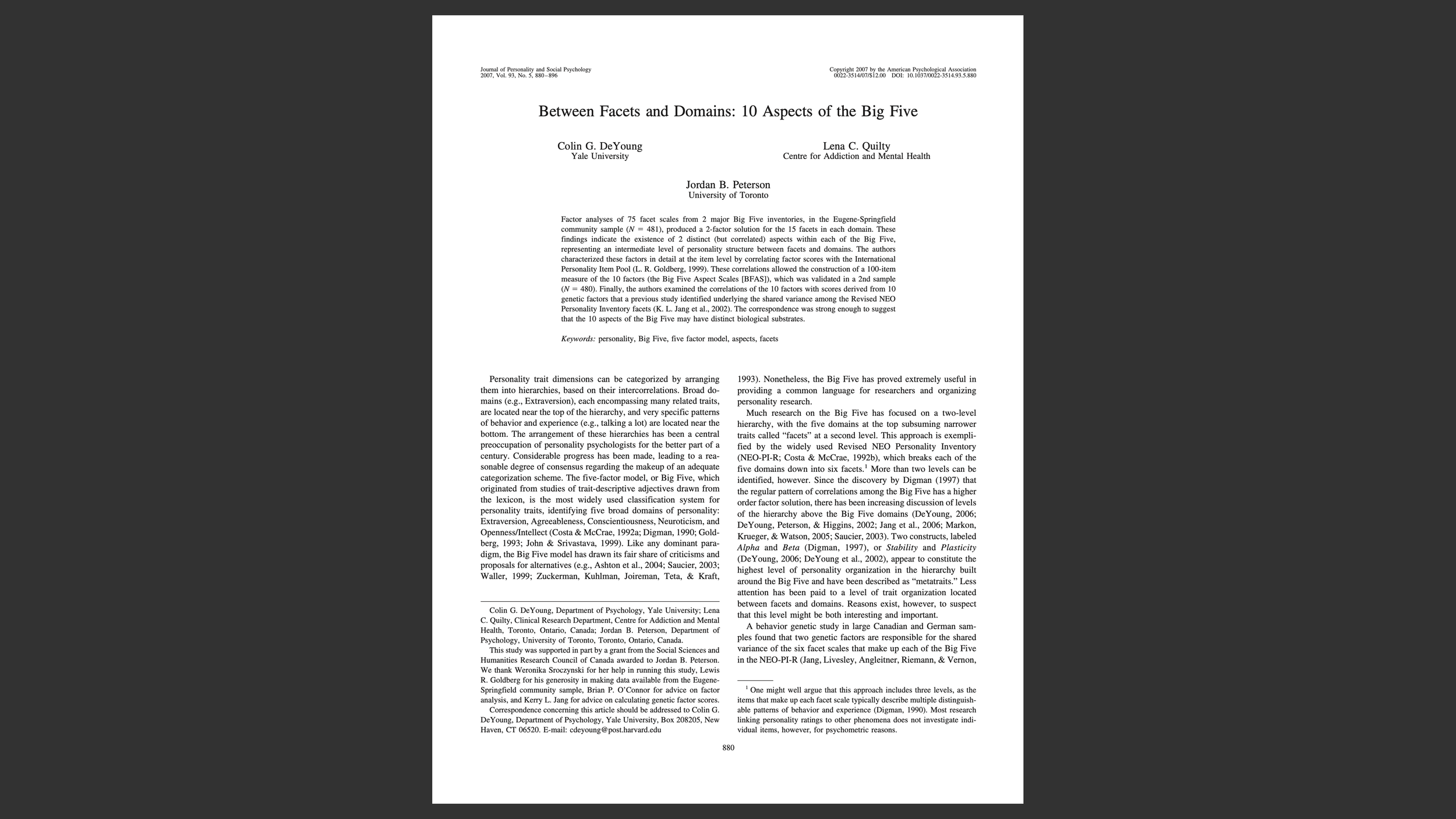
At understandmyself.com, Jordan Peterson offers a personality test for $10 based on an expansion of the Big Five personality dimensions into 10 aspects. The “Big Five” emerge from factor analysis of words in the language used to describe personality differences. To remember the Big Five, use either the acronym OCEAN or CANOE: Conscientiousness, Agreeableness, Neuroticism, Openness to Experience, Extraversion. The 10 aspects split each of this into two:

  • Conscientiousness is about Industriousness and Orderliness

  • Agreeableness is about Politeness and Compassion

  • Neuroticism is about Withdrawal and Volatility

  • Openness to Experience is about Intellect and “Openness” proper

  • Extraversion is about Assertiveness and Enthusiasm

Because factor analysis is maximizing how much can be accounted for by a given number of factors, the Big Five, or their expansion into 10 aspects, these factors account for a large share of the variance in personality. There isn’t that much left in personality differences between people that is not captured by the Big Five or these 10 aspects. Many interesting interpersonal differences with other labels can be reexpressed quite well as linear combinations of the Big Five or the 10 aspects from the Big Five. For example, being high on the two aspects of Openness to Experience and low on Orderliness is highly predictive of leaning left, politically; conversely, being high in Orderliness and low on Openness to Experience is predictive of leaning right, politically.

IQ is a different matter; it is not counted as personality, though it is often extremely valuable in predicting things that personality is also predictive of. For example, income is well predicted if you know IQ and Diligence. (The personality aspect of Intellect has to be carefully distinguished from IQ. Intellect is about being interested in abstractions. Some very smart people are interested mainly in concrete things; some people of average intelligence are fascinated by abstractions.) Intellectual abilities factor analyze with a very strong first factor. That means people good at one type of problem solving have a strong tendency to be good at each other type of problem solving. Howard Gardner made so much hay with his book Frames of Mind: The Theory of Multiple Intelligence because it takes a high IQ and great diligence to make a story that is so misleading in relation to the facts sound like it is on a solid footing. Of course, the first factor for intelligence does not exhaust the variance. But it is misleading not to lead with the fact that almost any two measures of intelligence have a high positive correlation. (That is, a high positive correlation in the population as a whole. Highly selective universities that choose all people with uniformly high intelligence in terms of the first factor of intelligence then have the remaining variance mainly from the smaller second and higher factors such as verbal vs. mathematical.)

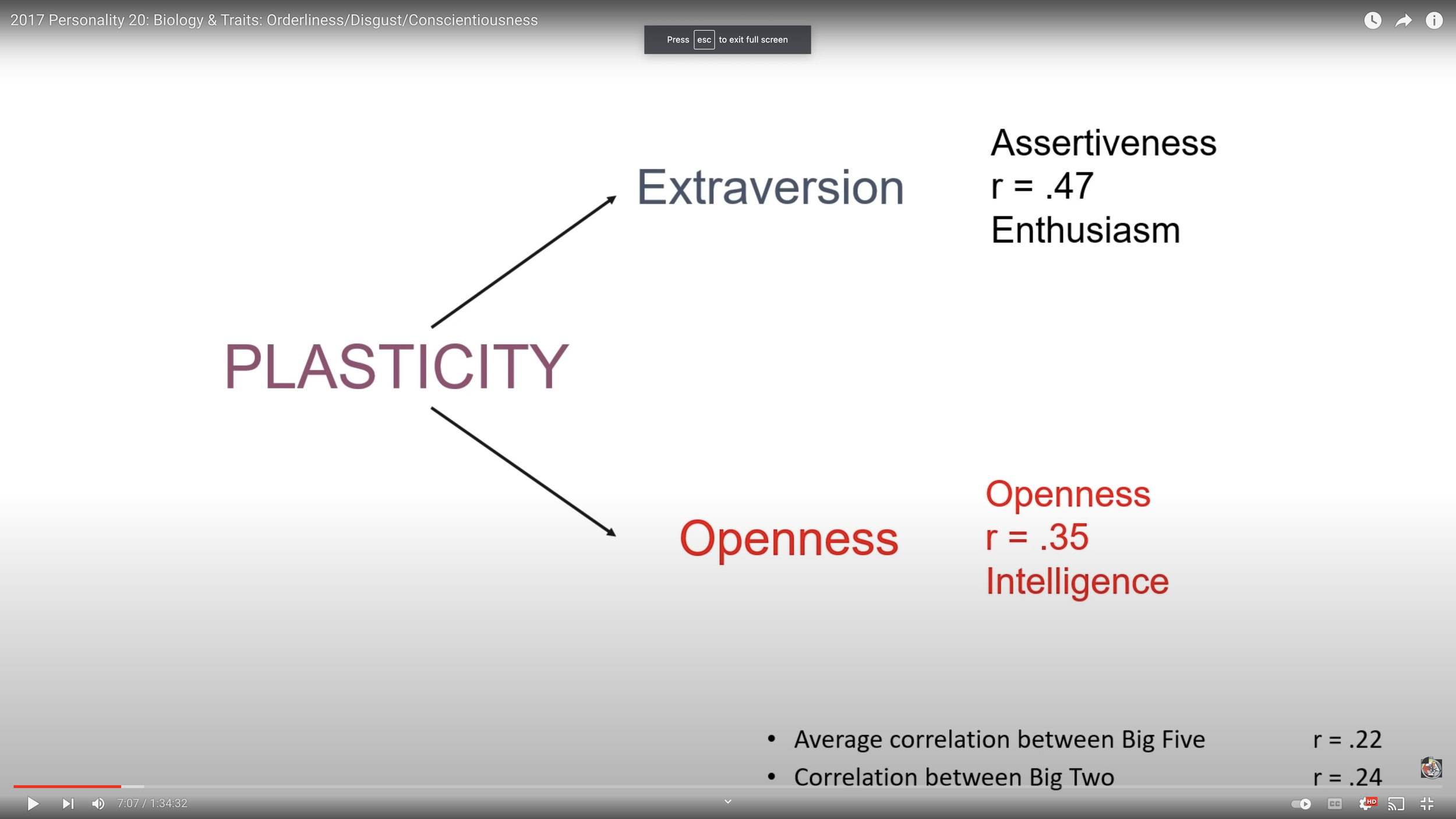
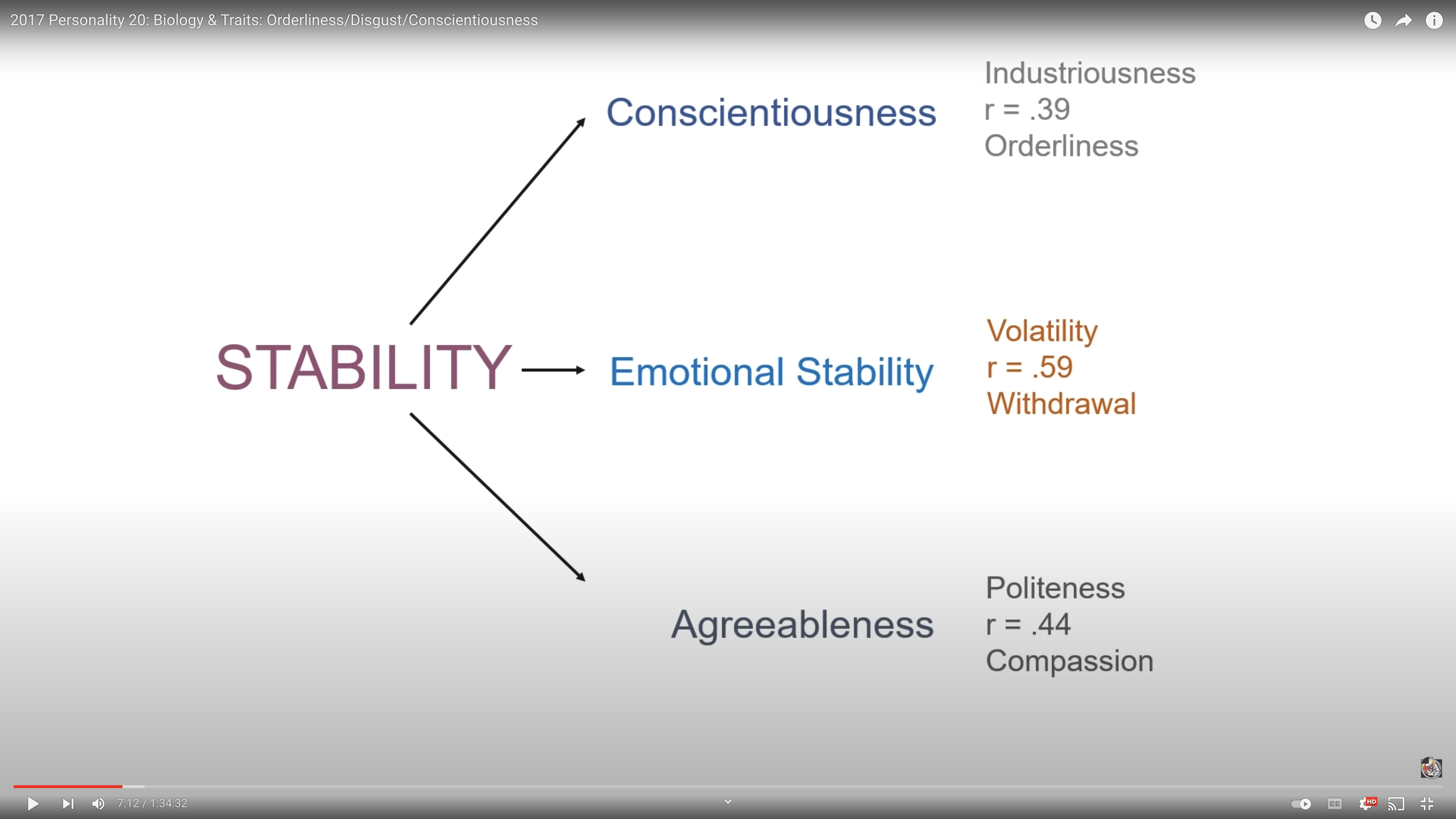
As an economist, I am attracted to Principal Components Analysis, which fairly transparently reexpresses the variance-covariance matrix for a set of variables in terms of eigenvectors and their associated eigenvalues. In Principal Components Analysis, the different components (=factors) are uncorrelated by construction. But psychologists typical use factor analysis with rotation to get factors they consider easier to interpret. And these factors can have some correlation. In the case of the big 5, those correlations are on average .22. The two aspects within each of the Big 5 are reasonably distinct, with correlations within each pair between .35 and .59, as follows:

These are slides from one of the lectures up on YouTube for Jordan Peterson’s Personality class. They also illustrate that the Big Five can be divided into two groups: Plasticity and Stability. Note that “Emotional Stability” is simply Neuroticism times -1.

I should note that some of the other statements I make in this post are also drawn from having watched Jordan Peterson’s Personality class (as well as others of his classes) on YouTube.

Here are the results of my own personality test using the 10 aspects of the Big Five, expressed as percentiles:

  1. Agreeableness: 11

    • Compassion 42

    • Politeness 2

  2. Conscientiousness: 63

    • Industriousness: 97

    • Orderliness: 7

  3. Extraversion: 86

    • Enthusiasm: 79

    • Assertiveness: 85

  4. Neuroticism: 14

    • Withdrawal: 6

    • Volatility: 34

  5. Openness to Experience: 95

    • Intellect: 96

    • Openness: 84

The full report on me is here.

So I don’t sound too bad, let me quote this in the report about “Politeness”:

People who are exceptionally low in politeness challenge and confront authority – and they are not obedient. If they are respectful, it is grudgingly, and will only be manifested toward people who continually both deserve and demand it. They are comfortable confronting other people, and enjoy it. People extremely low in politeness are motivated to engage in conflict, and to seek out confrontation.

Note how different I am on the two aspects of agreeableness. I am also very different on the two aspects of conscientiousness: high on Industriousness, but low on Orderliness. In the description associated with being low in orderliness, I resonate to these two bits:

  • “… non-judgmental and devil-may-care in their attitudes toward themselves and others.”

  • “dislike schedules, list, or routines”

However, I like routines reasonably well if I made them up myself.

The aspects of the Big Five can help predict other outcomes of interest:

  • High IQ and Industriousness are good predictors of income. The other 9 aspects not so much. (Openness to Experience is positive correlated with creativity, but I’ll bet creativity is more closely related to the variance of income than to the mean of income.)

  • High Openness to Experience and Low Orderliness are good predictors of being politically Liberal.

  • High Agreeableness and High Orderliness are good predictors of insisting on political correctness. Conversely, Low Agreeableness and Low Orderliness (my bent) would predict a low level of political correctness.

Finally, being low on Withdrawal sounds like it is good for happiness. And indeed, I am generally quite happy. Here is some of what my report says about being very low on Withdrawal:

Individuals very low in withdrawal almost never suffer from or are impeded by anticipatory anxiety. They can handle new, uncertain, unexpected, threatening or complex situations very well. They are far less likely to avoid or withdraw in the face of the unknown and unexpected.

People with very low levels of withdrawal feel sad, lonesome, disappointed and grief-stricken very infrequently—and, if they do, do not feel those emotions deeply nor for long. Their lives tend to be markedly free of doubt, worry, embarrassment, self-consciousness and discouragement, even in the face of genuine threat and punishment. They are resistant to and rarely worried about social rejection, and almost never feel hurt or threatened.

Overall, I feel very lucky to have the disposition I have. People sometime act as if I am an alien, because I am extreme in some aspects of my personality. But I feel I have had a very enjoyable life.

To sum up, I am a hardworking, freewheeling, enthusiastic, assertive, happy, stable, convention-breaking artist-intellectual who cares about people.