Dan Shipper: GPT-3 Is the Best Journal I’ve Ever Used →
h/t Brad DeLong
A Partisan Nonpartisan Blog: Cutting Through Confusion Since 2012
DALL-E: "Federal Reserve in the style of Picasso" pic.twitter.com/HVX6mlMWBZ
— Miles Kimball (@mileskimball) December 29, 2022
Thanks, to Torsten Slok for highlighting that passage in Jerome Powell's remarks.
— Miles Kimball (@mileskimball) December 18, 2022
My prediction: when the Fed changes its inflation target many years from now, it will revise it downward, not upward. With a robust negative interest rate policy and a "Share Economy," 0 is best.
Other than the self-imposed zero lower bound or false "effective lower bound" on rates imposed by central banks on themselves & sticky wages unmitigated by Martin Weitzman's approach, there is no strong reason for any other inflation target than zero. Absolute price stability!
— Miles Kimball (@mileskimball) December 18, 2022
First, having barred itself from using negative rates, the Fed felt turned instead to "forward guidance" to provide pandemic stimulus. That is, it promised not to raise rates soon. Then to keep its promise, it didn't raise rates quickly even when inflation was ramping up.
— Miles Kimball (@mileskimball) December 18, 2022
On all of this, see:https://t.co/zXAx4ThVARhttps://t.co/YtT8DhjA4i
— Miles Kimball (@mileskimball) December 18, 2022
I've organized what I've written on negative interest rate policy here:https://t.co/Xz2vUwkPuS
— Miles Kimball (@mileskimball) December 18, 2022
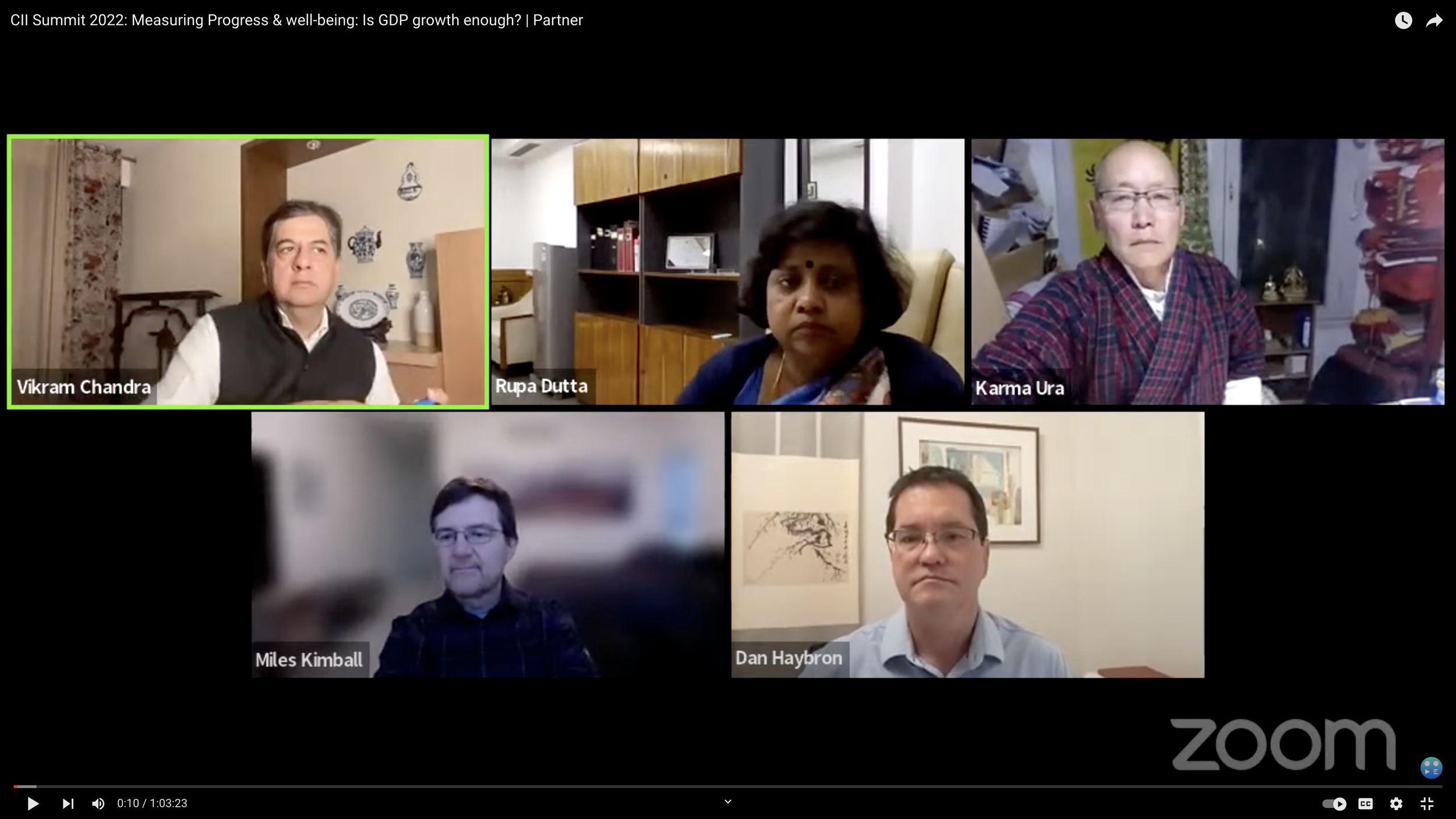
This discussion gives a good sense of the state of thinking on developing national well-being measures as a counterpoint to GDP.
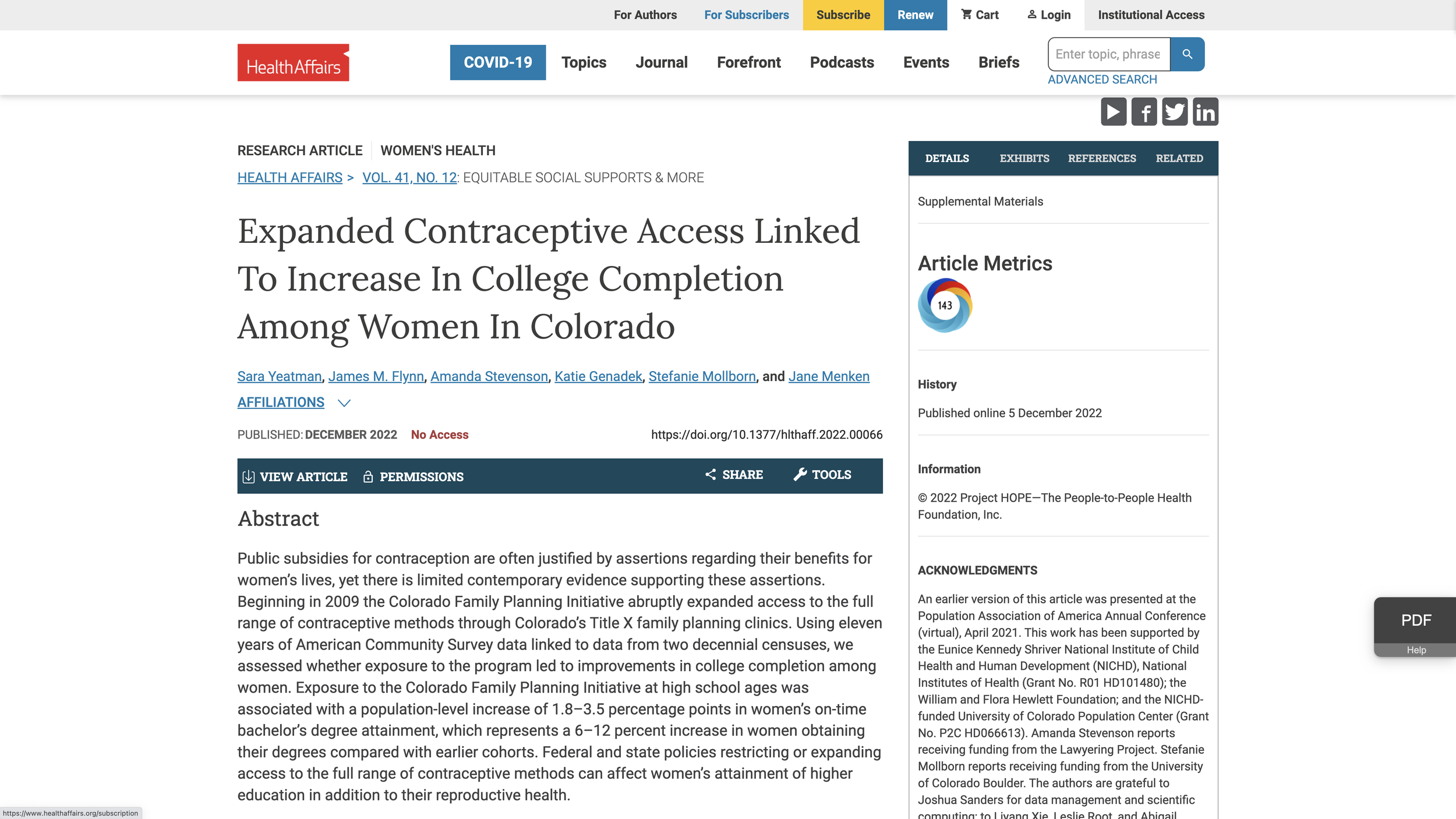
Link to the page shown above. The article is ungated.
This seems like a nice example to illustrate to undergraduates one identification strategy.
h/t Joseph Kimball
For more on these topics, see my bibliographic post “Miles Kimball on Diet and Health: A Reader's Guide.”
https://twitter.com/mileskimball/status/1602332992231378945
"Brad DeLong has an encyclopedic command of modern economic history, and an inimitable writing style — it was his blog, back in the mid-2000s, that first inspired me to want to become an econ blogger myself."
— Miles Kimball (@mileskimball) December 12, 2022
Blog envy when Brad visited U of MI was a key inspiration for me, too
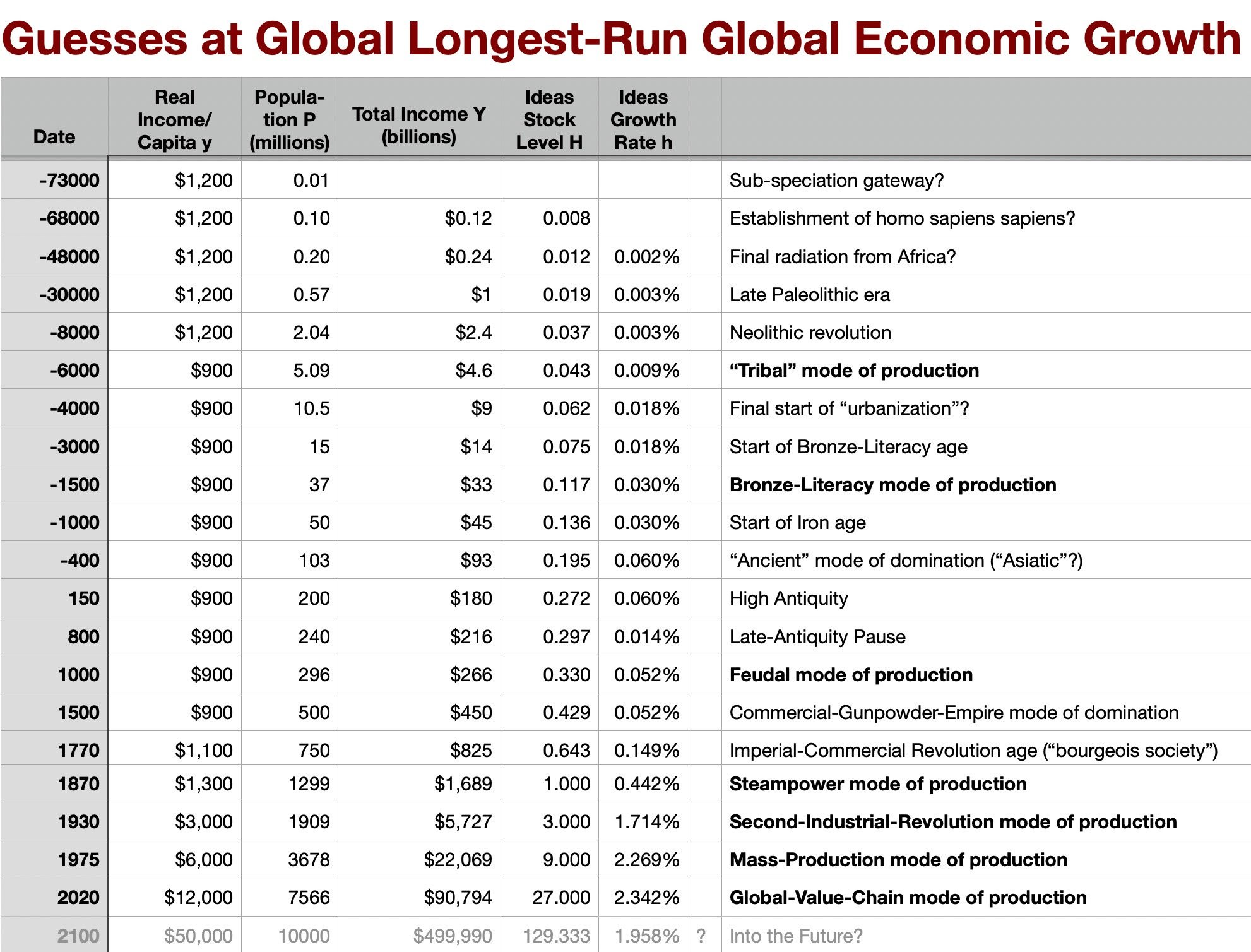
"Mark Koyama & Jared Rubin’s How the World Became Rich, Gregory Clark’s A Farewell to Alms, Joel Mokyr’s A Culture of Growth, Robert Allen’s The British Industrial Revolution in Global Perspective, & Robert Gordon’s The Rise and Fall of American Growth"https://t.co/FdXHnY67o0
— Miles Kimball (@mileskimball) December 12, 2022
"thanks to rapidly accelerating growth, humanity was rapidly confronted with newfound wealth beyond their previous imaginings, new possibilities for social organization, new problems, new opportunities, and new distributions of economic power."https://t.co/FdXHnY67o0
— Miles Kimball (@mileskimball) December 12, 2022
"Hayekian free markets create growth, but people want more — they want their Polanyian social protections. So they create systems like communism, fascism, or liberal democracy, designed to temper the market’s natural inequality and bring about a better society."
— Miles Kimball (@mileskimball) December 12, 2022
"DeLong’s vision of history is also a powerfully optimistic one. For many, it’s hard to look at the horrors of the 20th century — the concentration camps, the bombed-out cities, the despoiled landscapes — and not see a narrative of the Fall of Man."https://t.co/FdXHnY67o0
— Miles Kimball (@mileskimball) December 12, 2022
Dall-E https://t.co/Q5eij9zgGO AI stained-glass window of "Rough Beasts Slouching Towards an Industrial Utopia. pic.twitter.com/kPzqMsSN5a
— Miles Kimball (@mileskimball) December 12, 2022

h/t Brad DeLong
One idea I had was to have students write down the instructions they gave to ChatGPT, then the ChatGPT output and then critique the ChatGPT output. This raises the question: Can ChatGPT “critique” its own output as a second round thing?