The ECB’s Monetary Policy at 20—Massimo Rostagno, Carlo Altavilla, Giacomo Carboni, Wolfgang Lemke, Roberto Motto, Arthur Saint Guilhem and Jonathan Yiangou Defend Negative Rate Policy
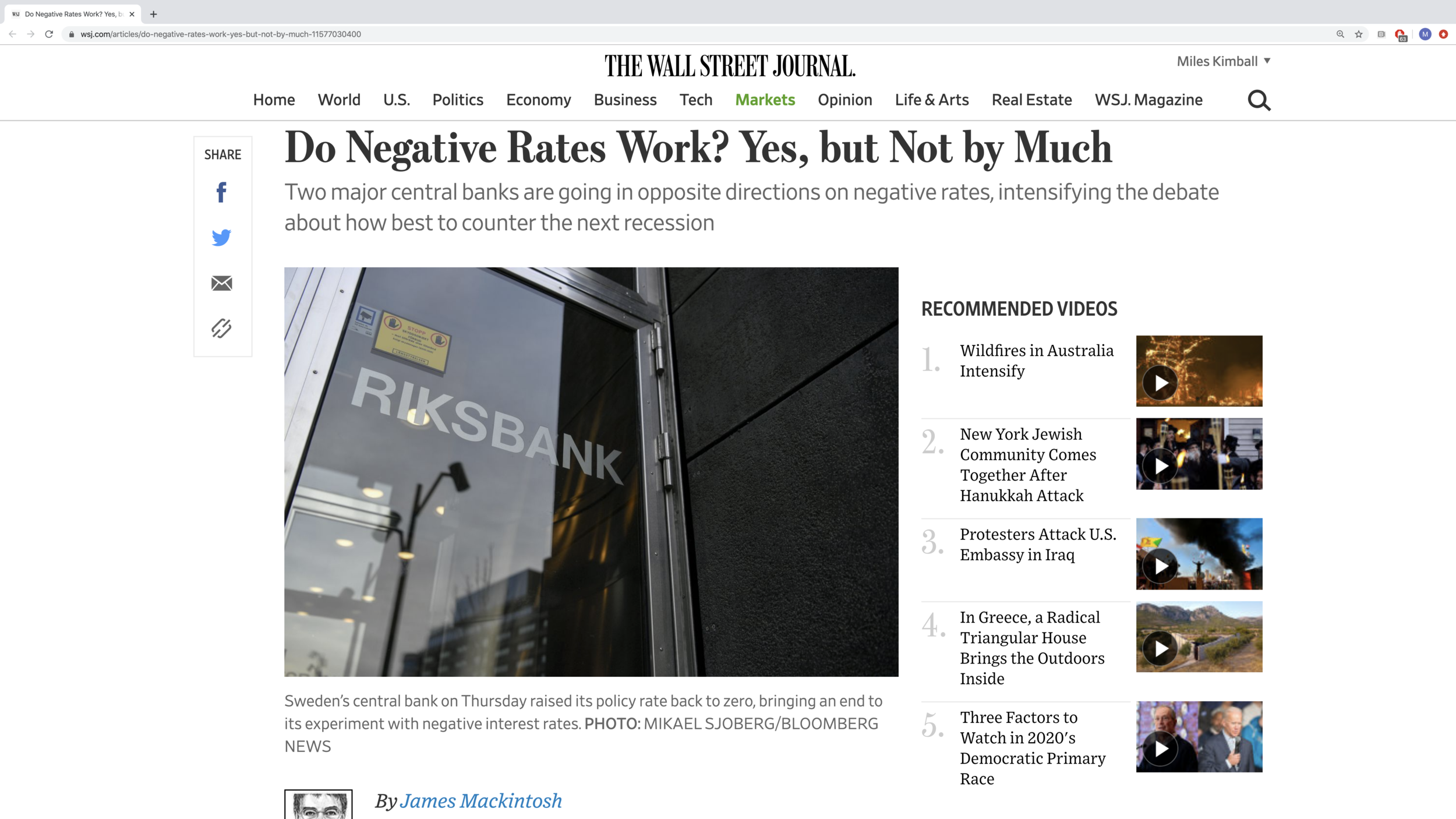
The Central Bank of Sweden, the Riskbank, may be raising its rates prematurely because of an overeagerness to exit negative rates. But key players within the European Central Bank have reaffirmed their belief in the virtues of negative rates in a new European Central Bank Working Paper. The Riksbank’s explanation was scant, but the ECB Working Paper “A Tale of two decades: the ECB’s monetary policy at 20” great detail about the authors’ thinking.
In this post, I’ll only give Wall Street Journal author James Mackintosh’s comments on the ECB Working Paper. Here is his precis of the working paper:
… a group of the most senior monetary-policy staff at the European Central Bank published a long-awaited paper robustly defending negative rates. The eye-catching claim: The benefits for the economy would still outweigh the damage even if rates went twice as negative, to minus 1%.
…
The ECB paper led by Massimo Rostagno, head of the bank’s monetary policy division, insists that negative rates, alongside bond buying, forward guidance and cheap long-term loans to banks, provide multiple benefits.
First, it argues, demonstrating that there is no zero lower bound to rates takes away the fear that central banks are powerless to act when rates hit zero.
Second, negative rates—a charge on commercial bank deposits at the central bank—create a “hot potato” effect. Banks are encouraged to lend out or invest their money to avoid paying the ECB to hold their spare reserves. The banking system as a whole can’t escape the cost of negative rates, since the reserves have to end up back at the ECB in the end. But any individual bank with spare money can hope that if it is used to buy bonds or lent out, the recipient will pay it into an account at a rival, which will then have to take the hit from the ECB.
Third, the research found that cuts to rates when they are negative lower government bond yields more than cuts when they are positive. The biggest effect is on five-year bonds, which heavily affect fixed-rate lending. The explanation is tricky; one possibility that rather undermines the case for negative rates is that investors think things must be really bad for the central bank to try out even deeper negative rates, so expect rates to stay low for a long time. It’s easy for a central bank to cut rates in normal times, so they are usually expected to rebound toward a higher steady state within a few years.
Fourth, the negative rates helped other policies, such as forward guidance and corporate bond purchases, be more effective.
Finally, a model used in the study concludes that banks have made more money with negative rates than they would have if rates hadn’t been cut, and will continue to do so. This seemingly counterintuitive conclusion results because the squeeze on bank margins has been more than offset by rising fees, capital gains and lower provisions for losses than would have been the case.
James Mackintosh also gives a useful list of side effects emphasized by negative rate skeptics. With my numbering added, they are, in his words:
Bank margins are squeezed if they can’t pass on the negative rates to their own depositors;
pension funds and insurers forced by regulators to hold negative-yielding government bonds will find it hard to meet promises to customers; and
the prospect of better-than-free money may encourage financial and housing bubbles.
Let me react to each of these issues.
1. Squeezed bank margins
Squeezed bank margins can be avoided by having the central bank subsidize commercial banks for providing zero rather than negative rates to small household depositors and encouraging them to pass on negative rates commercial and large household depositors. See:
Ben Bernanke: Negative Interest Rates are Better than a Higher Inflation Target
Ruchir Agarwal and Miles Kimball—Enabling Deep Negative Rates to Fight Recessions: A Guide
Other mechanisms for subsidizing banks are also available. For example the ECB loans funds to commercial banks at below-market rates.
2. Low rates for pension funds
Here the problem is the use of mild negative rates for long periods of time rather than deep negative rates for short periods of time. (Of course, this requires modifications to paper currency policy. See “How and Why to Eliminate the Zero Lower Bound: A Reader’s Guide.”) Getting back to robust economic growth quickly with deep negative rates then makes it appropriate for a central bank to raise interest rates quickly as the economy recovers.
Note however that even if a central bank quickly returns an economy to the natural level of output and the long-run natural interest rate, that long-run natural interest rate might be lower than pension funds are used to in past decades. This is beyond a central bank’s control and must be addressed by supply-side policies. See:
3. Financial stability concerns
One of the best methods of combatting financial instability coming from house prices is to allow more residential construction—especially residential construction in desirable cities to live and work in. But this policy is beyond the purview of central banks. Most central banks do, however, have a hand in setting capital (equity) requirements, or at least have an influence on those who do. It is my contention that high enough capital requirements can dramatically reduce dangers from financial instability. That is not to say that interest rate policy should pay no attention to financial instability: rates should be raised when risk premia become unusually small and lowered when risk premia become unusually large. See:
Conclusion
I have met several of the authors of the new ECB Working Paper and found them very impressive. Their paper deserves a closer look.
For annotated links to other posts on negative interest rate policy, see:
An Agnostic Prayer for a New Beginning

At this new beginning, may we look forward to a deeper inkling of the God or Gods Who May Be, and work to strengthen their hand in the world. May we also face the inevitable endings that will come with grace and fortitude. Amen.
For more agnostic prayers, see my post “The Book of Uncommon Prayer”
In Praise of Flavored Sparkling Water
Some people have the intuition that any food or drink that is pleasurable must be bad for health. I would emphasize instead that it is important to find types of food and drink that are pleasurable enough relative to less healthy alternatives that they can help one stay away from the worst foods in the long run.
In the area of food, I continue to think that—even if saturated fat is less healthy than mono-unsaturated fat like that in avocados, olives, or almonds—sugar is much, much, worse for health than saturated fat. Hence, if adding cream or coconut milk into ones diet helps one stay away from sugar, that seems like a good deal. See what I say in “Does Reducing Saturated Fat Reduce Cardiovascular Disease?”
Turning to drinks, unfortunately, among pleasurable things, there is evidence for harm to health from the most common nonsugar sweeteners and even for alcohol. See
Fortunately, it has been hard for scientists to find serious downsides to caffeine other than the obvious: interfering with sleep, causing jitters and dependence on caffeine to stay awake. Overall, tea and coffee in both their low-caffeine and (with due caution) their high-caffeine forms are relatively healthy alternatives.
In my view and in my own personal practice, flavored sparkling water is a great way to add variety to add variety to tea, coffee, and straight water or unflavored sparkling water.
When buying flavored sparkling water, it is important to verify from the ingredient list that it contains only carbonated water and flavor essences. That still leaves many brands and many flavors within brands of flavored sparkling water.
Even for the wary, worried about harms someone might be able to find in the future from flavored sparkling water (for example, from the BPA that is commonly used for cans of all sorts), I’ll bet those harms are much smaller than all the other drinks flavored sparkling water helps one be willing to avoid:
Fruit juice is laden with sugar and has a much worse insulin kick than whole fruit. (See
The most common nonsugar sweeteners have an insulin kick (which will make you feel hungry) and sweetness itself can make you hungry. (See “Which Nonsugar Sweeteners are OK? An Insulin-Index Perspective.”)
Alcohol has pluses to put against its minuses, but those pluses are not pluses for health. (“Data on Asian Genes that Discourage Alcohol Consumption Explode the Myth that a Little Alcohol is Good for your Health.”) Interestingly, despite talk of “beer bellies,” the health harms of alcohol do not stem from spiking insulin. (“Forget Calorie Counting; It's the Insulin Index, Stupid.”) They work through other pathways.
Milk raises various complex issues in relation to health. (See “'Is Milk Ok?' Revisited.”)
On plant-based milk, I think of almond milk as being OK, although I count drinking any significant amount of almond milk as breaking a fast. There are some other nut milks that are probably just as healthy as almond milk, such as hazelnut milk, but they are hard to find or expensive. Coconut milk has saturated fat, which might be fine, but according to some people is bad. Oat milk may be OK except for a general worry about about grains that I get from reading Steven Gundry. (See “What Steven Gundry's Book 'The Plant Paradox' Adds to the Principles of a Low-Insulin-Index Diet”) Other plant-based milk have seemed to me to have one problem or other. Influenced by Steven Gundry, I avoid cashews because they are a new-world food and not true nuts. (See “Our Delusions about 'Healthy' Snacks—Nuts to That!”) Many people worry about soy. Peas are high in easily digested carbohydrates, so pea milk might be as well.
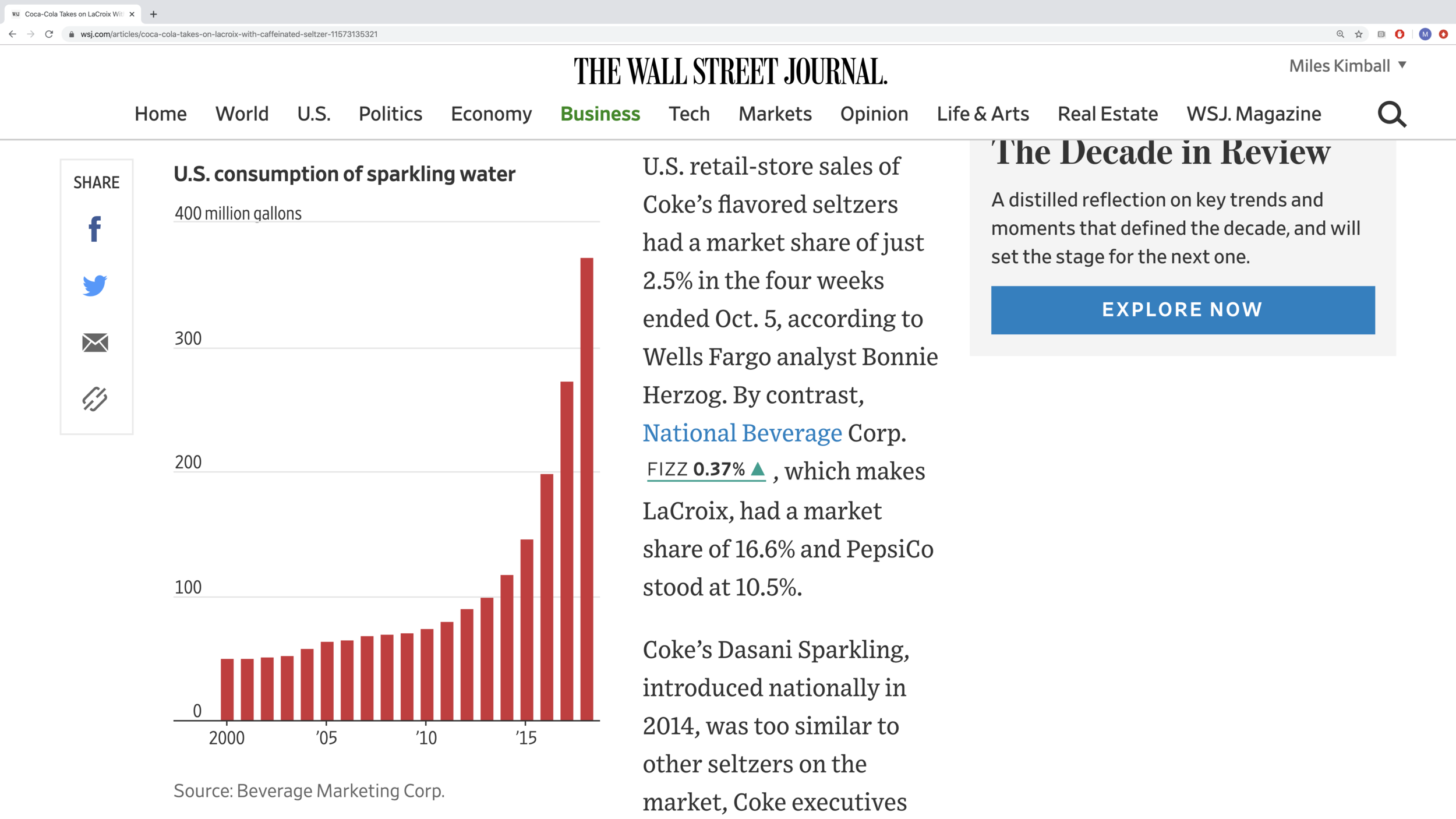
Given how healthy flavored sparkling water is, I am heartened to see the dramatic growth in sales of flavored sparkling water. (See the Wall Street Journal graph at the top of this post.) Let me report that many flavors are truly delicious. To someone like me, whose taste buds have adjusted to being off of sugar, they taste quite sweet even though they have no sweetener in them.
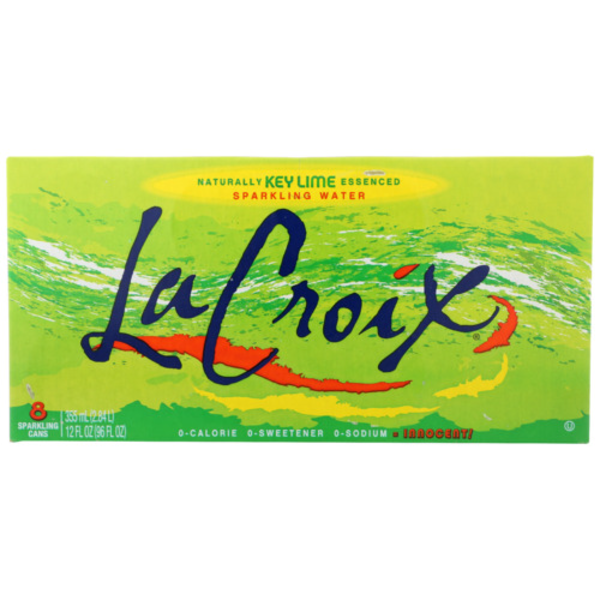
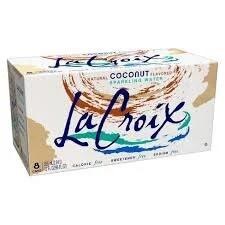
For those who are new to flavored sparkling water, let me showcase my favorite flavors. (By and large, my family agrees with me on these favorites. I’ll note the few exceptions.)
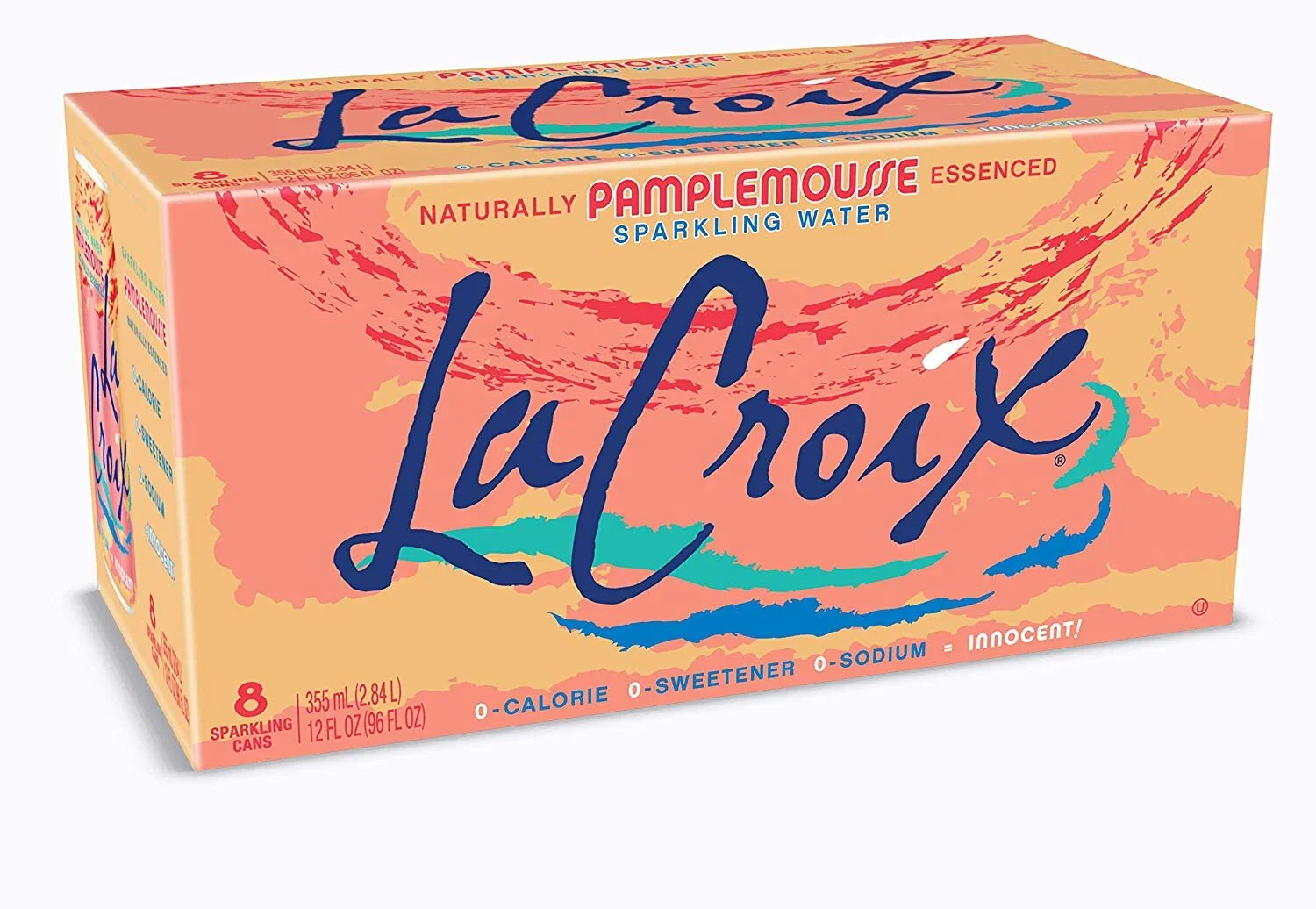

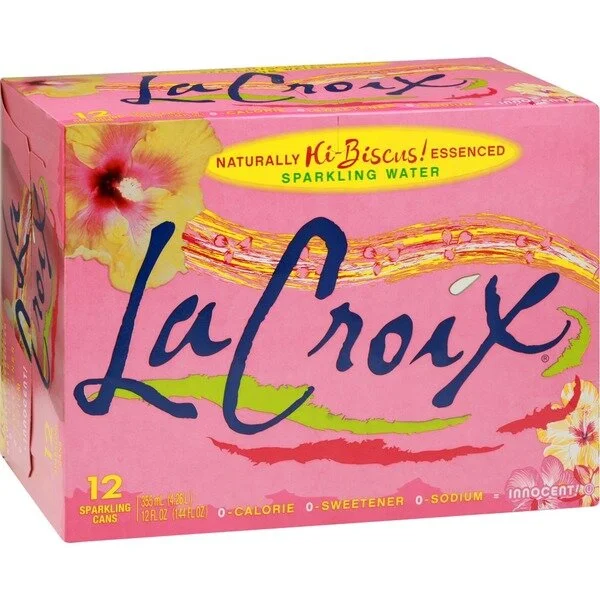
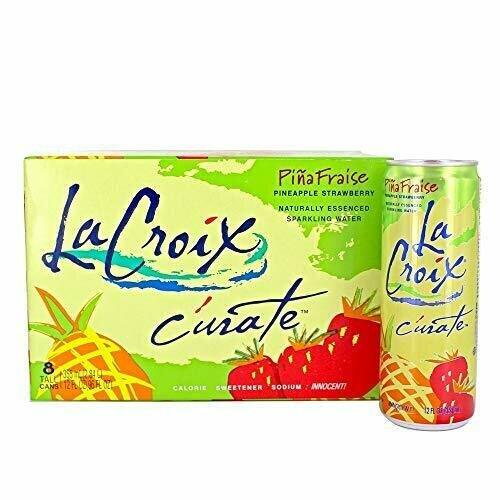
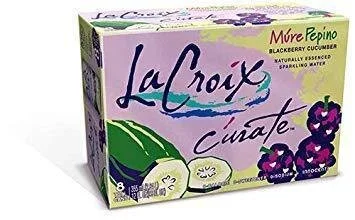
Coconut La Croix has many fans: see this Twitter thread. The comparison to cream soda helped me appreciate this flavor. It deserves its place among my favorites.
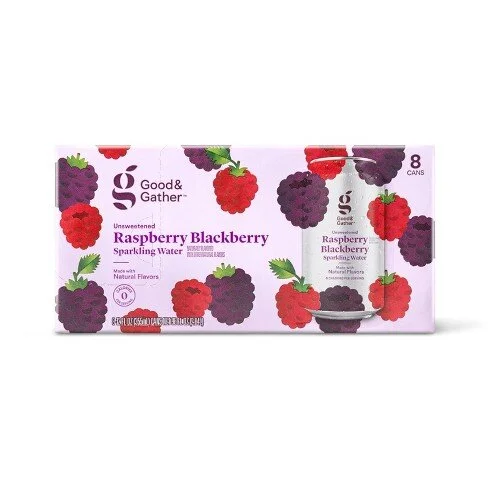
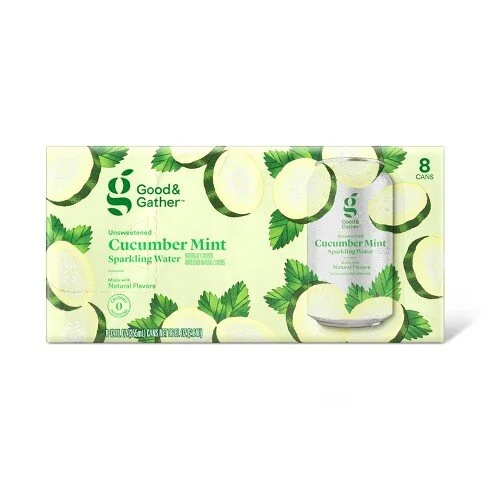
Not everyone in my family likes Cucumber Mint, but I find it refreshing, especially when I am thirsty:
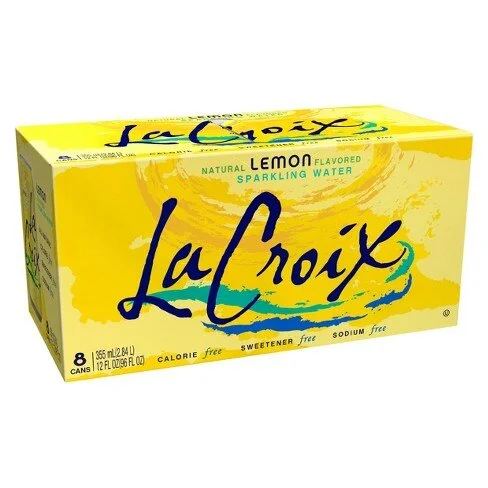
Opinions in my family also differ about Lemon, but I like it.
Bubly is a less expensive brand. The Peach Bubly is a decent flavor, and it has many flavors that only modestly worse substitutes for the corresponding La Croix or Good & Gather flavors.
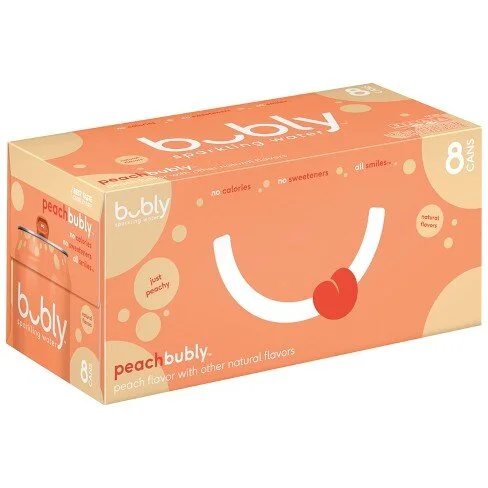
For me one great boon of flavored sparkling water is that the acidity of even citrus flavors is low enough that I OK despite sensitive teeth that make me have to avoid citrus in other forms. Also, as near as I can tell, they don’t have food colors in them, which reduces my worry about stains if I spill.
One of the difficulties of nutrition research is that both natural and experimental variation often involve replacing one type of food or drink with another, meaning that one is looking at the combined effect of eating or drinking one thing and not eating or drinking another thing. Switching to flavored sparkling water from many, many other drinks is bound to be a big improvement. Switching to flavored sparkling water from straight water or unflavored sparkling water is likely to be a small worsening, in itself. But I also find that flavored sparkling water makes it more pleasant to fast—to not eat for a period of time. And fasting has large health benefits.
For annotated links to other posts on diet and health, see:
The Federalist Papers #4 A: The States Must Be Prepared to Defend against Aggression by Other Nations

In The Federalist Papers #3, John Jay argues that, united, the states are less likely to start or give just cause for a war. (See The Federalist Papers #3: United, the 13 States are Less Likely to Stumble into War.) In The Federalist Papers #4, John Jay argues that, united, the states will be better able to fend off unjust aggression. The first half argues that unjust aggression is a genuine danger:
“… it need not be observed that there are PRETENDED as well as just causes of war. … nations in general will make war whenever they have a prospect of getting anything by it; …”
The relevance of this observation is backed up by these arguments:
Monarchs can have narrowly selfish reasons to start a war.
Nations can be tempted to use a war to gain advantage in a commercial rivalry. For example:
Fishing
Shipping
Nations may view the preservation of monopolies and exclusive commercial rights as a matter of national interest and may not see the justice of the freer trade American merchants would like. For example,
Trade with India and China
Trade along the Mississippi River
Trade with Canada
Here is how John Jay makes this argument in detail:
|| Federalist No. 4 ||
The Same Subject Continued: Concerning Dangers From Foreign Force and Influence
For the Independent Journal.
Author: John Jay
To the People of the State of New York:
MY LAST paper assigned several reasons why the safety of the people would be best secured by union against the danger it may be exposed to by JUST causes of war given to other nations; and those reasons show that such causes would not only be more rarely given, but would also be more easily accommodated, by a national government than either by the State governments or the proposed little confederacies.
But the safety of the people of America against dangers from FOREIGN force depends not only on their forbearing to give JUST causes of war to other nations, but also on their placing and continuing themselves in such a situation as not to INVITE hostility or insult; for it need not be observed that there are PRETENDED as well as just causes of war.
It is too true, however disgraceful it may be to human nature, that nations in general will make war whenever they have a prospect of getting anything by it; nay, absolute monarchs will often make war when their nations are to get nothing by it, but for the purposes and objects merely personal, such as thirst for military glory, revenge for personal affronts, ambition, or private compacts to aggrandize or support their particular families or partisans. These and a variety of other motives, which affect only the mind of the sovereign, often lead him to engage in wars not sanctified by justice or the voice and interests of his people. But, independent of these inducements to war, which are more prevalent in absolute monarchies, but which well deserve our attention, there are others which affect nations as often as kings; and some of them will on examination be found to grow out of our relative situation and circumstances.
With France and with Britain we are rivals in the fisheries, and can supply their markets cheaper than they can themselves, notwithstanding any efforts to prevent it by bounties on their own or duties on foreign fish.
With them and with most other European nations we are rivals in navigation and the carrying trade; and we shall deceive ourselves if we suppose that any of them will rejoice to see it flourish; for, as our carrying trade cannot increase without in some degree diminishing theirs, it is more their interest, and will be more their policy, to restrain than to promote it.
In the trade to China and India, we interfere with more than one nation, inasmuch as it enables us to partake in advantages which they had in a manner monopolized, and as we thereby supply ourselves with commodities which we used to purchase from them.
The extension of our own commerce in our own vessels cannot give pleasure to any nations who possess territories on or near this continent, because the cheapness and excellence of our productions, added to the circumstance of vicinity, and the enterprise and address of our merchants and navigators, will give us a greater share in the advantages which those territories afford, than consists with the wishes or policy of their respective sovereigns.
Spain thinks it convenient to shut the Mississippi against us on the one side, and Britain excludes us from the Saint Lawrence on the other; nor will either of them permit the other waters which are between them and us to become the means of mutual intercourse and traffic.
From these and such like considerations, which might, if consistent with prudence, be more amplified and detailed, it is easy to see that jealousies and uneasinesses may gradually slide into the minds and cabinets of other nations, and that we are not to expect that they should regard our advancement in union, in power and consequence by land and by sea, with an eye of indifference and composure.
Here are links to my other posts on The Federalist Papers so far:
What to Call the Very Rich: Millionaires, Vranaires, Okuaires, Billionaires and Lakhlakhaires
Take a look at this exchange between Elizabeth Warren and Pete Buttigieg in a recent Democratic Primary debate:
“So, the mayor just recently had a fundraiser that was held in a wine cave, full of crystals, and served $900-a-bottle wine,” she said. “Think about who comes to that.”
“We made the decision many years ago that rich people in smoke-filled rooms would not pick the next president of the United States,” she added. “Billionaires in wine caves should not pick the next president of the United States.”
Buttigieg pushed back, noting (as he has before) that he has the smallest net worth of anyone running. “I’m literally the only person on this stage who is not a millionaire or a billionaire,” he said. By Warren’s logic, Buttigieg continued, Warren herself was part of the problem.
“Now, supposing you went home and felt the holiday spirit—I know this isn’t likely, but stay with me—and decided to go on peteforamerica.com and gave the maximum allowable by law, $2,800,” he said. “Would that pollute my campaign because it came from a wealthy person?”
Elizabeth Warren’s is handicapped in this exchange by two facts. First, inflation over the past century makes it so “millionaire” doesn’t mean as much as it once did—and “multimillionaire” could mean someone who has $2 million, which also doesn’t mean as much as it once did. Second, English is missing convenient, noncompound words for many of the relevant powers of ten. If one thinks that while a million dollars makes one rich, that it takes ten million dollars to make someone filthy rich, talking of ten-millionaires not only lacks punch, it is confusing to those who can’t here the different between ten millionaires and ten-millionaires.
Fortunately, Wikipedia provides articles on many of the key powers of ten that detail names for these powers of ten in other languages that can be pressed into service. (These Wikipedia articles also give many fun facts about numbers in between these powers of ten.) Let me give the Wikipedia links and the relevant passages Wikipedia bolding with my own:
In India, Pakistan and South Asia, one hundred thousand is called a lakh, and is written as 1,00,000. The Thai, Lao, Khmer and Vietnamese languages also have separate words for this number: แสน, ແສນ, សែន [saen] and ức respectively. The Malagasy word is hetsy[1].
In South Asia, it is known as the crore.
In Cyrillic numerals, it is known as the vran (вран - raven).
East Asian languages treat 100,000,000 as a counting unit, significant as the square of a myriad, also a counting unit. In Chinese, Korean, and Japanese respectively it is (simplified Chinese: 亿; traditional Chinese: 億; pinyin: yì) (or Chinese: 萬萬; pinyin: wànwàn in ancient texts), eok (억/億) and oku (億). These languages do not have single words for a thousand to the second, third, fifth power, etc.
(“Million, “billion” and “trillion” are perfectly good words, and in recent years the British usage for “billion” and “trillion” have begun converging toward the American usage. For 10,000, I have always liked the word “myriad.”)
Making some editorial choices, let me then propose the following names, including the traditional ones:
$1,000,000: millionaire
$10,000,000: vranaire
$100,000,000: okuaire
$1,000,000,000: billionaire
$10,000,000,000: lakhlakhaire
$100,000,000,000: hundred-billionaire
$1,000,000,000,000: trillionaire
Notes on roads taken and not taken:
“croraire” would be hard to pronounce; hence I prefer “vranaire.”
I have spent a lot of time in Japan, so I am drawn to the Japanese word for 100,000,000.
Wikipedia gives no single noncompound word for 10,000,000,000. But using “lakh,” it is possible to make a compound term that is only two syllables and is quite distinctive and memorable. (10,000,000,000 = 100,000 x 100,000. Here is a link for the pronunciation of lakh.
I am at a loss to find a noncompound word for 100,000,000,000, but at least “hundred-billionaires” is distinguishable in speech from “one hundred billionaires.”
If you want to know what these various categories of rich folks are like, I highly recommend the book Richistan, by Robert Frank, about what it is like to be very rich. It makes a difference which power of ten one has exceeded! It is very, very different to be an okuaire than to be a vranaire. A vranaire has enough to retire early in comfort and have a nice house in any city, but having almost anything one selfishly desires that money can buy requires being at least an okuaire. And it is not hard to have philanthropic desires or desires for power to affect human history that would easily require being a billionaire or lakhlakhaire.
As for millionaires, a tenured economics professor who has been required by their college or university to save 15% of their salary for retirement should at a certain age be a millionaire on paper unless they have had bad luck.
Related post: New Words for a New Year
Christmas as a Clue to What People Want

In “An Agnostic Grace,” I write:
And we remember Jesus Christ, symbol of all that is good in humankind, and thereby clue to the God or Gods Who May Be.
Christmas, the celebration of Jesus’s birth, is a clue to men’s and women’s desiring. People want:
many, many things that money can buy, as the commercial aspect of Christmas attests;
the thrill of discovery, as the idea of gifts as surprises attests;
good food, as the culinary aspect of Christmas attests;
close, warm relationships with family and friends, as Christmas gatherings with family and friends attest;
not feeling bad about themselves, as the idea that Jesus came to bring forgiveness of sins attests;
not having death undo us all, as the idea that Jesus came to bring victory over death attests.
May we, in this Christmas season, get much of what we want now, and let us make great plans to get more of what we want later.
Don’t miss other Christmas posts:
That Baby Born in Bethlehem Should Inspire Society to Keep Redeeming Itself
An Optical Illusion: Nativity Scene or Two T-Rex's Fighting over a Table Saw?
Also see “The Book of Uncommon Prayer” and my happiness sub-blog.
Nutritionally, Not All Apple Varieties Are Alike
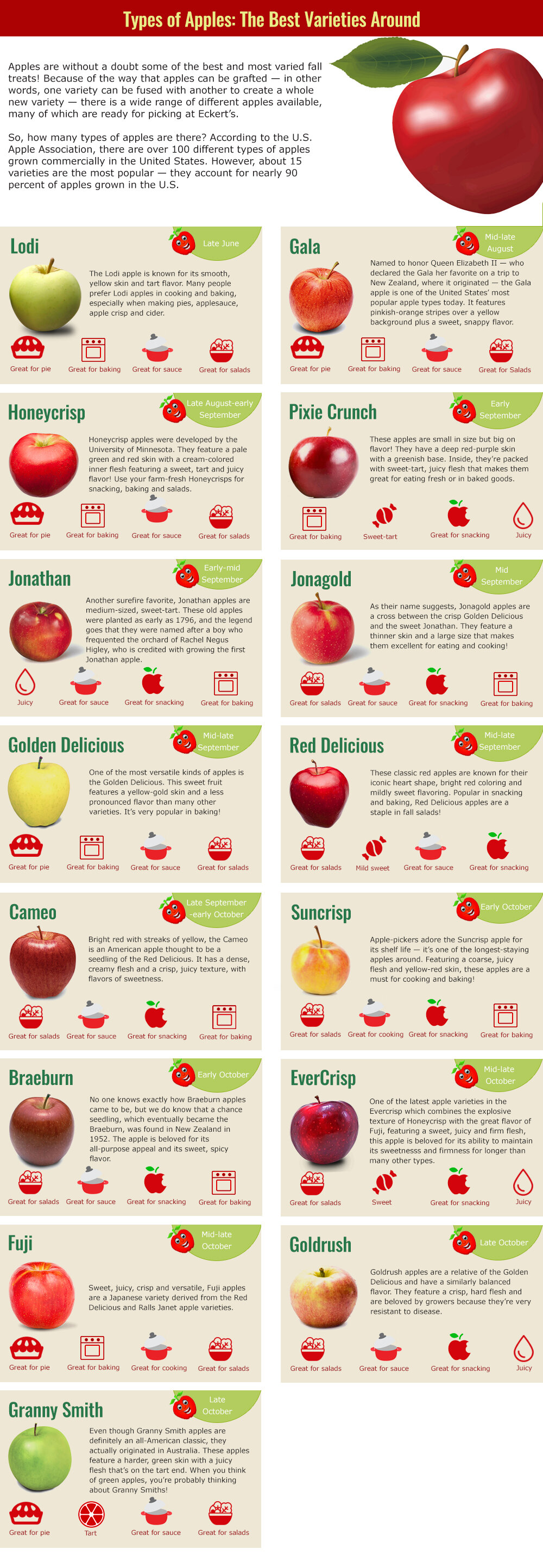
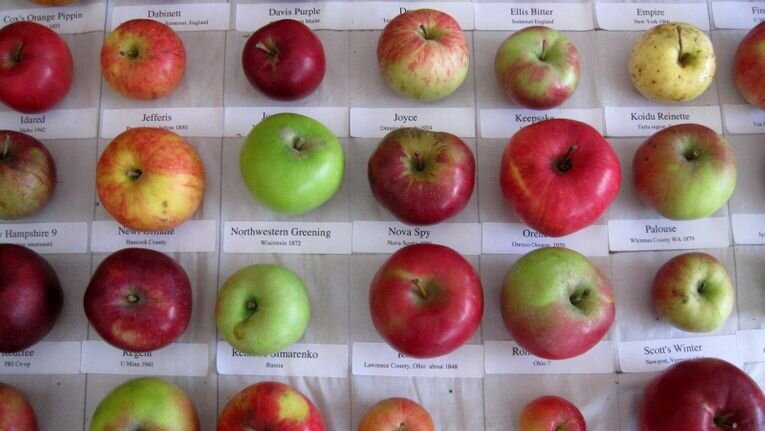
Whole fruits have valuable nutrients and fiber. But they also have a lot of sugar. That means that, in many ways, fruit is both good and bad—an issue I discuss in the section “The Conundrum of Fruit” of my post "Forget Calorie Counting; It's the Insulin Index, Stupid.” But wouldn’t it be possible to breed fruit that had less sugar but continued to have all the other nutritionally valuable elements? The answer is definitely yes, and it may be easier than you think. Heirloom varieties and other older varieties are a promising place to look for less sugary varieties of fruit. Humans have spent hundreds of years breeding fruit that has more sugar and is therefore sweeter.
Even now, saying a variety of fruit was sweeter would probably be good marketing, so the artificial selection pressures are probably mostly in the direction of sweeter and therefore more sugary fruit. But if a large subset of consumers wanted low-sugar fruit, it wouldn’t be long before the market provided low-sugar fruit from some combination of heirloom varieties and newly bred low-sugar varieties of fruit.
As things stand, the demand for low-sugar fruit is too low for fruit to be marketed that way. But different varieties from the same species of fruit do have different levels of sugar. The table below, from “Fructose in different apple varieties,” by Katharina Hermann and Ursula Bordewick-Dell is a nice example:

A Granny Smith apple has less than a third the sugar of a Fuji apple, however you slice it!
Currently, in our culture, fruits have a very good reputation. But the situation is much more complicated than that. Fruit juice has much less of the good and all the bad of the sugar. And even among whole fruits, some are much healthier than others. Sugar doesn’t suddenly become innocent simply because it is inside fruit. It is a matter of whether, given the amount of sugar in a particular variety of fruit the good of the other nutrients can outweigh the bad of the sugar. And that in turn depends a lot on how much sugar there is.
I hope that farmers who have an interest in fostering health will take an interest in identifying, developing and marketing low-sugar varieties of fruit. I am happy to feature low-sugar varieties of fruit on this blog if you let me know about them.
For annotated links to other posts on diet and health, see:
Christof Koch: Will Machines Ever Become Conscious?

Link to “Will Machines Ever Become Conscious”
In his Scientific American article “Will Machines Ever Become Conscious?” Christof Koch questions whether a brain emulation would be truly conscious:
Let us assume that in the future it will be possible to scan an entire human brain, with its roughly 100 billion neurons and quadrillion synapses, at the ultrastructural level after its owner has died and then simulate the organ on some advanced computer, maybe a quantum machine. If the model is faithful enough, this simulation will wake up and behave like a digital simulacrum of the deceased person—speaking and accessing his or her memories, cravings, fears and other traits.
If mimicking the functionality of the brain is all that is needed to create consciousness, as postulated by GNW theory, the simulated person will be conscious, reincarnated inside a computer. Indeed, uploading the connectome to the cloud so people can live on in the digital afterlife is a common science-fiction trope.
IIT posits a radically different interpretation of this situation: the simulacrum will feel as much as the software running on a fancy Japanese toilet—nothing. It will act like a person but without any innate feelings, a zombie (but without any desire to eat human flesh)—the ultimate deepfake.
To create consciousness, the intrinsic causal powers of the brain are needed. And those powers cannot be simulated but must be part and parcel of the physics of the underlying mechanism.
He seems to have written an entire book on this theme: The Feeling of Life Itself: Why Consciousness Is Widespread but Can't Be Computed. However, my comments here are only on the Scientific American article, not the book (which I haven’t read).
Christof bases his skepticism that a brain emulation would be truly conscious on Integrated Information Theory. He writes:
Giulio Tononi, a psychiatrist and neuroscientist at the University of Wisconsin–Madison, is the chief architect of IIT, with others, myself included, contributing. The theory starts with experience and proceeds from there to the activation of synaptic circuits that determine the “feeling” of this experience. Integrated information is a mathematical measure quantifying how much “intrinsic causal power” some mechanism possesses. Neurons firing action potentials that affect the downstream cells they are wired to (via synapses) are one type of mechanism, as are electronic circuits, made of transistors, capacitances, resistances and wires.
But when I read the Wikipedia article “Integrated information theory,” it seems like a synapse by synapse simulation of a human brain would satisfy perfectly well all of the claimed requirements of consciousness. Take a look for yourself and see what you think.
I am totally willing to concede that general artificial intelligence, built on other principles than copying the workings of the human brain, might or might not be conscious, depending on the particular design.
Christof seems to get awfully close to agreeing with me about the consciousness of very, very detailed brain emulations that required copying from a particular individual when he writes:
In principle, however, it would be possible to achieve human-level consciousness by going beyond a simulation to build so-called neuromorphic hardware, based on an architecture built in the image of the nervous system.
I don’t see why a detailed logical image of the nervous system can’t do just as much. After all, things can’t be computed in electronic computers without one electron causally affecting another at every step. So there is causal power there. In any case, in his Scientific American article, Christof has failed to make clear how a very, very, very detailed synapse by synapse brain emulation is different from “neuromorphic hardware” in terms of causal powers. Computer programs have “intrinsic causal power” too.
Update, December 22, 2019: Robin Hanson comments on Twitter:
"But [by] 'Integrated information theory,' it seems like a synapse by synapse simulation of a human brain would satisfy perfectly well all of the claimed requirements of consciousness." Yes, that's completely obvious. Quite crazy to think otherwise.
Related Posts:
On Habit Formation

Habit formation is a staple of macroeconomics, finance, and behavioral economics, and deserves to be taken seriously in thinking about tax policy. My star student Jiannan Zhou has nailed down the parameters of habit formation preferences using a hypothetical choice survey that he designed and fielded on MTurk and analyzed using the computational power of Hamiltonian Markov Chain Monte Carlo. (It will be straightforward to collect another round of data on a more representative survey such as Arie Kapteyn’s Understanding America Survey—a web survey that will accept any serious scientific survey question given the requisite funding.)
In words drawn straight from his paper “Survey Evidence on Habit Formation,” here is what Jiannan finds:
Habit formation exists, as a phenomenon distinct from adjustment and cognition costs.
Habit depreciates by about two thirds per year.
Neither additive nor multiplicative habit is consistent with people’s behavior. Almost all current habit formation models in the literature assume either one of these two habit utility functions …
The effect of habit formation on utility is about as strong as that of keeping-up-with-the-Joneses.
Habit formation combined with keeping-up-with-the-Joneses could generate the income-happiness pattern of the Easterlin paradox.
Jiannan is also able to distinguish between internal habit formation (one’s own past consumption as a reference point) and external habit formation (other people’s past consumption as a reference point). Both internal and external habits exist, with external habits accounting for about 17% of habit.
Jiannan has a high-level of statistical precision even with a modest sample size because the hypothetical choices can be—and are—designed to reveal a lot about people’s preferences.
The Easterlin paradox is the puzzle that happiness and life satisfaction often seem nearly flat over time even when per capita income is dramatically increasing. (There are strong versions of this claim that are questionable empirically, but there is little dispute that the rate at which happiness and life satisfaction go up with income is surprisingly low—low enough that dividing by these income coefficients in a regression yields surprisingly high—and potentially suspect—estimates of willingness to pay.)
Jiannan may undersell his result about the strength of habit formation plus keeping-up-with-the-Jones by tying it to the Easterlin paradox. The Easterlin paradox is a “paradox” in part due to a crucial assumption that happiness as measured on surveys is the same thing as utility (plus noise). Bob Willis and I question that assumption in our paper “Utility and Happiness.” Jiannan’s result is clearly about revealed-preference utility as long as one is willing to consider hypothetical choices as revealing preferences. What Jiannan has found is that people state strongly that their future experience would be better if other people’s current and past consumption were lower or if their own past consumption were lower.
Here is an example of the kind of survey questions Jiannan uses:


The strong dependence of people’s stated preferences on their situation relative to other people and relative to their own past gives me pause. Some might think that means it is difficult to make everyone better off. But—optimist that I am—I like to think it points to the importance people place on respect, dignity and being “part of the club,” and that it is possible to design society so there is more of these social goods for everyone. As it is, those things come mainly to people who are high up on the ladder. But what if he could have the kind of world where everyone who keeps the most basic necessary rules of society gets respect and dignity and full belonging?
Jiannan is on the job market right now. Anyone who doesn’t have him on their interview list should. And even those not searching to hire should read his paper if they have any interest in macro, finance, behavioral economics or tax policy. Here is the link to his website. And here is the current version of his presentation slides for his habit formation paper.
Don’t miss this post about the academic work of my most famous student, Noah Smith:
See links to some of my other papers on happiness here:
Postscript: Jiannan is the first student for whom I have been the main advisor since I moved to the University of Colorado Boulder. See “Miles Moves to the University of Colorado Boulder.”